This piece explores all aspects of the tattoo culture in one of the most iconic parts of Soweto – from the tattoo artists themselves to those who just enjoy the feeling of a tattoo needle piercing their skin, permanently marking their bodies with impressions of their experiences.
In the sweltering heat of the Soweto summer, a small group of people gather outside a home in Orlando West. The house is a two-bedroom, brick face building with a green corrugated roof. Apart from a small sign on the gate with a cellphone number underneath some text, one would probably drive past, oblivious to what was going on inside.
The artist is 30-year-old Andile Mazibuko, who has been tattooing since the age of 18. The self-taught artist used his own body as his canvas when he first began to learn how to tattoo.
He started out with a home-made machine, which he still has, tattooing “laugh now, cry later, masks” on his thighs.
SELF INKED: Orlando West tattoo artist, Andile Mazibuko, tattooed himself with a home-made tattoo gun.
The machine itself has the same shape as a professional machine, which resembles a mini drill or electric screwdriver, but the components used to make it could rival something that MacGyver would be able to come up with.
The machine still runs and consists of a motor, adapter, an on-off switch and a sewing needle. Since then he has moved on to a more professional machine and has been using it for the last five years.
Again, he tattooed himself in learning how to operate the new machine, tattooing his left forearm with a tribal pattern.
Amazingly, you wouldn’t be able to tell the difference between the two in terms of quality and finish.
Mazibuko found his way to tattooing through his love and passion for art, and found tattooing more “common nature” when it came to expressing himself.
He says he found it tough in the beginning because people didn’t really know what he was doing or what tattoos were about. However, in recent years, “Tattoos themselves have become more common and the artists themselves are getting better at what they do,” said Mazibuko.
“As an artist now, it’s all about getting your work out there, so you find that guys might operate in a similar set up to mine but then also do a lot of house calls where the clients might feel more comfortable and open up more. Even though people might not have the money to spend on tattoos, we still do what we can for them and it also helps us to build our portfolios. The culture of tattooing is definitely there and there are a lot of artists around as well,” said Mazibuko.
BIG MIKE: Michael Ngceshe stands outside his tattoo studio on the outskirts of Orlando West.
“As an artist now, it’s all about getting your work out there, so you find that guys might operate in a similar set up to mine but then also do a lot of house calls where the clients might feel more comfortable and open up more. Even though people might not have the money to spend on tattoos, we still do what we can for them and it also helps us to build our portfolios. The culture of tattooing is definitely there and there are a lot of artists around as well,” said Mazibuko.
On the outskirts of Orlando West is an off white-coloured shipping container with the word “Tattoos” in bold, red letters on the front of the container. This studio shares a lot with a car wash and a small food stall that serves pap, meat and vegetables. The studio belongs to a 34-year-old man who is covered in various tattoos, from a fish on his back to a cross on the inside of his right calf.
Michael Ngceshe, more commonly known as “Big Mike”, not because of his stature, but rather due to his status as the self-proclaimed, “most famous artist in Soweto”, is also part of the “informal” tattoo community and has been a tattoo artist since 2011. “The reason we do tattoos is because we love to do it. We are artists, but we are different to other artists because they hang their art and we wear our art. Wear your art, don’t hang it,” he says while lighting a cigarette.
While you would think that a place as vibrant and young as Orlando West might have a tattoo style of its own, that is not the case.
“Tattoos are universal and so the ideas that people have can relate to a lot of other people from all over the world,” says Ngceshe. “I would say that the one thing that makes Soweto artists unique is that we cater mostly black people, so there are different techniques and other things to consider when tattooing.
“The lines have to be thicker and bolder so that they can show up nicely on the skin and that takes a different set of skills as opposed to working with lighter skin. Not everyone can work with different skin types, but I think I have mastered them all,” Ngceshe says.
He also believes that the tattoo industry is growing and the reason is that people are beginning to understand that they get tattoos for themselves and not for other people to just look at. “You know what your tattoos represent and it’s a way of expressing yourself or keeping those that you might have lost close to you, and that’s all that matters. You live your art in that way, because every life on earth is art,” says Ngceshe.
Culture and stigma of tattoos in Orlando West
HEAVY EQUIPMENT: A home-made tattoo gun (left) alongside a professional machine (right).
While the culture of tattooing may be growing and becoming more commonplace in Orlando West, there is still a stigma that is attached to having tattoos.
“This stigma mainly comes from the older generation where they think it’s satanic and going against religion,” said Mazibuko. It also depends on the tattoo itself and what it is.
“The nicer it looks, the less of a stigma people will attach to you. People would be more accepting if you had a rose or a bird, rather than a skull.”
That stigma is something that Orlando West resident Tebogo Shumayeli, who at 16, got his first tattoo from Mazibuko, has experienced.
“My first tattoo was all about being cool and really didn’t have any meaning, but as time went on I started getting more meaningful tattoos and ones that had more significance in my life,” said the 26-year-old.
“I think about 80 percent of the people in this area have tattoos and they feel the same way. That’s why you won’t really find people branding themselves with logos or big names, of soccer teams, for example. It’s more like you are promoting that kind of logo and you would probably have to get paid for something like that. You find that most people think it’s quite ridiculous to get tattoos like that,” said Shumayeli.
The culture of tattooing is growing in Orlando West and in Soweto as a whole. While it is mostly young people who have opened up to the idea of tattoos and what they represent, the older generation is gradually beginning to open up to the industry as well.
Promoting tattoos and tattoo artists
Ndumiso Ramathe is a man who knows all about tattoos and is not afraid of getting inked. Having covered both of his arms and part of his chest, he even has a tattoo of his birth year, ’86, on his chin. Ramathe, who is the owner of Soweto Ink and organiser of the Soweto Ink Festival in Kliptown, said that he had noticed more parents coming in to get tattoos done and that some of them were even bringing their children with them. “A very small percentage of people do this, but it shows that the industry is opening up, which is really exciting to see,” said Ramathe.
The Soweto Ink Festival, scheduled to take place in December at Walter Sisulu Square in Kliptown, is in its second year and was expected to host both local and international artists who would be able to showcase their work.
“The development of the tattoo culture is slow, but it is getting there. This is why I am getting involved in conventions and festivals, to educate people that a tattoo is not something that you just get from the guy around the corner,” said Ramathe.
“These conventions and festivals aren’t only aimed at prospective clients, we also use them to try to educate artists themselves about the proper hygiene and safety certificates that they have to have in order to operate and be able to get products from suppliers,” he said.
According to the Body Artists Code, found in the South African Council for Piercing and Tattoo Professionals, these regulations include a variety of criteria, such as: “The premises shall not be used as or in connection with a living, food preparation or sleeping space unless a permanently constructed partition completely separates the working area”; “Tattoo and piercing needles, razor blades, scalpel blades, biopsy punches and shaving razors are single use only”; and “Owners must ensure that the transportation and disposal of medical waste is handled by government registered transporters and in accordance with governing municipal by-laws and national acts.”
Festivals also present artists with a chance to interact with other artists from different areas, not just in Gauteng, but from all over the country and to learn from each other. However, this is not always the case, with artists from particular areas, such as Orlando West, tending to stick together and those from other parts of the country doing the same.
“A lot of people from here will go to other parts of the province, like Pretoria to get their work done, especially those that work in corporate, so festivals like this also help us local guys to gain exposure among our own people. Most of the guys that I work with, work as a unit, but you do get those ‘ego tattoo artists’ who make more money than others, so they have cooler studios and those guys are more business driven than us smaller guys,” said Mazibuko.
ARTISTIC FLAIR: Graffiti on the wall of one of the many home-based tattoo studios in Orlando West.
“The older folks who are into religion don’t really support the idea of tattoos and see it as satanism. Personally, I see the tattoos as body art and a way of enhancing how you express yourself,” said Shumayeli.
While the tattoo community is a niche group of people, especially when it comes to the artists themselves, there is also a sense of competition between artists, in particular between those who operate in different parts of the province.
“Those bigger tattoo artists, it’s like they don’t trust us to do a good piece, because their shops will often get full, but then instead of maybe referring the client to us, they just tell them to come back another time, just because they don’t want to lose out on the money”, said Mazibuko.
Image is key
DEEPER MEANING: Butterfly and floral tattoos on Vanessa Myathaza.
Like many other professions, image is an important part of marketing yourself and what you are doing. Being a tattoo artist is no different. “You have to be wild and pretty out there for people to take you seriously as a tattoo artist,” said Mazibuko.
“People would rather get a tattoo done from someone who has tattoos himself, especially if they want to get a bigger piece done. If they want something smaller, then its okay if the artist only has one or two, but they generally get put off if the artist doesn’t have and they want something big or elaborate,” said Mazibuko.
With tattoos becoming an increasingly more common trend among a lot of people, there is a sense that our generation, might be the last to not have any tattoos.
That’s the feeling of Orlando West residen,t Thandi Mazibuko. “It starts with us, going down, and people younger than us will see our tattoos and also want one of their own.
I feel like our generation will also be more accepting if our kids get tattoos, because we have a better understanding of what it’s about and we have been through the phase of having a stigma attached to tattoos, so now our kids won’t have to go through that,” said Thandi.
“The older generation still understands tattoos as being something that maybe started in prison and so it is associated with that kind of thing.
When I got my first one, my mom was not happy with me, but eventually she came around. Nowadays it’s more of a lifestyle kind of thing and a lot of the tattoos that people get aren’t too hectic, so it will be a mother getting their child’s name, for example,” said the 32-year-old.
“I have 11 tattoos and to me, they represent identity. Nobody can have the same tattoo as me. Yes, the design can be the same, but the meaning behind it will be different.
That’s why I put a lot of thought into what I get and other people should too, because it’s very difficult to get it removed or covered up if you don’t like what you have,” said Mazibuko.
Tattoos still have a long way to go to become the norm within society, but it’s places like Orlando West, with its young and edgy vibe, open-minded people and talented tattoo artists that are beginning to change the perception of tattoos and tattooing in Soweto.
Having been permanently inked, the individual walking out into the sweltering heat once again, undoubtedly feels a sense of being part of a community and has a badge of belonging to show that they are part of that community.
FEATURED IMAGE: Orlando West tattoo artist, Andile Mazibuko, tattooed himself with a home-made tattoo gun. Photo: Michael Pedro.
Chef and owner of Food, I Love You, Mpho Phalane shows how food is more than just cooking, but a practice of memory, identity and connection that asks us all, ‘How do we feed ourselves?’
Phalane’s work shows how food carries identity, memory and connection, from her grandmother’s kitchen to Constitution Hill
As South Africa faces food insecurity, Phalane reimagines the kitchen as a space for care and resistance
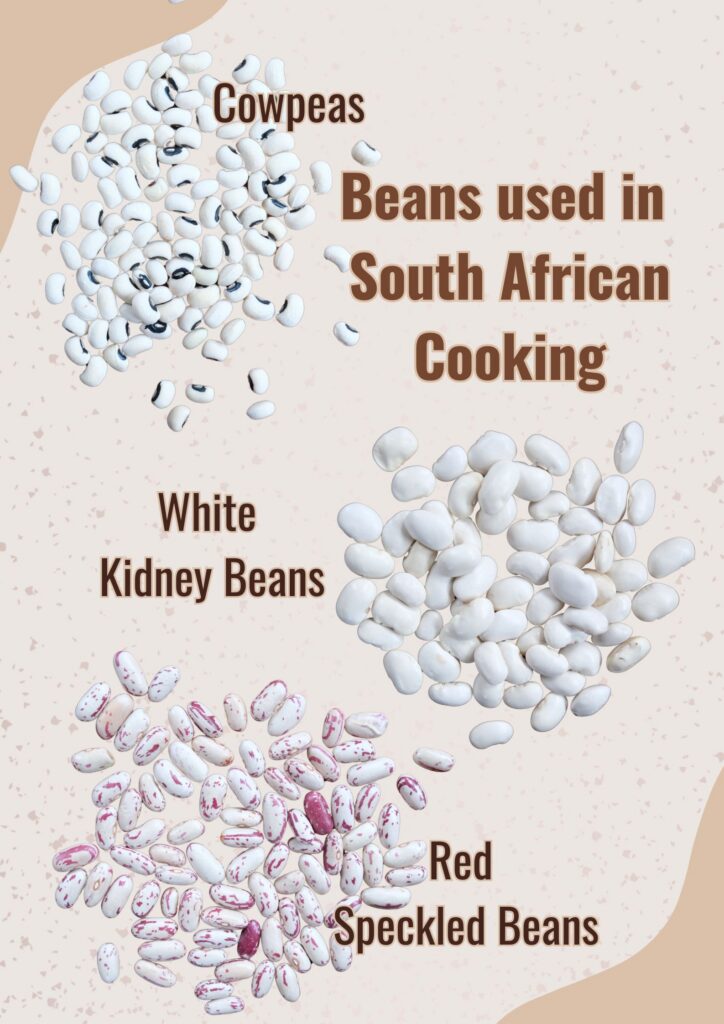
By cooking with indigenous grains including sorghum, millet and cowpeas, Phalane uses food for learning, nutrition and climate-smart resilience
When chef, food thinker, and owner of Food, I Love You, Mpho Phalane speaks about food; she doesn’t begin with recipes. She begins with a question: “How do we feed ourselves?” Because for her, food is much more than what is on our plates – it is memory, identity, and human connection.
During a discussion held by Mamakashaka and Friends on August 26, Phalane took the audience through her journey into cooking. From her grandmother’s house, burgers on the rooftop with swollen feet, lunches at UJ, to the beginning of Food, I Love You at Victoria Yards and transforming the former prison kitchen at Constitution Hill. For Phalane, practice has never been ‘just cooking’. It is asking deeper questions about belonging, care, resistance and returning to a sense of self.
Rooted in Memory
Graphic of beans used in South African cooking. Photos and graphic by: Hannah Brown
Phalane’s story is kneaded together through memories: A grandfather who taught her the importance of quality, a mother who made vision boards and introduced the power of visualisation, and childhood meals at her grandmother’s house. Food, I Love You began in her kitchen, cooking for friends, which grew into events and eventually into a business. All these memories are not just details; they show how food carries identity.
When UJ first invited her to run a restaurant, she was “still in the process of finding this language.” The pace was fast, food was functional, stripped of its intimacy. “This is not how I envision my practice looking”, she shared. “I want the moments of slower, the moments to learn”. Even a pot of beans carries memory – because for Phalane, food was never just about cooking. It is about the stories and politics simmering beneath the surface. The journey of food is both intimate and political.
The Politics of Food
Across South Africa there is a growing hunger crisis. FoodForward SA’s State of Household Food Insecurity in South Africa Report 2026 showed that 70% of households experience moderate-to-severe food insecurity. Statistics South Africa data revealed that between 2019 and 2023, the number of food-insecure people rose from 14.25 million to 17.8 million, with severe food insecurity increasing from 5.2 million to 8 million. Around one in four households went an entire day without food at least once. The report states that, “due to conflict, climate change, economic downturns and global health crises. Rising food prices and supply chain disruptions have further undermined access for vulnerable populations.”
After joining Victoria Yards in 2019, she also saw the contradictions. The introduction of the monthly event, First Sundays, seemed to be for insiders, but the surrounding community was left on the edges looking in. “For me, First Sundays were not crafted for the community in and around Victoria Yards,” she said. She noticed the tensions between the comfort of home cooking and the broken food system. This act of ‘noticing’ really made her question, “who gets to be inside the gates?”
When moving to Constitution Hill in 2021, Phalane tried to change that dynamic. She created a space that honoured history, welcomed everyone and treated hospitality as more than just food. “I wanted a place that could hold both beauty and grief”, she explained. Occupying those spaces changes you as a person, as you are forced to confront the contradictions and histories within the walls. When Food, I Love You first took over the space, it felt cold and raw, but there was another layer of history that was being created. Phalane wanted an environment where “everyone felt like it was home and warm, which is contrary to what a prison is meant to be.”
Indigenous Grains and Plants
An article by Critical African Studies, discusses the lack of availability of healthy food and stigma. Colonisation and Apartheid reshaped diets as, “indigenous and traditional crops in many communities in South Africa was adversely affected by their perception as ‘poverty foods’ or food for the elderly.” Traditional crops were excluded from the dominant food systems and could only be purchased in ‘informal’ food systems. As Phalane states, “there isn’t great systems around production. We are not demanding of our food enough”.
Ultra-processed food sales are high and dietary patterns are worsening with rising food insecurity. It is important to teach children about indigenous crops and focus on meals that are nourishing and communal. “I always knew disrupting the system has to happen on that level, we have to do it at school,” Phalane said. These are acts that push back against a system that makes cheap, unhealthy food the easiest option. Accessibility and storytelling are inseparable: “it is all about accessibility, really. Also, our need to be able to tell our stories and know our stories more”, she reflects.
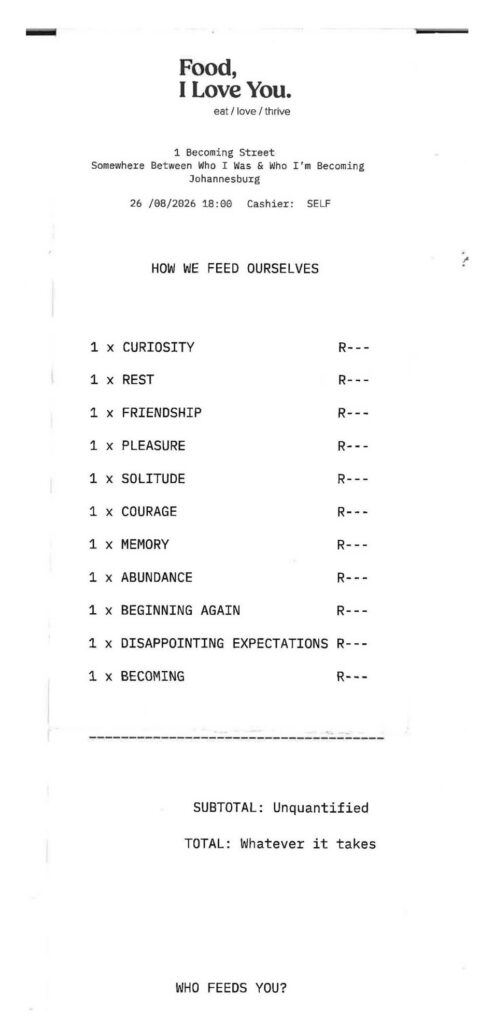
Receipt given to audience members from Mpho Phalane, during the talk hosted by Mamakashaka and Friends. Photo by: Hannah Brown
Food as Resistance
Across Johannesburg, chefs and activists, including Chef Mokgadi Itsweng, are reviving indigenous crops such as sorghum, millet and cowpeas. Not only rooted in heritage and memory, as Itsweng states, “our indigenous plants are climate-smart. That’s something we can be proud of.” It is a practical response to a food system where 62% of South Africans cannot afford a healthy diet, and access to fruit and vegetables is far below global averages.
Phalane’s practice reimagines kitchens as places for learning and transformation. As a space where process matters, where experimentation and failure are part of the work. “It was never one linear thing,” she said. “It is time for expansion.”
Who Feeds You?
Mpho Phalane’s approach is both simple and radical – to feed in ways that remember and create spaces that hold beauty and grief.
After the discussion at Mamakashaka and Friends, a microphone was passed around to audience members while they reflected on their time spent at Food, I Love You, or on how their paths had crossed with Phalane. A young chef, who had worked at the restaurant, shared the influence Phalane had on her journey, highlighting her “style in terms of how you cook and how you embrace African ingredients differently”. Another audience member shared that Phalane has shown him how “slowness is necessary” and that “you create in a very authentic way, and it translates in your food as well”.
Phalane asks the question, “Who feeds you?”
As we move through life, through our different practices, what do you leave for yourself? This forces you to question identity, memory and connection – and could be an opening to imagining a different future for ‘How we feed ourselves’.
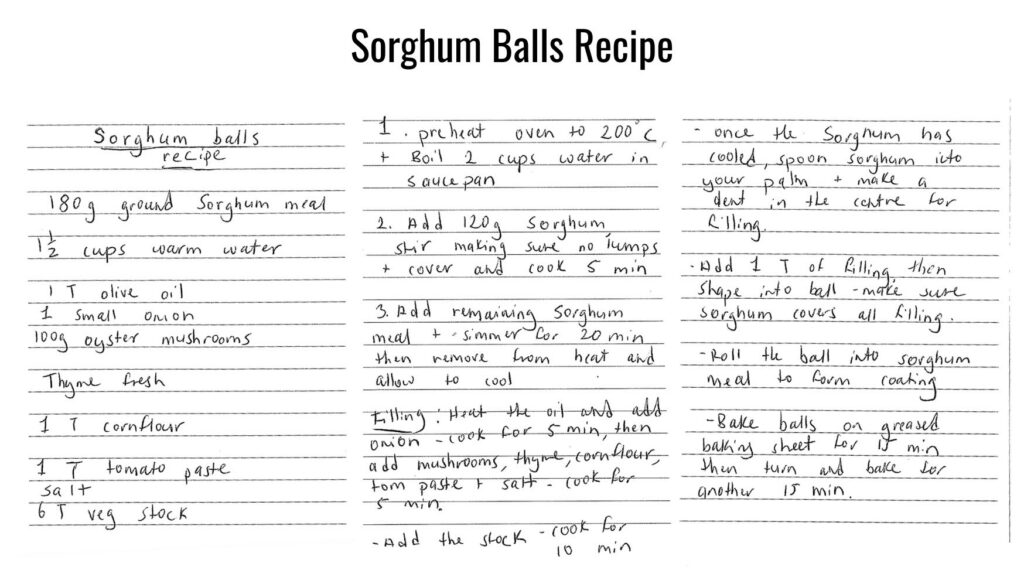
Handwritten recipe for Sorghum Balls. Photo by: Hannah Brown
FEATURED IMAGE: Graphic of beans used in South African cooking. Photos and graphic by: Hannah Brown
Wits offers support for students with disabilities, but for those whose conditions are not visible, stigma and fear of judgement can make asking for help difficult.
Wits has 1,126 registered students with disabilities receiving support through the Disability Rights Unit.
Wits has identified stigma and disclosure as barriers for students with invisible disabilities.
Students say asking for accommodation can be an emotional and undignified experience.
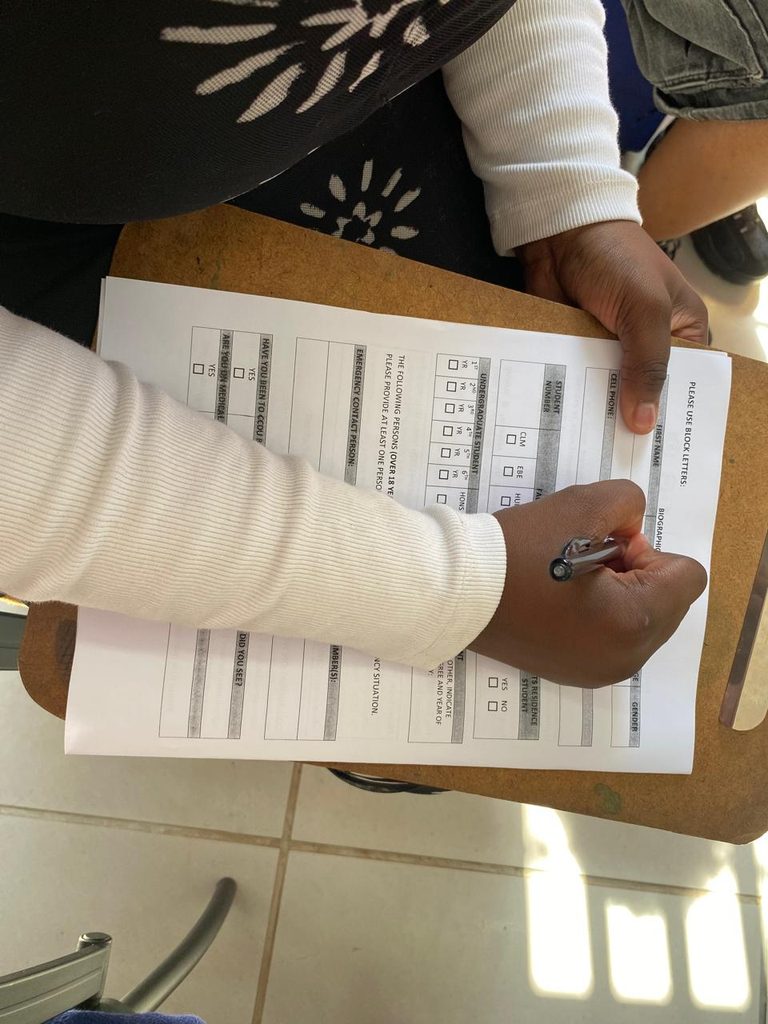
The Wits Disability Rights Unit (DRU) hosted a seminar on Wednesday, August 19, 2026, to address invisible disabilities and the barriers students face in accessing support. For some students at Wits University, getting support for an invisible disability can mean having to explain something that other people cannot see.
These disabilities such as ADHD, autism, mental health conditions, and chronic illnesses may not be immediately visible. Zamo Mbhele, a psychologist speaking at the DRU seminar, explained that this can make it difficult for students to ask for support, as they often worry about how it will be perceived.
Wits itself has acknowledged that stigma can prevent students from disclosing their conditions. In 2024, the university released an article on disability inclusion, the university noted that for students with invisible disabilities, “fear of stigma often prevents disclosure”. It further noted that students with complex needs require tailored support and coordinated services. For those who disclose their disabilities, the DRU provides support such as academic accommodations, assistive technology, and other forms of learning support. However, students who shared their experiences at the seminar said having support available does not always mean that asking for it is easy.
A student completes a paperwork to register for support services at Wits. Photo: Khutso Ngwatoana
According to the Wits Disability Rights Unit , 1,126 students with disabilities were registered last year. This includes 307 students with neurodevelopmental disabilities, 175 with psychosocial disabilities and 133 with chronic illnesses. Yet these figures only show students who disclosed with the DRU. Many others with invisible disabilities may be struggling in silence, reluctant to register because of stigma.
Wits student Alexandra Makhlouf said the DRU has played an important role for her by creating a social space where she can meet other students with disabilities.
“There is still stigma about disability on campus, and having to meet other disability students on campus has played an important role for me,” Makhlouf said.
Another student at the seminar, who asked not to be named because of the personal nature of their experience, described the emotional difficulty of asking for reasonable academic adjustments such as flexible deadlines, access to quiet spaces, or changes to how they participate in academic activities.
“I find it so undignifying every time I need to ask for understanding and accommodation, and I’m in tears every time at home when I am trying to get accommodation for something and putting together my motivations,” the attendee said.
Mbhele shared that, “Belonging is the experience of entering a space without having to negotiate your legitimacy within it.”
These experiences show that, for students with invisible disabilities, sense of belonging can be difficult when they feel they have to repeatedly explain or prove their needs before receiving support.
Dr Leila Abdool Gafoor, Head of the DRU, said the university must ensure that every person’s voice is heard and create psychological safety so that students do not experience stigma when speaking about their needs.
The issue is not simply whether support exists, but whether students know where to find it, feel safe enough to disclose their needs and can ask for accommodation without feeling judged.
For Wits students with invisible disabilities, inclusion goes beyond physical access. It also means creating an environment where asking for help does not feel like having to prove that you belong. The question now is whether Wits can make its existing support easier to access for students who may already be afraid to disclose their disabilities.
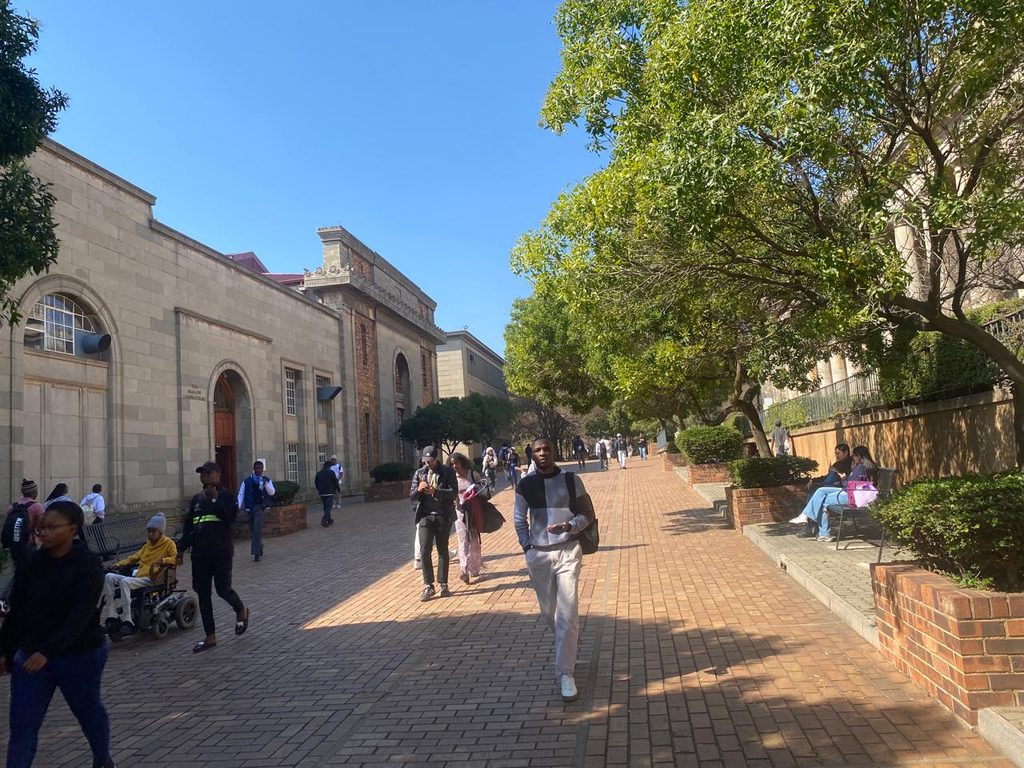
Students, including a student using a wheelchair on Wits Campus. DRU said Wits must support both visible and invisible disabilities. Photo: Khutso Ngwatoana
FEATURE IMAGE: A disability access sign on Wits campus that represent physical disability. Photo: Khutso Ngwatoana
In this digital first era, users need to be aware of technology-facilitated gender-based violence and how to report it says Wits GEO.
A collaboration between Sunnyside Hall’s student development and gender equity office and the Wits Gender Equity Office (GEO) hopes to make students aware various forms of online violence and harassment.
The event named “Siders for Survivors,” cleverly plays on the residence name “Sunnyside,” and took place at their main study hall on May 18, 2023. The GEOs started off with definitions and examples of gender-based violence (GBV) students may experience on campus and ways to report and find help.
However, it wasn’t until technology-facilitated GBV (TF_GBV) was mentioned that people sat up in their chairs and started engaging in the discussion more enthusiastically.
TF-GBV refers to acts of harm, such as sexual, physical, psychological, or social abuse, that are carried out or intensified using digital tools like social media. It includes cyberbullying, online harassment, non-consensual sharing of intimate content, and any other harmful behaviours online.
GEO intern Ebenezer Maimele presented the six categories that fall under TF-GBV to the group. Maimele said something as innocuous as sharing posts that portray someone in a negative light could be classified as an act of TF-GBV. Bystanders can be held legally liable for any harm caused depending on what they post or repost.
Maimele, said people can be “upstanders” instead, by abstaining from liking, sharing, or reposting TF-GBV posts. In this way one avoids complicity and can take further action by reporting TF-GBV they come across on the timeline.
Attendee, Chioma Nzelu (18) said, “We often perceive gender-based violence as highly aggressive and explicitly violent, but it can also be subtle and considered normal or a daily occurrence.”
Tiisetso Maleke (25), GEO member said she hopes more students report any misconduct experienced on campus, “we are there for everybody,” not just women.
Mukelwe Mdluli (21), Sunnyside’s student development and gender and transformation officer, shared the sentiment, and said awareness is the first step in empowering students.
FEATURED IMAGE: Wits GEO armbands which were gifted to the attendee’s of the “Siders for Survivor’s” event. Photo: Terri-Ann Brouwers
Wits University is heading for a shutdown after an announcement by Minister of Higher Education Blade Nzimande that institutions will be left to determine their own fee increases to a maximum of 8% for 2016/2017.
Incoming SRC President Kefentse Mkhari announced the shutdown at Solomon Mahlangu House (Senate House), where students had gathered to listen to the announcement by the minister.
Led by members of the Wits SRC protestors are moving around campus asking students to leave their lectures to join the shutdown. Some students have barricaded the Amic Deck while SAPS continues to maintain a strong presence on campus.
Wits Vuvuzela has seen a letter circulating to staff in the School of Literature, Language and Media advising staff to cancel their lectures and leave campus if they feel “uncomfortable”.
Jean-Claude Mabaso a first year Bcom General was in the library when he heard a library announcement saying: Sorry for the inconvenience but you have to evacuate for your own safety.
The Wits Food Bank is appealing to Witsies to assist students in need through donations. Photo: Wits Communications.
Seven percent of undergraduate students go to lectures without food each day, according to Wits Dean of Students, Dr Pamela Dube.
This figure is based on a study conducted in 2012 by Wits medical school students and on research by the Wits Student Affairs Office and campus security after students were found to be sleeping in university buildings.
The study, conducted by the Siyakhana Initiative for Ecological Health and Food Security, based its research on 387 undergraduate students and looked at 22 campus food points. Its aim was to “assess the food environment on campus, establish the food security status of undergraduate students and investigate the relationship between these two issues.”
“Usually, students who don’t have accommodation and sleep on campus also don’t have something to eat,” said Dube.
According to Dube, the numbers that they got were not as high as initially anticipated, but this was just “one intervention.”
“Some people will take away their blankets where they’re sleeping in the bathroom … or in the seminar rooms … or sometimes only blankets will be found and the person will never be tracked. People tend to also be watchful,” she said.
Seven percent of the students were either “severely or moderately vulnerable to food insecurity”
Seven percent of the students were either “severely or moderately vulnerable to food insecurity” and in some groups, a number of students experienced hunger.
27% of them knew of a fellow student who experienced hunger and more than half had personally experienced some impact on their academic performance, due to hunger.
Initiatives to assist hungry Wits students
The Wits Food Bank, started just over a year ago, is a campaign of the Wits Citizenship and Community Outreach centre (WCCO) and is aimed at curbing food insecurity among students.
It provides students in need with toiletries, clothes, food and if need be, a place to sleep, according to WCCO manager, Karuna Singh.
This year, the WCCO is using Mandela Day (18 July) as a way to encourage larger donations from the Wits community, with the theme: “charity begins at home.”
“We are asking staff members and students to donate food, toiletries and clothes to the Food Bank,” said Singh.
The division of Students Affairs, a partner in the Food Bank project, also works closely with a number of departments, schools and faculties to support students in need. “People do actually come, as much as they fear the stigma,” Dube said. “Our interest is that people perform well and are supported, which means providing them with balanced, nutritious meals.”
As part of a solution, there have been changes in meals catered for at residences, “as this is not just an issue for students in need.”
Students can receive food cards for the Matrix and the university has plans to create a day house where meals can be provided and healthy, mobile food stands around campus.
The Wits Student Representative Council (SRC) is also assisting hungry students as it recognises the impact on student performance.
The SRC are continously helping students with food security issues
“[We are] committed to ensuring that all our students are given the best possible environment to perform academically. For some students their poor performance is due to a lack of food and the SRC has interventions available to assist these students,” said SRC president, Shafee Verachia.
According to Verachia, the problem is so prevalent because of the sacrifice students make to come to Wits.
“Some are faced with horrendous circumstances which they try and deal with to make a success of life.” He also feels there is a lack of understanding by some students, who think everything will be provided for them when they get to university. “Nonetheless, the SRC is committed to assisting all of our students.”
The SRC has two ongoing processes available to students. The first is catering for students who have not had a meal in two or more days. The SRC uploads money onto their student card so that they can go to res and get a meal, just like any other student. The second is through the provision of food packs for students who can prepare meals for themselves.
In episode six of We Should Be Writing season 7, the team unpacked the evolution of music as a form of expression and protest, through four decades in the South African context. The episode explores the journey of South African music and its consumers from the 80s, 90s, early 2000s and contemporary listeners. From the […]