
Zama Phakathi has proved that absence does not stop the show, while she is in Paris, her curated art exhibition is underway in Johannesburg.
- A new exhibition is showing at Museum Africa.
- Various art mediums used to tell a story of black struggles.
- Art exhibitions are underfunded in South Africa.
Through photographs, sculptures, gouache on paper, achieved footage and an interactive digital map among other mediums, the struggle of black people is made live and felt deep. Art exhibition, Nkosi Sikelel’ iAzania, by Zama Phakathi, prominent entrepreneur and art curator, opened on Saturday, February 7 at Museum Africa, Newtown.
Some of the pieces are loaned from Rossouw Modern Art gallery, Johannesburg Art Gallery, Iziko South African National Gallery amongst others. Phakathi juxtaposes apartheid with democracy using the works of artists such as David Goldblatt (1930-2018), Jürgen Schandeberg (1930-2020), Senzeni Marasela who experienced and documented apartheid and democracy firsthand. Their work stand alongside the works of much younger artists such as Frans Thoba, Sethembile Msezana and Emma Rodseth-Terblanche who only experienced democracy.
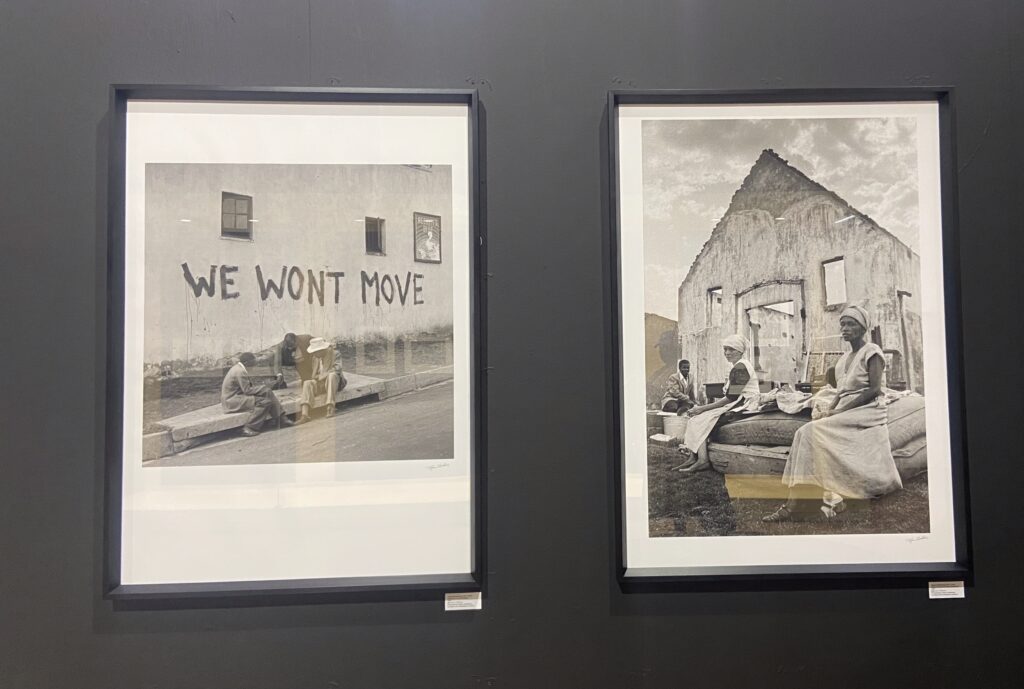
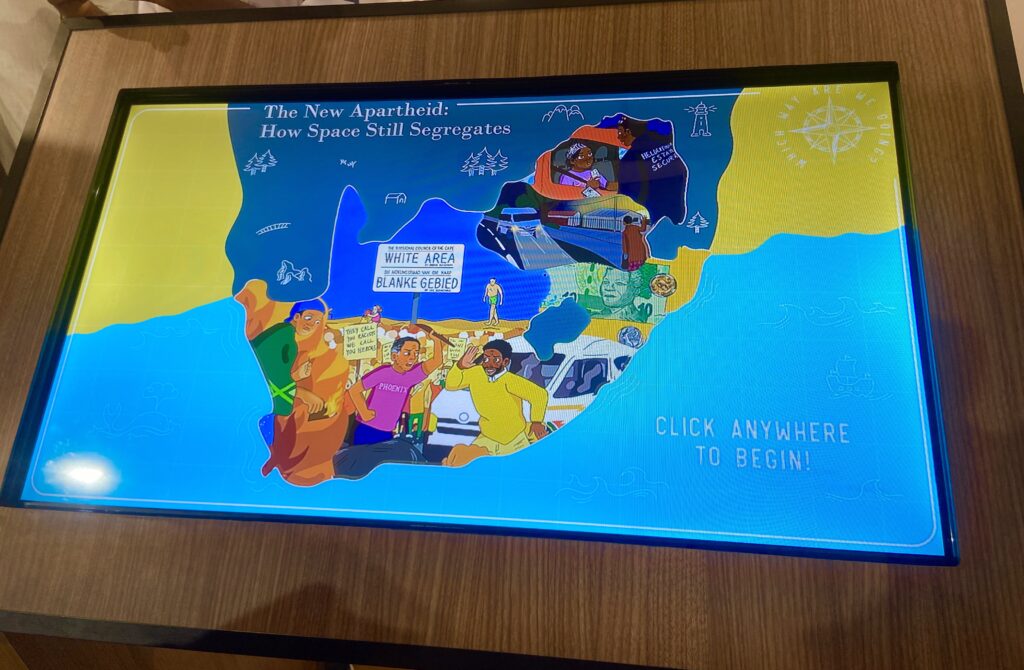
Contrasting life then and now, the works zoom into what has changed, what evolved into a different struggle and what remains the same.
Putting together an exhibition in South Africa is a huge challenge due to a lack of funding opportunities said Makgati Molebatsi, art consultant and curator. “Loaning art pieces, ensuring them per their exact value, framing…it all costs a lot of money and for it to run for only three weeks is very unfair,” she said.
Siyabonga Ngwenya, an art enthusiast, attended the opening with her father. She appreciates artists who curate exhibitions like Nkosi Sikelel’ iAzania as she gets to bond and learn from her dad who lived through the apartheid era.
“I like taking my dad to these things, he enjoys going through the pieces with much attention and shares how he remembers things. [Pointing to a train photograph on the wall] like with those trains, he told me they were exactly like that, with black people squeezed together with no breathing room,” she said.
The exhibition runs for three weeks till February 27 and entrance is free.
FEATURED IMAGE: The day Rhodes fell, a photograph by Sethembile Msezane. Photo: Lulah Mapiye
RELATED ARTICLES:
- Wits Vuvuzela, Migration explored through immersive art exhibition, Aug 2024
- Wits Vuvuzela, ‘Re-Weaving Mother’: An exhibition on existence, Aug 2023

