Lesotho’s frozen Maluti Mountains is home to Club Maluti – a rustic, analogue sanctuary where generations of Witsies have found lifelong bonds and adventure on its slopes.
Founded in 1968, Club Maluti remains the cradle of African snow sports.
A nearly 60-year partnership with Wits Snow Ski Club turns the remote mountain cabin into an iconic student rite of passage.
The hand-built, member-run lodge offers an analogue escape where phone screens give way to fireside traditions.
Up at 3,200 metres in the Maluti Mountains, where sub-zero air bites your cheeks and river gorges freeze into solid glass, sits a rustic timber lodge. Its living heartbeat the generations of snow-seekers that visit during the colder months. Tucked away in Lesotho, ten minutes down the pass from Afriski, Club Maluti (Club M) is a place where city stress dies on the switchbacks and generations of Witsies have found a second home.
Stepping through the timber door of Club Maluti after the 5-hour drive up from Johannesburg, the first thing that hits is not the cold; it is the immediate warmth of woodsmoke, room-wide laughter, and decades of lived history. Shedding my heavy winter coat as the sound of music hums through the room, I realise I haven’t just entered a cabin; I’ve stepped into a living time capsule and close-knit community.
How a crazy idea built a legacy
Sitting near the fireplace listening to older members share stories over cold beers, the roots of the place come into sharp focus. The story began in the mid-1960s with Syd Chaplin, who ran pony treks in the region before establishing Oxbow Lodge near the Malibamat’so River. Looking to draw winter crowds to the frozen highlands, Chaplin connected with Phillip Lloyde, a ski enthusiast, alongside Joburg-based friends Brian de la Harpe and Stan Flemming.
The four friends saw the snowy Maluti peaks as an ideal and natural playground for winter sports. Driven by a shared love for skiing and working through official channels, they secured permission from King Moshoeshoe II of Lesotho. They signed a 100-year lease on the land, under the strict condition that no one could profit from the club, before officially forming Club Maluti. What followed in 1967 was endless weekend work parties where members hauled timber up unpaved tracks; they completed the original A-frame in April 1968.
When their initial slope proved too sunny, local mine manager Keith Whitelock pointed them ten kilometres east to the Mahlasela Bowl, a cold, shaded natural amphitheatre. It proved to be the finest natural slope in Lesotho, establishing the cradle of African snow sports. Throughout the 1970s and 80s, South African families crossed the border to escape city life, skiing, ice-skating on frozen gorges, and dancing on lodge tables late into the night.
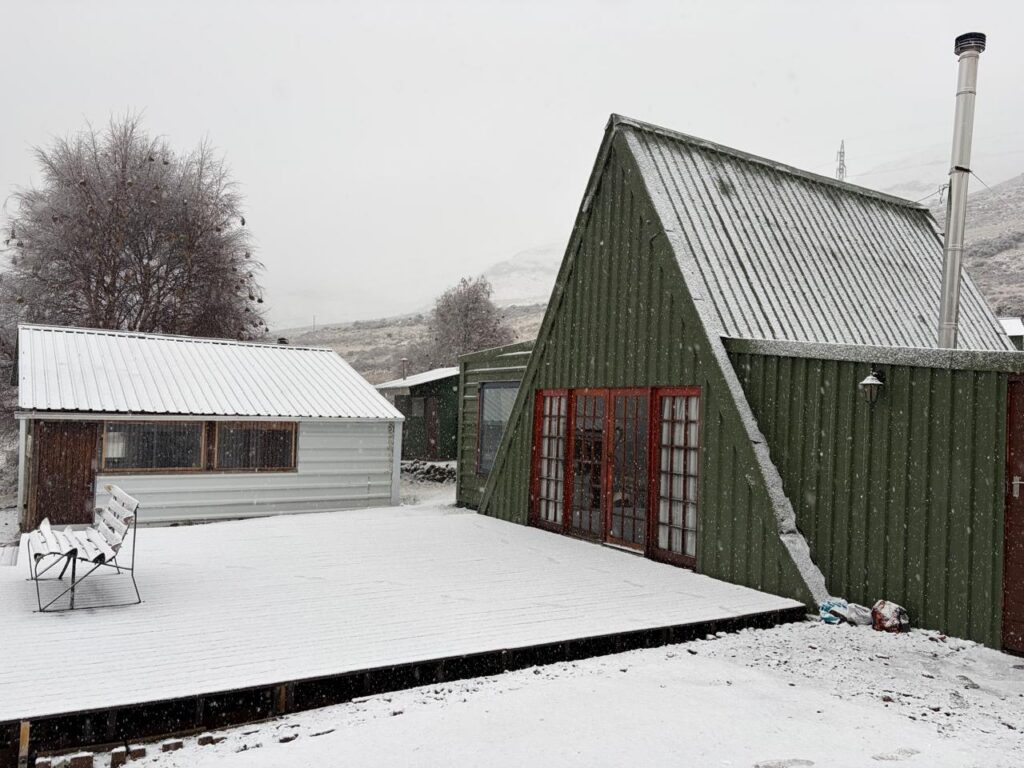
Original A-frame building during winter. Photo by: Daniella Ripamonti
When campus met the mountain
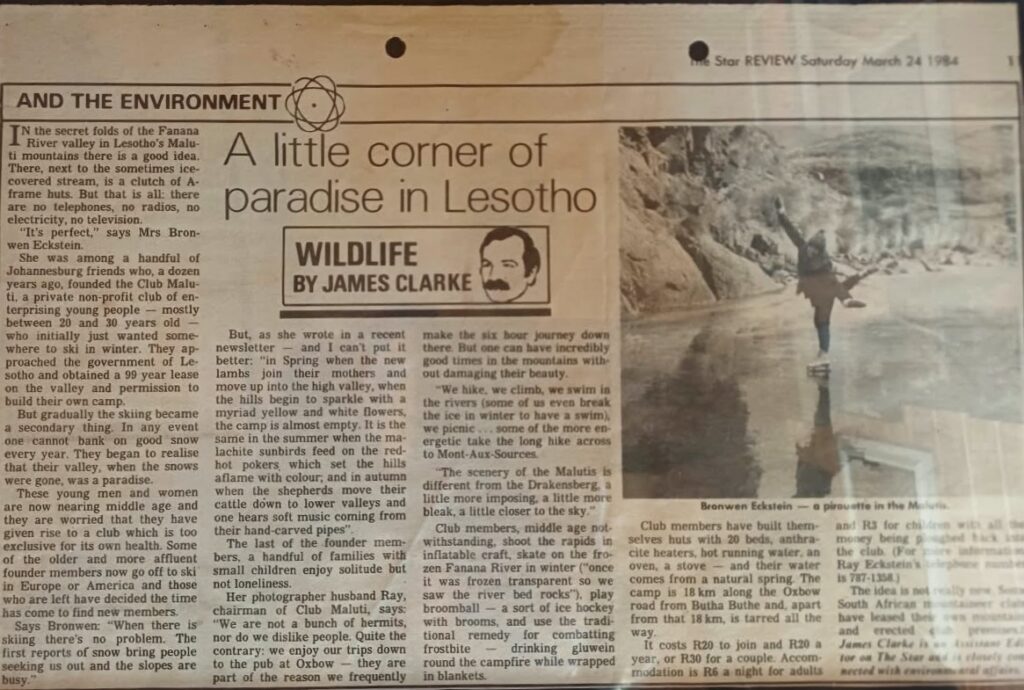
Walking through the cabin, I quickly notice how deeply Wits University is woven into the floorboards. In 1984, Wits student Ivan van Eck saw a newspaper photo of someone ice-skating in Lesotho. Entranced, van Eck drove up to investigate, fell in love with the place, and founded the Wits Snow Ski Club (WSSC) to bring campus along.
Van Eck eventually took over ski rentals and set up makeshift rope tows at the club in 1991. However, his push to create commercial ski packages directly violated the King’s non-profit mandate, famously leading to his deportation by Lesotho border officials in 1992 for operating a business without a hotel licence.
Meanwhile, through the late 1980s and 90s, Club M member Ernesto Casserino conducted feasibility and environmental studies with the Lesotho government. His work laid the groundwork for fellow members Graham Joyce, Oliver Schwankhart, and Peter Pyper to partner with Wessel Bosman and open Afriski resort in 2000.
Through changing resort developments and shifting border regulations over the decades, the bond between WSSC and Club M remained untouched, creating a bridge between varsity life and the peaks of Lesotho. Former Club M Chairman Mehow Granicki explained that this pipeline is what makes the club unique: “If you get involved with Wits Ski Club, you’re always welcome to continue [as a full member] at Club Maluti after you finish your studies. Your varsity mates become your winter mates.”
Archive newspaper article from 1984 that made Evan van Eck go to Lesotho and later establish the Wits Snow Ski Club.
The shift to boardsand living walls
Standing in front of photo archives from the 80s and 90s, I watched the club’s visual story unfold on its lounge walls. The black-and-white photos of the 70s, the bright clothes of the 80s, and the rise of snowboarding on the continent in the 90s.
“The students are a great litmus test,” Granicki noted. “They come like every generation with their music, quirks, and ideologies. The club absorbs, welcomes, and adapts. We had electro, now it’s drum & bass. We charged camera batteries, now cell phones, but it’s still the same sound system, and it’s still the same generator.”
When snowboarding exploded internationally in the late 80s, students brought back overseas VHS tapes, cut a window into an A-frame wall, mounted a monitor, and looped snowboard videos. Student energy brought freeride trick culture, vibrant gear, and fresh music to the slopes.
Today, almost every member snowboards. The communal shed is packed with shared boards and boots, keeping snow sports accessible for students. Down at Afriski, supportive members help newcomers set up their gear and carve their first turns.
The rituals that build a family
Experiencing the lodge firsthand reveals how much care keeps it running. Completely member-run, the property features the main A-frame lounge, the timber B-frame bunkhouse, and the Park Home sleeping quarters kept warm by anthracite stoves.
Every couch and timber beam represents collective effort. As Granicki reflected: “Each building had an era, a crew, a mission.” From wrap-around seating to the wood-fired hot tub steaming under sub-zero skies, everything was hand-built during voluntary off-season work parties. At the heart of daily life are Basotho hosts Maskok and Ntja Sepatla. Living on site, Maskok lights the fires before dawn while Ntja maintains the generator and water systems.
Access remains strictly word-of-mouth through member referrals. Every trip kicks off with Friday night introductions around the fire, where guests share their names, trip count, and a claim to fame before receiving a mandatory weekend nickname.
“That drive and weekend in the mountains bonds you in such a healthy way,” Granicki explained. “By maintaining rituals, we maintain culture across generations.”
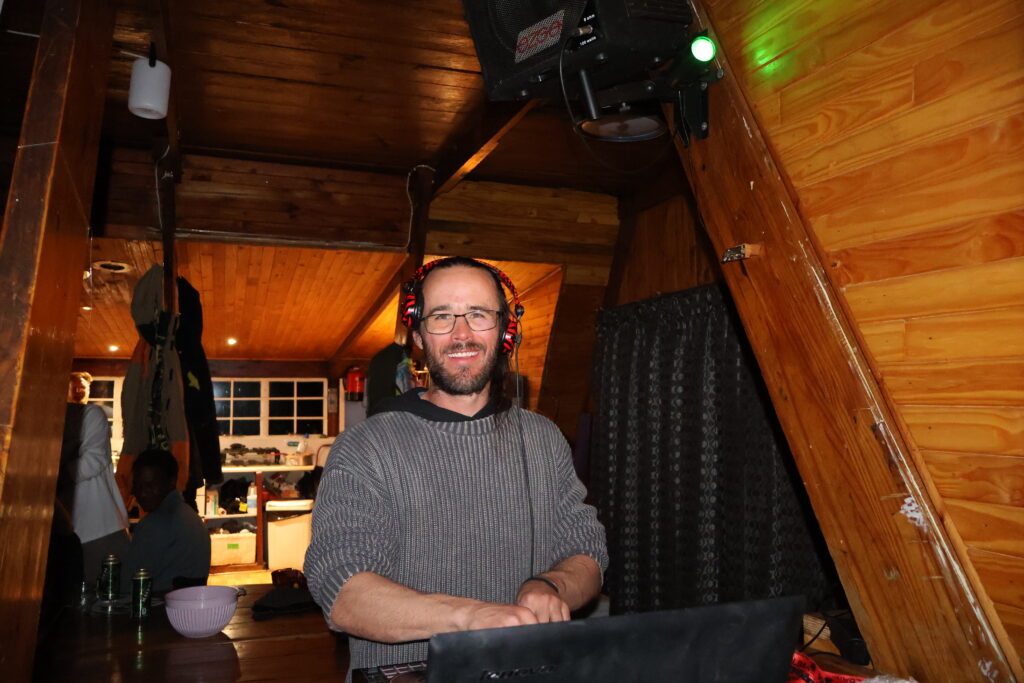
Jason Roberts DJing in A-Frame. Photo by: Daniella Ripamonti
The soul of Club M
For Vishaylin Mahadeo, who joined WSSC in 2011, the lodge became his anchor: “It’s home to me; it’s my family, my safe space. When going through a difficult time, my first thought is, ‘let’s go to the mountain.’ I have snowboarded everywhere in the world, and this mountain is still so special to me. My university experience was created through Ski Club; I even extended my degree just because I loved it so much!”
Granicki, who first visited as a matric student, feels that same pull: “Club M is home to misfits, geniuses, daredevils, and lost souls [who are] funny, beautiful, and live for the moment… My favourite personal memory is meeting my wife up there. Our adventure began from loving winter and the outdoors.”
In a world driven by screens, Club M remains fiercely analogue.
“It represents freedom, exploration, and self-discovery. You’re in the middle of two mountains, under stars, in a cabin when it’s snowing. My hope is that it remains a time capsule that forces you to be more of yourself, having fun, being human. Here’s to the snow!”
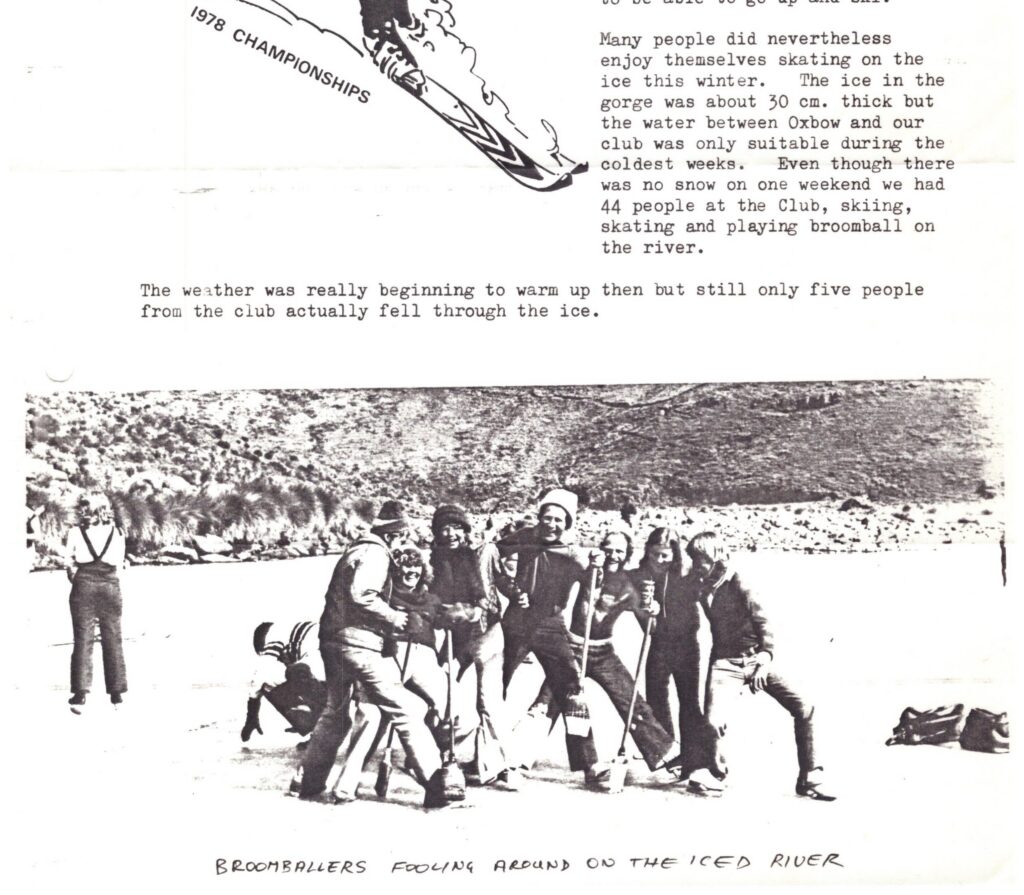
Archive newspaper from 1978 showing members broom balling on the iced river.
FEATURED IMAGE: Photo of Club M members at Afriski. Photo by: Daniella Ripamonti
Architecture is often associated with what it produces: the walls, windows, and spaces that become a part of our everyday life. But before a building exists; someone must imagine it.
For two young women from the Wits School of Architecture and Planning, imagining took them beyond Wits and into Vienna, Austria, after they were selected to attend an international architecture summer school.
Jaimini Ranchod and Maimuna Dadi Patel, two third-year Wits students, were selected to attend the annual Vienna Architecture Summer School, a week-long programme that brings architecture students, graduates and young practitioners from all over the world together to one of Vienna’s largest social housing estates in the former laundry hall of Sandleitenhof.
For Ranchod and Dadi Patel, the invitation was based on their studio work and great academic performance. It became an opportunity to learn and exchange ideas alongside young graduates and practitioners from different parts of the world, including Estonia, Italy, and France, among others. “I think this opportunity has allowed me to be so much more open-minded, being able to see things from multiple perspectives, and understand other people especially when they come from cultures and contexts different from mine,” shared Dadi Patel.
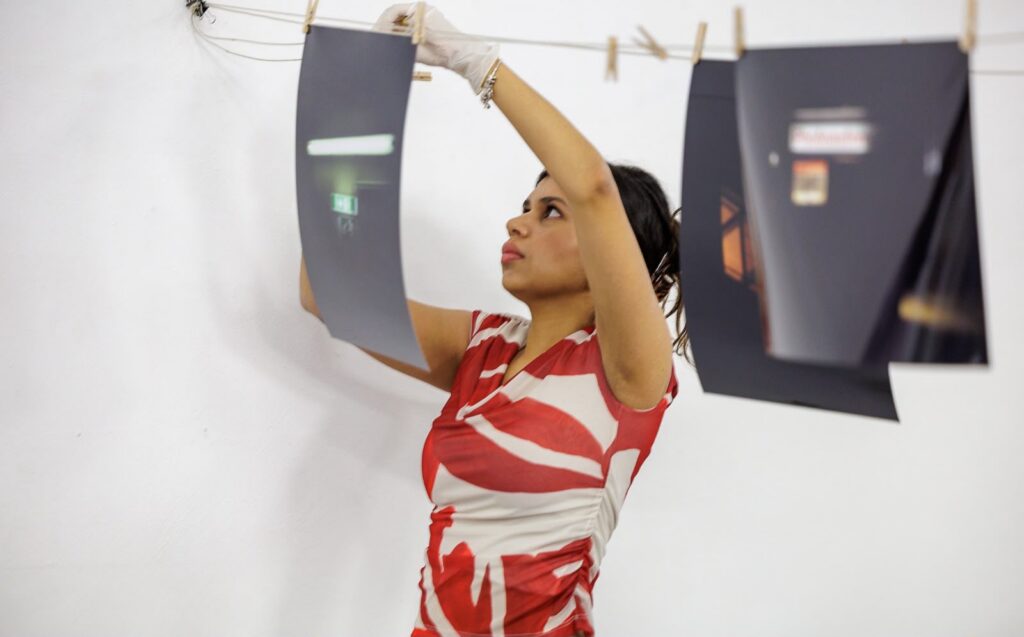
Architecture student Maimuna Dadi-Patel hanging up photographic prints. Photo: Richard Pobasching
The opportunity
Being exposed to people and work from across the world encourages students to understand that cross-culture allows them to question any ideas they may have taken for granted, said Dr Sandra Felix, lecturer at the Wits School of Architecture and Planning. “The exposure to other ways of practicing architecture makes these students aware of the way in which South African architects practice,” she said. For Ranchod and Dadi Patel, it means returning home with new understandings and global perspectives.
And interacting with young women specifically, interested in the same things as them, but all coming to the opportunity with different ways of viewing the same abstract ideas was particularly enlightening. “It feels that although we are from different contexts, we are almost cut from the same cloth,” said Dadi Patel “We share the same struggle of being women in a male dominated field.” The sense of being “cut from the same cloth” shaped how the students could think and interact with their identity in their designs, and how who they are influences what they choose to preserve, change, or build around them.
TheWitsedge
Ranchod’s path to Wits was not straightforward. She started in biomedical science and realised it wasn’t a space she wanted to be in. After taking a year out to study interior design, she ventured into architecture. Her initial plan was to study at UCT, but she chose to study at Wits. “Wits has built a reputation as one of the best places in South Africa, and I think the continent, to study architecture.” she explained. Beyond the institution’s legacy, being close to her family in Johannesburg mattered to her, because they are her support system.
For Dadi Patel, studying at Wits was intentional. “I started architecture at Wits because it was one of my top choices, and it is close to home.” Along the way, she doubted herself, and felt anxious about managing such a demanding course, where students have to do everything from designing by hand to physically constructing models Over the past two years, that doubt turned into passion, shaped through her work and her interest in thinking about things differently. Understanding the architectural space as something broad that encompasses people, environment, and context has helped her grow into how she sees herself as a young architect.
The sense of growth is reflected in the field itself. South African architecture has traditionally been a profession dominated by white men. However, the narrative has shifted, with women of colour leading in some of the most celebrated architectural spaces. Women like Yasmin Mayat, co-founder of Mayat Hart Architects and an accredited heritage practitioner, and Sumaya Vally, founder of Counterspace, who became internationally renowned in 2021 after becoming the youngest architect ever to design London’s Serpentine Pavilion, have paved the way. Nadia Tromp, owner of Ntsika Architects, became the first African woman in 2017 to win a World Architecture Festival Award for her Westbury Clinic among several other awards, and Dr. Huda Tayob, who focuses on research in migration and identity in the architectural space, are examples of women of colour in architecture who are reshaping the field. Through their work, students can see that change is possible.
The shift was clear to the pair in Vienna, with Maimuna sharing that the workshop was more female dominated. For both, representation matters in a space where woman could still be undermined for choosing to study the course.
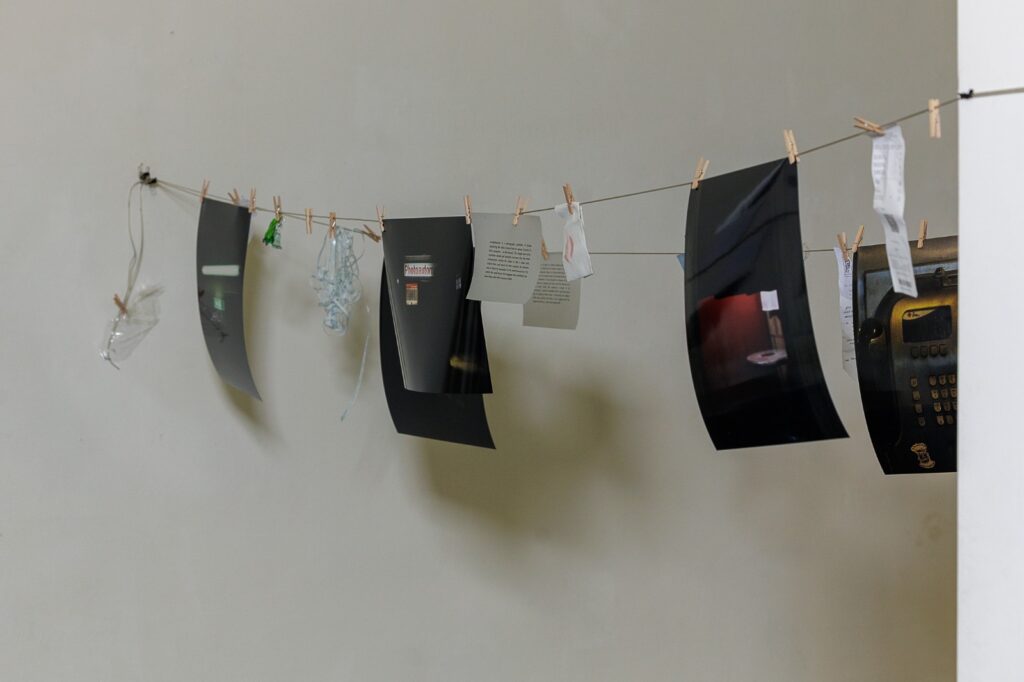
Photographic prints and notes clipped to line. Photo: Richard Pobasching
Looking forward
When asked about what they want their architecture to say about them in the future, Ranchod wants her architecture to feel like a safe space for the communities who use it and makes room for those who use it after her. “It should feel like it belongs exactly where it is, and it was built just for the community who uses it. What matters most is that people are comfortable enough to use the spaces I designed,” she explained.
Dadi Patel wants her architecture to be thought-provoking and beneficial to communities. “I want my architecture to say that I have done something for the people and didn’t just design selfishly. I would want to make a change in the world. I want to do more than what architecture is known for, I want to show that I am changing and the world is changing” she said.
The future is no longer about just building new spaces – it is about adapting to what already exists in ways that cater for communities and including the diverse voices that have been excluded from designing them.
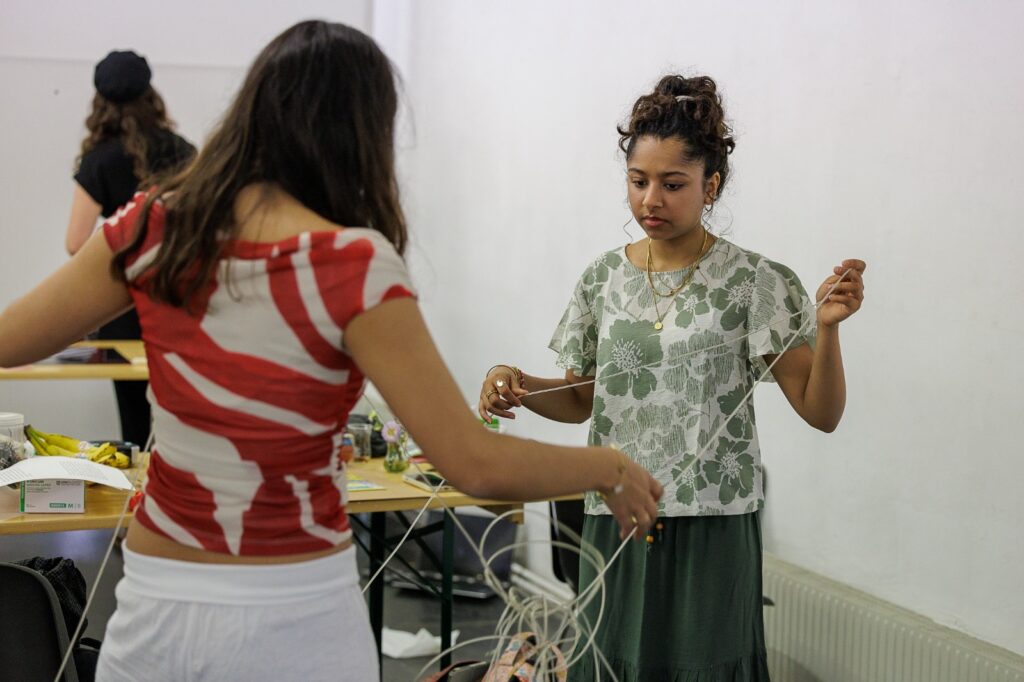
Jaimini Ranchod constructing a structure out of white string. Photo: Richard Pobasching
FEATURED IMAGE: Architecture students measuring and aligning work on a wall. Photo: Richard Pobasching
The clean girl aesthetic whispers, but creative makeup is yelling: “I’m back, bitches!”
The ‘clean girl’ aesthetic is losing its grip on the beauty industry.
Colourful and experimental makeup is taking over.
Younger generations are redefining beauty by making their own rules.
For the past few years, the ‘clean girl’ aesthetic has dominated beauty culture. The same brushed-up and gelled-down brows. The same ‘doughnut’ glazed skin. The same ‘strawberry’ barely there blush. Somewhere between the fourth layer of skincare and the third swipe of clear lip gloss, the aesthetic has become less of a trend, and more of a uniform of conformity. If you doomscroll for more than ten minutes, you will start to notice that everyone looks eerily similar. An almost identical standard that looks a lot like past beauty ideals rather than dismantling them.
The clean girl was everywhere. She woke up at 5.a.m., drank freshly juiced organic greens, and slicked back her hair into a definitive, carefully curated bun. This was meant to look like it took her 5 minutes to get ready, when in reality it took twenty. Her skin seemed perfectly luminescent, and her hair stayed stuck down in place.
But, the wind has changed speed, and the tides have turned over. The bun has started to loosen. The blush is bolder, eyeshadow is brighter, and highlighter is blinding, once again.
Welcome to the death of the clean girl. May she rest in pieces.
As the years pass and the trend finally fades away, people are moving away from this carefully designed idea of what beauty should be and is turning towards makeup, hair, and style that is louder, messier, and more personal.
Makeup artist, Tylar Booysen, looking at herself in the mirror. Photo: Kerese Govender
The clean girl aesthetic is more than just a simple makeup look. It became a must to follow. The fake freckles and dewy skin are just surface level. It represents a specific image of femininity. Makeup stopped being loud and proud and instead, became something meant to be minimal, polished, and controlled. Everything about this aesthetic is meant to appear effortless. Yet, here’s the gag: there is nothing effortless about it. To achieve this standard, expensive, extensive beauty routines are required.
The clean girl disguised beauty conformity as self-care. Individualism and self-expression exited the group chat.
But now, they’re back! Better than ever.
Graphic eyeliner is escaping its assigned constraints. Colour combinations that have never been thought of before are being invented. Shimmer is showing up in places that shimmer has never been invited to before.
While the clean girl encouraged people to blend in, the maximalist queen steps in and demands to be seen and heard.
Close up of lip products and cigarette butts with lipstick stains. Photo: Kerese Govender
Makeup artists that have contributed to the resurgence of creativity in 2026 are Ngozi Edeme, better known by her online persona PaintedbyEsther, and Sophia Sinot.
Edeme’s signature excessive use of blush and colourful shimmers had the entire beauty industry trying to recreate her looks. She has become a significant participator in Tyla’s current branding for A*POP, from the bright eyeshadows to princess pink blush, body shimmer and neon wigs. It is becoming increasingly easy to spot a look created by Edeme.
Zara Larsson’s Midnight Sun era is also instantly recognisable: what started with a poor PicsArt dolphin edited alongside Larsson’s 2017 hit Symphony has resulted in one of the most iconic popstar rebrandings of the 2020s. Together, Larsson and Sinot have brought back the dazzle, shimmer and shine which pop stars used to be known for. Every look incorporates a range of colour combos, gleaming glitter, and rhinestones lingering close by.
These perspectives have inspired people to look at makeup as less of natural beauty and more as a way of creatively contributing to one’s individual style in the boldest way possible. An eye can become a canvas, a face something to experiment on. Lipstick becomes a statement, and eyeshadow commands attention. The rules of makeup are changing. A look can be inspired by anything: paintings, music, subcultures. One day, it can be punky smudged eyeliner. The next, it can be as colourful and dramatic as drag. It does not demand consistency or structure. Instead, it pushes you into not choosing one aesthetic for the rest of your life. You are allowed to do soft glam on Tuesday and the furthest thing from natural on Thursday.
The most notable thing about the shift towards creative beauty is that it is unapologetically visible. For years, makeup trends have been obsessed with making beauty invisible. No-makeup meant using makeup, while pretending you didn’t. Creative makeup does the complete opposite; it looks like time, effort, and like someone sat in front of a mirror for two hours deciding what colour goes where. Creativity exists without apologising for being there.
The reality is that beauty trends have always been telling us what to do. Your eyebrows should be thicker, no, thinner. Blush belongs on your nose or does it? Everyone is expected to change their style. The clean girl aesthetic was just the latest trend in beauty’s long history of this phenomenon. Creative makeup represents something different, but it is not completely free from trends. The internet has a peculiar ability to turn individuality into another categorical trend for people to follow. Give the internet a few months, and there will be a ‘correct’ way to be creative. But for now, it is refreshing to see people figure out their personal style.
However, we have to be realistic. The clean girl is not being buried next to the Tumblr girl or the 2016 baddie just yet. There will always be people who prefer a classic slick back bun. The issue lies with the idea that this is the only correct option. That frizzy hair is unacceptable. That the afro must be ‘neatly’ combed back instead of being free, beautiful as it is. Creative beauty is not here to replace but to rebuild a room for more. For the person who sees beauty as what it is: a form of expression.
Perhaps we are tired of being told what is acceptable and what is not. Every week, there is a new product to purchase. Every month, there is a new trend to follow. Every year, there is a new version of yourself to become. Creative beauty says, “Hell no!” It says that beauty does not have to be subtle, invisible, or effortless. Beauty is allowed to simply be fun.
The clean girl may still be alive somewhere in the world, but elsewhere the creative queens have just unboxed a new neon eyeshadow pallete.
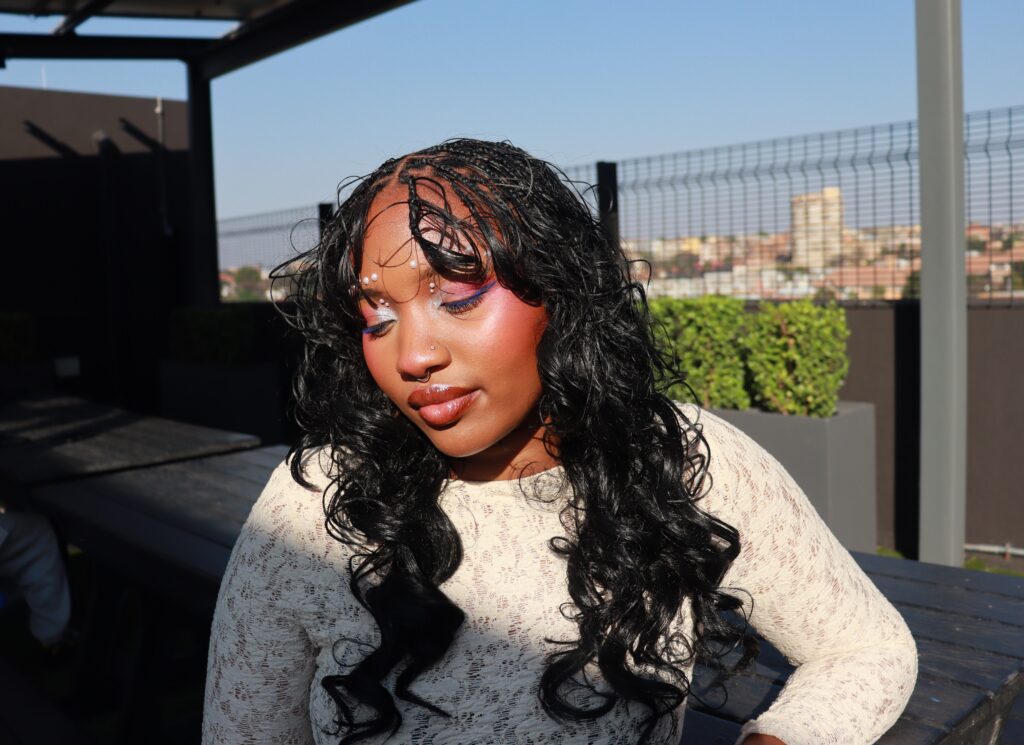
Tylar Booysen showcasing her makeup look. Photo: Kerese Govender
FEATURED IMAGE: Close up of creative makeup look on Tylar Booysen. Photo: Kerese Govender
“Solar Mind” innovation uses AI to detect changes affecting solar panels and improve electricity generation.
Ten university teams competed in the Tata Consultancy Services Sustainathon South Africa 2026 Grand Finale.
More than 1 200 registrations were recorded, with 65 submissions from students across more than 40 institutions.
Durban University of Technology’s, Still Lazy Tech team won the R30 000 top prize with Solar Mind, an intelligent MPPT system.
TCS Sustainathon competition winners celebrating on stage. Photo: Nqobile Mtshali
A solar system designed to maximise electricity generation, an app that detects water leaks and AI tools aimed at improving agriculture were among the solutions showcased at the Tata Consultancy Services (TCS). Sustainathon South Africa 2026 at the Radisson Blu, Sandton, on September 1.
The competition, themed “AI for Sustainable Futures”, challenged students to use technology to tackle problems linked to three United Nations Sustainable Development Goals: Good Health and Well-being, Quality Education, and Affordable and Clean Energy.
More than 1 200 registrations were recorded for this year’s competition, with 65 submissions from more than 40 institutions. Ten university teams progressed to the finale.
Tata Consultancy Services, has hosted the Sustainathon in South Africa since 2022, giving students a chance to use technology to solve problems they see around them.
This year’s R30 000 top prize went to Still Lazy Tech from Durban University of Technology (DUT) for Solar Mind, an intelligent Maximum Power Point Tracking (MPPT) system. This system helps solar panels maximise electricity generation by continuously adjusting their operating point to capture the most power available under changing conditions. The team’s AI model identifies conditions that affect panel performance, such as when a building casts a shadow over a panel during part of the day.
Sipho Mokoena, a member of Still Lazy Tech, said the team wanted to create a more affordable solution.
“A lot of these big companies, when they make these imported devices, they build them for industrial applications. No one is really building it for the South African market,” Mokoena said.
The team faced challenges while developing the project,“Funding, and university politics mainly,” said Mokoena. So now, they are looking at securing more funding, pursuing a master’s programme and eventually patenting Solar Mind.
Prototype of AI powered waste management machine created by CO Coders Eco-Pulse, students from the University of Johannesburg. Photo: Nqobile Mtshali
Langa Dube, regional director at TCS, said the company continues to support students through mentorship, technical guidance and intellectual property support after the competition.
“We did not want it to end on the stage,” Dube said.
Dube said about five or six projects are currently at advanced stages of prototyping. Technical and intellectual property support is also extended to students who want to develop their ideas further.
The other finalists presented solutions focused on healthcare, mental health, water security, agriculture, renewable energy and waste management.
Wits Fine Arts students Camryn Jessie and Abdullah Saloojee presented their collaborative exhibition at The Point of Order.
The theme was inspired by Abdullah’s poem Citrus Soup.
Through installation, painting, and found objects, the duo leaves meaning open, hoping curiosity outweighs fear.
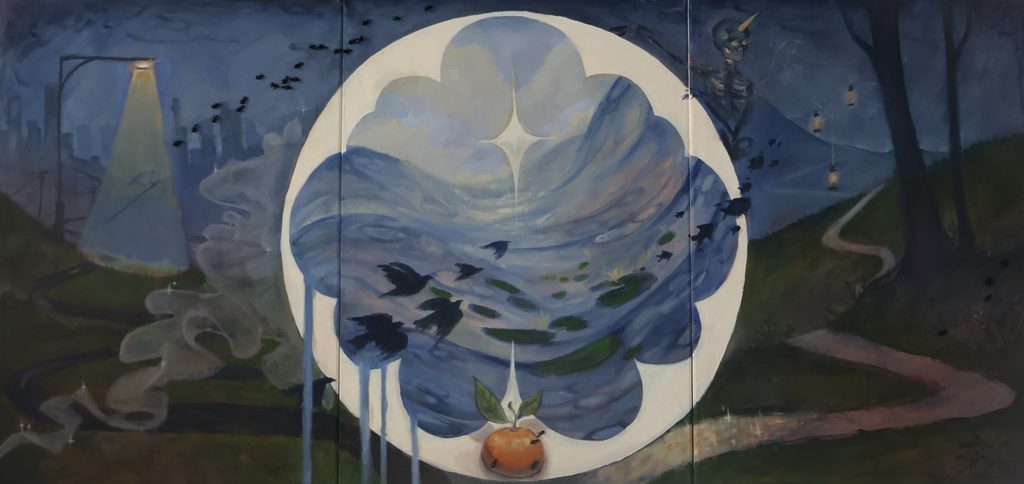
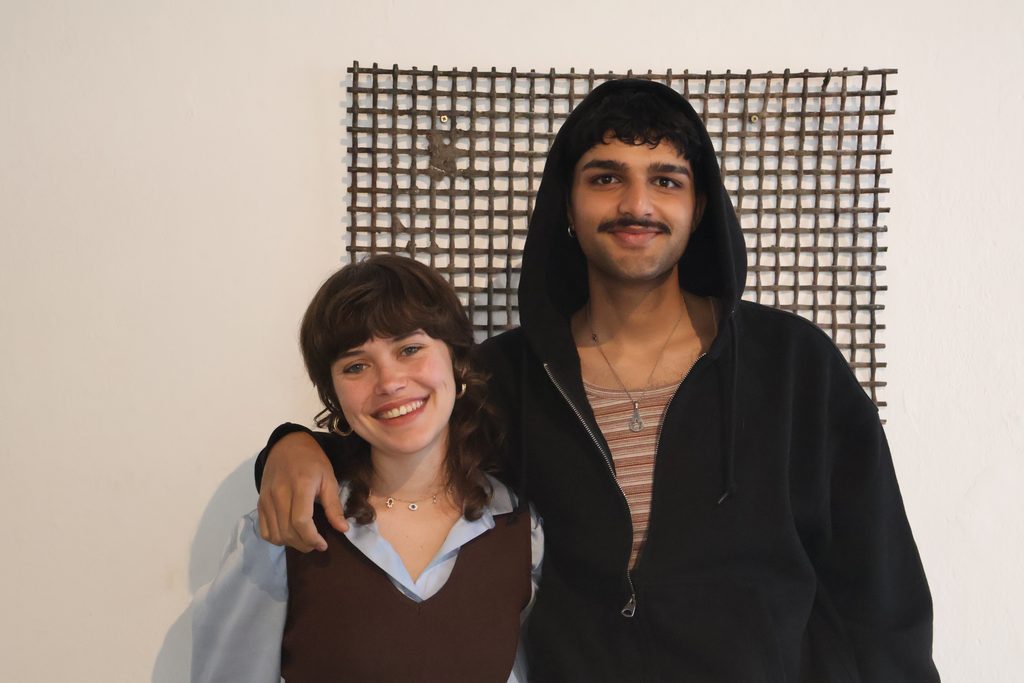
From August 27 to 28, 2026, fourth-year Wits Fine Arts students Camryn Jessie and Abdullah Saloojee presented a collaborative exhibition at The Point of Order in Braamfontein: There’s a Bug in This Citrus Soup.
The theme was inspired by a poem Abdullah wrote and shared with Camryn. It reads in part: “My conscience tends the sacred wound, my soup now cold from the ashes. The citrus leaks through my soul; When the water drys up, where do I go?”
An artwork by Abdullah Saloojee titled: Ant/One is many. Photo by: Naledi Maraisane
After weeks of analysing it, Camryn said she found a deep sense of want and disappointment in the piece, which became the anchor for the exhibition. The citrus, the artists said, speaks to intense tension and a state of limbo. The bug itself is left open to interpretation; it can be an insect, a stomach bug, or a technical bug. Essentially, the bug is meant to symbolise disturbance and discomfort.
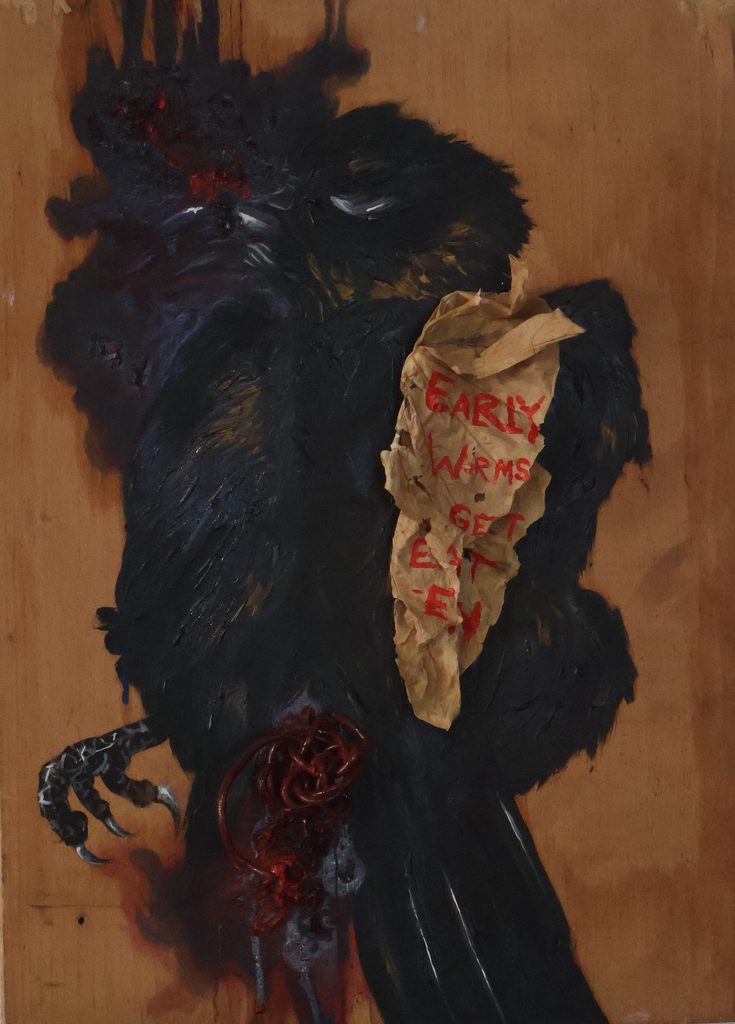
That disturbance shows in how differently they work. Camryn’s artworks are installation-based. Her paintings act as a base, then she builds around them with tangible materials that give them life. Abdullah’s work is orientalist, an art form which blends realism and fantasy. Yet their pieces have blended so well that people cannot tell which piece belongs to whom. “Another thing that visually combines our work is our fascination with found objects,” Abdullah said. Those objects have been integrated into several artworks.
Abdullah wants his work to evoke sadness, but as a journey toward rediscovered hope. Camryn, in contrast, hopes her pieces “keep them on the verge, whilst still being curious but weird at the same time,” while evoking disgust and discomfort.
An artwork by Camryn Jessie titled: Early worms get eaten. Photo by: Naledi Maraisane
Both have intentionally stopped doing things the ‘traditional’ way within Johannesburg’s contemporary art landscape: “We disrupt the space in subtle ways by keeping things natural, because you don’t have to do things in a certain way,” they said. Their goal is to get people interested without feeling stupid for not understanding. “The bug is something you don’t fully understand, but it ignites a curiosity,” Abdullah said. “Even though there is something strange and unknown, and that you are a bit scared, we hope that the curiosity outweighs that fear,” Camryn added.
In the end, the metaphorical bug can be feared and embraced. The journey gives space to acknowledge and learn to live with its uncertainties, discomforts, and weirdness.
Camryn Jessie and Abdullah Saloojee posing for a picture in front of their found object titled: The Window. Photo by: Naledi Maraisane
FEATURED IMAGE: An installation by Camryn Jessie titled: Life leaks/life enters. Photo by: Naledi Maraisane
I Understand What You Do. You Show Us What We Do Not See invites visitors to discover the extraordinary hidden in everyday places.
On 4 August 2026, the Wits Art Museum opened “I Understand What You Do. You Show Us What We Do Not See”, an exhibition that explores the idea of home through photography. Rather than presenting home as simply a physical place, the exhibition challenges visitors to consider how belonging can exist in ordinary spaces and everyday moments that often go unnoticed.
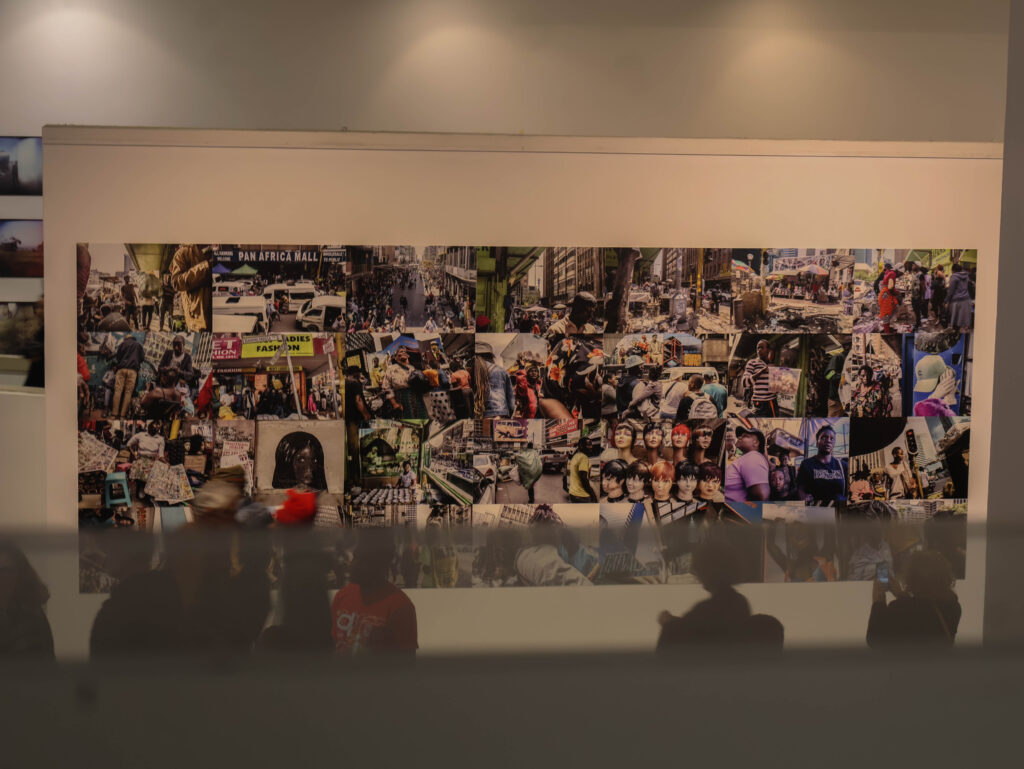
The exhibition celebrates the legacy of renowned South African photographer David Goldblatt in what would have been his 95th year. Inspired by Goldblatt’s belief that photography reveals what is often overlooked, the exhibition explores themes of identity, memory, belonging, and place. It features work by nine predominantly Johannesburg-based photographers documenting diverse experiences of life in and around the city, alongside photographs from the “Of Soul and Joy” photography initiative. The exhibition’s title comes from a memorable encounter in which a stranger described Goldblatt’s work by saying, “I understand what you do. You show us what we do not see.”
That sentiment is reflected throughout the exhibition. A passer-by may see only a busy Johannesburg street or an ordinary neighbourhood, while someone else recognises it as a place of comfort, memory, and belonging. The exhibition encourages viewers to pause and reconsider these familiar spaces, revealing the stories that exist just beneath the surface.
One of the exhibition’s greatest strengths is its curation. Each body of work flows naturally into the next, allowing the conversation around home and memory to develop seamlessly as visitors move through the gallery. Although each photographer presents a distinct perspective, the exhibition never feels disjointed. Instead, every collection builds upon the last, reinforcing the central theme and making it easy to understand the exhibition’s message without it ever feeling repetitive or forced.
A picture of one of the art works displayed by Sanele Sithole
Among the featured artists, Jabulani Dhlamini’s “Poloko: In Soweto” stood out most. His work explores the hidden histories of Soweto through photographs of homes, portraits, and personal stories. Rather than focusing solely on well-known historical sites, Dhlamini captures everyday spaces that have quietly become symbols of resilience, identity, and belonging. His photographs reveal how residents have transformed apartheid-era houses into places that carry personal and collective memories while also reflecting on the legacy of the 1976 Soweto Uprising and his own family history.
As someone from Soweto, Dhlamini’s work resonated with me on a personal level. The homes, streets, and familiar surroundings he photographs are places I have seen countless times, often without giving them much thought. Seeing these everyday spaces displayed in a gallery reminded me that what feels ordinary to those who live there can also hold extraordinary meaning. His photographs challenged me to look beyond what is immediately visible and appreciate the stories, memories, and histories embedded in places I have always called home.
More than a photography exhibition, “I Understand What You Do. You Show Us What We Do Not See” succeeds in encouraging visitors to slow down and look closer. Its thoughtful curation ensures that the works complement one another, while its central theme of home is communicated with clarity and sensitivity. By the time visitors leave the gallery, they are reminded that home is not simply a place on a map but a feeling shaped by memory, identity, and lived experience. It is an exhibition that quietly asks us to reconsider the familiar and, in doing so, reveals the extraordinary hidden within the ordinary.
Young researchers gather at Wits to present solutions to rising global issues.
Falling Walls Lab Gauteng was held at Wits where students competed for a spot on the international stage in Berlin.
The competition required pitchers to present an idea that addresses global challenges.
Researchers, innovators, and entrepreneurs were given an opportunity to engage with people outside of their disciplines and institutions.
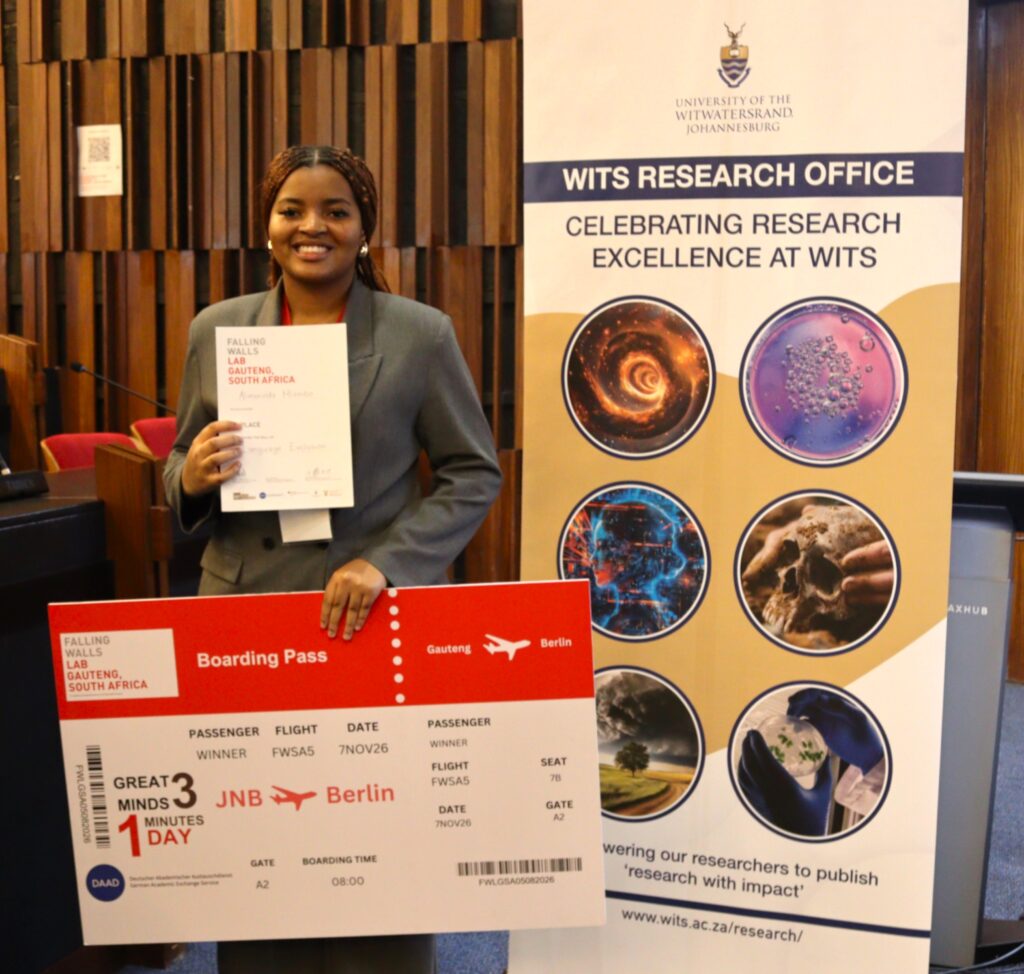
A Wits honours student, Alimerinda Mlambo, will represent Gauteng at the international Falling Walls Lab finale in Berlin after winning the provincial competition, with an AI-powered translation platform designed to break language barriers.
Picture of Alimerinda Mlambo, the winner of Falling Walls Lab Gauteng 2026, and her certificate & ticket to Berlin. Photo: Kerese Govender
The competition, held at Wits on August 5, saw about 20 students drawn from Wits, University of Pretoria, and Tshwane University of Technology, present their innovations aimed at tackling some of the country’s most difficult challenges.
The event was hosted in partnership with the DAAD Information Centre Johannesburg and the Falling Walls Foundation. Participants had just three minutes, including answering judges’ questions, to convince an expert jury that their pitch could help solve global issues.
Mlambo, an Information Systems honours student, took first place with her invention, eLingo AI, which aims to solve language exclusion in public spaces through real-time translations. She used a fictional character by the name of Lerato in her pitch, but the story was inspired by her lived experience of sitting through a conference presentation delivered in French that she could not understand.
When asked if this will cost human interpreters their jobs, Mlambo said, “We’re not trying to replace interpreters. We’re making language accessibility available to organisations that could not afford it otherwise.”
Unlike traditional interpretation services which rely on multiple interpreters, special equipment, and significant expenses and planning, eLingo offers an affordable alternative. The platform already includes all 11-official spoken South African languages and has attracted more than 100 beta users. Mlambo stated that the team has plans to expand to other languages.
She believes this kind of software is especially needed in South Africa, where only a small portion of the country’s population speaks English as a home language. “I want to create a future where people are no longer excluded from conversations they were meant to be a part of,” Mlambo said.
Dr Samia Chasi, Head of Wits Internationalisation and Strategic Partnerships Office and chair of the judging panel, said the competition is much more than selecting a winner. “It gives students an opportunity to present their own research to audiences beyond their own disciplines and institutions,” Chasi said.
“We have very creative and innovative communities in South Africa and Africa, and we can offer our own solutions to the rest of the world. We can’t always look at importing ideas,” Chasi said.
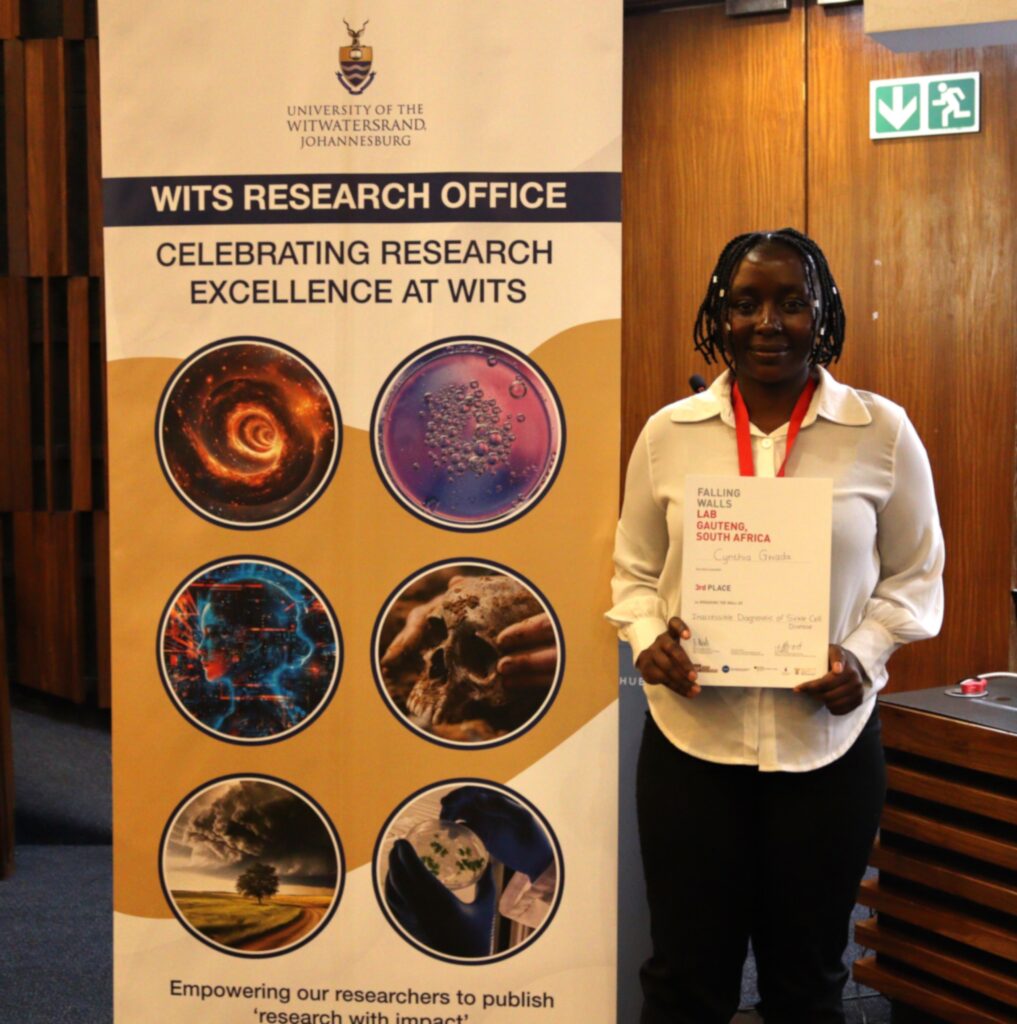
Among the interesting innovations was the third-place winning project by Cynthia Gwada which focused on an affordable diagnosis for sickle cell disease. The solution aims to expand access to rural areas in South Africa so “they don’t have to go to the cities with money that they don’t have,.” Gwada said.
Picture of Cynthia Gwada, third place winner of the Falling Walls Lab Gauteng 2026, and her certificate. Photo: Kerese Govender
Gwada also hopes to expand the diagnostics to other diseases such as malaria and tuberculosis, making diagnosis more affordable and accessible.
As Mlambo prepares to compete in Berlin, she hopes her success will inspire more young black women to pursue careers in male-dominated fields such as hers.
“Don’t wait for a seat at the table. Go and build a table,” she said.
FEATURED IMAGE: Picture of Falling Walls Lab Gauteng 2026 pamphlet and souvenir. Photo: Kerese Govender
Bafana Bafana and Banyana Banyana represent the same nation, but not the same level of support. The difference says more about us than it does about football.
Rather than pretending South Africans do not support Banyana Banyana, the stronger argument is whether the support is visible. When Bafana Bafana competed at the 2025 Africa Cup of Nations, social media timelines filled with countdowns, match previews, public viewing invitations and nationwide calls to rally behind the national team. The yellow jerseys became symbols of national unity, and every fixture felt like a national event.
Fast forward to Banyana Banyana competing at the 2026 Women’s Africa Cup of Nations, and the atmosphere is noticeably different. The defending African champions took to the continental stage without the same intensity of public mobilisation. The contrast is not simply about football. It reflected a deeper pattern in South African sport: we celebrate women’s achievements, but we do not consistently promote them with the same energy.
If the media, sporting bodies and sponsors devote more promotional resources to men’s football, then the public will inevitably become more familiar with Bafana’s journey than Banyana’s. The disparity becomes a self-fulfilling cycle: greater visibility leads to greater support, which justifies even greater visibility.
The irony is that Banyana Banyana have produced extraordinary results. They won the Women’s Africa Cup of Nations in 2022 and have become one of the continent’s strongest national teams. Yet the same CGE report concludes that despite these achievements, they “have not received the same recognition and rewards as their male counterparts, Bafana Bafana.” Success alone has not earned them equal treatment.
Perhaps the most important conclusion from that study is not the numbers themselves but what they mean. The researcher argues that under-reporting women’s sport limits the public’s knowledge of female athletes’ achievements, while the continued trivialisation or neglect of women’s sport creates the impression that it is less important or less worthy of attention.
Recognition also extends beyond media coverage. The CGE points out that SAFA awarded Banyana R1.2 million after winning WAFCON, while previously spending R9 million on vehicles for provincial administrators. It also notes that Bafana players received larger bonuses for reaching the AFCON quarterfinals than Banyana received for winning their continental title. These examples reinforce the message that women’s achievements are too often valued less, even when the results surpass those of the men’s team.
South Africans like to describe themselves as passionate supporters of whoever wears the national jersey. That ideal should not depend on whether the badge is worn by Bafana or Banyana. If we want genuine equality in football, we must stop expecting women to earn support only after they win trophies, while assuming the men’s team deserves nationwide campaigns simply because they are men.
Equal support begins long before kick-off with equal storytelling, equal promotion and equal belief that every national team is worthy of the country’s full attention.
FEATURED IMAGE: A graphic of Banyana Banyana standing under the spotlight. Graphic: Sanele Sithole
Film graduates find new and creative ways to navigate the rocky terrain of show business.
A trio of former Wits film students debuted their independent screening event, Chosenima.
The event challenges the rigidity and exclusivity of film festivals by providing an open platform for creative expression.
With the success of the first screening, the group hopes to empower more emerging voices in the industry.
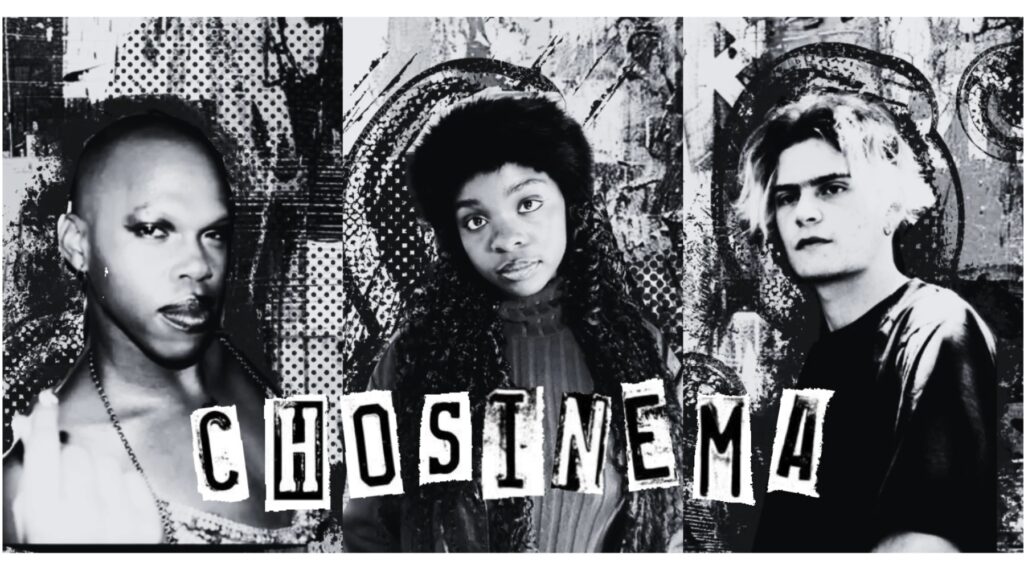
For a group of three film graduates, Natasha Chirambo, Simamkele Mrwetyana and Scott Paton-Levin, cinema has never been about the flashy film festivals or prestigious Oscar nominations. It is simply about a deep, unwavering passion for the craft.
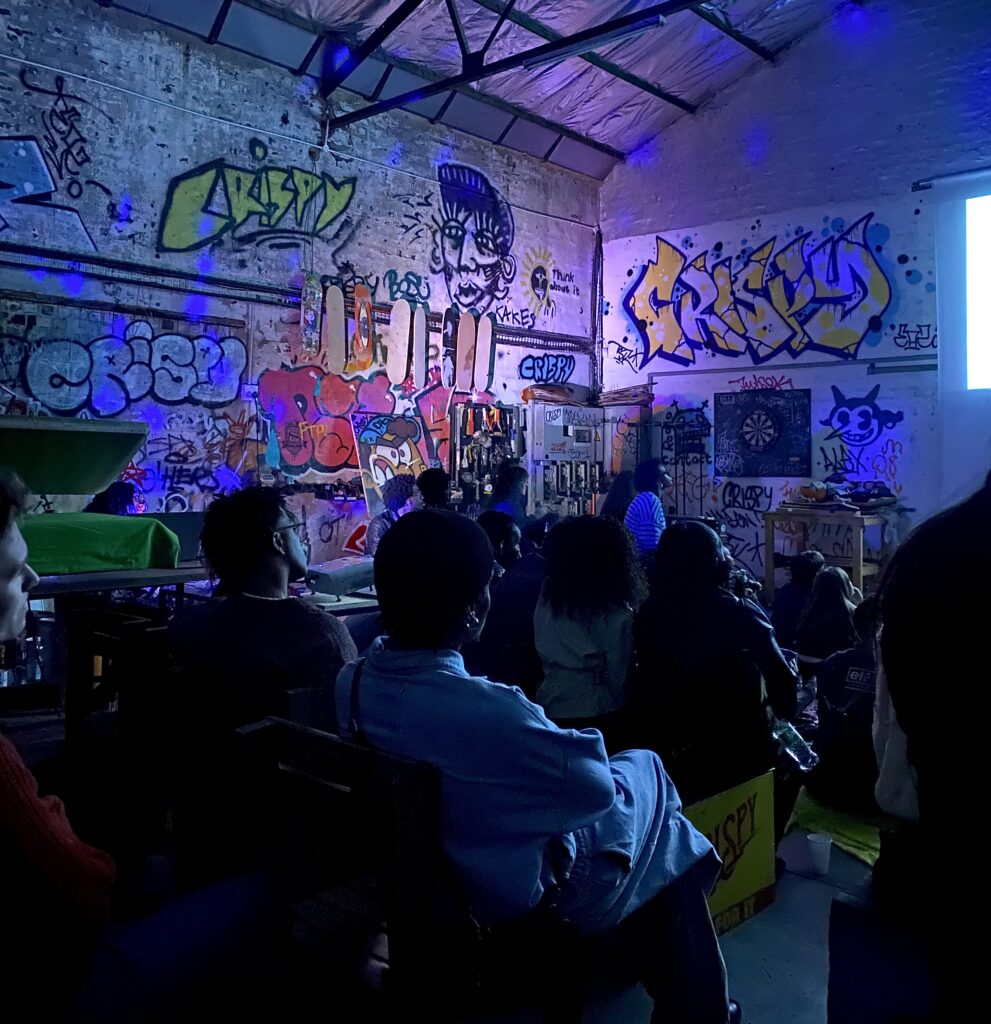
On the evening of August 1, the group debuted their independent screening event, Chosenima, at Crispy Skateboards on 1 Fox Street, Ferreiras Dorp. Tucked away in the four corners of a graffiti-covered warehouse, filmmakers and film lovers settled in a cozy sprawl of pillows and blankets to share an intimate night of cinema.
From intricate hand drawn animations to crafty collages stitched from personal photographs, each film beats with the pulse of its creator. Soft, yet powerful, the films explored delicate moments of queer love, personal struggle and emotional vulnerability.
Picture of the screening at the Crispy Skateboard warehouse. Photo: Jamie Ho.
The initiative was founded by three Wits film and TV alumni who became increasingly disillusioned with the elitism of film festivals. “When we were doing our varsity degree in film and tv, we were taught to make films for festivals,” explains Mrewetyana. “And festivals most of the time have their own territorial needs.”
This sentiment is echoed by Chirambo, who sees the rigid requirements of traditional filmmaking as a trap for young creators. “People try to put in a formula so they can get an Oscar,” she says, “I don’t think that’s what art should be about: trying to please some invisible power in the industry.”
Paton-Levin recalls a personal memory, grappling with the film industry’s exclusivity. “When I was 15, I made a film called ‘Girl’. It was three minutes long. I submitted it to maybe 10 film festivals and I didn’t get into a single one, so I never got a chance to play that movie.” This rejection in turn has fuelled Chosenima’s welcoming ethos. “I want to talk to that kid,” he says, “and be like: ‘Come play your movie, my boy.’”
Graphic collage showcasing all three founding filmmakers: Simamkele Mrwetyana, Natasha Chirambo and Scott Paton-Levin. Edited by: Jamie Ho
By giving filmmakers space to experiment and hone their craft, Chosenima breaks away from the rigid expectations of commercial film. Mrwetyana’s own filmmaking reflects this through the genre of Afrobubblegum: a cultural movement that rejects mainstream cinema’s portrayal of the black, queer experience that solely depicts it from the lens of hardship and struggle and moves to celebrating the simple joys of ordinary life.
As the final film drew to a close and people lingered long after, it was plain to see that the future of cinema wasn’t far-off in some distant Hollywood theatre. It was already happening right there on that screen.
FEATURED IMAGE: Hand-drawn graphic of a cassette tape with the words ‘Chosenima’. Drawn by: Jamie Ho.
Climate change is threatening South Africa’s books, archives, and history.
Books come from plants and they are damaged by water, insects, and humidity.
Archives preserve the stories and experiences that shape South Africa’s identity for future generations.
Climate threats to historical records grow.
When the University of Cape Town’s Jagger Library burned in 2021, South Africa lost priceless books, manuscripts and archives that could never be replaced. Literary scholar Isabel Hofmeyr says the disaster exposed an often-overlooked consequence of climate change: it is not only threatening ecosystems but also the books and records that preserve the nation’s history.
Speaking at a seminar at the Wits Club on 29 July, Hofmeyer said books are more than just paper-based objects. They exist within a broader ecosystem: paper is made from plants, insects can damage books, water can destroy archives, and environmental conditions influence how knowledge is produced and protected.
The loss of books and archives is about more than damaged paper. These records preserve South Africa’s history, culture and identity by documenting important events, people and communities. Researchers, students and future generations rely on these collections to understand the country’s past. When historical records are destroyed, valuable information is lost forever, making it harder to preserve stories that have shaped the nation.
Climate change is increasing the risk of extreme weather events such as wildfires, floods and rising temperatures, all of which can damage libraries and archives. Paper is vulnerable to heat, moisture and humidity, while insects and mould can further destroy fragile collections. As these environmental threats become more frequent, institutions responsible for protecting historical records face growing challenges in preserving them. Without proper conservation and protection, South Africa could lose more irreplaceable documents that hold historical, educational, and cultural value.
Hofmeyr said that “to reduce the risk of permanent loss, we need protection efforts” like improving storage conditions, monitoring humidity and temperature, and creating digital copies of important documents. She further added that it will also require funding and long-term planning to ensure valuable historical records remain available for future generations.
Speaking to WV after the seminar, Bachelor of Science student, Omphile Mankgaba, said the issue revealed an impact of climate change that many people do not usually consider. “I find it fascinating that in all the things we are looking at for climate change impacts, books are impacted,“ she said.
Master of Arts student Gareth Cruywagen said the discussion changed the way he thinks about environmental issues. “Climate change is destroying our history,” he said.
As climate change continues to threaten communities and the environment, protecting libraries, archives and historical records is becoming increasingly important. Preserving these collections will help ensure that South Africa’s history, knowledge, and cultural heritage remain available for future generations.
A rare volume is displayed with care ,showing how archives keep stories of the past alive for future generations. Photo by: Khutso Ngwatoana
FEATURE:A rare volume is displayed with care ,showing how archives keep stories of the past alive for future generations. Photo by: Khutso Ngwatoana
Every year the days leading up to Africa Day, street vendors start displaying their best cultural outfits because they know the public want to look good for the occasion. However, in the mix of cultural outfits and good cuisine the real meaning behind the celebration of Africa Day gets lost.
Ubuntu, I am because we are, is a traditional African philosophical concept and the foundation on which the Organisation of African Unity (OAU) was built on. The birth of the OAU, now known as the African Union (AU), on May 25, 1963, is the core reason why we celebrate Africa Day. 32 independent African states came together to fight colonialism and promote unity. This day is meant to strengthen the Pan African spirit, celebrate cultural diversity, reflect on progress and rewrite the narrative of Africa’s story.
Sadly, the meaning behind the celebration of this day has been watered down, and it has become just another day of dressing up, eating delicious food or a surge in sales for street vendors. Ntando Makhubu, a journalist at The Post Newspaper, wrote in his article that he spoke to a street vendor in Pretoria who said “For me, for us, it means a boom in business” which highlights how unaware some members the public are about the true intent of Africa Day.
Africa Day is only recognized as a public holiday in a handful of African Union member states, only six to nine of the 54. Mako Muzenda, a former freelance writer for Daily Maverick, wrote an article saying that the “25th of May is about statements and fanfare, not about making serious moves.” Africa Day has become more performative than educational or impactful, and this is another reason why the public’s awareness regarding Africa Day is low.
There are multiple articles promoting Africa Day celebrations that involve food, cultural dances, and dressing up. However, there are few speaking to the core reason of Africa Day and how Africa has grown or managed to rewrite its own story after colonization.
The lack of awareness shows how easily African history and unity can fade from public consciousness when not diligently taught. As the African Proverb says, “Until the lions have their own historians, the history of the hunt will always glorify the hunter.” This means if Africans do not actively preserve, teach and celebrate their own history and the foundation that it was built on, it will continue to be forgotten or overlooked.
Featured Image:Headshot of Chrislyn Majiedt, this week’s editor.
Age might be nothing but a number, but in South Africa, it can be the thin line between having a job or not.
A struggling economy is forcing educated South Africans into prolonged unemployment.
Petition to end unfair age restrictions in career entry job opportunities.
Young graduate ideal vs older unemployed graduate reality.
A growing online petition calling for an end to age restrictions in jobs, internships and learnerships has revealed the unsettling reality of South Africa’s chronic unemployment. Young adults who are skilled but unemployed say they are being locked out of opportunities because they are considered “too old”.
Many internships and learnerships in both the public and private sectors commonly restrict applicants to those under the age of 35. Such age caps attached to entry-level opportunities unfairly disadvantage the older, unemployed candidates.
The petition has garnered over 10 000 signatures in just five days.
Signatory, Pat Mokoena (34) said being unemployed is “like being trapped in a cycle where employers demand experience while programmes designed to provide that said experience unfortunately exclude the majority of us because of how old we are, that’s why I signed the petition”.
Amid continued economic pressure in South Africa, unemployment remains among the highest globally. Youth unemployment has remained especially severe, and slow economic growth and limited job creation have intensified competition.
According to the conclusions of Hannah MacGinty’s master’s thesis, ‘Graduate unemployment in South Africa’, graduates are no longer entering the workforce immediately after completing their studies, resulting in delayed careers that stretch well into their 30s.
MacGinty warns that even those who secure employment are increasingly finding themselves in short-term or contract-based positions with limited long-term security.
This instability makes age restrictions even more problematic. Workers who lose jobs later in life often struggle to re-enter the labour market once they exceed programme age limits.
The petition and supporters thereof argue that “recruitment should focus on skills, qualifications, experience and willingness to work instead of age discrimination.”
While some employers may defend age caps as part of youth empowerment strategies, South Africa’s unique crisis needs to be considered.
This petition is a symptom of broader economic failures. It reflects the desperation and humiliation rituals that employment seekers have to endure in a constrained environment.
FEATURED IMAGE: Screengrab of the online petition. Photo by: Kamogelo Lesabe
RELATED STORIES:
Wits Vuvuzela, FINANCE FEATURE: Why financial freedom feels out of reach for South Africa’s graduates, August 2025
Wits Vuvuzela, INFOGRAPHIC: Uptick in unemployment rate, August 2024
Wits Vuvuzela, INFOGRAPHIC: South Africa’s unemployment takes top spot, September 2021
In episode six of We Should Be Writing season 7, the team unpacked the evolution of music as a form of expression and protest, through four decades in the South African context. The episode explores the journey of South African music and its consumers from the 80s, 90s, early 2000s and contemporary listeners. From the […]