Wits offers support for students with disabilities, but for those whose conditions are not visible, stigma and fear of judgement can make asking for help difficult.
Wits has 1,126 registered students with disabilities receiving support through the Disability Rights Unit.
Wits has identified stigma and disclosure as barriers for students with invisible disabilities.
Students say asking for accommodation can be an emotional and undignified experience.
The Wits Disability Rights Unit (DRU) hosted a seminar on Wednesday, August 19, 2026, to address invisible disabilities and the barriers students face in accessing support. For some students at Wits University, getting support for an invisible disability can mean having to explain something that other people cannot see.
These disabilities such as ADHD, autism, mental health conditions, and chronic illnesses may not be immediately visible. Zamo Mbhele, a psychologist speaking at the DRU seminar, explained that this can make it difficult for students to ask for support, as they often worry about how it will be perceived.
Wits itself has acknowledged that stigma can prevent students from disclosing their conditions. In 2024, the university released an article on disability inclusion, the university noted that for students with invisible disabilities, “fear of stigma often prevents disclosure”. It further noted that students with complex needs require tailored support and coordinated services. For those who disclose their disabilities, the DRU provides support such as academic accommodations, assistive technology, and other forms of learning support. However, students who shared their experiences at the seminar said having support available does not always mean that asking for it is easy.
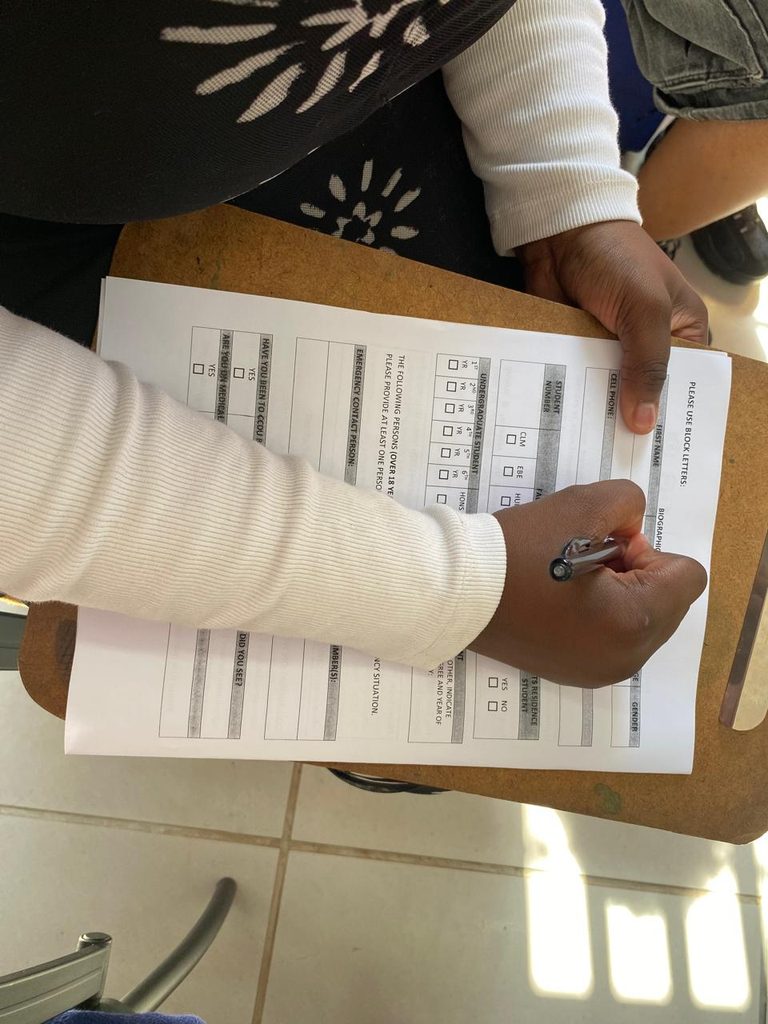
A student completes a paperwork to register for support services at Wits. Photo: Khutso Ngwatoana
According to the Wits Disability Rights Unit , 1,126 students with disabilities were registered last year. This includes 307 students with neurodevelopmental disabilities, 175 with psychosocial disabilities and 133 with chronic illnesses. Yet these figures only show students who disclosed with the DRU. Many others with invisible disabilities may be struggling in silence, reluctant to register because of stigma.
Wits student Alexandra Makhlouf said the DRU has played an important role for her by creating a social space where she can meet other students with disabilities.
“There is still stigma about disability on campus, and having to meet other disability students on campus has played an important role for me,” Makhlouf said.
Another student at the seminar, who asked not to be named because of the personal nature of their experience, described the emotional difficulty of asking for reasonable academic adjustments such as flexible deadlines, access to quiet spaces, or changes to how they participate in academic activities.
“I find it so undignifying every time I need to ask for understanding and accommodation, and I’m in tears every time at home when I am trying to get accommodation for something and putting together my motivations,” the attendee said.
Mbhele shared that, “Belonging is the experience of entering a space without having to negotiate your legitimacy within it.”
These experiences show that, for students with invisible disabilities, sense of belonging can be difficult when they feel they have to repeatedly explain or prove their needs before receiving support.
Dr Leila Abdool Gafoor, Head of the DRU, said the university must ensure that every person’s voice is heard and create psychological safety so that students do not experience stigma when speaking about their needs.
The issue is not simply whether support exists, but whether students know where to find it, feel safe enough to disclose their needs and can ask for accommodation without feeling judged.
For Wits students with invisible disabilities, inclusion goes beyond physical access. It also means creating an environment where asking for help does not feel like having to prove that you belong. The question now is whether Wits can make its existing support easier to access for students who may already be afraid to disclose their disabilities.
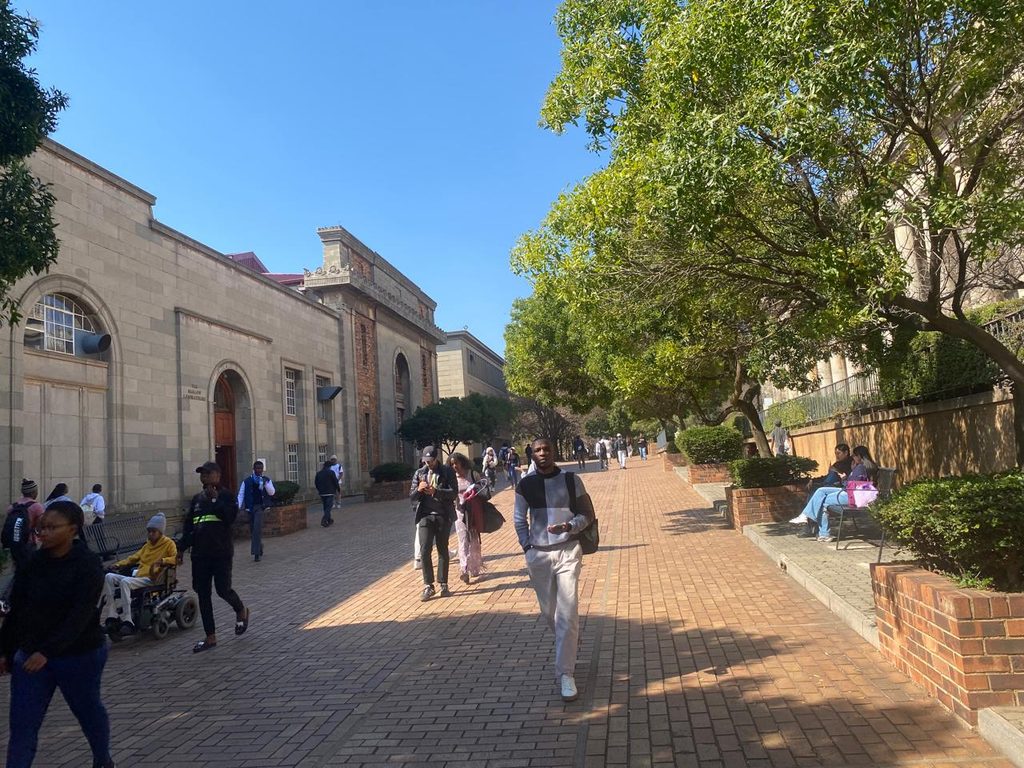
Students, including a student using a wheelchair on Wits Campus. DRU said Wits must support both visible and invisible disabilities. Photo: Khutso Ngwatoana
FEATURE IMAGE: A disability access sign on Wits campus that represent physical disability. Photo: Khutso Ngwatoana
A true story of murder and the miscarriage of justice.
“Likewise, every good tree bears good fruit, but a bad tree bears bad fruit. A good tree cannot bear bad fruit, and a bad tree cannot bear good fruit. Thus, by their fruit you will recognise them.”
Fruit of a Poisoned Tree by Antony Altbeker is about one of the most sensational legal cases in South African history, the Inge Lotz murder trial. The book explores the murder of a young Stellenbosch master’s student; the prosecution of her boyfriend and the exposure of police fabrication and investigation.
On March 16, 2005, Inge Lotz was found brutally murdered in her apartment around 22:30 by Christo Pretorius after receiving a call from Lotz’s friend. The discovery he made was gruesome and extremely violent: Lotz had multiple stab wounds in her neck, chest, and ribs. She had been beaten with a hammer on her head. Her forehead was crushed inwards, leaving behind the flesh hanging on her face. According to the investigators, there was no sign of forced entry, and all her valuable items, such as her laptop and cell phone, were left untouched. This means her attacker was known to her.
Her boyfriend, Fred van der Vyver, quickly became the prime suspect. Although he had an alibi, the evidence found on the scene proved otherwise. His fingerprints were found on the DVD she had been watching the afternoon of the attack, a bloody shoeprint matched Fred’s Hi-tech shoes, and lastly, the hammer used to crush her skull was found in his car.
The trial became an exposé in which the defence and the prosecution were trying to discredit each other. Fred was charged with her murder but was later acquitted because it had been discovered that there was dishonesty from the prosecution. So, the case went cold, and Inge did not get justice.
A friend of mine, Mmathapelo Agatha Motlhale, recently passed away. She, too, fell victim to GBV at the hands of her step-uncle. I remember how much she would complain about him constantly terrorising her and her mother. To the point of getting a protection order, which did not last long. He violated the protection order rules one day and tried to attack her mother. While protecting her mother, she slipped and fell. While on the floor, he trampled on her leg with enough force that broke her ankle. When she reported the incident, he was arrested but was not held in custody for long. Upon his return, he kept terrorising them until he got her mother arrested.
The description of the brutality of the murder really shocked my nervous system. I just kept wondering what type of rage and hatred a person would have to have in their heart to commit such an atrocity. To make matters worse, these crimes are usually committed by people we love and trust. Strangers are less likely to kill another stranger in the manner these crimes are committed. It is so unsettling how the danger is almost always in the same house or family as these victims.
Since her murder, femicide and gender-based violence (GBV) rates have increased drastically. Unfortunately, these murders are committed by intimate or family members of the victim. Still, the justice system continues to fail women.
Unfortunately, during the court cases and living in hotels in fear of her step-uncle, she got an infection on the broken ankle, which resulted in her death. The step-uncle may not have killed her directly, but he influenced her cause of death. Had justice prevailed and the step-uncle arrested, her leg would not have been broken in a scuffle, she would have never had an infection and died.
This book reveals a profound miscarriage of justice and serves as a chilling indictment of the professional bankruptcy and systemic rot within the South African criminal justice system. Just like Inge and Mmathapelo, many other women were failed by the justice system. Many of them would have been alive if the system were just and fair.
FEATURE IMAGE: Fruit of a Poisoned Tree by Antony Altbeker Photo: Naledi Maraisane
A deeply human reflection on fathers and sons, masculinity, healing and what gets passed down through generations
Imran Hamdulay’s feature debut, The Heart Is A Muscle, is a moving exploration of intergenerational passing, the complexities of masculinity and the relationship between fathers and sons. Set within Cape Town’s layered history, the film was South Africa’s official entry for Best International Feature Film at the 98th Academy Awards (Oscars) 2026.
The Cape Flats, an area shaped by apartheid and systematic marginalisation, has been misrepresented in cinema. It is often reduced to a single narrative of crime and conflict. Hamdulay pushes against this stereotype. The history of violence is acknowledged but never dramatised. Instead, he reflects on fear, hope and defiance. The Cape Flats feels like more than just a setting, it becomes a character in itself. Fractured but resilient, carrying its complexities, dignity and fragile connections.
During a Johannesburg screening at The Bioscope Independent Cinema on March 11, Hamdulay was in attendance and explained how the story was inspired by a real-life incident. While at a barbecue, he saw a friend’s son briefly go missing. In that moment, Hamdulay witnessed fear and anger in his friend like never before. This sparked his curiosity and the film’s narrative, which begins with a young couple discovering their five-year-old son has disappeared. The story continues to follow Ryan, the young father, as he confronts his own brokenness, masculinity and the unspoken histories passed down through generations.
Still from The Heart Is A Muscle. Photo: Supplied/The Bioscope
Shot entirely on location, it captures both Cape Town’s grittiness and colour. Hamdulay has explained that he tried to lead every part of the production with kindness. From the set, the shoot, the camera, to the performances. The cinematography reflects this, emphasising intimate, character-driven storytelling. Imagery such as the ocean creates feelings of isolation and unresolved emotions. Close-ups reveal personal histories through subtle traits. Instead of over-rehearsing, a lot of time was spent discussing the characters beforehand and how the actors themselves related to the story. Keenan Arrison, cast as Ryan, delivers a raw, lived-in performance, and the film’s emotion lies in the pauses, silences and gestures.
Still from The Heart Is A Muscle. Photo: Supplied/The Bioscope
The film asks: What do we inherit from our fathers? And how can we become better versions of ourselves in difficult circumstances? Masculinity is usually discussed through power and control, but Hamdulay looks at the importance of softness and healing. What begins in feelings of apprehension transitions into a meditative reflection, heightened by a score that balances tension and vulnerability.
Although the film is set in South Africa, The Heart is a Muscle also speaks to an international audience. At its core, it is a reflection on belonging. It is not only about fathers and sons but about facing inherited pain and finding a path to forgiveness and change. Hamdulay has created a film that is intimate, layered and deeply human.
FEATURED IMAGE: The Heart Is A Muscle poster. Photo: Supplied/The Bioscope
Being a first-year can conjure up a rollercoaster of emotions, and navigating it can turn survival into belonging.
The moment my parents’ car disappeared down the road outside my residence four years ago, reality hit me. Standing there in a new place, surrounded by unfamiliar faces and unpacked boxes, I felt a knot in my stomach and my chest tightened with anxiety. It was bittersweet watching them leave, I felt a mixture of both excitement and fear settling in all at once. As shy as I was, I knew this was an opportunity of a lifetime.
Around me, students laughed as their parents helped them carry boxes upstairs, rooms and corridors buzzed with conversation, and new friendships seemed to form effortlessly. I knew no one. I kept questioning if I truly belonged here. I did not realise then, what I know now, which is that almost everyone around me was feeling the exact same way I did. Even in my loneliness, I promised myself that I would make the most out of this experience.
Walking onto the Wits University campus for the first time can be both exciting and terrifying. Your first year at Wits represents a sense of freedom and possibility, but also pressure and uncertainty, this marks the beginning of a journey that will test you in ways you never expected.
Wits is more than just attending lectures and keeping up with submission deadlines. Outside of classes you will quickly come to realise that this university has so much more to offer. Whether you are grabbing something to munch on at the Matrix, sitting on the Lawns with your new formed friends, or doing the occasional people-watching on the Great Hall steps, these spaces become the heart of student life on main campus.
The fountain separating the Great Hall from the Library Lawns, it brings a relaxing white noise during stressful days. Photo: Bonolo MokonotoThe Matrix, located on east campus. This is a busy student center, with food vendors, banks and the Campus Bookshop. Photo: Bonolo MokonotoThe Main campus bus stop. This is where you will catch the Wits bus that takes you to the other wits campuses and residences. On the same road is AMIC Deck which is the bridge that connects east and west campus. Photo: Bonolo Mokonoto
Hundreds of events are hosted by various clubs and societies and pop- up performances are frequent; this is to remind you that Wits is a community, as much as an academic space. Ensure that you get involved as it will help make campus feel less stressful and more like home.
Speaking of stress, the change from high school to university is drastic and this can be overwhelming. No one is here to remind you of deadlines or check if you are keeping up academically, it is important that you take agency over your own life. First year is not about being perfect, it is about learning how to manage your time efficiently to avoid unnecessary stress later on.
Making friends can be tricky, campus is constantly busy and it is easy to feel alone in the crowd, as was I upon arrival. People might seem like they have it together, but they are silently navigating the confusion and anxiety just as you are. Do not be afraid to talk to the person sitting next to you in a lecture or ask questions in tutorials, you would be surprised how many people feel exactly the way you do.
Zesti Lemonz on west campus, this eatery provides light meal takeaways for students on the go and provides an outdoor seating area to mingle with friends. Photo: Bonolo MokonotoJimmy’s, located on west campus with a corresponding location at the Matrix. Photo: Bonolo MokonotoThe Wits Anglo American Digital Dome is a 360° immersive digital facility on east campus. It provides a state- of -the art venue showcasing science, arts and culture. Photo: Bonolo Mokonto
As the year continues, it is important to know where you can seek out help. Wits offers academic development units such as the Wits Writing Centre, tutors, and libraries that are there to support you. Make use of these facilities early on, there is no shame in seeking help.
Recreational sports facility located on west campus, this is where you can bond with other sports lovers and engage in the ever therapeutic team sport. Photo: Bonolo MokonotoOutdoor gym on west campus close to Barnato Hall Residence. Photo: Bonolo MokonotoA deeply hidden dam and water feature located on west campus next to Barnato. This is known to the seasoned witsies as a secret getaway from the constantly hectic wits campus. Photo: Bonolo MokonotoAlumni House on the lower end of west campus, it houses Olives and Plates a restaurant on campus for all to enjoy. Photo: Bonolo Mokonoto
First year will test you, you might fail a test, or question whether you belong or not. Do not give up, keep showing up and take it one day at a time.
Oh and remember, once a Witsie always a Witsie!
FEATURED IMAGE: The Great Hall at Wits University. Photo: Bonolo Mokonoto
Four months later, a student’s mental health complaint is still unresolved.
Accountability gap exposed.
Investigation stalled by anonymity issues.
Matter escalated to higher authorities.
When we first reported on the disturbing experiences of a student seeking mental health support at Wits University’s Campus Health and Wellness Centre in May, the hope was that the university would take swift and decisive action to address the reported neglect and mistreatment.
A student had shared painful stories of being dismissed, scolded, and left without proper care during their most vulnerable moments. The troubling accounts raised serious questions about the quality and accountability of mental health services on campus.
In May, the Centre’s temporary stand-in, Brian Jele, a Primary Health Care Nurse, assured WITS VUVUZELA that the matter would be reported to the head of department, Tshidiso Ntshabele, who was expected to return soon. He highlighted the availability of a suggestion box for students to report issues anonymously.
On May 8, 2025, just a few days after Ntshabele’s return, WITS VUVUZELA visited the Centre to ensure he was updated on the allegations. During our meeting, Ntshabele requested that WITS VUVUZELA arrange a meeting with the student outside of Campus Health so he could hear the student’s side of the story.
Later that same day, after leaving his office, WITS VUVUZELA reached out to the student to set up the meeting. However, the student declined, saying, “I really don’t think I want to. I don’t feel comfortable with my anonymity now being compromised, so no!” said the student, who asked to remain anonymous.
Four months later, has anything changed?
After the failed meeting with the student in May, business continued as usual. Since then, no investigation, suspension, or any form of disciplinary action has been taken against the two nurses involved.
Ntshabele said he could not proceed with any investigation without knowing the identity of the complainant.
“I do not know who the student is; I cannot investigate if I don’t know who the person is. Part of the investigation, according to our complex procedure, is that I must also interact with the complainant,” said Ntshabele.
When Wits Vuvuzela asked what would happen if the student was too afraid to return to the Centre to go through the investigation process, Ntshabele emphasised that the student’s presence was still required.
“We are dealing with sensitive matters involving someone’s confidential health information. For me to investigate, I need to interview that person and find out exactly what went wrong, so that I can also ask relevant questions,” he said.
This raises questions about the purpose of the suggestion box, which allows students to submit complaints anonymously.
When asked what changes had been made to improve mental health care and ensure students are treated with greater respect and kindness, Ntshabele said no changes had been implemented because no investigation had taken place. “If I did not investigate or consider an investigation, I can’t give a report to say this is what I found. Only if I had found something could we introduce and implement changes,” he said. Ntshabele added that until he is able to interact with the student directly, he would not know where the department is lacking or what improvements are needed.
Head of department’s office. Photo: Dikeledi Ramabula
Following the May publication of this story, WITS VUVUZELA sought to understand how staff at the Campus Health and Wellness Centre are trained and supported to better understand students’ mental health needs and to treat them with empathy rather than judgment.
Ntshabele said he had never received a complaint that any staff member had judged a student, adding that all mental health practitioners at the Centre are specialists with formal qualifications in the field. “Part of the mental health curriculum, when you are a nurse, is knowing that you must be non-judgemental,” he said.
“There are in-service training sessions that staff members attend, including a customer management course. If a specific staff member is found lacking, we identify the weakness, determine the area in which they are struggling, and then work to improve and empower them,” he added.
Ntshabele urged students who may still feel hesitant or fearful about seeking mental health services from Campus Health, to reach out to him directly, “The most important thing is for those students to tell me exactly what they are scared of and why they are fearful.”
“This clinic is for them, and no student should feel afraid. We are here to assist, particularly those with mental health conditions, because we know that for them to excel academically, they need to be well,” he continued.
Mental health is a serious condition, and at universities many students suffer from it. After discovering that Campus Health could not carry out an investigation because the student chose not to come forward, it became crucial to find out whether there is a higher authority that can intervene to ensure the complaint is properly addressed.
The matter was then escalated to the Dean of Students, Jerome September, who stated that all complaints are taken very seriously and investigated to the best of their ability. “Complaints are in the first instance made at the clinic, and these can be escalated to me as Dean of Student Affairs,” he said.
“Students are also able to lodge complaints through the Wits Integrity Line,” he added. September further requested that the affected student reach out to him directly so he can assist in resolving the matter.
FEATURED IMAGE: Campus Health And Wellness Centre corridors. Photo: Dikeledi Ramabula
Those living with the misunderstood condition face social stigma and a lack of support in public clinics and hospitals.
Wits students and mental health experts gathered to challenge the stigma and silence around bipolar disorder.
The event revealed that there are serious shortages of mental health resources in South Africa’s public healthcare system.
Personal testimonies from people living with bipolar highlighted why breaking the silence must go hand in hand with upholding their human dignity.
The extreme highs and dark lows of bipolar disorder often make for an isolating experience of living with this condition. To break the silence, Wits Pathology Society brought together students, experts, and advocates to tackle stigma and talk about the challenges of treating this mental illness.
At the event held on Thursday, May 15, experts emphasised that talking about the impact of bipolar disorder is important, but the way we do so also matters.
Dr Vinola Poliah, a psychiatrist at Sterkfontein Hospital and Akeso Crescent Clinic, stressed that using words like “crazy” or “unstable” to describe someone living with bipolar is not only hurtful but also reinforces negative stereotypes.
Another issue that was raised is the limited access to mental health services in South Africa. There is a shortage of psychiatrists, especially in the public sector. Poliah said, “twenty percent of South Africans will experience a depressive disorder at least once in their life.”
“The most frightening statistic of all for me is that twenty-three South Africans attempt or commit suicide every day, and with bipolar disorder we have the highest rates of suicide.”
Many people diagnosed with bipolar disorder struggle to access a mental health professional in times of crisis or to receive ongoing support, such as therapy and sometimes costly medication, which may worsen their experience of living with this condition.
“I have been to hospitals where I can sit an entire day and wait with a person needing psychiatric assistance,” said Mary-Anne Dobrovic, manager at the South African Schizophrenia & Bipolar Disorders Alliance.
“There are just too many patients for the number of doctors. Our doctors in most of the clinics and government hospitals are overrun,” she continued.
The event also provided a safe space for people living with bipolar to share their experiences. Theuns Lombard, a former army nurse and paramedic, shared his story of being diagnosed with bipolar hypomania more than twenty years ago.
He made a point to emphasise that this disorder is not his identity. “I have bipolar disorder, but I don’t suffer from it. I am not suffering. This is a diagnosis, it doesn’t define me,” he said. Monthly counselling sessions and periodic checkups with a psychiatrist to tweak his medication as needed, help keep Lombard more balanced.
The event challenged the idea that bipolar is about mere mood swings. It’s a serious condition that deserves real support, not just sympathy. Change starts with how we speak, but it can’t stop there. It must reach the healthcare system, meant to effectively care for those living with the disorder.
FEATURED IMAGE: An estimated20% of South Africans experience a depressive disorder at least once in their lives, with bipolar affecting 4% of the population. Graphic: Mbali Khumalo.
With the new academic year in full swing, one student is showing Witsies a new way to manage stress through the power of hypnosis and the art of trance.
Tevin Sutcliffe, Psychology Honours student and aspiring hypnotherapist has been guiding Witsies into relaxing trances to combat the various stresses posed by student life.
Hypnosis is a powerful tool, because it allows participants to access their subconscious minds incredibly quickly.
Surrendering control isn’t terrifying and can help solve deep-seated problems says Sutcliffe.
Before the start of term, Tevin Sutcliffe began offering free guided hypnosis sessions to students on campus to practice his craft, inform them about the benefits of hypnosis, and – most importantly – teach stressed-out Witsies how to take a step back and relax.
Sutcliffe is currently completing his Honours in Psychology at Wits University and says that his initial interest in how hypnosis can positively impact mental health is what sparked his journey into the field. During his postgraduate studies, Sutcliffe wants to explore the power of hypnosis on the mind, aiming to destigmatise the practice and make it more accessible.
Sutcliffe focussing volunteer Shay Moodley’s attention after exiting a trance. Photo: Tristan Monzeglio
In a 2023 study spanning seventeen South African universities, 37.1% of the 70,000 surveyed students reported symptoms of anxiety. Sutcliffe explains that because people tend to live in a “constant state of anxiety” without ever addressing it, they often don’t realise how much pressure they put themselves under – mentally and physically. He asserts that even hypnotising someone for just five minutes gives them an “incredible” rest “which they haven’t felt in a long time”.
Moments after completing his session, volunteer Liam Nuns, a second-year Game Design student, stated that all the “little aches” and “tension[s]” which had built up in his body throughout the day felt like they were completely “gone”.
Wits Vuvuzela observed Sutcliffe hold these sessions with eager Witsies just off to the side of the pond next to the law lawns. This serene environment, away from set the chaotic parts of campus, set the scene for Sutcliffe’s calm inductions, gently guiding volunteers into a heightened state of relaxation. He instructed them to close their eyes and steered their focus to all the sounds surrounding them, like the gentle lapping of the pond and other students mumbling in the background. Then suddenly, Sutcliffe would tell volunteers to “sleep”, using a rapid induction technique to shock them into a trance-like state. Once in this state, volunteers are more susceptible to suggestions from the hypnotist.
At this point, many performing hypnotists use this state for entertainment purposes, influencing volunteers to behave abnormally for a brief period. Derren Brown, for example, is a mentalist who has gained notoriety for various publicity stunts taking advantage of people in this hypnotic state, manipulating people to walk into traffic, or convincing a man that he’s an assassin whose target is comedian Stephen Fry.
However, for hypnotists like Sutcliffe, this state’s functionality doesn’t end here.
An aspiring hypnotherapist, Sutcliffe believes that hypnosis is a “shortcut to accessing the unconscious mind,” allowing people to confront issues at their source. He likens our brains to computers, explaining that hypnosis enables us to bypass our “user-interface,” or conscious mind, and “go directly to the “back-end” to troubleshoot the problems in our code.
Sutcliffe making volunteer Camagu Zwane’s fingers move together on their own. Photo: Tristan Monzeglio
On the surface, giving up control of one’s mind to another person can seem intimidating. After experiencing his hands move together on their own and his feet stick to the ground during Sutcliffe’s visual demonstration, Mncedisi Buthelezi, a first year Engineering student, said that being hypnotised was “scary,” as he couldn’t help but think: “what’s going on with my body?”
Sutcliffe admits that this feeling of vulnerability is understandable, but that ultimately “if you have a problem with susceptibility, then you’re surrounded by the wrong people”. He claims that “susceptibility is incredible”, because if he gives people the suggestions they “actually want”, it can give them more control of their minds and can allow them to make changes much quicker.
Another volunteer, Lwanda Tshangela, a second year Game Design student, was conflicted before being guided into a hypnotic state, saying that he “didn’t believe in it at first”, because his only understanding of hypnosis previously came from movies. After the experience, Tshangela said he was “more relaxed”, because the hypnosis made him feel like he was “borderline sleeping”, yet “still aware of what was going on”.
Sutcliffe guiding (left to right) Lwanda Tshangela and Liam Nuns through a hypnotic state. Photo: Tristan Monzeglio
Much to her surprise, Nuha Suffla, a fourth year Engineering student, initially thought Sutcliffe might make her pass out or dance uncontrollably but found the process surprisingly similar to techniques used by her own therapist, such as fostering mindfulness through safe spaces and mind palaces.
For students, Sutcliffe sees hypnosis as an incredibly powerful tool for dealing with stress, because the deeply relaxed state it creates can be recaptured with practice.
Volunteer Thubelihle Mthethwa, a first year Engineering student, said being hypnotised felt “like a dream” and wanted to be able to return to that state. Sutcliffe therefore provided Mthethwa with a trigger word to associate with the feeling of trance so that Mthethwa could access it again with relative ease.
Thubelihle Mthethwa receiving a trigger word to return to this trance-like state. Photo: Tristan Monzeglio
The start of a new year can be stressful for students for a variety of reasons, which – if not addressed with adequate care and attention – can put a significant strain on their mental health.
Sutcliffe explained: “What you do in hypnosis is you teach them how to relax every part of their body. So not just the muscles, not just their physical body, also their mind”. He believes wholeheartedly that if more people knew the truth about hypnosis, it could be used as an easily accessible and tangible solution for anyone who needs to recentre their mind in a world where it’s so easy to get caught up in all the chaos.
FEATURED IMAGE: As part of his rapid induction technique, hypnotist Tevin Sutcliffe guides (left to right) Thubelihle Mthethwa, Mncedisi Buthelezi and Kanya Shabangu into a state of relaxation. Photo: Tristan Monzeglio
SADAG debunked myths around teenage suicide and offered practical solutions to curb this growing concern.
The National Department of Health (NDoH) data indicates that approximately 1 in 14 teenagers died by suicide last year in South Africa.
On 10 February 2025, the South African Depression and Anxiety Group (SADAG) held a webinar to discuss a critical issue affecting young people: teen suicide prevention.
As part of Teen Suicide Prevention Week (9-16 February), the webinar aimed to raise awareness, break stigmas, and provide support for those affected.
Teens are reportedly facing a wide range of challenges, such as bullying, family and relationship issues, depression and academic stress. Teens frequently feel overwhelmed, powerless, and despairing because of these issues.
Clinical psychologist Zamo Mbele said “regular check-ins are even more crucial because teens frequently feel bad and do not want to burden their friends or family with their troubles.” He added that SADAG receives 1500 calls on average from teens as they would rather speak to a stranger than feel judged by loved ones.
The campaign for this year, ‘Your feelings matter, let’s talk’, highlights the significance of establishing secure environments where the youth should feel encouraged to ask for assistance.
Mbele suggested that the media could change the language in which they use to report on suicide cases “Instead of saying someone committed suicide rather say they died by suicide.” This can humanise instead of criminalise the issue.
“Avoid graphic details about the method of suicide or any other sensational detail, instead when reporting focus on whether the individual had been struggling with suicidal thoughts for a long time,” he added.
“Research shows that talking about suicide with a young person does not cause them to have thoughts of suicide or create a desire to end their lives,” said Mbele. The danger comes from not talking about it.
Visit SADAG’s website and use the suicide free helpline (0800 667 657) for more information. By sparking open conversations teenagers can be made to know that their feelings matter.
FEATURED IMAGE: Adobe stock image of a teenage boy looking distressed. Photo: Adobe Stock
As an overwrought Johannesburg continues to address rampant apartheid hang-ups, the responsibility of ensuring citizens’ equitable access to mental healthcare often falls on under-resourced, overburdened, yet empathetic providersstruggling to meet demand.
If you’re looking for mental health support in Johannesburg, where exactly should you turn? Should you ask people you know for help – and would they judge if you did? Should you head to the nearest clinic, unsure if they’d assist with an invisible problem? What if you can’t afford help or medication? What if you’d rather look up alternative options online? How would you know the right service to select when seemingly infinite options appear in a Google search for “psychologist Johannesburg”? Although it’s been 30 years since the end of apartheid, South Africa’s young democracy is still trying to escape the shadows left by unjust and inhumane policies. These shadows not only obscure economic equality, but persist through generational trauma, haunting the collective psyche of South Africans to this day. To explore how Johannesburg, the country’s most-populated city, could set a national blueprint ensuring adequate mental healthcare access, we must first understand the people behind the service who navigate through troubled waters, trying to make a difference.
The promises of post-apartheid mental healthcare
For South Africa to overcome its traumatic past, it is essential for all citizens to have equitable access to mental healthcare. This principle was acknowledged by the country’s first democratically elected government and is clearly articulated in the policies it introduced.
On December 10 1996, then president Nelson Mandela signed the newly drafted South African Constitution, which became the “highest law of the land”, acting as the direct reference and regulator of all subsequent laws and policies. The Bill of Rights, contained in its second chapter, was drafted as a tool to define and monitor South African citizens’ human rights. Two enshrined rights that concern the state of mental healthcare are the right to “equality” and the right to “human dignity”. These are essential reference points, because they highlight the emphasis the government placed on ensuring that all citizens have equal access to adequate healthcare.
This broad emphasis on health was refined to address mental health concerns with the passing of the Mental Health Care Act in 2002. Among other stipulations, the Act promised to ensure that “various categories of mental health care users” were granted “[co-ordinated] access to mental health”. It also aimed to integrate mental healthcare “into the general health services environment”. For countless generations, previous governments blatantly mistreated the majority of South Africa’s citizens; in contrast, the introduction of these regulations acted as a sign of the new government’s solidarity with them.
However, despite these various renewed governmental policies, the tangible challenges that South Africans continue to face on a day-to-day basis, whether crime, economic pressures or systemic inequality, can muddy the public’s idea of mental healthcare. Because mental health is largely intangible, “fixing” a mental health issue feels more like a luxury than a necessity. This reticence to seek help means that 75% of South Africans actively struggling with mental illnesses do not receive the help they need. Meanwhile, the abundance of everyday stressors can be exacerbated by people’s mental health issues, trapping these seemingly dissimilar problems in an indefinite loop of re-aggravation.
Figure 1: A representation highlighting the disparity between need and access to mental healthcare in South Africa and Gauteng. This is layered on top of a silhouette of an old mining headgear on the outskirts of Johannesburg CBD, with an image of a brain intersecting it.
In 2023 South Africa ranked third last of all measured countries by average mental health quotient, which is an online assessment tool used to “provide [a] comprehensive assessment of mental wellbeing”. The Mental State of the World report also found that South Africa had the second-highest proportion of respondents classified as “distressed or struggling”. These rankings are concerning, particularly considering the emphasis placed on improving the quality of, and access to, mental healthcare in the previous decades.
The incongruence between well-meaning government policies introduced in the hopeful past, and the current reality of overwhelming mental health issues that have not been addressed, is a theme that has persisted in Johannesburg and manifests in damaging ways.
Life Esidimeni: How to learn from the recent past
There is no mental-health policy failure in Johannesburg in the past 30 years that stands out as glaringly as the Life Esidimeni tragedy, when the most vulnerable people in society were neglected and left to rot as a consequence of government action.
In 2015, the Gauteng department of health cut ties with the Life Esidimeni hospital, which provided extended care and housing to thousands of psychiatric patients. The department of health aimed to relocate these patients to various nongovernmental organisations (NGOs) across the province. This decision followed the department of health’srecently introduced Mental Health Policy Framework, which, from 2013 until 2020, aimed to develop “community-based” mental health services like NGOs by deinstitutionalising mental healthcare services like Life Esidimeni hospital. However, this decision could also be explained more simply by the department’s need to “save costs”.
In a vacuum, these promises of governmental support and collaboration with NGOs appear to be beneficial developments for impoverished communities struggling to provide adequate healthcare. However, in reality the NGOs these patients were relocated to were not properly screened, either being woefully under-equipped or “fraudulently approved” to house psychiatric patients. This ignored the department’s framework to ensure citizens with access to adequate mental health services through “[the establishment of] a monitoring and evaluation system”. This mass rehousing ultimately resulted in 144 psychiatric patients dying from neglect and improper care.
This lack of mental healthcare access and resources is particularly damning given that the Life Esidimeni tragedy occurred in Gauteng, South Africa’s wealthiest province, which houses 45% of all registered South African mental health professionals.
Figure 2: A graphic representing how even with the overwhelming proportion of mental health professionals operating in Gauteng, the province is still under-equipped. The graph is layered over an image of the Johannesburg skyline, with a gamma brain wave intersecting it.
In the aftermath of the tragedy, the department of health’s revised Mental Health Framework, has sought to address the issues overlooked by the previous framework, now promising to ensure that “community mental health services will be scaled up to match recommended national norms”. Recently, Gauteng MEC for health and wellness, Nomantu Nkomo-Ralehoko, also committed almost half a billion rand to “improve mental-healthcare infrastructure and services across the province” this financial year.
A renewed focus on mental-health services appears to be a step in the right direction for Johannesburg. However, will this promise truly serve to assist those on the front lines of mental healthcare in the city, or will it simply prove empty once again?
Policy and regulations touting to improve mental healthcare access are an important first step, but they cannot stand on their own. The implementation of these ideas in real-world scenarios is the true test and, to understand the context in which they are applied, one must first understand the different types of mental healthcare in Johannesburg, as well as the various challenges the people running these facilities face.
The pathways to recovery
Unlike physical ailments, because mental illnesses are often ‘invisible’, it can be more difficult to grasp and confront them. The first step on the road to recovery is identifying the problem and realising the need to address it. The next step is often the most challenging: accepting that doing so requires external help. It can prove difficult to ask for help due to a variety of cultural and societal norms that create stigmas around mental healthcare.
Mental health stigma is rife throughout society: one place where they commonly persist and do much harm is within tertiary institutions. Universities are educational spaces, meant to inform and prepare students to tackle problems they face in the real world. However, according to the University of the Witwatersrand’s (Wits) Counselling and Careers Development Unit (CCDU), it is an ongoing process to deconstruct these stigmas during the time in people’s lives when they need the most mental-health attention. According to a study on adolescent mental health, it was found that 75% of people with mental illnesses develop their disorder before turning 24.
Figure 3: A set of self-help tips geared towards vulnerable students. This guide is layered on top of a silhouette of Johannesburg’s skyline with an image of a smiling sun intersecting it.
The CCDU is a free counselling service offered to Wits students, aimed at addressing mental-health concerns, as well as providing academic assistance and preparing students for life outside campus.
“People think that when you are seen coming to CCDU… you have problems,” says Lynette Sikhakhane, a CCDU psychologist. Sikhakhane says what stops many students from seeking out the CCDU is that “culturally… there’s a belief that you man up” instead of admitting to needing help. Highlighting a major misconception about therapy, Sikhakhane states that many students expect therapy to instantly “fix” their problems, when it is actually an incremental process of enabling self-understanding.
CCDU advocacy team leader, Vinoba Krishna says the unit aims “to incorporate the voices of students” into the mental-health assistance it provides. Part of this is dispelling misinformed expectations around counselling and therapy through effective communication and psychoeducation, as outlined in Higher Health’s mental health programme.
Krishna states that, despite the CCDU’s best intentions, “we aren’t able to do the work just by ourselves”, because of a lack of direct funding for mental health. He also emphasises the need to collaborate with “different stakeholders on and off campus” to ensure the best results for students.
A CCDU sign outside of their head offices on Wits West Campus. Photo: Tristan Monzeglio
The South African Depression and Anxiety Group (Sadag) has similar aspirations to help people in need and destigmatise mental health in South Africa in the face of limited resources. Sadag is a non-profit organisation that provides counselling via 24-hour toll-free emergency helplines and community-driven initiatives.
Fatima Seedat, a Sadag development manager, says that for all South Africans to have equitable access to mental healthcare “a collective effort” is required from the government, civil society and NGOs. Seedat argues it is impossible to follow the “beautiful strategic framework” outlined by the government when “every year the healthcare budget decreases”.
The lack of funding available to Sadag and other mental-health providers highlights the inequality of access South Africans face. Naledi Nzimande, a Sadag volunteer councillor, says that “the most challenging calls” are when she wants to refer callers to professional help, but there aren’t any mental health resources nearby. Stephanie Gladwin, also a Sadag volunteer councillor, reiterates that the level of mental healthcare individuals receive is, in many ways, directly tied to levels of income. “If you’ve got money, it’s not a problem… South Africa has some fantastic mental-health professionals – it’s just reaching them that’s the only issue,” she says.
SADAG Volunteer Counsellor, Tevin Sutcliffe, on the phone to a hotline caller. Photo: Tristan Monzeglio
To combat this unequal access, Sadag has installed counselling containers in Diepsloot and Ivory Park, where they offer face-to-face counselling inside converted shipping containers. Seedat says this project aims “to fill the gap where it’s needed” in vulnerable spaces in Johannesburg.
When comparing mental-healthcare access in the public and private sectors, the disparity between funding and resources is stark. For example, about 80% of South African psychiatrists work in private practice. Although most South Africans access mental healthcare through the public sector, private mental-health services that offer specialised solutions to fill niche gaps in care are also important.
A video covering SADAG’s community based care and, specifically, their Counselling Container project. Video: Tristan Monzeglio
Private music therapist, Graeme Sacks, who operates in Parktown, believes his practice enables him to be sensitive to his client’s needs. “We’re all musical beings… [and music therapy] is a wonderful way to tap into people’s emotions,” he says.
As Sacks puts it, music therapy is an “evidence-based practice”, which uses “music towards clinical goals”, but in practice it’s less stringent. He says, as a music therapist, it’s about concerning yourself with “the situation that [clients have] grown up in” by “trying to find out about their culture, their musical taste”, without ever “imposing our stuff on them”.
This tailored approach to therapy offers clients individualised care and, if music therapy were available in the public sector, it would be a practical means to provide many South Africans with the specific help they require. Sacks says that “most medical aids don’t pay for arts therapies” and that, currently, “there are no arts therapists in public health”. This absence of access to arts therapy is a missed opportunity for the public healthcare system to provide equitable access to a niche form of specialised care.
Music Therapist, Graeme Sacks, playing piano in his office where he treats all manner of people with the power of music. Photo: Tristan Monzeglio
Some specialised care in the public sector is available, at Johannesburg’s Tara Hospital, which is a publicly funded psychiatric hospital. It provides specialised care to referred patients who cannot be adequately treated at secondary and tertiary hospitals.
Senior occupational therapist and acting assistant director at Tara, Savannah Levi, believes that in Johannesburg, and South Africa at large, “What’s so hard about accessing mental healthcare, is that there are so many points, but none of those points correlate or integrate with each other.” Levi argues that the policies and ideas meant to integrate a variety of services are based on sound frameworks, but their lack of real-world implementation highlights the “disconnect” between theoretical and practical application.
Levi says Tara’s specialised service offers “a very protective environment for the patients”, meaning that sometimes they “don’t want to leave”. This highlights the benefit that specialised care affords people in need which, in theory, all citizens should have access to. However, Tara has only 140 beds and limited staff due to the high level of training requirements and capped job availability.
Outside of Tara Hospital in Hurlingham, with Sandton in the background. Photo: Tristan Monzeglio
A new destination
Despite the government’s multiple continued failings in the broad mental-health landscape, hope still persists in those people willing to take up the struggle. Mental-healthcare providers aren’t required only to help people experiencing mental anguish, they’re expected to do so while juggling external economic and cultural challenges, on top of taking care of themselves. Although well-meaning mental health policies are important, what’s even more important is that they are actually implemented. In the best interests of the South African citizens, it is essential for all stakeholders to minimise confusion and collaborate towards a single goal, so that the people who need help the most are not forgotten.
FEATURED IMAGE: COLLAGE: Nelson Mandela Bridge heading into Johannesburg CBD, an image of a Recovery Unit sign inside Milpark Hospital, and a box or reference documents intended to help SADAG counsellers deal with depressed adolescent callers. Photo: Tristan Monzeglio
My journey to setting boundaries began with a simple realisation: I was suffocating under the weight of others’ expectations. Now I know it’s the most radical act of self-love one will ever commit.
As I navigate the complexities of life, I have come to realize that setting boundaries is not just a necessity, but a superpower. Being intentional about my time, energy, and relationships has improved my well-being.
Setting boundaries is not selfish, but essential for our survival. A study published in the Journal of Social and Clinical Psychology found that people who set boundaries, and prioritise self-care have higher self-esteem and better mental health. By taking care of ourselves, we can show up more fully and be more present in our relationships and lives.
Spiritual boundaries include being mindful of the company I keep and the beliefs with which I engage with, which are Christian beliefs. As Emmanuel James Rohn once said, “You are the average of the five people you spend the most time with.”
Engaging with like-minded communities has also provided a supportive environment where I can share my thoughts, learn from others, and deepen my understanding of my faith. This has ultimately strengthened my relationship with God and myself, enabling me to navigate life’s challenges with greater clarity and purpose.
Academically, setting boundaries means dedicating time to my studies and prioritizing my education. As Mpoomy Ledwaba an international speaker and founder of Wisdom & Wellness once said, “Discipline is the bridge between goals and accomplishment.” For me, this means setting aside dedicated time for studying and avoiding distractions.
I allocate specific hours each day for studying, ensuring I minimise social media and phone usage during that time, I also create a conducive study environment by using a quiet and organised study space.
My friends joke that my brand and personality have become “Miss Journalist”, because I have become so locked in and it occupies my mind most of the time. Whilst it is true that I am currently struggling to find the balance between a social life and my studies, I can maintain a sense of accomplishment and take pride in my academic journey.
Much like a gardener tends to their garden, nurturing the soil and pruning the weeds to allow the flowers to bloom, one can tend to a person or situation with similar care and attention, to ensure growth.
Financial boundaries include being disciplined and avoiding activities that would stretch one too thin. It is essential to create a budget and stick to it, while avoiding impulsive purchases.
But let’s be real, I struggle with this one the most. Who can resist the aroma of freshly brewed coffee and the glazed baked treats on display in a coffee shop? Certainly not me, every day I have to fight against my senses when I walk into the Es’kia Mpahlele building, which has a Vida e Cafe at its entrance. Their Strawberry Supresa smoothie, banana loaf, and spicy chicken mayo are to die for.
But in all seriousness, it’s a work in progress and I am trying to be more mindful of my spending habits. Maybe I will be able to resist the temptation of that coffee shop…but no promises!
Lastly, the most important boundaries are the ones I set in my relationships. As Jerry Flowers, a motivational speaker and priest for the Time of Celebration Ministries Church says “Boundaries are not meant to keep people out, but to keep yourself in.”
It is all easier said than done, and life is a continuous process of self-reflection, growth, and improvement. You cannot pour from an empty cup, so you need to take care of yourself first, boundaries are the tool that makes that possible.
Medical students and doctors are shockingly the professionals with the highest suicide rate worldwide due to issues with anxiety, depression, and burnout.
Mental health has become a topical issue in the 21st century, with more focus being placed on it than ever before. Even though it is at the forefront of note, medical professionals are suffering from increased levels of anxiety, depression, and burnout whilst trying to save others from the aforementioned.
In an article, Professor Bernard Janse van Rensburg said: “Doctors are 2.5 times more likely to commit suicide than the general population, while physician burnout is a leading cause of medical error”. He explained awareness of this issue needs to start with medical students to reduce the stigma surrounding doctors and their mental health.
For medical students at Wits, their issues are caused by how their curriculum is set up. They have long working hours, which take effect from fifth year. They have weekday shifts, which can last up to 15 hours and night shifts on the weekend. In addition, these students are studying full-time, which includes doing readings, class work, and online lectures.
To further investigate the issue, Wits Vuvuzela spoke to four medical students on campus who said they are suffering from intense stress, depression, and burnout. The students requested to remain anonymous as they fear reprisal. Three of the four students said they were on anti-depressants and/or anti-anxiety medication, and all reported they were on the verge of burnout.
Eileen Maleka, a manager from the Office of Student Success (OSS) at Wits, a programme offering support, counselling, and academic assistance to health science students, said, “South African research reveals higher rates of suicidal thoughts, depression, and anxiety among medical students… barriers to accessing mental health services include time constraints, confidentiality concerns, and fear of stigma.”
The additional pressure to do well academically also adds to the mental toll. Students have been known to write five tests in one day, thereafter, attend shifts at hospitals. This is because students are seen as part of the main workforce, but they feel they are just “free labour”. Students are not paid for the work they do.
Despite Wits having the OSS programme, these young doctors-in-training feel as though they are not fully supported. The students explained the suicide statistic is simply unacceptable, yet not surprising, and institutions need to acknowledge the numbers are not decreasing.
The Dean of Student Affairs, Jerome September, said medical students are welcome to “further discuss what the specific gaps might be with the idea to find improvements where required”. He said, this could include compulsory debriefings or group counselling sessions which could ease the burden on them.
FEATURES IMAGE: Scenario showing the stress medical students feel on a daily basis. Photo: Adobe Stock
Exhibition offers visitors an opportunity to experience what it is like to have schizophrenia.
The Wits Origins Centre Museum’s latest exhibition Shadow Voices seeks to raise awareness about schizophrenia.
Shadow Voices was a week-long sound installation (July 31 to August 5) crafted by MMus (Master in Music Student) student Annemie Du Plessis, music psychotherapist Karin Meyer, and poet Dan Hoeweler. It explored the profound experiences of those living with the mental disorder.
Schizophrenia is a mental disorder that is characterized by continuous or relapsing episodes of psychosis. Symptoms include hallucinations, delusions, and disordered thinking and behaviour that impairs daily functioning and can be disabling.
The exhibition uses sound that people can listen to through headphones to allow them to experience what it is like to have “voices in your head”. It mimics one of the realities of a person living with schizophrenia.
Du Plessis told Wits Vuvuzela that “given the stigma often associated, we wanted to do a sound installation that would help create awareness about schizophrenia symptomatology” [the set of symptoms that are associated with a medical condition].
“Sound installations can be a powerful medium to allow for immersive experiences, it supports the narratives of music therapy as part of a treatment and support for people living with schizophrenia,” said Du Plessis.
A black canvas with a drawing of a person being attacked by a monster. Photo: Sbongile MolamboPoetry by Dan Hoeweler forms part of the exhibition. Photo: Sbongile Molambo
According to a 2022 report by the WHO, schizophrenia affects approximately 24 million people, or one in 300 people (0.32%) worldwide. This rate is one in 222 people (0.45%) among adults.
According to Dr Mvuyiso Talatala of the South African Society of Psychiatrists (Sasop), in an article published by the Daily Maverick in July 2023, schizophrenia affects only about 1% of the population of the South African population. He said, “schizophrenia is a disease of young people, with about 90% of people with the disease first showing signs before the age of 25.”
The Origins Centre Museum’s curator Tammy Hodgskiss Reynard told Wits Vuvuzela that what makes Shadow Voices different is that “exhibitions are often visually focused and this one forces you to listen and use other senses.”
Music psychotherapist Meyer believes that music therapy can be very effective in treating mental health concerns. Music therapy is the practice in which a therapist uses clinical and evidence-based music interventions to accomplish unique and individualised goals within a therapeutic relationship.
She said, “Music can naturally lift our moods and, when used intentionally it becomes a tool for processing emotional difficulties.” She adds that “research has shown the benefits of music therapy for depression, anxiety, schizophrenia, et cetera.”
It is believed that music therapy can be used as an aid in the treatment process of different forms of mental illness.
FEATURED IMAGE: Visitor and student, Aphelele Mbokotho listening to the sound installation which mimicks having voices in your head. Photo: Sbongile Molambo
Since her announcement as the Democratic Alliance’s mayoral candidate for Johannesburg, Helen Zille has dominated national headlines. In this bonus episode of We Should Be Writing podcast, hosts Lulah Mapiye and Bonolo Mokonoto dissect a media meet-and-greet with the mayoral hopeful. From her extensive political résumé to her controversial public utterance, we examine why the Democratic Alliance has chosen Hellen Zille as their candidate for the 2027 local mayoral elections. Additionally, […]