The value of gold is undeniable, yet the real question becomes, where and when did it all start?
One hundred and forty years ago, the fate of Johannesburg had undeniably changed when gold was first discovered in the south of the Witwatersrand. Johannesburg commonly referred to as eGoli; the city of gold, gained its notorious and prestigious title due to its richness in mining activities. The Witwatersrand distinguished itself as, “the largest gold-producing province ever discovered”, according to DavidRusso, Dr. Sharad Master and Professor Gillian Drennan in their Jozi140 Excursion Guidebook.
Yet, beneath the surface there is a deeper layer of history that predates the official discovery of gold. The Wits Geoscience Department partnered up with Evolutionary Studies Institute, Wits Origins Centre, Joburg Tourism, Mineralogical Association of South Africa, Harmony Gold and Historical Papers Research to provide a two-day excursion that uncovered the hidden stories that paved the way for the birth of gold.
Iron Age History
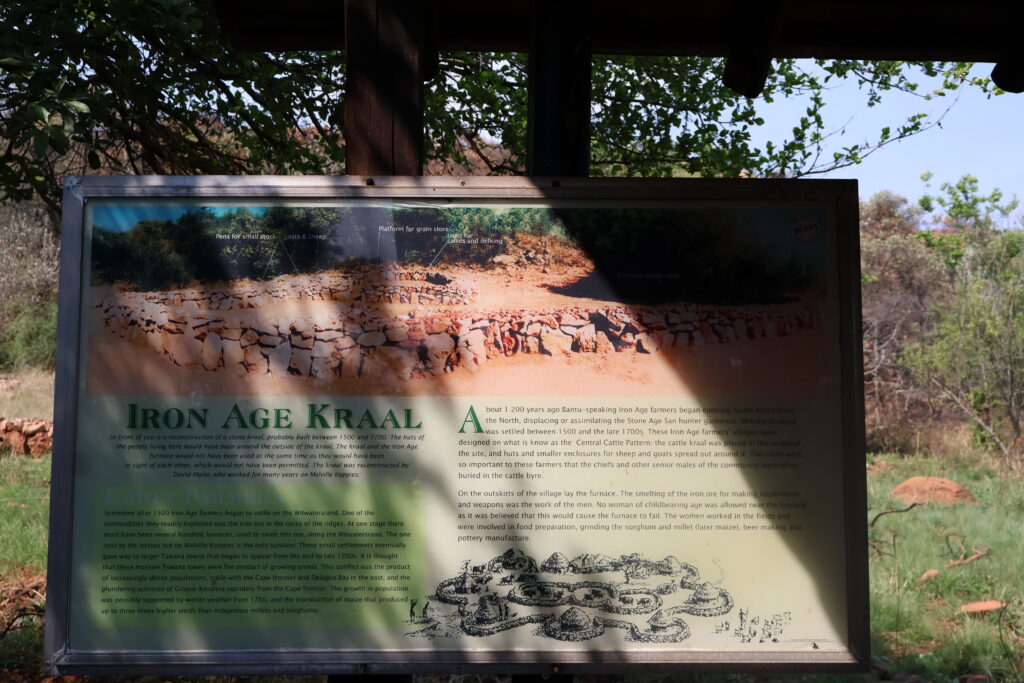
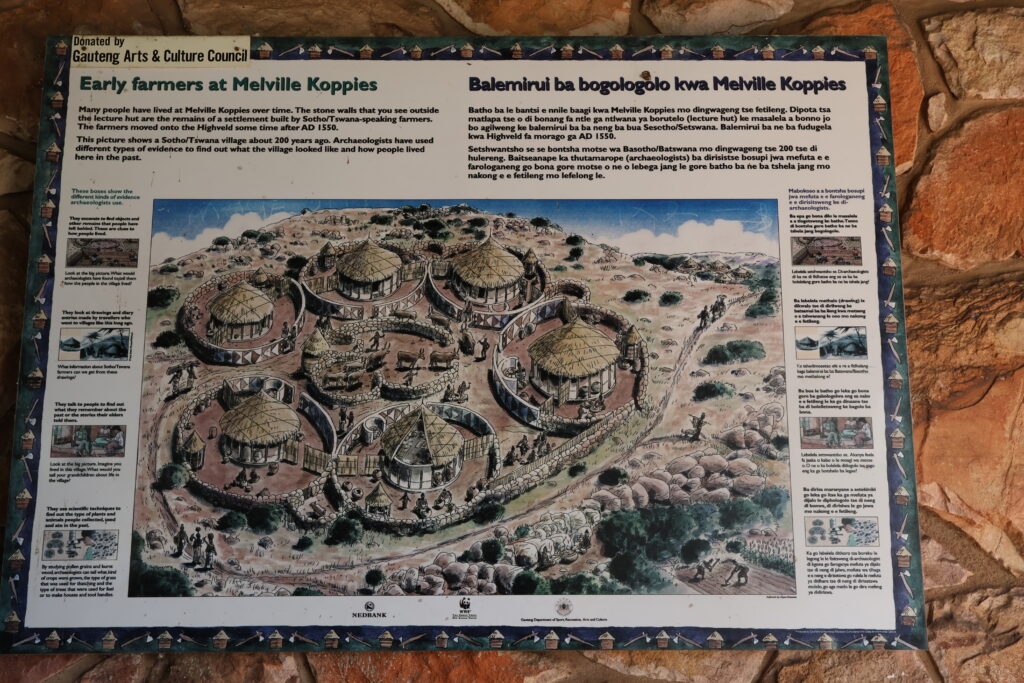
Upon arrival at Melville Koppies, tour guide, Sandra Murray shed light on the Iron Age history which Professor Drennan described as a time of “pre- mining, mining.” It was a time characterised by lot of economic activity, mining and trade at the koppies. Archaeologist, Professor RJ Mason discovered seven archaeological sites in the 1960s at the Melville Koppies such as Stone Age camps between 250 000 and 100 000 years old, a 500 year old ancestral Tswana iron furnace, and 300 year old Tswana hut floors and pottery. Other artefacts on display included stones used to make weapons and the only iron furnace that is being preserved at the Melville Koppies.
A photo of an information board about the Iron Age Kraal at Melville Koppies. Photo: Sikelelekile Pahlana An illustration of early farmers at Melville Koppies. Photo: Sikelelekile Pahlana
Geological History
Alongside the rich remnants of the iron age, is the geological history embedded in nature that precedes the existence of humankind. The contorted beds (see fact box) found alongside the pavements near Helpmekaar College act as a testimony. Professor Drennan said, “Without the contorted beds we would not have discovered the gold in the extension of the East Rand and West Rand,” and this is due to their highly magnetic nature which aided in the discovery of goldfields beyond the Central Rand. “The Contorted beds have been around for roughly 2.9 billion years and give a snapshot of what was going on around the time, [in a geological context], you can see when life was coming in, evidence that there was oxygen in the early atmosphere,” added Dr Glynn.
Info Box
Contorted Bed iron formation, also known as the Jan Smuts bed (South African Committee for Stratigraphy, 1980), is known for the small-scale incongruent folding present in it at many localities. Source: Economic Geology
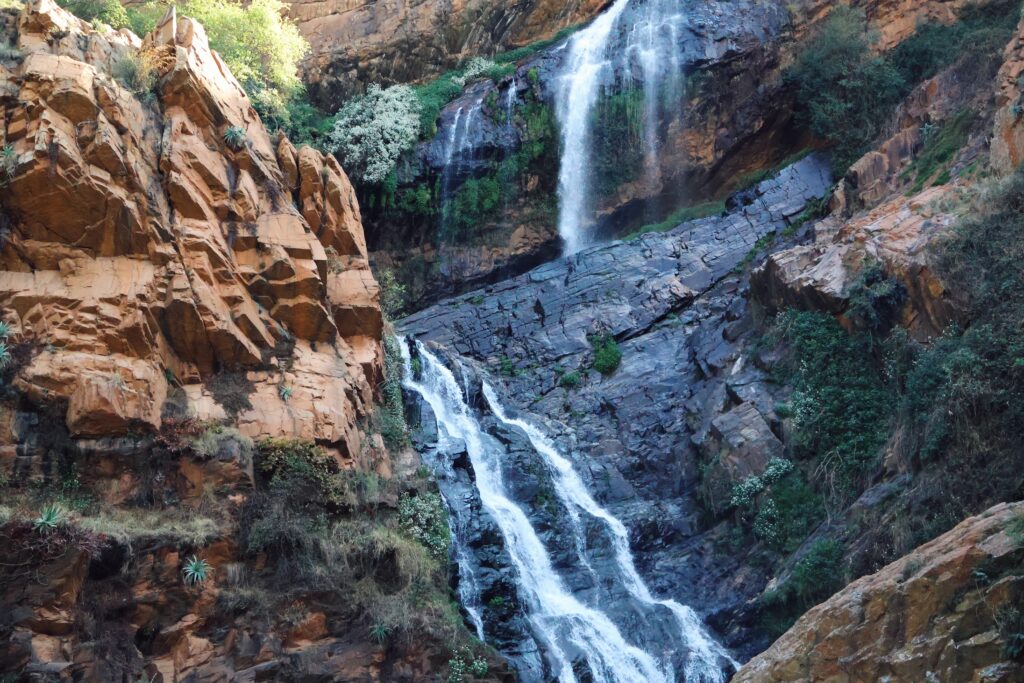
When one looks closely, you can see a glistening effect within the contorted beds, which is due to individual crystals. Alongside the magical contorted beds is the Witpoortjie Waterfall located at the Walter Sisulu National Botanical Gardens where the water flows over the white quartzites of the Witwatersrand and shale rock. According to Whitfield, “the falls were already recognised before the discovery of gold and were recorded on Fred Struben’s 1885 prospecting map of the district.”
A photo of the Witpoortjie Waterfall at the Walter Sisulu National Botanical Gardens. Photo: Sikelelekile Pahlana
“Prior to the discovery of the Main Reef in 1886, the Witwatersrand was a sparsely populated landscape of open grassy plains, rocky quartzite ridges, and numerous streams and waterfalls. Today, the same landscape has been transformed into the Johannesburg Metropolitan Area… the present-day landscape is strongly controlled by the underlying geology,” writes David Russo, Dr. Sharad Master and Professor Gillian Drennan in the guidebook.
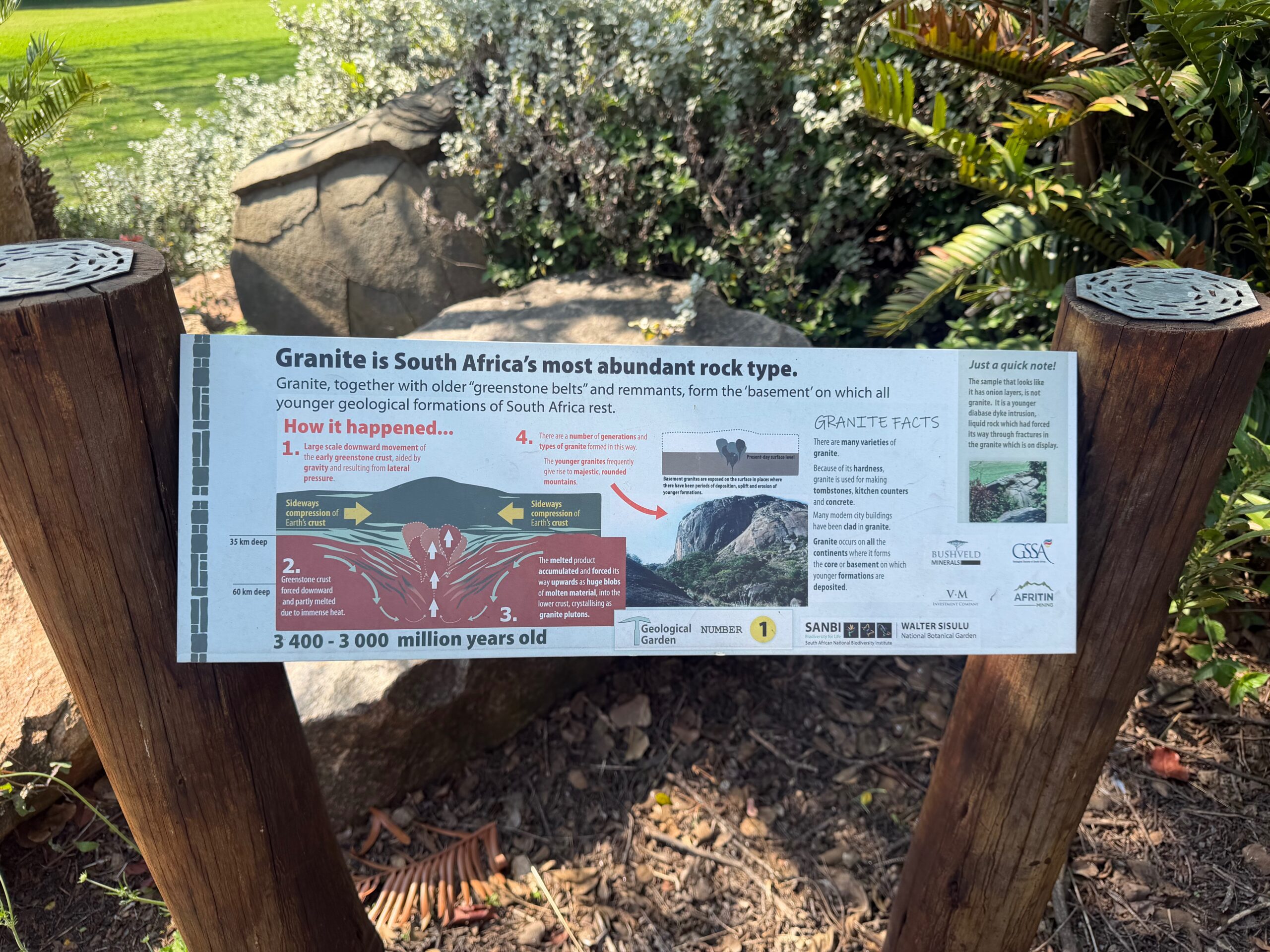
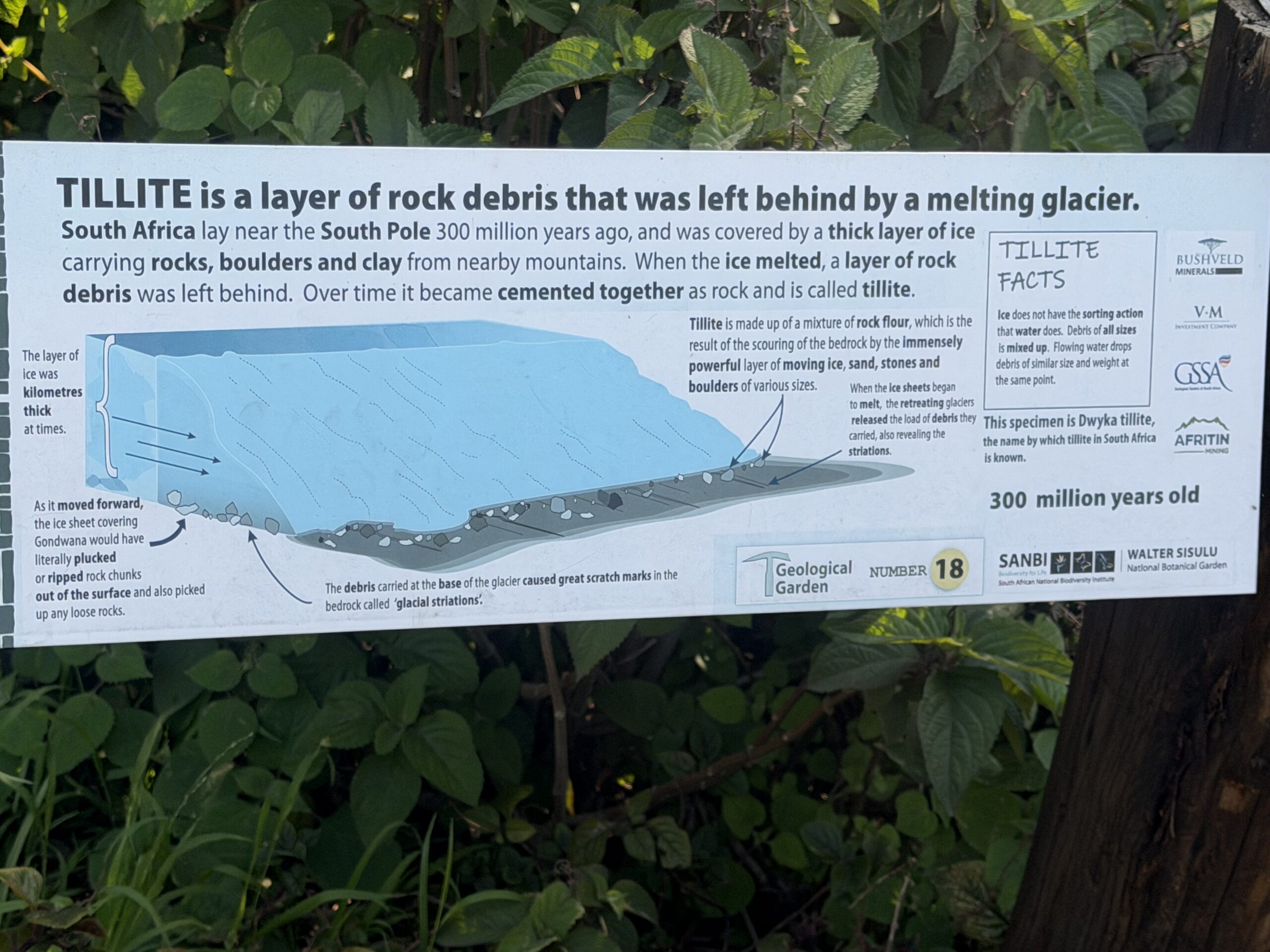
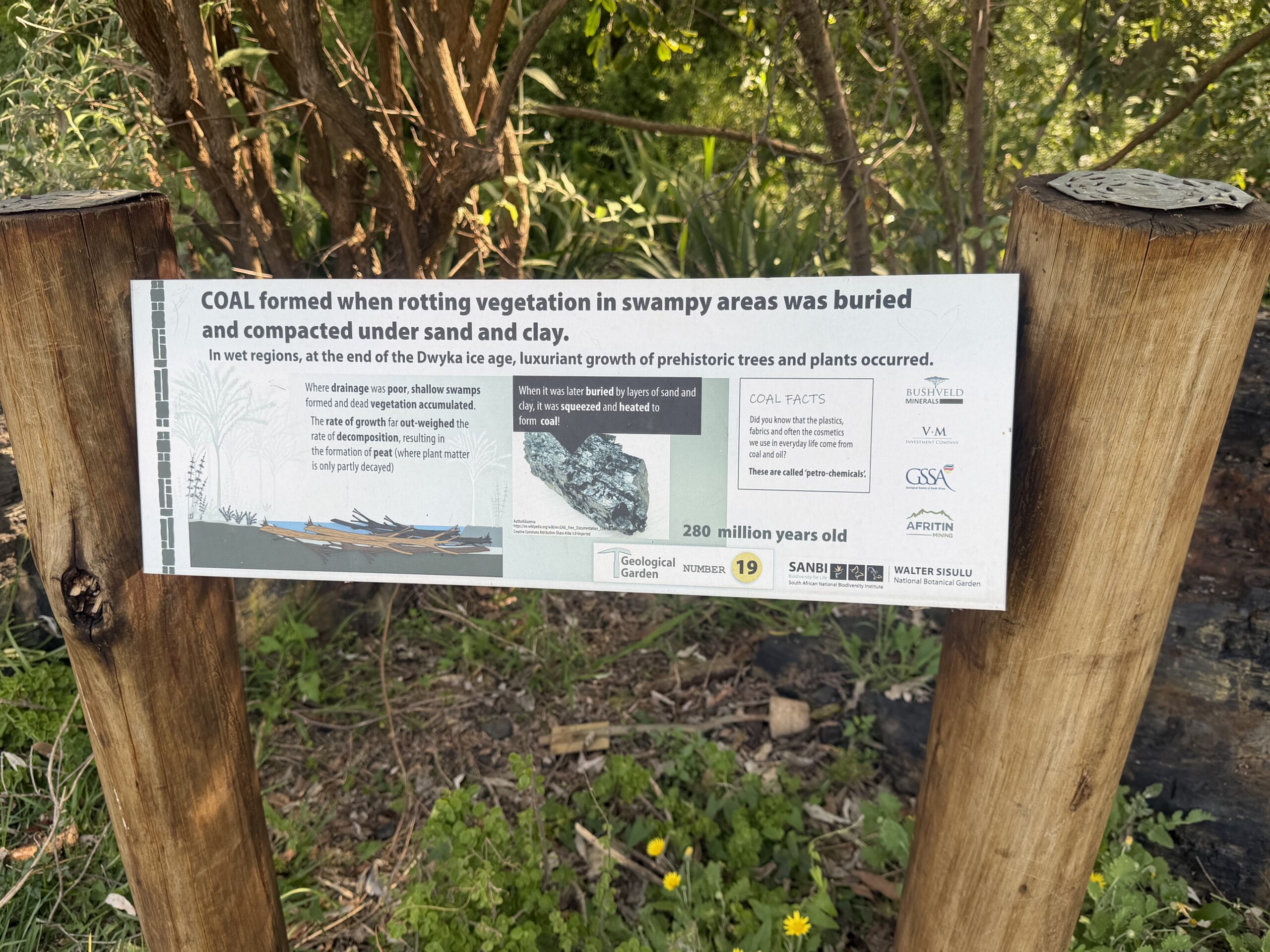
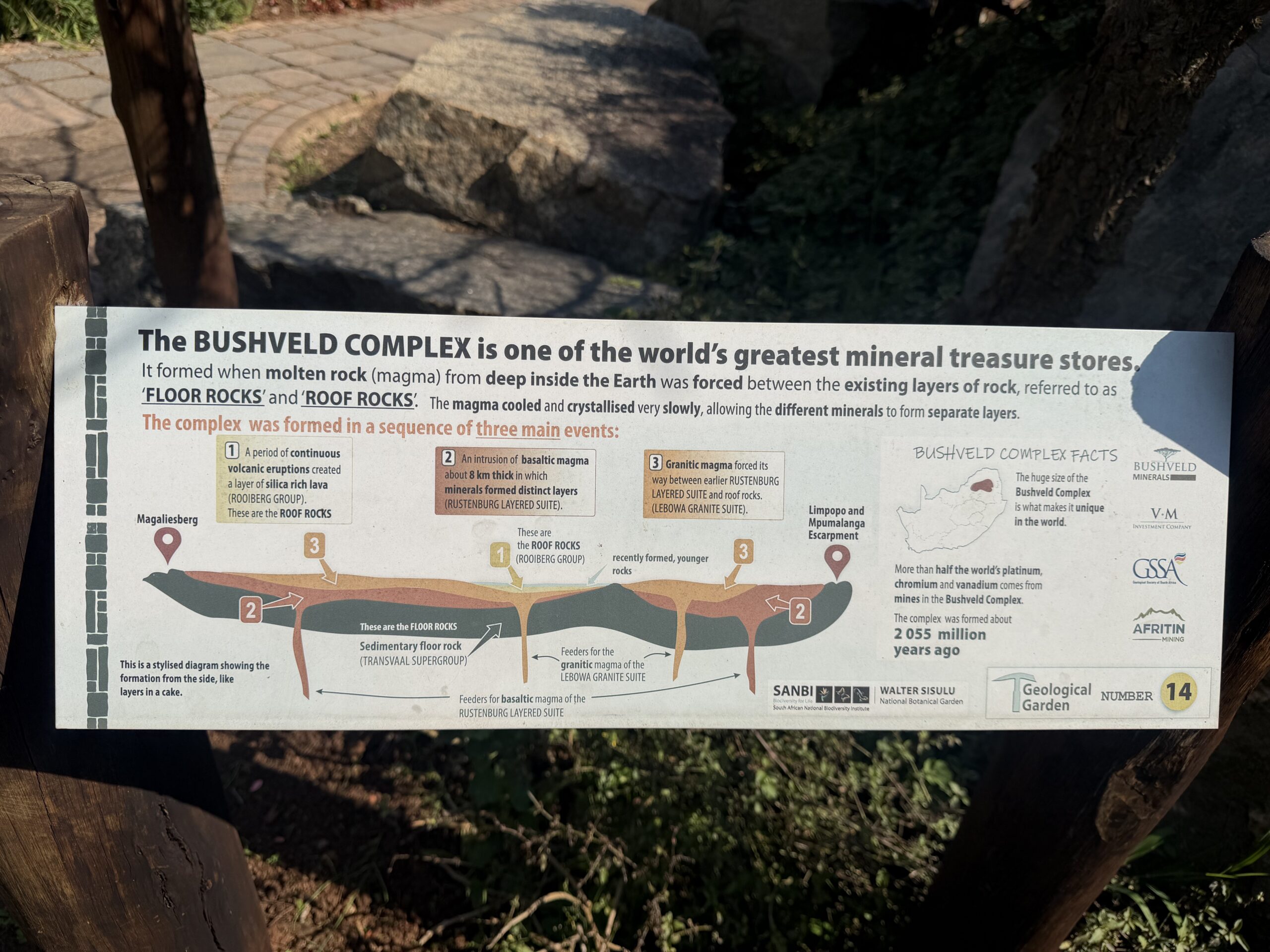
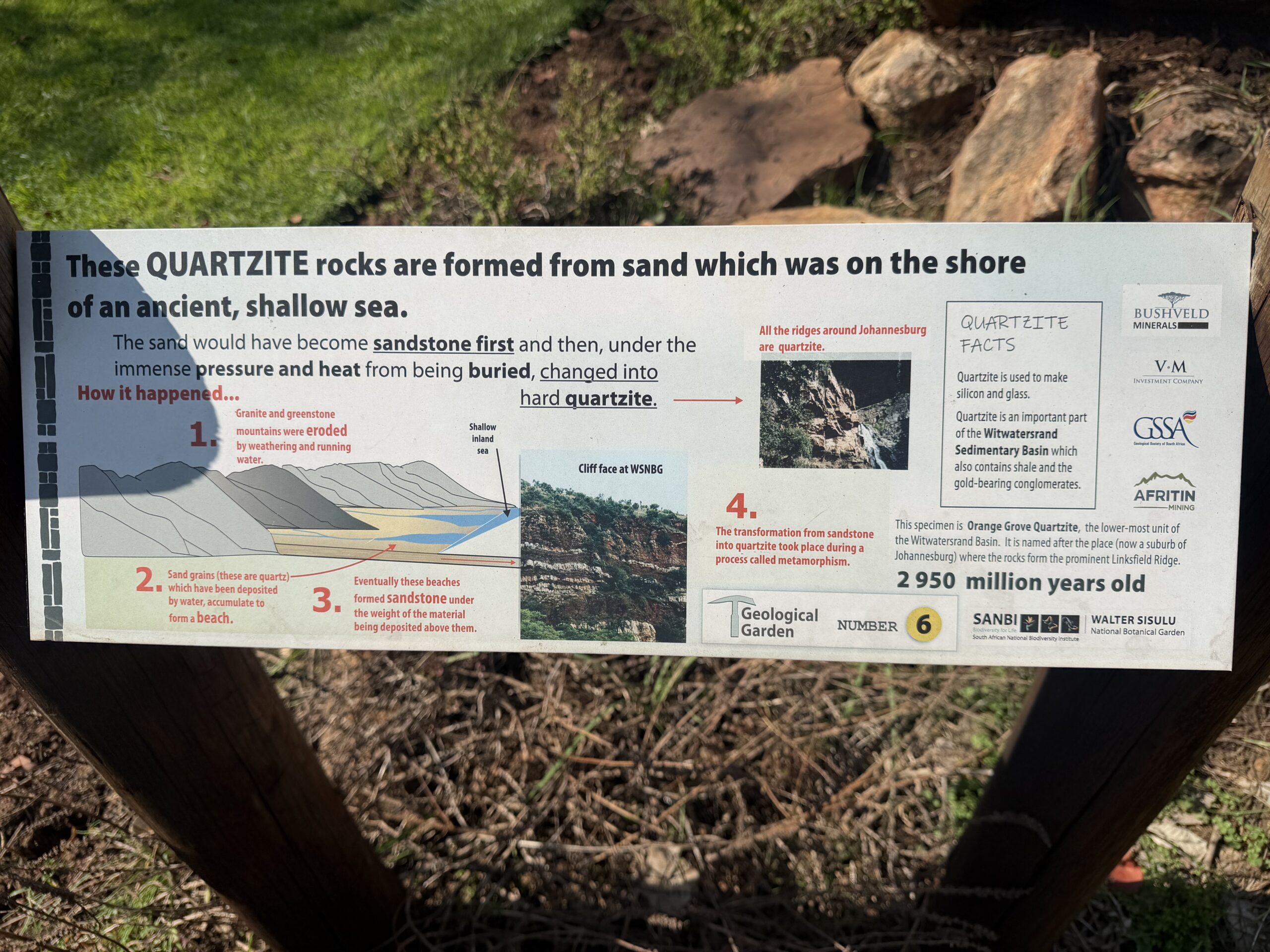
The Walter Sisulu National Botanical Gardens also offers a self-guided trail where one can learn about the history of rocks that were significant in shaping the Witwatersrand landscape.
A photo of a detailed information board about granite at the Walter Sisulu National Botanical Gardens. Photo: Sikelelekile Pahlana
A photo of a detailed information board about Tillite at the Walter Sisulu National Botanical Gardens. Photo: Sikelelekile Pahlana
A photo of an information board about coal at the Walter Sisulu National Botanical Gardens. Photo: Sikelelekile Pahlana
A photo of a detailed information board about The Bushveld Complex at the Walter Sisulu National Botanical Gardens. Photo: Sikelelekile Pahlana
A photo of a detailed information board about Quartzite at the Walter Sisulu National Botanical Gardens. Photo: Sikelelekile Pahlana
Northwards House and Mineshaft Museum
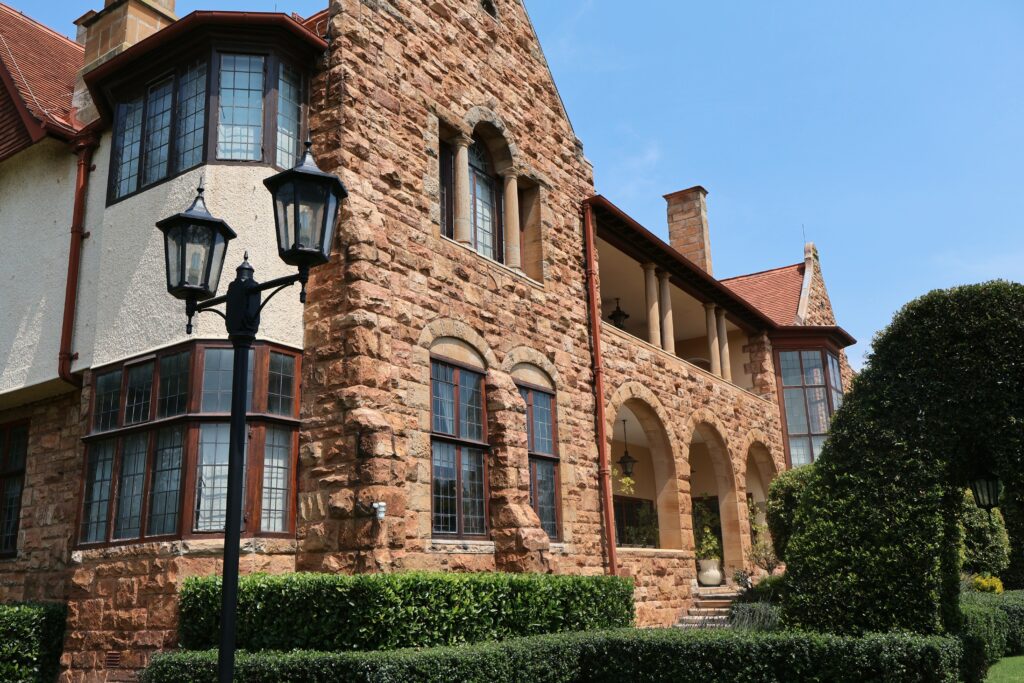
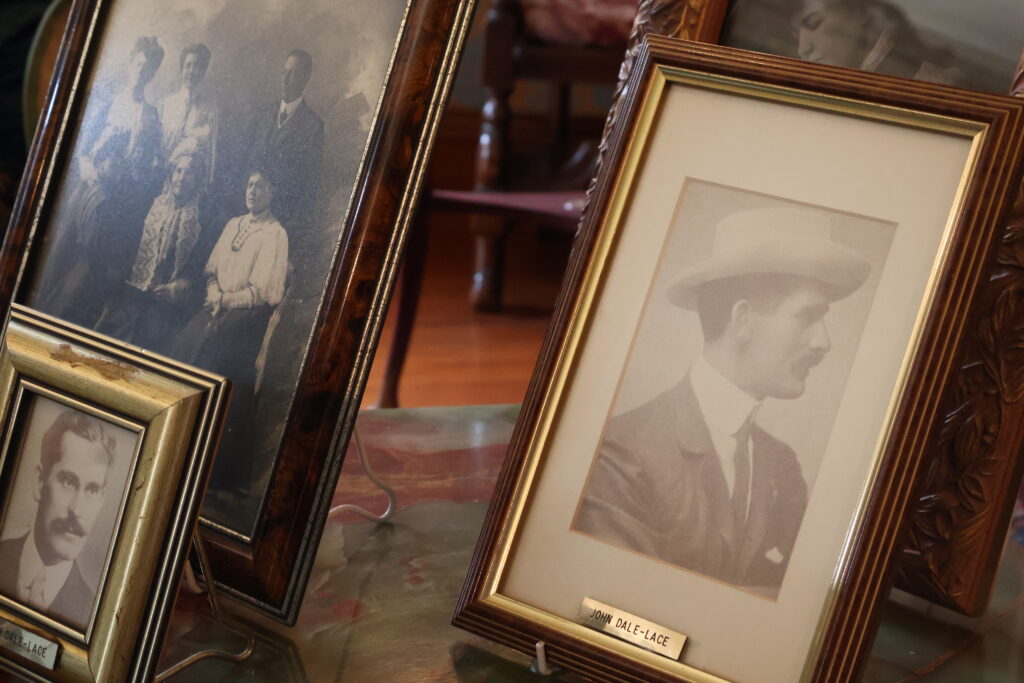
To get a glimpse of what life was like for mine owners, we visited a 122-year-old mansion, Northwards House, which was initially built in 1904 for John Dale Lace and his wife Josè Dale Lace. Mr Lace owned the Lace Diamond Mine. A tragic fire forced the Dale Lace’s to move out in 1911. A year later, gold Randlord Sir George Albu and his family moved into the renovated residence. Albu was one of the founders of General Mining and Finance Corporation. The Northwards House acts as a physical manifestation of its mining legacy. Inside the house, there was the business room which consisted of books about mining and the boardroom which has a map layout dating back to 1907 titled “Clifton” which is modern day Braamfontein, and on the map are familiar street names which are still used today such as: Jorissen Street, Juta Street and De Korte Street. Throughout the excursions, one is constantly reminded about how the past informs the present.
A photo of the Northwards House. Photo: Sikelelekile Pahlana A close-up photo of the Dale Lace family portraits. Photo: Sikelelekile Pahlana
The commercialisation of gold
From the physical house we went straight into the underground – the source of mining, as we explored the Mineshaft Museum also known as the Ferreira Mine Stope, located three floors below the Standard Bank Building. The preserved mine site offers a real-life example of life during the Witwatersrand Gold Rush in 1886. The Ferreira Mine was one of the first mines established following the discovery of payable gold on the Witwatersrand in 1886. The dim lighting and photographs of mine workers around the walls allow one to travel back in time.
Yet the question of who was the first to commercialise gold still lingers in contemporary times; this was the opening question during Bruce Cairncross’s keynote address on Saturday, September 18, 2026, at the Wits origins Centre. In relation to the discovery of gold in 1886, he said, “the history is contentious, there were activities happening in South Africa, prior to 1886 at the Witwatersrand.” Cairncross took the audience through a timeline that credited Pieter Jacob Marais in 1853 who panned gold, yet Marais did not find its source. Additionally, there were also the Struben brothers, namely Frederick and Harry Struben who claimed to have discovered gold.
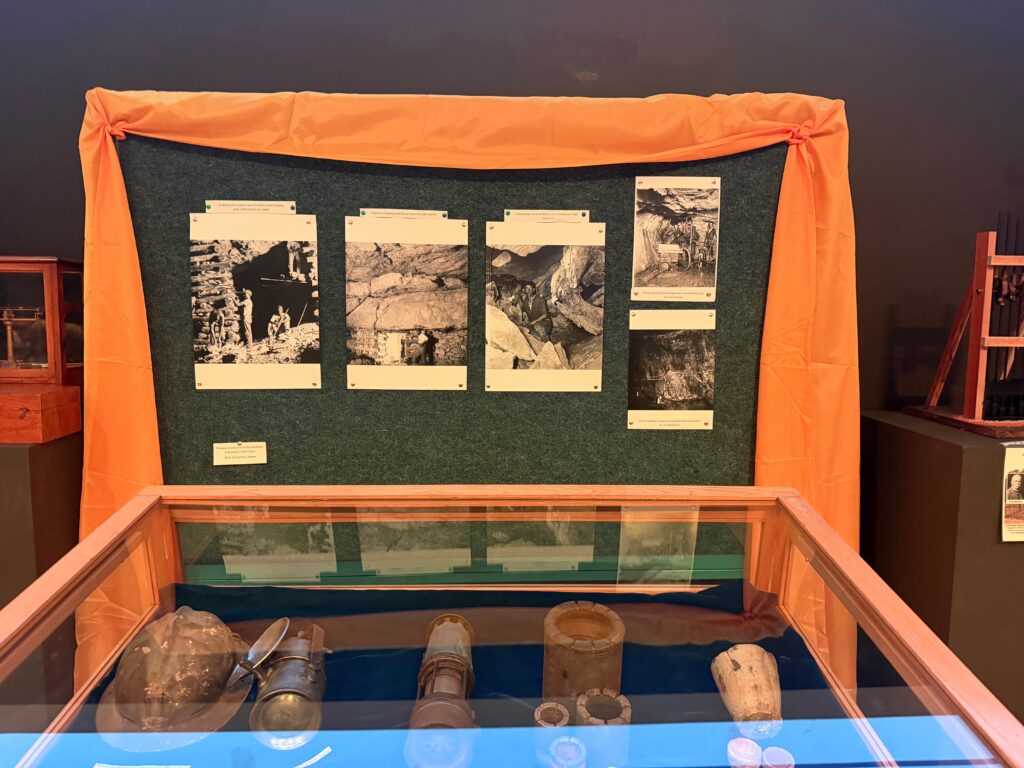
Prior to the commercialisation of gold in 1886, Frederick drew a map in 1885 which consisted of a layout of Langlaate discovery site being the Main Gold Reef. Cairncross proceeded to give a detailed overview of gold and asked the critical question of “What’s the future of gold?” to which he answered: “It looks a bit dismal in South Africa,” partly due to the fact that South Africa is not producing as much gold as it once did. To end off the first day of the excursion, the Wits Geoscience Department had an exhibition which consisted of gold samples as well as photograph archives that speak to the history of gold mining.
A photo that showcases the Wits Geoscience exhibition at the Wits Origins Centre. Photo: Sikelelekile Pahlana
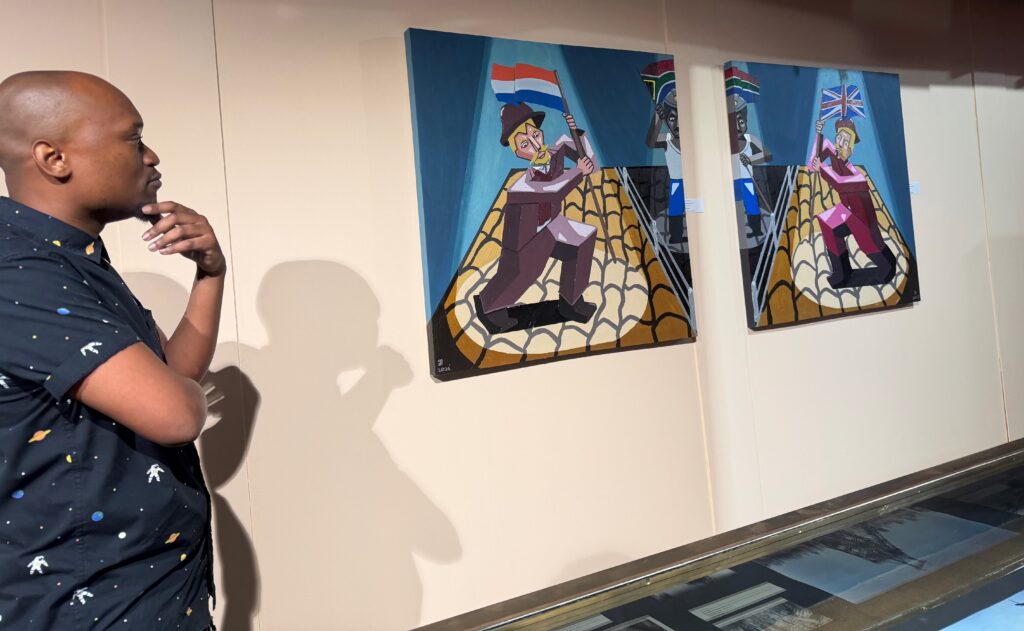
Bringing it back to the present at Museum Africa, an exhibition by Tshepo Bopape depicts his artistic interpretation of the industry, and asks, “what gives something value?” Bopape’s artwork is centred around Kimberely and its diamonds which funded the mining in Johannesburg. The art critically analyses, “the relationship between man and precious stones, it is not just economic but also psychological and spiritual,” Bopape shared. The art acts as an intersection between the history of colonisation with an interrogation around value systems and the division of society on a class and racial basis.
A photo of Tshepo Bopape looking at his artwork at Museum Africa. Photo: Sikelelekile Pahlana
Therefore, it is evidently clear that the history of gold in Johannesburg’s Witwatersrand is multifaceted and cannot be understood through a singular story. The contribution of nature and significant landmarks contextualise how gold was formed and commercialised. However, it is important to note that the work of the unsung heroes being black mining labourers had an immense impact on the success of the gold mining sector.
FEATURED IMAGE: A photo of a contorted bed which was near the Helpmekaar College. Photo: Sikelelekile Pahlana
Lesotho’s frozen Maluti Mountains is home to Club Maluti – a rustic, analogue sanctuary where generations of Witsies have found lifelong bonds and adventure on its slopes.
Founded in 1968, Club Maluti remains the cradle of African snow sports.
A nearly 60-year partnership with Wits Snow Ski Club turns the remote mountain cabin into an iconic student rite of passage.
The hand-built, member-run lodge offers an analogue escape where phone screens give way to fireside traditions.
Up at 3,200 metres in the Maluti Mountains, where sub-zero air bites your cheeks and river gorges freeze into solid glass, sits a rustic timber lodge. Its living heartbeat the generations of snow-seekers that visit during the colder months. Tucked away in Lesotho, ten minutes down the pass from Afriski, Club Maluti (Club M) is a place where city stress dies on the switchbacks and generations of Witsies have found a second home.
Stepping through the timber door of Club Maluti after the 5-hour drive up from Johannesburg, the first thing that hits is not the cold; it is the immediate warmth of woodsmoke, room-wide laughter, and decades of lived history. Shedding my heavy winter coat as the sound of music hums through the room, I realise I haven’t just entered a cabin; I’ve stepped into a living time capsule and close-knit community.
How a crazy idea built a legacy
Sitting near the fireplace listening to older members share stories over cold beers, the roots of the place come into sharp focus. The story began in the mid-1960s with Syd Chaplin, who ran pony treks in the region before establishing Oxbow Lodge near the Malibamat’so River. Looking to draw winter crowds to the frozen highlands, Chaplin connected with Phillip Lloyde, a ski enthusiast, alongside Joburg-based friends Brian de la Harpe and Stan Flemming.
The four friends saw the snowy Maluti peaks as an ideal and natural playground for winter sports. Driven by a shared love for skiing and working through official channels, they secured permission from King Moshoeshoe II of Lesotho. They signed a 100-year lease on the land, under the strict condition that no one could profit from the club, before officially forming Club Maluti. What followed in 1967 was endless weekend work parties where members hauled timber up unpaved tracks; they completed the original A-frame in April 1968.
When their initial slope proved too sunny, local mine manager Keith Whitelock pointed them ten kilometres east to the Mahlasela Bowl, a cold, shaded natural amphitheatre. It proved to be the finest natural slope in Lesotho, establishing the cradle of African snow sports. Throughout the 1970s and 80s, South African families crossed the border to escape city life, skiing, ice-skating on frozen gorges, and dancing on lodge tables late into the night.
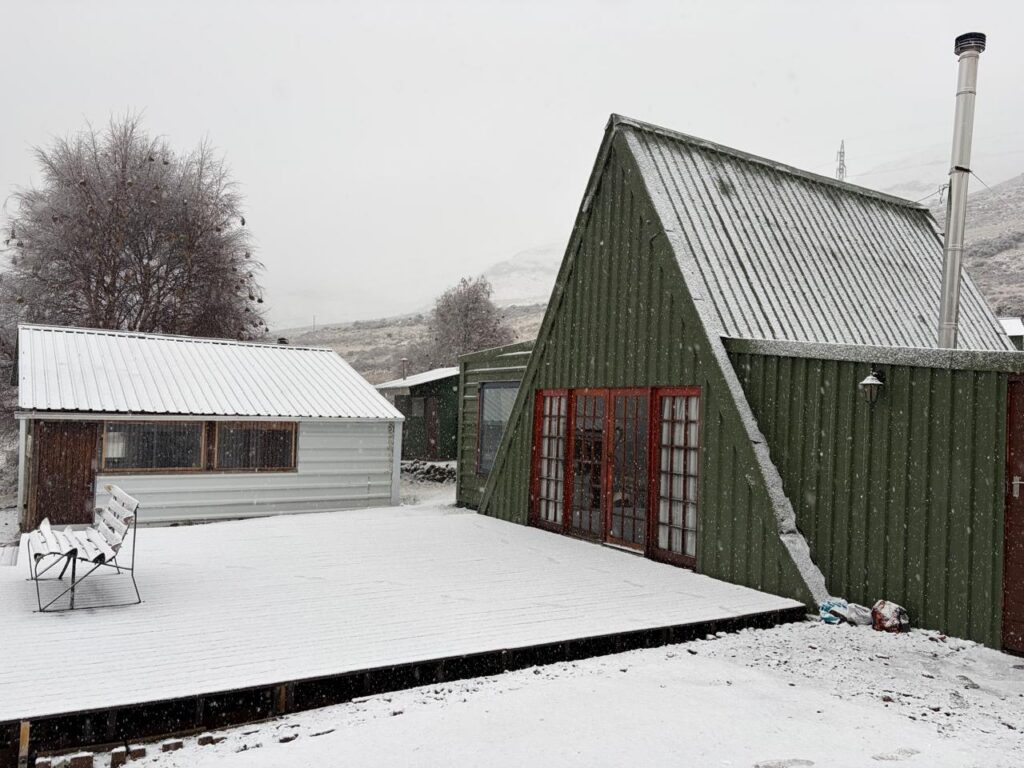
Original A-frame building during winter. Photo by: Daniella Ripamonti
When campus met the mountain
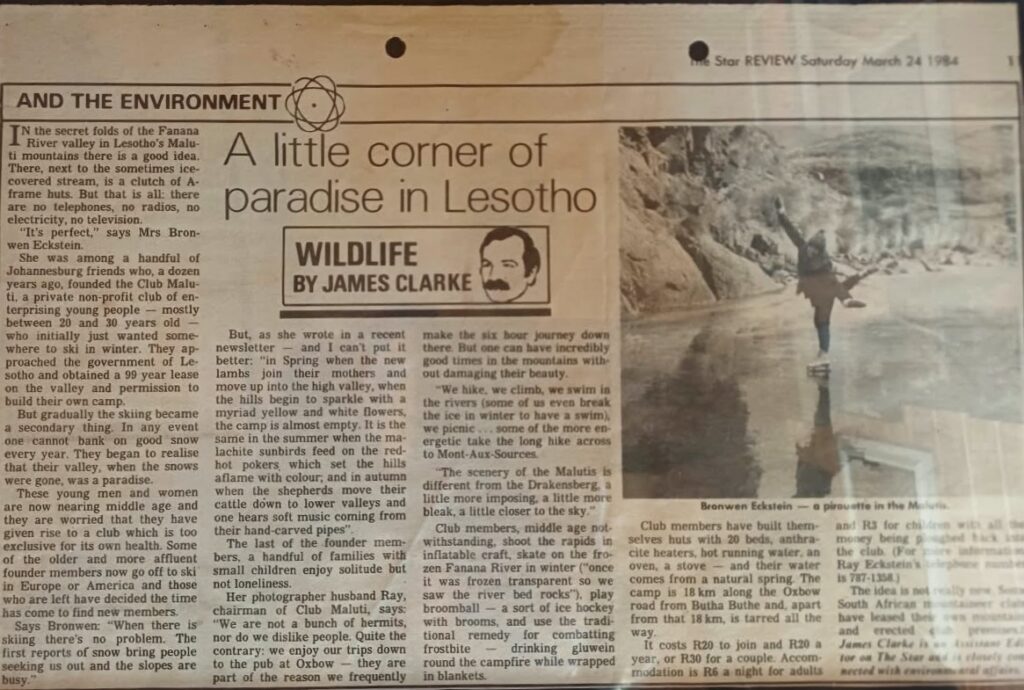
Walking through the cabin, I quickly notice how deeply Wits University is woven into the floorboards. In 1984, Wits student Ivan van Eck saw a newspaper photo of someone ice-skating in Lesotho. Entranced, van Eck drove up to investigate, fell in love with the place, and founded the Wits Snow Ski Club (WSSC) to bring campus along.
Van Eck eventually took over ski rentals and set up makeshift rope tows at the club in 1991. However, his push to create commercial ski packages directly violated the King’s non-profit mandate, famously leading to his deportation by Lesotho border officials in 1992 for operating a business without a hotel licence.
Meanwhile, through the late 1980s and 90s, Club M member Ernesto Casserino conducted feasibility and environmental studies with the Lesotho government. His work laid the groundwork for fellow members Graham Joyce, Oliver Schwankhart, and Peter Pyper to partner with Wessel Bosman and open Afriski resort in 2000.
Through changing resort developments and shifting border regulations over the decades, the bond between WSSC and Club M remained untouched, creating a bridge between varsity life and the peaks of Lesotho. Former Club M Chairman Mehow Granicki explained that this pipeline is what makes the club unique: “If you get involved with Wits Ski Club, you’re always welcome to continue [as a full member] at Club Maluti after you finish your studies. Your varsity mates become your winter mates.”
Archive newspaper article from 1984 that made Evan van Eck go to Lesotho and later establish the Wits Snow Ski Club.
The shift to boardsand living walls
Standing in front of photo archives from the 80s and 90s, I watched the club’s visual story unfold on its lounge walls. The black-and-white photos of the 70s, the bright clothes of the 80s, and the rise of snowboarding on the continent in the 90s.
“The students are a great litmus test,” Granicki noted. “They come like every generation with their music, quirks, and ideologies. The club absorbs, welcomes, and adapts. We had electro, now it’s drum & bass. We charged camera batteries, now cell phones, but it’s still the same sound system, and it’s still the same generator.”
When snowboarding exploded internationally in the late 80s, students brought back overseas VHS tapes, cut a window into an A-frame wall, mounted a monitor, and looped snowboard videos. Student energy brought freeride trick culture, vibrant gear, and fresh music to the slopes.
Today, almost every member snowboards. The communal shed is packed with shared boards and boots, keeping snow sports accessible for students. Down at Afriski, supportive members help newcomers set up their gear and carve their first turns.
The rituals that build a family
Experiencing the lodge firsthand reveals how much care keeps it running. Completely member-run, the property features the main A-frame lounge, the timber B-frame bunkhouse, and the Park Home sleeping quarters kept warm by anthracite stoves.
Every couch and timber beam represents collective effort. As Granicki reflected: “Each building had an era, a crew, a mission.” From wrap-around seating to the wood-fired hot tub steaming under sub-zero skies, everything was hand-built during voluntary off-season work parties. At the heart of daily life are Basotho hosts Maskok and Ntja Sepatla. Living on site, Maskok lights the fires before dawn while Ntja maintains the generator and water systems.
Access remains strictly word-of-mouth through member referrals. Every trip kicks off with Friday night introductions around the fire, where guests share their names, trip count, and a claim to fame before receiving a mandatory weekend nickname.
“That drive and weekend in the mountains bonds you in such a healthy way,” Granicki explained. “By maintaining rituals, we maintain culture across generations.”
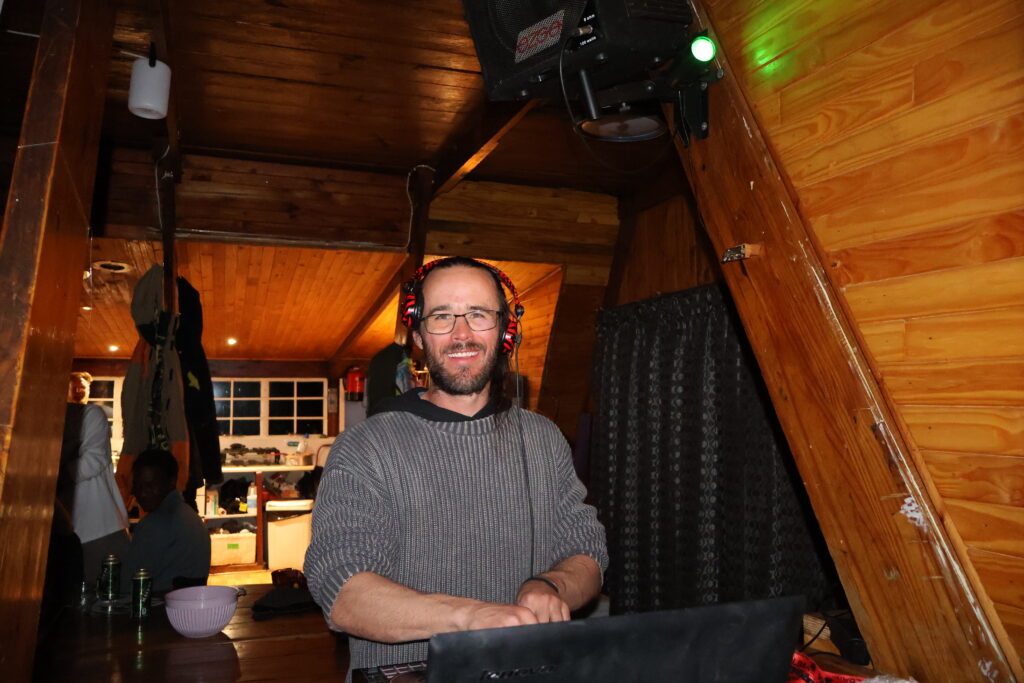
Jason Roberts DJing in A-Frame. Photo by: Daniella Ripamonti
The soul of Club M
For Vishaylin Mahadeo, who joined WSSC in 2011, the lodge became his anchor: “It’s home to me; it’s my family, my safe space. When going through a difficult time, my first thought is, ‘let’s go to the mountain.’ I have snowboarded everywhere in the world, and this mountain is still so special to me. My university experience was created through Ski Club; I even extended my degree just because I loved it so much!”
Granicki, who first visited as a matric student, feels that same pull: “Club M is home to misfits, geniuses, daredevils, and lost souls [who are] funny, beautiful, and live for the moment… My favourite personal memory is meeting my wife up there. Our adventure began from loving winter and the outdoors.”
In a world driven by screens, Club M remains fiercely analogue.
“It represents freedom, exploration, and self-discovery. You’re in the middle of two mountains, under stars, in a cabin when it’s snowing. My hope is that it remains a time capsule that forces you to be more of yourself, having fun, being human. Here’s to the snow!”
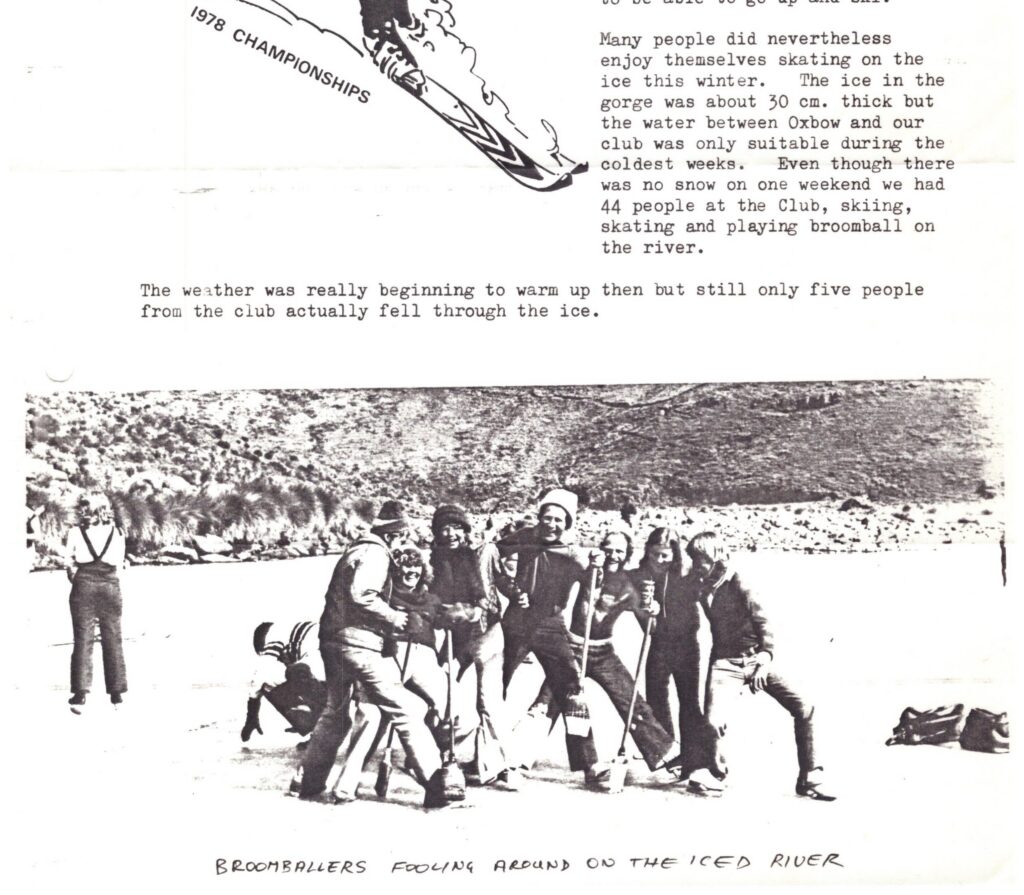
Archive newspaper from 1978 showing members broom balling on the iced river.
FEATURED IMAGE: Photo of Club M members at Afriski. Photo by: Daniella Ripamonti
Seven months after her precautionary suspension, former Wits Sociology Head of Department Professor Srila Roy faces an internal university disciplinary hearing set for September 15
Former Sociology Head of Department Professor Srila Roy will appear before a formal Wits disciplinary hearing on September 15, 2026.
Head of the School of Social Sciences, Professor Lorena Núñez Carrasco, confirmed that internal proceedings remain ongoing and an outcome will take time.
Roy remains under institutional restrictions that prevent her from speaking publicly or publishing material regarding the ongoing case.
Former Head of Sociology Department Professor Srila Roy will face an internal university disciplinary hearing on September 15, 2026, seven months after her precautionary suspension.
Professor Srila Roy. Photo: The University of the Witwatersrand
The hearing date was confirmed by Head of the School of Social Sciences, Professor Lorena Núñez Carrasco, in response to written enquiries about Roy’s employment status and the progress of internal proceedings.
While questions surrounding Roy’s permanent standing at Wits have circulated since her suspension in February, the university confirmed that internal processes have not yet concluded.
“The disciplinary process has not concluded, the hearing will in fact only be held on the 15th of September, [and] even then, the final resolution will take some time,” Núñez Carrasco stated in an email response.
She added that until the matter is officially resolved, Roy is restricted from making public statements or publishing material concerning the case.
Roy was placed on precautionary suspension in February 2026 following public backlash over remarks posted on social media regarding South African work ethic amidst parliamentary discussions on foreign academics in higher education.
The post drew swift condemnation from student leadership, the South African Sociological Association (SASA), and members of parliament. Roy subsequently resigned as Head of Department, leading to formal university disciplinary procedures.
Although Parliament’s Portfolio Committee on Higher Education previously called for her dismissal, Wits University maintained that any institutional outcome would depend strictly on the completion of its formal internal processes.
With the hearing scheduled for mid-September, the final determination on Roy’s future academic standing at Wits remains pending.
FEATURED IMAGE: Graphic showing silhouette of a woman by a calendar marking September 15 2026. Designed by: Daniella Ripamonti
Members of Uthingo Lwamankosazana (Rainbow of Maidens) – the Wits society for young maidens – are preparing for Umkhosi Womhlanga, the annual Zulu reed dance ceremony honouring the king and celebrating maidenhood, while encouraging young women to embrace their cultural identities and traditions.
Uthingo Lwamankosazana aseWits prepares members for Umkhosi Womhlanga.
Students from different cultures celebrate their heritage together.
Members say young people are losing touch with tradition.
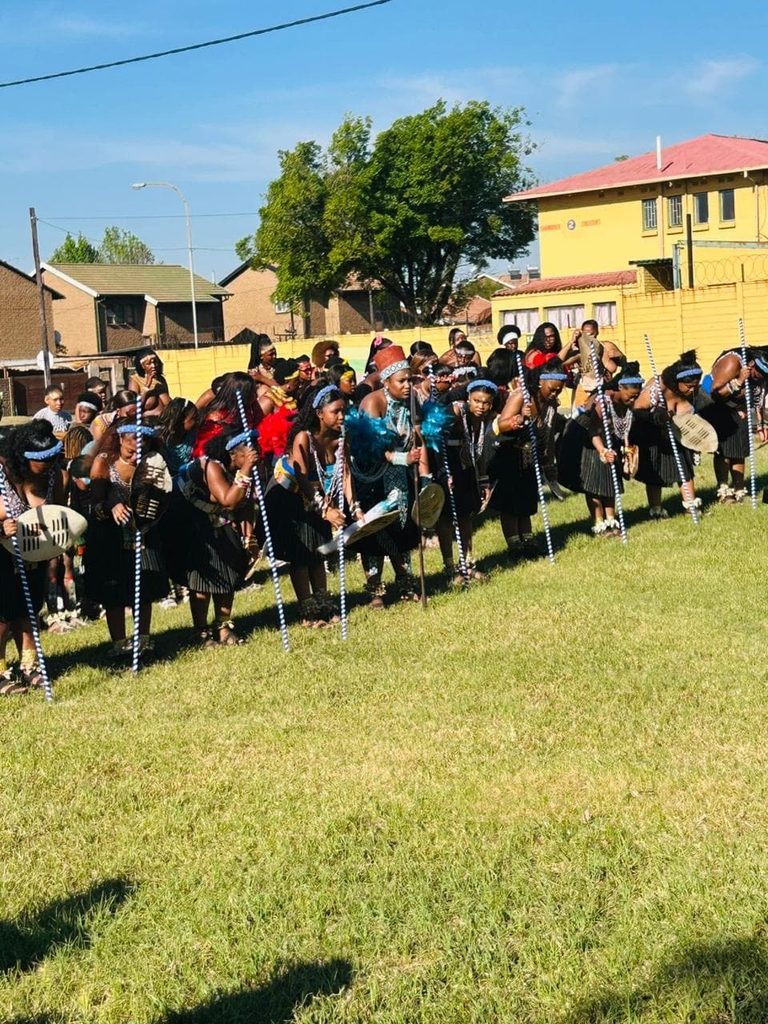
For some Wits students, preparing for Umkhosi Womhlanga, the annual Zulu reed dance ceremony set to take place September 5-6 2026, is about more than getting ready for a cultural ceremony: it is a chance to reconnect with traditions they fear young people are losing.
Uthingo Lwamankosazana is a society for maidens at Wits that brings together young women from different cultural backgrounds under the slogan ‘Maidens united in diversity.’ Second-year BCom Accounting student and chairperson Luthando Mdletshe said the society is not exclusively Zulu, and that women from any tribe are welcome to join. “We’re not just a Zulu maiden’s group,” she said.
For second-year BA Film and Television student Bulumko Ntluzo, who is Xhosa, being part of Uthingo has encouraged her to take pride in her own culture and traditions.
An image of Uthingo Lwamankosazana at Umkhehlo. Photo: Sanele Sithole
Umkhosi Womhlanga, held annually during the first or second week of spring every year, is a cultural festival in South Africa where tens of thousands of young women gather to celebrate womanhood and cultural identity. Members of Uthingo lwamankosazana pushed back on a common misconception that women who attend Umkhosi Womhlanga do so to be selected as wives.
Final-year BSc Astronomy and Astrophysics student Tania Nyanda said this, and other stereotypes have contributed to young people becoming disconnected from traditional practices. She said members attend the ceremony to pay their respects to the royal family and take part in prayer. Mdletshe described it instead as a celebration of ubuntombi (maidenhood), and a chance for maidens from different provinces to learn from one another.
Uthingo Lwamankosazana members have been preparing for the ceremony through a ‘Siyaya eMhlangeni’ camp and amahubo, which are traditional song practices held on campus. Second-year Bachelor of Education Student Nosipho Makhalima said the camp prepares members by advising them on how to conduct themselves and reminding them of the significance of Umkhosi Womhlanga.
Beyond ceremony preparation, the society doubles as a support network for young women in their 20s, navigating university life away from home. Makhalima described it as a safe and educational space where members discuss issues around relationships, sexuality, and abstinence in line with the traditional values promoted by the society and at its centre is a sense of sisterhood.
Ntluzo said young women often become disconnected from their traditions once they arrive at university, driven by peer pressure and fear of appearing “too traditional.” She added that social media has also shifted young people’s attitudes towards culture.
As Uthingo Lwamankosazana members prepare for this year’s ceremony, Uthingo Lwamankosazana continues to give Wits students a space to engage with culture, support one another and hold on to tradition while navigating university life.
FEATURED IMAGE: An image of member of Uthingo Lwamankosazane by Sanele Sithole
A viral social media claim that foreign nationals make up 98% of Wits staff has been rejected by the university, which says the actual figure is 9%.
Claims that Wits’ has foreign nationals make up 98% of Wits’ staff went viral on social media.
Wits dismissed these claims and said that the correct figure is 9%.
Wits further added that internet users should refrain from spreading information that aims to divide the country.
After trending on social media this past weekend, the University of Witwatersrand has dismissed the viral claims that 98% of its staff are foreign nationals. Wits went to Tik Tok, Twitter and Facebook to dismiss the claims, labelling it “Fake News” and stating that international staff make up 9%.
The list of names that circulated was a screenshot of one page from the Wits academic staff list. The screenshot showed names from a Wits academic staff list but contained no accompanying statistics on the nationality of the university’s staff. The university also warned that the false information could contribute to division within the country. In a response on social media, Wits said, “Please refrain from sharing misinformation which seeks to sow division in our community and our country.”
Wits Vuvuzela contacted the Communications department at the University of Witwatersrand for further comment and verification of the claims. In its response, the university confirmed that international staff account for 9% of its approximately 5500 employees. The department also reiterated its earlier statement that the social media posts are misinformation.
Wits said its objective is to balance the development of South African leadership with the recruitment of international expertise where necessary. “Our objective is therefore neither localisation nor internationalisation in isolation, but a strategically balanced institution that develops South African leadership while drawing on the very best expertise available globally, where necessary” Wits commented.
The claim comes amid renewed debate over the employment of foreign nationals in South Africa, including concerns raised by the March-and-March movement about undocumented migrants and employment.
However, it remains unclear where the 98% figure originated on social media and Wits has called on members of the public to refrain from sharing the claim as well as verifying information before circulating it.
FEATURED IMAGE: The Great Hall at the University of Witwatersrand. Image by Zebrena Ralph
From altering oversized trousers in a university residence to turning discarded clothing into insulation for informal settlements. Bryan Lepelle is proving that a small student idea can grow into a business with a bigger purpose.
Drip Tailors is focused on sustainability, skills development and job creation.
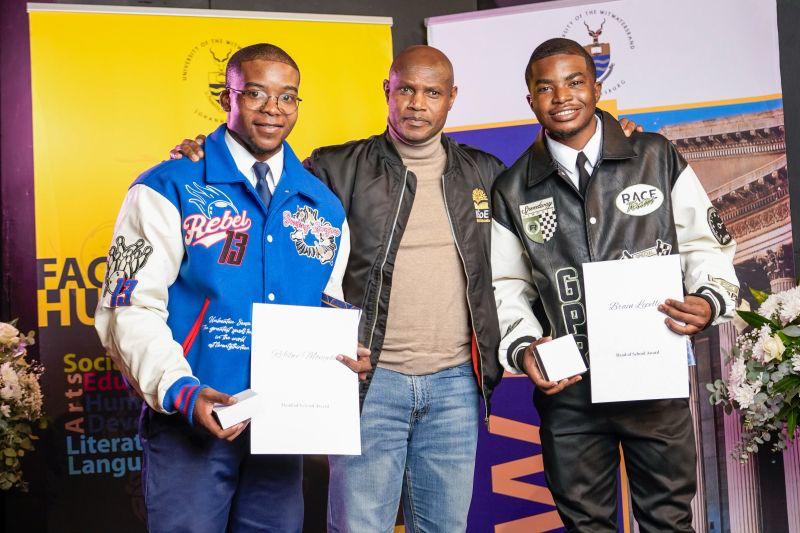
Lepelle received a Head of School Award at Wits.
Lepelle formally registers his business in 2025.
Bryan Lepelle, a co-founder of Drip Tailors, is not the kind of entrepreneur who started with a big office, expensive machines or a large amount of funding. As an Honours student in Education, his entrepreneurial journey started in 2023 while he was a student living at Barnato residence at the University of the Witwatersrand.
Lepelle and his co-founder, Refilwe Monyela, bought trousers that were too big for them. Instead of looking for someone to alter the trousers, they decided to do it themselves. Their sewing skills were self-taught. They adjusted the trousers and, to their surprise, it worked. “We taught ourselves how to sew and we adjusted the trousers and it actually went well,” says Lepelle.
That small success made them think about other students who could be facing the same problem. With many students buying clothes online from stores such as Shein and Temu, they wondered whether there were other students who faced the same problem they did. So, they posted in university groups to find out and there were many.
What began with two students trying to fix their own trousers quickly turned into an opportunity.
“We identified a problem that students had and we had to come up with a solution,” Lepelle explains.
At first, Drip Tailors was informal. Lepelle and Monyela were simply making some extra money on the side while studying. It was not yet the serious business it would later become. In 2025, however, they took another important step by entering the entrepreneurial space at E-hub. The E-hub is a university –based entrepreneurship hub that supports students and emerging entrepreneurs in developing and growing their businesses. With the support they received there, the business was formally registered. They received mentorship, which helped them understand that what they had started could become more than just a side-hustle.
But turning an idea into a business came with its own challenges. “The biggest challenge when we were starting was funding, basically because we work with machinery and other equipment,” Lepelle says.
The lack of resources forced the young entrepreneurs to find ways to work with what they had. “When we started, we made an investment in buying two small machines. Even though we lacked some equipment, we found a way of adapting and using those two machines, and it did work,” he says. Later, they received funding after winning an Enactus competition. Other support, including funding from Ford Motor Company, also helped them move forward.
Drip Tailors Co-founders Refilwe Monyela (left) and Bryan Lepelle (right) pose with certificates after being recognized for their tailoring work. Photo: Supplied/ Drip Tailors
Learning to work with limited resources became part of his entrepreneurial education. But Drip Tailors was also changing. The business began looking beyond simply altering clothes and towards a much bigger problem: textile waste and the cold weather experienced by people living in informal settlements. This led to the development of ThermaCycle.
Drip Tailors collects unwanted clothing through clothing donation drives and other partnerships. “When we go to collect clothes, there are clothes that can’t be donated because they are seriously damaged, beyond repair and can’t be used anymore, Lepelle says. Instead of throwing those clothes away, Drip Tailors repurposes them. “We take those clothes, disinfect them and decolour them, and we make thermal wall insulation with those clothes,” he explains. The insulation is then used to help make homes in informal settlements warmer.
According to Lepelle, the material can help increase the temperature inside a house by 8 to 18 degrees, helping create a warmer and more comfortable living environment during colder months.
At the heart of Drip Tailors is the idea of finding solutions to problems.
The business has grown into a social enterprise. It is not only focused on recycling waste but also on teaching people skills that they can use to be self-sustainable. Drip Tailors has a training academy where people are taught sewing skills. Lepelle explains that the goal is not simply to train people and send them home, but to give them skills that can create opportunities for their future. As he puts it, “after someone has completed their training, they can go start their own business.” He also emphasises that Drip Tailors is focused on creating a meaningful impact in the community, stating that “Drip Tailors teaches people skills so they can be able to sustain themselves.”
This focus on skills and employment is especially important to Lepelle because of the high level of unemployment among young people in South Africa. As he explains, “trying to employ a certain portion of youth is solving one of the country’s problems.”
Being a student and a business owner at the same time is challenging. While other young people may spend their free time relaxing, going out with friends or simply enjoying university life, Lepelle often spends his spare time serving clients, managing his team and thinking about the future of the business. He admits that finding a balance has been one of the hardest parts of his journey. His solution? Organisation.
Lepelle creates weekly schedules and sets goals for each. His university timetable also gives him some flexibility because he attends classes once a week and has many classes online. Lepelle explains, “I divide my time by setting weekly schedules and setting goals for every week.” He adds that attending physical classes once a week and having the rest online gives him the flexibility to manage both his studies and business.
He believes the success of the project is not about two directors doing everything themselves.
“It’s all possible because of a team,” he says.
His journey has also taken him beyond South Africa. In 2025, Lepelle travelled to Thailand, where he made international connections and developed partnerships with people from other countries. He says the experience taught him that networking is one of the most important parts of entrepreneurship. More importantly, he learned that a company is not only about the people who own it. It is about the people it serves.
That lesson has influenced the way he looks at business. In his view, entrepreneurship should have an impact on the community. It should create opportunities, solve problems and help people. That belief has also shaped his leadership.
His advice is simple: take the risk.
“If you don’t take steps, no one will take them for you,” he says.
For Lepelle failure is also part of the process. Sometimes, he says, you have to fail in order to learn. His own journey shows that entrepreneurship does not always begin with a perfect business plan. Sometimes it starts with a problem that needs solving. For him, it was a pair of trousers that did not fit. Today, the same mindset is being used to tackle a much bigger problem: textile waste, cold homes and unemployment.
Drip Tailors co-founders Refilwe Monyela (left) and Bryan Lepelle (right) at an Enactus competition. Photo: Supplied/Drip Tailors
FEATURE IMAGE: The official logo of Drip Tailors, a Wits students’ tailoring business. Photo: Supplied/ Drip Tailors
Beyond the polished grids and aesthetically pleasing feeds, Witsies are using social media on their own terms, transforming videos into value and posts into powerful tools to build a lasting digital presence.
On any given day around the Great Hall or the Matrix, you will see them. Students carrying heavy school bags, holding a coffee from Xpresso in one hand, and using the other to set up a tripod. Some are filming a quick “outfit of the day” at West Campus, while others record a “spend the day with me” vlog on their walk between lectures. Behind these quick videos, many Wits students are running real digital businesses right alongside their degrees. Across South Africa, the digital landscape is no longer just a virtual space: it has evolved into what Siphokazi Vuso describes in Forbes Africa as a strategic jobs engine.
Yet beneath polished Instagram feeds and viral TikTok clips lies a reality of late-night admin, delayed invoices, and the emotional weight of putting oneself into the world. For three Witsies Kungawo Gwayi, Praise Ngubeni and Amahle-Imvelo Jaxa, building a digital presence is not simply about chasing views. It is about discipline, courage, and transforming content creation into something impactful and valuable for their audience.
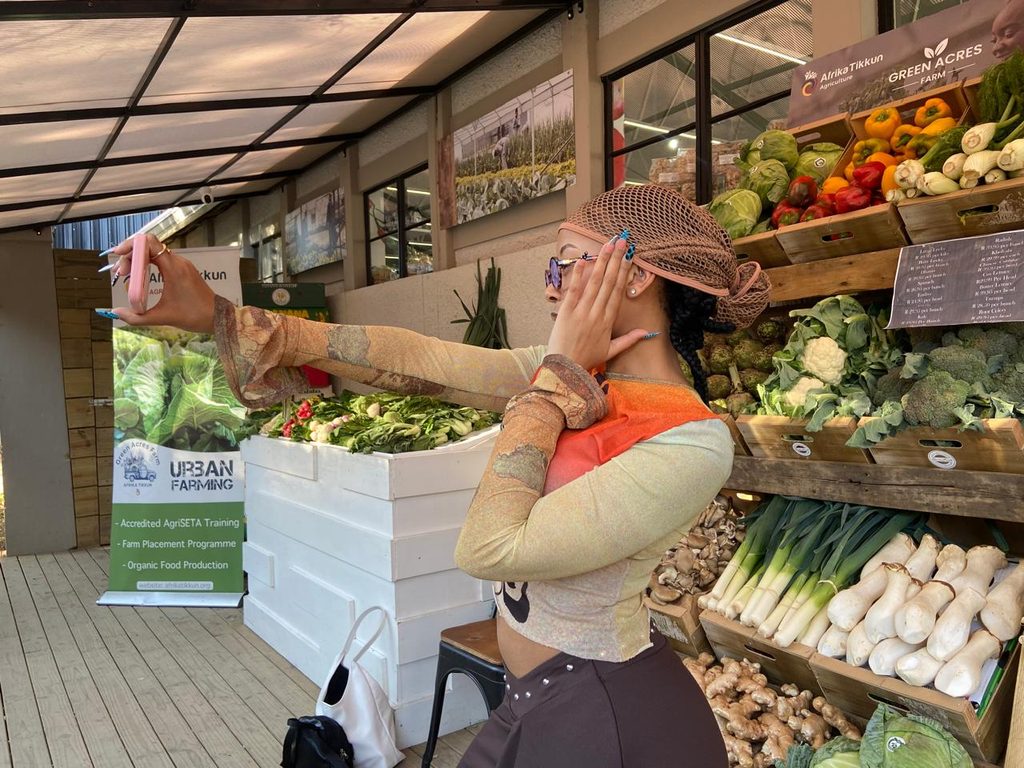
Every creative journey starts with a personal spark. For Gwayi, who holds an honours degree in theatre and performance, self-expression has always been central. “I started with fashion content because putting together an outfit felt natural,” Gwayi explains. As she grows, she has opened herself up to other spheres from skincare, perfumes and banking so she can be marketable across various brands.
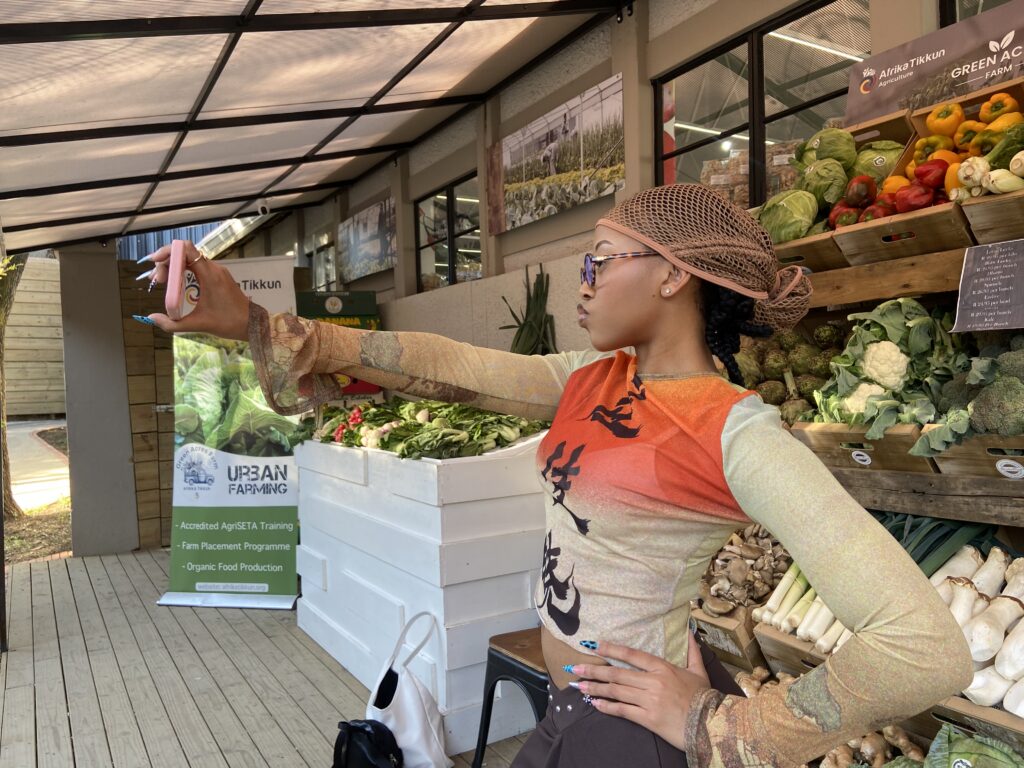
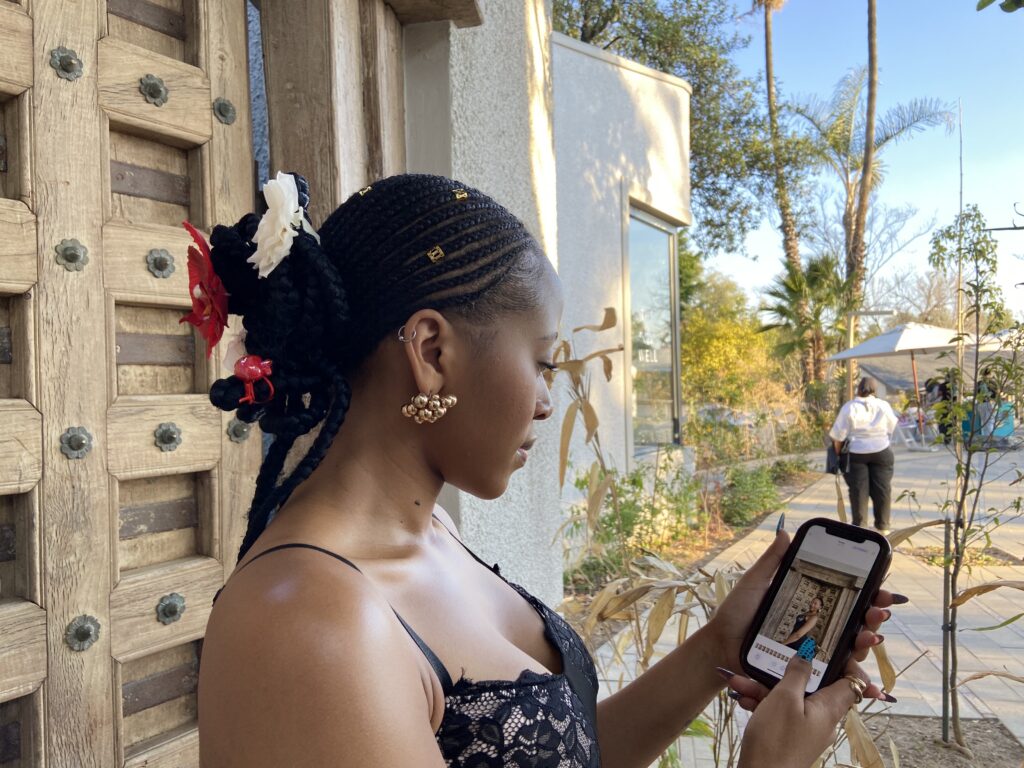
An image of Kungawo taking pictures for her instagram page. Photo by: Rearabilwe Tsebela
An image of Kungawo going through her pictures. Photo by: Rearabilwe Tsebela
For Ngubeni, a third-year accounting student from Ermelo, Mpumlanga, content creation grew from a quiet desire to step outside familiar boundaries. “Being a boy from a small town with a simple culture really makes one feel boxed in. Intrinsically, I am an explorer, a leader and an opportunist,” Ngubeni explains. His entry point was through fitness. “People would enquire with me about their training, diets and just general life advice. I realized I could leverage all of this not only to better my life, but to inspire and motivate those around me”.
Praise shares a look into his workout session. Video: Courtesy of @praise_ye
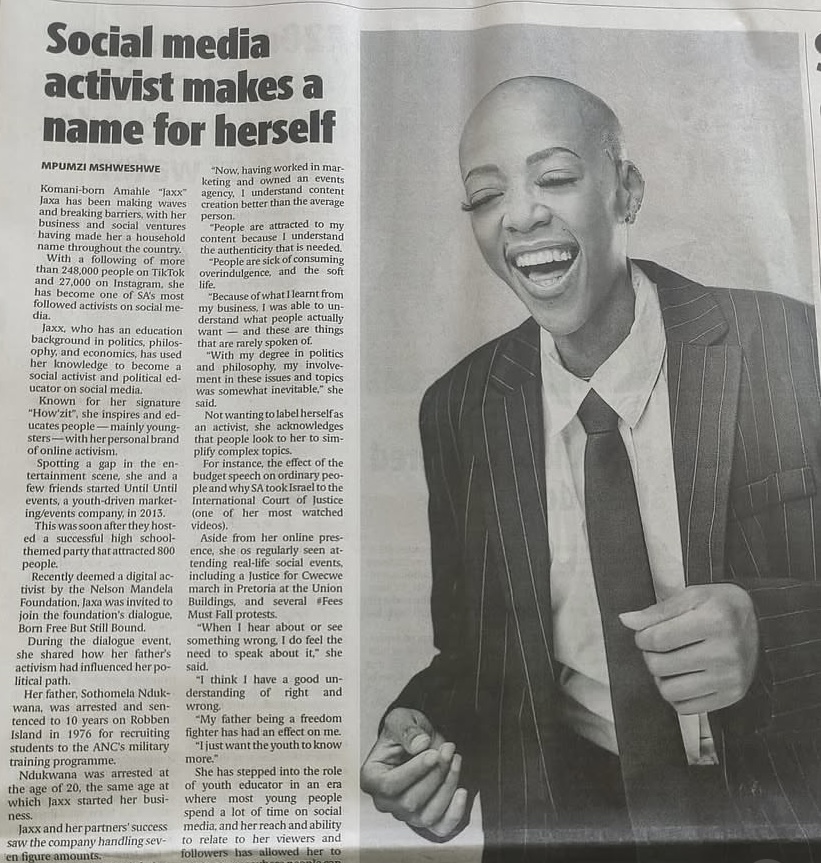
Jaxa, an international relations honours graduate, was raised on news and politics by a single mother and political father turned serial entrepreneur. “Every Sunday my mom and I read the paper together”, Jaxa reflects. “Without that nurturing, I wouldn’t have the keen interest I have in current affairs and politics.” When her video on South Africa’s peacekeeping went viral, it confirmed her path. “I have created content since social media existed, it was an easy transition.”
An image of content creator Amahle Jaxa featured in a print profile by the Daily Dispatch. Photo: Courtesy of @jaxxofalltrades_sa / Daily Dispatch
The soft glow of a screen often hides the physical and mental endurance requires to sustain a digital footprint alongside university deadlines.
Ngubeni relies on careful time management to balance his degree with his creative drive. “My weeks are always planned in advance. I wake up early Monday through to Saturday and I know midday is for classes and gym, and then in the evenings I fight to get in the last solid block of studying.” He speaks openly about the weight it carries. “Burnout becomes life at some point, and I just learn to be patient enough to let it build my capacity”.
For Gwayi, the final year of her degree demanded profound emotional strength. “I had to balance work, academics and grief since I had lost my very close friend,” she recalls. “Listing my priorities and ticking off as I go definitely helped me show up as best as I can.
Beyond tight schedules, both creators acknowledge the vulnerability that comes with visibility. Gwayi notes, “It is not normal to have parts of your life always at people’s disposal even when you are a private person, digital content creation is a performance of self.” Jaxa echoes this feeling, adding: “From an emotional perspective, you expose yourself to strangers, from a mental perspective, it’s gruelling. It’s about posting consistently and sometimes even when you do not want to.”
A picture of Kungawo taking pictures for her Instagram page. Photo by: Rearabilwe Tsebela
Digital platforms open up genuine opportunities across the continent, but navigating industry structures requires patience and adaptability.
Learning the professional side of the media landscape was a formative process for each creator. Ngubeni’s first project came after sharing organic content for a major retail group, which led to a paid opportunity between R4 000 and R6 000. He has since poured his earnings back into tools like an iPad to support his workflow. “The one thing people miss is that this is a business, not a hobby that happened to pay,” Ngubeni notes. “Behind the videos, there are invoices, rate cards, vendor registration forms and pricing decisions.”
Jaxa recalls her first paid campaign in 2020 earning R3000 for a DIY clothing brand shoot in her apartment and credits a major campaign with Steers for boosting her confidence and giving her a crash course in set professionalism.
Both Jaxa and Gwayi highlight managing long payment cycles often taking 30 to 90 days as one of the steepest learning curves for creators. Jaxa advises hiring an accountant as soon as possible to manage cash flow.
Despite the quiet sacrifices behind the scenes, all three creators are building careers to be proud of.
“I would tell them to start now,” Gwayi encourages fellow students. “The more you think about it, the less productive you are being. Allow yourself to be seen trying.
Ngubeni shares a similar sentiment: “Do it scared, do it unsure, do it. Second half: learn to manage your time extremely well and plan your content intentionally.”
For Jaxa, remaining grounded in one’s voice is everything. “Stay true to yourself; authenticity goes such a long way and that’s what your audience wants,” she says. “It is also one of the most fulfilling things I have ever done. I have an autonomy over my life that many people are not afforded, and I will always be grateful.”
Watching Gwayi, Ngubeni and Jaxa navigate their paths, it becomes clear that student content creation is about far more than trends or viral moments. It is about brave young people deciding that their stories, their perspectives and their futures belong firmly in their own hands. As they balance long nights of studying with the courage to be seen, they remind us that building a life of purpose does not happen overnight, it is created draft by draft and, post by post.
FEATURED IMAGE: A image of three Witsies buildinding a digital presence as content creators. Photos: Top: Rearabilwe Tsebela, Bottom Left:@praise_ye, Bottom Right:@jaxxofalltrades_sa, Collage: Rearabilwe Tsebela
That love has taken him from schoolboy derbies in front of 15 000 fans to a professional contract with the Lions.
Before every match, the ritual is the same. The same pair of socks pulled tight over strapped ankles. The wristband with his family member’s names and a bible verse, worn like armour against his skin. A familiar song through his headphones, settling into him the way it has before every big game since school. By the time he steps onto the field, Thandolwethu “Thando” Biyela is no longer thinking. He is simply ready to tackle something.
On the field, he is the man opponents least want to run into, a loose forward who folds ball carriers in half. Teammates call him the “Bone Collector,” a nickname earned one bruising hit at a time. Walk past him on Wits University’s East Campus a few days later, though, and he could be any other student hooded up, backpack slung over one shoulder, on his way to a lecture he missed half of because he was on a plane back from a tournament. Balancing the two lives is not easy, but it is the only life he wants.
An image of Thando celebrating with his teammate after they scored a try. Photo: Sanele Sithole
Long before the wristband and the nickname, Biyela was a small boy, on a school field, chasing a ball he barely understood. Born in Umlazi and raised in Secunda, he was introduced to rugby in grade four by his primary school teachers, and something about the chaos of it- the collisions, the structure hidden inside the collisions stuck. He started in the backline, playing at 13, before settling into the position he now calls home: loose forward, specifically the number eight, where his size and appetite for contact do the most damage. At King Edward VII School (KES), he played fullback before being moved to flank, a shift toward the collision-heavy role he would grow into as a professional.
“It’s hard, but it’s something that I love doing, something that relieves stress for me,” Biyela said, describing the sport that has defined his life since childhood. That love has taken him from schoolboy derbies in front of 15 000 fans to playing for the junior Springboks and a professional contract with Lions. “The professional set-up like the Lions is a dream come true,” he said, though the pressure never really goes away. “The pressures of playing between high school and for the Lions is different but the same for me.”
Biyela enrolled at Wits in 2023, a decision he said he does not take lightly. His week looks nothing like that of the students around him in lecture halls: early gym sessions, training that eats into afternoons meant for tutorials, flights to tournaments that leave gaps in his notes. “The support has been helping me quite a lot,” he said. “Like when I was at the World Championship last year, all of my lecturers would send me notes and slides so that when I come back, everything becomes easier for me to catch up.”
Asked whether he ever wishes for an ordinary varsity experience, Biyela answered honestly: he sometimes wonders what that life would have looked like. But he would not trade what he has now. “Not everyone is lucky enough to be in this position,” he said.
Biyela’s 2024 Varsity Cup debut, against University of Cape Town (UCT), came when he was just 19. He remembers the noise most — a stadium of students dancing in the stands. “Playing and seeing the crowd dancing and watching was a different experience,” he said. Senior teammate Ngia Selengbe, a player he had known since Grade eight, put it in perspective afterwards: “You are here for a reason. You are 19 playing here, and that shows how good you are.”
The 2025 season brought its own frustrations. Despite a stronger, fitter squad, injuries meant Biyela only played in two matches, against University of Johannesburg (UJ) and Central University of Technology (CUT), the kind of setback that tests any athlete’s patience. But patience, he said, is something rugby has taught him. “When I’m on the field, that is when I’m patient,” he said, speaking about his role as captain. “That is a place where I have to be calm headed” That composure was tested, and rewarded, at an international level.
Called up to the junior Springbok camp late in 2024, Biyela had to wait until January to attend, after an ankle surgery ruled him out of the first session. He went on to captain the side at the World Rugby U20 Championship in Italy. “We were not that good leading up to the tournament; we were predicted to be average,” he said. Against those odds, the team won the title.
Off the field, family anchors him. As the eldest of three and the only son, Biyela describes a deep sense of responsibility toward his two younger sisters and a bond with his mother that has only strengthened over the years. “My mom is my everything,” he said. “She has literally done everything for me. She’s always there when I need to talk to her, whether about school, rugby, or girls.” Both his parents remain central to his support system, which is why their names, alongside a Bible verse, sit permanently on his wrist. A firm believer in God, Biyela deliberately chose “Sigade Umzila,” the song he plays in his ears before every kick-off: its message mirrors the physicality and leadership his position demands.
Longtime friend and Lions teammate Tirhani Masondo, who has known Biyela since Grade eight at KES , described him as a young man whose confidence rarely needs to announce itself. “He’s the type of person whose actions speak louder than his words,” Masondo said. “A lot of his biggest wins are silent wins. He doesn’t always need recognition for what he does he just gets the job done.” Off the field, Masondo added that Biyela is disciplined, humble, and quick to celebrate others’ successes, sometimes more than his own. “The way he approaches life is almost the same way he approaches a tackle,” Masondo said. “Once he sees a target, he doesn’t hesitate.”
For Biyela, that target is simple: keep showing up for his team, his family, and his degree, one semester and one match at a time. Somewhere between the socks going on and the final whistle, that is exactly what he keeps doing.
FEATURED IMAGE: A image of the tunnel run of Thando Biyela image by Sanele Sithole
Wits Fine Arts students Camryn Jessie and Abdullah Saloojee presented their collaborative exhibition at The Point of Order.
The theme was inspired by Abdullah’s poem Citrus Soup.
Through installation, painting, and found objects, the duo leaves meaning open, hoping curiosity outweighs fear.
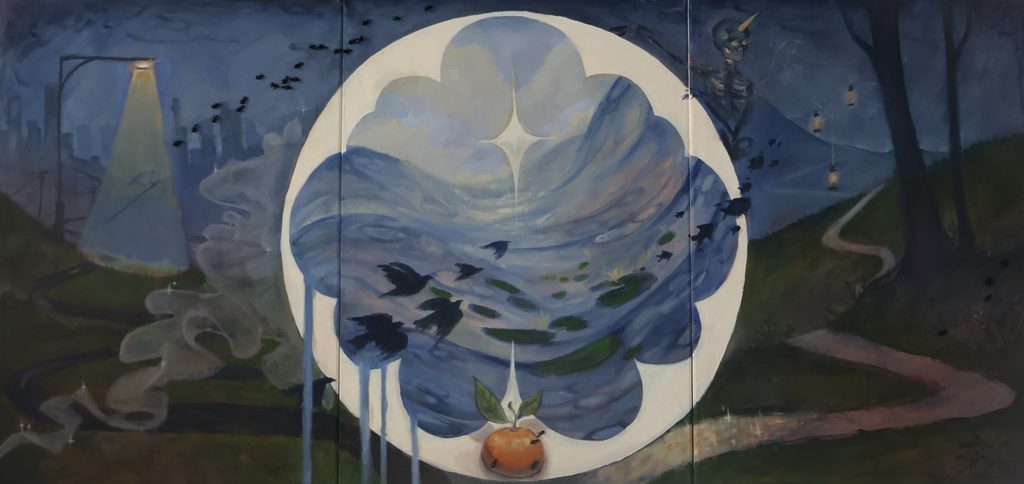
From August 27 to 28, 2026, fourth-year Wits Fine Arts students Camryn Jessie and Abdullah Saloojee presented a collaborative exhibition at The Point of Order in Braamfontein: There’s a Bug in This Citrus Soup.
The theme was inspired by a poem Abdullah wrote and shared with Camryn. It reads in part: “My conscience tends the sacred wound, my soup now cold from the ashes. The citrus leaks through my soul; When the water drys up, where do I go?”
An artwork by Abdullah Saloojee titled: Ant/One is many. Photo by: Naledi Maraisane
After weeks of analysing it, Camryn said she found a deep sense of want and disappointment in the piece, which became the anchor for the exhibition. The citrus, the artists said, speaks to intense tension and a state of limbo. The bug itself is left open to interpretation; it can be an insect, a stomach bug, or a technical bug. Essentially, the bug is meant to symbolise disturbance and discomfort.
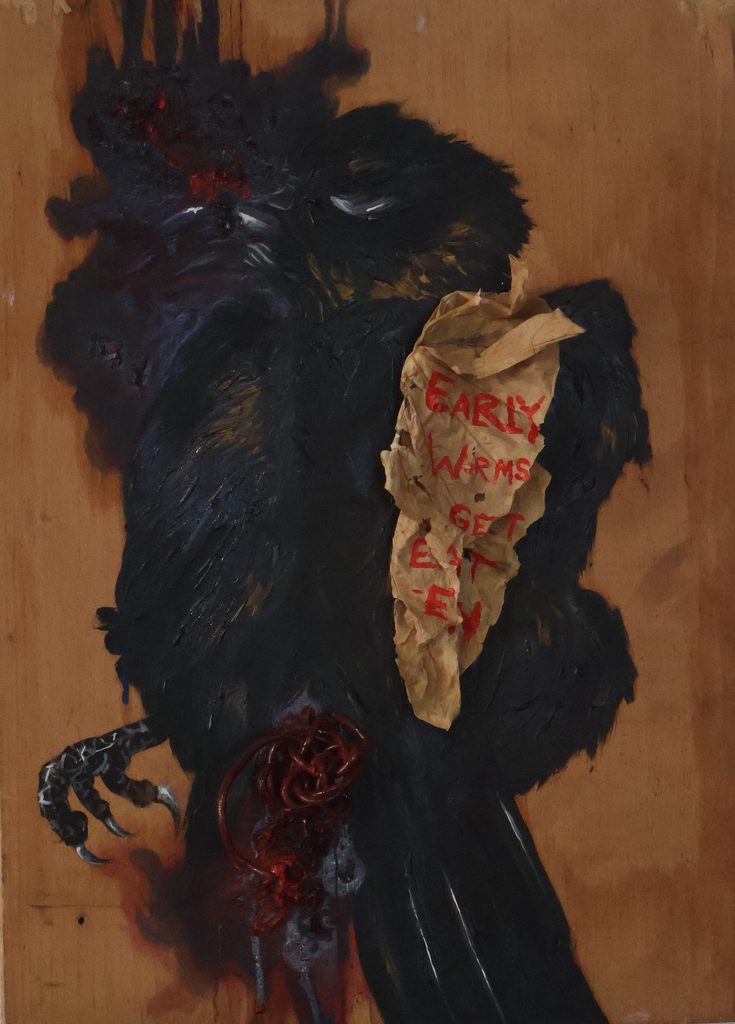
That disturbance shows in how differently they work. Camryn’s artworks are installation-based. Her paintings act as a base, then she builds around them with tangible materials that give them life. Abdullah’s work is orientalist, an art form which blends realism and fantasy. Yet their pieces have blended so well that people cannot tell which piece belongs to whom. “Another thing that visually combines our work is our fascination with found objects,” Abdullah said. Those objects have been integrated into several artworks.
Abdullah wants his work to evoke sadness, but as a journey toward rediscovered hope. Camryn, in contrast, hopes her pieces “keep them on the verge, whilst still being curious but weird at the same time,” while evoking disgust and discomfort.
An artwork by Camryn Jessie titled: Early worms get eaten. Photo by: Naledi Maraisane
Both have intentionally stopped doing things the ‘traditional’ way within Johannesburg’s contemporary art landscape: “We disrupt the space in subtle ways by keeping things natural, because you don’t have to do things in a certain way,” they said. Their goal is to get people interested without feeling stupid for not understanding. “The bug is something you don’t fully understand, but it ignites a curiosity,” Abdullah said. “Even though there is something strange and unknown, and that you are a bit scared, we hope that the curiosity outweighs that fear,” Camryn added.
In the end, the metaphorical bug can be feared and embraced. The journey gives space to acknowledge and learn to live with its uncertainties, discomforts, and weirdness.
Camryn Jessie and Abdullah Saloojee posing for a picture in front of their found object titled: The Window. Photo by: Naledi Maraisane
FEATURED IMAGE: An installation by Camryn Jessie titled: Life leaks/life enters. Photo by: Naledi Maraisane
The public lecture held in memory of Nokuthula Simelane highlighted how the impact of apartheid era crimes continues to be felt in contemporary times.
Nokuthula Simelane was only 23-years old when she was abducted.
Some say the TRC has failed a lot of victims and their families.
At the same time, Steve Biko’s 1977 Inquest was reopened this week at the Gqeberha High Court.
Imagine your loved one leaving the house under false pretences and never making it home; 49 years later and there is still no clarity on where she was or what happened to her.
On Wednesday, August 26, 2026, Ditsong National Museum of Military History hosted a public lecture titled The Unfinished Business of Justice: Remembrance, Resilience, and the TRC questioning the continued failure to resolve apartheid era cases. The public lecture was given by the museum’s curator for insignia, Tinyeko Ndhlovu, to honour of the life of anti-apartheid student activist Nokuthula Simelane.
Simelane (23), code name ‘Mpho’, was an Umkhonto weSizwe (MK) operative. On September 10, 1983, Simelane met Norman Mkhonza, an ‘askari’ (state spy) linked to the Soweto Intelligence Unit. As a result, Simelane was abducted by the Apartheid Security Branch and brutally tortured for an extensive period and eventually murdered.
A police docket was opened in 1996, followed by a short-lived investigation with no leads. Despite years of legal action and attempts by her family to uncover the truth, no one has been arrested or held accountable. It was only in 2019 that Simelane’s death certificate was issued.
Simelane was a Bachelor of Administration in Social Science, majoring in Public Administration, student at the University of Swaziland (currently University of Eswatini), at the time of her disappearance, and just a month shy of graduating.
Discussing her legacy, Ndhlovu said, “Simelane’s life and disappearance speak to the courage of young women in the liberation struggle, the enduring need for truth about enforced disappearances, and the pursuit of justice for apartheid-era crimes. Her story remains a reminder that South Africa’s freedom was secured through profound personal sacrifice.”
A photo of Tinyeko Ndhlovu speaking at the public lecture. Photo: Sikelelekile Pahlana
A major reflection from the day was the failings of the TRC in providing justice for victims. “The TRC has failed us. A lot of families’ history is suppressed,” said Ndhlovu.
Asked about the significance of younger generations knowing this history, Ndlovhu said “history repeats itself. It is very important for young people to know the history of the country for what it was.”
FEATURED IMAGE: A photo of the public lecture presentation which includes a photo of Nokuthula Simelane. Photo: Sikelelekile Pahlana
Time has swiftly moulded this year’s Wits Vuvuzela team, and the newsroom has become a true witness to our growth.
As the end of block three approaches, the newsroom is busier than ever. People are chasing deadlines, writing features, and trying to fulfil the requirements of our portfolio submissions; the urgency is felt and it almost feels as if one is running out of time.
Yet time is such a fascinating concept, because it feels as if this year flew by. It is easy to take for granted how far you have come when you are so caught up in trying to get everything done all at once. As journalists we are taught to observe the world around us. Rarely do we take time to reflect on our own growth.
For the Wits Vuvuzela team, the journey started on the first day of school, February 3, 2026, when we first became acquainted with the newsroom. The mentors, Bonolo Mokonto and Lulah Mapiye gave us a demonstration of what a pitching session would look like, and little did we know the journey that awaited us. When the first two weeks of pitching came, it was intense to say the least, having to stand in front of everyone and sell your story was no child’s play, nobody realised it then, but we were such shells of ourselves.
With time, we grew out of our shells and started evolving. Collectively, we have watched stories grow from the newsroom into the world. More notably we have all grown together, from karaoke night to late nights working together in the newsroom, to becoming a solid support system for each other; where we laugh the hardest together and comfort each other when doubt gets the best of us. I have learned that the crux of journalism is in human connection. Connection with a source, a colleague, a mentor, and the world – a world of storytelling, and of human connections.
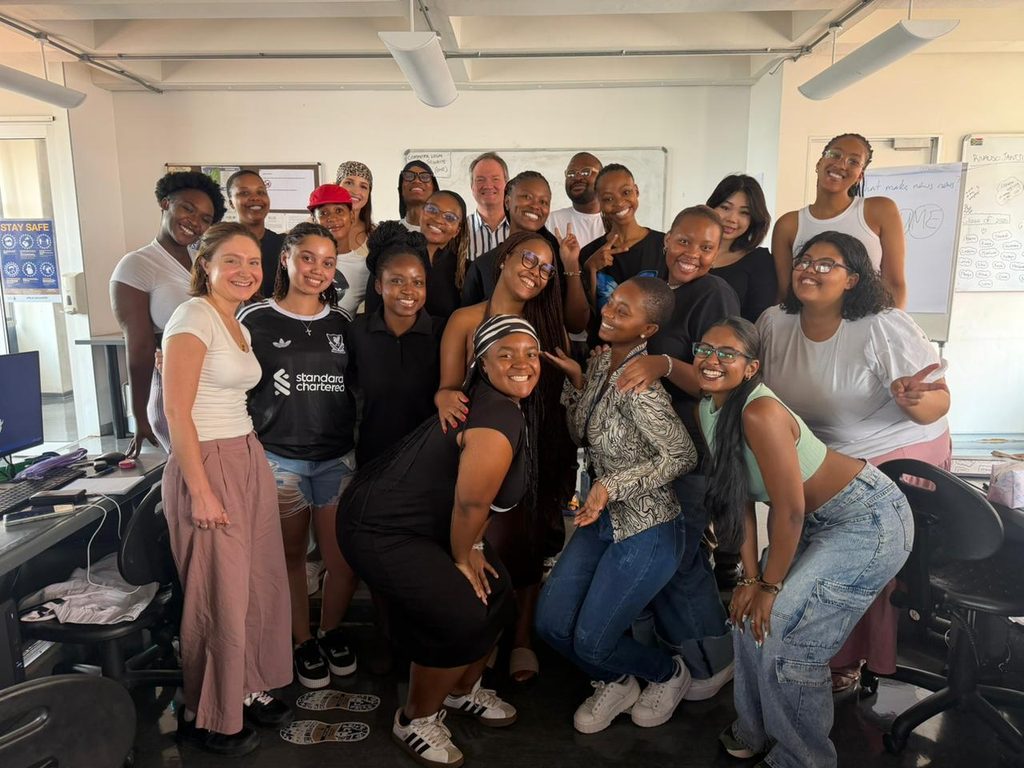
A class photo with Kevin Ritchie.
We have been privileged enough to interact with a variety of experts and places that have ultimately moulded us. Kevin Ritchie was our first guest lecturer and anchored us in purpose as he taught us to, “remember your why.” Alaister Russell taught us how to be one with the camera, Russell reminded us that, “your humanity is your guiding light in everything that you do.” Kgomotso Modise enlightened us about how important it is for journalists to adapt with the times and make use of social media to deliver reliable news. Ray Mahlaka put us on the spot by doing research on us all and effectively showcased the importance of research and active listening for interviews.
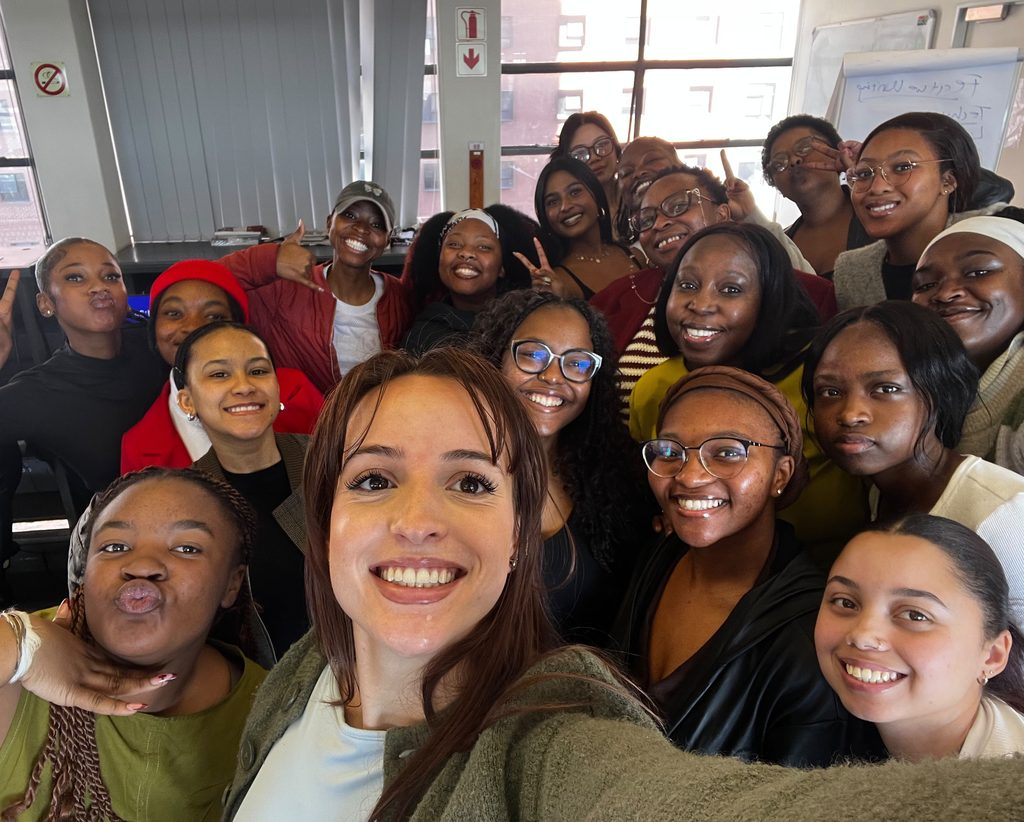
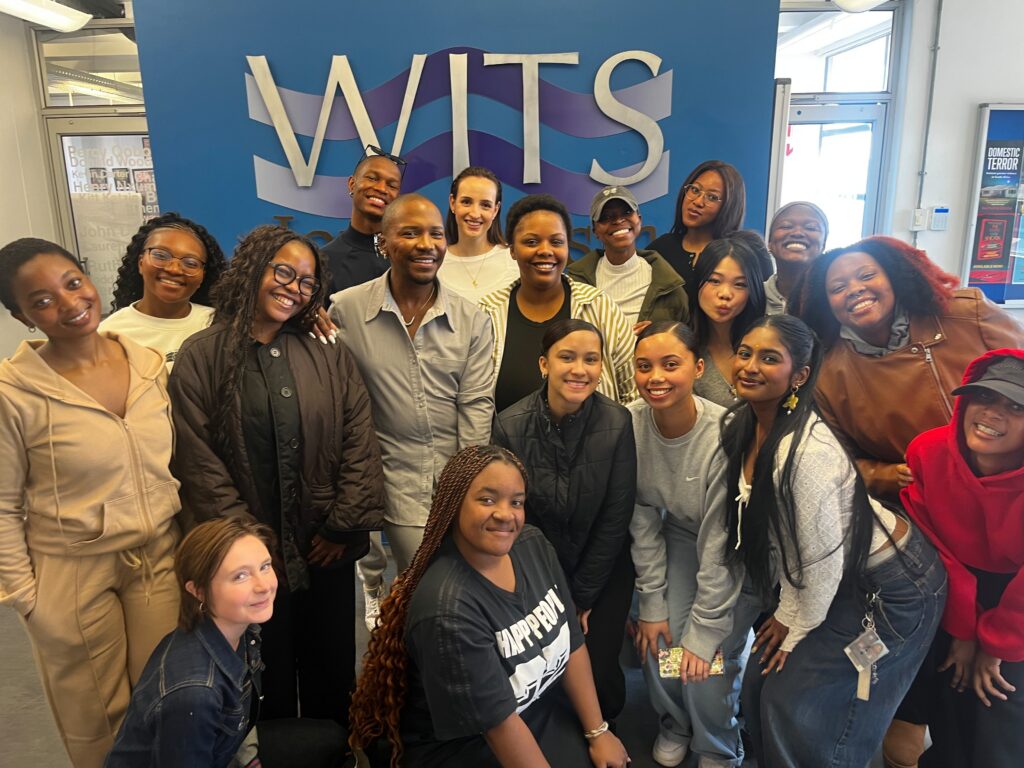
On the Left: A class photo with Kgomotso Modise. On the right: A class Photo with Ray Mahlaka.
We have heard from alumni who have found steady footing in the real world and reminded us that the work is never in vain. As our time in the Wits Vuvuzela newsroom comes to an end, we have learnt that journalism is as much about storytelling as it is about the people behind the story. It is about being human.
FEATURED IMAGE: A photo of Sikelelekile Pahlana, this week’s editor. Photo: Alaister Russell
Inside the Dome, African tales are revived and retold anew.
Wits launches its annual Digital Dome Festival to retell African oral stories through Virtual Reality, dome animation and projections.
Fourth-year digital arts and animation students showcased their film projects.
The Dome takes African stories to the world while creating employment opportunities for students.
“You are already in the future. Others will arrive,” said Professor René Smith, Head of the Wits School of Arts, during the opening of the Digital Dome Festival, pointing to the transformative power of immersive media.
Wits University hosted its Digital Dome Festival between August 21 and 22, 2026 in collaboration with the Wits School of Arts (Digital Arts Division), the Naval Hill Planetarium, the University of the Free State, and cultural institutions including Electric South and the French Institute of South Africa (IFAS).
This year’s theme, Stories Spoken, Stories Seen, was inspired by diverse African oral storytelling traditions passed down through generations. African folktales were retold through immersive digital technologies like dome animations, VR experiences and projections. The theme and festival demonstrate that “Africa can shape the future of immersive media,” said Professor Lynn Morris, Deputy Vice-Chancellor of Research and Innovation at Wits.
Student screenings formed a central part of the programme.
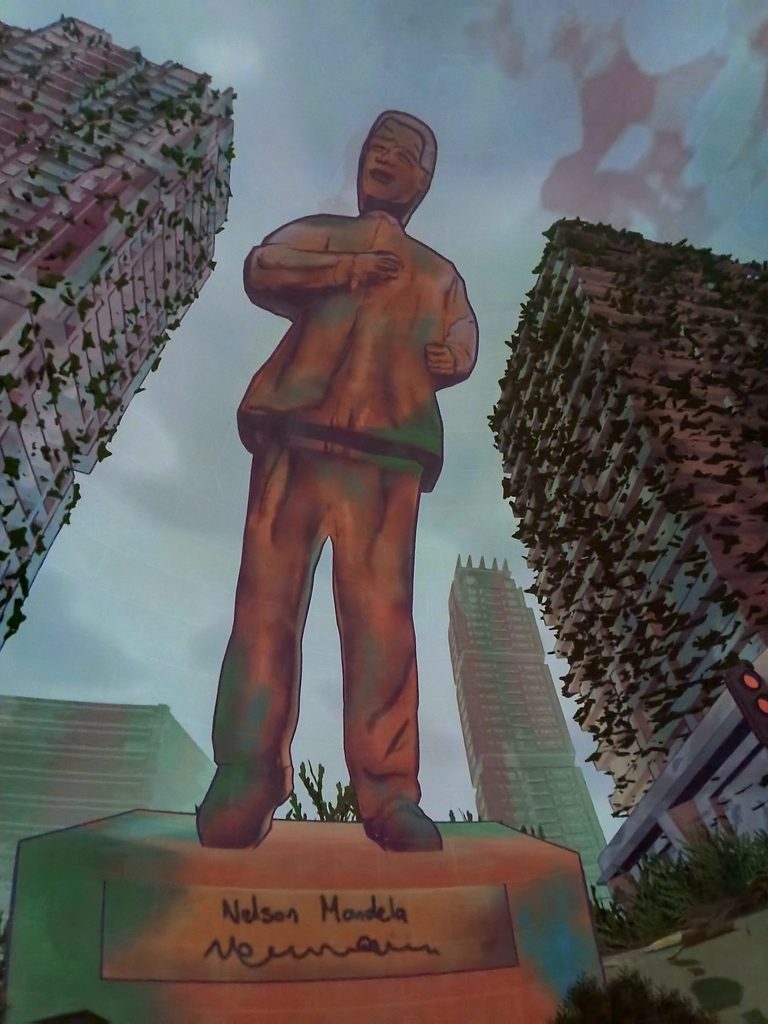
An animated statue of Nelson Mandela from the Wall-E film. Photo by: Naledi Maraisane
The Nanabolele projection stood out. The two-minute film, based on a Sesotho mythological interpretation, follows Princess Thakane, blessed by her grandmother to hunt the Nanabolele — a water-dwelling, dragon-like creature that glows in the dark and travels hidden inside clouds or red smoke. She seeks its glowing hide to make gifts for her brothers returning from initiation.
“We wanted a story that could speak to a large amount of people. We started looking at African mythology and folktales,” said Tlhalefo Boshielo, a fourth-year Digital Arts student in animation and projection mapping. The Nanabolele VR experience placed viewers inside a non-physical world, bringing imagination to life through immersive technology.
On what inspired this year’s theme, Sasha Wessels, Digital Arts lecturer and organiser, said that in high school she was not allowed to learn about African languages or traditions, which felt like a robbery. “I left high school angry. I feel unknowledgeable about the country that I live in.”
Projects can be rented to other global domes for profit, creating employment opportunities for students. For this reason, Wessels does not allow students to use Artificial Intelligence (AI). “The issue with AI is that the moment you implement it, you can’t sell it.” However, she acknowledges AI as a useful tool in an industry long gatekept by the West.
Through immersive technologies, students are archiving, professionalising and making African oral traditions, history and storytelling exportable.
FEATURED IMAGE: Students experiencing VR technology for the first time. Photo by: Naledi Maraisane
In episode six of We Should Be Writing season 7, the team unpacked the evolution of music as a form of expression and protest, through four decades in the South African context. The episode explores the journey of South African music and its consumers from the 80s, 90s, early 2000s and contemporary listeners. From the […]