
Beyond funding debates, deeper structural flaws in South Africa’s health system are becoming a barrier to NHI implementation.
- Governance failures are becoming one of the risks to the NHI’s success.
- Experts highlight a disconnect between decision-makers and those delivering healthcare services.
- Proposed reforms aim to strengthen accountability, limit political interference, and align funding with real service needs.
Wits University hosted a symposium on the future of the National Health Insurance (NHI) on March 26, where experts cautioned that without fixing systemic governance issues, the country’s healthcare reform could fail to achieve its goal.
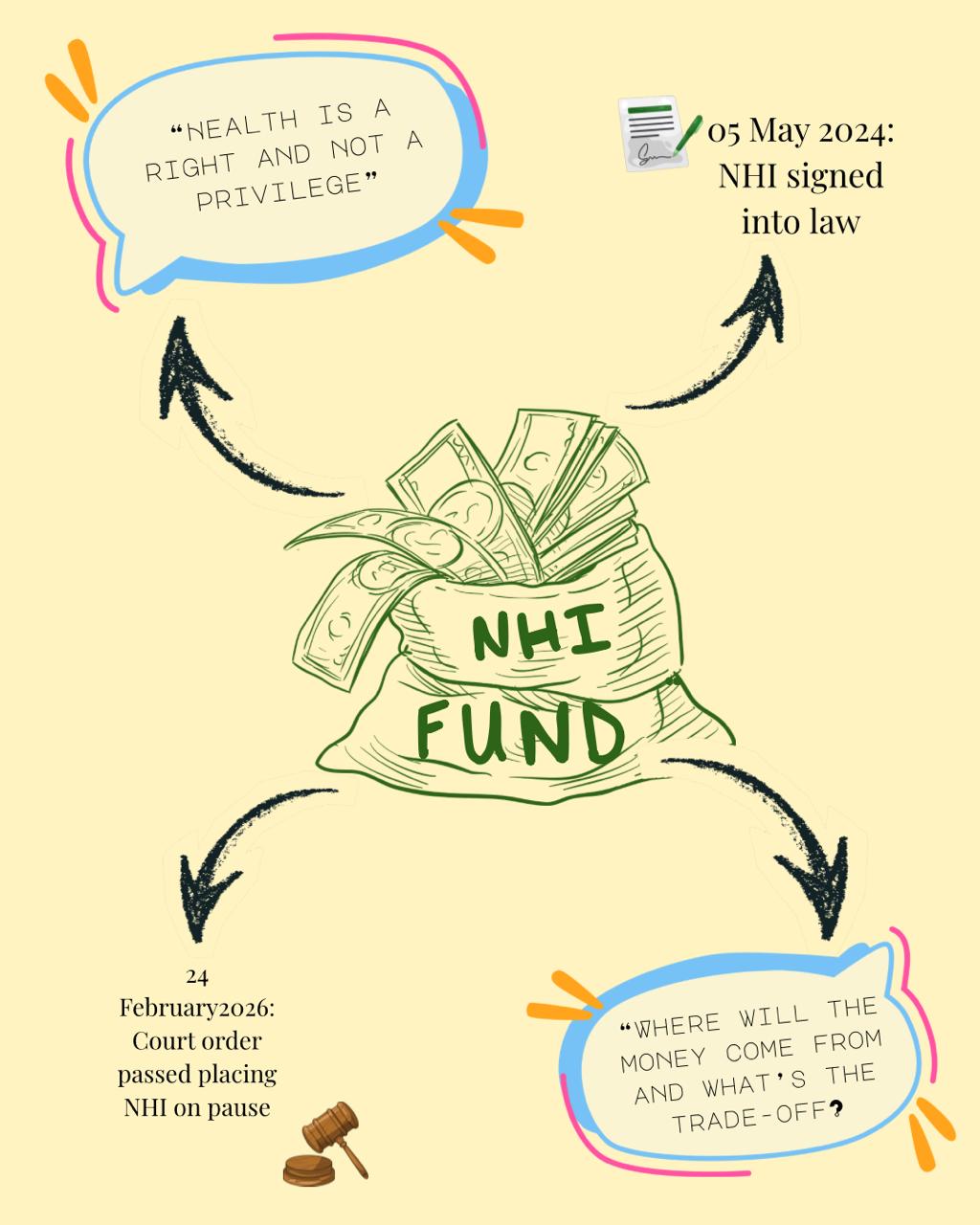
Since the signing into law of the NHI in mid-2024, and a court order issued on 24 February 2026 that has affected its implementation, debate over whether the policy will succeed has intensified.
Supporters argue that healthcare is a right, not a privilege, and view the NHI as a mechanism to reduce inequality by pooling funds to ensure more equal access to quality healthcare services across public and private sectors. On the other hand, critics continue to question how the system will be funded and what trade-offs may be required to sustain it.
While public debate around the NHI has largely focused on issues of inequality and funding, speakers at the symposium emphasised governance as a more immediate threat to the success of the reform.
Experts such as Professor Alex van den Heever, who specialises in healthcare systems and financing, examined the deeper structural problems within South Africa’s health system, warning that without addressing these, the NHI could fail regardless of its funding model.
“You’ve got a governance misalignment… [where] responsibility, authority, accountability [are] set in different places,” said van den Heever, pointing to one of the key structural weaknesses in South Africa’s healthcare system.
He explained that this misalignment means that those responsible for delivering healthcare services often do not have the power to make key decisions, while those with decision-making authority are removed from the realities on the ground. This disconnect, he argued, leads to inefficiencies, weakens accountability, and slows down service delivery across the system.
While much of the discussion focused on systemic governance failures, human rights and social justice activist Mark Heywood, brought the conversation back to its human impact. “Health is not pausing while we are sorting out the healthcare system,” he said, emphasizing the urgency of addressing these challenges.
The discussion concluded with several proposals to address these challenges. These included strengthening the decision-making power at local health districts and hospitals, while also making sure strong local boards hold them accountable.
Furthermore, the process of choosing leaders should be changed so that politicians can’t easily capture or corrupt public health institutions and procurement. Experts also proposed fairer funding rules and better regulation of private medical schemes, so money follows real service needs and incentives reward good, cost-effective care.
FEATURED IMAGE: A graphic representation of South Africa’s National Health Insurance (NHI), illustrating its universal healthcare goal alongside debates on funding and recent legal developments. Photo: Asisipho Mpahleni
RELATED ARTICLE:
- Wits Vuvuzela, NHI plans ‘push’ young doctors to leave SA, Sep 2022.
- Wits Vuvuzela, Health department talks NHI at annual Biko lecture, Sep 2019.

