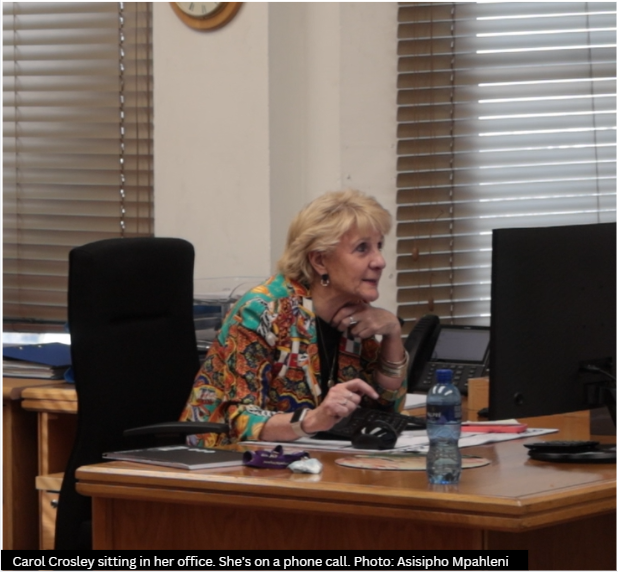
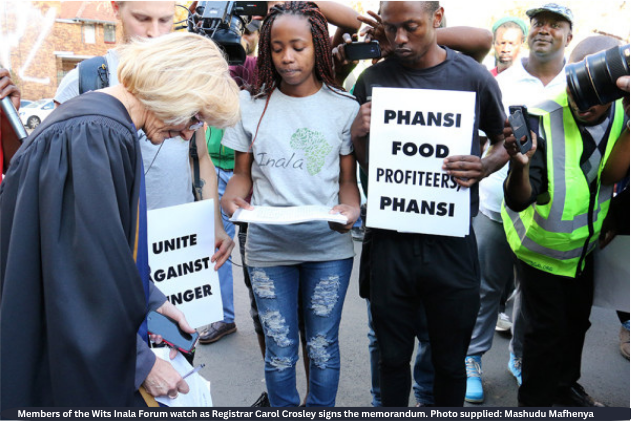
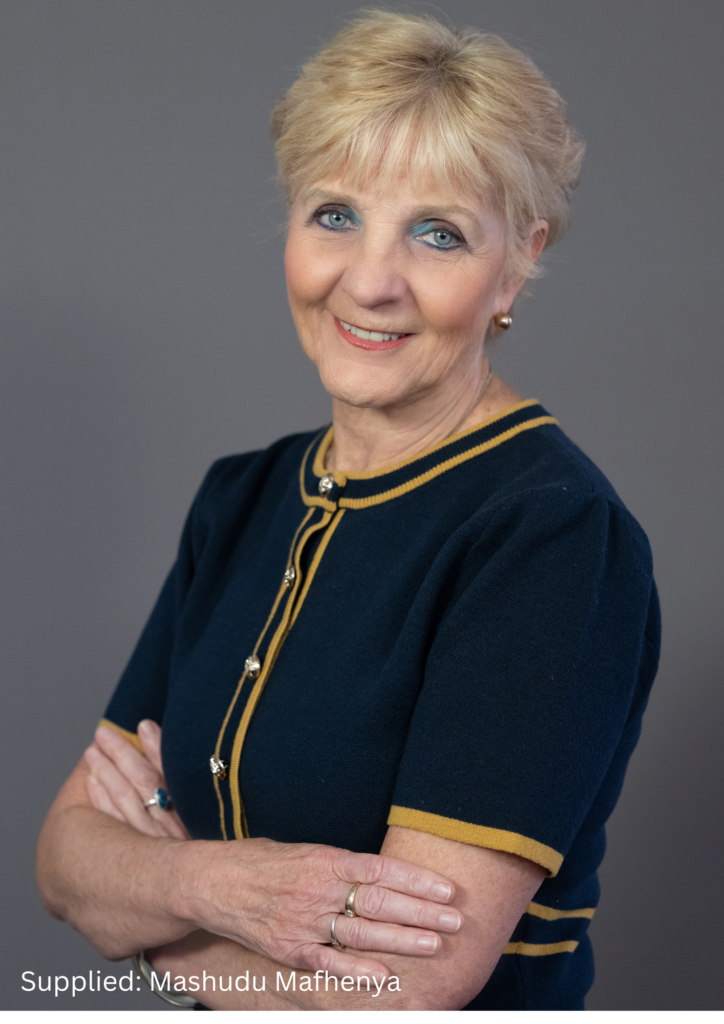
If you’ve ever wondered who keeps the university’s complex daily rhythm flowing smoothly behind the scenes, meet Registrar Carol Crosley.
If you stepped into her office, you would find small clay art pieces, bright green plants along the windowsill, and wooden shelves holding small sculptures and figures that add a subtle artistry to the space. Photographs of friends and colleagues lined the room, alongside quieter moments of pride: her two sons, Jayson and Ryan Crosley. Moments frozen in time but alive with the bonds that have shaped her.
It’s 08:30 am, on Monday, August 31, and Carol’s day has already begun. She’s finishing a meeting with the deputy registrar, with emails and more meetings still ahead. In many ways, it was a normal day – except that it wasn’t. Some familiar touches are gone. The walls have been stripped naked of photographs, and the plants have disappeared. Instead, a September calendar sits unmarked on the desk. It is a quiet reminder of the month Crosley will no longer be coming to this office. This day, too, would be different. Letters introducing the university’s incoming registrar needed to be drafted, and goodbyes needed to be said to colleagues.
After almost three decades at Wits, Crosley was preparing to leave the university she had originally planned to spend only five years at. She had always believed in change. Before Wits, she moved between teaching and the corporate world, spending four years at Johnson & Johnson before returning to teaching. When she arrived at Wits, she was appointed head of functions and events in the Vice-Chancellor’s office.
Then came a venture she describes as her “baby”: the Student Enrollment Centre. At the time, the space was occupied by restaurants and ATMs. Crosley and her colleagues transformed it into a dedicated space where students could navigate enrollment, registration and the administrative business of becoming a Witsie.
When Carol started, the work was very different from today’s digital university. Applications were processed manually, with each offer typed, signed by hand and sent by post.
Crosley stayed because there was always something else to build. Over time, she rose from assistant registrar to deputy registrar, eventually serving as registrar for 12 years. She describes her role as guiding a student’s academic life-cycle: from application and registration to examinations and graduation – while quietly ensuring that the university’s rules, records and governance remain in order.
“Students who break the rules know exactly what the registrar does. If you have never been to the registrar’s office, then that is a good sign,” she says with a knowing smile.
During registration, when queues of anxious students stretched across the venue, Crosley did not remain behind an office door. Sershin Naicker, the Student Recruitment Manager who worked closely under her, remembers seeing Carol “walking the queues herself, speaking to students, answering questions and helping clear bottlenecks.”
For all her reputation as a hard taskmaster, there was another side to her leadership.
Ashleigh Davids, a Project Coordinator within the registrar’s division, recalls seeing Crosley help students who needed meals or somewhere to stay while trying to resolve their registration problems. Fahmida Abrahams, the Finance Manager for the registrar’s division, remembers bringing Crosley problems that seemed almost too strange to be true – like figuring out where a bank deposit of R23 million came from.
Nishi Sooful, General Manager for Communication and Publication, remembers Crosley arriving at work on crutches rather than taking sick leave. Mashudu Mafhenya, Manager at the Central Records Office, recounts her coming into campus as early as January 2, sometimes waiting for security to open the lifts. Sam Rangata, Head of the Academic Information and Systems Unit, reflects on Carol’s habit of visiting units after registration to personally thank staff.
Perhaps that is why Crosley chooses “perseverance” to describe her career. She calls herself disciplined, goal-oriented and serious about doing things properly. Her colleagues add their own words: integrity, courage, warmth, humility and care.
As Wits evolved, so did Carol. “When you’re young, I think you’re impatient, and you feel like you can change the world,” she says. She arrived with a clear sense of how things should be done, but learnt to loosen her grip on that certainty, understanding that different paths can lead to the same destination.
Somewhere between the rules, meetings and responsibilities is a woman whose happiest place, she says, is not really a place at all, but time spent with her sons and three siblings. Soon, she’ll relocate to the Western Cape to be closer to her sister and brother, trading the registrar’s routine for more time and fewer responsibilities.
On her final afternoon, the office no longer looked empty. Gift bags gathered with cake, cupcakes, and chocolates brought by colleagues across different departments. At 4:06 pm, Crosley was still on the phone with a colleague, laughing and promising to stay in touch. As she smiled, a tiny tear appeared at the corner of her eye. “It’s going to be hard to leave Wits,” she said, “but it’s also going to be very hard to leave my friends.”
She once imagined changing the world. She learned instead that sometimes the meaningful work is smaller: listening to someone, meeting a student and offering advice or pointing them in the right direction. If she could write one sentence to the next Registrar, it would be: “Trust your instincts.”
On her final day, Crosley did what she had done for nearly 30 years: She showed up. When asked how she hopes people remember her, she doesn’t mention the systems she changed or titles she held.
Here’s my confession: politics was never my thing. I saw it as something that belonged to politicians in parliament who engaged in debates and speeches televised on the news. These politicians sometimes appeared in headlines that I occasionally skimmed through before scrolling to something more entertaining. In my mind, politics was like arts, maths or science. It had its own people, and I was not one of them.
In high school, my history teacher tried to convince my class to vote. She argued that by choosing not to vote, we were automatically voting for the majority party. I later learned that this isn’t how South Africa’s electoral system works, but the broader point she was making was that choosing not to participate still has consequences.
Ironically, studying journalism made checking out of political discussions much harder.
Current affairs, breaking news and policy decisions constantly impact how and why we tell stories. I realised you can’t study journalism without keeping one eye on the country around you. So, when I stumbled across an Instagram video by content creator zkiaba, I didn’t scroll past.
Their words lingered.
“Politics is not a hobby you do to unwind after a long day or to bond with like-minded individuals online. It is the context in which you live.”
That was the moment I realised my definition of politics was too narrow.
It wasn’t just about politicians in parliament. It was the taxi fare that increases because of geopolitical conflict. It was the quality of public healthcare, the condition of our roads, the education we receive and even the price of bread. I certainly had not considered that the opportunities waiting, or not waiting, for me after university were political too.
One could say it was quite ignorant of me, but we don’t judge, right?
“If you’re not at the table, then you’re on the menu.”
Who is making decisions when I am not at the table?
On July 30, I decided that the decisions affecting my life shouldn’t be made without my participation.
I registered to vote for the first time. It turns out, I was not the only young person thinking this way.
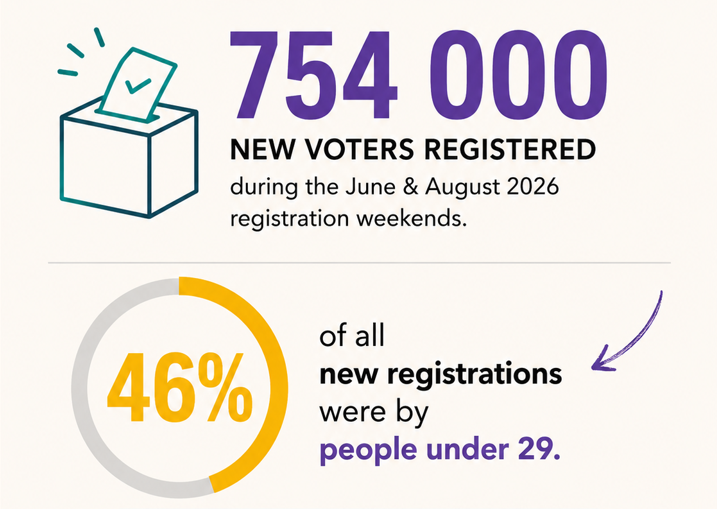
A Mail & Guardian article, citing Electoral Commission of South Africa (IEC) figures, noted that nearly half (46%) of all new voter registrations during the June and August
2026 registration weekends came from people under the age of 29. I now form part of that statistic
Voting is only one part of it. It also means reading beyond party manifestos and staying informed about the issues and policies that affect your life and community. It’s working with others to solve local problems instead of just complaining about them. It’s speaking up when something isn’t right, not just for yourself but for others too. And it’s helping people understand their rights, because democracy works best when participation spreads.
I still don’t enjoy political shouting matches, and I probably never will. But I’ve stopped telling myself that politics has nothing to do with me. Because whether we choose to participate or not, the system continues to shape our daily lives.
The future of mining is being shaped by more than what’s beneath the ground.
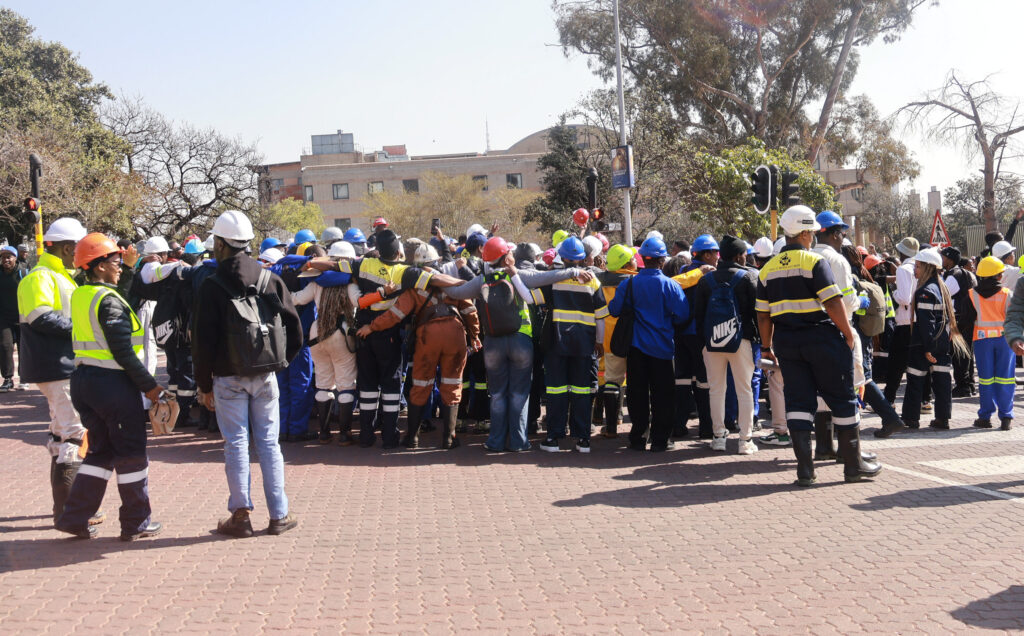
Wits celebrated 130 years of mining education at its annual Miner’s Day.
Students explored the future of mining through AI, sustainability and leadership.
Safety, community and “Never leave a miner behind” defined the day’s message.
Leadership, innovation and community development took centre stage at this year’s Miner’s Day celebration at Wits University.
“This is where we come together and remember how far we have come as the mining industry… I mean the blood and sweat of our ancestors built this City of Gold,” said final-year mining engineering student Kamogelo Mapeka.
Mining students gathered on Friday, July 31, to celebrate the university’s 130-year mining legacy at the annual event organised by the students in the mining engineering society (SMES).
Final-year student Alizwa Thwala said the global energy transition is reshaping the mining industry, with changing demand for minerals forcing engineers to rethink what and how they mine.
“Coal may be going down in demand, but copper is going up,“ he said.
Some students said adapting to these changes requires a broader set of skills than traditional mining roles once demanded.
Katlego Kekae said mining’s multidisciplinary nature prepares graduates for careers beyond production, from research to analysis, while equipping them to solve increasingly complex industry challenges.
Mapeka said artificial intelligence and mechanisation are already changing mining operations by improving safety and productivity. She believes the industry’s greatest transformation goes beyond technology.
Mining students during Wits University’s 130-year celebration of mining engineering. Photo: Asisipho Mpahleni
“We need philosophers and leaders who think of people,”Mapeka said. She hopes to use her future career to improve education and access to technology in her community, arguing that leadership should be measured by its impact beyond the mine.
That people-first approach was echoed by SMES president Ahluma Mngcushe, who said the industry’s future should prioritise safety above production.
“The right direction is zero harm and safety over productivity because everyone’s lives in the mining industry matter.”
Those values are also reflected in the School of Mining Engineering’s student culture of togetherness.
Third-year student and SMES co-opt member, Seshoka Ramohlale, said the society’s peer-support initiatives reflect its motto of “Never leave a miner behind.” She hopes to one day help struggling students through her own foundation, adding: “There is power in believing in someone. When someone believes in you, you are able to do well.”
FEATURED IMAGE: Mining engineering student holding up a handmade sign written “130 years of excellence”. Photo: Asisipho Mpahleni
After years of working toward a Varsity Football final on unfamiliar soil, Wits Women will finally enjoy home-ground advantage.
Wits Women host Varsity Football at home for the first time.
The team is determined to reach the final.
Matches will take place at Wits Football Stadium on August 8 and 9 before the final on August 19.
Wits University will host Varsity Football women’s fixtures for the first time on August 8 and 9, giving the team a home-ground advantage as they look to reach their first Varsity Football final.
The team opens the tournament with two matches in Pretoria on August 1 and 2 before returning to Johannesburg to host the second bumper weekend. The final is scheduled for August 19.
This opportunity comes as Varsity Football introduces a new bumper weekend format, allowing teams to play two matches before a longer recovery period ahead of the final. Hosting rights are also a first for the Wits women’s football team.
“There had been a rotation, and Varsity Sports opened it to numerous institutions that qualified. We raised our hand, and fortunately Wits will host the second bumper weekend,” said Phuthego Mokgethi, Sports Officer for Football.
Aside from reducing travel, Mokgethi believes hosting will give Wits a competitive edge.
Coach Siphesihle Ngalmane agreed: “We’ve always been knocked out in the semi-finals. This year we want to play in the final, and we’re hoping the final will be here at home.”
The fixtures for the 2026 Varsity Football Women’s tournament on display. Photo: Asisipho Mpahleni
Captain Nthabiseng Ramaisa believes playing in front of Wits supporters could make all the difference.
“It’s not easy playing away,” she said. “Having supporters here is exciting because when we’re away, it’s hard for Wits to organise buses for people to come and watch us.”
She added that away matches often come with added pressure from opposition fans.
“When you get there, people start booing you.”
Ramaisa believes the growing support for the women’s team could inspire more young women to get involved in football.
“More girls can get into soccer, and more girls can participate in sport,” she said.
For first-year player Nokubonga Msimango, the chance to play Varsity Football at home still feels surreal.
“There’s like a superpower playing at home,” she said. “You want to make people proud.”
FEATURED IMAGE: Cheerleaders welcoming the Wits women’s football team at the official launch of the 2026 Varsity Football tournament. Photo: Asisipho Mpahleni
I have been to my fair share of career fairs. Usually, I would leave with my bag full of brochures, a notebook, several pens, and the comforting feeling that I had “networked”.
This year, I ditched the usual routine.
Instead of asking recruiters about graduate programmes or internships, I asked them
“What’s the biggest mistake students make when approaching recruiters?”
I spoke to 15 recruiters. Surprisingly, many of them repeated the same answers. Here are the seven mistakes they wish students would stop making:
1. Waiting until final year
Career fairs are not only for final-year students.
Some students wait until they are in their final year to start thinking about their next step. One recruiter, Bohlale Paile, put it perfectly: “University isn’t just about getting a qualification; it’s also about preparing yourself for the job market from day one.”
The students who benefit the most are not necessarily the ones with the highest marks. They are the ones who start early enough to ask, “What skills are you looking for?” Then they spend the next few years in university building exactly that.
Attend the fair in first year. Go again in second year, and by the time you are graduating, you won’t be scrambling to become employable – you’ll already be there.
2. Walking up to a stand unprepared
Walking up to a recruiter without researching the company is a bit like showing up for an exam without studying. You might survive, but you’re making life unnecessarily difficult for yourself.
Before approaching a stand, spend time researching the company. Research is part of the preparation. Don’t spend five minutes at a stand asking questions you could have answered on Google the night before.
Know what they do, what interests you about them and, more importantly, how your studies, experiences or interests could fit into their company. A conversation changes completely when you can say:
“I’ve read about your graduate programme, and I’m interested in the sustainability team. What would make someone a strong candidate?”
That leaves a far better impression than asking, “So…what does your company do?”
3. Students take, take, and take
One of the biggest mistakes recruiters mentioned was students who only take.
Brochures and QR codes? Thank you.
Freebies? Thank you.
Then they leave.
The best conversations work both ways.
Introduce yourself. Share what you’re studying. Explain why you stopped at their stand. Mention a skill, a project, or an experience you’re proud of. Recruiters should not have to interview you just to figure out who you are.
Think of it this way: you’re not only gathering information, but you’re also giving them a reason to remember you.
4. Playing it too safe
You’re in a competitive market. Whether we like it or not, we have to constantly prove ourselves. A career fair is one of the few spaces where you’re allowed to talk about yourself without it sounding arrogant.
Some students speak softly, give one-word answers, or seem afraid of saying the wrong thing, which makes it harder for recruiters to get to know them.
You don’t have to be the loudest person in the room, but don’t let fear stop you from showing who you are.
5. Chasing the salary before the opportunity
Yes, money matters.
But leading with, “How much does it pay?” can send the wrong message.
As Thando Nxumalo from Thyssenkrupp explained, it may make recruiters feel as though you’re only interested in what you can get, rather than how you can contribute and grow within the company.
There will be time to discuss salaries. At a career fair, focus on learning about the role and the opportunities available.
6. Forgetting that the little things count
Sometimes, the smallest details separate two equally strong candidates.
One recruiter shared a story about two interviewees who were almost impossible to choose between. After the interview, one candidate stood up and walked away. The other took a second to push their chair back under the table before leaving.
Guess who left the lasting impression?
That tiny gesture suggested something bigger: respect, thoughtfulness, and leaving a space better than you found it. The same goes for a smile, eye contact, good manners, and dressing intentionally.
Another recruiter recalled a student who arrived in a suit. When asked why, he simply smiled and said:
“I’m dressing for the position I want one day.”
It’s safe to say he was remembered.
7. Never asking how to improve
Career fairs aren’t just about proving yourself. They are also about growing.
If you’re struggling to land interviews, ask recruiters what you could improve.
If your CV isn’t working, ask why.
If your communication needs work, ask how to strengthen it.
Seeking feedback shows self-awareness and a genuine desire to learn qualities that every employer values.
After all, the strongest personal brands aren’t perfect. They’re constantly improving. Maybe you’re reading this before your first career fair. Maybe you’ve already graduated and think you’ve missed your chance.
Either way, these lessons don’t end when the exhibition stands go down. They follow you into networking events, job interviews, and every professional conversation you’ll have.
So, the next time you walk up to a recruiter, don’t just think about what you want to get from them.
Think about what they’ll remember about you.
FEATURED IMAGE: Image of Students engaging with recruiters at the Wits General Career Fair. By: Asisipho Mpahleni
More than 3 300 students attended the university’s first Witsies Got Talent competition, where sold-out crowds, cheering audiences, and standout performances transformed the Great Hall into a celebration of student talent
Ntando Qangule won the competition and R30 000, followed by Zinhle Zonke Bhebhe with R20 000 and Luke Scrase with R10 000.
Singing, poetry, dance, and audience participation turned the finale into a celebration of student talent and campus life.
Cheers echoed across the Great Hall on Saturday evening as students chanted Ntando Qangule’s name before she had even stepped onto the stage.
Moments later, the third-year Bachelor of Arts in Theatre and Performance student delivered the singing performance that would win her the first Witsies Got Talent title and R30 000 in prize money.
The grand finale, hosted by Campus Housing and Residence Life on May 9, brought together the competition’s top 12 finalists after 137 students initially entered.
Qangule, who said she had been feeling ill before the performance, credited feedback from judges in previous rounds for helping shape her final act. “Perform. You’re not just here to sing. We know you have a voice, but perform,” she said, recalling the advice she received during the competition.
Poet Zinhle Zonke Bhebhe placed second and received R20 000, while second-year LLB student Luke Scrase secured third place and R10 000 for his tap-dancing performance.
The top three winners of Witsies Got Talent 2026 pose with their prize cheques at the Great Hall on May 9. From left are third-place winner Luke Scrase, first-place winner Ntando Qangule and second-place winner Zinhle Bhebhe alongside sponsors and organisers. Photo: Asisipho Lynette Mpahleni
Students fill the Great Hall during the sold-out Witsies Got Talent grand finale hosted by Campus Housing and Residence Life. Photo: Asisipho Lynette Mpahleni
Hosts Simon Bopape (left) and Khayalethu Xaba engage the audience during the Witsies Got Talent grand finale at the Great Hall. Photo: Asisipho Lynette Mpahleni
From left are judges Dr Moloi, Thembisile Mathebula, Vuyolwethu Matiwane and Sibusiso Mkhize during the Witsies Got Talent grand finale at the Great Hall. Photo: Asisipho Lynette Mpahleni
The winner of the Wooden Mic Talent 2026, Promise Ntshudisane, known as Dese Ke Star, shakes judge Sibusiso Mkhize’s hand. Photo: Asisipho Lynette Mpahleni
One of the standout moments of the night came from Scrase’s tap dancing routine, which left judge Vuyolwethu Matiwane admitting that she had forgotten to write down a score because she was so captivated by the performance.
“Audiences are not always open-minded enough to appreciate something like tap… but the judges and the audience really got into it, and I could not be more grateful,” Scrase later told Wits Vuvuzela.
The finale featured performances from Angelic Voices of Buffness, Luke Scrase, Kira Attfield-Fuchs, Zinhle Zonke Bhebhe, Munei Nthai, Nandi Moyo, Asibonge Ntuli, Ogomotseng Gaonathebe, Dineo Modisane, Raiders 6, Cebisile Banda, and Ntando Qangule.
Audience participation remained high throughout the evening as students sang, danced, and competed for prizes handed out by hosts Simon Bopape and actor Khayalethu Xaba. Fourth-year BA Theatre and Performance student Asibonge Ntuli also received a standing ovation before she even began performing her original song.
Celebrity performances from Aymos, Soweto’s Finest, and Clemour Ngobeni added to the atmosphere as judges Dr Moloi, Vuyolwethu Matiwane, Thembisile Mathebula, and Sibusiso Mkhize evaluated performances ranging from singing and poetry to dance and visual art.
Campus Housing and Residence Life organiser, Mr Maphumulo, said the initiative aimed to create opportunities for students beyond the classroom.
“The talent show is critical because it addresses several issues, such as alternative entertainment, raises awareness about drug/alcohol free residence communities, and most of all, mental health. The show not only gives a platform but also allows students to have a healthy competition amongst themselves,” he said.
Promise Ntshudisane, known as Dese Ke Star, won the Wooden Mic Talent 2026 category, a comedy-focused category created mainly for entertainment.
Alongside cash prizes, finalists also received Pick n Pay vouchers, sponsored trips, and opportunities to perform at future university events.
As the crowd slowly emptied from the Great Hall, students were still replaying performances, singing lyrics, and debating their favourite acts from the night.
FEATURED IMAGE: Witsies Got Talent 2026 winners Luke Scrase, Ntando Qangule, and Zinhle Bhebhe pose with their prize cheques after the grand finale at the Great Hall. Photo: Asisipho Lynette Mpahleni
What does it mean for queer individuals to see themselves on screen, and who decides how their stories are told?
Queer visibility is rising, but control of stories remains a challenge.
Panellists argue that outsider narratives still reduce queer lives to stereotypes and trauma.
The queer is encouraged to tell their own stories, and for audiences to engage more critically with queer content.
At a panel hosted during the Human Rights Festival on March 28, filmmakers, writers, and journalists argued that while queer visibility in South African media has improved, control over those narratives remains contested.
The discussion was organised by documentary filmmaker and narrative justice activist Bev Palesa Ditsie. It brought together creatives, including scriptwriter and director Oratile Mogoje, journalist Matuba Mahlatjie, film writer and activist Mondi Motadi, and reality TV director Olwethu Mlotshwa.
While queer characters appear on screen, panellists stressed that visibility does not equal representation. The panellists emphasized that stories are still often shaped by people outside the community, resulting in portrayals that lean on trauma, stereotypes, or side characters rather than full, complex lives.
“Visibility also comes with vulnerability,” said Mahlatjie. “If it’s not done thoughtfully, then we are vulnerable as queer people.”
These portrayals, the panel argued, do more than misinform audiences as they also shape how queer people see themselves. Narratives that frame queerness as tragic or marginal can discourage self-expression, particularly for those still navigating their identities.
But the issue is not only about creators. Audiences’ response to queer characters determines which stories survive.
Mogoje pointed to a cycle where authentic queer stories struggle to gain traction because they are not always embraced by mainstream viewers. “The biggest culprit is the audience,” he said, sharing that rejection at this level can limit what gets funded and produced.
For queer creatives, this lack of control is deeply felt. “We are not in charge of our own stories,” said Mlotshwa, highlighting the resistance that often meets narratives that challenge dominant or heteronormative perspectives.
Despite these challenges, the panel pointed to emerging alternatives. Platforms such as YouTube help queer storytellers bypass traditional gatekeepers, creating space for more nuanced and self-defined narratives.
30 years into democracy, queer people are no longer invisible on South African screens. But as the discussion made clear, the question is no longer just about being seen; it is about being fairly represented and being in control.
The answer, panellists suggested, lies in shifting power where audiences question the stories that they consume, queer creatives are supported, and space is created for communities to tell their own stories, on their own terms.
FEATURED IMAGE: A photo of panellists engaging in a discussion on queer representation in film, hosted by House of Ditsie. Photo: Bev Ditsie/Supplied
As South Africa marked the 20th edition of the Taco Kuiper Award for Investigative Journalism on March 27, the spotlight fell on the country’s top investigative reporters. Behind these award-winning stories, however, lies a less visible reality of newsrooms that are under increasing financial pressure and struggling to sustain the very work being honoured.
Jeff Wicks, an investigative journalist at News24, walked away with R200 000, while fellow investigative journalists Pieter-Louis Myburgh of Daily Maverick, Daneel Knoetze of Viewfinder, and John Eligon of The New York Times were named runners-up, each receiving R75 000.
Their work continues to hold power to account and demonstrate the courage that defines South African journalism. But behind every award-winning story is a newsroom under strain as editors, fact-checkers and institutional support goes somewhat unacknowledged.:
The Taco Kuiper Award has long celebrated individual brilliance and reinforced the importance of watchdog journalism in a democratic society. But investigative reporting is rarely the work of one person alone. It depends on the resources, time and editorial guidance that only a newsroom can provide.
Across South Africa, publications are downsizing or closing, advertising revenue is shrinking, and journalists are stretched thinner than ever. For example, Media24, the parent of News24, began consultations in February 2026 to close City Press, placing around two dozen newsroom staff at risk as part of its ongoing restructuring. The 43-year-old publication, which shifted to a digital-only model in 2024, failed to meet commercial expectations. Even digital platforms like News24, which are often held up as success stories, survive by absorbing talent and resources from declining print operations rather than from stable and well-funded growth.
This raises a critical question: while journalists are rewarded for excellence, who supports the environments that make such work possible? Recognising individuals without addressing the structural conditions of their workplace risks overlooking the challenges that threaten the future of investigative journalism.
Awards like the Taco Kuiper could evolve to reflect this reality, not by replacing individual recognition, but by expanding it to include newsroom support. This could take the form of grants for investigative teams, mentorship programs for emerging journalists, or formal recognition of editors and fact-checkers who make such reporting possible.
Celebrating great journalism is important but so is sustaining it. As we applaud Jeff Wicks and his peers, we must also ask: who celebrates the newsrooms that make their stories possible? Without these institutions, the brilliance we honour risks being an exception rather than the norm.
Beyond funding debates, deeper structural flaws in South Africa’s health system are becoming a barrier to NHI implementation.
Governance failures are becoming one of the risks to the NHI’s success.
Experts highlight a disconnect between decision-makers and those delivering healthcare services.
Proposed reforms aim to strengthen accountability, limit political interference, and align funding with real service needs.
Wits University hosted a symposium on the future of the National Health Insurance (NHI) on March 26, where experts cautioned that without fixing systemic governance issues, the country’s healthcare reform could fail to achieve its goal.
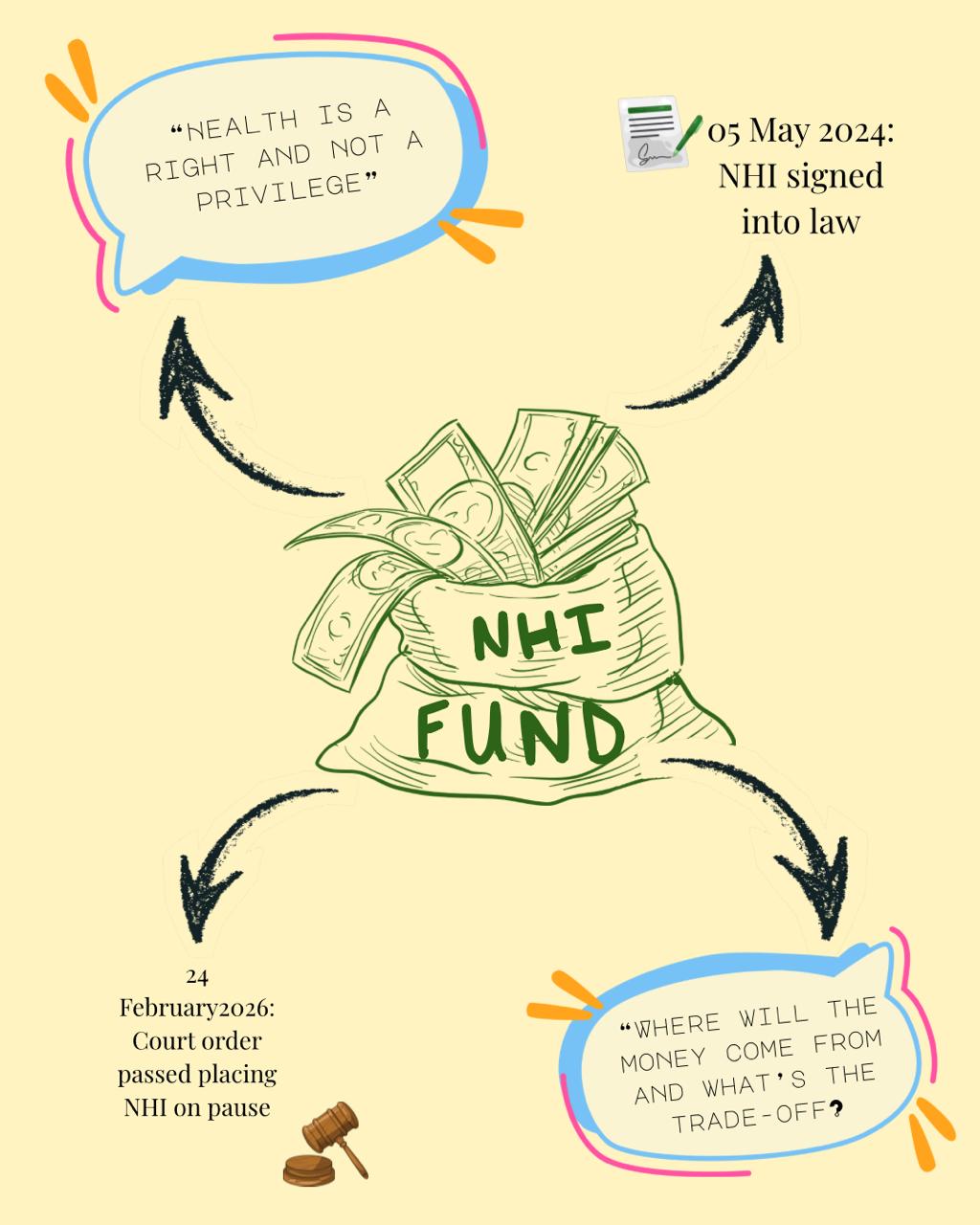
Since the signing into law of the NHI in mid-2024, and a court order issued on 24 February 2026 that has affected its implementation, debate over whether the policy will succeed has intensified.
Supporters argue that healthcare is a right, not a privilege, and view the NHI as a mechanism to reduce inequality by pooling funds to ensure more equal access to quality healthcare services across public and private sectors. On the other hand, critics continue to question how the system will be funded and what trade-offs may be required to sustain it.
A graphic representation of South Africa’s National Health Insurance (NHI), illustrating its universal healthcare goal alongside debates on funding and recent legal developments. Photo: Asisipho Mpahleni
While public debate around the NHI has largely focused on issues of inequality and funding, speakers at the symposium emphasised governance as a more immediate threat to the success of the reform.
Experts such as Professor Alex van den Heever, who specialises in healthcare systems and financing, examined the deeper structural problems within South Africa’s health system, warning that without addressing these, the NHI could fail regardless of its funding model.
“You’ve got a governance misalignment… [where] responsibility, authority, accountability [are] set in different places,” said van den Heever, pointing to one of the key structural weaknesses in South Africa’s healthcare system.
He explained that this misalignment means that those responsible for delivering healthcare services often do not have the power to make key decisions, while those with decision-making authority are removed from the realities on the ground. This disconnect, he argued, leads to inefficiencies, weakens accountability, and slows down service delivery across the system.
While much of the discussion focused on systemic governance failures, human rights and social justice activist Mark Heywood, brought the conversation back to its human impact. “Health is not pausing while we are sorting out the healthcare system,” he said, emphasizing the urgency of addressing these challenges.
The discussion concluded with several proposals to address these challenges. These included strengthening the decision-making power at local health districts and hospitals, while also making sure strong local boards hold them accountable.
Furthermore, the process of choosing leaders should be changed so that politicians can’t easily capture or corrupt public health institutions and procurement. Experts also proposed fairer funding rules and better regulation of private medical schemes, so money follows real service needs and incentives reward good, cost-effective care.
FEATURED IMAGE: A graphic representation of South Africa’s National Health Insurance (NHI), illustrating its universal healthcare goal alongside debates on funding and recent legal developments. Photo: Asisipho Mpahleni
In episode six of We Should Be Writing season 7, the team unpacked the evolution of music as a form of expression and protest, through four decades in the South African context. The episode explores the journey of South African music and its consumers from the 80s, 90s, early 2000s and contemporary listeners. From the […]