
We used to protect our most intimate moments: grief, prayer and quiet joy within the four walls of our homes. Now, we trade them for likes. As the line between experiencing and performing life vanishes, we must ask: If everything is for sale online, does anything remain sacred?
A camera is always ready, lingering in the background to record even the smallest moments. In the age of the non-stop vlog, the boundaries of human experience are dissolving. Social media has not just given us a platform, it has turned our very existence into a product. We are no longer living our lives: we are curating them for an invisible audience that does not actually care.
William Shakespeare once wrote that “all the world’s a stage”, suggesting that we are all merely players acting out our roles. Centuries later. Sociologist Ervin Goffman expanded on this, arguing that in our social interactions, we are constantly “performing” to manage how others see us. Goffman believed we had a “front stage” for the public and a “backstage” where we could finally be ourselves. However, the digital age has effectively abolished the backstage.
Look at your feed. You will see funerals livestreamed, hospital beds used as backdrops and personal breakdowns filmed through a beauty filter. We see random acts of kindness where the camera is clearly set up before the help is even offered. In these moments, the experience itself becomes secondary. The grief is not about loss: it is about engagement. Kindness is not about the person in need: it is about the creator’s brand.
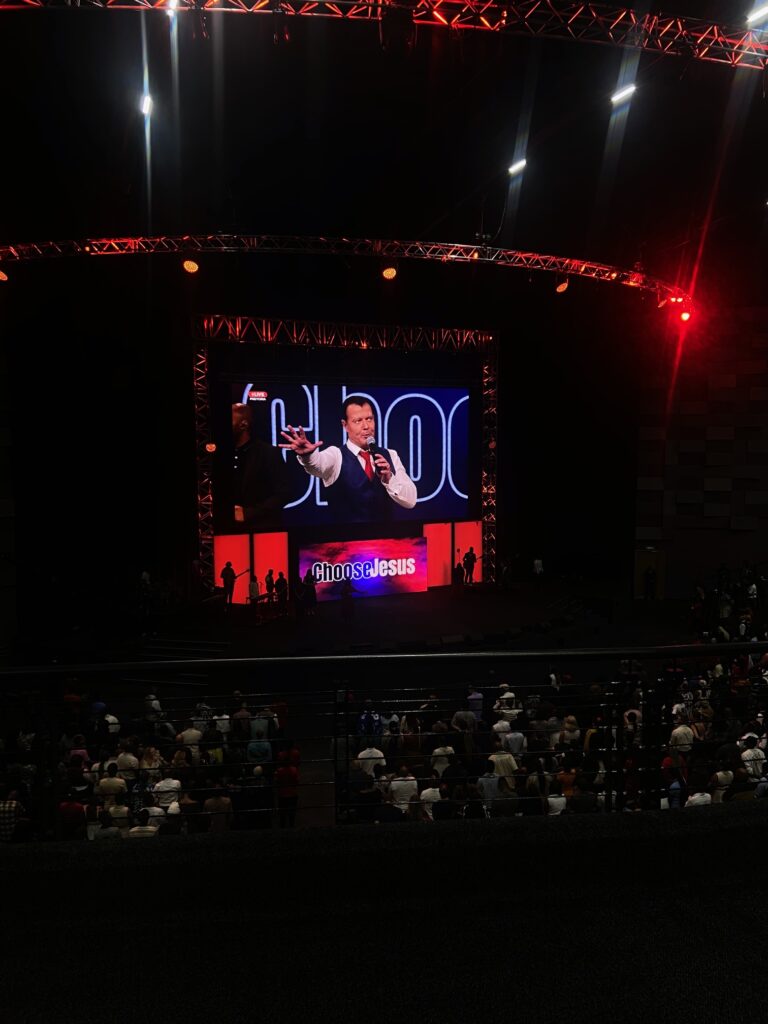
Even the sanctuary is no longer safe. Instead of lifting both hands to praise the Lord, many are now holding up a phone to take content. We see congregants capturing the choir or the sermon for their stories instead of being present in the moment. This raises a chilling question: Are we still experiencing life, or are just performing it? How is one supposed to be fully immersed in worship when they are preoccupied with the right camera angle?
This shift is fueled by a hungry algorithm.
Research from the University of Malta in 2025 found that the “TraumaTok” trend encourages young people to turn their private grief into public confessional narratives. This specific trend is exactly what is destroying the sacred and private nature of our lives. When we see life through a lens, we stop being participants and start being directors. We wait for the right lighting before we cry: we pause the conversation to ensure the aesthetic is correct.
This is the death of the sacred. Something is sacred precisely because is it not for public consumption. Its value lies in its privacy, the fact that it belongs only to the people in the room.
Critics will argue that social media connects us and in some ways it does. But there is a massive difference between connection and performance.
True connection happens in the unrecorded silence between two people. When we broadcast those silences, we strip them of their power. When everything becomes content, nothing feels special anymore. We are feeding a hungry algorithm with the bits of our souls that should have been kept for ourselves.
It is time to draw a hard line in the digital sand. Not every moment needs a caption. Not every heartbreak needs a story update. Not every sunset needs a filter. Some things should remain unseen, not because they lack value, but because they hold too much of it to ever be liked. In reclaiming our privacy, we might just rediscover the quiet, unrecorded beauty of being alive.
FEATURED IMAGE: A professional camera rig stands ready on a sidewalk in Braamfontein. Photo: Rearabilwe Tsebela
RELATED STORIES:
- Wits Vuvuzela, The cost of creativity and entertainment on TikTok is your privacy , January 2025
- Wits Vuvuzela, Social media ‘sbwling’ is sucking your savings dry, December 2021
- Wits Vuvuzela, COOL KID: Lebogang Rampedi , May 2023

