
The Atlas of Uncertainty offers a profound perspective on African migration, redefining our understanding of belonging.
- Atlas of Uncertainty opens at Wits Origins Centre.
- Various artists, writers and researchers celebrated their work during the opening ceremony.
- The exhibition holds significance in today’s divided society.
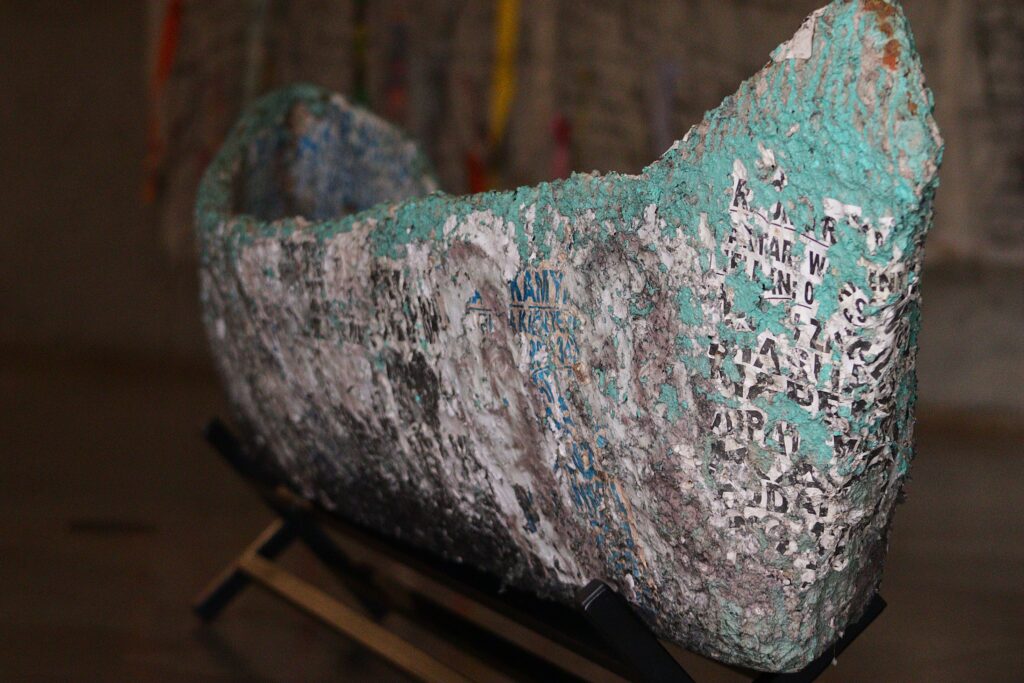
Photo: Jamie Ho.
The Atlas of Uncertainty exhibition opened at the Wits Origins Centre on Saturday, April 18, inviting visitors to question the current agenda around migration, urbanisation and belonging in Africa.
From a paper-mâché boat constructed from receipts to a woven tapestry stitched with burlap, the exhibition offers a more humanising lens for viewing the global phenomenon of mobility: not as burdensome, but as inherent to humanity.
Rooted in three African cities, Johannesburg, Accra, and Nairobi, the Atlas looks beyond the borders that divide us. Migration researcher Loren B. Landau highlights that the current scholarship neglects to capture the complexities of Africa, thereby revealing a need to move “from the counting to the feeling; from the census to the senses.”
To understand the vast complexities that define the continent, the Atlas is not only working across borders, but across different media, disciplines, platforms and ways of thinking. Urban sociologist Caroline Wanjiku Kihato explains that this “lets different ways of knowing sit alongside one another, without forcing them into a single voice.”
The Atlas of Uncertainty is a powerful revision of how we understand African cities. It uproots mainstream narratives surrounding migration, opening the space up for uncomfortable yet necessary conversations.
Spatial practitioner, Carina Kanbi provides some insight into the actual making of the project and how its themes of migratory politics were mirrored over the course of its conception.
Going all the way back to 2023, when the project first began, she notes challenges faced by the artists working across borders, not only in physically transporting the works, but also in handling bureaucratic restrictions between countries. “The exhibition did not begin this morning,” she explains. “It very much began in transit.”
And staying true to this theme of mobility, the Atlas will remain a piece of art that will remain in perpetual movement. While it is on exhibition until July 3 at the Origins Centre, it is also planned to showcase in Accra and Nairobi in 2027.
Each piece of the Atlas reverberates with the passion of its creators. Each tassel holds weight.
Each shard aches with feeling. As the cracks of division deepen in our world, the value of this exhibit lies not only in its ability to challenge the status quo, but in its ability to reach where data and statistics cannot, to reconnect with our ability to be human.
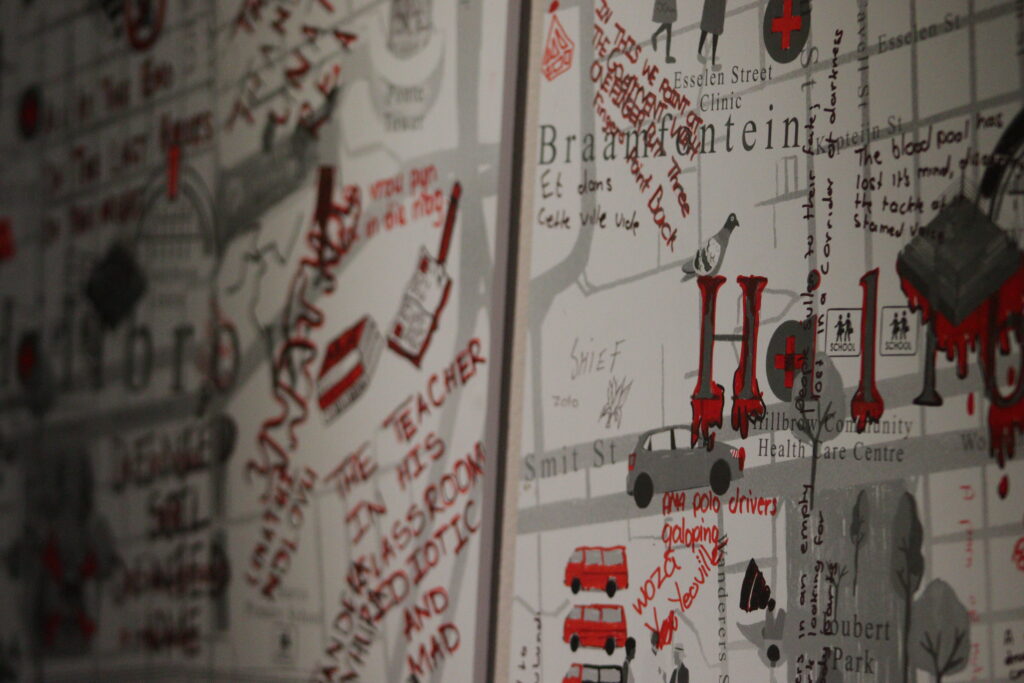
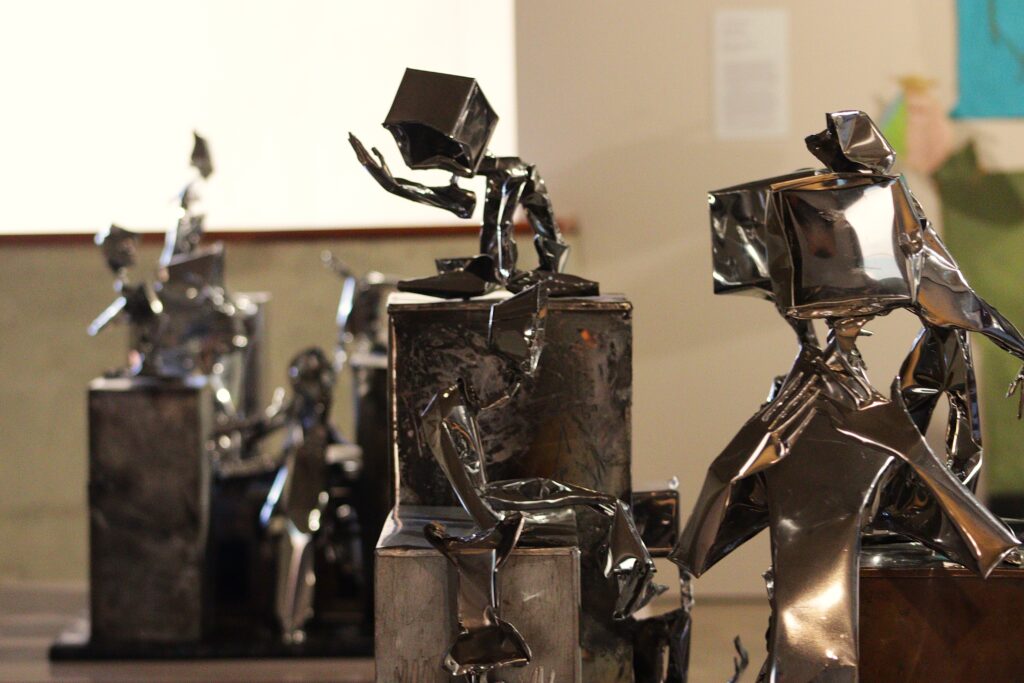
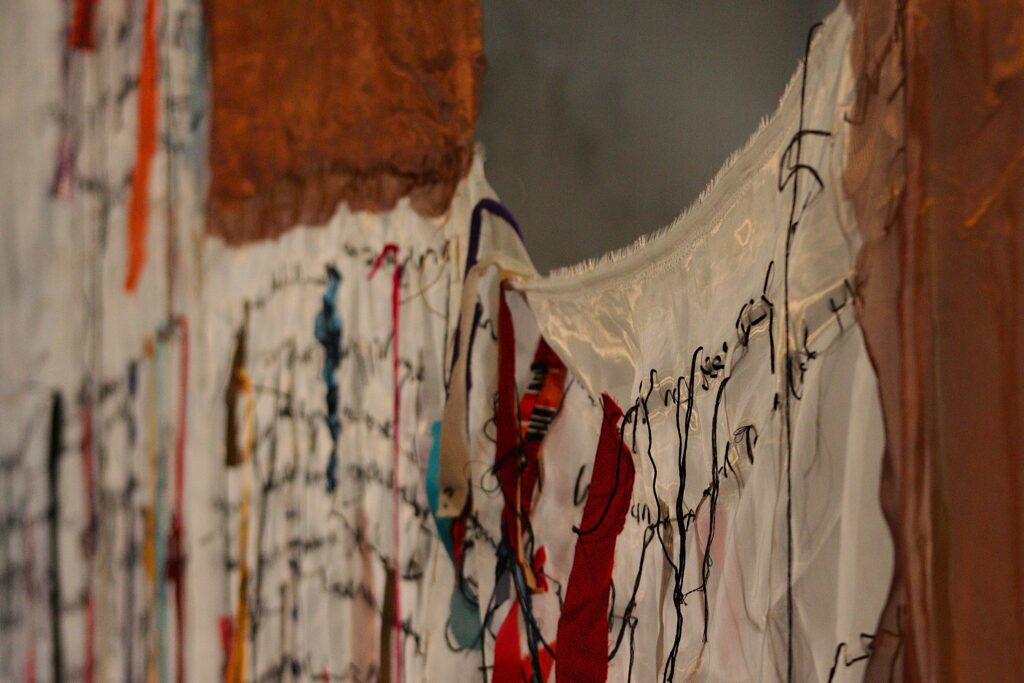
FEATURED IMAGE: Picture of artwork titled ‘When We Travel, Where Do We Settle?” by Wezile Harmans. Photo: Jamie Ho.
RELATED STORIES:
- Wits Vuvuzela, REVIEW: Now is not forever, when art mimics reality, April 2026
- Wits Vuvuzela, REVIEW: Apartheid explored ‘between the cracks’, May 2025
- Wits Vuvuzela, Migration explored through immersive art exhibition, August 2024

