Amid South Africa’s escalating housing crisis, one mother fights through the chaos to build a home for her family.
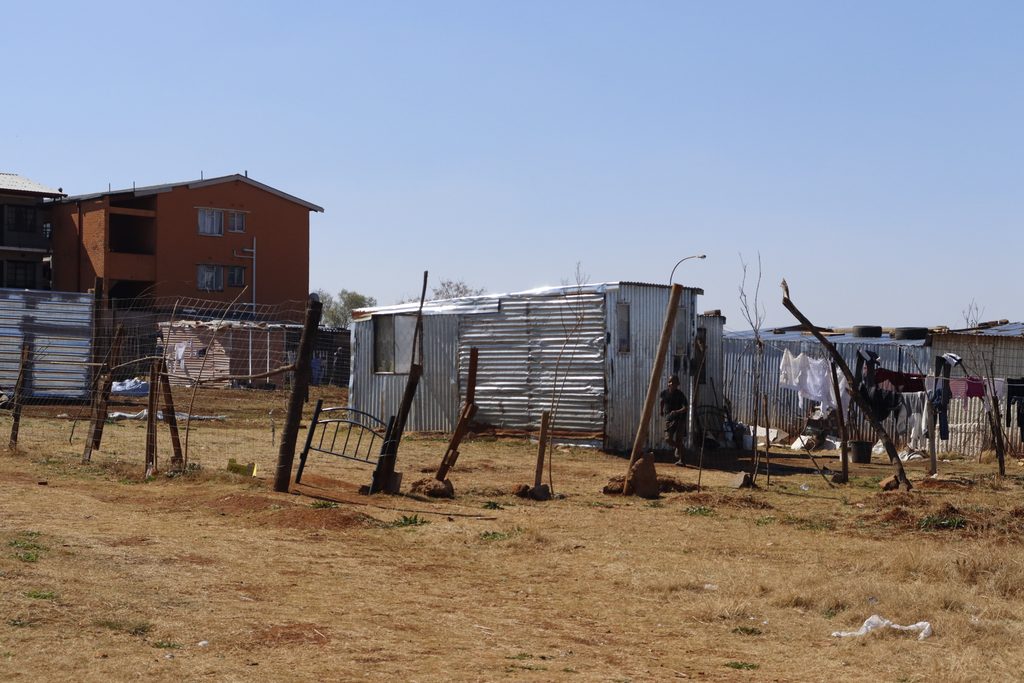
Right before night spills into day, the valleys of Eldorado Park are bathed in shadows of deep purple. Nestled in the grassy plains stands a makeshift house no larger than six paces in length. Almost a year into its existence, the shelter stands tall as one of the first built in the informal settlement of Actionville. Steadily, life unwinds within the corrugated iron and rusted zinc walls of this little matchbox.
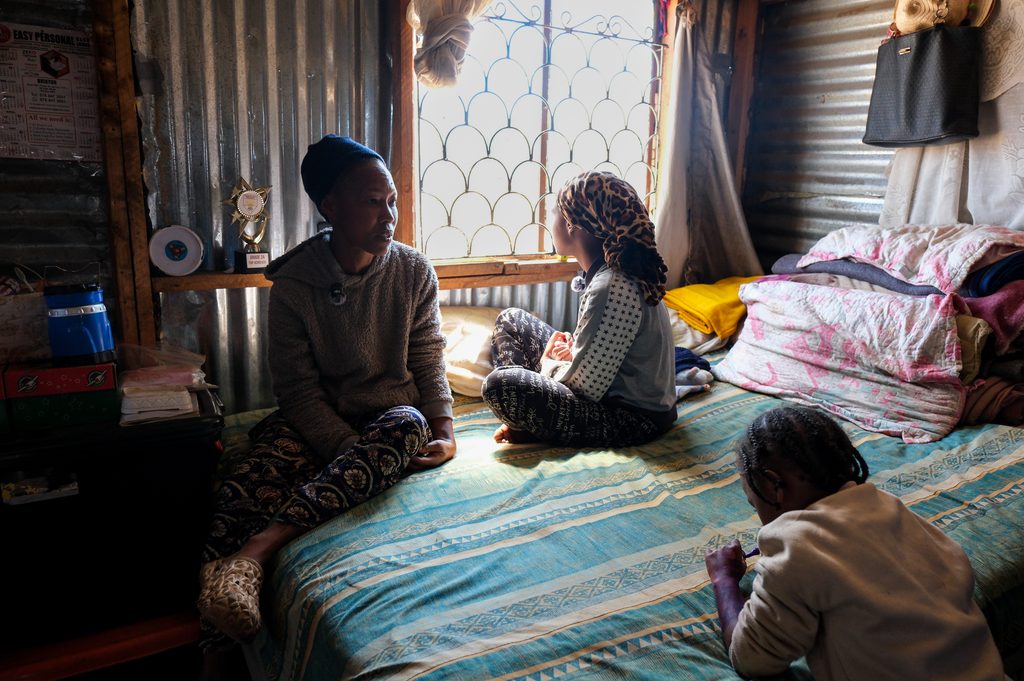
In the inky black darkness, Elizabeth Percent (41) peels back the covers and rises before the sun to make breakfast for her children. She walks to the gas-stove, guided by the weak glow of her phone flashlight. Tick-tick-tick. A tiny blue flame erupts from the cylinder with a hiss. Methodically, Elizabeth sets her pot on the metal stand and begins slicing bread.
Elizabeth seated on the bed with her children. Photo: Hannah Brown.
“We had to make fires in the beginning,” Elizabeth says with a distant gleam in her eye. “Everything was on a fire. Your home smelled like a fire even.” She pans her gaze to her children scattered around on the bed, her eyes lowered. “I now cook on a gas-stove. If it was me 3 years ago, I would’ve never done gas.”
Her four children stir in the dark from the commotion. Willow (3), her granddaughter whom she was babysitting, remains within the warm nest of blankets, unwilling to budge. Spurred by their mother’s commands, each child begins performing their morning rituals like clockwork under the dim glow of a battery-powered lamp.
Cleotus (10) is lacing up his shoes. Anastacia (9) is pulling her hair into elastics. Tarryn (5) and Willow sit huddled together under the covers, squealing as big sister Hayley (16) comes to wipe their grinning faces with a cloth.
The shelter where Elizabeth and her children reside. Photo: Jamie Ho.
As the sun peeks over the valley into the lace-adorned windows, a soft golden light trails up the corrugated walls, illuminating the cheery faces huddled on the bed. Elizabeth carries steaming bowls of porridge to them. Excited squeals are silenced by the hasty shovelling of spoons into hungry mouths.
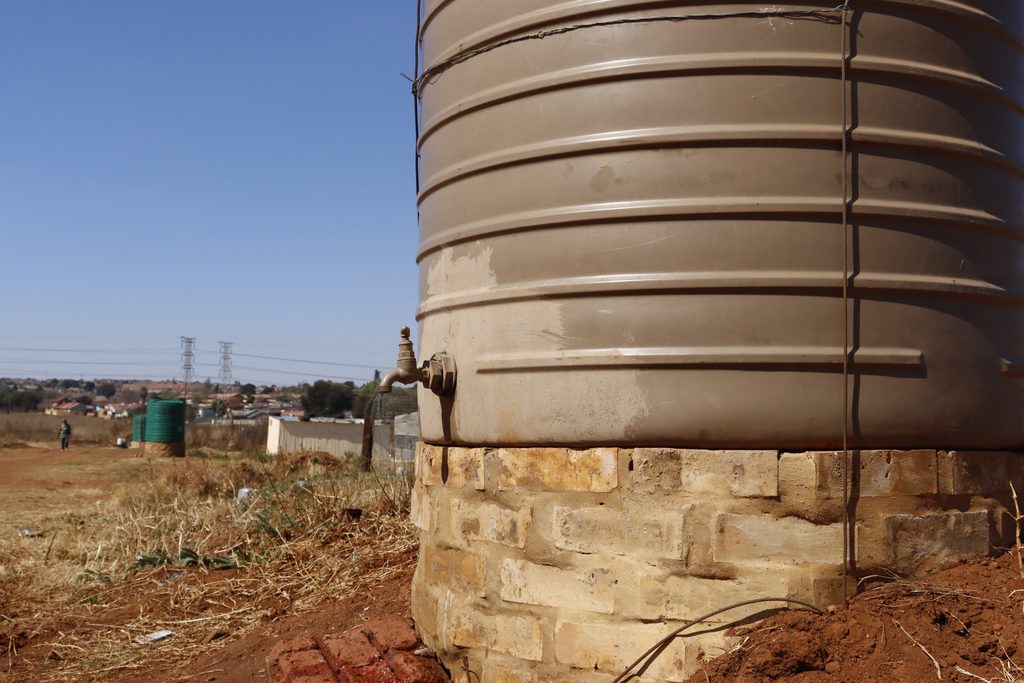
At the far end of the room is an old sink bowl, disembodied from any pipes, where dishes pile high, but no water trickles from the spout. Instead, Elizabeth carries water back and forth from the JoJo tanks installed around the settlement, storing them in containers under the table. She empties one into the pot, which she sets on the stove.
“We never used to have JoJo tanks,” she explains, “The surrounding community used to assist us with water.”
A JoJo tank installed along the path in Actionville. Photo: Jamie Ho.
However, despite having access to the tanks, the community still faces many problems with sanitation, especially since there is no running water for toilets. “We have manholes,” Elizabeth says, “We dig a hole and we use the bucket system. Or you do it in the house, or if you’re comfortable, in a small area outside and then you go and throw it away and wash your bucket.” This process, however, fills her with dread as it exposes her children to unsafe, unhygienic conditions.
Now the warm sunlight has filled every crevice of the shack and has ignited a burst of energy in the children. They begin soaring onto the bed, charging out of a home too small to contain their joy. Bursting out of the door, the cold morning wind pools over their tender faces as they sprint around the four corners of their fenced-off yard.
“I feel like a superintendent sometimes,” Elizabeth says with a slight chuckle. “Everything needs to be in order. If each one stays in their lane and just follows through on what [their] responsibility is, it’s easier.” She casts a stern glance at Tarryn and Willow, who are fighting over a mic.
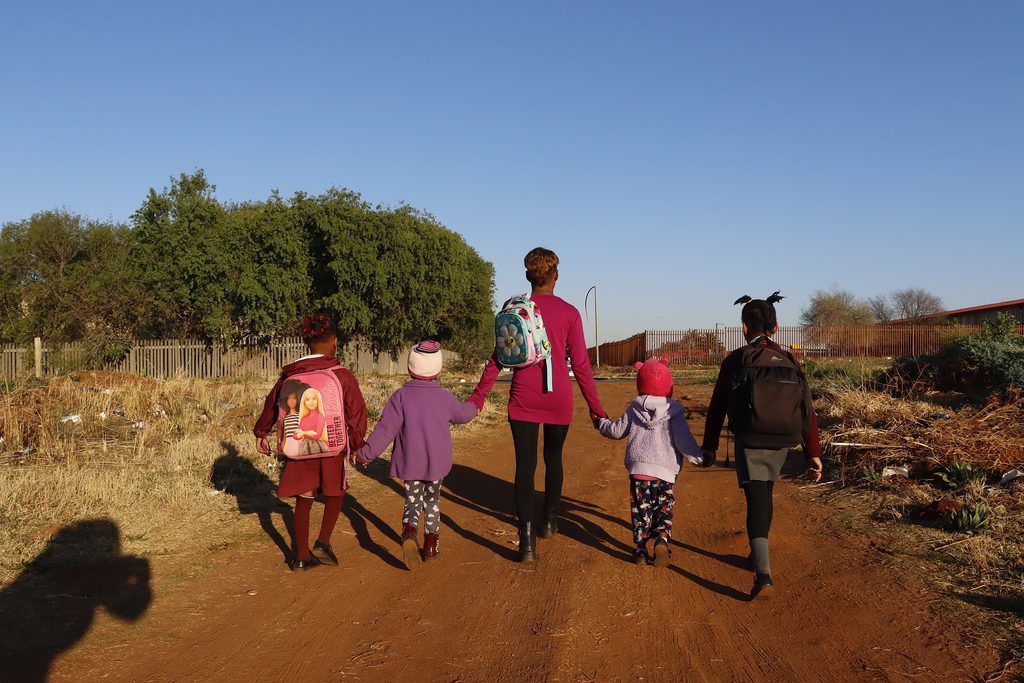
Hayley pulls open the low metal gate, and the children spill out from the yard into the copper-red plains. Elizabeth chides each one to make a line, and, like magnets, her children form a chain-link of hands.
Down the open dusty road, they strut like soldiers. The chants of an army of children carry through the air.
“We walk straight. We walk straight. If you don’t move out the way, we will kick you in the face,” they sing, lifting their legs up high to kick the air in front of them.
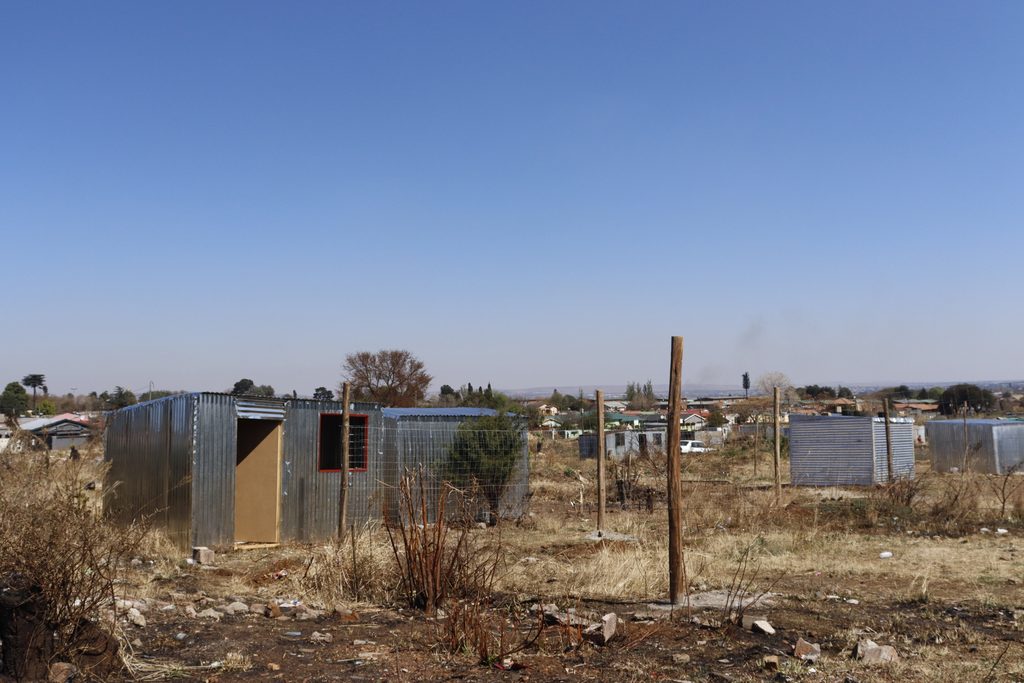
“This used to be an open field,” Elizabeth states, gesturing towards the settlements dispersed around the grassy plains.
Informal dwellings scattered across the grassy plains. Photo: Jamie Ho.
Actionville is one of thousands of informal settlements that have sprouted across the country born out of a desperate, decades-long housing backlog that has left millions waiting on government waiting lists.
A year ago, during the early days of Actionville, residents faced constant pushback from law enforcement, with Elizabeth’s home under threat of being bulldozed. To comply with their demands, she chose to dismantle the shelter herself.
“If they do get it right, it’s a demolish,” Elizabeth explains, “They use their bulldozer and they drive over your home so it’s damaging everything that’s in there, and this was my home. It’s been my home for the longest time.”
Eviction threats are a recurring reality for informal dwellers. Time and again, police have raided communities to tear down newly erected shacks, only to meet fierce resistance from residents determined to protect their homes.
Under the current Prevention of Illegal Eviction (PIE) Act, authorities must secure a court order before demolishing homes. Proposed amendments would remove this requirement, making evictions far easier. While officials claim the changes target illegal land syndicates, housing rights advocates warn the loss of these legal protections will leave vulnerable families like Elizabeth’s with nowhere else to go.
“If they make this amendment, we could lose everything,” Elizabeth says solemnly.
Her grip remains firm on her children’s hands as they approach the school. As she hugs each one goodbye, she watches them depart, their chattering and giggles fading round the bend.
Elizabeth and her children walking to school. Photo: Jamie Ho.
FEATURED IMAGE: Elizabeth seated on the bed with her children. Photo: Hannah Brown.
An immersive journey through the city’s alternative art spaces.
Johannesburg’s inner-city became the backdrop for Contra: an art festival spread across various rooftops, warehouses and galleries across the city during the weekend.
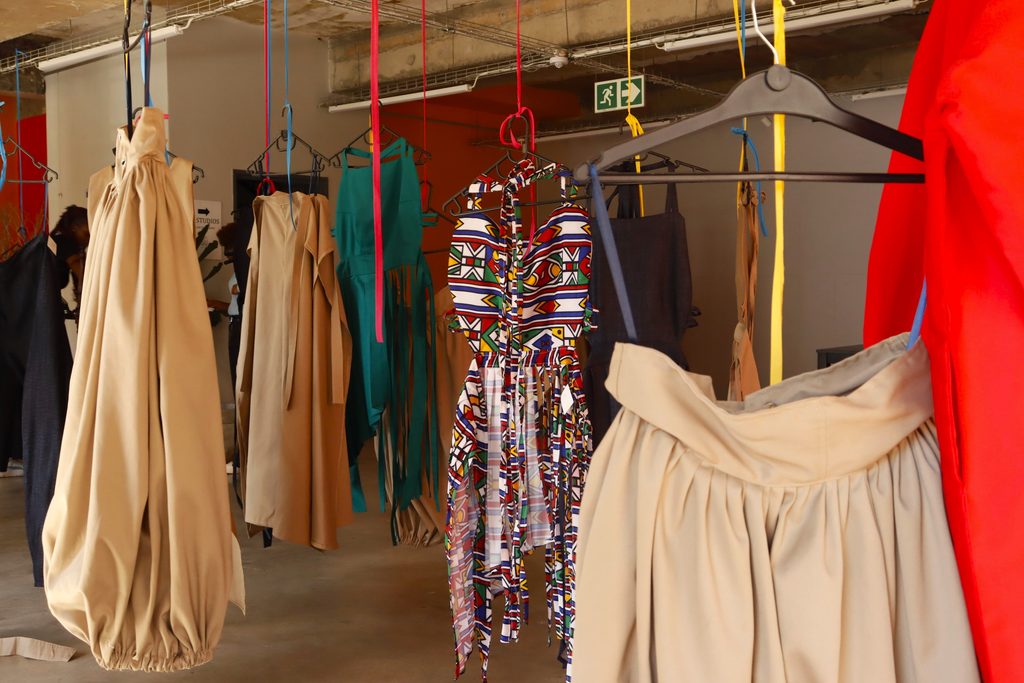
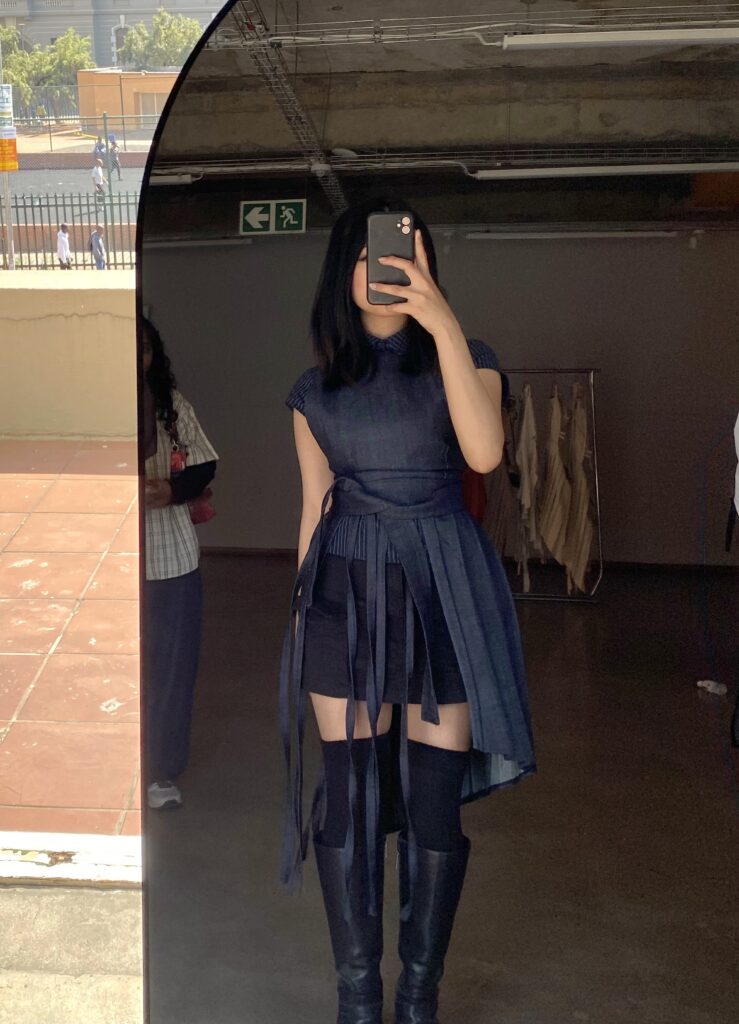
I started my journey in Asisebenze Art Atelier, an urban art studio in the heart of downtown Jozi. There, I found myself in a labyrinth of different textiles suspended by ribbons from the ceiling. At the centre of this colourful maze was stylist Nqobile Nxumalo who graciously helped fit me into a unique denim pinafore-style dress: one of her favourite pieces. As she weaved the straps around my figure, I watched the dress slowly take shape.
Nxumalo’s collection on display. Photo: Jamie Ho.My fitting of the denim phinifa. Photo: Jamie Ho.
“These are called ‘phinifa’,” she explained, as she tightened the straps. “It’s a traditional outfit for married women mostly.” Nxumalo’s work subverts the conventional roles assigned to women in African culture, allowing for a reimagining of societal expectations. Staring at my silhouette in the mirror, I admired her handiwork: the pleats and folds perfectly hugging my figure to create a bold and flattering silhouette.
Suddenly, a loud boom echoed from the next room. After unravelling myself from the dress, I went to investigate the source. A performance was being held by a few African spiritual healers seated around an assortment of candles and spiritual offerings. Every beat of the drum, piercing note of the trumpet, and squeal of the flute pulsed into a steady melody. I was entranced by how powerfully they commanded the room, warping the air with music.
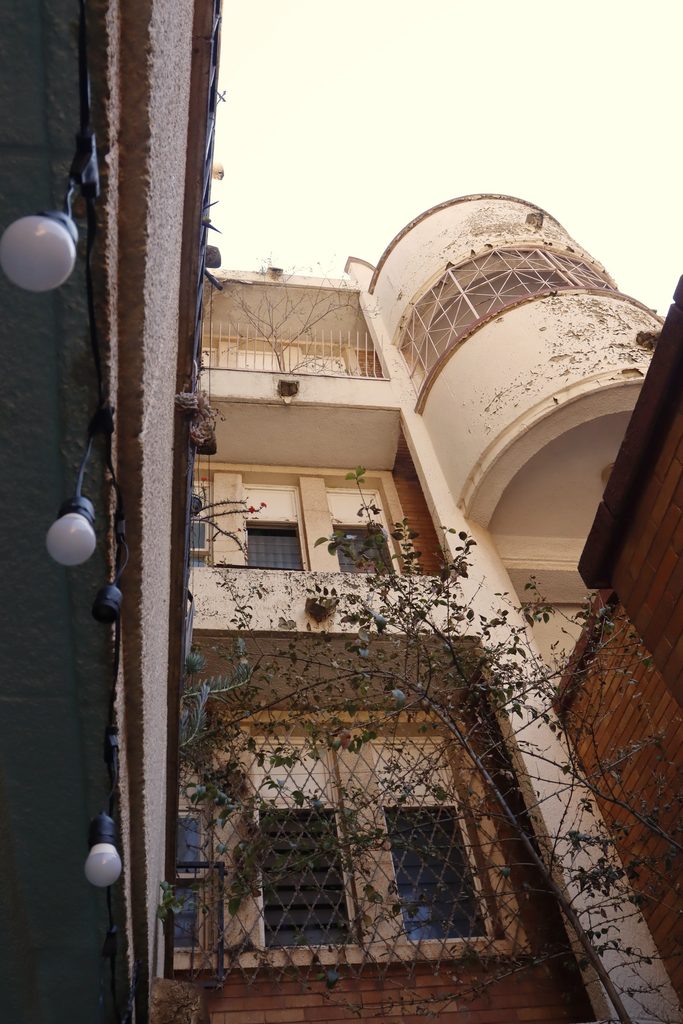
My next stop was Transwerke, a towering building of crumbling brick and oval terraces originally built as a maternity hospital but now functioning as a creative hub for artists. I descended into the basement first. I stepped into the first room where a few children were busy painting. An array of patterned puzzle pieces were littered across the table: each one a country ready to be assembled into the continent of Africa.
The crumbling yet imposing architecture of Transwerke. Photo: Jamie Ho.Mixed media installation adorning the Transwerke halls. Photo: Jamie Ho.
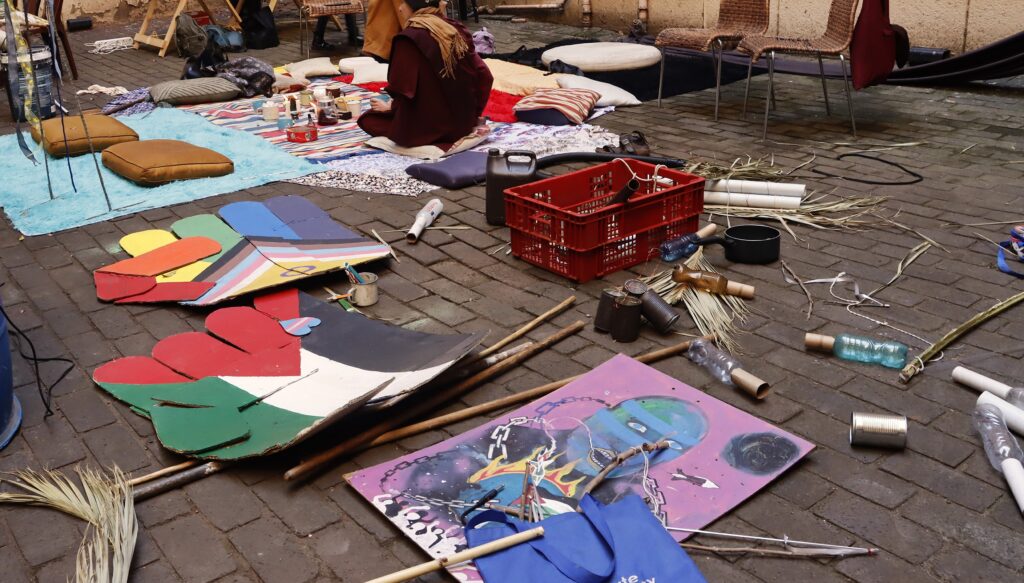
After spending a few minutes here, an eerie rumble rippled through the echoey halls. I followed the sound and found myself in an open courtyard at the centre of the building. Red, yellow, green and pink streamers rained down from the treetops onto the central patio which breathed with loud, clashing sounds.
A woman was banging a bamboo stick against an empty drum barrel while children shook rattles engineered from cutlery and wire. I seated myself on the blankets at the centre of this whirlwind of sound and colour (a soundscape, I learned it was called). We were encouraged to pick up a few of the makeshift instruments, so I rattled a pan filled with bottlecaps and rice. My skin prickled as the sounds raised and waivered, bouncing off and around the tall walls surrounding the courtyard.
An assortment of instruments fashioned out of recycled materials. Photo: Jamie Ho.
Admittedly before this experience, I had only known the city from afar. CONTRA allowed me to step foot into a range of unconventional spaces that I would have never otherwise ventured into. I was able to plunge headfirst into art in all its various forms: from painting sessions to fashion pop-ups to sonic escapes. It felt like I wasn’t just viewing the art; I was in some way a part of it. And while the experience was vastly different across each location, it never felt incongruent or out of place.
Whether it be in the courtyards pocketed away between buildings, the basement of a dilapidated hospital, or the studios overshadowed by towering urban centers, each space was blossoming with life. It was comforting to know that art will always find a way, that it will creep up through the cracks in whatever concrete jungle it finds itself in, to exist in a very beautiful, very plain way.
Vuvu rating: 9/10
FEATURED IMAGE: A musician blowing a trumpet during a live African spiritual performance. Photo: Jamie Ho.
Hundreds took to the streets, calling for protection of housing rights and an end to rising xenophobia.
Operation Ubuntu marched to the Premier’s Office to oppose the PIE amendment and rising anti-migrant sentiment.
Housing activists and informal settlers argue that the revision to the PIE Act criminalises poverty.
The march’s memorandum calls for greater state accountability in handling anti-migrant hostility.
On the morning of August 8, a coalition of over 60 social justice organisations under the name Operation Ubuntu led a march to the Premier’s Office demanding an end to xenophobia and a rejection of the proposed amendment to the Prevention of Illegal Eviction (PIE) Act.
The march was one of many coordinated protests taking place in Johannesburg, Cape Town and Durban in response to two issues affecting marginalised communities: ongoing xenophobia and housing insecurity.
Marchers charging through the streets holding banners and placards. Photo: Jamie Ho.
Woman holding a placard condemning xenophobia. Photo: Jamie Ho.
Frustration as protestors march for housing rights and an end to xenophobia. Photo Jamie Ho.
Central to the protest was the recent proposal for an amendment to the PIE Act. Currently, people cannot be evicted from their homes without a court order as the Act operates in accordance with Section 26 of the Constitution, which stipulates that “everyone has the right to access adequate housing”.
Activists fear the proposed amendments would weaken these protections, particularly for people living in informal settlements and other forms of insecure housing. They are particularly concerned that courts could order evictions without requiring municipalities to provide alternative accommodation.
“The municipality cannot have that power of evicting us without meaningfully engaging with us and without even understanding our background,” said Operation Ubuntu coordinator, General Moyo.
Housing activists condemn the proposed revision for failing to address the structural causes of housing insecurity that stem from poverty, entrenched inequality and poor governance. Instead, it places further strain on already vulnerable communities by forcing them out of their homes.
“Critics have long referred to this approach as pounding the tip of the ice-berg or swatting at the flies when a corpse is rotting,” explained Marie Huchzermeyer of Siyafana Sonke, a civic movement aligned with Operation Ubuntu.
Furthermore, the government’s persistent failure to address housing insecurity has left residents with few options. “In 33 years, not one RDP house was built in our community,” said Fagmedah Edeies, who resides in an informal settlement within Eldorado Park. “As a mother, I must remember that I have children and I have grandchildren. Where will they then go if this amendment is passed?”
Data visualisation showing housing backlog. By: Jamie Ho.
Beyond housing insecurity, the march also confronts escalating waves of xenophobia across the nation. “We are in solidarity with all the African brothers and sisters that are facing the crisis,” Moyo affirmed.
In their memorandum, Operation Ubuntu called for greater action from state institutions in handling matters of anti-migrant hostility.
Firstly, it singled out SAPS for not protecting vulnerable migrant communities from vigilantism. “We are calling on the police,” Moyo explained, “to make sure that they abide by their obligation which is to serve and protect without discrimination and without favour.”
Secondly, they highlighted the issue of documentation as a systemic failure by Home Affairs and demanded a two-year moratorium on all arrests and forced repatriations to allow migrants sufficient time to obtain documents.
Thirdly, in light of the upcoming elections, Moyo warned political parties against scapegoating migrants for electoral gain. “We will be watching those that will be campaigning trying to use the platform of hate and violence in communities to get votes.”
Held on the eve of Women’s Day, the march highlighted the broader demand for dignity, security and equal protection. For protestors, xenophobia and housing rights are part of the same struggle: a move to ensure that vulnerable communities, and the women and children within them, are not left without a home or a voice.
A mother holding a placard advocating for women and children safety. Photo: Jamie Ho.
Protestors chanting through the streets against the PIE Act amendment and xenophobic violence. Photo: Jamie Ho.
“Stop treating us like animals” reads sign at protest. Photo: Jamie Ho.
FEATURED IMAGE: A placard advocating for women and children safety during the Operation Ubuntu protest. Photo: Jamie Ho.
Film graduates find new and creative ways to navigate the rocky terrain of show business.
A trio of former Wits film students debuted their independent screening event, Chosenima.
The event challenges the rigidity and exclusivity of film festivals by providing an open platform for creative expression.
With the success of the first screening, the group hopes to empower more emerging voices in the industry.
For a group of three film graduates, Natasha Chirambo, Simamkele Mrwetyana and Scott Paton-Levin, cinema has never been about the flashy film festivals or prestigious Oscar nominations. It is simply about a deep, unwavering passion for the craft.
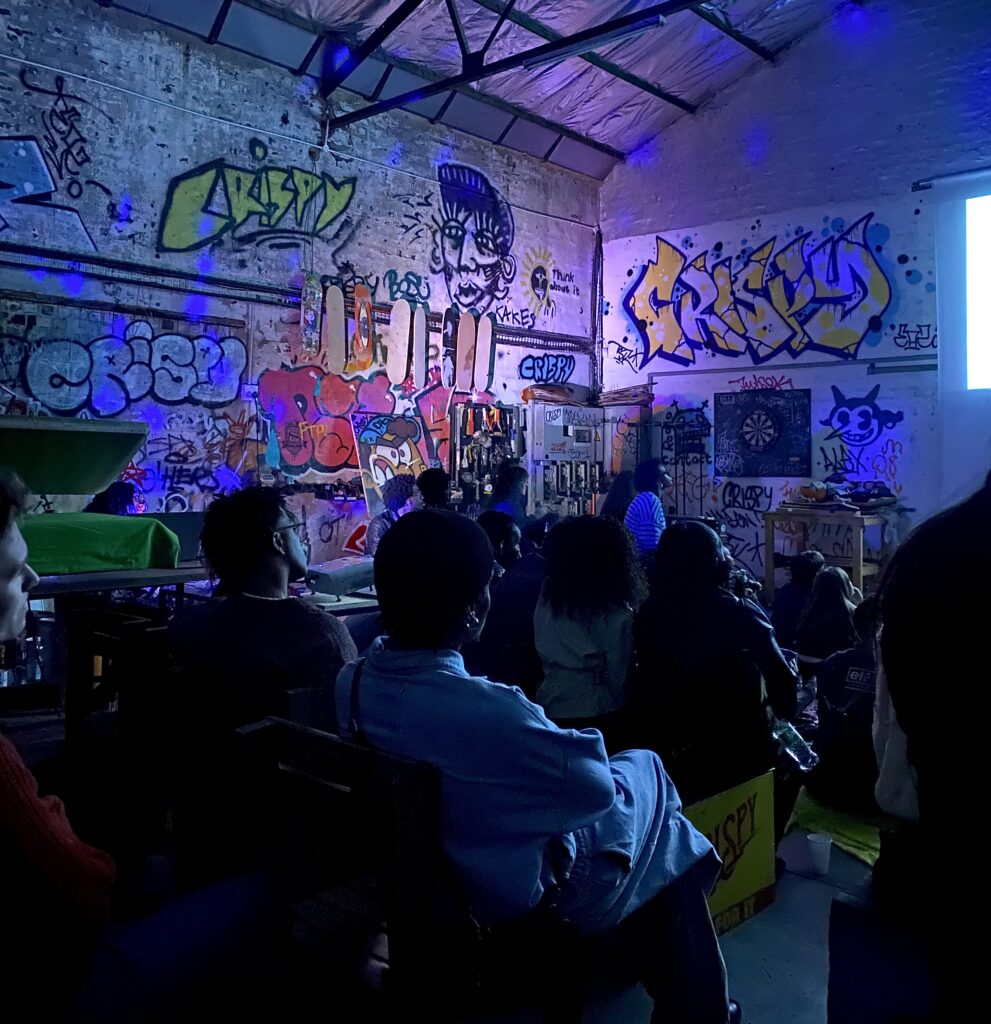
On the evening of August 1, the group debuted their independent screening event, Chosenima, at Crispy Skateboards on 1 Fox Street, Ferreiras Dorp. Tucked away in the four corners of a graffiti-covered warehouse, filmmakers and film lovers settled in a cozy sprawl of pillows and blankets to share an intimate night of cinema.
From intricate hand drawn animations to crafty collages stitched from personal photographs, each film beats with the pulse of its creator. Soft, yet powerful, the films explored delicate moments of queer love, personal struggle and emotional vulnerability.
Picture of the screening at the Crispy Skateboard warehouse. Photo: Jamie Ho.
The initiative was founded by three Wits film and TV alumni who became increasingly disillusioned with the elitism of film festivals. “When we were doing our varsity degree in film and tv, we were taught to make films for festivals,” explains Mrewetyana. “And festivals most of the time have their own territorial needs.”
This sentiment is echoed by Chirambo, who sees the rigid requirements of traditional filmmaking as a trap for young creators. “People try to put in a formula so they can get an Oscar,” she says, “I don’t think that’s what art should be about: trying to please some invisible power in the industry.”
Paton-Levin recalls a personal memory, grappling with the film industry’s exclusivity. “When I was 15, I made a film called ‘Girl’. It was three minutes long. I submitted it to maybe 10 film festivals and I didn’t get into a single one, so I never got a chance to play that movie.” This rejection in turn has fuelled Chosenima’s welcoming ethos. “I want to talk to that kid,” he says, “and be like: ‘Come play your movie, my boy.’”
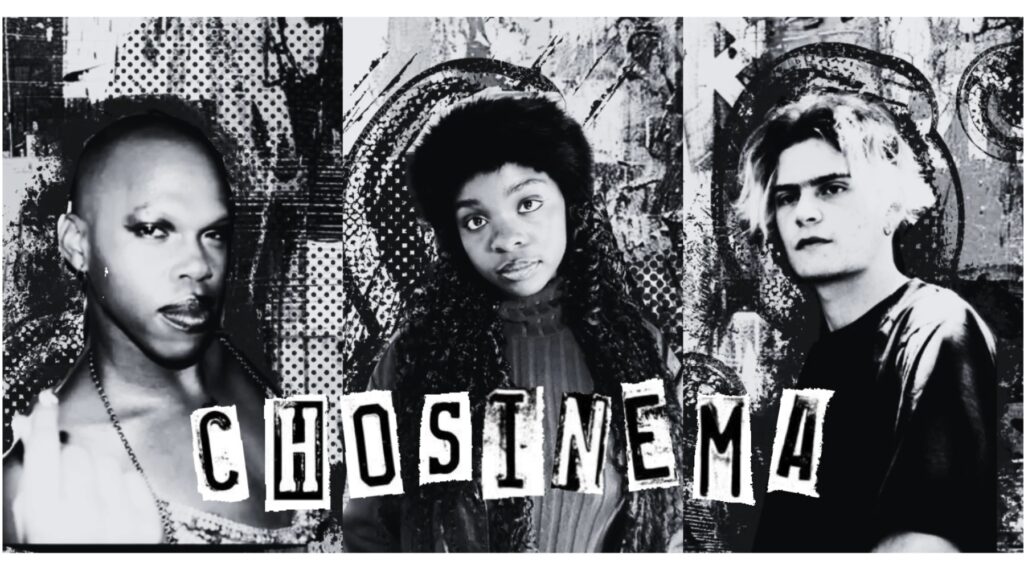
Graphic collage showcasing all three founding filmmakers: Simamkele Mrwetyana, Natasha Chirambo and Scott Paton-Levin. Edited by: Jamie Ho
By giving filmmakers space to experiment and hone their craft, Chosenima breaks away from the rigid expectations of commercial film. Mrwetyana’s own filmmaking reflects this through the genre of Afrobubblegum: a cultural movement that rejects mainstream cinema’s portrayal of the black, queer experience that solely depicts it from the lens of hardship and struggle and moves to celebrating the simple joys of ordinary life.
As the final film drew to a close and people lingered long after, it was plain to see that the future of cinema wasn’t far-off in some distant Hollywood theatre. It was already happening right there on that screen.
FEATURED IMAGE: Hand-drawn graphic of a cassette tape with the words ‘Chosenima’. Drawn by: Jamie Ho.
Activists protest to challenge mounting xenophobic violence.
Students and academics at Wits University protest against the escalating violence faced by migrants.
Demonstrators urge law enforcement to treat targeted vigilante attacks as hate crimes.
The picket highlights the need to counter xenophobic hate through conversation and empathy.
A group of activists gathered on Friday outside Wits University’s Jan Smuts entrance, staging a picket against the escalating wave of anti-migrant violence and xenophobic intimidation sweeping through local communities.
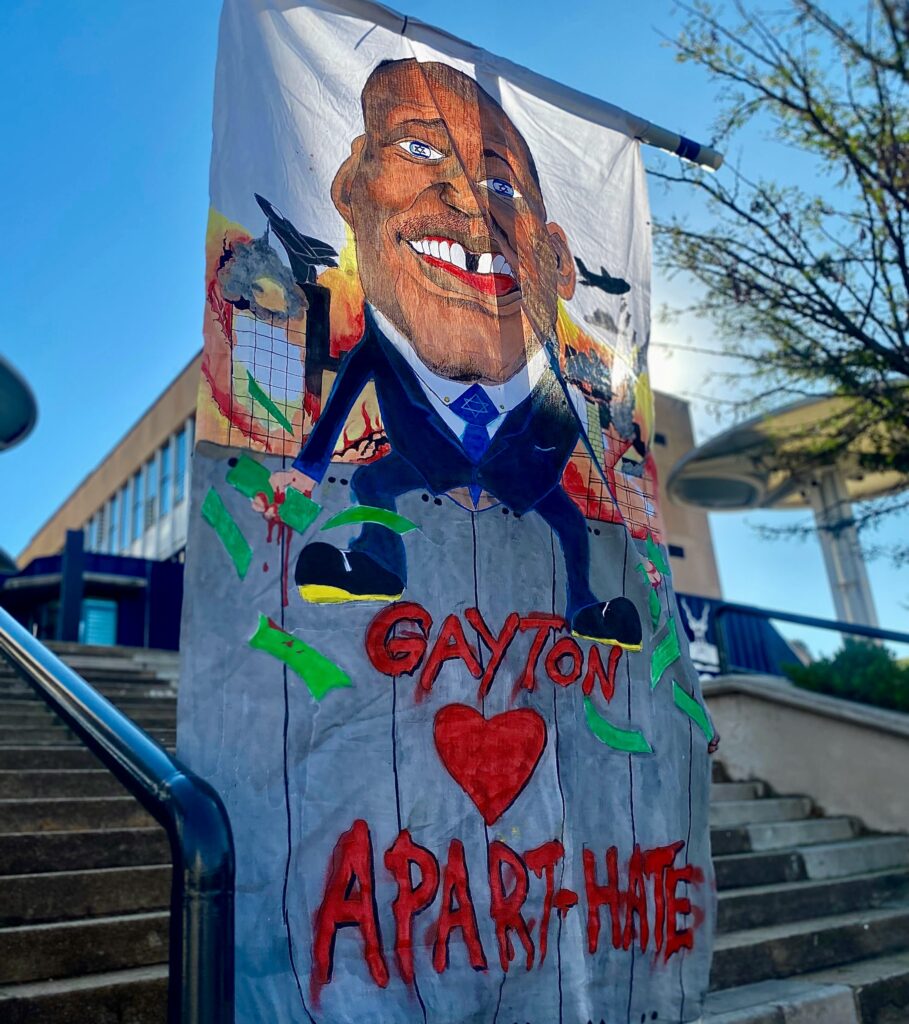
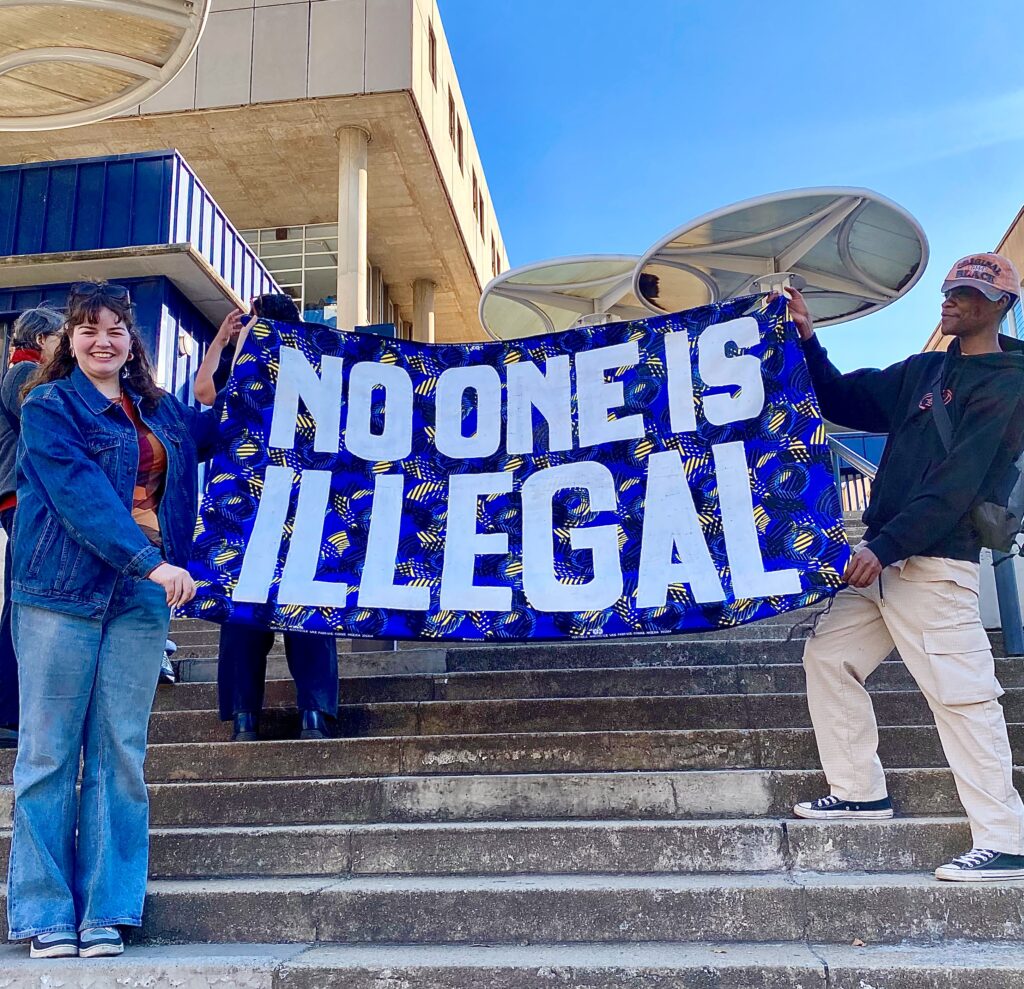
Protesters transformed the university entrance into a focal point for advocacy, displaying prominent banners and hand-painted signs condemning anti-migrant violence. One sign targeted the xenophobic rhetoric of Gayton McKenzie, accusing him of fueling an ‘Apart-hate,’ while others declared, ‘Targeting undocumented migrants is a hate crime’ and ‘No one is illegal.’
This demonstration was organised as a joint effort between Community Arts Mobilisation Project (CAMP), BDS Coalition, Kopanang Africa Against Xenophobia, Wits University Palestine Committee (WAPC) and Siyafana Sonke.
As attacks on migrants grow increasingly hostile, demonstrators call on law enforcement agencies to actively prosecute those inciting violence.
One protestor, Professor Marie Huchzermeyer, said the attacks constitute hate crimes. “This includes not only targeting people on the basis of their culture or country of origin, but also their migration status,” she states.
Dean Hutton, artistic director of CAMP, underscored the role of creative movements in driving social change, noting that artistic expression can “appeal to the soft parts of humans that rhetoric does not touch or move to action.”
Huchzermeyer echoes this view, stating “There is a view in Siyafana Sonke that I am drawn to which tries to win over the adversaries, making it a campaign of love rather than confrontation.”
Picture of two activists holding a banner that reads “No one is illegal”. Photo: Jamie Ho.
The picket is one of several planned demonstrations aimed at countering xenophobic narratives across South Africa. However, with tensions continuing to simmer across multiple provinces, activists acknowledge they face sustained pressure as they push back against organised anti-migrant sentiment.
FEATURED IMAGE: Picture of demonstrator holding a sign reading “Targeting undocumented migrants is a hate crime”. Photo: Jamie Ho.
The US ambassador highlights a path for joint US-South Africa co-operation after strained bilateral tensions.
The US ambassador speaks to students at a closed forum hosted by Wits Association of International Relations.
His speech emphasised greater partnership between the two nations despite current tensions.
Concern is raised over the true nature of this ‘cooperation’, regarding potential erosion of sovereignty.
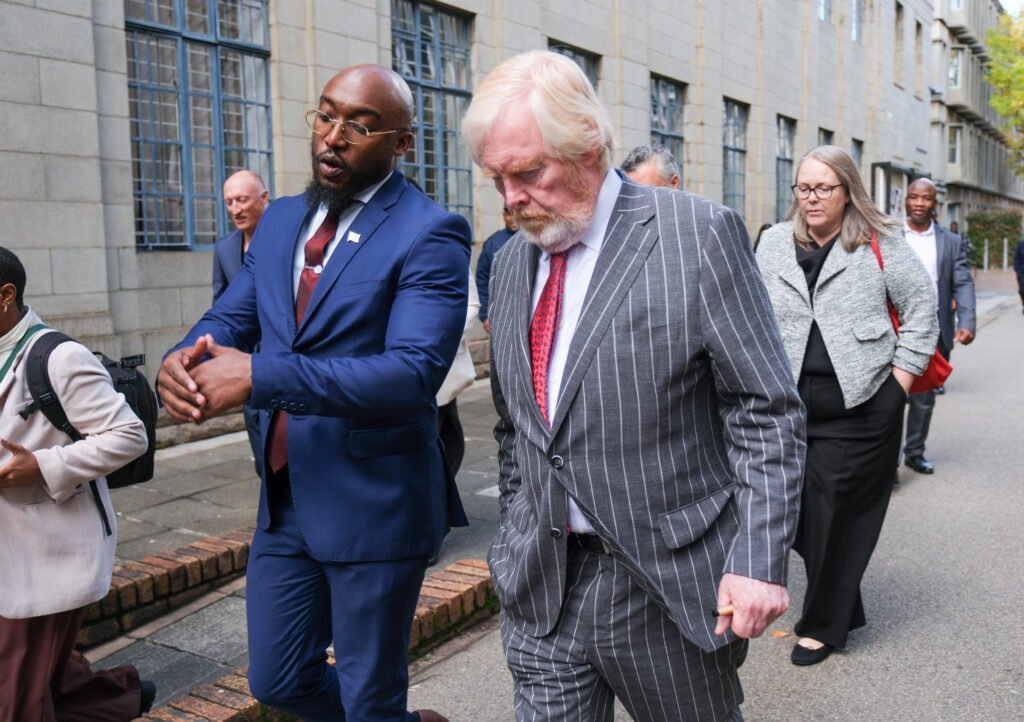
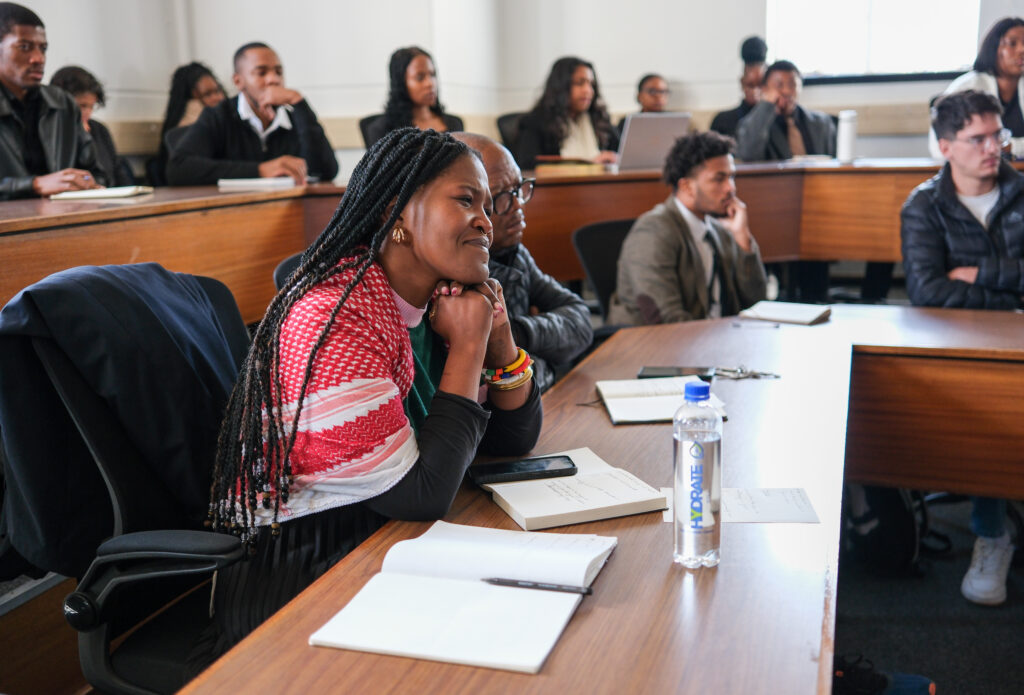
United States ambassador Leo Brent Bozell III walking with chairperson of Wits Association of International Relations, Nathi Ndlovu during a visit to the institution on Wednesday, May 7, 2026. Photo: Hannah Brown.
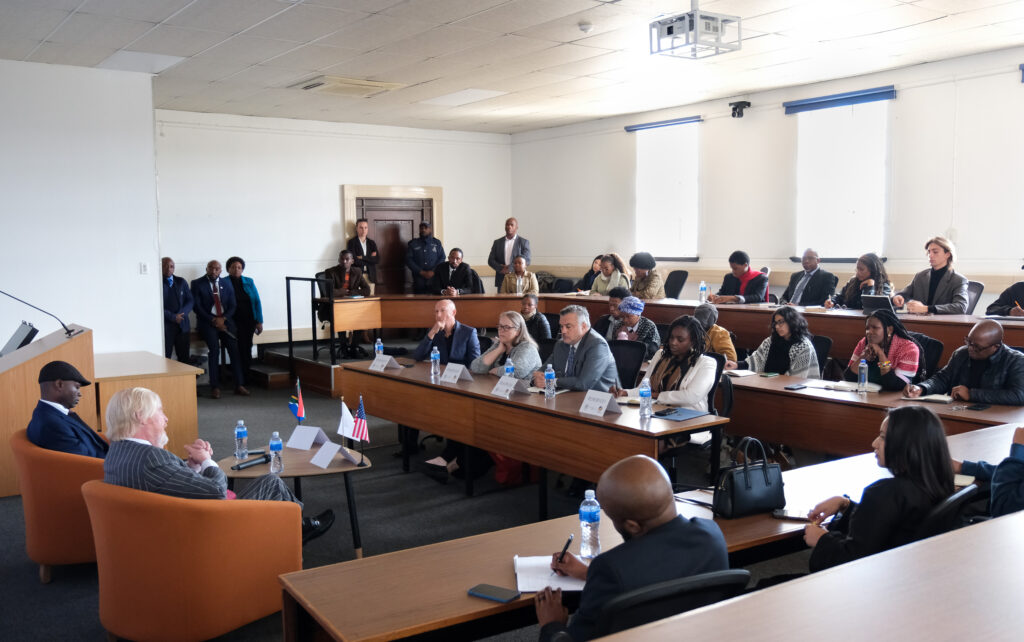
On Wednesday May 6, newly appointed US ambassador Leo Brent Bozell III addressed Wits University students in a closed session hosted by the Wits Association of International Relations (AIRS).
In his opening remarks, Bozell seemed intent on making amends for previous undiplomatic comments. He applauded South Africa’s potential for “tremendous opportunity” and highlighted the importance of stronger US-South African cooperation. “It’s all about partnership between our two countries,” he said.
One of his main areas of focus was on increasing US involvement within South Africa, underscoring a necessity within three specific areas, namely investment, crime and geostrategic alignment – all of which he claims can be redressed through closer relations.
Firstly, he argued that South Africa’s investment value is severely handicapped by B-BBEE policies, calling for alternative means of redressing social disparity in a way that remains profitable for investors. Secondly, he expressed concern over the country’s crime rates and proposed US-backed digital advancements. Lastly, he condemned South Africa for allegedly siding with the US’s adversaries, namely Iran, Russia and China: a decision that Bozell describes as “not non-aligned anymore.”
These requests are nothing new. Since March, Bozell has been adamant that South Africa shifts its allegiance in favour of US interests. However, this raises questions regarding potential infringements on national sovereignty – a principle that is highly protected under the US constitution, but conveniently disregarded when applied to South Africa.
Picture of the closed session in progress. Photo: Hannah Brown.
Additionally, Bozell’s insistence on fostering greater partnership between the two nations stands at odds with the US’s hostility towards South Africa. From claims of ‘white genocide’ to being barred from the upcoming G20 – the country has constantly come under fire from the US. Bozell’s eagerness to “find common ground” and “put our differences aside” is jarringly disconnected from political reality.
When questioned about the most recent G20 snub against South Africa, Bozell stood his ground, emphasizing the US’s commitment to its national interest. “There’s a prerogative that the United States has,” he says. “Any hosting country can decide who it wants and who it doesn’t want.” However, this reveals a glaring double standard: when the US exercises its autonomy in pursuit of state interests, it is rationalised as necessary, but when South Africa does the same, it is persecuted and punished.
Picture of students listening to the forum. Photo: Hannah Brown.
Lastly, despite the US’s overt insistence of South Africa’s “white genocide”, Bozell could not uphold this narrative with any conviction. When asked by Wits Vuvuzela if he encountered any genocidal violence on white people since entering the country, he stated that he had yet to visit the rural areas and could not confirm. “I have no comments,” he said.
Ultimately, Bozell’s visit seemed less about genuine partnership and more another frail attempt to realign the South African agenda to reflect the interests of the US: a move that not only sheds accountability of its prior offences against the nation but also aims to dismantle the very sovereignty it upholds so dearly.
FEATURE IMAGE: Picture of US ambassador Leo Brent Bozell III. Photo: Hannah Brown.
Street skate culture is alive and thriving in the heart of Jozi.
F City hosts a skate competition in Selby.
Young skaters flock to the event to show off their tricks.
Skate culture facilitates youth development and community building.
Picture of skater mid-trick. Photo: Jamie Ho.
Picture of skater mid-trick. Photo: Jamie Ho.
Picture of skater mid-trick. Photo: Jamie Ho.
Picture of skater mid-trick. Photo: Jamie Ho.
Picture of skater mid-trick. Photo: Jamie Ho.
Picture of skater mid-trick. Photo: Jamie Ho.
Picture of skater mid-trick. Photo: Jamie Ho.
On Saturday April 25, wheels were rolling and sneakers were skidding in Johannesburg’s inner-city as F City Market brought skateboarding to the streets of Selby.
The afternoon was filled with cheers as a group of young skaters from central Johannesburg crowded around a small wooden ramp, eager to showcase their skills. The prize: a brand new skateboard courtesy of Crispy Skateboards.
This was young Isheanesu Hove’s first day doing a double kickflip: a move which crowned him the winner of the competition. “Skating to me, it means life,” Hove says, proudly clutching his newly won board. “It inspires me.”
This event is one of many hosted by F City Market in collaboration with Crispy Skateboards to bring skating back to its roots. Joe Dludla and Rhandzi Rhay, two students who founded the movement, were spurred by the lack of skating events in Johannesburg.
With most events being larger-scale or enclosed in skate parks, Dludla and Rhay saw a need to create an alternative space on the streets of Braamfontein for the youth by the youth.
Street skating is central to what Dludla calls the “core culture of skateboarding,” an activity that isn’t limited to skate parks, but open on the streets and accessible to all. “It’s a very small niche scene, so we need to keep it alive,” he adds.
At its core, the space is dedicated to uplifting the youth and providing them with a platform to hone their skills. Each month, F City hosts a youth development mentorship programme in collaboration with Growing Alexandra Skate Club, which aims to cultivate growth and creativity among the youth of Jozi.
As this initiative is still relatively new, it is in desperate need of volunteers. Dludla and Rhay encourage anyone with a skillset to share their craft– from skateboarding to graffiti to music. “We’re trying to influence the next generation of kids,” Rhay says.
The event extends beyond just skating; it’s a culture rooted in creativity and artistic freedom. As co-founder of Crispy Skateboards, Kaelik Dullaart says, “It’s the music. It’s the aesthetic. It’s the attitude. It’s the community.”
Drawn together by a love for skating, the space has become more than just an event; it has become a family.
As the sun set, the kids departed as a group back to their homes in town; skateboards ablaze beneath their feet.
Picture of the young skateboarders on Webber Street. Photo: Jamie Ho.
FEATURED IMAGE: Picture of a skater suspended in the air mid-trick. Photo: Jamie Ho.
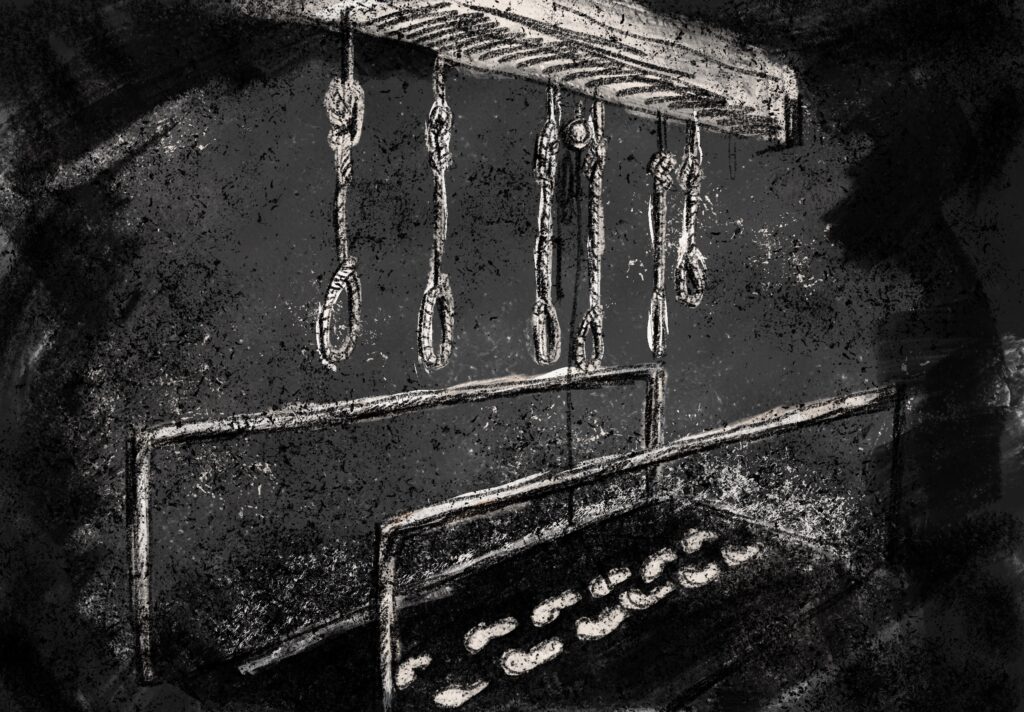
As soon as my foot crosses the threshold, I am sucked into the cold, bleak walls of the gallows. Looming before me are my 52 last steps. In a single file, we follow the warden.
49.
50.
51.
With each footfall, the weight in my heart grows heavier. It’s like trudging through water, with my feet being pulled down deeper and deeper. Steadily, we approach that dreaded chamber of death.
Like a constant buzz of electricity, the air is charged with the crackle of violence. Hanging from the ceiling are nooses, dangling like serpents twisting and curling their vicious tails.
We line up alongside the gallows, necks craned; eyes widened at these troubling ropes. At our feet: a wooden trapdoor which can be opened at the pull of a lever. This rickety platform is the only thing standing between life and death: the final step before the drop.
The clock is ticking. As the warden makes his way across the room, I feel my chest constrict as if the ropes have twisted around my heart. The air is now so thick; my tongue feels like lead and my neck prickles with sweat. Time’s almost up. His hand reaches for the lever.
As we all surround that limp trap door, nobody makes a sound. I can still feel it settling all around me: that cold, deafening silence. Even as we depart from the gallows, it clings to me long after.
Drawing of the gallows in Kgosi Mampuru II prison. By: Jamie Ho.
It has been 32 years since the end of Apartheid, a period where 3 500 people were sentenced to death by the state. In the modern age, it has become concerningly easy to shrug off these injustices as a thing of the past, a forgotten by-gone.
In the gallows of Kgosi Mampuru II prison, however, history is anything but gone. It echoes through the halls, up the stairs, around the hanging rope: a lively, tangible pain that sends a jolt through your bones. It sits heavy in the air: the agony of men marching solemnly to their deaths. That violence bleeds from that pocket of history. It lives in that prison.
The day we visited the gallows, I left with a newfound understanding of the past: that just because it has passed does not mean that it is gone.
The freedom that we have today came at a hefty cost; it was built from bloodied death chambers, scavenged from towers of corpses, hacked from beating hearts that were stuffed in boxes.
It is anything but the past; it is alive, and it weaves itself indefinitely into the fabric of the present, informing the very freedom we have today. It lingers in the triumph of being able to walk freely on an open street. It sits in the warmth and laughter of a community braai. It pumps through the veins of a liberated nation.
Before Solomon Mahlangu was executed he said, “Tell my people that I love them and that they must continue to fight; my blood will nourish the tree that will bear the fruits of freedom.”
As we observe Freedom Day, we must remember the thousands of lives the fruits of our freedom are staked on. We cannot let their memories die in vain. It is our one duty: to honour their sacrifice and let the past mean more than just the past.
FEATURED IMAGE: A portrait of Jamie Ho. Photo: Alaistair Russel
The Atlas of Uncertainty offers a profound perspective on African migration, redefining our understanding of belonging.
Atlas of Uncertainty opens at Wits Origins Centre.
Various artists, writers and researchers celebrated their work during the opening ceremony.
The exhibition holds significance in today’s divided society.
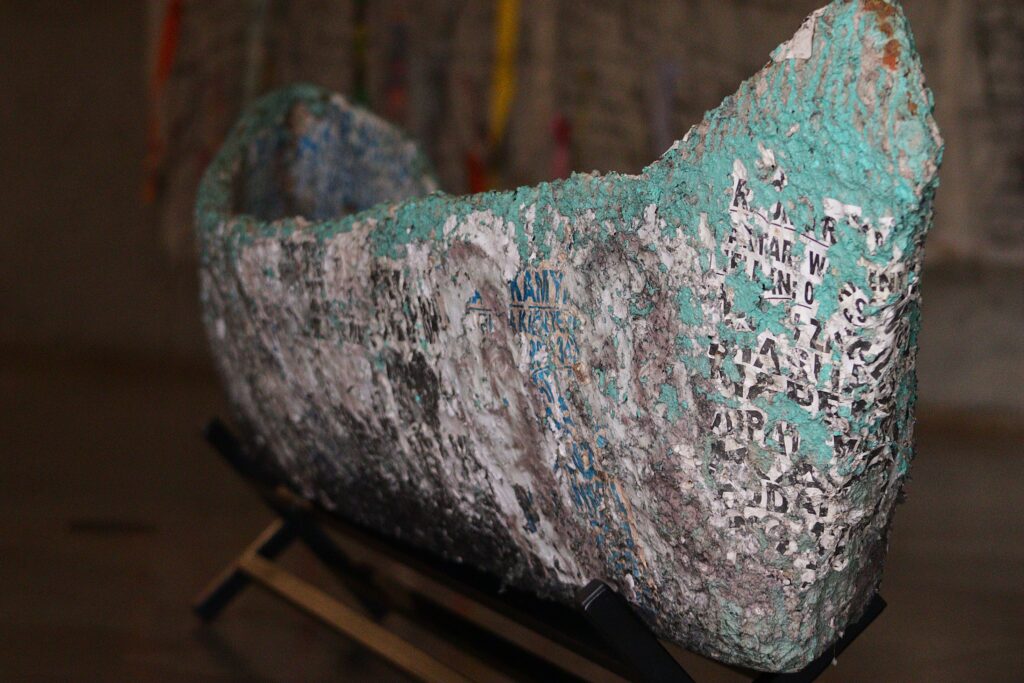
Picture of papier-mâché boat sculpture entitled ‘Mashuna and Hakuna nija’ by artist Onys Martin. Photo: Jamie Ho.
The Atlas of Uncertainty exhibition opened at the Wits Origins Centre on Saturday, April 18, inviting visitors to question the current agenda around migration, urbanisation and belonging in Africa.
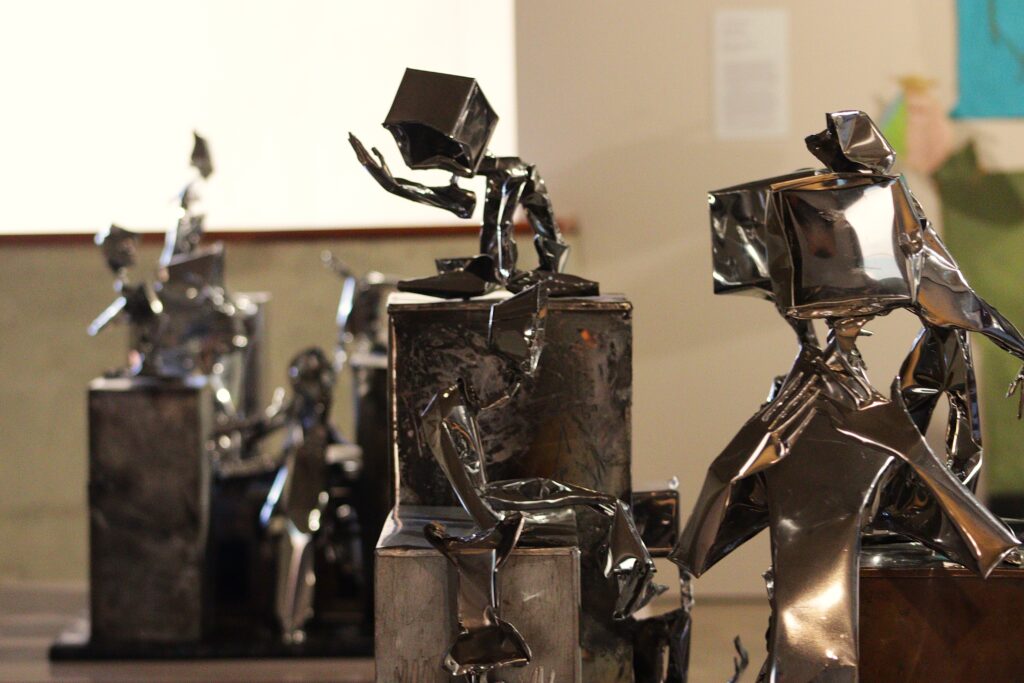
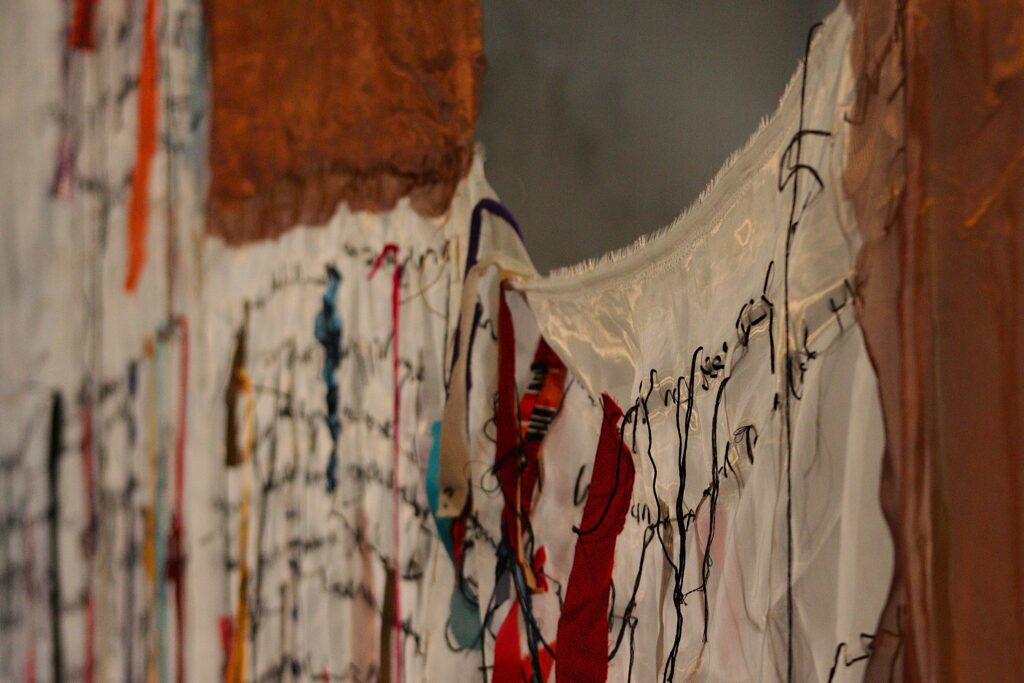
From a paper-mâché boat constructed from receipts to a woven tapestry stitched with burlap, the exhibition offers a more humanising lens for viewing the global phenomenon of mobility: not as burdensome, but as inherent to humanity.
Rooted in three African cities, Johannesburg, Accra, and Nairobi, the Atlas looks beyond the borders that divide us. Migration researcher Loren B. Landau highlights that the current scholarship neglects to capture the complexities of Africa, thereby revealing a need to move “from the counting to the feeling; from the census to the senses.”
To understand the vast complexities that define the continent, the Atlas is not only working across borders, but across different media, disciplines, platforms and ways of thinking. Urban sociologist Caroline Wanjiku Kihato explains that this “lets different ways of knowing sit alongside one another, without forcing them into a single voice.”
The Atlas of Uncertainty is a powerful revision of how we understand African cities. It uproots mainstream narratives surrounding migration, opening the space up for uncomfortable yet necessary conversations.
Spatial practitioner, Carina Kanbi provides some insight into the actual making of the project and how its themes of migratory politics were mirrored over the course of its conception.
Going all the way back to 2023, when the project first began, she notes challenges faced by the artists working across borders, not only in physically transporting the works, but also in handling bureaucratic restrictions between countries. “The exhibition did not begin this morning,” she explains. “It very much began in transit.”
And staying true to this theme of mobility, the Atlas will remain a piece of art that will remain in perpetual movement. While it is on exhibition until July 3 at the Origins Centre, it is also planned to showcase in Accra and Nairobi in 2027.
Each piece of the Atlas reverberates with the passion of its creators. Each tassel holds weight.
Each shard aches with feeling. As the cracks of division deepen in our world, the value of this exhibit lies not only in its ability to challenge the status quo, but in its ability to reach where data and statistics cannot, to reconnect with our ability to be human.
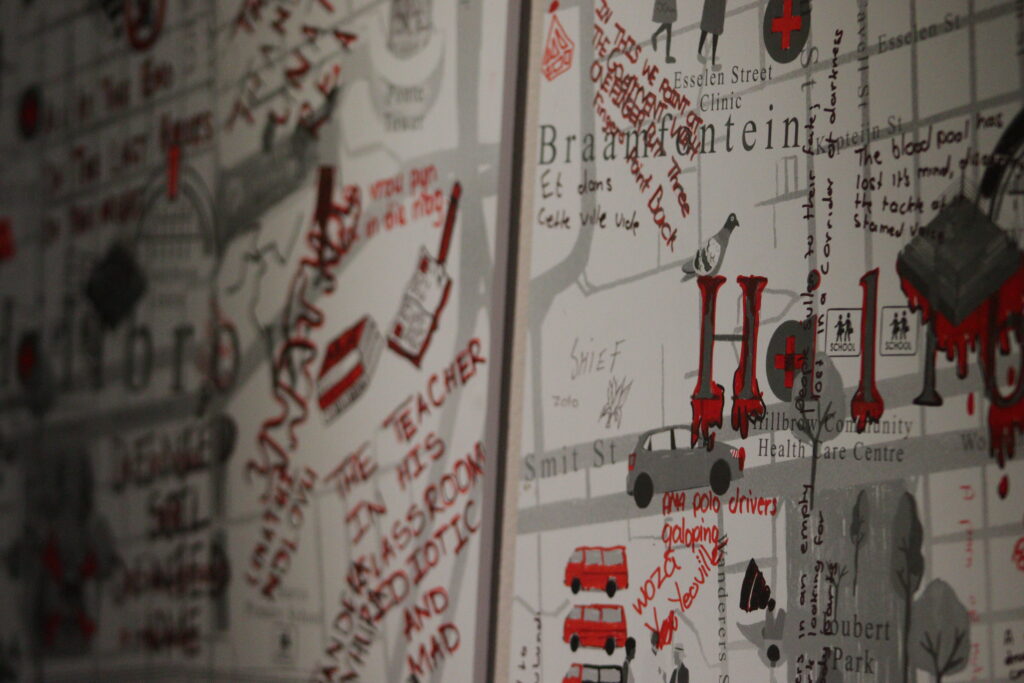
Close-up of artwork titled ‘I am the Graffiti on the Cracked Wall‘ by Windybrow Arts Centre. Photo: Jamie Ho.Picture of ‘Strangers and Spaces’ by Austine Adika. Photo: Jamie Ho.Close-up of ‘A Map of Dreams and Realities’ by Billie McTernan. Photo: Jamie Ho.
FEATURED IMAGE: Picture of artwork titled ‘When We Travel, Where Do We Settle?” by Wezile Harmans. Photo: Jamie Ho.
Joburg Theatre’s Tribute to Hugh Masekela unites and uplifts the community, revealing the enduring and powerful influence of his music.
Joburg Theatre hosts a 4-day concert to honour the legacy of Hugh Masekela.
A lineup of artists delivered heartfelt performances celebrating his music.
The community united to show their love for the cherished musician.
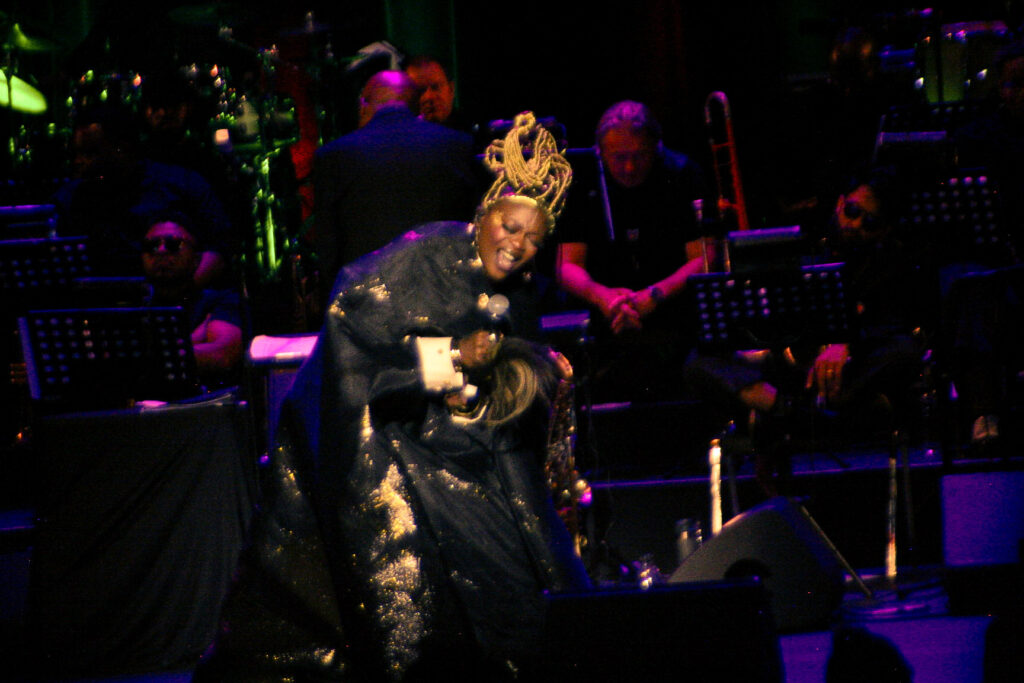
Picture of Zoe Modiga singing at Joburg Theatre on Friday evening. Photo: Jamie Ho.
The Joburg Theatre held a 4-day musical tribute to Hugh Masekela from Thursday April 9 to Sunday April 12, with performances from some of South Africa’s renowned jazz artists including Tresor, Baobab Sisters, iComplete, Vusi Mahlasela, Judith Sephuma, and Zoe Modiga – all to celebrate the legacy of a man affectionately known as Bra Hugh.
Wits Vuvuzela was thrust into the magic of the event on both Friday and Sunday evening. Pulsing through the stage was the rich lifeblood of Masekela’s music. It flowed through the vocals of the performing artists and poured into the crowd creating a tangible, powerful bond.
On both evenings, the theatre was alive not only with the sounds of his music, but with the liveliness of the crowd. People were dancing, throwing their arms in the air, spinning with loved ones. Every hip sway, every chuckle, every cheer: a testament to their love for Hugh.
No longer were we seated in an auditorium, but in a living breathing piece of history. Infected with rhythm, infused with soul, each song trembled with passion, sending ripples across the sea of luminescent faces.
Those that attended the concert were deeply moved by the power of its performances. One attendee, Oratile Morotolo summed it all up saying, “We were witnessing something we had no business witnessing. As though we were seeing something unseen. A transcendent catapult in time.”
Born in Emalahleni, near Johannesburg, Hugh’s passion for music started at an early age. He contributed massively to the struggle movement against Apartheid, with songs like Soweto Blues and Stimela. Most famously he is known for his protest-anthem Bring him Home (Nelson Mandela) demanding the release of Mandela from prison in 1987.
Not only is he a voice for freedom, but a voice for Africa. Every note of his music pays homage to what he describes to be “the wealth of African culture.”
He passed away on January 23, 2018, at 78 years of age. But his soul continues to live on, not only in his music, but in the people as well.
Even as the lights dimmed and the performers took their last bow, there remained something sacred in all of us that night: something that can never die, a heart that will go on beating.
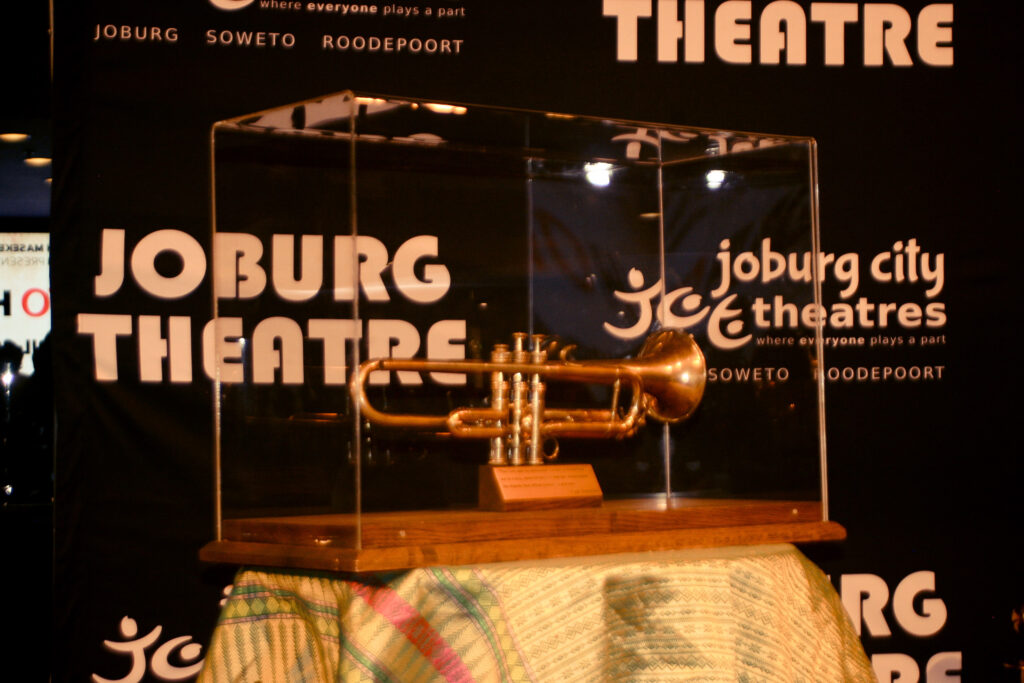
Picture of Hugh Masekela’s famous trumpet. Photo: Jamie Ho.
FEATURED IMAGE: Picture of the stage during the concert at Joburg Theatre. Photo: Jamie Ho
“A society that discourages critical thinking is unwittingly admitting that its foundations can’t survive honest examination.” – Kalen Dion
During my Undergraduate degree, I was assigned a group presentation on France’s foreign policy. It was a layered topic: one that required days of research and rigorous group meetings. One of my group mates, however, insisted on using ChatGPT to write her entire speech.
Unluckily for her, our professor happened to be an expert in French policy. Like a bloodhound, he sniffed out numerous inaccuracies in her speech. In front of the entire class, she had spewed flimsy words, inaccurate facts and false statistics from ChatGPT mindlessly. She presented the information as confidently as if she herself wrote it.
Ask anyone and they’ve probably used AI at least once. It’s so deeply entrenched in our everyday lives; it’s inescapable. When you write an email, an AI suggestion pops up recommending what to say. When you open Instagram, you’re bombarded with a surge of AI-generated reels. Even something as simple as a Google search has an automatic AI summary built in.
AI has burrowed itself so deeply into every channel of our lives that it has become difficult to imagine life without it. But is AI training us to be passive consumers of information?
A study by MIT Media Lab revealed that participants who had used AI to write their essays showed extremely low brain activity compared to those that didn’t. This was largely because they were not actively engaging with any of the material; they were simply parroting it. Ultimately, the tool that was built to supplement our thinking is, in many cases, actually replacing it.
This has dangerous repercussions for human development. If we blindly consume content generated by AI, what else will we be blind to?
In George Orwell’s infamous 1984, he depicts a totalitarian society in which independent thought is abolished under the dictatorship of Big Brother. At the time, it seemed like a fictional dystopia, a far-off tale too outrageous to be taken seriously. Now, it has bled into our reality.
It was Steve Biko who once said, “The greatest weapon in the hand of the oppressor is the mind of the oppressed.”
We must hold onto our vigilance. We must sharpen our minds. The world is undergoing a rapid digital shift. Our ability to think, to question what we know so that we are not mindless followers becomes our greatest and most potent weapon.
FEATURED IMAGE: Headshot of Jamie Ho, this week’s editor.
The oppressive regime of Israel echoes eerily with our own Apartheid history, calling for greater South African solidarity.
“When we choose indifference, we consent to someone else’s cruelty.”
― Lawrence Nault
Israel just passed a new law issuing the death penalty for Palestinian political prisoners, revealing a striking resemblance to South Africa’s Apartheid state.
The systemic erasure of the Palestinian people has been ongoing despite claims of a ‘ceasefire’ in October 2026. In fact, a total of 73, 000 deaths have resulted from Israeli attacks, according to a UN report.
Israel’s new death penalty doesn’t just highlight an institutional injustice but also signals an eerie repetition of history.
Hand-drawn animation of the freedom flotilla. By: Jamie Ho.
“For many years, South Africa had the doubtful honour of being a world leader in the number of judicial executions carried out,” says Deputy Minister Andries Nel. During the period from 1948 to 1994, the country, under the Apartheid regime, utilized the death penalty to suppress the political opposition of black activists.
Now the same thing is happening in Israel. The death penalty grants the Israeli state the legal authority to kill any Palestinian held in detention, many of whom have never been charged or received a fair trial. Under this mandate, systemic discrimination and genocidal violence will be a part of the Israeli constitution.
As South Africans, we are no stranger to oppressive regimes; it is a part of our history. And now history is repeating itself. We cannot be complicit.
As the fleet of over 100 boats from countries all over the world prepares to sail towards Gaza to break Israel’s siege on Palestine, the spirit of international solidarity rings clear.
The Global Sumud Flotilla is the biggest maritime mission set to disrupt Israel’s siege on Gaza with 3,000 activists sailing from 52 countries, South Africa included. The goal is to break Israel’s blockade, deliver life-saving aid and confront international complicity.
In the words of Dr Zaheera Soomar, a participant of the Flotilla, “Some moments in history demand more from us than comfort or safety. They demand conscience.”
Now more than ever, it is necessary to take a stance. Just because we are distant from the conflict doesn’t mean we can’t have an impact.
Donate to the Global Sumud Flotilla. Boycott pro-Israel organizations. Spread awareness by sharing the message. Don’t forget Palestine.
FEATURED IMAGE: Photo taken outside of the Wits School of Digital Arts depicting a graffiti mural of the word ‘Free’ in solidarity with Palestine. By: Jamie Ho.
In episode six of We Should Be Writing season 7, the team unpacked the evolution of music as a form of expression and protest, through four decades in the South African context. The episode explores the journey of South African music and its consumers from the 80s, 90s, early 2000s and contemporary listeners. From the […]