
‘Ha o sa tsebe mo o tswang teng, o kekebe watseba mo o yang teng’ is a popular proverb amongst Basotho which means ‘if you do not know where you come from, you will not know where you are going.’
- Wits Basotho Students Association (BASA) hosts a Kobo parade to showcase cultural pride.
- Basotho students address the misconceptions surrounding the Basotho culture.
- BASA aims to educate the Wits community about their traditions and customs.
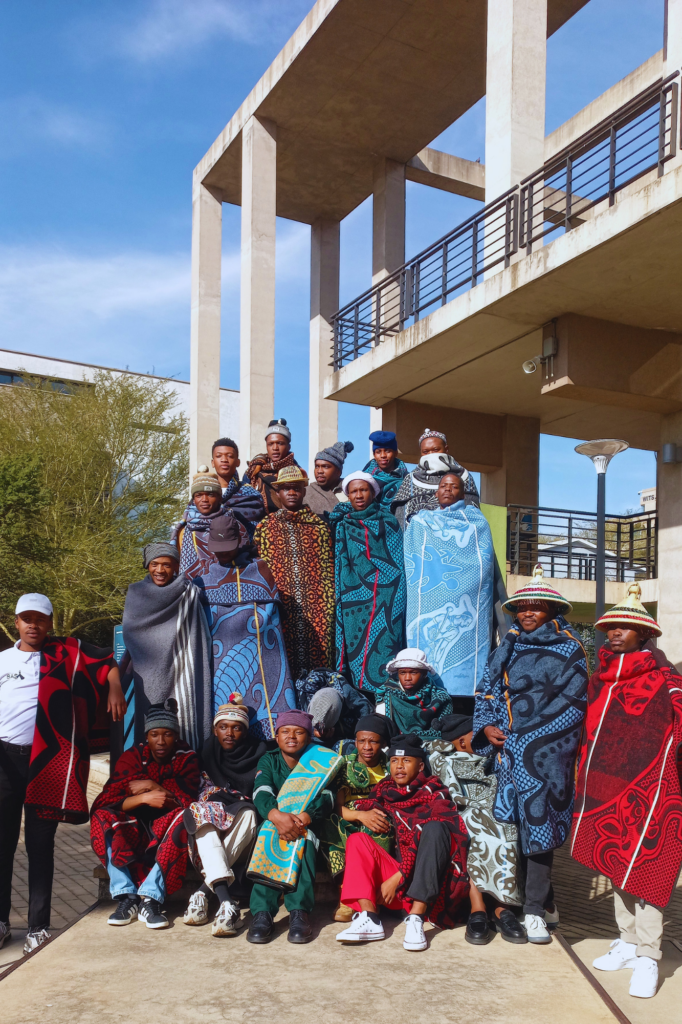
For Basotho youth, this proverb serves as a reminder that staying true to one’s roots and honouring the places and people who shaped them will guide their future endeavours. It is a compass that points toward their future. On July 20, 2026, Wits University Basotho Students Association members gathered outside the Matrix, dressed in colourful traditional blankets for the BASA Kobo parade, an event celebrating Basotho identity and pride.
While the mountainous country of Lesotho is home to many Basotho, some also hail from parts of South Africa. “Most people need to realise that our ancestors or our lineage may lead back to Lesotho because of our forefathers, but it doesn’t necessarily mean that we are all from Lesotho,” explained Kgoboso Mofokeng, a third-year Bachelor of Education student, originally from Matatiele in the Eastern Cape.
King Moshoeshoe the First was the foundational monarch of the Basotho Kingdom. Through his leadership and peacekeeping, he united the scattered Basotho clans, which existed independently before his reign. During the 1800s, when South African tribes such as Zulu, Xhosa, and Ndebele were experiencing a chain reaction (survival of the fittest) during the Shaka wars, some people fled to Lesotho, where Moshoeshoe welcomed them. Despite his efforts to unite different nations, misconceptions about Basotho still exist.
“The biggest misconception is that we’re all ‘zama zamas,’ or ‘illegal miners,’” said Michael Mokolokolo, BASA media officer. This stereotype is often fuelled by Afrophobia, sparking hostility from South African communities against illegal mining. It is also linked to Famo, a music genre whose associated groups are seen by some as violent, gang-like organisations. As a result, people hear the music and jump to conclusions.
For BASA, the parade was not only aimed at showcasing the beauty of Basotho blankets, but an invitation and a call to celebrate diversity.
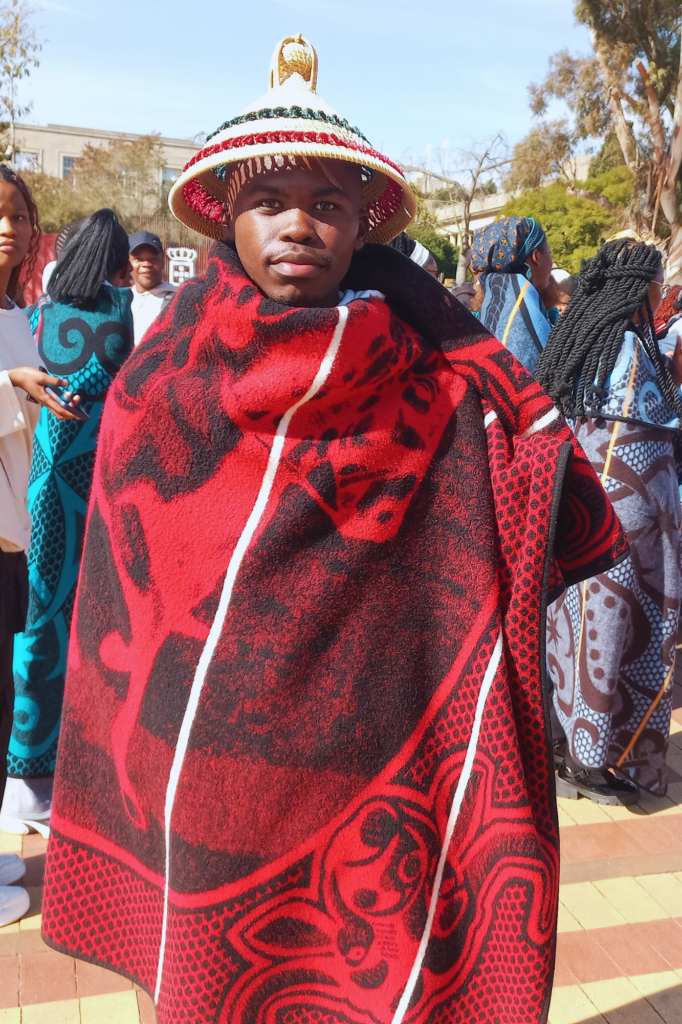
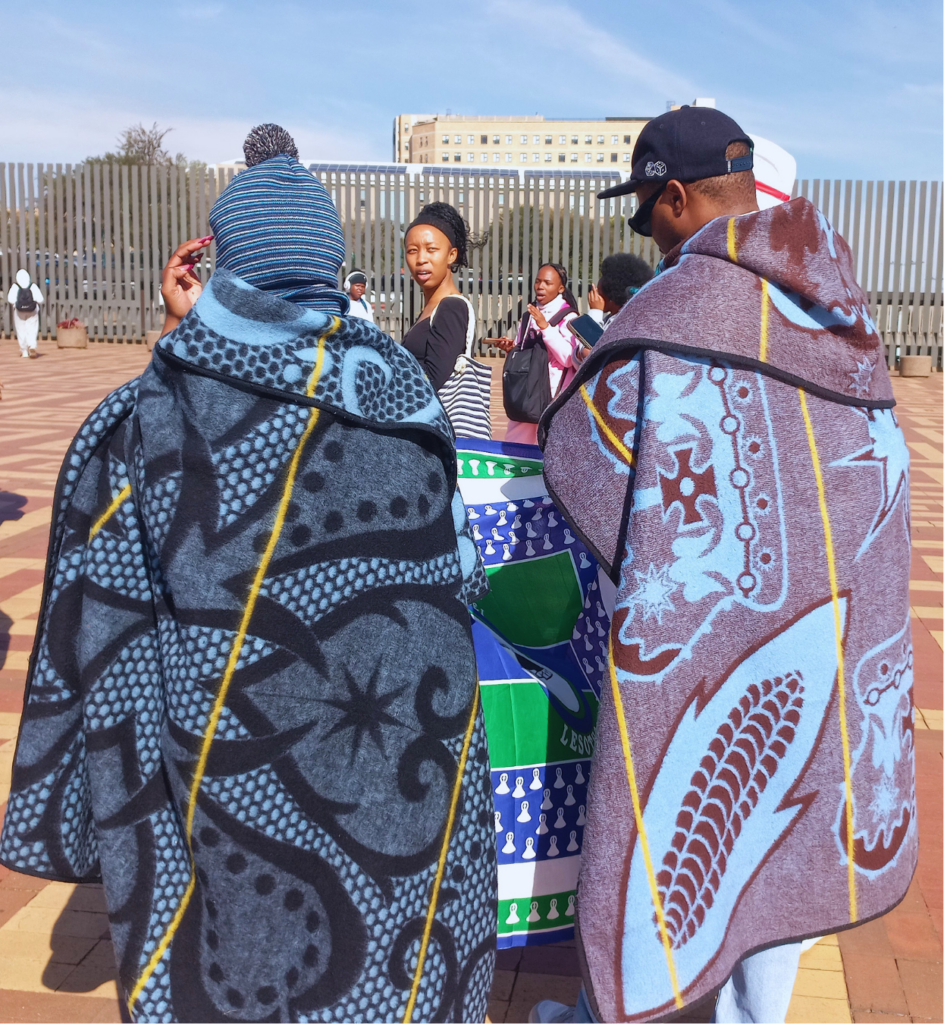
Sesotho blankets are made on large looms where yarn as thick as sheep’s wool is tightly- spun, sun-dried, then heat-pressed, allowing intricate patterns to take shape. The weight of these blankets is enough to protect their wearer from the cold, but they remain soft to the touch. The detailing is where the meaning lies; every pattern, colour, and border tells a story. “Our blankets are deeply symbolic; they represent identity, status and history”, Michael said.
The Seanamarena blanket patterns are a combination of the honeycomb and poone corncob, which symbolise wealth, kingship, and prestige. It is often mistaken for a graduation gown. This mix-up comes from a popular song lyric: ‘Ntate nthekele Seanamarena kobo ya thuto’ which translates to ‘Father, buy me a Seanamarena for completing my studies’. The original lyrics are ‘Ntate nthekele Seanamarena kobo ya bohadi’ — a bride asking her father to buy her this prestigious blanket as part of her bridal wealth, making it a wedding song instead of a graduation one. As Kgoboso explains: “They need to understand that Seanamarena means to ‘swear by the kings.’ It’s not a graduation gown.”
Sesotho blankets are earned; they are gifted during milestones and life-changing ceremonies in a person’s life. Basotho believe that with them comes responsibility and ancestral protection.
BASA’s goal is to keep people educated about Basotho and their customs and encourage diversity; “The message is to appreciate the beauty of diverse cultures within our country and the world at large,” Michael said. They also aim to support young Basotho students in finding their footing within the university; “Meeting up with them regularly has had a huge impact on me; it keeps me grounded and reminds me of who I am as a Mosotho, even in a big, diverse city like Johannesburg,” Michael added.
The Basotho culture is rich in storytelling, customs, traditions, attire and music. BASA and the Basotho campus community walked from East to West campus to showcase the beauty of their blankets to the wider Wits community while they sang traditional songs accompanied by traditional dances. “We also want people to understand that we are one. That’s why we welcomed non-Basotho to join the parade, because culture is not about division; it’s about unity and sharing,” Michael explained.
For BASA, this day was about celebrating who they are as Basotho, and so they chose the first day of semester two to remind themselves of who they are and where they come from. “If other tribes can celebrate themselves proudly, why shouldn’t we?,” asked Michael. “Our language, our blankets, our music – it’s all something to be proud of. We should wear our identity with confidence.”
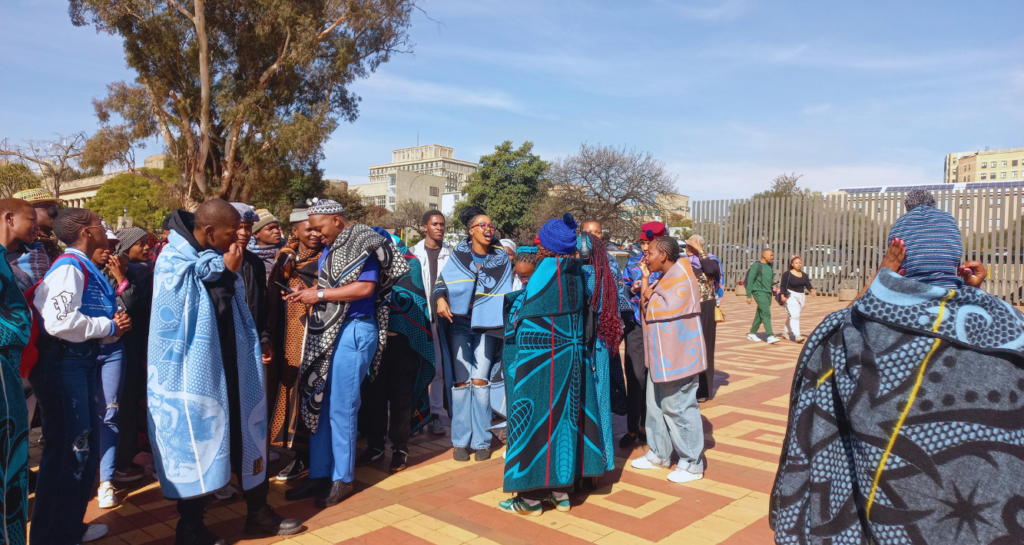
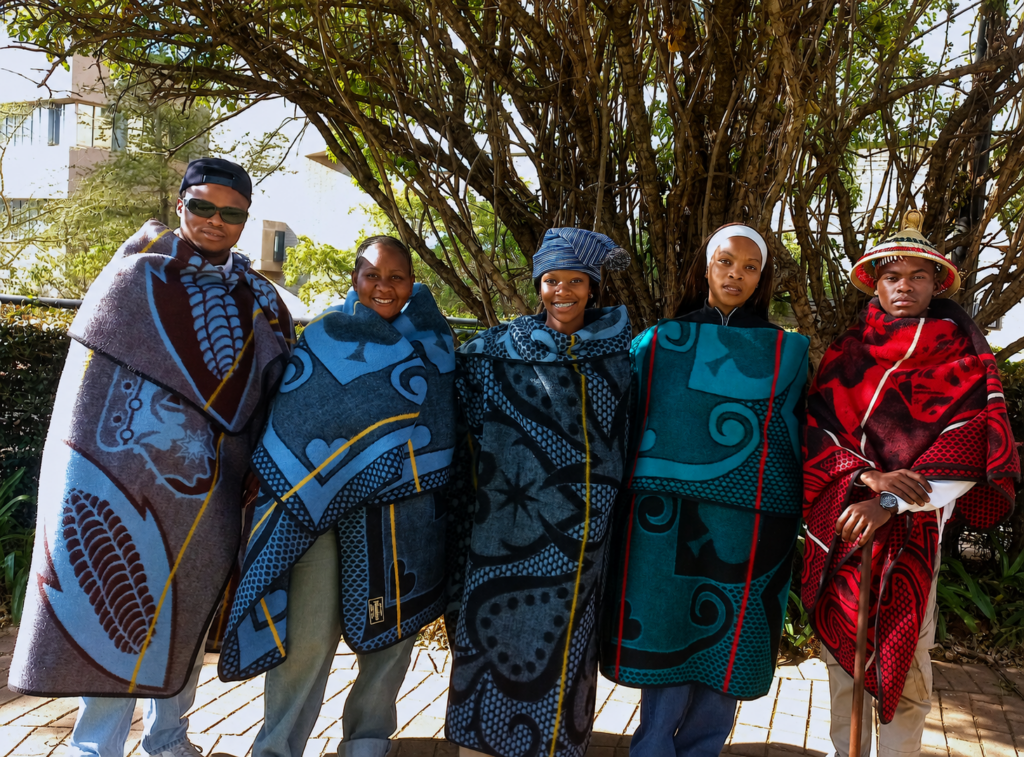
FEATURED IMAGE: BASA members gathered, deciding on their next song. Photo by: Naledi Maraisane
RELATED STORIES:
- Wits Vuvuzela, Pontso ya difaha e fihlile Wits Art Museum, Aug 14, 2015
- Wits Vuvuzela, Home away from home on the Avenue of Africa, Nov 12, 2019

