Wits Fine Arts students Camryn Jessie and Abdullah Saloojee presented their collaborative exhibition at The Point of Order.
The theme was inspired by Abdullah’s poem Citrus Soup.
Through installation, painting, and found objects, the duo leaves meaning open, hoping curiosity outweighs fear.
From August 27 to 28, 2026, fourth-year Wits Fine Arts students Camryn Jessie and Abdullah Saloojee presented a collaborative exhibition at The Point of Order in Braamfontein: There’s a Bug in This Citrus Soup.
The theme was inspired by a poem Abdullah wrote and shared with Camryn. It reads in part: “My conscience tends the sacred wound, my soup now cold from the ashes. The citrus leaks through my soul; When the water drys up, where do I go?”
An artwork by Abdullah Saloojee titled: Ant/One is many. Photo by: Naledi Maraisane
After weeks of analysing it, Camryn said she found a deep sense of want and disappointment in the piece, which became the anchor for the exhibition. The citrus, the artists said, speaks to intense tension and a state of limbo. The bug itself is left open to interpretation; it can be an insect, a stomach bug, or a technical bug. Essentially, the bug is meant to symbolise disturbance and discomfort.
That disturbance shows in how differently they work. Camryn’s artworks are installation-based. Her paintings act as a base, then she builds around them with tangible materials that give them life. Abdullah’s work is orientalist, an art form which blends realism and fantasy. Yet their pieces have blended so well that people cannot tell which piece belongs to whom. “Another thing that visually combines our work is our fascination with found objects,” Abdullah said. Those objects have been integrated into several artworks.
Abdullah wants his work to evoke sadness, but as a journey toward rediscovered hope. Camryn, in contrast, hopes her pieces “keep them on the verge, whilst still being curious but weird at the same time,” while evoking disgust and discomfort.
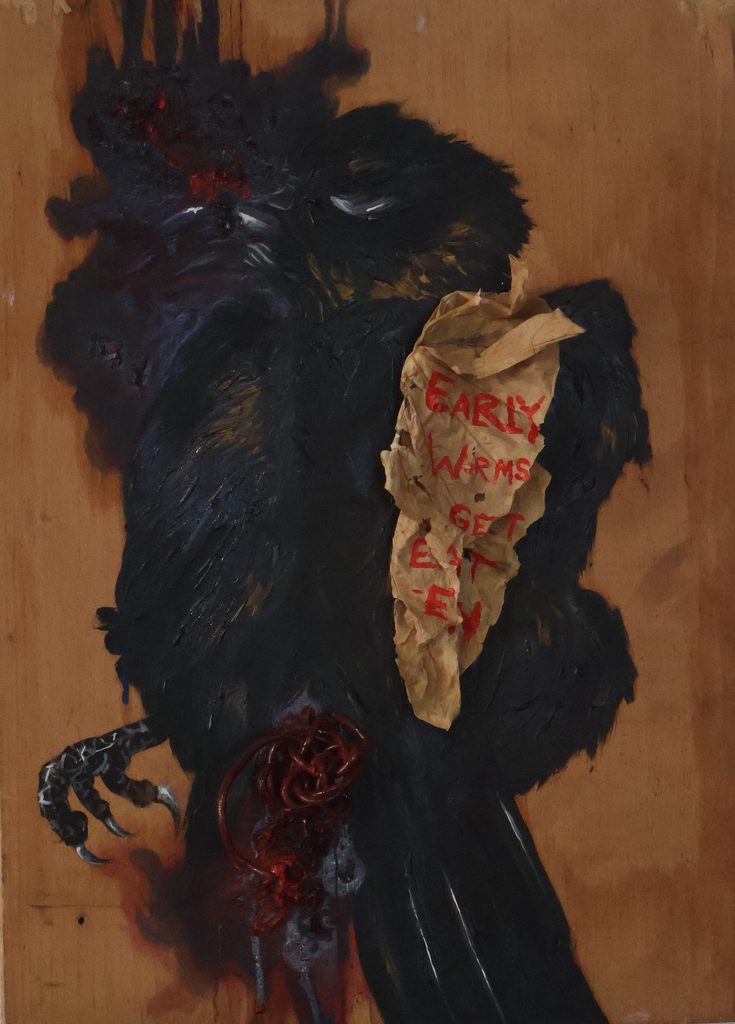
An artwork by Camryn Jessie titled: Early worms get eaten. Photo by: Naledi Maraisane
Both have intentionally stopped doing things the ‘traditional’ way within Johannesburg’s contemporary art landscape: “We disrupt the space in subtle ways by keeping things natural, because you don’t have to do things in a certain way,” they said. Their goal is to get people interested without feeling stupid for not understanding. “The bug is something you don’t fully understand, but it ignites a curiosity,” Abdullah said. “Even though there is something strange and unknown, and that you are a bit scared, we hope that the curiosity outweighs that fear,” Camryn added.
In the end, the metaphorical bug can be feared and embraced. The journey gives space to acknowledge and learn to live with its uncertainties, discomforts, and weirdness.
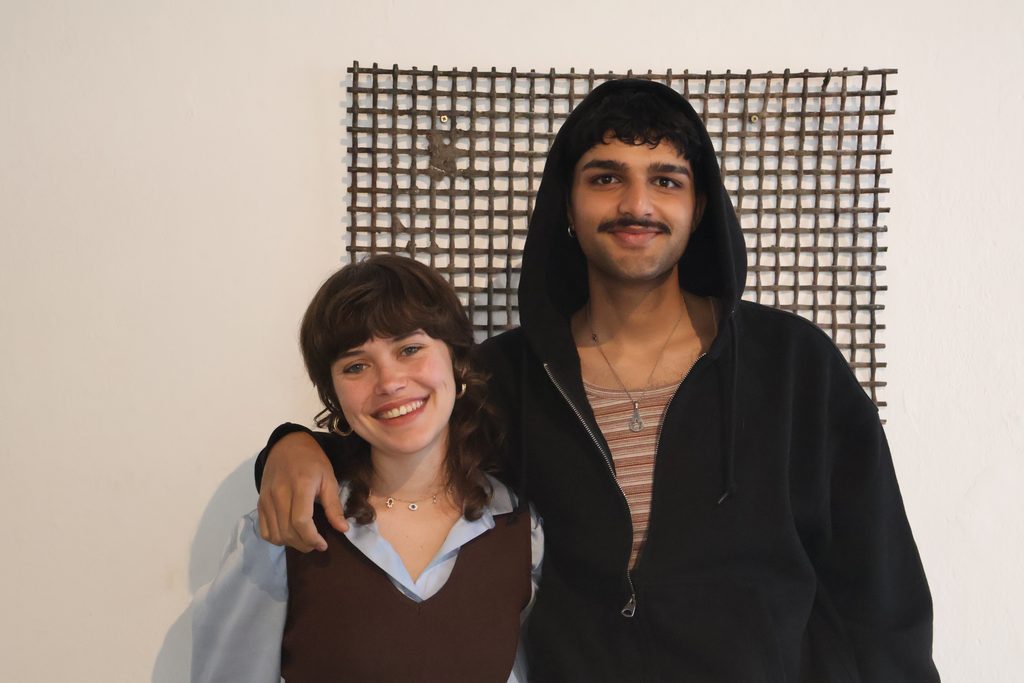
Camryn Jessie and Abdullah Saloojee posing for a picture in front of their found object titled: The Window. Photo by: Naledi Maraisane
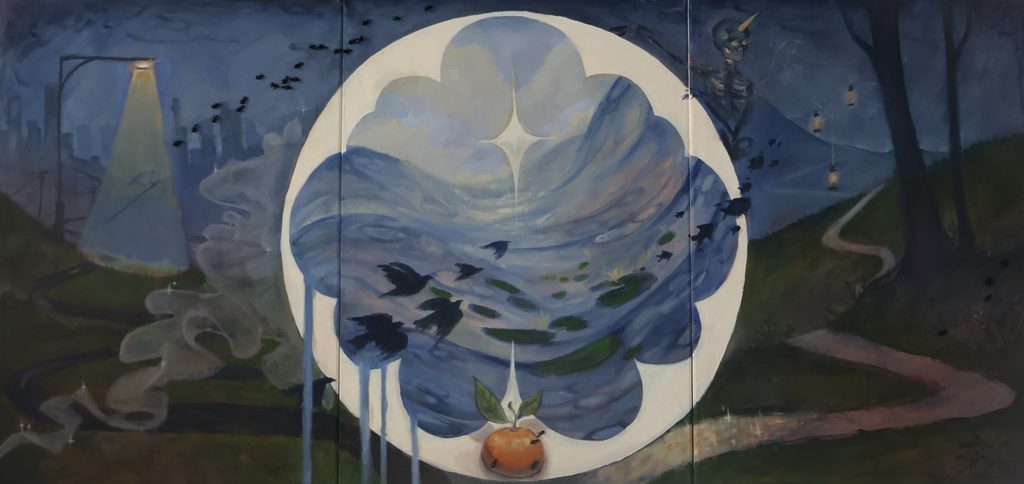
FEATURED IMAGE: An installation by Camryn Jessie titled: Life leaks/life enters. Photo by: Naledi Maraisane
Inside the Dome, African tales are revived and retold anew.
Wits launches its annual Digital Dome Festival to retell African oral stories through Virtual Reality, dome animation and projections.
Fourth-year digital arts and animation students showcased their film projects.
The Dome takes African stories to the world while creating employment opportunities for students.
“You are already in the future. Others will arrive,” said Professor René Smith, Head of the Wits School of Arts, during the opening of the Digital Dome Festival, pointing to the transformative power of immersive media.
Wits University hosted its Digital Dome Festival between August 21 and 22, 2026 in collaboration with the Wits School of Arts (Digital Arts Division), the Naval Hill Planetarium, the University of the Free State, and cultural institutions including Electric South and the French Institute of South Africa (IFAS).
This year’s theme, Stories Spoken, Stories Seen, was inspired by diverse African oral storytelling traditions passed down through generations. African folktales were retold through immersive digital technologies like dome animations, VR experiences and projections. The theme and festival demonstrate that “Africa can shape the future of immersive media,” said Professor Lynn Morris, Deputy Vice-Chancellor of Research and Innovation at Wits.
Student screenings formed a central part of the programme.
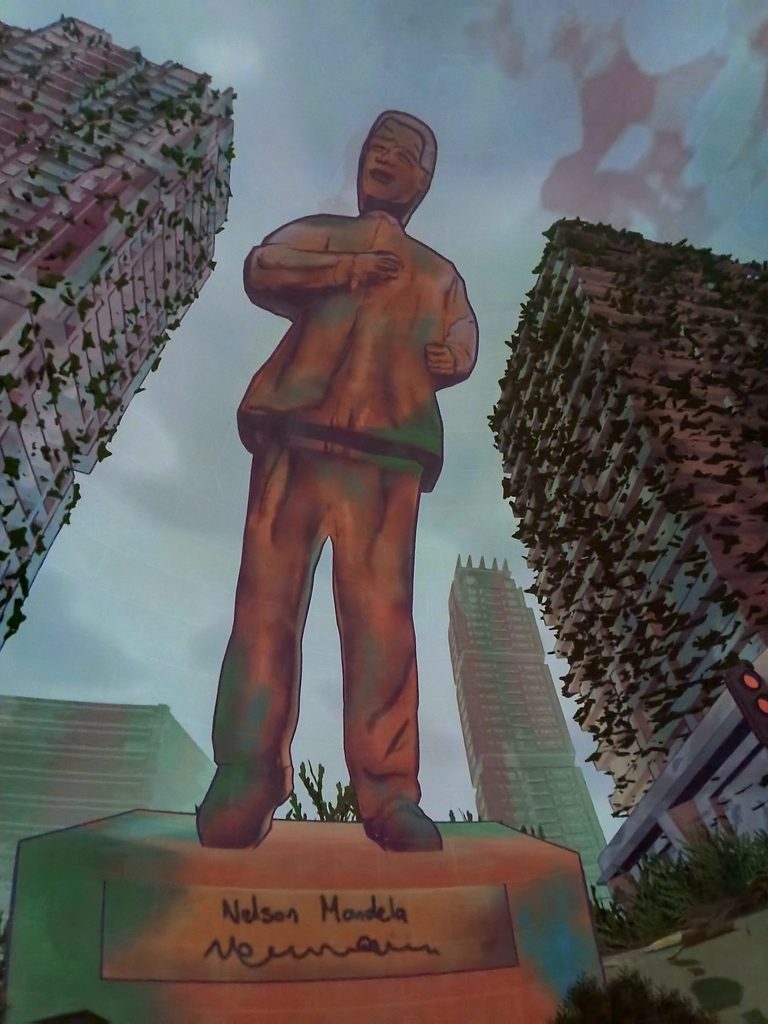
An animated statue of Nelson Mandela from the Wall-E film. Photo by: Naledi Maraisane
The Nanabolele projection stood out. The two-minute film, based on a Sesotho mythological interpretation, follows Princess Thakane, blessed by her grandmother to hunt the Nanabolele — a water-dwelling, dragon-like creature that glows in the dark and travels hidden inside clouds or red smoke. She seeks its glowing hide to make gifts for her brothers returning from initiation.
“We wanted a story that could speak to a large amount of people. We started looking at African mythology and folktales,” said Tlhalefo Boshielo, a fourth-year Digital Arts student in animation and projection mapping. The Nanabolele VR experience placed viewers inside a non-physical world, bringing imagination to life through immersive technology.
On what inspired this year’s theme, Sasha Wessels, Digital Arts lecturer and organiser, said that in high school she was not allowed to learn about African languages or traditions, which felt like a robbery. “I left high school angry. I feel unknowledgeable about the country that I live in.”
Projects can be rented to other global domes for profit, creating employment opportunities for students. For this reason, Wessels does not allow students to use Artificial Intelligence (AI). “The issue with AI is that the moment you implement it, you can’t sell it.” However, she acknowledges AI as a useful tool in an industry long gatekept by the West.
Through immersive technologies, students are archiving, professionalising and making African oral traditions, history and storytelling exportable.
FEATURED IMAGE: Students experiencing VR technology for the first time. Photo by: Naledi Maraisane
A mere Women’s Month special ‘pat on the back’ does not do justice to the contributions women make to South African sport. It is high time we call a spade a spade.
Every August for Women’s Month, a familiar and performative tradition unfolds across South Africa. Corporate brands flood their social media with daring graphics celebrating iMbokodo and sporting authorities release sleek press statements praising the ‘unshakable resilience’ of our female athletes; an obviously calculated, annual performance intended to score cheap public relations points on the backs of women who spend the other eleven months of the year fighting for proper recognition, infrastructure and financial support.
This hypocrisy deserves to be exposed. Resilience should be celebrated as a personal triumph, not weaponised as a convenient excuse for corporate and systemic neglect.
The 2026 Commonwealth Games, a multi-sport event hosted in Glasgow, Scotland, began on 23 July until August 2, 2026. A total of 112 athletes represented Team South Africa, 53 of whom were female athletes, accounting for more than half of the team. Of the 28 medals won, 11 medals, plus 1 shared medal in a mixed event, came from our sportswomen.
On August 1, the Minister of Sport, Arts and Culture, Gayton McKenzie, congratulated Team South Africa on its brilliant performance: “This team went to Glasgow and did us proud.” Post the congratulatory speech, the obvious reality remains unchanged.
These victories were achieved despite the unequal system, considering what our women had to overcome simply to stand on those stages.
After multiple health setbacks, Lara van Niekerk refused to allow hardships to further dictate her success. After successfully defending her women’s 50m breaststroke title in 30.43 seconds, she stated that this victory “means more than the one four years ago because of the difficulties I’ve had to overcome.” Behind her stood a sisterhood of excellence. Aimee Canny won two silver and bronze medals; Erin Gallagher won a silver and three bronze medals; Kaylene Corbett came in with a silver medal and Olivia Nel with a bronze medal. Javelin star Jo-Ané du Plessis, despite having undergone an emergency back surgery for a herniated disc, finished in sixth place.
But why must our sportswomen constantly play the martyr?
Sporting organisations and commercial sponsors thrive on the narrative of resilient women who continuously ‘overcome the odds.’ It makes for a heartwarming marketing campaign, while conveniently skipping over why these odds exist in the first place. Jo-Ané du Plessis was praised for her recovery, but her injury exposes how fragile an athlete’s support system can be. While she received professional medical assistance, the system at large remains broken.
Truthfully, hashtags, shout-outs and branded campaigns during women’s month are not empowering. Financial backing that equals that of sportsmen is.
The South African sports authorities need to put money where their mouth is and start funding our sportswomen like the champions they are. Romanticising the struggles of our athletes to mask administrative incompetence and putting up patronising Women’s Month banners is just not going to cut it anymore.
FEATURED IMAGE: A graphic of South African sportswomen. Graphic by: Naledi Maraisane
‘Ha o sa tsebe mo o tswang teng, o kekebe watseba mo o yang teng’ is a popular proverb amongst Basotho which means ‘if you do not know where you come from, you will not know where you are going.’
Wits Basotho Students Association (BASA) hosts a Kobo parade to showcase cultural pride.
Basotho students address the misconceptions surrounding the Basotho culture.
BASA aims to educate the Wits community about their traditions and customs.
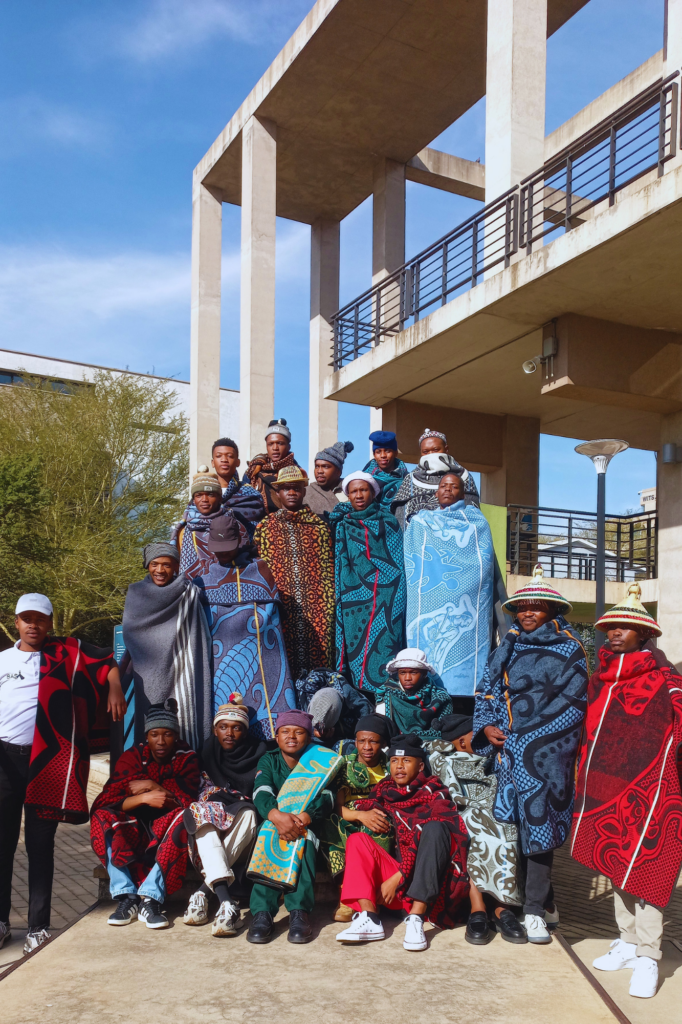
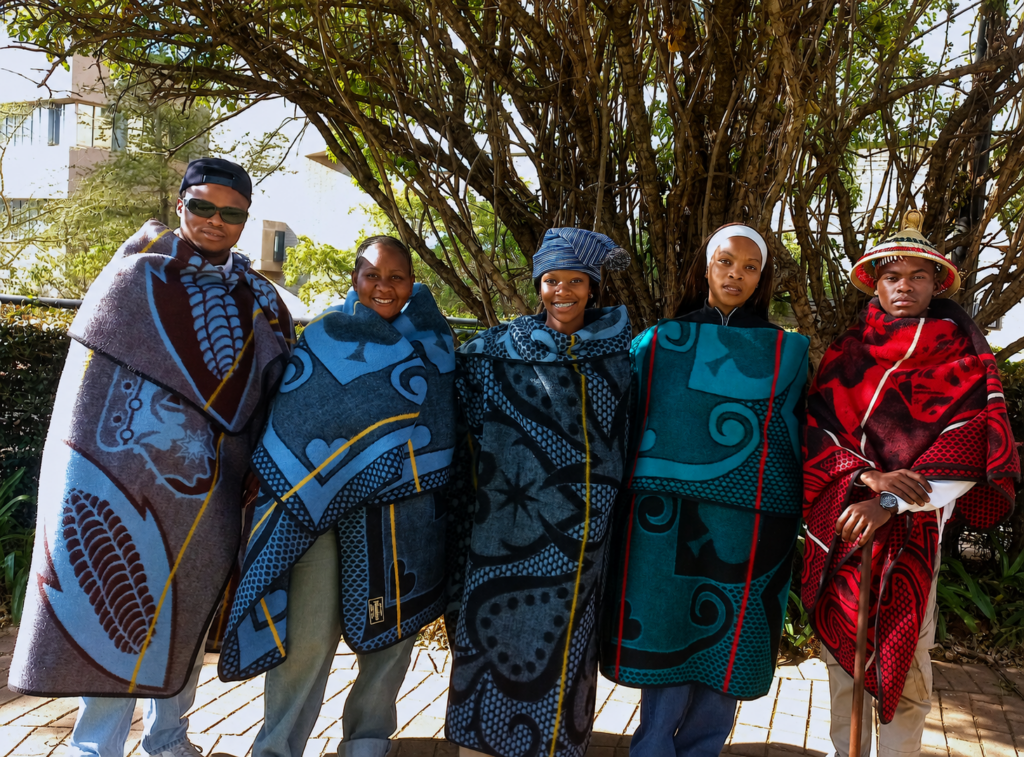
For Basotho youth, this proverb serves as a reminder that staying true to one’s roots and honouring the places and people who shaped them will guide their future endeavours. It is a compass that points toward their future. On July 20, 2026, Wits University Basotho Students Association members gathered outside the Matrix, dressed in colourful traditional blankets for the BASA Kobo parade, an event celebrating Basotho identity and pride.
While the mountainous country of Lesotho is home to many Basotho, some also hail from parts of South Africa. “Most people need to realise that our ancestors or our lineage may lead back to Lesotho because of our forefathers, but it doesn’t necessarily mean that we are all from Lesotho,” explained Kgoboso Mofokeng, a third-year Bachelor of Education student, originally from Matatiele in the Eastern Cape.
King Moshoeshoe the First was the foundational monarch of the Basotho Kingdom. Through his leadership and peacekeeping, he united the scattered Basotho clans, which existed independently before his reign. During the 1800s, when South African tribes such as Zulu, Xhosa, and Ndebele were experiencing a chain reaction (survival of the fittest) during the Shaka wars, some people fled to Lesotho, where Moshoeshoe welcomed them. Despite his efforts to unite different nations, misconceptions about Basotho still exist.
“The biggest misconception is that we’re all ‘zama zamas,’ or ‘illegal miners,’” said Michael Mokolokolo, BASA media officer. This stereotype is often fuelled by Afrophobia, sparking hostility from South African communities against illegal mining. It is also linked to Famo, a music genre whose associated groups are seen by some as violent, gang-like organisations. As a result, people hear the music and jump to conclusions.
For BASA, the parade was not only aimed at showcasing the beauty of Basotho blankets, but an invitation and a call to celebrate diversity.
Sesotho blankets are made on large looms where yarn as thick as sheep’s wool is tightly-spun, sun-dried, then heat-pressed, allowing intricate patterns to take shape. The weight of these blankets is enough to protect their wearer from the cold, but they remain soft to the touch. The detailing is where the meaning lies; every pattern, colour, and border tells a story. “Our blankets are deeply symbolic; they represent identity, status and history”, Michael said.
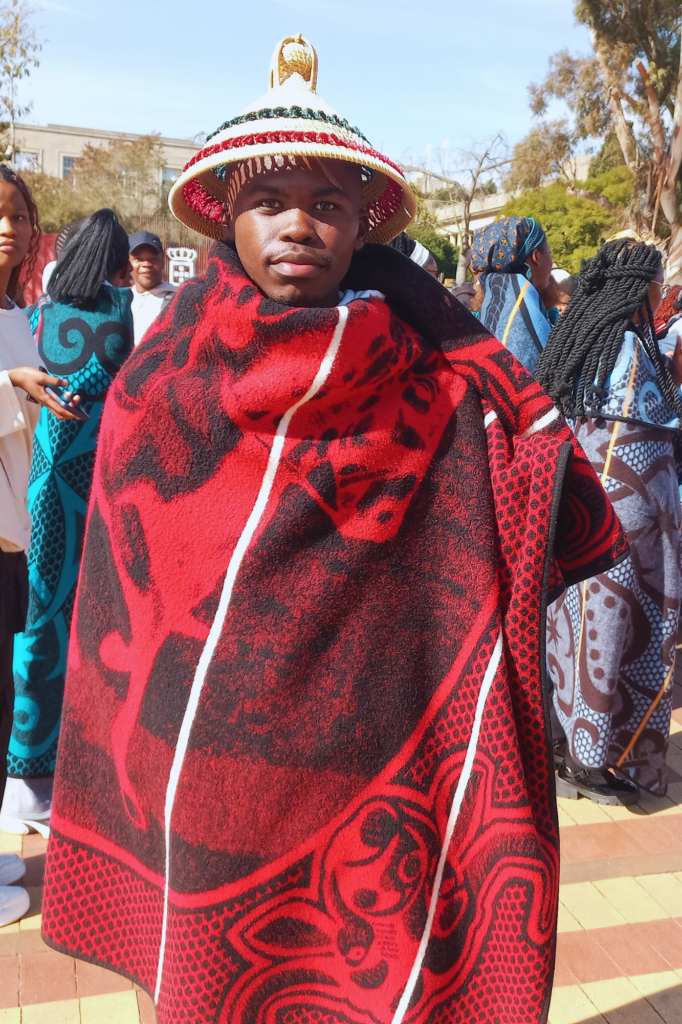
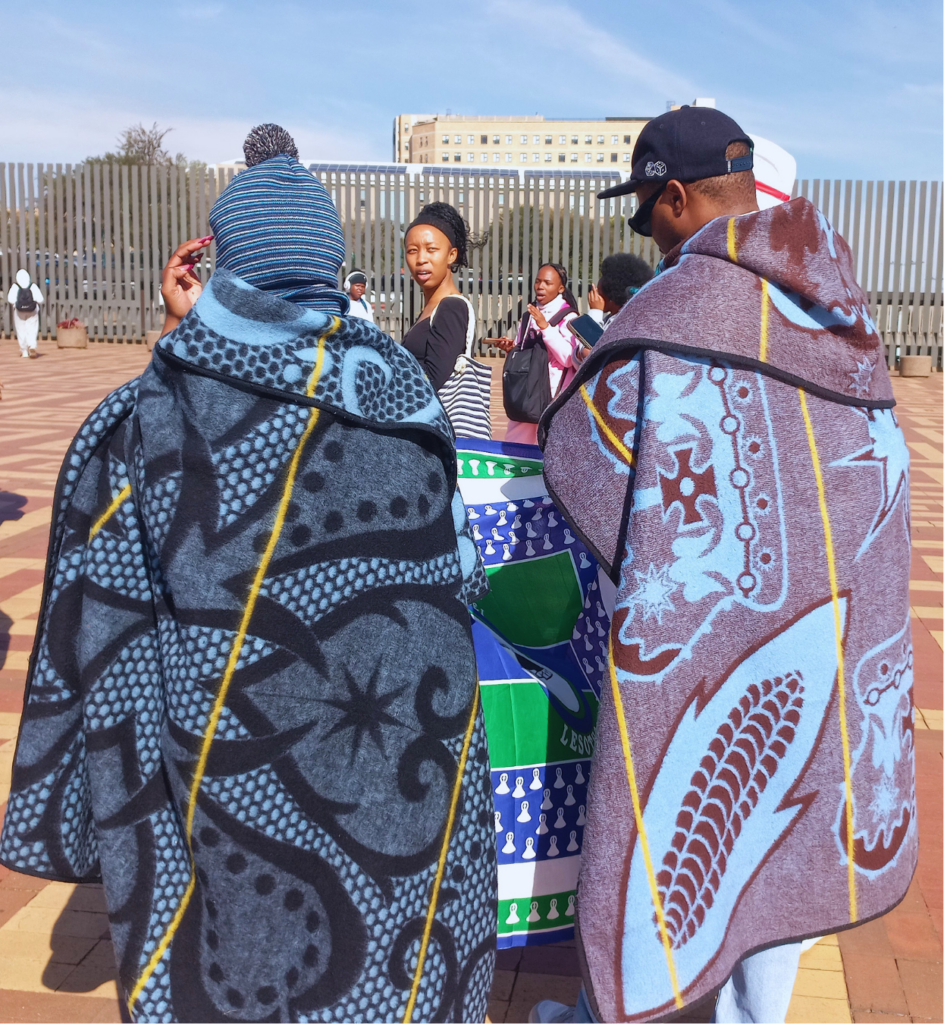
The Seanamarenablanket patterns are a combination of the honeycomb and poone corncob, which symbolise wealth, kingship, and prestige. It is often mistaken for a graduation gown. This mix-up comes from a popular song lyric: ‘Ntate nthekele Seanamarena kobo ya thuto’ which translates to ‘Father, buy me a Seanamarena for completing my studies’. The original lyrics are ‘Ntate nthekele Seanamarena kobo ya bohadi’ — a bride asking her father to buy her this prestigious blanket as part of her bridal wealth, making it a wedding song instead of a graduation one. As Kgoboso explains: “They need to understand that Seanamarena means to ‘swear by the kings.’ It’s not a graduation gown.”
Sesotho blankets are earned; they are gifted during milestones and life-changing ceremonies in a person’s life. Basotho believe that with them comes responsibility and ancestral protection.
BASA’s goal is to keep people educated about Basotho and their customs and encourage diversity; “The message is to appreciate the beauty of diverse cultures within our country and the world at large,” Michael said. They also aim to support young Basotho students in finding their footing within the university; “Meeting up with them regularly has had a huge impact on me; it keeps me grounded and reminds me of who I am as a Mosotho, even in a big, diverse city like Johannesburg,” Michael added.
The Basotho culture is rich in storytelling, customs, traditions, attire and music. BASA and the Basotho campus community walked from East to West campus to showcase the beauty of their blankets to the wider Wits community while they sang traditional songs accompanied by traditional dances. “We also want people to understand that we are one. That’s why we welcomed non-Basotho to join the parade, because culture is not about division; it’s about unity and sharing,” Michael explained.
For BASA, this day was about celebrating who they are as Basotho, and so they chose the first day of semester two to remind themselves of who they are and where they come from. “If other tribes can celebrate themselves proudly, why shouldn’t we?,” asked Michael. “Our language, our blankets, our music – it’s all something to be proud of. We should wear our identity with confidence.”
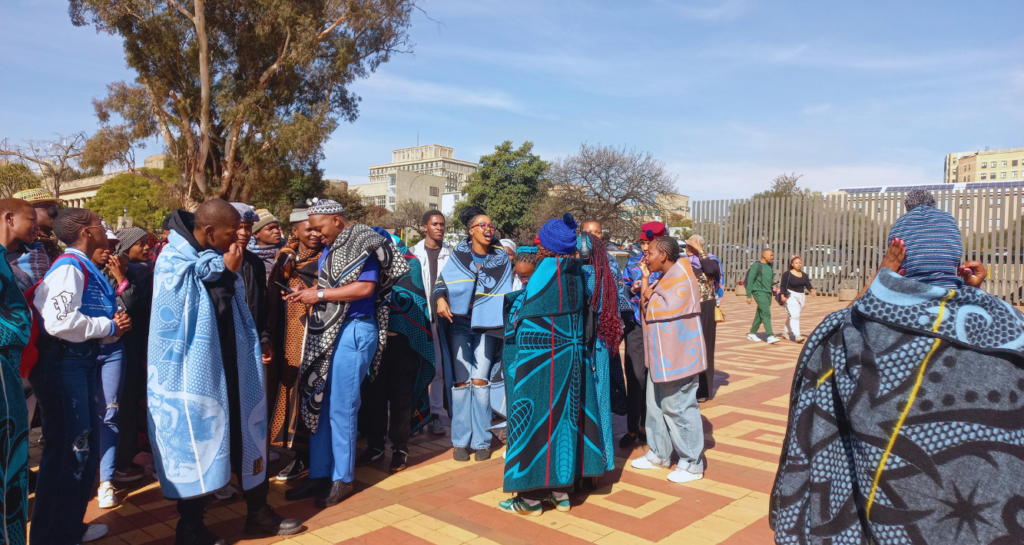
A group of BASA men posing for the camera, adorned in their various blankets. Photo by: Naledi MaraisaneBASA Chairperson, Boikarabelo Mtshiswa, wearing his Basotho blanket. Photo by: Naledi MaraisaneTwo BASA members showing off their Seanamarena blankets in different patterns. Photo by: Naledi MaraisaneBASA ladies breaking into a song while the men decide whether or not to join in. Photo by: Naledi MaraisaneBASA committee members. Photo by: Naledi Maraisane
FEATURED IMAGE: BASA members gathered, deciding on their next song. Photo by: Naledi Maraisane
A true story of murder and the miscarriage of justice.
“Likewise, every good tree bears good fruit, but a bad tree bears bad fruit. A good tree cannot bear bad fruit, and a bad tree cannot bear good fruit. Thus, by their fruit you will recognise them.”
Fruit of a Poisoned Tree by Antony Altbeker is about one of the most sensational legal cases in South African history, the Inge Lotz murder trial. The book explores the murder of a young Stellenbosch master’s student; the prosecution of her boyfriend and the exposure of police fabrication and investigation.
On March 16, 2005, Inge Lotz was found brutally murdered in her apartment around 22:30 by Christo Pretorius after receiving a call from Lotz’s friend. The discovery he made was gruesome and extremely violent: Lotz had multiple stab wounds in her neck, chest, and ribs. She had been beaten with a hammer on her head. Her forehead was crushed inwards, leaving behind the flesh hanging on her face. According to the investigators, there was no sign of forced entry, and all her valuable items, such as her laptop and cell phone, were left untouched. This means her attacker was known to her.
Her boyfriend, Fred van der Vyver, quickly became the prime suspect. Although he had an alibi, the evidence found on the scene proved otherwise. His fingerprints were found on the DVD she had been watching the afternoon of the attack, a bloody shoeprint matched Fred’s Hi-tech shoes, and lastly, the hammer used to crush her skull was found in his car.
The trial became an exposé in which the defence and the prosecution were trying to discredit each other. Fred was charged with her murder but was later acquitted because it had been discovered that there was dishonesty from the prosecution. So, the case went cold, and Inge did not get justice.
A friend of mine, Mmathapelo Agatha Motlhale, recently passed away. She, too, fell victim to GBV at the hands of her step-uncle. I remember how much she would complain about him constantly terrorising her and her mother. To the point of getting a protection order, which did not last long. He violated the protection order rules one day and tried to attack her mother. While protecting her mother, she slipped and fell. While on the floor, he trampled on her leg with enough force that broke her ankle. When she reported the incident, he was arrested but was not held in custody for long. Upon his return, he kept terrorising them until he got her mother arrested.
The description of the brutality of the murder really shocked my nervous system. I just kept wondering what type of rage and hatred a person would have to have in their heart to commit such an atrocity. To make matters worse, these crimes are usually committed by people we love and trust. Strangers are less likely to kill another stranger in the manner these crimes are committed. It is so unsettling how the danger is almost always in the same house or family as these victims.
Since her murder, femicide and gender-based violence (GBV) rates have increased drastically. Unfortunately, these murders are committed by intimate or family members of the victim. Still, the justice system continues to fail women.
Unfortunately, during the court cases and living in hotels in fear of her step-uncle, she got an infection on the broken ankle, which resulted in her death. The step-uncle may not have killed her directly, but he influenced her cause of death. Had justice prevailed and the step-uncle arrested, her leg would not have been broken in a scuffle, she would have never had an infection and died.
This book reveals a profound miscarriage of justice and serves as a chilling indictment of the professional bankruptcy and systemic rot within the South African criminal justice system. Just like Inge and Mmathapelo, many other women were failed by the justice system. Many of them would have been alive if the system were just and fair.
FEATURE IMAGE: Fruit of a Poisoned Tree by Antony Altbeker Photo: Naledi Maraisane
Bleeding every month against our will is already too much to deal with.
South Africa treats sex like a public health crisis and periods like a personal problem. You can walk into almost any campus clinic, any bathroom, any office, and find a bowl of free condoms. No questions asked. Try finding a free pad. Sex is a choice; bleeding is not.
This is not just a South African oversight, but a continuous pattern rooted in a system that has historically centred male bodies as the default. Male needs are treated as public health priorities, and female biology a private inconvenience.
The hypocrisy is costing South African girls their education, according to Dr Lydia Chibwe from the University of Pretoria, roughly 30% of school-going girls in this country skip school each month. That means missed classes, stifled opportunities, and compromised dignity.
I have noticed something rather absurd: I can access free condoms more easily than I can access pads. And those condoms are usually made for men. Which is odd because sex is a choice, periods are not. A simple walk into most female bathrooms on campus, and you will not find a single dispensing machine for pads or tampons. If there are any, they are always empty. If your period arrives unexpectedly, or if you just cannot afford products that month, you are on your own.
In the South African economy, sanitary products have become a luxury that many girls cannot afford, so they resort to toilet paper, newspaper, or even socks, which are not designed to sit against the body for hours, catching blood. Not only is that undignified, but it is a health risk that can cause infections, rashes, and toxic shock syndrome.
There is a shift in conversation in Africa. At a regional level, the African Coalition for Menstrual Health Management has been pushing for menstrual health to be recognised as a human right, not a private issue. In Kenya, two days of paid menstrual leave for employees was introduced in December 2025.
Conversations about allocating national budgets for sanitary products in schools in the above countries are being had. Yet, South Africa has only removed Value Added Tax (VAT) on menstrual products.
Condoms displayed on the table in the Campus Health Clinic reception area. Photo: Naledi Maraisane
Access and cost aside, women and girls still have to deal with the pain.
Period cramps are not just ‘discomfort’, but they can be so severe that you pass out; I know, because it has happened to me. The pain is unbearable, and yet, in South Africa, we do not get sick days for it. There is an expectation to sit in lectures, meet deadlines, and show up to work while our uteruses contract like they are trying to escape our bodies. We push through because “that is just what women do.”
Add cultural stigma to that, and it gets worse. Many girls are taught that periods are dirty, shameful, and not to be discussed. So, they do not ask for help. They do not ask for pads. They just disappear for a week each month and fall behind.
We are always fighting to belong in spaces that were not built for us. The last thing we need is to be shunned for bleeding against our will every month. We should not have to work and study through agonising pain, while still struggling to afford and access basic menstrual products and services. If society can make space for free condoms, it can make space for free pads. Because equality does not start when we stop bleeding, it starts when we stop being punished for it.
FEATURE IMAGE: An empty sanitary pad dispensary box located in Solomon Mahlangu’s basement female bathrooms. Photo: Naledi Maraisane
RELATED STORIES:
Wits Vuvuzela, Project Revolutionize works to end period poverty on campuses, Aug 31, 2023
Wits Vuvuzela, Menstruation is nothing to be ashamed about, Apr 07, 2018
Wits Vuvuzela, Push to end ‘period poverty’ at Wits, Apr 08, 2022
Wits Vuvuzela, The period of menstrual cups has come, Aug 06, 20218
Wits Vuvuzela, Tackling period poverty one dispenser at a time, May 05, 2023
I should have listened to my intuition when it told me to stay home.
On April 15, 2026, we went on a class trip to Kgosi Mampuru II Prison in Pretoria. The main attractions were the museum and the gallows. The museum was fine. Necessary, even. The Correctional Officer told us about uniforms, rehabilitation methods, and workshops where prisoners learn poultry and woodwork, among other things. She explained the difference between the A-group and the B-group, and how, after six months, social workers and psychologists decide who gets to walk unchained, but supervised, and who gets to work.
She told us dinner is at 14:00. I remember flinching. Dinner at 14:00, then nothing until 08:00 the next morning. I cannot imagine that hunger. But I understood. This is discipline. This is a consequence. From the description, the food sounded unappetising, but when you have lost your freedom, food is grace. The museum was an educational experience.
Then we hiked to the C-Max section; the walk there was long.
At the gate, the other correctional officer, Mr. Kgomo, asked, “Does anyone have physical challenges?” Silence. “Spiritual challenges?” My hand went up before I could stop it. I am spiritually gifted, which means I feel things other people cannot. Energies cling to me. They make me sick. I do not talk about it. People do not understand, and what they do not understand, they demonise. But I could not lie. Not there.
The Gallows, a place where apartheid legalised murder.
Once I stepped over the threshold, it hit me. A weight, sudden and violent, pressed into my chest. My head split with pain. My ears rang. My eyes burned. I knew, instantly, I had made a mistake. That place is not empty. It is crowded. It is full of ancestral rage, betrayal, and grief. I could smell blood, though the floors were scrubbed clean. I could not see them, but I felt them; the men whose fate was already decided. They walked in alive and left in boxes. I could hear the cries of people who died fighting so I could have freedom.
The echoes of ancestors who never got named. Lost souls pacing because no one came to claim them. I felt my stomach turn. I wanted to leave and cry. But I could not. Not there. Not with classmates watching. Not when being gifted is already something people whisper about. So, I swallowed it, and I carried it. The same way those men had to carry their pain.
Days later, and I’m still sick; my spirit has not settled. My body aches in places medicine cannot touch. Death does not scare me. But historical death fuelled by hatred, oppressive laws, and a system that weighed a Black man and found him disposable, scares me.
I found Mr. Kgomo extremely insensitive when he said, “God loves us all,” basically preaching about forgiveness. That to me sounded much like he was justifying the brutality imposed by the apartheid government.
You do not have to understand what it is like to experience a room full of souls pressing against your chest or understand generational trauma freezing up your blood. Just understand that it happened.
They died so I could be free.
FEATURED IMAGE: A portrait of Naledi Maraisane. Photo: Alaistair Russell
In episode six of We Should Be Writing season 7, the team unpacked the evolution of music as a form of expression and protest, through four decades in the South African context. The episode explores the journey of South African music and its consumers from the 80s, 90s, early 2000s and contemporary listeners. From the […]