
We listen, and we don’t judge, right?
Here’s my confession: politics was never my thing. I saw it as something that belonged to politicians in parliament who engaged in debates and speeches televised on the news. These politicians sometimes appeared in headlines that I occasionally skimmed through before scrolling to something more entertaining. In my mind, politics was like arts, maths or science. It had its own people, and I was not one of them.
In high school, my history teacher tried to convince my class to vote. She argued that by choosing not to vote, we were automatically voting for the majority party. I later learned that this isn’t how South Africa’s electoral system works, but the broader point she was making was that choosing not to participate still has consequences.
Ironically, studying journalism made checking out of political discussions much harder.
Current affairs, breaking news and policy decisions constantly impact how and why we tell stories. I realised you can’t study journalism without keeping one eye on the country around you. So, when I stumbled across an Instagram video by content creator zkiaba, I didn’t scroll past.
Their words lingered.
“Politics is not a hobby you do to unwind after a long day or to bond with like-minded individuals online. It is the context in which you live.”
That was the moment I realised my definition of politics was too narrow.
It wasn’t just about politicians in parliament. It was the taxi fare that increases because of geopolitical conflict. It was the quality of public healthcare, the condition of our roads, the education we receive and even the price of bread. I certainly had not considered that the opportunities waiting, or not waiting, for me after university were political too.
One could say it was quite ignorant of me, but we don’t judge, right?
“If you’re not at the table, then you’re on the menu.”
Who is making decisions when I am not at the table?
On July 30, I decided that the decisions affecting my life shouldn’t be made without my participation.
I registered to vote for the first time. It turns out, I was not the only young person thinking this way.
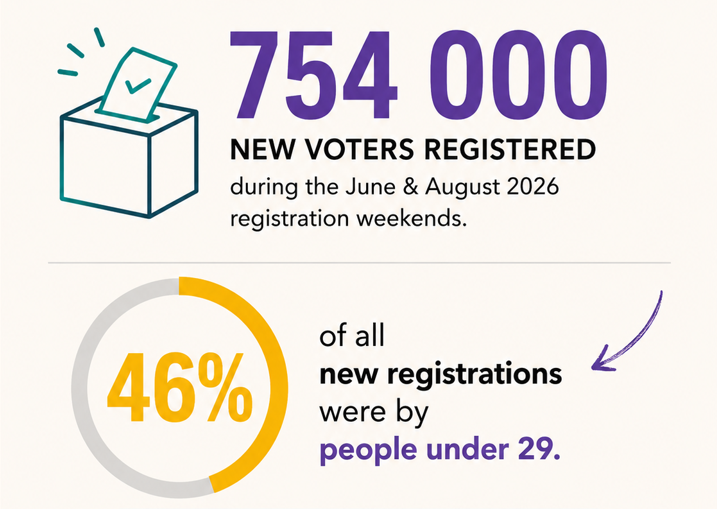
A Mail & Guardian article, citing Electoral Commission of South Africa (IEC) figures, noted that nearly half (46%) of all new voter registrations during the June and August
2026 registration weekends came from people under the age of 29. I now form part of that statistic
But active citizenship doesn’t end at the ballot box.
Voting is only one part of it. It also means reading beyond party manifestos and staying informed about the issues and policies that affect your life and community. It’s working with others to solve local problems instead of just complaining about them. It’s speaking up when something isn’t right, not just for yourself but for others too. And it’s helping people understand their rights, because democracy works best when participation spreads.
I still don’t enjoy political shouting matches, and I probably never will. But I’ve stopped telling myself that politics has nothing to do with me. Because whether we choose to participate or not, the system continues to shape our daily lives.

