
Young researchers gather at Wits to present solutions to rising global issues.
- Falling Walls Lab Gauteng was held at Wits where students competed for a spot on the international stage in Berlin.
- The competition required pitchers to present an idea that addresses global challenges.
- Researchers, innovators, and entrepreneurs were given an opportunity to engage with people outside of their disciplines and institutions.
A Wits honours student, Alimerinda Mlambo, will represent Gauteng at the international Falling Walls Lab finale in Berlin after winning the provincial competition, with an AI-powered translation platform designed to break language barriers.
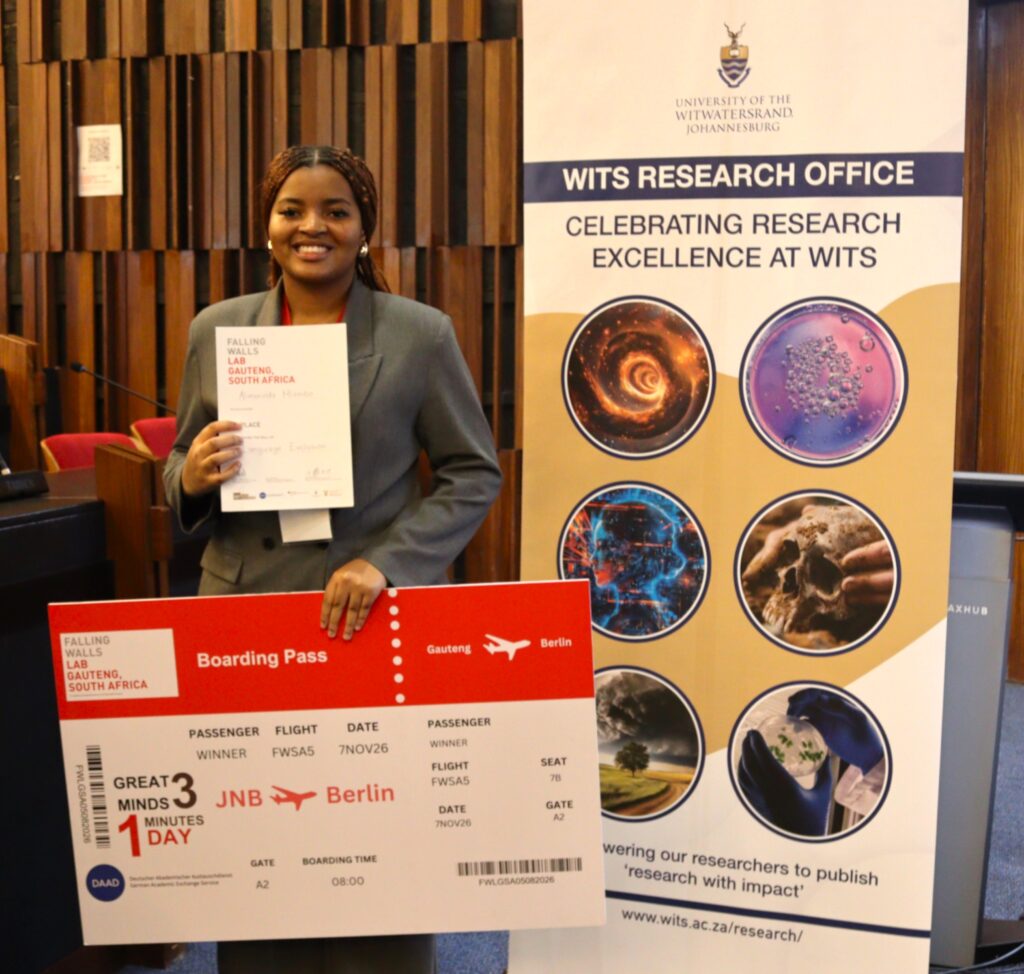
The competition, held at Wits on August 5, saw about 20 students drawn from Wits, University of Pretoria, and Tshwane University of Technology, present their innovations aimed at tackling some of the country’s most difficult challenges.
The event was hosted in partnership with the DAAD Information Centre Johannesburg and the Falling Walls Foundation. Participants had just three minutes, including answering judges’ questions, to convince an expert jury that their pitch could help solve global issues.
Mlambo, an Information Systems honours student, took first place with her invention, eLingo AI, which aims to solve language exclusion in public spaces through real-time translations. She used a fictional character by the name of Lerato in her pitch, but the story was inspired by her lived experience of sitting through a conference presentation delivered in French that she could not understand.
When asked if this will cost human interpreters their jobs, Mlambo said, “We’re not trying to replace interpreters. We’re making language accessibility available to organisations that could not afford it otherwise.”
Unlike traditional interpretation services which rely on multiple interpreters, special equipment, and significant expenses and planning, eLingo offers an affordable alternative. The platform already includes all 11-official spoken South African languages and has attracted more than 100 beta users. Mlambo stated that the team has plans to expand to other languages.
She believes this kind of software is especially needed in South Africa, where only a small portion of the country’s population speaks English as a home language. “I want to create a future where people are no longer excluded from conversations they were meant to be a part of,” Mlambo said.
Dr Samia Chasi, Head of Wits Internationalisation and Strategic Partnerships Office and chair of the judging panel, said the competition is much more than selecting a winner. “It gives students an opportunity to present their own research to audiences beyond their own disciplines and institutions,” Chasi said.
“We have very creative and innovative communities in South Africa and Africa, and we can offer our own solutions to the rest of the world. We can’t always look at importing ideas,” Chasi said.
Among the interesting innovations was the third-place winning project by Cynthia Gwada which focused on an affordable diagnosis for sickle cell disease. The solution aims to expand access to rural areas in South Africa so “they don’t have to go to the cities with money that they don’t have,.” Gwada said.
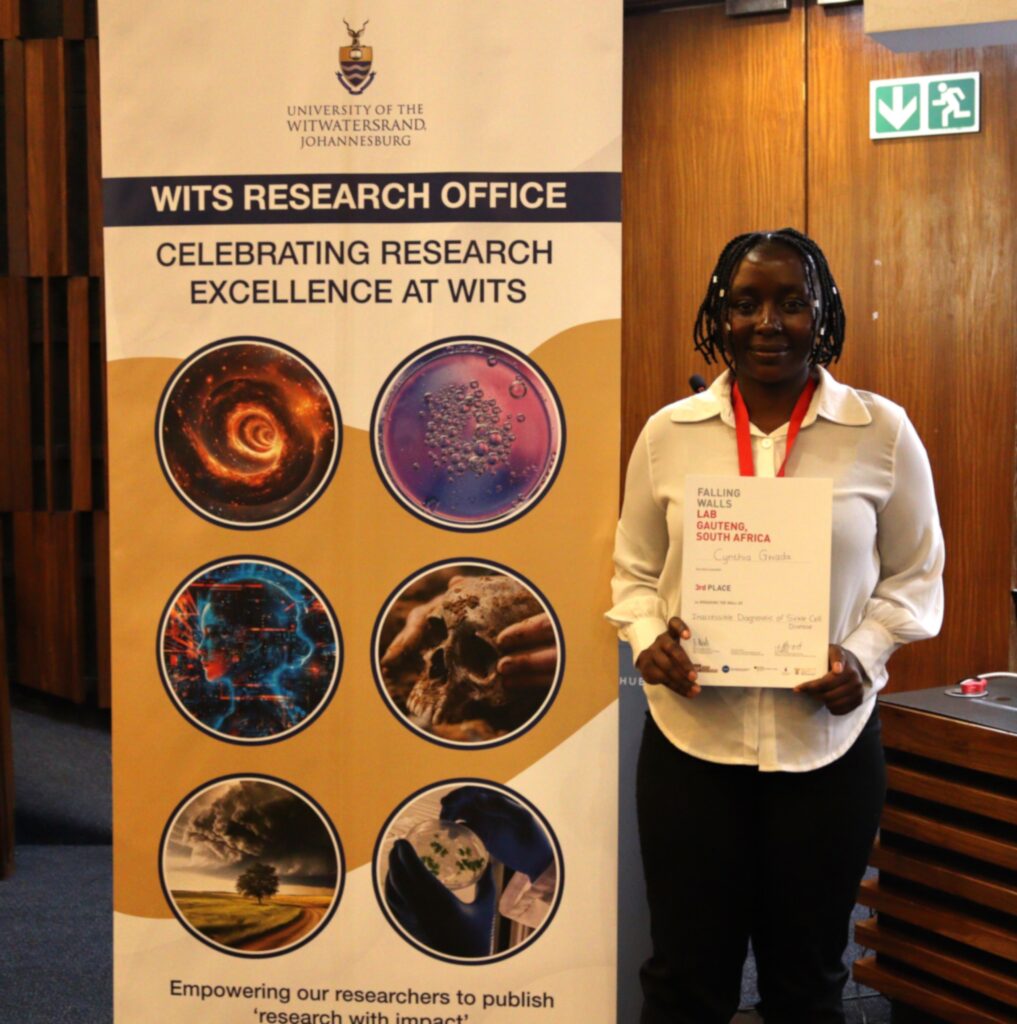
Gwada also hopes to expand the diagnostics to other diseases such as malaria and tuberculosis, making diagnosis more affordable and accessible.
As Mlambo prepares to compete in Berlin, she hopes her success will inspire more young black women to pursue careers in male-dominated fields such as hers.
“Don’t wait for a seat at the table. Go and build a table,” she said.
FEATURED IMAGE: Picture of Falling Walls Lab Gauteng 2026 pamphlet and souvenir. Photo: Kerese Govender
- Wits Vuvuzela, Wits’ liver transplant programme celebrates 1000th life-saving surgery, August 2026
- Wits Vuvuzela, Wits Digital Dome: Reclaiming African narratives through 8K innovation, May 2026
- Wits Vuvuzela, Wits’ students fill Great Hall for Witsies Got Talent finale, May 2026

