The clean girl aesthetic whispers, but creative makeup is yelling: “I’m back, bitches!”
The ‘clean girl’ aesthetic is losing its grip on the beauty industry.
Colourful and experimental makeup is taking over.
Younger generations are redefining beauty by making their own rules.
For the past few years, the ‘clean girl’ aesthetic has dominated beauty culture. The same brushed-up and gelled-down brows. The same ‘doughnut’ glazed skin. The same ‘strawberry’ barely there blush. Somewhere between the fourth layer of skincare and the third swipe of clear lip gloss, the aesthetic has become less of a trend, and more of a uniform of conformity. If you doomscroll for more than ten minutes, you will start to notice that everyone looks eerily similar. An almost identical standard that looks a lot like past beauty ideals rather than dismantling them.
The clean girl was everywhere. She woke up at 5.a.m., drank freshly juiced organic greens, and slicked back her hair into a definitive, carefully curated bun. This was meant to look like it took her 5 minutes to get ready, when in reality it took twenty. Her skin seemed perfectly luminescent, and her hair stayed stuck down in place.
But, the wind has changed speed, and the tides have turned over. The bun has started to loosen. The blush is bolder, eyeshadow is brighter, and highlighter is blinding, once again.
Welcome to the death of the clean girl. May she rest in pieces.
As the years pass and the trend finally fades away, people are moving away from this carefully designed idea of what beauty should be and is turning towards makeup, hair, and style that is louder, messier, and more personal.
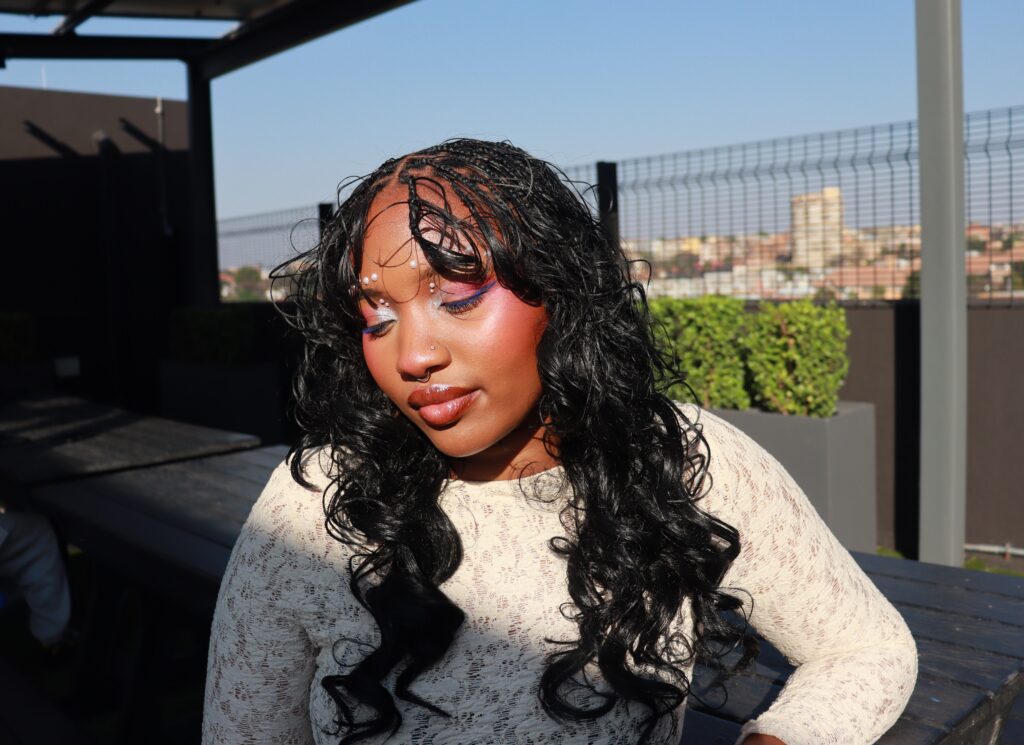
Makeup artist, Tylar Booysen, looking at herself in the mirror. Photo: Kerese Govender
The clean girl aesthetic is more than just a simple makeup look. It became a must to follow. The fake freckles and dewy skin are just surface level. It represents a specific image of femininity. Makeup stopped being loud and proud and instead, became something meant to be minimal, polished, and controlled. Everything about this aesthetic is meant to appear effortless. Yet, here’s the gag: there is nothing effortless about it. To achieve this standard, expensive, extensive beauty routines are required.
The clean girl disguised beauty conformity as self-care. Individualism and self-expression exited the group chat.
But now, they’re back! Better than ever.
Graphic eyeliner is escaping its assigned constraints. Colour combinations that have never been thought of before are being invented. Shimmer is showing up in places that shimmer has never been invited to before.
While the clean girl encouraged people to blend in, the maximalist queen steps in and demands to be seen and heard.
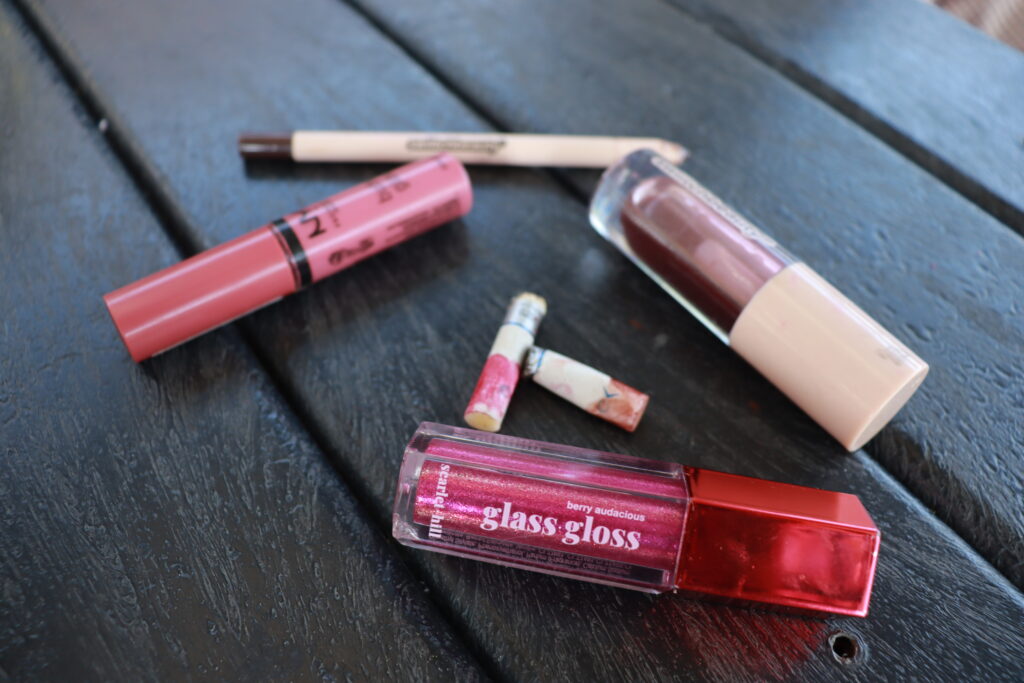
Close up of lip products and cigarette butts with lipstick stains. Photo: Kerese Govender
Makeup artists that have contributed to the resurgence of creativity in 2026 are Ngozi Edeme, better known by her online persona PaintedbyEsther, and Sophia Sinot.
Edeme’s signature excessive use of blush and colourful shimmers had the entire beauty industry trying to recreate her looks. She has become a significant participator in Tyla’s current branding for A*POP, from the bright eyeshadows to princess pink blush, body shimmer and neon wigs. It is becoming increasingly easy to spot a look created by Edeme.
Zara Larsson’s Midnight Sun era is also instantly recognisable: what started with a poor PicsArt dolphin edited alongside Larsson’s 2017 hit Symphony has resulted in one of the most iconic popstar rebrandings of the 2020s. Together, Larsson and Sinot have brought back the dazzle, shimmer and shine which pop stars used to be known for. Every look incorporates a range of colour combos, gleaming glitter, and rhinestones lingering close by.
These perspectives have inspired people to look at makeup as less of natural beauty and more as a way of creatively contributing to one’s individual style in the boldest way possible. An eye can become a canvas, a face something to experiment on. Lipstick becomes a statement, and eyeshadow commands attention. The rules of makeup are changing. A look can be inspired by anything: paintings, music, subcultures. One day, it can be punky smudged eyeliner. The next, it can be as colourful and dramatic as drag. It does not demand consistency or structure. Instead, it pushes you into not choosing one aesthetic for the rest of your life. You are allowed to do soft glam on Tuesday and the furthest thing from natural on Thursday.
The most notable thing about the shift towards creative beauty is that it is unapologetically visible. For years, makeup trends have been obsessed with making beauty invisible. No-makeup meant using makeup, while pretending you didn’t. Creative makeup does the complete opposite; it looks like time, effort, and like someone sat in front of a mirror for two hours deciding what colour goes where. Creativity exists without apologising for being there.
The reality is that beauty trends have always been telling us what to do. Your eyebrows should be thicker, no, thinner. Blush belongs on your nose or does it? Everyone is expected to change their style. The clean girl aesthetic was just the latest trend in beauty’s long history of this phenomenon. Creative makeup represents something different, but it is not completely free from trends. The internet has a peculiar ability to turn individuality into another categorical trend for people to follow. Give the internet a few months, and there will be a ‘correct’ way to be creative. But for now, it is refreshing to see people figure out their personal style.
However, we have to be realistic. The clean girl is not being buried next to the Tumblr girl or the 2016 baddie just yet. There will always be people who prefer a classic slick back bun. The issue lies with the idea that this is the only correct option. That frizzy hair is unacceptable. That the afro must be ‘neatly’ combed back instead of being free, beautiful as it is. Creative beauty is not here to replace but to rebuild a room for more. For the person who sees beauty as what it is: a form of expression.
Perhaps we are tired of being told what is acceptable and what is not. Every week, there is a new product to purchase. Every month, there is a new trend to follow. Every year, there is a new version of yourself to become. Creative beauty says, “Hell no!” It says that beauty does not have to be subtle, invisible, or effortless. Beauty is allowed to simply be fun.
The clean girl may still be alive somewhere in the world, but elsewhere the creative queens have just unboxed a new neon eyeshadow pallete.
Tylar Booysen showcasing her makeup look. Photo: Kerese Govender
FEATURED IMAGE: Close up of creative makeup look on Tylar Booysen. Photo: Kerese Govender
Young researchers gather at Wits to present solutions to rising global issues.
Falling Walls Lab Gauteng was held at Wits where students competed for a spot on the international stage in Berlin.
The competition required pitchers to present an idea that addresses global challenges.
Researchers, innovators, and entrepreneurs were given an opportunity to engage with people outside of their disciplines and institutions.
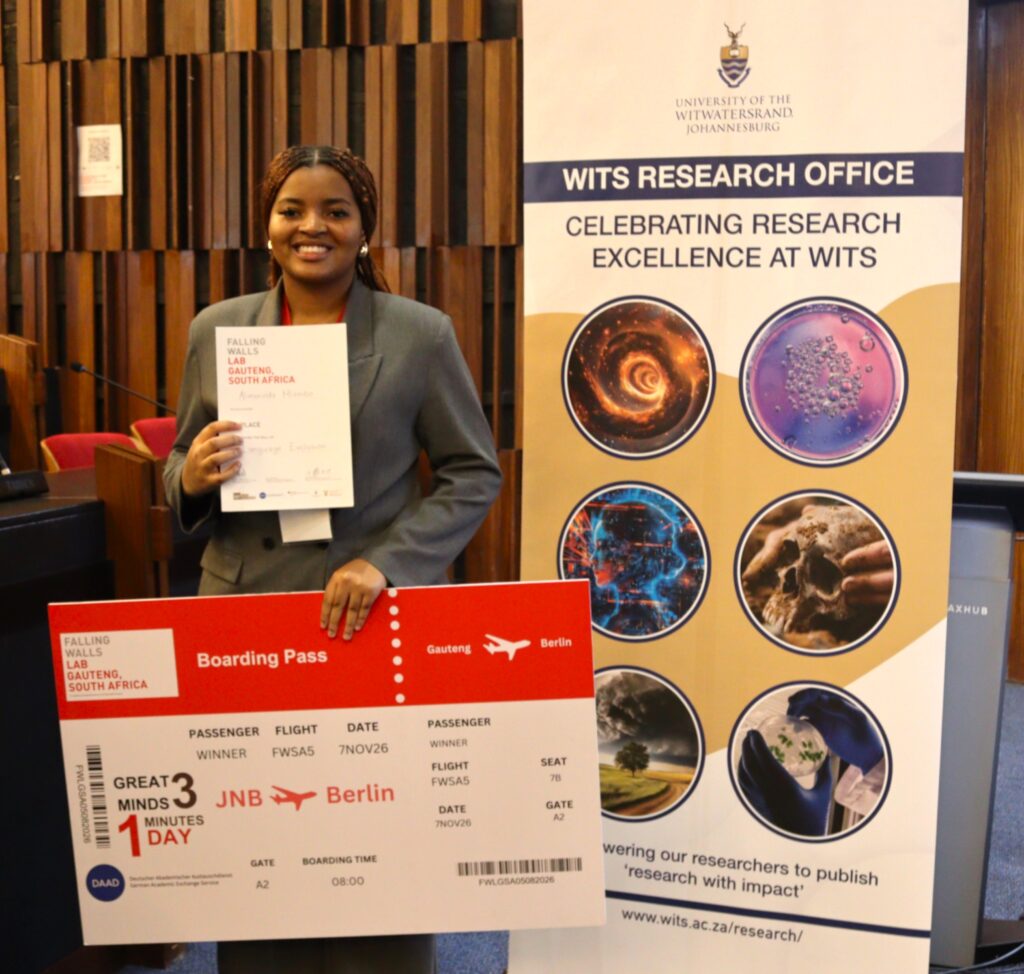
A Wits honours student, Alimerinda Mlambo, will represent Gauteng at the international Falling Walls Lab finale in Berlin after winning the provincial competition, with an AI-powered translation platform designed to break language barriers.
Picture of Alimerinda Mlambo, the winner of Falling Walls Lab Gauteng 2026, and her certificate & ticket to Berlin. Photo: Kerese Govender
The competition, held at Wits on August 5, saw about 20 students drawn from Wits, University of Pretoria, and Tshwane University of Technology, present their innovations aimed at tackling some of the country’s most difficult challenges.
The event was hosted in partnership with the DAAD Information Centre Johannesburg and the Falling Walls Foundation. Participants had just three minutes, including answering judges’ questions, to convince an expert jury that their pitch could help solve global issues.
Mlambo, an Information Systems honours student, took first place with her invention, eLingo AI, which aims to solve language exclusion in public spaces through real-time translations. She used a fictional character by the name of Lerato in her pitch, but the story was inspired by her lived experience of sitting through a conference presentation delivered in French that she could not understand.
When asked if this will cost human interpreters their jobs, Mlambo said, “We’re not trying to replace interpreters. We’re making language accessibility available to organisations that could not afford it otherwise.”
Unlike traditional interpretation services which rely on multiple interpreters, special equipment, and significant expenses and planning, eLingo offers an affordable alternative. The platform already includes all 11-official spoken South African languages and has attracted more than 100 beta users. Mlambo stated that the team has plans to expand to other languages.
She believes this kind of software is especially needed in South Africa, where only a small portion of the country’s population speaks English as a home language. “I want to create a future where people are no longer excluded from conversations they were meant to be a part of,” Mlambo said.
Dr Samia Chasi, Head of Wits Internationalisation and Strategic Partnerships Office and chair of the judging panel, said the competition is much more than selecting a winner. “It gives students an opportunity to present their own research to audiences beyond their own disciplines and institutions,” Chasi said.
“We have very creative and innovative communities in South Africa and Africa, and we can offer our own solutions to the rest of the world. We can’t always look at importing ideas,” Chasi said.
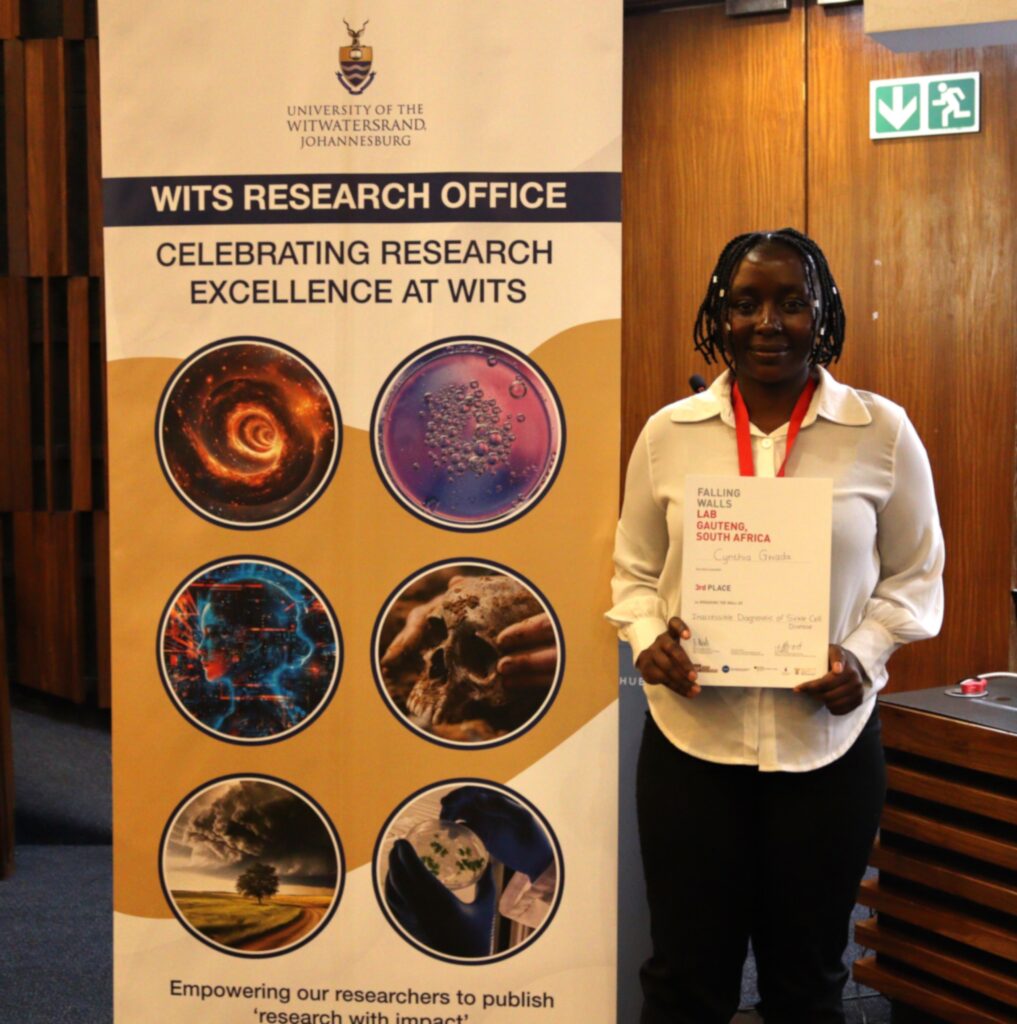
Among the interesting innovations was the third-place winning project by Cynthia Gwada which focused on an affordable diagnosis for sickle cell disease. The solution aims to expand access to rural areas in South Africa so “they don’t have to go to the cities with money that they don’t have,.” Gwada said.
Picture of Cynthia Gwada, third place winner of the Falling Walls Lab Gauteng 2026, and her certificate. Photo: Kerese Govender
Gwada also hopes to expand the diagnostics to other diseases such as malaria and tuberculosis, making diagnosis more affordable and accessible.
As Mlambo prepares to compete in Berlin, she hopes her success will inspire more young black women to pursue careers in male-dominated fields such as hers.
“Don’t wait for a seat at the table. Go and build a table,” she said.
FEATURED IMAGE: Picture of Falling Walls Lab Gauteng 2026 pamphlet and souvenir. Photo: Kerese Govender
Music has transcended borders and languages: why haven’t the Grammys?
For decades, the Grammys have dominated the music industry as the pinnacle of an artist’s career, regardless of genre. For an artist to win a Grammy is to have achieved a highly sought-after goal. However, year after year, loss after loss, we find ourselves asking the same question: “Who gets recognised as mainstream music, and who gets boxed into a separate (segregated) category?”
This conversation resurfaced after the popular South Korean boy band BTS denounced the Grammys in a collective statement posted on Instagram, saying they will not submit their comeback album Arirang for the 2027 awards ceremony. The news came just a month after the Recording Academy introduced a new category to the show, ‘best Asian pop music performance.’ While the academy believe this category is meant to spotlight Asian songs, BTS says otherwise.
“I hope that music can be heard and loved for what it is, rather than being divided by region or language.” – A translation of the message they shared via Instagram.
Yet, this debate is not limited to one group choosing to withdraw from one of the most successful awards ceremonies in the music industry. It requires us to dig deeper into what real inclusion should look like.
This is not new.
For years, the Grammys have faced backlash from both artists and audiences alike for failing to acknowledge the rising global shift in the music industry. Artists from all over the world, regardless of country, genre, and language dominate the charts and influence musical trends online. Their sold-out concerts continue to reshape how we view and appreciate music. Yet, despite these successful statistics, award ceremonies – especially one we deem the industry’s most respected, continue to classify (read: segregate) artists according to language and race. Why not recognise the best work to come out?
For decades, black artists have been questioning why music that has shaped pop culture, that is rooted in Black culture, is often only recognised in genre-specific categories. This is a direct challenge to why the biggest awards of the night are awarded to more ‘traditional’ options. Latin artists share similar frustrations. Why must they have an entire separate awards ceremony? Artists of colour have to work 10 times harder than their Western counterparts yet still do not get rewarded in a more dignified manner.
“It sucks that whenever we, and I mean guys that look like me, do anything that’s genre-bending, they always put it in a rap/urban category. I don’t like that ‘urban’ word; it’s just a politically correct way to say the N-word to me. So, when I hear that, I’m just like, why can’t we just be in pop?” – Tyler, the Creator said after his album ‘IGOR’ won Best Rap Album in 2020.
We have our very own example of this phenomenon at home. Tyla, our South African superstar, whose global hit, Water, dominated charts, social media, and sparked worldwide debates. Regardless of this breakout success, her recognition began to be framed according to an ‘African’ lens, rather than being allowed to simply compete against mainstream pop artists. Another example of this is Tyla’s music being categorised as Afrobeats even though she has stated that this is not the case. “I know there’s a tendency to group all African artists under afrobeats. It’s a thing, and even though Afrobeats has run things and has opened so many doors for us, African music is so diverse.” Said Tyla during her acceptance speech at the 2024 MTV Video Music Awards. Even though this is just the beginning of her career, her rise to fame reflects an industry that has seemingly become inclusive on the surface, while still clinging to barriers that limit artists of colour.
Does representation matter? Yes. The cost it comes at matters, too.
Categories dedicated to genres and cultures that have a history of being overlooked will always be a positive thing. This exposure is deserved and long overdue for many artists. Yet, this inclusion should not be a box. The Recording Academy may have created a bigger table, it has also placed name cards that quietly remind artists where they are supposed to sit.
The idea of this still being a topic of discussion is ironic, given the fact that music has never been more global and diverse. Amapiano blasts from club speakers all over Europe. Latin artists headline major events in North America, such as the Superbowl. K-Pop has dominated streaming platforms and created one of the largest fanbases worldwide. Rising Slovakian artist ADÉLA, emphasises this in her song currently going viral on TikTok, ‘Ain’t in LA,’ with lyrics stating, “It’s all a lie, the baddest bitches ain’t in LA.’
We no longer identify good music by language or genre, but simply whether we connect with it or not.
The Grammys, on the other hand, darken these invisible lines. In an industry without borders, why do they continue to draw them?
FEATURED IMAGE: Graphic of artists of colour who have been nominated for and/or won a Grammy. Graphic: Kerese Govender
After five years of waiting, Spider-Man swings back onto our screens, and straight into his identity crisis.
After swinging into the Ster-Kinekor cinema at Rosebank and witnessing the long queues of people lining up in anticipation for the fourth installment in Tom Holland’s Spider-Man franchise, I completely understand how it was the biggest opening weekend in South African cinema history, according to Sony Pictures South Africa.
Brand New Day was a breath of fresh air. It felt as if it were the first raindrop after years of drought, which is somewhat true. This year marks five years since Spider Man! No Way Home last graced the big screen. The Marvel Cinematic Universe, which adapts the Marvel Comics characters and storylines created by Stan Lee, Jack Kirby, and Steve Ditko, seems to have been experiencing quite the dry spell since its most successful era ended. Due to the immense success of the last movie, all eyes were on Tom Holland to save the MCU – and save the day, he did.
After the events that led to the ending of the last movie, the audience was left biting their nails in worry for our closepersonal friend, Peter Parker. Over the years, I found myself wondering if he was okay and how he could be dealing with Aunt May’s death as well as the loss of not just his best friend, Ned (Jacob Batalon), but his girlfriend, MJ (Zendaya), too.
He took it just as I expected: not well. Obviously.
Peter chooses to isolate himself altogether, even from the only people he has left. One of the only connections he appears to have is with Jean DeWolff, played by Liza ColonZayas, who is the police captain that Spider-Man works very closely with. However, he is hardly close to her, if at all. DeWolff makes this a talking point in the first act, essentially calling him out on the fact that he knows nothing about her outside of work. When having a meeting with Florence Pugh’s character, Yelena, and speaking to Frank, (The Punisher,)played by Jon Bernthal, Peter never takes the mask off. This is done to mirror that Peter does not engage with anything or anyone outside of his Spider-Man persona. It is no longer his alter ego as Peter Parker, but rather his sole identity. It really does feel as though Peter Parker never existed.
The film centers on Peter’s want and need to only be Spider-Man, while ignoring everything that made him into the fantastic superhero he had grown into. While the first three movies followed him along his journey of Peter trying to become Spider-Man, this one focused on Spider-Man trying to figure out how to be Peter Parker.
Tom Holland knocked it out of the park with the most genuine and realistic portrayal of this allegory. He has always excelled at playing Peter Parker, but this film cemented his legacy as the current generation’s Spider-Man. Oftentimes when we watch movies, especially ones with high-status actors, we tend to pay extra attention to how they act. We notice how their eyebrows slightly crinkle, or how their mouths twitch when trying not to break character, and we realise that we are watching an actor act. Yet, as I sat in the movie theatre, that was the last thing on my mind. Holland did an incredible job capturing my attention. It felt as though I was pulled into the screen.
Visually, this is one of the most stunningly shot Spider-Man films. The creativity of the cinematography truly added to the audience’s experience of joining Peter’s grief, stress, and anxiety of facing the inevitable. The scenes of New York City helped us feel as if we were right there with Peter, with the web-swinging scenes beautifully executed. Brand New Day was visually dynamic and vibrant, the opposite of the blandness that has plagued cinema over the past few years. All of these aspects added to the comic book illusion. Destin Daniel Cretton, the director of Brand New Day and Shang-Chi, has also solidified his position as one of the MCU’s top directors.
Brand New Day gave us more than just a fourth Spidey movie. It gave us a superhero who resembles pieces of us that we would not normally expect them to. We have all been this version of Spider-Man: still in the process of becoming, struggling between doing what is required from us and doing what we desire to do. This is what made this movie so enjoyable. Instead of following the usual formula of villains trying to kill Peter, it showed us an emotionally charged street-level Spidey story. No Avengers intervention, no multiverse concerns, and no “end of the world” problematic threats.
Instead, it raises the question: what happens when a superhero becomes more than just the man wearing the mask? A person like you and me, figuring out their identity, while ignoring who we really are, because it frightens us?
This is why the antagonist of this film not being necessarily evil is so impactful. The secrecy surrounding Sadie Sink’s character had us in a chokehold for months, and the wait was definitely worth it.
The heart and soul of this film were the scenes between Peter, Ned, and MJ. Their presence emphasised the sadness of Peter succumbing to his loneliness. One thing that movie did incredibly well was not having Peter’s grief categorised in a hierarchy. He missed Ned just as much as he missed MJ. The writing spectacularly delivered us with the purest portrayal of Peter Parker when he shows MJ unconditional love.
Brand New Day proved that Peter does not have to face life alone in order to be successful as Spider-Man, if anything, it is the complete opposite. Although Ned and MJ will never be able to remember the Peter they once knew and loved, it does not mean that Peter cannot build something new with them.
Vuvu Rating: 9/10
FEATURED IMAGE: Spider-Man logo drawn on a red background. Photo: Kerese Govender
There is something distinctly inherited about misogyny.
It lingers and creeps in your veins as if it were a dormant disease. It flows through your blood and poisons the mind. It is almost buried beneath and before you know it, you find yourself looking sideways at the girl you deem promiscuous because she is not docile. You will not realise it is there, even when you pray for a baby boy because they are ‘so much easier to raise’ than girls. Without knowing it you uphold patriarchy in small ways.
This topic is a dead horse that will never stop getting beat. It is constantly on my mind. How can it not be when we live in a world where an abuser can sell out stadiums globally. A world where violence and injustices against women are constantly ignored. Men claim to care but prove daily that they do not. In my opinion, men rarely consider your feelings the same way a women would.
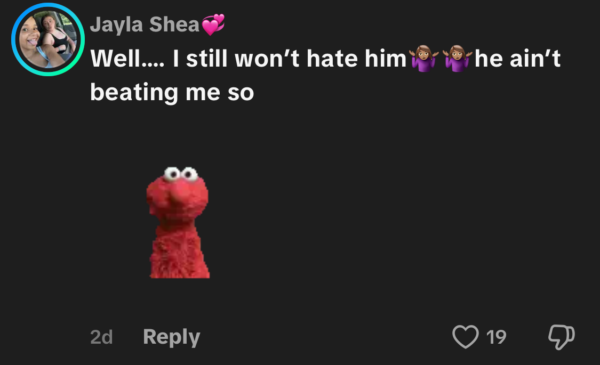
This is evident in the support problematic male celebrities continue to garner. These men are defended and uplifted irrespective of how irredeemable their actions are.
A comment under a TikTok about the recent arrest of Chris Brown.
A comment under a TikTok about Connor McGregor’s court case.
Society expects women to sit idly by, with no bark or bite, because we should be pleased to have a seat at the table. We still have to hope that asking, “What if that was your mother or daughter?” is enough for a man to be empathetic. A woman should not be reduced to her role in a man’s life for her pain to be empathised with.
It does not matter what type of woman you are or aspire to be, nine times out of ten, there is a word out there to demean you. My favourite out of the bunch lately is ‘bird,’ used to refer to a woman who is being wistfully naïve when it comes to seeking male validation. Have you not found the courage to leave your abusive boyfriend yet? Bird. Do you forgive cheating? Bird. Do you complain about your manipulative boyfriend but stay with him? Bird. People on the internet say, “too many birds on the ground and not enough in the sky.”
The latest example are the women on Love Island 2026, namely Melanie Moreno and Aniya Harvey. The term has shifted from holding women accountable for enabling men to blaming women for being mistreated by men. People should be capable of calling out a woman’s wrongdoings without diminishing her entire character, especially without using terms that were created to police women and their actions.
Misogyny shows up in the jokes we find funny; in the memes we reshare; in the bullying we endorse and the two-cent comments we dismiss. It does not just spring up suddenly in unexpected violent outbursts.
It is when we dislike a woman for being too loud, or for taking up too much space, instead of staying in the tiny corner designated for her. We see this experience the most among famous women. From Taylor Swift to Megan Thee Stallion to Chappell Roan, all women hated for different reasons but with one noticeable similarity. In most cases, even if there are valid reasons to dislike these women, rarely are those the reasons why people do.
These ‘jokes’ test your morals and what you deem as okay to say and hear. They question how ignorant you are toward those you love when they make such takes.
Comments under a TikTok about Chappell Roan’s controversy.
Women who are complicit in men’s misogyny should not claim to care about our issues. If you associate yourself with this kind of man, you are complicit. You are the company that you keep. By associating yourself with this type of man, you are that man yourself.
This is the part of the article where I confirm I am not some all-men hating, bitter misandrist. If this is bitter, then bitter is what I will be. As it is, I do not believe we are bitter enough.
The Melville Art Mile reactivates the creative heritage of the suburb.
Once a month, the Melville Art Mile creates a walkable art experience in the heart of student life in Johannesburg, Melville.
Artists, are given the opportunity to exhibit their work in a way that is accessible to all.
Melville is reclaiming its spot as Johannesburg’s creativity hub.
Ask anyone who has been a university student in Johannesburg; they have been to or at least heard of Melville. From the cute cafes to the busy bars to the grand graffiti adorning almost every crevice of the area, Melville creates a vibrant, friendly atmosphere that differs from its neighbouring suburbs.
The suburb has begun to center itself as Johannesburg’s creativity hub. Student culture has shifted the legacy of the environment from a quiet, calm Afrikaaner area to the lively, artsy dynamic it has become.
One event captures the soul of the suburb, the Melville Art Mile, a monthly event along the Melville Strip.
Canvases spill out onto the streets, loud laughter can be heard all around, and handmade trinkets are on display. This is the scene that greeted me when I visited on Thursday, May 7. The event invites people to enjoy a night of art, music, and community by providing an accessible way to curate and consume art, a welcome detour, especially for students.
Artwork by Indoni on exhibit at Melville Art Mile. Photo by: Kerese Govender
The Melville Art Mile offers opportunities for young emerging artists to display their work. This provides them with the push they might need to fulfil their dreams. A singular compliment on their brushstrokes from a stranger or even a few new followers on Instagram, is sometimes all it takes to get one foot out the door.
Many artists credited Melville in their artistic journeys as this environment is one of the only places that one can paint without anyone disturbing them, in reference to graffiti art. “Melville has always been known as an artist sanctuary.” Aubrey Moloto, the founder of Melville Art Mile, told this reporter.
Thalia Ngcobo, a young artist with work on display at the event, shared, “This is a great opportunity especially for those who are starting out, because starting out is scary. Doing this is the first step in your career.”
The Melville Art Mile is considered an “open market for artists because there’s nowhere in Johannesburg where you are able to sell your artworks to a public audience and receive all the comission,” Moloto explained while discussing the benefits of exhibiting at this event. “All you need to do is fill out an online form that can be found via the organisation’s social media pages and wait to be selected. Melville artists and businesses are prioritised as “this is for them, by them,” he further commented.
Artist Alex Dibakwane and his artwork, Ancestral Disputes, on exhibit at Melville Art Mile. Photo by: Kerese Govender
Moloto shared that the initiative of the organisation is to remind the city as well as everyone around it that Melville, at its core, is a creative space. Another goal is to boost the economy of the area.
Every turn that you take, every street you walk down, and every exhibit you enter, shows you exactly what Melville is becoming – a space for creatives to exist without (too much) worry.
The neighbourhood is more than just its dangerous reputation. Moloto hopes to “shake that narrative” through the First Thursday monthly Melville Art Mile events. The organisation’s driving force is to regenerate Melville’s creative roots and bring back life to the local businesses by boosting the economy and providing work for everyone in the neighbourhood, from students to residents to artists.
“Melville is a great example of what Johannesburg should be,” explained Neil Badenhorst, a frequent attendee at Melville Art Mile.
According to event attendees, art has a pretentious culture attached to it. In theory, art is meant to be something accessible and interactive, a source of community. However, in practice, it has become a very clinical experience. The welcoming and vivid feel has been disrupted by an elitist and alienating crowd.
Yet, this is not the case in Melville. In Melville, art is for everyone.
It belongs to those who cannot afford a ticket to an art gallery. It belongs to those who can sketch in their sleep. It belongs to those who do not understand the difference between acrylic, watercolour, or gouache. It belongs to those who can mould a block of clay into a masterpiece.
FEATURED IMAGE: Attendee looking at artwork on display at the Melville Art Mile. Photo by: Kerese Govender.
As the cold begins to settle and the due dates creep closer, the Wits Hindu Students Society creates a home away from home by hosting a Thunee tournament on campus.
The Wits HSS recently held its annual Thunee tournament.
Prizes were up for grabs ranging from R200 to R1000.
The aim of the tournament was to preserve the culture of the game and create a community for its players.
With money to be won and a game you love to play, what could be more exciting? On Friday, May 8, the Wits HSS hosted its annual Thunee tournament at the Margo Steele building.
Up for grabs – R1000 for first place, R400 for second place, and R200 for third place. These prizes are a culmination of the money raised by entry fee tickets, which cost R100 per team.
The game dates back to the 1860s, when Indian indentured labourers arrived to work on the sugar cane fields in what was then known as Natal. A game that helped them find connection and preserve culture amid their enslavement in a strange land.
Even though the game has evolved since, all you need is three of your best friends or complete strangers and a special pack of 28 Playing Cards.
“To continue hosting these tournaments will play a very big part in keeping Thunee alive at Wits, because naturally certain things skip generations, and we’re trying to prevent that.” explained Aadit Aheer, the former chairperson of Wits HSS.
The tournament was not just limited to Wits students but also open to members of the community. There were three teams made up of self-named ‘uncles.’
Five hours. Two calm initial rounds. A captivating quarterfinal. A chilling semi-final. A crazily competitive final.
While the game is about tricking opponents and reaching a total of 105 first, it is also about communication—how well you and your partner know each other, what a slight eyebrow raise, or nostril flare could mean.
As the tournament shifted from a fun night with friends to an intense evening of eye contact, smack talk and cards hitting the table, only four teams remained.
It was Uncles 3 versus Call & Loss, and Uncles 2 versus EN-SYNC.
The entire crowd peaking over their shoulders as they played for the top prize.
The night ended with Uncles 3 winning first place, Call & Loss taking second place and Uncles 2 coming in third.
The winners of first and third place graciously donated their prizes to the Wits HSS Temple and a first year they had played against, respectively.
Directions to Thunee tournament. Photo by: Kerese Govender
A hand of cards held by a player. Photo by: Kerese Govender
Names of teams playing in the tournament and a pack of cards. Photo by: Kerese Govender
Second place winners of the Thunee tournament, Savani Govender and Ashen Naidoo. Photo by: Kerese Govender
Deck of special cards for Thunee tournament. Photo by: Kerese Govender
Winners of Thunee tournament, Colonel Lionel Chetty and Kevin Peramaul, with the chairperson of the Wits HSS, Ushdir Singh. Photo by: Kerese Govender
“We would like to give this money back to charity,” said Colonel Lionel Chetty, member of Uncles 3. “For us, it is not just a game. It brings people together.” he further commented.
Thunee is more than just a game. It is the beginning of friendships. All it takes is one look at the table to your left, a quick question, “You know how to jol thunee?” and the rest is history. It serves as a semblance of home for those who leave everything and everyone, they know, to attend Wits. Whether it is at your grandparents’ dining room table or at the Matrix, the game lives on.
FEATURED IMAGE: Directions to Thunee Tournament. Photo by: Kerese Govender
In episode six of We Should Be Writing season 7, the team unpacked the evolution of music as a form of expression and protest, through four decades in the South African context. The episode explores the journey of South African music and its consumers from the 80s, 90s, early 2000s and contemporary listeners. From the […]