
I Understand What You Do. You Show Us What We Do Not See invites visitors to discover the extraordinary hidden in everyday places.
On 4 August 2026, the Wits Art Museum opened “I Understand What You Do. You Show Us What We Do Not See”, an exhibition that explores the idea of home through photography. Rather than presenting home as simply a physical place, the exhibition challenges visitors to consider how belonging can exist in ordinary spaces and everyday moments that often go unnoticed.
The exhibition celebrates the legacy of renowned South African photographer David Goldblatt in what would have been his 95th year. Inspired by Goldblatt’s belief that photography reveals what is often overlooked, the exhibition explores themes of identity, memory, belonging, and place. It features work by nine predominantly Johannesburg-based photographers documenting diverse experiences of life in and around the city, alongside photographs from the “Of Soul and Joy” photography initiative. The exhibition’s title comes from a memorable encounter in which a stranger described Goldblatt’s work by saying, “I understand what you do. You show us what we do not see.”
That sentiment is reflected throughout the exhibition. A passer-by may see only a busy Johannesburg street or an ordinary neighbourhood, while someone else recognises it as a place of comfort, memory, and belonging. The exhibition encourages viewers to pause and reconsider these familiar spaces, revealing the stories that exist just beneath the surface.
One of the exhibition’s greatest strengths is its curation. Each body of work flows naturally into the next, allowing the conversation around home and memory to develop seamlessly as visitors move through the gallery. Although each photographer presents a distinct perspective, the exhibition never feels disjointed. Instead, every collection builds upon the last, reinforcing the central theme and making it easy to understand the exhibition’s message without it ever feeling repetitive or forced.
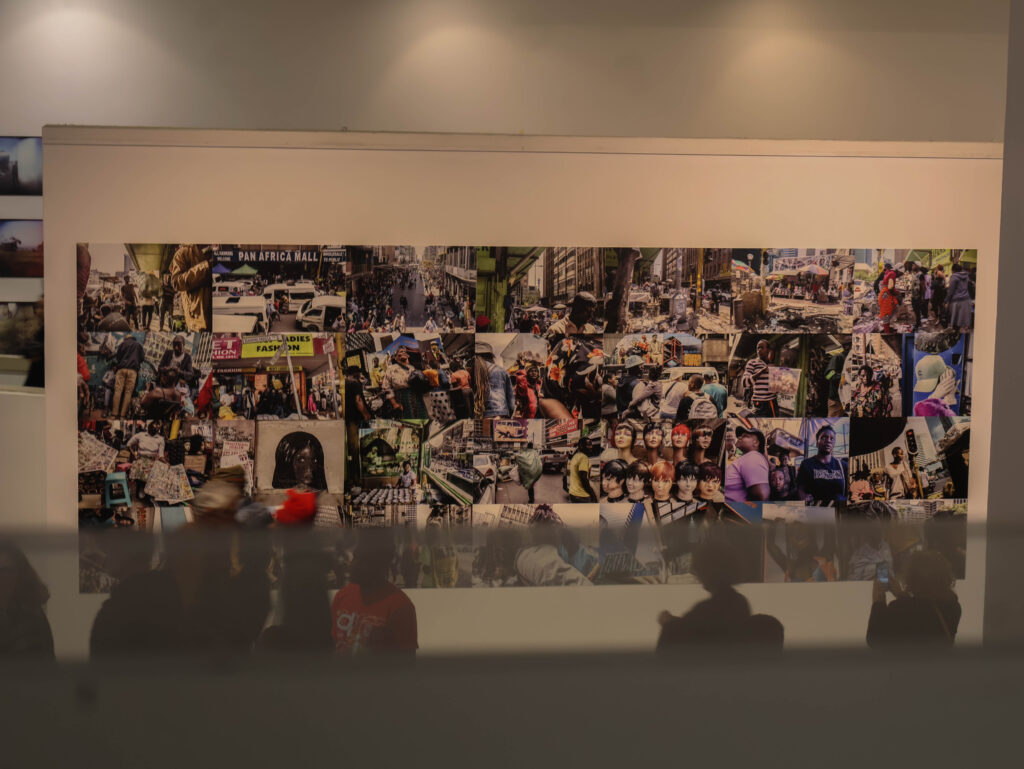
Among the featured artists, Jabulani Dhlamini’s “Poloko: In Soweto” stood out most. His work explores the hidden histories of Soweto through photographs of homes, portraits, and personal stories. Rather than focusing solely on well-known historical sites, Dhlamini captures everyday spaces that have quietly become symbols of resilience, identity, and belonging. His photographs reveal how residents have transformed apartheid-era houses into places that carry personal and collective memories while also reflecting on the legacy of the 1976 Soweto Uprising and his own family history.
As someone from Soweto, Dhlamini’s work resonated with me on a personal level. The homes, streets, and familiar surroundings he photographs are places I have seen countless times, often without giving them much thought. Seeing these everyday spaces displayed in a gallery reminded me that what feels ordinary to those who live there can also hold extraordinary meaning. His photographs challenged me to look beyond what is immediately visible and appreciate the stories, memories, and histories embedded in places I have always called home.
More than a photography exhibition, “I Understand What You Do. You Show Us What We Do Not See” succeeds in encouraging visitors to slow down and look closer. Its thoughtful curation ensures that the works complement one another, while its central theme of home is communicated with clarity and sensitivity. By the time visitors leave the gallery, they are reminded that home is not simply a place on a map but a feeling shaped by memory, identity, and lived experience. It is an exhibition that quietly asks us to reconsider the familiar and, in doing so, reveals the extraordinary hidden within the ordinary.
Vuvu Rating: 9/10
FEATURED IMAGE: An image of the titile of the exhibition by Sanele Sithole
RELATED STORIES:
- Wits Vuvuzela, REVIEW: Now is not forever, when art mimics reality April 2026
- Wits Vuvuzela, SLICE: Keeping focused through photography , March 2023
- Wits Vuvuzela, Photography exhibition illuminates the inner city, April 2013

