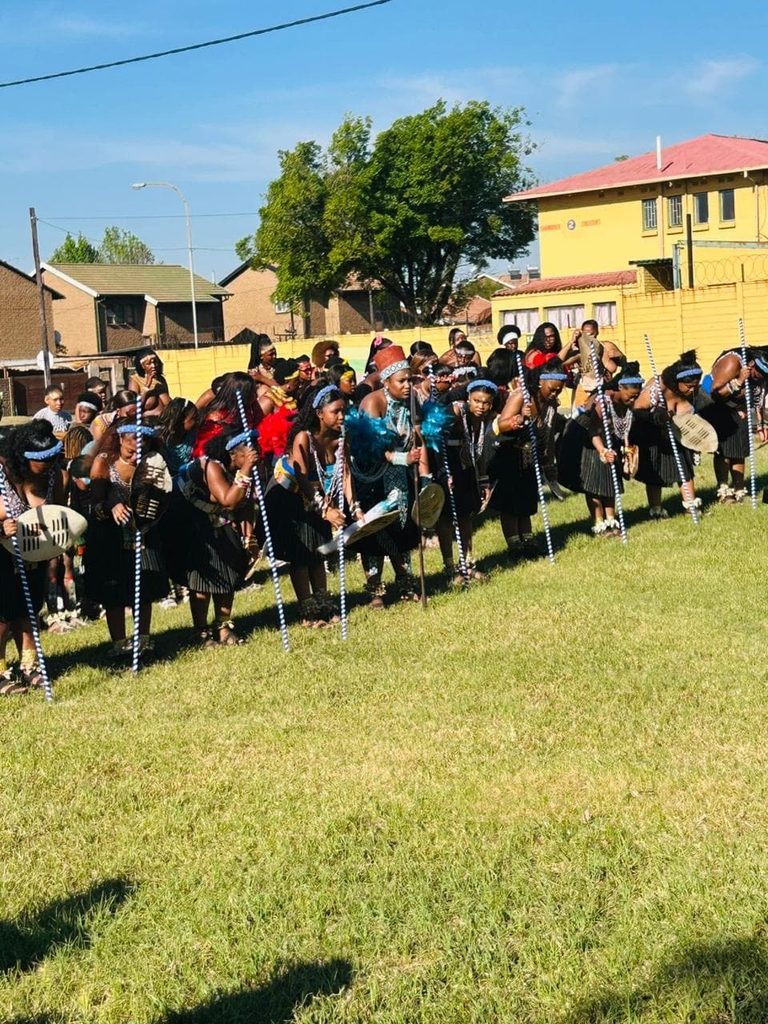
Members of Uthingo Lwamankosazana (Rainbow of Maidens) – the Wits society for young maidens – are preparing for Umkhosi Womhlanga, the annual Zulu reed dance ceremony honouring the king and celebrating maidenhood, while encouraging young women to embrace their cultural identities and traditions.
Uthingo Lwamankosazana aseWits prepares members for Umkhosi Womhlanga.
Students from different cultures celebrate their heritage together.
Members say young people are losing touch with tradition.
For some Wits students, preparing for Umkhosi Womhlanga, the annual Zulu reed dance ceremony set to take place September 5-6 2026, is about more than getting ready for a cultural ceremony: it is a chance to reconnect with traditions they fear young people are losing.
Uthingo Lwamankosazana is a society for maidens at Wits that brings together young women from different cultural backgrounds under the slogan ‘Maidens united in diversity.’ Second-year BCom Accounting student and chairperson Luthando Mdletshe said the society is not exclusively Zulu, and that women from any tribe are welcome to join. “We’re not just a Zulu maiden’s group,” she said.
For second-year BA Film and Television student Bulumko Ntluzo, who is Xhosa, being part of Uthingo has encouraged her to take pride in her own culture and traditions.
An image of Uthingo Lwamankosazana at Umkhehlo. Photo: Sanele Sithole
Umkhosi Womhlanga, held annually during the first or second week of spring every year, is a cultural festival in South Africa where tens of thousands of young women gather to celebrate womanhood and cultural identity. Members of Uthingo lwamankosazana pushed back on a common misconception that women who attend Umkhosi Womhlanga do so to be selected as wives.
Final-year BSc Astronomy and Astrophysics student Tania Nyanda said this, and other stereotypes have contributed to young people becoming disconnected from traditional practices. She said members attend the ceremony to pay their respects to the royal family and take part in prayer. Mdletshe described it instead as a celebration of ubuntombi (maidenhood), and a chance for maidens from different provinces to learn from one another.
Uthingo Lwamankosazana members have been preparing for the ceremony through a ‘Siyaya eMhlangeni’ camp and amahubo, which are traditional song practices held on campus. Second-year Bachelor of Education Student Nosipho Makhalima said the camp prepares members by advising them on how to conduct themselves and reminding them of the significance of Umkhosi Womhlanga.
Beyond ceremony preparation, the society doubles as a support network for young women in their 20s, navigating university life away from home. Makhalima described it as a safe and educational space where members discuss issues around relationships, sexuality, and abstinence in line with the traditional values promoted by the society and at its centre is a sense of sisterhood.
Ntluzo said young women often become disconnected from their traditions once they arrive at university, driven by peer pressure and fear of appearing “too traditional.” She added that social media has also shifted young people’s attitudes towards culture.
As Uthingo Lwamankosazana members prepare for this year’s ceremony, Uthingo Lwamankosazana continues to give Wits students a space to engage with culture, support one another and hold on to tradition while navigating university life.
FEATURED IMAGE: An image of member of Uthingo Lwamankosazane by Sanele Sithole
That love has taken him from schoolboy derbies in front of 15 000 fans to a professional contract with the Lions.
Before every match, the ritual is the same. The same pair of socks pulled tight over strapped ankles. The wristband with his family member’s names and a bible verse, worn like armour against his skin. A familiar song through his headphones, settling into him the way it has before every big game since school. By the time he steps onto the field, Thandolwethu “Thando” Biyela is no longer thinking. He is simply ready to tackle something.
On the field, he is the man opponents least want to run into, a loose forward who folds ball carriers in half. Teammates call him the “Bone Collector,” a nickname earned one bruising hit at a time. Walk past him on Wits University’s East Campus a few days later, though, and he could be any other student hooded up, backpack slung over one shoulder, on his way to a lecture he missed half of because he was on a plane back from a tournament. Balancing the two lives is not easy, but it is the only life he wants.
An image of Thando celebrating with his teammate after they scored a try. Photo: Sanele Sithole
Long before the wristband and the nickname, Biyela was a small boy, on a school field, chasing a ball he barely understood. Born in Umlazi and raised in Secunda, he was introduced to rugby in grade four by his primary school teachers, and something about the chaos of it- the collisions, the structure hidden inside the collisions stuck. He started in the backline, playing at 13, before settling into the position he now calls home: loose forward, specifically the number eight, where his size and appetite for contact do the most damage. At King Edward VII School (KES), he played fullback before being moved to flank, a shift toward the collision-heavy role he would grow into as a professional.
“It’s hard, but it’s something that I love doing, something that relieves stress for me,” Biyela said, describing the sport that has defined his life since childhood. That love has taken him from schoolboy derbies in front of 15 000 fans to playing for the junior Springboks and a professional contract with Lions. “The professional set-up like the Lions is a dream come true,” he said, though the pressure never really goes away. “The pressures of playing between high school and for the Lions is different but the same for me.”
Biyela enrolled at Wits in 2023, a decision he said he does not take lightly. His week looks nothing like that of the students around him in lecture halls: early gym sessions, training that eats into afternoons meant for tutorials, flights to tournaments that leave gaps in his notes. “The support has been helping me quite a lot,” he said. “Like when I was at the World Championship last year, all of my lecturers would send me notes and slides so that when I come back, everything becomes easier for me to catch up.”
Asked whether he ever wishes for an ordinary varsity experience, Biyela answered honestly: he sometimes wonders what that life would have looked like. But he would not trade what he has now. “Not everyone is lucky enough to be in this position,” he said.
Biyela’s 2024 Varsity Cup debut, against University of Cape Town (UCT), came when he was just 19. He remembers the noise most — a stadium of students dancing in the stands. “Playing and seeing the crowd dancing and watching was a different experience,” he said. Senior teammate Ngia Selengbe, a player he had known since Grade eight, put it in perspective afterwards: “You are here for a reason. You are 19 playing here, and that shows how good you are.”
The 2025 season brought its own frustrations. Despite a stronger, fitter squad, injuries meant Biyela only played in two matches, against University of Johannesburg (UJ) and Central University of Technology (CUT), the kind of setback that tests any athlete’s patience. But patience, he said, is something rugby has taught him. “When I’m on the field, that is when I’m patient,” he said, speaking about his role as captain. “That is a place where I have to be calm headed” That composure was tested, and rewarded, at an international level.
Called up to the junior Springbok camp late in 2024, Biyela had to wait until January to attend, after an ankle surgery ruled him out of the first session. He went on to captain the side at the World Rugby U20 Championship in Italy. “We were not that good leading up to the tournament; we were predicted to be average,” he said. Against those odds, the team won the title.
Off the field, family anchors him. As the eldest of three and the only son, Biyela describes a deep sense of responsibility toward his two younger sisters and a bond with his mother that has only strengthened over the years. “My mom is my everything,” he said. “She has literally done everything for me. She’s always there when I need to talk to her, whether about school, rugby, or girls.” Both his parents remain central to his support system, which is why their names, alongside a Bible verse, sit permanently on his wrist. A firm believer in God, Biyela deliberately chose “Sigade Umzila,” the song he plays in his ears before every kick-off: its message mirrors the physicality and leadership his position demands.
Longtime friend and Lions teammate Tirhani Masondo, who has known Biyela since Grade eight at KES , described him as a young man whose confidence rarely needs to announce itself. “He’s the type of person whose actions speak louder than his words,” Masondo said. “A lot of his biggest wins are silent wins. He doesn’t always need recognition for what he does he just gets the job done.” Off the field, Masondo added that Biyela is disciplined, humble, and quick to celebrate others’ successes, sometimes more than his own. “The way he approaches life is almost the same way he approaches a tackle,” Masondo said. “Once he sees a target, he doesn’t hesitate.”
For Biyela, that target is simple: keep showing up for his team, his family, and his degree, one semester and one match at a time. Somewhere between the socks going on and the final whistle, that is exactly what he keeps doing.
FEATURED IMAGE: A image of the tunnel run of Thando Biyela image by Sanele Sithole
I Understand What You Do. You Show Us What We Do Not See invites visitors to discover the extraordinary hidden in everyday places.
On 4 August 2026, the Wits Art Museum opened “I Understand What You Do. You Show Us What We Do Not See”, an exhibition that explores the idea of home through photography. Rather than presenting home as simply a physical place, the exhibition challenges visitors to consider how belonging can exist in ordinary spaces and everyday moments that often go unnoticed.
The exhibition celebrates the legacy of renowned South African photographer David Goldblatt in what would have been his 95th year. Inspired by Goldblatt’s belief that photography reveals what is often overlooked, the exhibition explores themes of identity, memory, belonging, and place. It features work by nine predominantly Johannesburg-based photographers documenting diverse experiences of life in and around the city, alongside photographs from the “Of Soul and Joy” photography initiative. The exhibition’s title comes from a memorable encounter in which a stranger described Goldblatt’s work by saying, “I understand what you do. You show us what we do not see.”
That sentiment is reflected throughout the exhibition. A passer-by may see only a busy Johannesburg street or an ordinary neighbourhood, while someone else recognises it as a place of comfort, memory, and belonging. The exhibition encourages viewers to pause and reconsider these familiar spaces, revealing the stories that exist just beneath the surface.
One of the exhibition’s greatest strengths is its curation. Each body of work flows naturally into the next, allowing the conversation around home and memory to develop seamlessly as visitors move through the gallery. Although each photographer presents a distinct perspective, the exhibition never feels disjointed. Instead, every collection builds upon the last, reinforcing the central theme and making it easy to understand the exhibition’s message without it ever feeling repetitive or forced.
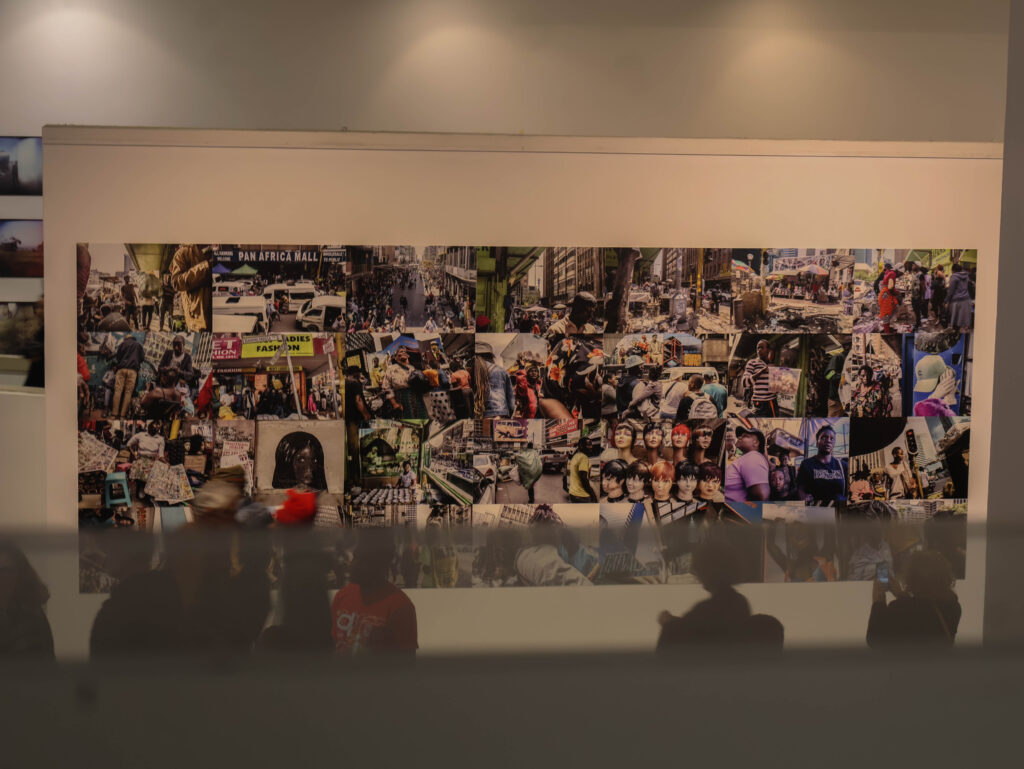
A picture of one of the art works displayed by Sanele Sithole
Among the featured artists, Jabulani Dhlamini’s “Poloko: In Soweto” stood out most. His work explores the hidden histories of Soweto through photographs of homes, portraits, and personal stories. Rather than focusing solely on well-known historical sites, Dhlamini captures everyday spaces that have quietly become symbols of resilience, identity, and belonging. His photographs reveal how residents have transformed apartheid-era houses into places that carry personal and collective memories while also reflecting on the legacy of the 1976 Soweto Uprising and his own family history.
As someone from Soweto, Dhlamini’s work resonated with me on a personal level. The homes, streets, and familiar surroundings he photographs are places I have seen countless times, often without giving them much thought. Seeing these everyday spaces displayed in a gallery reminded me that what feels ordinary to those who live there can also hold extraordinary meaning. His photographs challenged me to look beyond what is immediately visible and appreciate the stories, memories, and histories embedded in places I have always called home.
More than a photography exhibition, “I Understand What You Do. You Show Us What We Do Not See” succeeds in encouraging visitors to slow down and look closer. Its thoughtful curation ensures that the works complement one another, while its central theme of home is communicated with clarity and sensitivity. By the time visitors leave the gallery, they are reminded that home is not simply a place on a map but a feeling shaped by memory, identity, and lived experience. It is an exhibition that quietly asks us to reconsider the familiar and, in doing so, reveals the extraordinary hidden within the ordinary.
Bafana Bafana and Banyana Banyana represent the same nation, but not the same level of support. The difference says more about us than it does about football.
Rather than pretending South Africans do not support Banyana Banyana, the stronger argument is whether the support is visible. When Bafana Bafana competed at the 2025 Africa Cup of Nations, social media timelines filled with countdowns, match previews, public viewing invitations and nationwide calls to rally behind the national team. The yellow jerseys became symbols of national unity, and every fixture felt like a national event.
Fast forward to Banyana Banyana competing at the 2026 Women’s Africa Cup of Nations, and the atmosphere is noticeably different. The defending African champions took to the continental stage without the same intensity of public mobilisation. The contrast is not simply about football. It reflected a deeper pattern in South African sport: we celebrate women’s achievements, but we do not consistently promote them with the same energy.
If the media, sporting bodies and sponsors devote more promotional resources to men’s football, then the public will inevitably become more familiar with Bafana’s journey than Banyana’s. The disparity becomes a self-fulfilling cycle: greater visibility leads to greater support, which justifies even greater visibility.
The irony is that Banyana Banyana have produced extraordinary results. They won the Women’s Africa Cup of Nations in 2022 and have become one of the continent’s strongest national teams. Yet the same CGE report concludes that despite these achievements, they “have not received the same recognition and rewards as their male counterparts, Bafana Bafana.” Success alone has not earned them equal treatment.
Perhaps the most important conclusion from that study is not the numbers themselves but what they mean. The researcher argues that under-reporting women’s sport limits the public’s knowledge of female athletes’ achievements, while the continued trivialisation or neglect of women’s sport creates the impression that it is less important or less worthy of attention.
Recognition also extends beyond media coverage. The CGE points out that SAFA awarded Banyana R1.2 million after winning WAFCON, while previously spending R9 million on vehicles for provincial administrators. It also notes that Bafana players received larger bonuses for reaching the AFCON quarterfinals than Banyana received for winning their continental title. These examples reinforce the message that women’s achievements are too often valued less, even when the results surpass those of the men’s team.
South Africans like to describe themselves as passionate supporters of whoever wears the national jersey. That ideal should not depend on whether the badge is worn by Bafana or Banyana. If we want genuine equality in football, we must stop expecting women to earn support only after they win trophies, while assuming the men’s team deserves nationwide campaigns simply because they are men.
Equal support begins long before kick-off with equal storytelling, equal promotion and equal belief that every national team is worthy of the country’s full attention.
FEATURED IMAGE: A graphic of Banyana Banyana standing under the spotlight. Graphic: Sanele Sithole
Wits is reopening Campus Lodge to ease postgraduate housing pressure, offering more affordable and dedicated accommodation for seniors.
The postgraduate accommodation has undergone much needed renovations.
The relaunch aims to address growing demand for affordable postgraduate accommodation at Wits.
Student leaders say the move is a step forward, but more support for postgraduates is still needed.
A once quiet Wit’s residence is preparing to welcome students again. The brown and blue building on the corner of De Korte and Station streets, may look the same from the outside but new rooms and common areas await inside.
Campus Housing and Residence Life (CHRL) confirmed that the postgraduate residence had been out of use and was in dire need of upgrades.
According to a post shared on CHRL’s TikTok page, the residence was initially expected to reopen on May 4, 2026, but couldn’t due to delays with equipment deliveries.
Claudine Prim the manager of the Central Accommodation Office, said the reopening is now expected on 18 May to address demand.
Prim said there is an “influx of postgraduate students looking for internal residences.”
The self-catering residence will offer a range of housing options, including studio apartments, two-bedroom apartments, and single rooms with shared kitchens and bathrooms.
Campus Lodge joins existing postgraduate residences including West Campus Village, International House and Wits Junction.
A picture of the entrance of Campus Lodge. Photo by: Sanele Sithole
For many students, the reopening could not come at a better time.
Mahloromela Silas Seabi, an MSc Computer Science student and chairperson of the Postgraduate Association (PGA), said postgraduate students often face limited and expensive housing options.
“University residences tend to be expensive, especially for postgraduate students, who are usually limited to Wits Junction, West Campus Village and International House,” Seabi said. “This gives an opportunity for more affordable postgraduate accommodation.”
He added that postgraduate students are often disadvantaged during residence allocation, as priority is usually given to undergraduate students, particularly first-years.
Seabi said demand for affordable postgraduate accommodation continues to grow alongside rising unemployment and economic uncertainty.
“Many students pursue postgraduate studies partly because of economic pressures, but often there isn’t enough affordable space to accommodate them,” he said.
Beyond affordability, Seabi argued postgraduate students require different support structures from undergraduates.
“A postgraduate space needs to cater for adults,” he said. “Some students are married; some have children. There needs to be communal spaces, lounges, good computing systems and support services that make students feel supported in their research journey.”
He added: “Accommodation is part of building a stronger postgraduate community — a space where students can interact, share ideas, support each other and manage the pressures of research.”
Students interested in applying for accommodation at Campus Lodge can visit the Central Accommodation Office on the ground floor of Solomon Mahlangu House for more information.
FEATURE: A picture of Campus Lodge. Photo by: Sanele Sithole
South Africa’s qualification for the 2026 FIFA World Cup has sparked familiar excitement among fans. For many, it brings back memories of the 2010 FIFA World Cup in South Africa. A tournament widely remembered as one of the most iconic in modern football history and the first ever hosted on African soil.
But 2026 is not 2010.
The upcoming tournament, hosted across the United States, Mexico, and Canada, arrives in a vastly different global climate. While FIFA has spearheaded the expanded format as a celebration of global football, fans have raised growing concerns about whether the World Cup will remain truly accessible to the people who give it life—the fans.
A major concern is accessibility. Reports and human rights organisations have warned that visa restrictions and immigration policies in the United States could make it difficult for fans from certain countries to attend matches (Amnesty International on travel restriction). While all qualified teams are expected to participate, supporters from parts of Africa, the Middle East, and other regions may still face financial and administrative restrictions that limit their ability to travel.
Another growing issue? Cost. Rising inflation, expensive accommodation, and long-distance travel mean that attending the World Cup is becoming increasingly unaffordable for ordinary fans. What was once a global gathering of football cultures risks shifting toward a more commercialised experience shaped by tourism markets and corporate access.
Alongside these concerns, FIFA’s cultural strategy appears increasingly rooted in nostalgia. The return of global music icon Shakira to World Cup discussions following her legendary 2010 anthem Waka Waka (This Time for Africa) has reignited excitement among fans. Music has always been central to football’s identity, and Shakira’s presence connects the present tournament to one of its most celebrated eras.
However, this raises a deeper question: is nostalgia being used to mask growing concerns about the tournament itself?
There is no doubt that the 2026 World Cup will be one of the largest sporting events ever staged. But scale is not the same as spirit. Football’s power has always come from its people, travelling supporters, emotional crowds, and global accessibility. Without that, the World Cup risks losing the very identity that made it the world’s game.
As excitement builds, one question remains unavoidable: what is a World Cup, if the world itself cannot fully be there?
FEATURED IMAGE: A graphic of Shakira and Zakumi. Photos by: Oouinouin and Jason Bagley. Graphic by: Sanele Sithole
Winnie Madikizela-Mandela, Albertina Sisulu, and Adelaide Tambo are often remembered as women who stood behind great men while their husbands were imprisoned, exiled, or silenced by Apartheid. However, that memory is incomplete.
These women are not simply supporting figures in South Africa’s liberation story; they are central characters in it. They were organisers, political actors, caregivers, and leaders who carried families, communities, and, in many ways, the struggle itself on their backs.
The new Netflix documentary The Trials of Winnie Mandela offers a deeply moving portrait of Mama Winnie — from her youth to her marriage, to becoming one of Apartheid’s fiercest opponents, and later enduring public scrutiny during the Truth and Reconciliation Commission. What the documentary captures so powerfully is not just Winnie Mandela’s politics, but her resilience.
When Nelson Mandela was imprisoned for 27 years, Winnie kept his name alive. While the apartheid state tried to crush resistance, she remained visible, vocal, and defiant. At home, she was left to raise two daughters under immense pressure. In public, she became the face of resistance. In private, she still had to be a mother, provider, protector, and head of the household. She was expected to be everything.
That reality is not unique to Winnie Mandela. It is the lived reality of millions of South African women today.
According to Statistics South Africa, approximately 6.1 million households or 37.9% of all households in South Africa were headed by women in 2018, with female-headed households being most common in rural provinces such as the Eastern Cape (46.9%), Limpopo (45.8%), and KwaZulu-Natal (45.0%). More recent figures show that by 2024, that number had risen to 42.4% of households nationwide, meaning more than two in every five South African homes are led by women.
This is not a small social trend; it is the backbone of South African society. And yet, despite carrying homes, raising children, and often being the sole breadwinners, women continue to receive little recognition for their labour. Their sacrifices are normalised. Their struggles are overlooked. Their strength is expected.
Instead of appreciation, many are met with criticism, scrutiny, and impossible standards much like Winnie Mandela herself, whose legacy is too often reduced to controversy rather than the weight of what she carried.
A graphic of resilient women. Graphic and photos: Sanele Sithole
I think of women like my own mother, and countless others whose names will never appear in documentaries or history books, but whose work has held families together against impossible odds. These women build homes from very little. They sacrifice quietly. They endure endlessly, yet we rarely tell their stories in full.
South African history has long celebrated men as heroes, while women are remembered as wives, widows, or footnotes to male greatness. Women were never standing beside history; they were making it.
The question is no longer whether women deserve recognition.
The real question is: when will we finally honour the women who have been carrying this country, often alone, all along?
FEATURED IMAGE: A graphic of resilient women. Photo by: Sanele Sithole
The inaugural Wits International Vocal & Chamber Music Festival begins on a powerful note, blending music, memory and meaning in a moving tribute to the youth of the Soweto Uprising.
The first-ever Wits International Vocal & Chamber Music Festival launched with a powerful opening concert at Seabrooke Music Hall.
The programme centred on Gabriel Fauré’s Requiem, honouring the children of the 1976 Soweto Uprising.
Performers delivered a technically refined and emotionally gripping experience that set a high standard for the festival.
A quiet anticipation filled the Seabrooke Music Hall on Wits East Campus on April 22, as audiences gathered for the opening of the inaugural Wits International Vocal & Chamber Music Festival. What unfolded was not just a performance, but a deeply moving musical tribute rooted in history, memory and collective reflection.
Hosted by the Wits Music Department, the festival spans eight concerts running from April 22 to May 2 across various venues on campus. This festival is the first of its own at Wits hosted by the department. The opening set the tone with a powerful presentation by the Wits Music Department Choir, accompanied by pianist David Butlin and conducted by Head of Department Musa Nkuna.
The programme drew from Gabriel Fauré’s Requiem, Op. 48, reimagined as a memorial for the children of the 1976 Soweto Uprising. Through seven movements, the performance carried a spiritual weight, each hymn a plea for rest, peace and refuge from suffering. The reinterpretation grounded the classical work in a distinctly South African context, bridging European composition with local history.
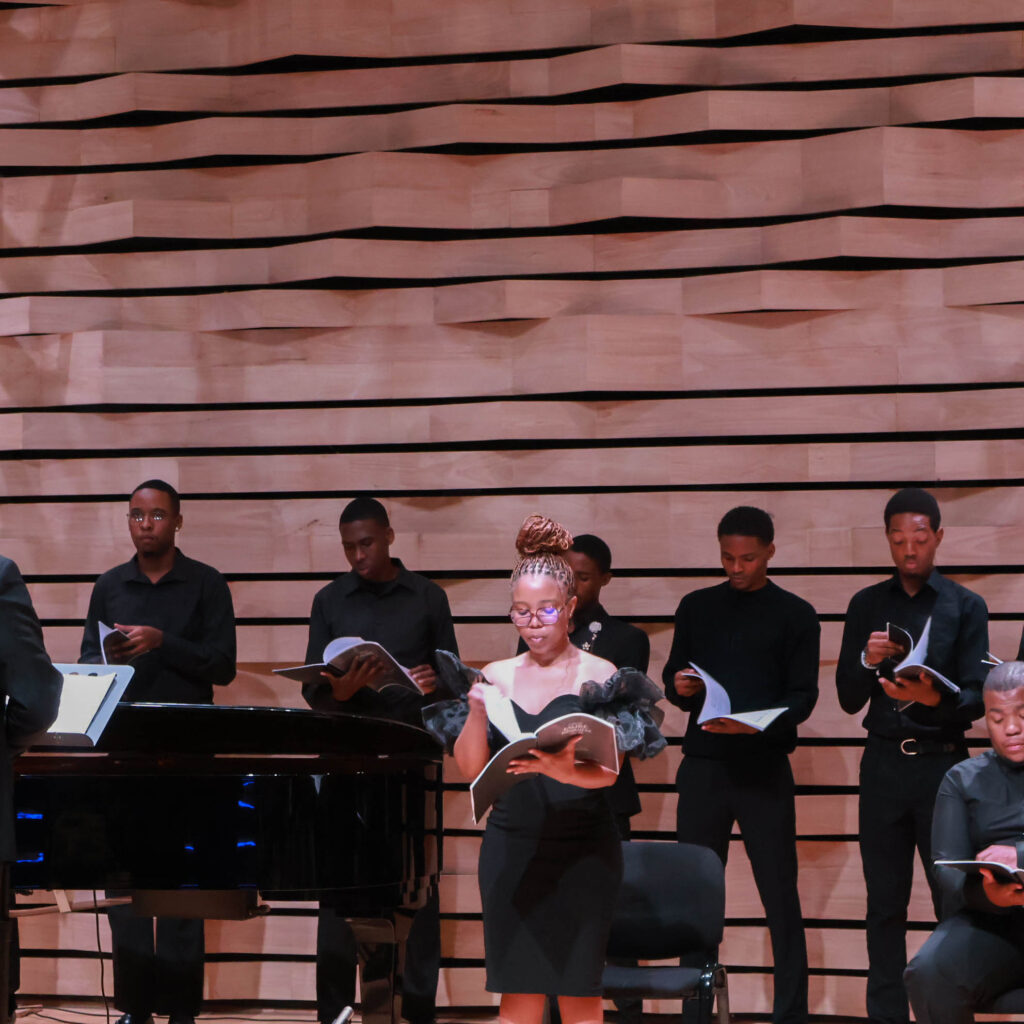
A picture of Charmaine Nkuna. Photo by: Sanele Sithole
Soprano Charmaine Nkuna, and bass Thato Morutle delivered standout solo performances, their voices cutting through the hall with clarity and emotional depth. Their presence added a personal dimension to the piece, elevating the performance from technically strong to profoundly affecting.
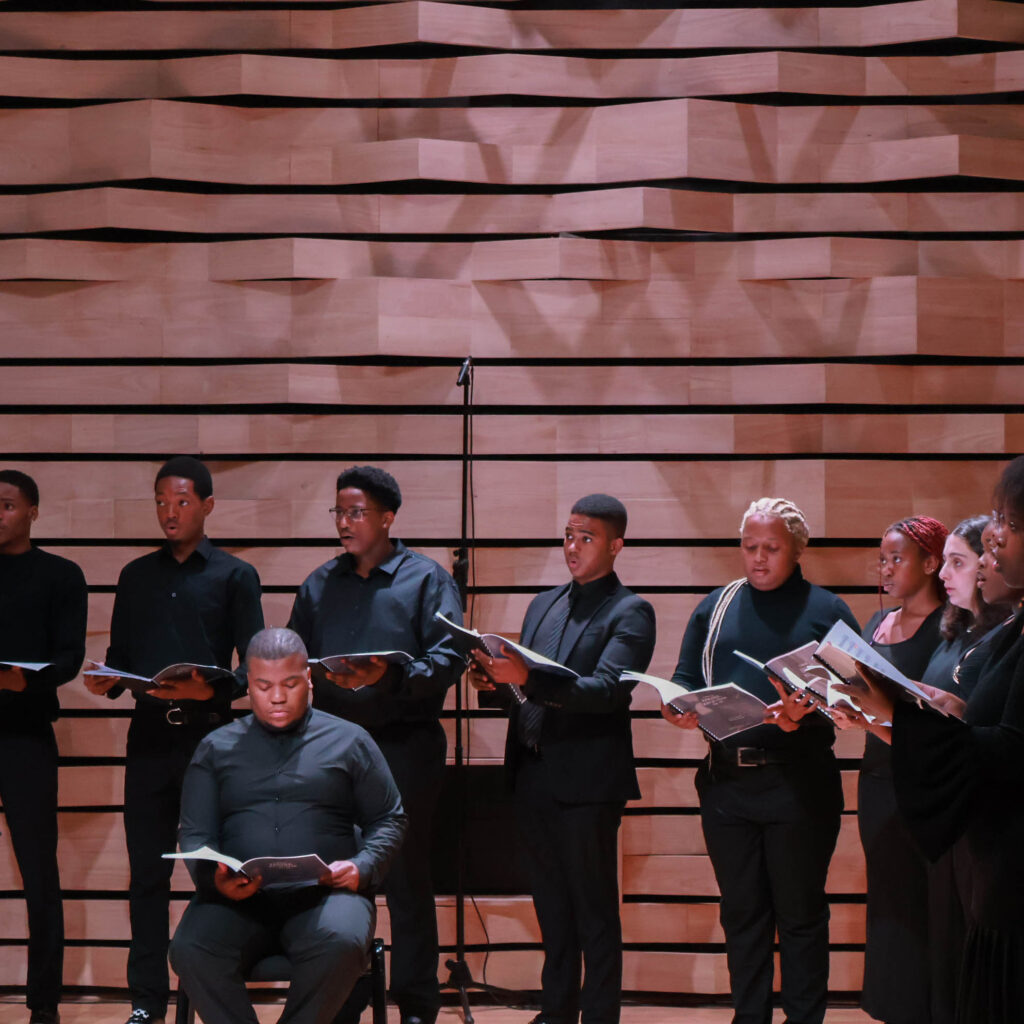
As the choir entered the stage dressed in black, the symbolism was immediate. The uniformed ensemble visually reinforced the tone of mourning and remembrance, aligning with the concert’s dedication to lives lost. What followed was a seamless performance marked by strong ensemble unity and precision — not a single note out of place.
The emotional impact resonated with the audience. First-year Film and Television student Luthando Skenjana described the experience simply: “It was an amazing performance; I quite enjoyed the show.”
For organisers, the festival represents more than a series of concerts. Choir chairperson Lesedi Masela, final-year Bachelor of Music student, described it as “a high-impact platform that brings together choral, chamber and orchestral performances within one integrated programme.”
Masela emphasised the significance of the festival’s timing, marking 50 years since the Soweto Uprising. “The opening concerts being requiems reflect that commemoration,” he said, adding that hosting performances across multiple venues transforms the festival into “a full-scale artistic ecosystem.”
That ambition is evident. Beyond musical excellence, the festival aims to create an immersive cultural experience — one that is intellectually engaging while remaining emotionally accessible. The opening concert achieved this balance, offering both technical sophistication and a deeply human narrative.
At its core, the performance was about young people remembering young people — a generational echo carried through music. It is this layering of meaning that makes the festival stand out, positioning it as both an artistic and commemorative space.
If opening day is anything to go by, the Wits International Vocal & Chamber Music Festival is not just an event to attend, but one to experience.
Vuvu Rating: 10/10
A picture of the choir. Photo by: Sanele Sithole
FEATURED IMAGE: A picture of the choir on stage. Photo by: Sanele Sithole
A signage change at Wits University highlights the student centre’s official name, but “The Matrix” remains the name that defines campus culture.
The student centre at Wits University now displays its official name in full, Student Union Building Matrix.
Many students were unaware of the formal name and have always called it “The Matrix.”
Despite the signage, “The Matrix” remains a key part of Wits student culture.
Something felt off at the university’s student centre, something felt strange. The bold, familiar “Matrix” signage that has long marked the heart of student life was gone. In its place was a more formal name: “Student Union Building Matrix.” For many students passing through, the change raised a quiet but lingering question—had “The Matrix” been renamed?
At first glance, it appeared to be a rebrand. But conversations across campus revealed that the story is less about a new name and more about how students experience and define their space.
Many students had not noticed the updated signage at all. Others only became aware of it after it was pointed out.
An image of the map of the Matrix and the Student Union Building. Photo Provided by: Jenna Stelli
“I’ve been at Wits for quite a while, and it’s always just been ‘The Matrix’ to me,” said Obakeng Leping, a fourth-year BSc civil engineering student.
Head of marketing Reshma Lakha-Singh said the official name of the building has always been Student Union Building, with “The Matrix” becoming widely used from 2001. The name gained popularity due to its catchy nature, influenced by both the building’s structure and the release of the movie by the same name at the same time.
“The decision to revert to the original name aligns with the university’s signage and wayfinding policy, which aims to ensure consistency, clarity, and uniformity across campus buildings as budgets allow,” said Lakha-Singh. “The current naming better reflects the building’s long-standing formal identity and institutional purpose.”
Jenna Stelli of campus planning added that the facility consists of two separate buildings. “The original Student Union building is to the south and the more recent Matrix building to the north. Because the building is experienced as one cohesive hub, we decided to include both names on the new signage to avoid confusion,” she said. “There haven’t been any official name changes — we are ensuring the signage matches how the building is used.”
The gap between official naming and everyday language reveals something deeper about student identity at Wits. Names are not only assigned; they are shaped over time through shared experience.
For students like Tiyane Matsheke, a third-year BA general student, the informal name carries a sense of belonging. “I’ll still call it ‘The Matrix’ because that’s what everyone knows. It’s part of Wits culture,” she said.
Attempts to trace the origins of the name remain unclear, with key sources unavailable to comment. Yet its meaning is evident in how firmly it is held by students.
Even as official branding becomes more visible, it is unlikely to redefine what the space represents. The signage may read differently, but in conversation, memory and daily student life, “The Matrix” continues to hold its place.
FEATURED IMAGE: Picture of the Student Union Building Matix. Photo by: Sanele Sithole
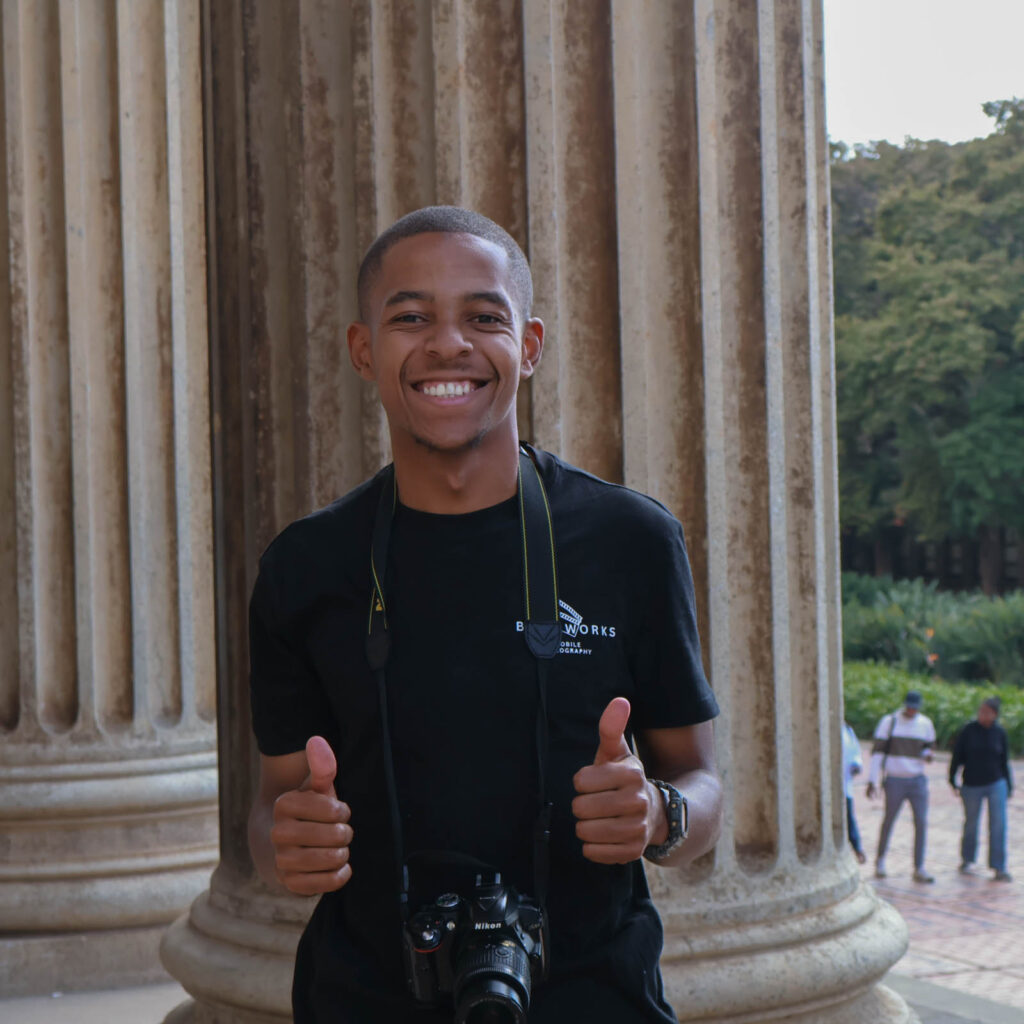
Student photographers at Wits University raise concerns over being denied the opportunity to work during graduation season after missing an accreditation deadline they claim was not clearly communicated.
Student photographers were denied access to graduation due to a permit system.
Many missed the deadline because communication was unclear.
Students are calling for better communication and inclusion in future.
Over the past two weeks, Wits University Campus has been filled with celebrations as graduates marked a significant milestone. For many, taking photos at iconic locations such as the Great Hall has become a tradition. However, this year, some students were forced to make alternative arrangements after unaccredited photographers were denied access.
The university introduced a system requiring photographers to obtain permits to operate during the graduation period. A limited number of registered photographers were allowed to work in designated outdoor public areas, while Campus Protection Services (CPS) removed those without permits.
According to the Examination and Graduation Office (EGO), the application process was posted on the university website ahead of the graduation period. Officials say that the system aims to manage the high volume of people on campus and ensure safety during the ceremonies.
However, several student photographers say they were unaware of the process until it was too late.
A student photographer with they camera around they neck by the Great Hall. Photo: Sanele Sithole
Bakithi Mntungwa, a Bachelor of Education Honours student, said he only learned about the permit requirement shortly before graduations began.
“I only found out about the permit a few days before the first day of graduation, when I was already booked to take photos. By then, the application had already closed around February,” he said.
Other students echoed similar frustrations.
Thabo Mthembu, a Mining Engineering student, said while he understands the reasoning behind the rule, he believes student photographers should have been prioritised.
“I understand the need for regulation, but I had hoped student photographers would be given priority,” Mthembu said.
Mthembu also described difficulties accessing campus with his equipment, despite being a registered student, saying he was denied entry by security.
Students argue that communication could have been improved through official university channels such as email or social media platforms. They pointed to previous opportunities, such as photography competitions, which were widely advertised to students.
“When the applications closed, I was still dealing with registration and financial issues. Checking the website was the last thing on my mind,” Mntungwa added.
While acknowledging the importance of safety and organisation during graduation, both photographers believe that clearer communication and greater inclusion of student creatives could have prevented missed opportunities.
As graduation season has ended, students are calling for more transparent processes and better access in the future so that student photographers are not only present on campus, but part of capturing its most important moments.
Questions were sent to the EGO for comment, specifically regarding concerns raised by student photographers, but no response was received by the time of publication.
FEATURED IMAGE: A student photographer by the Great Hall taking a picture of the landscape. Photo: Sanele Sithole
In episode six of We Should Be Writing season 7, the team unpacked the evolution of music as a form of expression and protest, through four decades in the South African context. The episode explores the journey of South African music and its consumers from the 80s, 90s, early 2000s and contemporary listeners. From the […]