
A sonic experience that opened one up to the divinely realm and showcased how powerful the voice and song can truly be. Through Lili-La MandiFeze took the audience through a journey of exploring vulnerability and honouring the fullness of the black femme experience.
On Sunday afternoon, August 16 2026 I found myself at the Makgabeng shelter in the Wits Origins Centre. There I sat in a dimly lit room with a huge rock painting in front of me. In my eyeline there were two black chairs covered by a red cloth, a white candle, lit and sparkling in a cup, and red cloth draped on the floor. The space itself was intimate and made me feel as if I was underground. The red cloth and candle added a homely feeling to the environment. I sat in anticipation, curiously waiting for what was to come from MandiFeze’s sonic experience Lili-La. Initially, I had no idea what to expect. I was pleasantly surprised by how immersive and soulful the overall experience was.
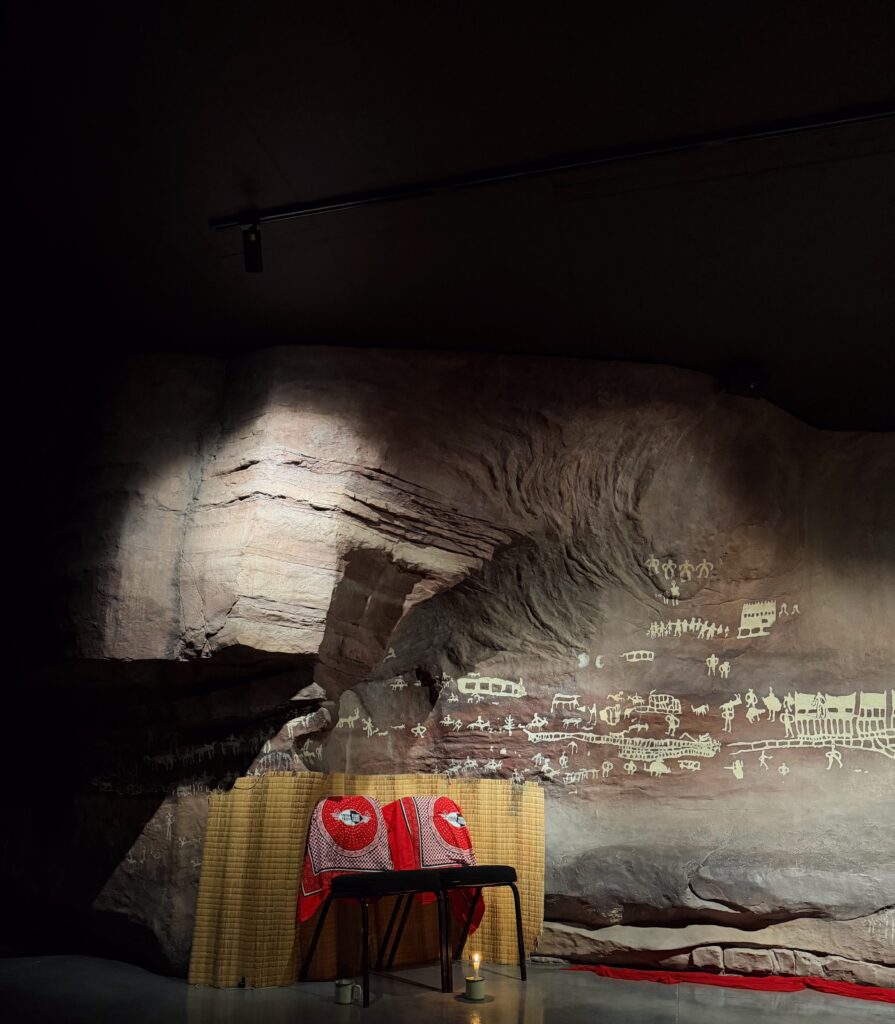
MandiFeze is a music and theatre duo founded by former Witsies, Mandisa Yende and Lufezo Bovungana. The audience was met with the sound of a whistle coming from around the corner, and an enchanting voice that signified the start of the show. MandiFeze seamlessly brought the spiritual realm to the physical room, it felt as if the world had stopped and we were all absorbed by the performance at hand. This sonic experience was like no other, it incorporated physical movement, with sounds of emotive expressions, vocals that touched the ceiling and a hollowing silence that sent chills down one’s spine.
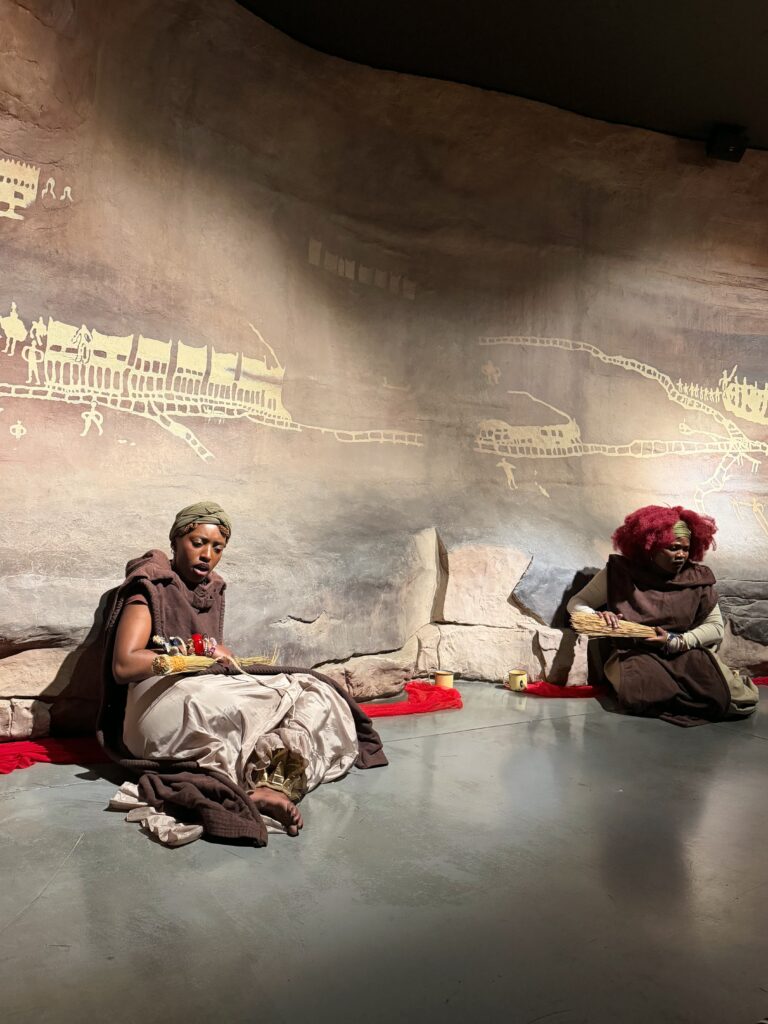
The intense eye-contact from MandiFeze, as they searched around the room, made one feel involved in their inner world. MandiFeze pierced through one’s facade of strength and softened the heart space; vulnerability became the meeting point between the audience and performance.
From the beginning up until the very end, Lili-La took us on a journey that unpacked the source of ingoma (song) for MandiFeze. The performance made us witnesses to their internal process of connecting with the divine and honouring the influence of the matriarch. Whilst also unpacking what it means to be an artist. They clearly acknowledge that apart of the purpose of ingoma is to heal people.
In conversation with MandiFeze, Bovungana shed light on how the meaning of Lili-La is ever changing, they said: “we’re beginning to realize that it’s really just a commemoration to the Black femme body that has contributed to ingoma but is also the reason why ingoma exists. It’s an ode to the people that came before us and gave us the song. It (the song) comes from the spirit; it comes from the place in which dead people live.” Yende further added that, “Lili-La then becomes the full spectrum of black femmehood and black femme emotion. We’re trying to really showcase the full spectrum from black joy to black grief to sadness to just visibly showing that you’re carrying weight and allowing ourselves to bear that burden and to showcase what that burden looks like, boldly.”
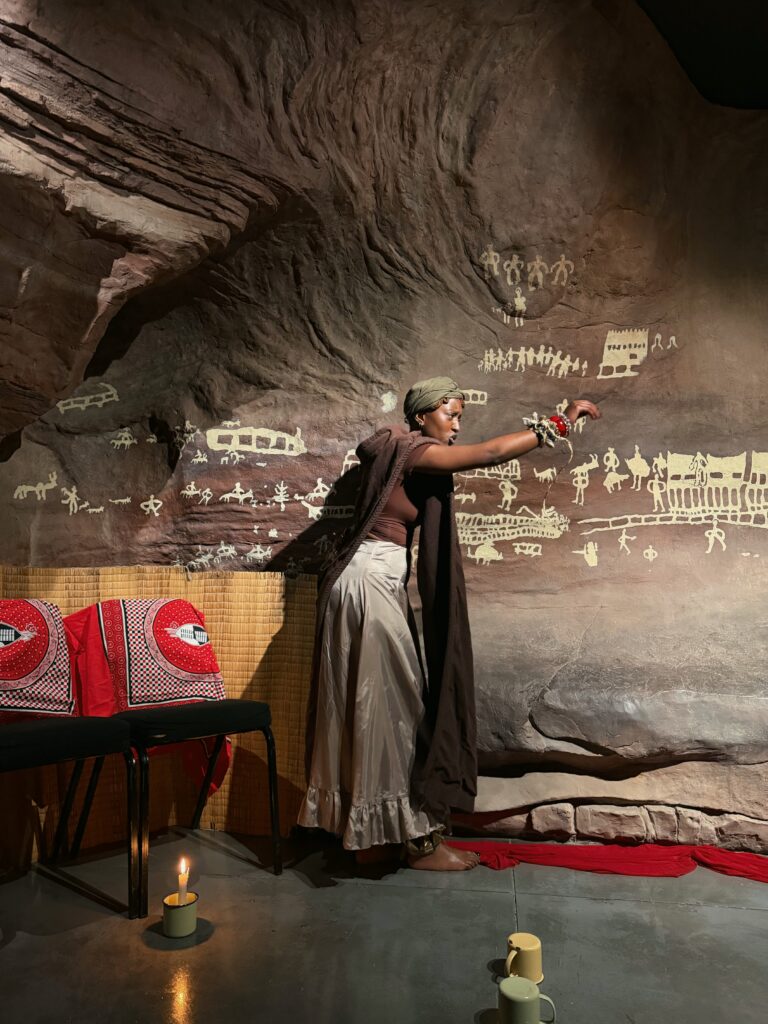
According to MandiFeze, Lili-la stems from combining their research during their honour’s studies, where Bovungana explored, “how expressive sounds have contributed to vocal techniques, specifically ululation” and Yende shared, “I was looking into the ways that wailing and ingoma are forms of healing for the black femme body because of how we’ve been expected to always be imbokodo. So, breaking down that narrative of imbokodo by embracing wailing.” Lili-la therefore is a creative play on words, incorporating ukulila (to grieve) and ukulilizela (ululating).
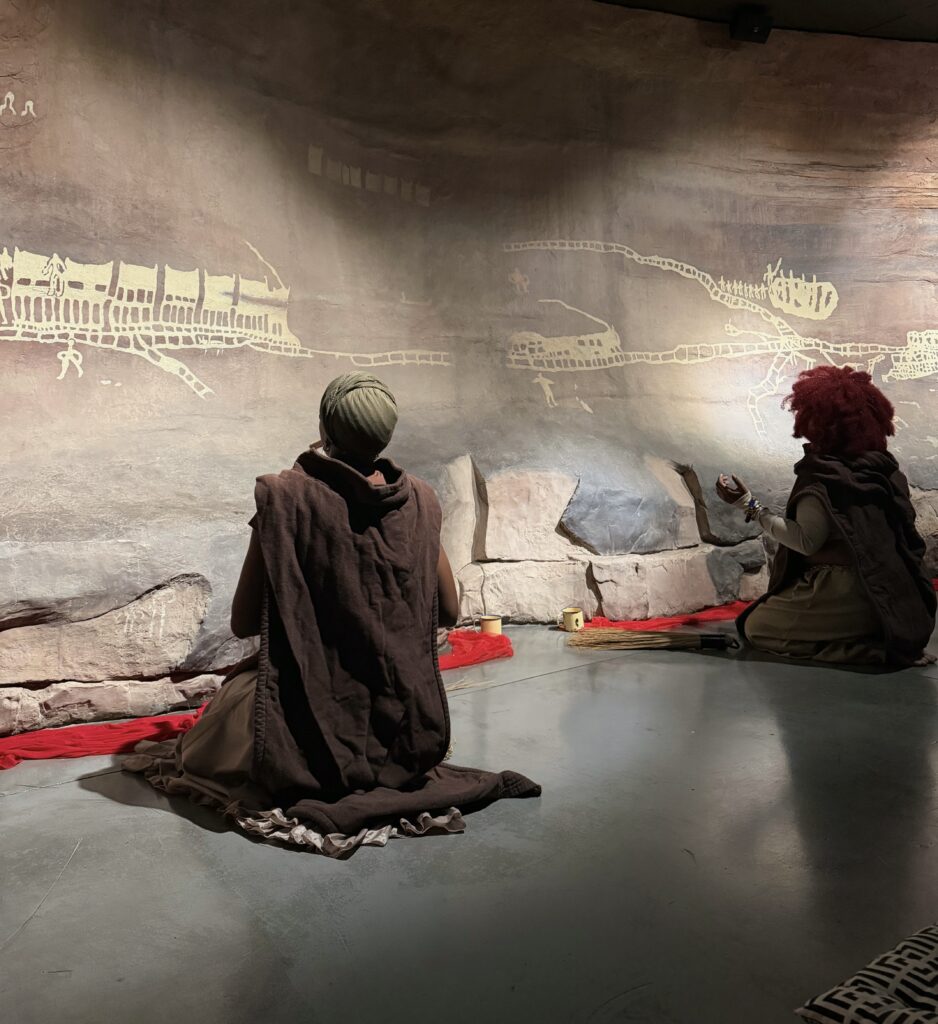
I was captivated by the intimacy and vulnerability in the way they embodied joy through laughter and sadness through intense wailing. I was moved when they both prayed asking for strength to continue on their journey as artists and for guidance along the way. Additionally, the moments of silence that followed brought a sense of stillness in the room, bridging a connection between all those who bore witness and collectively felt the essence of the performance.
When asked what they hoped the audience would take away from the sonic performance, Yende shared, “I think the hope is in a breath for the audience, an exhale from the audience, which for us I think would be mission accomplished as healers. In that people walking out feeling different, reflecting, and seeing either parts of themselves or parts of some form of matriarch belonging.” On the other hand, Bovungana shared, “Allowing your body to feel all the emotions without holding back. Giving the platform to feel what wants to be felt. Be easy on your vessels.”
Overall, the experience was eye-opening, as it awakened me to how healing and expansive the voice can really be when used intentionally. The creative passion of MandiFeze ignited a subtle fire in me that left me feeling inspired, grounded and tender. MandiFeze cultivated a unique sonic experience rooted in African customs, which felt like a homecoming, a return to self.
Vuvu rating 9/10.
FEATURED IMAGE: A photo of Mandisa Yende and Lufezo Bovungana during the performance. Photo: Sikelelekile Pahlana
RELATED ARTICLES:
- Wits Vuvuzela, REVIEW: A Season in Hillbrow, August 2026
- Wits Vuvuzela, REVIEW: The revival of Sophiatown, April 2026
- Wits Vuvuzela, REVIEW: The Heart Is A Muscle, April 2026

