The value of gold is undeniable, yet the real question becomes, where and when did it all start?
One hundred and forty years ago, the fate of Johannesburg had undeniably changed when gold was first discovered in the south of the Witwatersrand. Johannesburg commonly referred to as eGoli; the city of gold, gained its notorious and prestigious title due to its richness in mining activities. The Witwatersrand distinguished itself as, “the largest gold-producing province ever discovered”, according to DavidRusso, Dr. Sharad Master and Professor Gillian Drennan in their Jozi140 Excursion Guidebook.
Yet, beneath the surface there is a deeper layer of history that predates the official discovery of gold. The Wits Geoscience Department partnered up with Evolutionary Studies Institute, Wits Origins Centre, Joburg Tourism, Mineralogical Association of South Africa, Harmony Gold and Historical Papers Research to provide a two-day excursion that uncovered the hidden stories that paved the way for the birth of gold.
Iron Age History
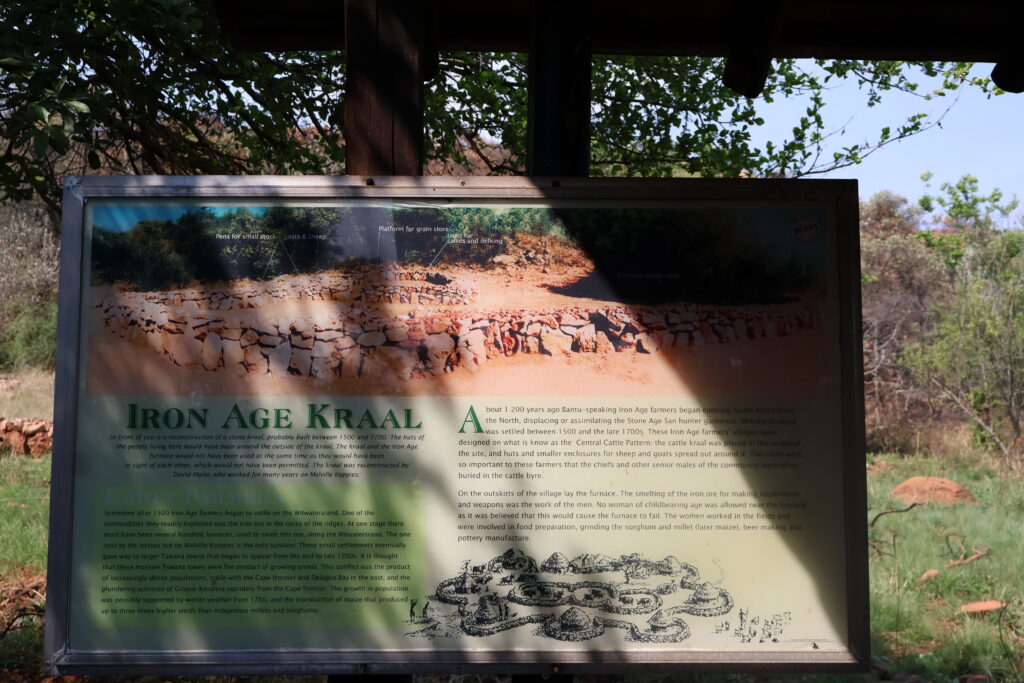
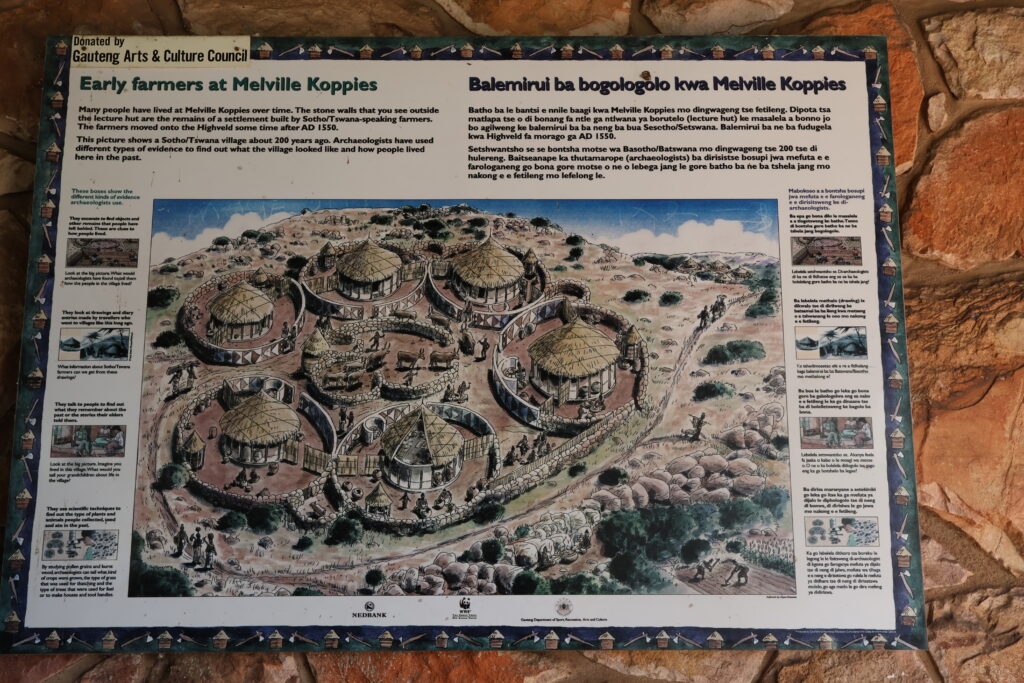
Upon arrival at Melville Koppies, tour guide, Sandra Murray shed light on the Iron Age history which Professor Drennan described as a time of “pre- mining, mining.” It was a time characterised by lot of economic activity, mining and trade at the koppies. Archaeologist, Professor RJ Mason discovered seven archaeological sites in the 1960s at the Melville Koppies such as Stone Age camps between 250 000 and 100 000 years old, a 500 year old ancestral Tswana iron furnace, and 300 year old Tswana hut floors and pottery. Other artefacts on display included stones used to make weapons and the only iron furnace that is being preserved at the Melville Koppies.
A photo of an information board about the Iron Age Kraal at Melville Koppies. Photo: Sikelelekile Pahlana An illustration of early farmers at Melville Koppies. Photo: Sikelelekile Pahlana
Geological History
Alongside the rich remnants of the iron age, is the geological history embedded in nature that precedes the existence of humankind. The contorted beds (see fact box) found alongside the pavements near Helpmekaar College act as a testimony. Professor Drennan said, “Without the contorted beds we would not have discovered the gold in the extension of the East Rand and West Rand,” and this is due to their highly magnetic nature which aided in the discovery of goldfields beyond the Central Rand. “The Contorted beds have been around for roughly 2.9 billion years and give a snapshot of what was going on around the time, [in a geological context], you can see when life was coming in, evidence that there was oxygen in the early atmosphere,” added Dr Glynn.
Info Box
Contorted Bed iron formation, also known as the Jan Smuts bed (South African Committee for Stratigraphy, 1980), is known for the small-scale incongruent folding present in it at many localities. Source: Economic Geology
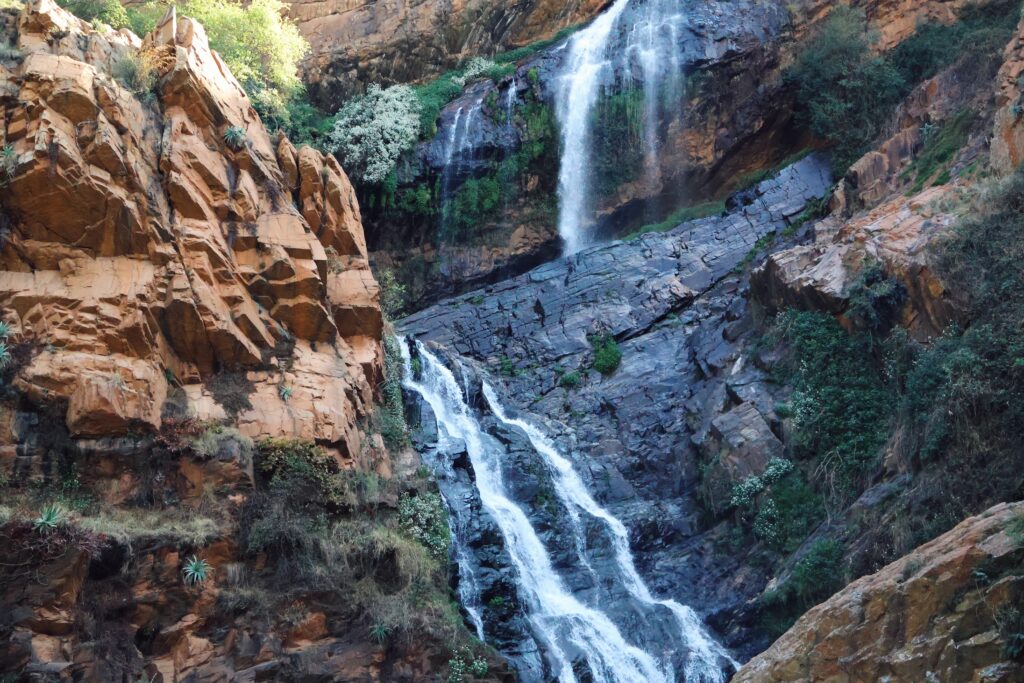
When one looks closely, you can see a glistening effect within the contorted beds, which is due to individual crystals. Alongside the magical contorted beds is the Witpoortjie Waterfall located at the Walter Sisulu National Botanical Gardens where the water flows over the white quartzites of the Witwatersrand and shale rock. According to Whitfield, “the falls were already recognised before the discovery of gold and were recorded on Fred Struben’s 1885 prospecting map of the district.”
A photo of the Witpoortjie Waterfall at the Walter Sisulu National Botanical Gardens. Photo: Sikelelekile Pahlana
“Prior to the discovery of the Main Reef in 1886, the Witwatersrand was a sparsely populated landscape of open grassy plains, rocky quartzite ridges, and numerous streams and waterfalls. Today, the same landscape has been transformed into the Johannesburg Metropolitan Area… the present-day landscape is strongly controlled by the underlying geology,” writes David Russo, Dr. Sharad Master and Professor Gillian Drennan in the guidebook.
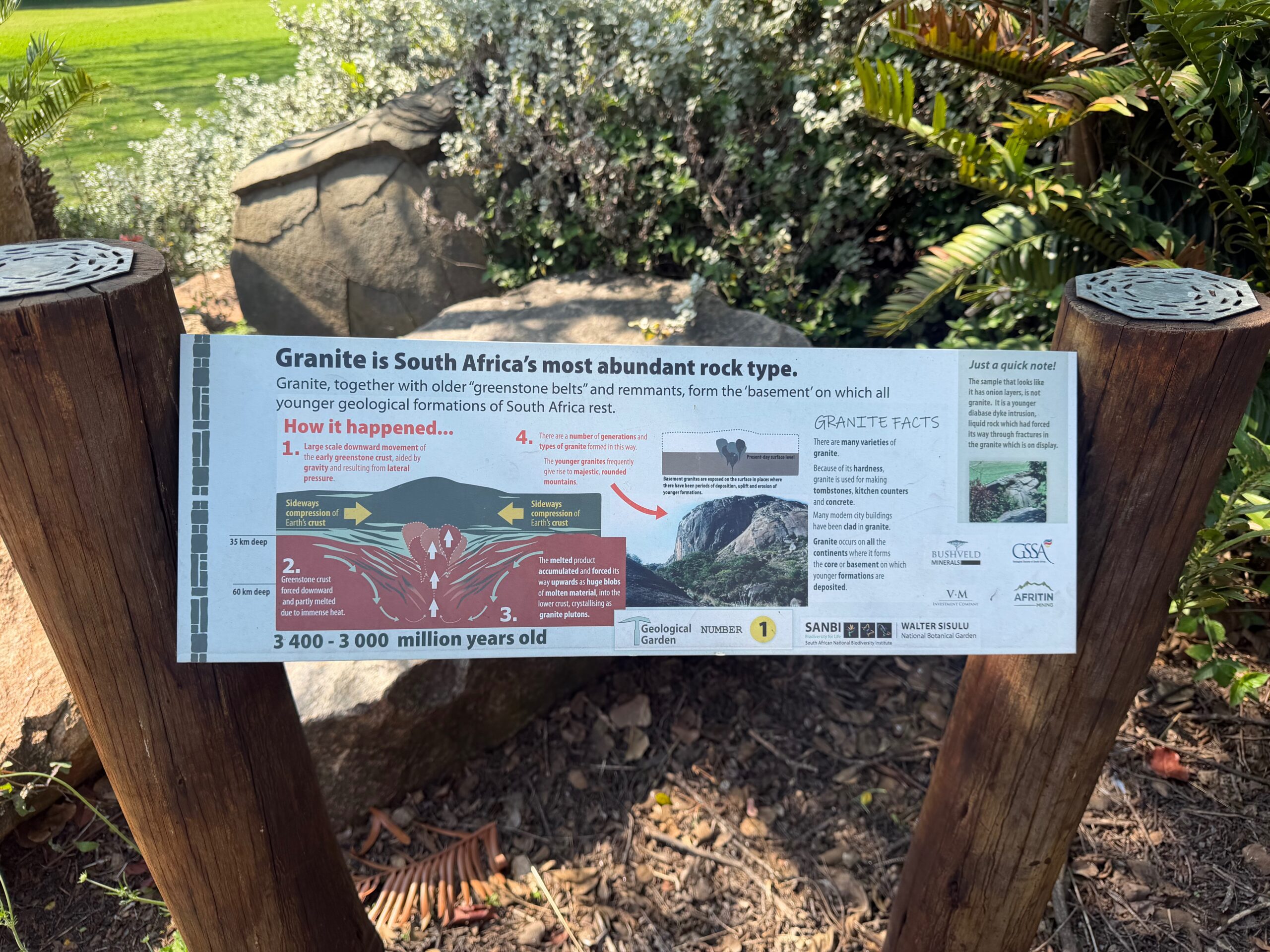
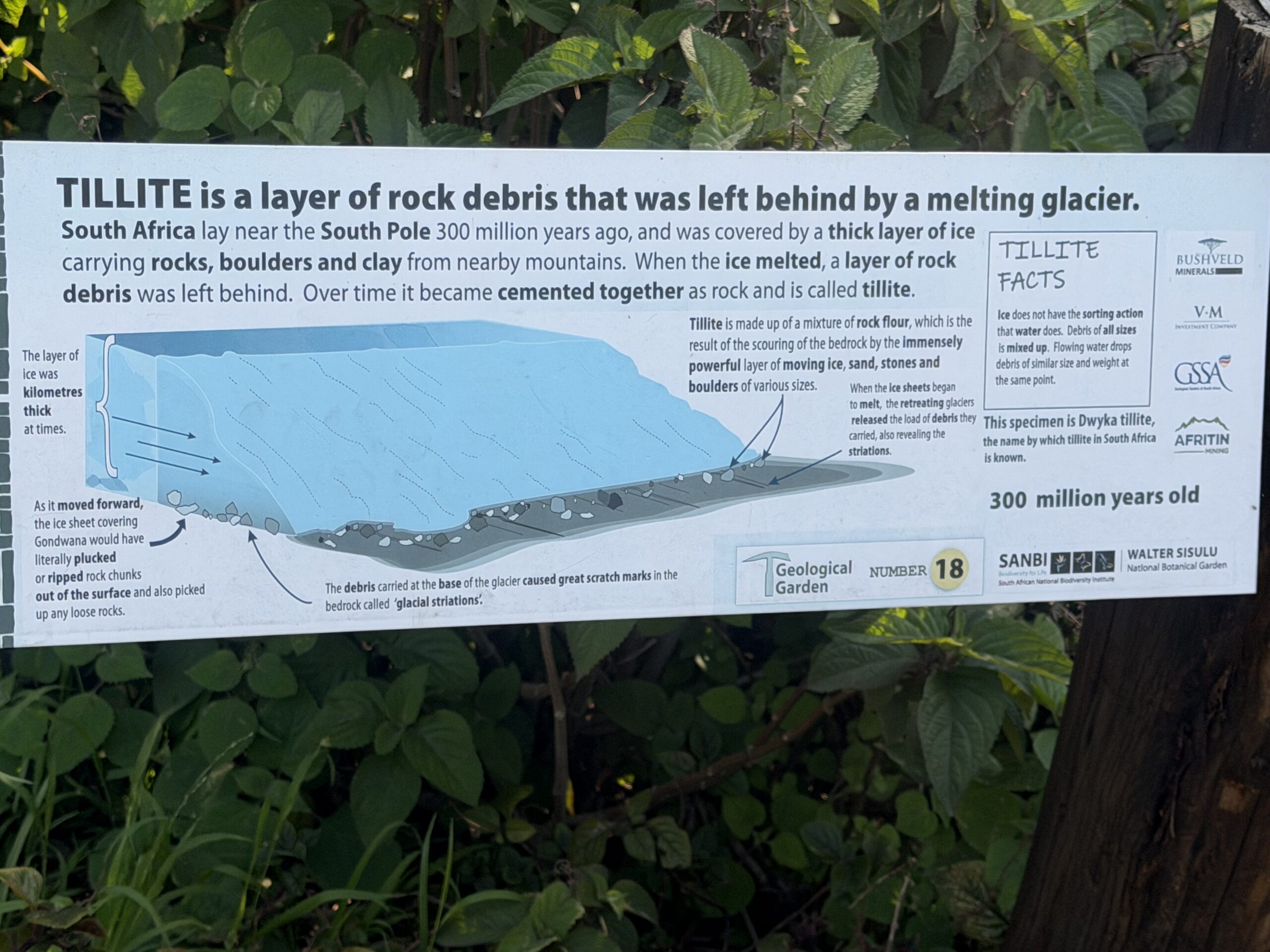
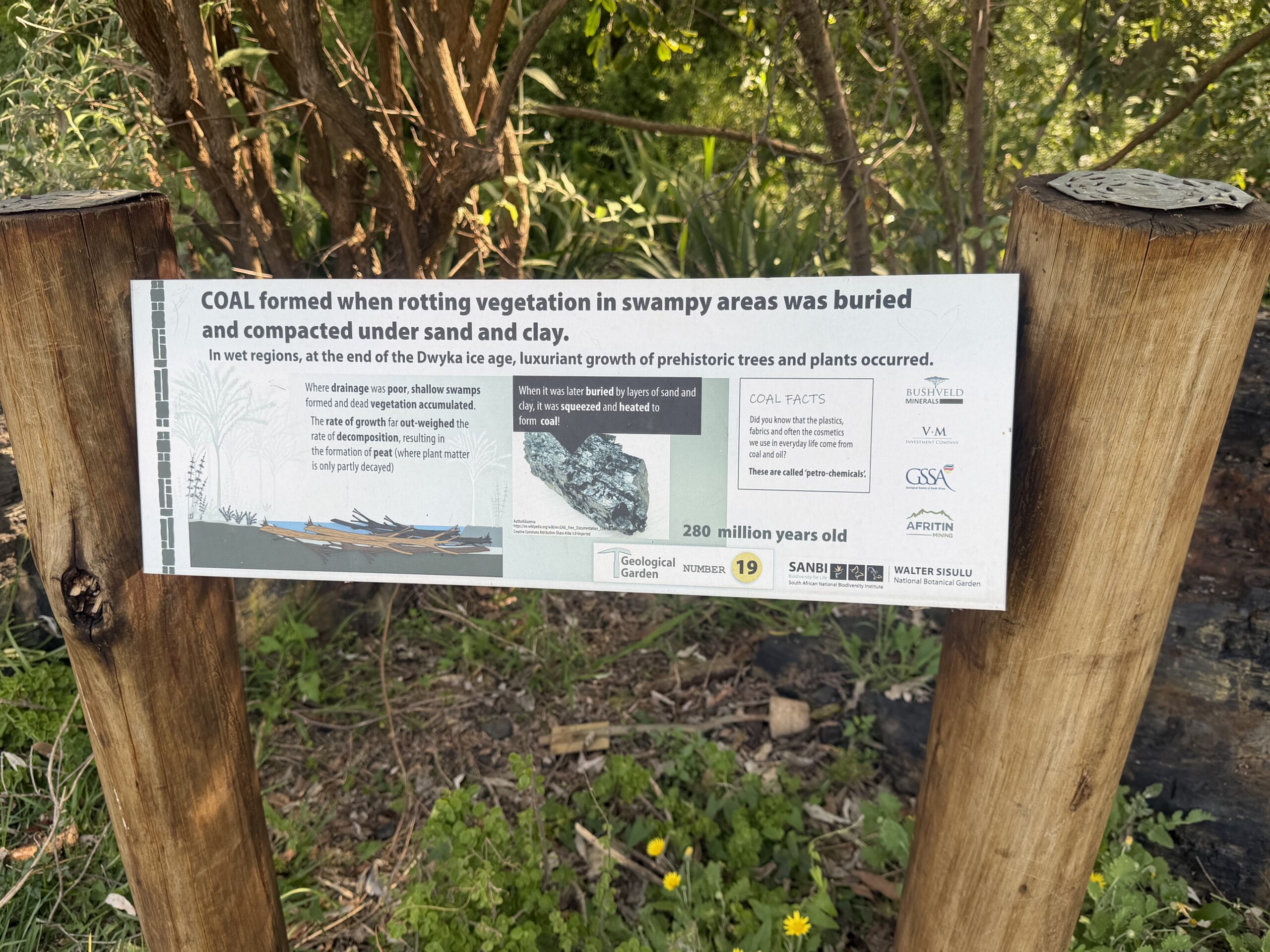
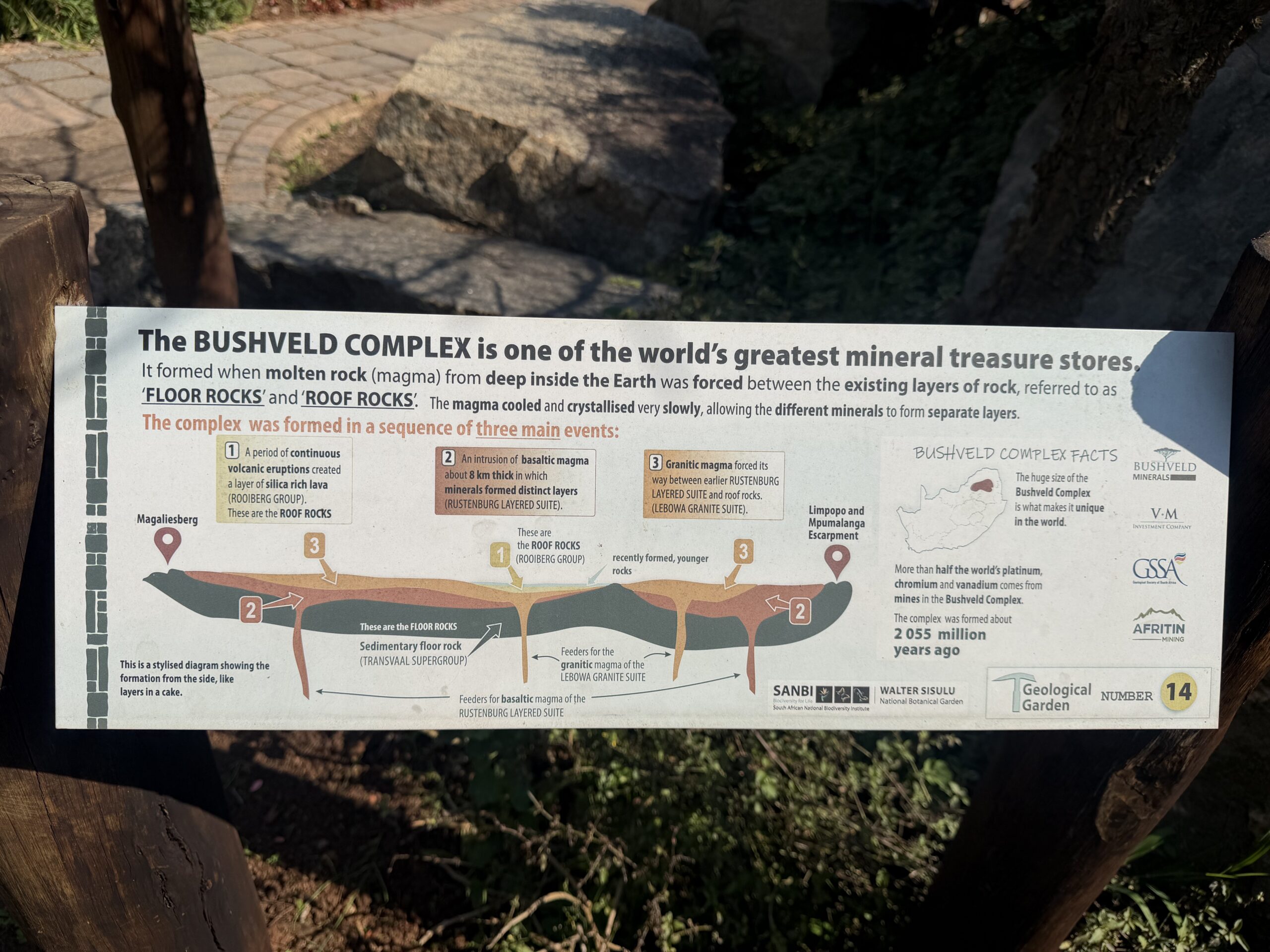
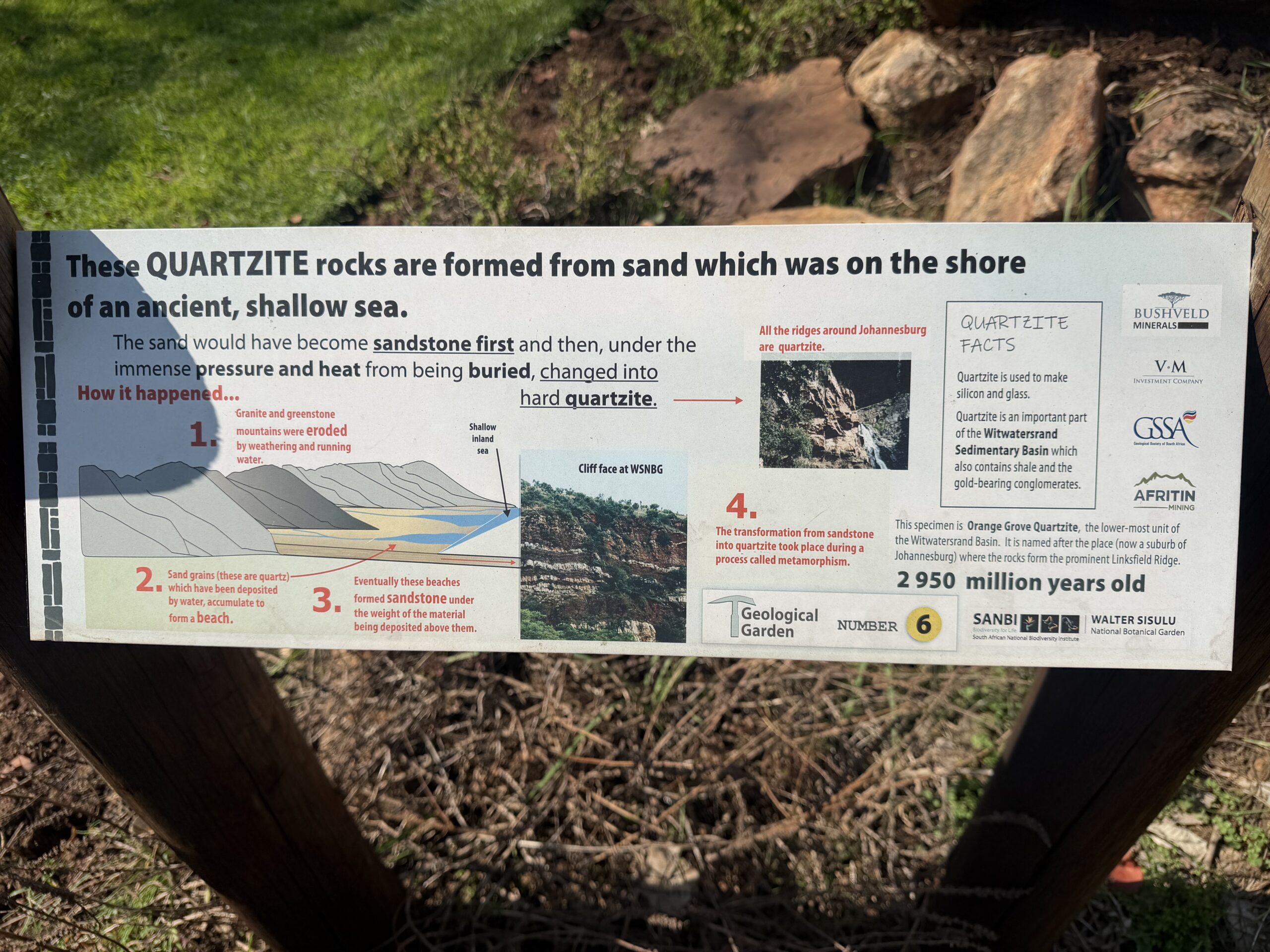
The Walter Sisulu National Botanical Gardens also offers a self-guided trail where one can learn about the history of rocks that were significant in shaping the Witwatersrand landscape.
A photo of a detailed information board about granite at the Walter Sisulu National Botanical Gardens. Photo: Sikelelekile Pahlana
A photo of a detailed information board about Tillite at the Walter Sisulu National Botanical Gardens. Photo: Sikelelekile Pahlana
A photo of an information board about coal at the Walter Sisulu National Botanical Gardens. Photo: Sikelelekile Pahlana
A photo of a detailed information board about The Bushveld Complex at the Walter Sisulu National Botanical Gardens. Photo: Sikelelekile Pahlana
A photo of a detailed information board about Quartzite at the Walter Sisulu National Botanical Gardens. Photo: Sikelelekile Pahlana
Northwards House and Mineshaft Museum
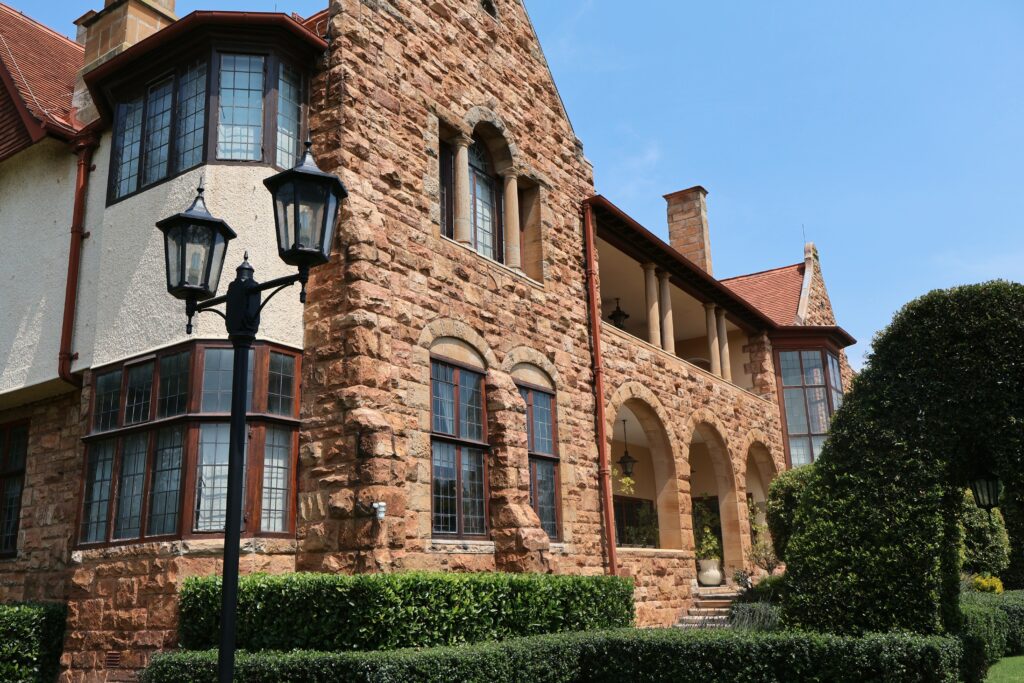
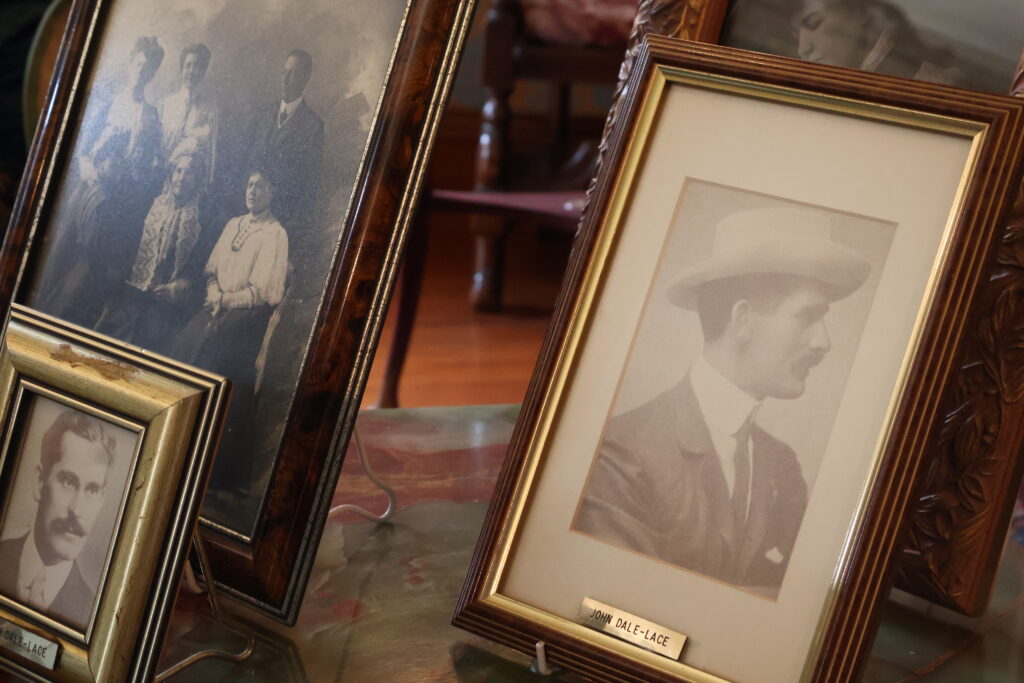
To get a glimpse of what life was like for mine owners, we visited a 122-year-old mansion, Northwards House, which was initially built in 1904 for John Dale Lace and his wife Josè Dale Lace. Mr Lace owned the Lace Diamond Mine. A tragic fire forced the Dale Lace’s to move out in 1911. A year later, gold Randlord Sir George Albu and his family moved into the renovated residence. Albu was one of the founders of General Mining and Finance Corporation. The Northwards House acts as a physical manifestation of its mining legacy. Inside the house, there was the business room which consisted of books about mining and the boardroom which has a map layout dating back to 1907 titled “Clifton” which is modern day Braamfontein, and on the map are familiar street names which are still used today such as: Jorissen Street, Juta Street and De Korte Street. Throughout the excursions, one is constantly reminded about how the past informs the present.
A photo of the Northwards House. Photo: Sikelelekile Pahlana A close-up photo of the Dale Lace family portraits. Photo: Sikelelekile Pahlana
The commercialisation of gold
From the physical house we went straight into the underground – the source of mining, as we explored the Mineshaft Museum also known as the Ferreira Mine Stope, located three floors below the Standard Bank Building. The preserved mine site offers a real-life example of life during the Witwatersrand Gold Rush in 1886. The Ferreira Mine was one of the first mines established following the discovery of payable gold on the Witwatersrand in 1886. The dim lighting and photographs of mine workers around the walls allow one to travel back in time.
Yet the question of who was the first to commercialise gold still lingers in contemporary times; this was the opening question during Bruce Cairncross’s keynote address on Saturday, September 18, 2026, at the Wits origins Centre. In relation to the discovery of gold in 1886, he said, “the history is contentious, there were activities happening in South Africa, prior to 1886 at the Witwatersrand.” Cairncross took the audience through a timeline that credited Pieter Jacob Marais in 1853 who panned gold, yet Marais did not find its source. Additionally, there were also the Struben brothers, namely Frederick and Harry Struben who claimed to have discovered gold.
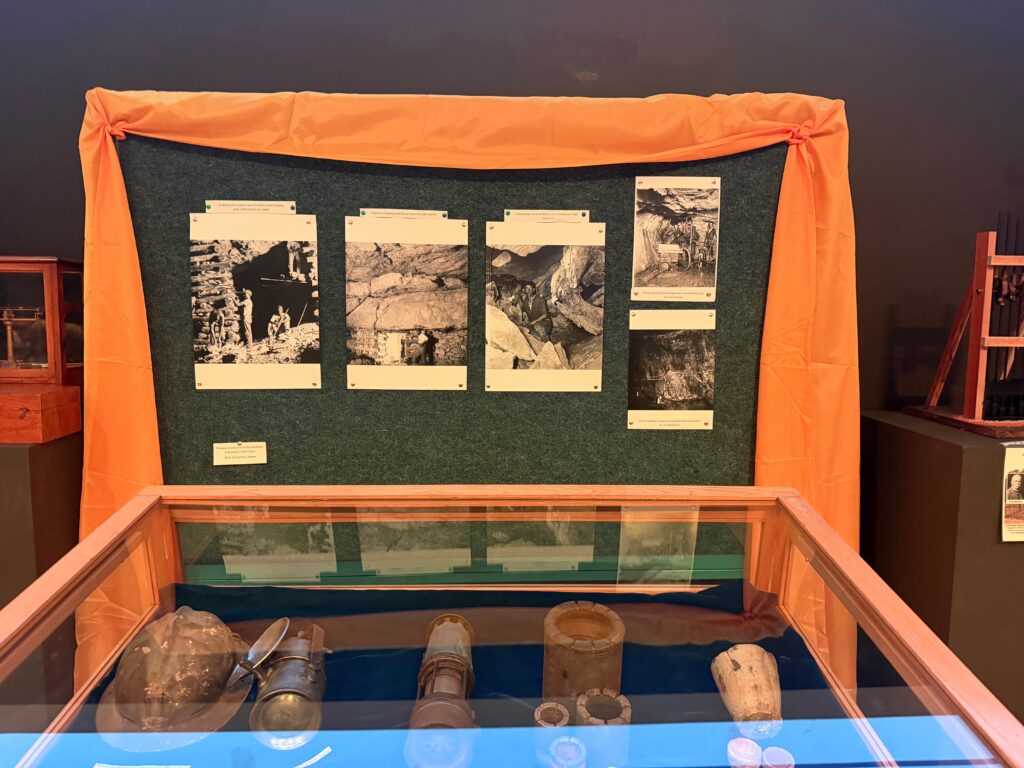
Prior to the commercialisation of gold in 1886, Frederick drew a map in 1885 which consisted of a layout of Langlaate discovery site being the Main Gold Reef. Cairncross proceeded to give a detailed overview of gold and asked the critical question of “What’s the future of gold?” to which he answered: “It looks a bit dismal in South Africa,” partly due to the fact that South Africa is not producing as much gold as it once did. To end off the first day of the excursion, the Wits Geoscience Department had an exhibition which consisted of gold samples as well as photograph archives that speak to the history of gold mining.
A photo that showcases the Wits Geoscience exhibition at the Wits Origins Centre. Photo: Sikelelekile Pahlana
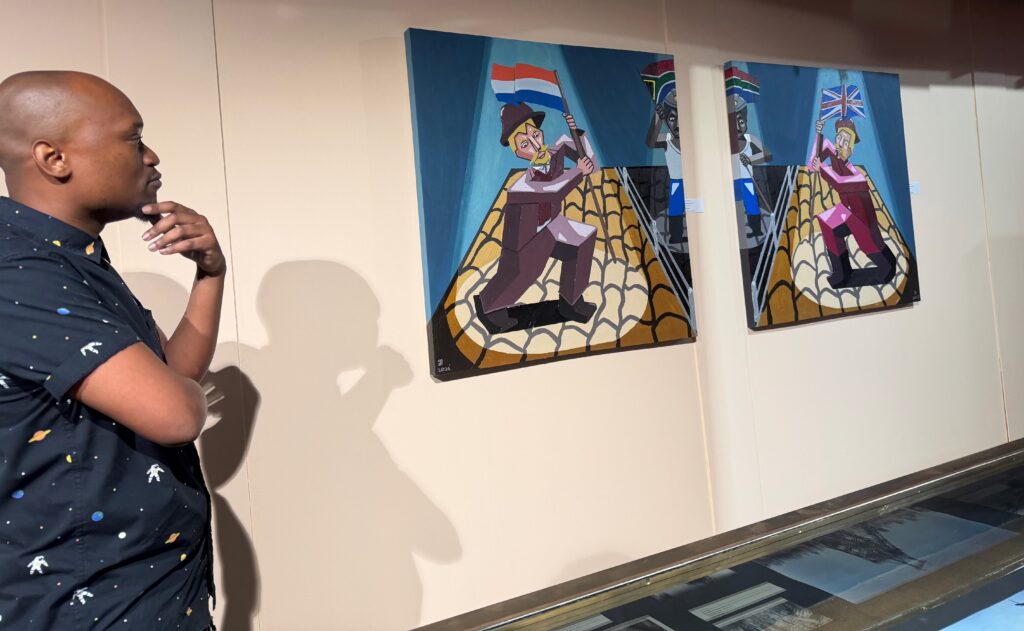
Bringing it back to the present at Museum Africa, an exhibition by Tshepo Bopape depicts his artistic interpretation of the industry, and asks, “what gives something value?” Bopape’s artwork is centred around Kimberely and its diamonds which funded the mining in Johannesburg. The art critically analyses, “the relationship between man and precious stones, it is not just economic but also psychological and spiritual,” Bopape shared. The art acts as an intersection between the history of colonisation with an interrogation around value systems and the division of society on a class and racial basis.
A photo of Tshepo Bopape looking at his artwork at Museum Africa. Photo: Sikelelekile Pahlana
Therefore, it is evidently clear that the history of gold in Johannesburg’s Witwatersrand is multifaceted and cannot be understood through a singular story. The contribution of nature and significant landmarks contextualise how gold was formed and commercialised. However, it is important to note that the work of the unsung heroes being black mining labourers had an immense impact on the success of the gold mining sector.
FEATURED IMAGE: A photo of a contorted bed which was near the Helpmekaar College. Photo: Sikelelekile Pahlana
Nowadays, history is no longer stored away in a box, it seeks to be at our fingertips, on a screen.
The physical Drum archive is transitioning into the digital space through the process of digitisation making it more secure and accessible for people to access.
The legacy of Drum is immortalised through universities, local heritage sites and the physical Drum Archive shop.
History continues to root itself in the present, almost demanding that its presence is felt, acknowledged and learned about. During Apartheid, one of the most oppressive periods in the country’s history, a group of predominately black men and women remained at the frontlines, writing extensively about the harsh conditions of Apartheid. Capturing moments at the right place, at the right time; giving the world a glimpse of South Africa when the apartheid government used various tools to promote a distorted image of its state sponsored violence.
The Drum crew gathered together and redefined the history of journalism, legends such as Henry Nxumalo (Mr. Drum), Todd Matshikiza, Nat Nakasa, Lewis Nkosi, Juby Mayet, Casey Motsisi, Can Themba, Bloke Modisane, Es’kia Mphahlele, Paul Magubane, Jurgen Schadeberg, Bob Gosani, Alf Kumalo and many others created a timeless blueprint that would still be used as a reference point many years later.
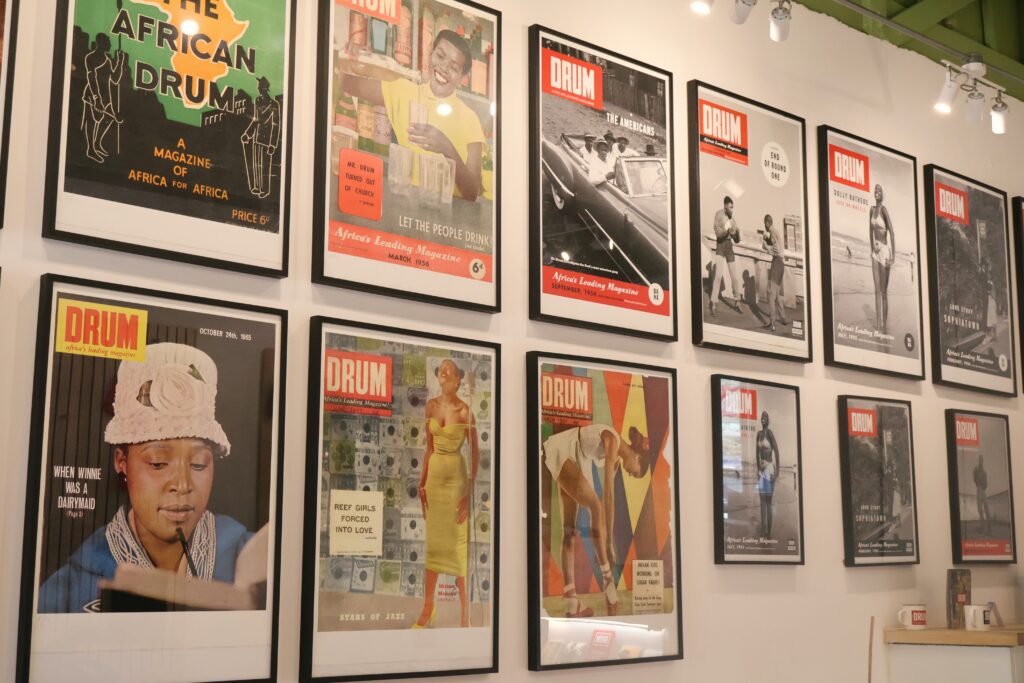
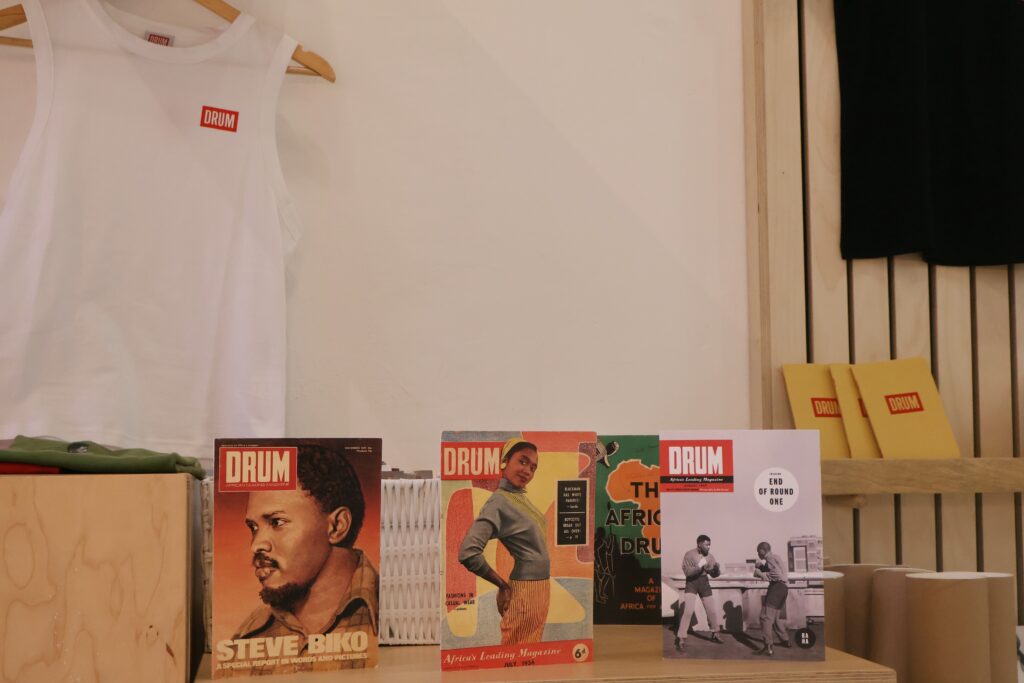
A photo of the frames of various magazine editions from the Drum Magazine at the Drum Archive Shop. Photo: Sikelelekile Pahlana
To understand why Drum was so significant, one has to go back in time. Before there was Drum, it was initially the African Drum which was launched by Robert Crisp. According to South African History Online, “the content consisted mainly of tribal preaching and folktales and despite a readership of about 20 000, the magazine was not financially successful.” In 1951, Jim Bailey took over and renamed it Drum, and the media landscape was set to change forever, “the image of the magazine was transformed, and its content began highlighting urban black culture.”
Beyond highlighting urban black culture, Drum offered creatively compelling stories and photographs that were relatable for black people who rarely saw themselves being represented in the media during Apartheid. The vivid imagery, undercover reporting, and personal written insights made it stand out. Drum also gave people the opportunity to ‘Write to Drum’ which enhanced the personal connection between Drum and its readers.
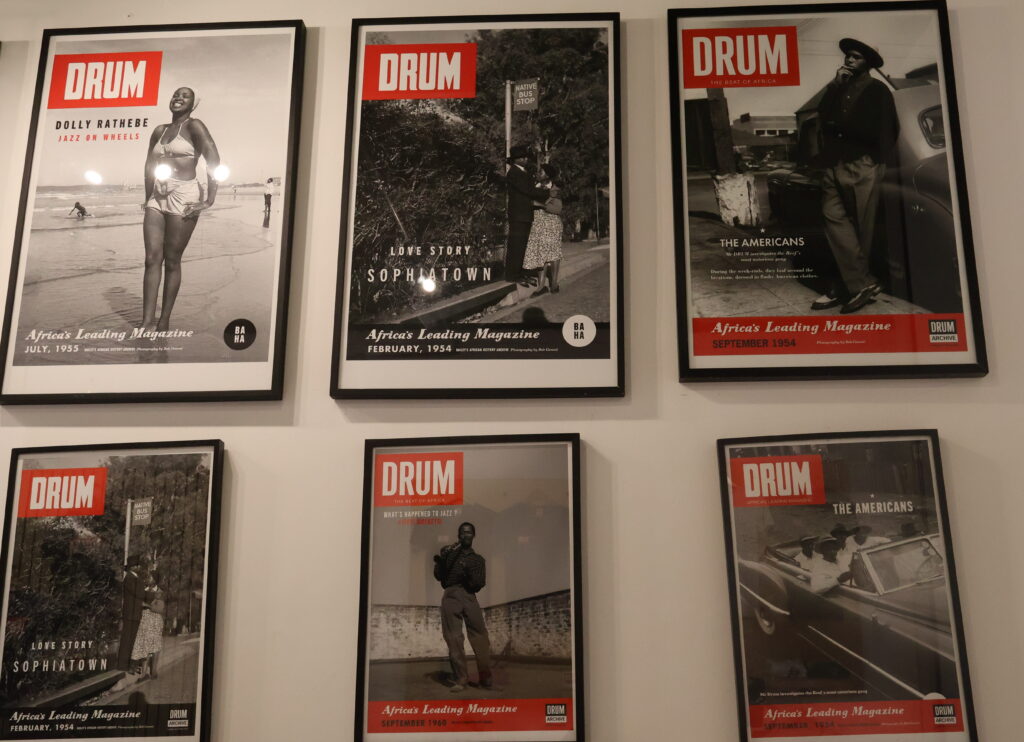
Sandra Matutoane gleams as she reminisces about editions that stood out to her: “The 1955 issue of Dolly Rathebe on the beach, it is the back story of the cover rather than the cover that makes it my favourite. Dolly and the photographer had to get to the beach at 5am because black people were not allowed on the beach during those times. It was the first time a black woman appeared on a cover in South Africa, and she was in a bikini! There was total outrage!”
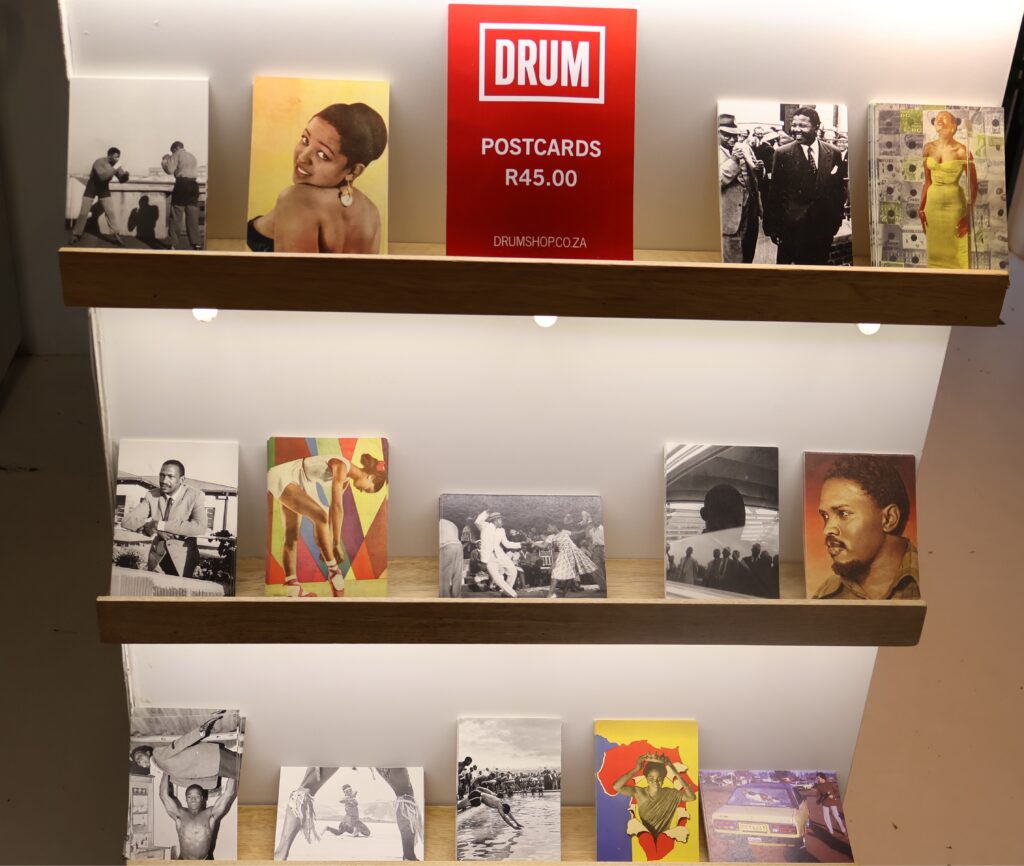
A photo of more frames from the Drum Archive Shop, with the Dolly Rathebe cover on the far left. Photo: Sikelelekile Pahlana
When asked which Drum editions stood out to Professor Lesley Cowling, she shared: “Well I’d say that there are a couple of editions where Drum is introducing investigative journalism which I think are quite important. Because that changed the magazine from just being about celebrities, crimes, sports and music to also investigating problems in South Africa…
Henry Nxumalo suggested investigative journalism, the potato farms in Bethal where he put himself on the line as a farm worker to expose the brutal treatment of farm workers. And then to find ways for one of the photographers to take pictures. So that was one of the articles and there was a huge response in society to it and questions were asked in parliament about the conditions of the farm.”
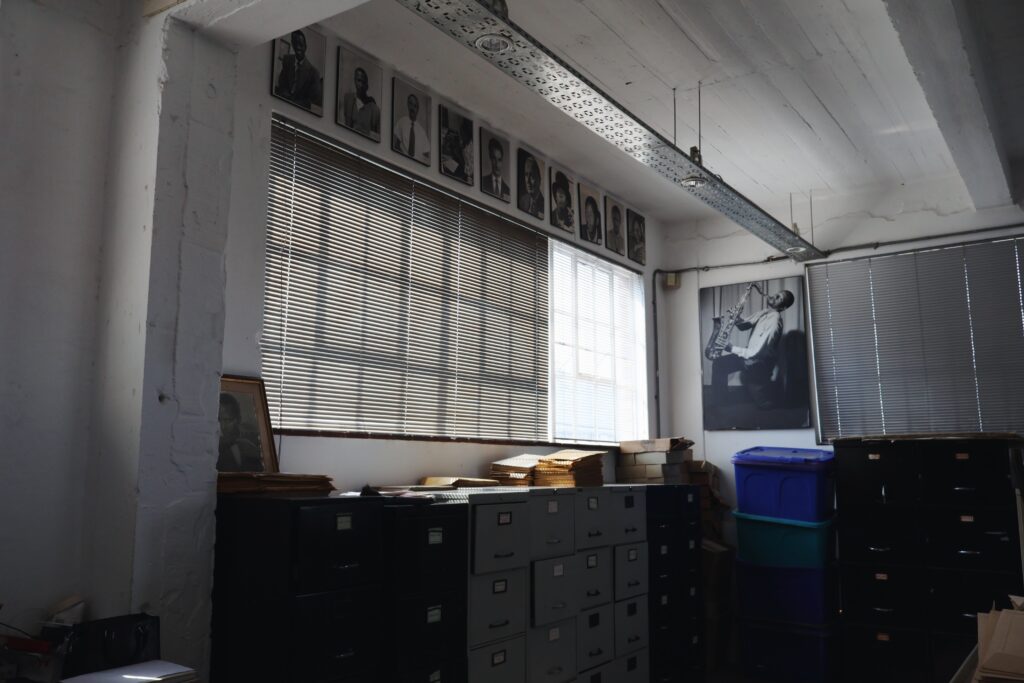
A photo of the cabinets at the Drum Archive / BAHA Archive. Photo: Sikelelekile Pahlana
It is conversations like these that transport one to a time in history that the younger generation could have never physically been a part of. The question arises; how can they access this history and experience these stories for themselves?
At Arts on Main, upon entry there is a red staircase that leads you into a world of South African history. This room holds the delicate original copies of written stories, records and photographs that date back to decades ago. Of course, this is none other than the Drum Archive, formerly known as the Bailey African History Archive (BAHA). The Drum Archive is filled with large, bright, colourful frames of iconic magazine covers that range from the 1950s -1960s and the 1970s-1980s. The cabinets offer a unique lens of history. Yet it is not sufficient for the archive to be trapped in a file.
In the physical room, there was a black tent on the far-left corner of the space. Inside is where the magic of digitisation happens, this is where the bridge between the physical archive and the soon to be digital archive connects. The digitisation process consists of “taking a physical document and converting it into digital formats.” such as digital photos, covers and stories. In a digital age, digitisation is more relevant now than ever before. It is important for history to be accessible to people from all walks of life.
A photo of some of the Drum legends at the very top and cabinets at the Drum Archive / BAHA Archive. Photo: Sikelelekile Pahlana
In conversation with the archivist, Bongi Masawangani, she reflected on patterns/trends that come up in the process: “I’ve realised that earlier years people from overseas, researchers used to come to the archive more often. And we’d do research for them. But since we’ve started digitising, it tells us that it is working because there is no need for them to come physically to the archive, they can access it wherever they are. So, it reduces even the expenses…”. A trend that also reveals the contrast between local and international engagement with the archive.
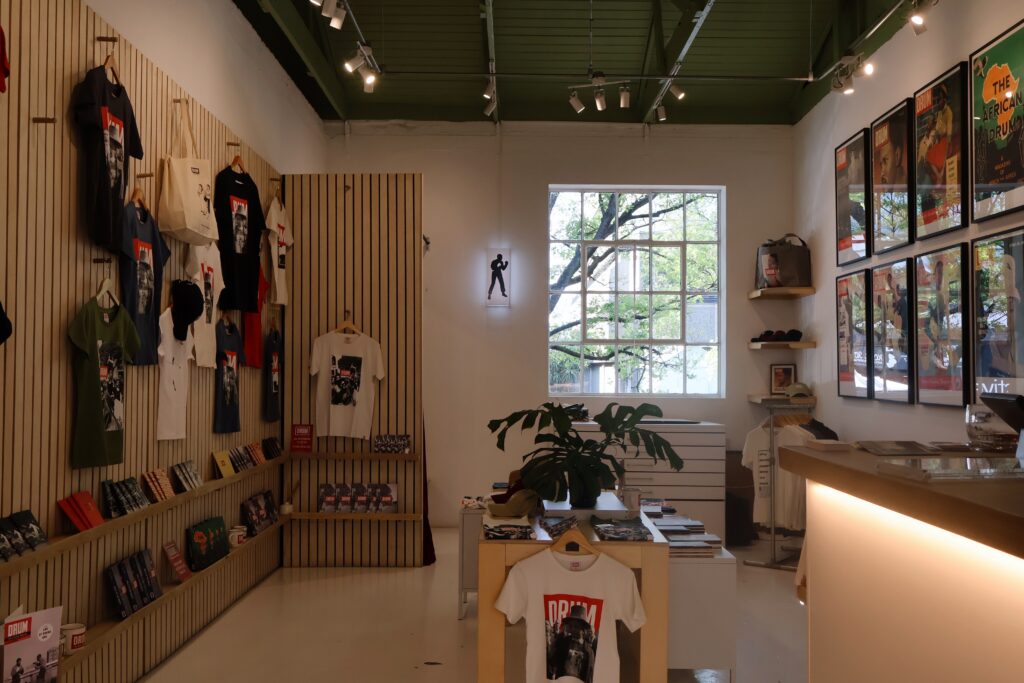
The legacy of Drum is felt beyond the physical room at Arts on Main. Masawangani said DRUM is being immortalised in different places such as the University of California, Los Angeles (UCLA), the Apartheid Museum, the William Cullen Library at Wits University, the Steve Biko Foundation and Nelson Mandela Foundation. The Drum Archive store adds a creative touch to the archive by incorporating it in everyday items such as t-shirts, mugs and notebooks.
A variety of photos from the Drum Archive shop, that consist of notebooks, t-shirts, vests and postcards. Photo: Sikelelekile Pahlana
Matutoane shared how young people who come into the Drum Shop “have a sincere sense of curiosity about the magazine even though your Gen Z / Gen Alpha have very little idea of what Drum is or where it fits into the history of South Africa.” Matutoane emphasises how the lack of knowledge is not a barrier but an invitation for young people to discover more.
For the curious, ordinary person who may come across the archive’s content online, knowing how to make use of it is key. Masawangani said, “Everything that is online is copyrighted, so even an ordinary person that is interested in using BAHA material, you need to contact our license person, Kate Dearlove. You need to write an email to Kate and explain how you want to use the image, whether it is for academic purposes, or you want to publish a book, or you want to use the image for a film, you need to ask for permission.”
Evidently, digitising the archive becomes an important asset to society, allowing people to engage with South Africa’s history, and ensuring it is more widely available as time progresses. Above all else, digitising ensures the sacred history does not get lost.
FEATURED IMAGE: A photo of the frames of various magazine editions from the Drum Magazine at the Drum Archive Shop. Photo: Sikelelekile Pahlana
The public lecture held in memory of Nokuthula Simelane highlighted how the impact of apartheid era crimes continues to be felt in contemporary times.
Nokuthula Simelane was only 23-years old when she was abducted.
Some say the TRC has failed a lot of victims and their families.
At the same time, Steve Biko’s 1977 Inquest was reopened this week at the Gqeberha High Court.
Imagine your loved one leaving the house under false pretences and never making it home; 49 years later and there is still no clarity on where she was or what happened to her.
On Wednesday, August 26, 2026, Ditsong National Museum of Military History hosted a public lecture titled The Unfinished Business of Justice: Remembrance, Resilience, and the TRC questioning the continued failure to resolve apartheid era cases. The public lecture was given by the museum’s curator for insignia, Tinyeko Ndhlovu, to honour of the life of anti-apartheid student activist Nokuthula Simelane.
Simelane (23), code name ‘Mpho’, was an Umkhonto weSizwe (MK) operative. On September 10, 1983, Simelane met Norman Mkhonza, an ‘askari’ (state spy) linked to the Soweto Intelligence Unit. As a result, Simelane was abducted by the Apartheid Security Branch and brutally tortured for an extensive period and eventually murdered.
A police docket was opened in 1996, followed by a short-lived investigation with no leads. Despite years of legal action and attempts by her family to uncover the truth, no one has been arrested or held accountable. It was only in 2019 that Simelane’s death certificate was issued.
Simelane was a Bachelor of Administration in Social Science, majoring in Public Administration, student at the University of Swaziland (currently University of Eswatini), at the time of her disappearance, and just a month shy of graduating.
Discussing her legacy, Ndhlovu said, “Simelane’s life and disappearance speak to the courage of young women in the liberation struggle, the enduring need for truth about enforced disappearances, and the pursuit of justice for apartheid-era crimes. Her story remains a reminder that South Africa’s freedom was secured through profound personal sacrifice.”
A photo of Tinyeko Ndhlovu speaking at the public lecture. Photo: Sikelelekile Pahlana
A major reflection from the day was the failings of the TRC in providing justice for victims. “The TRC has failed us. A lot of families’ history is suppressed,” said Ndhlovu.
Asked about the significance of younger generations knowing this history, Ndlovhu said “history repeats itself. It is very important for young people to know the history of the country for what it was.”
FEATURED IMAGE: A photo of the public lecture presentation which includes a photo of Nokuthula Simelane. Photo: Sikelelekile Pahlana
Time has swiftly moulded this year’s Wits Vuvuzela team, and the newsroom has become a true witness to our growth.
As the end of block three approaches, the newsroom is busier than ever. People are chasing deadlines, writing features, and trying to fulfil the requirements of our portfolio submissions; the urgency is felt and it almost feels as if one is running out of time.
Yet time is such a fascinating concept, because it feels as if this year flew by. It is easy to take for granted how far you have come when you are so caught up in trying to get everything done all at once. As journalists we are taught to observe the world around us. Rarely do we take time to reflect on our own growth.
For the Wits Vuvuzela team, the journey started on the first day of school, February 3, 2026, when we first became acquainted with the newsroom. The mentors, Bonolo Mokonto and Lulah Mapiye gave us a demonstration of what a pitching session would look like, and little did we know the journey that awaited us. When the first two weeks of pitching came, it was intense to say the least, having to stand in front of everyone and sell your story was no child’s play, nobody realised it then, but we were such shells of ourselves.
With time, we grew out of our shells and started evolving. Collectively, we have watched stories grow from the newsroom into the world. More notably we have all grown together, from karaoke night to late nights working together in the newsroom, to becoming a solid support system for each other; where we laugh the hardest together and comfort each other when doubt gets the best of us. I have learned that the crux of journalism is in human connection. Connection with a source, a colleague, a mentor, and the world – a world of storytelling, and of human connections.
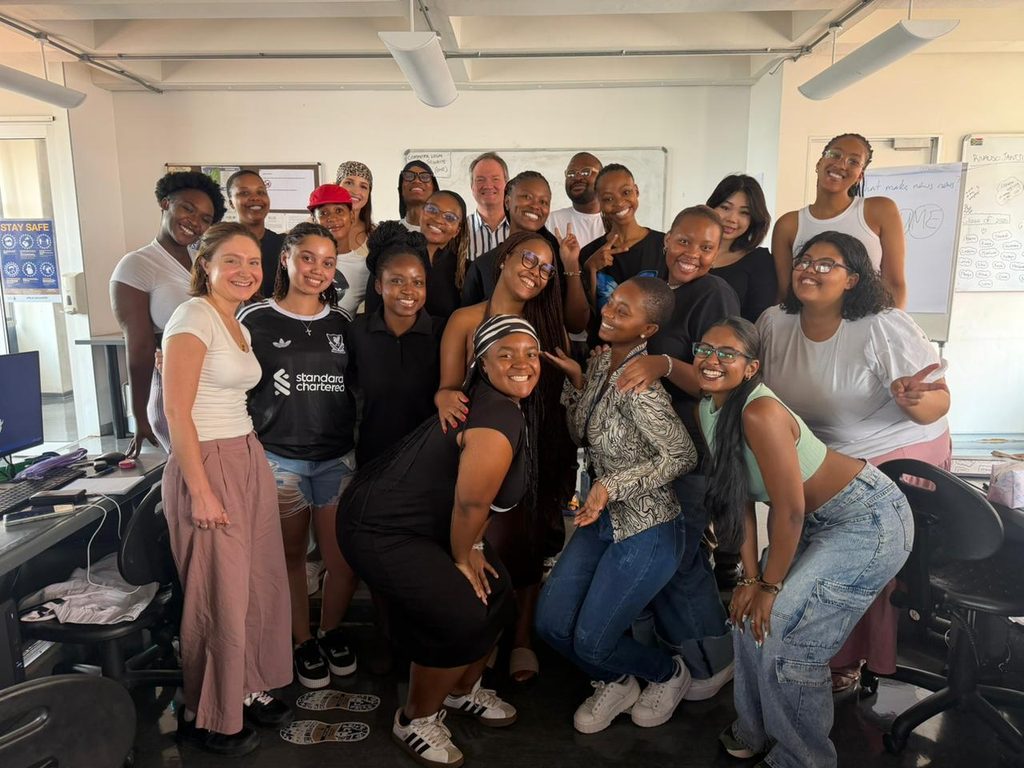
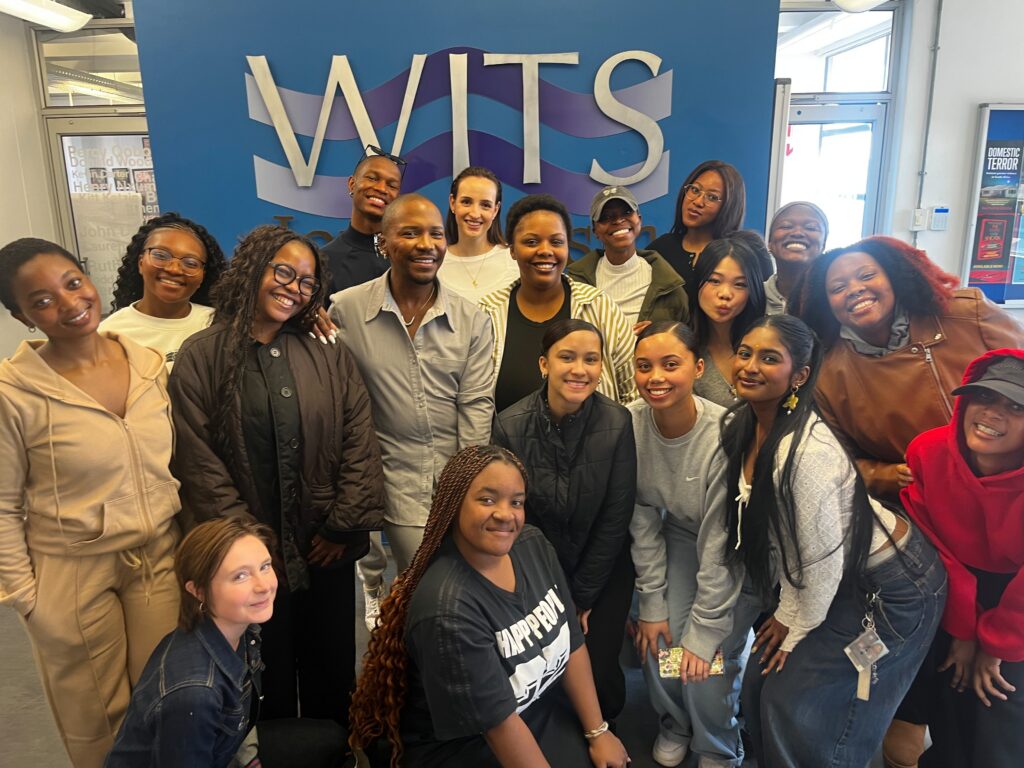
A class photo with Kevin Ritchie.
We have been privileged enough to interact with a variety of experts and places that have ultimately moulded us. Kevin Ritchie was our first guest lecturer and anchored us in purpose as he taught us to, “remember your why.” Alaister Russell taught us how to be one with the camera, Russell reminded us that, “your humanity is your guiding light in everything that you do.” Kgomotso Modise enlightened us about how important it is for journalists to adapt with the times and make use of social media to deliver reliable news. Ray Mahlaka put us on the spot by doing research on us all and effectively showcased the importance of research and active listening for interviews.
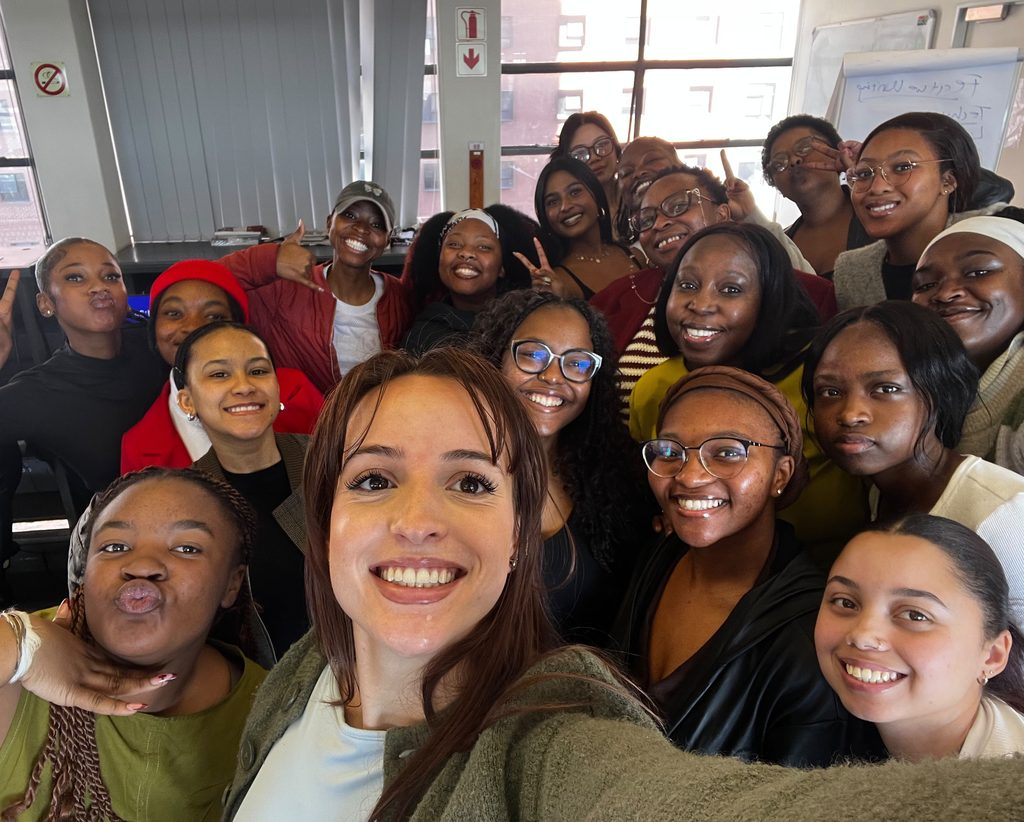
On the Left: A class photo with Kgomotso Modise. On the right: A class Photo with Ray Mahlaka.
We have heard from alumni who have found steady footing in the real world and reminded us that the work is never in vain. As our time in the Wits Vuvuzela newsroom comes to an end, we have learnt that journalism is as much about storytelling as it is about the people behind the story. It is about being human.
FEATURED IMAGE: A photo of Sikelelekile Pahlana, this week’s editor. Photo: Alaister Russell
A sonic experience that opened one up to the divinely realm and showcased how powerful the voice and song can truly be. Through Lili-La MandiFeze took the audience through a journey of exploring vulnerability and honouring the fullness of the black femme experience.
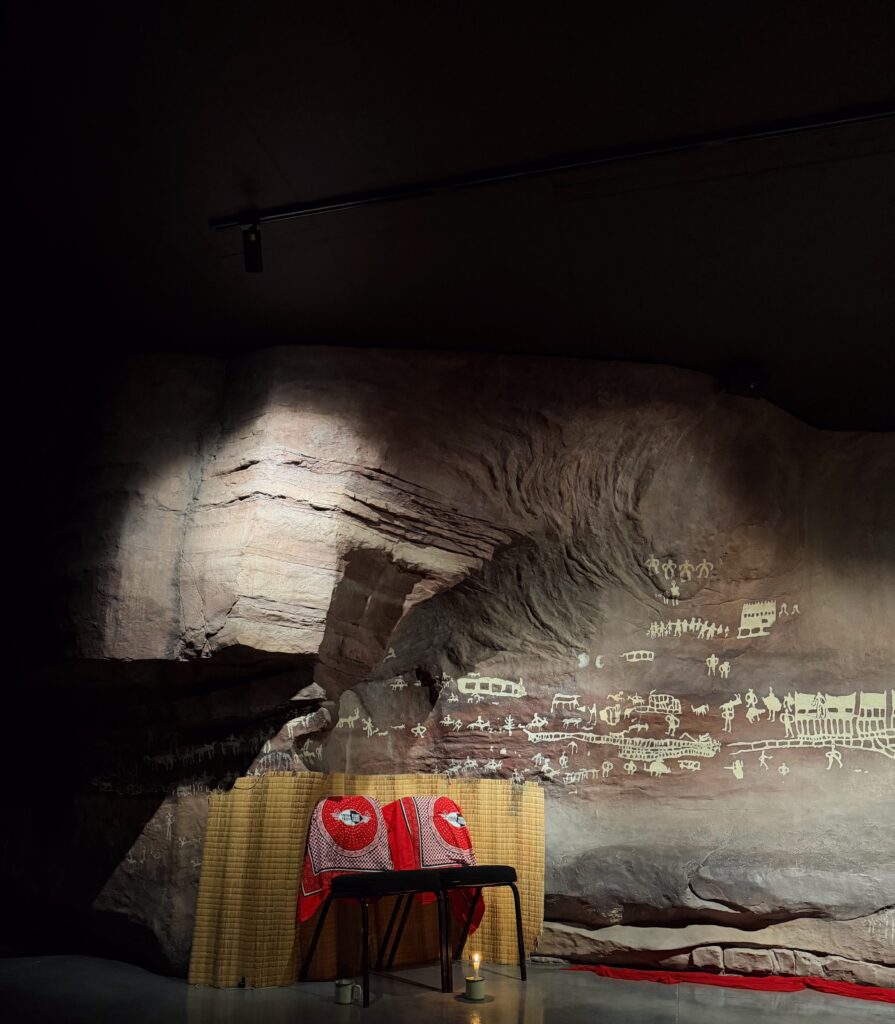
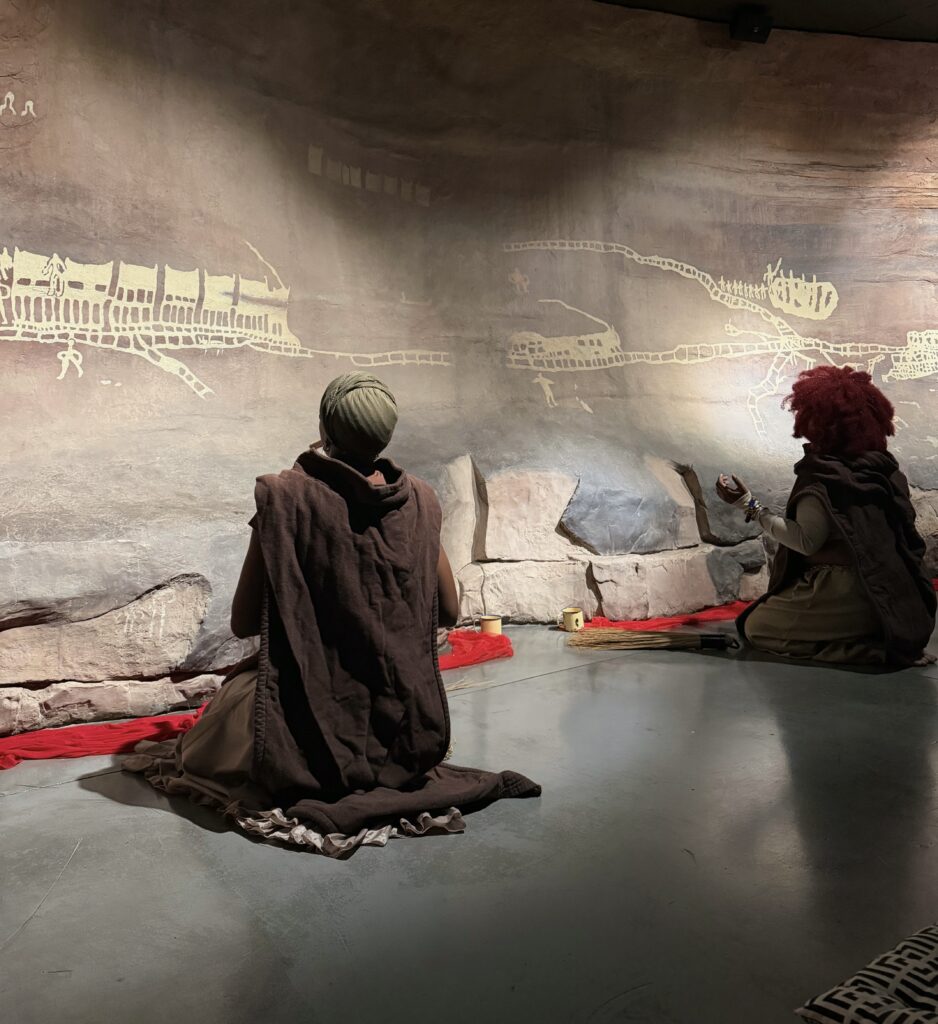
On Sunday afternoon, August 16 2026 I found myself at the Makgabeng shelter in the Wits Origins Centre. There I sat in a dimly lit room with a huge rock painting in front of me. In my eyeline there were two black chairs covered by a red cloth, a white candle, lit and sparkling in a cup, and red cloth draped on the floor. The space itself was intimate and made me feel as if I was underground. The red cloth and candle added a homely feeling to the environment. I sat in anticipation, curiously waiting for what was to come from MandiFeze’s sonic experience Lili-La. Initially, I had no idea what to expect. I was pleasantly surprised by how immersive and soulful the overall experience was.
A photo of the setup for the performance. Photo: Sikelelekile Pahlana
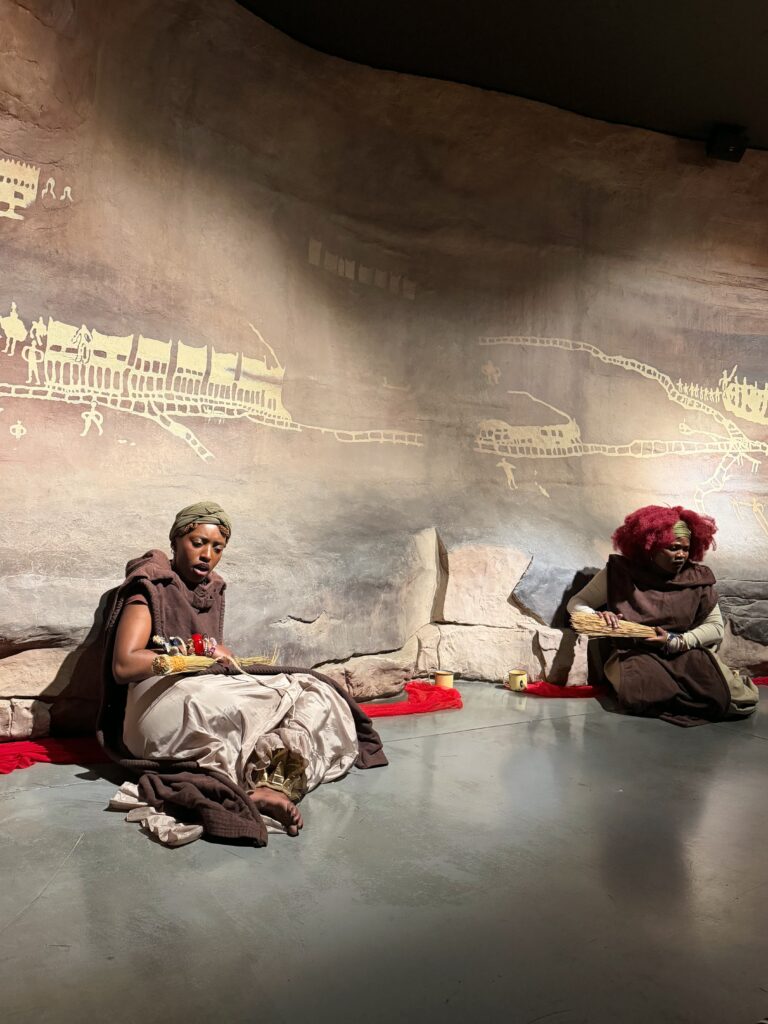
MandiFeze is a music and theatre duo founded by former Witsies, Mandisa Yende and Lufezo Bovungana. The audience was met with the sound of a whistle coming from around the corner, and an enchanting voice that signified the start of the show. MandiFeze seamlessly brought the spiritual realm to the physical room, it felt as if the world had stopped and we were all absorbed by the performance at hand. This sonic experience was like no other, it incorporated physical movement, with sounds of emotive expressions, vocals that touched the ceiling and a hollowing silence that sent chills down one’s spine.
A photo of Mandisa Yende and Lufezo Bovungana during the performance. Photo: Sikelelekile Pahlana
The intense eye-contact from MandiFeze, as they searched around the room, made one feel involved in their inner world. MandiFeze pierced through one’s facade of strength and softened the heart space; vulnerability became the meeting point between the audience and performance.
From the beginning up until the very end, Lili-La took us on a journey that unpacked the source of ingoma (song) for MandiFeze. The performance made us witnesses to their internal process of connecting with the divine and honouring the influence of the matriarch. Whilst also unpacking what it means to be an artist. They clearly acknowledge that apart of the purpose of ingoma is to heal people.
In conversation with MandiFeze, Bovungana shed light on how the meaning of Lili-La is ever changing, they said: “we’re beginning to realize that it’s really just a commemoration to the Black femme body that has contributed to ingoma but is also the reason why ingoma exists. It’s an ode to the people that came before us and gave us the song. It (the song) comes from the spirit; it comes from the place in which dead people live.” Yende further added that, “Lili-La then becomes the full spectrum of black femmehood and black femme emotion. We’re trying to really showcase the full spectrum from black joy to black grief to sadness to just visibly showing that you’re carrying weight and allowing ourselves to bear that burden and to showcase what that burden looks like, boldly.”
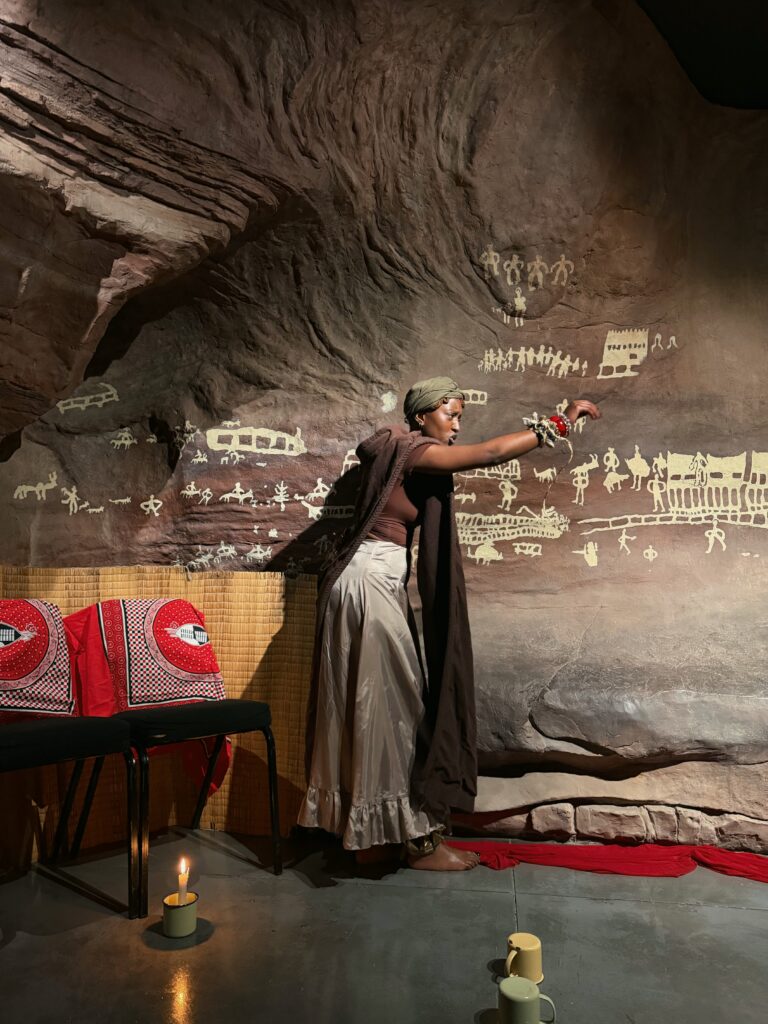
A photo of Mandisa Yende during the performance. Photo: Sikelelekile Pahlana
According to MandiFeze, Lili-la stems from combining their research during their honour’s studies, where Bovungana explored, “how expressive sounds have contributed to vocal techniques, specifically ululation” and Yende shared, “I was looking into the ways that wailing and ingoma are forms of healing for the black femme body because of how we’ve been expected to always be imbokodo. So, breaking down that narrative of imbokodo by embracing wailing.” Lili-la therefore is a creative play on words, incorporating ukulila (to grieve) and ukulilizela (ululating).
A photo of MandiFeze in prayer during the performance. Photo: Sikelelekile Pahlana
I was captivated by the intimacy and vulnerability in the way they embodied joy through laughter and sadness through intense wailing. I was moved when they both prayed asking for strength to continue on their journey as artists and for guidance along the way. Additionally, the moments of silence that followed brought a sense of stillness in the room, bridging a connection between all those who bore witness and collectively felt the essence of the performance.
When asked what they hoped the audience would take away from the sonic performance, Yende shared, “I think the hope is in a breath for the audience, an exhale from the audience, which for us I think would be mission accomplished as healers. In that people walking out feeling different, reflecting, and seeing either parts of themselves or parts of some form of matriarch belonging.” On the other hand, Bovungana shared, “Allowing your body to feel all the emotions without holding back. Giving the platform to feel what wants to be felt. Be easy on your vessels.”
Overall, the experience was eye-opening, as it awakened me to how healing and expansive the voice can really be when used intentionally. The creative passion of MandiFeze ignited a subtle fire in me that left me feeling inspired, grounded and tender. MandiFeze cultivated a unique sonic experience rooted in African customs, which felt like a homecoming, a return to self.
Vuvu rating 9/10.
FEATURED IMAGE: A photo of Mandisa Yende and Lufezo Bovungana during the performance. Photo: Sikelelekile Pahlana
The 70th Women’s Day Commemoration event celebrated the women of the Women’s March of 1956 and gave an opportunity for exhibitors to create awareness of their business and showcase their work.
The 70th Women’s Day Commemoration took place at the Union Buildings in Pretoria.
Sophie Williams-De Bruyn, the last standing leader and organiser of the Women’s March of 1956 gave an address.
Wits Vuvuzela spoke to three different exhibitors to gain insight on how their exhibitions empower women.
National Women’s Day, Sunday August 9 2026, marked a significant milestone within the South African context as it was the commemoration of 70 years since the anti-pass law Women’s March of 1956, which took place at the self-same Union Buildings decades on.
The Women’s March of 1956 was a monumental turning point in South African history, highlighting the power of women uniting against injustice. 70 years later, thousands of people gathered to honour the 22 000 women who marched against Apartheid’s pass laws.
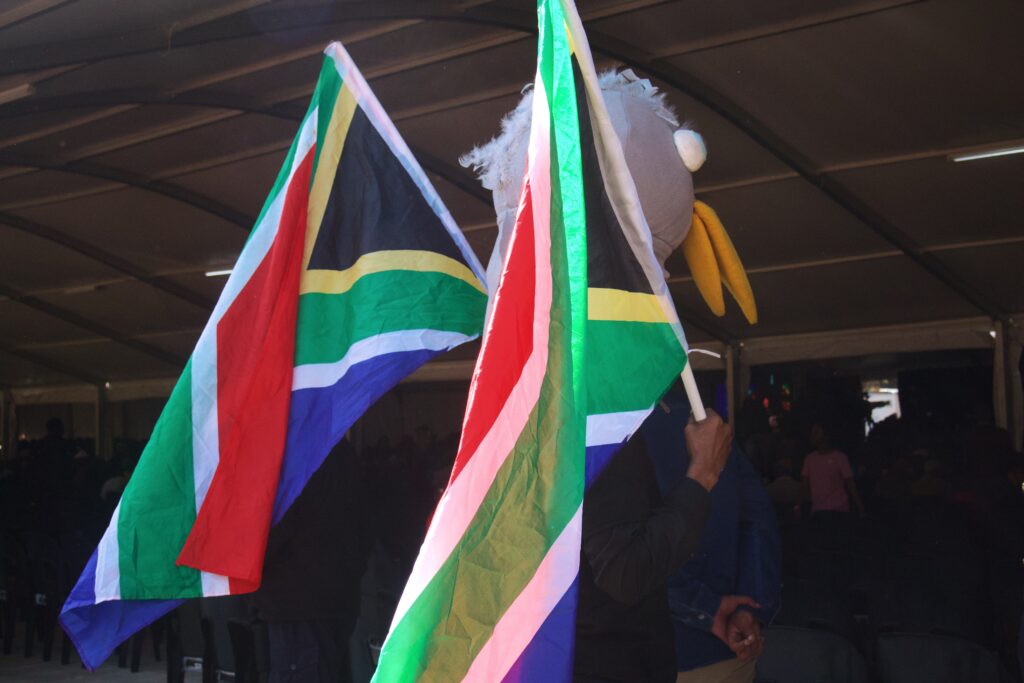
A photo of someone holding two South African flags. Photo: Sikelelekile Pahlana
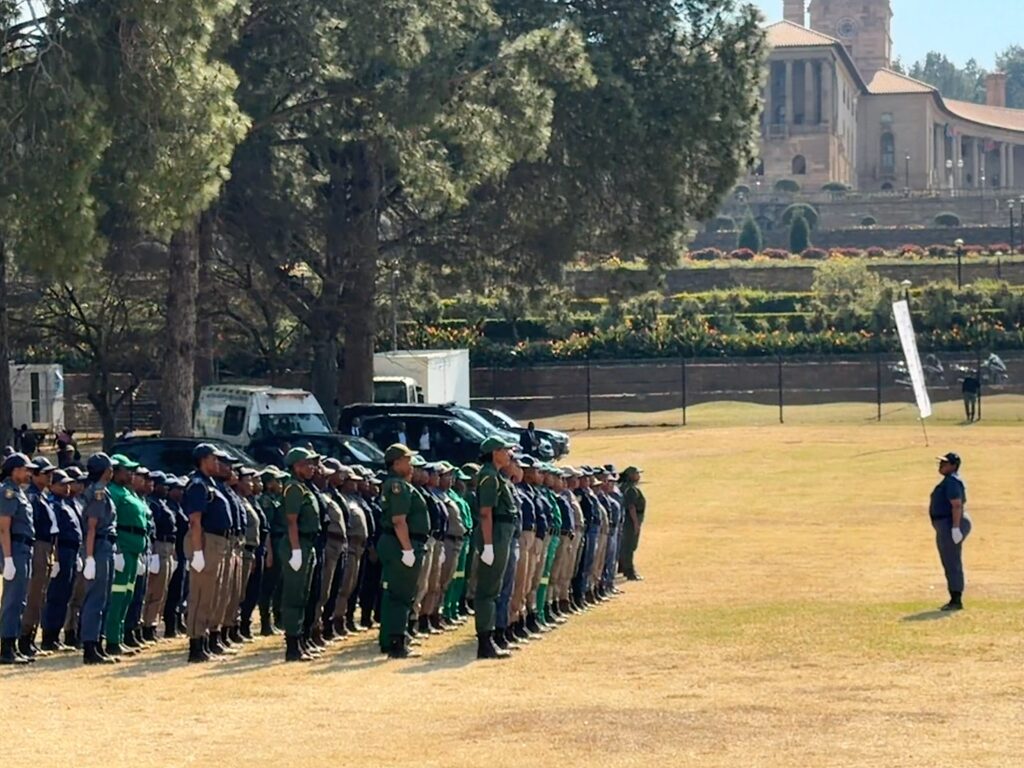
The commemoration consisted of a women parade, speeches, live performances that celebrated culture and various exhibitions.
The theme of the event was “empowered women, empower the nation.” Sophie-Williams-De Bruyn, the last surviving woman from the leaders and organisers of the Women’s March of 1956, took to the stage during the formal proceedings.
Williams-De Bruyn said: “We were young, we were afraid, but we were unified and determined. When we stood undaunted in silence for 30 minutes, the world trembled, it took note. We confronted the Apartheid regime and boldly said: Strijdom, you have targeted the women, you have struck a rock, and we will crush you…
But today as I look at our beautiful country, my heart is heavy. The freedom we marched for, what we bled is in reality a painful paradox. How can we fully celebrate our past victories when our current realities are so deeply disappointing and distressful?”
Williams-De Bruyn specifically pointed out gender-based violence and femicide, entrenched poverty, lack of clean water, homelessness and systemic corruption.
Women’s Parade in honour of the women who marched in 1956. Photo: Sikelelekile Pahlana
Alongside Williams-De Bruyn’s address was Eugene Plaatjie who spoke on behalf of her late mother, Lilian Dierdericks, a leader and organiser of the 1956 march. She [Lilian Dierdericks] led the Eastern Cape women to this iconic march,” she said.
Plaatjie concluded: “Let us no more say four women led the march, but that they were indeed five. Let the false narrative die today and that we remain true to the struggle.”
Seko’s Crafts beanies on display. Photo: Sikelelekile Pahlana
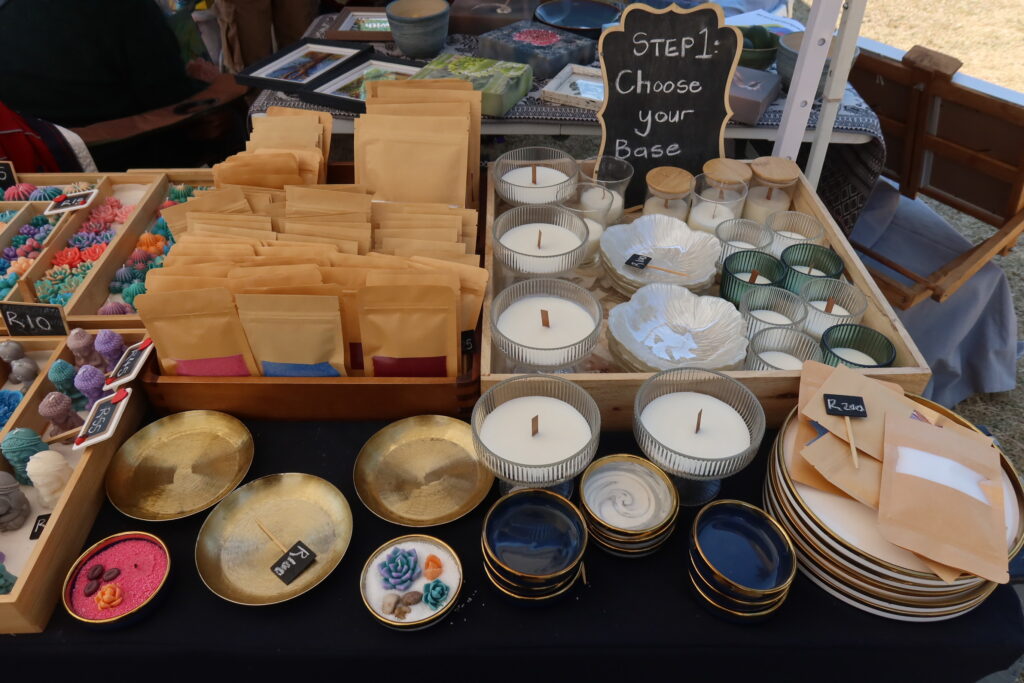
Wits Vuvuzela engaged with three exhibitors on the lawns. The first, a crocheting collaboration between Seko’s Crafts (founded by Lebogang Klass) and Kgaetsi Hand Made (founded by Mokgaetši Mothwa). When asked about how they interpret the theme, “empowered women, empower the nation” in relation to their businesses, Mothwa shared: “This woman [referring to Lebogang] standing right in front of me, helped me realise my dream today. There was an opportunity to come to class to learn how to crotchet, and now I can happily and proudly say I’m running my own business today. So that for me is women empowerment, we care for one another. She did it for the community. Now I am able to buy bread and teach someone else.”
Klass said empowerment for her is about paying it forward through her teaching and mentorship. “The thing is now unemployment is too much… and mental health, the kids are always on social media, they do other things whereby they can learn to do this thing [crochet] and they don’t need to have a job to learn, they can employ themselves and employ other people,” she said.
The second exhibitors were Sharmila Mistry and Shamalin Singh, founders of Beyond Eternity, offering holistic therapies and products. They said their work is centred around “the evolution of women and women knowing their self-worth” through natural healing.
Lastly, were Ditsong: Museums of South Africa funded by the Department of Arts, Sports and Culture. Curator Tinyeko Ndlovu said, “You see the boards, they represent permanent exhibitions in our Military Museum, we did what we called, Women’s Role in the Liberation Armed Struggle. We are contributing to ensure that women were not excluded and showing that they were there. If you look, there’s people like Charlotte Maxeke, and Sarah Bartman.” He also shared that Ditsong will be hosting a panel on August 26, 2026, in Johannesburg to discuss Nokuthula Simelane, who disappeared in 1983.
A photo of the boards that were being showcased by Ditsong: Museums of South Africa. Photo: Sikelelekile Pahlana
The overall event reflected the importance of empowerment and honouring the work that women do from generation to generation. More notably, how there is still more work to be done for women to truly thrive in South Africa.
FEATURED IMAGE: A photo of people gathering to watch the women’s parade at the Union Buildings. Photo: Sikelelekile Pahlana
Professional and ethical conduct are key to bringing back honour to the legal profession Justice Mbuyiseli Madlanga says.
Justice Madlanga made a call for action, stating that honour must be brought back to the legal profession.
The Book Legal Ethics in South Africa is the first of its kind in contemporary times as the last book was published 40 years ago.
A call was made for legal ethics to be made compulsory in the country’s LLB curriculum.
In the plight of unlawfulness, greed and rapid corruption that constantly dominates current affairs, as seen in the ongoing Madlanga Commission, the book Legal Ethics in South Africa is timely and necessary. The book seems to offer a glimpse of hope urging for a transformation that is rooted in prioritising legal ethics.
On 18 June 2026, Wits University hosted a book launch for Legal Ethics in South Africa edited by Law Professor Helen Kruuse from Rhodes University. The introductory remarks were given by Justice Mbuyiseli Madlanga, who is also currently the chancellor for Rhodes University.
Madlanga emphasised how ethical leadership, integrity and courage are essential for the preservation of the constitution and South African society at large. Additionally, ethics and the constitutional mandate of legal practitioners must extend to people beyond legal practitioners. “Legal ethics in South Africa must be welcomed enthusiastically,” he said.
Madlanga argued that legal ethics needs to be compulsory in the LLB curriculum nationwide as opposed to having it as an optional elective. He said, “legal ethics is not just about compliance, it is about understanding and making moral judgment.”
Madlanga said “ordinary people have a general view of how there is no honour in the legal profession… most people understand it as a profession where people do as they please.” As a result of this connotation, Madlanga pushed for people within the legal field to change this narrative by acting honourably and ethically.
The significance of the book lies in the fact that it is the first book of Legal Ethics in South Africa in contemporary times since the last was published 40 years ago, the book launch celebrated the very first edition of the recently published book. Yet, that is not all, an important aspect of the book is the manner in which it shapes the minds of current and future legal scholars and practitioners which directly impacts how law functions within South Africa.
Facilitator, Professor Helen Kruuse reminded the audience that ethics informs the broader social and psychological context, as she reflected on how the book itself is divided into three parts: Academia, Judiciary and Practice.
At the close of the evening, Klaaren noted that the book is the “start of a conversation, centering in ethical law.” Although the book is centred in the legal context and field, its existence may be a reckoning of sorts for those in the legal profession and society alike.
FEATURED IMAGE:Legal Ethics in South Africa book cover. Photo: LexisNexis Website
A creative powerhouse whose legacy is defined by life experiences, grit, passion and purpose.
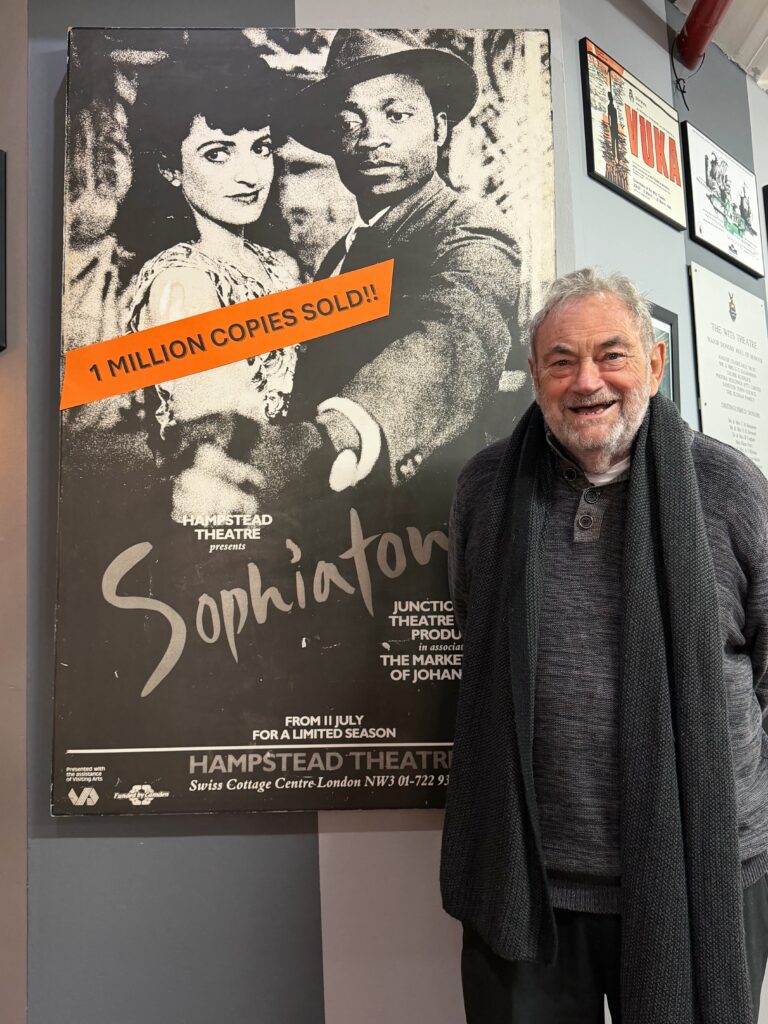
Malcolm Purkey is famously known as a multifaceted genius. A playwright, director, actor, lecturer and an experienced Dean of AFDA Johannesburg. From humble beginnings, Purkey carved his own path in theatre and education rooted at Wits University.
Born in 1951, Yeoville, Johannesburg, Purkey spent his life moving around the city. His parents came from Britain; his father Harold Purkey was a jazz pianist and his mother, Kay Purkey was a hardworking singer. It is no surprise, then, that Purkey inherited all the artistic talent from both his parents.
A photo of Malcolm Purkey standing next to Sophiatown board. Photo: Sikelelekile Pahlana
Purkey is a true Witsie, he started at Wits in 1970 and studied English, Sesotho and Ancient Greek. He initially dropped out because he had failed his undergraduate modules and found his way back to Wits, completing English One. Afterwards, he left school and worked in a theatre for six months, which marked the beginning of his theatre career. He left South Africa to go to Britain, and realised Britain was not home, in fact he came to the conclusion that: “I am neither African nor European, I am both.”
His return to Wits to complete his honours in English, built a box theatre in the Matrix alongside an architect and he also built The Nunnery theatre.
As Purkey spoke to Wits Vuvuzela, a vivid recollection of being taught the absurdist play, Waiting for Godot by Samuel Beckett by former English lecturer, Hilary Semple. A seminal moment for him.
“I’m an absurdist. Oh my God. There is no God. Oh, my God what am I supposed to do? So, what I did is I wrote [sic] an answer. Where the two characters who are looking, waiting for Godot, they finally get to heaven, and they find out that the realisation of a dream is hopelessly inadequate. The journey is all…That was the play I wrote, and it got professors saying nice things about it,” he shared.
The play in question was Sequel to Jeso (1971), which was one of his first plays shown at Wits, in the Great Hall.
Decades on, Purkey’s imprint in theatre continues to be felt the resurgence of the play Sophiatown (1986), which was recently on show at the Wits Theatre. Sophiatown has successfully sold one million copies of the play text published by Wits University Press and Macmillan Publishers which happens to also be a part of the current grade 11 first additional language curriculum.
Purkey believes that drama, as both a subject and medium, is a powerful tool. “Drama teaches you a whole lot of power, language, talking and being in the world.” He first learned just how powerful when he co-founded the Junction Avenue Theatre Company in 1976 and later joined forces with Workshop 71 to form a non-racial theatre group that could shed a light on the injustice of the Apartheid regime.
A guiding principle for the company was “history from below.” It “was the idea that we have to reveal the hidden history that the apartheid state wanted hidden, such as the destruction of Doornfontein, the destruction of Sophiatown, the ANC in exile,” he shared.
His first award followed shortly after in 1978, when Purkey won best director of the year for the play Travesties.
Through his work and life experience Purkey has been able to not only achieve much but also live up to his sense of purpose, which is: “To use theatre to communicate wonderful, contradictory, and telling ideas that reveal part of our worlds to ourselves and part of ourselves to ourselves that otherwise remain hidden”.
FEATURED IMAGE: A photo of Malcolm Purkey. Photo by: Sikelelekile Pahlana
With every ending there is a new beginning, and that’s been the case for a recently shuttered local second-hand bookshop.
The Bookdealers of Melville was given a short notice to move out of their initial space.
Financial constraints have had a negative impact on Bookdealers of Melville, with low turnovers in comparison to 11 years ago.
Bookdealers has moved three blocks up,now located inside a coffee shop, namely The Sourcery in Melville, where customers can enjoy both books and coffee.
The Bookdealers of Melville is a well-known local second-hand bookshop that has been running for 35 years. Unfortunately, this year marked the beginning of the end for Bookdealers after being left with no choice but to move out of their shop by the end of April.
Photo of boxes filled with books inside the original Bookdealers of Melville store. Photo: Sikelelekile Pahlana
Bookdealers’ last day of trading was officially on April 20, 2026, and their final departure and relocation took place on Saturday, May 2, 2026.
Wits Vuvuzela visited the new, smaller set-up inside The Sourcery, a coffee shop three blocks up from the original store, to get some insight into the change.
Doron Locketz, owner of Bookdealers of Melville said: “We knew that there were new owners [for the space] in January, I think the sale went through. It took them a while to get their admin stuff together and they gave me notice in March to leave, to move out first, at the end of March. But you know, legally they’ve got to give you a calendar’s month notice. Then they realised they can’t do it, not legally, so the notice was for the end of April.”
Locketz claims that initially the landlord was going to ask for a moderate rent increase to what Bookdealers was paying previously, “but then he [the landlord] doubled it and at that stage we were not sure whether we would be able to manage the rental, and he instead gave it out to somebody else.”
Locketz recalls the conversation between himself and the landlord and describes the contrast in the interaction as being, “very casual and easy for him, you know, but for us it is a nightmare because we have been here for something like 35 years, which is crazy, you know in the one spot, and it was a hell of a business to get everything out and in the new area. You know, we’ve lost probably about 20-25% of our shelving space, which is going to be an issue. The stuff that we take out will most probably go on to our website.”
Business before the move was already slow. “It’s been very tough. Our turnover has been lower than it was 11 years ago. So, we have to be, you know very careful, we did have two closing down sales, which did help, but we haven’t traded now for over two weeks, we’ve taken quite a knock here.”
Alongside the financial constraints of the business, a declining interest in reading has taken its toll. Locketz says “In those days, 11 years ago, we would have been all right, but in these hard times when, you know books are no longer the flavour of the month, people play on their phones, or read digitally, and there are far less book collectors than there used to be you know, and that all hurts the book business, second-hand book business and the collectibles tremendously.“
These days, people tend to rely on electronic devices, audio books, podcasts or YouTube and even social media for entertainment and information. Locketz describes the impact of fluctuating trends in terms of buying and selling as detrimental to the South African literacy rate.
However, all hope is not lost. He maintains an optimistic outlook on the future, “The books will never disappear. There are more books published regularly all the time with these strong new novelists coming out, nice new South African novelists.”
When asked about the kinds of books people tend to buy more, Locketz shared how literary fiction has always been very popular and alongside literary fiction is any African orientated books especially by black South African authors which are equally popular.
The reality of business and its hardships is even more of a reason to support local bookstores, such as the Bookdealers of Melville.
FEATURED IMAGE: A photo of a sign outside the previous space of Bookdealers of Melville. Photo: Sikelelekile Pahlana
The play Sophiatown balances the tragedy of displacement and forced removals with the joys of human connection, jazz, singing and dancing.
It is Saturday, April 11, 2026, and the theatre kid in me is geeking throughout the entire experience of witnessing the revival of Sophiatown on stage. A legacy, a history so rich, words cannot begin to describe the greatness embodied through the characters, the storytelling and the finer details that reflected the true intentionality in honouring and remembering Sophiatown.
Upon arrival, I was excited and deeply curious about what the play Sophiatown would actually be about. The audience sat in the lounge area of the Wits Theatre, anticipating the journey we were about to embark for the next two hours. Chatter and joy filled the lobby as we patiently waited for the show to start.
Boy, were we in for a true treat! Drum rolls and a groovy jazz tune is how we were introduced to Sophiatown, a fitting opening for a place known for its sonically rich cultural heritage and legacy. One of the main characters, Jack, took us back in time. It is the 1950s: typewriter on the desk, a bookshelf in the background, blue lights and the interior of a warm family home, await the rest of the characters.
Jack, an aspiring journalist, resurrects the legacy of Drum magazine by calling out names of the 1950 Drum legends such as: Can Themba, Lewis Nkosi, Bloke Modisane, and Todd Matshikiza, he highlights how they paved the way for African storytelling in Sophiatown at that point in time. Soon after, the rest of the characters join in on a chorus and soothes our ears with a sweet melody, the peanut gallery begins to cheer, and we have officially taken off.
The play is truly nothing short of amazing, and it importantly showcases how Sophiatown can never be solely understood through a singular lens or a singular story. It is culturally rich, consisting of diverse people, multiple races and different lived experiences. We are taken through a story of history, as the play reflects the severity of living under the apartheid regime which pushed for racial segregation and alienation. As one of the main characters Mingas says, “Sophiatown is not just about clubs and jazz, it is about war.”
The play explores the plight of BantuEducation, and the complexities of interracial relationships as we see through the arrival of a white Jewish girl, Ruth Golden, who is originally from Yeoville. She finds herself in Sophiatown after seeing an advertisement in the Drum magazine for the “diamond lady, number 17.”
Ruth’s presence at 65 Gerty Street in Sophiatown reflects the different living conditions between the white people and black people. Ruth is forced to adapt to life in Sophiatown, in a smaller house where everyone shares rooms, it enhances the complex relational dynamics between characters such as Lulu and Princess, Mingas, Jack and Fafi and the mother who all occupy the home.
Above all else, the play highlights the brutality of forced removals in Sophiatown with reference to the Native Resettlement Act of 1954. The apartheid regime used to remove black people from their homes, through bulldozing houses and destroying the infrastructure. The wound of displacement is so deeply felt by the audience as the characters are forcefully moved to Meadowlands.
Actors of Sophiatown play on stage. Photo by: Sikelelekile Pahlana
The play effectively and harmoniously balances light-heartedness through humour, singing and dancing with the seriousness of how violent the apartheid regime was.
The play asks to be remembered, embraced, and treated as a real point in time because it was and forever will be. We are urged into carrying the memory of Sophiatown with us and be conscious enough to ensure we never forget the pain, the joy and the collective fight it took for us to taste freedom, not idealistically yet in reality – to feel the things, the legends of those times always hoped to one day be a witness to.
I spoke to the writer, Malcolm Purkey, who said the play Sophiatown was created 40 years ago, in 1986 and it still stands today, a true testimony to its importance and relevance. When I asked him what he wanted people to take away from the play, he said, “If we found the right way, we could live together with respect. The gap of poverty and inequality is still there, and the war is not over,” Sophiatown reminds us of our common humanity and truly reflects the times, with dignity.
We are reminded, as Don Mattera once articulated, “Memory is a weapon!” Our history, South African history awaits you on the stage, it is worthwhile to go check it out and experience it for yourself. The play runs from April 11 to May 8, 2026. You will laugh, you may shed a tear, yet you will not regret it.
Vuvu Rating: 10/10.
FEATURED IMAGE: Picture of stage during Sophiatown play. Photo by: Sikelelekile Pahlana
In episode six of We Should Be Writing season 7, the team unpacked the evolution of music as a form of expression and protest, through four decades in the South African context. The episode explores the journey of South African music and its consumers from the 80s, 90s, early 2000s and contemporary listeners. From the […]