
Inside the Dome, African tales are revived and retold anew.
- Wits launches its annual Digital Dome Festival to retell African oral stories through Virtual Reality, dome animation and projections.
- Fourth-year digital arts and animation students showcased their film projects.
- The Dome takes African stories to the world while creating employment opportunities for students.
“You are already in the future. Others will arrive,” said Professor René Smith, Head of the Wits School of Arts, during the opening of the Digital Dome Festival, pointing to the transformative power of immersive media.
Wits University hosted its Digital Dome Festival between August 21 and 22, 2026 in collaboration with the Wits School of Arts (Digital Arts Division), the Naval Hill Planetarium, the University of the Free State, and cultural institutions including Electric South and the French Institute of South Africa (IFAS).
This year’s theme, Stories Spoken, Stories Seen, was inspired by diverse African oral storytelling traditions passed down through generations. African folktales were retold through immersive digital technologies like dome animations, VR experiences and projections. The theme and festival demonstrate that “Africa can shape the future of immersive media,” said Professor Lynn Morris, Deputy Vice-Chancellor of Research and Innovation at Wits.
Student screenings formed a central part of the programme.
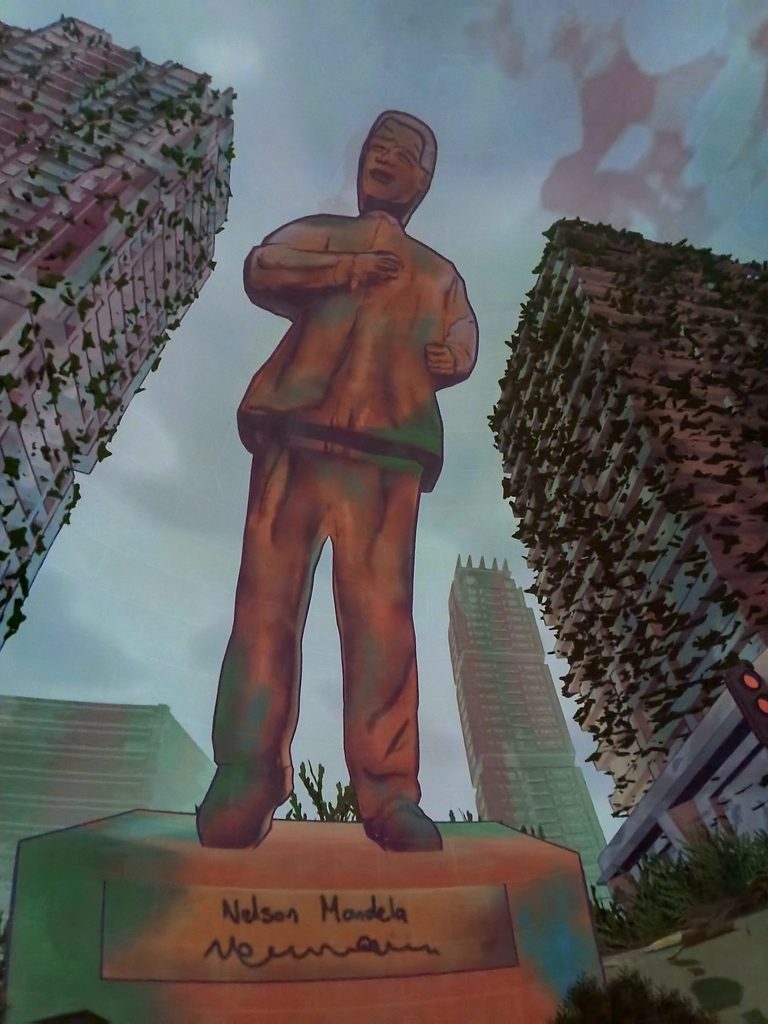
The Nanabolele projection stood out. The two-minute film, based on a Sesotho mythological interpretation, follows Princess Thakane, blessed by her grandmother to hunt the Nanabolele — a water-dwelling, dragon-like creature that glows in the dark and travels hidden inside clouds or red smoke. She seeks its glowing hide to make gifts for her brothers returning from initiation.
“We wanted a story that could speak to a large amount of people. We started looking at African mythology and folktales,” said Tlhalefo Boshielo, a fourth-year Digital Arts student in animation and projection mapping. The Nanabolele VR experience placed viewers inside a non-physical world, bringing imagination to life through immersive technology.
On what inspired this year’s theme, Sasha Wessels, Digital Arts lecturer and organiser, said that in high school she was not allowed to learn about African languages or traditions, which felt like a robbery. “I left high school angry. I feel unknowledgeable about the country that I live in.”
Projects can be rented to other global domes for profit, creating employment opportunities for students. For this reason, Wessels does not allow students to use Artificial Intelligence (AI). “The issue with AI is that the moment you implement it, you can’t sell it.” However, she acknowledges AI as a useful tool in an industry long gatekept by the West.
Through immersive technologies, students are archiving, professionalising and making African oral traditions, history and storytelling exportable.
FEATURED IMAGE: Students experiencing VR technology for the first time. Photo by: Naledi Maraisane
RELATED STORIES:
- Wits Vuvuzela, Wits Digital Dome: Reclaiming African narratives through 8K innovation, May 2026

