
While the country nears the end of winter, for some residents, the weather is already changing the way they operate.
- For ordinary South Africans, the climate crisis is not abstract.
- A potentially strong El Niño on the horizon.
- Behind climate statistics are people like Phumzile.
As Johannesburg nears the end of winter, the heat is already changing how some people work, study and make a living. For Phumzile Mhlangeni, a street vendor on Jorissen street, hotter days mean fresh produce is spoiling faster, forcing her to throw away stock she can no longer sell.
“I’m slower to stock now because of the heat. The fruits might rot and I fear that”, Mhlangeni said.
Her experience come as scientists monitor a potentially strong El Niño expected later this year, a warning climate change professor Jennifer Fitchett from the University of the Witwatersrand echoes.
El Niño is a natural climate pattern that affects temperatures and rainfall around the world. In South Africa, its effects can vary, but Fitchett expects Johannesburg to experience a hot summer with potentially unpredictable rainfall.
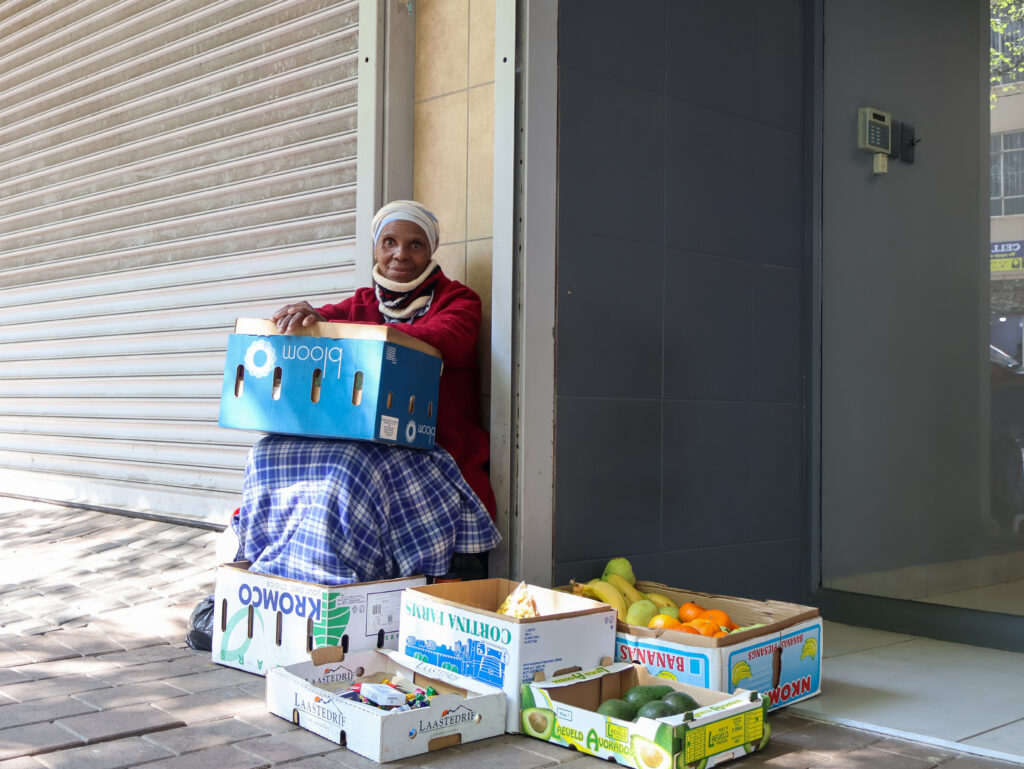
For Mhlangeni, the heat is already forcing her to change how she runs her business.
To adapt she now keeps her produce in a fridge at home and has started selling sweets, chips and cigarettes to bring in additional income.
Finding shaded areas to protect herself and her produce poses another challenge. Moving away from her usual spot has made it difficult for her regular customers to find her.
“Business is slower and people won’t go looking for me specifically if they can find someone else selling what I am selling,” she said.
The impact is not limited to people working outdoors.
The effects of rising temperatures are also being noticed by Wits students. Jessica Williams, a final year Bachelors of Social Work student said Johannesburg has felt increasingly warmer despite August being considered a winter month. Travelling between West and East Campus means she spends more time walking in the heat, making access to shade and water important.
Fitchett said climate change is adding another layer to the problem. A warmer baseline increases the risk of heatwaves and heat stress, particularly for people who work outdoors.
However, she cautioned against treating El Niño as a guarantee of extreme weather. South Africa does not experience every El Niño in the same way and seasonal forecasts cannot predict exactly what will happen in every area.
As the country moves towards a hotter summer, the uncertainty leaves businesses and communities preparing for conditions they cannot yet predict.
For Phumzile, the forecast is not simply about what may happen this summer. The effects of hotter weather are already changing how she works, what she sells and how much she earns.
FEATURED IMAGE: Photo of Street Vendor Phumzile Mhlangeni with a customer. Photo: Keletso Zwane
RELATED STORIES:
- Wits Vuvuzela, The hidden victims of climate change: South Africa’s archives, August, 2026
- Wits Vuvuzela, Witsies are open for business, March, 2026
- Wits Vuvuzela, From shadows to success : Johannesburg’s townships are defying economic barriers, December 2024

