
As South Africa approaches a wave of teacher retirements, educators are feeling the impact of vacant teaching posts.
Its 09:00 on a Monday morning at Entandweni Primary School in Zondi, Soweto. Every desk has a learner seated behind it, writing down numbers as Zusiphe Nolusu stands in front of the class, explaining what improper fractions are. Some learners look puzzled but as Nolusu continues explaining, the moment of realisation fills the room as their faces light up with understanding.
Zusiphe Nolusu, a final year Bachelor of Education student from the University of Witwatersrand is not a stranger to standing in front of 30 learners, ready for a long day of teaching, marking class activities and sometimes having to deal with some uncooperative learners. This is a preview of her chosen career path that she has spent four years preparing for. But as her graduation approaches, this one concern lingers at the back of her mind: Will she find a permanent job next year?
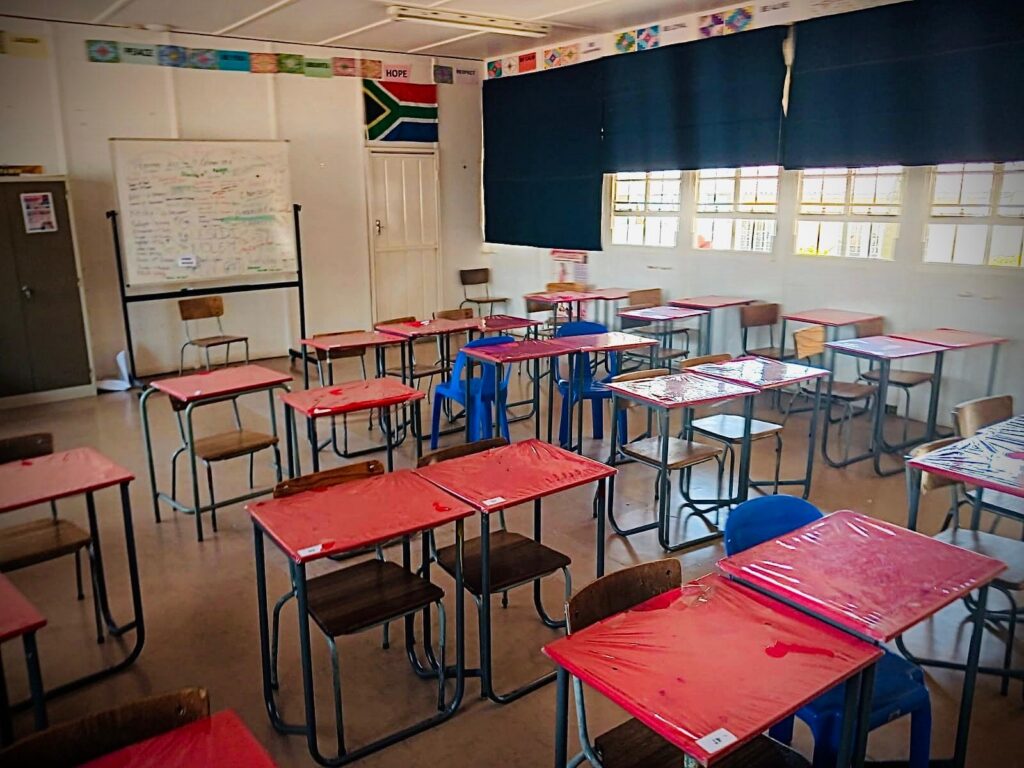
South Africa’s public education faces a contradiction: thousands of qualified teachers are entering this profession and struggling to find employment, while schools have teaching posts that remain vacant because of budgetary constraints.
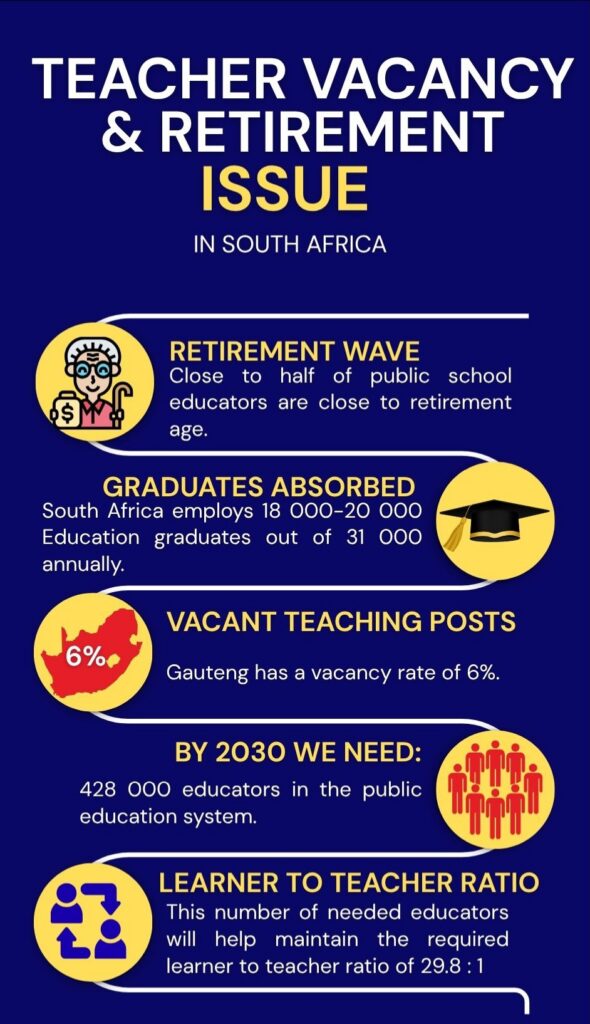
In 2023 former Minister of Basic Education, Angie Motshekga, wrote that about 31 000 teachers graduate annually, but only 18 000-20 000 teachers are absorbed into the public-school sector. At the same time, South Africa is approaching a wave of teacher retirements. It is expected that by 2030, close to half of South Africa’s teacher force will be retired. Motshekga said that the employment of teachers needs to rise from 405 000 to approximately 428 000 by 2030 to maintain the learner to teacher ratio which is 29.8 students to one teacher. These figures raise a central question: if qualified teachers are ready to work and the education system needs more educators, why are vacant teacher posts not being filled?
Lukhanyo Vangqa, a spokesperson for the Department of Basic Education, provides an overview for this national issue that public schools in South Africa are facing. Vangqa explains that “employee salaries are paid from equitable shares which comes from the Provincial Treasury. It doesn’t come from the (Department of) Basic Education. So, it’s the provinces that decide how much they want to allocate to their education departments… in terms of teachers and the employment of teachers,” he says.
“This comes after the budget has decreased as part of the country’s austerity measures to reduce the country’s debt, resulting in the budget for education being cut,” Vangqa adds. “Therefore, they need to find savings in their budget and one of the ways they do that is to allow for natural attrition. When teachers retire or resign…they don’t fill those vacancies in order to deal with the budgetary pressures and constraints they have.”
However, Tumi Madika, the Senior Executive Officer from the National Professional Teachers’ Organisation of South Africa (NAPTOSA) in Gauteng, laments how vacant teacher posts impact teachers on the ground. “The issue of unemployment of teachers is of serious nature,” Madika says. “Overcrowding is the order of the day in Gauteng schools… the reason for that is the rise in population. The department cannot keep up with the influx of people coming to Gauteng. The lack of appointment of teachers makes it worse for the issues of overcrowding.
“Issues of safety come into place…You are not able to teach, so teaching and learning is not happening.” Madika adds.
Madika also confirms that retired teachers’ posts are not filled due to budget constraints. “Those employees left by March 31 this year, the ages of 55 and 65. The challenge is that since that time, to date, there is no educator that has been employed in those positions…Those posts have been advertised now (clarified to be July) but they will appoint (teachers) next year January (2027). So, there is a chance that those educators are doubling up on work since March 31 (2026) up until next year.” He states that the government needs to lift the budget cuts and fund education adequately to combat the vacant posts.
A current teacher at King Edward VII School, Jonathan Green, has seen this reality unfold from two perspectives. Green teaches at a quintile five public school, which the government classifies as the least economically disadvantaged schools and are fee-paying schools. “We are very fortunate in the fact that we have more staff available and that means that there is reduced class sizes because there are a greater number of staff to carry the load.”
Through his non-profit organisation, Community Developmental Projects, he has held holiday classes at a no-fee paying school, Noordgesig Secondary School, Johannesburg for four years. “I think it is very different. Talk about overcrowding, that is where you see it happen. Talk about lack of resources to a greater extent, that is where you see it happen,” Green says. Apart from the responsibility of preparing for lessons, teaching learners and marking piles of tests, teachers must also deal with administrative work. “You have sympathy for the mountain of admin work, the diagnostics analysis that they (teachers) need to do, the compilation of results, the marking of many more scripts, you know.”
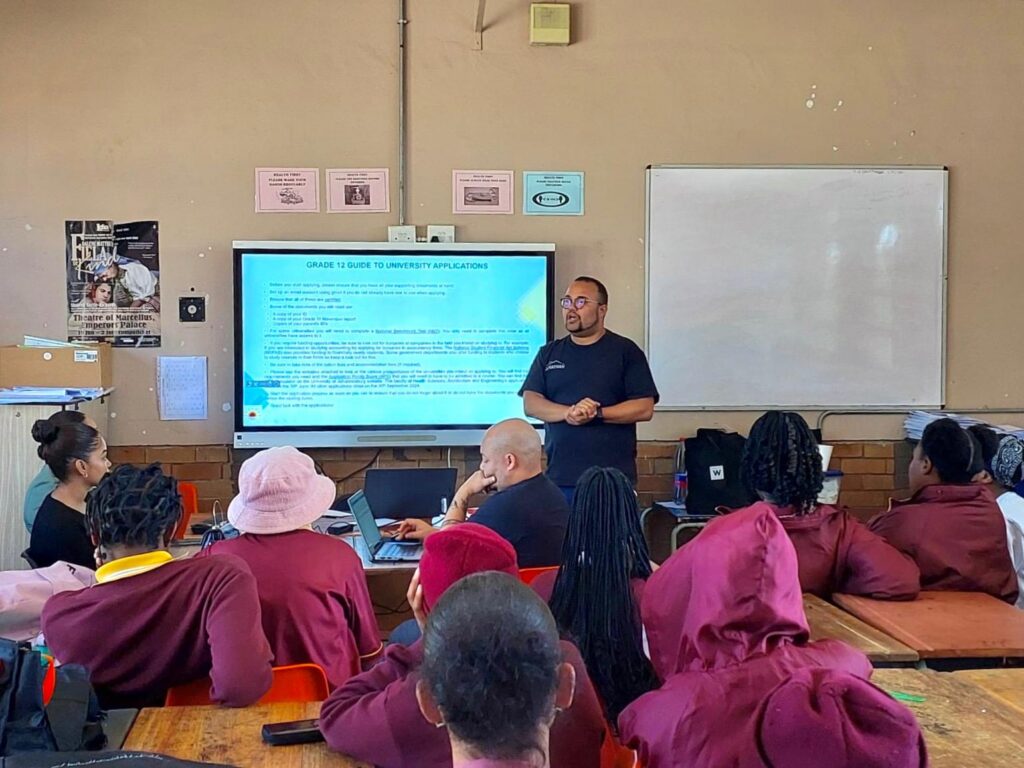
After 34 years of teaching in six different public schools, Audrey Kleinhans (67) knows this situation well. She confirms that her post was not filled after her retirement. “My post was vacant (when I resigned) and they just took a teacher who was not qualified to replace me,” she says.

As Nolusu completes her final year of her degree, she has a few concerns for what awaits her after university. “So next year I have to job hunt. So I am worried if I will get a job immediately or if I will have to wait long.
“If I don’t get a job next year, I think I will just come and do my honours because I have already applied,” Nolusu says.
This is a reality that has persisted for years and if budget constraints continue to affect the education sector, the future of South African public schools could be in an even more dire state.
FEATURE IMAGE: A classroom from King Edward The VII School. By Zebrena Ralph
FEATURED STORIES:
- Wits Vuvuzela, Teachers say BELA Act leaves them powerless in the classroom, August 2025.
- Wits Vuvuzela, Teachers, the unsung heroes of the pandemic, December 2020.
- Wits Vuvuzela, Foundation phase teachers confront the unexpected, December 2026.

