
Amid South Africa’s escalating housing crisis, one mother fights through the chaos to build a home for her family.
Right before night spills into day, the valleys of Eldorado Park are bathed in shadows of deep purple. Nestled in the grassy plains stands a makeshift house no larger than six paces in length. Almost a year into its existence, the shelter stands tall as one of the first built in the informal settlement of Actionville. Steadily, life unwinds within the corrugated iron and rusted zinc walls of this little matchbox.
In the inky black darkness, Elizabeth Percent (41) peels back the covers and rises before the sun to make breakfast for her children. She walks to the gas-stove, guided by the weak glow of her phone flashlight. Tick-tick-tick. A tiny blue flame erupts from the cylinder with a hiss. Methodically, Elizabeth sets her pot on the metal stand and begins slicing bread.
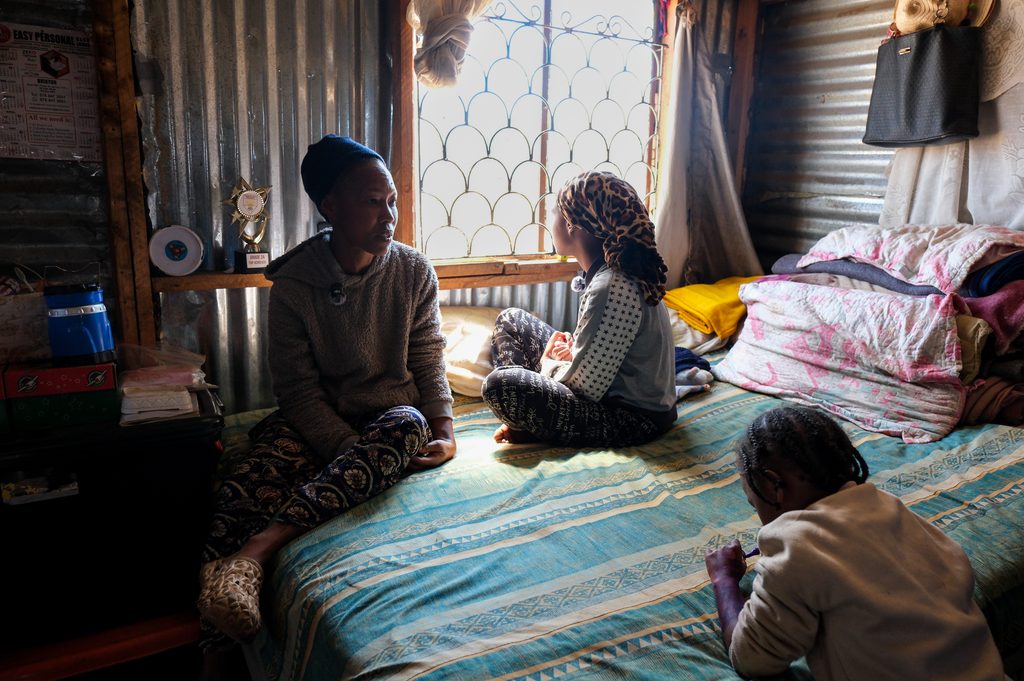
“We had to make fires in the beginning,” Elizabeth says with a distant gleam in her eye. “Everything was on a fire. Your home smelled like a fire even.” She pans her gaze to her children scattered around on the bed, her eyes lowered. “I now cook on a gas-stove. If it was me 3 years ago, I would’ve never done gas.”
Her four children stir in the dark from the commotion. Willow (3), her granddaughter whom she was babysitting, remains within the warm nest of blankets, unwilling to budge. Spurred by their mother’s commands, each child begins performing their morning rituals like clockwork under the dim glow of a battery-powered lamp.
Cleotus (10) is lacing up his shoes. Anastacia (9) is pulling her hair into elastics. Tarryn (5) and Willow sit huddled together under the covers, squealing as big sister Hayley (16) comes to wipe their grinning faces with a cloth.
As the sun peeks over the valley into the lace-adorned windows, a soft golden light trails up the corrugated walls, illuminating the cheery faces huddled on the bed. Elizabeth carries steaming bowls of porridge to them. Excited squeals are silenced by the hasty shovelling of spoons into hungry mouths.
At the far end of the room is an old sink bowl, disembodied from any pipes, where dishes pile high, but no water trickles from the spout. Instead, Elizabeth carries water back and forth from the JoJo tanks installed around the settlement, storing them in containers under the table. She empties one into the pot, which she sets on the stove.
“We never used to have JoJo tanks,” she explains, “The surrounding community used to assist us with water.”
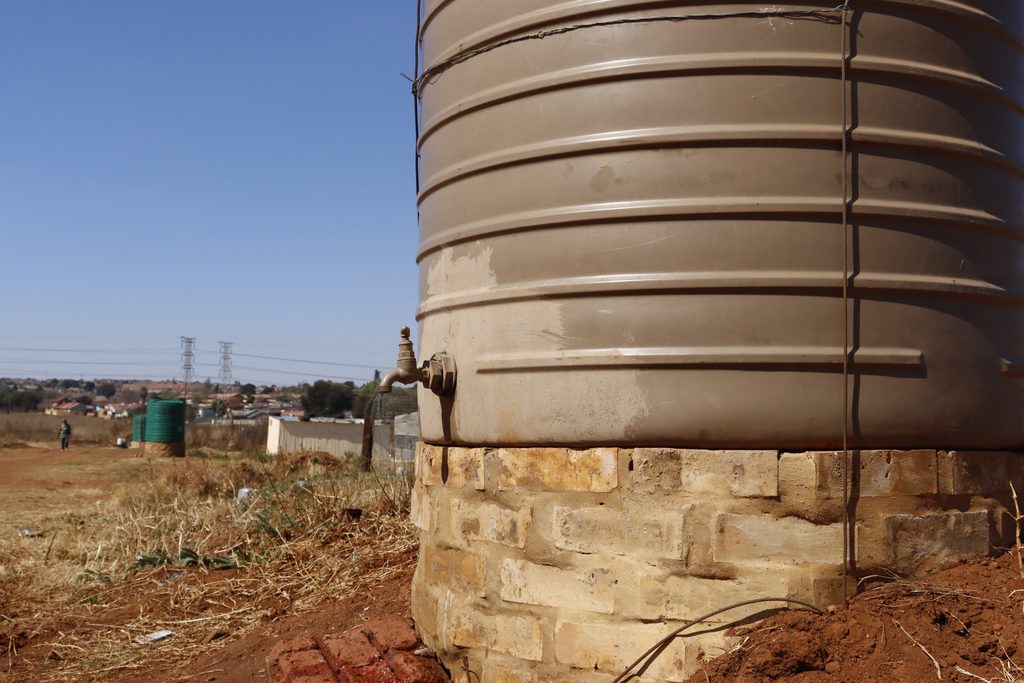
However, despite having access to the tanks, the community still faces many problems with sanitation, especially since there is no running water for toilets. “We have manholes,” Elizabeth says, “We dig a hole and we use the bucket system. Or you do it in the house, or if you’re comfortable, in a small area outside and then you go and throw it away and wash your bucket.” This process, however, fills her with dread as it exposes her children to unsafe, unhygienic conditions.
Now the warm sunlight has filled every crevice of the shack and has ignited a burst of energy in the children. They begin soaring onto the bed, charging out of a home too small to contain their joy. Bursting out of the door, the cold morning wind pools over their tender faces as they sprint around the four corners of their fenced-off yard.
“I feel like a superintendent sometimes,” Elizabeth says with a slight chuckle. “Everything needs to be in order. If each one stays in their lane and just follows through on what [their] responsibility is, it’s easier.” She casts a stern glance at Tarryn and Willow, who are fighting over a mic.
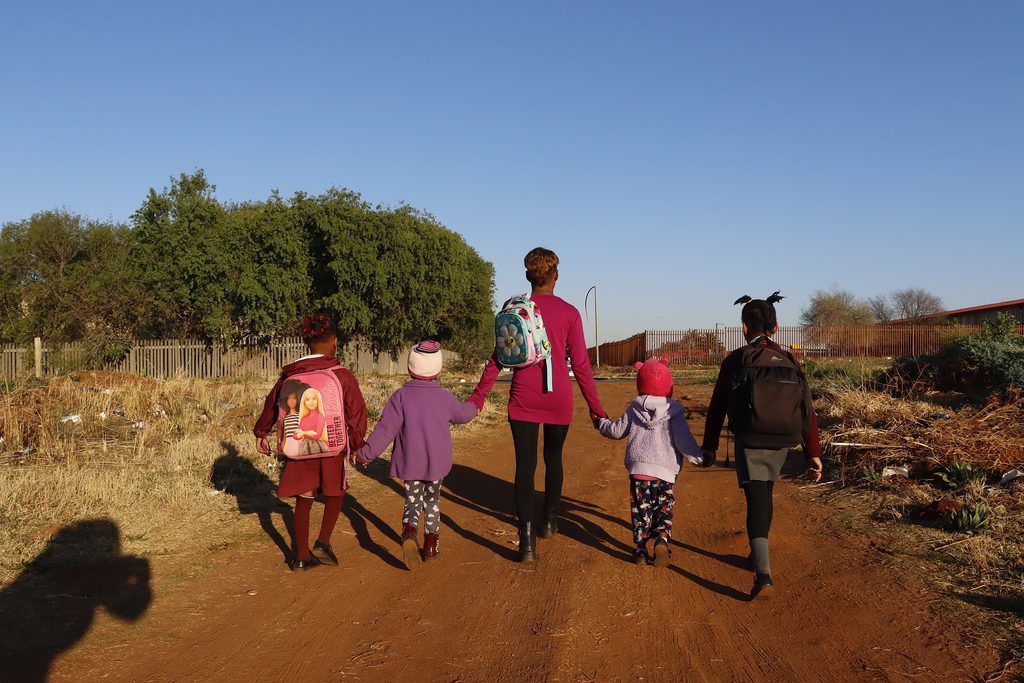
Hayley pulls open the low metal gate, and the children spill out from the yard into the copper-red plains. Elizabeth chides each one to make a line, and, like magnets, her children form a chain-link of hands.
Down the open dusty road, they strut like soldiers. The chants of an army of children carry through the air.
“We walk straight. We walk straight. If you don’t move out the way, we will kick you in the face,” they sing, lifting their legs up high to kick the air in front of them.
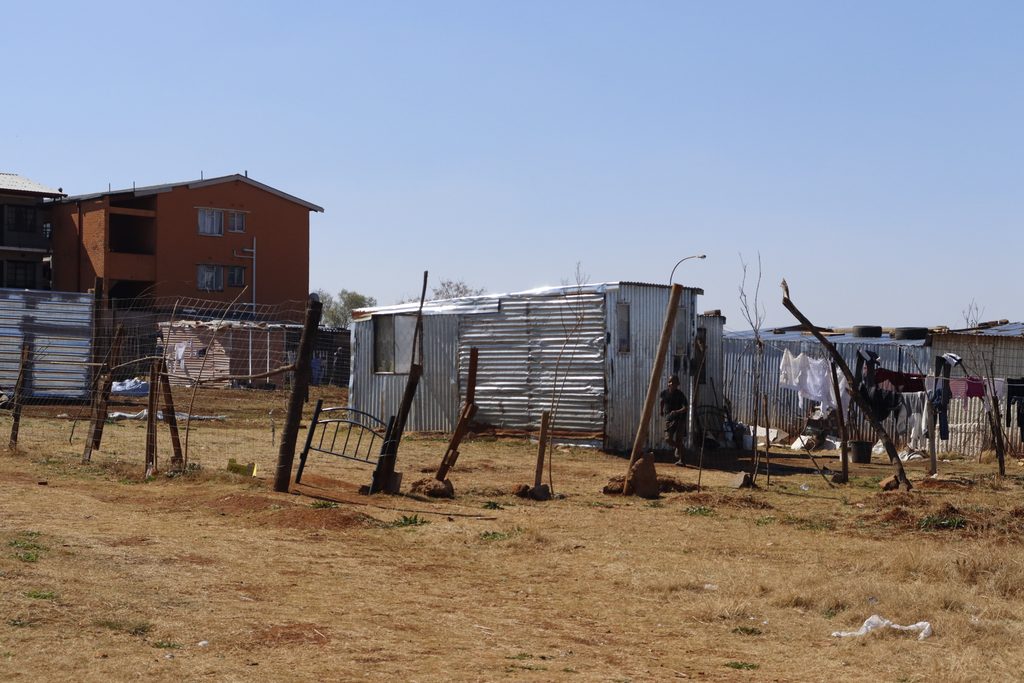
“This used to be an open field,” Elizabeth states, gesturing towards the settlements dispersed around the grassy plains.
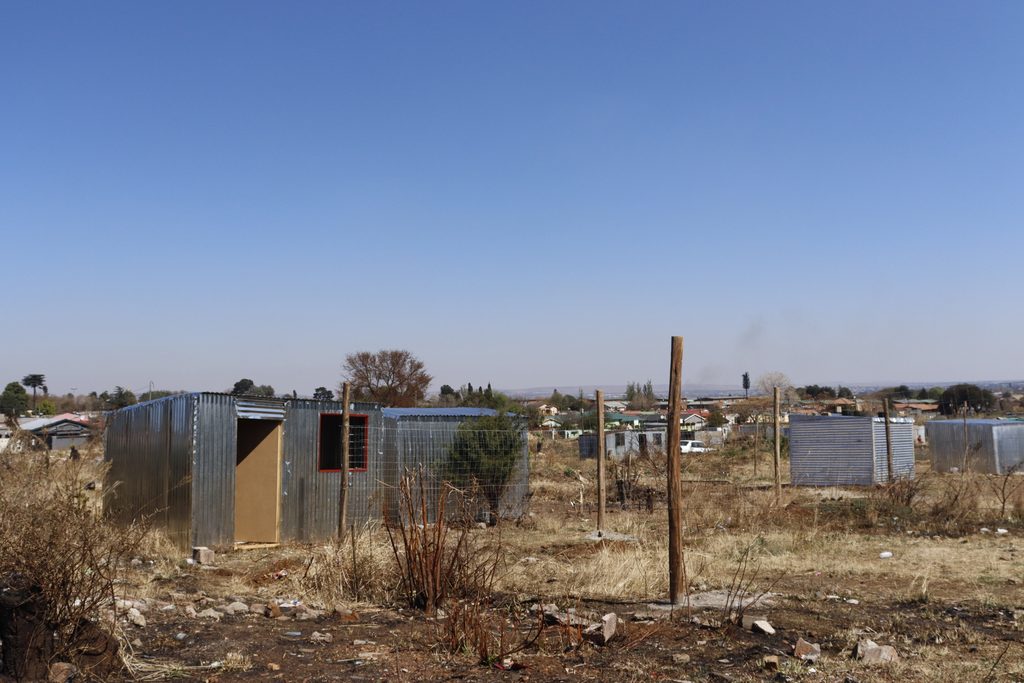
Actionville is one of thousands of informal settlements that have sprouted across the country born out of a desperate, decades-long housing backlog that has left millions waiting on government waiting lists.
A year ago, during the early days of Actionville, residents faced constant pushback from law enforcement, with Elizabeth’s home under threat of being bulldozed. To comply with their demands, she chose to dismantle the shelter herself.
“If they do get it right, it’s a demolish,” Elizabeth explains, “They use their bulldozer and they drive over your home so it’s damaging everything that’s in there, and this was my home. It’s been my home for the longest time.”
Eviction threats are a recurring reality for informal dwellers. Time and again, police have raided communities to tear down newly erected shacks, only to meet fierce resistance from residents determined to protect their homes.
Under the current Prevention of Illegal Eviction (PIE) Act, authorities must secure a court order before demolishing homes. Proposed amendments would remove this requirement, making evictions far easier. While officials claim the changes target illegal land syndicates, housing rights advocates warn the loss of these legal protections will leave vulnerable families like Elizabeth’s with nowhere else to go.
“If they make this amendment, we could lose everything,” Elizabeth says solemnly.
Her grip remains firm on her children’s hands as they approach the school. As she hugs each one goodbye, she watches them depart, their chattering and giggles fading round the bend.
FEATURED IMAGE: Elizabeth seated on the bed with her children. Photo: Hannah Brown.
RELATED ARTICLES:
- Wits Vuvuzela, Wits students have nothing but their dreams as housing crisis persists, April 2025
- Wits Vuvuzela, Beneath Joburg’s world class glow, beats the city’s informal pulse, December 2025
- Wits Vuvuzela, Alexandra: A microcosm of the Joburg’s housing crisis, December 2023

