
Architecture is often associated with what it produces: the walls, windows, and spaces that become a part of our everyday life. But before a building exists; someone must imagine it.
For two young women from the Wits School of Architecture and Planning, imagining took them beyond Wits and into Vienna, Austria, after they were selected to attend an international architecture summer school.
Jaimini Ranchod and Maimuna Dadi Patel, two third-year Wits students, were selected to attend the annual Vienna Architecture Summer School, a week-long programme that brings architecture students, graduates and young practitioners from all over the world together to one of Vienna’s largest social housing estates in the former laundry hall of Sandleitenhof.
For Ranchod and Dadi Patel, the invitation was based on their studio work and great academic performance. It became an opportunity to learn and exchange ideas alongside young graduates and practitioners from different parts of the world, including Estonia, Italy, and France, among others. “I think this opportunity has allowed me to be so much more open-minded, being able to see things from multiple perspectives, and understand other people especially when they come from cultures and contexts different from mine,” shared Dadi Patel.
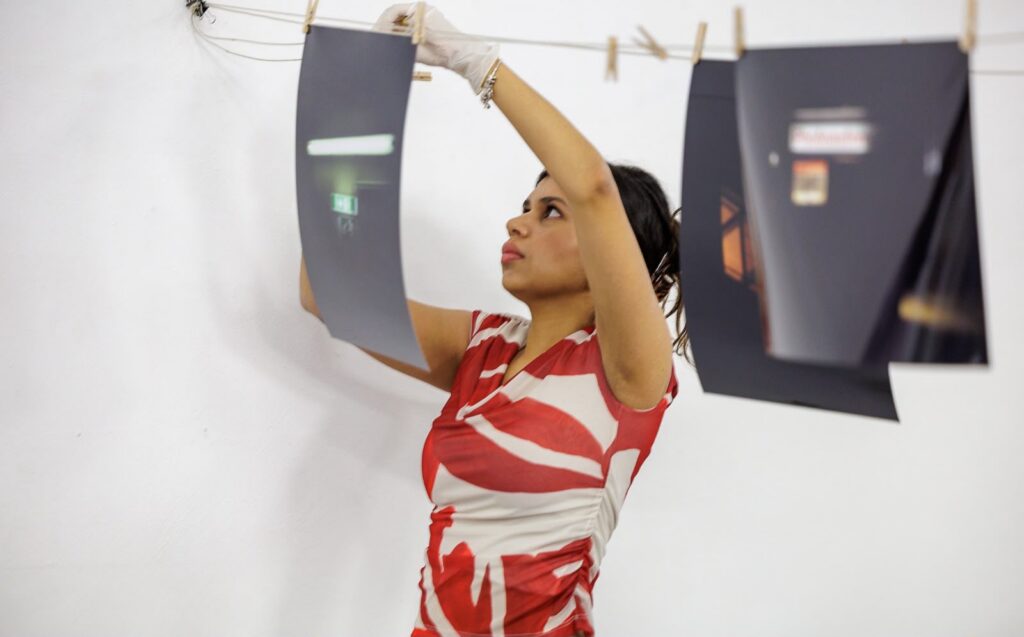
The opportunity
Being exposed to people and work from across the world encourages students to understand that cross-culture allows them to question any ideas they may have taken for granted, said Dr Sandra Felix, lecturer at the Wits School of Architecture and Planning. “The exposure to other ways of practicing architecture makes these students aware of the way in which South African architects practice,” she said. For Ranchod and Dadi Patel, it means returning home with new understandings and global perspectives.
And interacting with young women specifically, interested in the same things as them, but all coming to the opportunity with different ways of viewing the same abstract ideas was particularly enlightening. “It feels that although we are from different contexts, we are almost cut from the same cloth,” said Dadi Patel “We share the same struggle of being women in a male dominated field.” The sense of being “cut from the same cloth” shaped how the students could think and interact with their identity in their designs, and how who they are influences what they choose to preserve, change, or build around them.
The Wits edge
Ranchod’s path to Wits was not straightforward. She started in biomedical science and realised it wasn’t a space she wanted to be in. After taking a year out to study interior design, she ventured into architecture. Her initial plan was to study at UCT, but she chose to study at Wits. “Wits has built a reputation as one of the best places in South Africa, and I think the continent, to study architecture.” she explained. Beyond the institution’s legacy, being close to her family in Johannesburg mattered to her, because they are her support system.
For Dadi Patel, studying at Wits was intentional. “I started architecture at Wits because it was one of my top choices, and it is close to home.” Along the way, she doubted herself, and felt anxious about managing such a demanding course, where students have to do everything from designing by hand to physically constructing models Over the past two years, that doubt turned into passion, shaped through her work and her interest in thinking about things differently. Understanding the architectural space as something broad that encompasses people, environment, and context has helped her grow into how she sees herself as a young architect.
The sense of growth is reflected in the field itself. South African architecture has traditionally been a profession dominated by white men. However, the narrative has shifted, with women of colour leading in some of the most celebrated architectural spaces. Women like Yasmin Mayat, co-founder of Mayat Hart Architects and an accredited heritage practitioner, and Sumaya Vally, founder of Counterspace, who became internationally renowned in 2021 after becoming the youngest architect ever to design London’s Serpentine Pavilion, have paved the way. Nadia Tromp, owner of Ntsika Architects, became the first African woman in 2017 to win a World Architecture Festival Award for her Westbury Clinic among several other awards, and Dr. Huda Tayob, who focuses on research in migration and identity in the architectural space, are examples of women of colour in architecture who are reshaping the field. Through their work, students can see that change is possible.
The shift was clear to the pair in Vienna, with Maimuna sharing that the workshop was more female dominated. For both, representation matters in a space where woman could still be undermined for choosing to study the course.
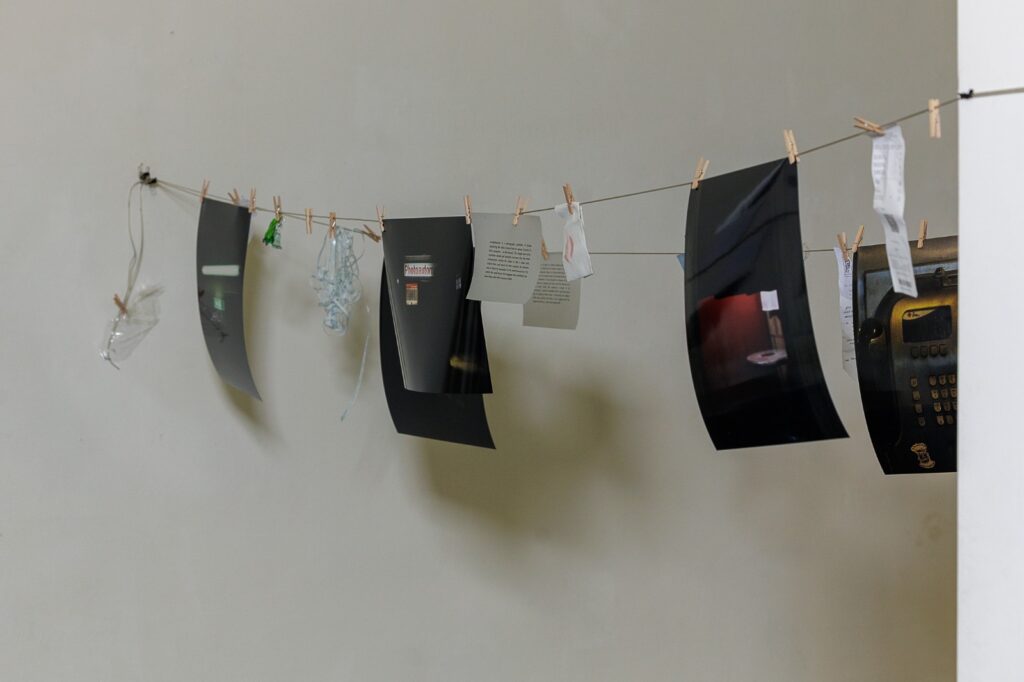
Looking forward
When asked about what they want their architecture to say about them in the future, Ranchod wants her architecture to feel like a safe space for the communities who use it and makes room for those who use it after her. “It should feel like it belongs exactly where it is, and it was built just for the community who uses it. What matters most is that people are comfortable enough to use the spaces I designed,” she explained.
Dadi Patel wants her architecture to be thought-provoking and beneficial to communities. “I want my architecture to say that I have done something for the people and didn’t just design selfishly. I would want to make a change in the world. I want to do more than what architecture is known for, I want to show that I am changing and the world is changing” she said.
The future is no longer about just building new spaces – it is about adapting to what already exists in ways that cater for communities and including the diverse voices that have been excluded from designing them.
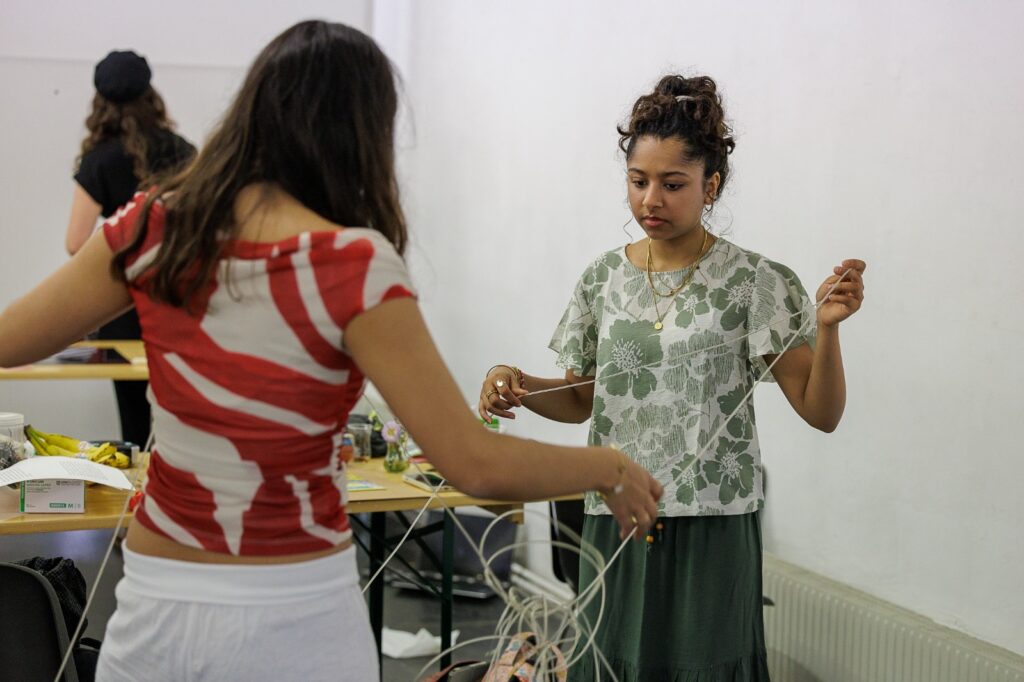
FEATURED IMAGE: Architecture students measuring and aligning work on a wall. Photo: Richard Pobasching
- Wits Vuvuzela, Braamfontein Cemetery’s increased safety measures mean all can explore its heritage , March 2026
- Wits Vuvuzela, A reflection on the architecture of consequence in 52 steps, April 2026
- Wits Vuvuzela, Architecture students re-imagine the Matrix, May 2023

