Architecture is often associated with what it produces: the walls, windows, and spaces that become a part of our everyday life. But before a building exists; someone must imagine it.
For two young women from the Wits School of Architecture and Planning, imagining took them beyond Wits and into Vienna, Austria, after they were selected to attend an international architecture summer school.
Jaimini Ranchod and Maimuna Dadi Patel, two third-year Wits students, were selected to attend the annual Vienna Architecture Summer School, a week-long programme that brings architecture students, graduates and young practitioners from all over the world together to one of Vienna’s largest social housing estates in the former laundry hall of Sandleitenhof.
For Ranchod and Dadi Patel, the invitation was based on their studio work and great academic performance. It became an opportunity to learn and exchange ideas alongside young graduates and practitioners from different parts of the world, including Estonia, Italy, and France, among others. “I think this opportunity has allowed me to be so much more open-minded, being able to see things from multiple perspectives, and understand other people especially when they come from cultures and contexts different from mine,” shared Dadi Patel.
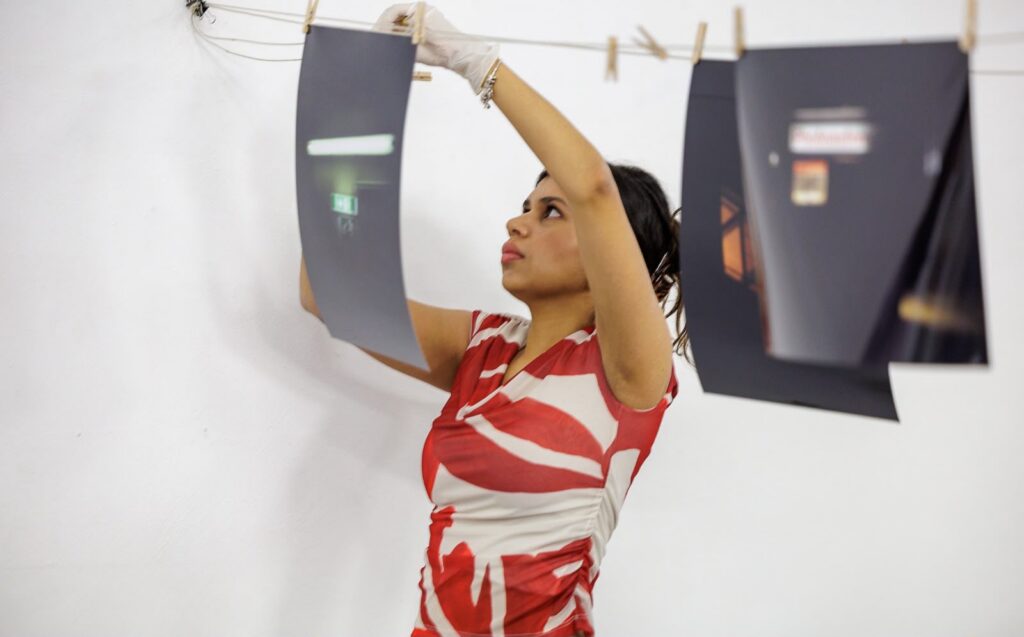
Architecture student Maimuna Dadi-Patel hanging up photographic prints. Photo: Richard Pobasching
The opportunity
Being exposed to people and work from across the world encourages students to understand that cross-culture allows them to question any ideas they may have taken for granted, said Dr Sandra Felix, lecturer at the Wits School of Architecture and Planning. “The exposure to other ways of practicing architecture makes these students aware of the way in which South African architects practice,” she said. For Ranchod and Dadi Patel, it means returning home with new understandings and global perspectives.
And interacting with young women specifically, interested in the same things as them, but all coming to the opportunity with different ways of viewing the same abstract ideas was particularly enlightening. “It feels that although we are from different contexts, we are almost cut from the same cloth,” said Dadi Patel “We share the same struggle of being women in a male dominated field.” The sense of being “cut from the same cloth” shaped how the students could think and interact with their identity in their designs, and how who they are influences what they choose to preserve, change, or build around them.
TheWitsedge
Ranchod’s path to Wits was not straightforward. She started in biomedical science and realised it wasn’t a space she wanted to be in. After taking a year out to study interior design, she ventured into architecture. Her initial plan was to study at UCT, but she chose to study at Wits. “Wits has built a reputation as one of the best places in South Africa, and I think the continent, to study architecture.” she explained. Beyond the institution’s legacy, being close to her family in Johannesburg mattered to her, because they are her support system.
For Dadi Patel, studying at Wits was intentional. “I started architecture at Wits because it was one of my top choices, and it is close to home.” Along the way, she doubted herself, and felt anxious about managing such a demanding course, where students have to do everything from designing by hand to physically constructing models Over the past two years, that doubt turned into passion, shaped through her work and her interest in thinking about things differently. Understanding the architectural space as something broad that encompasses people, environment, and context has helped her grow into how she sees herself as a young architect.
The sense of growth is reflected in the field itself. South African architecture has traditionally been a profession dominated by white men. However, the narrative has shifted, with women of colour leading in some of the most celebrated architectural spaces. Women like Yasmin Mayat, co-founder of Mayat Hart Architects and an accredited heritage practitioner, and Sumaya Vally, founder of Counterspace, who became internationally renowned in 2021 after becoming the youngest architect ever to design London’s Serpentine Pavilion, have paved the way. Nadia Tromp, owner of Ntsika Architects, became the first African woman in 2017 to win a World Architecture Festival Award for her Westbury Clinic among several other awards, and Dr. Huda Tayob, who focuses on research in migration and identity in the architectural space, are examples of women of colour in architecture who are reshaping the field. Through their work, students can see that change is possible.
The shift was clear to the pair in Vienna, with Maimuna sharing that the workshop was more female dominated. For both, representation matters in a space where woman could still be undermined for choosing to study the course.
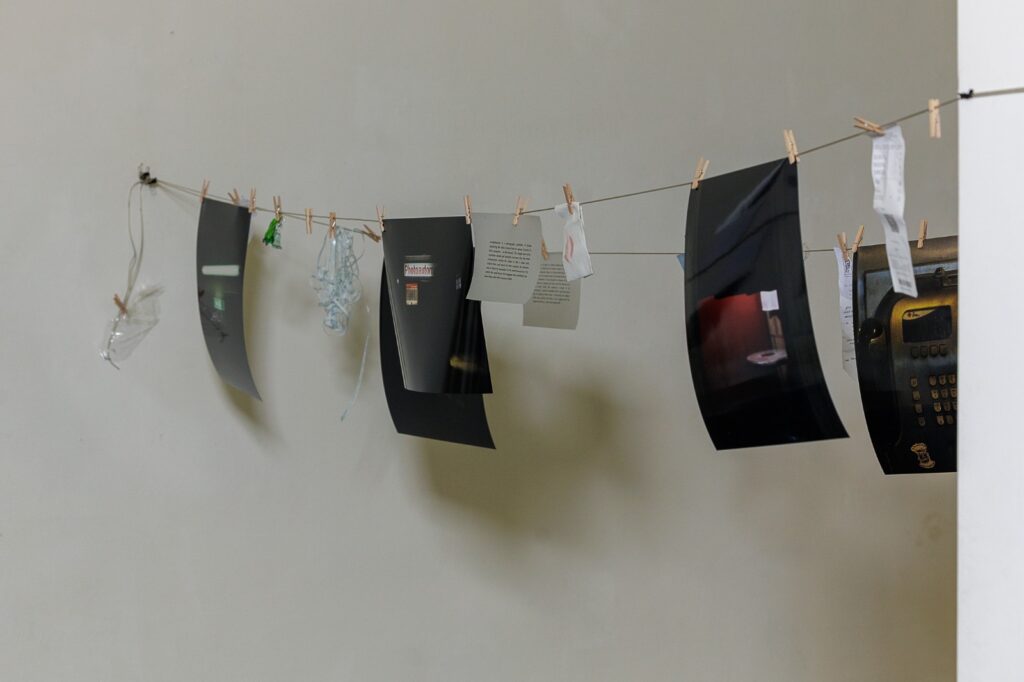
Photographic prints and notes clipped to line. Photo: Richard Pobasching
Looking forward
When asked about what they want their architecture to say about them in the future, Ranchod wants her architecture to feel like a safe space for the communities who use it and makes room for those who use it after her. “It should feel like it belongs exactly where it is, and it was built just for the community who uses it. What matters most is that people are comfortable enough to use the spaces I designed,” she explained.
Dadi Patel wants her architecture to be thought-provoking and beneficial to communities. “I want my architecture to say that I have done something for the people and didn’t just design selfishly. I would want to make a change in the world. I want to do more than what architecture is known for, I want to show that I am changing and the world is changing” she said.
The future is no longer about just building new spaces – it is about adapting to what already exists in ways that cater for communities and including the diverse voices that have been excluded from designing them.
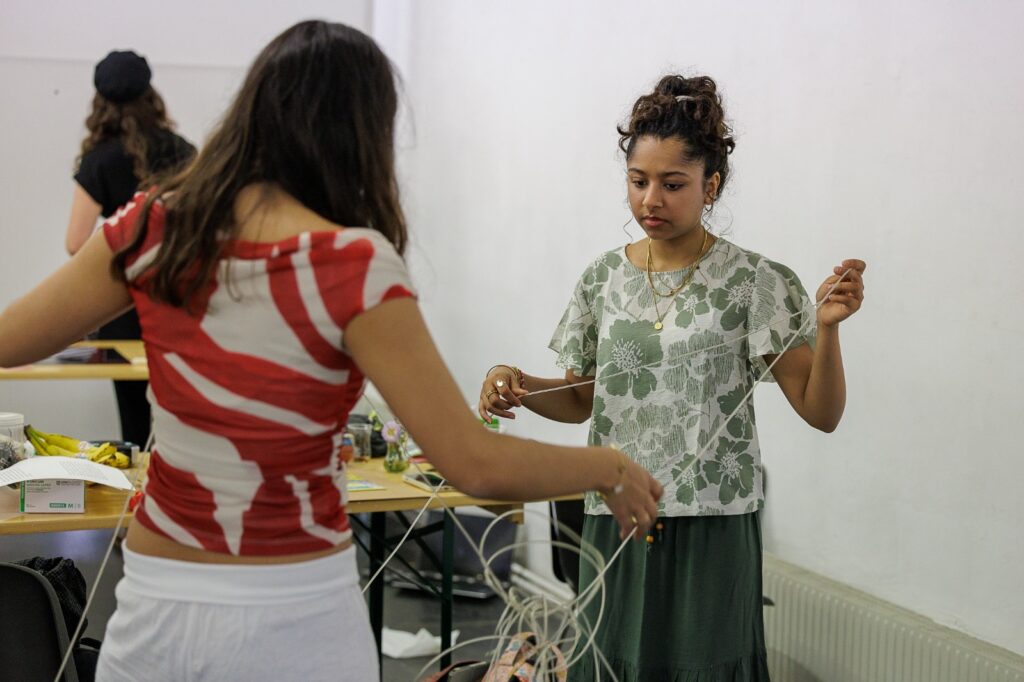
Jaimini Ranchod constructing a structure out of white string. Photo: Richard Pobasching
FEATURED IMAGE: Architecture students measuring and aligning work on a wall. Photo: Richard Pobasching
At Decorex Joburg, “Soft Life” looked a lot like everyone else’s life, the continent was missing.
Decorex Joburg, one of Africa’s largest design and decor exhibitions, returned to the Sandton Convention Centre between July 30 to August 2, 2026, under the banner of “Soft Life”.
The theme was a move from the city’s hustle culture to a calmer, intentional design of spaces and pieces. Walking through the five floors I noticed minimalist styling with small tweaks repeated from booth to booth that demarcated exhibits. This made me question whether Africans have a sense of what soft life looks like in their own eyes, and not with a Western gaze.
What does “soft life” actually mean at a design exhibition in Africa, is it a colour palette or is it a philosophy? Decorex seemed to be a lot more about the form through the pale woods; ivory tones and muted neutrals presented as calm and intentional. The pendant lights shaped from soft, feather-like layers of ivory were undeniably elegant, but nothing in them spoke to what “soft life” is in Africa. I found myself wishing they had been exhibited in a bolder way, maybe a light carved into a traditional symbol or covered in African print.
Picture of a geometric pattern in black, white and green with curved wooden legs by Meetlo. Photo: Reatlehile Mashamba
The absence of the continent’s voice raised an unavoidable question even though the show was elegant and soft. The question is whether Africans can genuinely see themselves in this version of softness, or whether we’re being handed a Western idea and accepting it with ease.
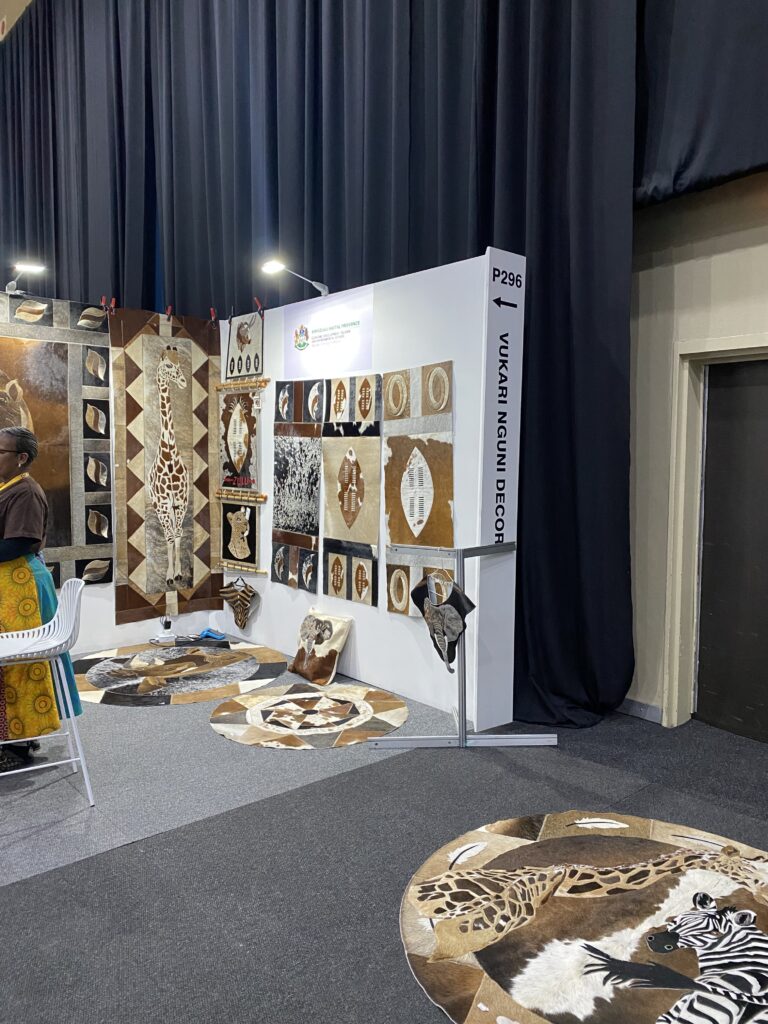
Being African is not a simplistic beige colour, it’s the bold brown colour of an animal hide that carries specific meanings, spiritual significance and ancestral meaning. Vukari Art offers a range of handcrafted luxury home decor made from 100% unique Nguni cowhides, with features such as rugs, wall hangings and matching cushion covers. Vukari’s stand was unapologetically African, it took me to my roots, gave me a feel of what Africa was before we became accustomed to a certain lifestyle. According to The Art and Heritage of African Animal Skin Rugs cowhides were traditionally valued for their utility in various contexts across the continent and remain a symbol of both functionality and natural elegance. In an exhibition centered around the “soft life” these designs offered a version of softness rooted in individuality and inherited wisdom rather than a borrowed idea of a colour palette.
In contrast, Design Week Lagos: Homeexhibited their designs using an opposite approach with carved wooden panels with a mask-like figure, a hand-thrown ceramic form and straw woven rugs underfoot, it wasn’t as bold; it was another way of portraying Africa. The mask-like figures were a symbol of Western Africa, often representing ancestral spirits, deities or serving as ceremonial objects rather than decoration. This offered two different, equally valid African expressions, proving that softness and identity aren’t always mutually exclusive.
Leaving Decorex, I kept asking myself, “what does soft life actually mean in South Africa and who does it cater to?” For some part of the exhibition, I felt that Africa’s soft life could have been borrowed from an idea that screams simplistic with a solid colour palette. An African soft is allowed to feel and look different through its unique symbolisms, materials and colour palette with no expectation on what to deliver. Decorex lived up to its promise; it was soft and intentional, but it could include some parts of Africa.
FEATURED IMAGE: Picture showing signage of the Decorex sign at the Sandton Convention. Photo by Reatlehile Mashamba
When Wits met La Réunion on stage, language fell away and music took over. Voices Without Borders brought French precision and African warmth together for one unforgettable night at the Atrium.
Picture of Wits choir warming up for the event. Photo by: Reatlehile Mashamba
The Faculty of Humanities and the Wits Choir welcomed Choeur du Petit Conservatoire de I’Est for a joint concert titled Voices Without Borders on May 08 at the Wits Artiruim.
The performance was set to start at 18:30 with guests arriving an hour earlier, filling the air with excitement and anticipation. From the moment the first note rang, the contrast between both choirs was evident, and that was the essence of the evening: a cultural exchange with no borders.
Led by director Fanny Prie, the French choir set the stage with precision and harmony of classical French repertoire. Based in Saint-Andre, La Reunion, the 45-strong youth ensemble is known back home for their “Bus de Noel” tour across schools and hospitals. Their sound was clean, controlled and disciplined, with pure evidence of what years of training sound like in every phrase they sang.
Yet, the performance didn’t feel cold; it brought warmth to a country far from home. “We are a population and a mix; that’s what our choir represents. It’s difficult because African choirs sing in their languages, but it has been a lesson for us and the exchange helps us exchange the French repertoire.” said Prie. The Artiruim fell silent after the last note, then broke into applause, as language barriers disappeared through music. On the other side, Menzi Gumede and Sasha Xola Dladla-Nkosi shaped the Wits Choir for the evening. It was nerve wracking for them going in not knowing what the audience’s turnout would be, but there was clear excitement from both conductors.
They pushed the choir into rhythm and created a beautiful harmony, listening for how it could blend well with the French choir’s precision. For Dladla-Nkosi, that was the point of the night. “Shared harmony is the ability to do things with people who have not been exposed to the choir setting. Harmony in itself blows people who are not involved in choirs away.” said Dladla-Nkosi.
The electric feeling from both conductors came through in the passionate voices of the choir. The choir blended well mixing raw talent to make beautiful melodies. When the Wits choir missed a note and had to restart, the moment wasn’t met with embarrassment by performers and the audience. It was instead met with a shared understanding that they were striving for perfection.
The idea of “shared harmony” stopped being just an idea and became what was happening in real time. It wasn’t about which choir was better; it was about what happens when two different traditions and age groups meet with the intent to learn from each other and deliver the best performance.
“The cultural exchange is something I’m looking forward to because they are an elderly choir. I’m just really excited to be here. I think music is a universal language and them coming from France and us from South Africa and us coming together for the love of music encapsulate what shared harmony means” said Kea Maphila, an alto singer for Wits choir.
When both choirs came together on stage, it was nothing but beautiful. The precision and energy from both choirs completed the entire evening. In that moment the differences in language, style and training did not matter; what remained was a shared sound that felt bigger than each choir. Reunionese choral music blends French choral discipline with Maloya rhythms, a Créole style from African, Malagasy and Indian heritage on the island’s sugar plantations. South Arican choral music blends Western hymns with indigenous African traditions in the Amakwaya style, becoming an identity and community tool. It showed that music does not need perfect translation to connect people, it needs two groups willing to listen and meet in the middle.
Picture of Wits choir practising while French choir watches them. Photo by: Reatlehile Mashamba
FEATURED IMAGE: Picture of Wits choir warming up for the event. Photo by: Reatlehile Mashamba
South Africa celebrates Easter as a public holiday so why are Yom Kippur, Eid or Diwali just another day at work?
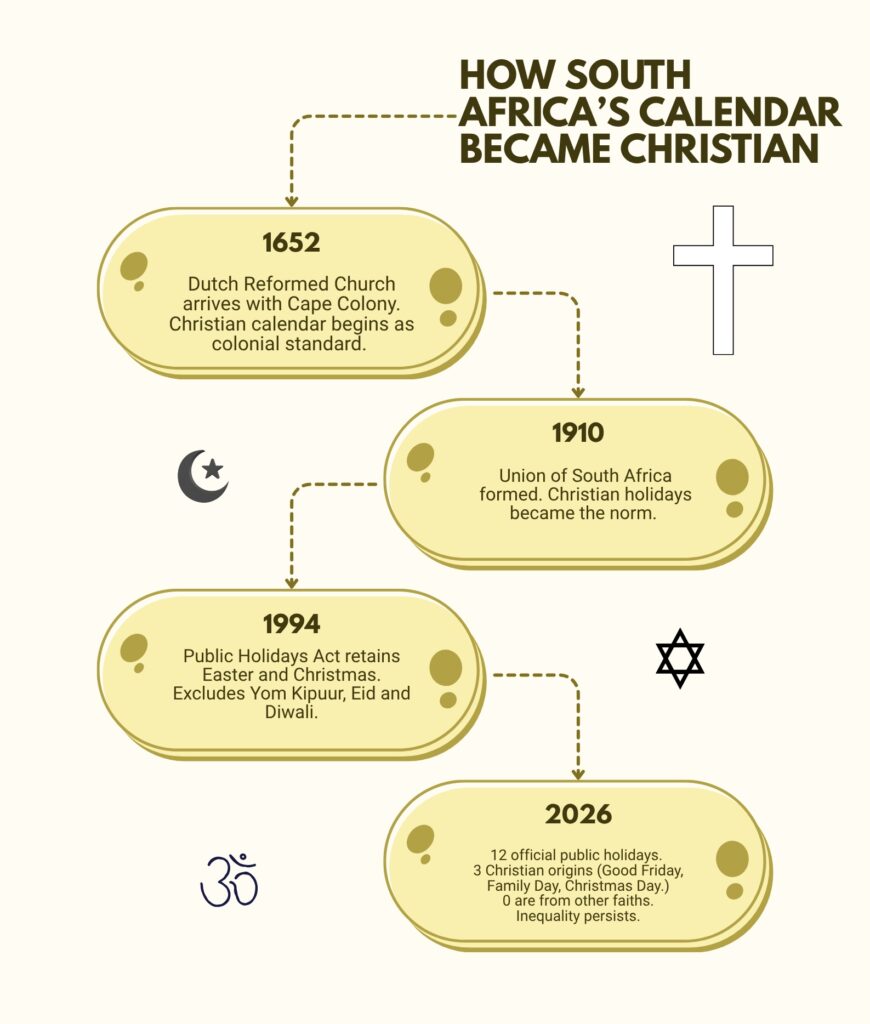
South Africa has 12 public holidays under the Public Holidays Act (No 36 of 1994). The Act recognises Easter and Christmas but does not recognise significant holy days of other major religions practiced in South Africa. Although South Africa’s constitution protects the right to religious observations, the public holiday calendar leans more towards Christianity. For a country with one of the most inclusive constitutions in the world, this appears to be a misnomer in our imagination of what our nation is and should be.
According to the DITSONG: National Museum of Cultural History , the arrival of Jan van Riebeeck marked the start of the South African colonial era and the introduction of Christianity to the region. As noted by Ancestors Research South Africa , the foundation of Christianity shaped the country’s public holiday calendar through the various colonies, as each colony observed Christian holidays before the South African Union in 1910.
Graphic showing how South Africa’s official public holidays include Christian holy days while excluding other faiths. Graphic by: Reatlehile Mashamba
Easter celebrates the resurrection of Jesus Christ after his sacrifice. This comes after 40 days of Lent for some Christians who use this time to reflect and fast. Easter Sunday (usually in March or April) is the biggest holy day preceded by the public holiday Good Friday and followed by Easter Monday, another public holiday.
Yom Kippur, the holiest Jewish day, known as “Day of Atonement,” is a 25 hour fast and five prayer services observance asking for forgiveness from God and people (usually in September or October). During this period, work is forbidden leading to many South African Jews taking an annual leave or a personal day off as South Africa does not consider Yom Kippur a public holiday. Eid al-Fitr (usually in April or May) an Islamic holiday that marks the end of Ramadan and celebrated with morning prayers, feasts, family gatherings and charity confirmed by the Jamiatul Ulama and not as a South African public holiday. Diwali (usually in October or November) known as “Festival of Lights” and falls on a Sunday symbolising light over darkness and good over evil. It is observed with lighting diyas, rangoli designs, exchanging sweets and prayers to goddess Lakshmi.
The Public Holidays Act does not reflect the country’s diverse religious culture. It reflects the assumption that there is only one dominant religion, Christianity, with holidays being built around that one religion while other religions must make amends to miss work. Considering South Africa’s multiculturalism, the religious calendar should include elements of each religion’s holy days allowing everyone to celebrate and understand their true meaning.
Academic, Benedict Anderson, defines a nation as an imagined community. What if in that imagination other religious holy days were made public holidays? The country would get the chance to stop and allow Jews to fast, Muslims to pray and Hindus to light up lamps while everyone else celebrates it as a long holiday.
The argument is not whether Easter should be or not be a public holiday. It is whether other religions deserve the same recognition given to Christianity. In a country as diverse as South Africa with 12 official languages and a constitution that protects religious freedom, the public holiday calendar should reflect this diversity.
With no change to the calendar, Jewish students will continue to ask for leave during test and exam season, Muslim families will continue to celebrate Eid after a long day at work, Hindu homes will continue to light up diyas at night and Easter will remain the same, a religious holiday for everyone but a holy day for Christians.
FEATURED IMAGE: Graphic titled “How South Africa’s calendar became Christian”. Graphic showing how South Africa’s official public holidays include Christian holy days while excluding other faiths. . Graphic by Reatlehile Mashamba
The fund set up to save students leaves many students begging for assistance.
As the second block of the semester begins at Wits University, some NSFAS beneficiaries are not only worried about academic pressures but also about survival. Awaiting allowances has made students anxious about where their next meal will come from and the possibility of being locked out of their residences.
The National Financial Aid Scheme (NSFAS) has gone to shambles. On March 30 2026, the Auditor-General issued a “disclaimer opinion” due to systemic issues that left their books unverified.
The findings revealed funds being paid to over 822 deceased students, 14,000 wealthy ineligible beneficiaries, while legitimate beneficiaries are left to starve, and thousands of fraudulent recipients are benefiting from the fund. The systematic collapse and mismanagement of documents result in hungry students facing possible eviction.
“In the beginning of the year there are four to five funding lists, your name not being on the list means you will not receive an allowance and in that time you have to rely on your family or see for yourself until your name is on the list,” Tariana Botha, a Wits alumni, holds a BA in Psychology and Geography and is now pursing her BA Honours in Psychology, commented,
Perfect Maphumulo, a first-year mining engineering student, shared that his cousin had to borrow money after not receiving his allowance, “He called home and told them he didn’t receive his allowance. His parents had to go borrow money.”
Although some students remain silent about the delay of allowances, they remain hopeful. Waiting for a bank notification with their allowance, the wait is mentally daunting and affects the academics of many students.
The Wits Student Representative Council (SRC) has been making efforts to fill the gaps left by NSFAS through the SRC Access Fund, supported by the university. “NSFAS should be dissolved, and the Department of Higher Education should directly work with universities, and the university should directly work and communicate with the eligible recipients,” Wits SRC President Gilbert Nchabeleng said. The SRC stands with students and continues to fight for them. Until NSFAS is rebuilt and restructured, students will continue to anxiously wait for an allowance.
FEATURED IMAGE: The Financial Aid and Scholarships Office showing students waiting for assistance. Photo: Reatlehile Mashamba
In episode six of We Should Be Writing season 7, the team unpacked the evolution of music as a form of expression and protest, through four decades in the South African context. The episode explores the journey of South African music and its consumers from the 80s, 90s, early 2000s and contemporary listeners. From the […]