
Nowadays, history is no longer stored away in a box, it seeks to be at our fingertips, on a screen.
- The physical Drum archive is transitioning into the digital space through the process of digitisation making it more secure and accessible for people to access.
- The legacy of Drum is immortalised through universities, local heritage sites and the physical Drum Archive shop.
History continues to root itself in the present, almost demanding that its presence is felt, acknowledged and learned about. During Apartheid, one of the most oppressive periods in the country’s history, a group of predominately black men and women remained at the frontlines, writing extensively about the harsh conditions of Apartheid. Capturing moments at the right place, at the right time; giving the world a glimpse of South Africa when the apartheid government used various tools to promote a distorted image of its state sponsored violence.
The Drum crew gathered together and redefined the history of journalism, legends such as Henry Nxumalo (Mr. Drum), Todd Matshikiza, Nat Nakasa, Lewis Nkosi, Juby Mayet, Casey Motsisi, Can Themba, Bloke Modisane, Es’kia Mphahlele, Paul Magubane, Jurgen Schadeberg, Bob Gosani, Alf Kumalo and many others created a timeless blueprint that would still be used as a reference point many years later.
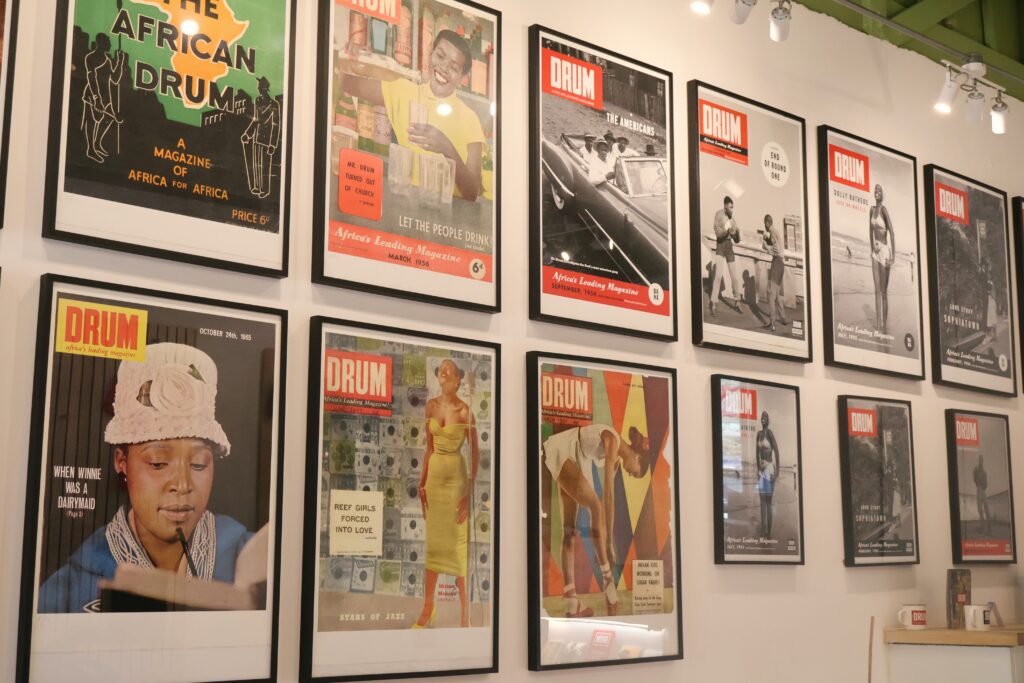
To understand why Drum was so significant, one has to go back in time. Before there was Drum, it was initially the African Drum which was launched by Robert Crisp. According to South African History Online, “the content consisted mainly of tribal preaching and folktales and despite a readership of about 20 000, the magazine was not financially successful.” In 1951, Jim Bailey took over and renamed it Drum, and the media landscape was set to change forever, “the image of the magazine was transformed, and its content began highlighting urban black culture.”
Beyond highlighting urban black culture, Drum offered creatively compelling stories and photographs that were relatable for black people who rarely saw themselves being represented in the media during Apartheid. The vivid imagery, undercover reporting, and personal written insights made it stand out. Drum also gave people the opportunity to ‘Write to Drum’ which enhanced the personal connection between Drum and its readers.
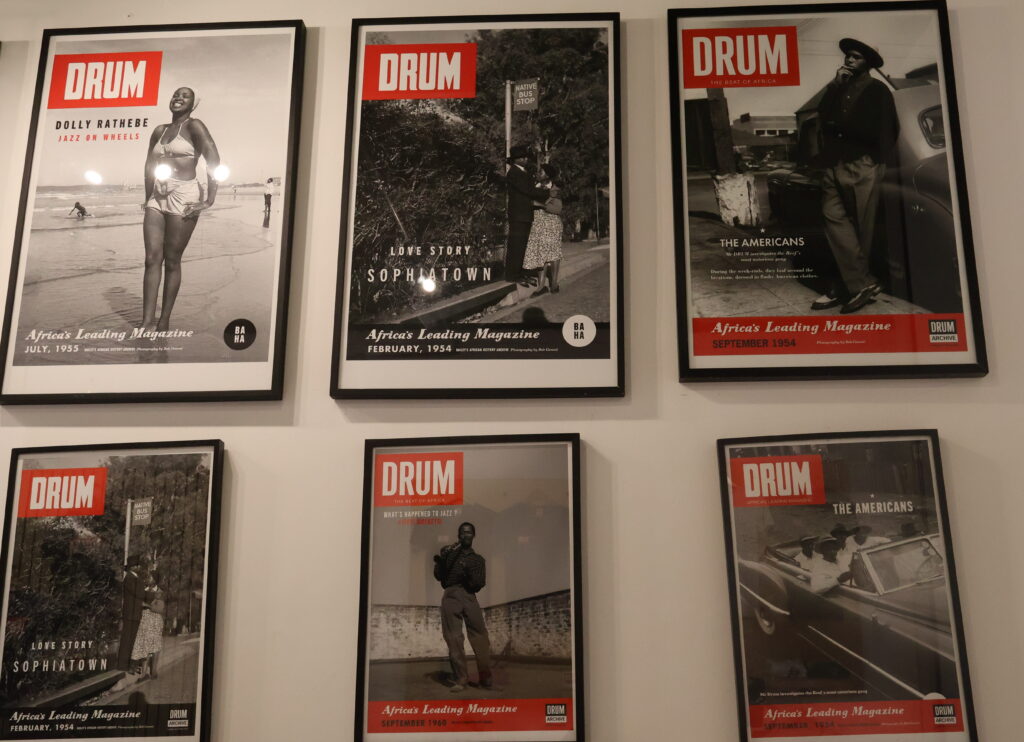
Sandra Matutoane gleams as she reminisces about editions that stood out to her: “The 1955 issue of Dolly Rathebe on the beach, it is the back story of the cover rather than the cover that makes it my favourite. Dolly and the photographer had to get to the beach at 5am because black people were not allowed on the beach during those times. It was the first time a black woman appeared on a cover in South Africa, and she was in a bikini! There was total outrage!”
When asked which Drum editions stood out to Professor Lesley Cowling, she shared: “Well I’d say that there are a couple of editions where Drum is introducing investigative journalism which I think are quite important. Because that changed the magazine from just being about celebrities, crimes, sports and music to also investigating problems in South Africa…
Henry Nxumalo suggested investigative journalism, the potato farms in Bethal where he put himself on the line as a farm worker to expose the brutal treatment of farm workers. And then to find ways for one of the photographers to take pictures. So that was one of the articles and there was a huge response in society to it and questions were asked in parliament about the conditions of the farm.”

It is conversations like these that transport one to a time in history that the younger generation could have never physically been a part of. The question arises; how can they access this history and experience these stories for themselves?
At Arts on Main, upon entry there is a red staircase that leads you into a world of South African history. This room holds the delicate original copies of written stories, records and photographs that date back to decades ago. Of course, this is none other than the Drum Archive, formerly known as the Bailey African History Archive (BAHA). The Drum Archive is filled with large, bright, colourful frames of iconic magazine covers that range from the 1950s -1960s and the 1970s-1980s. The cabinets offer a unique lens of history. Yet it is not sufficient for the archive to be trapped in a file.
In the physical room, there was a black tent on the far-left corner of the space. Inside is where the magic of digitisation happens, this is where the bridge between the physical archive and the soon to be digital archive connects. The digitisation process consists of “taking a physical document and converting it into digital formats.” such as digital photos, covers and stories. In a digital age, digitisation is more relevant now than ever before. It is important for history to be accessible to people from all walks of life.
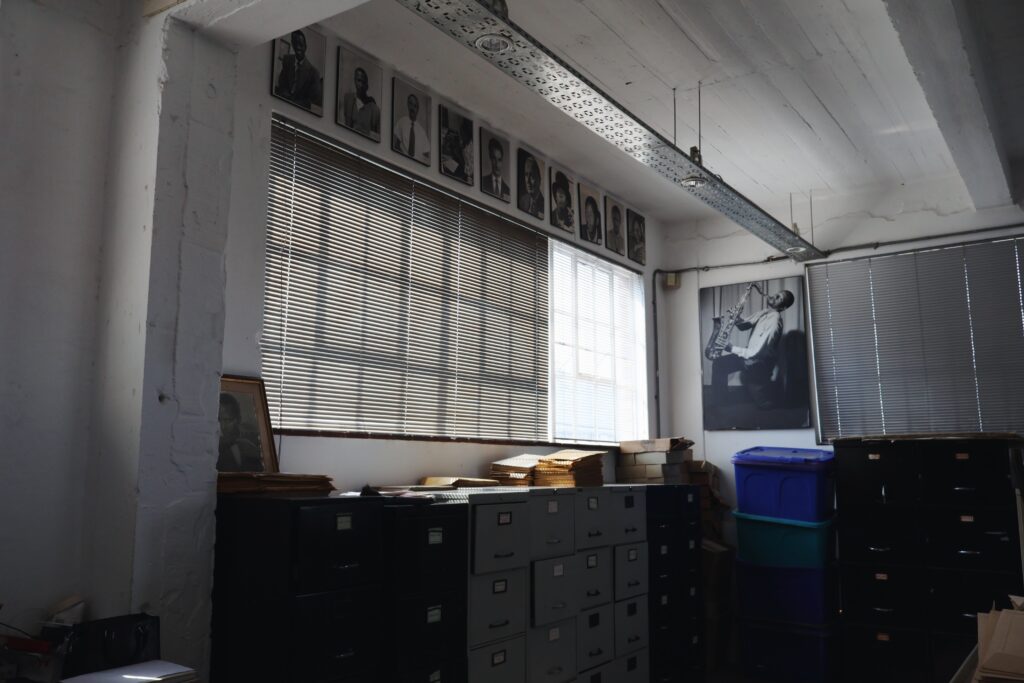
Besides adapting to keep up in a digital world, it’s also for security. Lest we forget the tragic wildfire that struck the University of Cape Town’s library back in 2021, where the African Studies’ collection of books, manuscripts and pamphlets which “exceeded 85 000 items on African studies alone” was burnt to ashes. This was not just any kind of paper; it was evidence of lived history at its finest. Therefore, digitising offers an alternative way to preserve and value the archive.
In conversation with the archivist, Bongi Masawangani, she reflected on patterns/trends that come up in the process: “I’ve realised that earlier years people from overseas, researchers used to come to the archive more often. And we’d do research for them. But since we’ve started digitising, it tells us that it is working because there is no need for them to come physically to the archive, they can access it wherever they are. So, it reduces even the expenses…”. A trend that also reveals the contrast between local and international engagement with the archive.
The legacy of Drum is felt beyond the physical room at Arts on Main. Masawangani said DRUM is being immortalised in different places such as the University of California, Los Angeles (UCLA), the Apartheid Museum, the William Cullen Library at Wits University, the Steve Biko Foundation and Nelson Mandela Foundation. The Drum Archive store adds a creative touch to the archive by incorporating it in everyday items such as t-shirts, mugs and notebooks.

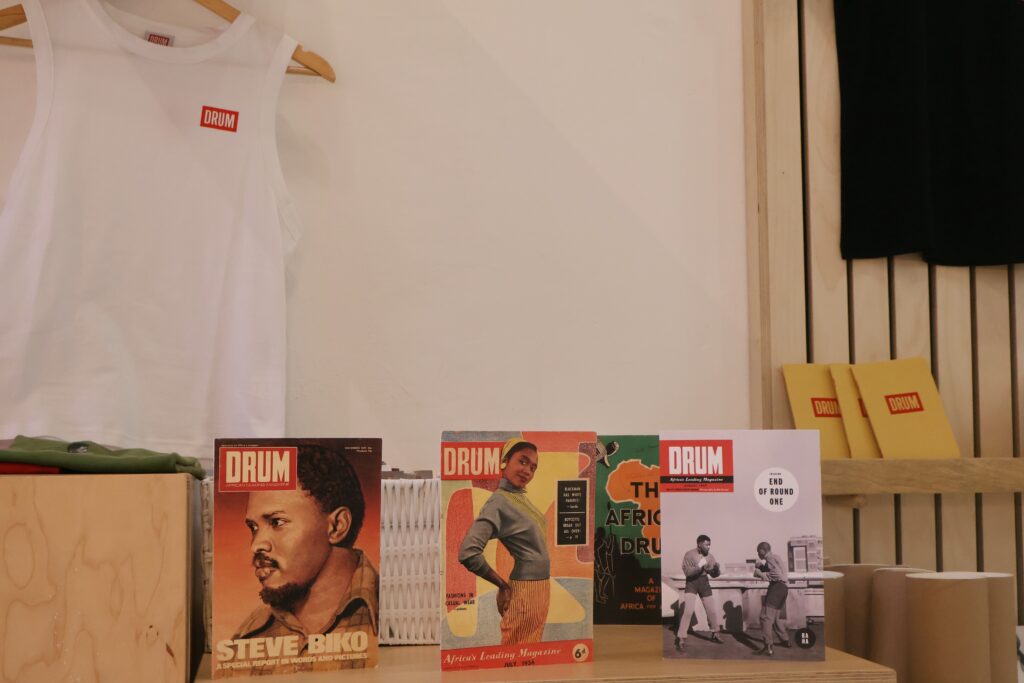
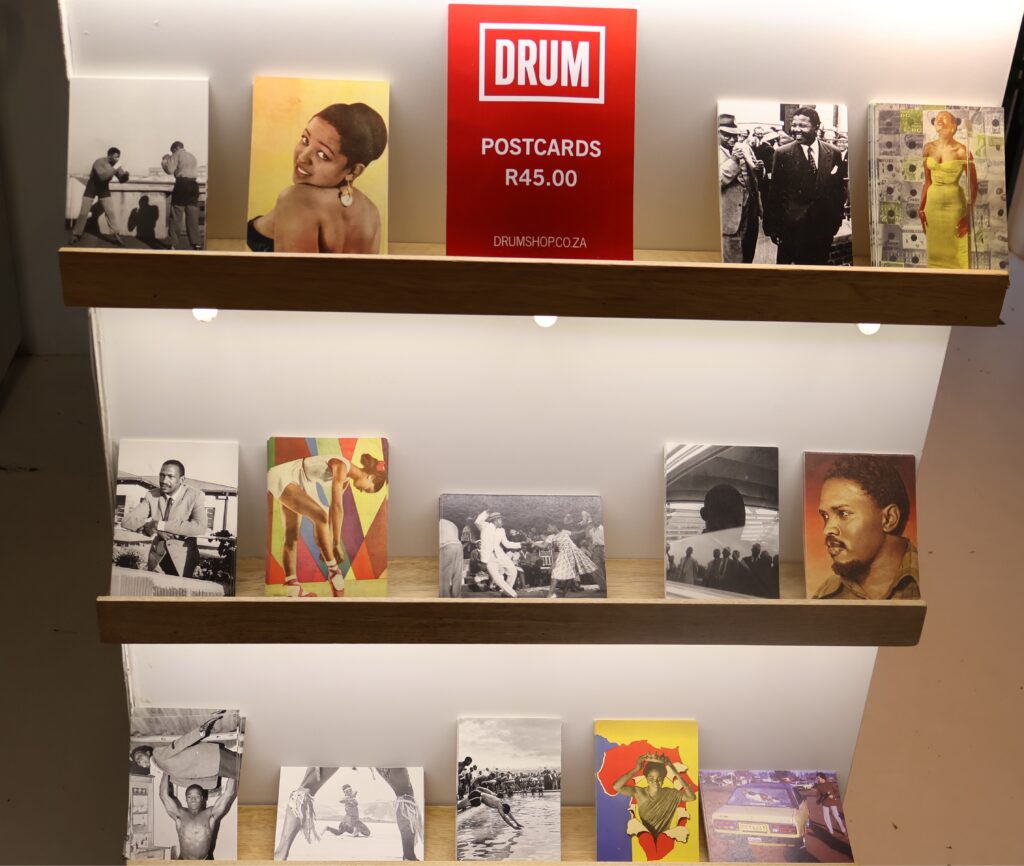
A variety of photos from the Drum Archive shop, that consist of notebooks, t-shirts, vests and postcards. Photo: Sikelelekile Pahlana
Matutoane shared how young people who come into the Drum Shop “have a sincere sense of curiosity about the magazine even though your Gen Z / Gen Alpha have very little idea of what Drum is or where it fits into the history of South Africa.” Matutoane emphasises how the lack of knowledge is not a barrier but an invitation for young people to discover more.
For the curious, ordinary person who may come across the archive’s content online, knowing how to make use of it is key. Masawangani said, “Everything that is online is copyrighted, so even an ordinary person that is interested in using BAHA material, you need to contact our license person, Kate Dearlove. You need to write an email to Kate and explain how you want to use the image, whether it is for academic purposes, or you want to publish a book, or you want to use the image for a film, you need to ask for permission.”
Evidently, digitising the archive becomes an important asset to society, allowing people to engage with South Africa’s history, and ensuring it is more widely available as time progresses. Above all else, digitising ensures the sacred history does not get lost.
FEATURED IMAGE: A photo of the frames of various magazine editions from the Drum Magazine at the Drum Archive Shop. Photo: Sikelelekile Pahlana
RELATED ARTICLES:
- Wits Vuvuzela, Literature and film bridge the gaps in the women’s history, August 2022.
- Wits Vuvuzela, 15 Important Black writers to influence Johannesburg, September 2015.

