
The value of gold is undeniable, yet the real question becomes, where and when did it all start?
One hundred and forty years ago, the fate of Johannesburg had undeniably changed when gold was first discovered in the south of the Witwatersrand. Johannesburg commonly referred to as eGoli; the city of gold, gained its notorious and prestigious title due to its richness in mining activities. The Witwatersrand distinguished itself as, “the largest gold-producing province ever discovered”, according to DavidRusso, Dr. Sharad Master and Professor Gillian Drennan in their Jozi140 Excursion Guidebook.
Yet, beneath the surface there is a deeper layer of history that predates the official discovery of gold. The Wits Geoscience Department partnered up with Evolutionary Studies Institute, Wits Origins Centre, Joburg Tourism, Mineralogical Association of South Africa, Harmony Gold and Historical Papers Research to provide a two-day excursion that uncovered the hidden stories that paved the way for the birth of gold.
Iron Age History
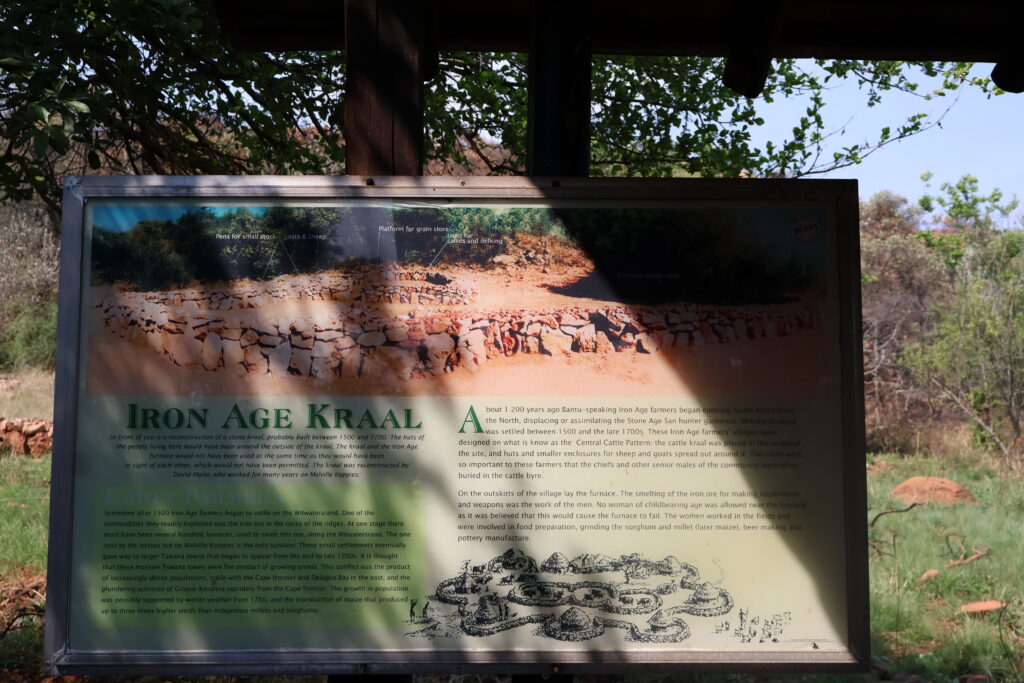
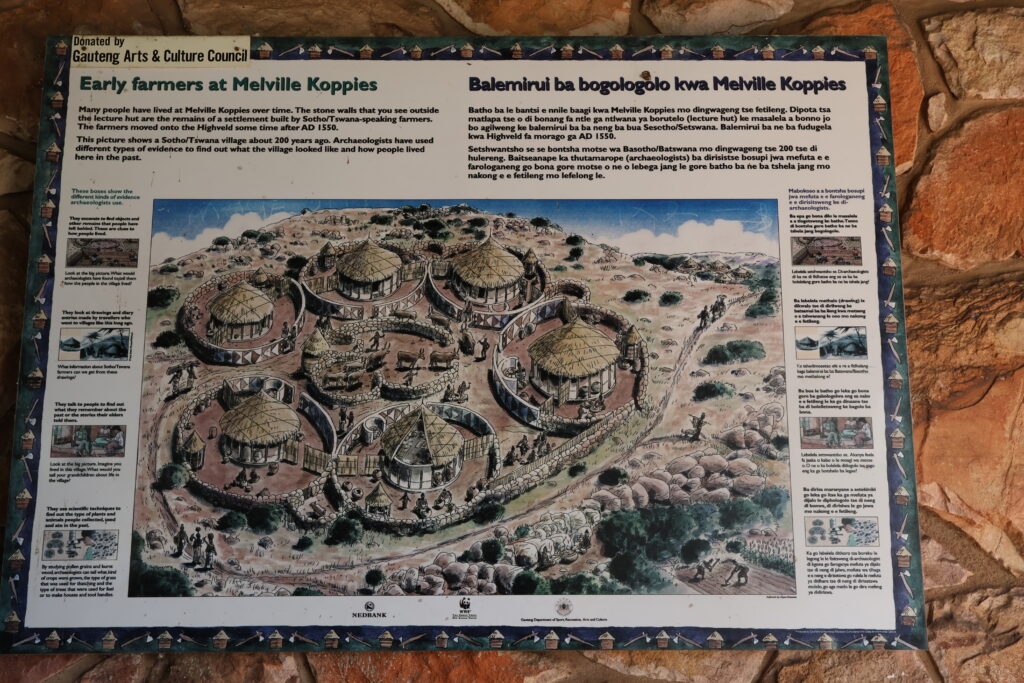
Upon arrival at Melville Koppies, tour guide, Sandra Murray shed light on the Iron Age history which Professor Drennan described as a time of “pre- mining, mining.” It was a time characterised by lot of economic activity, mining and trade at the koppies. Archaeologist, Professor RJ Mason discovered seven archaeological sites in the 1960s at the Melville Koppies such as Stone Age camps between 250 000 and 100 000 years old, a 500 year old ancestral Tswana iron furnace, and 300 year old Tswana hut floors and pottery. Other artefacts on display included stones used to make weapons and the only iron furnace that is being preserved at the Melville Koppies.
Geological History
Alongside the rich remnants of the iron age, is the geological history embedded in nature that precedes the existence of humankind. The contorted beds (see fact box) found alongside the pavements near Helpmekaar College act as a testimony. Professor Drennan said, “Without the contorted beds we would not have discovered the gold in the extension of the East Rand and West Rand,” and this is due to their highly magnetic nature which aided in the discovery of goldfields beyond the Central Rand. “The Contorted beds have been around for roughly 2.9 billion years and give a snapshot of what was going on around the time, [in a geological context], you can see when life was coming in, evidence that there was oxygen in the early atmosphere,” added Dr Glynn.
When one looks closely, you can see a glistening effect within the contorted beds, which is due to individual crystals. Alongside the magical contorted beds is the Witpoortjie Waterfall located at the Walter Sisulu National Botanical Gardens where the water flows over the white quartzites of the Witwatersrand and shale rock. According to Whitfield, “the falls were already recognised before the discovery of gold and were recorded on Fred Struben’s 1885 prospecting map of the district.”
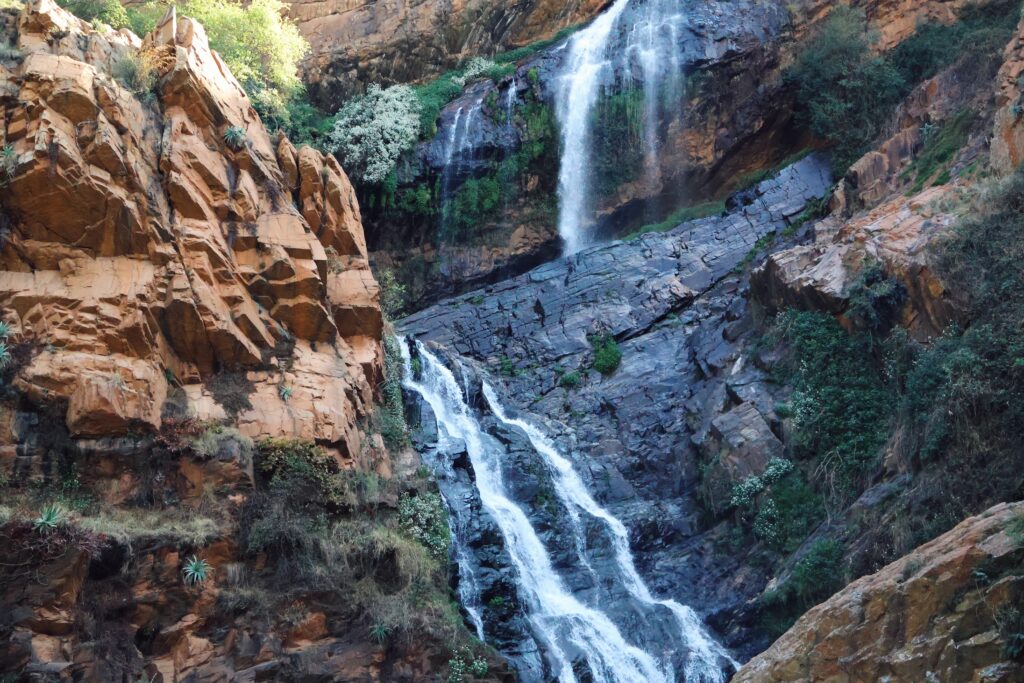
“Prior to the discovery of the Main Reef in 1886, the Witwatersrand was a sparsely populated landscape of open grassy plains, rocky quartzite ridges, and numerous streams and waterfalls. Today, the same landscape has been transformed into the Johannesburg Metropolitan Area… the present-day landscape is strongly controlled by the underlying geology,” writes David Russo, Dr. Sharad Master and Professor Gillian Drennan in the guidebook.
The Walter Sisulu National Botanical Gardens also offers a self-guided trail where one can learn about the history of rocks that were significant in shaping the Witwatersrand landscape.
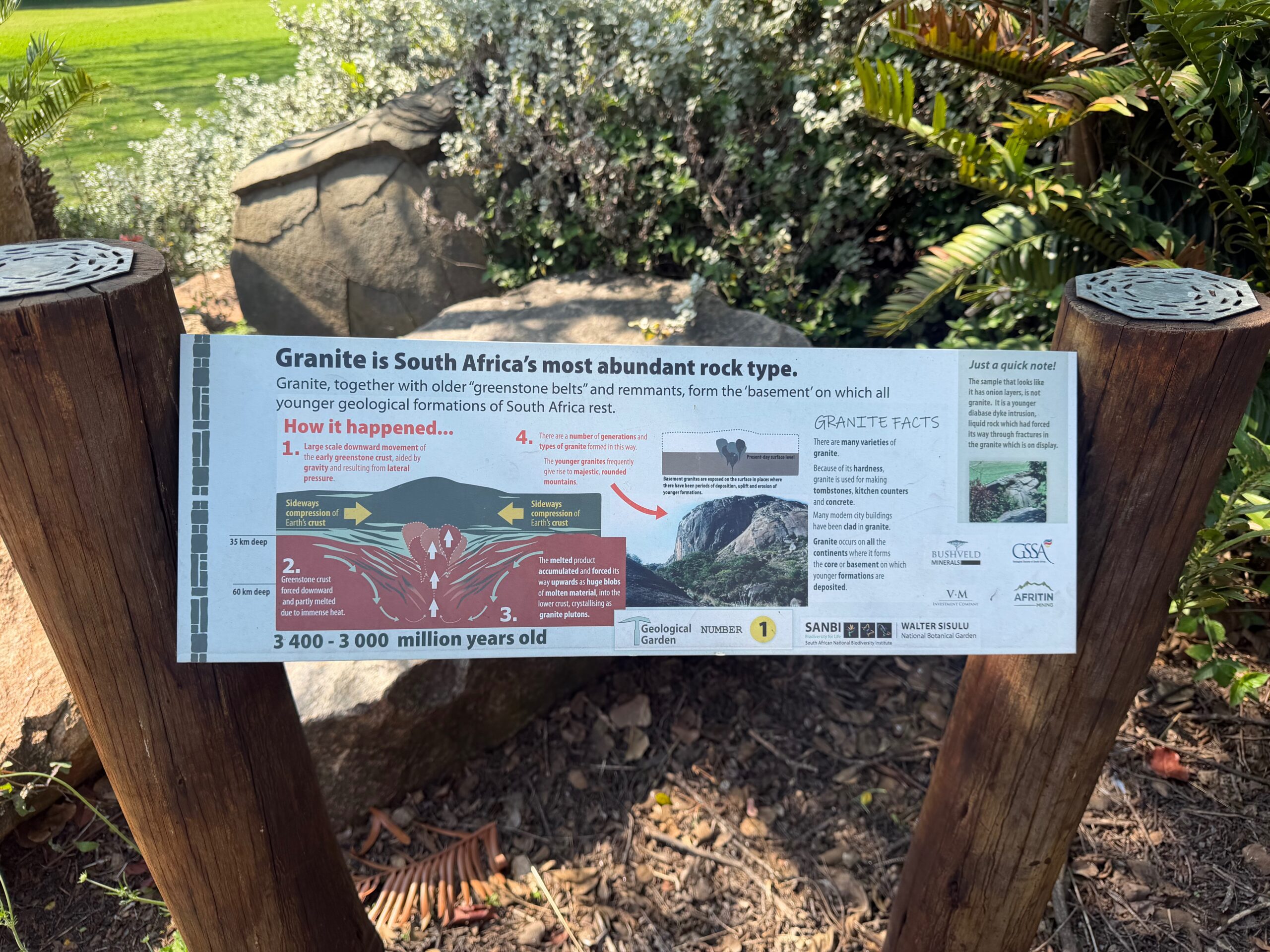
A photo of a detailed information board about granite at the Walter Sisulu National Botanical Gardens. Photo: Sikelelekile Pahlana 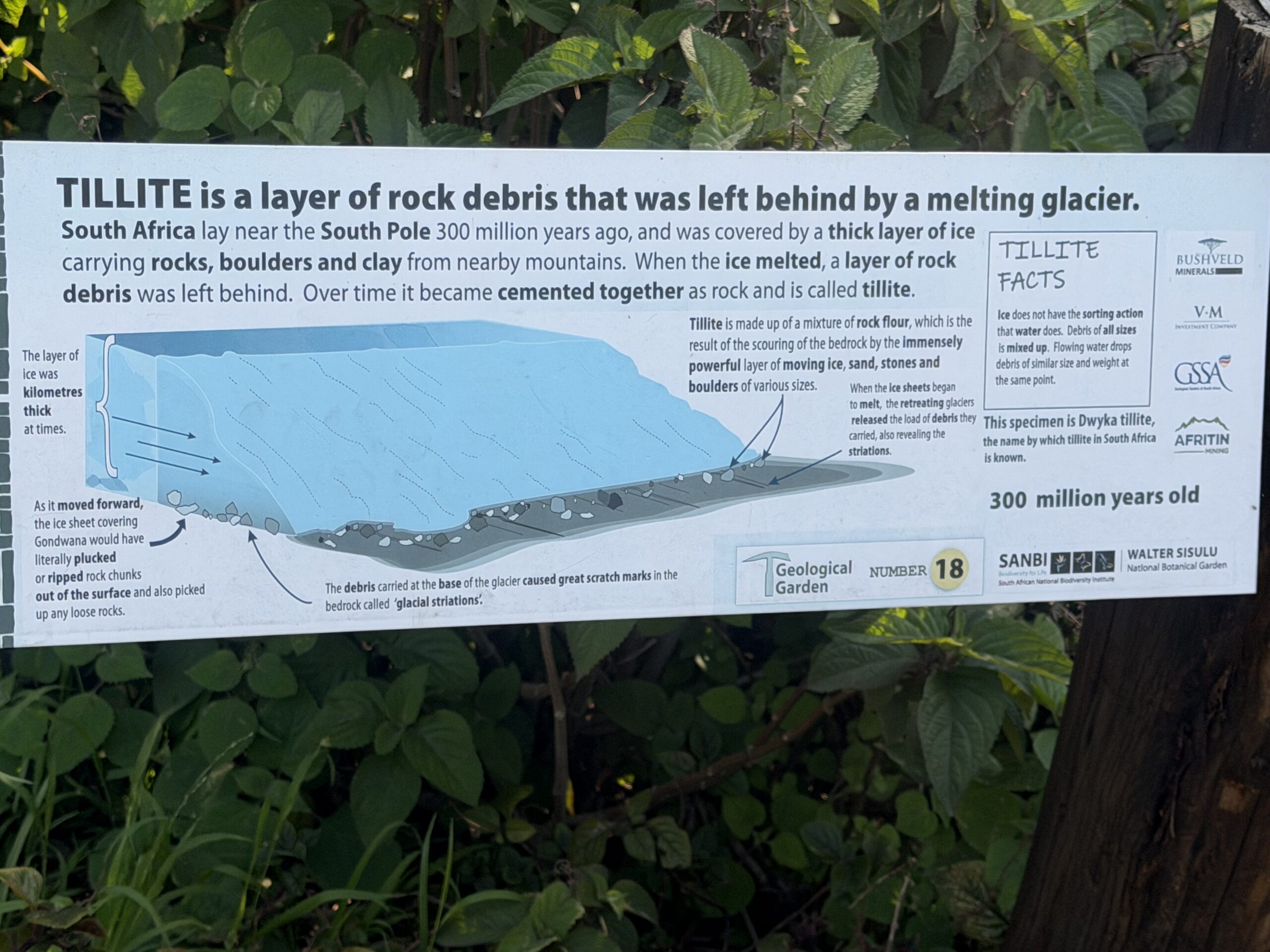
A photo of a detailed information board about Tillite at the Walter Sisulu National Botanical Gardens. Photo: Sikelelekile Pahlana 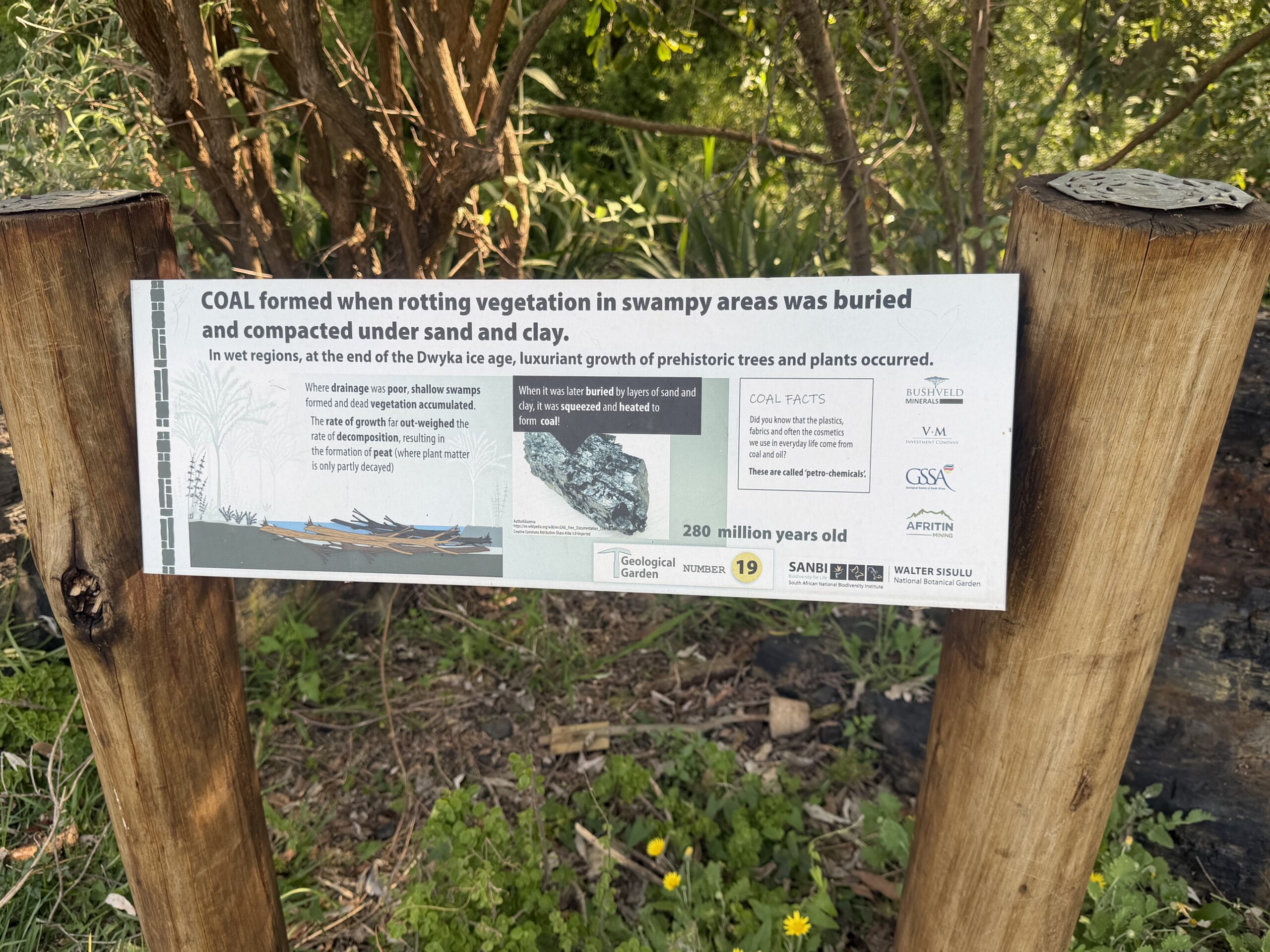
A photo of an information board about coal at the Walter Sisulu National Botanical Gardens. Photo: Sikelelekile Pahlana 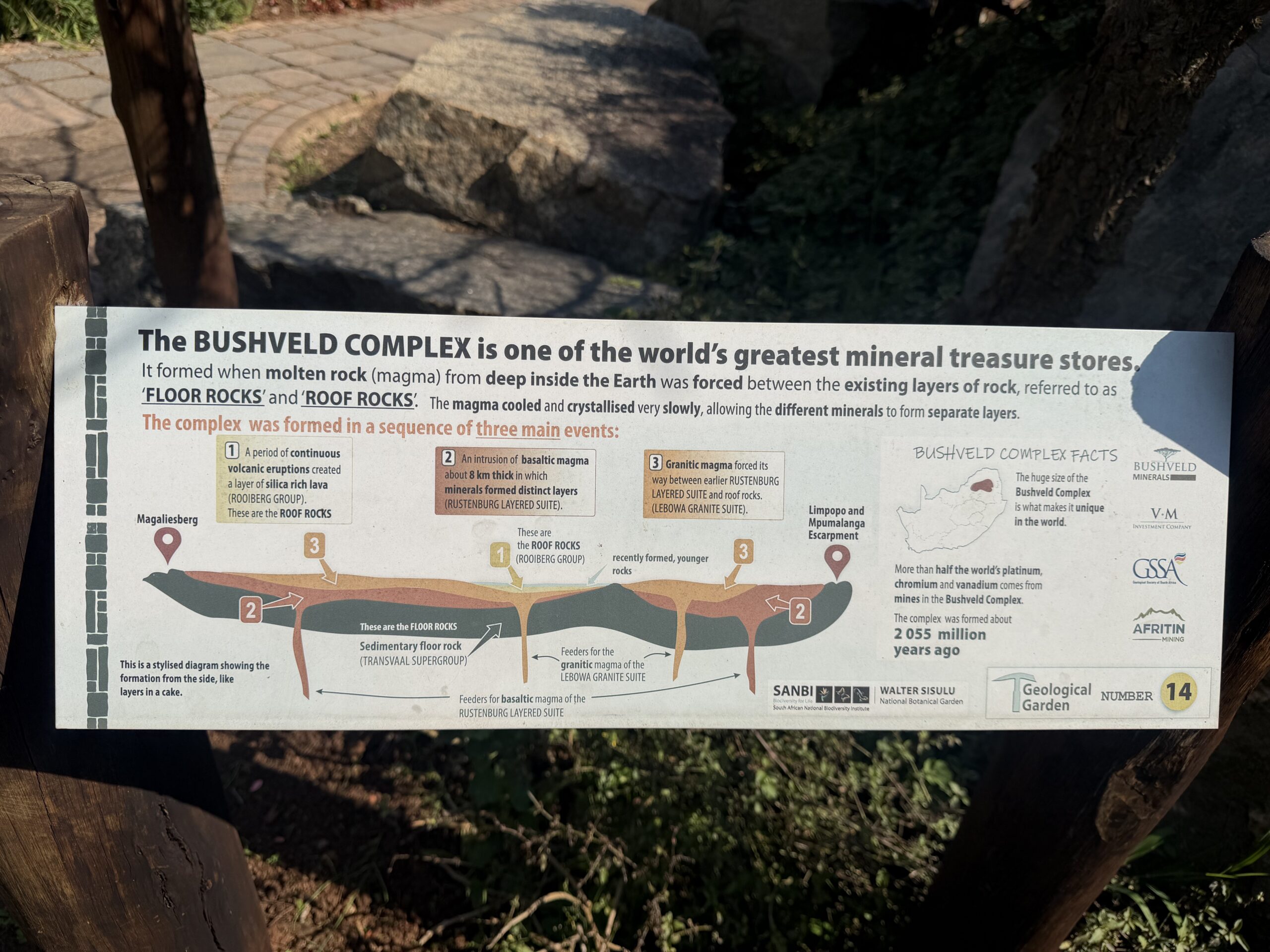
A photo of a detailed information board about The Bushveld Complex at the Walter Sisulu National Botanical Gardens. Photo: Sikelelekile Pahlana 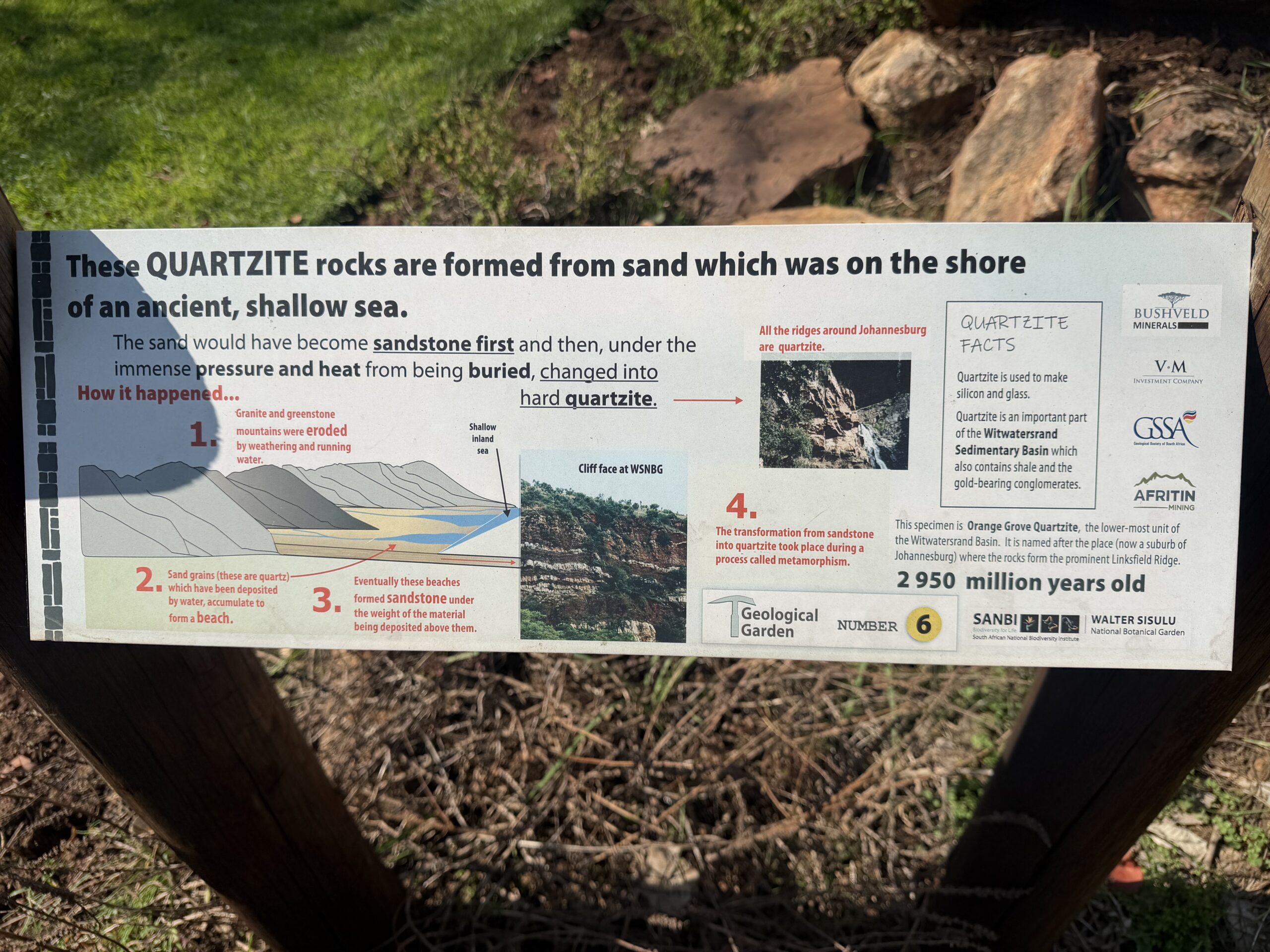
A photo of a detailed information board about Quartzite at the Walter Sisulu National Botanical Gardens. Photo: Sikelelekile Pahlana
Northwards House and Mineshaft Museum
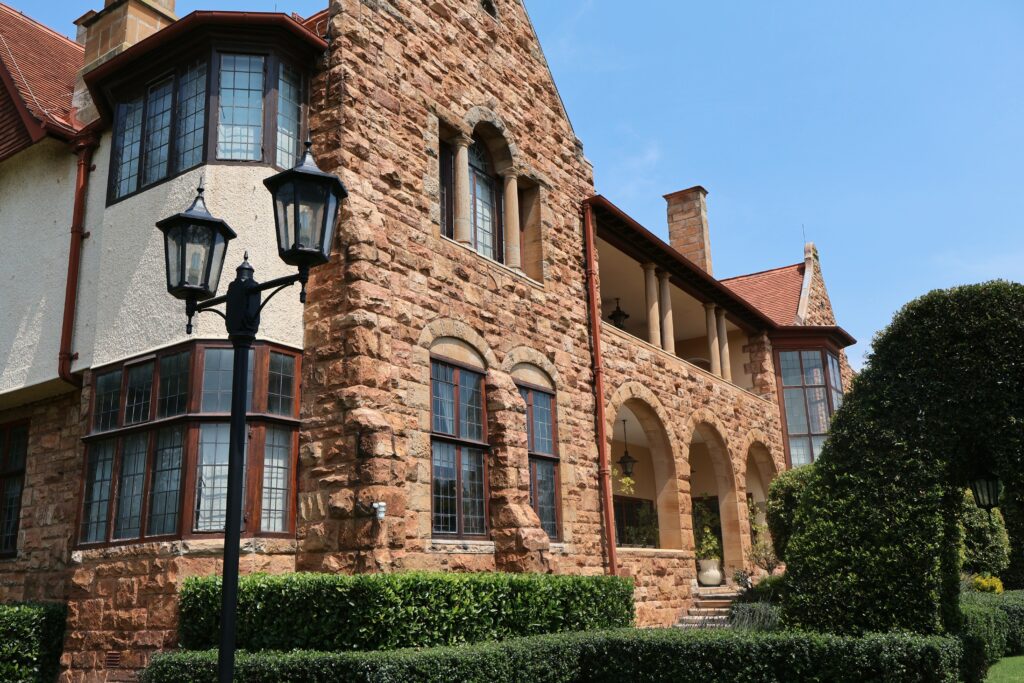
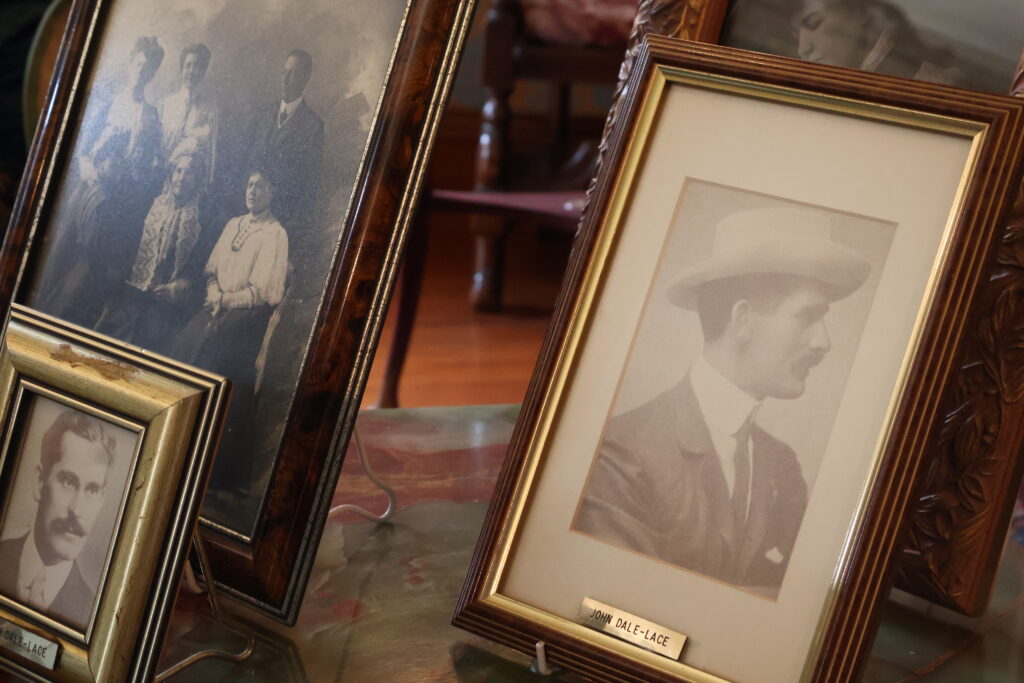
To get a glimpse of what life was like for mine owners, we visited a 122-year-old mansion, Northwards House, which was initially built in 1904 for John Dale Lace and his wife Josè Dale Lace. Mr Lace owned the Lace Diamond Mine. A tragic fire forced the Dale Lace’s to move out in 1911. A year later, gold Randlord Sir George Albu and his family moved into the renovated residence. Albu was one of the founders of General Mining and Finance Corporation. The Northwards House acts as a physical manifestation of its mining legacy. Inside the house, there was the business room which consisted of books about mining and the boardroom which has a map layout dating back to 1907 titled “Clifton” which is modern day Braamfontein, and on the map are familiar street names which are still used today such as: Jorissen Street, Juta Street and De Korte Street. Throughout the excursions, one is constantly reminded about how the past informs the present.
The commercialisation of gold
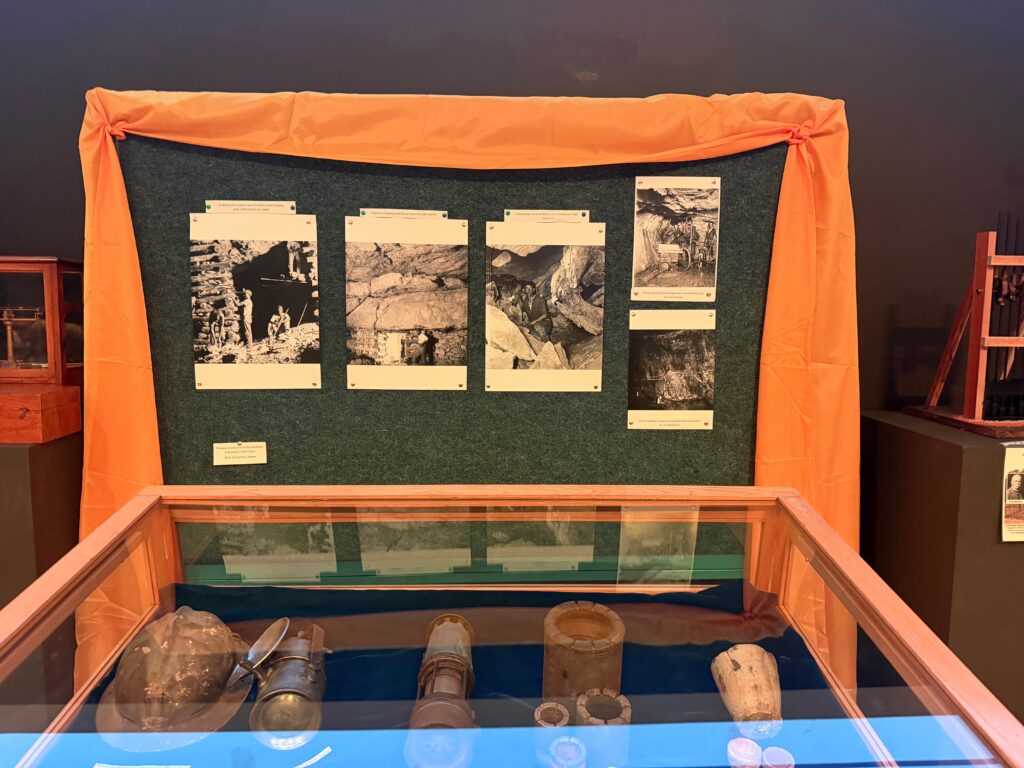
From the physical house we went straight into the underground – the source of mining, as we explored the Mineshaft Museum also known as the Ferreira Mine Stope, located three floors below the Standard Bank Building. The preserved mine site offers a real-life example of life during the Witwatersrand Gold Rush in 1886. The Ferreira Mine was one of the first mines established following the discovery of payable gold on the Witwatersrand in 1886. The dim lighting and photographs of mine workers around the walls allow one to travel back in time.
Yet the question of who was the first to commercialise gold still lingers in contemporary times; this was the opening question during Bruce Cairncross’s keynote address on Saturday, September 18, 2026, at the Wits origins Centre. In relation to the discovery of gold in 1886, he said, “the history is contentious, there were activities happening in South Africa, prior to 1886 at the Witwatersrand.” Cairncross took the audience through a timeline that credited Pieter Jacob Marais in 1853 who panned gold, yet Marais did not find its source. Additionally, there were also the Struben brothers, namely Frederick and Harry Struben who claimed to have discovered gold.
Prior to the commercialisation of gold in 1886, Frederick drew a map in 1885 which consisted of a layout of Langlaate discovery site being the Main Gold Reef. Cairncross proceeded to give a detailed overview of gold and asked the critical question of “What’s the future of gold?” to which he answered: “It looks a bit dismal in South Africa,” partly due to the fact that South Africa is not producing as much gold as it once did. To end off the first day of the excursion, the Wits Geoscience Department had an exhibition which consisted of gold samples as well as photograph archives that speak to the history of gold mining.
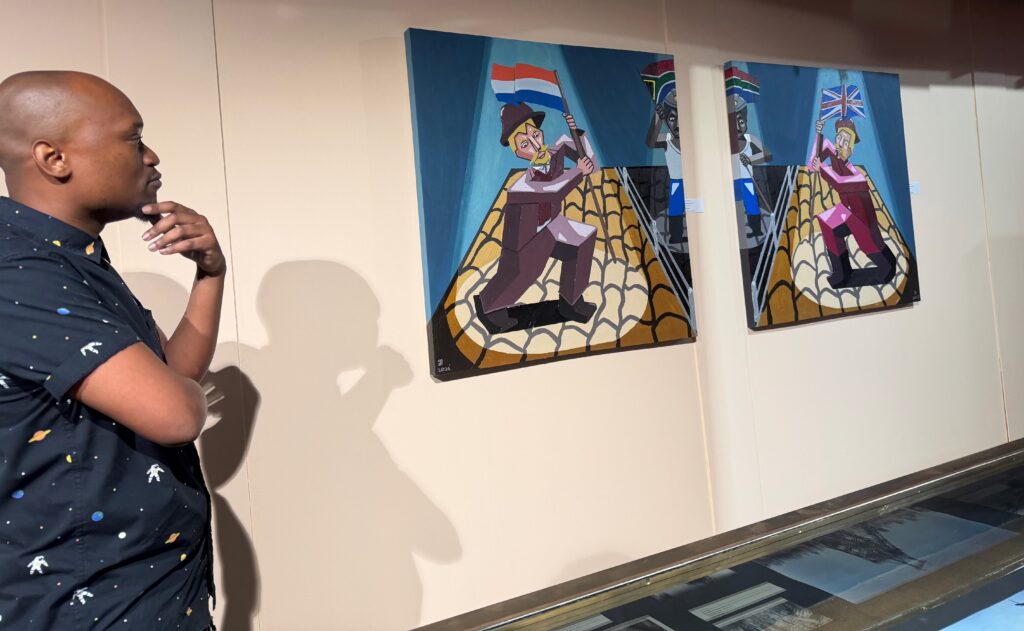
Bringing it back to the present at Museum Africa, an exhibition by Tshepo Bopape depicts his artistic interpretation of the industry, and asks, “what gives something value?” Bopape’s artwork is centred around Kimberely and its diamonds which funded the mining in Johannesburg. The art critically analyses, “the relationship between man and precious stones, it is not just economic but also psychological and spiritual,” Bopape shared. The art acts as an intersection between the history of colonisation with an interrogation around value systems and the division of society on a class and racial basis.
Therefore, it is evidently clear that the history of gold in Johannesburg’s Witwatersrand is multifaceted and cannot be understood through a singular story. The contribution of nature and significant landmarks contextualise how gold was formed and commercialised. However, it is important to note that the work of the unsung heroes being black mining labourers had an immense impact on the success of the gold mining sector.
FEATURED IMAGE: A photo of a contorted bed which was near the Helpmekaar College. Photo: Sikelelekile Pahlana
REALTED ARTICLES:
- Wits Vuvuzela, Feature: Wits University’s mining magnates , May 2025
- Wits Vuvuzela, Feature: Gold mining profits surge, while Johannesburg miners continue to struggle, December 2025

