
Chef and owner of Food, I Love You, Mpho Phalane shows how food is more than just cooking, but a practice of memory, identity and connection that asks us all, ‘How do we feed ourselves?’
- Phalane’s work shows how food carries identity, memory and connection, from her grandmother’s kitchen to Constitution Hill
- As South Africa faces food insecurity, Phalane reimagines the kitchen as a space for care and resistance
- By cooking with indigenous grains including sorghum, millet and cowpeas, Phalane uses food for learning, nutrition and climate-smart resilience
When chef, food thinker, and owner of Food, I Love You, Mpho Phalane speaks about food; she doesn’t begin with recipes. She begins with a question: “How do we feed ourselves?” Because for her, food is much more than what is on our plates – it is memory, identity, and human connection.
During a discussion held by Mamakashaka and Friends on August 26, Phalane took the audience through her journey into cooking. From her grandmother’s house, burgers on the rooftop with swollen feet, lunches at UJ, to the beginning of Food, I Love You at Victoria Yards and transforming the former prison kitchen at Constitution Hill. For Phalane, practice has never been ‘just cooking’. It is asking deeper questions about belonging, care, resistance and returning to a sense of self.
Rooted in Memory
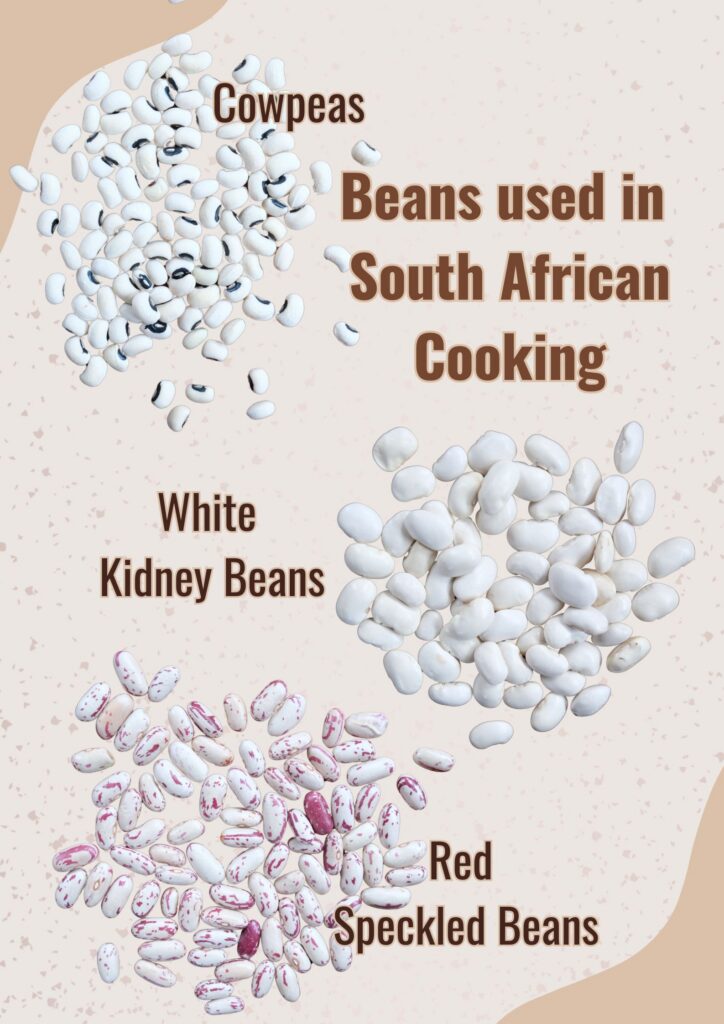
Photos and graphic by: Hannah Brown
Phalane’s story is kneaded together through memories: A grandfather who taught her the importance of quality, a mother who made vision boards and introduced the power of visualisation, and childhood meals at her grandmother’s house. Food, I Love You began in her kitchen, cooking for friends, which grew into events and eventually into a business. All these memories are not just details; they show how food carries identity.
When UJ first invited her to run a restaurant, she was “still in the process of finding this language.” The pace was fast, food was functional, stripped of its intimacy. “This is not how I envision my practice looking”, she shared. “I want the moments of slower, the moments to learn”. Even a pot of beans carries memory – because for Phalane, food was never just about cooking. It is about the stories and politics simmering beneath the surface. The journey of food is both intimate and political.
The Politics of Food
Across South Africa there is a growing hunger crisis. FoodForward SA’s State of Household Food Insecurity in South Africa Report 2026 showed that 70% of households experience moderate-to-severe food insecurity. Statistics South Africa data revealed that between 2019 and 2023, the number of food-insecure people rose from 14.25 million to 17.8 million, with severe food insecurity increasing from 5.2 million to 8 million. Around one in four households went an entire day without food at least once. The report states that, “due to conflict, climate change, economic downturns and global health crises. Rising food prices and supply chain disruptions have further undermined access for vulnerable populations.”
After joining Victoria Yards in 2019, she also saw the contradictions. The introduction of the monthly event, First Sundays, seemed to be for insiders, but the surrounding community was left on the edges looking in. “For me, First Sundays were not crafted for the community in and around Victoria Yards,” she said. She noticed the tensions between the comfort of home cooking and the broken food system. This act of ‘noticing’ really made her question, “who gets to be inside the gates?”
When moving to Constitution Hill in 2021, Phalane tried to change that dynamic. She created a space that honoured history, welcomed everyone and treated hospitality as more than just food. “I wanted a place that could hold both beauty and grief”, she explained. Occupying those spaces changes you as a person, as you are forced to confront the contradictions and histories within the walls. When Food, I Love You first took over the space, it felt cold and raw, but there was another layer of history that was being created. Phalane wanted an environment where “everyone felt like it was home and warm, which is contrary to what a prison is meant to be.”
Indigenous Grains and Plants
An article by Critical African Studies, discusses the lack of availability of healthy food and stigma. Colonisation and Apartheid reshaped diets as, “indigenous and traditional crops in many communities in South Africa was adversely affected by their perception as ‘poverty foods’ or food for the elderly.” Traditional crops were excluded from the dominant food systems and could only be purchased in ‘informal’ food systems. As Phalane states, “there isn’t great systems around production. We are not demanding of our food enough”.
Ultra-processed food sales are high and dietary patterns are worsening with rising food insecurity. It is important to teach children about indigenous crops and focus on meals that are nourishing and communal. “I always knew disrupting the system has to happen on that level, we have to do it at school,” Phalane said. These are acts that push back against a system that makes cheap, unhealthy food the easiest option. Accessibility and storytelling are inseparable: “it is all about accessibility, really. Also, our need to be able to tell our stories and know our stories more”, she reflects.
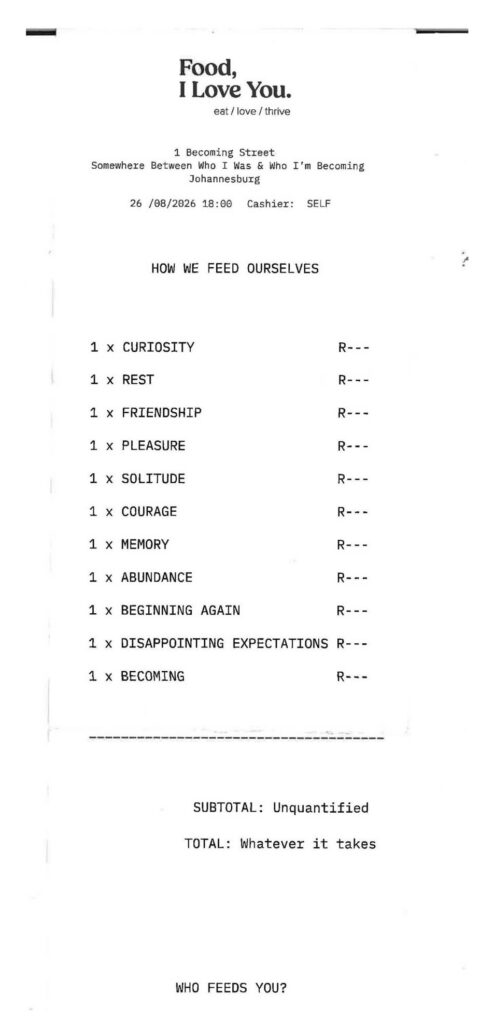
during the talk hosted by Mamakashaka and Friends.
Photo by: Hannah Brown
Food as Resistance
Across Johannesburg, chefs and activists, including Chef Mokgadi Itsweng, are reviving indigenous crops such as sorghum, millet and cowpeas. Not only rooted in heritage and memory, as Itsweng states, “our indigenous plants are climate-smart. That’s something we can be proud of.” It is a practical response to a food system where 62% of South Africans cannot afford a healthy diet, and access to fruit and vegetables is far below global averages.
Phalane’s practice reimagines kitchens as places for learning and transformation. As a space where process matters, where experimentation and failure are part of the work. “It was never one linear thing,” she said. “It is time for expansion.”
Who Feeds You?
Mpho Phalane’s approach is both simple and radical – to feed in ways that remember and create spaces that hold beauty and grief.
After the discussion at Mamakashaka and Friends, a microphone was passed around to audience members while they reflected on their time spent at Food, I Love You, or on how their paths had crossed with Phalane. A young chef, who had worked at the restaurant, shared the influence Phalane had on her journey, highlighting her “style in terms of how you cook and how you embrace African ingredients differently”. Another audience member shared that Phalane has shown him how “slowness is necessary” and that “you create in a very authentic way, and it translates in your food as well”.
Phalane asks the question, “Who feeds you?”
As we move through life, through our different practices, what do you leave for yourself? This forces you to question identity, memory and connection – and could be an opening to imagining a different future for ‘How we feed ourselves’.
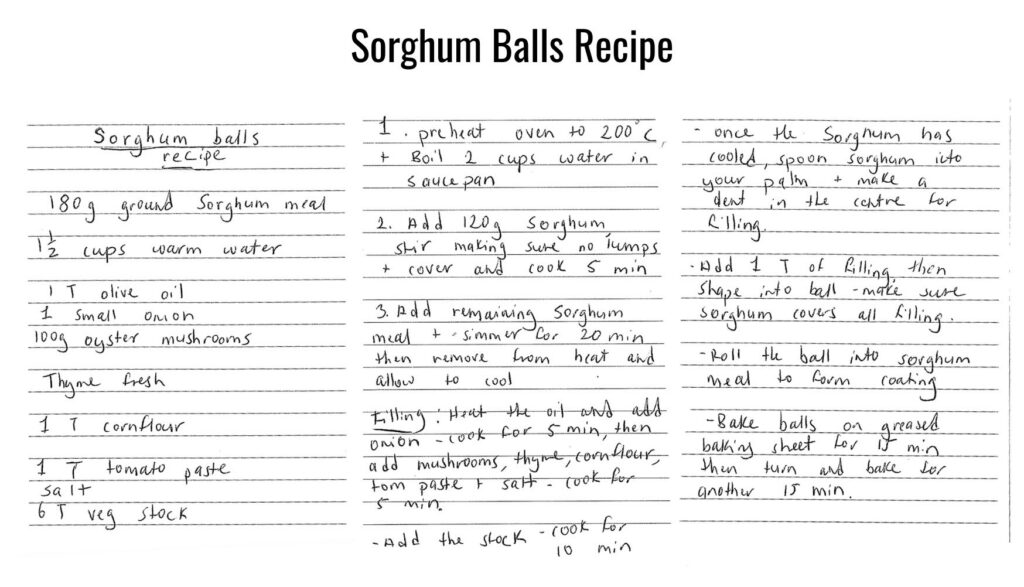
Photo by: Hannah Brown
FEATURED IMAGE: Graphic of beans used in South African cooking. Photos and graphic by: Hannah Brown
RELATED ARTICLES:
- Wits Vuvuzela, Pricey foods cost lives of the poor, Dec 2022
- Wits Vuvuzela, Wits students need more diabetes education as healthy food options remain limited, Sep 2026
- Wits Vuvuzela, SLICE: The scourge of food insecurity continues to haunt students in South Africa, May 2025

