Chef and owner of Food, I Love You, Mpho Phalane shows how food is more than just cooking, but a practice of memory, identity and connection that asks us all, ‘How do we feed ourselves?’
Phalane’s work shows how food carries identity, memory and connection, from her grandmother’s kitchen to Constitution Hill
As South Africa faces food insecurity, Phalane reimagines the kitchen as a space for care and resistance
By cooking with indigenous grains including sorghum, millet and cowpeas, Phalane uses food for learning, nutrition and climate-smart resilience
When chef, food thinker, and owner of Food, I Love You, Mpho Phalane speaks about food; she doesn’t begin with recipes. She begins with a question: “How do we feed ourselves?” Because for her, food is much more than what is on our plates – it is memory, identity, and human connection.
During a discussion held by Mamakashaka and Friends on August 26, Phalane took the audience through her journey into cooking. From her grandmother’s house, burgers on the rooftop with swollen feet, lunches at UJ, to the beginning of Food, I Love You at Victoria Yards and transforming the former prison kitchen at Constitution Hill. For Phalane, practice has never been ‘just cooking’. It is asking deeper questions about belonging, care, resistance and returning to a sense of self.
Rooted in Memory
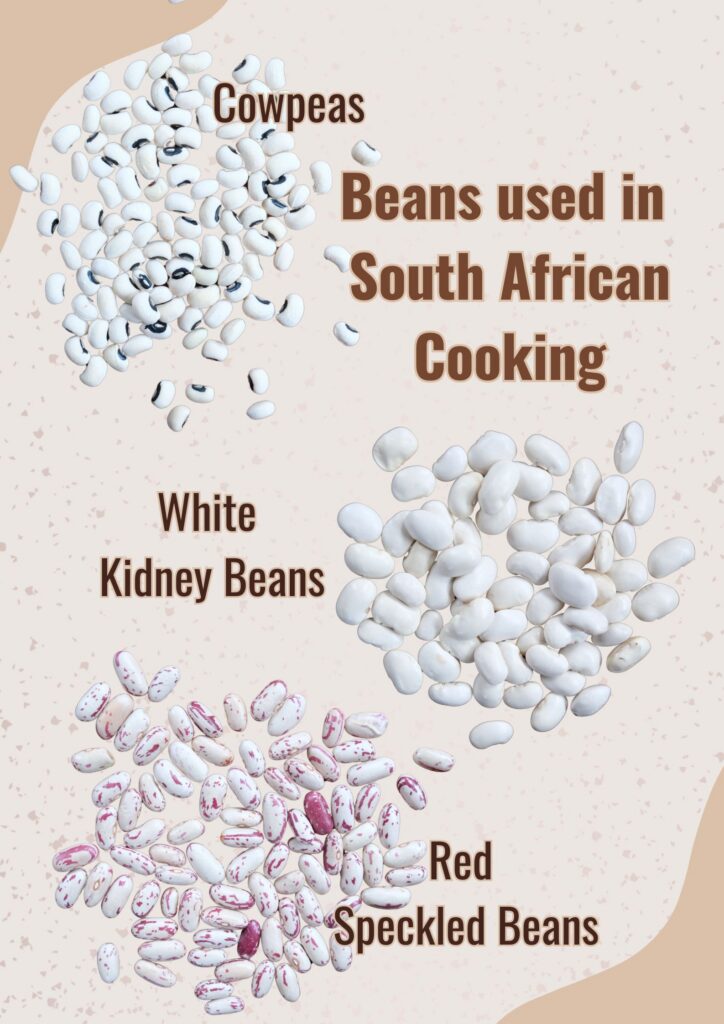
Graphic of beans used in South African cooking. Photos and graphic by: Hannah Brown
Phalane’s story is kneaded together through memories: A grandfather who taught her the importance of quality, a mother who made vision boards and introduced the power of visualisation, and childhood meals at her grandmother’s house. Food, I Love You began in her kitchen, cooking for friends, which grew into events and eventually into a business. All these memories are not just details; they show how food carries identity.
When UJ first invited her to run a restaurant, she was “still in the process of finding this language.” The pace was fast, food was functional, stripped of its intimacy. “This is not how I envision my practice looking”, she shared. “I want the moments of slower, the moments to learn”. Even a pot of beans carries memory – because for Phalane, food was never just about cooking. It is about the stories and politics simmering beneath the surface. The journey of food is both intimate and political.
The Politics of Food
Across South Africa there is a growing hunger crisis. FoodForward SA’s State of Household Food Insecurity in South Africa Report 2026 showed that 70% of households experience moderate-to-severe food insecurity. Statistics South Africa data revealed that between 2019 and 2023, the number of food-insecure people rose from 14.25 million to 17.8 million, with severe food insecurity increasing from 5.2 million to 8 million. Around one in four households went an entire day without food at least once. The report states that, “due to conflict, climate change, economic downturns and global health crises. Rising food prices and supply chain disruptions have further undermined access for vulnerable populations.”
After joining Victoria Yards in 2019, she also saw the contradictions. The introduction of the monthly event, First Sundays, seemed to be for insiders, but the surrounding community was left on the edges looking in. “For me, First Sundays were not crafted for the community in and around Victoria Yards,” she said. She noticed the tensions between the comfort of home cooking and the broken food system. This act of ‘noticing’ really made her question, “who gets to be inside the gates?”
When moving to Constitution Hill in 2021, Phalane tried to change that dynamic. She created a space that honoured history, welcomed everyone and treated hospitality as more than just food. “I wanted a place that could hold both beauty and grief”, she explained. Occupying those spaces changes you as a person, as you are forced to confront the contradictions and histories within the walls. When Food, I Love You first took over the space, it felt cold and raw, but there was another layer of history that was being created. Phalane wanted an environment where “everyone felt like it was home and warm, which is contrary to what a prison is meant to be.”
Indigenous Grains and Plants
An article by Critical African Studies, discusses the lack of availability of healthy food and stigma. Colonisation and Apartheid reshaped diets as, “indigenous and traditional crops in many communities in South Africa was adversely affected by their perception as ‘poverty foods’ or food for the elderly.” Traditional crops were excluded from the dominant food systems and could only be purchased in ‘informal’ food systems. As Phalane states, “there isn’t great systems around production. We are not demanding of our food enough”.
Ultra-processed food sales are high and dietary patterns are worsening with rising food insecurity. It is important to teach children about indigenous crops and focus on meals that are nourishing and communal. “I always knew disrupting the system has to happen on that level, we have to do it at school,” Phalane said. These are acts that push back against a system that makes cheap, unhealthy food the easiest option. Accessibility and storytelling are inseparable: “it is all about accessibility, really. Also, our need to be able to tell our stories and know our stories more”, she reflects.
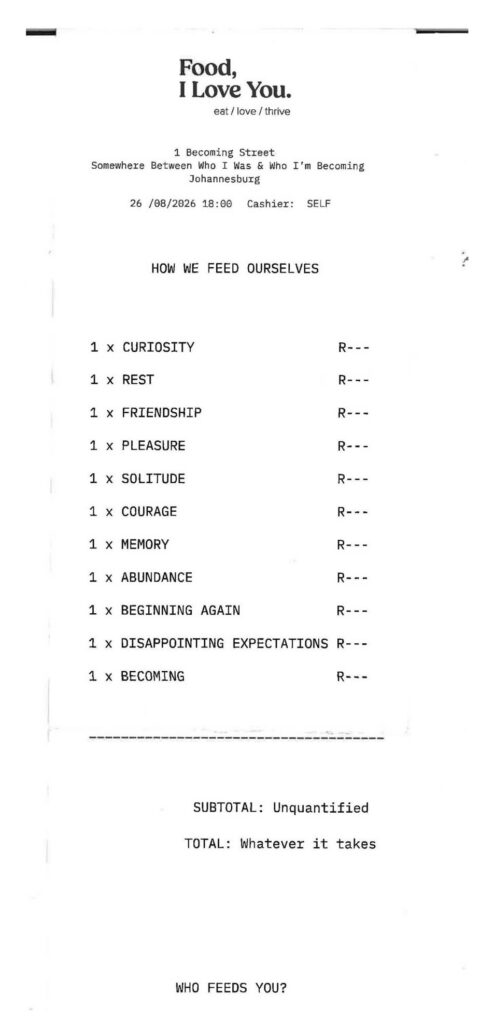
Receipt given to audience members from Mpho Phalane, during the talk hosted by Mamakashaka and Friends. Photo by: Hannah Brown
Food as Resistance
Across Johannesburg, chefs and activists, including Chef Mokgadi Itsweng, are reviving indigenous crops such as sorghum, millet and cowpeas. Not only rooted in heritage and memory, as Itsweng states, “our indigenous plants are climate-smart. That’s something we can be proud of.” It is a practical response to a food system where 62% of South Africans cannot afford a healthy diet, and access to fruit and vegetables is far below global averages.
Phalane’s practice reimagines kitchens as places for learning and transformation. As a space where process matters, where experimentation and failure are part of the work. “It was never one linear thing,” she said. “It is time for expansion.”
Who Feeds You?
Mpho Phalane’s approach is both simple and radical – to feed in ways that remember and create spaces that hold beauty and grief.
After the discussion at Mamakashaka and Friends, a microphone was passed around to audience members while they reflected on their time spent at Food, I Love You, or on how their paths had crossed with Phalane. A young chef, who had worked at the restaurant, shared the influence Phalane had on her journey, highlighting her “style in terms of how you cook and how you embrace African ingredients differently”. Another audience member shared that Phalane has shown him how “slowness is necessary” and that “you create in a very authentic way, and it translates in your food as well”.
Phalane asks the question, “Who feeds you?”
As we move through life, through our different practices, what do you leave for yourself? This forces you to question identity, memory and connection – and could be an opening to imagining a different future for ‘How we feed ourselves’.
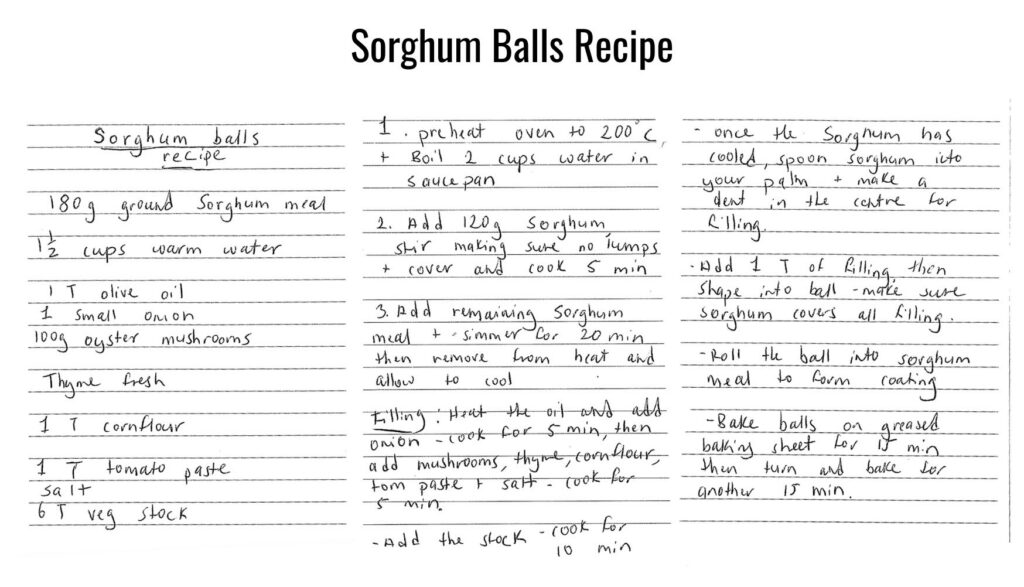
Handwritten recipe for Sorghum Balls. Photo by: Hannah Brown
FEATURED IMAGE: Graphic of beans used in South African cooking. Photos and graphic by: Hannah Brown
Sudan is the world’s largest humanitarian crisis. It demands that we educate ourselves and stand in solidarity, recognising how art and culture become acts of resistance.
Sudan’s history is often reduced to coups, wars and dictatorships. But beneath the headlines are millions of people living through the world’s largest humanitarian crisis. Despite theseunimaginable struggles, they continue to fight with hope.
At the Kaza Kamba Pan-African Theatre Festival in Johannesburg on August 20-22 2026, the film Sudan, Remember Us transported audiences into the world of 2019 Sudanese protesters. In an interview with Brick magazine, director Hind Meddeb explained, “The violence of what we were seeing on a daily basis was so terrible, and not in the news, so I used the camera as a weapon”. She wanted the audience to feel the Sudanese people, “to feel the love and beauty of their culture, not just get a geopolitical explanation.”
Sudan, Remember Us poster. Photo: Watermelon Pictures
When Sudan is framed only in geopolitical terms of borders and political powers, people’s lives are removed from the story. Film’s like Sudan, Remember Us remind us that friendship, poetry, and community become tools of survival and liberation. A testament that creativity becomes a form of defiance and hope.
Still from Sudan, Remember Us. Photo: Watermelon Pictures
History shows how deeply the world’s silence and complicity have cost Sudan. Since independence in 1956, the country has gone through two civil wars, the genocide in Darfur and Omar al-Bashir’s 30-year dictatorship. His regime enforced strict Sharia law, persecuted minorities and deployed militias like the Janjaweed. Even after the International Criminal Court issued an arrest warrant for Bashir in 2009, his regime lasted until 2019 and was eventually taken down by mass protests.
Once the largest country on the African continent, Sudan split in 2011 after decades of civil war. The birth of South Sudan carried the promise of peace but has instead left a country torn apart. Borders carved by war became fault lines of power and survival.
On April 15, 2023, a power struggle between the Sudanese Armed Forces (SAF) and the Rapid Support Forces (RSF) exploded into war. What began as clashes in Khartoum led to one of the world’s worst humanitarian crises, topping the International Rescue Committee’s Emergency Watchlist. Since 2023, more than 14 million peoplehave reportedly been displaced, and over 33 million people are in need of humanitarian aid. Starvation devastates Darfur and Kordofan, hospitals have collapsed, diseases spread quickly, and women and children face heightened risks of sexual violence.
Today, Sudan is split: the SAF controls most of the north and the east, while the RSF dominates Darfur and the Nuba Mountains in Kordofan. Drone strikes tear families from their homes and leave communities broken, while foreign powers fuel the conflict. Although the UN has warned that Sudan is now the largest humanitarian crisis in the world, aid appeals still remain hugely underfunded.
Sudan’s struggle is about human beings, their culture and their refusal to be erased. In a country where traditional media is tightly controlled, protest art becomes a platform for free expression. Women have transformed henna, once just used to mark marriage, into a weapon of resistance, writing anti-government slogans on their hands and feet. Poets, performers and activists risk imprisonment to speak truth to power. These acts matter because silence benefits those who profit from war.
Still from Sudan, Remember Us. Photo: Watermelon Pictures
Sudan is not just a war zone; it is where millions of individuals call home. To look away is to accept their suffering. To hear their story and raise their voices is to demand action: urgent aid, safer passages, and putting real pressure on those who profit from war. Sudan’s people deserve peace, dignity and the chance to rebuild.
FEATURED IMAGE: Still from Sudan, Remember Us. Photo: Watermelon Pictures
Women in journalism face online abuse – threats, harassment and silencing – but their courage and solidarity, show that storytelling and seeking truth matter more than hate.
We live in a remarkable but complex time of converging crises. The shift from ‘traditional’ journalism to digital platforms has transformed the field. Journalists no longer wait for print deadlines or broadcast slots; they speak directly to audiences, explain issues, challenge power and help people make sense of a world that often feels overwhelming.
This excites me, as it opens new creative ways to engage, but it also scares me. Visibility comes with risks and for women, the price is disproportionately high – harassment designed to discredit, exhaust and silence. Threats of physical harm, sexualised abuse and online attacks have become the new ‘normal’.
On August 6, I attended a discussion in Johannesburg between Karyn Maughan, Qaanitah Hunter and Redi Tlhabi, titled Women VS. The Digital Machine. These are three prominent women in journalism, and they spoke about navigating digital hostility while remaining visible and credible. For women, visibility often comes with targeted abuse that is designed to drive us out of the conversation.
A SANEF study found that 75% of South African women journalists face online misogyny. I don’t need statistics to believe it. It is a lived reality for many of the women I look up to. The hostility is not random. It is ‘manufactured anger’, heightened by platforms whose business models thrive on outrage and misinformation.
Women covering politics or corruption are especially targeted. In 2024, Women Press Freedom identified 12 Strategic Lawsuit Against Public Participation (SLAPP) suits against women reporting on gender issues.
As a postgraduate journalism student, I often think about the work of photojournalist Lynsey Addario. Her career reshaped my understanding of journalism’s power. Addario is a strong advocate that women should not be limited in the assignments they work on. “Men and women have different access, we relate to people on different levels, and people respond to us differently, so certainly that will create a different dynamic with a camera, but I don’t think that, for example, as a woman I see differently,” she said. “What I choose to capture is possibly different from what my male colleagues do.”
Social media, the same tool that connects us to readers, also amplifies anger and division. Anonymous accounts and bots spread lies and hate. We are living in a time that some call ‘hyperpolitics’ – a state of politicisation without corresponding political action.
Yet women journalists continue to report, hold power to account and to tell stories that matter. Their dedication inspires me. It reminds me that journalism is not about ourselves; it is about trying to tell the truth, empathy and refusing silence. As Tlhabi said, “If we get obsessed with the hate we get, then they have won.” Section 16 of the South African Constitution protects freedom of expression. The question Tlhabi always comes back to is, “What is the cost of my silence? If I stay quiet, who benefits and who suffers?”
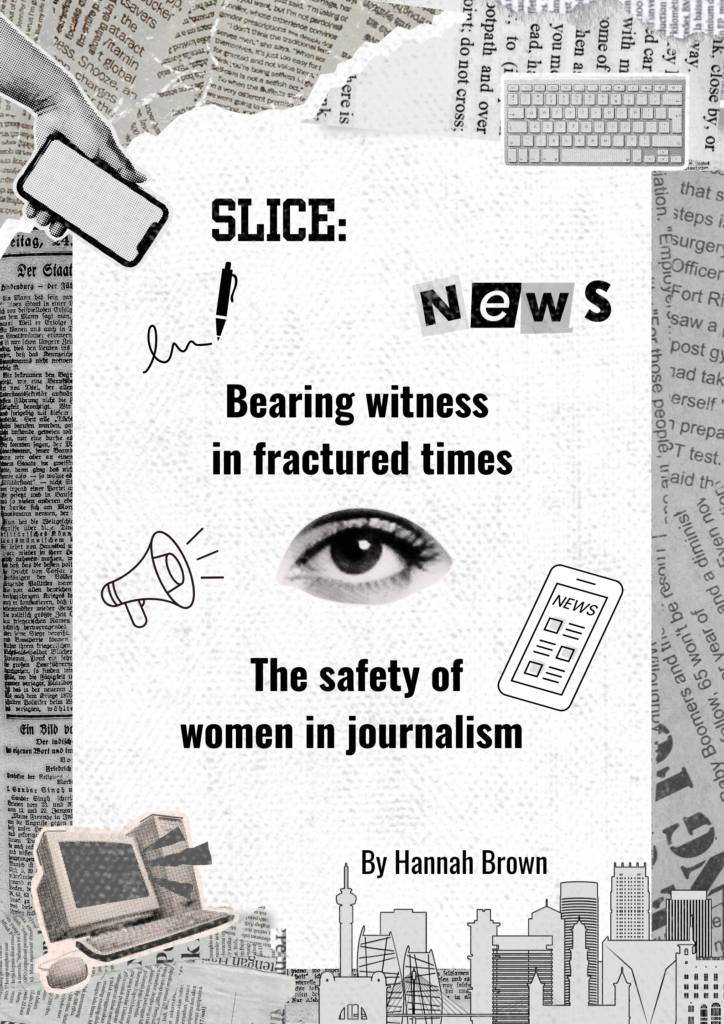
Safety of women in journalism. Graphic: Hannah Brown
There are no easy solutions. Governments and media institutions must take cyber misogyny seriously. Platforms must be held accountable for the anonymity that shields abusers. Newsrooms, even as they shrink, need stronger support systems. And as journalists we must find solidarity, because joy is a form of resistance too.
As Hunter shares, “Don’t become what you fight. Foster joy. There is nothing that can contend with hate more than seeing a happy woman.”
Journalism has the power to change how people see the world. That is worth fighting for and it is worth protecting. As filmmaker Alice Aedy stated, “how to bring stories to life in a landscape that feels more challenging but perhaps riper with possibility than ever.”
Despite the hostility, I feel hopeful entering this field. Women in journalism have already transformed the industry, but the attacks are disproportionate, and we must continue to stand together. The advice I hear repeated is simple: never stop learning, never stop reading, and never forget the privilege and responsibility of this work.
FEATURED IMAGE: Safety of women in journalism. Graphic: Hannah Brown
Through drums, song and dance, Hey Hillbrow! Let’s Dlala! filled the inner city with a celebration of art and belonging. During a time marked by xenophobic tension, it was a reminder that community and creativity are powerful forms of resistance.
The theme ARISE centred on birds, with the grey go-away-bird reframed as a call of hope.
More than 350 children and young people collaborated with artists at the Windybrow Arts Centre, designing costumes and choreography.
Coming only weeks after marches demanding the removal of foreign nationals, the parade’s imagery offered a counter-narrative of unity and shared streets.
On August 8, Hillbrow’s streets became a stage for music, dance and joy, as the Hey Hillbrow! Let’s Dlala! parade transformed the inner city. In a neighbourhood too often reduced to headlines of crime and decay, it tells a different story – one of collaboration and creativity, and one that celebrates freedom and belonging.
People took to the streets of Hillbrow in bird costumes. Photo: Hannah Brown
The event is organised by Windybrow Arts Centre alongside Shade, and since its launch in 2017, the festival has been reimagining public space. It is about “giving young people, across binaries, age and places of origin the space to play, to express and to have agency over their voices, their version of the inner city and how this place can be perceived,” states Tamzyn Botha, curator of the parade and director of Shade.
The parade carried a particular weight as South Africa continues to grapple with xenophobic violence. Only a few weeks earlier, Hillbrow had been shaken by the June 30 marches demanding the removal of foreign nationals.
Protests took place across South Africa. Photo: Hannah BrownProtests by the group ‘March and March’ took place on June 30, marking the unofficial ‘deadline’ set for undocumented foreign nationals to leave South Africa. Photos: Hannah Brown
Birds were at the centre of this year’s theme, ARISE. The festival’s mascot was the grey go-away-bird, or lourie, known for its sharp warning call. This was reframed as a call of hope, a reminder that communities can raise their voices in unity against hatred. Within this context, it felt like the festival answered back with colour, laughter and carried an important message: Hillbrow belongs to everyone.
The parade began at the Windybrow Arts Centre, which is a prominent hub of creativity in Johannesburg, before making its way through the streets. Hillbrow came alive with drums, costumes and singing. More than 350 children and young people ‘took flight’ across borders, their feathers fluttering as they danced, signifying freedom of movement and connection across divides.
Artistic expression was central to the parade’s formation. Children and teenagers spent two weeks learning new creative skills and collaborating with artists at the Windybrow Arts Centre to design costumes, choreography and music. As Botha said, “the ripples of this work, of the parade and the relationships made during this process, far outweigh the ‘end result’.” It brings young people together in a city where they are often excluded from decision-making. The creative process shows how, through art and performance, Hillbrow’s story can be shaped by its own residents and connectedness.
Hundreds of young people took to the streets for the seventh annual Hey Hillbrow! Let’s Dlala! parade. Photo: Hannah BrownHillbrow’s streets came alive with music and dancing. Photo: Hannah BrownYoung people dancing to the music during the parade. Photo: Hannah BrownSingers performing at the festival. Photo: Hannah Brown
The annual parade takes place on the eve of Women’s Day, marking 70 years since the historic 1956 Women’s March, when thousands of women stood against apartheid pass laws. This year’s theme felt especially poignant, as debates about who belongs in South Africa’s cities remain tense.
The contradictions felt impossible to ignore. Only weeks earlier, the same streets had been filled with chants of division.
Just as those women fought against restrictions on movement, the imagery of birds gliding through Hillbrow challenged today’s ‘cages’ of xenophobia. The festival did not erase the xenophobic tensions, but filling Hillbrow’s streets with birdsong, dance and laughter for an afternoon reminded Johannesburg that art can be resistance and hope.
In the years ahead, the organisers hope the parade will continue to offer “a shared sense of possibility through wonder, inside what feels like chaos”, says Botha. They envision it becoming more youth-led, “and this type of framing gives the parade over to those it represents.”
FEATURED IMAGE: People took to the streets of Hillbrow in bird costumes. Photo: Hannah Brown
South African filmmakers encouraged to leverage verticals and microseries to tell specific local stories.
Phung delivers a masterclass on short-form filmmaking and the rise of the microseries.
‘Verticals’ are identified as the third audiovisual language, reshaping viewing habits with phone-first, bite-sized narratives.
Phung urges filmmakers to focus on local stories to unearth universal themes.
Quan Phung, a global media strategist, creative executive and producer with more than 20 years’ experience in international film and television, brought industry insights to Johannesburg this week. With credits including How I Met Your Mother, House and Arrested Development, Phung presented ideas on short-form filmmaking, mobile video films and microdramas.
Hosted in partnership with the US Consulate at Constitution Hill on August 6, the masterclass brought together filmmakers, writers and emerging storytellers to discuss how South African stories can be positioned for global audiences.
Audience members included filmmakers, writers and creatives. Photo: Hannah Brown
Phung highlighted three different audiovisual languages: film, television and the new third form ‘verticals’: the phone-first, short-form format that is quickly reshaping our viewing patterns.
This has resulted in the rise of microdramas, a fast-paced, character-driven, scripted narrative series. While the first microdramas probably make you think of soap-style, romantic shows, Phung says this is evolving to horror, crime, comedy and sci-fi.
Brooklyn Coffee Shop, for example, is a viral short-form series that delivers bite-sized stories through deadpan, quick-dry humour set in a busy cafe. Over the past two years, young audiences have tripled their share of viewership.
Social media platforms were once used to tease trailers, but short-form content is no longer used solely for marketing purposes; it is now becoming the ‘show’ itself. The ways we engage online have evolved, but it has also come with a cost.
A 2023 analysis linked short-form video use to reduced attention spans, and a 2026 Daily Maverick article warned, “Short-form videos are engineered to capture the brain’s craving for novelty”, and Psychologist Dr. Ken Fung compared micro-dramas to “snacking on junk food”, quick and addictive.
While AI is playing a role in production – with some microdramas made entirely by the machines – emotion, anticipation and soul remain the core of storytelling and are difficult to replace completely. This leaves space for South African filmmakers to create more people-led, authentic and durable stories.
Quan Phung presenting a masterclass on short-form filmmaking. Photo: Hannah Brown
“Make local stories so specific that they unearth universal themes and ideas that will travel,” Phung advised local filmmakers. Creatives need to ask themselves, “Why you? Why now?” What connection do you have, and what part of your story adds a sense of urgency to watch today?
Phung emphasised that, “It is a great time for South African filmmakers to push their stories forward.” Young audiences want to hear from new voices, and global platforms are looking for diverse perspectives.
FEATURED IMAGE: Quan Phung presenting industry insights in Johannesburg. Photo: Hannah Brown
Amidst the chaos of Johannesburg’s traffic intersections, Robots follows Gift, a street performer who turns red-light pauses into moments of joy.
As the lights turn to red, Gift – also known as Marshmallows – steps onto his stage. On Johannesburg’s streets, traffic light intersections become his theatre. There he juggles, unicycles and performs his signature ‘headless man’ act, turning the pause in traffic into a few moments of entertainment, before the lights flicker back to green.
Directed by Yaseen J.Khan, Robots is an insightful, funny and moving portrait of livelihood and perseverance. At its centre is Gift, a charismatic personality who performs at intersections for strangers. Yet beneath the laughter lies a layered story of fatherhood, struggle and resilience. His perspective on life makes you laugh one moment and cry the next.
Gift is a hustler, an entertainer and a man who balances this alongside his role as a husband, father, and friend. His complexity challenges stereotypes about street artists. At first, Gift is presented as joyful and always smiling, but the film asks its audience to look deeper and challenge their own assumptions. Robots is more than a portrait of one man; it is a wake-up call, recognising the overlooked creativity of those trying to make a living and build better lives for themselves and their families.
The documentary itself was self-funded and took three years to complete. At a July 26 screening held at the Bioscope Independent Cinema in Johannesburg, filmmaker Khan was joined by DOP Kirsten Rose and producer Kopedi Aphane to discuss the project’s origins, explaining that it all began with curiosity: “These are people we see every day, but beyond that we don’t know what is happening behind the scenes.”
Cameras were introduced only after conversations and mutual trust-building. As Khan reflected, “We could only tell as much as he wanted to reveal.” Over time the story evolved; Gift developed from subject to collaborator and friend, guiding the filmmakers into spaces others might have avoided, sharing his health diagnosis, financial struggles and hopes for permanent work. The process reshaped the filmmakers themselves, who later wrote, “as filmmakers, this documentary changed our own perspectives about poverty and resilience.”
The editing moves seamlessly between vibrant energetic scenes, to quiet moments of reflection, accompanied by music that mirrors Gift’s changing moods. An upbeat score, including the crashing of cymbals, adds a ‘showbiz’ flair to the street performance. The rhythm makes you laugh, then suddenly brings tears as the pace slows.
Intimacy is the film’s strength because you can feel the connection to Gift not only as a performer, but as a person. Camera points of view through car windows, amidst the chaos of traffic, and then inside his family home with his wife and two children, all offer unique insight into his life.
He moves between that home and the space under the bridge. His smile feels like a quiet act of defiance. Even when motorists do not reward him, he finds joy in their reactions, saying that he loves to see people smiling, “even if you give nothing, just your smile”.
Khan hopes to leave the audience with conversations that will carry beyond the screen.Robotschallenges assumptions about people at traffic intersections. The film is insightful and funny, emotional yet hopeful. It made me appreciate life and see street performers in an entirely new light. Gift’s story shows the power of performance to connect strangers, even if only for the length of a red light.
FEATURED IMAGE: Robots poster. Photo: Supplied/The Bioscope
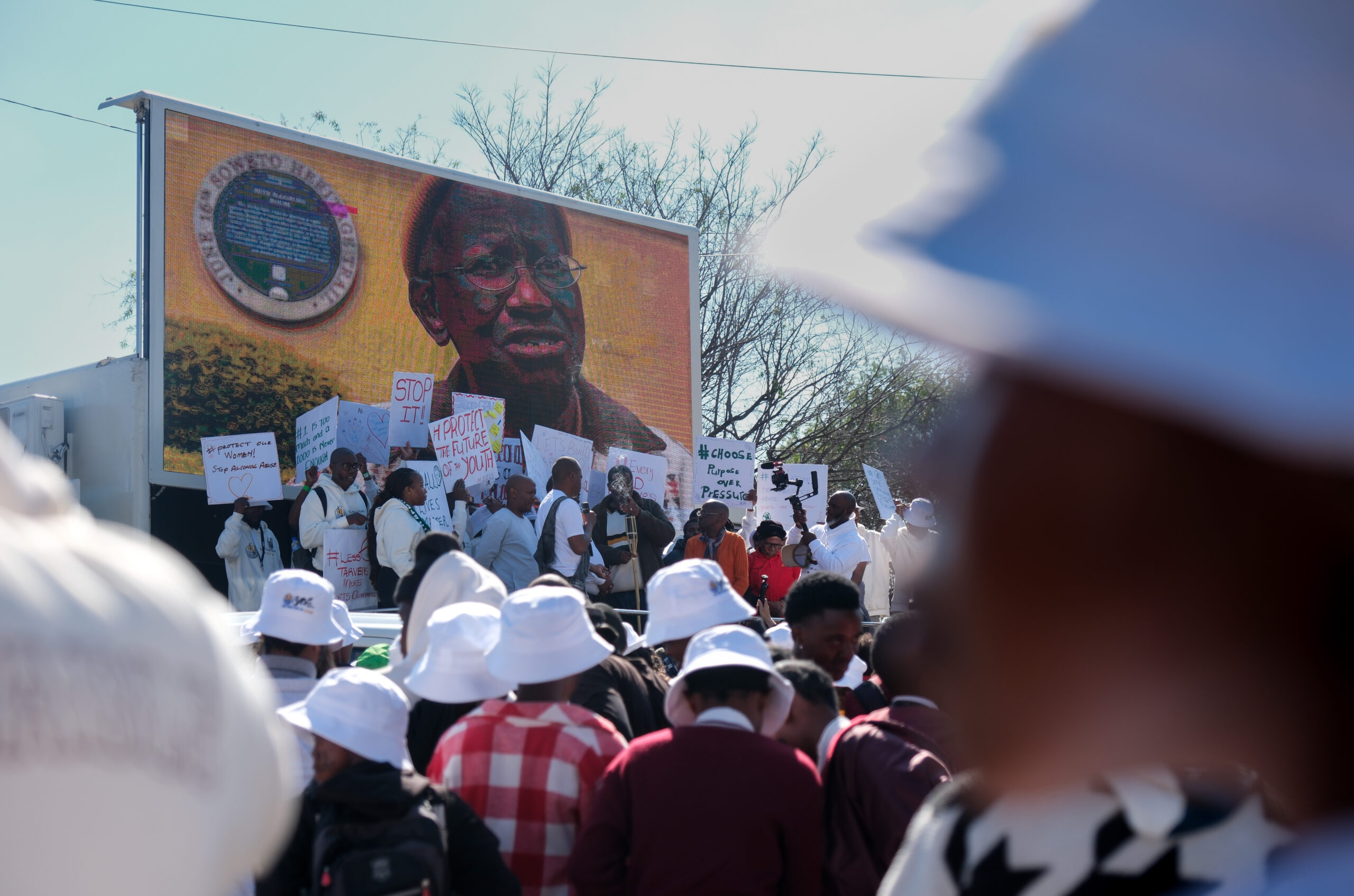
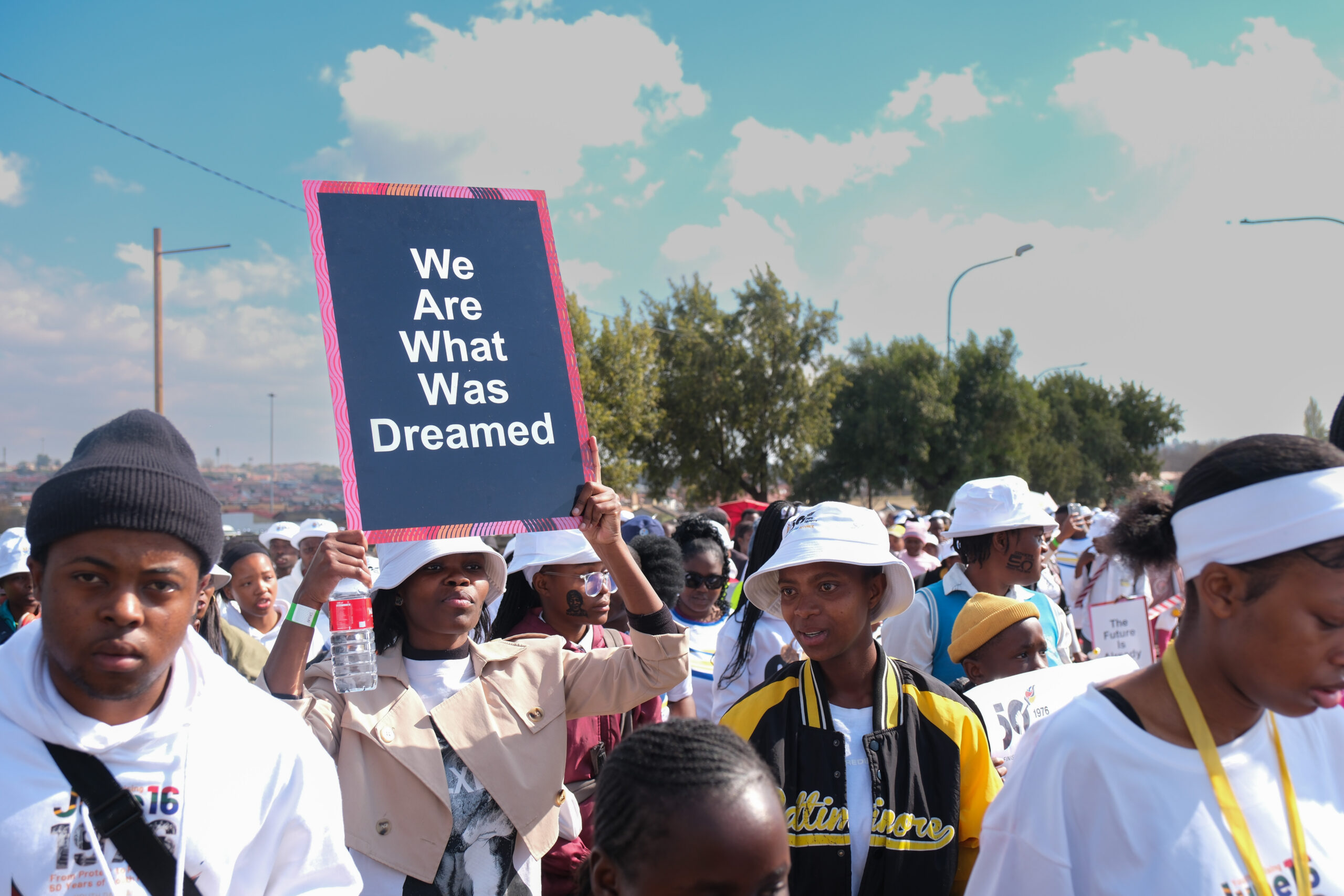
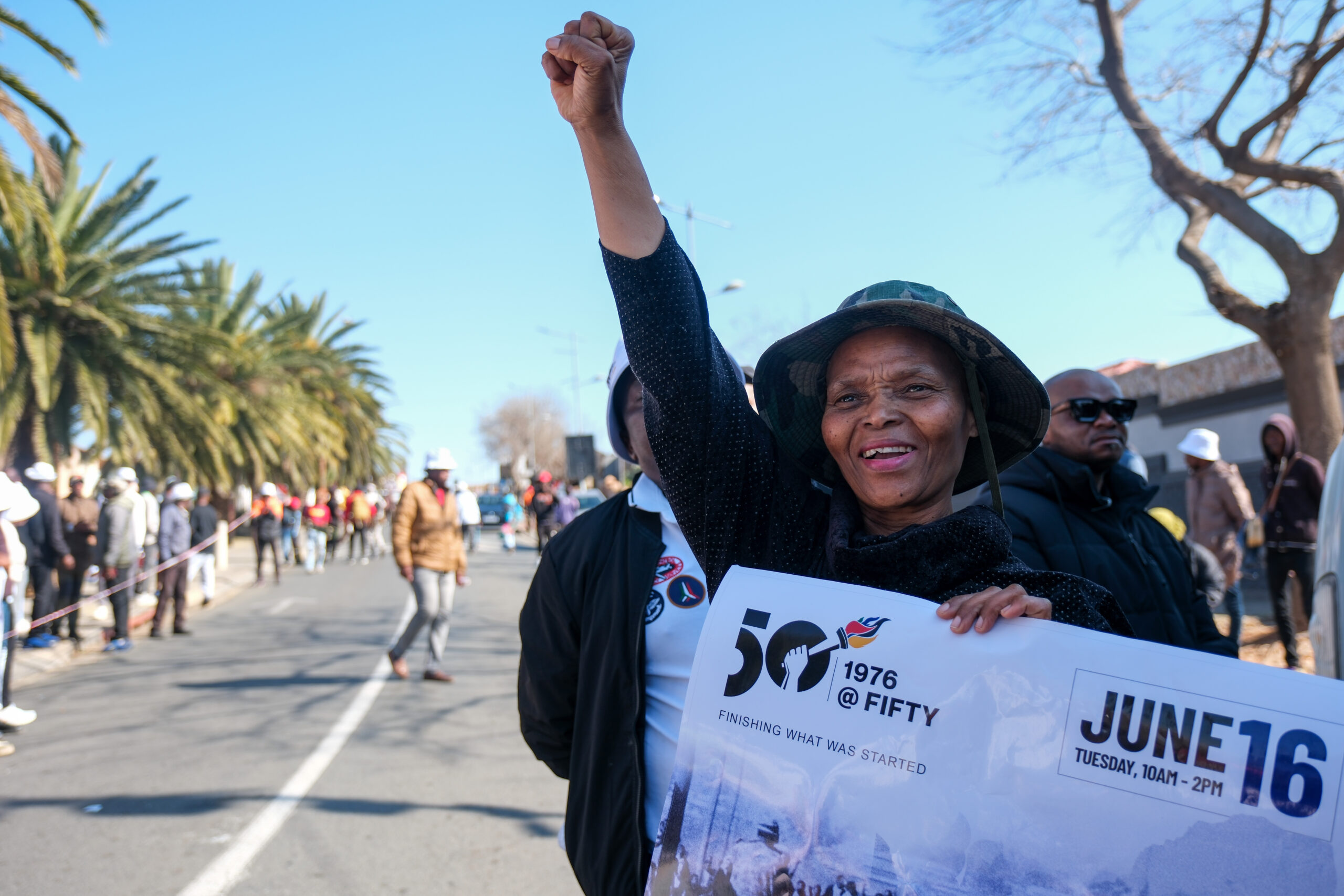
June 16 marks Youth Day in South Africa, commemorating the 1976 Soweto Uprising. Fifty years ago, thousands of primary and high school pupils marched against the apartheid government’s imposition of Afrikaans as the medium of instruction. What began as a peaceful protest, which was meant to end at Orlando Stadium with a rally, was cut short on the way when police opened fire, killing hundreds of students.
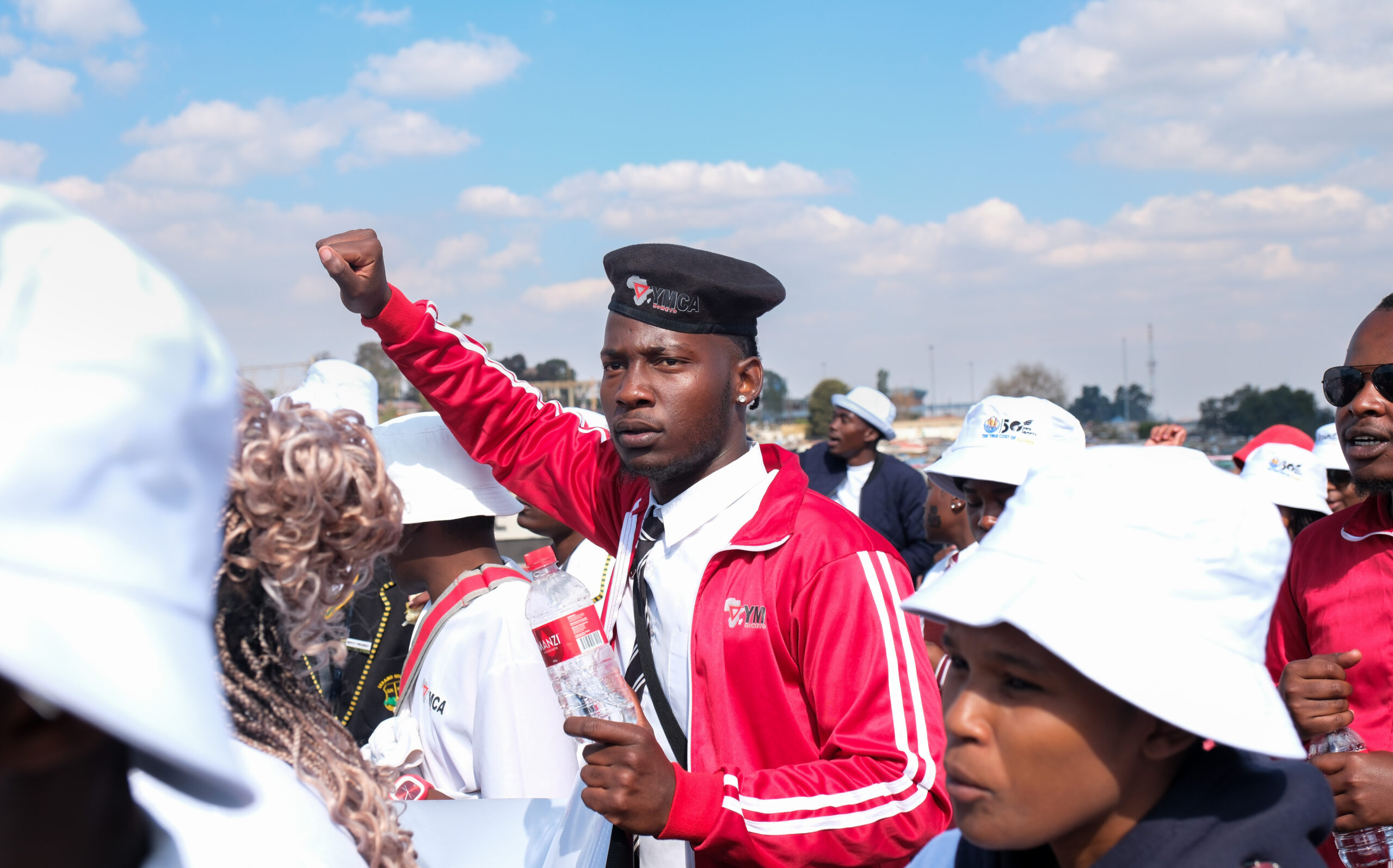
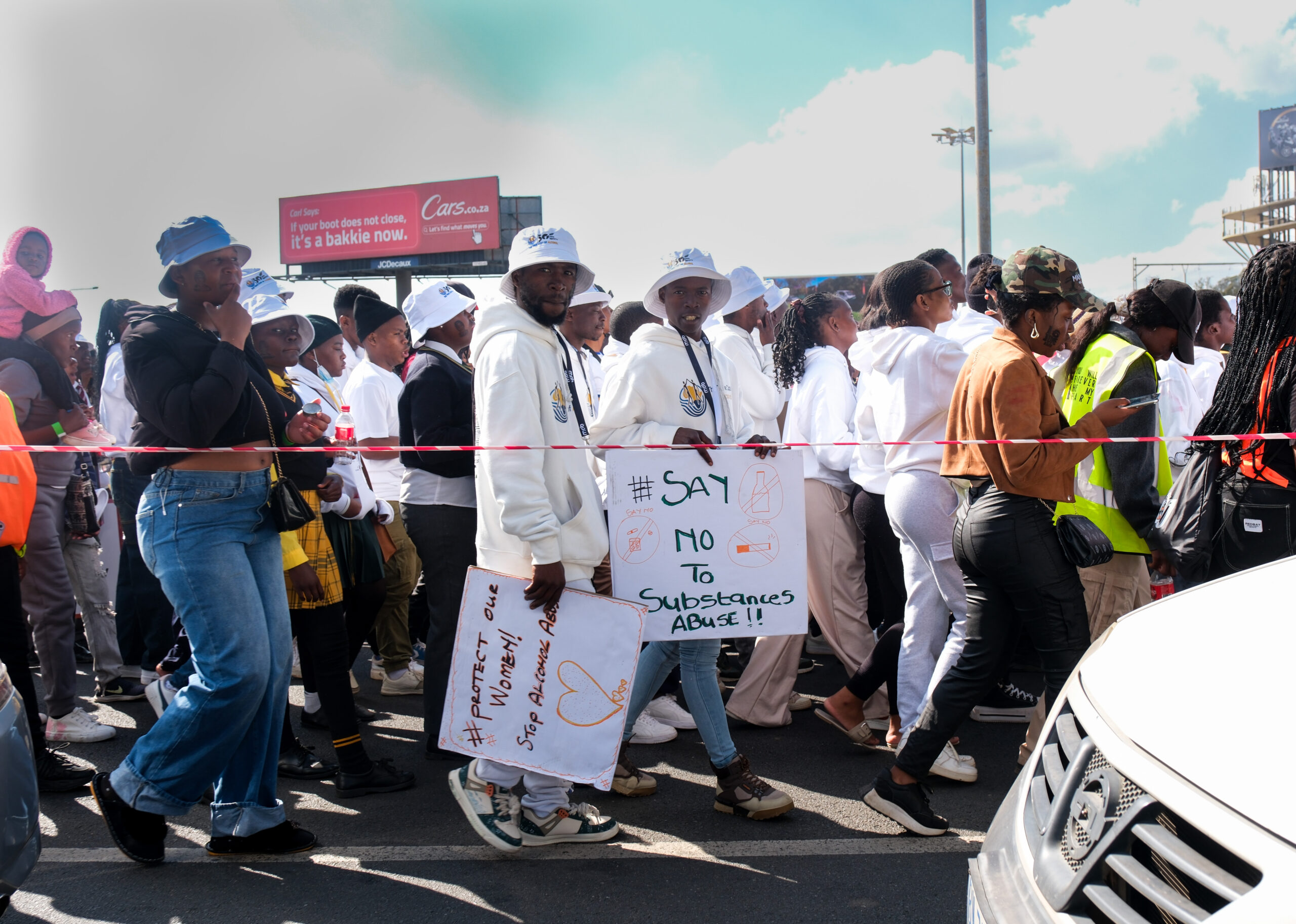
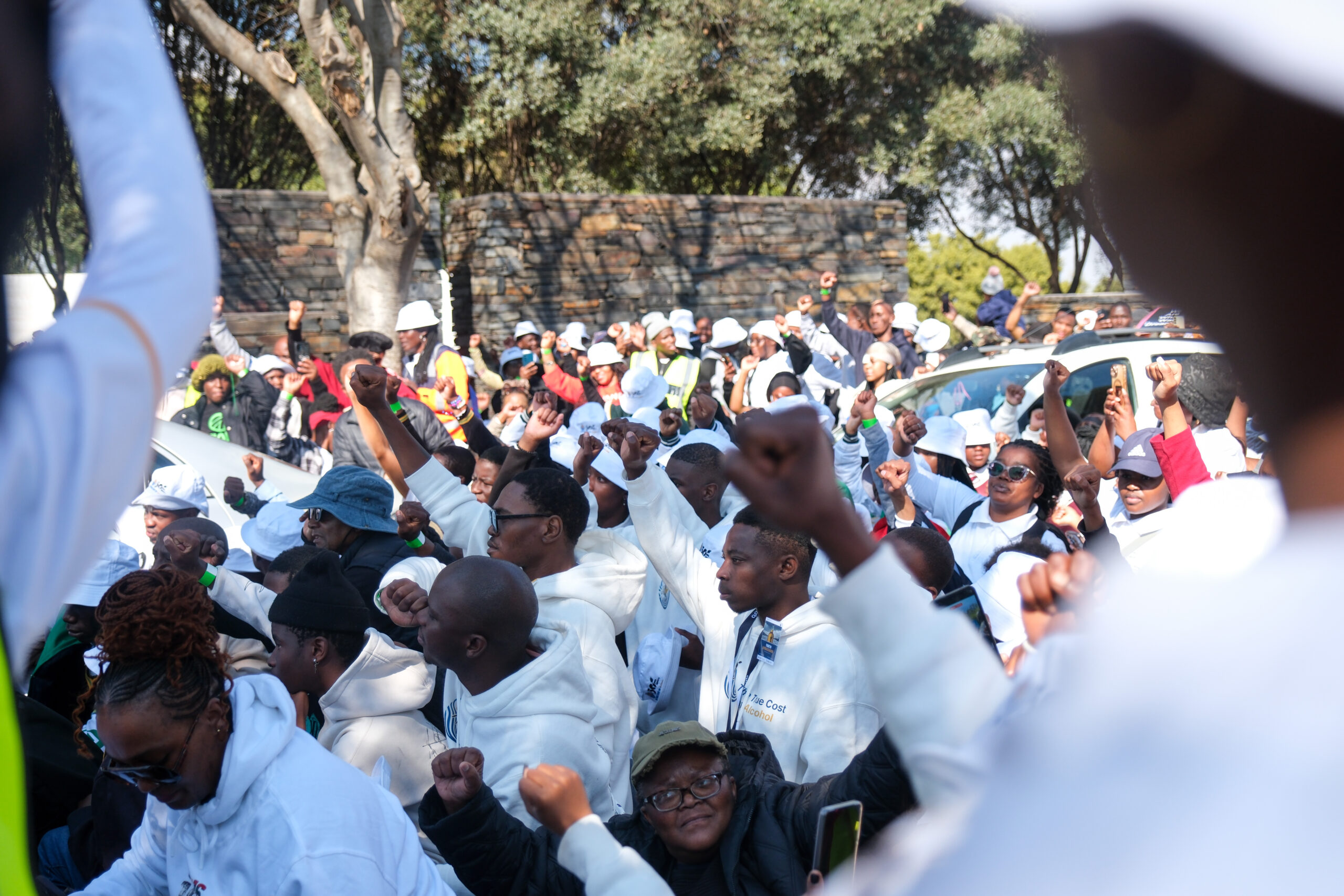
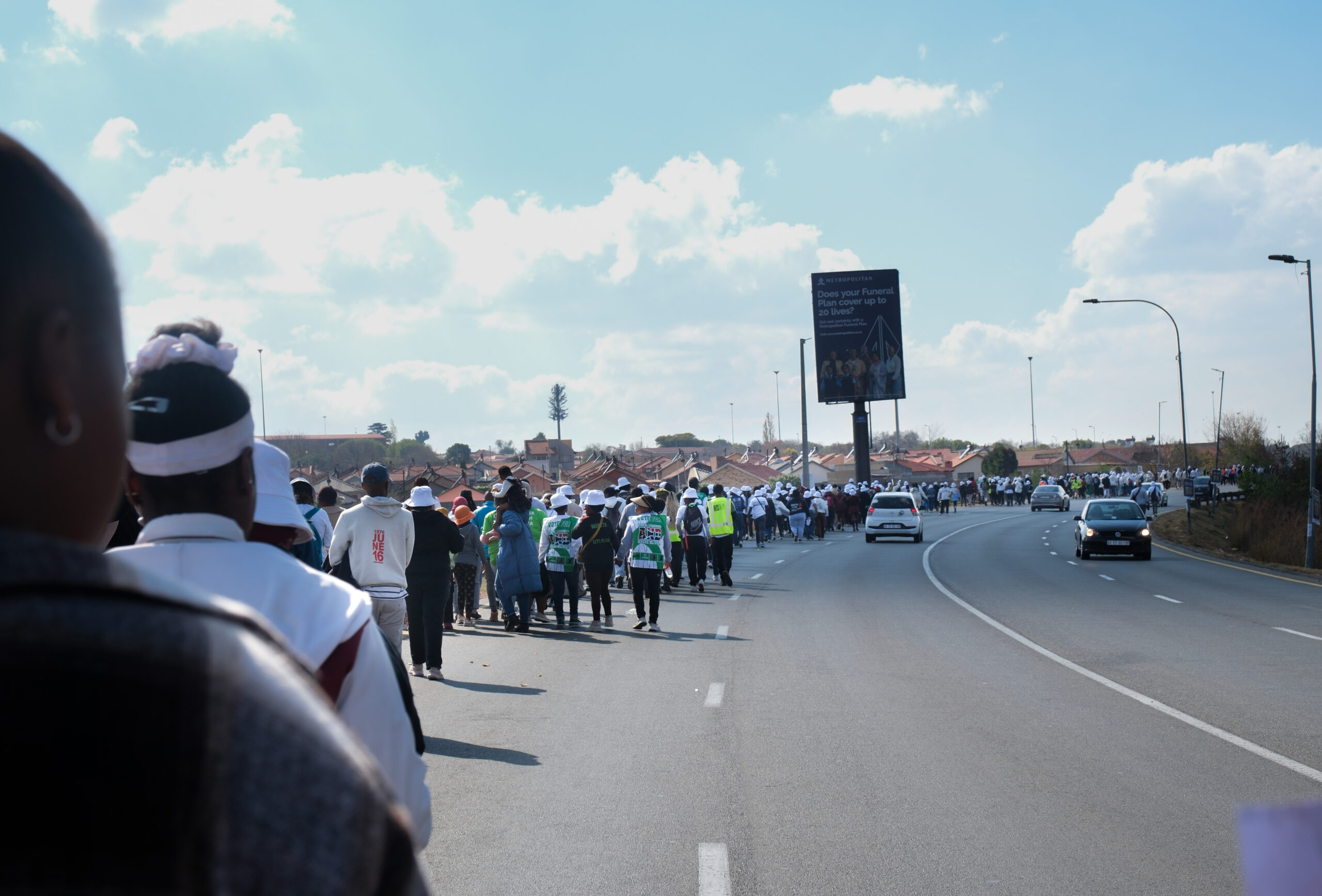
On June 16, 2026, hundreds of people, including university students and members of civil society, gathered in Soweto to retrace the original route and “finish what was started”. The march honoured the courage of the 1976 generation and stands as a reminder that their fight for freedom and justice continues to inspire South Africa’s youth today.
Opening speeches before the march. Photo: Hannah Brown
Youth walking through Soweto. Photo: Hannah Brown
March to “finish what was started”. Photo: Hannah Brown
Youth Day March. Photo: Hannah Brown
Youth Day – commemorating the 1976 Soweto Uprising. Photo: Hannah Brown
‘We are what was dreamed’ poster. Photo: Hannah Brown
In 1976, black students bravely marched against the apartheid government. Photo: Hannah Brown
Marching toward Orlando Stadium. Photo: Hannah Brown
FEATURED IMAGE: Opening speeches before the march on June 16, 2026. Photo: Hannah Brown
Today, apartheid-era spatial planning and car-centric design continues to shape commuting in Johannesburg, as cycling reemerges as an affordable and sustainable way to move around.
Johannesburg, South Africa’s most populous city, has a long and complex history with bicycles. Today, commuting is a daily struggle shaped by Apartheid, inequality, and inadequate infrastructure – factors which make cycling a difficult option for many.
A 2025 News24 report, citing the World Bank, revealed that “low-income commuters spend more than 50% of their earnings to get to work.” The bicycle is a tool for affordability, sustainability and freedom. However, in a city designed for cars, we need to reimagine urban space, to make it safer for pedestrians and cyclists while integrating public transport.
In the early 1900s, Johannesburg was celebrated as a cycling city. In an article published in the Guardian, Njogu Morgan, a postdoctoral research fellow at Wits University, quoted a 1903 newspaper stating that “nearly every third inhabitant rides a bicycle.” For white residents, cycling was fashionable and modern. However, for black residents, bicycles were often a necessity, but their freedom to ride was restricted and policed.
By the 1930s, rising incomes from the gold economy led to many white residents buying cars, and motoring became a symbol of wealth. Under apartheid, spatial segregation forcedblack workers into distant townships, far from job opportunities. Cycling became associated with black-working class commuters and was stigmatised as a ‘poor man’s mode of transport’.
Since, unsafe roads, long distances and investments in highways pushed bicycles aside completely. By the mid-1990s cycling had almost disappeared from the streets.
Modern Johannesburg was designed around cars instead of people. Urban Planner Phano Liphoto documented his morning journey on TikTok, his story sparked hundreds of responses from people who faced similar situations of waking at 4am and returning home after dark.
Commuter cycling is re-emerging as a cheaper and more environmentally friendly alternative, and it’s becoming increasingly popular among students, including myself. I’m fortunate to live relatively close to Wits University, making cycling a practical option. Many people told me it would be impossible to commute by bike in Johannesburg, warning that, especially as a white woman, it would be far too dangerous. Yet, I have found the city is absolutely cyclable, though it is far from being well supported.
With very few dedicated cycles lanes, and those that do exist are often blocked by taxis and cars. Bike lanes that had been introduced in the 2010s were criticised as “luxuries for the rich”, even though evidence showed lower-income workers were the main cyclists. Many cycle lanes are just painted on the ground, and according to a 13-year-old study “painted bike lanes without physical barriers are often more dangerous than nothing at all.”
On my route to campus, a cycle lane suddenly appears along a busy road, only to disappear in the middle of traffic. But, with some planning and the use of back streets, cycling is manageable and a great option. There are also groups, such as Banditz Bicycle Club and Girls on Bikes, that are advocating for more people to take up commuter cycling, offering affordable bikes and helping to map safer routes. Groups like Young Urbanists have proposed low-cost upgrades and protection, including in their “Stage 01 of Reclaiming Our Cycling Lanes ”briefing for Cape Town.
Transport experts argue that a cycling infrastructure cannot succeed on its own. Stigma also remains a concern. As Morgan explores in the book Anxious Joburg there is a complex relationship between identify and transport and “identities are constructed through transport behaviour.”
As Director of Wits University’s Centre for Diversity Studies, Professor Nicky Falkof, stated in an interview on YouTube, “There also needs to be a significant shift where people stop thinking bicycles are a lower-class form of transport.” This highlights the link between transport and identity and explains why bike lanes often go unused. They were built without broader cultural and systemic support.
Reclaiming the bicycle is not just about transport, it is about ending spatial violence and redesigning cities to prioritise people. While South Africa faces challenges from its past, there is an opportunity to build a more inclusive and connected urban space.
Growing violence, censorship and political attacks against journalists have driven press freedom to its lowest point. Speakers at the Investigative Journalism Summit highlight the urgent need to defend truth in an era where “reality itself feels fake”.
The 2026 RSF World Press Freedom Index reports lowest global score in its 25-year history.
The 2026 Investigative Journalism Summit warns that intimidation, online harassment and imprisonment is silencing journalists worldwide.
129 journalists were killed in 2025, highlighting the important need to protect press freedom.
As the world observed World Press Freedom Day on May 3, 2026, journalist safety came under the spotlight more than ever before. Around the world, intimidation, harassment and imprisonment are increasingly used to silence reporting. 2025 was the deadliest year on record with 129 journalists killed worldwide. According to the 2025 Human Rights Watch Report, approximately 72% of the world lives under authoritarian regimes, where they are locked within state-controlled information. The latest Reporters Without Borders (RSF) World Press Freedom Index shows that press freedom is now categorised as “difficult” or “very serious” in more than half of the world’s countries – the lowest global score in the Index’s 25-year history.
Journalism helps the public make informed, fact-based decisions and hold power to account. In a time of misinformation and disinformation, no one knows what to believe anymore. At the 2026 Truth Tellers, Sir Harry Evans Investigative Journalism Summit, held on May 6, Katherine Viner, Editor-in-Chief at The Guardian, reflected on our changing information landscape. “We used to talk about fake news, but now reality itself feels fake,” she said.
The theme of World Press Freedom Day 2026 was ‘Shaping a Future at Peace’, highlighting the important role of independent media in conflict zones. Accurate and timely reporting can save lives, counter disinformation and expose state violence. Yet, despite protections under international humanitarian law, journalists are increasingly treated as targets.
Governments are weaponising laws to silence reporters. RSF warns that journalism is being “asphyxiated” by political attacks, reduced media funding and a system that is criminalising reporting. As the RSF Index revealed – the United States dropped seven places, signalling a loss in media independence, following cuts to international broadcasters and repeated attacks on the press by President Donald Trump. In Latin America, Ecuador fell 31 places after the murders of journalists Darwin Baque and Patricio Aguilar. While Peru dropped 14 places following the killing of four reporters.
South Africa ranks in 27th place, the highest on the African continent and includes a range of media outlets. Although, many independent journalists still face challenges, and public broadcasters sometimes deal with political pressure. In a 2023 statement, SANEF highlighted “trends of trolling and doxing, (the act of disclosing a journalists full name, address, contact number, and other identifying details without their consent).”
Israel continues to commit violations of international law, and the military were responsible for killing two-thirds of journalists last year. According to RSF, since October 2023, more than 220 journalists have been killed in Gaza, including at least 70 while reporting.
Across the Sahel, countries such as Niger have experienced a collapse of press freedom under armed groups and military juntas. Sudan has become one of the most dangerous places to work; the ongoing civil war has created a climate of fear as Government targeting and military violence continues.
Online harassment, particularly against women reporters continues to rise. During the Summit, Maria Ressa, a Filipino journalist and co-founder of Rappler, said she received “an average of 90 hate messages per hour” online, adding that, “you’re targeted because you’re a journalist, because you determine fact from fiction.”
World Press Freedom Day poster. Photos: Hannah Brown
In Iran, thousands were killed during protests, and journalists were jailed under cybercrime laws. Similar methods have also been seen in Bahrain, Kuwait, and the wider Gulf region, where reporters have faced imprisonment for documenting conflicts. Despite the dangers, Ressa insists there is no better time to be a journalist, and we must rebuild how we are doing things. “The battle is now. So, if you’re a journalist today, man, this is the time to jump in.”
Press freedom advocates argue that attacks on journalists are a warning of wider threats to freedom. Speakers at the conference also explained deliberate strategies to weaken journalism – slandering and discrediting reporters, weaponising visas and targeting support systems. Caoilfhionn Gallagher KC, International Human Rights Lawyer stated, “the idea of undermining the journalist so you undermine the messenger, and therefore you undermine the message.
Organisations around the world are pushing governments to end crimes against journalists and protect those reporting from conflict zones. As photojournalist Lynsey Addario stated, “we all suffer when we can’t see the truth.” Without safeguards, the world risks losing not only its reporters but also the public’s access to information.
FEATURED IMAGE: World Press Freedom Day poster. Graphic and photos: Hannah Brown
The US ambassador highlights a path for joint US-South Africa co-operation after strained bilateral tensions.
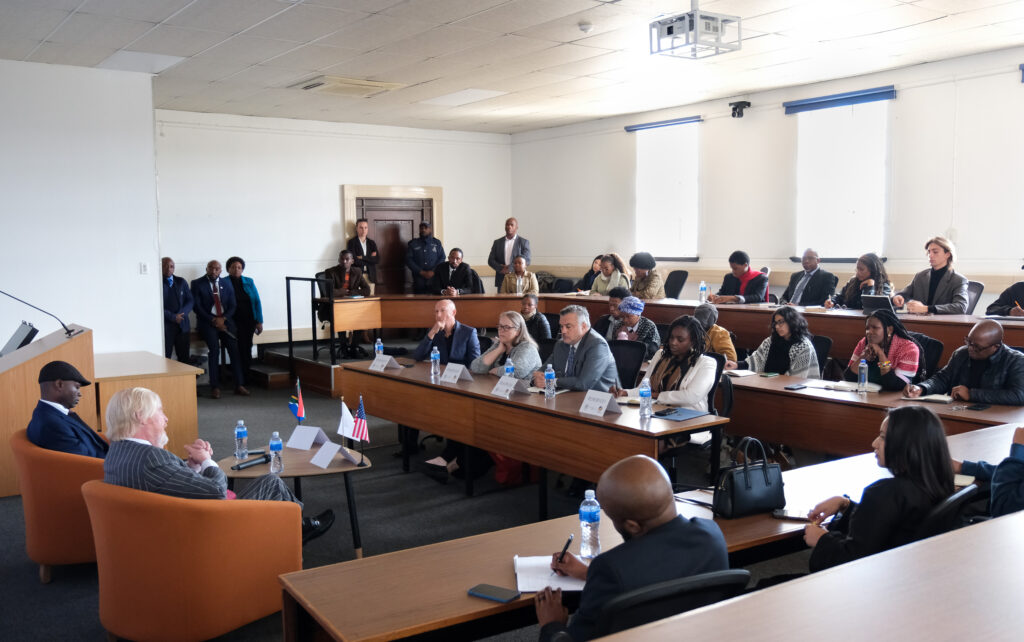
The US ambassador speaks to students at a closed forum hosted by Wits Association of International Relations.
His speech emphasised greater partnership between the two nations despite current tensions.
Concern is raised over the true nature of this ‘cooperation’, regarding potential erosion of sovereignty.
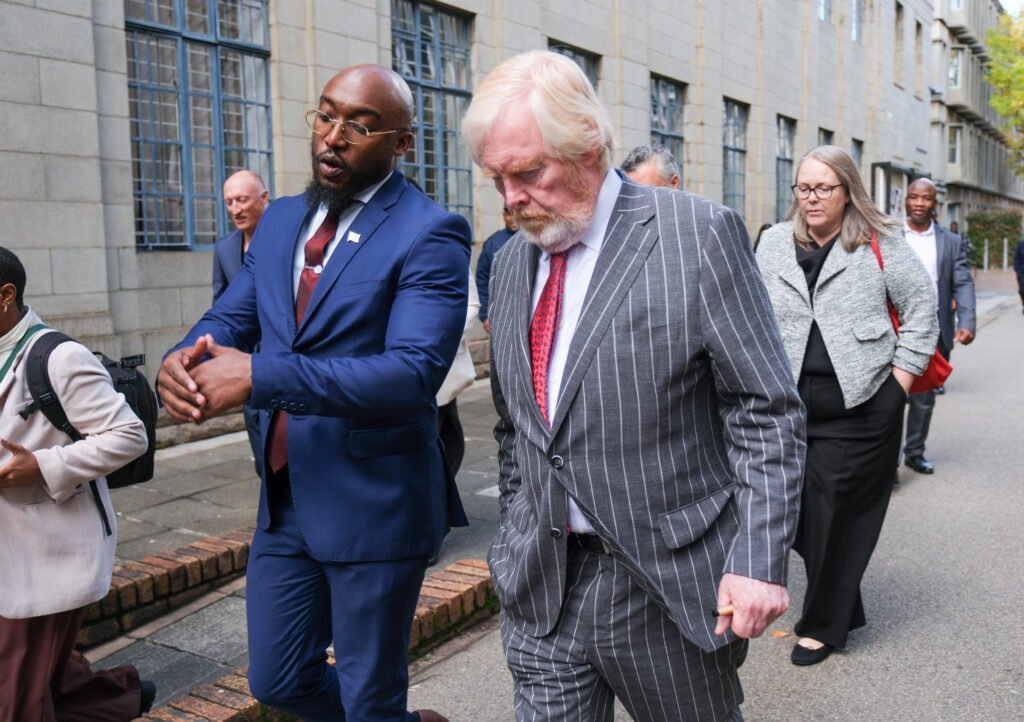
United States ambassador Leo Brent Bozell III walking with chairperson of Wits Association of International Relations, Nathi Ndlovu during a visit to the institution on Wednesday, May 7, 2026. Photo: Hannah Brown.
On Wednesday May 6, newly appointed US ambassador Leo Brent Bozell III addressed Wits University students in a closed session hosted by the Wits Association of International Relations (AIRS).
In his opening remarks, Bozell seemed intent on making amends for previous undiplomatic comments. He applauded South Africa’s potential for “tremendous opportunity” and highlighted the importance of stronger US-South African cooperation. “It’s all about partnership between our two countries,” he said.
One of his main areas of focus was on increasing US involvement within South Africa, underscoring a necessity within three specific areas, namely investment, crime and geostrategic alignment – all of which he claims can be redressed through closer relations.
Firstly, he argued that South Africa’s investment value is severely handicapped by B-BBEE policies, calling for alternative means of redressing social disparity in a way that remains profitable for investors. Secondly, he expressed concern over the country’s crime rates and proposed US-backed digital advancements. Lastly, he condemned South Africa for allegedly siding with the US’s adversaries, namely Iran, Russia and China: a decision that Bozell describes as “not non-aligned anymore.”
These requests are nothing new. Since March, Bozell has been adamant that South Africa shifts its allegiance in favour of US interests. However, this raises questions regarding potential infringements on national sovereignty – a principle that is highly protected under the US constitution, but conveniently disregarded when applied to South Africa.
Picture of the closed session in progress. Photo: Hannah Brown.
Additionally, Bozell’s insistence on fostering greater partnership between the two nations stands at odds with the US’s hostility towards South Africa. From claims of ‘white genocide’ to being barred from the upcoming G20 – the country has constantly come under fire from the US. Bozell’s eagerness to “find common ground” and “put our differences aside” is jarringly disconnected from political reality.
When questioned about the most recent G20 snub against South Africa, Bozell stood his ground, emphasizing the US’s commitment to its national interest. “There’s a prerogative that the United States has,” he says. “Any hosting country can decide who it wants and who it doesn’t want.” However, this reveals a glaring double standard: when the US exercises its autonomy in pursuit of state interests, it is rationalised as necessary, but when South Africa does the same, it is persecuted and punished.
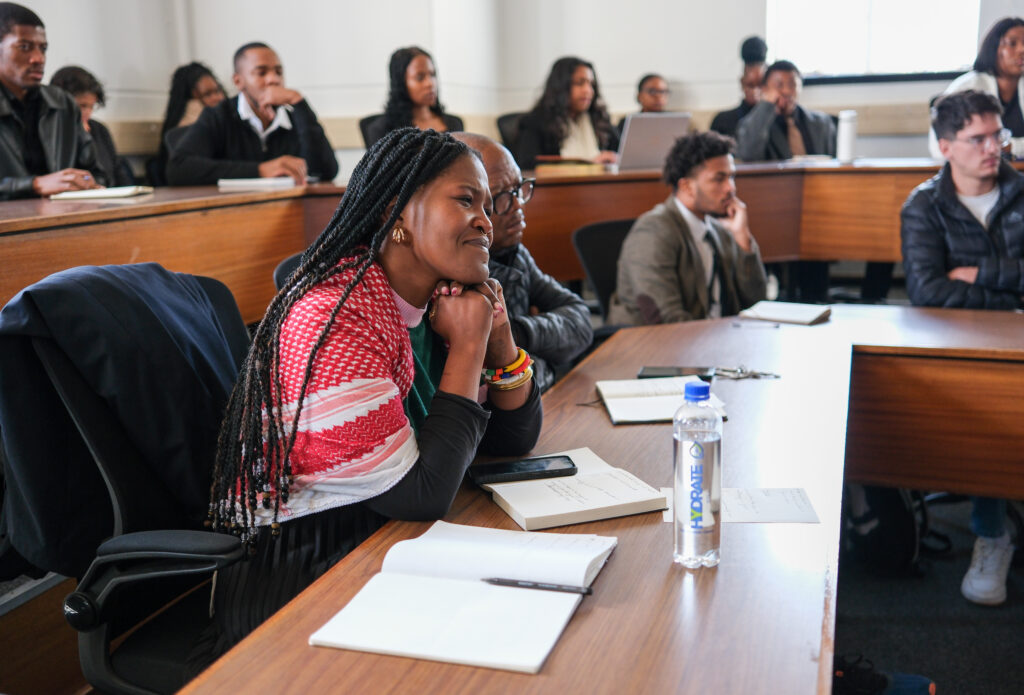
Picture of students listening to the forum. Photo: Hannah Brown.
Lastly, despite the US’s overt insistence of South Africa’s “white genocide”, Bozell could not uphold this narrative with any conviction. When asked by Wits Vuvuzela if he encountered any genocidal violence on white people since entering the country, he stated that he had yet to visit the rural areas and could not confirm. “I have no comments,” he said.
Ultimately, Bozell’s visit seemed less about genuine partnership and more another frail attempt to realign the South African agenda to reflect the interests of the US: a move that not only sheds accountability of its prior offences against the nation but also aims to dismantle the very sovereignty it upholds so dearly.
FEATURE IMAGE: Picture of US ambassador Leo Brent Bozell III. Photo: Hannah Brown.
Main Street in Johannesburg transformed into a car-free zone, inviting people to take back the city centre through art, community, cycling and music.
Johannesburg reimagined its city centre, as Main Street closed to cars and reclaimed by the people.
Music, art, cycling and children’s activities filled the streets, creating a sense of community, safety and connection.
Inspired by cities globally, Main Street Sundays is part of an experiment to revitalise the city .
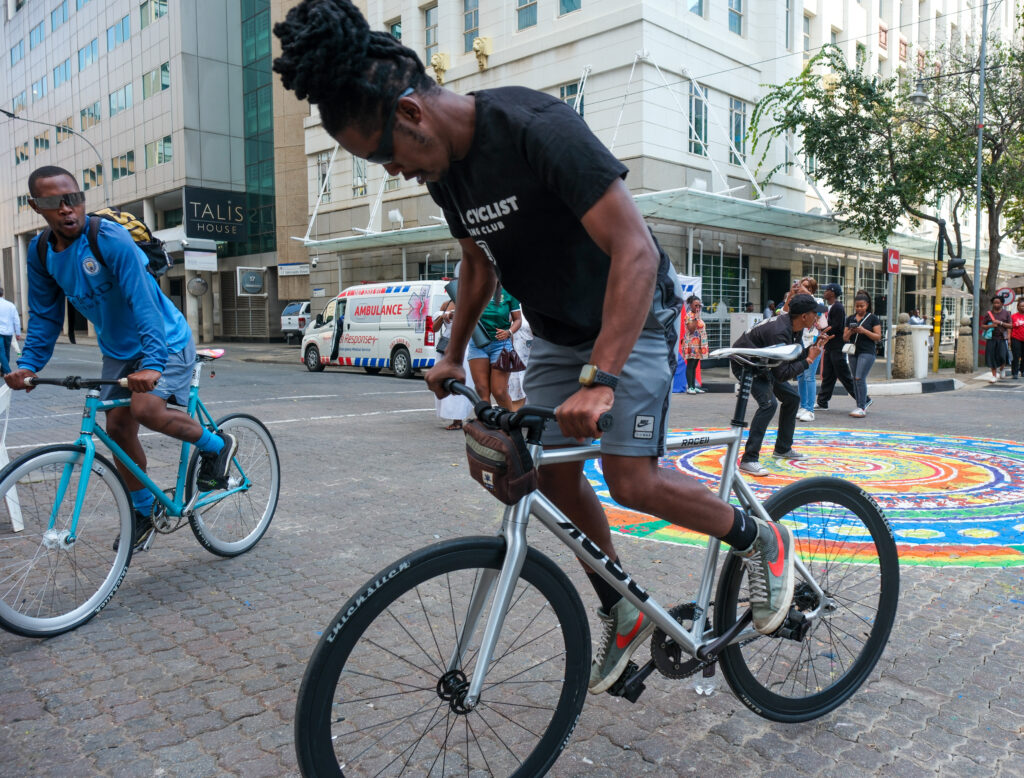
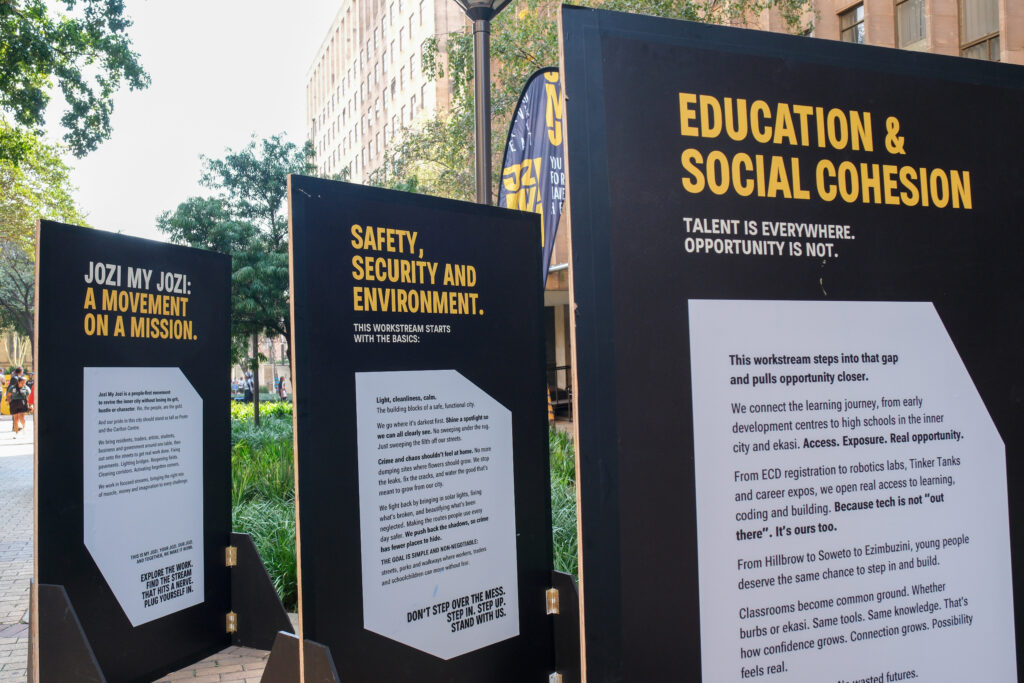
On Sunday, April 12, Johannesburg reimagined how we can experience the city. What is usually jammed with traffic, became a space for walking, cycling, art and connection. The initiative was led by Jozi My Jozi in partnership with Young Urbanists. For one full day Main Street in Marshalltown was closed to motor vehicles and belonged to the people.
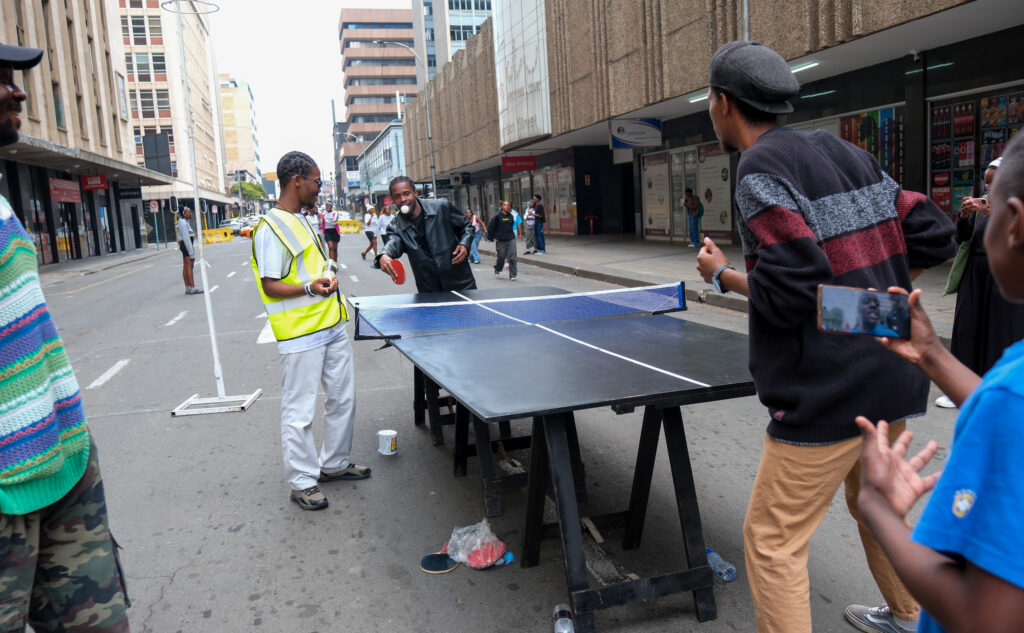
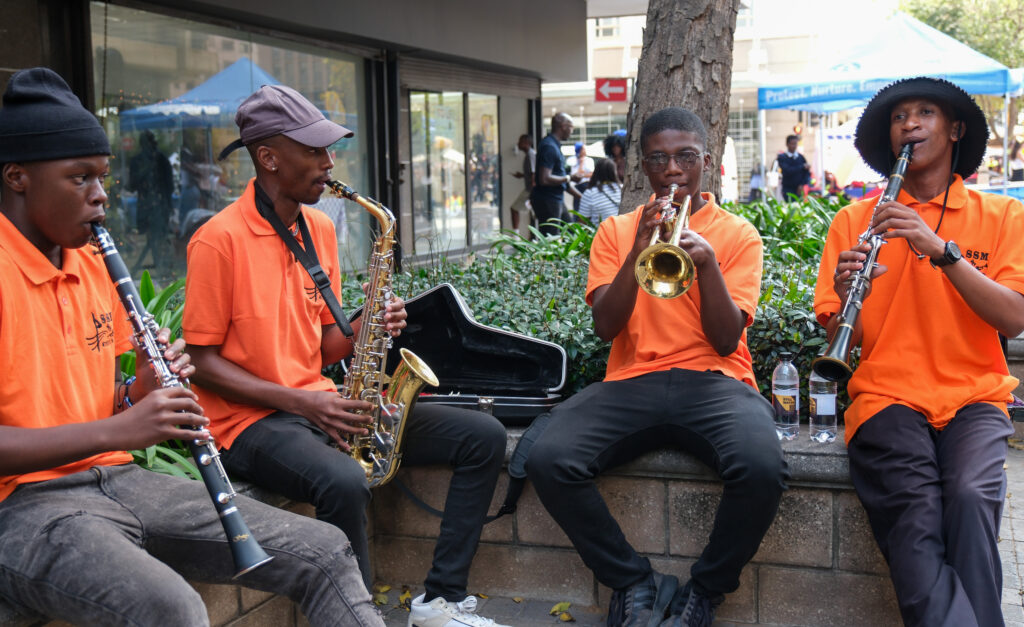
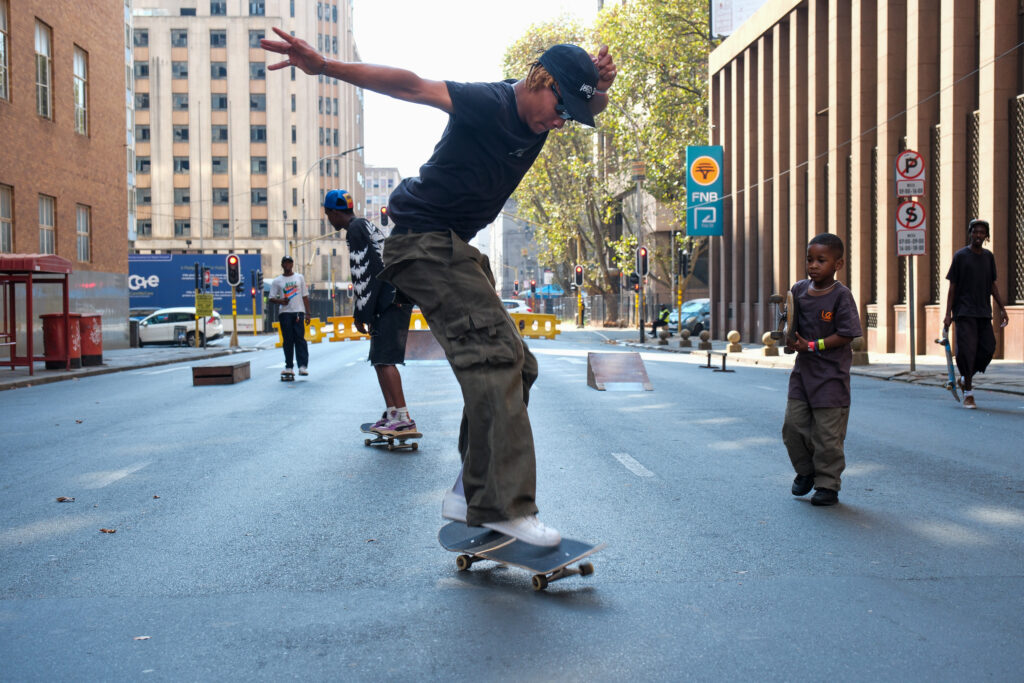
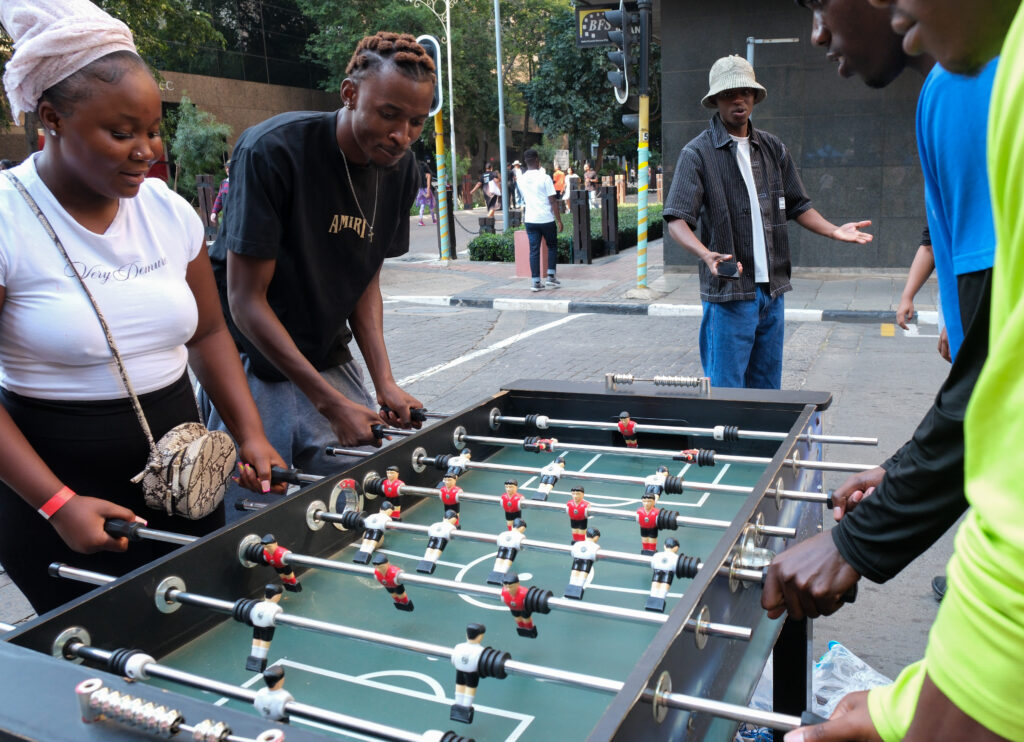
There was something happening on every corner. Music played, book clubs met in the open, art filled the streets, people skated, played games and searched the stalls. It was more than just a street closure, it was a reclaiming of public space from cars.
“Our mission is to bring people back to the city,” said Jozi My Jozi Education Workstream Coordinator, Senty Maphosa. “Let’s relove, let’s reimagine what the city could look like.”
Globally, cars dominate 80% of public space. But as Thandile Manyifolo, BA Architecture Student and Deputy Chairperson of the Jozi My Jozi Chapter at Wits University reminds us, “urban spaces were designed for people to live in. If people come secondary to that, are they really fulfilling their purpose?”
Organisers emphasised that reclaiming the streets is not just about daytime activities but also creating more opportunities and innovation for young people into the evenings.
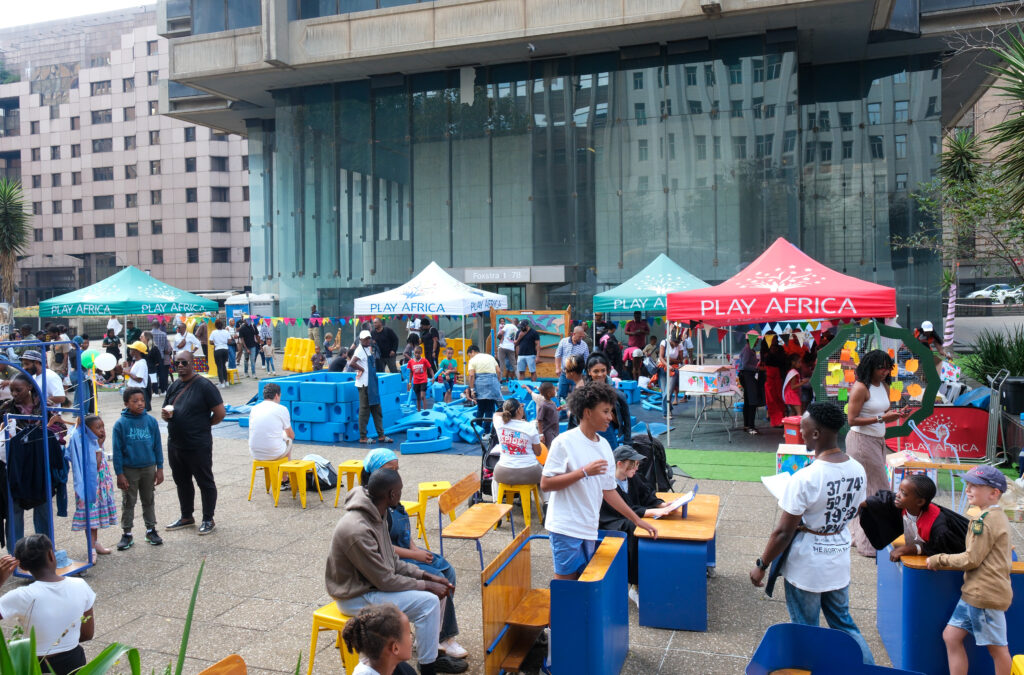
The event offered a glimpse into how urban space can return to being people centric. Children played freely, with a programme created in partnership with Play Africa, the day included interactive learning activities, face painting, chalk art, sports and a gallery.
People felt at ease, walking around taking photos on their phones, dancing and laughing. There was a sense of belonging. “Today is all about community, it’s all about collaboration and it’s all about bringing back a sense of pride and inspiring people,” said Maphosa.
Jozi My Jozi is reimagining Joburg’s CBD. Photo: Hannah BrownA game of table tennis is held on the street. Photo: Hannah BrownKids area in partnership with Play Africa. Photo: Hannah BrownAs Main Street closed to cars, cyclists rode through the CBD. Photo: Hannah BrownA music group performs at the event. Photo: Hannah BrownSkateboarders took to the city streets, performing tricks. Photo: Hannah BrownVisitors play a game of foosball. Photo: Hannah BrownJozi My Jozi signs during Main Street Sundays. Photo: Hannah Brown
Inspired by cities including Bogotá, Paris and Cape Town’s Bree Street. The event is part of a larger experiment to revitalise the city, reimagine the use of urban space and see what happens when streets are closed to cars and given to pedestrians.
For Johannesburg, Main Street Sundays was the first of what many hope will become a regular event. “We are starting something that will have a domino effect in the long term to open up the streets of Jozi, not just Main Street, but the entirety of the city,” said Manyifolo.
It showed us what Joburg can feel like, where the city is not just a place to quickly pass through, but one where we can come together, connect and move safely.
FEATURED IMAGE: Cyclist from the Sentech Croozers rides a stance bike at Main Street Sundays. Photo: Hannah Brown
A deeply human reflection on fathers and sons, masculinity, healing and what gets passed down through generations
Imran Hamdulay’s feature debut, The Heart Is A Muscle, is a moving exploration of intergenerational passing, the complexities of masculinity and the relationship between fathers and sons. Set within Cape Town’s layered history, the film was South Africa’s official entry for Best International Feature Film at the 98th Academy Awards (Oscars) 2026.
The Cape Flats, an area shaped by apartheid and systematic marginalisation, has been misrepresented in cinema. It is often reduced to a single narrative of crime and conflict. Hamdulay pushes against this stereotype. The history of violence is acknowledged but never dramatised. Instead, he reflects on fear, hope and defiance. The Cape Flats feels like more than just a setting, it becomes a character in itself. Fractured but resilient, carrying its complexities, dignity and fragile connections.
During a Johannesburg screening at The Bioscope Independent Cinema on March 11, Hamdulay was in attendance and explained how the story was inspired by a real-life incident. While at a barbecue, he saw a friend’s son briefly go missing. In that moment, Hamdulay witnessed fear and anger in his friend like never before. This sparked his curiosity and the film’s narrative, which begins with a young couple discovering their five-year-old son has disappeared. The story continues to follow Ryan, the young father, as he confronts his own brokenness, masculinity and the unspoken histories passed down through generations.
Still from The Heart Is A Muscle. Photo: Supplied/The Bioscope
Shot entirely on location, it captures both Cape Town’s grittiness and colour. Hamdulay has explained that he tried to lead every part of the production with kindness. From the set, the shoot, the camera, to the performances. The cinematography reflects this, emphasising intimate, character-driven storytelling. Imagery such as the ocean creates feelings of isolation and unresolved emotions. Close-ups reveal personal histories through subtle traits. Instead of over-rehearsing, a lot of time was spent discussing the characters beforehand and how the actors themselves related to the story. Keenan Arrison, cast as Ryan, delivers a raw, lived-in performance, and the film’s emotion lies in the pauses, silences and gestures.
Still from The Heart Is A Muscle. Photo: Supplied/The Bioscope
The film asks: What do we inherit from our fathers? And how can we become better versions of ourselves in difficult circumstances? Masculinity is usually discussed through power and control, but Hamdulay looks at the importance of softness and healing. What begins in feelings of apprehension transitions into a meditative reflection, heightened by a score that balances tension and vulnerability.
Although the film is set in South Africa, The Heart is a Muscle also speaks to an international audience. At its core, it is a reflection on belonging. It is not only about fathers and sons but about facing inherited pain and finding a path to forgiveness and change. Hamdulay has created a film that is intimate, layered and deeply human.
FEATURED IMAGE: The Heart Is A Muscle poster. Photo: Supplied/The Bioscope
In episode six of We Should Be Writing season 7, the team unpacked the evolution of music as a form of expression and protest, through four decades in the South African context. The episode explores the journey of South African music and its consumers from the 80s, 90s, early 2000s and contemporary listeners. From the […]