
Lesotho’s frozen Maluti Mountains is home to Club Maluti – a rustic, analogue sanctuary where generations of Witsies have found lifelong bonds and adventure on its slopes.
- Founded in 1968, Club Maluti remains the cradle of African snow sports.
- A nearly 60-year partnership with Wits Snow Ski Club turns the remote mountain cabin into an iconic student rite of passage.
- The hand-built, member-run lodge offers an analogue escape where phone screens give way to fireside traditions.
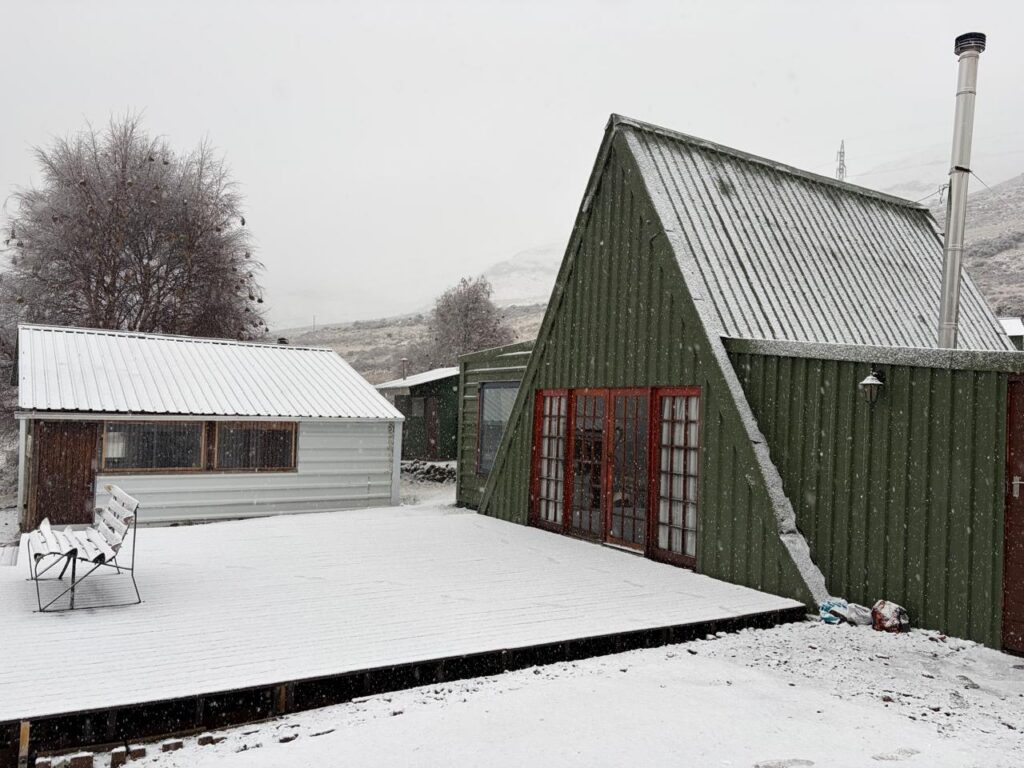
Up at 3,200 metres in the Maluti Mountains, where sub-zero air bites your cheeks and river gorges freeze into solid glass, sits a rustic timber lodge. Its living heartbeat the generations of snow-seekers that visit during the colder months. Tucked away in Lesotho, ten minutes down the pass from Afriski, Club Maluti (Club M) is a place where city stress dies on the switchbacks and generations of Witsies have found a second home.
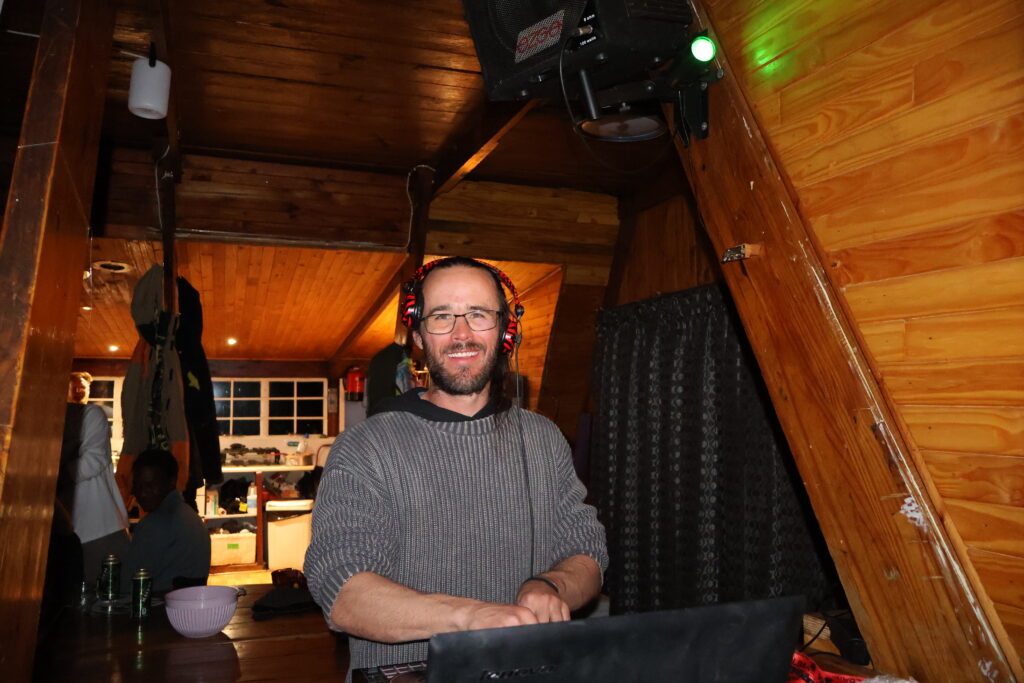
Stepping through the timber door of Club Maluti after the 5-hour drive up from Johannesburg, the first thing that hits is not the cold; it is the immediate warmth of woodsmoke, room-wide laughter, and decades of lived history. Shedding my heavy winter coat as the sound of music hums through the room, I realise I haven’t just entered a cabin; I’ve stepped into a living time capsule and close-knit community.
How a crazy idea built a legacy
Sitting near the fireplace listening to older members share stories over cold beers, the roots of the place come into sharp focus. The story began in the mid-1960s with Syd Chaplin, who ran pony treks in the region before establishing Oxbow Lodge near the Malibamat’so River. Looking to draw winter crowds to the frozen highlands, Chaplin connected with Phillip Lloyde, a ski enthusiast, alongside Joburg-based friends Brian de la Harpe and Stan Flemming.
The four friends saw the snowy Maluti peaks as an ideal and natural playground for winter sports. Driven by a shared love for skiing and working through official channels, they secured permission from King Moshoeshoe II of Lesotho. They signed a 100-year lease on the land, under the strict condition that no one could profit from the club, before officially forming Club Maluti. What followed in 1967 was endless weekend work parties where members hauled timber up unpaved tracks; they completed the original A-frame in April 1968.
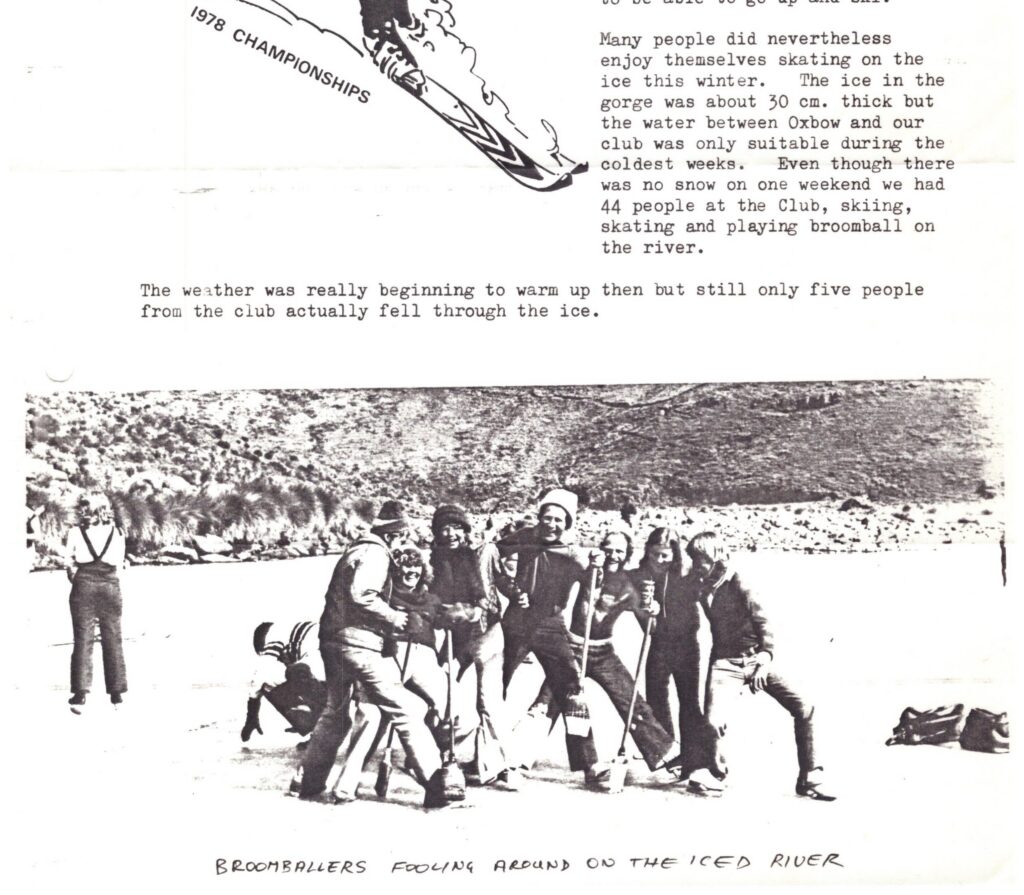
When their initial slope proved too sunny, local mine manager Keith Whitelock pointed them ten kilometres east to the Mahlasela Bowl, a cold, shaded natural amphitheatre. It proved to be the finest natural slope in Lesotho, establishing the cradle of African snow sports. Throughout the 1970s and 80s, South African families crossed the border to escape city life, skiing, ice-skating on frozen gorges, and dancing on lodge tables late into the night.
When campus met the mountain
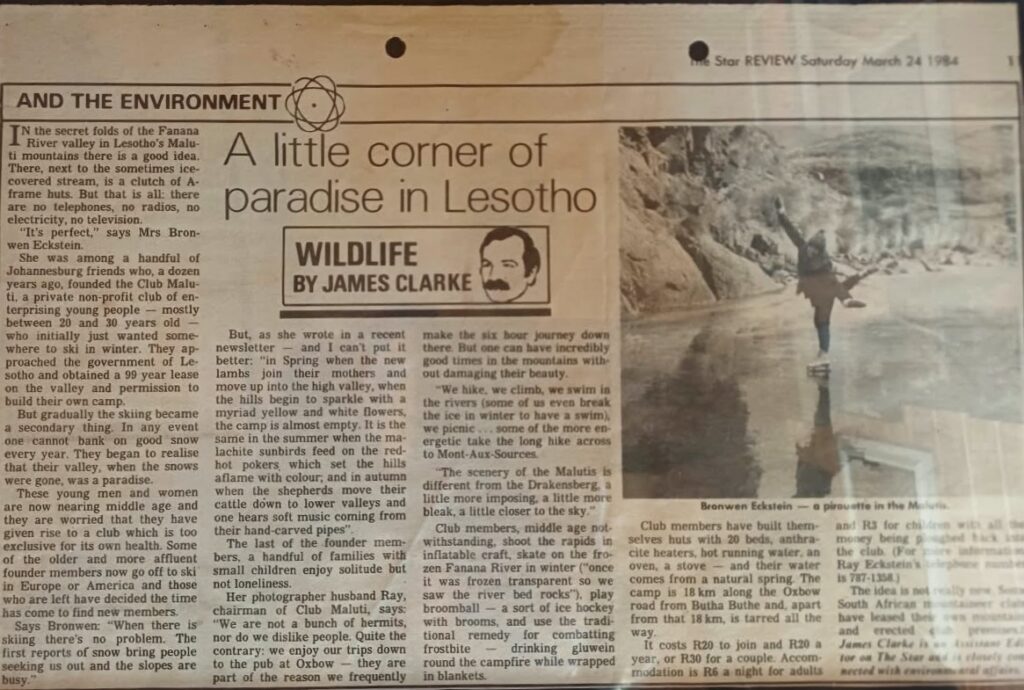
Walking through the cabin, I quickly notice how deeply Wits University is woven into the floorboards. In 1984, Wits student Ivan van Eck saw a newspaper photo of someone ice-skating in Lesotho. Entranced, van Eck drove up to investigate, fell in love with the place, and founded the Wits Snow Ski Club (WSSC) to bring campus along.
Van Eck eventually took over ski rentals and set up makeshift rope tows at the club in 1991. However, his push to create commercial ski packages directly violated the King’s non-profit mandate, famously leading to his deportation by Lesotho border officials in 1992 for operating a business without a hotel licence.
Meanwhile, through the late 1980s and 90s, Club M member Ernesto Casserino conducted feasibility and environmental studies with the Lesotho government. His work laid the groundwork for fellow members Graham Joyce, Oliver Schwankhart, and Peter Pyper to partner with Wessel Bosman and open Afriski resort in 2000.
Through changing resort developments and shifting border regulations over the decades, the bond between WSSC and Club M remained untouched, creating a bridge between varsity life and the peaks of Lesotho. Former Club M Chairman Mehow Granicki explained that this pipeline is what makes the club unique: “If you get involved with Wits Ski Club, you’re always welcome to continue [as a full member] at Club Maluti after you finish your studies. Your varsity mates become your winter mates.”
The shift to boards and living walls
Standing in front of photo archives from the 80s and 90s, I watched the club’s visual story unfold on its lounge walls. The black-and-white photos of the 70s, the bright clothes of the 80s, and the rise of snowboarding on the continent in the 90s.
“The students are a great litmus test,” Granicki noted. “They come like every generation with their music, quirks, and ideologies. The club absorbs, welcomes, and adapts. We had electro, now it’s drum & bass. We charged camera batteries, now cell phones, but it’s still the same sound system, and it’s still the same generator.”
When snowboarding exploded internationally in the late 80s, students brought back overseas VHS tapes, cut a window into an A-frame wall, mounted a monitor, and looped snowboard videos. Student energy brought freeride trick culture, vibrant gear, and fresh music to the slopes.
Today, almost every member snowboards. The communal shed is packed with shared boards and boots, keeping snow sports accessible for students. Down at Afriski, supportive members help newcomers set up their gear and carve their first turns.
The rituals that build a family
Experiencing the lodge firsthand reveals how much care keeps it running. Completely member-run, the property features the main A-frame lounge, the timber B-frame bunkhouse, and the Park Home sleeping quarters kept warm by anthracite stoves.
Every couch and timber beam represents collective effort. As Granicki reflected: “Each building had an era, a crew, a mission.” From wrap-around seating to the wood-fired hot tub steaming under sub-zero skies, everything was hand-built during voluntary off-season work parties. At the heart of daily life are Basotho hosts Maskok and Ntja Sepatla. Living on site, Maskok lights the fires before dawn while Ntja maintains the generator and water systems.
Access remains strictly word-of-mouth through member referrals. Every trip kicks off with Friday night introductions around the fire, where guests share their names, trip count, and a claim to fame before receiving a mandatory weekend nickname.
“That drive and weekend in the mountains bonds you in such a healthy way,” Granicki explained. “By maintaining rituals, we maintain culture across generations.”
The soul of Club M
For Vishaylin Mahadeo, who joined WSSC in 2011, the lodge became his anchor: “It’s home to me; it’s my family, my safe space. When going through a difficult time, my first thought is, ‘let’s go to the mountain.’ I have snowboarded everywhere in the world, and this mountain is still so special to me. My university experience was created through Ski Club; I even extended my degree just because I loved it so much!”
Granicki, who first visited as a matric student, feels that same pull: “Club M is home to misfits, geniuses, daredevils, and lost souls [who are] funny, beautiful, and live for the moment… My favourite personal memory is meeting my wife up there. Our adventure began from loving winter and the outdoors.”
In a world driven by screens, Club M remains fiercely analogue.
“It represents freedom, exploration, and self-discovery. You’re in the middle of two mountains, under stars, in a cabin when it’s snowing. My hope is that it remains a time capsule that forces you to be more of yourself, having fun, being human. Here’s to the snow!”
FEATURED IMAGE: Photo of Club M members at Afriski. Photo by: Daniella Ripamonti
RELATED STORIES:
- Wits Vuvuzela, FEATURE: Sesotho Fesheneng – to know your origin is to know yourself, August 2026
- Wits Vuvuzela, Bridging sports separation: Wits athletes team up in the WSC Amazing Race Games, April 2026

