
Wits’ liver transplant programme celebrates 1000th life-saving surgery
The programme has changed the lives of thousands, one transplant at a time.
- More awareness for liver disease and organ donation is needed to help provide more liver transplantation services.
- Accessibility is needed through support from the government and other private medical institutions.
Over 1 million South Africans have been diagnosed with hepatitis – a viral infection affecting the liver – on an annual basis, which can potentially lead to advanced liver disease requiring transplantation.
According to the Liver Centre South Africa, the causes of liver diseases and illnesses can vary from acute liver failure, viral hepatitis or infections, with liver cirrhosis being the lead cause in sub-Saharan Africa.
The programme, established in 2004, is one of the few transplant units in the country and the broader sub-Saharan African region that provides living donor liver transplants in both adults and children.
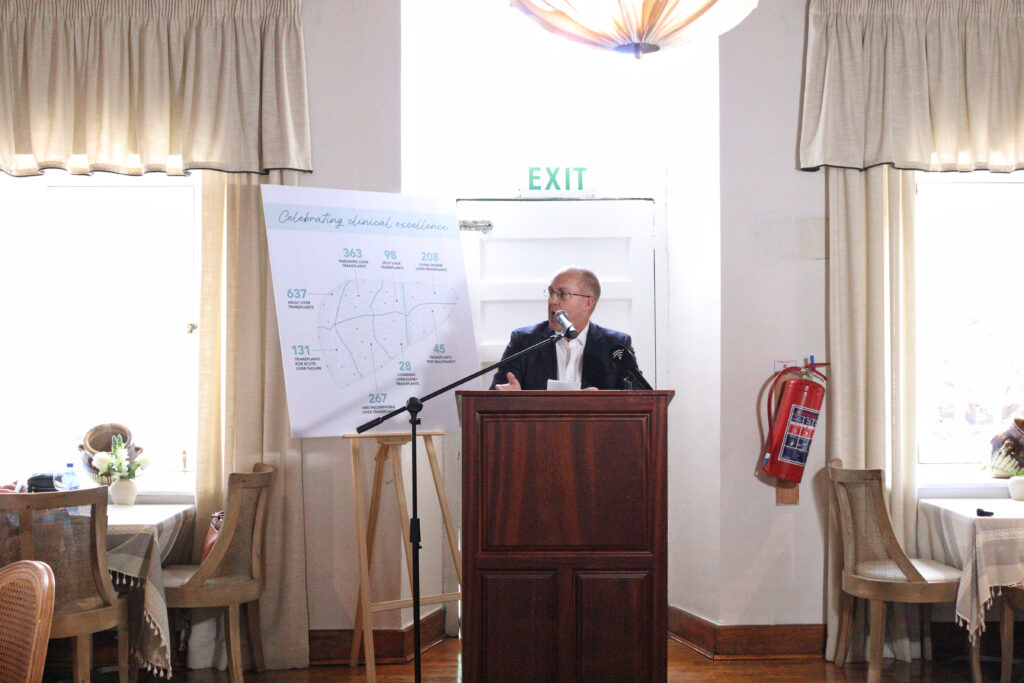
transplant milestone celebration. Photo: Amahle Ngqwemla
Liver transplants are therefore important for removing the affected area and transplanting the healthy organ, to provide patients with a better chance at a longer and healthier life.
Of the 1000 who have gotten a second chance, 637 are adults and 363 children.
Professor Jerome Loveland, the academic head of transplantation at Wits, said none of it would be possible without willing patients and families.
“Where would our tale of hope be without our patients…recipients who entrusted their care with us and those donors whether deceased or living, who gave the gift of life by donating,” he said.
However, there are still concerns around accessibility as many patients do not live in Johannesburg where units like the liver transplant programme are available.
Professor Adam Mahomed – specialist gastroenterologist and hepatologist said, “We have to expand it [training in both public and private sector] and not be limited to just where we are.”
Liver and kidney transplant co-ordinator, Sinesha Moodley, told Wits Vuvuzela that working with public academic hospitals like Charlotte Maxeke helps patients who are unable to travel long distances for treatment.
Professor Charles Sanyika, interventional radiologist, said, “If you are in a big city like Johannesburg, you might know of a transplant unit that might be within reach for you. Yet, someone [doctors and patients] in areas like Matatiele or Qunu [Eastern Cape] might not be aware.”

The programme has created relationships with other medical societies on campus like the Wits student surgical society where postgraduate medical students can engage with the clinical training programme.
Although the combination of academic medicine, scientific research, education and healthcare partners has been significant in reaching this milestone, Loveland urges young people to “familiarise themselves with organ donation and be open to considering being a donor should it happen to one’s family.”
FEATURED IMAGE: Professor Adam Mahomed delivering his speech at the Wits Transplant Unit milestone celebration. Photo: Amahle Ngqwemla
RELATED ARTICLES:
- Wits Vuvuzela, One talk on organ donation can save seven lives , August 2023
- Wits Vuvuzela, WITH INFOGRAPHIC: Medical students encourage organ donations, May 2022
- Wits Vuvuzela, Witsies aim to make organ transplants accessible to underprivileged, August 2015

