Every August, South Africa celebrates Women’s Month, but are these celebrations honoring women by creating lasting change?
Young women still face high unemployment rates, which shows the need for action that supports women beyond August.
Events such as Her Africa offer women tangible skills, mentorship and opportunities.
Women’s Month should move past inspirational speeches and towards practical action that creates notable change.
During Women’s Month, events across the country focus on women’s empowerment, wellness, business networking, and women in the arts. But, are these events sustainable beyond Women’s Month? The impact of these annual events deserves closer attention.
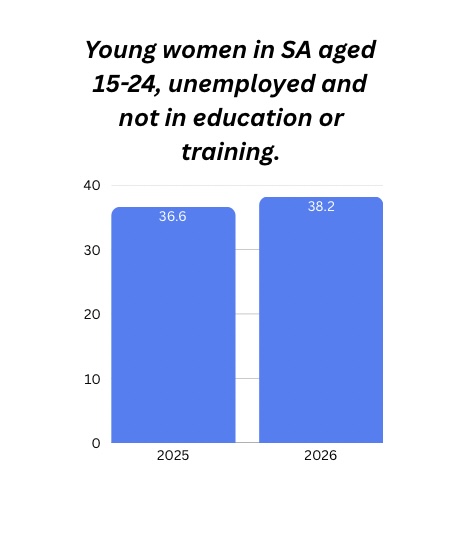
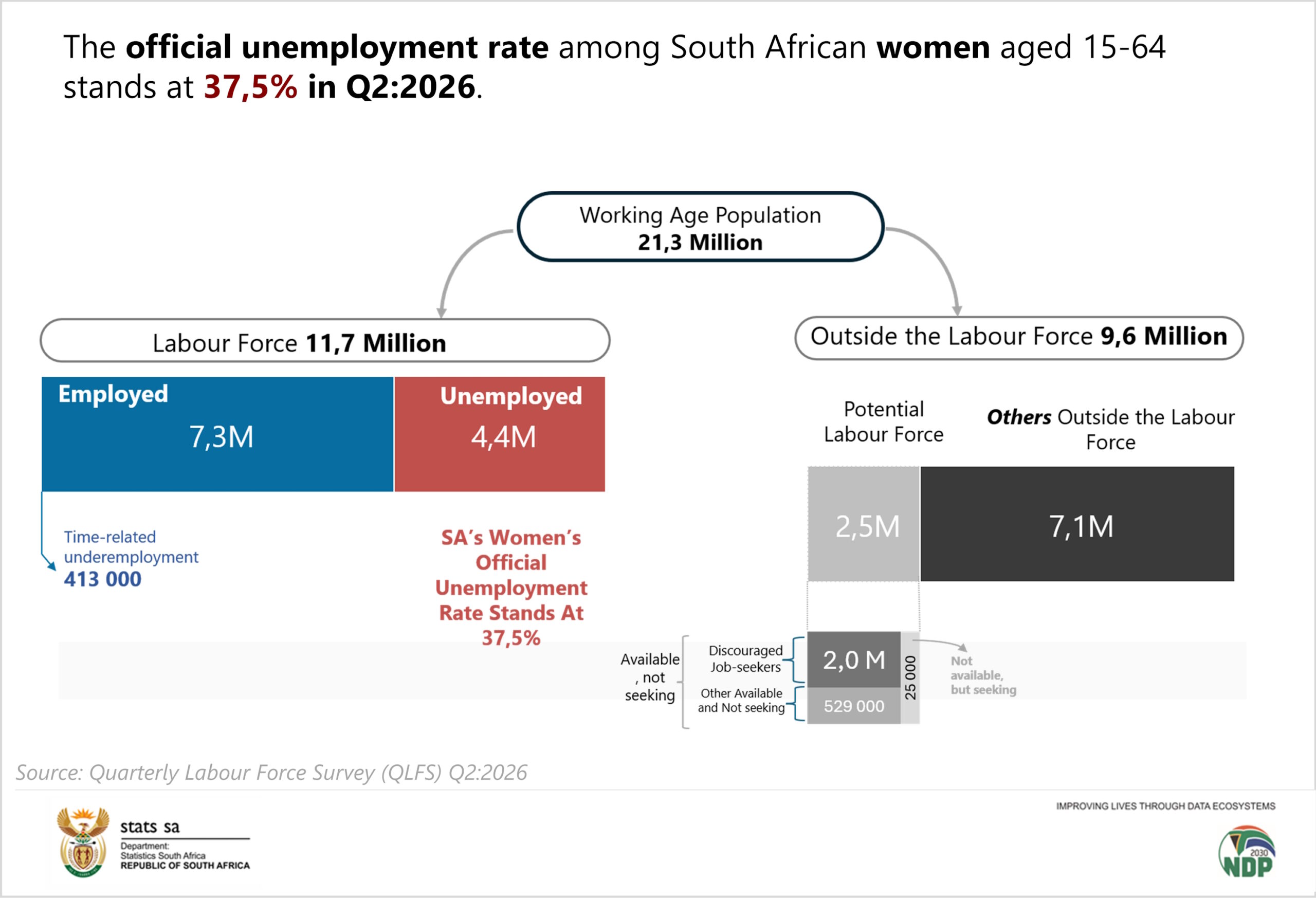
According to Statistics South Africa’s (STATS SA) Quarterly Labor Force Survey (QLFS) for the second quarter of 2026 women continue to face higher vulnerability to unemployment and remain concentrated in certain occupations. Young woman between the ages of 15 to 24 account for 38,2% of those unemployed and not currently in education or training (NEET).
Pictured is a graph showing the percentage of 15 – 24-year-old young women classified as NEET IN Q2:2025 and Q2:2026. Graphic: Chrislyn Majiedt
These figures suggest that the events that happen during Women’s Month need to offer practical skills, mentorship and opportunities that could turn inspiration into action past August.
On Friday, August 21, 2026, ALX South Africa (ALX SA), a Pan-African organisation dedicated to helping young people build in-demand digital, creative and entrepreneurial skills, hosted their Her Africa Women’s Month event.
Panellist Nozipho McLean, an actress and producer, spoke about the frustration of attending events and feeling inspired but not getting “the juice” of how to achieve success like the women she admired.
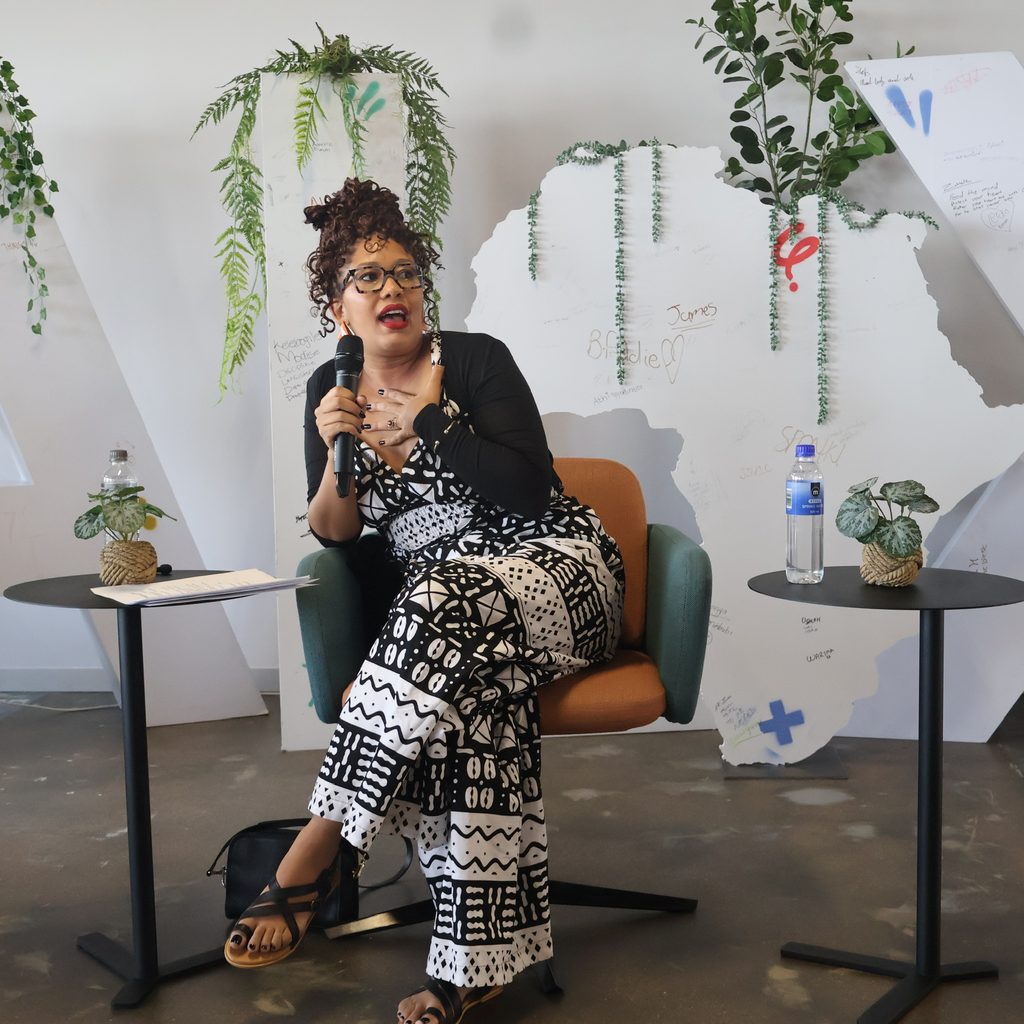
Nozipho McLean speaking at the ALX SA Her Africa event. Photo: Chrislyn Majiedt.
McLean’s ‘Long Story Long’, a podcast and live event series, addresses this by providing practical and implementable steps.
Amina Patterson, venture growth strategist and Wits commerce graduate, challenged the women in the audience to be ‘audacious’ and pursue the big ideas they have, whether it works out or not.
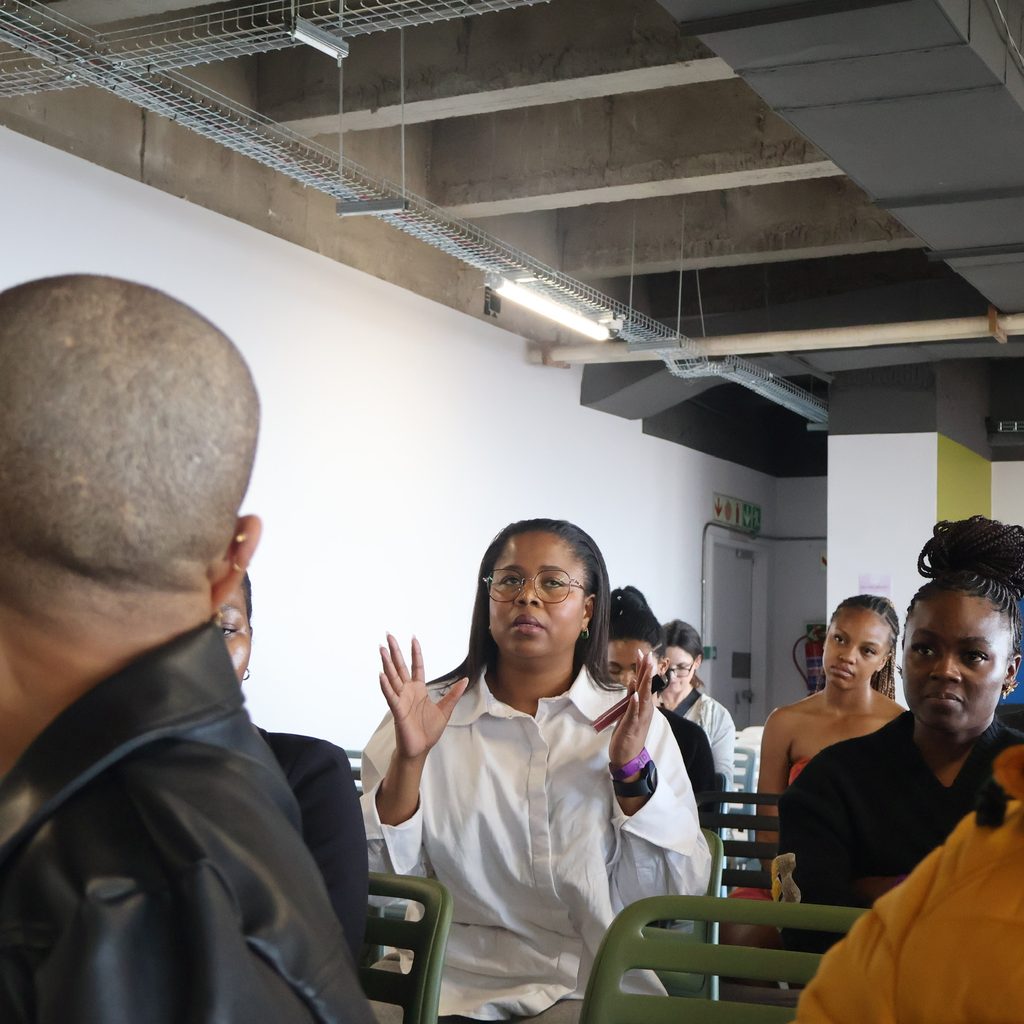
Audience member asking a question at the Her Africa event. Photo: Chrislyn Majiedt.
“Something that inspires me the most is seeing women go out and build their own products, whether it works or not you have done what 90% of the population has not done,” Patterson said.
Aisha Jackson, regional general manager for ALX SA, says the organisation has graduated 350 000 young people in six to seven years, with 20 000 of graduates based in South Africa and 60% being women.
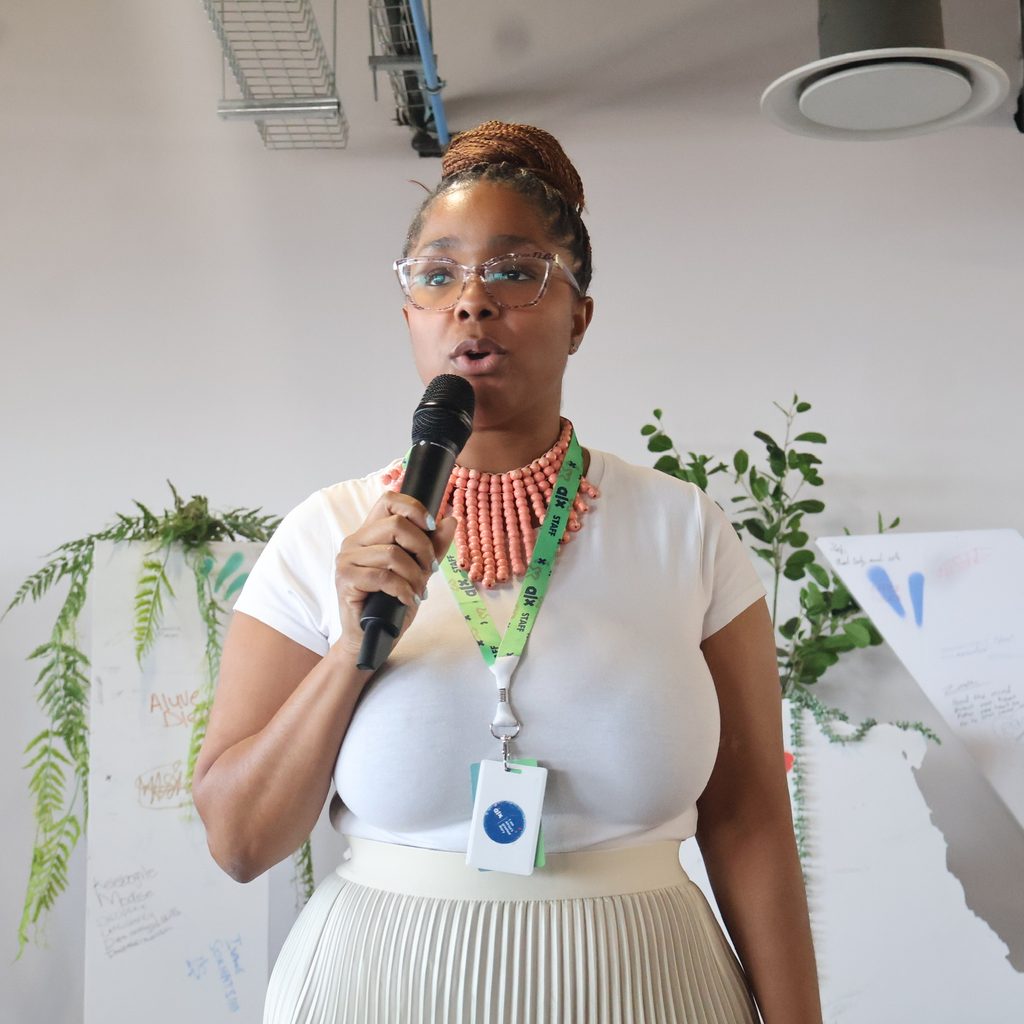
Aisha Jackson, regional general manager of ALX SA, facilitating the Her Africa event. Photo: Chrislyn Majiedt.
“I’m sure that women are walking away with one thing that’s tangible, that they can tangibly change in their lives,” said Jackson.
The contrast between Women’s Month celebrations and the ongoing challenges reflected in the labor statistics highlights the need for events that provide women with useful tools they can use beyond August.
FEATURED IMAGE: A photo of the stage where the panel members of the ALX Her Africa event were seated. Photo: Chrislyn Majiedt
Every year the days leading up to Africa Day, street vendors start displaying their best cultural outfits because they know the public want to look good for the occasion. However, in the mix of cultural outfits and good cuisine the real meaning behind the celebration of Africa Day gets lost.
Ubuntu, I am because we are, is a traditional African philosophical concept and the foundation on which the Organisation of African Unity (OAU) was built on. The birth of the OAU, now known as the African Union (AU), on May 25, 1963, is the core reason why we celebrate Africa Day. 32 independent African states came together to fight colonialism and promote unity. This day is meant to strengthen the Pan African spirit, celebrate cultural diversity, reflect on progress and rewrite the narrative of Africa’s story.
Sadly, the meaning behind the celebration of this day has been watered down, and it has become just another day of dressing up, eating delicious food or a surge in sales for street vendors. Ntando Makhubu, a journalist at The Post Newspaper, wrote in his article that he spoke to a street vendor in Pretoria who said “For me, for us, it means a boom in business” which highlights how unaware some members the public are about the true intent of Africa Day.
Africa Day is only recognized as a public holiday in a handful of African Union member states, only six to nine of the 54. Mako Muzenda, a former freelance writer for Daily Maverick, wrote an article saying that the “25th of May is about statements and fanfare, not about making serious moves.” Africa Day has become more performative than educational or impactful, and this is another reason why the public’s awareness regarding Africa Day is low.
There are multiple articles promoting Africa Day celebrations that involve food, cultural dances, and dressing up. However, there are few speaking to the core reason of Africa Day and how Africa has grown or managed to rewrite its own story after colonization.
The lack of awareness shows how easily African history and unity can fade from public consciousness when not diligently taught. As the African Proverb says, “Until the lions have their own historians, the history of the hunt will always glorify the hunter.” This means if Africans do not actively preserve, teach and celebrate their own history and the foundation that it was built on, it will continue to be forgotten or overlooked.
Featured Image:Headshot of Chrislyn Majiedt, this week’s editor.
A unique Mother’s Day storytelling event at Melville Koppies used African folklore to reconnect adults with childhood, motherhood, and tradition.
A Mother’s Day storytelling at Melville Koppies, Sunday 10 May.
It was a unique Mother’s Day experience where mothers could embrace their inner child.
Grace compared the process of the smelters to what motherhood is and showed us how it relates to mothers and what they go through.
As the birds chirped and the cold morning wind rushed through the branches at the Melville Koppies Nature Reserve, attendees made their way up the hill towards the lecture hut; they were in for an exciting time ahead. “A lot of people here come to me and say, ‘I haven’t had a story being told to me in 50/60 years and it just lit up my life’. And all the adults came to me after today’s storytelling and said, ‘I was a child again, thank you so much,” said Merle Grace, the voluntary storyteller at Melville Koppies Nature Reserve.
Grace had prepared two stories: an anti-colonial African parable titled “Fly Eagle Fly,” retold by Christopher Gregorowski, and ‘Kasanko’s Dream’ by Gcina Mhlophe about ironmaking. chosen specifically for Mother’s Day. “I wanted a story about something female and strong, that is not on the knows, and I found the story ‘Kasanko’s Dream’” said Grace. “I thought it was the perfect Mother’s Day story, because the process of ironmaking and fertility were seen as very similar in those days,” she said.
Merle Grace telling the story ‘Kasanko’s Dream’ on Mother’s Day. Photo: Chrislyn Majiedt
Grace, upon conducting research, found out that smelters, like the one they have on the Melville Koppie, were used for ironmaking. The process was seen as a holy and sacred process of making something out of what seems like nothing. The furnace was often symbolically linked to a woman’s womb, as both were believed to produce life and strength through hidden processes.
Iron was formed inside the furnace where no one could see the transformation taking place until the final product emerged, in the same way that a baby develops unseen inside a mother’s womb. To Grace’s understanding, the ritual around fertility and smelting were very similar for the iron Age farmers and miners 500 years ago.
Smelters were used to extract iron from iron-bearing rocks by heating the ore in a furnace with burning charcoal. Early African settlers such as the Sotho and Tswana built clay furnaces, often symbolic of a womb and the birthing process of iron. The settlers would refine and shape the metal into specific tools and weapons.
“What’s very special about sitting here is while she is telling a story the birds just start singing, there is always a bird doing something so you really feel like you are in a different place,” says Jenny Grice, acting chairperson and head guide and primary event coordinator for the Melville Koppies Management Committee. The combination of nature and storytelling made the audience forget that they were in the city, and everyone just embraced the moment.
Grace kept the audience on their toes – quite literally – by having them stretch and jump between the stories, to allow for one story to sink in and to prepare for the next one. Everyone gladly joined her and laughed in between stretches. She captivated the audience, whose eyes locked on her as she spoke.
Through storytelling, connecting with nature and embracing their inner child, the audience experienced a truly different kind of Mother’s Day –one that felt deeply meaningful and extra special.
“This was the most interesting Mother’s Day,” said one of the women in attendance when the storytelling was complete. The attendees were eager to speak to Grace after, most of them thanking her for the wonderful experience and the opportunity to embrace their inner child.
Feature Image: Merle Grace a voluntary storyteller at Melville Koppies Nature Reserve pointing at the trees. Photo: Chrislyn Majiedt
In episode six of We Should Be Writing season 7, the team unpacked the evolution of music as a form of expression and protest, through four decades in the South African context. The episode explores the journey of South African music and its consumers from the 80s, 90s, early 2000s and contemporary listeners. From the […]