Who’s going to Pikitup
City of Johannesburg has taken to private services to clean the city. (more…)

City of Johannesburg has taken to private services to clean the city. (more…)
Serial killers, struggle heroes and tragic deaths haunt Johannesburg’s turbulent and varied history, with some of the ghostly figures remaining to this day. After gold was discovered in 1886 Joburg rose from the dust into the metropolises we know today. But do you know all the legends of how it came to be an eclectic and vibrant city? Terrifying tales whose spirits remain include the tragic tale of freedom fighter and schoolboy Hector Peterson, the ghosts of the infamous Stander Gang and lesser known haunted spots like a Parktown’s Mikes’s Kitchen and a headless women mourning in an ancient school.
A ghostly schoolboy with his hands clenched in the Black Power salute and the faint sound of bullets firing into the night, have been heard at the foot of the Rocky Knoll. The boy is thought to be the ghost of Hector Peterson who was killed by police bullets on June, 16th 1976.

The Hector Peterson memorial in Soweto. Photo: The original uploader was Albinfo at German Wikipedia [GFDL (http://www.gnu.org/copyleft/fdl.html) or CC-BY-SA-3.0 (http://creativecommons.org/licenses/by-sa/3.0/)], via Wikimedia Commons
Serial killer Daisy de Melker’s spirit still lurks in her old cell at the women’s prison at Constitutional Hill and at the Supreme Court’s, Court 3 where she was sentenced to death in 1932. The Black Widow was the first serial killer to be convicted in South Africa after she poisoned two of her husbands and a son with arsenic and strychnine. De Melker is said to also appear at 6 o’clock at her home on Club Street in Turffontein where she peers out of the window waiting for her victims to return home.
The historic house built in 1924 is not only a popular boutique hotel in Houghton but is also home to some historic guests from the spirit world. As one of the first houses in the area it is filled with antique family heirlooms, some of which haven’t been moved since 1936! Guests to the hotel claim to hear mysterious footsteps and to have seen the ghost of a lady with a child and even Paul Kruger.
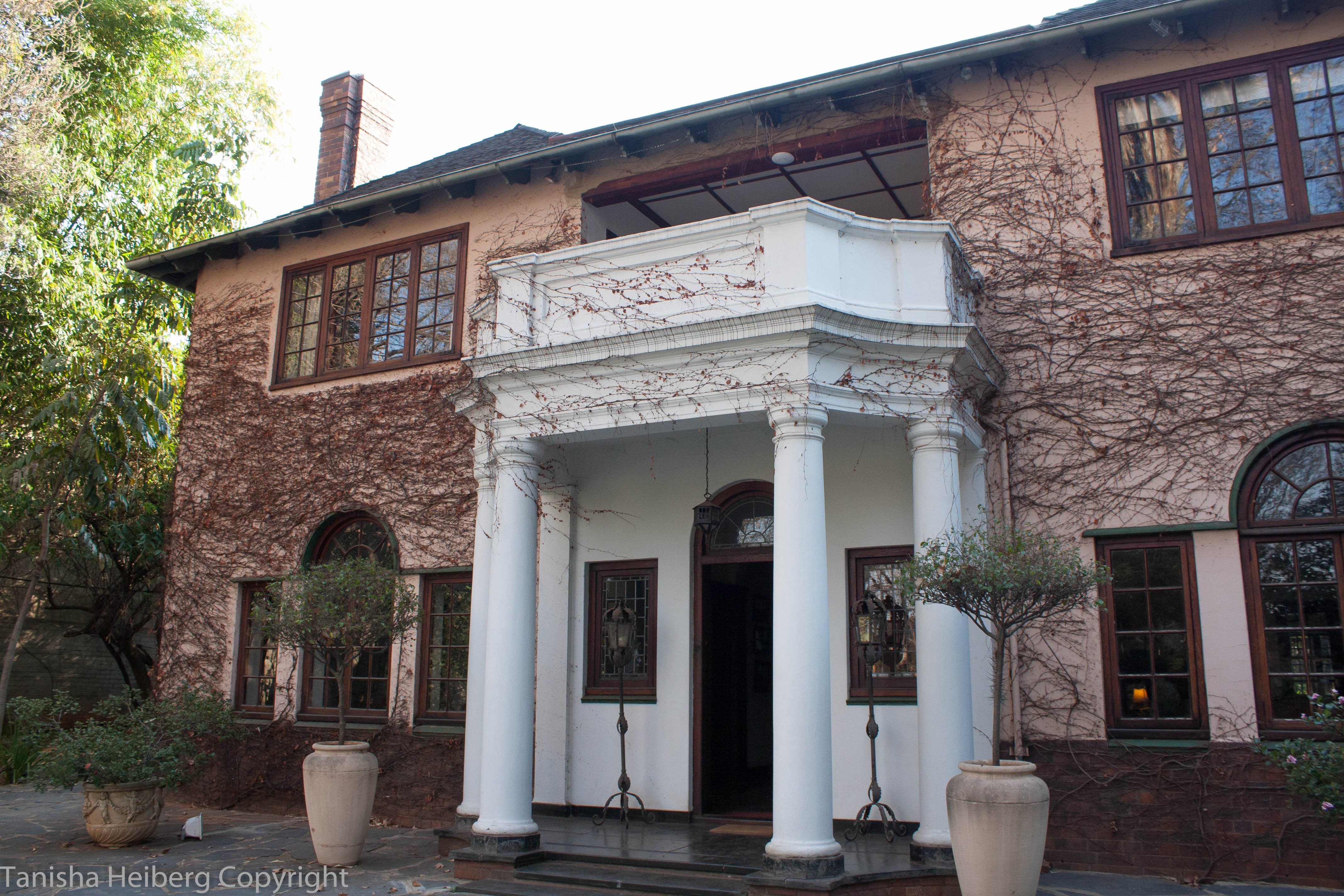
The Foxwood House built in 1924 in Houghton. Photo: Tanisha Heiberg
The Iconic 54-story cylindrical tower has become an eerie spot for a number of suicides. The once luxurious high-rise fell into disrepair and became a base for Joburg’s notorious gangs in the late 1980s before it was abandoned. Now the ghosts have joined its inhabitance with several of them being spotted in the building reliving their last moments.

Ponte Towers looking over Johannesburg’s skyline. Photo: Geoffrey Hancock (Ponte City Uploaded by Yarl) via Wikimedia Commons
In a white Victorian dress Lady Cullinan can still be seen lurking around the stately home with the sound of someone climbing the stairs, despite the staircase being removed many years ago. Sir Thomas and Lady Annie Cullinan bought the View Mansion for £1,250 in 1896, which is now a museum and a business venue. Many other stories are also hidden beneath creaky floor boards and secret passageways in Joburg’s historic homes.
South Africa’s most wanted bank robbers went down fighting when the infamous Stander Gang consisting of Andre Charles Stander (37), Patrick Lee McCall (34) and Allan Heyl (32) were wanted by police in the1980s. The ghost of McCall is said to lurk at the place of his death that came after a tip-off led police to their Sixth Avenue, Houghton safe-house. McCall met his bloody end after refusing to surrender resulting in a gun battle in the streets of the leafy suburb. Police finally threw grenades into the house and stormed in only to find McCall lying naked and dead in the hall.

One of the Stander Gang hide-outs during the 1980s where a gunfire battle that resulted in the death of Patrick Lee McCall. Photo: Tanisha Heiberg
A clip from the 2003 Movie Stander starring Thomas Jane as Andre Stander and Dexter Fletcher as Lee McCall.
Howling and disembodied footsteps from mysteriously murdered socialite Bubbles Schroeder can be heard walking around the Aurora building. The party girl’s body was found with her mouth stuffed with clay in August 1949, in what was a blue gum plantation near Wanderers Sports Club. The good time girl’s murderer was never found with many different theories surrounding the fateful night helping to further the Schroeder ghosts anguish.
The Goch family home, built in 1904, has seen more than one person meet their untimely end. A ghost of a grief stricken mother thought to be Jane Goch has been seen walking up and down the stairs soothing her child that died. The unfriendly appertshion of James Goch has also occasionally been seen, but he doesn’t take kindly to visitors. The Goch family are not the only souls lurking at the restaurant. The kitchen doors can be seen swinging open and closed as a murdered kitchen staff member walks in and out of the kitchen.

The Mike’s Kitchen in Parktown is a national heritage site that was originally built by James Goch, a photographer in early Johannesburg. The house was designed by JB Nicholson and has survived by being a hotel in the 1930s. Photo: Tanisha Heiberg
Many souls have passed through the iron gates since it was built in 1882 but some have never left. As a prison and military defense post it saw many political prisoners being incarcerated at the Fort including Nelson Mandela, Mahatma Gandhi, Walter Sisulu, and Ruth First. Among the many souls that haven’t found their rest is Daisy De Melker’s ghost who haunts the Women’s Jail. Another is a blonde Afrikaans nurse with maroon epaulets from the old Florence Nightingale Nursing Home who still roams the building at the corner of Constitution Hill.

Inside the prison at Constitutional Hill. Photo: Valerie Robinson
Created in1888 it offers a glimpse of Joburgs past including unsung heroes, resisters, concentration camp survivors and victims of the dynamite explosions. A 24 year old victim of suicide named Chow Kwai engraved a letter of apology on his tombstone apologizing for unknowingly registering under a new law aimed at restricting the movements of Indians and Chinese. After he realized what he had done he set himself alight in 1907.
Mother Adéle, a French nun, has been seen at the old Kensington Sanatorium. She is thought to be a passed inhabitant of the building originally built in 1897.
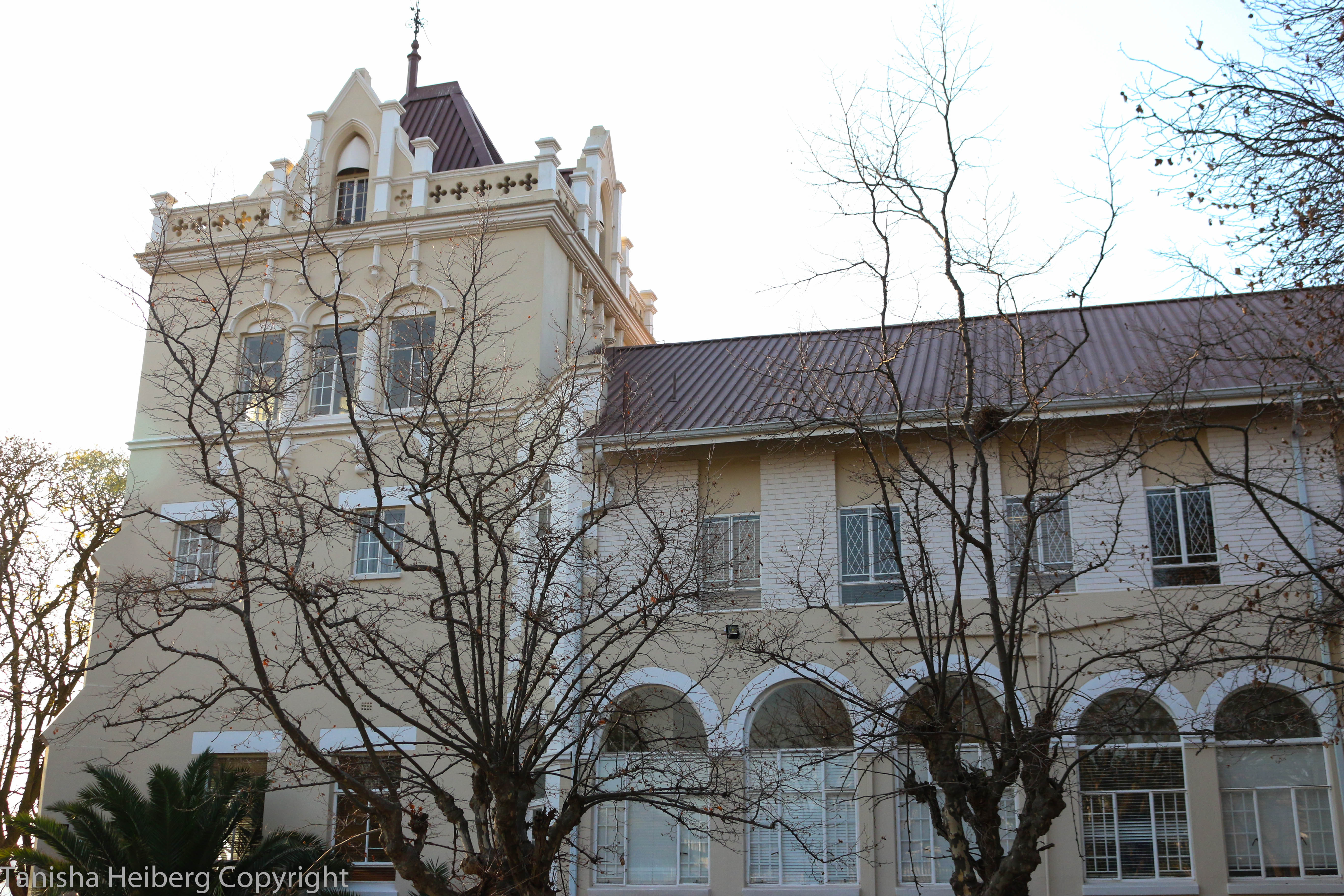
The old Kengsington Sanatorium that was once home to nuns is now a Life Clinic. Photo: Tanisha Heiberg
A headless women known as the “Afkop Vrou” has been seen in the schools Payne Hall holding her head. The legend has it that the women committed suicide after the death of her husband during World War I.
A ghost known as Mr Chips was a worker at the potato sheds in Newton who was killed by a falling sack of potatoes. He now is said to haunt Museum Africa’s costume collection section and is heard ruffling the clothes and rearranging the shelves. The sheds which were originally built in 1912 were part of the original Indian market. The market relocated to a larger premise in City Deep in 1974.
The burnt remains are not the only things left from the old Post Office building, that was built in 1897 as the tallest building in town. A dark apparition has been seen in the underground tunnels that link the Post Office and Park Station. The building has been abandoned, except for its ghostly visitors, since 1996 with many of its fittings being stripped and stolen leaving behind only its skeleton.

The remains of the once towering Post Office on Rissik Street built in 1897 by President Paul Kruger’s architect, Sytze Wierda. Photo: Tanisha Heiberg
The dismembered body of Mrs Catherine Burch haunts the watery grave were her decomposing head was found by two boys fishing at Zoo Lake in 1964. This was the last puzzle piece needed to help identify the remains already found in Boksburg Lake and Wemmer Pan. The alleged perpetrator was her husband Ronald Burch who electrocuted himself in front of police upon his discovery. The cause of death however still remains “unascertained” leaving an uneasy spirit lurking at the shore of the Lake.

The banks of Zoo Lake in Johannesburg were the head of Mrs Catherine Burch was discovered. Photo: The original uploader was Albinfo at German Wikipedia [GFDL (http://www.gnu.org/copyleft/fdl.html) or CC-BY-SA-3.0 (http://creativecommons.org/licenses/by-sa/3.0/)], via Wikimedia Commons
If that’s not enough ghostly activity on the outskirts of Joburg are many other ghoulish destinations including the abandoned Kempton Park Hospital that closed its doors the day after Christmas in 1997, without any explanation. The mysterious circumstances around its sudden close have given to the rise of many stories about its ghostly activity. The setting including no electricity, empty rooms, confidential patient files on the floor and broken equipment and ceilings.
A group of ghost hunters posted footage of their experiences whilst walking around the abandoned hospital at night.
Joburgers are serious about going green, it’s not just the latest fad. It’s an alternative hipster lifestyle that separates the the cool peeps from the (global) warmers. It’s safe to say Joburg is not just a pretty city, its an environmentally sensitive zone. And green is definitely the new black in the city of gold. Its going greener everyday and most of the city’s inhabitants embracing global cooling in very cool ways.
Many cool peeps in Jozi wear vintage or second hand clothing. Thrift markets are popping up everywhere and Joburgers love them because they are affordable and trendy. Thrifting allows styles to be shared and limits to be broken. At such affordable prices, why not.
Shopping malls are getting greener and greener, one such space is 27Boxes. This mall is made of shipping containers, it has an edgy and sleek look that will make any shopper happy to spend money there.

SHOPPING THE GREEN WAY: Jozi shoppers, enjoy shopping the environmentally friendly way. Photo: Michelle Gumede
Reusable shopping bags can be seen hanging off the shoulders of the trendiest peeps in Joburg, from celebrities to ordinary Witsies. These bags are fashionable and eco friendly- made from recycled materials.

GEORGEOUS RUBBISH: Trendy shopping bags made from recyclable materials are hot in Jozi. Photo: Michelle Gumede
Earth friendly body products are the “in” thing for the ladies of Joburg. The Africology range of beauty products is popular because not only is it cheap but they use natural ingredients to make their lathering body creams and scrubs. Having started their company in Johannesburg, the brand can now be found in hotels and spas across the world.
Most peeps in Joburg enjoy eating healthy because ‘green’ food is no longer rabbit food. Restaurants like Kauai are creating tasty and trendy meals for the everyday person. They have awesome smoothies made from “super foods’ which are healthy fruits and veggies that give you a boost when you need it.
Everything is going digital! The postal office is becoming an endangered species because Jozi is going digital. Even students get their fees statements online, people are shopping online, even cabs like Uber are using the digital space to do business.
In a bid to reduce paper usage, internet in Johannesburg has gone viral! Everyone uses internet, for EVERYTHING from online shopping to online school fees statements. According to the City of Joburg, internet usage has trebbled to over 12 million since the year 2000. Nine of the 12 major internet service providers listed Internet Service Providers Association by are based right here in Jozi.

Even our money in Joburg is going green

MONEY, MONEY, MONEY: Our banks are going green. Graphic: Michelle Gumede
Banks like Nedbank are committed to climate change through their Corporate Social Investment programs. As a a signatory to the Carbon Disclosure Project, Nedbank received an A-minus rating for transparency and performance. This bank is leading in sustainable business practices as their policy is strongly focused on climate change issues and sustainable banking.
51% of Jozi buildings in the commercial sector are expected to be going green by the end of 2015 according to the McGraw and Hills World. There are long term financial benefits to going green for corporate companies including increased rental rates and asset value, reduced risk of depreciation, and higher tenant attraction and retention rates. The Green Building Council South Africa uses a green star rating system to determine how environmentally friendly buildings are built and operated.
The WWF Building in Braamfontein is one of the most cutting edge green buildings in Jozi, they have their own water purification system, light sensitive blinds and the building itself is made up of reused material.
https://www.youtube.com/watch?v=XIkCYBCZIIY&feature=youtu.be
In an initiative to reduce carbon emmissions, the City of Joburg has embarked on a campaign to promote cycling in the city. Johannesburg Mayor Parks Tau launched Cycle week in March to demonstrate the city’s commitment to cycling.
Designated cycle lanes have been set up to allow for cyclists to travel safely. Cyling lanes are patrolled and monitored by a patrol unit which is set up by the Metro Police. 31 people have been fined for parking in the cycle lanes while six cars have been impounded. Other forms of public transport like the Gautrain and the Rea vaya rapid bus system contribute to lower carbon emissions in the city.

CYCLING IN THE CITY: Joburgers love cycling and our Mayor Parks Tau agrees. Photo: Michelle Gumede
Johannesburg is an arbor city which means that majority of the trees found in the city are planted. If there were no humans were settled here then there would literally be no trees in this semi arid space. Arbor week is celebrated from 1- 7 September every year.

EVER GREEN CITY: Luscious plants cover every corner of Johannesburg. Photo: Michelle Gumede
Eco friendly vehicles can be spotted all over Johannesburg. These cars emit less harmful fumes into the environment and have a positive
The Nissan Leaf, the Toyota Prius and the Porche Panamera S e-Hybrid are some of the popular environmentally friendly cars around. The Nissan Leaf for instance runs on electricity and its laminated lithium ion batteries can be charged at home or at any other electrical station. It has zero emissions and a low internal combustion engine allowing it to reach high speeds. The Eco mobility world festival is currently happening in Johannesburg until the end of the month.

ECO DRIVING: Earth friendly cars can be spotted across the city. Photo: Provided
Energy saving measures are business as usual as retailers like Woolworths. By using Energy efficient store lighting, natural gas refrigeration and solar power theyre business model is built around the concept of being green. Their farming for the future initiative is a campaign to save water and have less chemical runoff through their farms. Fabric suppliers also adhere to high standards of sustainability when it comes to dyes, materials and chemicals.

RESPONSIBLE BUSINESSES: Sustainability is a large part of most businesses in Jozi. Photo: Michelle Gumede
Schools in Johannesburg are going green by planting veggie gardens. Today’s primary school students, like those of Sunward Park use the digital medium to interact with learning material. saving paper saving the trees!!

GREEN KIDS: Vegetable gardens can be spotted at many Joburg schools. Children in Jozi are enthusiastic about saving our planet. Photo: Michelle Gumede
Is big business in Jozi for both the rich and the homeless. This trend is one that helps the homeless in Jozi make ends meet while businesses get to enjoy the long term benefits of responsible recycling.

SMART CITY DWELLERS: Recycling helps homeless people make extra money in Joburg. Photo: Michelle Gumede

RECYCLE, REDUCE, REUSE: Joburgers dispose dangerous batteries in safe and environmentally friendly ways. Local supermarkets put out these boxes to assist communal recycling. Photo: Michelle Gumede
Residential spaces like Alexandra township have taken to installing solar geysers in their homes. This has resulted in lower electricity bills and of course a greener city.

GREEN HOUSEHOLDS: Many homes in the city supplement their electricity supply with solar power. Photo: Michelle Gumede
The city has dedicated a whole department to oversee the 20 000 hectres of green open spaces that hosts over 2000 recreational parks, cemeteries and botanical gardens.
Currently, the Zoo has 326 species consisting of 2 096 specimens housed within 54ha area. The collection consist of 20 Amphibia (Frogs), 5 Arachnida (Spiders), 128 Aves (Birds), 47 Reptilia (Reptiles), 25 Osteichthyes (Pisces- Fish) and 101 Mammalia (Mammals).parks. this includes botanical gardens, the city zoo and cemetaries.

GREEN PUBLIC SPACES: Johannesburg has a variety of places like the Johannesburg Zoo, where people of all ages can hangout and spend time close to nature. photo: Provided
The way Joburgers are so serious about going green, even the financial hub of Africa, Sandton City, is shutting down for the entire duration of October to cut down emissions. The EcoMobility World festival and exhibition is an initiative that aims to close down all roads. Only public transport, cyclists and pedestrians are allowed to use the streets.

ECO MOBILITY IN THE CITY: The streets of Sandton, the economic hub of Jozi, will be shut down in October. In a bid to cut down harmful emissions caused by heavy traffic. Photo: Provided
Woolworths Urban fashion store RE: has mannequins that are made from recycled materials. Now if that is not eco friendly then, what is?

EARTH FRIENDLY FASHION: Looking good and taking care of the environment are not mutually exclusive concepts in Johannesburg. Photo: Provided
Enough talk about green talk, Joburgers LOVE a bit of color!

Johannesburg has often been a place of conundrums; apartheid acts as a beginning and an end. And literature which is often an art that connects the unsaid with the truth, acts like a mirror which reveals a society to itself. We look at 15 Black authors who have left their imprint on the city.
Many authors in South Africa often express the things people are afraid to say, taking to writing books, poetry and plays in the midst of the political confusion and social instability. Some of these authors have given way to the hip, misunderstood, radical and frustrated authors of today.
As a microcosm of South African society, Johannesburg is a city which typifies the contradictions of the country; on one hand we have the Houghtons and the Gautrains, and on the other, Soweto and Alexandra.
We even have streets named after Miriam Makeba and Louis Botha. Sometimes Justin Bieber comes to visit, on other days Jill Scott.
We take a look at 15 important black writers to influence the city of Johannesburg.
Some are alive and some long gone, some are newly controversial and some are long standing celebrities, but each one has left an imprint on the metropolitan hub of social transformation and the beating heart of South Africa, 20 years still in transition.

BOTSWANA COME TO JHB: Bessie Head as young woman. Photo: Katleho Sekhotho
Bessie Amelia Head was born on the 6th of July 1937 in Pietermaritzburg, although she is is usually considered Botswana’s most influential writer.
According to Remembered, Head’s mother was white and her father was black. She was raised by foster parents after her mother gave birth to her in an asylum, and then taken in by the Anglican mission orphanage.
In later years she trained as a primary school teacher, but in 1959 Head decided to pursue a career in journalism.
She wrote short stories for the Johannesburg Golden City Post, which was a weekly supplement and sister publication to the then famous Drum magazine.
When she moved to Johannesburg to write from Drum, her work began to precede her as reputable writer.

TLALI ON MY WALL: Miriam Tlali is the first black woman in South Africa to publish a novel. Photo: Katleho Sekhotho
The first black woman in South Africa to publish a novel was Miriam Tlali.
She was also one of the first authors to write about Soweto. Tlali studied at the University of the Witwatersrand in Johannesburg until it was subsequently closed to Black people during apartheid.
Tlali then left to study in Lesotho but was unable to continue with her studies because of a lack of funds.
She then became an office clerk and wrote her first novel Muriel at Metropolitan in 1979. Her subsequent books include Amandla(1980), Mihloti (1984), and Footprints in the Quag (1989).
She was honoured in this year’s 21 Icons. Here is her story: Miriam Tlali

Prof Njabulo Ndebele reflects on his achievements during his inauguration as the new Chancellor – Sanlam Auditorium on Kingsway Campus on Friday, 16 November 2012.
Ndebele is currently the Chancellor of the University of Johannesburg (UJ) and a member of the English Academy of South Africa.
Author of The Cry of Winnie Mandela, in 2004 it received critical acclaim, and his earlier publication Fools and Other Stories won Ndebele the Noma Award, which is Africa’s highest literary award for the best book published in Africa in 1984.
Ndebele has also written a number of highly influential essays on South African literature and culture, these were published in the collection Rediscovery of the Ordinary.
IMAGE: Taken during his inauguration at the University of Johannesburg.
4. Steve Biko

THE CONSCIOUS MAN: Steve Biko on the cover of Drum magazine.
This man writes what he likes. Very little introduction is necessary when discussing the father of the Black Consciousness Movement.
The movement was an instrument pivotal to the empowerment and mobilization of much of the urban black population in South Africa during in apartheid.
Much of his letters, essays and teachings have stood the test of time and newly formed parties such as the Economic Freedom Front have aligned themselves quite obviously with Biko’s words.
In Johannesburg CBD, the Steve Biko Foundation can be located at the Braamfontein Centre on Jorrisen Street. The Foundation aims to “…strengthen democracy by championing dialogue, scholarship and programmes on the relationship between identity, agency, citizenship and social action.”

EMPOWERING POETS: Rehana Mosajee (from left) Portia Monama, Katleho Sekhotho, Don Mattera (right). Photo: Mrs Rice
“Sorry is not just a word, it’s a deed.”
The renowned larger-than-life poet says, “Contrition is not bless me Father for I have sinned, contrition is I have taken from thee therefore I give thee back.”
These are Mattera’s words on addressing the issues surrounding the collective responsibility that white people have but have ignored in the new and democratic South Africa.
He says, “They suffer from forgetfulness.”
Mattera was born in the Western Native Township, now known as Westbury in Johannesburg. He grew up in Sophiatown, and according to an interview with Lucille Davie Don Mattera: poet of compassion,Mattera was during his high school years a gangster, the leader of the Vultures which was one of the most powerful gangs in Sophiatown.
He has worked as a journalist at the Sunday Times, The Weekly Mail (now the Mail & Guardian) and The Sowetan. He has trained over 260 journalists. Mattera also has a doctorate in literature.

CHIMAMANDA: The Thing Around Your Neck Photo: Katleho Sekhotho
Although reading this list one might find Adichie irrelevant to the theme, she has become by far an African novelist who has transformed the way in which young black readers in Africa have become attuned to literature.
A Nigerian author, one might argue she has entered into the sacred realms of Achebe and Okri.
Her books include Half of a Yellow Sun, Purple Hibiscus and The Thing Around Your Neck, the latter being a collection of short stories.
7. Gcina Mhlophe

Gcina Mhlophe: Never fails to entertain and never fails to get her message across. Photo: Katleho Sekhotho
Easily one of the most celebrated poets in South Africa, Mhlophe has easily become synonymous with the music of liberation and the songs of freedom.
She is known as a South African freedom fighter, activist, actor, storyteller, poet, playwright, director and author.
Well-travelled and globally celebrated, she continues to hold African idiomatic expressions and metaphors at the helm of her artistry.
She writes children’s books and remains concerned with the advancement of literature in schools. (See: Time for book fairs to “break the class divide”)
Her play, Have you seen Zandile? Was first performed at the Market Theatre in Johannesburg in 1986, with Mhlophe as Zandile.
Here is Mhlophe talking about the importance of knowing you ancestral connections.

KOPANO MATLWA Photo: Provided
Perhaps one of the youngest writers to emerge in the literary sphere as a force to be reckoned with Matlwa’s Coconut, opened the lid on the realities of being a 21stcentury black girl living in South Africa.
Her debut Coconut was succeeded by her novel Spilt Milk, the former winning her the Wole Soyinka Prize for Literary in Africa in 2008, sharing the prize with “I Do Not Come To You By Chance” by Adaobi Tricia Nwaubani and “Tenants of The House” by Wale Okediran.
Matlwa matriculated from St. Peters College in Johannesburg with distinctions in 2003.
9. Peter Abrahams
Once a sailor Abrahams was born to an Ethopian father and a Coloured mother, under the apartheid regime his mother was in South Africa considered a ‘Kleurling’. He was born in Vrededorp, a suburb in Johannesburg but later left South Africa in 1939.
His novel Mine Boy, published in 1946, remains relevant and timeless. Mine Boy was one of Abraham’s first works to bring him critical attention.
The novel was turned into a musical in 2014, in celebration of 20 years of democracy. The musical was showcased at the Wushwini Arts and heritage centre in the KwaZulu-Natal province.

Es’kia Mphahlele Photo: Katleho Sekhotho
Mphahlele was a South African writer, teacher, artist and activist. He was born Ezekiel Mphahlele but would later change his name to Es’kia in 1977.
He died at the age of 88 from natural causes. He was the first black professor at Wits and founded its African Literature Department.
This year Wits University will hold The Es’kia Mphahlele Postgraduate Colloquium and Arts Forum. It is a bi-annual event initiated in tribute to renowned writer and intellectual, Es’kia Mphahlele, who had a life-long interest in the training and mentoring of emerging artists and scholars.

A LONG WALK: Mandela’s legacy will undoubtedly live for generations to come. Photo: Katleho Sekhotho
Perhaps Africa’s biggest icon, Mandela name is synonymous with the liberation themes that vibrate

MANDELA BRIDGE: The Nelson Mandela bridge in the night time. This photo was taken by renowned cinematographer Ofentse Mwase
throughout South Africa then and now.
While his many accolades precede him, he was also sometimes an author. One of his biggest autobiographies (also literally in the sense!) was his Long Walk to Freedom . The book profiles his early life, coming of age and 27 years in prison.
Here we see the Mandela Bridge in Johannesburg. The bridge is one of the many architectural structures throughout the country that honour Madiba’s legacy.

FIERCE POETRY: Poet Lebo Mashile spoke out against Israeli apartheid at the IAW concert on this year during Israeli Apartheid Week. Photo: Michelle Gumede
She has no doubt become one of the most popular poets to date in contemporary South Africa.
A former Wits Law student, she was the daughter of exiled parents in the United States of America and returned in the mid 1990’s after the end of apartheid.
She has been actively involved in the plight against apartheid in Israel. She has performed numerously throughout the country, and recently partook in the Ruth First Memorial Lecture at Wits University, which was ablaze with political and social agenda that aimed to criticise racial dynamics within this democratic nation.

“Thank you Tseliso Monaheng for your amazing photographer’s eye.” – Panashe Chigumadzi
One of the newest voices to arise in recent years, she is a self proclaimed ‘Coconut’ and hers is the plight to transform the meaning of what it is to be a young black female in a democratic South Africa. She also spoke at the Ruth First Memorial Lecture to a crowd inspired by her words.
A Wits student, she will be releasing her debut novel Sweet Medicinelater this year. She is the founder and editor for the Vanguard Magazine, a platform for young black women coming of age in post apartheid South Africa.
She is currently completing a postgraduate degree in Development Studies at Wits.
Although Ramphele has become in recent years a controversial figure, she is also a novelist.
Ramphele is a former anti-apartheid activist against, a medical doctor, an academic and a businesswoman.
She was one of several romantically involved partners linked to Steve Biko. Her latest book Passion for Freedom was published in 2013.
She was also leader of the Agang party; she has since withdrawn from politics from July 2014.
Zakes Mda was born in 1948 and has become a national signatory in the world of arts and literature.
He has written countless novels, poems and plays, many have been performed throughout the country on many stages, including the Market Theatre in Johannesburg, Newtown. He has won major South African and British literary awards for his novels and plays, and is currently a Patron of the Etisalat Prize for Literature.
He has also been awarded the NAACP Image Award for Outstanding Literary Work.
September 24 marks national Heritage Day in South Africa and braaing is a big part of our national heritage. Some people have braais at home but others prefer more social settings. Parks are awesome for this purpose and Johannesburg has a variety of cool spots for friends and family to enjoy.
1) Zoo lake
Located opposite the Johannesburg zoo on Jan Smuts avenue, this park is ideal for bringing the whole family out for a braai. It is equipped with braai stands, basketball courts for the ballers, jungle gyms for the kids and rowing boats for the lovers. Zoo lake is one of Johannesburg’s most treasured braai locations. AND ITS FREE

FUN FILLED ENTERTAINMENT: Zoo Lake is conveniently located opposite the zoo for a fun filled day for the whole family. Photo: Provided
2)Thokoza Park
This 4.5 hectare park is popular among residents of Soweto. The Moroka dam flows right through the park and a variety of bird life can be found there. Thokoza Park is the preferred location for hosting jazz concerts in the township and has a big screen television in the middle of the park for your viewing pleasure. For your convenience, you can take a Rea Vaya bus that will drop you off right there.

SUNNY SOWETO: Thokoza Park is popular among Soweto residents. Photo: Provided.
3) Innes Free
Nestled neatly in the northern suburbs of Johannesburg, Innes Free lies between the concrete jungle of Sandton and the township of Alexandra. The park offers two dams, serene green lawns and shady trees- perfect for braaiing any day. The park has played host to some of Johannesburg’s biggest concerts and shows. Remember the Major League gardens?

HIDDEN GEM: Innes Free park is an awesome getaway from the hustle and bustle of the city. Photo: Provided
4) Dorothy Nyembe Park
Named after a popular struggle icon, this 26-hectare park can be found in Dobsonville, Soweto. Dorothy Nyembe park is equipped with walking trails, sports facilities and a games area where people can enjoy a game of chess or morabaraba. It has a wide range of bird life owing to its natural wetland found there. Braaiing at Dorothy Nyembe can be done any day as its open seven days a week.

CHILL ZONE: Dorothy Nyembe Park is popular among the youth in Dobsonville and surrounding areas. Photo: Provided
5) Johannesburg Botanical Gardens & Emmarentia Dam
This park mimics what you would imagine the garden of Eden to look like. Spread over 81 hectares, this space is ideal for braaiing. The park is a kaleidoscope of flowers and plants in its many gardens named the Shakespeare Garden, the Rose Garden, the Herb Garden and a Hedge Demonstration Garden. The botanical gardens are a famous location for taking wedding pictures but also make a great spot for hanging out, picnicking and braaiing.

SCENIC BEAUTY: The Botanical gardens are a relaxing braai spot for friends and family. Photo: Provided
Make sure to pack your charcoal, camp chairs and cooler boxes this 24 September. The options of where to braai in Johannesburg are endless, so pop into anyone of the above listed parks this Heritage Day and you wont be disappointed.
Johannesburg as we know it today began in 1886 when gold was found on the Witwatersrand causing people to flood to the area. Some buildings from early beginnings of the city still stand and tell a small part of the 129 year old city’s history .
Uber Hour, an initiative by Project W, is a new plan to help Wits university students get to Bree and Noord taxi ranks safely after school.
Wits’ Project W have created an initiative to take students from the Wits campus to Bree and Noord taxi ranks in Johannesburg CBD at the end of each day.
This project, which kicked off yesterday, aims to influence Wits management to implement the Uber Hour across campus to get students safely to their respective taxi ranks, said SRC transformation officer Thami Pooe.
Uber is an international transportation networking company that operates by connecting commuters to drivers through a cellphone app.
Presently Uber are sponsoring this service by providing ride shares with the Uber Van which will pick up students at the Wits main campus bus stop. However, Pooe could not offer the specifics of how long Uber was willing to provide the service.
Pooe said Project W was looking into a way to make the ride service sustainable. He said this could work in two ways, either students pay a monthly flat rate or a small fee for every trip. Pooe said he hopes that Wits will subsidise the service, keeping costs low for students.
Pooe said a transport service to Bree and Noord have been needed and the “SRC have been promising [it] for years, and it’s not happening”. He said the university needed empirical evidence that such a transport service was in demand, and he hopes Uber Hour will prove this.

Pooe highlighted that many students walk from school to taxi ranks and get mugged on the way. The reason for using Uber as a service is also a logistically viable option, having a bus travel to the taxi ranks can also be a “security hazard”.
Pooe said Project W has been conducting surveys since 2013, with the aim of getting a sense of just how many students have been mugged while walking to and from the taxi ranks to school. “We want to give that to the university,” said Pooe.
Related articles: Taxi wars come to Wits
Zakhele Ndlela*,a part-time Wits student and business owner, began living on the streets of Johannesburg after being evicted from his building.
Johannesburg took root in a gold rush and many glittering opportunities – real or imagined – remain in its bustling streets. Going home a failure is not an option – you have to make it.
The ideal Johannesburg is appealing but the reality of life in the city is not always what it is made out to be. For 38-year-old Zakhele Ndlela* living on the streets while studying part-time at Wits is his reality.

MAKING A NEW LIFE: Making it in Joburg isn’t easy but being homeless doesn’t mean giving up on your dreams. Photo: Samantha Camara
Ndlela left his hometown in KwaMashu, KwaZulu-Natal for Johannesburg in 2006. After a year of film school he ventured out with some partners and set up a business. Two business attempts and failures later Ndlela decided to go “solo”, starting his own media company in 2010 while renting a flat in Jeppestown.
“The flats are not looked after, they are very dirty, [and] sometimes there is no electricity,” Ndlela said. After six months of people complaining, Ndlela realised the building had been hijacked and they were paying the wrong person. “Most of the people that own these things have guns, if you don’t pay you go out. Sometimes people are scared of them, you don’t have support,” Ndlela said.
Eventually, the owner of the building returned in 2011 and used Red Ant Security and Eviction services, often called “The Red Ants” because of the red overalls and helmets they wear, to evict everybody in the building. Ndlela lost everything he owned when he was evicted from his flat. He only had the clothes he was wearing.
“And worse, that day, the rain came … there is nothing that you can take there. You just have to go somewhere and hustle,” said Ndlela.
Ndlela then went to stay in Park Station where he slept outside for 18 months before moving to a Johannesburg street where he still is today.
According to Ndlela, people on the street stay there because “it is cheaper than paying rent”.
Park Station has facilities where people can pay R10 and bath before going about their daily routine. “Up until you feel you have made enough money then you can start looking for your own place but then most people, they haven’t,” Ndlela said.
Many people on the street choose to stay there instead of going to shelters because shelters are over-crowded, strict and have a lot of crime.
“You can’t go to a place where they steal your stuff,” he said.
“It’s about protecting me, I protect myself, [and] I don’t want people to know me or know about me. This is what I do here. It’s my hustle and I need to do my hustling until I’m ok, that’s how things are outside there,” Ndlela said.
The building that Ndlela was evicted from has now been revamped and became part of the popular Maboneng District in the city.
Despite his current circumstances, Ndlela continues to work and run his media company, which runs two websites. He uses free Wi-Fi around the city to run his company while writing episodes for TV programme Isibaya and studying journalism part time at Wits.
*Name has been changed at his request.
Unlike any other shopping centre, 27 Boxes, made entirely from shipping containers, opened last week in Melville, Johannesburg. The “mini mall” as some residents call it, has established itself as a space for smaller businesses that specialise in crafts, boutique stores and unique food outlets. The development while supported by some residents, faced resistance from several others.
It is unlike any other shopping centre you have seen. In what used to be a hundred-year-old park, 80 shipping containers now stand three storeys tall. Melville’s latest shopping development, 27 Boxes, right around the corner from the famous 7th Street, opened last week and has established itself as a family-friendly, crafty space.
Developer of the centre, Arthur Blake, is also the managing developer of Citiq, a property management company. He said he decided to use the vacant land to draw people into Melville, a suburb he described as “arty”.
Some residents were very unhappy about the development and raised concerns such as crime, litter and noise, while others were enthusiastic and happy about the increased business in the area.
[huge_it_video_player id=”1″]

Jozi Skateboarders will be out at the Maboneng indoor skatepark to celebrate Go Skateboarding Day. Photo: provided
One Love Skate Expo will be celebrating the 11th Annual Go Skateboarding Day (GSD) on June 21 at the Maboneng indoor skate park.
“We’re expecting a diverse crowd of young and old skaters who will be showing off their hip tricks in skating and long boarding,” said One Love Skate Expo founder, Quincy Braveman Moyo.
This year is the first time that One Love Skate Expo will celebrate GSD in its own turf at the Maboneng skate Park on 11 Staib Street. The skate park is equipped with long boards and protective gear.
The One Love Skate Expo initiative facilitates skating in the inner city as an alternative form of recreation. One Love is “trying to bridge the gap between those who can skate and those who are interested in learning.” Said Moyo, so amateurs are more than welcome.
Go Skateboarding Day is one of the largest gatherings of skateboarders. Founded by Steve Rodriguez in New York City in 2004, GSD has since been celebrated in major cities across the world.
In Jozi this Sunday, skateboarders will gather at 12pm at the library gardens on 55 President Street, CBD. From there, skaters will skate along a designated route that leads to the Skate Jam spot, Maboneng.
The park promises to be filled with food, music and exhilarating ‘kick flips’ and ‘arlies’. Followed by “a traditional after party to seal it” said Moyo.
The culture of skating is a growing movement in Johannesburg and “people should not be afraid to try new things” said Smash Afrika, the marketing manager of the event
“We as skaters also consider our skateboards as a means of transport.” Afrika said. Even The City of Joburg municipality has acknowledged alternative modes of transport by creating cycle lanes across the city.
The One Love Collective are also running a holiday program from June 29 where people of all ages can attend skating lessons. The holiday program will run from Monday to Thursday until 4pm daily.
It offers alternative recreation for inner city youth and serves as a platform to explore the urban use of skateboards. “We know there are a lot of kids who skate in Joburg and also want something to do in the holidays,” said Afrika.
GSD falls on Fathers Day this year and is a great opportunity for Fathers to spend quality time with their families. Parents, kids, young and old are invited to partake in both the Go Skateboarding Day celebrations and in the holiday program to learn more about skating.
Check them out on http://oneloveskateexpo.tumblr.com
A Wits student was attacked by four men in a taxi on Tuesday in what apears to be an incident of xenophobia.
“I know how xenophobic attacks feel. Yesternight, on my way home, I got into a taxi where I was assaulted, (spent the night in hospital), and robbed,” read the Facebook status of Elvis Munatswa last Wednesday.
Munatswa, a Wits PhD student, was physically attacked inside the taxi by four men including the driver. Speaking to Wits Vuvuzela, Munatswa says the attacks started after he asked the driver whether the taxi was going to Cresta, which is when driver realised Munatswa was not familiar with Johannesburg taxi routes.
After discovering that Munatswa hailed from Zimbabwe, the men started making remarks in Zulu. “They said that I was a dog and that I deserve to die,” Munatswa says.
As the three other occupants started to hit him, he realised the driver had changed his route and was no longer heading to Cresta. After driving around, the four men left him in Mayfair where he was helped by a tow truck driver. The attack left Munatswa with an injured thigh and some of his valuables including his cellphone, wallet, laptop and shoes taken from him. The tow truck driver gave him a lift to the hospital and after he was discharged, he laid a complaint at Hillbrow police station. Chairperson of the Zimbabwean Student Association, Tashinga Sakwiya says that students fear for their lives because of xenophobia. “It’s affecting our school work when we live in fear,” Sakwiya said.
In a statement on the xenophobic attacks around the country these past two weeks, Wits Vice Chancellor Prof Adam Habib said provisions would be made to ensure that students are not affected by the attacks. Habib states that there will be “…allowances for the absence, early departure, late arrival, or erratic attendance until the situation has stabilised”, for international students. He also urged students to exercise extreme caution at all times.
For any on-campus incidents, students should contact Campus Control on 011 717-4444.

Shop owners on Jeppe Street locking up their businesses in fear of xenophobic attacks in Johannesburg on April 15, 2015. Photo: Reuven Blignault
Foreign shop owners closed their businesses amid fears of xenophobic attacks in Johannesburg’s city centre today.
This comes after at least five people,including a 14-year-old boy, were killed when violence broke out in KwaZulu-Natal yesterday.
Earlier in the day police were scattered throughout the CBD in anticipation, as violence against foreign nationals threatened to spread to Johannesburg.
Many of the busy inner city shops were deserted with shutters pulled down due to threats of similar violence and looting to that of Durban’s city centre. The atmosphere of anticipation was occasionally broken by bursts of police sirens.
Some shop owners were questioning whether they should remain or leave after rumours that an attack was planned on foreign businesses.
Somali-born Amin Bama said, “If I open my shop they will take everything and then I won’t have anything to sell.”
A crowd gathered on Jeppe street and waited for the rumoured attack. Many of the foreign nationals discussed the fear of a possible pending xenophobic attack during the day and how they felt about South Africa.
Muswamba Kabemba, a Congolese informal trader, said that she was afraid to go home because the taxis are operated by South Africans.
“They will kill us like chickens,” she said.
Others such as Congolese national Theresa Kauenda blamed the government saying that they have nowhere else to go and the government is not helping them find work or a refuge.
“They are keeping us in the fire, we are living in fire.”
Many of the foreign nationals felt like they had nowhere else to go because their countries suffered from the effects of civil war and many members of their families live in South Africa.
A Zimbabwean man named Alex Ndlovu, who has lived in South Africa for 17 years said, “All my children stay here and my wife is from here.”
The violence over the past few weeks came after King Goodwill Zwelithini reportedly said that foreigners should leave South Africa last month in Pongola.
There is reportedly a heavy police presence in the area this evening after hostel dwellers stoned passing vehicles according to Eyewitness News.
Nigerian clothing shop owner Jackson Brown said he locked up his shop because this is not the first time this has happened.
“They will come with sticks and knives.”
These incidents echo those of 2008 when 60 people died during xenophobia attacks.

 We Should Be Writing podcast