For Siya, ubukhothane is about protecting a culture of identity, creativity and self-expression.
Skhothane culture is a South African youth subculture rooted in luxury brands and performance.
Siya Mbatsane, known as “Bhut Tong”, found his place in ubukhothane through dance, fashion and his family’s connection to the culture.
Social media is giving a new generation of Skhothane practitioners a bigger stage, turning dance, fashion and creativity into opportunities beyond the township.
“Woza Madala Woza” spills into an East Rand township street, competing with the rumble of passing colourful minibuses and the cheers of a growing crowd. The pavement becomes a dance floor. Bright colours flash through bold prints and polished Italian shoes. DMD Muracchini shirts and Versace prints move with the bodies wearing them as dancers size each other up.
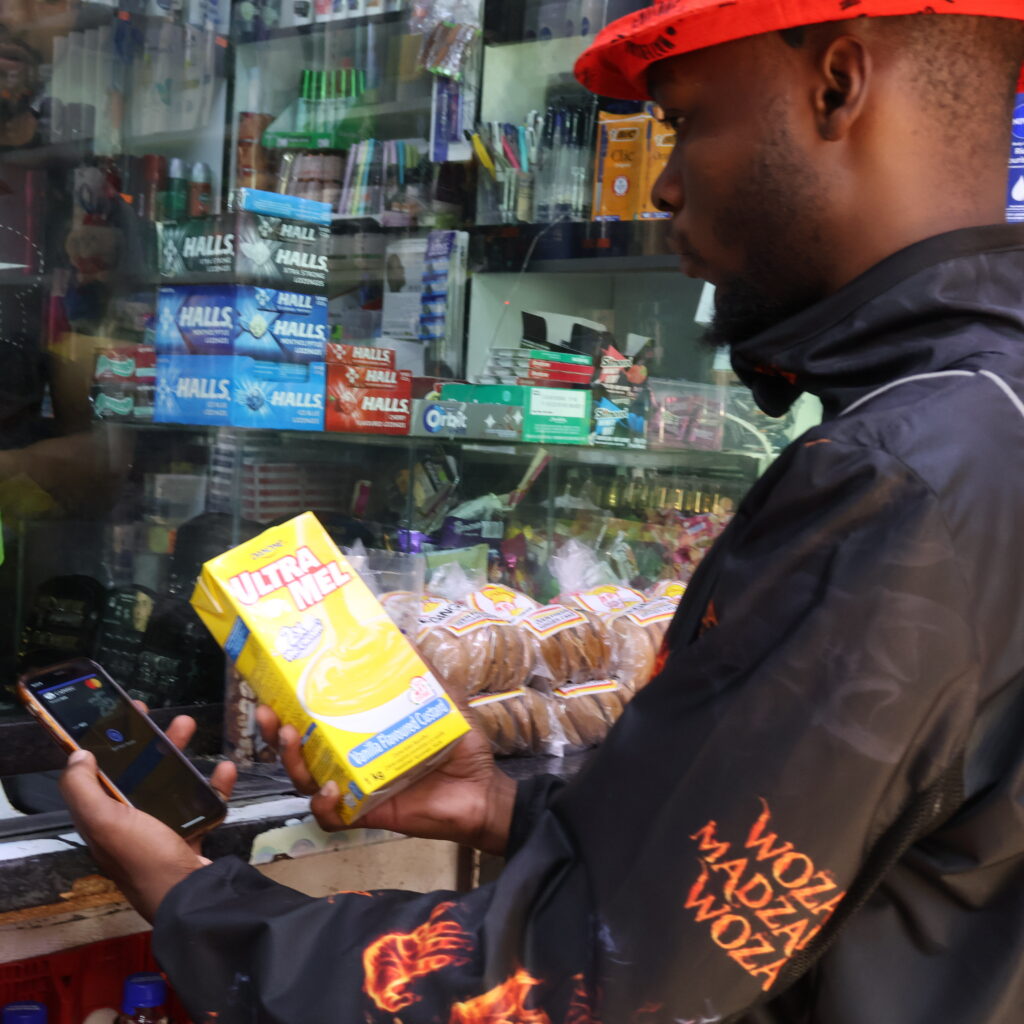
Then the dance-off begins. Feet glide across the pavement as shoulders roll and bodies bend to the rhythm. The crowd responds with cheers. An Ultra Mel bottle is passed around before thick custard is poured onto the ground, becoming part of the performance. This is ubukhothane.
For years, the subculture has been viewed through a narrow lens: expensive clothes, conspicuous spending and the destruction of luxury goods. Those images became so powerful that Skhothane culture was reduced to waste, recklessness and delinquency. But look beyond the burn and another picture emerges.
Skhothane culture is shaped by fashion, dance, music, competition and community. For practitioners, clothing is part of the performance and a way to stand apart.
For Siyabonga Mbatsane, popularly known as “Bhut Tong”, being part of ubukhothane means having the freedom to be different. He describes himself as a maximalist, drawn to what he calls “the art of dance and fashion”.
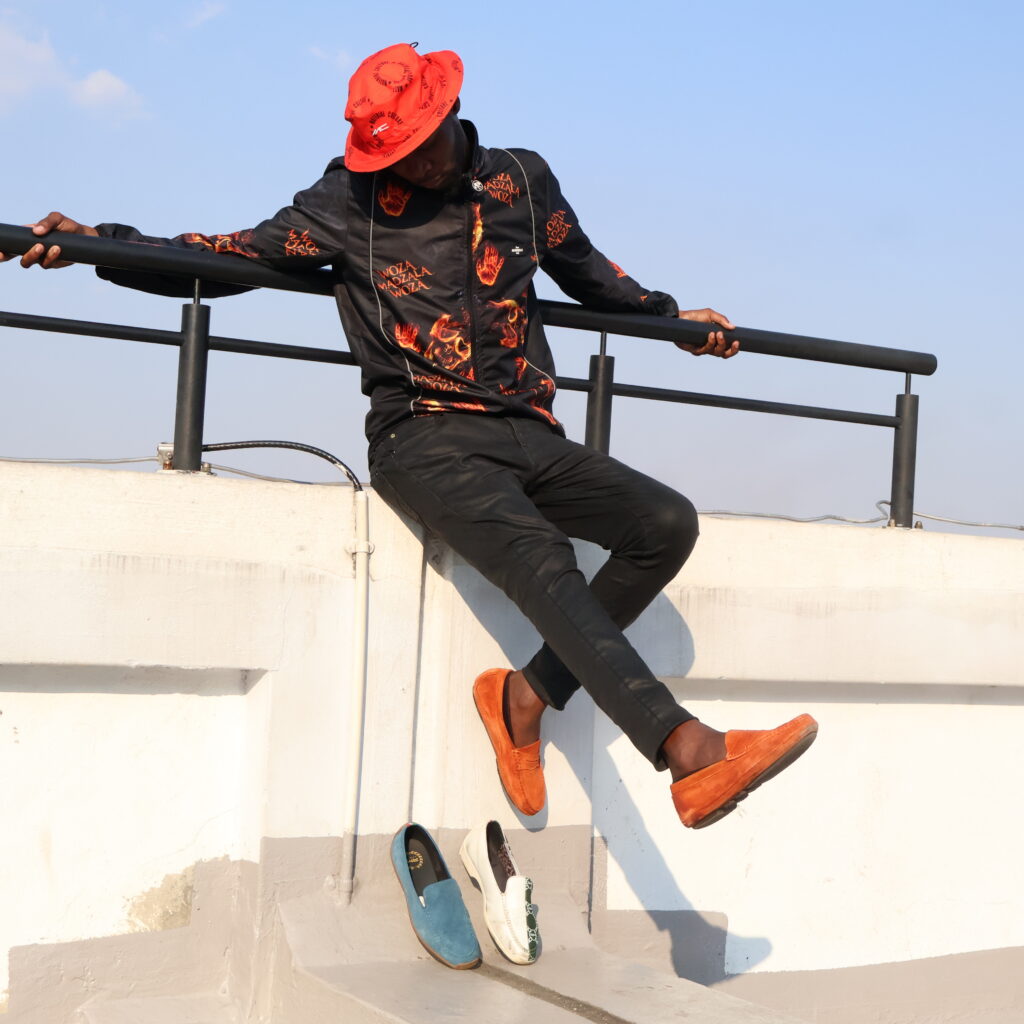
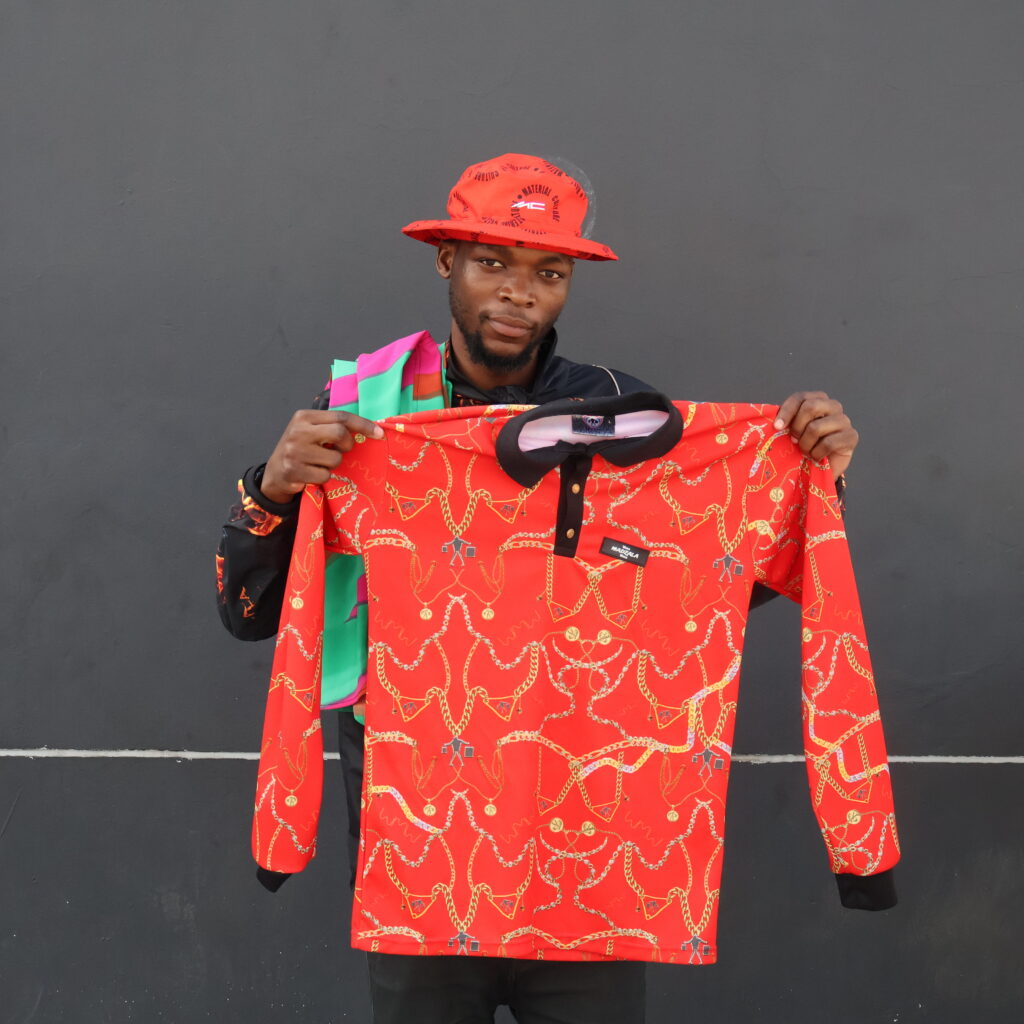
He is difficult to miss. Tall and meticulously put together, he appears almost larger than life in wax jeans, a green and pink Sfarzo shirt and a bright orange bucket hat. His outfit is loud, but he is surprisingly shy however on the dance floor, that shyness gives way to movement. His connection began after watching his uncles’ participate in the culture. Drawn to the dancing, he decided to try it himself.
Today, Mbatsane is a second-year student at the University of Johannesburg, a content creator and part-time worker who takes on odd jobs such as washing cars and gardening. His creative work has opened opportunities beyond the streets where he first encountered the culture, including a recent collaboration with Knorr Soup.
Fashion remains an important part of that expression. A typical Skhothane outfit can cost around R6,000, he says. Shirts, jeans and shoes are chosen not only for how they look, but for what they communicate. His first Skhothane items were tied to his family and his own hustle. His mother bought him one of his first pairs of Rossimoda shoes, blue leather shoes with white soles that cost R2,700. He took on odd jobs to afford one of his first outfits, an AmaKip Kip multi colour two piece from a South African streetwear brand known for its bold, colourful designs.
Building a Skhothane wardrobe was therefore not simply about having access to expensive clothes. For Siya, wearing luxury means more than the price tag. In a society where designer goods can feel inaccessible, wearing them can become a statement of confidence. He says it is about being “proud and loud” as a Black person. That desire to make a statement through appearance has a history in South Africa.
Long before the bright colours and designer labels associated with modern ubukhothane, Black South Africans used clothing to make themselves visible in societies that often sought to make them invisible. Researchers have connected modern ukukhothana to earlier sartorial cultures, including the diamond-field dandies of 1880s in Kimberley and the oswenka of Johannesburg in the 1950s.
Modern ukukhothana emerged in Gauteng’s East Rand in the mid-2000s before spreading beyond the province. For them, competition was not just about who owned the most expensive outfit. Groups and individuals challenged one another through clothing, music and dance. A dance-off could become a test of skill, while an outfit could communicate status.
And sometimes, that competition involved destruction. At some gatherings, expensive clothing, food and other goods were destroyed in front of an audience. The ability to ruin something valuable could become a display of status. Media coverage often focused on burning clothes, wasted food and money, cementing the impression of a reckless youth culture obsessed with excess. Yet research offers a more complicated picture. An ethnographic study of members of the Italian Gates Skhothane crew found that vandalising consumer goods was rare among participants, while flamboyant dress, dance and fashion remained central to their identity.
Mbatsane says the destruction associated with the culture was part of how Skhothane was practised when it first emerged, particularly at parades and events. Burning or destroying luxury items demonstrated access to things others could not afford, signalling a higher social position. But the culture has since evolved. What remains the same, he says, is “the clothes, the dance, the music, and community”.
He still practises dancing at home and with friends, preparing routines for Skhothane festivals and reunion events. But the performance no longer belongs only to township streets; social media has given it a wider audience. A dance-off can reach thousands online, while an outfit or performance can open doors to new opportunities beyond the township.
Tshepo Pitsa, known as Don Dada, was one of the culture’s more visible figures on this wider platform. He appeared in local and international media, including ELLE and the BBC, and became known for his Skhothane videos on YouTube. His crew, the Material Boys, rejected burning and tearing, focusing instead on fashion and dancing. Mbatsane is part of that digital shift too. His online visibility as a content creator has helped him secure brand collaborations. The platform has changed, but the impulse to be seen and to perform for an audience remains the same.
For a culture that has so often been defined by what outsiders saw being destroyed, Mbatsane represents another way of looking at it. His clothes are still loud. The competition still exists, and the dancing still draws attention. But the performance does not end with something being burned.
For Siya, ubukhothane is not a disappearing subculture. It is growing with the people who practise it, adapting to new spaces and finding new audiences. And when the music starts and he steps onto the pavement, the shy young man behind the bright colours gives way to the dancer.
FEATURED IMAGE: Side profile image of Skhothane Siyabonga Mbatsane. Photo: Nqobile Mtshali
“Solar Mind” innovation uses AI to detect changes affecting solar panels and improve electricity generation.
Ten university teams competed in the Tata Consultancy Services Sustainathon South Africa 2026 Grand Finale.
More than 1 200 registrations were recorded, with 65 submissions from students across more than 40 institutions.
Durban University of Technology’s, Still Lazy Tech team won the R30 000 top prize with Solar Mind, an intelligent MPPT system.
TCS Sustainathon competition winners celebrating on stage. Photo: Nqobile Mtshali
A solar system designed to maximise electricity generation, an app that detects water leaks and AI tools aimed at improving agriculture were among the solutions showcased at the Tata Consultancy Services (TCS). Sustainathon South Africa 2026 at the Radisson Blu, Sandton, on September 1.
The competition, themed “AI for Sustainable Futures”, challenged students to use technology to tackle problems linked to three United Nations Sustainable Development Goals: Good Health and Well-being, Quality Education, and Affordable and Clean Energy.
More than 1 200 registrations were recorded for this year’s competition, with 65 submissions from more than 40 institutions. Ten university teams progressed to the finale.
Tata Consultancy Services, has hosted the Sustainathon in South Africa since 2022, giving students a chance to use technology to solve problems they see around them.
This year’s R30 000 top prize went to Still Lazy Tech from Durban University of Technology (DUT) for Solar Mind, an intelligent Maximum Power Point Tracking (MPPT) system. This system helps solar panels maximise electricity generation by continuously adjusting their operating point to capture the most power available under changing conditions. The team’s AI model identifies conditions that affect panel performance, such as when a building casts a shadow over a panel during part of the day.
Sipho Mokoena, a member of Still Lazy Tech, said the team wanted to create a more affordable solution.
“A lot of these big companies, when they make these imported devices, they build them for industrial applications. No one is really building it for the South African market,” Mokoena said.
The team faced challenges while developing the project,“Funding, and university politics mainly,” said Mokoena. So now, they are looking at securing more funding, pursuing a master’s programme and eventually patenting Solar Mind.
Prototype of AI powered waste management machine created by CO Coders Eco-Pulse, students from the University of Johannesburg. Photo: Nqobile Mtshali
Langa Dube, regional director at TCS, said the company continues to support students through mentorship, technical guidance and intellectual property support after the competition.
“We did not want it to end on the stage,” Dube said.
Dube said about five or six projects are currently at advanced stages of prototyping. Technical and intellectual property support is also extended to students who want to develop their ideas further.
The other finalists presented solutions focused on healthcare, mental health, water security, agriculture, renewable energy and waste management.
South Africa’s growing illicit economy is putting everyday consumers at risk.
South Africa’s illicit economy is estimated to account for 12–15% of Gross Domestic Product.
The Consumer Goods Council South Africa’s #YourChoiceHasPower campaign is urging consumers to make informed choices.
Consumers are caught between affordability, accessibility and safety.
A gun threat against investigative journalist Govan Whittles, dangerous methanol in illegal alcohol and poison sold by street vendors are some of the scenes that stuck out in Someone Always Pays, a documentary series examining South Africa’s billion-rand illicit economy.
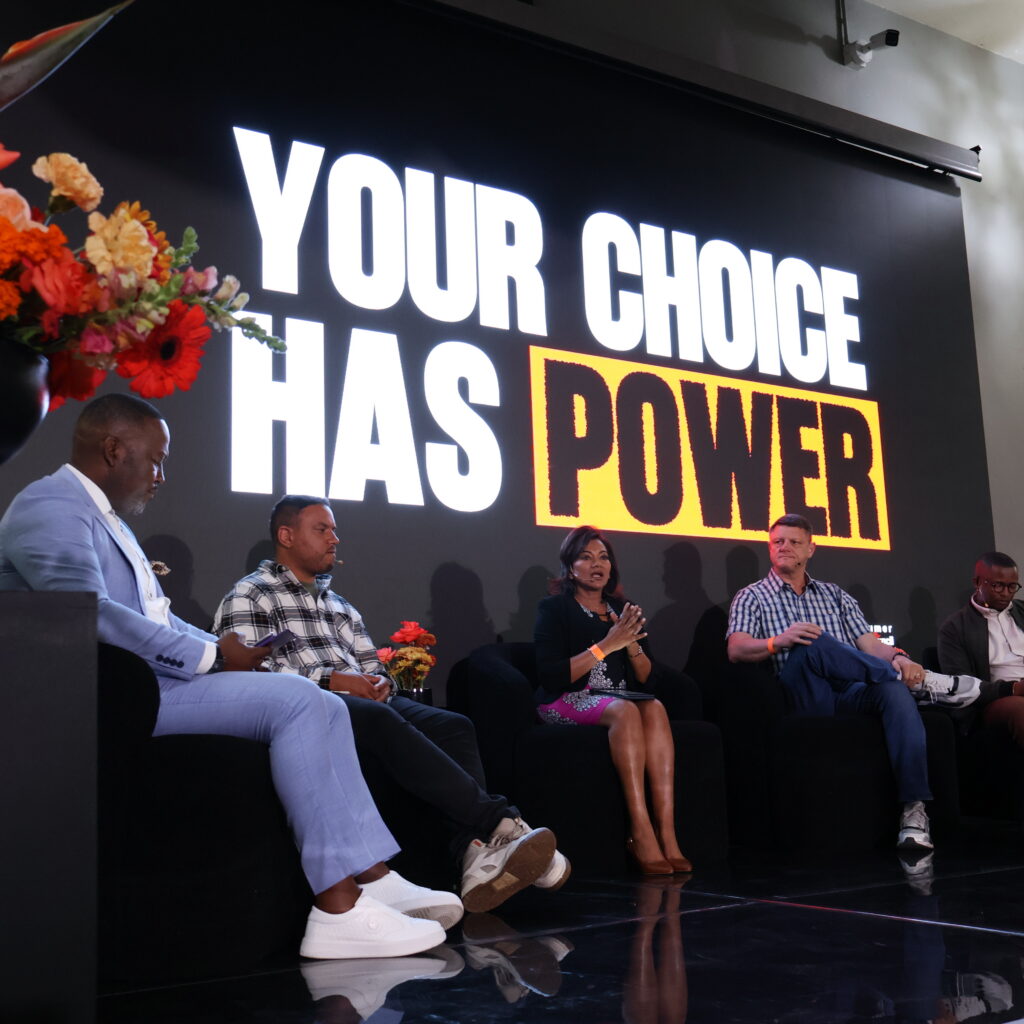
The Consumer Goods Council of South Africa (CGCSA) launched its #YourChoiceHasPower campaign alongside the documentary, with the council estimating that illicit trade accounts for between 12% and 15% of South Africa’s GDP.
Photo of panel speakers at the launch of the #YourChoiceHasPower campaign. Photo: Nqobile Mtshali
Illicit trade is usually associated with cigarettes, alcohol and counterfeit clothing, but the problem stretches much further. Food, pharmaceuticals, cosmetics, fuel and chemicals are also sold on the black market, meaning consumers don’t always know whether the products they buy are legitimate or substandard. Chief executive officer of CGCSA, Zinhle Tyikwe said reach of illicit goods is “becoming deeper and scarier.”
Economic pressure and unemployment can make cheaper illicit products attractive, creating a difficult choice between what people can afford and what is legitimate and safe. Tyikwe said, “It’s mainly unaffordability,” that keeps the market alive.
Illicit trade is not confined to poorer communities. Whittles’ team found illicit cigarettes being sold in affluent areas including Rosebank, Parkhurst and Sandton. The investigation also uncovered connections between different illicit industries and organised crime. “It’s all connected. It’s all organised crime,” Whittles said.
That interconnectedness helps explain why the cost of illicit trade extends beyond sales. Dangerous products can have consequences for ordinary people, while legitimate businesses can lose customers. Whittles said, “People pay with their lives,” and those who do not pay with their lives can pay with their livelihoods. His team encountered a shopkeeper who refused to sell illicit tobacco but struggled to attract customers because cheaper alternatives were available elsewhere.
The scale of the illicit economy creates further pressure on law enforcement. Whittles said authorities struggle to intercept and investigate every shipment, while Tyikwe said prosecution remains a problem, arguing that fines imposed on those caught selling illicit products are often insufficient to deter the trade.
The CGCSA says consumers can help disrupt this cycle by buying from legitimate outlets, being cautious when prices seem too good to be true and checking products before purchasing them. Its My CGCSA app allows consumers to scan products and access information about registered brand owners, while suspected illicit goods can be reported through the app.
FEATURED IMAGE: Cigarette’s showcased as examples of illicit goods at the launch of the #YourChoiceHasPower campaign. Photo: Nqobile Mtshali
Wits E-Hub Market Day turned the Library Lawns into a lively marketplace where students put their entrepreneurial feet first.
Wits E-Hub Market Day gives student entrepreneurs an opportunity to sell products, test ideas, and build visibility on campus,
With South Africa’s youth unemployment rate at 46.1%, more students are turning side hustles into viable income streams while still studying.
Student-led businesses like Ilanga Coils show how personal experiences are being turned into scalable ventures, supported by campus entrepreneurship spaces.
Image of crochet handbags by Eddies Craft
Decorated stalls lined at the Wits University Library Lawns as students moved between vendors selling jewellery, bags, new tech innovations, candles, henna art and sweet treats. Behind one table, third-year year Accounting Sciences student Tassy Mabuza was already close to selling out of his, Barebites, sweets from his business, Sweetplug co.
The Wits Entrepreneurship-Hub (E-hub) supports students interested in starting and growing businesses. Based at the Matrix Building on campus, the hub provides networking opportunities, pitching sessions, market days and co-working spaces for collaboration and ideation. Faith Njoko, project co-ordinater at E-Hub,says through weekly business events and entrepreneurship programmes, they help students gain practical business experience outside of the classroom. A vital bridge between academic study and the realities of running a business for many students.
Through initiatives such as the recent Market Day, students can test products, interact directly with customers and build brand visibility within the campus community.
Beyond the lively atmosphere, the event reflects a growing culture of entrepreneurship among young South Africans and students navigating a difficult economy and rising youth unemployment. According to Statistics South Africa, the country’s official unemployment rate rose to 32.9% in the first quarter of 2025, while youth unemployment among people aged 15 to 34 reached 46.1%. Against this backdrop, side hustles are becoming more than temporary trends for students. From haircare brands and food businesses to fashion and creative services, many young people are using entrepreneurship to create opportunities for themselves.
This growing entrepreneurial culture is largely solution driven, with students identifying everyday problems and developing businesses that respond to real needs within their communities.
Image of iLanga Coils Hair Products
One of the student entrepreneurs at the market, Nomusa Khambule, turned a personal struggle with natural hair into a growing business while completing her master’s degree in management specialising in entrepreneurship and new venture creation. Khambule’s Ilanga Coils was born in 2022 after she struggled to find products that worked for her own hair. Drawing from her science background, she started experimenting with ingredients and formulas before officially launching the business in 2023. “What started as solving my own problem became something much bigger once people started responding positively to the products,” she said.
Since then, the brand has expanded beyond campus markets and recently collaborated on a campaign with Absa, a milestone Khambule said validated the potential of student owned businesses. However, balancing postgraduate studies and entrepreneurship has not been easy. Khambule rejected the idea of “perfect balance”, saying that running a business while studying requires constant prioritisation. “Some days school needs more attention, and other days the business comes first,” she explained.
Despite the challenges, Khambule said physical market events remain important because customers can directly experience the products before purchasing them. “For haircare especially, people want to touch, smell and try products before buying them,” she said.
Additionally, she said that “markets help build trust and visibility.” Although Ilanga Coils is now profitable, Khambule said scaling production remains one of her biggest hurdles as she still operates from her kitchen. She hopes to eventually expand the brand into a recognised African cosmetics company.
Image of Snowflicker Studios Candles
As the market slowly began to quiet down, students packed away the last of their products after a day of sales and networking. For many of them, the businesses displayed on the library lawns are more than temporary side hustles, they mark the beginning of long-term ambitions.
FEATURED IMAGE: Image of Tassy Mabuza, founder of Sweetplug co at the E-Hub market showcase. Photo: Nqobile Mtshali
We talk about autism more than ever, but who actually gets help? In South Africa, the gap between awareness and access is leaving many behind.
Autism is more visible than ever, but many families still can’t access the support they need.
Overcrowded public schools and costly private options leave many learners with nowhere to go.
Real inclusion needs better funding, trained educators, and a system that supports autistic learners.
April marks Autism Awareness Month, a time dedicated to promoting understanding and inclusion for individuals with autism spectrum disorder (ASD). In South Africa, however, awareness has not translated into access. Despite growing public conversations around autism, many families still struggle to find affordable education and support. The gap between awareness and access is stark, particularly for working class households. A recent TimesLIVE report highlighted the harsh reality for families of children with disabilities. While some are forced to pay out of pocket for transport to distant schools, others are left with no schooling options at all. This reflects a broader systemic issue: there are simply not enough specialised institutions to meet the demand.
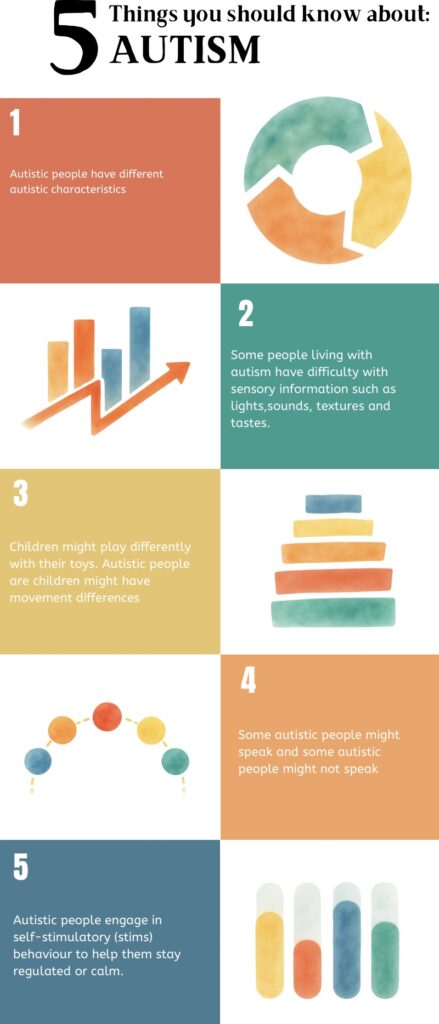
5 Things you should know about autism. Poster: Nqobile Mtshali
In Johannesburg and surrounding areas, there are fewer than 10 public schools with structured autism support, compared to a growing number of private specialised centres. This highlights a clear gap between public provision and demand. Many of these schools are oversubscribed, with waiting lists stretching for years. In contrast, despite offering more specialised autism-focused centres, the private sector remains largely inaccessible due to cost.
While the Department of Basic Education has promoted inclusive education as a solution, implementation has been slow and uneven. Mainstream schools are often under-resourced and lack the training to support neurodivergent learners. Autism advocate and National Regional Development Officer (RDO) at Autism South Africa Mary Moeketsi says the system continues to fall short. “There’s a push towards inclusive education,” she explains, “but without proper support, it doesn’t work for many autistic learners.”
The lack of access to government autism support institutions pushes families toward private institutions as a desperate solution, with fees reaching up to R15,000 per month, well beyond the reach of most South Africans. “Parents are left with very few options,” Moeketsi adds. “And even then, not all private schools provide the level of support needed.”
Beyond infrastructure, awareness itself remains uneven. Most notably in Black communities, stigma and misinformation continue to delay diagnosis and intervention. “There’s still a lot of misunderstanding around autism,” says Moeketsi. “That lack of awareness directly affects access to support.”
This is not to say solutions don’t exist as organisations like the National Autistic Society provide free resources, guidance, and advocacy tools to support individuals with autism and their families. Locally, NGOs and advocacy groups are also working to bridge the gap through community outreach and education. However, autism activists argue that meaningful change requires more than just awareness campaigns. Increased government investment, better teacher training, and expanded support services are critical to making inclusive education a reality.
Autism Awareness Month raises an important question: what does awareness mean if most South African families still cannot access basic support?
Until access improves, awareness alone risks becoming symbolic rather than transformative.
FEATURED IMAGE: Autism Awareness Month Poster: Nqobile Mtshali
Since her announcement as the Democratic Alliance’s mayoral candidate for Johannesburg, Helen Zille has dominated national headlines. In this bonus episode of We Should Be Writing podcast, hosts Lulah Mapiye and Bonolo Mokonoto dissect a media meet-and-greet with the mayoral hopeful. From her extensive political résumé to her controversial public utterance, we examine why the Democratic Alliance has chosen Hellen Zille as their candidate for the 2027 local mayoral elections. Additionally, […]