Facebook removed an image depicting a person wearing a t-shirt with the words “F*ck White People” from the Wits Vuvuzela Facebook account after a similar picture created a stir on social media.
Photo: User:Rfsjim (Image:CENSORED.JPG) [Public domain], via Wikimedia Commons
A Facebook image depicting a t-shirt reading “F*ck White People” on Wits Vuvuzela‘s Facebook account has been removed by the social media application today.
“We removed the post below because it doesn’t follow the Facebook Community Standards,” according to a Facebook notification. The account was also made briefly unavailable to Wits Vuvuzela staff members.
The post was in the form of a gallery of images that depicted students wearing t-shirts reading “F*ck White people” and “F*ck De Klerk” at a demonstration, in solidarity with a fellow student, that was held at the Great Hall Piazza yesterday.
Photo: A screen-grab of the message displayed by Facebook regarding the removal of the image from the Wits Vuvuzela Facebook account.
The protest came after third-year Mathematical Sciences, Zama Mthunzi, was reported to the South African Human Rights Commission (SAHRC) for hate speech after images of him wearing a t-shirt reading “F*ck White People” caused a stir on social media. The t-shirt was created during an artistic protest because of, amongst others, the financial exclusion of poor students and the presence of security personnel on campus.
Under the Facebook Community Standards section on hate speech, the social media application states that it removes content that directly attacks people based on their race, ethnicity, national origin, religious affiliation, sexual orientation, sex, gender identity or serious disabilities or diseases. The organisation does however state that it allows the facilitation of discussion and debate.
“People can use Facebook to challenge ideas, institutions, and practices … Sometimes people share content containing someone else’s hate speech for the purpose of raising awareness or educating others about that hate speech. When this is the case, we expect people to clearly indicate their purpose,” according to Facebook’s policy.
The image that was removed was among other images in the gallery depicting students protesting with t-shirts sprayed with “F*ck Wits”, “F*ck White Tears” and “Being Black is Sh*t.”
Starring:Leonardo DiCaprio, Tom Hardy, Domhnall Gleeson
Directed by: Alejandro González Iñárritu
Vuvu Rating: 9/10
The Revenantis set in 1823 and based on the embellished true story of the legendary trapper Hugh Glass, played by Oscar-nominated Leonardo DiCaprio, who embarks on a military-backed fur-trapping expedition led by Andrew Henry, played by Domhnall Gleeson across the American Midwest. After coming under attack by Arikara Native Americans the remaining hunters, led by Glass, set a new course to reach the safety of their base camp. Along the journey Glass faces many unimaginable struggles brought on by the harsh environment in which the 19th century frontiersmen found themselves, including enduring a savage attack from a bear. After being left for dead by trapper John Fitzgerald, played by Tom Hardy, and naive Jim Bridger, portrayed by Will Poulter, Glass is driven by family and revenge on a torturous journey through the icy, mountainous terrain of the Midwest in search of retribution.
The actor’s performances on a whole are understated and realistic owing to the cast and crew enduring the harsh conditions and rigours filming in Canada, Montana and Argentina. There is some satisfaction in knowing that when the characters look like they are freezing, the actors themselves are actually freezing out in the snow instead of pretending to shiver in front of a green screen. In one instance the warm breadth of the actor speaking actually fogs up the camera bringing the audience into the icy setting with the actors.
With all the Oscar buzz surrounding DiCaprio for the film it’s no surprise that he delivers a excellent and raw performance of a man so driven by vengeance that he plows on through all that nature can throw at him including a vicious bear attack, bone-chilly temperatures, being pursued by Native Americans and all the rest that comes with living out in the wilderness of the frontier. This comes despite having dialogue that consists of mainly groans of pain and raspy words spoken through a torn and bloody throat. His impressive performance makes one wonder if DiCaprio has come back with his own vengeance to win an Oscar for his portrayal of Glass.
Where DiCaprio’s performance elevates the film, Hardy’s portrayal of the villainous Fitzgerald doesn’t quite live up to the same high standard. His dialogue is often mumbled beneath his shabby beard and accent that bring back memories of his portrayal of Bane in the Dark Knight Rises. The character however just doesn’t seem to have enough motivation for his villainous actions and rather speaks more of a callous, egocentric hunter concerned with his own survival.
The narrative of the film is simplistic and lacks a philosophical or deeper meaning with their being not much more to the character of Glass than his will to survive driven by revenge. This is despite his pain-induced hallucinations and dreams of his family.
But what the Revenant lacks in narrative it defiantly makes up for in the form of visceral landscapes and innovative cinematography. The filming transports the audience to the wintery mountains amid vicious battle with arrows flying through the air and horses racing in the snow. The imagery of the wintery landscapes is helped by only shooting the film in natural light and gives a realistic and desolate palette to the brutal elements.
The long tracking shots in the film mirror the technique used by director Alejandro González Iñárritu in his previous film Birdman. These long unbroken shots help to heighten the pace of the action scenes particularly the bear attack and the opening scene where the audience glides through the chaos following men killing, dying, running, mounting horses and continues through the attack in a seamless single shot. These scenes have been impressively choreographed and speak not only to the skill of the film makers but also the actors. The realistic graphics in the bear attack scene are also spectacular and leave the audience feeling stunned.
The film as a whole has a silent eloquence interjected with electrifying visuals that brings the audience into the narrative. This survival/revenge story sees a man face up against death and all that nature has to offer, pull himself across mountains, snow and through a river for his family. The powerful acting along with the raw cinematic brilliance makes a film not to be missed and a tough contender for the coveted gold statue.
The #Access campaign launced by the Wits SRC has raised over R2.6-million and attracted the attention of celebrities like DJ Sbu.
Vice-Chancellor Adam Habib, Wits SRC president Nompendulo Mkatshwa and SRC members Karabo Marutha and Gloria Phasha were presented with a R2-million donation towards students fees from representatives from NedBank. The donation from the bank, forms part of the #Access campaign launched by the Wits SRC on Welcome Day that aims to raise money for students who cannot afford tertiary education.
The Wits SRC’s #Access campaign for students who cannot pay fees has raised over R2.6-million and attracted endorsements from local celebrities such as DJ Sbu.
“DJ Sbu has agreed to endorse the Access campaign … Sbu along with the SRC will be participating in his fund raising event on Sunday,” according to Wits SRC secretary general Fasiha Hassan. The details of the endorsement are still under discussion.
Hassan said that some of the proceeds from DJ Sbu’s Annual SLEF Benefit Concert will go towards the #Access campaign with the details still to be ironed out.
This comes after the Wits SRC launched the #Access fundraiser at the university’s welcome day for first-year students. The campaign aims to raise R10-million by the end February for the “missing middle”—students who don’t qualify for the National Student Financial Aid Scheme (NSFAS) but still cannot afford tuition.
“They are students who are too poor to be rich and too rich to be poor”
Hassan said the SRC is hoping to raise enough money to help at least 8 000 students with not only tuition but also necessities such as accommodation and transport.
“It’s one thing to get them into the system but it’s another to get them out successfully … we are aiming to look at this holistically,” said Hassan.
“They are students who are too poor to be rich and too rich to be poor … these are children of teachers, nurses and policemen,” said SRC president Nompendulo Mkatshwa at the welcome day.
The fundraiser includes Fill the Jar, pledges forms, donations and the proceeds gained from O-week events, such as Beer Garden, Freshers Party and the Flea Market, will go towards the humanitarian fund. “People think that O-week is about ‘party party party’, let me tell you something O-week is not about that. It’s about raising funds for students. Party with a purpose,” said Mkatshwa
Another key focus to the initiative is the corporate challenge where they hope to encourage big business to donate. At the launch R2-million was donated by Nedbank to start kick start the initiative. Mkatshwa implored not only students and parents to donate but also corporate and other professionals. “We challenge other corporate to bless us, be our ‘blessers’,” said Mkatshwa. Other corporate donation include R600 000 from Abbotts Laboratories.
“No amount of funding is enough”
Last year the Wits SRC raised R4.4-million for the One million One Month campaign to assist students who were affected by the NSFAS shortfall crisis.
In an interview on Wednesday with Wits Vuvuzela, Mkatshwa said the SRC wanted to expand access to education towards every academically qualified student.
“The Wits SRC seeks to ensure that every single academically deserving child gains access to this institution and succeeds in this institution …We need the masses of our people skilled and knowledgeable in order for us to create the type of growth that will create socioeconomic equality and justice in South Africa,” said Mkatshwa.
However, Hassan acknowledged that even if the SRC meets its goal of R10-million, it will still not be enough to help all of the students in need of funding for their tertiary education.
“No amount of funding is enough,” said Hassan.
This initiative comes in the wake of the Fees Must Fall protests that spread to other campuses across the country at the end of last year when students demanded a 0% fee increase and an end to outsourcing.
“#Access is an evolution of Fees Must Fall,” said Hassan.
There are many hair salons in Fordsburg that are all competing for customers, but with the increase in foreign-owned businesses and the changes seen in Fordsburg all the old barbershops have closed, except for one.
Every day Chhagan Cgopal takes the familiar 30-minute journey from his bus stop at the heart of Johannesburg’s city centre to his barbershop in Fordsburg, a trip he has taken for over 40 years. He unlocks the security gate and swaps his beige raincoat and faded black fez hat for his still pristine, white cutting coat on the hook in the corner of his tiny shop. Then, like every other day, he reads the daily paper on the unsteady plastic chairs at the door, waiting for customers. On most days no customers will come, no one will visit except for the local car guards who ask to use his taps.
Cgopal, who is now in his late 70s, is the last traditional men’s barbershop left in a Fordsburg that was once bustling with people going to the Majestic bioscope or children playing marbles in the dirt road. But now, time and competition from newer foreign hair salons have closed the doors on others like him.
WAITING FOR CUSTOMERS: Chhagan Cgopal spends most of his time paging through the local newspapers that he piles up on the chair next to him, while waiting for customers to come to his now quiet barbershop in Fordsburg. Photo: Tanisha Heiberg
The old Fordsburg hangout
Fordsburg has undergone many changes from the time when it was home to notorious gangsters, and classic, slicked-back hair was the style. Many of its old residents have moved away and hopeful foreigners have moved in to establish themselves in an area whose locals share a similar culture.
The over 40-year-old Majestic barbershop, named after the old bioscope, is now lost between worn brick buildings. The faint sound of the radio playing in the background and the squeaking of the corner fan break the silence in the cluttered shop.
Despite it being discarded, the Majestic barbershop has become an icon in the area that many people have never forgotten through stories from their fathers and grandfathers.
Zunaid Varachia, a long-time South African resident and business owner, recalled the streets in front of the hairdressers in town being lined with children and their anxious mothers a few days before Eid celebrations. “People used to go [to the barber] at three o’clock in the afternoon and wait in the queue and sometimes finish at 6 o’clock,” said Varachia.
MAJESTIC MEMENTOS: The small yellowing cupboards in his shop hold not only his scissors and straight blades, but also act as display cases for old photographs and newspaper clippings. Cgopal speaks fondly of pictures showing the gangsters whose hair he used to cut or the other barbers who worked in the shop with him. ‘More than 20 years they worked for me, now they all late,’ said Cgopal. Photo: Tanisha Heiberg
Varachia explained how the barbershops were always a part of the community atmosphere in Fordsburg. “The barbershop was the hangout spot … In my time you would always see people you know at the hairdresser waiting for a haircut,” said Varachia.
These barbershop hangout spots were home to many of the local men who came not only for a cut and shave but also to catch up on the news in the area. The Majestic barbershop even cut the hair of some of Fordsburg’s notorious gangsters who would charge people in the area a fee for their protection.
“All these gangsters they know us very well … they don’t trouble us … they were good gangsters, you had to pay protection fee like American style,” said Cgopal. But now in an area rife with crime, security gates and burglar bars are all that protect the old barbershop.
With a burst of laugher, the barber speaks fondly of the time when he himself still had hair.
“You know, Elvis style,” said a balding Cgopal, gesturing to the height of his once-full hair. Even in the 1990s, Fordsburg’s hair salons were crammed with young men eager to maintain their image and get the very popular bleached highlights.
“Those hairdressers used to stay open till eight o’clock at night … that time, eight o’clock was late,” said Varachia. Now in Fordsburg you might even be able to find a hair salon open at 11 o’clock at night just to make the most out of the last few hours of the day.
‘Retiring his cutting scissors’
GREEN BACKS: The Majestic Barber in Fordsburg is home to many photographs and antiques such as the worn leather green cutting chairs. The tiny shop once held five barbers chairs, but now only two remain after they were sold to antique collectors. Photo: Tanisha Heiberg
For Cgopal, who needs to close his shop with enough time for him to walk into town and catch the last bus home, this is just another way his old barbershop no longer makes the cut.
“I can’t compete with those guys there, I close five o’clock, they close late evening,” said Cgopal. Despite the impact that the barbershops had on the sense of community in the area, they are still dwindling and taking a piece of the era’s history with them.
Like many businesses that have witnessed the evolution of Fordsburg, the Majestic Barber is a family business that goes back three generations. It had its first beginnings in the Oriental Plaza which was built to relocate the shops that were demolished after the apartheid government tore down the market in the nearby suburb of Fietas. The shabby, black waiting bench and the yellowing, old photographs of Elvis hairstyles and newspaper clippings stand the risk of being lost as the next generation loses interest in the relics of the past.
“I tried to teach [my children] but they want to do something else, you know computers, accounting, things like that,” explained Cgopal.
This last gentlemen’s barbershop with its empty green leather chairs stands in stark contrast to the many modern Indian, Pakistani and Somali hair salons that continue to spring up in the area.
This hasn’t been an isolated case, with old restaurants, cafes and theatres running dry without customers and the influx of new foreign business. “It was full, you could never get any bookings at any restaurant and now it is just completely dead,” said Varachia.
Hair salon turf wars
“There is too much competition … old clients come around and support me, that’s why I’m surviving; new guys came here and spoil my business,” said Cgopal. With only a few older customers left who still support him, after many have died or moved away, it has become a struggle to pay for rising rental costs. This has left Cgopal thinking about retiring his cutting scissors and straight blade.
BUSTLE: Mint Street in Fordsburg in lined with hair salons and clothing stores mostly owned by foreign immigrants, as well as informal traders. Photo: Tanisha Heiberg.
With salons on almost every street, their territories have begun to overlap and competition is no longer just having an impact on the old shops but it is also causing the newer salons to make changes to differentiate themselves and survive.
“In Fordsburg there is too much competition,” said Javd Khalifa, a hairdresser with a modern salon who has experienced rivalry with the stores located on the same street as him.
Once the shop doors have been rolled up at the busy Five Star Hair Salon, the customers are greeted at a reception area before they are seated in any one of the four chrome and black leather chairs in front of the glass and granite cutting stations.
Shilpa Vala, a beautician and ladies’ hairdresser at the salon, said that there are three to four salons on every street. “It’s difficult, in 2009 it wasn’t the same as now, it was OK … now there’s more salons, maybe a hundred,” said Vala sitting on one of the large, leather waiting couches.
Five Star, like many other salons, had to adapt and find ways to “out-cut” their competitors by incorporating beauty treatments and henna tattooing into their stores.
Vala explained that in order to prevent her customers from going next door, she needs to charge different prices in the Fordsburg salon than she does 1in her other salon.
“In Norwood you can charge full price and they pay, but here you can’t, else they go next door.”
SMOOTH: Thishen Pillay receiving a close shave by the owner Mahesh Maisuriyu in the busy Five Star unisex hair salon on Mint Street. Five Star is one of the many foreign-owned hair salons in the area Photo: Tanisha Heiberg.
Samir Khelife, a salon owner in a particularly busy street, went as far as opening up his own salon across from the one where he used to be employed as a hairdresser. He hit upon an innovation, which Cgopal never would have tried; dressing women’s hair for R70 more than he would charge a man. “For ladies I can get R120,” said Khelife.
The increased competition has not gone unnoticed by customers. “The only thing which is cheaper now than what it was 10 years ago is … a haircut,” said Varachia with a grin.
With the decrease in price more people are now able to go to the hairdresser more often. “I’ve got some friends who don’t shave themselves at all, every week they go to one of these shops and get a haircut and a shave,” said Varachia.
But even if the Majestic barbershop could implement strategies like lower prices, Cgopal still could not compete with its older customer base, because of the changing styles and the growth of a younger clientele who go to more modern salons that are known for shaving designs into the customer’s hair.
“All the foreigners they do stylish things, but I’m old school, so all the youngsters don’t support me anymore, they go to the foreigners,” said Cgopal.
A home away from home
However, there are often many employment problems faced by foreigners who are in search of a better life. Many South African employers favour local workers and immigration legislation is often burdensome for migrant workers.
This results in many migrants starting their own businesses. According to a study by the Migrating for Work Research Consortium (MiWORC), 21% of foreigners are classified as self-employed. The study used results from data collected by Statistics South Africa in 2012 to analyse the effect migrants have on business.
The study also found that foreign-born workers are more likely to work in the service and sales industry, such as hair salons and shops. “It’s better here than in India … because here you can find job or work easily,” explained one hairdresser who has been in South Africa for six years.
With so many foreigners starting businesses, many migrants chose Fordsburg for its cultural familiarity that reminds them of home. “I feel like I’m in my country,” said Vala who has been in Fordsburg since 2009.
Many have described Fordsburg as being unique and having “a certain heartbeat” but despite this many of the original Fordsburg residents are moving away in search of other areas that have that same sense of community.
“Previously it was a very community based area … that has changed in recent years … Fordsburg is now very diverse,” explained Varachia while sipping a pressed juice from an Egyptian café and hookah lounge.
Many of the small businesses are owned by Pakistanis who come here to make money to send back home. He explained that they have little responsibilities and expenses compared to South African shop owners who are established with families and bigger expenses.
“They don’t need as much to make it … whatever little money they make is a profit,” said Varachia.
CLOSE SHAVE: Thishen Pillay receiving a shave and hair cut by the owner Mahesh Maisuriyu (from left) in the busy Five Star unisex hairsalon on Mint Street. Customers sit on the green leather couches waiting to have their hair cut by Maisuriyu who has been a hairdresser for 15 years. Photo: Tanisha Heiberg.
It’s not just the barbershops that have been affected by the influx of foreigners, many other shops are increasingly being owned by non-South Africans. “If you look at Mint Road, it used to be all restaurants, now it’s a huge group of Egyptians that sell Muslim dress cloths,” said Varachia, who grew up in the area.
Many of these stores however are very successful with foreign nationals now taking the place of South African consumers who have moved out of Fordsburg. In these communities the shop owners have come to know each other and generally sell their goods at a similar price to allow everyone the chance to survive.
“They don’t cut each other out … It’s quite common with the foreign communities, they try to support each other,” said Varachia. This also often benefits locals who travel to Fordsburg from other parts of Johannesburg because of their lower prices and wide selection of goods.
But for the Majestic barber this doesn’t bring any more customers but rather signals the end of an era. The once popular barber, whose face brightened when he told stories of the past from old photographs, has found himself alone and irrelevant in a modern and changed Fordsburg.
“Today it was slow,there was no one … one of these days I have to close,” said Cgopal as his usual smile faded as he returned to paging through his newspaper inside the empty shop.
FEATURED IMAGE:WAITING FOR CUSTOMERS: Chhagan Cgopal spends most of his time paging through the local newspapers that he piles up on the chair next to him, while waiting for customers to come to his now quiet barbershop in Fordsburg. Photo: Tanisha Heiberg
Ghostly figures, disembodied footsteps and screams lurk along the streets of Joburg. Here are 16 of Joburg’s most haunted tales and ghoulish secrets. You might want to read this with the lights on!
Serial killers, struggle heroes and tragic deaths haunt Johannesburg’s turbulent and varied history, with some of the ghostly figures remaining to this day. After gold was discovered in 1886 Joburg rose from the dust into the metropolises we know today. But do you know all the legends of how it came to be an eclectic and vibrant city? Terrifying tales whose spirits remain include the tragic tale of freedom fighter and schoolboy Hector Peterson, the ghosts of the infamous Stander Gang and lesser known haunted spots like a Parktown’s Mikes’s Kitchen and a headless women mourning in an ancient school.
The rocky knoll- Soweto
A ghostly schoolboy with his hands clenched in the Black Power salute and the faint sound of bullets firing into the night, have been heard at the foot of the Rocky Knoll. The boy is thought to be the ghost of Hector Peterson who was killed by police bullets on June, 16th 1976.
The Hector Peterson memorial in Soweto. Photo: The original uploader was Albinfo at German Wikipedia [GFDL (http://www.gnu.org/copyleft/fdl.html) or CC-BY-SA-3.0 (http://creativecommons.org/licenses/by-sa/3.0/)], via Wikimedia Commons
Daisy de Melker – Supreme Court
Serial killer Daisy de Melker’s spirit still lurks in her old cell at the women’s prison at Constitutional Hill and at the Supreme Court’s, Court 3 where she was sentenced to death in 1932. The Black Widow was the first serial killer to be convicted in South Africa after she poisoned two of her husbands and a son with arsenic and strychnine. De Melker is said to also appear at 6 o’clock at her home on Club Street in Turffontein where she peers out of the window waiting for her victims to return home.
Foxwood House- 5th Street Houghton
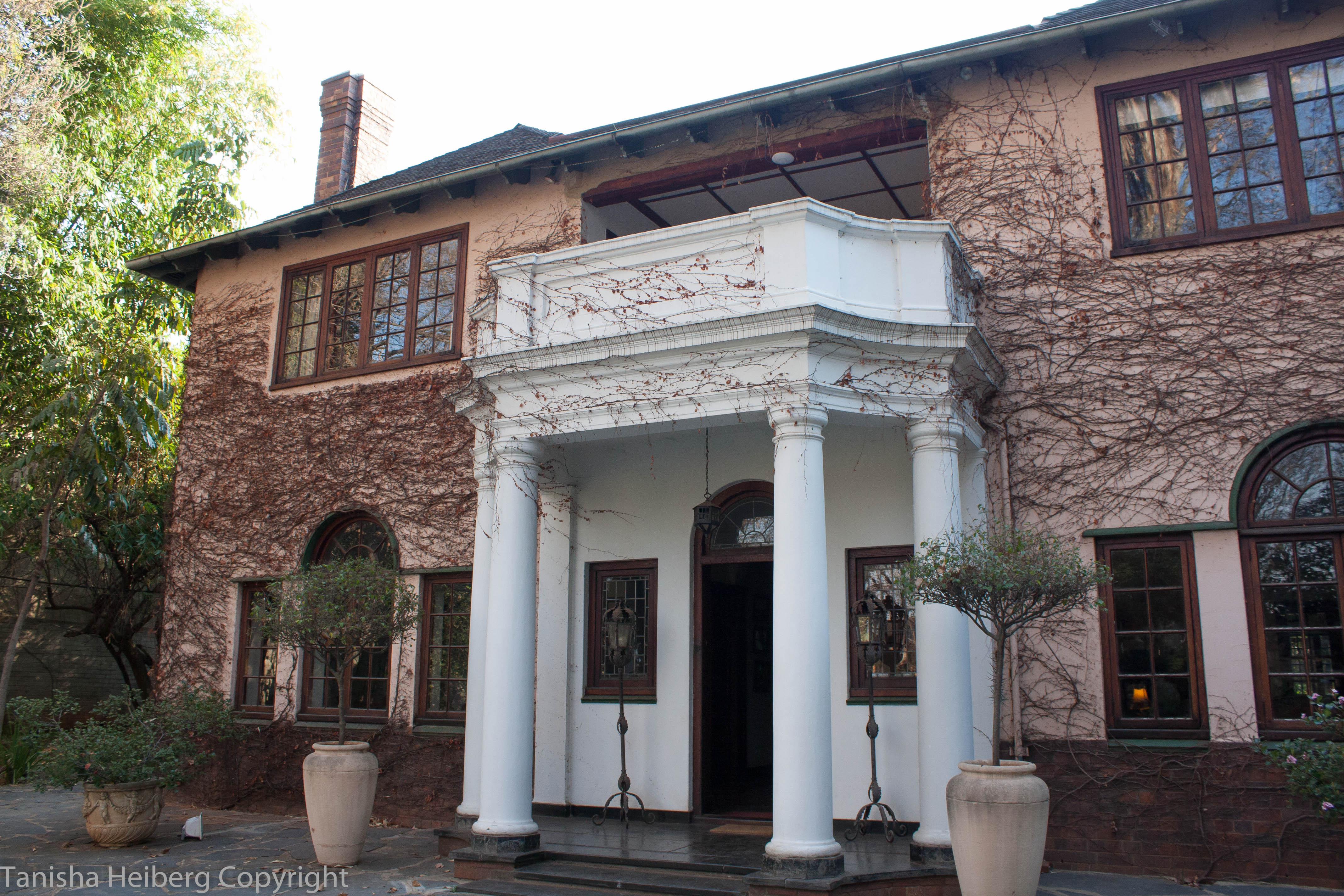
The historic house built in 1924 is not only a popular boutique hotel in Houghton but is also home to some historic guests from the spirit world. As one of the first houses in the area it is filled with antique family heirlooms, some of which haven’t been moved since 1936! Guests to the hotel claim to hear mysterious footsteps and to have seen the ghost of a lady with a child and even Paul Kruger.
The Foxwood House built in 1924 in Houghton. Photo: Tanisha Heiberg
Ponte Tower- Hillbrow
The Iconic 54-story cylindrical tower has become an eerie spot for a number of suicides. The once luxurious high-rise fell into disrepair and became a base for Joburg’s notorious gangs in the late 1980s before it was abandoned. Now the ghosts have joined its inhabitance with several of them being spotted in the building reliving their last moments.
Ponte Towers looking over Johannesburg’s skyline. Photo: Geoffrey Hancock (Ponte City Uploaded by Yarl) via Wikimedia Commons
The View Mansion- Parktown Ridge
In a white Victorian dress Lady Cullinan can still be seen lurking around the stately home with the sound of someone climbing the stairs, despite the staircase being removed many years ago. Sir Thomas and Lady Annie Cullinan bought the View Mansion for £1,250 in 1896, which is now a museum and a business venue. Many other stories are also hidden beneath creaky floor boards and secret passageways in Joburg’s historic homes.
Stander Gang – Houghton
South Africa’s most wanted bank robbers went down fighting when the infamous Stander Gang consisting of Andre Charles Stander (37), Patrick Lee McCall (34) and Allan Heyl (32) were wanted by police in the1980s. The ghost of McCall is said to lurk at the place of his death that came after a tip-off led police to their Sixth Avenue, Houghton safe-house. McCall met his bloody end after refusing to surrender resulting in a gun battle in the streets of the leafy suburb. Police finally threw grenades into the house and stormed in only to find McCall lying naked and dead in the hall.
One of the Stander Gang hide-outs during the 1980s where a gunfire battle that resulted in the death of Patrick Lee McCall. Photo: Tanisha Heiberg
A clip from the 2003 Movie Stander starring Thomas Jane as Andre Stander and Dexter Fletcher as Lee McCall.
The Aurora House- Central Avenue Houghton
Howling and disembodied footsteps from mysteriously murdered socialite Bubbles Schroeder can be heard walking around the Aurora building. The party girl’s body was found with her mouth stuffed with clay in August 1949, in what was a blue gum plantation near Wanderers Sports Club. The good time girl’s murderer was never found with many different theories surrounding the fateful night helping to further the Schroeder ghosts anguish.
Mikes Kitchen- Parktown
The Goch family home, built in 1904, has seen more than one person meet their untimely end. A ghost of a grief stricken mother thought to be Jane Goch has been seen walking up and down the stairs soothing her child that died. The unfriendly appertshion of James Goch has also occasionally been seen, but he doesn’t take kindly to visitors. The Goch family are not the only souls lurking at the restaurant. The kitchen doors can be seen swinging open and closed as a murdered kitchen staff member walks in and out of the kitchen.
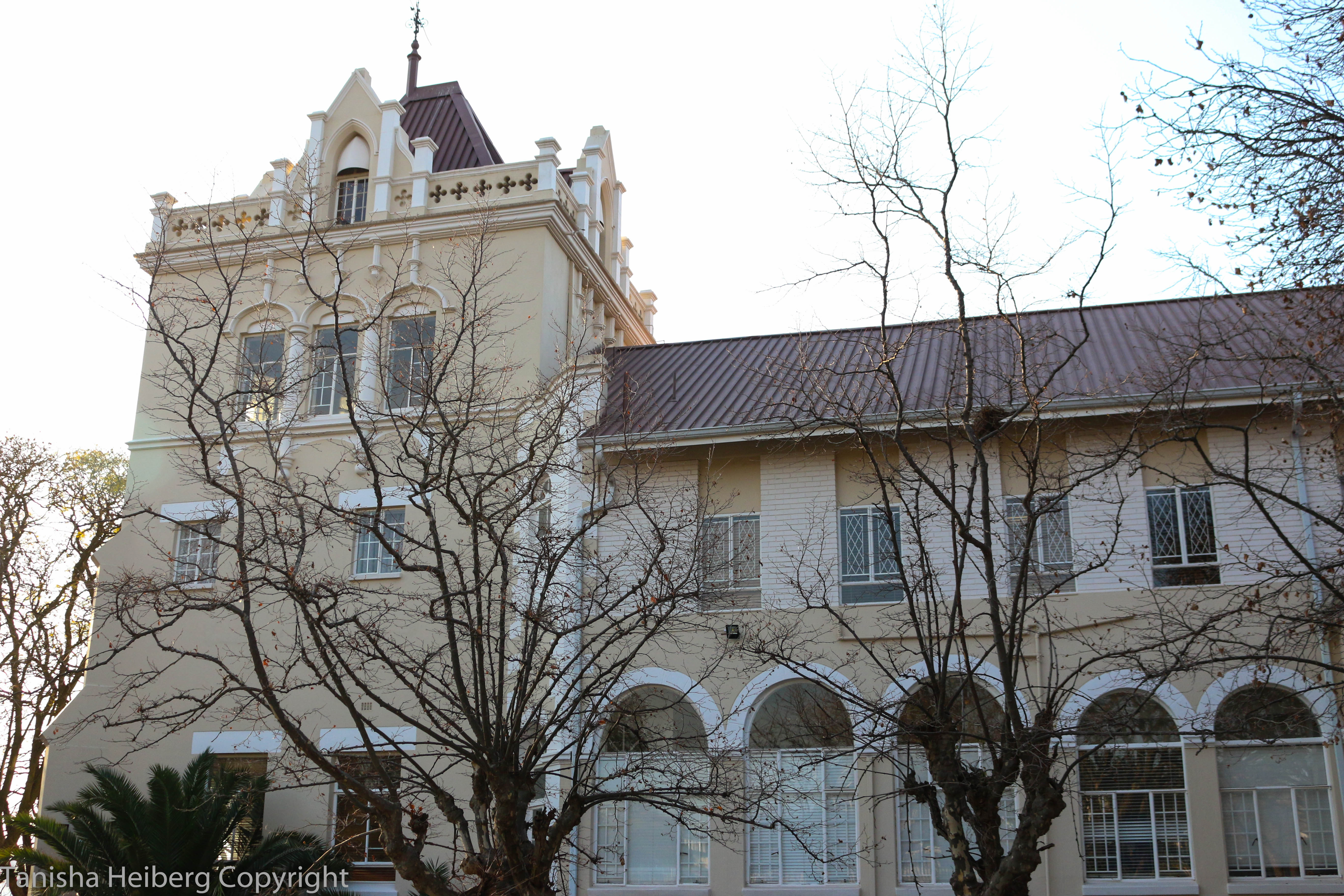
The Mike’s Kitchen in Parktown is a national heritage site that was originally built by James Goch, a photographer in early Johannesburg. The house was designed by JB Nicholson and has survived by being a hotel in the 1930s. Photo: Tanisha Heiberg
Constitution Hill- Braamfontein
Many souls have passed through the iron gates since it was built in 1882 but some have never left. As a prison and military defense post it saw many political prisoners being incarcerated at the Fort including Nelson Mandela, Mahatma Gandhi, Walter Sisulu, and Ruth First. Among the many souls that haven’t found their rest is Daisy De Melker’s ghost who haunts the Women’s Jail. Another is a blonde Afrikaans nurse with maroon epaulets from the old Florence Nightingale Nursing Home who still roams the building at the corner of Constitution Hill.
Inside the prison at Constitutional Hill. Photo: Valerie Robinson
Braamfontein cemetary – Graf Street Braamfontein
Created in1888 it offers a glimpse of Joburgs past including unsung heroes, resisters, concentration camp survivors and victims of the dynamite explosions. A 24 year old victim of suicide named Chow Kwai engraved a letter of apology on his tombstone apologizing for unknowingly registering under a new law aimed at restricting the movements of Indians and Chinese. After he realized what he had done he set himself alight in 1907.
Kensington Sanatorium-Bezuidenhout Valley
Mother Adéle, a French nun, has been seen at the old Kensington Sanatorium. She is thought to be a passed inhabitant of the building originally built in 1897.
The old Kengsington Sanatorium that was once home to nuns is now a Life Clinic. Photo: Tanisha Heiberg
Jeppe Boys High School- Jeppestown
A headless women known as the “Afkop Vrou” has been seen in the schools Payne Hall holding her head. The legend has it that the women committed suicide after the death of her husband during World War I.
Museum Africa- Newton
A ghost known as Mr Chips was a worker at the potato sheds in Newton who was killed by a falling sack of potatoes. He now is said to haunt Museum Africa’s costume collection section and is heard ruffling the clothes and rearranging the shelves. The sheds which were originally built in 1912 were part of the original Indian market. The market relocated to a larger premise in City Deep in 1974.
The Post Office Building- Rissik Street Johannesburg
The burnt remains are not the only things left from the old Post Office building, that was built in 1897 as the tallest building in town. A dark apparition has been seen in the underground tunnels that link the Post Office and Park Station. The building has been abandoned, except for its ghostly visitors, since 1996 with many of its fittings being stripped and stolen leaving behind only its skeleton.
The remains of the once towering Post Office on Rissik Street built in 1897 by President Paul Kruger’s architect, Sytze Wierda. Photo: Tanisha Heiberg
15. Zoo Lake- Randburg
The dismembered body of Mrs Catherine Burch haunts the watery grave were her decomposing head was found by two boys fishing at Zoo Lake in 1964. This was the last puzzle piece needed to help identify the remains already found in Boksburg Lake and Wemmer Pan. The alleged perpetrator was her husband Ronald Burch who electrocuted himself in front of police upon his discovery. The cause of death however still remains “unascertained” leaving an uneasy spirit lurking at the shore of the Lake.
The banks of Zoo Lake in Johannesburg were the head of Mrs Catherine Burch was discovered. Photo: The original uploader was Albinfo at German Wikipedia [GFDL (http://www.gnu.org/copyleft/fdl.html) or CC-BY-SA-3.0 (http://creativecommons.org/licenses/by-sa/3.0/)], via Wikimedia Commons
16. Kempton Park Hospital- Kempton Park
If that’s not enough ghostly activity on the outskirts of Joburg are many other ghoulish destinations including the abandoned Kempton Park Hospital that closed its doors the day after Christmas in 1997, without any explanation. The mysterious circumstances around its sudden close have given to the rise of many stories about its ghostly activity. The setting including no electricity, empty rooms, confidential patient files on the floor and broken equipment and ceilings.
A group of ghost hunters posted footage of their experiences whilst walking around the abandoned hospital at night.
The 2015 Rugby World Cup is underway in England, but how much do you know about the Springbok team?
Get to know the Springbok squad, their positions, test caps and some of the more unusual things about the men in green and gold.
Props:
Coenie Oosthuizen (23), Trevor Nyakane (15), Tendai Mtawarira (67), Frans Malherbe (5), Jannie du Plessis (70)
It’s a family affair for Sharks and former Cheetahs tighthead prop Jannie Du Plessis holds the record for the most test caps with his brother Bismark, also a member of the Springboks. Both brothers were on the bench at the 2007 Rugby World Cup final.
Another powerhouse player with a strong scrum technique is Tendai Mtawarira, aka Beast, who first played for the Springboks against Wales in 2008.
The Zimbabwe-born prop was so determined to succeed as a rugby player that he rode his bicycle from his lodgings in Morningside to the Sharks Academy in Durban despite being teased, according to IOL.
Tendai Mtawarira during the 2011 Super Rugby Competition when the Sharks took on the Rebels. Photo: RykNeethling, via Wikimedia Commons
Hookers:
Adriaan Strauss (50), Bismarck du Plessis (74), Schalk Brits (12)
Schalk Brits made his Springbok debut in 2008 according to SA Rugby.
This experienced player has played for the Golden Lions, the Cats, Western Provence, the Stormers and signed for English team, the Saracens, in the 2009/2010 season.
Despite Bismark du Plessis being one of the most feared hookers in recent seasons, the 112kg player also has a softer side which is evident after he told SA Rugby that his favourite movie is the epic drama, Legends of the Fall.
Springbok prop, Bismarck du Plessis, at Murrayfield during a test match against Scotland. Photo: Sahmejil, via Wiki Commons
Centre:
Jesse Kriel (3), Jean de Villiers (108) (captain), Damian de Allende (8)
Captain Jean de Villiers has suffered many injuries along his rugby journey.
In 2002 he tore ligaments in his right knee; in the 2007 World Cup he tore his biceps in the first match, and in the 2011 World Cup opener, he popped a rib.
But in November 2014, de Villiers suffered a sever injury when he dislocated his kneecap, ruptured three knee ligaments and torn his hamstring at the top and bottom during the November game against Wales, according to the Telegraph.
Jesse Kriel is part of another sibling duo with his twin brother Dan Kriel who both excelled in the Junior Springboks in 2014.
Victor Matfield (125) (vice-captain), Eben Etzebeth (36), Pieter-Steph du Toit (3), Lood de Jager (12)
Former junior Springbok who was part of the winning 2012 World Rugby U20 Championships, Pieter-Steph du Toit, was close to missing his chance of being a part of the 2015 Springbok squad.
Du Toit was all but ruled out after he twisted his knee in a Sharks versus Cheetahs match in March this year. But thanks to his father, Pieter du Toit who donated his own ligament, the lock recovered in time for the World Cup according to SuperSport.
Vice-captain Victor Matfield came out of retirement for the World Cup, and has played the most games for the Springboks with 125 test caps.
At 2 metres tall and thought to be one of the best locks in the world, it’s no surprise that this giant’s favorite movie is Thor, according to SA Rugby.
Victor Matfield (right) being lifted during a line out during the Lion during versus Bulls game during the Super 15 in March 2011. Photo: Tyler Yeo, via Wiki Commons.
Loose Trio:
Duane Vermeulen (32), Francois Louw (38),Siya Kolisi (11), Schalk Burger (77), Willem Alberts (35)
Siya Kolisi, who made his full Springbok debut against Scotland, is not only an excellent rugby player but also a family man who loves home cooked umphokogo (pap and amasi) according to Destiny Man.
Kolisi also told the magazine that he is currently working on getting custody of his half siblings aged 7 and twelve, whom he lost touch with when they were taken into social services care 7 years ago.
A player who had to overcome adversity is Schalk Burger who went into hospital to do a routine draining of a cyst next to his spinal when he developed bacterial meningitis according to Timeslive.
Burger fought for his life in intensive care last year and recovered to take back his place in the green and gold lineup.
Schalk Burger running toward the try-line in a match against Samoa during the 2007 Rugby World Cup. Photo: derivative work: Anrie (talk), via Wiki Commons
Scrumhalf:
Ruan Pienaar (93), Rudy Paige (0), Fourie du Preez (70)
Newcomer and Blue Bulls scrum-half, Rudy Paige, is a local Joburger who studied at the University of Johannesburg.
Despite being the only uncapped player in the squad, Paige is eager to prove himself at the World Cup, according to the SA Rugby Magazine.
The South African rugby union player Ruaan Pienaar at Murrayfield during a test match against Scotland. Photo: Sahmejil, via Wiki Commons
Flyhalf:
Morné Steyn (61), Handré Pollard (13), Patrick Lambie (46)
The multi talented Patrick Lambie has the rare ability to be able to play fullback, flyhalf and centre positions according to an interview with Club X. Lambie was also the youngest member of the squad the last time the Springboks were in the Rugby World Cup in 2011.
Bryan Habana scored his first test try in his debut for the Springboks and hasn’t stopped since then. The speedster who has raced a cheetah and an Airbus A380 scored four tries against Samoa during the 2007 World Cup.
Bryan Habana joining the South Africa Rugby World Cup 2007 Winners in a Parade on a bus. Photo: E M i L i A [2], via Wiki Commons
With the weather warming up so are this year’s Spring/Summer fashion trends. The boho flower power style of the 70s is making a huge comeback not only on the runways but also on the streets of Joburg.
Stay one step ahead with these 10 top Spring/Summer trends.
1. Flowing fringes
This season fringe will be adding movement to everything from kimonos to skirts giving a slightly boho (bohemian) feel to the trend.
Fringe accents on clothing are over 3000 years old and originate from the area that is now Iraq.
This reinvented trend was worn by both men and women, and was even used as a type of signature in clay contracts because of its unique impressions.
But if you want to add a more modern feel to the ancient trend then find fringes on modern silhouettes like tank tops and printed t-shirts.
2. Jean genius
This classic wardrobe staple is being seen in dresses, pants, coats and the very on trend overalls.
From shorts to skirts the overalls are helping bring a twist to the traditional dungarees.
The comfy jeans we all love had humble beginnings as durable work pants, made by Levi Strauss in the 1860s.
The blue jeans have seen a revamp with anything any style, length bringing a playful relaxed style to this summer’s big trend.
3. Kimonos vs Ponchos
This season the poncho takes its inspiration from the traditional South American version with plush fabrics and luxurious colours that can easily be paired with shorts, dresses or even another on point trend-denims.
While its boho counterpart the Kimono will also remain on trend this season with the addition of fringe details to give it the 70s flare.
These looks seem to be here to stay which is not surprising since they date back many centuries to the pre-Inca Peruvian people.
4. Girly Gingham
As the weather warms up we are moving away from winters plaids to springs classic and girly gingham.
Think iconic fashion moments like Marlyin Monroe’s high-waisted pants, Katharine Hepburn long gingham dress and even Brigitte Bardot who wore the fabric to her wedding.
This season its coming back in unexpected ways with a variety of colours and pattern sizes.
5. 70’s Swing
The 70s are back this season but with a modern twist from culottes, lace-up peasant blouses and all the trends we know from the hippy era.
Subtle hints from such as flared pant silhouettes, maxi dresses, round framed sun glasses and contrasting colour combinations will bring just the right amount of retro revival.
6. Summer Suede
Think colored suede, this typically winter trend gets a new spin this season with pops of colour and patchwork.
Suede is a special type of leather that has been processed to give a different texture.
This fashion trend stems from one of the oldest forms of clothing to almost 50 000 years ago, but this summer this ancient material is getting a throwback to the 70s with miniskirts, sandals and handbags.
7. Stylish Stripes
Stripes are expanding from the blue and white nautical theme to a more colourful, multi textured version this season.
This fashion staple has been around for 150 years and was thought to be a symbol of evil.
A French cobbler was rumoured to have put to death for just wearing stripes!!!
Years later and far from the garments of prisoners and clowns, the pattern has become a symbol of chic style with artists like Pablo Picasso and Andy Warhol helping to popularize the pattern.
This season we celebrating the stripes in all shape, colours, and sizes.
8. Modern Military Safari
Yes safari…you read correctly. But this trend doesn’t mean that the long kaki socks, vield skoene and camouflage are now gracing the Paris and New York runways.
This spring sees chic lightweight khaki trench coats, dresses, ponchos and accessories taking an urban spin on the season’s adventurous and wild trend.
9. Sultry Shoulders
This season the trend is taking a more modern twist with off-the-shoulder peasant blouses or bold one-shoulder necklines.
The trend dates as far back as the gowns from the mid 1800’s where it emphasized the erogenous zone of the neck and shoulders.
With modern fabrics and the incorporation of the crop top trend this new neckline brings a sultry side to summer.
10. Flower Power
Florals have been a fashion staple since they were created in Asia hundreds of years ago, but this seasons prints won’t be the same old tired wallflowers.
The trend sees power blooms with bold prints and vibrant colours to give a fresh yet feminine spin to traditional petal prints.
After violent student protests on campus, The University of KwaZulu-Natal has closed its residences
The Howard College building on the Howard College campus at the UKZN. Photo: Ryan Holder Ryanglobal (Legal Beagles [1]) [GFDL (http://www.gnu.org/copyleft/fdl.html) or CC BY-SA 3.0 (http://creativecommons.org/licenses/by-sa/3.0)], via Wikimedia Commons
All student residences at The University of KwaZulu-Natal have been temporally closed after violent student protest broke out on campus this week
Students barricaded roads and burnt cars outside the university, protesting against the change in requirements for student funding from National Students Financial Aid Scheme (NSFAS), according to Eyewitness News.
This comes after the funding requirements were changed from 50 percent to 70 percent.
A statement by the university was emailed to all students and required all students to vacate the residences by noon on Friday according to News24. In the statement Vice Chancellor and Principal Dr Albert van Jaarsveld requested the students leave “in context of the continued violence, the unwarranted arson, the unprecedented destruction of property, and the threats to the safety and security in residences and UKZN campuses”.
“Legal residence students will be allowed back into the residences on Sunday, 27 September 2015”, said van Jaarsveld.
Last week students were removed from a Westville campus residence after it was torched and a private bus contracted by the university to transport students was burnt, according to iol news.
All academic programs were suspended on Wednesday according to News 24. University spokesperson Lesiba Seshoka told News24 that the decision to suspend the programmes was regrettable considering that it was so close to the end of the academic year.
The KwaZulu-Natal police arrested two suspects in connection with the violence at the Westville campus, according to Eyewitness News.
Police spokesman Thulani Zwane told iol that a case of public violence has been opened.
Despite the safety concerns many students have expressed concerns about not being able to afford alternative accommodation or being able to journey, sometimes to other provinces, to return home.
Some of these student have turned to social media to express their concerns like this comment on a post on the UKZN Facebook page: “ We are being chased like dogs, like we did not pay for res…The red ants will have to scoop me up from my room”.
Witwatersrand University will pay the outstanding NSFAS fees from the 2014 despite announcing earlier in the year that they were unable to cover the shortfall.
The Great Hall atl Witwatersrand University Photo: Wiki commons
Wits has confirmed that it will fully cover R35.2 million in debt, interest free, from the outstanding fees owed by students from 2014 that had not been paid by the National Student Financial Aid Scheme (NSFAS).
The confirmation follows a Wits SRC statement released via its Facebook page and will help up to 708 students.
The agreement with the university and the SRC,which was reached earlier this year, outlined that outstanding fees would be paid by the university and NSFAS, with the loan agreement conditions remaining.
However, the university has now agreed to cover the full amount of the outstanding fees. This mean that the amount the students signed for on their 2014 NSFAS loan agreement forms and the acknowledgement of debt forms signed at the beginning of this year will be covered by the university.
This development means that the students will not be charged interest for the debt and it will in effect be more like a bursary instead of a loan from the university.
The payment for the outstanding debts comes despite the university stating earlier in the year that it was unable to cover the NSFAS shortfall.
SRC president Shareera Kalla said that the SRC had been in negotiations with the university as they were not satisfied with the terms given to the students by the university. “The terms set out by the university were not the same as those given by NSFAS.”
Kalla said “We feel like it was a great achievement… It is great to see the university covering the fees as a bursary rather than a loan.”
Wits chief financial officer Linda Jarvis said the university had found extra funds for the outstanding fees despite previously being over budget.
“The university has reallocated designated funds it had earmarked for other purposes including bursaries,” Jarvis said.
Zoe Buthelezi, a student who had outstanding fees from 2014 and who may be helped by the new payment, explained that many students did not understand the terms of the loans when they signed.
“Everyone is supposed to know what’s going on so they don’t bother explaining it to you … You don’t know what you’re signing or how much you’re going to pay or how the whole payment works they just point out where to sign,” Buthelezi said.
Buthelezi said she would be very happy if the university paid off her fees. “I don’t care as long as they pay everything interest free… I’m only 22 years old and already I’m in debt of R52 000 and don’t even have a job.”
Financial Aid Office manager Ennie Kubeka said the university may spend less than the R35.2 million.
“We expect it [the amount] to be lower once a full reconciliation has been completed. It should be noted that on the initial list some of the students have since received alternative funding,” Kubeka said.
Kubeka explained there are still 708 students who have outstanding fees from 2014 and that the university wants to close the matter with the students.
The students that were not covered by NSFAS last year were unable to access their results or register for 2015 unless they signed the acknowledgement of debt form.
Jarvis said the reason for the acknowledgement of debt was to allow students to register in 2015 even though they had outstanding debt in 2014 relating to NSFAS loans.
Over 2 000 students were unable to register at Wits this year due to NSFAS facing a funding shortage.NSFAS is a bursary and loan scheme which is funded by the National department of higher education in order for students to have access to tertiary qualifications. These loans are usually charged at low interest rates.
Cast: Henry Cavill, Armie Hammer, Hugh Grant, Alicia Vikander, Elizabeth Debicki
Director: Guy Ritchie
Vuvu Rating: 7/10
The Man from U.N.C.L.E will take you back to a time when the world was on the brink of war and spies were glamours and slick.
Based on the 1960s television show, the film will transport the audience into the era of the Berlin Wall, the race for nuclear weapons and the height of Italian Vogue.
The film revolves around a CIA agent, Napoleon Solo (Henry Cavill), and a KGB operative, Illya Kuryakin (Armie Hammer), who are forced to partner up despite their stark differences to stop a dangerous criminal organization from producing nuclear weapons that threaten to destroy the world. Their first mission is to locate a kidnapped scientist with their only lead being the scientists estranged daughter Gaby Teller (Alicia Vikander) who completes their mismatched trio. The unorthodox methods of ladies man, Solo and the conformist and military style of Kuryakin create a comic backdrop to the action scenes that we are familiar with in spy movies.
The film takes a step back in time to the 1960s with authentic fashion, music and spy gadgets. The sound track was also recorded in an authentic sound studio to help transport the audience back in time.
The aesthetics of the film plays an important role with the fashion, from suites to dresses , being particularly highlighted by the efforts of costume designer Joanne Johnston.
But The Man from U.N.C.L.E is not just a fashion show. Fans of Guy Ritchie’s action packed films like Sherlock Holmes and Snatch won’t be disappointed with this film having its fair share of explosions and chase scenes done in an innovative way that still embodies the films of the 1960s.
A pleasant and watchable film with the right balance of humour and action helps to maintain its lightness.
The film has an old-school wit that mimics the 1960s film style with the constant sarcasm and banter between the two leads. Particular attention to the contrast between humour and the serious nature of being an international spy is constantly drawn, which is often created with hilarious action taking place in the background while actors deliver their lines. However the wit at some points is lost partly due to the actor’s flat delivery.
The acting in the film is on the whole, average. Perhaps the film would have been a better success if the two lead actors had swopped characters. Cavill would have suited the role of a consecutive Russian solider much like his all American hero character in Superman. The same could also be said for Hammer’s charismatic personality which would be better suited for the smooth womanizing agent, Solo. The chemistry between the two actors is also lacking after creating an awkward atmosphere. The same however cannot be said for Elizabeth Debicki who makes an excellent villain as the ambitions, intelligent and beautiful, Victoria Vinciguerra.
The Man from U.N.C.L.E is a slick and stylish film that is spotted with laughs, making it pleasant movie. However the film does lacks the substance that the plot would have required, to make it an excellent spy movie.
What The Man from U.N.C.L.E lacks in substance and plot it makes up for in glamour and style and definitely won’t have you calling Uncle halfway through.
Aniss Krid, Gary Bezuidenhout, Elishahidi Mvungi, and Linda Khumaloat (from left) were part of the winning team at the DIZSparks App Challenge. They created the Gig Guide app for students to find events near them based on their interests. Photo: Provided
A group of Wits students have won the DizSparks app competition after creating a new app for students.
Aniss Krid, Elishahidi Mvungi, Gary Bezuidenhout and Linda Khumalo created the Gig guide app where events, parties and social activities can be advertised for easy access to students through specific categories.
The Wits Locate and I’m Interested apps were also announced under the top three at the Digital Innovation Zone (DIZ) in Braamfontein.
These students formed part of the 16 applicants who took part in the month long DIZ Sparks campaign, aimed at helping to develop the app creation skills of students from diverse backgrounds.
The challenge was conducted in association with iAfrika and included not only Wits University students but anyone who wanted to take part in the competition.
Event co-ordinator, Xoliswa Nahlangu explained that the campaign was not only to train the students in app development, “The competition was done to introduce the Wits varsity students to DIZ”
DIZ is a digital technology hub for the greater Johannesburg area that is open to all students and start-ups.
The applicants were tasked with creating new Apps, from design to formation, that can be added to the WitsM mobile apps as well as be available to be re-used at other tertiary institutions and App stores.
The applicants ideas were presented to a panel of judges led by Prof. Barry Dwolatzky, the director of JCSE at Wits University. The panel investigated whether there was a demand for the app in a student market and presented the winners with an Apple iPad Air.
The challenge provided mentors as well as commercial App developers who helped the students in their month long task that began in the conception stage, which involved unpacking the usefulness of the app for potential users. From there the applicants could refine their ideas before beginning to build a prototype of their app, with the help of experts in the field.
The challenge helped the students to come up with ideas but also to create apps that appeal to the market said Nahlangu.
The public was also invited to a Learnathon where they could learn more about how to create apps and the tools involved.
Nahlangu spoke about the importance of developing mobile app creation skills in South Africa, “There is a huge market … companies have realized that they need to be on a mobile platform in Africa… not everyone has internet access, but people have access to internet on their phones.”
Spiros the Goat has surfaced amid this year’s run-up to the SRC election campaign. He has taken to Twitter to express his views and opinions about the elections as well as Wits University with his catch phrase #ramming. Also known as candidate 47, Spiros has titled himself the “New kid on the Block” with posters and graffiti around campus. Spiros recently made time from his busy schedule to speak to Wits Vuvuzela.
Photo: Provided
Why should people vote for Spiros?
A vote for Spiros is a vote against voting.
What does Spiros stand for in the elections?
Spiros is a goat that embodies a collective subjectivity grounded in an earnest politics of irony and the absurd. Spiros wishes to bring to bare the ridiculous and depressing nature of representative democracy where political action is reduced to drawing two intersecting lines in the alienated labour power of a fetishized piece of paper (Spiros is aware that the power is in the worker and not in the commodity).
Spiros is an Act, in the Zizekean sense, where political action involves smashing the nascent totalitarian nature of late capitalist
society and rebuilding in on the basis of a ramolutionary subjectivity.
Who do you support in the elections?
Spiros.
Will you be voting in the SRC, if so for who?
Eat the ballot paper.
What’s it like being a goat at Wits?
WITS University is an anti-goat, anti-black, heteronormative, patriarchal, techno-fascist institution. Spiros’ positionality within
WITS is existentially precarious. It’s difficult being a goat when the grass tastes like Capitalist VW excrement. Spiros is currently reading Sartre and Althusser, in tandem (SIGH!).
Where does the name Spiros come from?
Spiros, as a signifier, does not signify Spiros’ essence but merely signifies it for other signifiers (Jacques Lacan).
Are all goats treated equal at Wits?
Spiros believes that Orwell gives a poor critique of leftist-totalitarianism, read “The Joke” by Kundera instead.
What do you thinks about the expulsions of the seven Wits Economic Freedom Fighters (EFF) members?
The expulsion is indicative of the totalitarian nature of the Habib regime and how power relations are skewed against black students and workers on campus. Spiros feels that the exclusion of students signifies a concerted effort to limit the essentially common and public realm of higher learning. Spiros says LIBERATE the common!
However, using Spiros’ Marxist-Leninist-Fanonian-Zhdanovian tools of analysis, Spiros notes that there is a profound contradiction in an organisation that calls itself ‘revolutionary’, seeking recognition from bourgeois institutions. Spiros is disgusted by reformism, and while sympathetic to much of what the EFF stands for, cannot stand as a supporter of closet reformism.
Do you think there is freedom of speech at Wits University?
Spiros deplores this kind of liberal discourse around individual rights. Spiros is not Francois Hollande. It is Spiros’ view that
freedom and the notion of a ‘voice,’ in the political, is only expressed through a ramolutional collectivity. Sorry Daryl Glaser.
Do you consider yourself an artist after you put graffiti on campus?
“Art is going elsewhere, and politics has to catch up.” – Jacques Ranciere
Do you support the graffiti messages?
Support is an arbitrary, bourgeois conviction. Just like graffiti.
Since its Women’s month, what is your stance on violence against women?
It is Spiros’ view that Women’s month merely upholds the patriarchy. “Life” in this “society” being, at best, an utter bore, Spiros does not understand how Spiros is supposed to have a stance on such. Ram the patriarchy. Duh.
When you’re not running for the SRC what do you do in your spare time?
Spiros is quite the gastronomist – Spiros’ Lonmin CEO soufflé is to die for.
In episode six of We Should Be Writing season 7, the team unpacked the evolution of music as a form of expression and protest, through four decades in the South African context. The episode explores the journey of South African music and its consumers from the 80s, 90s, early 2000s and contemporary listeners. From the […]


![The Hector Peterson memorial in Soweto. Photo: The original uploader was Albinfo at German Wikipedia [GFDL (http://www.gnu.org/copyleft/fdl.html) or CC-BY-SA-3.0 (http://creativecommons.org/licenses/by-sa/3.0/)], via Wikimedia Commons](https://heibergtanisha.files.wordpress.com/2015/08/hector_pieterson_memorial.jpg)



![The banks of Zoo Lake in Johannesburg were the head of Mrs Catherine Burch was discovered. Photo: The original uploader was Albinfo at German Wikipedia [GFDL (http://www.gnu.org/copyleft/fdl.html) or CC-BY-SA-3.0 (http://creativecommons.org/licenses/by-sa/3.0/)], via Wikimedia Commons](https://heibergtanisha.files.wordpress.com/2015/08/zoo_lake_johannesburg_4.jpg)
![Tendai Mtawarira during the 2011 Super Rugby Competition when the Sharks took on the Rebels. Photo: RykNeethling from Melbourne, Australia (Rabodirect Rebels vs Sharks Uploaded by stemoc) [CC BY 2.0 (http://creativecommons.org/licenses/by/2.0)], via Wikimedia Commons](https://witsvuvuzela.com/wp-content/uploads/2015/09/Rabodirect_Rebels_vs_Sharks_5537191278.jpg-beast.jpg)


![Bryan Habana joining the South Africa Rugby World Cup 2007 Winners in a Parade on a bus. Photo: E M i L i A [2], via Wiki Commons](https://witsvuvuzela.com/wp-content/uploads/2015/09/Springbok_parade.jpg)


![The Howard College building on the Howard College campus at the UKZN. Photo: Ryan Holder Ryanglobal (Legal Beagles [1]) [GFDL (http://www.gnu.org/copyleft/fdl.html) or CC BY-SA 3.0 (http://creativecommons.org/licenses/by-sa/3.0)], via Wikimedia Commons](https://witsvuvuzela.com/wp-content/uploads/2015/09/Howard_college.jpg)


