An exhibition that forces one to look at the duality of society and confront the chaos of reality
On April 9, the Wits Art Museum (WAM) opened its doors to “Now is not Forever” an exhibition by the artist Theresa-Anne Mackintosh. The art pieces are more than just sculptures and paintings on the wall; it was figures and strokes that represented the chaos and disorder of society and reality.
Walking into WAM on opening night, one is immediately drawn to the vinyl writing on the wall. It explains who the artist is, what the exhibit includes and what the expectations of the artist are for the viewer when interpreting her work.
Now is not Forever, wall of description. Photo by Keletso Zwane.
Mackintosh included two forms of her work in the exhibition. The first being paintings, which are some of her older works. These required me to look beyond the canvas and challenge my ideas of what was on that wall. Ideas that art can only be consumed at the surface, and that art needs to make sense and be pretty. Art can be unconventional.
The pieces that truly caught my attention were three pieces that included figures mimicking the morality of life. These were titled “hear no evil”, “see no evil” and “do no evil” and included figures having had various parts of their bodies, related to the action painted over.
One used the ears to hear, the eyes to see, and the hands to do, and these in Theresa’s work were painted over. It was visually stunning. The erasure of these elements meant that they are no longer in use, thus evil could not be heard, done or seen.
The second form included sculptures, embodying Mackintosh’s alter egos. At first, they were simply appealing to the eye. The colours were vivid, and the figures were intriguing. However, art did what art does best and challenged me to interpret what the sculptures represented, not just to the creator of the art but the consumer as well.
And I, having been the observer for the night, was subjected to understanding that these figures had represented familiarity. These sculptures are recognisable figures, dogs, people, dolls – all things that I have seen, felt, and engaged with.
Picture of sculptures at exhibit. Photo by Keletso Zwane.
The inclusion and coupling of both sculptures and paintings in the exhibition was phenomenal. The art was anthropomorphic, it hurt, it was dysfunctional and embodied the disorder of society, of history, it almost seemed to reproduce reality.
Picture of one of the sculptures displayed at Now is not Forever. Photo by Keletso Zwane.
Even if you wanted to look at the exhibition as a way to distract yourself, Mackintosh’s work forced you to look further than the surface.
Vuvu rating: 9/10
FEATURED IMAGE: Picture of a girl taking a photo of the art at the exhibit. Photo by Keletso Zwane.
The annual Academy awards will finally settle the public’s burning need to know who will win the best actor category.
The 2026 Oscars Best Actor race has turned into a blockbuster showdown between Timothée Chalamet in Marty Supreme and Michael B. Jordan in Sinners. We have reached this point, because both dropped jaw-dropping performances, with Chalamet channelling a wild ping-pong hustler under Josh Safdie’s gritty lens, his third Oscar nomination after Call Me by Your Name and A Complete Unknown. Jordan slays dual roles in Sinners as vampire-hunting twins facing 1930s racism in Ryan Coogler’s epic film.
Jordan has got serious momentum after snagging the Actors Award formally known as the Screen Actors Guild Award for Best Actor. He won over Chalamet, Leonardo DiCaprio in One Battle After Another, and Ethan Hawke in Blue Moon. The Actors Award’s are purely voted by actors, who make up the Academy’s biggest voting group. That love from his peers could tip the scale big time when it comes to the Oscar’s.
Not helping Chalamet’s Oscar campaign is his recent comment about some of the most respected art forms of all time, ballet and opera. At a Variety-CNN event, he said “no one cares about” ballet or opera anymore, “with much respect,” sparking backlash from Whoopi Goldberg, Doja Cat, and arts advocates. The timing couldn’t be worse for the Oscar hopeful. This taking place during the peak of his Oscars campaign is horrible timing.
Chalamet messed up by disrespecting culturally significant art forms. Many fans were outraged and disappointed by his comments as well as confused, because his mother and sister are both trained ballet dancers.
The Oscars is no stranger to an intense battle within their categories. In 2005, Jamie Foxx and DiCaprio had a similar battle for their performances in Ray and The Aviator respectively, where everyone was waiting on the edge of their seats to know who would win.
Truth is, both gave powerful performances. Chalamet’s determination was felt through the screen, Jordan’s ability to play two convincingly different “cousins” – jaw dropping. And not to mention the other great actors in this category DiCaprio, Hawke and Wagner Moura performed brilliantly in their own right.
Whoever grabs the gold on March 16, 2026, between Chalamet or Jordan (or if it is a complete curveball), it’s a win for great acting either way.
FEATURED IMAGE: Who will win the best actor category at the 2026 Oscars. Graphic: Bonolo Mokonoto
An ode to Motown is for the lovers of classic nostalgic music and is a must-see performance.
On February 22, I attended An Ode to Motown, a production staged in celebration of Black History Month, at Joburg Theatre. What unfolded was more than a tribute concert; it was a vibrant, high-energy homage to one of the most influential musical movements to emerge from 20th-century America.
Motown, founded in Detroit in 1959, became the heartbeat of Black American music, introducing the world to artists who would shape pop, soul and R&B for generations. The show paid tribute to this rich history, revisiting classics that still resonate across continents.
There was not an empty seat in sight.
From the opening notes, the audience was transported into a world of polished harmonies, synchronised choreography and timeless storytelling.
The singing was exceptional, powerful yet controlled, capturing the emotional depth that defines Motown. The performers, Liesl Penniken, Lerato Mvelase, Tamara Dey, Hlengiwe Pearl, and Anele Precious Mthethwa, moved effortlessly through beloved hits.
An ode to Motown show image. Photo: Supplied/B Sharp entertainment
Hits such as “Mr. Postman,” “Ain’t No Mountain High Enough,” and “I’m Coming Out,” each song greeted with cheers and nostalgic excitement. The inclusion of “Cruisin”, “Call Tyrone,” and “Water Runs Dry,” along with two soulful renditions of songs by Erykah Badu, broadened the tribute to include neo-soul influences that echo Motown’s legacy.
Quotations from songs by Smokey Robinson added a poetic thread, reminding us of the lyrical genius that defined the era.
Visually, the production was stunning. The performers dazzled in gorgeous, extravagant gowns that shimmered beneath the stage lights. The intricate choreography was both elegant and dynamic, matching the vibrancy of the live band. The theatre itself seemed to pulse with the vibrations of an enthusiastic crowd, their energy feeding the performers on stage.
Yet the show also raises an interesting question: what relevance does Motown’s history hold for South Africa? In some ways, staging this tribute here is like hosting a concert in the United States commemorating the artists of Sophiatown. It is a celebration of a distinctly American Black cultural movement, performed for lovers of classic American music and for those who admire the monumental Black artists who emerged from that era. At the same time, it highlights the global reach of Black music and its power to connect polarizing histories.
Ultimately, An Ode to Motown was a joyful, nostalgic, and beautifully executed celebration. One that proves Motown’s rhythm still moves audiences, no matter where they are in the world.
Vuvu rating 9.5/ 10
FEATURED IMAGE: An ode to Motown, performance on February 22 at the Joburg theatre. Photo: Bonolo Mokonoto
Zama Phakathi has proved that absence does not stop the show, while she is in Paris, her curated art exhibition is underway in Johannesburg.
A new exhibition is showing at Museum Africa.
Various art mediums used to tell a story of black struggles.
Art exhibitions are underfunded in South Africa.
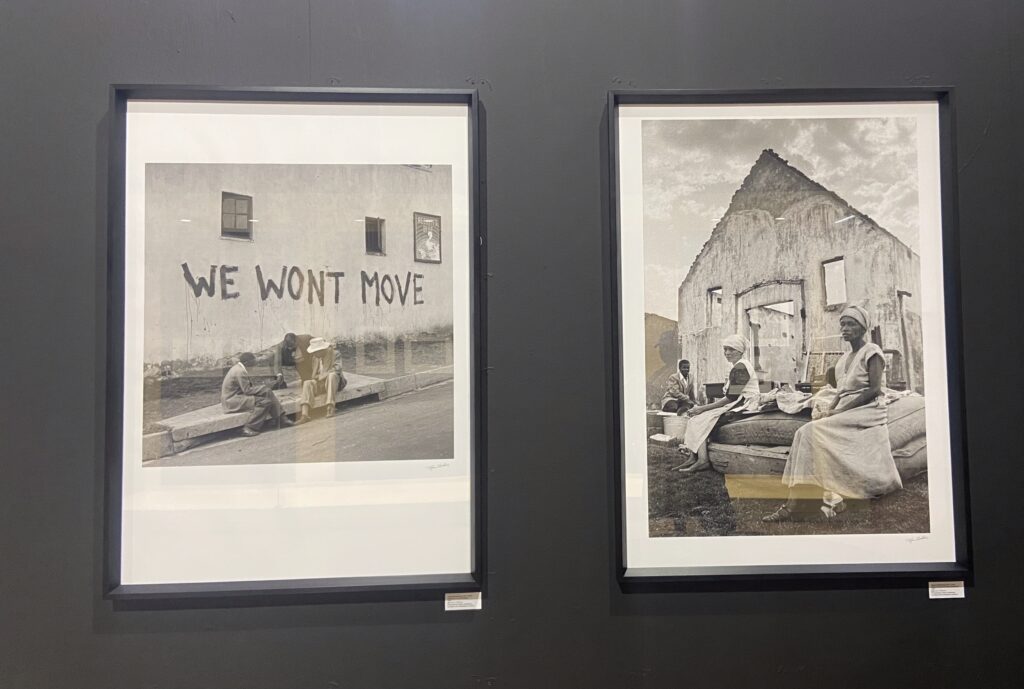
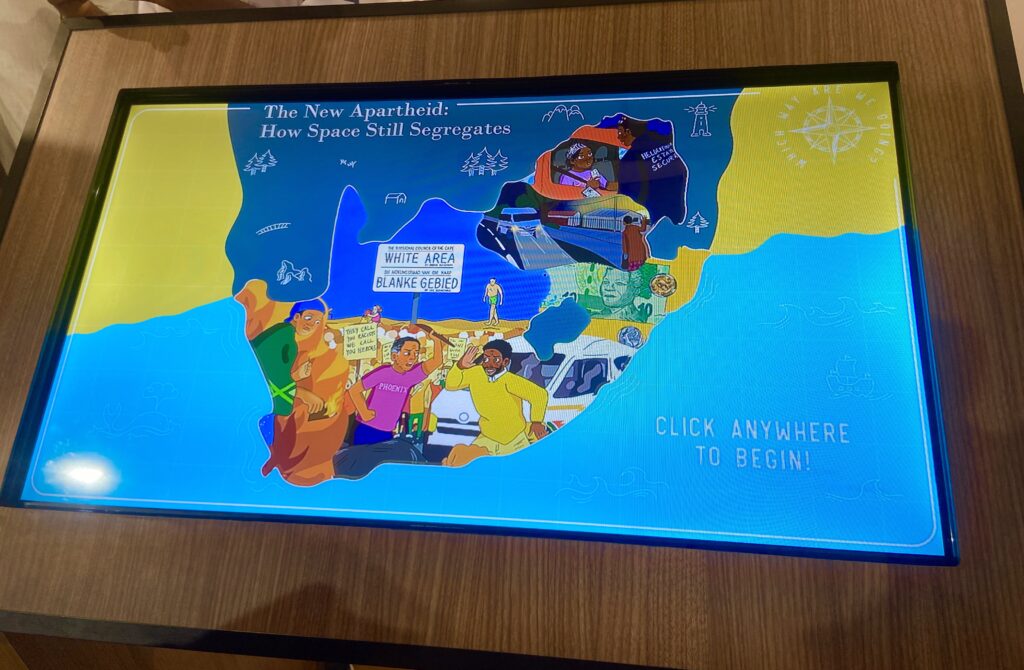
Through photographs, sculptures, gouache on paper, achieved footage and an interactive digital map among other mediums, the struggle of black people is made live and felt deep. Art exhibition, Nkosi Sikelel’ iAzania, by Zama Phakathi, prominent entrepreneur and art curator, opened on Saturday, February 7 at Museum Africa, Newtown.
Some of the pieces are loaned from Rossouw Modern Art gallery, Johannesburg Art Gallery, Iziko South African National Gallery amongst others. Phakathi juxtaposes apartheid with democracy using the works of artists such as David Goldblatt (1930-2018), Jürgen Schandeberg (1930-2020), Senzeni Marasela who experienced and documented apartheid and democracy firsthand. Their work stand alongside the works of much younger artists such as Frans Thoba, Sethembile Msezana and Emma Rodseth-Terblanche who only experienced democracy.
Photographs by Jurgen Schadeberg. Photo: Lulah MapiyeDigital interactive map by Emma Rodseth-Terblanche and Wandile Mthiyane.
Contrasting life then and now, the works zoom into what has changed, what evolved into a different struggle and what remains the same.
Putting together an exhibition in South Africa is a huge challenge due to a lack of funding opportunities said Makgati Molebatsi, art consultant and curator. “Loaning art pieces, ensuring them per their exact value, framing…it all costs a lot of money and for it to run for only three weeks is very unfair,” she said.
Siyabonga Ngwenya, an art enthusiast, attended the opening with her father. She appreciates artists who curate exhibitions like Nkosi Sikelel’ iAzania as she gets to bond and learn from her dad who lived through the apartheid era.
“I like taking my dad to these things, he enjoys going through the pieces with much attention and shares how he remembers things. [Pointing to a train photograph on the wall] like with those trains, he told me they were exactly like that, with black people squeezed together with no breathing room,” she said.
The exhibition runs for three weeks till February 27 and entrance is free.
FEATURED IMAGE: The day Rhodes fell, a photograph by Sethembile Msezane. Photo: Lulah Mapiye
An exhibition of Esther Mahlangu’s work explores themes of cultural identity and timeless creativity.
The first thing that catches one’s attention walking into the Wits Arts Museum is not just any BMW, but a 525i which has been transformed into a canvas of Ndebele motifs. The geometric patterns adorning the car are a signature of Esther Mahlangu’s work, now on display at this exhibition.
Titled, “Then I Knew I Was Good at Painting: A Retrospective,” the exhibition takes the viewer through Mahlangu’s decades-long career and showcases how she has shaped contemporary art, her tradition and culture.
From well-painted canvases to everyday objects reimagined as art – alcohol bottles, construction helmets, and tea containers – Mahlangu’s signature pattern finds itself in unusual places, serving as an exploration of themes such as cultural identity.
Belvedere vodka bottles are designed with Ndebele patterns. Photo: Siyanda Mthethwa.
Beyond the striking visuals, the exhibition also contains quotes from Mahlangu, who explains different phases of her life. One that stands out is her recollection of how she got into painting – she was initially scolded by her mother and grandmother for drawing on the house.
“After that, I started drawing on the back of the house, and slowly, my drawings got better and better until they finally asked me to come back to the front of the house. Then I knew I was good at painting,” reads Mahlangu’s quote.
Nontobeko Ntombela, the curator of the exhibition, spoke at length about Mahlangu’s work and its influence on contemporary art. “She was able to show the world two key things for me…showing the expansion of visual arts, that arts don’t derive from the West,” said Ntombela.
The primary vision for the exhibition was to “pull people closer to the detail of the art and to the detail of the artist,” Ntombela wanted viewers to understand the contributions made by Mahlangu instead of seeing her in a general way.
Freshpak rooibos containers are designed with Ndebele patterns. Photo: Siyanda Mthethwa.
Among Mahlangu’s most iconic works is the coated BMW 525i, a project which first gained international recognition in 1990, when it was returned to South Africa from the BMW museum in Munich after 30 years.
Mahlangu’s BMW design is significant because despite growing up in a rural area, she was approached by a prestigious company to design the car in a still segregated South Africa.
Ntombela is also working on a book which is an extension of the exhibition. “The book becomes a story that gives us the anecdotes of how she forged her career to be relevant. The book becomes the story of how other people give testimonies about meeting her,” said Ntombela. She continued, “We have experiences in the archive of her going into these different parts of the world painting private homes as well as institutions.”
Ntombela hopes to release the book before the end of the year, while the exhibition will stay in the Wits Arts Museum until April 17, 2025.
FEATURED IMAGE: BMW 525 designed with Ndebele patterns, by Esther Mahlangu. Photo: Siyanda Mthethwa.
It could be said that Play Braamfontein is at the forefront of bringing back the “cool” to the heart of Johannesburg’s inner city, but at what cost?
Braamfontein has always symbolized freedom and creativity. Walking down the streets of Braam one sees the mixture of old buildings and student accommodations, mixed with new and developing entertainment hubs for people to indulge themselves in. Places such as the Playground Market (formerly Neighbourgoods), Mamakashaka (formerly Great Dane) and Kitcheners Carvery Bar have given Braamfontein its social and cultural identity. But as the identity of these places continue to be phased out or replaced, new businesses have arrived and have given Braamfontein a new lease on life. Play Braamfontein is at the heart of the precinct’s maintenance and continued growth, but how much growth is too much growth?
Genesis of Play Braamfontein
Braamfontein’s history dates to the early 1800s when it was still a farm and evolved into being a suburb for middle class Afrikaaners. It became an economically booming area in the 1950s when many businesses relocated to the area. However, in the 1980s there began to be urban decay in the area which caused many of these businesses to relocate to the northern suburbs.
In response to these challenges, the Johannesburg Development Agency (JDA) created the R13-million Braamfontein Regeneration Programme in 2002 which set out to “renew the area as a centre of business, entertainment and education”. This led to the creation and improvement of public art and safe open spaces. Around the same time, an entrepreneur, Adam Levy, founded a property-developing company that would change the suburb’s landscape forever.
Over the past two decades Play Braamfontein has acquired old buildngs and refurnashed them into attractive spaces where people can enjoy themselves safely in the inner city.
One of the company’s most notable new changes includes the Rooftop Basketball Court, South Africa’s first 3v3 rooftop basketball court. In addition, the reopening of Johannesburg’s first ever City Beach Club helped bring a fresh and unique dynamic to the city of Joburg. These venues add to the influential role Play Braamfontein had already established in the area partly due to The Playground, a lively market and entertainment space which sees people flock from all over the province every weekend.
Siyabonga Mncube, a 21-year-old student at Boston College and a Braamfontein resident believes that Play Braamfontein has “injected Braam Square with life.” He believes that the area has not been the same since the Covid-19 pandemic, and that Play Braamfontein’s rising influence is exciting.
Further, he said that their role is crucial to the local economy as they are creating new jobs, citing the KFC concept store as an example (also known as ‘KFC at Play Braam’). The location of the KFC concept store was once home to Uncle Faozi, a food shop where many partygoers would go after a night out. It brings new elements unprecedented at KFC stores such as fashion collaborations, new menus, virtual technology and LED lighting that make it an enhancing hub.
Intersection of Juta and De Beer Street, Braamfontein of Play Braamfontein spaces. Photo: Siyanda Mthethwa
In March, it was announced that the beloved Kitcheners Carvery Bar would be closing. Speaking to Wits Vuvuzela, former owner of Kitcheners, Andrew Clement, said that the century long pub was “at the forefront of the revival of Braamfontein for the past 15 years” and that it had to close “for economic reasons”. Once again, Play Braamfontein stepped in, taking over the bar and announced that Kitcheners would not in fact be closing, but rather “restored and uplifted” by them soon.
The statement promised to breathe new life into the pub which suffered negatively from the pandemic and that it will be known as ‘’The Original’ Kitcheners Carvery Bar ‘once it has reopened. This latest addition in the properties acquired by Play Braamfontein helps boost their aims of creating a vibrant and creative space that helps Braamfontein be a unique social area.
Through the efforts of innovating new and exclusive venues for the area of Braamfontein as well as its role in celebrating music through one of its most popular venues, The Playground, Play Braamfontein has helped make Braamfontein the heart of culture and creativity. But do these attempts count as gentrification and what effects does it have on the community?
Gentrification is defined as the process where homes and businesses in a poor area are renovated by middle class or wealthy people, which results in the rise of property value or the displacement of existing residents.
According to this definition, one can say that Play Braamfontein have indeed gentrified the area of Braamfontein to some extent. They have acquired several buildings and have at least seven spaces listed on their website which are open to bookings. These spaces are mainly on the intersection of Juta and De Beer Street, with Play Braamfontein owning at least seven out of almost 15 different spaces of leisure in this small segment of Braam. Further, rates to rent out Play Braamfontein spaces start at R20 000 and go up to R45 000 before tax.
There are no official records of residents being forced out of buildings due to the acquisitions of Play Braamfontein, but it is an issue that has persisted in the inner city of Johannesburg, particularly in places such as Maboneng and Doornfontein according to a UJ study.
Ruby Delahunt, a Wits Vuvuzela student journalist, states that while she sees the good that Play Braamfontein is doing for the economy, she believes that they are “pushing out the people that are in Braam.”
“I remember going back to the market when it first started three to four years ago and it’s completely different to how it is now”, said Delahunt, stating that places are way more expensive and that they are more focused on nightlife and drinking, lacking in originality.
Play Braamfontein’s spaces continue to coexist, however, with longstanding Braamfontein pubs such as The Banister Hotel, Wing Republic and Drama Club which have been cornerstones in the culture of Braamfontein. Nostalgic partygoers and residents may be at ease that key Braamfontein attractions are still in existence.
Play Braamfontein has without a doubt been essential to the revival of Braamfontein. It has not only transformed the physical space of the area but has redefined means of having fun through the creation of different venues which people can experience in new and creative ways. Although the development of properties can bring positive change to an area, one must account for the possible challenges such as increased property values which may make the area less accessible to the average citizen.
Looking forward, Play Braamfontein has a bright future, and one can say that they are just getting started. The recent acquisition of Kitcheners and their ongoing renovations on their spaces show that the property developing company continue to make this small segment of Braamfontein a revolutionary area that celebrates cultural heritage. As Play Braamfontein continues with their groundbreaking innovation, they must be aware of the challenges it brings and ensure that Braamfontein remains an area where individuals from all walks of life can enjoy themselves.
FEATURED IMAGE: A sign written, “A new era Kitchener’s opening soon.” Photo: Siyanda Mthethwa.
The practice of architecture and art can oftentimes intertwine, and this exhibition used that fusion to express the intricacies of migration.
On Saturday, August 24, the Keyes Art Mile welcomed a panel of architects and artists to discuss their Narratives of Migration exhibition. Shared stories of migration, the artists’ relationships with the land and the world around them were explored through art and architecture.
The panel consisted of four women architects who had individual pieces in the exhibition. The exhibition opened on August 1, 2024, at Gallery 1 of Keyes Art Mile. The exhibition took pieces from the ‘Biennale Architettura 2023’ in Italy, where all four architects previously displayed their work.
The exhibition opened with renowned architect Kate Otten’s piece Threads which looked at the history of mineral extraction and mining in South Africa, leading to mass migration in the country and Southern Africa at large. The large, spiral structure was adorned with multi-colour pieces of thread and beads that each represented the different parts of the landscape, telling the story of how Johannesburg came to be.
Kate Otten’s Threads display, highlighting the mineral extraction in South Africa that led to mass migration. Photo: Kamogelo KungwaneGugulethu Mthembu’s installation at the Keyes Art Mile, expressing gender disparities in society. Photo: Kamogelo Kungwane
“Threads is a simultaneous telling of many stories, intuitive readings of landscapes and social geographies told through age-old traditions of craft and making, narrated by women,” she said about the project.
The second installation by Kgaugelo Lekalakala, was titled ‘Tales of the Vulnerability of African Women in Transit’. This photo and video piece explored how women’s bodies migrate between the spaces, from rural to urban, and how women can feel unseen and violated in all the spaces they migrate to.
She referenced the feeling of vulnerability in her piece and used her experiences of having to use long-drop toilets in her family’s rural home as a metaphor for that vulnerability. “This is just a space of how when you enter into this space, especially as a woman, you have to grapple with how you aim, how you place yourself and how you try to use this space,” she explained in the panel discussion.
The panel moderator and architects and artists who displayed their art. From left to right, Kgaugelo Lekalakala, Gloria Pavita, Gugulethu Mthembu and Kate Otten. Photo: Kamogelo KungwaneAn audience member at the exhibition asking a question to the panel. Photo: Kamogelo Kungwane
The exhibition continued with two more pieces by Gugulethu Mthembu and Gloria Pavita, with The Tale of Aicha Qandisha and na Bulongo [with soil] respectively.
Mthembu’s piece looked at redressing the legacies of female oppression, with direct reference to her experiences. She spoke of seeing the women in her life “shrink themselves” for the men in their lives while the men never did. Her large wooden structure with colourful projections and barbed wire was a comment on societal gender inequalities.
Pavita’s na Bulongo film piecetranslates to ‘with soil’ from Swahili, and it expresses ideas of reclamation and repair through soil. In the film, her time in her late grandmother’s garden as her first experience with architecture. The varied mounds of soil refer to soil as a connection between history, people and where they come from.
“We all keep returning to the places that we come from,” she said, at the panel.
This was a sterling showcase of artistry and a great look at the beauty of women’s work. The exhibition’s panel of accomplished architects and artists helped to drive home the stories of each piece. Narratives of Migration and Reclamation had its final showcase at the Keyes Art Mile on August 24.
FEATUED IMAGE: An audience seated at the Keyes Art Museum to listen to the panel discussion about the migration exhibition. Photo: Kamogelo Kungwane.
Pangolins are armoured, scaled, small mammals that are living out their last years on earth, and most of humankind has never even heard of one.
Pangolins are 85 million years old and have become known as the “wise old man” of the African bush. They are totems of good luck, the bringers of rain, and are the guardians of the forest, grassland, and bush veld landscapes.
Their sole job in life is to maintain a balanced ecosystem by eating termites and ants, but they have found themselves in a sticky situation on South Africa’s red list of endangered species.
Their numbers are expected to decrease by 30% between 2005 and 2032 and have been named an endangered species by the South African National Biodiversity Institute. Also concerning is the World Wide Fund stating pangolins are officially the most poached mammal on our planet.
Besides having no vocal cords, teeth, or claws, thereby being virtually harmless except to certain insects, pangolins have become the prey for Asian, Indian, Chinese, Malaysian, Vietnamese and African markets. Wanted for traditional medicines, cultural ceremonies, or for ornaments and talismans, the pangolin life is one of trauma and pain from birth until death.
Audience members were given pangolin-shaped panels for the auction which were also keepsakes for the event. Photo: Victoria HillThe attendees of the auction and art exhibition at CIRCA Gallery were captivated by videos of pangolins playing on the screen to remind them of the great cause. Photo: Victoria Hill
Pippa Ehrlich, a wildlife filmmaker and journalist, explains how these armour-plated creatures have 30-centimetre tongues that catch their food and clean their scales. They have a highly tuned sensory system and use their noses to interact with the world.
They also have soft underbelly’s so they can exercise their abdominal muscles to be able to curl into small balls as a defence mechanism. As cute as they may be, pangolins are mysterious and nocturnal creatures who camouflage to their environment to disappear altogether.
Ehrlich calls all these features their superpowers. But their most important power of all, she says, is the pangolins’ ability to captivate the human mind.
She explains “when you find this little creature and it comes out of a box, and it’s been through the most horrible things you can imagine at the hands of human beings, and the first thing it does is uncurl and snuggle into your neck, you immediately fall in love.”
With all this in mind, the CIRCA Gallery in Rosebank held an art exhibition and subsequent auction on Thursday, July 25, 2024, in collaboration with the African Pangolin Working Group (APWG) to raise funds for their organisation.
The APWG rescues pangolins from the illegal trade network and rehabilitates them with the hope to release them back into the wild. Nicci Wright, the co-chairperson for the APWG, shared the first time she met a pangolin: “It was in 2007 that someone put a pangolin in my hands for the first time, and I didn’t know how to hold it. I’ve worked with all kinds of wildlife, and I knew how to hold all of those. But this pangolin was the most incredibly odd, hard, gentle, soft shape, and it was one that had been taken off the illegal trade. But when that pangolin looked at me, I felt my heart open.”
With 12 pieces of artwork auctioned on the night by Strauss & Co, a fine art auctioneering house, the APWG raised R355 000, excluding their seven online auction items available until Monday, August 5, 2024, which will all go towards saving the pangolins from their plight.
FEATURED IMAGE: Proclaimed artist Douw van Heerden was creating a spectacular piece throughout the evening to be sold via the online auction. Photo: Victoria Hill
The story of Isiphosethu in Ungubani sheds light on the divine powers of ancestors, and the importance of knowing your roots as an African.
The play follows Isiphosethu, a rightful royal queen summoned home by destiny. Raised in Johannesburg, she is haunted by recurring ancestral dreams urging her to return to where her inkaba (umbilical cord) lies buried.
Aphelele Sidelo, a member of the cast and writer of the play says, “This play aims to remind people of the importance of intsomi as it was used by our grandparents to tell stories with the essence of moral teaching.”
The play took place at the Emakhaya Theatre atWits Art Museum) on April 29, 2024, in front of a jam packed audience.
The cast incorporated emotional traditional isiXhosa poetry, music, and intsomi (tales) into experimental theatre. The play opened with a powerful Isixhosa chant as Isiphosethu embarked on her journey to the longed-for village.
Isiphosethu starring at her aunt Nofesti in shock . Photo: Salim Nkosi
Despite not being familiar with the language, it was remarkable how the cast ensured that their message was effectively conveyed to the spectators through expressive body language.
Director and composer, Mandipumle Nokonya told to Wits Vuvuzela that “the language barrier was a major hurdle since some cast members weren’t Xhosa speakers. They trained extensively to preserve the play’s theme.” Watching, one would have assumed they were all native isiXhosa speakers, a testament to their talent and dedication.
In the play, Isizwe Samanqosi, a rural village in the Eastern Cape, is governed by the malevolent Queen Nofesti. She killed her sibling Nomadubazana, the rightful queen, and ordered her brother Zwelakhe to murder Nomadubazana’s newborn, Isiphosetthu.
Nofesti did not know that Isiphosethu was not killed and was taken to Johannesburg by her uncle. She was ruling the village against the will of the family’s ancestors.
Her use of vulgar and profane language, revealed the type of a person she was, which envoked feelings of resentment amongst those on stage in the audience alike. I saw her as an evil dictator, she showed the characteristics of a nowadays selfish politician.
Upon arriving in the village, Isiphosethu encounters her uncle and pivotal figures who guide her journey. Eventually, she attends a royal meeting called by Nofesti, where her identity is unveiled, unraveling her entire life story.
This was a cringe moment, the scene was chaotic and very emotional, and it revealed how greed and power can turn people against their loved ones. Signifying the pursuit of self-interest at the expense of others.
The village faced grave danger as Nofesti, an arrogant witch, disregarded the pleas of her people, using her powers to suppress opposition. This illustrates the consequences of undeserving authority.
Isiphosethu’s arrival rescued the villagers, leading to Nofesti’s downfall at the hands of the oppressed community. The rightful queen assumed her throne, and the play concluded with Queen Siphosethu’s marriage and the village rejoicing in their newfound freedom.
Isiphosethu getting proposed to. Photo: Salim Nkosi
The performance left an indelible mark, while the singing and clapping in the house were memorable, it’s the importance of feeling like you belong, a constant guiding light in life’s twists and turns that will stay with me.
Vuvu rating: 8/10
Featured image: The villagers of Isizwe Samanqosi grieving their struggles. Photo: Salim Nkosi
AI has advanced over the past few years; having the potential to have its tentacles in every industry and the arts have not been exempt. However, what are the effects of this technology on the arts – a practice that is underpinned by human’s creative expression
Artificial Intelligence (AI) has become a prevalent part of the modern world. It has made itself at home in many of the industries we enjoy, including manufacturing, marketing, and art.
Art takes form in many ways, from drawing, creative writing, music; and the are several ways AI has been introduced to these fields, where it made significant changes — some of which are good; others not so much.
However, I am particularly interested in how it is affecting the arts as I am a writer myself. I have been writing creative pieces since I was a child, and it was always interesting to me to see how I can twist my words and assign my feelings a ‘physical form’; and I think AI writing misses the intricacies and nuances that could be infused by a human.
Besides it being able to churn out written pieces, AI advancements occur in different aspects of the creative process, such as giving ideas for the direction of an art piece, creating a sketch from scratch, and more problematically, using other artworks in the creation of new ones.
Despite concerns of art practitioners about the technology, AI continues to advance. In April, Udio, an AI powered music creation tool was released publicly. Udio allows users to create music by typing a description into a prompt box and altering it for the desired result. This is a highlight of the ways in which AI has grounded itself in art, and how simple it has made the creation of art — this accessibility has been widely debated.
On a personal level, I believe art is meant to be about expression, a means to put forward your beliefs and your thoughts. I think that art is made to mean something based on what the creator felt and represented, an element that I think may be missing from AI-generated art.
Despite this, many other artists may see the use of AI as an interesting extension of their own processes, and some may have even found some interesting ways to incorporate these new technologies into their work.
One such example is Stephen Shange, a multimedia artist and graphic designer at Wits who has been making art for more than 20 years. He explained that something he often considers is whether art is just a picture or a result of the human spirit. He wonders if art can just be considered so because it exists, or if the presence of intention gives it that title.
However, he notes that there are some ways that AI has been beneficial to his process, especially in completing the less exciting parts of the creative process, “[AI is helpful] as a starting point or for filler content that is meant for basic use.”
Dimpho Malatjie, a film and television student at Wits, mentioned that AI in art is a “double-edged sword.” She explained that it can enhance the creation process, but it can also create issues for creators. “There are things that people use AI for that they would have previously called an artist to do, for example, the writing of scripts and even using apps to edit.” These could be considered both a blessing and a curse because it can help with the execution of more time-consuming work.
The use of AI in art is very nuanced, even amongst artists in the field but it seems like AI is here to stay, so it is necessary for artists to find themselves in it and use it to their benefit.
Curtains down for the Joburg Ballet Company’s SCARCITY, a quartet of ballets which explored pressing social issues.
Comprising of four individual ballets that came together as one body of work, Joburg Ballet’s recent season at the Joburg Theatre from March 15-24 responded artistically to the issues of social, political, and environmental scarcity in South Africa.
Four choreographers were involved in the production of SCARCITY. Joburg Ballet’s CEO, Elroy Fillis-Bell, said the quartet aimed to portray the idea of scarcity from an “array of emotional responses in a range of storytelling styles”.
Ballet is a universal artistic form open to individual interpretation, and this is where its strength lies. Neo Moloi, a member of the ‘corps de ballet’, the group of dancers often assisting soloists or principal dancers, likened each of the four ballets to a puzzle piece, and when put together, created a beautiful body of art.
Dancers Bruno Miranda, Tammy Higgins, Chloe Blair and Alice le Roux during a pre-performance class. Photo: Victoria Hill
Ukukhanya Kwenyanga: A Moonlight Waltz, meaning “moonlight” in isiXhosa and isiZulu, by South African Craig Pedro was created to “attract our people [and] show them that classical ballet can have an African name, and that classical ballet can be danced in African attire”. It represented how our nation, when faced with many social issues, “continues to make something out of nothing and dance in the moonlight,” he said.
Jorgé Pérez Martínez created Azul, a ballet that used movement to personify the feelings of being alive and spirited. Dancers described this work as representing inner peace and grace, capturing fluidity and musicality.
This was starkly contrasted by Hannah Ma’s The Void which symbolised the vastness of human souls and highlighting the beauty of human existence and value of life. This evoked raw emotions from audience members, with audible gasps being heard throughout the entire performance, me included.
Salomé by South African Dada Masilo interrogated the kind of desire, power, and passion that destructs. It spoke to the universal issues of lust and greed. The movement in this piece was fast, intricate, and awkward, telling the story of how scarcity of resources in one’s life can lead to a very vulnerable state of living and being.
Dancers Luhle Mtati and Miguel Franco-Green during a centre exercise in class. Photo: Victoria Hill
Josie Ridgeway assisting Savannah Jacobson with her hair in the dressing room before the performance. Photo: Victoria Hill
Fillis-Bell said this is one of the first instances where ballet has been used to communicate in the form of a social movement in post-Apartheid South Africa. Interrogating the discovery and/or loss of one’s identity was at the core of this performance, eliciting transformative thoughts and reactions from all who watched he added.
Tumelo Lekana, a member of Joburg Ballet’s ‘coryphée’, the leading dancers of the ensemble, described ballet as an “edutainment”, where stories told in this classical art-form depict South African contexts and lived experiences.
I have always been a lover of ballet, and being a dancer myself, I have an appreciation for it that will never cease to be. My favourite choreography from the show was hard to choose, but The Void spoke to me on a personal level. The way loss was portrayed on the stage left behind philosophical meanings that life is worth living, even when you think there is no point in struggle and strife. It left me with a sense of hope, and I wish I could play the performance on repeat in my mind’s eye.
SCARCITY showed audiences the variety of emotions that are simultaneously living in many hearts. Joburg Ballet brought these feelings and people together to reflect in the light casted by the social awareness left behind on stage.
Vuvu rating: 8/10
FEATURED IMAGE: Pointe shoes lined up in a principal dancers dressing room ahead of a performance. Photo: Victoria Hill
The Wits Origin Center is hosting Bev Butkow’s Re-weaving Mother exhibit, which showcases a collection of artworks that explores the question of how humans exist in this world and what they leave behind.
South African artist, Bev Butkow, who has showcased her work worldwide has brought her new project on display in her second solo exhibit at the Wits Origin Centre on August 20, 2023.
The exhibition titled, Re-Weaving Mother shows a body of abstract, woven, stitched, painted, and mixed media sculptures, artworks on canvases and fabric that draped over concrete pillars. The exhibit managed to take a dark and gloomy centre and turned it into a beautiful spectacle of colour and life.
As art lovers walked through the entrance, they were ushered in by draping elaborate fabrics – it was like entering a material jungle and artworks were waiting to be discovered. There were different lights filling each space in the room and each piece was made of different textures and colours.
An artwork linked to Surface Play by Bev Butkow, showcased in the ‘Re-Weaving Mother‘ exhibit opening on August 20, 2023. Photo: Georgia Cartwright
Butkow holds a Master of Fine Arts degree from Wits University and made a bold move from a successful corporate career in finance to become an artist. She said her current work is inspired by learning a new and different way to exist in the world.
She described her art as “nurturing” and “caring,” harboring different elements of the human body and art mixed into one. She added that her work represented, “the value of women’s labour [and] the traces we leave and the impact we make”.
Butkow told Wits Vuvuzela that she believes, “creativity is the new intellectual frontier,” and added that art creates “new possibilities around how we engage in the world and how we exist together in community.”
Many people came to view the new exhibit, this included art lover Meaghan Pogue who said the artworks made her feel a sense of “comfort” because the material used on the hanging sculptures were made from a soft and “recognizable” fabric. You can almost feel a sense of home with some of the pieces as if they are woven from memory.
Each person may experience the exhibition differently but from interaction with the artwork in form of sight and touch, Butkow seemingly showcased new ways of being and engaging with the world through her art.
The Re-Weaving Mother exhibit will be showcased at the Origin Center until September 30, 2023. There will be creative gatherings on the:
Body and Art: August 30
A Material Uprising: September 06
The value of Women’s Labour: September 12
Traces We Leave Upon the Earth: September 14
Writer and Arts Journalist David Mann admiring Echoes of Process by Bev Butkow at the ‘Re-Weaving Mother‘ exhibit. Photo: Georgia Cartwright
FEATURED IMAGE:Ley Linesand other Networks of Care by Bev Butkow in her exhibit “Re-Weaving Mother” on August 20, 2023. Photo: Georgia Cartwright
In episode six of We Should Be Writing season 7, the team unpacked the evolution of music as a form of expression and protest, through four decades in the South African context. The episode explores the journey of South African music and its consumers from the 80s, 90s, early 2000s and contemporary listeners. From the […]