Activists protest to challenge mounting xenophobic violence.
Students and academics at Wits University protest against the escalating violence faced by migrants.
Demonstrators urge law enforcement to treat targeted vigilante attacks as hate crimes.
The picket highlights the need to counter xenophobic hate through conversation and empathy.
A group of activists gathered on Friday outside Wits University’s Jan Smuts entrance, staging a picket against the escalating wave of anti-migrant violence and xenophobic intimidation sweeping through local communities.
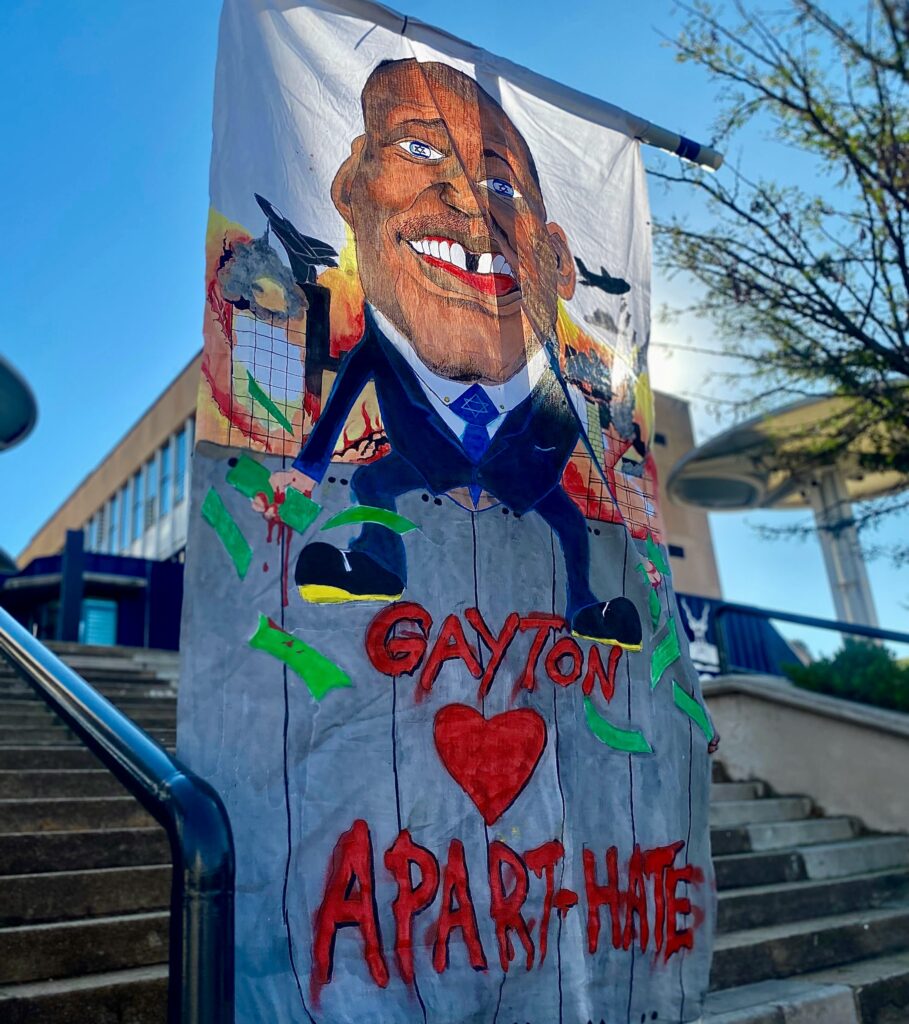
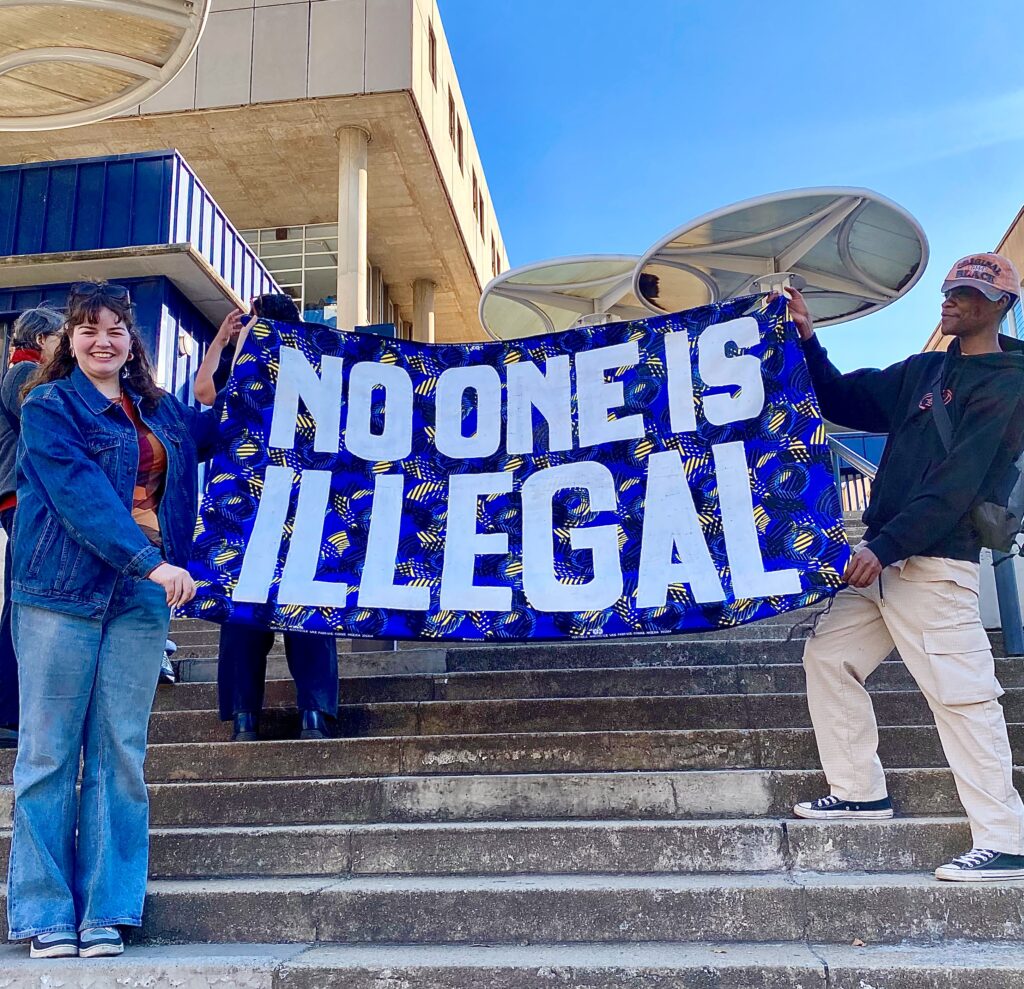
Protesters transformed the university entrance into a focal point for advocacy, displaying prominent banners and hand-painted signs condemning anti-migrant violence. One sign targeted the xenophobic rhetoric of Gayton McKenzie, accusing him of fueling an ‘Apart-hate,’ while others declared, ‘Targeting undocumented migrants is a hate crime’ and ‘No one is illegal.’
This demonstration was organised as a joint effort between Community Arts Mobilisation Project (CAMP), BDS Coalition, Kopanang Africa Against Xenophobia, Wits University Palestine Committee (WAPC) and Siyafana Sonke.
As attacks on migrants grow increasingly hostile, demonstrators call on law enforcement agencies to actively prosecute those inciting violence.
One protestor, Professor Marie Huchzermeyer, said the attacks constitute hate crimes. “This includes not only targeting people on the basis of their culture or country of origin, but also their migration status,” she states.
Dean Hutton, artistic director of CAMP, underscored the role of creative movements in driving social change, noting that artistic expression can “appeal to the soft parts of humans that rhetoric does not touch or move to action.”
Huchzermeyer echoes this view, stating “There is a view in Siyafana Sonke that I am drawn to which tries to win over the adversaries, making it a campaign of love rather than confrontation.”
Picture of two activists holding a banner that reads “No one is illegal”. Photo: Jamie Ho.
The picket is one of several planned demonstrations aimed at countering xenophobic narratives across South Africa. However, with tensions continuing to simmer across multiple provinces, activists acknowledge they face sustained pressure as they push back against organised anti-migrant sentiment.
FEATURED IMAGE: Picture of demonstrator holding a sign reading “Targeting undocumented migrants is a hate crime”. Photo: Jamie Ho.
Professional and ethical conduct are key to bringing back honour to the legal profession Justice Mbuyiseli Madlanga says.
Justice Madlanga made a call for action, stating that honour must be brought back to the legal profession.
The Book Legal Ethics in South Africa is the first of its kind in contemporary times as the last book was published 40 years ago.
A call was made for legal ethics to be made compulsory in the country’s LLB curriculum.
In the plight of unlawfulness, greed and rapid corruption that constantly dominates current affairs, as seen in the ongoing Madlanga Commission, the book Legal Ethics in South Africa is timely and necessary. The book seems to offer a glimpse of hope urging for a transformation that is rooted in prioritising legal ethics.
On 18 June 2026, Wits University hosted a book launch for Legal Ethics in South Africa edited by Law Professor Helen Kruuse from Rhodes University. The introductory remarks were given by Justice Mbuyiseli Madlanga, who is also currently the chancellor for Rhodes University.
Madlanga emphasised how ethical leadership, integrity and courage are essential for the preservation of the constitution and South African society at large. Additionally, ethics and the constitutional mandate of legal practitioners must extend to people beyond legal practitioners. “Legal ethics in South Africa must be welcomed enthusiastically,” he said.
Madlanga argued that legal ethics needs to be compulsory in the LLB curriculum nationwide as opposed to having it as an optional elective. He said, “legal ethics is not just about compliance, it is about understanding and making moral judgment.”
Madlanga said “ordinary people have a general view of how there is no honour in the legal profession… most people understand it as a profession where people do as they please.” As a result of this connotation, Madlanga pushed for people within the legal field to change this narrative by acting honourably and ethically.
The significance of the book lies in the fact that it is the first book of Legal Ethics in South Africa in contemporary times since the last was published 40 years ago, the book launch celebrated the very first edition of the recently published book. Yet, that is not all, an important aspect of the book is the manner in which it shapes the minds of current and future legal scholars and practitioners which directly impacts how law functions within South Africa.
Facilitator, Professor Helen Kruuse reminded the audience that ethics informs the broader social and psychological context, as she reflected on how the book itself is divided into three parts: Academia, Judiciary and Practice.
At the close of the evening, Klaaren noted that the book is the “start of a conversation, centering in ethical law.” Although the book is centred in the legal context and field, its existence may be a reckoning of sorts for those in the legal profession and society alike.
FEATURED IMAGE:Legal Ethics in South Africa book cover. Photo: LexisNexis Website
June 16 marks Youth Day in South Africa, commemorating the 1976 Soweto Uprising. Fifty years ago, thousands of primary and high school pupils marched against the apartheid government’s imposition of Afrikaans as the medium of instruction. What began as a peaceful protest, which was meant to end at Orlando Stadium with a rally, was cut short on the way when police opened fire, killing hundreds of students.
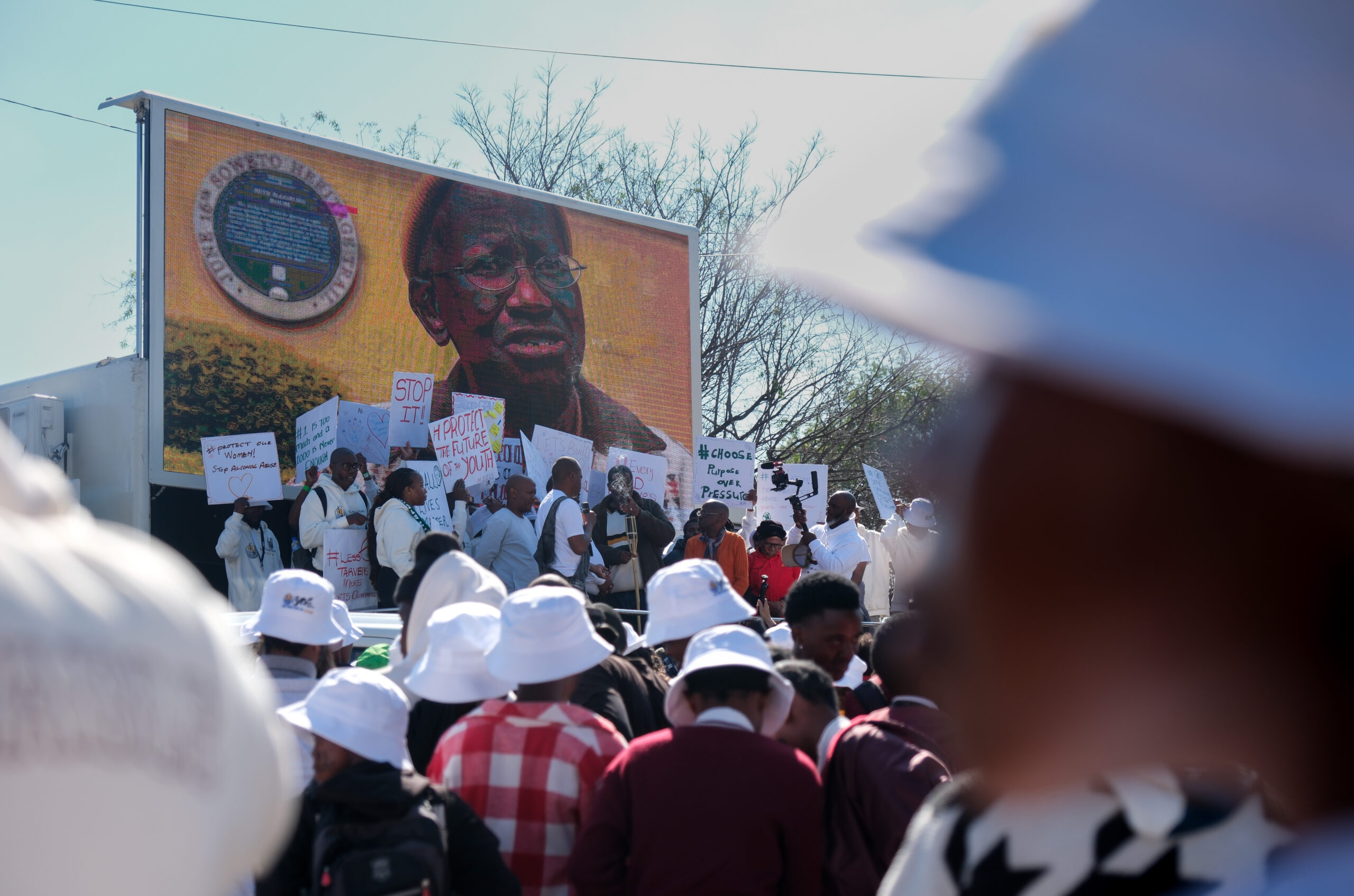
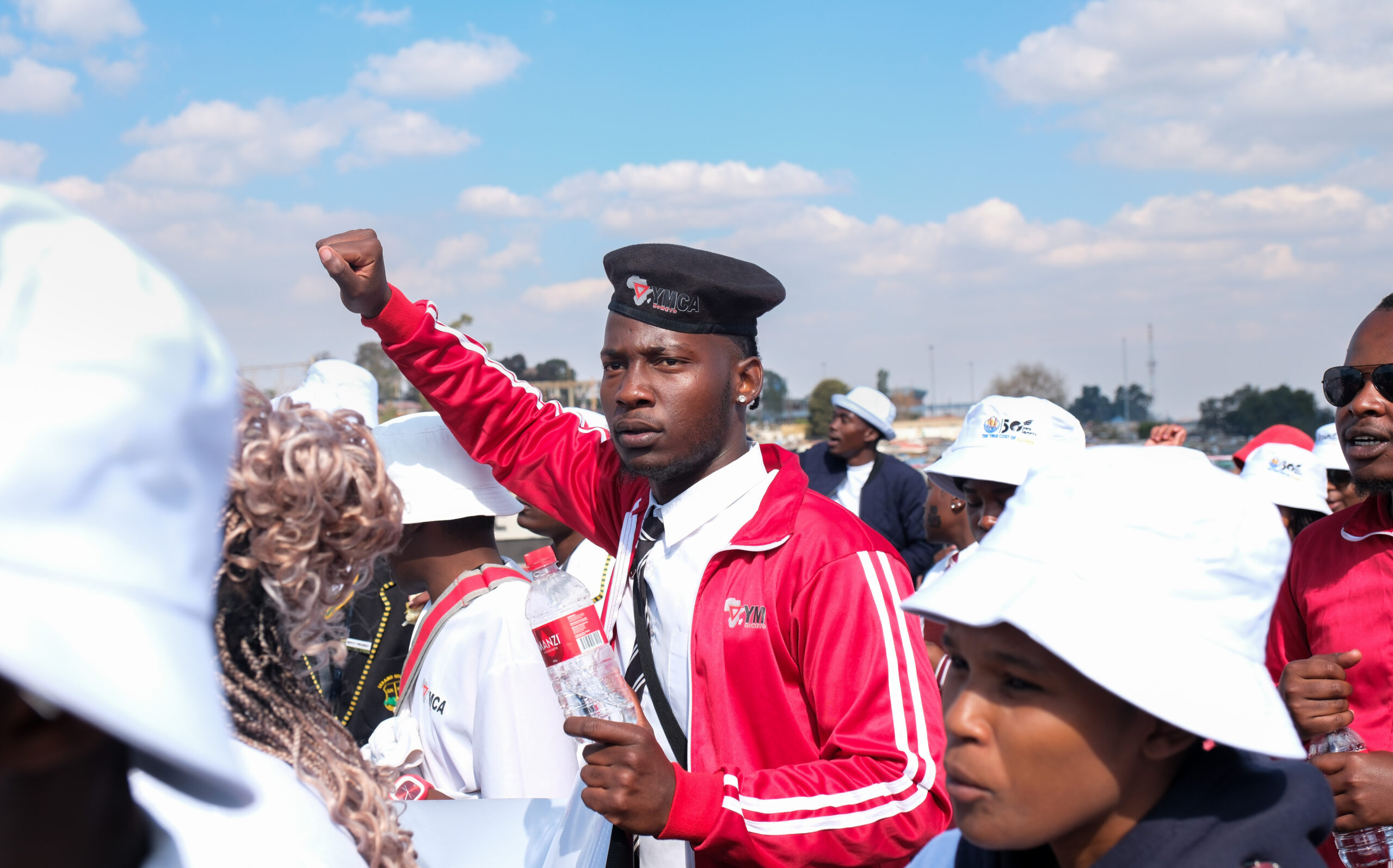
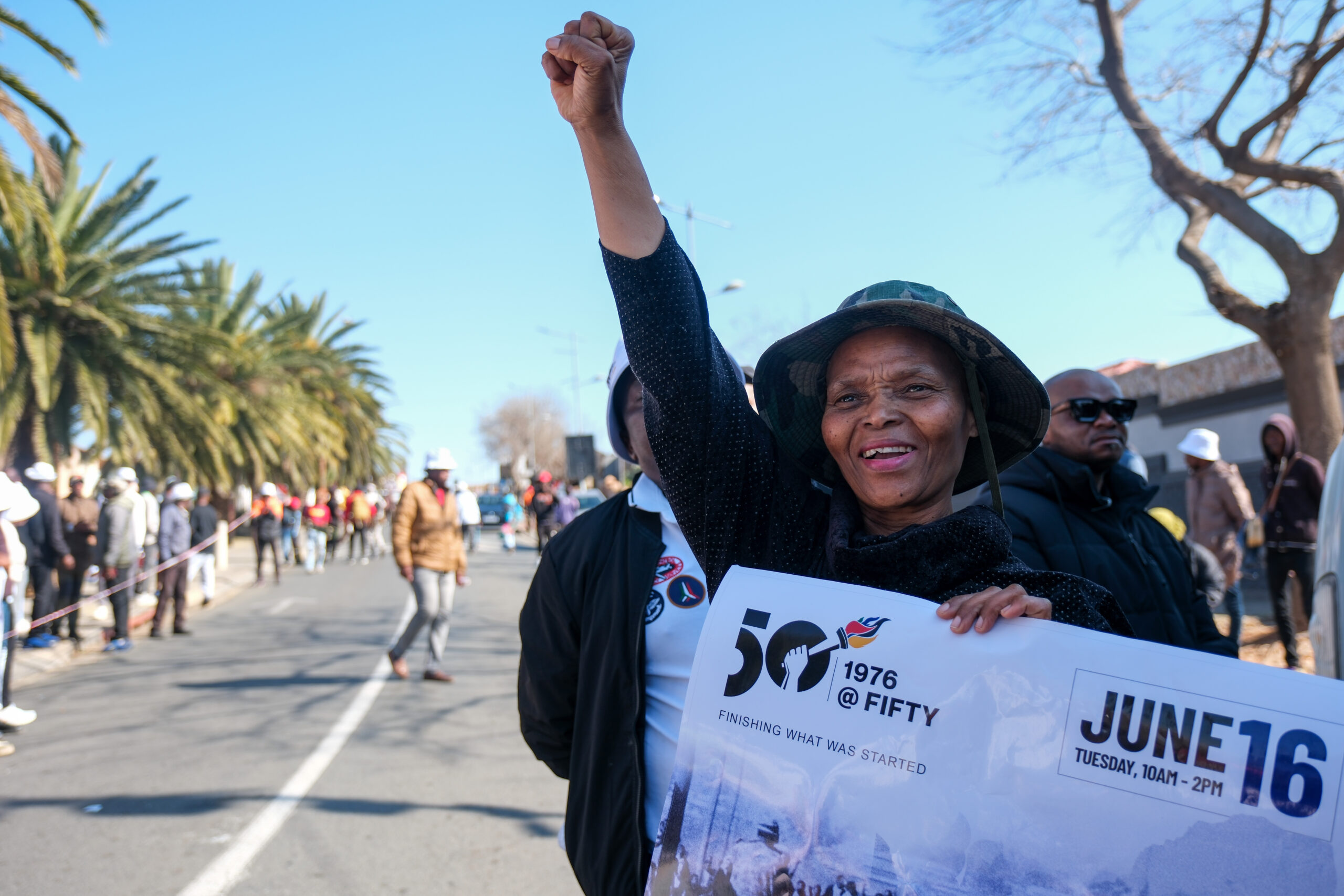
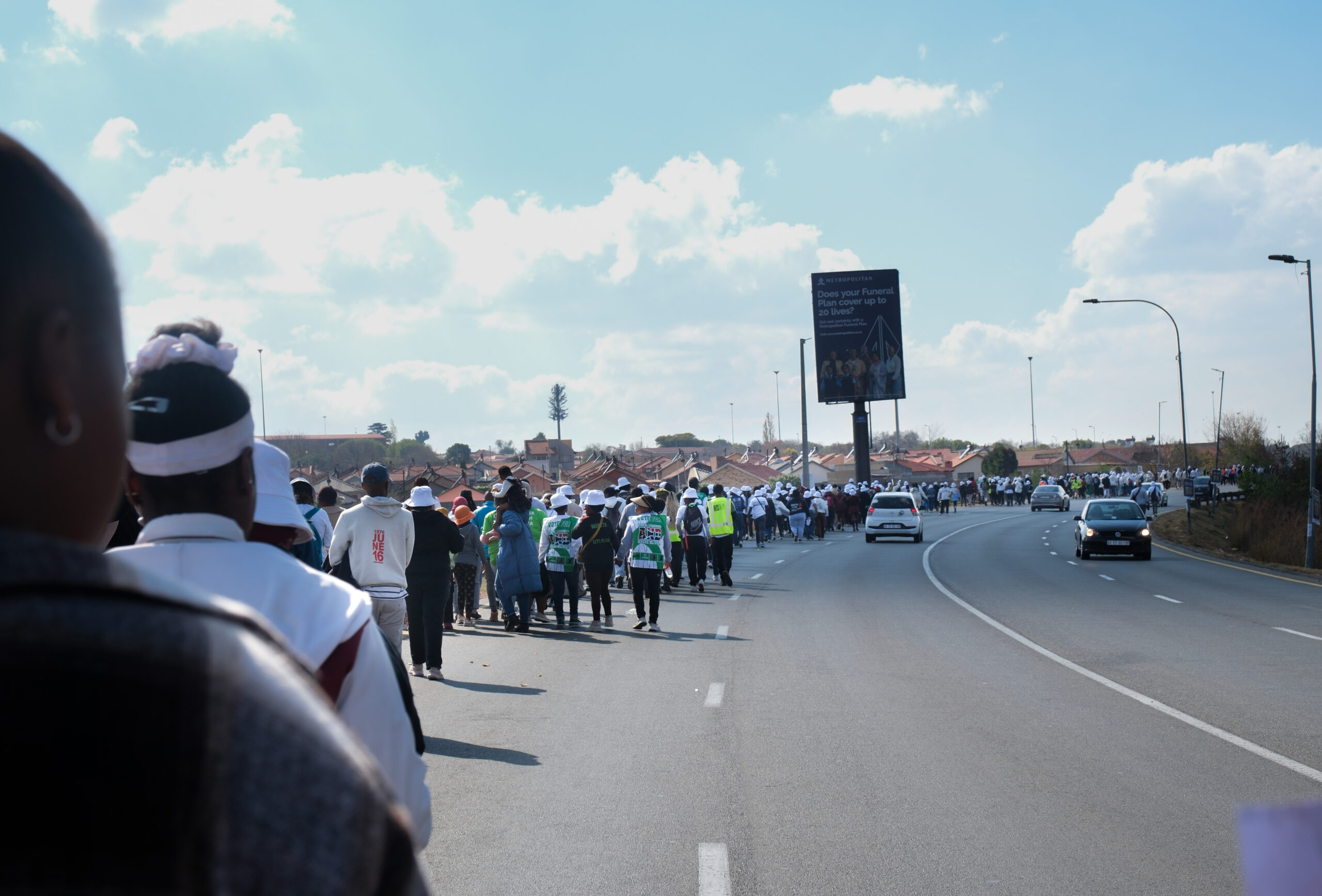
On June 16, 2026, hundreds of people, including university students and members of civil society, gathered in Soweto to retrace the original route and “finish what was started”. The march honoured the courage of the 1976 generation and stands as a reminder that their fight for freedom and justice continues to inspire South Africa’s youth today.
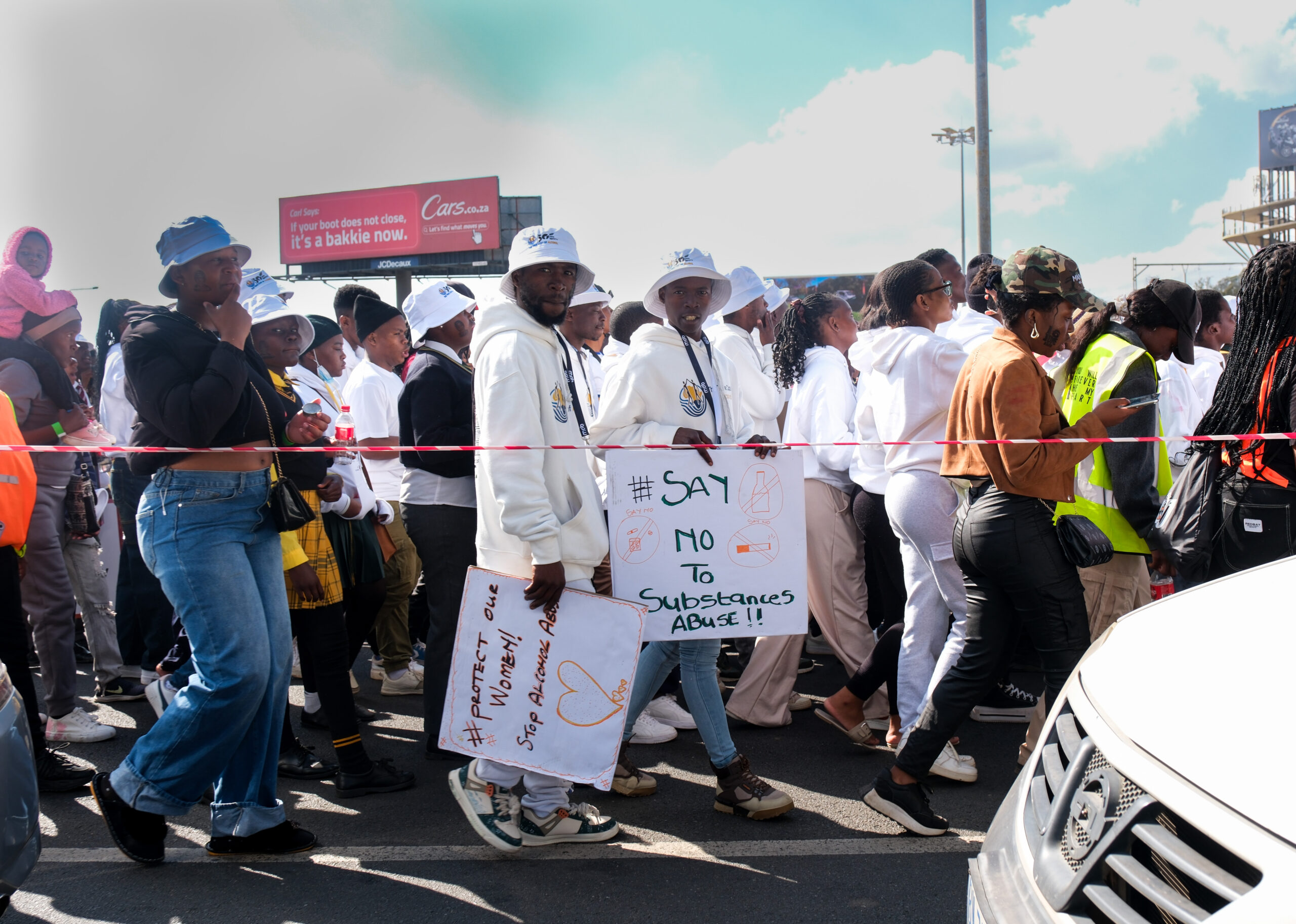
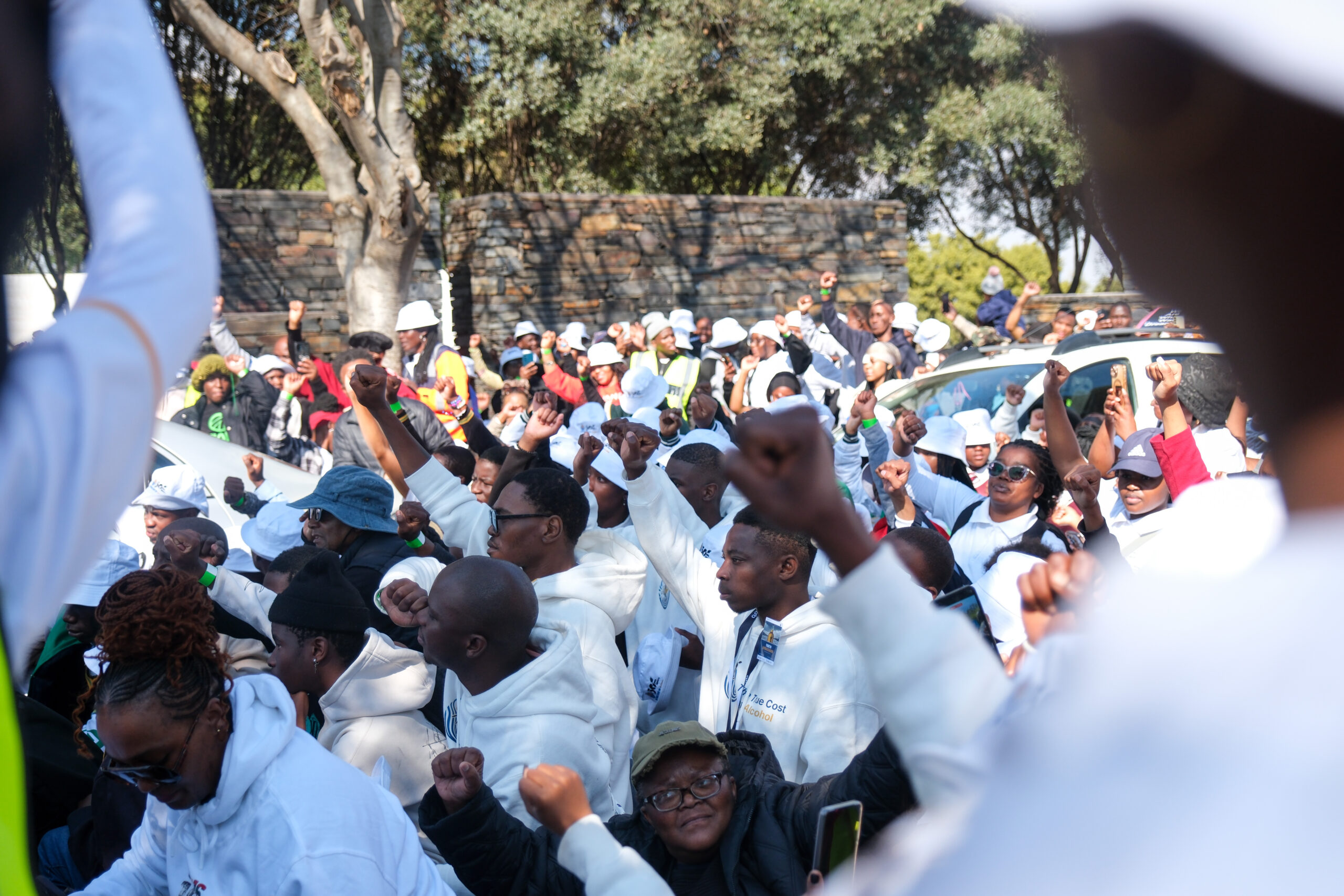
Opening speeches before the march. Photo: Hannah Brown
Youth walking through Soweto. Photo: Hannah Brown
March to “finish what was started”. Photo: Hannah Brown
Youth Day March. Photo: Hannah Brown
Youth Day – commemorating the 1976 Soweto Uprising. Photo: Hannah Brown
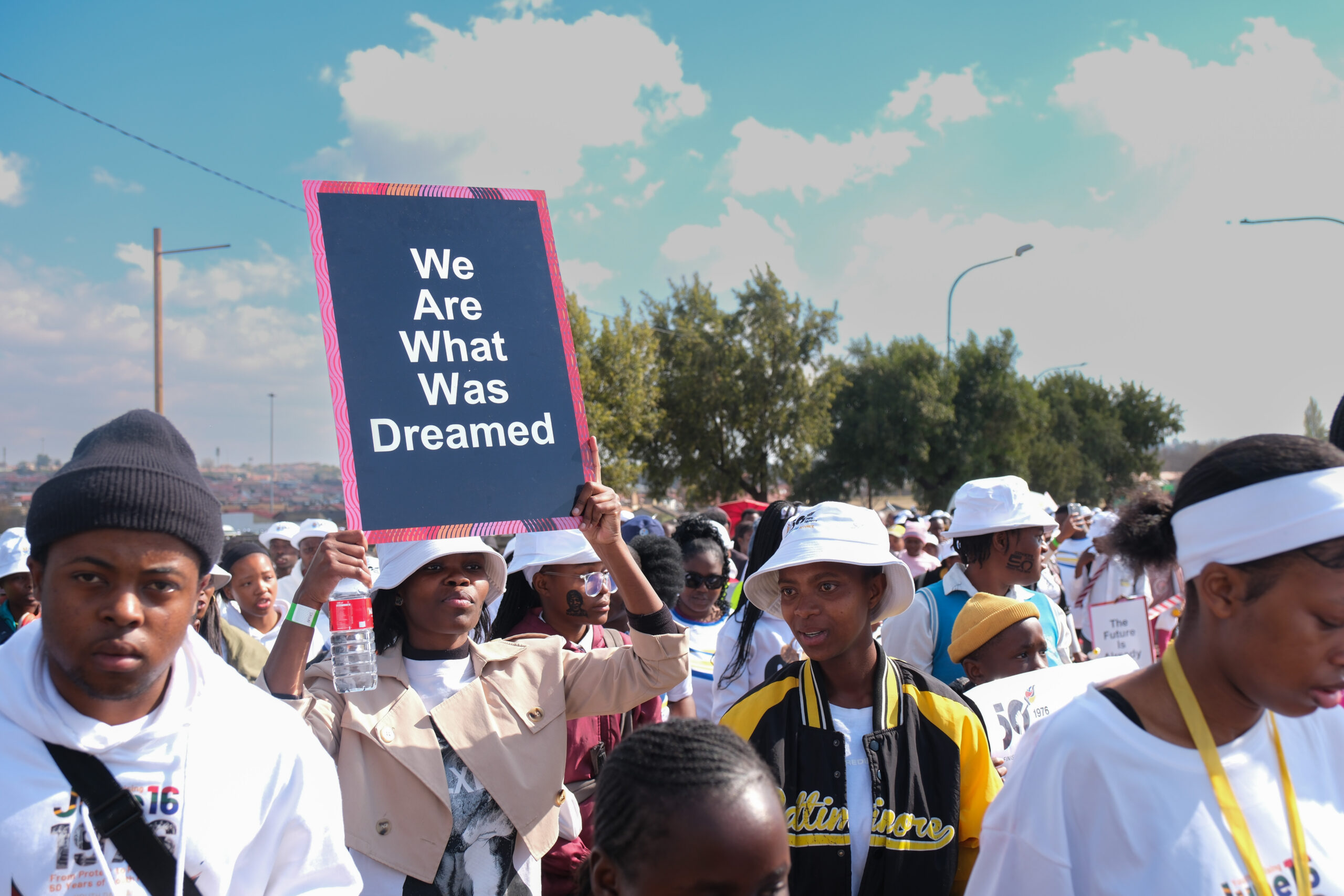
‘We are what was dreamed’ poster. Photo: Hannah Brown
In 1976, black students bravely marched against the apartheid government. Photo: Hannah Brown
Marching toward Orlando Stadium. Photo: Hannah Brown
FEATURED IMAGE: Opening speeches before the march on June 16, 2026. Photo: Hannah Brown
Graduates remain the least unemployed, but rising job pressure is keeping more students at university. For many, a degree is no longer the finish line.
Unemployment statistics have risen across all categories.
Graduate unemployment has risen slightly, but graduates are largely unaffected.
But some students are pursuing postgraduate studies as they can’t find jobs.
According to Statistics South Africa’s Quarterly Labour Force Survey over 340 000 more people in South Africa now sit without work. University graduates still have the lowest unemployment rate in South Africa, even though it has picked up by 1.8% in the first quarter of the year
Overall, the graduate unemployment rate is 12.2%. Reflecting the growing pressure of South Africa’s competitive and slow-growing labour market. But graduates remain significantly less likely to be unemployed than people with and without matric certificates.
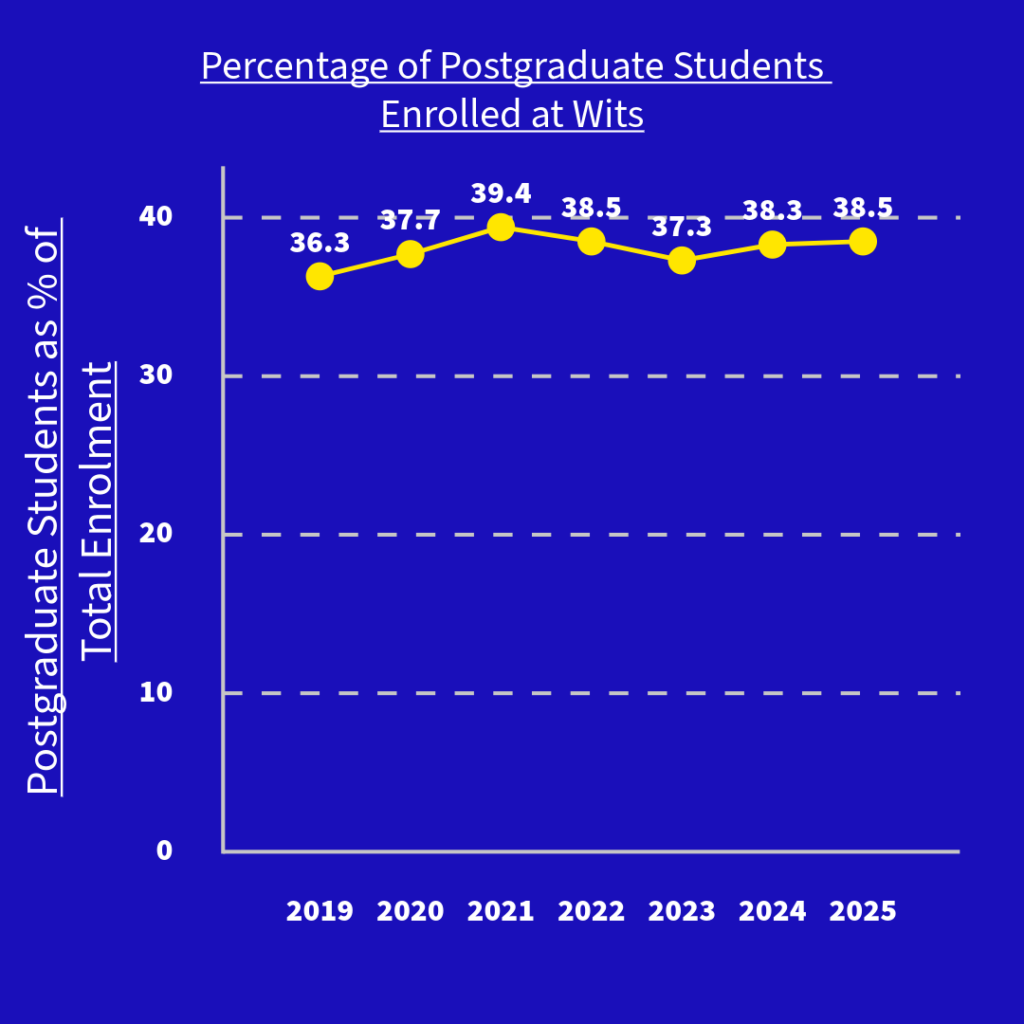
Yet, behind these statistics, another trend has emerged: more students are choosing to stay in university and pursue postgraduate studies. The question is: why?
A graph showing the postgraduate enrolment percentage of the total student enrolment at Wits since 2019. Graphic by Zebrena Ralph
Lindelwe Cili, a team leader for Career Services at Counselling and Careers Development Unit (CCDU), described the link between unemployment and pursuing postgraduate studies as something that does not have a straightforward “yes or no” answer.
She says graduates are not pursuing post graduate studies solely to avoid unemployment. Instead, the decision is shaped by a mix of career requirements, competitiveness in the job market, and individual goals. “Whenever we engage with students, I don’t think we see them using postgrad as a fallback option”, Cili told Wits Vuvuzela.
“One can pursue post-grad to deepen their specialization in the field…and also align with what the industry wants. Also, it depends on the type of degree programme that you are in. If you are in a professional degree, pursuing post-grad would be based on career goals”. This highlights an important nuance: postgraduate studies are often a strategic career move, not a delay tactic.
For some students, furthering their studies is not optional. Honours in Clinical Psychology student, Thabang Ramafoko, said furthering his studies is essential to achieving his career goals. “I want to be a clinical psychologist and that (post graduate studies) is the only way.”
However, the job market still plays a significant role in students’ decisions.
“I furthered my studies because of the job market and because of the degree I done. I did a Bachelor of Arts in Geography and Environmental Studies…You have to further your studies and specialise more so now I am doing my honours in Geography. It increases my chances of employment and also, I just want to be disgustingly educated,” said Honours in Geography student Kamogelo Mokoena.
For some people, the question is no longer whether to study or not, but how much further they need to go.
FEATURED IMAGE: A picture of the Postgraduate Club at the University of Witwatersrand. Image: Zebrena Ralph
Age might be nothing but a number, but in South Africa, it can be the thin line between having a job or not.
A struggling economy is forcing educated South Africans into prolonged unemployment.
Petition to end unfair age restrictions in career entry job opportunities.
Young graduate ideal vs older unemployed graduate reality.
A growing online petition calling for an end to age restrictions in jobs, internships and learnerships has revealed the unsettling reality of South Africa’s chronic unemployment. Young adults who are skilled but unemployed say they are being locked out of opportunities because they are considered “too old”.
Many internships and learnerships in both the public and private sectors commonly restrict applicants to those under the age of 35. Such age caps attached to entry-level opportunities unfairly disadvantage the older, unemployed candidates.
The petition has garnered over 10 000 signatures in just five days.
Signatory, Pat Mokoena (34) said being unemployed is “like being trapped in a cycle where employers demand experience while programmes designed to provide that said experience unfortunately exclude the majority of us because of how old we are, that’s why I signed the petition”.
Amid continued economic pressure in South Africa, unemployment remains among the highest globally. Youth unemployment has remained especially severe, and slow economic growth and limited job creation have intensified competition.
According to the conclusions of Hannah MacGinty’s master’s thesis, ‘Graduate unemployment in South Africa’, graduates are no longer entering the workforce immediately after completing their studies, resulting in delayed careers that stretch well into their 30s.
MacGinty warns that even those who secure employment are increasingly finding themselves in short-term or contract-based positions with limited long-term security.
This instability makes age restrictions even more problematic. Workers who lose jobs later in life often struggle to re-enter the labour market once they exceed programme age limits.
The petition and supporters thereof argue that “recruitment should focus on skills, qualifications, experience and willingness to work instead of age discrimination.”
While some employers may defend age caps as part of youth empowerment strategies, South Africa’s unique crisis needs to be considered.
This petition is a symptom of broader economic failures. It reflects the desperation and humiliation rituals that employment seekers have to endure in a constrained environment.
FEATURED IMAGE: Screengrab of the online petition. Photo by: Kamogelo Lesabe
RELATED STORIES:
Wits Vuvuzela, FINANCE FEATURE: Why financial freedom feels out of reach for South Africa’s graduates, August 2025
Wits Vuvuzela, INFOGRAPHIC: Uptick in unemployment rate, August 2024
Wits Vuvuzela, INFOGRAPHIC: South Africa’s unemployment takes top spot, September 2021
Wits is reopening Campus Lodge to ease postgraduate housing pressure, offering more affordable and dedicated accommodation for seniors.
The postgraduate accommodation has undergone much needed renovations.
The relaunch aims to address growing demand for affordable postgraduate accommodation at Wits.
Student leaders say the move is a step forward, but more support for postgraduates is still needed.
A once quiet Wit’s residence is preparing to welcome students again. The brown and blue building on the corner of De Korte and Station streets, may look the same from the outside but new rooms and common areas await inside.
Campus Housing and Residence Life (CHRL) confirmed that the postgraduate residence had been out of use and was in dire need of upgrades.
According to a post shared on CHRL’s TikTok page, the residence was initially expected to reopen on May 4, 2026, but couldn’t due to delays with equipment deliveries.
Claudine Prim the manager of the Central Accommodation Office, said the reopening is now expected on 18 May to address demand.
Prim said there is an “influx of postgraduate students looking for internal residences.”
The self-catering residence will offer a range of housing options, including studio apartments, two-bedroom apartments, and single rooms with shared kitchens and bathrooms.
Campus Lodge joins existing postgraduate residences including West Campus Village, International House and Wits Junction.
A picture of the entrance of Campus Lodge. Photo by: Sanele Sithole
For many students, the reopening could not come at a better time.
Mahloromela Silas Seabi, an MSc Computer Science student and chairperson of the Postgraduate Association (PGA), said postgraduate students often face limited and expensive housing options.
“University residences tend to be expensive, especially for postgraduate students, who are usually limited to Wits Junction, West Campus Village and International House,” Seabi said. “This gives an opportunity for more affordable postgraduate accommodation.”
He added that postgraduate students are often disadvantaged during residence allocation, as priority is usually given to undergraduate students, particularly first-years.
Seabi said demand for affordable postgraduate accommodation continues to grow alongside rising unemployment and economic uncertainty.
“Many students pursue postgraduate studies partly because of economic pressures, but often there isn’t enough affordable space to accommodate them,” he said.
Beyond affordability, Seabi argued postgraduate students require different support structures from undergraduates.
“A postgraduate space needs to cater for adults,” he said. “Some students are married; some have children. There needs to be communal spaces, lounges, good computing systems and support services that make students feel supported in their research journey.”
He added: “Accommodation is part of building a stronger postgraduate community — a space where students can interact, share ideas, support each other and manage the pressures of research.”
Students interested in applying for accommodation at Campus Lodge can visit the Central Accommodation Office on the ground floor of Solomon Mahlangu House for more information.
FEATURE: A picture of Campus Lodge. Photo by: Sanele Sithole
Former Auditor-General Terence Nombembe takes the chair at Wits Council, bringing a legacy of accountability to the university’s top governing structure.
Terence Nombembe, a key figure in South Africa’s fight against state capture, was appointed Chairperson of the Wits Council on 6 May 2026.
Nombembe has been a member of the Council since 2021, providing him with years of insight into the university’s complex financial and policy landscape.
SRC Deputy President Sibusiso Ngele expressed hope that Nombembe’s history with student leadership will lead to a positive future for the university.
The University of the Witwatersrand (Wits) has officially appointed former Auditor-General and Zondo Commission investigator Terence Nombembe as the Chairperson of the Wits Council. The move, announced on 6 May 2026, brings a world-renowned expert in accountability to the university’s highest governing body.
A legacy of oversight
Nombembe is no stranger to high-stakes governance. Before his election to the Chair this month, he served as a member of the Wits Council for five years, starting in 2021. His professional pedigree is rooted in transparency; he served as South Africa’s Auditor-General from 2006 to 2013 and later as the Head of Investigations for the Zondo Commission into State Capture.
Beyond his public office, Nombembe has held influential roles as the CEO of the South African Institute of Chartered Accountants (SAICA) and served on the board of the WWF South Africa. His career has been defined by a zero-tolerance approach to financial mismanagement, a background that Sibusiso Ngele, Deputy President of the Wits SRC, considers a vital asset.
“He is very familiar with Wits’ proceedings and the Council in general,” Ngele said. “That background is very important for the institution’s future.”
While the appointment of an “integrity expert” carries significant weight, Ngele was careful to define the boundaries of the Council’s power. He noted that while the Council approves major policy, financial rules, and documentation, the day-to-day management of the university remains the responsibility of the Vice-Chancellor.
Ngele noted that Nombembe’s role is primarily one of oversight rather than executive action, emphasising that the entire Council structure, not just the Chair, is responsible for implementing the university’s approvals. “As much as he is [the] Chair, it’s not very executive decisions that he has [to make]; it’s the whole structure that’s responsible for that implementation,” Ngele explained.
Addressing sensitive issues
When asked if Nombembe’s history of holding institutions accountable would change how management interacts with student leadership on sensitive topics, such as campus infrastructure, Ngele admitted the answer is not simple.
“It would be very difficult to answer that question,” Ngele stated. However, he remained hopeful that Nombembe’s track record would lead to a more collaborative environment. “Given his history with the SRC, I think we can really hope for a great future ahead for Wits,” Ngele concluded.
Waiting for the full picture
At the time of publication, other top members of the SRC executive, including President Gilbert Nchabeleng and Treasurer General Sonwabo Mhlahlo, had not yet commented regarding their specific expectations for Nombembe’s term.
As Nombembe settles into the chair, the student body will be watching to see how his high-level expertise in accountability translates into the tangible student experience on the ground.
FEATURED IMAGE: Picture of the Great Hall at the University of Witwatersrand. Photo: Daniella Ripamonti
R520-million partnership between Universities South Africa and Services SETA intended to be a lifeline for the missing middle has been met with administrative silence as Wits University leaves students in the dark.
Wits University received R20 million of a R520 million national bursary allocation.
Both USAf and the university financial aid have declined to clarify how the funds will be distributed.
Eligible self-funded students lack information on how to access the aid despite the high-profile announcement.
A partnership between Universities South Africa (USAf) and Services SETA launched an ambitious R520 million bursary fund on 30 April 2026 aimed at funding 5 200 students up to R100 000 a year for three years, but details of how Wits students can access the institution’s allocated R20 million remain unavailable with university authorities refusing to divulge any information.
The R520 million was distributed equally across 26 public universities in South Africa, with each institution receiving R20 million to support up to 200 beneficiaries.
An infographic illustrating the USAf and Servies SETA partnership. Graphic by: Rearabilwe Tsebela
In a press statement, USAf stated that the bursary fund is open to first-time applicants who are South African citizens enrolled at a public university, with funding capped at R100 000 per year. USAf CEO Dr Phethiwe Matutu, linked the fund to the missing middle gap students whose household income exceeds the R350 000 NSFAS threshold, but who still face financial pressure. However, the missing middle at Wits University are finding that information is strictly private.
“I have a concern that we are singling out specific funding”, stated Amanda Kort, a representative of the Wits financial aid office. “This is an internal administrative process, and I do not believe that we should provide the information nor the interview.”
This wall of silence is mirrored at the national level. Gcina Nhleko, USAf manager for corporate communications and media inquiries, deferred responsibility to the campus. “We do not allocate funds to students as USAf, but universities do,” Nhleko said. “We have been requested to follow the university protocols, please liaise with your financial aid bureau.”
Ntsako Mngomezulu, a bachelor of science student majoring in geology and applied geology, who is a self-funded missing middle student, has not found any information on where to apply for the R100 000 bursary. She noted that while the funding would “unburden her the cap does not adjust to inflation in Johannesburg.”
Lethabo Leputu, a bachelor of arts in film and television student, echoes the information gap. “It is my first time hearing about this,” she said when asked about the bursary. Leputu is partially funded by the National Film and Video Foundation which covers her tuition, but she must still find money for accommodation: placing her squarely in the missing middle. While acknowledging the R100 000 would not cover everything, she sees real value in what it could cover. “I would really appreciate my residence fees being covered. That would alleviate the stress and anxiety that comes with seeing your fee statement,” she said.
The lack of transparency raises questions about accountability, especially as Services SETA acting CEO Sibusio Dhladla noted the organisation is currently under administration due to “governance failures.”
Services SETA had not responded to requests for comment by the time of publication. For now, the R20 million earmarked for Wits remains a ghost in the system, leaving the students it was meant to support without a clear path to access the promised relief.
FEATURED IMAGE: Wits students protest against fee increase in 2016. Gap funding came as a solution from government to help students whose household income is less than R600 000. Photo: Wits Vuvuzela/File
Wits University reclaims African narratives through the South African premiere of Kancícà at the Digital Dome, proving 8K innovation is a powerful tool for cultural memory and heritage.
The Wits Anglo American Digital Dome is pivoting from its traditional scientific roots to become a hub for African mythology and storytelling.
Kancícà utilises high-end gaming engines and 360-degree 8K animation, positioning Wits at the global forefront of immersive digital production.
The project serves as a “portal” for students to explore the future of work, AI, and African leadership within the global digital ecosystem.
The interior of the Anglo American Digital Dome. Photo: Supplied
While the Johannesburg Planetarium officially completed its R90-million transformation into the Wits Anglo American Digital Dome in November 2024, a recent premiere suggests the facility is entering a new era of cultural significance.
On 8 May, the Dome hosted the South African premiere of Kancícà, an immersive experience that moves beyond traditional astronomy to signal a turning point for how the continent tells its own stories. The launch positions Wits as a leading hub for cutting-edge digital experiences rather than a mere consumer of Western technology.
Dr Moumita Aich, instrumental in the Dome’s research integration, notes that 8K full-dome technology allows for a “shared emotional experience,” emphasising that this technology creates new forms of public engagement while preserving heritage.
“The scale and detail make African histories and traditions feel alive and immediate,” says Aich. “In this way, the Dome becomes more than a scientific space: it becomes a place for cultural memory and reimagining African narratives through immersive storytelling.”
Festival director Alby Michaels explains that Kancícà focuses on creating work “by Africans, for Africans, and especially through an African lens”. The production uniquely utilised Unreal Engine, a high-end gaming engine, to render 2D and 3D animation for the full-dome experience. “It opens up the doors for more experimentation… so that we can become the leaders in our own narratives,” Michaels says.
For Wits students, Michaels sees the Dome as a laboratory for the “future of work”. “I’m hoping an engagement like this will open a little door, even a portal, for imagining the future in a better way for all of us,” he told Wits Vuvuzela.
Audience members from outside of Wits, Constant Volschenk and Bongiwe Ndulula, highlight the immersive nature of the dome, which relies on a 35-degree viewing angle in reclining seats. “The main scenes are in front of you, and the surrounding is the background of the scene,” says Volschenk. Ndulula was particularly moved by a spiritual scene involving a boat in a storm, noting that the 360-degree view offers a vital shift in perspective.
Following its premiere, the programme is now open to the public at the Wits Anglo American Digital Dome from 25 April to August 2026. As Aich suggests, if you have not yet watched this wonderful show, it is a necessary gateway into the future of African digital heritage.
FEATURED IMAGE: Exterior picture of the Anglo American Digital Dome. Photo: Daniella Ripamonti
A unique Mother’s Day storytelling event at Melville Koppies used African folklore to reconnect adults with childhood, motherhood, and tradition.
A Mother’s Day storytelling at Melville Koppies, Sunday 10 May.
It was a unique Mother’s Day experience where mothers could embrace their inner child.
Grace compared the process of the smelters to what motherhood is and showed us how it relates to mothers and what they go through.
As the birds chirped and the cold morning wind rushed through the branches at the Melville Koppies Nature Reserve, attendees made their way up the hill towards the lecture hut; they were in for an exciting time ahead. “A lot of people here come to me and say, ‘I haven’t had a story being told to me in 50/60 years and it just lit up my life’. And all the adults came to me after today’s storytelling and said, ‘I was a child again, thank you so much,” said Merle Grace, the voluntary storyteller at Melville Koppies Nature Reserve.
Grace had prepared two stories: an anti-colonial African parable titled “Fly Eagle Fly,” retold by Christopher Gregorowski, and ‘Kasanko’s Dream’ by Gcina Mhlophe about ironmaking. chosen specifically for Mother’s Day. “I wanted a story about something female and strong, that is not on the knows, and I found the story ‘Kasanko’s Dream’” said Grace. “I thought it was the perfect Mother’s Day story, because the process of ironmaking and fertility were seen as very similar in those days,” she said.
Merle Grace telling the story ‘Kasanko’s Dream’ on Mother’s Day. Photo: Chrislyn Majiedt
Grace, upon conducting research, found out that smelters, like the one they have on the Melville Koppie, were used for ironmaking. The process was seen as a holy and sacred process of making something out of what seems like nothing. The furnace was often symbolically linked to a woman’s womb, as both were believed to produce life and strength through hidden processes.
Iron was formed inside the furnace where no one could see the transformation taking place until the final product emerged, in the same way that a baby develops unseen inside a mother’s womb. To Grace’s understanding, the ritual around fertility and smelting were very similar for the iron Age farmers and miners 500 years ago.
Smelters were used to extract iron from iron-bearing rocks by heating the ore in a furnace with burning charcoal. Early African settlers such as the Sotho and Tswana built clay furnaces, often symbolic of a womb and the birthing process of iron. The settlers would refine and shape the metal into specific tools and weapons.
“What’s very special about sitting here is while she is telling a story the birds just start singing, there is always a bird doing something so you really feel like you are in a different place,” says Jenny Grice, acting chairperson and head guide and primary event coordinator for the Melville Koppies Management Committee. The combination of nature and storytelling made the audience forget that they were in the city, and everyone just embraced the moment.
Grace kept the audience on their toes – quite literally – by having them stretch and jump between the stories, to allow for one story to sink in and to prepare for the next one. Everyone gladly joined her and laughed in between stretches. She captivated the audience, whose eyes locked on her as she spoke.
Through storytelling, connecting with nature and embracing their inner child, the audience experienced a truly different kind of Mother’s Day –one that felt deeply meaningful and extra special.
“This was the most interesting Mother’s Day,” said one of the women in attendance when the storytelling was complete. The attendees were eager to speak to Grace after, most of them thanking her for the wonderful experience and the opportunity to embrace their inner child.
Feature Image: Merle Grace a voluntary storyteller at Melville Koppies Nature Reserve pointing at the trees. Photo: Chrislyn Majiedt
With every ending there is a new beginning, and that’s been the case for a recently shuttered local second-hand bookshop.
The Bookdealers of Melville was given a short notice to move out of their initial space.
Financial constraints have had a negative impact on Bookdealers of Melville, with low turnovers in comparison to 11 years ago.
Bookdealers has moved three blocks up,now located inside a coffee shop, namely The Sourcery in Melville, where customers can enjoy both books and coffee.
The Bookdealers of Melville is a well-known local second-hand bookshop that has been running for 35 years. Unfortunately, this year marked the beginning of the end for Bookdealers after being left with no choice but to move out of their shop by the end of April.
Photo of boxes filled with books inside the original Bookdealers of Melville store. Photo: Sikelelekile Pahlana
Bookdealers’ last day of trading was officially on April 20, 2026, and their final departure and relocation took place on Saturday, May 2, 2026.
Wits Vuvuzela visited the new, smaller set-up inside The Sourcery, a coffee shop three blocks up from the original store, to get some insight into the change.
Doron Locketz, owner of Bookdealers of Melville said: “We knew that there were new owners [for the space] in January, I think the sale went through. It took them a while to get their admin stuff together and they gave me notice in March to leave, to move out first, at the end of March. But you know, legally they’ve got to give you a calendar’s month notice. Then they realised they can’t do it, not legally, so the notice was for the end of April.”
Locketz claims that initially the landlord was going to ask for a moderate rent increase to what Bookdealers was paying previously, “but then he [the landlord] doubled it and at that stage we were not sure whether we would be able to manage the rental, and he instead gave it out to somebody else.”
Locketz recalls the conversation between himself and the landlord and describes the contrast in the interaction as being, “very casual and easy for him, you know, but for us it is a nightmare because we have been here for something like 35 years, which is crazy, you know in the one spot, and it was a hell of a business to get everything out and in the new area. You know, we’ve lost probably about 20-25% of our shelving space, which is going to be an issue. The stuff that we take out will most probably go on to our website.”
Business before the move was already slow. “It’s been very tough. Our turnover has been lower than it was 11 years ago. So, we have to be, you know very careful, we did have two closing down sales, which did help, but we haven’t traded now for over two weeks, we’ve taken quite a knock here.”
Alongside the financial constraints of the business, a declining interest in reading has taken its toll. Locketz says “In those days, 11 years ago, we would have been all right, but in these hard times when, you know books are no longer the flavour of the month, people play on their phones, or read digitally, and there are far less book collectors than there used to be you know, and that all hurts the book business, second-hand book business and the collectibles tremendously.“
These days, people tend to rely on electronic devices, audio books, podcasts or YouTube and even social media for entertainment and information. Locketz describes the impact of fluctuating trends in terms of buying and selling as detrimental to the South African literacy rate.
However, all hope is not lost. He maintains an optimistic outlook on the future, “The books will never disappear. There are more books published regularly all the time with these strong new novelists coming out, nice new South African novelists.”
When asked about the kinds of books people tend to buy more, Locketz shared how literary fiction has always been very popular and alongside literary fiction is any African orientated books especially by black South African authors which are equally popular.
The reality of business and its hardships is even more of a reason to support local bookstores, such as the Bookdealers of Melville.
FEATURED IMAGE: A photo of a sign outside the previous space of Bookdealers of Melville. Photo: Sikelelekile Pahlana
Growing violence, censorship and political attacks against journalists have driven press freedom to its lowest point. Speakers at the Investigative Journalism Summit highlight the urgent need to defend truth in an era where “reality itself feels fake”.
The 2026 RSF World Press Freedom Index reports lowest global score in its 25-year history.
The 2026 Investigative Journalism Summit warns that intimidation, online harassment and imprisonment is silencing journalists worldwide.
129 journalists were killed in 2025, highlighting the important need to protect press freedom.
As the world observed World Press Freedom Day on May 3, 2026, journalist safety came under the spotlight more than ever before. Around the world, intimidation, harassment and imprisonment are increasingly used to silence reporting. 2025 was the deadliest year on record with 129 journalists killed worldwide. According to the 2025 Human Rights Watch Report, approximately 72% of the world lives under authoritarian regimes, where they are locked within state-controlled information. The latest Reporters Without Borders (RSF) World Press Freedom Index shows that press freedom is now categorised as “difficult” or “very serious” in more than half of the world’s countries – the lowest global score in the Index’s 25-year history.
Journalism helps the public make informed, fact-based decisions and hold power to account. In a time of misinformation and disinformation, no one knows what to believe anymore. At the 2026 Truth Tellers, Sir Harry Evans Investigative Journalism Summit, held on May 6, Katherine Viner, Editor-in-Chief at The Guardian, reflected on our changing information landscape. “We used to talk about fake news, but now reality itself feels fake,” she said.
The theme of World Press Freedom Day 2026 was ‘Shaping a Future at Peace’, highlighting the important role of independent media in conflict zones. Accurate and timely reporting can save lives, counter disinformation and expose state violence. Yet, despite protections under international humanitarian law, journalists are increasingly treated as targets.
Governments are weaponising laws to silence reporters. RSF warns that journalism is being “asphyxiated” by political attacks, reduced media funding and a system that is criminalising reporting. As the RSF Index revealed – the United States dropped seven places, signalling a loss in media independence, following cuts to international broadcasters and repeated attacks on the press by President Donald Trump. In Latin America, Ecuador fell 31 places after the murders of journalists Darwin Baque and Patricio Aguilar. While Peru dropped 14 places following the killing of four reporters.
South Africa ranks in 27th place, the highest on the African continent and includes a range of media outlets. Although, many independent journalists still face challenges, and public broadcasters sometimes deal with political pressure. In a 2023 statement, SANEF highlighted “trends of trolling and doxing, (the act of disclosing a journalists full name, address, contact number, and other identifying details without their consent).”
Israel continues to commit violations of international law, and the military were responsible for killing two-thirds of journalists last year. According to RSF, since October 2023, more than 220 journalists have been killed in Gaza, including at least 70 while reporting.
Across the Sahel, countries such as Niger have experienced a collapse of press freedom under armed groups and military juntas. Sudan has become one of the most dangerous places to work; the ongoing civil war has created a climate of fear as Government targeting and military violence continues.
Online harassment, particularly against women reporters continues to rise. During the Summit, Maria Ressa, a Filipino journalist and co-founder of Rappler, said she received “an average of 90 hate messages per hour” online, adding that, “you’re targeted because you’re a journalist, because you determine fact from fiction.”
World Press Freedom Day poster. Photos: Hannah Brown
In Iran, thousands were killed during protests, and journalists were jailed under cybercrime laws. Similar methods have also been seen in Bahrain, Kuwait, and the wider Gulf region, where reporters have faced imprisonment for documenting conflicts. Despite the dangers, Ressa insists there is no better time to be a journalist, and we must rebuild how we are doing things. “The battle is now. So, if you’re a journalist today, man, this is the time to jump in.”
Press freedom advocates argue that attacks on journalists are a warning of wider threats to freedom. Speakers at the conference also explained deliberate strategies to weaken journalism – slandering and discrediting reporters, weaponising visas and targeting support systems. Caoilfhionn Gallagher KC, International Human Rights Lawyer stated, “the idea of undermining the journalist so you undermine the messenger, and therefore you undermine the message.
Organisations around the world are pushing governments to end crimes against journalists and protect those reporting from conflict zones. As photojournalist Lynsey Addario stated, “we all suffer when we can’t see the truth.” Without safeguards, the world risks losing not only its reporters but also the public’s access to information.
FEATURED IMAGE: World Press Freedom Day poster. Graphic and photos: Hannah Brown
In episode six of We Should Be Writing season 7, the team unpacked the evolution of music as a form of expression and protest, through four decades in the South African context. The episode explores the journey of South African music and its consumers from the 80s, 90s, early 2000s and contemporary listeners. From the […]