The US ambassador highlights a path for joint US-South Africa co-operation after strained bilateral tensions.
The US ambassador speaks to students at a closed forum hosted by Wits Association of International Relations.
His speech emphasised greater partnership between the two nations despite current tensions.
Concern is raised over the true nature of this ‘cooperation’, regarding potential erosion of sovereignty.
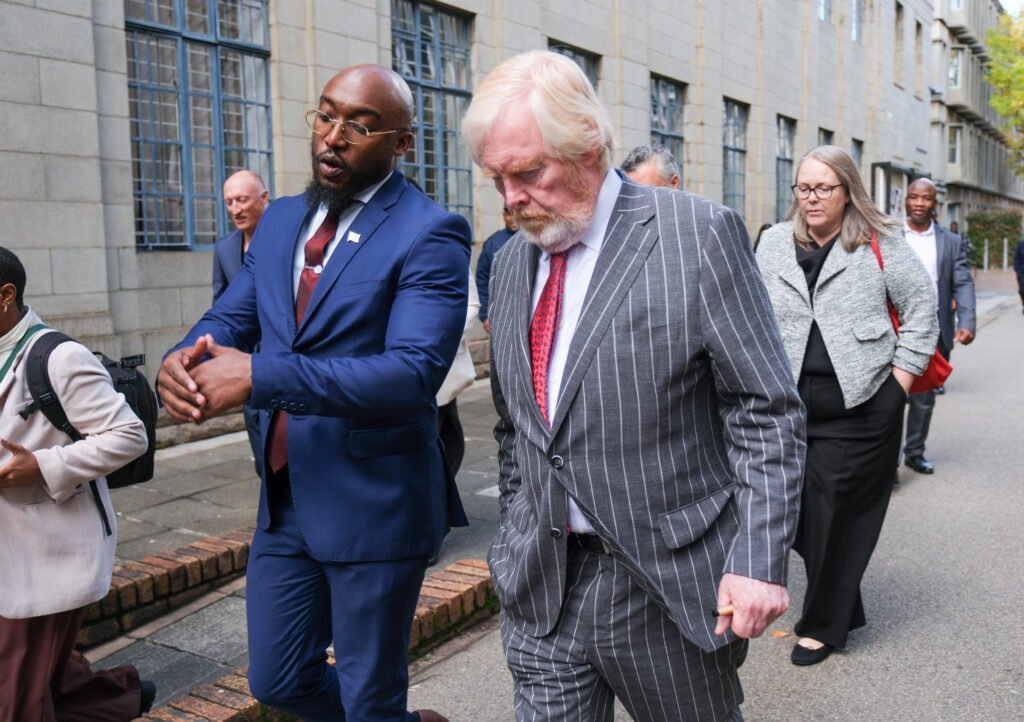
United States ambassador Leo Brent Bozell III walking with chairperson of Wits Association of International Relations, Nathi Ndlovu during a visit to the institution on Wednesday, May 7, 2026. Photo: Hannah Brown.
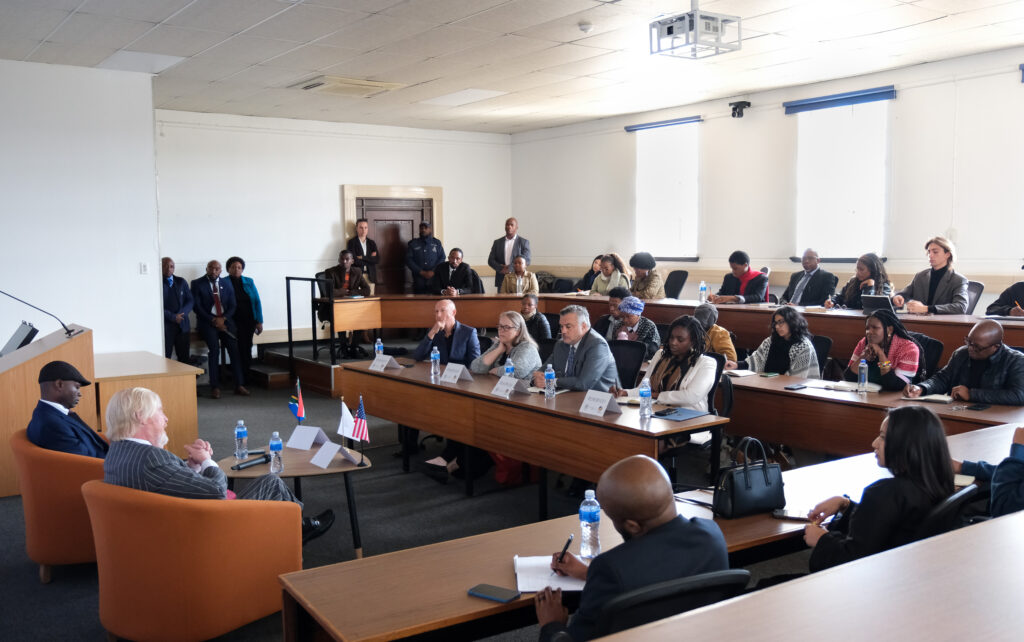
On Wednesday May 6, newly appointed US ambassador Leo Brent Bozell III addressed Wits University students in a closed session hosted by the Wits Association of International Relations (AIRS).
In his opening remarks, Bozell seemed intent on making amends for previous undiplomatic comments. He applauded South Africa’s potential for “tremendous opportunity” and highlighted the importance of stronger US-South African cooperation. “It’s all about partnership between our two countries,” he said.
One of his main areas of focus was on increasing US involvement within South Africa, underscoring a necessity within three specific areas, namely investment, crime and geostrategic alignment – all of which he claims can be redressed through closer relations.
Firstly, he argued that South Africa’s investment value is severely handicapped by B-BBEE policies, calling for alternative means of redressing social disparity in a way that remains profitable for investors. Secondly, he expressed concern over the country’s crime rates and proposed US-backed digital advancements. Lastly, he condemned South Africa for allegedly siding with the US’s adversaries, namely Iran, Russia and China: a decision that Bozell describes as “not non-aligned anymore.”
These requests are nothing new. Since March, Bozell has been adamant that South Africa shifts its allegiance in favour of US interests. However, this raises questions regarding potential infringements on national sovereignty – a principle that is highly protected under the US constitution, but conveniently disregarded when applied to South Africa.
Picture of the closed session in progress. Photo: Hannah Brown.
Additionally, Bozell’s insistence on fostering greater partnership between the two nations stands at odds with the US’s hostility towards South Africa. From claims of ‘white genocide’ to being barred from the upcoming G20 – the country has constantly come under fire from the US. Bozell’s eagerness to “find common ground” and “put our differences aside” is jarringly disconnected from political reality.
When questioned about the most recent G20 snub against South Africa, Bozell stood his ground, emphasizing the US’s commitment to its national interest. “There’s a prerogative that the United States has,” he says. “Any hosting country can decide who it wants and who it doesn’t want.” However, this reveals a glaring double standard: when the US exercises its autonomy in pursuit of state interests, it is rationalised as necessary, but when South Africa does the same, it is persecuted and punished.
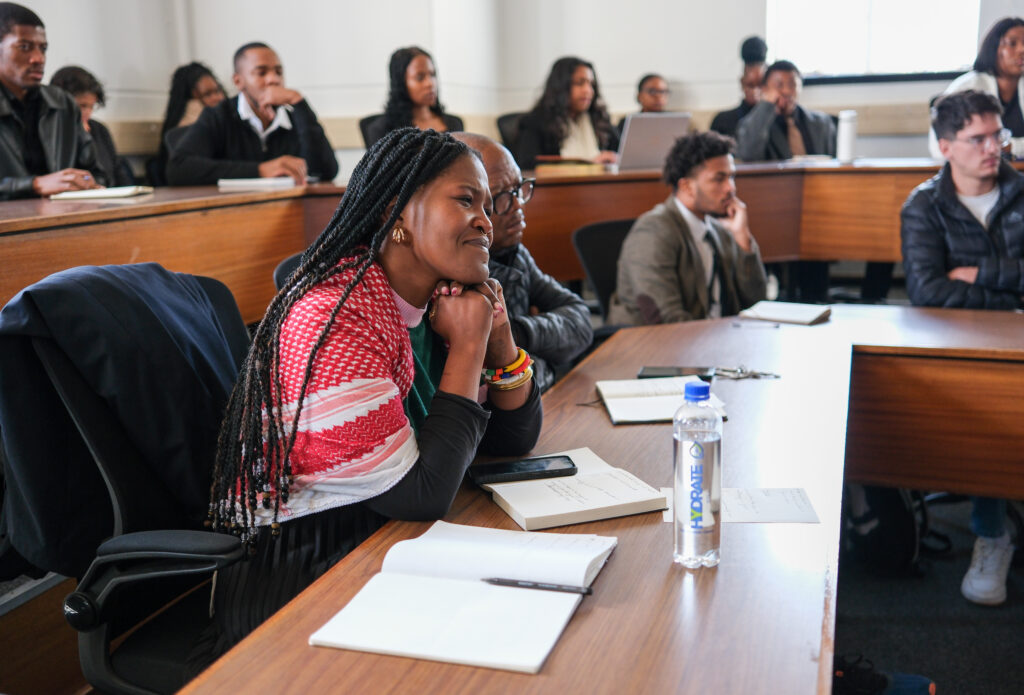
Picture of students listening to the forum. Photo: Hannah Brown.
Lastly, despite the US’s overt insistence of South Africa’s “white genocide”, Bozell could not uphold this narrative with any conviction. When asked by Wits Vuvuzela if he encountered any genocidal violence on white people since entering the country, he stated that he had yet to visit the rural areas and could not confirm. “I have no comments,” he said.
Ultimately, Bozell’s visit seemed less about genuine partnership and more another frail attempt to realign the South African agenda to reflect the interests of the US: a move that not only sheds accountability of its prior offences against the nation but also aims to dismantle the very sovereignty it upholds so dearly.
FEATURE IMAGE: Picture of US ambassador Leo Brent Bozell III. Photo: Hannah Brown.
We talk about autism more than ever, but who actually gets help? In South Africa, the gap between awareness and access is leaving many behind.
Autism is more visible than ever, but many families still can’t access the support they need.
Overcrowded public schools and costly private options leave many learners with nowhere to go.
Real inclusion needs better funding, trained educators, and a system that supports autistic learners.
April marks Autism Awareness Month, a time dedicated to promoting understanding and inclusion for individuals with autism spectrum disorder (ASD). In South Africa, however, awareness has not translated into access. Despite growing public conversations around autism, many families still struggle to find affordable education and support. The gap between awareness and access is stark, particularly for working class households. A recent TimesLIVE report highlighted the harsh reality for families of children with disabilities. While some are forced to pay out of pocket for transport to distant schools, others are left with no schooling options at all. This reflects a broader systemic issue: there are simply not enough specialised institutions to meet the demand.
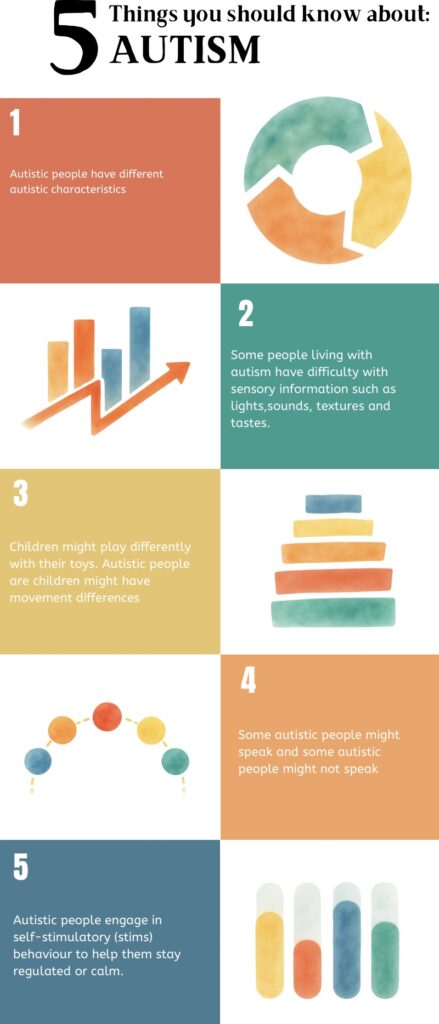
5 Things you should know about autism. Poster: Nqobile Mtshali
In Johannesburg and surrounding areas, there are fewer than 10 public schools with structured autism support, compared to a growing number of private specialised centres. This highlights a clear gap between public provision and demand. Many of these schools are oversubscribed, with waiting lists stretching for years. In contrast, despite offering more specialised autism-focused centres, the private sector remains largely inaccessible due to cost.
While the Department of Basic Education has promoted inclusive education as a solution, implementation has been slow and uneven. Mainstream schools are often under-resourced and lack the training to support neurodivergent learners. Autism advocate and National Regional Development Officer (RDO) at Autism South Africa Mary Moeketsi says the system continues to fall short. “There’s a push towards inclusive education,” she explains, “but without proper support, it doesn’t work for many autistic learners.”
The lack of access to government autism support institutions pushes families toward private institutions as a desperate solution, with fees reaching up to R15,000 per month, well beyond the reach of most South Africans. “Parents are left with very few options,” Moeketsi adds. “And even then, not all private schools provide the level of support needed.”
Beyond infrastructure, awareness itself remains uneven. Most notably in Black communities, stigma and misinformation continue to delay diagnosis and intervention. “There’s still a lot of misunderstanding around autism,” says Moeketsi. “That lack of awareness directly affects access to support.”
This is not to say solutions don’t exist as organisations like the National Autistic Society provide free resources, guidance, and advocacy tools to support individuals with autism and their families. Locally, NGOs and advocacy groups are also working to bridge the gap through community outreach and education. However, autism activists argue that meaningful change requires more than just awareness campaigns. Increased government investment, better teacher training, and expanded support services are critical to making inclusive education a reality.
Autism Awareness Month raises an important question: what does awareness mean if most South African families still cannot access basic support?
Until access improves, awareness alone risks becoming symbolic rather than transformative.
FEATURED IMAGE: Autism Awareness Month Poster: Nqobile Mtshali
The inaugural Wits International Vocal & Chamber Music Festival begins on a powerful note, blending music, memory and meaning in a moving tribute to the youth of the Soweto Uprising.
The first-ever Wits International Vocal & Chamber Music Festival launched with a powerful opening concert at Seabrooke Music Hall.
The programme centred on Gabriel Fauré’s Requiem, honouring the children of the 1976 Soweto Uprising.
Performers delivered a technically refined and emotionally gripping experience that set a high standard for the festival.
A quiet anticipation filled the Seabrooke Music Hall on Wits East Campus on April 22, as audiences gathered for the opening of the inaugural Wits International Vocal & Chamber Music Festival. What unfolded was not just a performance, but a deeply moving musical tribute rooted in history, memory and collective reflection.
Hosted by the Wits Music Department, the festival spans eight concerts running from April 22 to May 2 across various venues on campus. This festival is the first of its own at Wits hosted by the department. The opening set the tone with a powerful presentation by the Wits Music Department Choir, accompanied by pianist David Butlin and conducted by Head of Department Musa Nkuna.
The programme drew from Gabriel Fauré’s Requiem, Op. 48, reimagined as a memorial for the children of the 1976 Soweto Uprising. Through seven movements, the performance carried a spiritual weight, each hymn a plea for rest, peace and refuge from suffering. The reinterpretation grounded the classical work in a distinctly South African context, bridging European composition with local history.
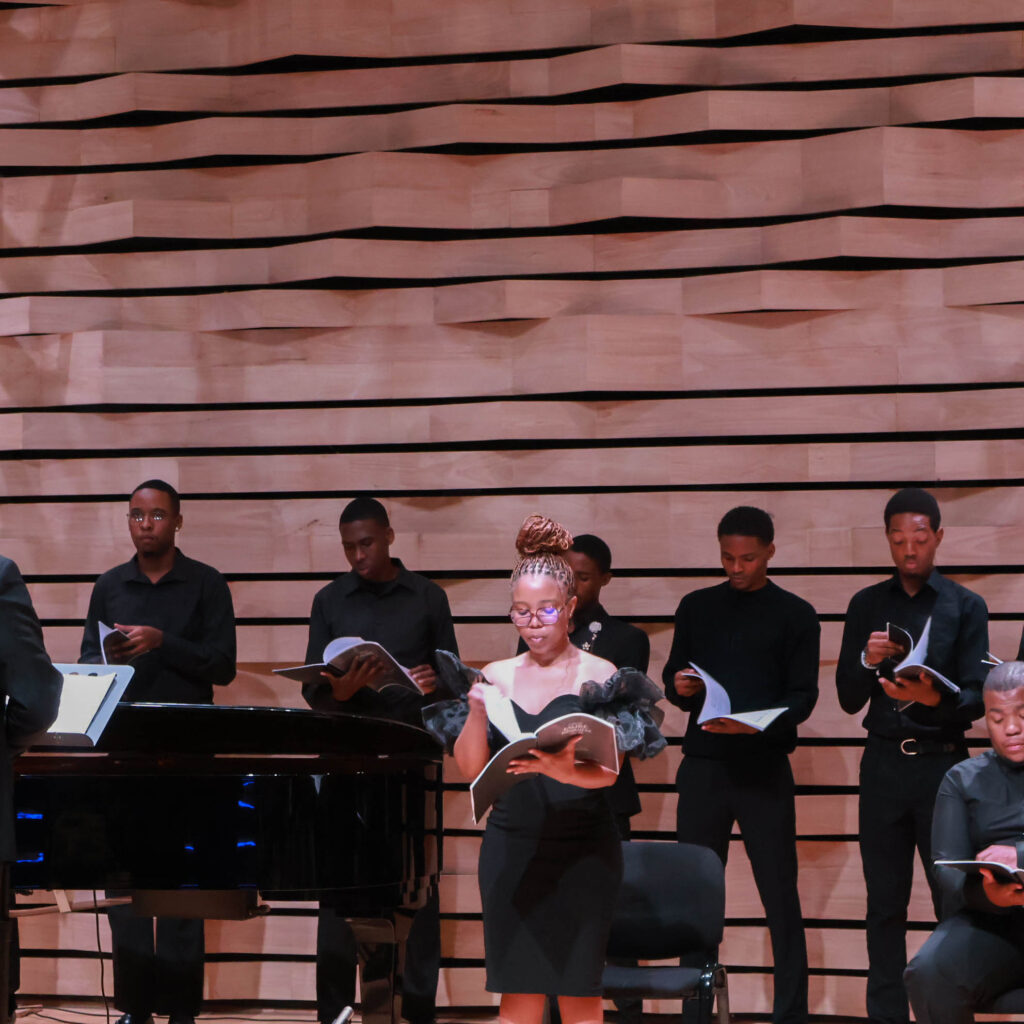
A picture of Charmaine Nkuna. Photo by: Sanele Sithole
Soprano Charmaine Nkuna, and bass Thato Morutle delivered standout solo performances, their voices cutting through the hall with clarity and emotional depth. Their presence added a personal dimension to the piece, elevating the performance from technically strong to profoundly affecting.
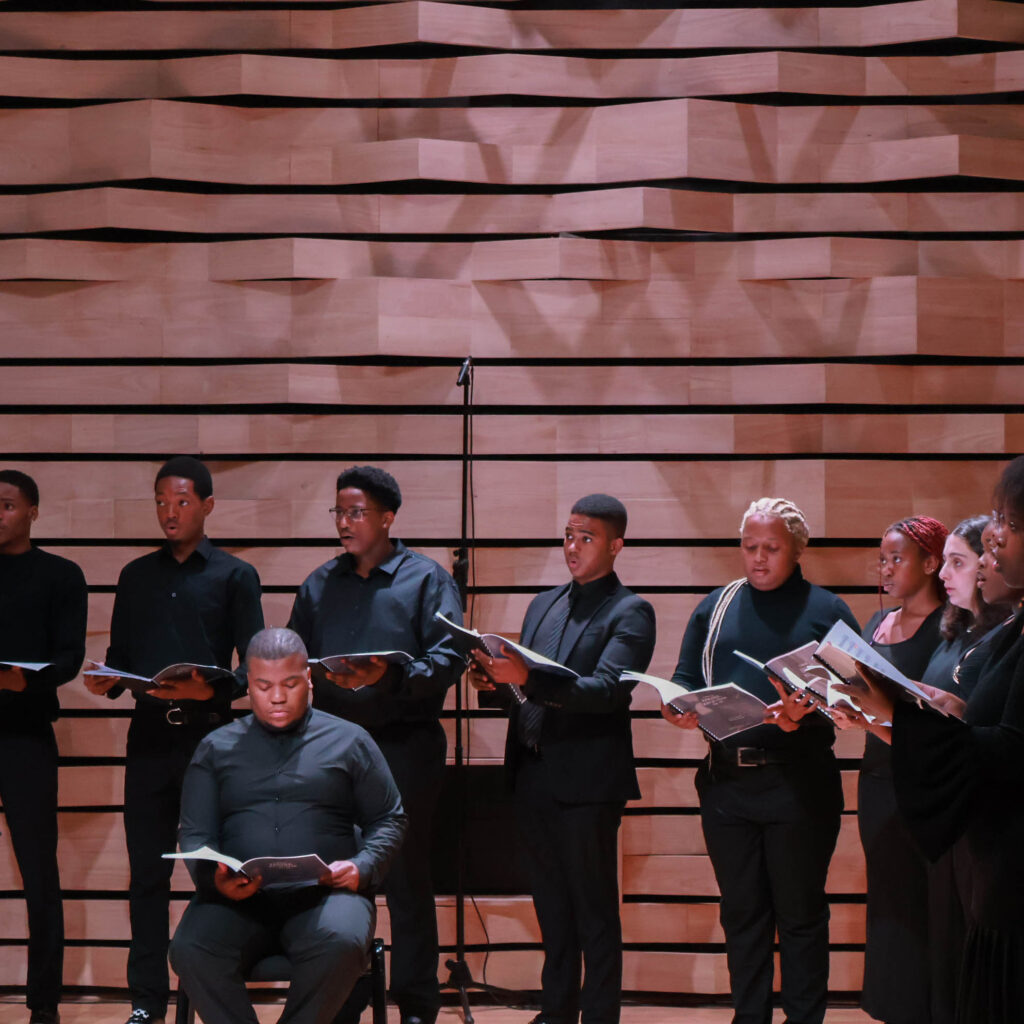
As the choir entered the stage dressed in black, the symbolism was immediate. The uniformed ensemble visually reinforced the tone of mourning and remembrance, aligning with the concert’s dedication to lives lost. What followed was a seamless performance marked by strong ensemble unity and precision — not a single note out of place.
The emotional impact resonated with the audience. First-year Film and Television student Luthando Skenjana described the experience simply: “It was an amazing performance; I quite enjoyed the show.”
For organisers, the festival represents more than a series of concerts. Choir chairperson Lesedi Masela, final-year Bachelor of Music student, described it as “a high-impact platform that brings together choral, chamber and orchestral performances within one integrated programme.”
Masela emphasised the significance of the festival’s timing, marking 50 years since the Soweto Uprising. “The opening concerts being requiems reflect that commemoration,” he said, adding that hosting performances across multiple venues transforms the festival into “a full-scale artistic ecosystem.”
That ambition is evident. Beyond musical excellence, the festival aims to create an immersive cultural experience — one that is intellectually engaging while remaining emotionally accessible. The opening concert achieved this balance, offering both technical sophistication and a deeply human narrative.
At its core, the performance was about young people remembering young people — a generational echo carried through music. It is this layering of meaning that makes the festival stand out, positioning it as both an artistic and commemorative space.
If opening day is anything to go by, the Wits International Vocal & Chamber Music Festival is not just an event to attend, but one to experience.
Vuvu Rating: 10/10
A picture of the choir. Photo by: Sanele Sithole
FEATURED IMAGE: A picture of the choir on stage. Photo by: Sanele Sithole
Power outages at Wits’ International House disrupt postgraduate students’ study routines and raise safety concerns amid aging infrastructure and poor communication.
Recurring power outages at International House since March 2026.
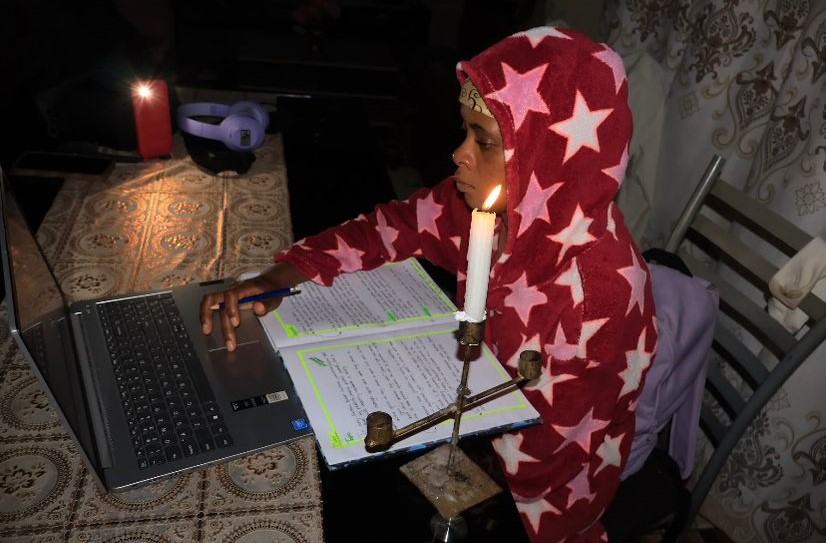
Residents face interrupted study routines and safety risks, particularly at night when corridors are left in darkness.
Limited communication from management and delays in forming a House Commitee or upgrading infrastructure have left residents uncertain and frustrated.
Persistent power disruptions at Wits’ International House residence are straining the building’s infrastructure and backup systems, compelling postgraduate students to relocate late at night to continue studying.
The outages began in early March 2026, with some residents reporting disruptions occurring two to three times a week. During these periods, the residence relies on a generator shared with Sunnyside Hall, limiting available backup power and leaving sections of the building without electricity.
Students say the impact extends beyond inconvenience. Darkened corridors and shared spaces have forced some residents to either remain in unsafe conditions or move across campus late at night to access functional study areas.
Postgraduate resident Ireen Masemula, who is pursuing a BEd honours in language education, described the disruptions as exhausting and unsettling. “The lights go out at around 8 p.m. sometimes, and I only return from the library around 1 a.m.,” she said. “It’s not safe, especially as a young woman. I have to go to the library to work, and I struggle to study in such an environment.”
Studying by candlelight during outages at Wits’ International House. Photo by: Alice Dhlamini.
According to Tyson Mnisi, a security officer at International House, the outages are not solely linked to external power-supply issues. He explained that a combination of external disruptions and internal electrical faults contributes to recurring failures.
“Sometimes it’s just a minor cut, but often it’s an internal load,” Mnisi said, adding that high-wattage appliances such as microwaves and heaters place significant strain on the system. “You’ll have students making popcorn in their rooms, and suddenly the whole circuit trips. The infrastructure is just not built to accommodate such levels of demand.”
Tshiamo Modise, an undergraduate student and a student employee in the residence’s maintenance team, said communication gaps have intensified the situation. During a recent incident involving multiple generator failures, she used her own airtime to contact management after the building’s Wi-Fi and telephones went down.
“I reached out to management for answers, yet I was met with silence and no formal explanation”, Modise said, noting that outages have also resulted in spoilt food and unsafe conditions in shared kitchen spaces.
Residents say the recurring disruptions point to deeper structural concerns within the residence, as temporary fixes have not addressed the underlying causes.
Shanon Smit, a handyman at the residence, suggested that establishing a formal House Committee could strengthen communication between residents and maintenance teams, particularly in reporting faulty appliances before they place additional strain on the system.
Despite these suggestions, students say little has changed, leaving them to adjust their routines individually while managing ongoing disruptions.
Attempts to obtain comment from residence manager Bhekizizwe Nkosi were unsuccessful at the time of publication.
For now, International House residents remain caught between different explanations and ongoing infrastructure pressures, with no clear timeline for lasting improvements.
Residents say that without urgent infrastructure upgrades, the ongoing outages will continue to compromise both the safety and basic living conditions within the residence.
FEATURED IMAGE: International House Residence. Photo by: Alice Dhlamini.
A signage change at Wits University highlights the student centre’s official name, but “The Matrix” remains the name that defines campus culture.
The student centre at Wits University now displays its official name in full, Student Union Building Matrix.
Many students were unaware of the formal name and have always called it “The Matrix.”
Despite the signage, “The Matrix” remains a key part of Wits student culture.
Something felt off at the university’s student centre, something felt strange. The bold, familiar “Matrix” signage that has long marked the heart of student life was gone. In its place was a more formal name: “Student Union Building Matrix.” For many students passing through, the change raised a quiet but lingering question—had “The Matrix” been renamed?
At first glance, it appeared to be a rebrand. But conversations across campus revealed that the story is less about a new name and more about how students experience and define their space.
Many students had not noticed the updated signage at all. Others only became aware of it after it was pointed out.
An image of the map of the Matrix and the Student Union Building. Photo Provided by: Jenna Stelli
“I’ve been at Wits for quite a while, and it’s always just been ‘The Matrix’ to me,” said Obakeng Leping, a fourth-year BSc civil engineering student.
Head of marketing Reshma Lakha-Singh said the official name of the building has always been Student Union Building, with “The Matrix” becoming widely used from 2001. The name gained popularity due to its catchy nature, influenced by both the building’s structure and the release of the movie by the same name at the same time.
“The decision to revert to the original name aligns with the university’s signage and wayfinding policy, which aims to ensure consistency, clarity, and uniformity across campus buildings as budgets allow,” said Lakha-Singh. “The current naming better reflects the building’s long-standing formal identity and institutional purpose.”
Jenna Stelli of campus planning added that the facility consists of two separate buildings. “The original Student Union building is to the south and the more recent Matrix building to the north. Because the building is experienced as one cohesive hub, we decided to include both names on the new signage to avoid confusion,” she said. “There haven’t been any official name changes — we are ensuring the signage matches how the building is used.”
The gap between official naming and everyday language reveals something deeper about student identity at Wits. Names are not only assigned; they are shaped over time through shared experience.
For students like Tiyane Matsheke, a third-year BA general student, the informal name carries a sense of belonging. “I’ll still call it ‘The Matrix’ because that’s what everyone knows. It’s part of Wits culture,” she said.
Attempts to trace the origins of the name remain unclear, with key sources unavailable to comment. Yet its meaning is evident in how firmly it is held by students.
Even as official branding becomes more visible, it is unlikely to redefine what the space represents. The signage may read differently, but in conversation, memory and daily student life, “The Matrix” continues to hold its place.
FEATURED IMAGE: Picture of the Student Union Building Matix. Photo by: Sanele Sithole
The Atlas of Uncertainty offers a profound perspective on African migration, redefining our understanding of belonging.
Atlas of Uncertainty opens at Wits Origins Centre.
Various artists, writers and researchers celebrated their work during the opening ceremony.
The exhibition holds significance in today’s divided society.
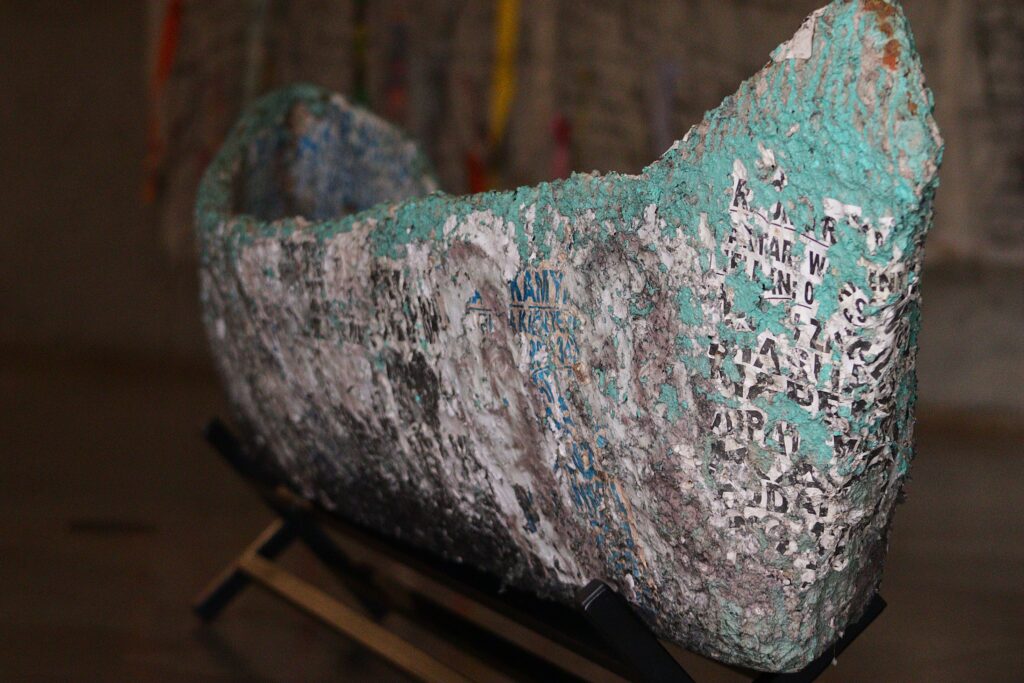
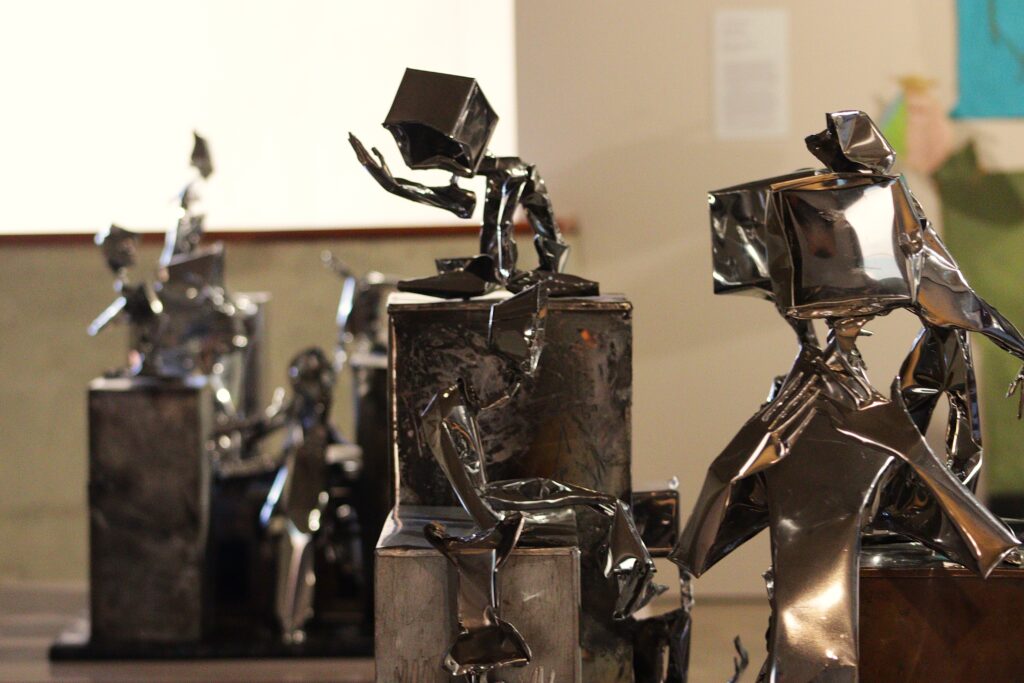
Picture of papier-mâché boat sculpture entitled ‘Mashuna and Hakuna nija’ by artist Onys Martin. Photo: Jamie Ho.
The Atlas of Uncertainty exhibition opened at the Wits Origins Centre on Saturday, April 18, inviting visitors to question the current agenda around migration, urbanisation and belonging in Africa.
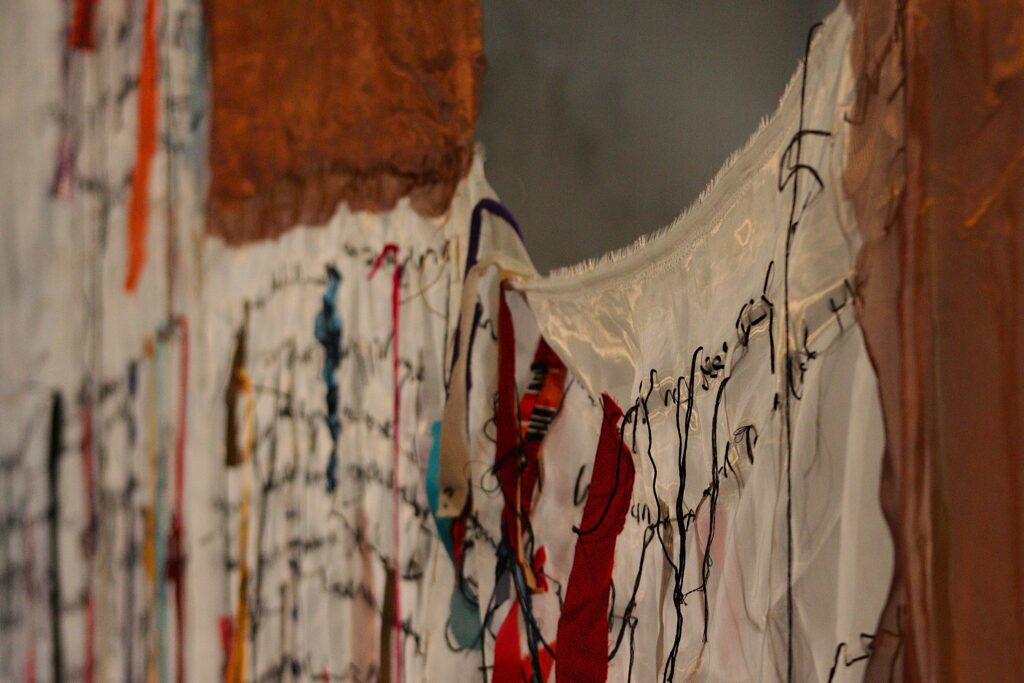
From a paper-mâché boat constructed from receipts to a woven tapestry stitched with burlap, the exhibition offers a more humanising lens for viewing the global phenomenon of mobility: not as burdensome, but as inherent to humanity.
Rooted in three African cities, Johannesburg, Accra, and Nairobi, the Atlas looks beyond the borders that divide us. Migration researcher Loren B. Landau highlights that the current scholarship neglects to capture the complexities of Africa, thereby revealing a need to move “from the counting to the feeling; from the census to the senses.”
To understand the vast complexities that define the continent, the Atlas is not only working across borders, but across different media, disciplines, platforms and ways of thinking. Urban sociologist Caroline Wanjiku Kihato explains that this “lets different ways of knowing sit alongside one another, without forcing them into a single voice.”
The Atlas of Uncertainty is a powerful revision of how we understand African cities. It uproots mainstream narratives surrounding migration, opening the space up for uncomfortable yet necessary conversations.
Spatial practitioner, Carina Kanbi provides some insight into the actual making of the project and how its themes of migratory politics were mirrored over the course of its conception.
Going all the way back to 2023, when the project first began, she notes challenges faced by the artists working across borders, not only in physically transporting the works, but also in handling bureaucratic restrictions between countries. “The exhibition did not begin this morning,” she explains. “It very much began in transit.”
And staying true to this theme of mobility, the Atlas will remain a piece of art that will remain in perpetual movement. While it is on exhibition until July 3 at the Origins Centre, it is also planned to showcase in Accra and Nairobi in 2027.
Each piece of the Atlas reverberates with the passion of its creators. Each tassel holds weight.
Each shard aches with feeling. As the cracks of division deepen in our world, the value of this exhibit lies not only in its ability to challenge the status quo, but in its ability to reach where data and statistics cannot, to reconnect with our ability to be human.
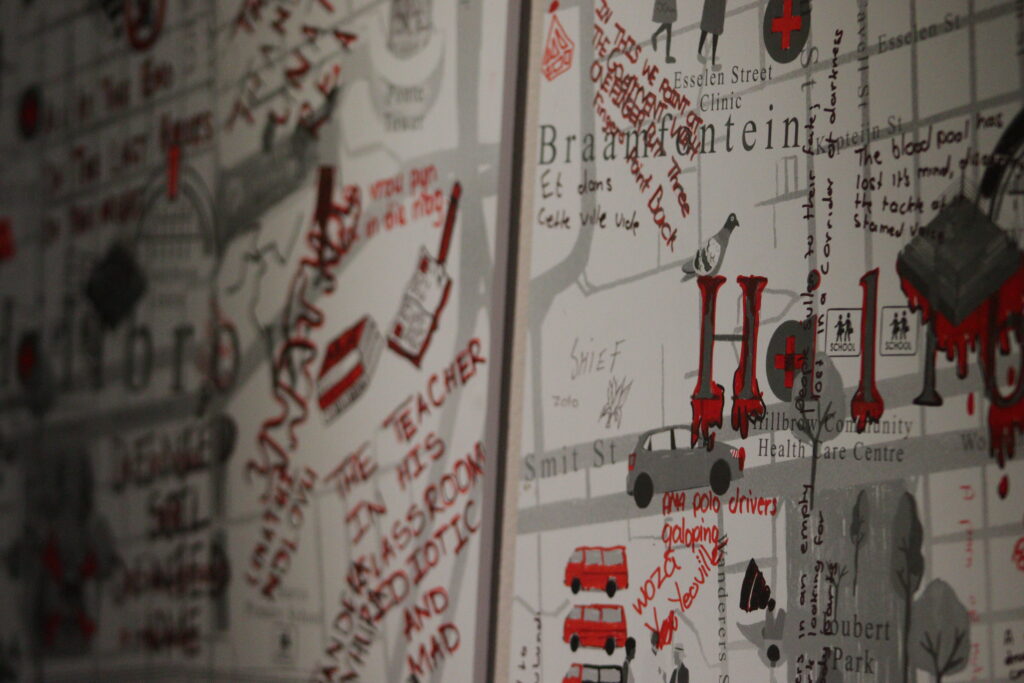
Close-up of artwork titled ‘I am the Graffiti on the Cracked Wall‘ by Windybrow Arts Centre. Photo: Jamie Ho.Picture of ‘Strangers and Spaces’ by Austine Adika. Photo: Jamie Ho.Close-up of ‘A Map of Dreams and Realities’ by Billie McTernan. Photo: Jamie Ho.
FEATURED IMAGE: Picture of artwork titled ‘When We Travel, Where Do We Settle?” by Wezile Harmans. Photo: Jamie Ho.
A protracted bargaining process has reached a stalemate, which may grind activities on campus to a halt.
Nehawu and Altsa union members threaten to down tools.
Salary negotiations between the unions and Wits management remain unresolved.
As the cost of living increases, members demand a larger salary increase.
On Monday, April 20, National Education, Health and Allied Workers’ Union (Nehawu) and the Administrative, Library and Technical Staff Association (Altsa) members took matters into their own hands by picketing in and around campus.
Union members, made up of professional and administrative staff, marched from the Great Hall to Wits Science Stadium, after declining the 4,95% salary increase proposed by Wits University management.
According to the Altsa union secretary, Tholane Khiba, meetings with the vice chancellor and senior executive team resulted in a proposed 4,95% increase, which was rejected and led to the deadlock. “Looking at the delay, the members are now getting frustrated,” he said.
In a statement, the senior executive team said the matter, in month eight of “protracted negotiations”, was heard at the Commission for Conciliation, Mediation and Arbitration (CCMA) last week, but the offer made by the university was rejected.
Nehawu Regional Secretary of greater Johannesburg, Tumisho Madihlaba, stated that “the members in their big numbers for both unions Altsa and Nehawu have agreed. We are not accepting the 5%, we are not accepting the 1% on Annual Performance Incentive… We are going on strike!”
Nehawu and Altsa members gathered by the Great Hall for a mass meeting. Photo: Jamie Ho.
Thabo Modise the Nehawu branch secretary of Wits said they have worked in the best interest of the university, but feel “financially bullied.”
As a result, they plan to down their tools. “We also have a muscle comrades. The muscle that we have is our labour. We are going to withdraw our labour and show them how important we are,” Modise added.
The members of the union emphasise that they will stand in unity until their demands are met. Altsa acting president, Jordan Sake, stated “we have rejected that nonsense from management. That insult? We will not take it.”
Members of both unions highlighted the growing cost of living amid global conflicts as one of the reasons they are pushing for more money. Jabulile Maseko, a member of Altsa said, “it is not enough, everyone is aware that everything is going up.”
While tensions continue, demonstrations and strike action seem to be on the horizon as both unions stand their ground with their demands.
FEATURED IMAGE: Nehawu and Altsa members picketing around campus. Photo: Jamie Ho.
Main Street in Johannesburg transformed into a car-free zone, inviting people to take back the city centre through art, community, cycling and music.
Johannesburg reimagined its city centre, as Main Street closed to cars and reclaimed by the people.
Music, art, cycling and children’s activities filled the streets, creating a sense of community, safety and connection.
Inspired by cities globally, Main Street Sundays is part of an experiment to revitalise the city .
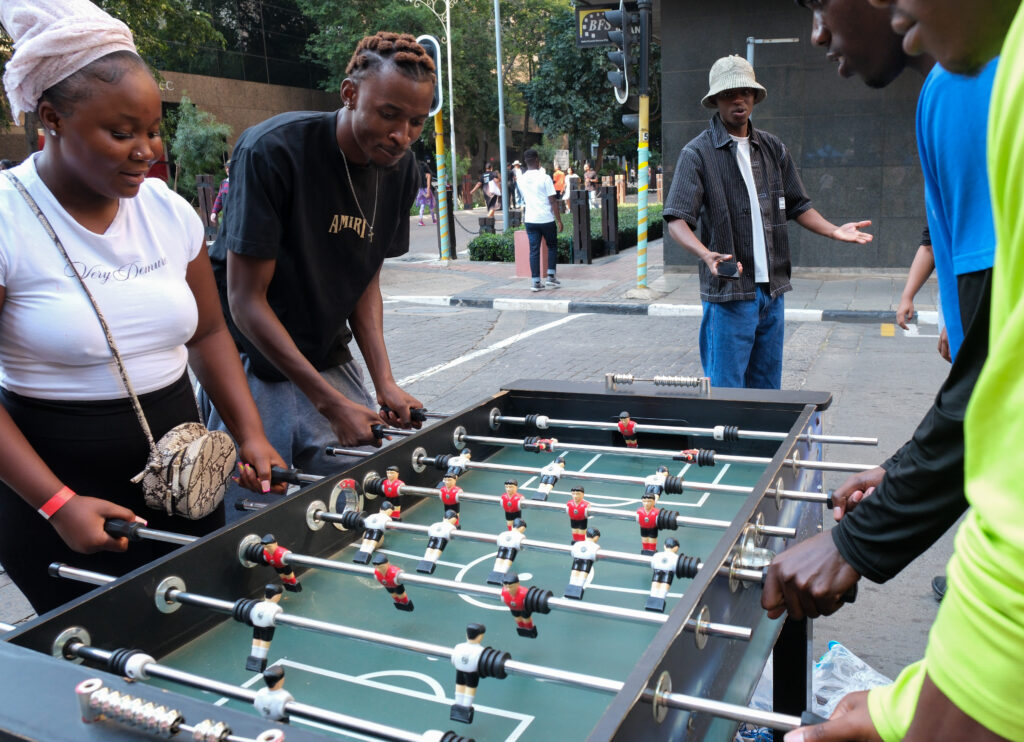
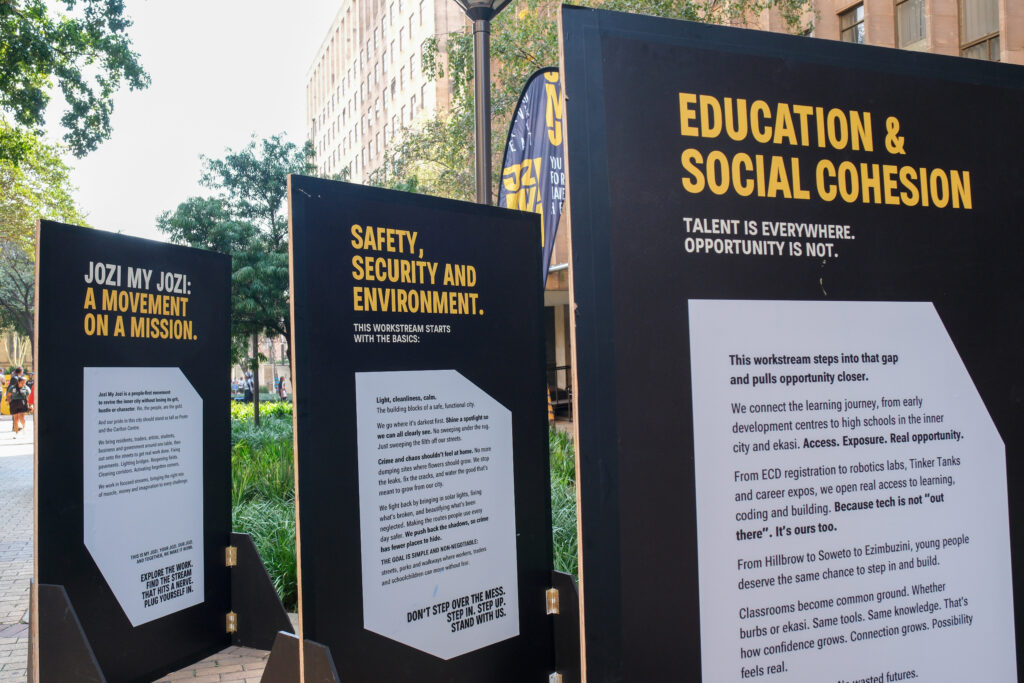
On Sunday, April 12, Johannesburg reimagined how we can experience the city. What is usually jammed with traffic, became a space for walking, cycling, art and connection. The initiative was led by Jozi My Jozi in partnership with Young Urbanists. For one full day Main Street in Marshalltown was closed to motor vehicles and belonged to the people.
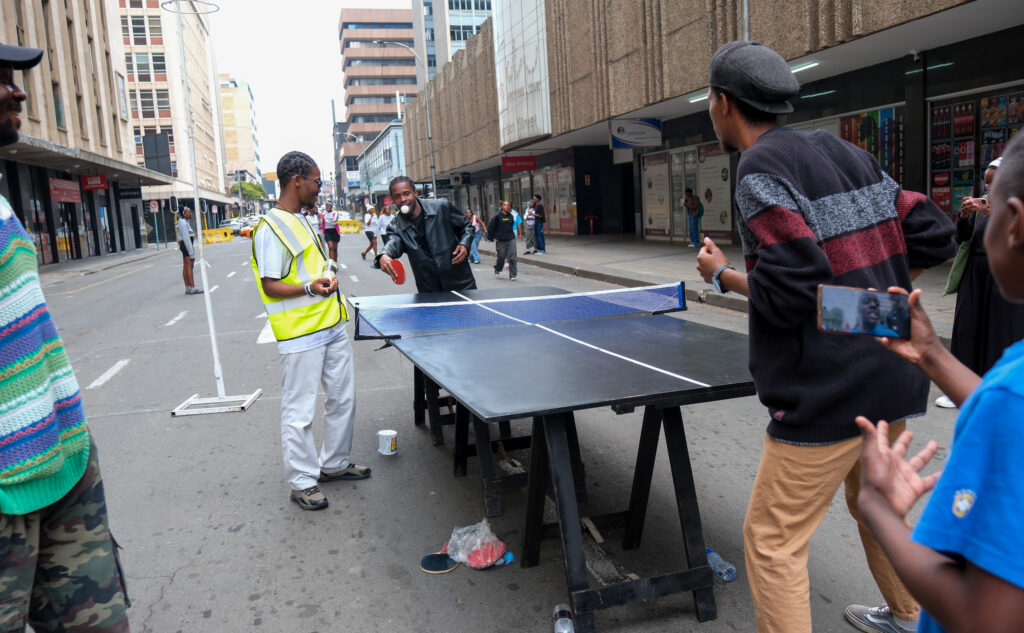
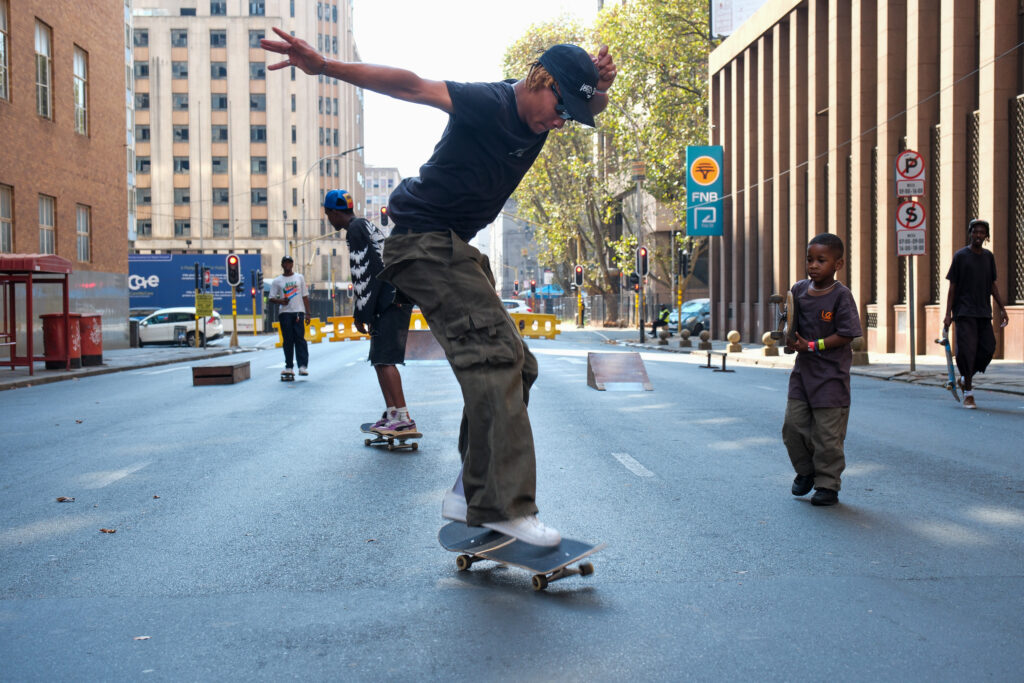
There was something happening on every corner. Music played, book clubs met in the open, art filled the streets, people skated, played games and searched the stalls. It was more than just a street closure, it was a reclaiming of public space from cars.
“Our mission is to bring people back to the city,” said Jozi My Jozi Education Workstream Coordinator, Senty Maphosa. “Let’s relove, let’s reimagine what the city could look like.”
Globally, cars dominate 80% of public space. But as Thandile Manyifolo, BA Architecture Student and Deputy Chairperson of the Jozi My Jozi Chapter at Wits University reminds us, “urban spaces were designed for people to live in. If people come secondary to that, are they really fulfilling their purpose?”
Organisers emphasised that reclaiming the streets is not just about daytime activities but also creating more opportunities and innovation for young people into the evenings.
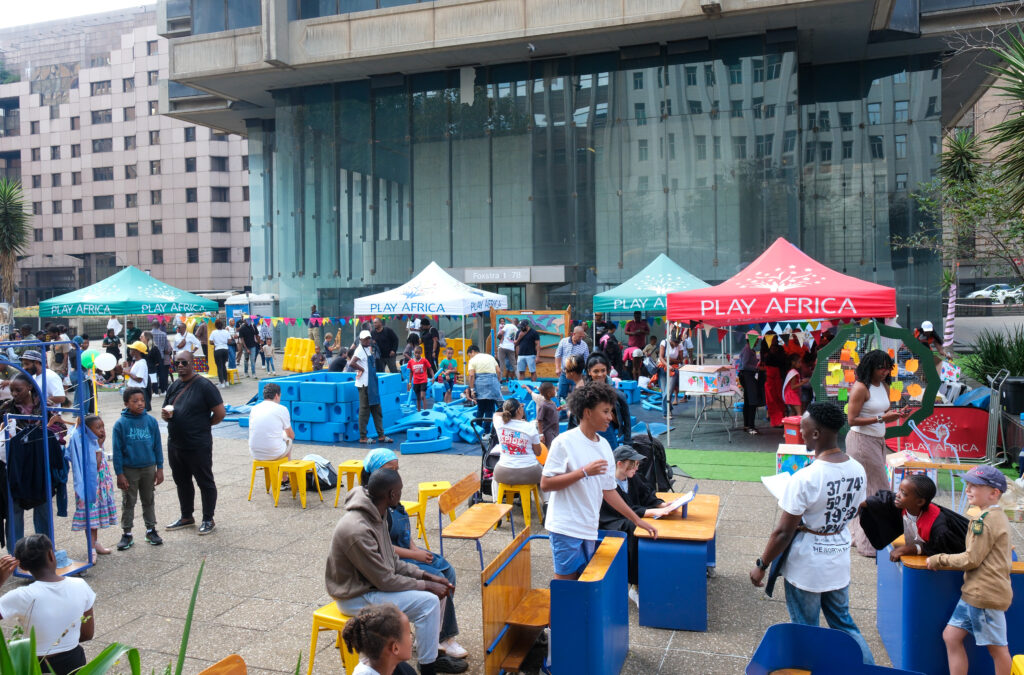
The event offered a glimpse into how urban space can return to being people centric. Children played freely, with a programme created in partnership with Play Africa, the day included interactive learning activities, face painting, chalk art, sports and a gallery.
People felt at ease, walking around taking photos on their phones, dancing and laughing. There was a sense of belonging. “Today is all about community, it’s all about collaboration and it’s all about bringing back a sense of pride and inspiring people,” said Maphosa.
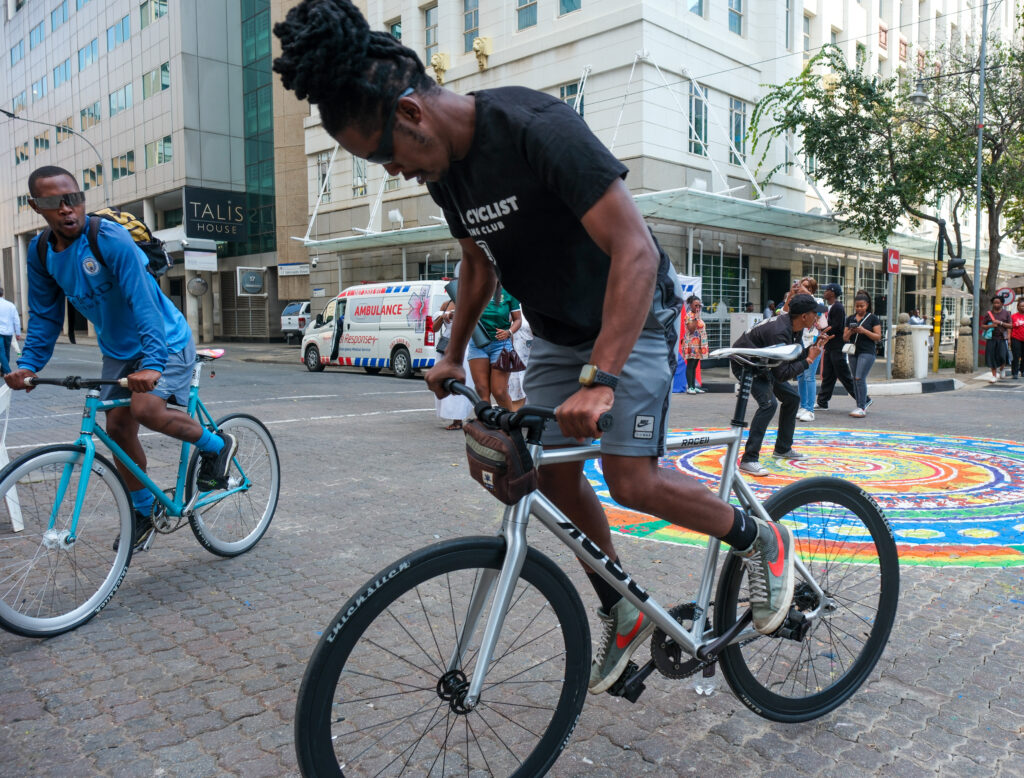
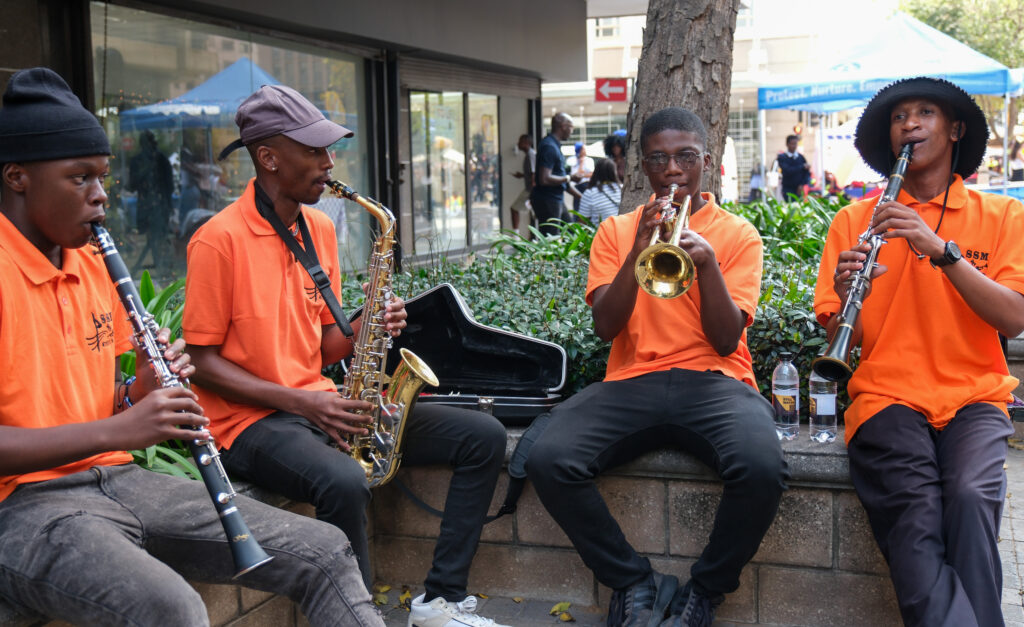
Jozi My Jozi is reimagining Joburg’s CBD. Photo: Hannah BrownA game of table tennis is held on the street. Photo: Hannah BrownKids area in partnership with Play Africa. Photo: Hannah BrownAs Main Street closed to cars, cyclists rode through the CBD. Photo: Hannah BrownA music group performs at the event. Photo: Hannah BrownSkateboarders took to the city streets, performing tricks. Photo: Hannah BrownVisitors play a game of foosball. Photo: Hannah BrownJozi My Jozi signs during Main Street Sundays. Photo: Hannah Brown
Inspired by cities including Bogotá, Paris and Cape Town’s Bree Street. The event is part of a larger experiment to revitalise the city, reimagine the use of urban space and see what happens when streets are closed to cars and given to pedestrians.
For Johannesburg, Main Street Sundays was the first of what many hope will become a regular event. “We are starting something that will have a domino effect in the long term to open up the streets of Jozi, not just Main Street, but the entirety of the city,” said Manyifolo.
It showed us what Joburg can feel like, where the city is not just a place to quickly pass through, but one where we can come together, connect and move safely.
FEATURED IMAGE: Cyclist from the Sentech Croozers rides a stance bike at Main Street Sundays. Photo: Hannah Brown
Rising fuel costs are forcing Wits students to choose between paying for their daily commute and basic essentials like meals and data
The recent fuel hikes have increased taxi fares by R6 per trip, costing students an extra R240 monthly.
Daily commuters are walking long distances to save fare money, resulting in late arrivals and lost study time.
Two weeks after South Africa’s fuel increase, some Wits University students who commute daily say rising transport costs are already affecting their ability to attend lectures, manage time, and meet basic living expenses.
According to Bloomberg, petrol is currently around R 23 per litre, following recent increases in global oil prices and local fuel adjustments.
While the increase in fuel prices continues to place pressure on household budgets, its impact has now extended directly into the public transport costs.
The National Taxi Alliance (NTA) confirmed that taxi fares have already increased by R6 per trip. For daily commuters, this translates into an estimated additional R12 per day for a return trip, about R60 per week, and roughly R240 per month.
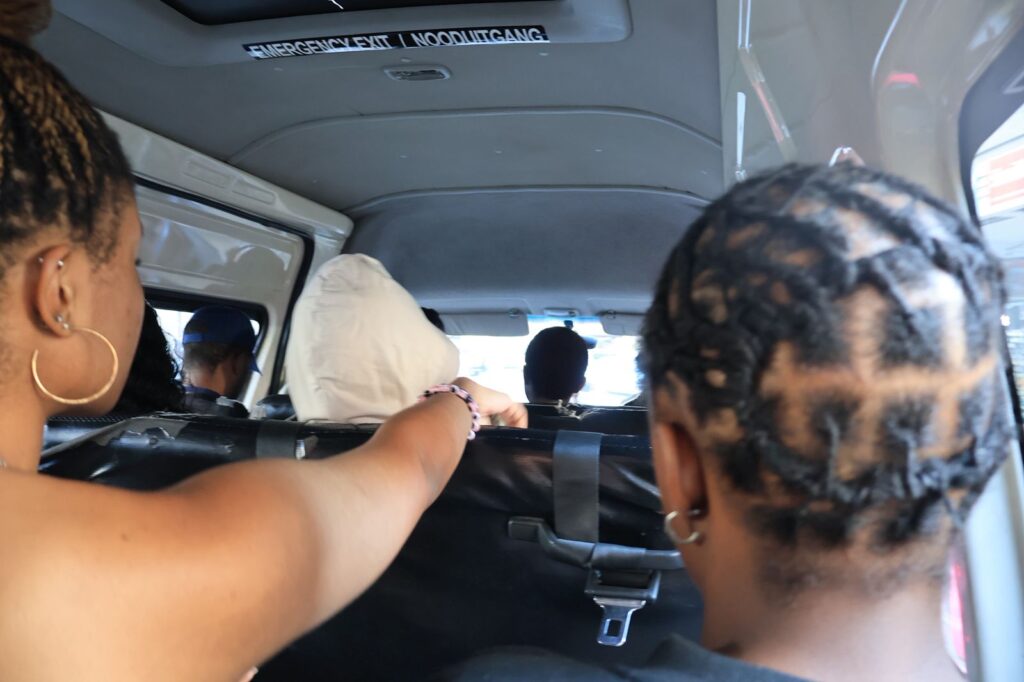
A Wits student passing their taxi fare to the front of the vehicle. Photo: Alice Dhlamini
For students who rely on taxis from the surrounding areas, the increase has turned daily travel into a financial strain.
“I live off campus in Benoni, and I have to travel every day to get to class,” says Afrika Mbangiso, an honours in Psychology student.
“From Wanderers Taxi Rank in Johannesburg, I have to walk the rest of the way to Wits just to save money for lunch or sometimes, for my trip back home,” Mbangiso adds.
It has also affected her punctuality and workload. “I am sometimes late for class, meaning it’s more work that I must catch up on later”, she adds. For students like her, longer commutes and additional walking reduce time for rest, studying, and academic preparation.
Nontobeko Zulu, a Postgraduate Certificate in Education (PGCE) student, argues that the increase has forced what she calls a “displacement of funds”. “For many of us, these aren’t just transport fares, they represent a radical displacement of funds,” Zulu says.
FEATURE IMAGE: A picture of a passenger passing forward taxi fare, which has increased by R6 per trip due to petrol hitting R23 per litre. Photo: Alice Dhlamini
The fund set up to save students leaves many students begging for assistance.
As the second block of the semester begins at Wits University, some NSFAS beneficiaries are not only worried about academic pressures but also about survival. Awaiting allowances has made students anxious about where their next meal will come from and the possibility of being locked out of their residences.
The National Financial Aid Scheme (NSFAS) has gone to shambles. On March 30 2026, the Auditor-General issued a “disclaimer opinion” due to systemic issues that left their books unverified.
The findings revealed funds being paid to over 822 deceased students, 14,000 wealthy ineligible beneficiaries, while legitimate beneficiaries are left to starve, and thousands of fraudulent recipients are benefiting from the fund. The systematic collapse and mismanagement of documents result in hungry students facing possible eviction.
“In the beginning of the year there are four to five funding lists, your name not being on the list means you will not receive an allowance and in that time you have to rely on your family or see for yourself until your name is on the list,” Tariana Botha, a Wits alumni, holds a BA in Psychology and Geography and is now pursing her BA Honours in Psychology, commented,
Perfect Maphumulo, a first-year mining engineering student, shared that his cousin had to borrow money after not receiving his allowance, “He called home and told them he didn’t receive his allowance. His parents had to go borrow money.”
Although some students remain silent about the delay of allowances, they remain hopeful. Waiting for a bank notification with their allowance, the wait is mentally daunting and affects the academics of many students.
The Wits Student Representative Council (SRC) has been making efforts to fill the gaps left by NSFAS through the SRC Access Fund, supported by the university. “NSFAS should be dissolved, and the Department of Higher Education should directly work with universities, and the university should directly work and communicate with the eligible recipients,” Wits SRC President Gilbert Nchabeleng said. The SRC stands with students and continues to fight for them. Until NSFAS is rebuilt and restructured, students will continue to anxiously wait for an allowance.
FEATURED IMAGE: The Financial Aid and Scholarships Office showing students waiting for assistance. Photo: Reatlehile Mashamba
Student photographers at Wits University raise concerns over being denied the opportunity to work during graduation season after missing an accreditation deadline they claim was not clearly communicated.
Student photographers were denied access to graduation due to a permit system.
Many missed the deadline because communication was unclear.
Students are calling for better communication and inclusion in future.
Over the past two weeks, Wits University Campus has been filled with celebrations as graduates marked a significant milestone. For many, taking photos at iconic locations such as the Great Hall has become a tradition. However, this year, some students were forced to make alternative arrangements after unaccredited photographers were denied access.
The university introduced a system requiring photographers to obtain permits to operate during the graduation period. A limited number of registered photographers were allowed to work in designated outdoor public areas, while Campus Protection Services (CPS) removed those without permits.
According to the Examination and Graduation Office (EGO), the application process was posted on the university website ahead of the graduation period. Officials say that the system aims to manage the high volume of people on campus and ensure safety during the ceremonies.
However, several student photographers say they were unaware of the process until it was too late.
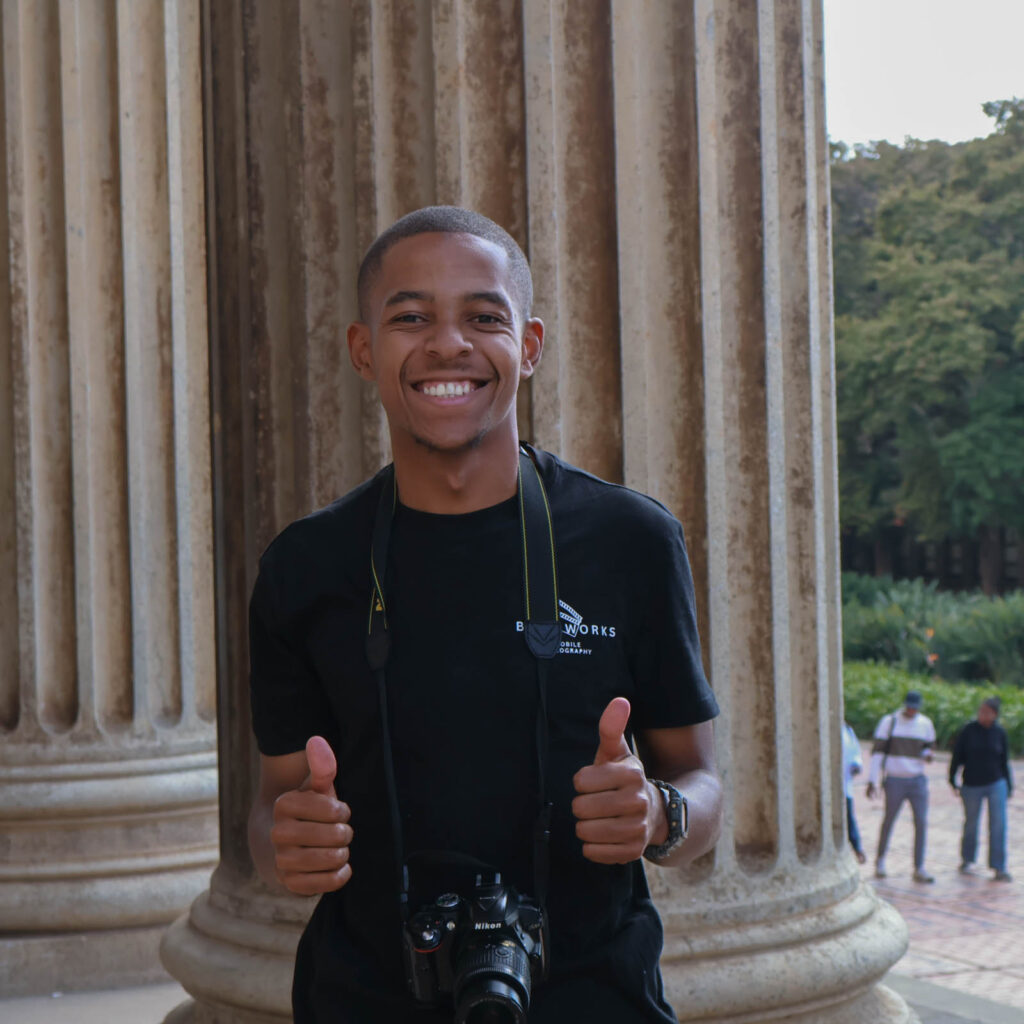
A student photographer with they camera around they neck by the Great Hall. Photo: Sanele Sithole
Bakithi Mntungwa, a Bachelor of Education Honours student, said he only learned about the permit requirement shortly before graduations began.
“I only found out about the permit a few days before the first day of graduation, when I was already booked to take photos. By then, the application had already closed around February,” he said.
Other students echoed similar frustrations.
Thabo Mthembu, a Mining Engineering student, said while he understands the reasoning behind the rule, he believes student photographers should have been prioritised.
“I understand the need for regulation, but I had hoped student photographers would be given priority,” Mthembu said.
Mthembu also described difficulties accessing campus with his equipment, despite being a registered student, saying he was denied entry by security.
Students argue that communication could have been improved through official university channels such as email or social media platforms. They pointed to previous opportunities, such as photography competitions, which were widely advertised to students.
“When the applications closed, I was still dealing with registration and financial issues. Checking the website was the last thing on my mind,” Mntungwa added.
While acknowledging the importance of safety and organisation during graduation, both photographers believe that clearer communication and greater inclusion of student creatives could have prevented missed opportunities.
As graduation season has ended, students are calling for more transparent processes and better access in the future so that student photographers are not only present on campus, but part of capturing its most important moments.
Questions were sent to the EGO for comment, specifically regarding concerns raised by student photographers, but no response was received by the time of publication.
FEATURED IMAGE: A student photographer by the Great Hall taking a picture of the landscape. Photo: Sanele Sithole
What does it mean for queer individuals to see themselves on screen, and who decides how their stories are told?
Queer visibility is rising, but control of stories remains a challenge.
Panellists argue that outsider narratives still reduce queer lives to stereotypes and trauma.
The queer is encouraged to tell their own stories, and for audiences to engage more critically with queer content.
At a panel hosted during the Human Rights Festival on March 28, filmmakers, writers, and journalists argued that while queer visibility in South African media has improved, control over those narratives remains contested.
The discussion was organised by documentary filmmaker and narrative justice activist Bev Palesa Ditsie. It brought together creatives, including scriptwriter and director Oratile Mogoje, journalist Matuba Mahlatjie, film writer and activist Mondi Motadi, and reality TV director Olwethu Mlotshwa.
While queer characters appear on screen, panellists stressed that visibility does not equal representation. The panellists emphasized that stories are still often shaped by people outside the community, resulting in portrayals that lean on trauma, stereotypes, or side characters rather than full, complex lives.
“Visibility also comes with vulnerability,” said Mahlatjie. “If it’s not done thoughtfully, then we are vulnerable as queer people.”
These portrayals, the panel argued, do more than misinform audiences as they also shape how queer people see themselves. Narratives that frame queerness as tragic or marginal can discourage self-expression, particularly for those still navigating their identities.
But the issue is not only about creators. Audiences’ response to queer characters determines which stories survive.
Mogoje pointed to a cycle where authentic queer stories struggle to gain traction because they are not always embraced by mainstream viewers. “The biggest culprit is the audience,” he said, sharing that rejection at this level can limit what gets funded and produced.
For queer creatives, this lack of control is deeply felt. “We are not in charge of our own stories,” said Mlotshwa, highlighting the resistance that often meets narratives that challenge dominant or heteronormative perspectives.
Despite these challenges, the panel pointed to emerging alternatives. Platforms such as YouTube help queer storytellers bypass traditional gatekeepers, creating space for more nuanced and self-defined narratives.
30 years into democracy, queer people are no longer invisible on South African screens. But as the discussion made clear, the question is no longer just about being seen; it is about being fairly represented and being in control.
The answer, panellists suggested, lies in shifting power where audiences question the stories that they consume, queer creatives are supported, and space is created for communities to tell their own stories, on their own terms.
FEATURED IMAGE: A photo of panellists engaging in a discussion on queer representation in film, hosted by House of Ditsie. Photo: Bev Ditsie/Supplied
In episode six of We Should Be Writing season 7, the team unpacked the evolution of music as a form of expression and protest, through four decades in the South African context. The episode explores the journey of South African music and its consumers from the 80s, 90s, early 2000s and contemporary listeners. From the […]