Through drums, song and dance, Hey Hillbrow! Let’s Dlala! filled the inner city with a celebration of art and belonging. During a time marked by xenophobic tension, it was a reminder that community and creativity are powerful forms of resistance.
The theme ARISE centred on birds, with the grey go-away-bird reframed as a call of hope.
More than 350 children and young people collaborated with artists at the Windybrow Arts Centre, designing costumes and choreography.
Coming only weeks after marches demanding the removal of foreign nationals, the parade’s imagery offered a counter-narrative of unity and shared streets.
On August 8, Hillbrow’s streets became a stage for music, dance and joy, as the Hey Hillbrow! Let’s Dlala! parade transformed the inner city. In a neighbourhood too often reduced to headlines of crime and decay, it tells a different story – one of collaboration and creativity, and one that celebrates freedom and belonging.
People took to the streets of Hillbrow in bird costumes. Photo: Hannah Brown
The event is organised by Windybrow Arts Centre alongside Shade, and since its launch in 2017, the festival has been reimagining public space. It is about “giving young people, across binaries, age and places of origin the space to play, to express and to have agency over their voices, their version of the inner city and how this place can be perceived,” states Tamzyn Botha, curator of the parade and director of Shade.
The parade carried a particular weight as South Africa continues to grapple with xenophobic violence. Only a few weeks earlier, Hillbrow had been shaken by the June 30 marches demanding the removal of foreign nationals.
Protests took place across South Africa. Photo: Hannah BrownProtests by the group ‘March and March’ took place on June 30, marking the unofficial ‘deadline’ set for undocumented foreign nationals to leave South Africa. Photos: Hannah Brown
Birds were at the centre of this year’s theme, ARISE. The festival’s mascot was the grey go-away-bird, or lourie, known for its sharp warning call. This was reframed as a call of hope, a reminder that communities can raise their voices in unity against hatred. Within this context, it felt like the festival answered back with colour, laughter and carried an important message: Hillbrow belongs to everyone.
The parade began at the Windybrow Arts Centre, which is a prominent hub of creativity in Johannesburg, before making its way through the streets. Hillbrow came alive with drums, costumes and singing. More than 350 children and young people ‘took flight’ across borders, their feathers fluttering as they danced, signifying freedom of movement and connection across divides.
Artistic expression was central to the parade’s formation. Children and teenagers spent two weeks learning new creative skills and collaborating with artists at the Windybrow Arts Centre to design costumes, choreography and music. As Botha said, “the ripples of this work, of the parade and the relationships made during this process, far outweigh the ‘end result’.” It brings young people together in a city where they are often excluded from decision-making. The creative process shows how, through art and performance, Hillbrow’s story can be shaped by its own residents and connectedness.
Hundreds of young people took to the streets for the seventh annual Hey Hillbrow! Let’s Dlala! parade. Photo: Hannah BrownHillbrow’s streets came alive with music and dancing. Photo: Hannah BrownYoung people dancing to the music during the parade. Photo: Hannah BrownSingers performing at the festival. Photo: Hannah Brown
The annual parade takes place on the eve of Women’s Day, marking 70 years since the historic 1956 Women’s March, when thousands of women stood against apartheid pass laws. This year’s theme felt especially poignant, as debates about who belongs in South Africa’s cities remain tense.
The contradictions felt impossible to ignore. Only weeks earlier, the same streets had been filled with chants of division.
Just as those women fought against restrictions on movement, the imagery of birds gliding through Hillbrow challenged today’s ‘cages’ of xenophobia. The festival did not erase the xenophobic tensions, but filling Hillbrow’s streets with birdsong, dance and laughter for an afternoon reminded Johannesburg that art can be resistance and hope.
In the years ahead, the organisers hope the parade will continue to offer “a shared sense of possibility through wonder, inside what feels like chaos”, says Botha. They envision it becoming more youth-led, “and this type of framing gives the parade over to those it represents.”
FEATURED IMAGE: People took to the streets of Hillbrow in bird costumes. Photo: Hannah Brown
On International Left Handers Day, students share the everyday struggles of navigating a space built almost entirely for the right-handed majority.
Thursday, August 13, marks International Left Handers Day, an annual event meant to highlight the daily challenges faced by left-handed people living in a space built predominantly for right-handers.
A pie chart graphic illustrating the gap between left-handed and right-handed people. Photo: Rearabilwe Tsebela
Handism is prevalent even though 10% of the global population is left-handed. From lecture halls to basic household items, almost everything is designed for the right-handed majority.
For many lefties, this bias starts at home from a very young age. In many families left-handed children are trained to use their right hand for writing or eating.
Using right-handed tools every day might seem like a small issue to most, but it leads to physical discomfort and a slower working speed.
At Wits University, students share how these design barriers shape their daily lives.
Enhle Luthuli, a fourth-year postgraduate diploma in specialized accounting student, said, “I was never aware that they were actually left-handed scissors, which I acquired once and made my life easier as I could see where I was actually cutting”. Writing also presents physical challenges. “I have become so picky with the type of pens I write with because if the pen is a gel pen, my hand may smudge on what I had just written resulting in my work looking untidy,” she added. In lecture halls Luthuli makes it a point to sit on the far left side to avoid bumping arms with right-handed peers.
Katlego Modiba, a third-year accounting science student, noted that specific everyday objects still create challenging moments. “You feel demoralized when you encounter a situation that forces you to change your hands,” Modiba said. He explained that everyday tasks like using a tin opener or shifting gears while driving can be tricky because as a left-handed driver using their stronger arm can damage the car when too aggressive. In high school, Modiba even had to give up softball because all the available sports gloves were made for right-handed players.
Compounding these struggles is the reality that left-handed items like specialty scissors and sports equipment often cost more than the standard right-handed ones. Because schools and sports teams rarely buy these pricier options, left-handed people often do not know they exist, leaving them with no choice but to adapt or pay the price out of their own pockets.
A graphic defining “handism” as an unintentional design oversight that fails to account for 10% of the population. Photo: Rearabilwe Tsebela
Yet, despite having an official date on the calendar. International Left Handers Day usually passes without most left-handed people knowing it exists, let alone celebrating it.
This raises an important question: is International Left Handers Day really meant for left-handed people or is it a necessary wake up call for a right-hand dominated society? Behind every smudged notebook, awkward seating choice and missed opportunity lies a quiet daily effort to adapt. A little empathy and more inclusive design can ensure that no one feels left out in a world that so easily forgets them.
FEATURED IMAGE:A graphic highlighting the purpose of International Left-Handers Day. Photo: Rearabilwe Tsebela
On August, 8 2026, the Wits Sports Council (WSC) along with the All-Residence Council (ARC) hosted the second David Webster Cup since the competition resumed after the Covid-19 pandemic. This year’s tournament had a twist, with Wits residences competing in 12 different sporting codes, in the fight for res bragging rights and the David Webster Cup.
Wits Sports Council adopts Amazing Race format for the annual David Webster Cup.
12 Sporting codes were showcased to Wits students.
This new format allowed for more inclusivity within the Wits sporting community.
The 2026 David Webster Cup was held at the University of the Witwatersrand’s Sturrock Park, where a new ‘Amazing Race’ format was introduced. While the tournament would previously consist of three to four sporting codes, this year it adopted an ‘Amazing Race’ style format, where each residence team could participate in 12 different sporting challenges.
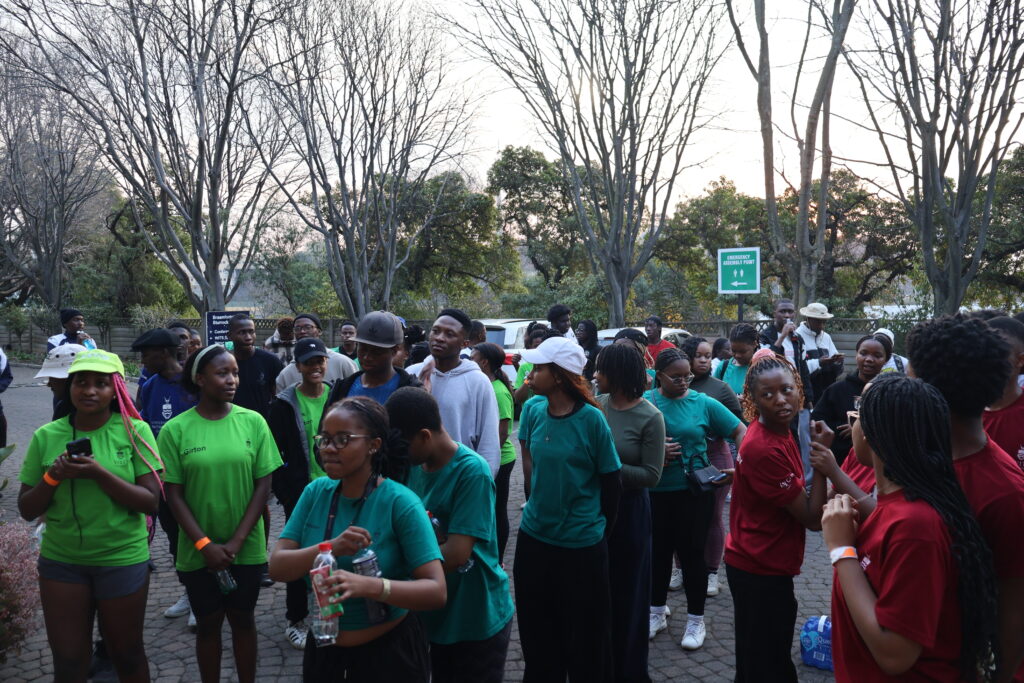
Wits Residences at the 2026 David Webster Cup. By Zebrena Ralph
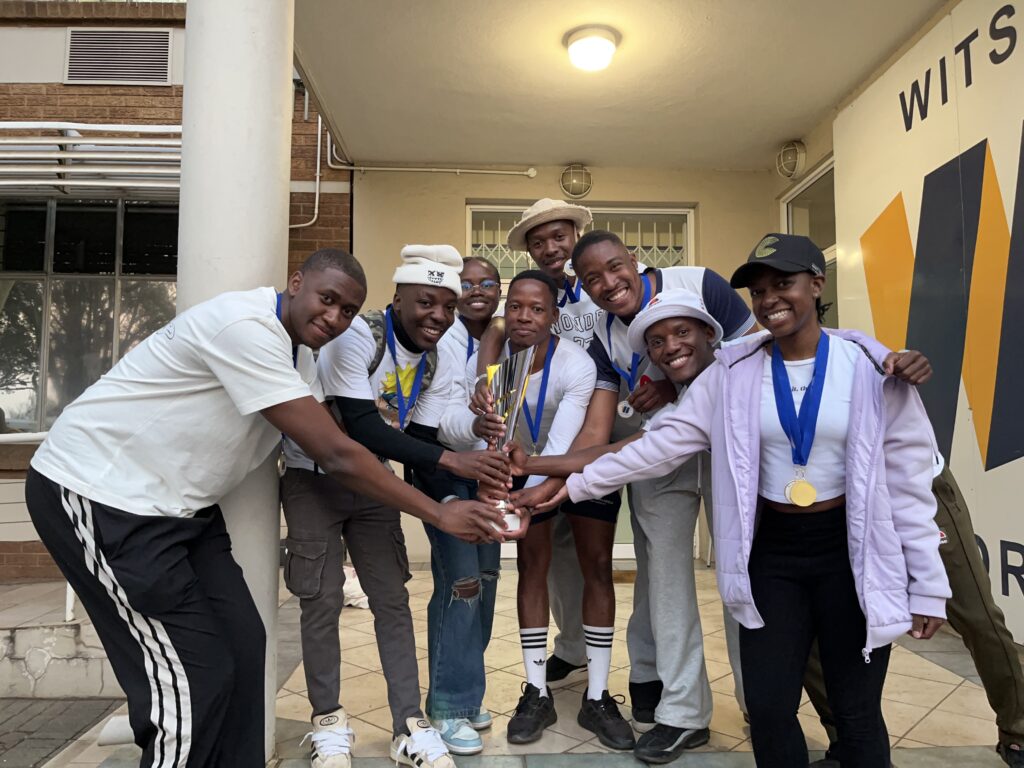
Every residence had the opportunity to complete a challenge at each sporting code station located around Sturrock Park and the Wits Science Stadium. The residence who collected the most points from all these stations, was crowned David Webster Cup winners, with West Campus Village taking this year’s cup.
West Campus Village being crowned the 2026 David Webster Cup Champions. By Zebrena Ralph
The purpose of this format was to show Wits students that there are more sports than just football, rugby and netball. Twelve other sporting codes were put on display at this year’s Webster Cup such as snow skiing, boxing, yachting, fencing, and tai chi. “A bunch of students came and said that they did not even know snow ski existed on campus,” Lethabo Rabothata, Gender Equity and Transformation Officer, told Wits Vuvuzela. “It’s actually fulfilling to see that.”
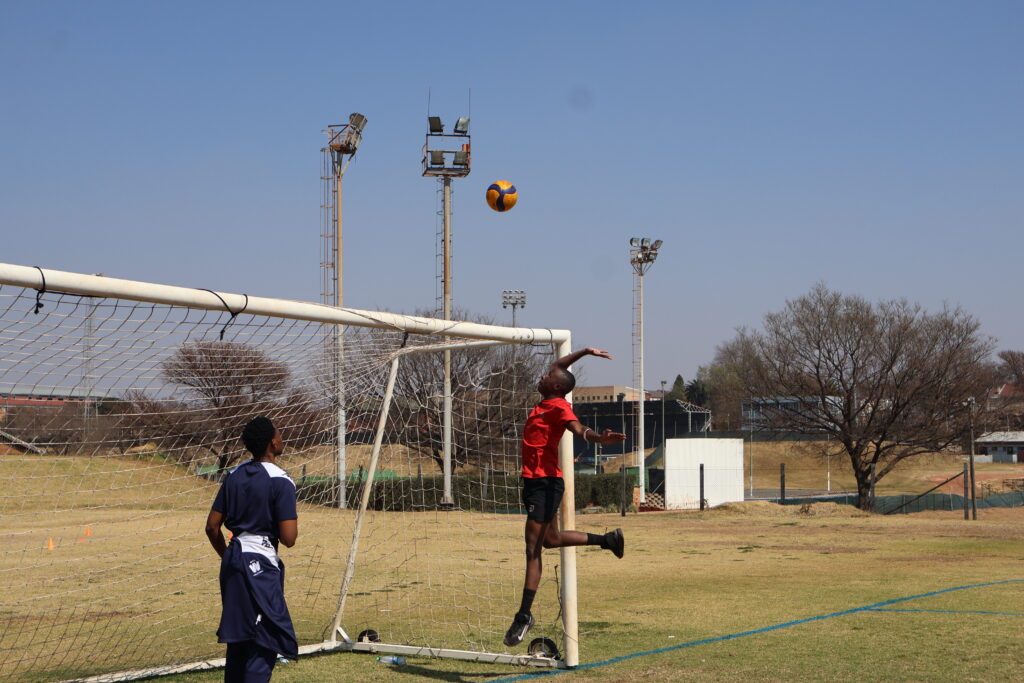
A member from Men’s Res participating in a volleyball challenge. By Zebrena Ralph
The new competition format also aimed to address gender inequality within sports, which existed at previous David Webster Cups. “The real impact that we saw is the (previous) set up of sporting codes presenting us with gender inequalities. It made more sense to do an Amazing Race where everyone is equal and anyone can participate in anything, as opposed to a netball challenge where Men’s Res does not have a team for,” Mamela Nyandeni, Wits Sports Council Chairperson, told Wits Vuvuzela.
Oratile Lesia, the Sports Officer from the All-Residences Council (ARC), said that the ARC played the role of being the bridge between the Wits residences and Wits Sports. The David Webster Cup aimed to foster greater integration between student residence culture and Wits entities such as Wits Sports. “Showcasing this in the David Webster Cup is like merging the two entities together to become one, and to express ourselves beyond our households,” said Lesia.
By showcasing different sporting codes beyond mainstream sports, Azania Jack, a participant from Men’s Res, expressed how as a basketball player he found water polo the most challenging. “It is such a foreign sport to me,” Jack said. Fulufhelo Nengwekgulu from Noswall Hall Residence said that “Mountain climbing was nice, although it was quite difficult, but I enjoyed it as well”.
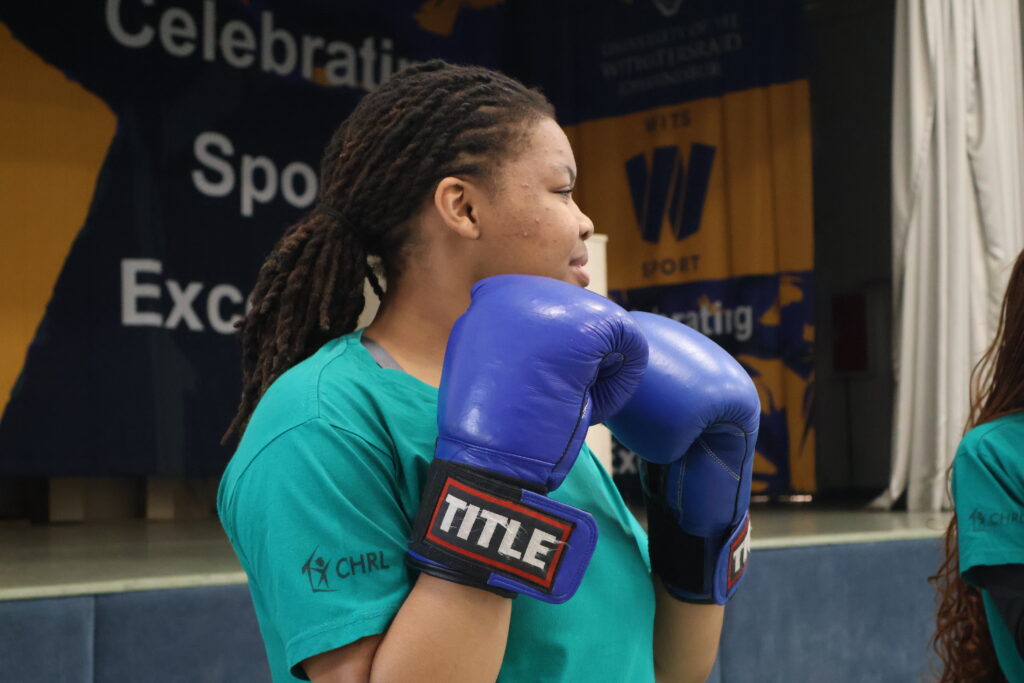
A member from David Webster Hall Residence participating in a boxing challenge. By Zebrena Ralph
Although the David Webster Cup was an overall success, the WSC was faced with the challenge of attendance. While 10 residences were set to compete in the tournament, two withdrew on the morning of the event. Nyandeni expressed that despite this challenge, the ‘Amazing Race’ format allowed adjustments to be made to avoid any major setbacks on the day of the tournament.
FEATURED IMAGE: West Campus Village Residence celebrating. By Zebrena Ralph
Hundreds took to the streets, calling for protection of housing rights and an end to rising xenophobia.
Operation Ubuntu marched to the Premier’s Office to oppose the PIE amendment and rising anti-migrant sentiment.
Housing activists and informal settlers argue that the revision to the PIE Act criminalises poverty.
The march’s memorandum calls for greater state accountability in handling anti-migrant hostility.
On the morning of August 8, a coalition of over 60 social justice organisations under the name Operation Ubuntu led a march to the Premier’s Office demanding an end to xenophobia and a rejection of the proposed amendment to the Prevention of Illegal Eviction (PIE) Act.
The march was one of many coordinated protests taking place in Johannesburg, Cape Town and Durban in response to two issues affecting marginalised communities: ongoing xenophobia and housing insecurity.
Marchers charging through the streets holding banners and placards. Photo: Jamie Ho.
Woman holding a placard condemning xenophobia. Photo: Jamie Ho.
Frustration as protestors march for housing rights and an end to xenophobia. Photo Jamie Ho.
Central to the protest was the recent proposal for an amendment to the PIE Act. Currently, people cannot be evicted from their homes without a court order as the Act operates in accordance with Section 26 of the Constitution, which stipulates that “everyone has the right to access adequate housing”.
Activists fear the proposed amendments would weaken these protections, particularly for people living in informal settlements and other forms of insecure housing. They are particularly concerned that courts could order evictions without requiring municipalities to provide alternative accommodation.
“The municipality cannot have that power of evicting us without meaningfully engaging with us and without even understanding our background,” said Operation Ubuntu coordinator, General Moyo.
Housing activists condemn the proposed revision for failing to address the structural causes of housing insecurity that stem from poverty, entrenched inequality and poor governance. Instead, it places further strain on already vulnerable communities by forcing them out of their homes.
“Critics have long referred to this approach as pounding the tip of the ice-berg or swatting at the flies when a corpse is rotting,” explained Marie Huchzermeyer of Siyafana Sonke, a civic movement aligned with Operation Ubuntu.
Furthermore, the government’s persistent failure to address housing insecurity has left residents with few options. “In 33 years, not one RDP house was built in our community,” said Fagmedah Edeies, who resides in an informal settlement within Eldorado Park. “As a mother, I must remember that I have children and I have grandchildren. Where will they then go if this amendment is passed?”
Data visualisation showing housing backlog. By: Jamie Ho.
Beyond housing insecurity, the march also confronts escalating waves of xenophobia across the nation. “We are in solidarity with all the African brothers and sisters that are facing the crisis,” Moyo affirmed.
In their memorandum, Operation Ubuntu called for greater action from state institutions in handling matters of anti-migrant hostility.
Firstly, it singled out SAPS for not protecting vulnerable migrant communities from vigilantism. “We are calling on the police,” Moyo explained, “to make sure that they abide by their obligation which is to serve and protect without discrimination and without favour.”
Secondly, they highlighted the issue of documentation as a systemic failure by Home Affairs and demanded a two-year moratorium on all arrests and forced repatriations to allow migrants sufficient time to obtain documents.
Thirdly, in light of the upcoming elections, Moyo warned political parties against scapegoating migrants for electoral gain. “We will be watching those that will be campaigning trying to use the platform of hate and violence in communities to get votes.”
Held on the eve of Women’s Day, the march highlighted the broader demand for dignity, security and equal protection. For protestors, xenophobia and housing rights are part of the same struggle: a move to ensure that vulnerable communities, and the women and children within them, are not left without a home or a voice.
A mother holding a placard advocating for women and children safety. Photo: Jamie Ho.
Protestors chanting through the streets against the PIE Act amendment and xenophobic violence. Photo: Jamie Ho.
“Stop treating us like animals” reads sign at protest. Photo: Jamie Ho.
FEATURED IMAGE: A placard advocating for women and children safety during the Operation Ubuntu protest. Photo: Jamie Ho.
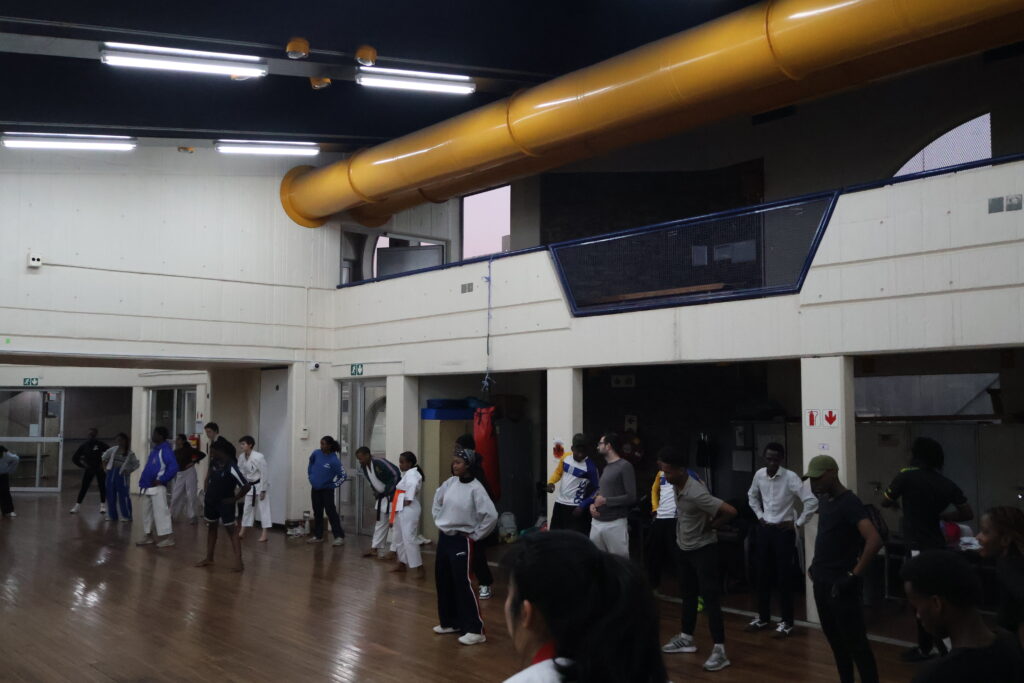
Nearly 140 Wits students attended the university’s largest self-defence seminar to date this week, as concerns about gender-based violence and personal safety continue to drive demand for practical self-defence training.
Wits Tang Soo Do, Wits Boxing, Wits Karate and the Gender Equity Office collaborate to host its biggest self-defence seminar yet.
The seminar sees attendance of male participants, highlighting how men can combat gender-based violence.
Calls for Wits to help expand this initiative.
The seminar, organised by Wits Tang Soo Do, Boxing, and Karate, in collaboration with Wits Gender Equity Office (GEO), saw the number of attendees nearly tripling that of 2025.
Wits students attending the self-defence seminar. Photo by Zebrena Ralph
The event happened over two days with August 4 reserved for women only, and August 6 for everyone.
39 094 contact crimes were reported between January 2026 and March 2026 according to South African Police Service in Gauteng.
Although 86% of the participants were women, the male participants also found the importance of attending this seminar. “It made me realise how easy it is to protect yourself in a fight and how to actually protect others if you ever in that situation” said participant Ayabonga Ndinga.
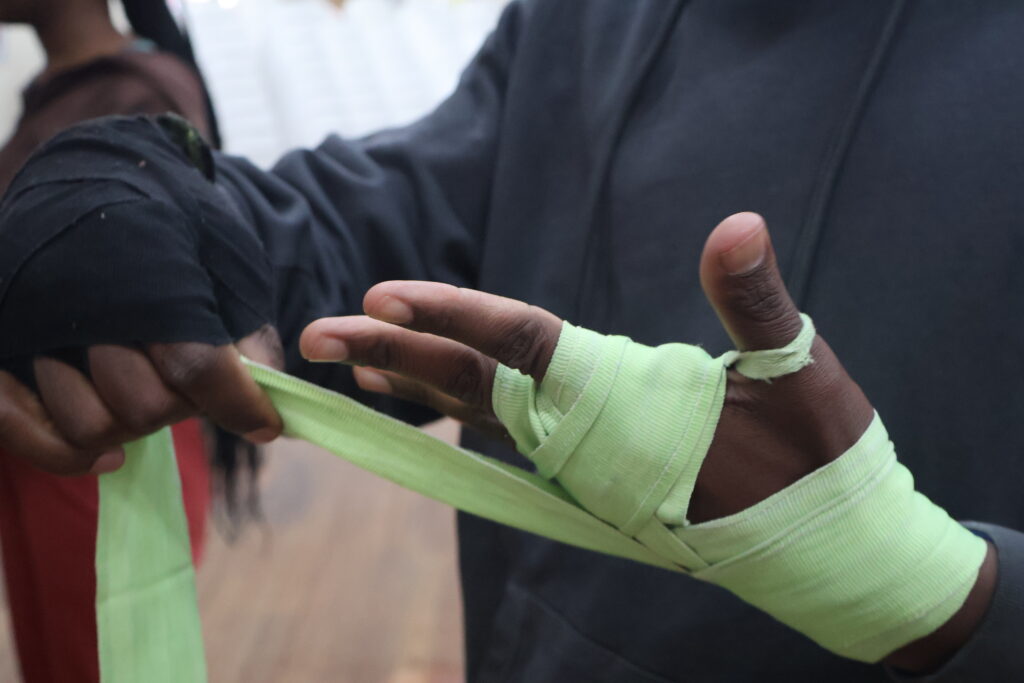
Reamogetse Molapisi, wrapping his hands to get ready to teach boxing related self defence skills. Photo by Zebrena Ralph
As gender-based violence and student safety concerns continue to remain a huge issue for the Wits community and South Africa at large, Lethabo Rabothata, the seminar organiser, saw the need to try and get Wits Tang Soo Do, Boxing and Karate together to exchange ideas on how students can defend themselves and hopefully save lives.
Rabothata highlighted the importance of male participation. “Where I’m from, GBV is crazy…Although, in terms of statistics, women are the most vulnerable in society…some men, when you get assaulted as a guy by a woman, it’s very hard for you to go out and say I was assaulted,” he said.
Recognising that men can also be victims of GBV, while encouraging them to safely intervene when witnessing violence against women, was one of the reasons the combat clubs partnered with the GEO. “If a woman is being assaulted, you need to be able to know what (to do), I can’t just sit and do nothing. I need to be able to step in and help” said Rabothata.
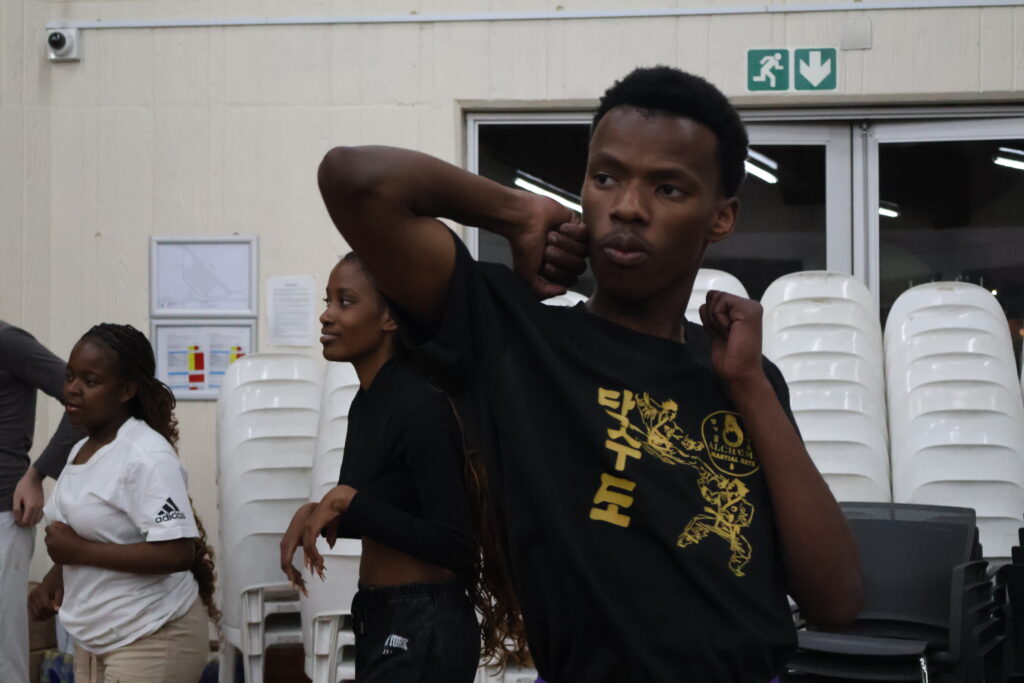
Wits student participating in the self-defence seminar. Photo by Zebrena Ralph
“We are grateful to have such initiatives taken by the Wits Sports in corelation [sic] with the GEO. We hope that it gets to increase every year, but the statistics of needing to defend yourself reduces,” Katlego Motaung, from the GEO, told Wits Vuvuzela.
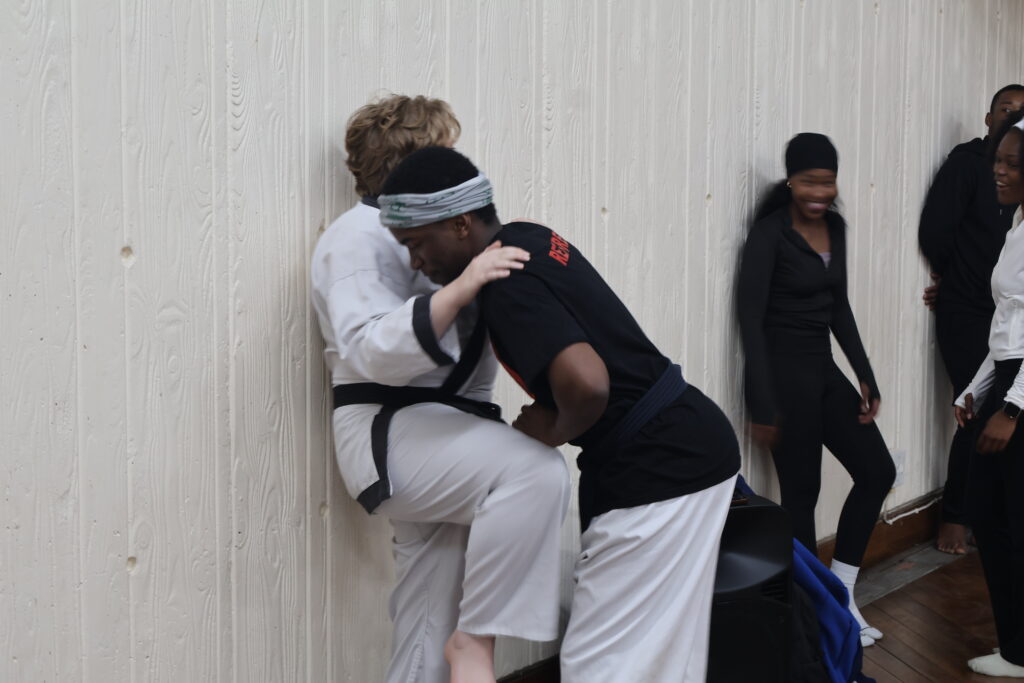
Self-defence instructor demonstrating a self-defence move. By Zebrena Ralph
Rabothata expressed that he hopes that Wits would join this initiative to help expand these self-defence classes to not only students, but staff and outsiders also.
FEATURED IMAGE: Reamogetse Molapisi, Chair of the Wits Boxing Club. Photo by Zebrena Ralph.
Young researchers gather at Wits to present solutions to rising global issues.
Falling Walls Lab Gauteng was held at Wits where students competed for a spot on the international stage in Berlin.
The competition required pitchers to present an idea that addresses global challenges.
Researchers, innovators, and entrepreneurs were given an opportunity to engage with people outside of their disciplines and institutions.
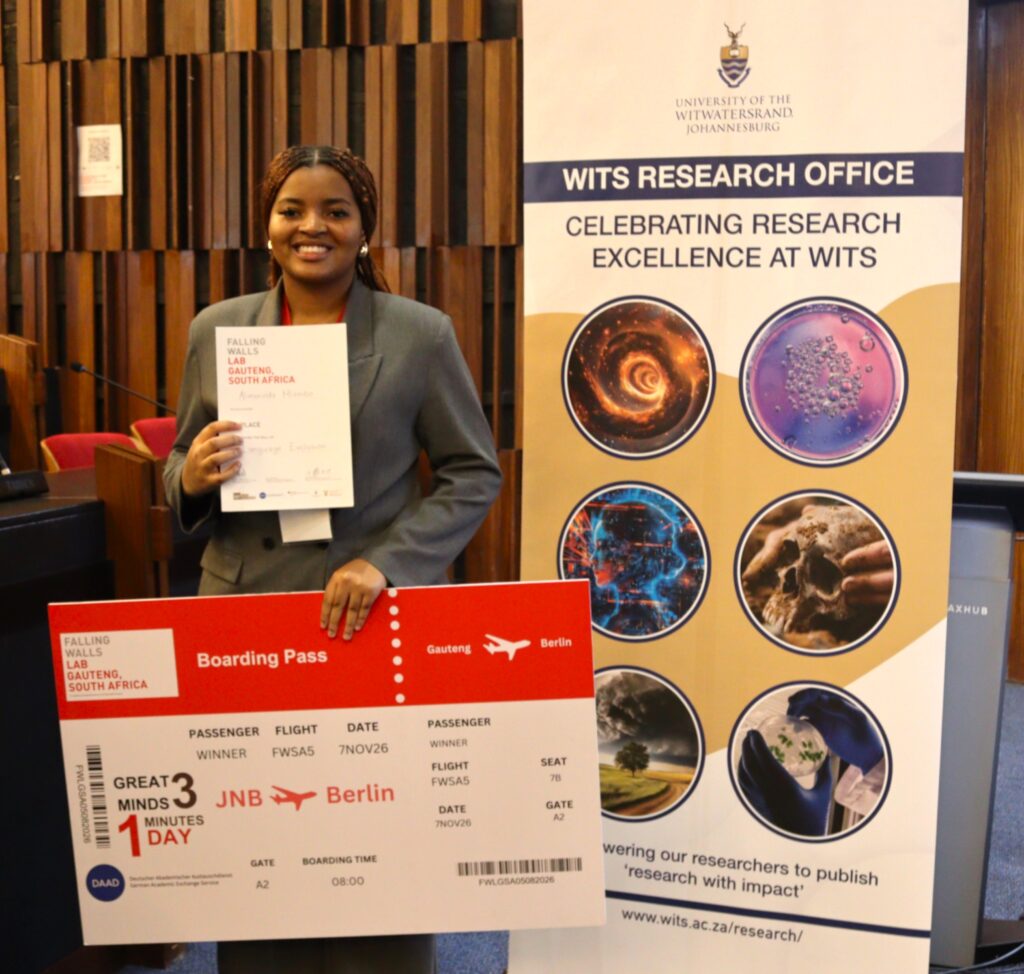
A Wits honours student, Alimerinda Mlambo, will represent Gauteng at the international Falling Walls Lab finale in Berlin after winning the provincial competition, with an AI-powered translation platform designed to break language barriers.
Picture of Alimerinda Mlambo, the winner of Falling Walls Lab Gauteng 2026, and her certificate & ticket to Berlin. Photo: Kerese Govender
The competition, held at Wits on August 5, saw about 20 students drawn from Wits, University of Pretoria, and Tshwane University of Technology, present their innovations aimed at tackling some of the country’s most difficult challenges.
The event was hosted in partnership with the DAAD Information Centre Johannesburg and the Falling Walls Foundation. Participants had just three minutes, including answering judges’ questions, to convince an expert jury that their pitch could help solve global issues.
Mlambo, an Information Systems honours student, took first place with her invention, eLingo AI, which aims to solve language exclusion in public spaces through real-time translations. She used a fictional character by the name of Lerato in her pitch, but the story was inspired by her lived experience of sitting through a conference presentation delivered in French that she could not understand.
When asked if this will cost human interpreters their jobs, Mlambo said, “We’re not trying to replace interpreters. We’re making language accessibility available to organisations that could not afford it otherwise.”
Unlike traditional interpretation services which rely on multiple interpreters, special equipment, and significant expenses and planning, eLingo offers an affordable alternative. The platform already includes all 11-official spoken South African languages and has attracted more than 100 beta users. Mlambo stated that the team has plans to expand to other languages.
She believes this kind of software is especially needed in South Africa, where only a small portion of the country’s population speaks English as a home language. “I want to create a future where people are no longer excluded from conversations they were meant to be a part of,” Mlambo said.
Dr Samia Chasi, Head of Wits Internationalisation and Strategic Partnerships Office and chair of the judging panel, said the competition is much more than selecting a winner. “It gives students an opportunity to present their own research to audiences beyond their own disciplines and institutions,” Chasi said.
“We have very creative and innovative communities in South Africa and Africa, and we can offer our own solutions to the rest of the world. We can’t always look at importing ideas,” Chasi said.
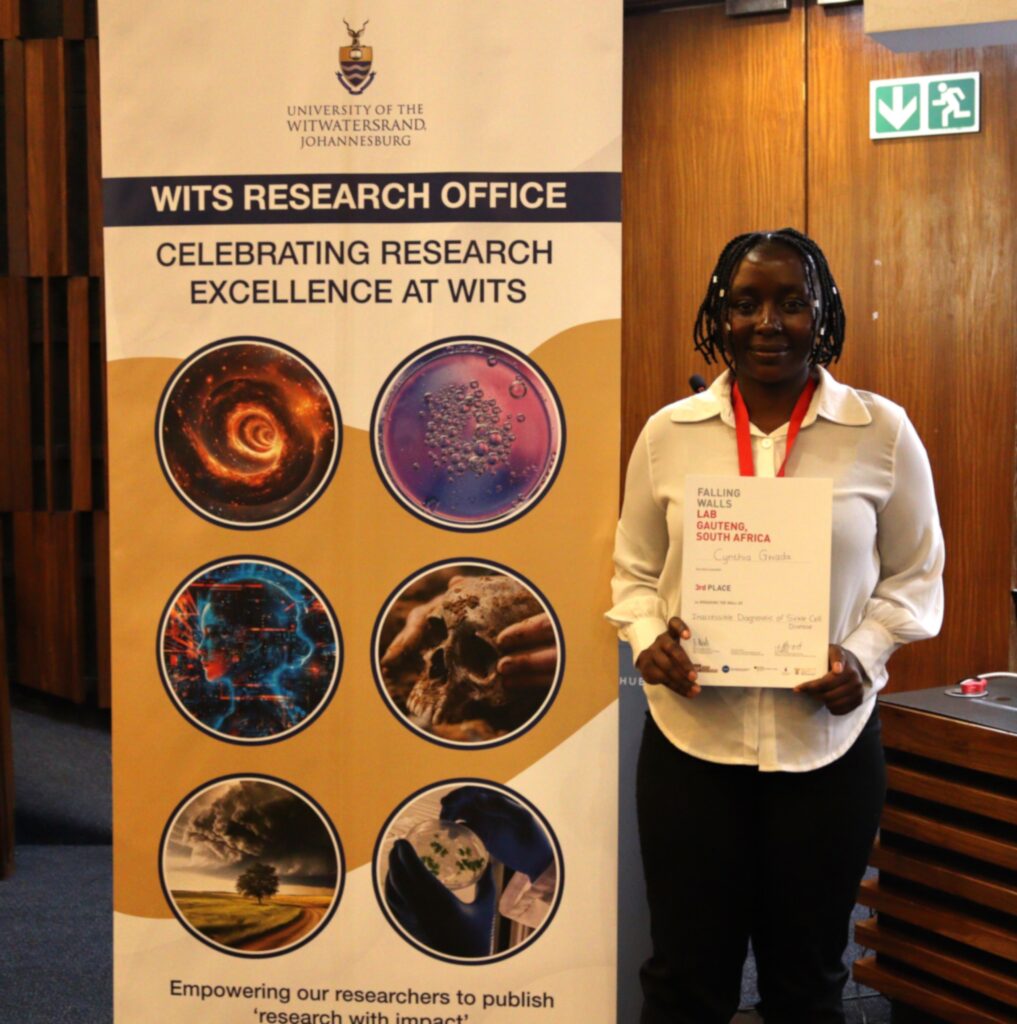
Among the interesting innovations was the third-place winning project by Cynthia Gwada which focused on an affordable diagnosis for sickle cell disease. The solution aims to expand access to rural areas in South Africa so “they don’t have to go to the cities with money that they don’t have,.” Gwada said.
Picture of Cynthia Gwada, third place winner of the Falling Walls Lab Gauteng 2026, and her certificate. Photo: Kerese Govender
Gwada also hopes to expand the diagnostics to other diseases such as malaria and tuberculosis, making diagnosis more affordable and accessible.
As Mlambo prepares to compete in Berlin, she hopes her success will inspire more young black women to pursue careers in male-dominated fields such as hers.
“Don’t wait for a seat at the table. Go and build a table,” she said.
FEATURED IMAGE: Picture of Falling Walls Lab Gauteng 2026 pamphlet and souvenir. Photo: Kerese Govender
The 70th Women’s Day Commemoration event celebrated the women of the Women’s March of 1956 and gave an opportunity for exhibitors to create awareness of their business and showcase their work.
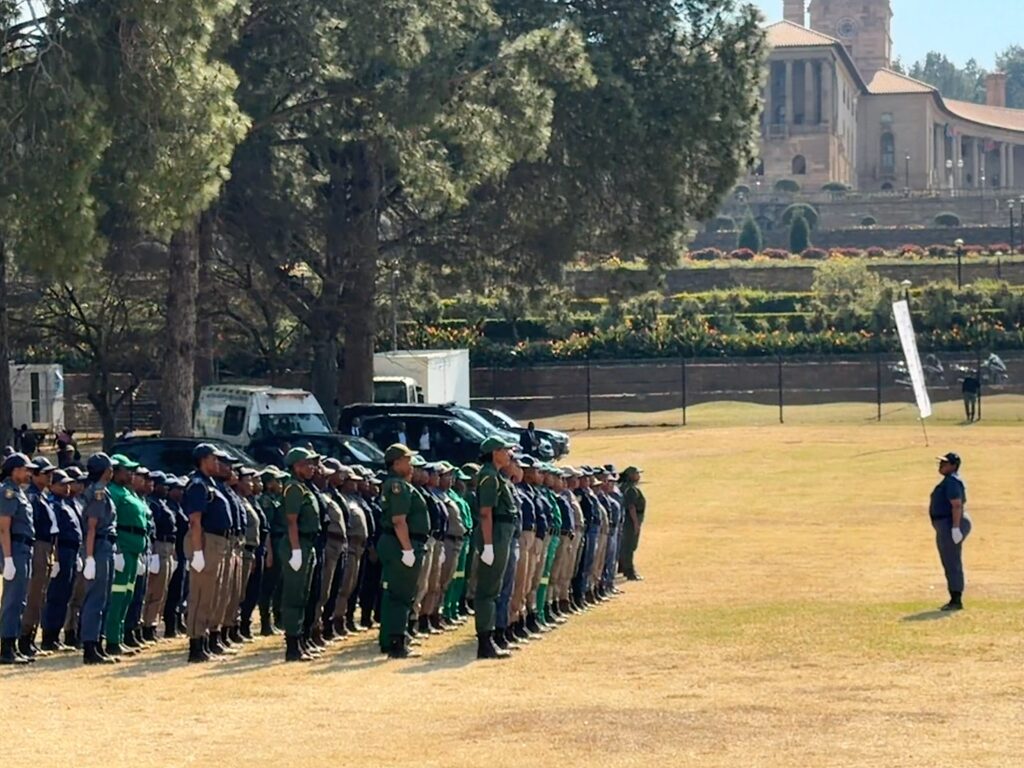
The 70th Women’s Day Commemoration took place at the Union Buildings in Pretoria.
Sophie Williams-De Bruyn, the last standing leader and organiser of the Women’s March of 1956 gave an address.
Wits Vuvuzela spoke to three different exhibitors to gain insight on how their exhibitions empower women.
National Women’s Day, Sunday August 9 2026, marked a significant milestone within the South African context as it was the commemoration of 70 years since the anti-pass law Women’s March of 1956, which took place at the self-same Union Buildings decades on.
The Women’s March of 1956 was a monumental turning point in South African history, highlighting the power of women uniting against injustice. 70 years later, thousands of people gathered to honour the 22 000 women who marched against Apartheid’s pass laws.
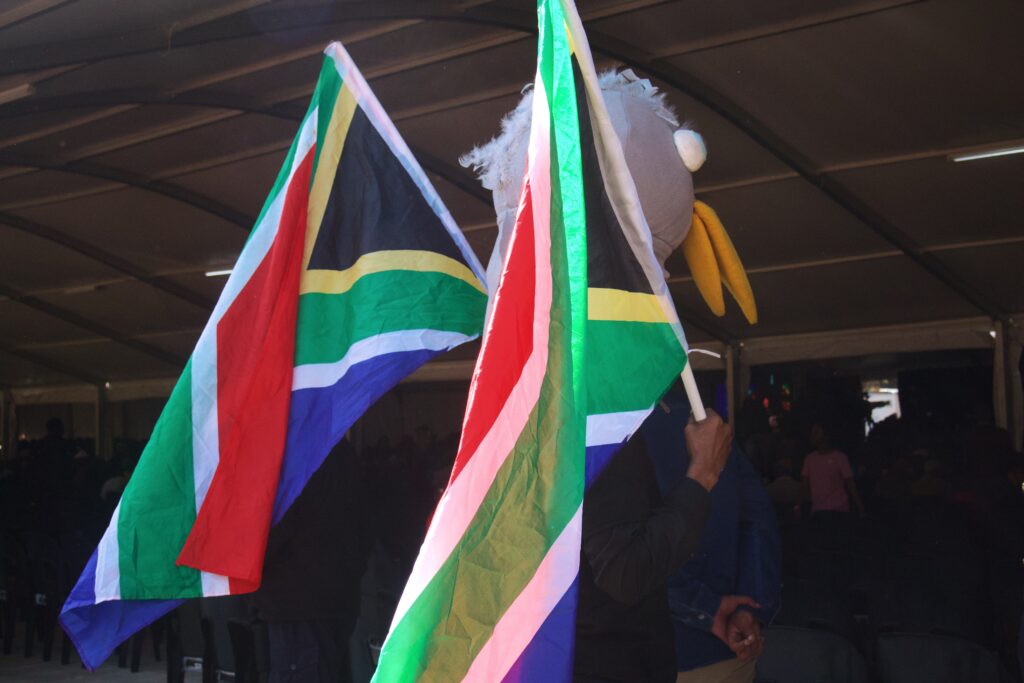
A photo of someone holding two South African flags. Photo: Sikelelekile Pahlana
The commemoration consisted of a women parade, speeches, live performances that celebrated culture and various exhibitions.
The theme of the event was “empowered women, empower the nation.” Sophie-Williams-De Bruyn, the last surviving woman from the leaders and organisers of the Women’s March of 1956, took to the stage during the formal proceedings.
Williams-De Bruyn said: “We were young, we were afraid, but we were unified and determined. When we stood undaunted in silence for 30 minutes, the world trembled, it took note. We confronted the Apartheid regime and boldly said: Strijdom, you have targeted the women, you have struck a rock, and we will crush you…
But today as I look at our beautiful country, my heart is heavy. The freedom we marched for, what we bled is in reality a painful paradox. How can we fully celebrate our past victories when our current realities are so deeply disappointing and distressful?”
Williams-De Bruyn specifically pointed out gender-based violence and femicide, entrenched poverty, lack of clean water, homelessness and systemic corruption.
Women’s Parade in honour of the women who marched in 1956. Photo: Sikelelekile Pahlana
Alongside Williams-De Bruyn’s address was Eugene Plaatjie who spoke on behalf of her late mother, Lilian Dierdericks, a leader and organiser of the 1956 march. She [Lilian Dierdericks] led the Eastern Cape women to this iconic march,” she said.
Plaatjie concluded: “Let us no more say four women led the march, but that they were indeed five. Let the false narrative die today and that we remain true to the struggle.”
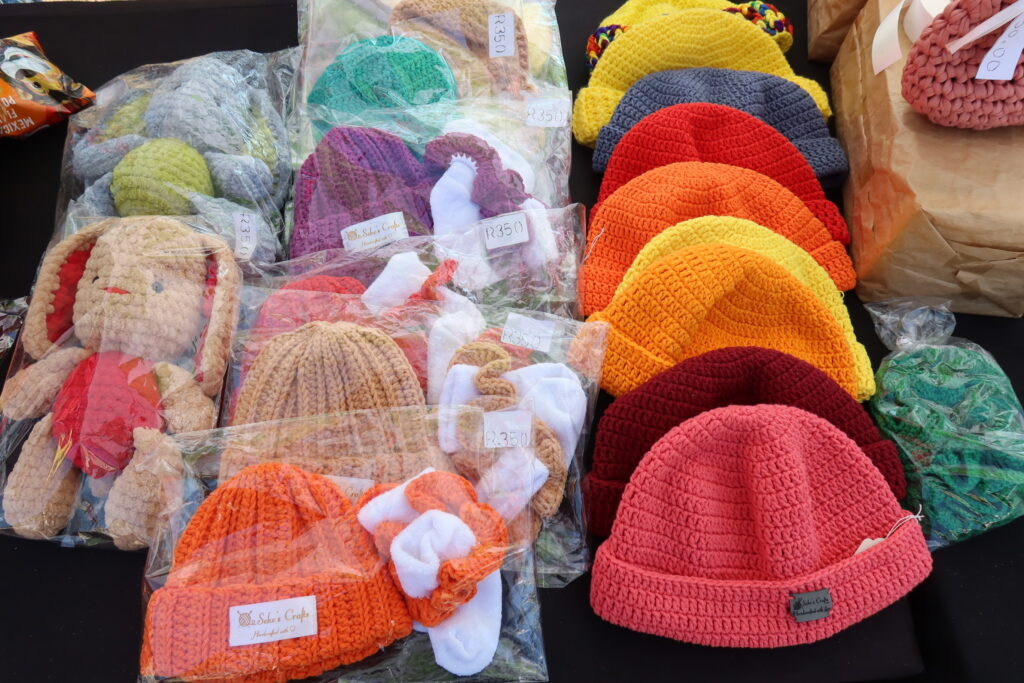
Seko’s Crafts beanies on display. Photo: Sikelelekile Pahlana
Wits Vuvuzela engaged with three exhibitors on the lawns. The first, a crocheting collaboration between Seko’s Crafts (founded by Lebogang Klass) and Kgaetsi Hand Made (founded by Mokgaetši Mothwa). When asked about how they interpret the theme, “empowered women, empower the nation” in relation to their businesses, Mothwa shared: “This woman [referring to Lebogang] standing right in front of me, helped me realise my dream today. There was an opportunity to come to class to learn how to crotchet, and now I can happily and proudly say I’m running my own business today. So that for me is women empowerment, we care for one another. She did it for the community. Now I am able to buy bread and teach someone else.”
Klass said empowerment for her is about paying it forward through her teaching and mentorship. “The thing is now unemployment is too much… and mental health, the kids are always on social media, they do other things whereby they can learn to do this thing [crochet] and they don’t need to have a job to learn, they can employ themselves and employ other people,” she said.
The second exhibitors were Sharmila Mistry and Shamalin Singh, founders of Beyond Eternity, offering holistic therapies and products. They said their work is centred around “the evolution of women and women knowing their self-worth” through natural healing.
Lastly, were Ditsong: Museums of South Africa funded by the Department of Arts, Sports and Culture. Curator Tinyeko Ndlovu said, “You see the boards, they represent permanent exhibitions in our Military Museum, we did what we called, Women’s Role in the Liberation Armed Struggle. We are contributing to ensure that women were not excluded and showing that they were there. If you look, there’s people like Charlotte Maxeke, and Sarah Bartman.” He also shared that Ditsong will be hosting a panel on August 26, 2026, in Johannesburg to discuss Nokuthula Simelane, who disappeared in 1983.
A photo of the boards that were being showcased by Ditsong: Museums of South Africa. Photo: Sikelelekile Pahlana
The overall event reflected the importance of empowerment and honouring the work that women do from generation to generation. More notably, how there is still more work to be done for women to truly thrive in South Africa.
FEATURED IMAGE: A photo of people gathering to watch the women’s parade at the Union Buildings. Photo: Sikelelekile Pahlana
South African filmmakers encouraged to leverage verticals and microseries to tell specific local stories.
Phung delivers a masterclass on short-form filmmaking and the rise of the microseries.
‘Verticals’ are identified as the third audiovisual language, reshaping viewing habits with phone-first, bite-sized narratives.
Phung urges filmmakers to focus on local stories to unearth universal themes.
Quan Phung, a global media strategist, creative executive and producer with more than 20 years’ experience in international film and television, brought industry insights to Johannesburg this week. With credits including How I Met Your Mother, House and Arrested Development, Phung presented ideas on short-form filmmaking, mobile video films and microdramas.
Hosted in partnership with the US Consulate at Constitution Hill on August 6, the masterclass brought together filmmakers, writers and emerging storytellers to discuss how South African stories can be positioned for global audiences.
Audience members included filmmakers, writers and creatives. Photo: Hannah Brown
Phung highlighted three different audiovisual languages: film, television and the new third form ‘verticals’: the phone-first, short-form format that is quickly reshaping our viewing patterns.
This has resulted in the rise of microdramas, a fast-paced, character-driven, scripted narrative series. While the first microdramas probably make you think of soap-style, romantic shows, Phung says this is evolving to horror, crime, comedy and sci-fi.
Brooklyn Coffee Shop, for example, is a viral short-form series that delivers bite-sized stories through deadpan, quick-dry humour set in a busy cafe. Over the past two years, young audiences have tripled their share of viewership.
Social media platforms were once used to tease trailers, but short-form content is no longer used solely for marketing purposes; it is now becoming the ‘show’ itself. The ways we engage online have evolved, but it has also come with a cost.
A 2023 analysis linked short-form video use to reduced attention spans, and a 2026 Daily Maverick article warned, “Short-form videos are engineered to capture the brain’s craving for novelty”, and Psychologist Dr. Ken Fung compared micro-dramas to “snacking on junk food”, quick and addictive.
While AI is playing a role in production – with some microdramas made entirely by the machines – emotion, anticipation and soul remain the core of storytelling and are difficult to replace completely. This leaves space for South African filmmakers to create more people-led, authentic and durable stories.
Quan Phung presenting a masterclass on short-form filmmaking. Photo: Hannah Brown
“Make local stories so specific that they unearth universal themes and ideas that will travel,” Phung advised local filmmakers. Creatives need to ask themselves, “Why you? Why now?” What connection do you have, and what part of your story adds a sense of urgency to watch today?
Phung emphasised that, “It is a great time for South African filmmakers to push their stories forward.” Young audiences want to hear from new voices, and global platforms are looking for diverse perspectives.
FEATURED IMAGE: Quan Phung presenting industry insights in Johannesburg. Photo: Hannah Brown
Climate change is threatening South Africa’s books, archives, and history.
Books come from plants and they are damaged by water, insects, and humidity.
Archives preserve the stories and experiences that shape South Africa’s identity for future generations.
Climate threats to historical records grow.
When the University of Cape Town’s Jagger Library burned in 2021, South Africa lost priceless books, manuscripts and archives that could never be replaced. Literary scholar Isabel Hofmeyr says the disaster exposed an often-overlooked consequence of climate change: it is not only threatening ecosystems but also the books and records that preserve the nation’s history.
Speaking at a seminar at the Wits Club on 29 July, Hofmeyer said books are more than just paper-based objects. They exist within a broader ecosystem: paper is made from plants, insects can damage books, water can destroy archives, and environmental conditions influence how knowledge is produced and protected.
The loss of books and archives is about more than damaged paper. These records preserve South Africa’s history, culture and identity by documenting important events, people and communities. Researchers, students and future generations rely on these collections to understand the country’s past. When historical records are destroyed, valuable information is lost forever, making it harder to preserve stories that have shaped the nation.
Climate change is increasing the risk of extreme weather events such as wildfires, floods and rising temperatures, all of which can damage libraries and archives. Paper is vulnerable to heat, moisture and humidity, while insects and mould can further destroy fragile collections. As these environmental threats become more frequent, institutions responsible for protecting historical records face growing challenges in preserving them. Without proper conservation and protection, South Africa could lose more irreplaceable documents that hold historical, educational, and cultural value.
Hofmeyr said that “to reduce the risk of permanent loss, we need protection efforts” like improving storage conditions, monitoring humidity and temperature, and creating digital copies of important documents. She further added that it will also require funding and long-term planning to ensure valuable historical records remain available for future generations.
Speaking to WV after the seminar, Bachelor of Science student, Omphile Mankgaba, said the issue revealed an impact of climate change that many people do not usually consider. “I find it fascinating that in all the things we are looking at for climate change impacts, books are impacted,“ she said.
Master of Arts student Gareth Cruywagen said the discussion changed the way he thinks about environmental issues. “Climate change is destroying our history,” he said.
As climate change continues to threaten communities and the environment, protecting libraries, archives and historical records is becoming increasingly important. Preserving these collections will help ensure that South Africa’s history, knowledge, and cultural heritage remain available for future generations.
A rare volume is displayed with care ,showing how archives keep stories of the past alive for future generations. Photo by: Khutso Ngwatoana
FEATURE:A rare volume is displayed with care ,showing how archives keep stories of the past alive for future generations. Photo by: Khutso Ngwatoana
The future of mining is being shaped by more than what’s beneath the ground.
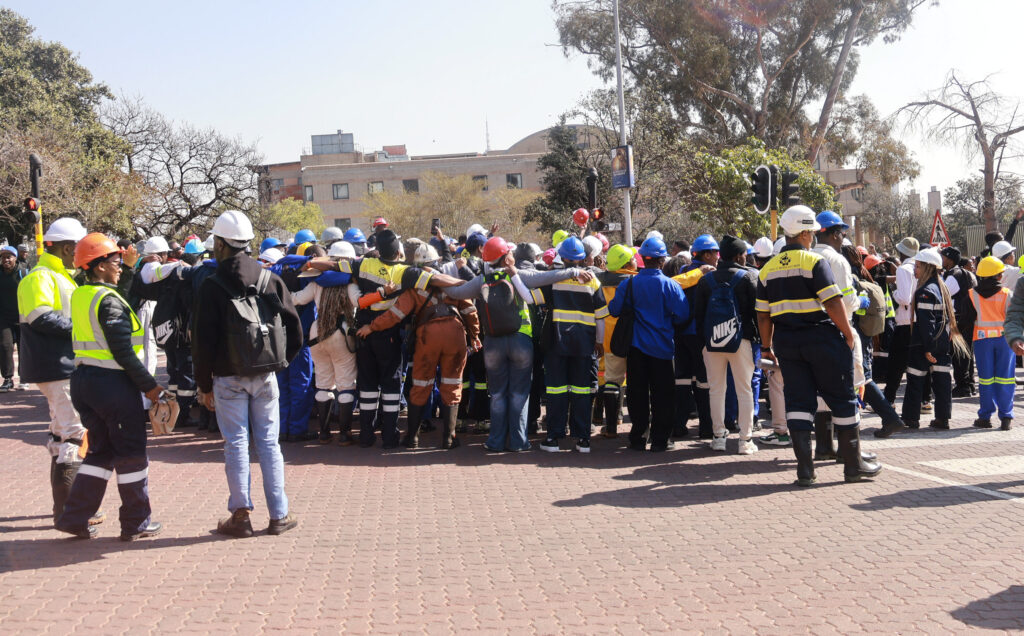
Wits celebrated 130 years of mining education at its annual Miner’s Day.
Students explored the future of mining through AI, sustainability and leadership.
Safety, community and “Never leave a miner behind” defined the day’s message.
Leadership, innovation and community development took centre stage at this year’s Miner’s Day celebration at Wits University.
“This is where we come together and remember how far we have come as the mining industry… I mean the blood and sweat of our ancestors built this City of Gold,” said final-year mining engineering student Kamogelo Mapeka.
Mining students gathered on Friday, July 31, to celebrate the university’s 130-year mining legacy at the annual event organised by the students in the mining engineering society (SMES).
Final-year student Alizwa Thwala said the global energy transition is reshaping the mining industry, with changing demand for minerals forcing engineers to rethink what and how they mine.
“Coal may be going down in demand, but copper is going up,“ he said.
Some students said adapting to these changes requires a broader set of skills than traditional mining roles once demanded.
Katlego Kekae said mining’s multidisciplinary nature prepares graduates for careers beyond production, from research to analysis, while equipping them to solve increasingly complex industry challenges.
Mapeka said artificial intelligence and mechanisation are already changing mining operations by improving safety and productivity. She believes the industry’s greatest transformation goes beyond technology.
Mining students during Wits University’s 130-year celebration of mining engineering. Photo: Asisipho Mpahleni
“We need philosophers and leaders who think of people,”Mapeka said. She hopes to use her future career to improve education and access to technology in her community, arguing that leadership should be measured by its impact beyond the mine.
That people-first approach was echoed by SMES president Ahluma Mngcushe, who said the industry’s future should prioritise safety above production.
“The right direction is zero harm and safety over productivity because everyone’s lives in the mining industry matter.”
Those values are also reflected in the School of Mining Engineering’s student culture of togetherness.
Third-year student and SMES co-opt member, Seshoka Ramohlale, said the society’s peer-support initiatives reflect its motto of “Never leave a miner behind.” She hopes to one day help struggling students through her own foundation, adding: “There is power in believing in someone. When someone believes in you, you are able to do well.”
FEATURED IMAGE: Mining engineering student holding up a handmade sign written “130 years of excellence”. Photo: Asisipho Mpahleni
The programme has changed the lives of thousands, one transplant at a time.
More awareness for liver disease and organ donation is needed to help provide more liver transplantation services.
Accessibility is needed through support from the government and other private medical institutions.
Over 1 million South Africans have been diagnosed with hepatitis – a viral infection affecting the liver – on an annual basis, which can potentially lead to advanced liver disease requiring transplantation.
According to the Liver Centre South Africa, the causes of liver diseases and illnesses can vary from acute liver failure, viral hepatitis or infections, with liver cirrhosis being the lead cause in sub-Saharan Africa.
The programme, established in 2004, is one of the few transplant units in the country and the broader sub-Saharan African region that provides living donor liver transplants in both adults and children.
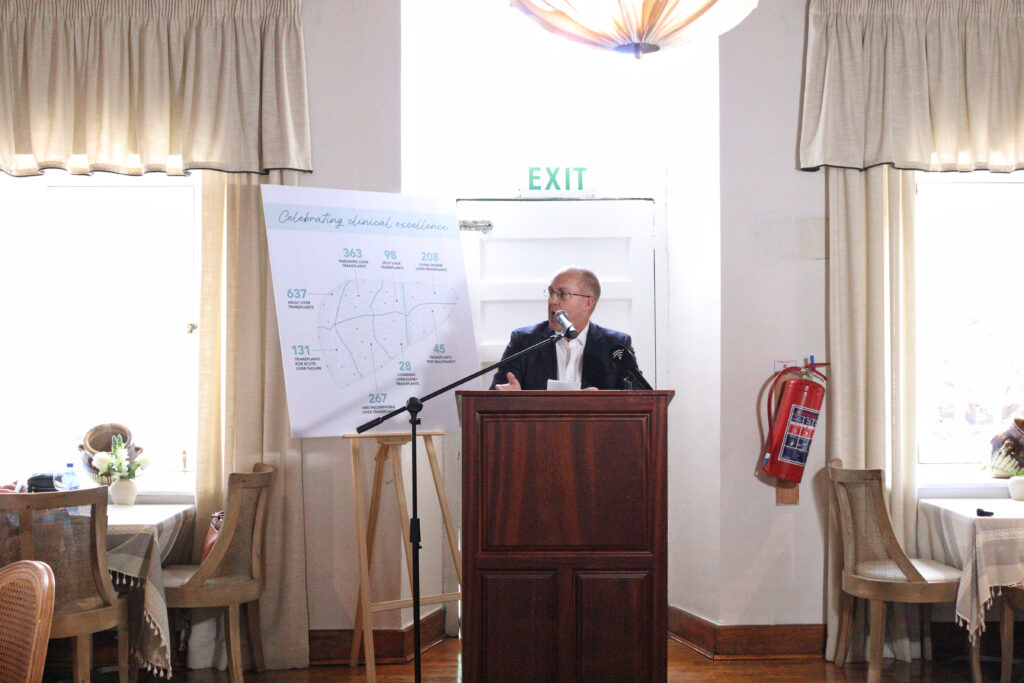
Professor Jerome Loveland addressing attendees of 1000th liver transplant milestone celebration. Photo: Amahle Ngqwemla
Liver transplants are therefore important for removing the affected area and transplanting the healthy organ, to provide patients with a better chance at a longer and healthier life.
Of the 1000 who have gotten a second chance, 637 are adults and 363 children.
Professor Jerome Loveland, the academic head of transplantation at Wits, said none of it would be possible without willing patients and families.
“Where would our tale of hope be without our patients…recipients who entrusted their care with us and those donors whether deceased or living, who gave the gift of life by donating,” he said.
However, there are still concerns around accessibility as many patients do not live in Johannesburg where units like the liver transplant programme are available.
Professor Adam Mahomed – specialist gastroenterologist and hepatologist said, “We have to expand it [training in both public and private sector] and not be limited to just where we are.”
Liver and kidney transplant co-ordinator, Sinesha Moodley, told Wits Vuvuzela that working with public academic hospitals like Charlotte Maxeke helps patients who are unable to travel long distances for treatment.
Professor Charles Sanyika, interventional radiologist, said, “If you are in a big city like Johannesburg, you might know of a transplant unit that might be within reach for you. Yet, someone [doctors and patients] in areas like Matatiele or Qunu [Eastern Cape] might not be aware.”
Attendees at the Wits 1000th liver transplant milestone celebration. Photo: Amahle Ngqwemla
The programme has created relationships with other medical societies on campus like the Wits student surgical society where postgraduate medical students can engage with the clinical training programme.
Although the combination of academic medicine, scientific research, education and healthcare partners has been significant in reaching this milestone, Loveland urges young people to “familiarise themselves with organ donation and be open to considering being a donor should it happen to one’s family.”
FEATURED IMAGE: Professor Adam Mahomed delivering his speech at the Wits Transplant Unit milestone celebration. Photo: Amahle Ngqwemla
I have been to my fair share of career fairs. Usually, I would leave with my bag full of brochures, a notebook, several pens, and the comforting feeling that I had “networked”.
This year, I ditched the usual routine.
Instead of asking recruiters about graduate programmes or internships, I asked them
“What’s the biggest mistake students make when approaching recruiters?”
I spoke to 15 recruiters. Surprisingly, many of them repeated the same answers. Here are the seven mistakes they wish students would stop making:
1. Waiting until final year
Career fairs are not only for final-year students.
Some students wait until they are in their final year to start thinking about their next step. One recruiter, Bohlale Paile, put it perfectly: “University isn’t just about getting a qualification; it’s also about preparing yourself for the job market from day one.”
The students who benefit the most are not necessarily the ones with the highest marks. They are the ones who start early enough to ask, “What skills are you looking for?” Then they spend the next few years in university building exactly that.
Attend the fair in first year. Go again in second year, and by the time you are graduating, you won’t be scrambling to become employable – you’ll already be there.
2. Walking up to a stand unprepared
Walking up to a recruiter without researching the company is a bit like showing up for an exam without studying. You might survive, but you’re making life unnecessarily difficult for yourself.
Before approaching a stand, spend time researching the company. Research is part of the preparation. Don’t spend five minutes at a stand asking questions you could have answered on Google the night before.
Know what they do, what interests you about them and, more importantly, how your studies, experiences or interests could fit into their company. A conversation changes completely when you can say:
“I’ve read about your graduate programme, and I’m interested in the sustainability team. What would make someone a strong candidate?”
That leaves a far better impression than asking, “So…what does your company do?”
3. Students take, take, and take
One of the biggest mistakes recruiters mentioned was students who only take.
Brochures and QR codes? Thank you.
Freebies? Thank you.
Then they leave.
The best conversations work both ways.
Introduce yourself. Share what you’re studying. Explain why you stopped at their stand. Mention a skill, a project, or an experience you’re proud of. Recruiters should not have to interview you just to figure out who you are.
Think of it this way: you’re not only gathering information, but you’re also giving them a reason to remember you.
4. Playing it too safe
You’re in a competitive market. Whether we like it or not, we have to constantly prove ourselves. A career fair is one of the few spaces where you’re allowed to talk about yourself without it sounding arrogant.
Some students speak softly, give one-word answers, or seem afraid of saying the wrong thing, which makes it harder for recruiters to get to know them.
You don’t have to be the loudest person in the room, but don’t let fear stop you from showing who you are.
5. Chasing the salary before the opportunity
Yes, money matters.
But leading with, “How much does it pay?” can send the wrong message.
As Thando Nxumalo from Thyssenkrupp explained, it may make recruiters feel as though you’re only interested in what you can get, rather than how you can contribute and grow within the company.
There will be time to discuss salaries. At a career fair, focus on learning about the role and the opportunities available.
6. Forgetting that the little things count
Sometimes, the smallest details separate two equally strong candidates.
One recruiter shared a story about two interviewees who were almost impossible to choose between. After the interview, one candidate stood up and walked away. The other took a second to push their chair back under the table before leaving.
Guess who left the lasting impression?
That tiny gesture suggested something bigger: respect, thoughtfulness, and leaving a space better than you found it. The same goes for a smile, eye contact, good manners, and dressing intentionally.
Another recruiter recalled a student who arrived in a suit. When asked why, he simply smiled and said:
“I’m dressing for the position I want one day.”
It’s safe to say he was remembered.
7. Never asking how to improve
Career fairs aren’t just about proving yourself. They are also about growing.
If you’re struggling to land interviews, ask recruiters what you could improve.
If your CV isn’t working, ask why.
If your communication needs work, ask how to strengthen it.
Seeking feedback shows self-awareness and a genuine desire to learn qualities that every employer values.
After all, the strongest personal brands aren’t perfect. They’re constantly improving. Maybe you’re reading this before your first career fair. Maybe you’ve already graduated and think you’ve missed your chance.
Either way, these lessons don’t end when the exhibition stands go down. They follow you into networking events, job interviews, and every professional conversation you’ll have.
So, the next time you walk up to a recruiter, don’t just think about what you want to get from them.
Think about what they’ll remember about you.
FEATURED IMAGE: Image of Students engaging with recruiters at the Wits General Career Fair. By: Asisipho Mpahleni
In episode six of We Should Be Writing season 7, the team unpacked the evolution of music as a form of expression and protest, through four decades in the South African context. The episode explores the journey of South African music and its consumers from the 80s, 90s, early 2000s and contemporary listeners. From the […]