Beyond funding debates, deeper structural flaws in South Africa’s health system are becoming a barrier to NHI implementation.
Governance failures are becoming one of the risks to the NHI’s success.
Experts highlight a disconnect between decision-makers and those delivering healthcare services.
Proposed reforms aim to strengthen accountability, limit political interference, and align funding with real service needs.
Wits University hosted a symposium on the future of the National Health Insurance (NHI) on March 26, where experts cautioned that without fixing systemic governance issues, the country’s healthcare reform could fail to achieve its goal.
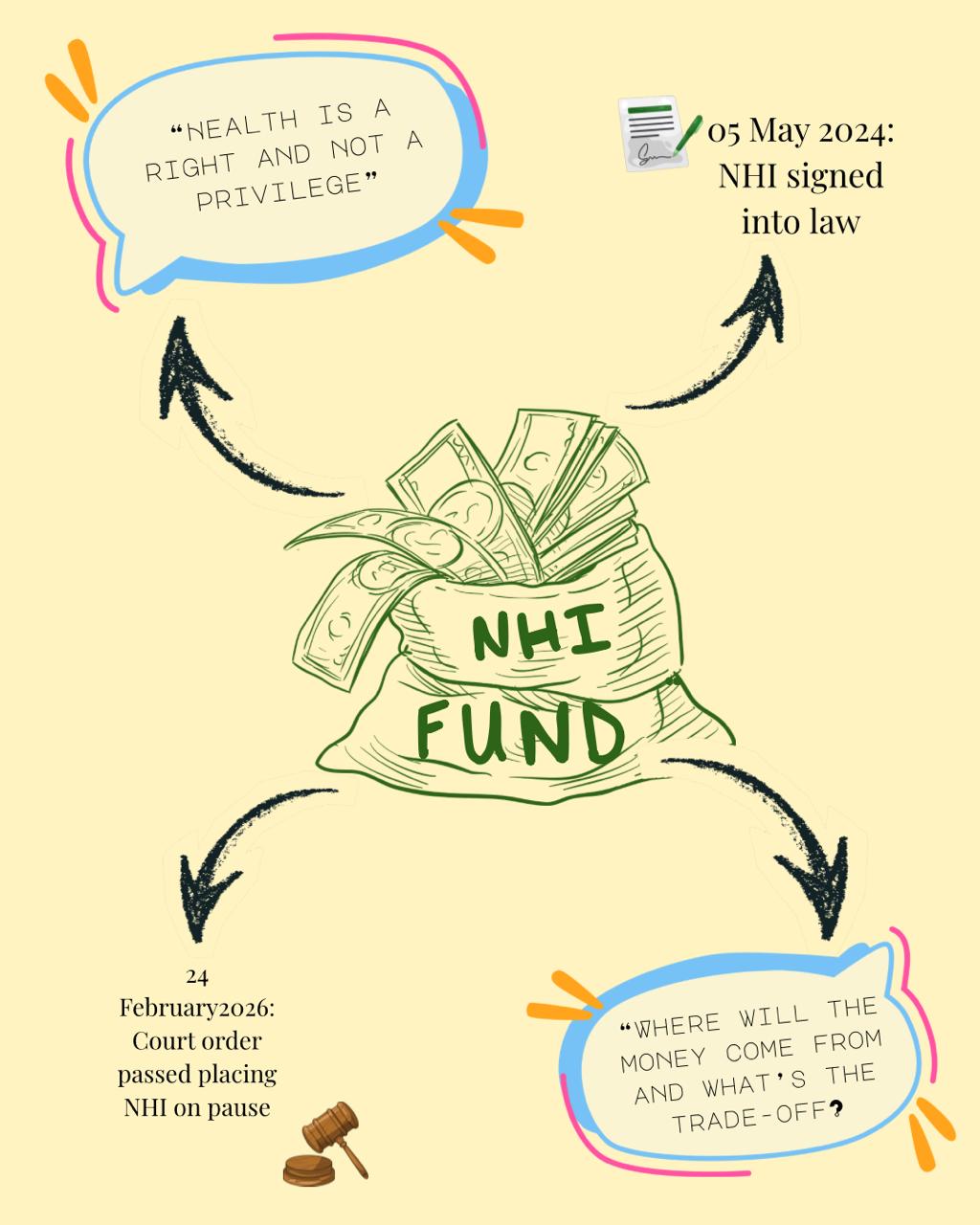
Since the signing into law of the NHI in mid-2024, and a court order issued on 24 February 2026 that has affected its implementation, debate over whether the policy will succeed has intensified.
Supporters argue that healthcare is a right, not a privilege, and view the NHI as a mechanism to reduce inequality by pooling funds to ensure more equal access to quality healthcare services across public and private sectors. On the other hand, critics continue to question how the system will be funded and what trade-offs may be required to sustain it.
A graphic representation of South Africa’s National Health Insurance (NHI), illustrating its universal healthcare goal alongside debates on funding and recent legal developments. Photo: Asisipho Mpahleni
While public debate around the NHI has largely focused on issues of inequality and funding, speakers at the symposium emphasised governance as a more immediate threat to the success of the reform.
Experts such as Professor Alex van den Heever, who specialises in healthcare systems and financing, examined the deeper structural problems within South Africa’s health system, warning that without addressing these, the NHI could fail regardless of its funding model.
“You’ve got a governance misalignment… [where] responsibility, authority, accountability [are] set in different places,” said van den Heever, pointing to one of the key structural weaknesses in South Africa’s healthcare system.
He explained that this misalignment means that those responsible for delivering healthcare services often do not have the power to make key decisions, while those with decision-making authority are removed from the realities on the ground. This disconnect, he argued, leads to inefficiencies, weakens accountability, and slows down service delivery across the system.
While much of the discussion focused on systemic governance failures, human rights and social justice activist Mark Heywood, brought the conversation back to its human impact. “Health is not pausing while we are sorting out the healthcare system,” he said, emphasizing the urgency of addressing these challenges.
The discussion concluded with several proposals to address these challenges. These included strengthening the decision-making power at local health districts and hospitals, while also making sure strong local boards hold them accountable.
Furthermore, the process of choosing leaders should be changed so that politicians can’t easily capture or corrupt public health institutions and procurement. Experts also proposed fairer funding rules and better regulation of private medical schemes, so money follows real service needs and incentives reward good, cost-effective care.
FEATURED IMAGE: A graphic representation of South Africa’s National Health Insurance (NHI), illustrating its universal healthcare goal alongside debates on funding and recent legal developments. Photo: Asisipho Mpahleni
On Tuesday, March 31, the SRC announced a new structure and reshuffling of their council. They added a new representative to the executive wing and reinstated a member suspended due to a rape allegation late last year.
This change in leadership comes after the resignation of the former Secretary General, Antonett Khoza, on February 26, 2026. In her resignation statement she defined her tenure as being led by a “passion for fighting for access, accountability and dignity of students”.
She added that, “stepping down is not surrender”, but “a strategic withdrawal from a position that no longer allows me to serve effectively under its current conditions”.
The reshuffle resulted in the co-option of an existing member of the executive student governing body by the Dean of Student Affairs. Final year Medical student, Nonhlanhla Siwela, will fill the role of Student Development and Integration Officer.
“Whether elected to a particular position or not, I’ve always strongly believed in advocating for progressive change and making a meaningful difference no matter how small,” she told Wits Vuvuzela after accepting the position.
Alongside these structural changes, an update has also been provided on the sexual and gender-based harm allegations laid against, Musawenkosi Mavuso, in November 2025. After failure to reach the complainant for further information, the conclusion of the inquiry resulted in the lifting of his suspension. Mavuso reassumed his position in the SRC, taking up the portfolio of Bursaries, Fundraising and Stakeholder Relations.
SRC President, Nchabeleng Gilbert, said, “We are glad investigations have been conducted. The SRC reiterated the university findings and find that due diligence has been conducted.”
He added that the changes would not impact existing administrative processes.
The positions and their new representatives are as follow:
Secretary General: Aphelele Qwabi Deputy Secretary General: Matlhatsi Mosima Portfolio of Bursaries, Fundraising and Stakeholder Relations: Musawenkosi Mavuso Student Development and Integration Officer: Nonhlanhla Siwela
What these changes will mean for the student body, remains to be seen.
FEATURED IMAGE: Image of the Wits Great Hall, with students walking in front of the building. Graphic: Amahle Ngqwemla
Urban settlements such as townships are being created in rural areas which has raised concerns over ownership and the role of municipal authority.
Urban settlements formed on the outskirts of cities are far cheaper for the average South African.
Public infrastructure and basic services are provided through privatized services and investments.
Community chiefs are granted more authority and jurisdiction over these urban settlements compared to the municipalities that govern them.
South Africa’s cities were never designed equally. Under Apartheid, millions of black South Africans were pushed to the outskirts of cities through policies such as the Group Areas Act, which enforced racial segregation and forced removals.
Decades later, the spacial legacy lives on as those policies continue to shape where people live.
The New South Institute (NIS) hosted a dialogue on March 11, 2026, with the emergence of urban settlements beyond conventional planning systems, specifically on land governed by traditional authorities, on the agenda.
In a research paper, Professor Andries du Toit, NIS affiliate researcher and his team argue that these “settlements should be recognized as a distinct South African urban form, an auto-constructed suburbia, under informal institutions.”
The houses built in these areas, like KwaMhlanga (Mpumalanga), Dassenhoek (eThekwini), Hammanskraal (Tshwane) and Kabokweni (Mbombela region), receive public infrastructure and services. These include roads, water and electricity, which are provided by private companies and/or private arrangements instead of their designated municipality.
“There is a limited investment in social and community infrastructure particularly in the form of churches – people who live in these areas are going to have to travel and spend a lot of time traveling to access education and various other social opportunities and services,” said Dr. Andrew Charman, NIS affiliate researcher.
The New South Institute (NIS) dialogue on working paper, Urban Settlements on Traditional Authority Land: Four case studies. From left to right: Dr. Andrew Charman, Prof. Andries du Toit, Dr. Gaynor Paradza and Prof. Mfaniseni Sihlongonyane. Photo: Bonolo Mokonoto
The residents of these settlements are not given property with prospects of receiving a title deed, they are given a permission to occupy from the chief of the land. “It is not a deed of sale, you haven’t bought the land, you essentially paid the traditional authority for the service of allocation,” said du Toit.
Dr. Gaynor Paradza from the Public Affairs Research Institute (PARI) said, “At most a municipality owns like 12 percent of the land in its jurisdiction and sometimes as little as two percent – as a municipality [they] don’t even have a say on what is going on.” The chief of the land is able to make authoritative decisions granted that they have the support and consent of the community.
The New South Institute (NIS) dialogue on working paper, Urban Settlements on Traditional Authority Land: Four case studies. From left to right: Prof. Andries du Toit, Dr. Gaynor Paradza and Prof. Mfaniseni Sihlongonyane. Photo: Bonolo Mokonoto
“The bottom line is that chiefs make decisions about land allocation, meaning that they are involved in town planning,” said Professor Mfaniseni Sihlongonyane head of the school of Architecture and Planning at wits university. “Maybe there are multiple visions of what cities should be especially in the African context,” he said.
As housing costs rise in central urban areas, many find themselves settling on land that is governed by traditional leaders on the outskirts of cities, as it is more affordable. But the flipside is that they aren’t catered for by the municipality they fall under.
FEATURED ARTICLES: The New South Institute (NIS) dialogue on working paper, Urban Settlements on Traditional Authority Land: Four case studies. From left to right: Dr. Gaynor Paradza, Prof. Mfaniseni Sihlongonyane and Dr. Ngaka Mosiane. Photo: Bonolo Mokonoto.
The war in the Middle East deeply impacts the lives of people across the globe and South Africa is no exception.
Millions of people woke up to the breaking news on their screens, that the United States of America and the State of Israel, launched airstrikes targeted at Iran’s military bases and nuclear-related-infrastructure, on February 28, 2026. The prospects of a war started brewing after negotiations between the U.S and Iran in early February hit a dead end.
Iran’s Supreme Leader Ayatollah Ali Khamenei was killed by attacks from Israel and the U.S, and the current death toll in Iran currently surpasses 1, 000. Iran has responded by launching missiles and drones towards Israel and targeting U.S military bases across the Middle East. The countries affected by the attacks from Iran include Saudi Arabia, United Arab Emirates and Kuwait.
But it was the confirmed closure of the Strait of Hormuz on March 2, that had an immediate global impact . According to Reuters, Iranian officials announced that the shipping corridor will be closed and any ship that attempts to pass through will be attacked.
Approximately 20% of the world’s oil supply passes through the Strait of Hormuz, which means global oil prices, inflation, food and petrol prices are likely to increase significantly in the short term.
South Africa imports oil in large quantities, most of its crude oil supply coming from Nigeria and Saudi Arabia. This means that citizens will experience higher petrol prices and businesses will experience delayed goods from abroad. The impact was felt instantly as the minister of Mineral and Petroleum Gwede Mantashe announced an increase in fuel prices effective from March 4, as a result of the current international factors. The price of petrol increased by 20c and diesel by 65c, residents still await further changes as the war continues.
Behind the geopolitical strategies and missile attacks we watch from a distance are thousands of people whose lives have now been forever altered. Families are watching their homes and communities destroyed and those far removed from the shockwaves deal with rising costs and uncertainty.
As the situation unfolds, we are confronted with the fact that war is never limited to the countries fighting it, its impact is felt by everyone. We all mourn and feel the pain of those directly impacted.
Until the day global leaders choose dialogue and peace over destruction and violence, it will be us, ordinary citizens who continue to pay the price for their negligent and violent behaviour.
FEATURED IMAGE: Graphic depicting the joint allies the United States of America and the State of Israel, above Iran. Graphic by: Bonolo Mokonoto
After months of volunteer clean-ups and security upgrades, the heritage site welcomed visitors to the revived space.
The Braamfontein Cemetery wants locals to use the premises for educational and research purposes.
The cemetery has increased its safety measures around the area, as many visitors felt unsafe due to unsecured perimeters.
Visitors can ask for a security escort when venturing deeper onto the property.
The Braamfontein cemetery is regarded as one of the most historically significant places in Johannesburg, but some residents do not feel comfortable visiting due to safety concerns and negative experiences.
The cemetery reopened its gates on February 22, 2026 with increased security for grieving families and rebranded as a public heritage site open for walking tours and educational visits.
Volunteers cleaning up at the Braamfontein Cemetery. Photo: Bonolo Mokonoto
“Just walk, enjoy the space, enjoy the beauty of the architecture of the cemetery”, said Antoinette Morgan, from Friends of Johannesburg Cemeteries (FOJC), a group under the Johannesburg Heritage Foundation (JHF).
“This cemetery has a lot of the old Rand pioneers – the early people who came to establish their life in Johannesburg”, said Morgan. The cemetery is home to many historical figures, such as “David Draper, who was the geologist who first had mass water production pumped up to the highfeld” and “of course Enoch Sontonga” she added.
The architecture at the cemetery beautifully captures its era. Nicola Noble from FOJC working with JHF, said: “The design of the crematorium almost hides its purpose, it is in the shape of – a neo- Romanesque chapel – it resembles a church.”
The crematorium at the Braamfontein Cemetery, with four furnaces. Photo: Bonolo Mokonoto
Morgan said, “A lot of the perimeter fencing was missing on both sides, so people would just walk across the cemetery at will.”
“With a lot of work with Johannesburg City Parks and Zoo, we managed to get them to secure the perimeter fencing on both sides – it is still palisade but it is more secure”, she states that there are guards at each gate and roaming guards throughout the cemetery.
When people want to go deeper into the cemetery for research and feel uncomfortable, they can now ask a guard to guide them through.
Johannesburg City Parks and Zoo did not respond to requests for comment at the time of publication.
FEATURED IMAGE: Graves taken at the Braamfontein Cemetery. Photo: Bonolo Mokonoto
Many gathered to reminisce about the life of Professor Deepak Kar, whose legacy continues to have a lasting impact on all who knew him.
The memorial service of Professor Deepak Kar was hosted on February 25.
His colleagues shared their memories of him.
Professor Kar was a beloved scholar and mentor to many.
The memorial service for Professor Deepak Kar filled up Senate House with friends, colleagues and loved ones on February 25, 2026. Kar passed away on December 21, 2025, after a battle with cancer.
Kar was a well-respected and loved scholar and mentor. He was described as “A citizen of the world” by Professor Nithaya Chetty, dean of the faculty of science at Wits. This indicates how impactful he was to the lives of many on a global scale. He contributed extensively to the study of physics and advanced the global search for dark matter.
Kar was also known for his contagious laughter. “Indeed, Deepak carried those qualities with grace – and a cheeky laughter- he had a child-like curiosity that I found particularly charming,” said Professor Zeblon Vilakazi, Vice- Chancellor and Principal of Wits university.
Chetty said, “In so many different respects I valued him as a colleague, in the official university obituary I described him as a larger-than-life character and I mean that sincerely, he had a tremendous zest for life.”
From left to Right: Professor Zeblon Vilakazi, Professor Nithaya Chetty and Professor Deena Naidoo. Photo: Bonolo Mokonoto
Audience members at the memorial service of Professor Deepak Kar. Photo: Bonolo Mokonoto
Professor Zeblon Vilakazi at the memorial service of Professor Deepak Kar. Photo: Bonolo Mokonoto
Professor Nithaya Chetty at the memorial service of Professor Deepak Kar. Photo: Bonolo Mokonoto
Dr Nandini Kar at the memorial service of Professor Deepak Kar. Photo: Bonolo Mokonoto
Wits Choir at the memorial service of Professor Deepak Kar. Photo: Bonolo Mokonoto
Dr Sukanya Sinha Postdoctoral fellow at the University of Manchester and a mentee of Professor Pak, shared a collective tribute from the students that were impacted by his life. “He would adjust his supervision style to each and every student, because he appreciated that everyone was different – every student needs to be handled differently,” she said.
“He really thought very highly of his students, and he thought that they actually could make a difference to the world [as he has done], and that is something- as students you would love to see in a supervisor,” said Dr. Sinha.
Vilakazi said beyond science, Kar represented a powerful, quite confidence that world class science and discovery can emerge from Africa and stand shoulder to shoulder with the best of the world.
The service indicated that he was and will continue to be a beloved member of the Wits community.
FEATURED IMAGE: The memorial service of Professor Deepak Kar image. Photo: Wits Marketing
Wits University professor who called South Africans lazy and unambitious has left her post.
Professor Srila Roy remains under investigation for alleged racist remarks.
Roy deleted the social media posts, then apologised after backlash.
“South Africans have little ambition, are complacent and have poor work ethic” – these were the choice Wits University’s Head of Sociology, Professor Srila Roy posted on her X (formerly Twitter) account, which has now led to her resignation.
The Department of Sociology confirmed Roy’s resignation from her role as head of department in a statement on February 26.
Following backlash over the post, Roy deleted the post and then posted an apology four days later. In it, she claimed that her tweet was in response to “xenophobic tropes” that arose after the Portfolio Committee on Higher Education raised concerns over the number of foreign nationals working in academic institutions.
Roy said she was sorry for any “hurt” she may have caused and was willing to take full responsibility for her “pushback”.
The South African Sociological Association (SASA) said her remarks were problematic, classist, racist and xenophobic. “Professor Roy’s remarks show disdain for the ethos of the South African higher education sector and the country as a whole,” they added.
In parliament, the Chairperson of the Portfolio Committee on Higher Education and Training, Mr Tebogo Letsie, said: “Professor Roy serves as Head of Sociology at Wits, a field dedicated to understanding social issues such as inequality, gender and development. It is therefore deeply disappointing that someone in such a position could hold and express views that undermine the dignity and potential of the very people our universities exist to serve”.
“South Africans are resilient, hardworking and ambitious, and they continue to strive for a better future despite many challenges.”
The university’s investigation into Roy’s conduct continues.
*Note: Headline updated on February 28, 2026 to provide clarity.
The representation and preservation of our continent and our stories matter.
Africa represented in the Wikimedia Foundation board.
Anyone can edit Wikipedia.
South Africans are encouraged to add knowledge on Wikipedia in their language.
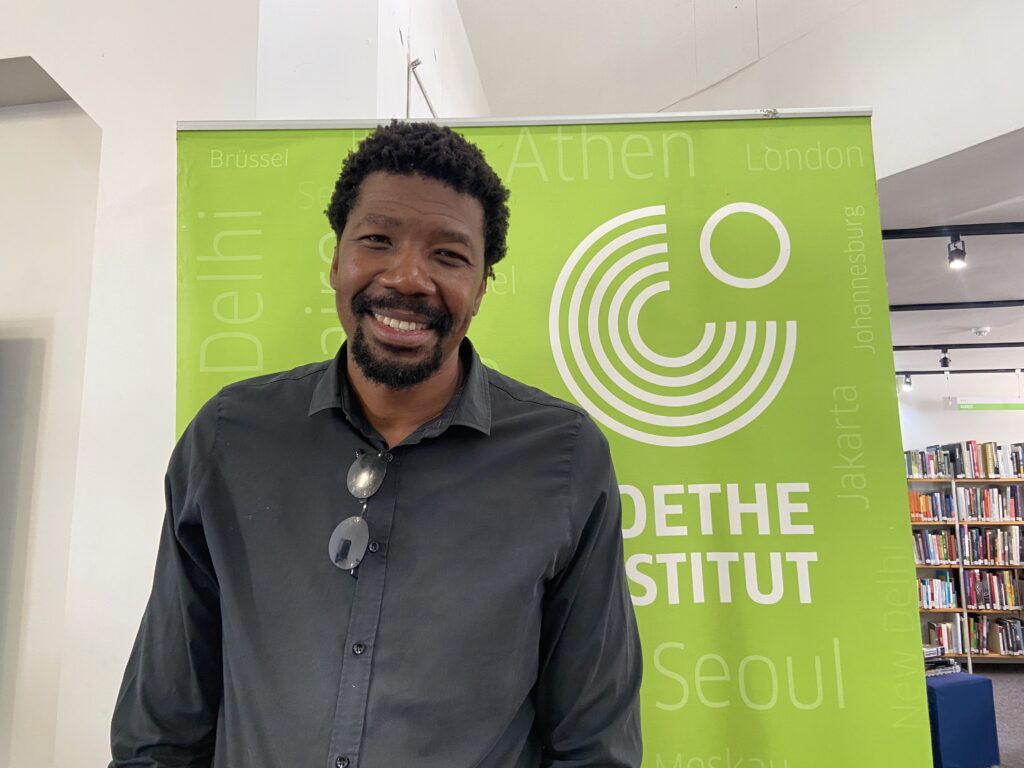
Bobby Shabangu, an activist for linguistic diversity on Wikimedia projects, has big plans to grow the platform in South Africa following his 2025 historic appointment as the first African board member of the Wikimedia Foundation.
Bobby Shabangu, board member of Wikimedia Foundation. Photo: Lulah Mapiye
Wikimedia is a global, non-profit community for sharing open-content educational resources for free. The Wikimedia Foundation funds Wikipedia.
Shabangu’s plans include strong partnerships with galleries, libraries, archive institutions, and academic institutions across South Africa to grow local language content and improve representation on Wikipedia.
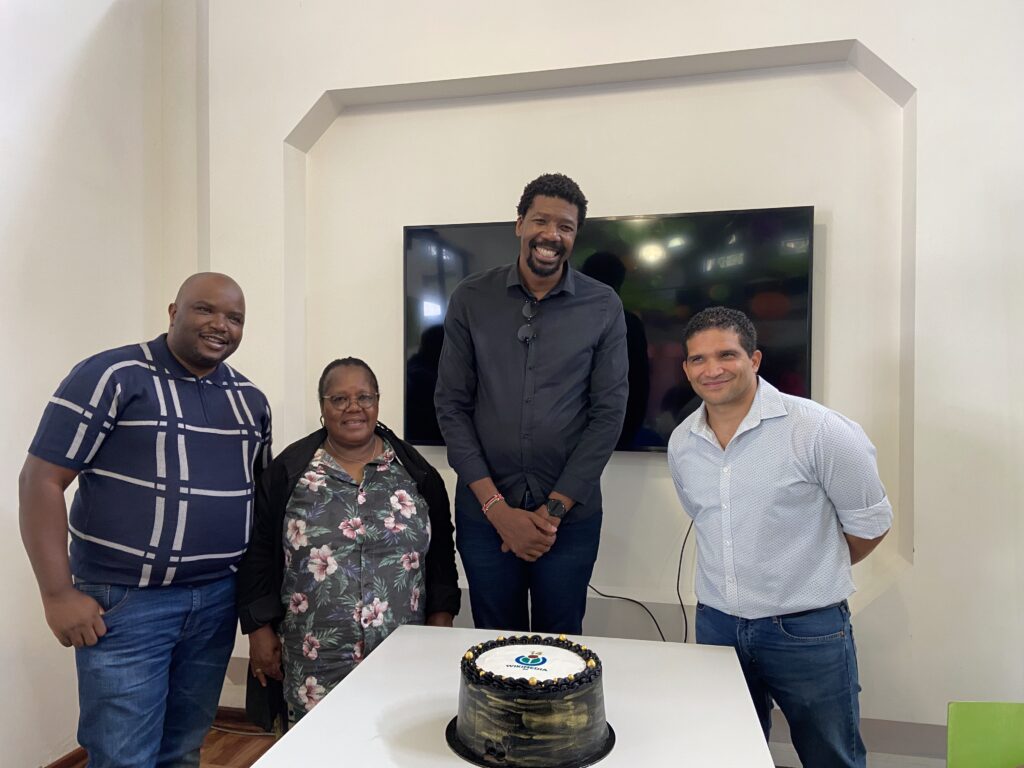
On Saturday, February 21 Wikimedia celebrated 14 years in South Africa. At the celebration, Shabangu expressed his excitement for this appointment as a board member, he said, “I feel fantastic about this and it is important because it will actually bring diversity of thought on the board of trustees.
From left to right: Dumisani Ndubane, Khethiwe Marais, Bobby Shabangu and Herschal Jackson.Photo: Lulah Mapiye
“I know what it is to not have data, to not have network, such things people who aren’t from Africa may not relate and sitting on the board will open doors for more support and inclusion for communities in the Global South.”
Shabangu’s relationship with the organisation dates back to late 2010s when he would use Wikipedia to prepare for prime time shows he was producing for Ligwalagwala FM.
This was when he noticed there were information gaps in African languages on the platform. With less than 10 000 articles published in each of our national languages.
When he discovered the edit button, he aggressively started translating English articles into the five national languages he knew at the time – Siswati, Ndebele, Zulu, Sesotho and Setswana.
Herschal Jackson, Executive director of Wikimedia South Africa, said it is important to be active in our consumption of Wikipedia research. “We are now working on getting more people to contribute to knowledge on Wikipedia in their own language. English is already sitting at over seven million articles. We all need to push together,” he said.
Lwazi Molepo, a biomedical scientist and cultural preservation enthusiast emphasized the importance of editing the platform using an example of Star Wars: A New Hope movie, where the Jawas spoke Zulu and Xhosa yet Wikipedia did not document that.
Claiming that as a result of this omission, other film makers who copied the language spoke gibberish. “We ought to correct incorrectly documented information and add missing information on the platform for the sake of the future generation.”
Everyone is encouraged to edit in information about their tribes and translate already existing English articles into their own mother tongues.
FEATURED IMAGE: Herschal Jackson addressing the audience at the Wikipedia 14th birthday. Photo: Lulah Mapiye
After a month of intermittent blackouts, City Power has upgraded to weekend-long power cuts.
Braamfontein has been experiencing blackouts since Saturday morning.
Residents and businesses bare the consequences of old infrastructure.
City Power restored power on Monday afternoon.
On Saturday morning, Braamfontein residents woke up to another blackout, which led to a morning of cold-water baths, dead batteries, unironed clothes, cold meals and loud generators drowning each other out.
After a month of experiencing weekly unplanned blackouts for a couple of hours per incident, Braamfontein residents did not know that this one was different.
City Power said the outage occurred following a trip from Fordsburg Substation, which affected Braamfontein, Parktown and surrounding areas.
This trip led to three faults on a Braamfontein interconnector cable. As of this morning, two of the three faults have been located, but repairs were underway, said to City Power.
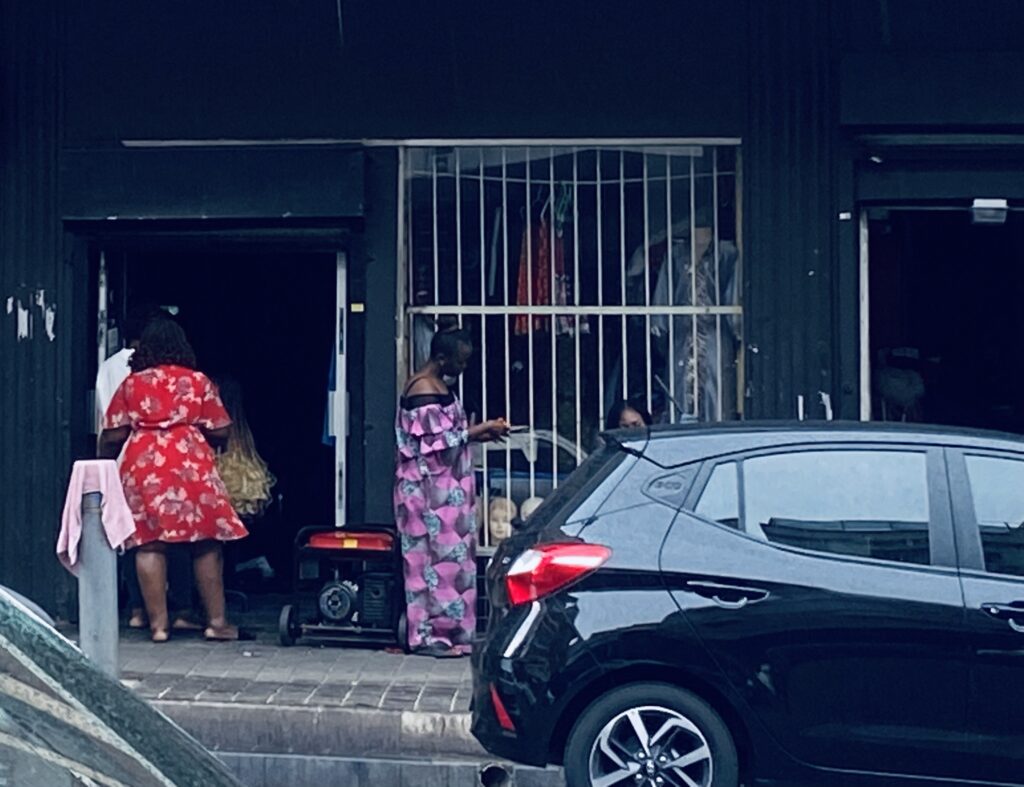
Some businesses have been closed since Saturday morning as they do not have backup power. Hairdressers are operating outside their salons for light.
Hairdressers in Braamfontein attending to their customers outside the salon due to power cuts. Photo: Lulah Mapiye
“I have to do everything in the dark and spend extra money on data since the Wi-Fi is off. City Power needs to start paying us back for the electricity we pay for and don’t have,” said Tebogo Lebeya, resident of Braamfontein.
City Power said that due to existing network faults, customers cannot be backfed from alternative supply points.
They attributed these power faults to cable faults and damage caused by third parties. The disruptions are further linked to ageing infrastructure, illegal connections and sustained overloading of the network.
Sylvester Ayuk, owner of Estee Ay Communications, a printing business in Braamfontein, said: “Our clients are disappointed as we failed to meet deadlines over the past weekend. Our generator was only able to power one printing machine, we only managed to complete a few orders. We are calling upon the management to be quick to restore power next time.”
Amorette Anyang Onya, a nail technician, had to go to another town to charge her nail lamp, which she uses to dry nail polish.
“Having no electricity really slowed down my business. The time I used to go to another town to charge and come back, I could have used treating a customer or two,” she said.
The initial estimated restoration time was 18:00 on Saturday, February 21. The revised date of Monday, February 23 at 12 was unmet, and power was only restored at about 15:30 on the day.
FEATURED IMAGE: Generator powering a salon in Braamfontein due to power cuts. Photo: Lulah Mapiye
The increase in the minimum wage amount is not as impactful as the minister of labour and employment would suggest.
The minimum wage amount has increased to R30, 23 per hour from R28, 79 per hour.
The new minimum wage is still not enough to sustain South Africans.
Millions still struggle to cater to their basic needs.
The minimum wage amount is set to increase to R30,23 per hour, from R28,23 per hour as of March 1, 2026. South Africans are beyond frustrated by this small change.
“The income is basically the same, given that the economy is also changing. [The government] increasing the minimum wage doesn’t change the fact that things are also getting more expensive. If, lets say, they were increasing the wages, but the economy’s status was still the same at least [there] would be a bit of a change, compared to right now,” said Rose Mongwe, a third-year bachelor of education student.
The minimal increase, means Mongwe, whose mother is a domestic worker will not get an allowance increase this year. She uses what her mom can give her for toiletries and other personal needs. “It is not [as much] as I would want it to be but then it kind of helps here and there and sustains me when I’m unable to get some money for myself,” she said.
Muhammed Siyad the Regional Investment Growth Manager for Southern Gauteng at Absa said, “At the rate at which inflation is climbing, this increase of the minimum wage amount per hour I don’t feel it would affect any households in a positive sense, the reason for that is everything else is getting more expensive, its making it harder for people to manage based on the current salaries.”
Neo Bapela honours in bachelor of education said, “I feel like the [minimum wages amount] is very little, but also it goes according to peoples’ responsibilities, I might think that the money is enough for me, because I don’t have kids, I don’t have other responsibilities.”
The increase of the minimum wage amount does not keep up with the rising cost of living. Many households continue to stretch out their money, the increase of R1,44 offers little to no relief.
FEATURED IMAGE: Cash and coins. Photo: Bonolo Mokonoto
Between Statistics South Africa and the president, the country’s employment figures don’t quite add up.
President Cyril Ramaphosa announced on Thursday, February 12, during his delivery of the State of the Nation Address (SONA) in Cape Town that the government has created over 2.5 million job opportunities through the Presidential Employment Stimulus, mainly for young people and women.
The president’s declaration comes as a surprise, because since the inception of the Presidential Employment Stimulus in 2021, unemployment rates for the youth (people aged 15 to 34) have been at their the highest, 44.6% in 2024 and 46.1% in 2025 according to Stats SA. While 31 000 young people got employed in 2025, another 39 000 young people became unemployed. So where exactly are the millions of jobs? Mr President show us the jobs.
Ramaphosa once again promised to create jobs through massive investment in new infrastructure, while upgrading and maintaining the existing infrastructure, and engaging local and international investors to finance this venture.
Last year, the president promised to create jobs through industries of the future, which are green manufacturing, renewable energy, electric vehicles, and the digital economy. This year, he again promised something similar. Is it possible that the president just copied and pasted this section of his speech from his 2025 speech?
Knowing that we have heard this before, what could possibly make us confident that this time things will be different?
The situation is so dire that we had over 600 job seekers queue for 50 positions at a restaurant in Durban last year. Our young people are applying to fake jobs abroad, falling prey to scams. Desperation often trumps due diligence when applying.
Perhaps, this year’s plan could be more promising as confidence is rising among investors, because South Africa is no longer on the grey list and the Rand is currently stronger than the US dollar.
Leaning towards creating jobs within our thriving agricultural sector through the introduction of 10,000 new extension officers to offer support to farmers and improve agriculture is an interesting move, I’ll give him that.
Those are 10,000 new jobs, and they are looking to improve our agriculture sector to be stronger so that we can export more. That includes avocados, maize, livestock, grapes, and wine.
Now we are waiting to see if the budget, which will be tabled on February 25, is in alignment with all the promises and reforms that the president has promised in his SONA.
FEATURED IMAGE: President Cyril Ramaphosa delivers the 2026 State of the Nation Address on February 12, 2026. Photo: Jairus Mmutle / GCIS
Technology is advancing and getting involved will help postgraduates not get left behind.
The Wits Postgraduate Orientation introduces students to their chapter as ‘seniors’ on campus.
App development in academic research is encouraged.
Apps can be beneficial but also have various limitations.
From left to right, Simone Dahms Vester, Tasneem Hassem and Lesego Molefe, at the Post Graduate Orientation panel discussion session. Photo: Bonolo Mokonoto
In the age of artificial intelligence, postgraduate research needs to adapt quickly to not just keep up but lead the way. This is what new students were told during their Postgraduate Orientation on January 28, 2026 at the Great Hall.
Beyond using apps and tools that already exist, students were encouraged to be creative and develop their own apps instead of relying heavily on AI for their research. “[With] something like ChatGPT, we need to know who developed it and what data it has been trained on, especially with mental health, a lot of the phrases or tools that have been developed come from the west, so when we transfer it to South Africa there is a mismatch on how we understand mental health” said Tasneem Hassem Senior lecturer in Psychology.
Students were urged to take advantage of digital platforms to create their own apps, using a data collection tool or analysis app. The speakers noted that by identifying everyday research challenges, students can find practical solutions without having any app development background.
Postgraduate students in attendance at the Postgraduate Orientation. Photo: Bonolo Mokonoto
As beneficial as apps can be, they also have their own flaws. Lesego Molefe, a master of science student, shared some concerns regarding the Wits app. “I will always reference the Wits mobile app, it is literally the one stop shop to everything, but there is one problem- it’s that, it’s a bit fragmented” she said. The Wits app needs to bring together the student element, by making it more interactive for it to function as a social media platform.
New technologies should be seen as an opportunity to enhance research rather than an obstacle to tackle.
FEATURED IMAGE: From left to right, Simone Dahms Vester, Tasneem Hassem, Lesego Molefe and Prof Jennifer Fitchett, at the Post Graduate Orientation panel discussion session. Photo: Bonolo Mokonoto
In episode six of We Should Be Writing season 7, the team unpacked the evolution of music as a form of expression and protest, through four decades in the South African context. The episode explores the journey of South African music and its consumers from the 80s, 90s, early 2000s and contemporary listeners. From the […]