South Africa’s growing illicit economy is putting everyday consumers at risk.
South Africa’s illicit economy is estimated to account for 12–15% of Gross Domestic Product.
The Consumer Goods Council South Africa’s #YourChoiceHasPower campaign is urging consumers to make informed choices.
Consumers are caught between affordability, accessibility and safety.
A gun threat against investigative journalist Govan Whittles, dangerous methanol in illegal alcohol and poison sold by street vendors are some of the scenes that stuck out in Someone Always Pays, a documentary series examining South Africa’s billion-rand illicit economy.
The Consumer Goods Council of South Africa (CGCSA) launched its #YourChoiceHasPower campaign alongside the documentary, with the council estimating that illicit trade accounts for between 12% and 15% of South Africa’s GDP.
Photo of panel speakers at the launch of the #YourChoiceHasPower campaign. Photo: Nqobile Mtshali
Illicit trade is usually associated with cigarettes, alcohol and counterfeit clothing, but the problem stretches much further. Food, pharmaceuticals, cosmetics, fuel and chemicals are also sold on the black market, meaning consumers don’t always know whether the products they buy are legitimate or substandard. Chief executive officer of CGCSA, Zinhle Tyikwe said reach of illicit goods is “becoming deeper and scarier.”
Economic pressure and unemployment can make cheaper illicit products attractive, creating a difficult choice between what people can afford and what is legitimate and safe. Tyikwe said, “It’s mainly unaffordability,” that keeps the market alive.
Illicit trade is not confined to poorer communities. Whittles’ team found illicit cigarettes being sold in affluent areas including Rosebank, Parkhurst and Sandton. The investigation also uncovered connections between different illicit industries and organised crime. “It’s all connected. It’s all organised crime,” Whittles said.
That interconnectedness helps explain why the cost of illicit trade extends beyond sales. Dangerous products can have consequences for ordinary people, while legitimate businesses can lose customers. Whittles said, “People pay with their lives,” and those who do not pay with their lives can pay with their livelihoods. His team encountered a shopkeeper who refused to sell illicit tobacco but struggled to attract customers because cheaper alternatives were available elsewhere.
The scale of the illicit economy creates further pressure on law enforcement. Whittles said authorities struggle to intercept and investigate every shipment, while Tyikwe said prosecution remains a problem, arguing that fines imposed on those caught selling illicit products are often insufficient to deter the trade.
The CGCSA says consumers can help disrupt this cycle by buying from legitimate outlets, being cautious when prices seem too good to be true and checking products before purchasing them. Its My CGCSA app allows consumers to scan products and access information about registered brand owners, while suspected illicit goods can be reported through the app.
FEATURED IMAGE: Cigarette’s showcased as examples of illicit goods at the launch of the #YourChoiceHasPower campaign. Photo: Nqobile Mtshali
A sonic experience that opened one up to the divinely realm and showcased how powerful the voice and song can truly be. Through Lili-La MandiFeze took the audience through a journey of exploring vulnerability and honouring the fullness of the black femme experience.
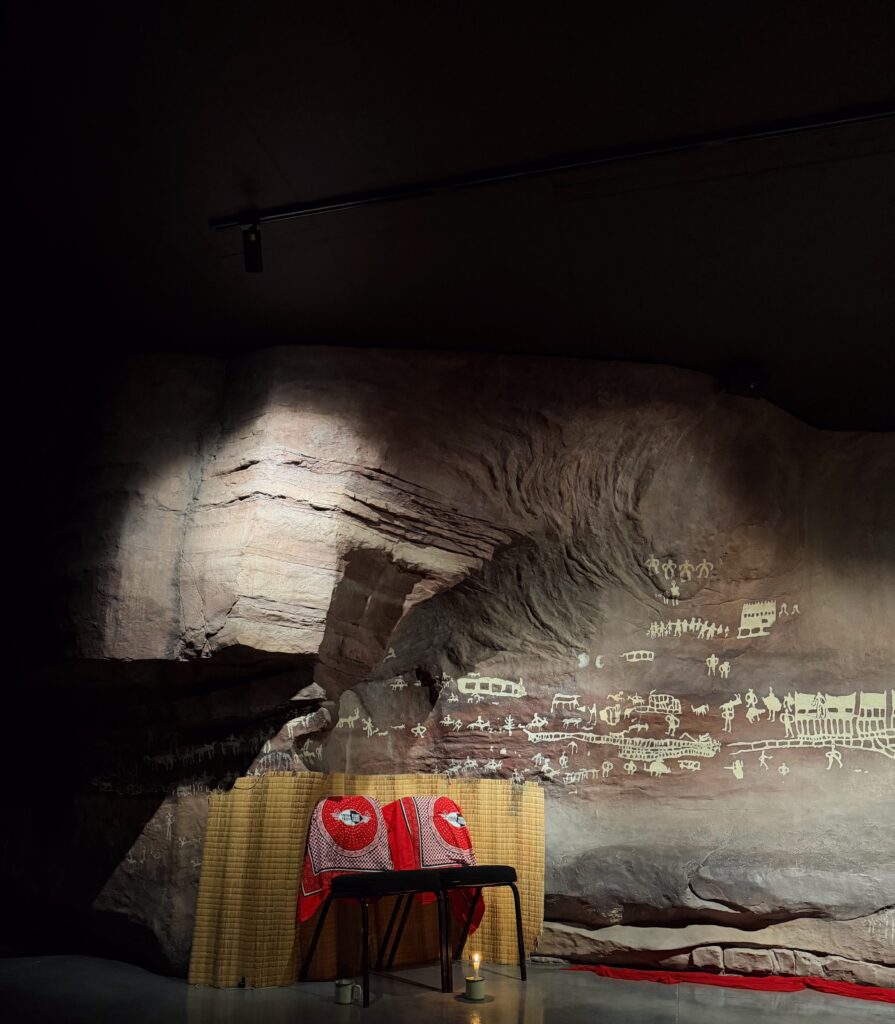
On Sunday afternoon, August 16 2026 I found myself at the Makgabeng shelter in the Wits Origins Centre. There I sat in a dimly lit room with a huge rock painting in front of me. In my eyeline there were two black chairs covered by a red cloth, a white candle, lit and sparkling in a cup, and red cloth draped on the floor. The space itself was intimate and made me feel as if I was underground. The red cloth and candle added a homely feeling to the environment. I sat in anticipation, curiously waiting for what was to come from MandiFeze’s sonic experience Lili-La. Initially, I had no idea what to expect. I was pleasantly surprised by how immersive and soulful the overall experience was.
A photo of the setup for the performance. Photo: Sikelelekile Pahlana
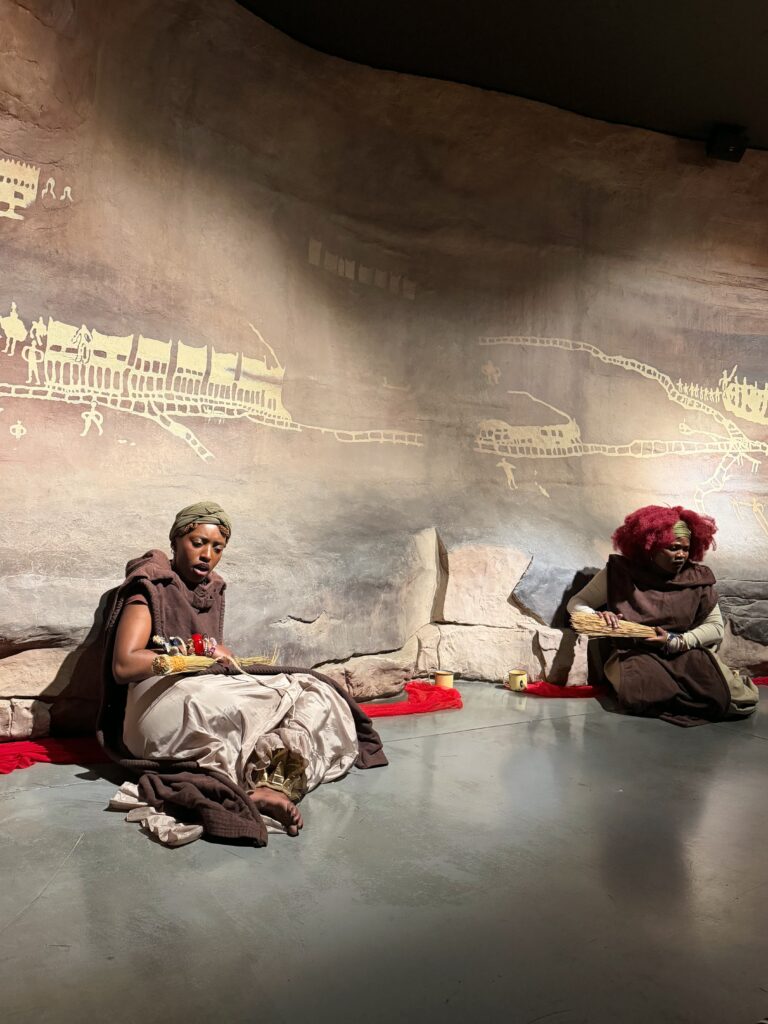
MandiFeze is a music and theatre duo founded by former Witsies, Mandisa Yende and Lufezo Bovungana. The audience was met with the sound of a whistle coming from around the corner, and an enchanting voice that signified the start of the show. MandiFeze seamlessly brought the spiritual realm to the physical room, it felt as if the world had stopped and we were all absorbed by the performance at hand. This sonic experience was like no other, it incorporated physical movement, with sounds of emotive expressions, vocals that touched the ceiling and a hollowing silence that sent chills down one’s spine.
A photo of Mandisa Yende and Lufezo Bovungana during the performance. Photo: Sikelelekile Pahlana
The intense eye-contact from MandiFeze, as they searched around the room, made one feel involved in their inner world. MandiFeze pierced through one’s facade of strength and softened the heart space; vulnerability became the meeting point between the audience and performance.
From the beginning up until the very end, Lili-La took us on a journey that unpacked the source of ingoma (song) for MandiFeze. The performance made us witnesses to their internal process of connecting with the divine and honouring the influence of the matriarch. Whilst also unpacking what it means to be an artist. They clearly acknowledge that apart of the purpose of ingoma is to heal people.
In conversation with MandiFeze, Bovungana shed light on how the meaning of Lili-La is ever changing, they said: “we’re beginning to realize that it’s really just a commemoration to the Black femme body that has contributed to ingoma but is also the reason why ingoma exists. It’s an ode to the people that came before us and gave us the song. It (the song) comes from the spirit; it comes from the place in which dead people live.” Yende further added that, “Lili-La then becomes the full spectrum of black femmehood and black femme emotion. We’re trying to really showcase the full spectrum from black joy to black grief to sadness to just visibly showing that you’re carrying weight and allowing ourselves to bear that burden and to showcase what that burden looks like, boldly.”
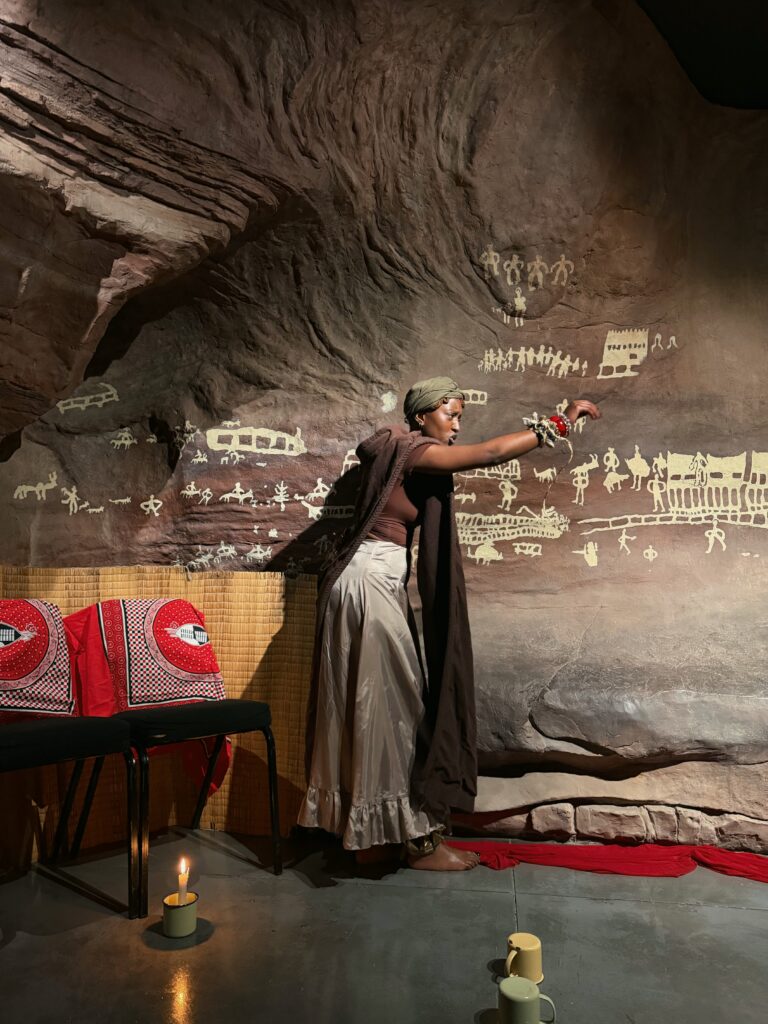
A photo of Mandisa Yende during the performance. Photo: Sikelelekile Pahlana
According to MandiFeze, Lili-la stems from combining their research during their honour’s studies, where Bovungana explored, “how expressive sounds have contributed to vocal techniques, specifically ululation” and Yende shared, “I was looking into the ways that wailing and ingoma are forms of healing for the black femme body because of how we’ve been expected to always be imbokodo. So, breaking down that narrative of imbokodo by embracing wailing.” Lili-la therefore is a creative play on words, incorporating ukulila (to grieve) and ukulilizela (ululating).
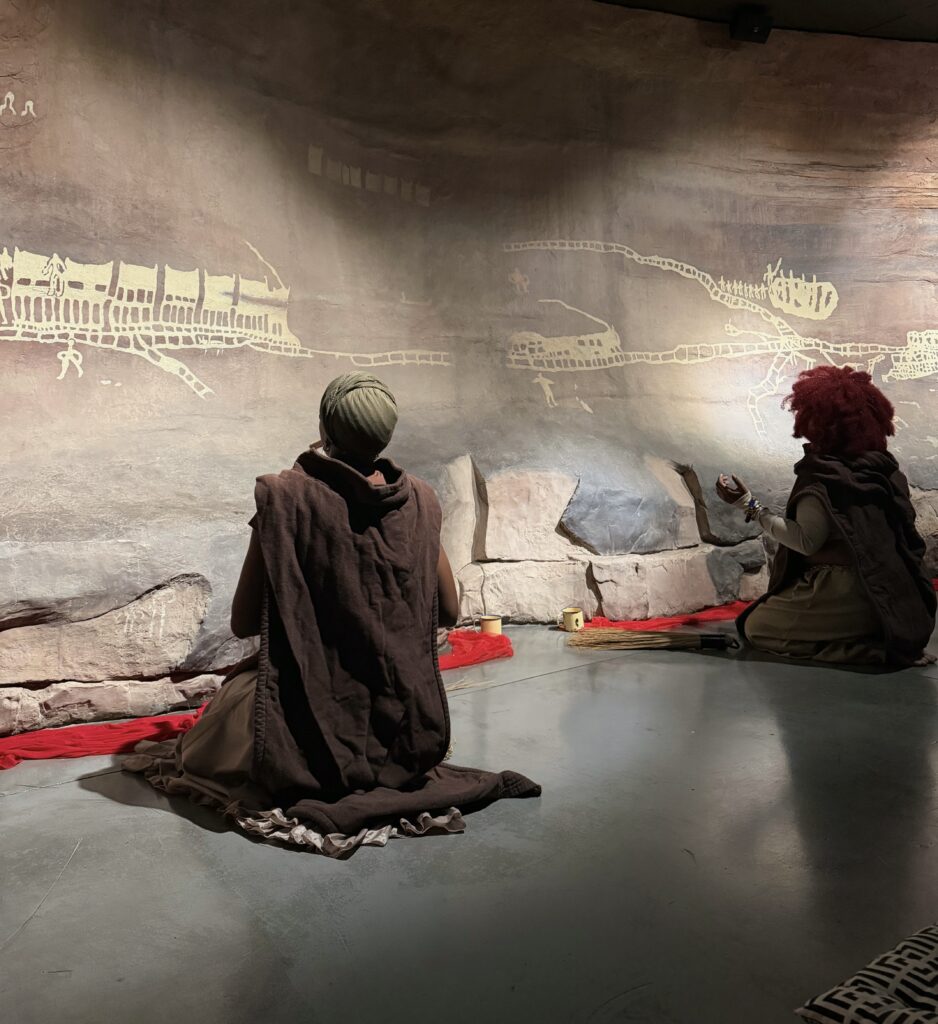
A photo of MandiFeze in prayer during the performance. Photo: Sikelelekile Pahlana
I was captivated by the intimacy and vulnerability in the way they embodied joy through laughter and sadness through intense wailing. I was moved when they both prayed asking for strength to continue on their journey as artists and for guidance along the way. Additionally, the moments of silence that followed brought a sense of stillness in the room, bridging a connection between all those who bore witness and collectively felt the essence of the performance.
When asked what they hoped the audience would take away from the sonic performance, Yende shared, “I think the hope is in a breath for the audience, an exhale from the audience, which for us I think would be mission accomplished as healers. In that people walking out feeling different, reflecting, and seeing either parts of themselves or parts of some form of matriarch belonging.” On the other hand, Bovungana shared, “Allowing your body to feel all the emotions without holding back. Giving the platform to feel what wants to be felt. Be easy on your vessels.”
Overall, the experience was eye-opening, as it awakened me to how healing and expansive the voice can really be when used intentionally. The creative passion of MandiFeze ignited a subtle fire in me that left me feeling inspired, grounded and tender. MandiFeze cultivated a unique sonic experience rooted in African customs, which felt like a homecoming, a return to self.
Vuvu rating 9/10.
FEATURED IMAGE: A photo of Mandisa Yende and Lufezo Bovungana during the performance. Photo: Sikelelekile Pahlana
On International Left Handers Day, students share the everyday struggles of navigating a space built almost entirely for the right-handed majority.
Thursday, August 13, marks International Left Handers Day, an annual event meant to highlight the daily challenges faced by left-handed people living in a space built predominantly for right-handers.
A pie chart graphic illustrating the gap between left-handed and right-handed people. Photo: Rearabilwe Tsebela
Handism is prevalent even though 10% of the global population is left-handed. From lecture halls to basic household items, almost everything is designed for the right-handed majority.
For many lefties, this bias starts at home from a very young age. In many families left-handed children are trained to use their right hand for writing or eating.
Using right-handed tools every day might seem like a small issue to most, but it leads to physical discomfort and a slower working speed.
At Wits University, students share how these design barriers shape their daily lives.
Enhle Luthuli, a fourth-year postgraduate diploma in specialized accounting student, said, “I was never aware that they were actually left-handed scissors, which I acquired once and made my life easier as I could see where I was actually cutting”. Writing also presents physical challenges. “I have become so picky with the type of pens I write with because if the pen is a gel pen, my hand may smudge on what I had just written resulting in my work looking untidy,” she added. In lecture halls Luthuli makes it a point to sit on the far left side to avoid bumping arms with right-handed peers.
Katlego Modiba, a third-year accounting science student, noted that specific everyday objects still create challenging moments. “You feel demoralized when you encounter a situation that forces you to change your hands,” Modiba said. He explained that everyday tasks like using a tin opener or shifting gears while driving can be tricky because as a left-handed driver using their stronger arm can damage the car when too aggressive. In high school, Modiba even had to give up softball because all the available sports gloves were made for right-handed players.
Compounding these struggles is the reality that left-handed items like specialty scissors and sports equipment often cost more than the standard right-handed ones. Because schools and sports teams rarely buy these pricier options, left-handed people often do not know they exist, leaving them with no choice but to adapt or pay the price out of their own pockets.
A graphic defining “handism” as an unintentional design oversight that fails to account for 10% of the population. Photo: Rearabilwe Tsebela
Yet, despite having an official date on the calendar. International Left Handers Day usually passes without most left-handed people knowing it exists, let alone celebrating it.
This raises an important question: is International Left Handers Day really meant for left-handed people or is it a necessary wake up call for a right-hand dominated society? Behind every smudged notebook, awkward seating choice and missed opportunity lies a quiet daily effort to adapt. A little empathy and more inclusive design can ensure that no one feels left out in a world that so easily forgets them.
FEATURED IMAGE:A graphic highlighting the purpose of International Left-Handers Day. Photo: Rearabilwe Tsebela
I Understand What You Do. You Show Us What We Do Not See invites visitors to discover the extraordinary hidden in everyday places.
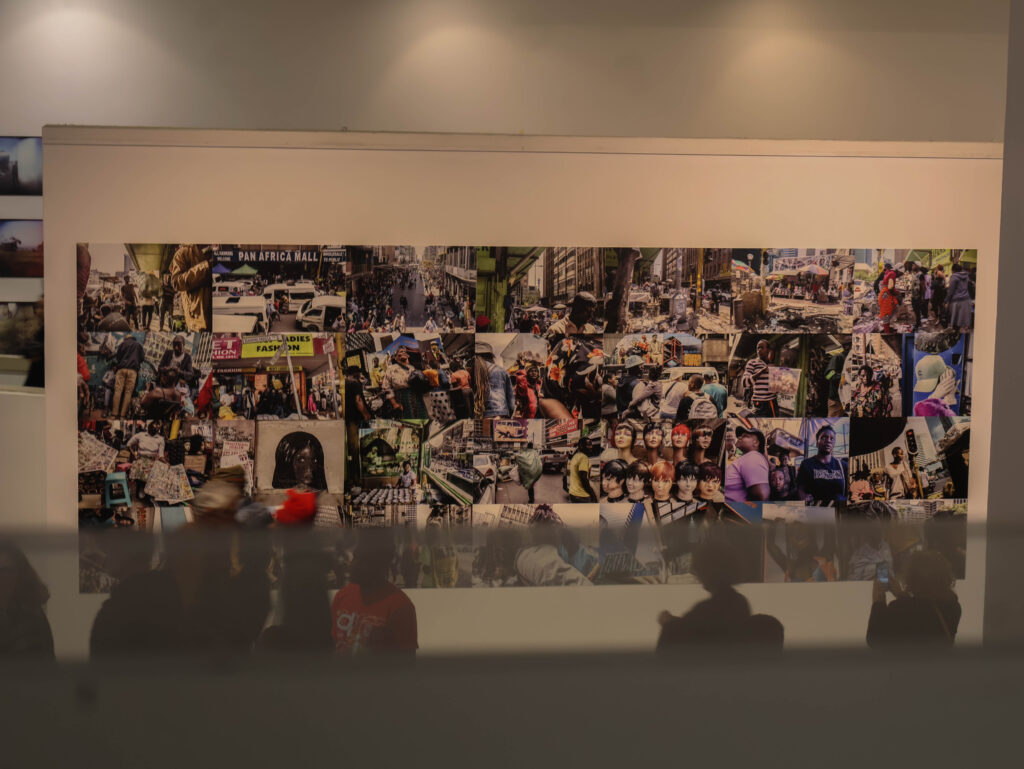
On 4 August 2026, the Wits Art Museum opened “I Understand What You Do. You Show Us What We Do Not See”, an exhibition that explores the idea of home through photography. Rather than presenting home as simply a physical place, the exhibition challenges visitors to consider how belonging can exist in ordinary spaces and everyday moments that often go unnoticed.
The exhibition celebrates the legacy of renowned South African photographer David Goldblatt in what would have been his 95th year. Inspired by Goldblatt’s belief that photography reveals what is often overlooked, the exhibition explores themes of identity, memory, belonging, and place. It features work by nine predominantly Johannesburg-based photographers documenting diverse experiences of life in and around the city, alongside photographs from the “Of Soul and Joy” photography initiative. The exhibition’s title comes from a memorable encounter in which a stranger described Goldblatt’s work by saying, “I understand what you do. You show us what we do not see.”
That sentiment is reflected throughout the exhibition. A passer-by may see only a busy Johannesburg street or an ordinary neighbourhood, while someone else recognises it as a place of comfort, memory, and belonging. The exhibition encourages viewers to pause and reconsider these familiar spaces, revealing the stories that exist just beneath the surface.
One of the exhibition’s greatest strengths is its curation. Each body of work flows naturally into the next, allowing the conversation around home and memory to develop seamlessly as visitors move through the gallery. Although each photographer presents a distinct perspective, the exhibition never feels disjointed. Instead, every collection builds upon the last, reinforcing the central theme and making it easy to understand the exhibition’s message without it ever feeling repetitive or forced.
A picture of one of the art works displayed by Sanele Sithole
Among the featured artists, Jabulani Dhlamini’s “Poloko: In Soweto” stood out most. His work explores the hidden histories of Soweto through photographs of homes, portraits, and personal stories. Rather than focusing solely on well-known historical sites, Dhlamini captures everyday spaces that have quietly become symbols of resilience, identity, and belonging. His photographs reveal how residents have transformed apartheid-era houses into places that carry personal and collective memories while also reflecting on the legacy of the 1976 Soweto Uprising and his own family history.
As someone from Soweto, Dhlamini’s work resonated with me on a personal level. The homes, streets, and familiar surroundings he photographs are places I have seen countless times, often without giving them much thought. Seeing these everyday spaces displayed in a gallery reminded me that what feels ordinary to those who live there can also hold extraordinary meaning. His photographs challenged me to look beyond what is immediately visible and appreciate the stories, memories, and histories embedded in places I have always called home.
More than a photography exhibition, “I Understand What You Do. You Show Us What We Do Not See” succeeds in encouraging visitors to slow down and look closer. Its thoughtful curation ensures that the works complement one another, while its central theme of home is communicated with clarity and sensitivity. By the time visitors leave the gallery, they are reminded that home is not simply a place on a map but a feeling shaped by memory, identity, and lived experience. It is an exhibition that quietly asks us to reconsider the familiar and, in doing so, reveals the extraordinary hidden within the ordinary.
Young researchers gather at Wits to present solutions to rising global issues.
Falling Walls Lab Gauteng was held at Wits where students competed for a spot on the international stage in Berlin.
The competition required pitchers to present an idea that addresses global challenges.
Researchers, innovators, and entrepreneurs were given an opportunity to engage with people outside of their disciplines and institutions.
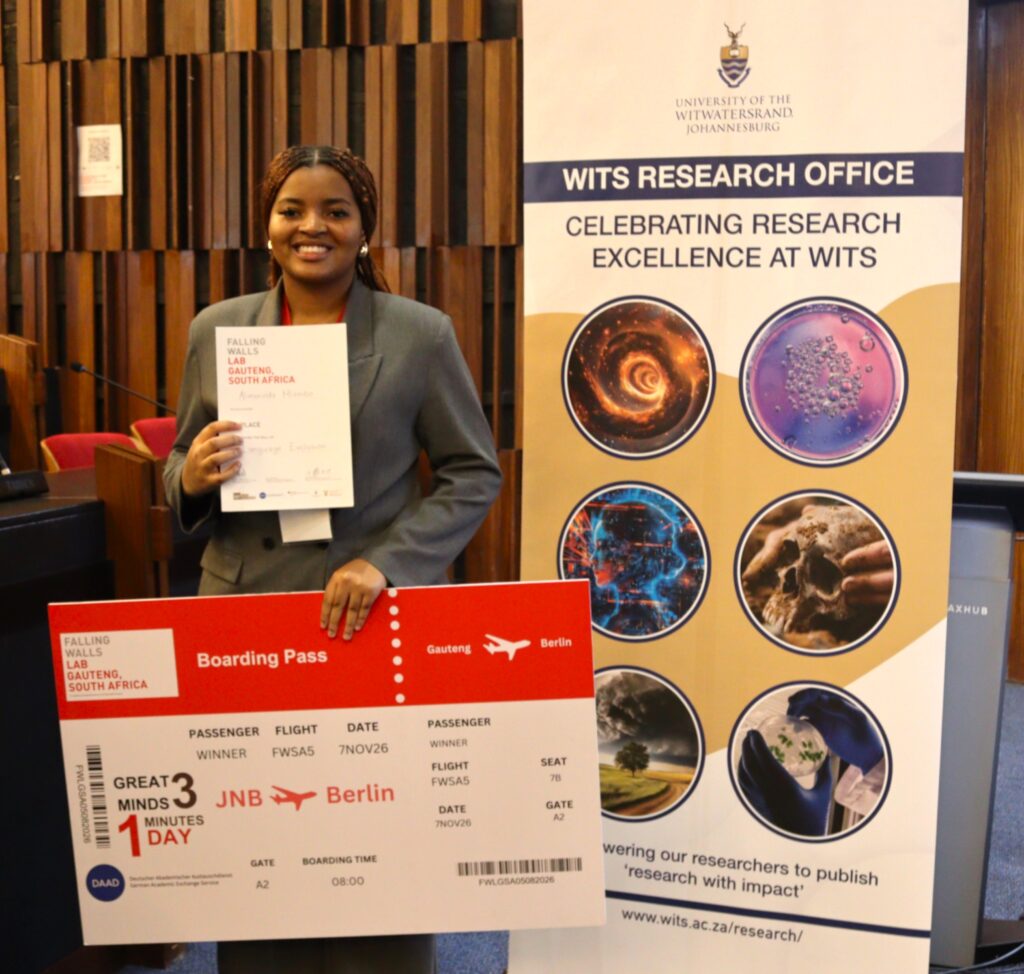
A Wits honours student, Alimerinda Mlambo, will represent Gauteng at the international Falling Walls Lab finale in Berlin after winning the provincial competition, with an AI-powered translation platform designed to break language barriers.
Picture of Alimerinda Mlambo, the winner of Falling Walls Lab Gauteng 2026, and her certificate & ticket to Berlin. Photo: Kerese Govender
The competition, held at Wits on August 5, saw about 20 students drawn from Wits, University of Pretoria, and Tshwane University of Technology, present their innovations aimed at tackling some of the country’s most difficult challenges.
The event was hosted in partnership with the DAAD Information Centre Johannesburg and the Falling Walls Foundation. Participants had just three minutes, including answering judges’ questions, to convince an expert jury that their pitch could help solve global issues.
Mlambo, an Information Systems honours student, took first place with her invention, eLingo AI, which aims to solve language exclusion in public spaces through real-time translations. She used a fictional character by the name of Lerato in her pitch, but the story was inspired by her lived experience of sitting through a conference presentation delivered in French that she could not understand.
When asked if this will cost human interpreters their jobs, Mlambo said, “We’re not trying to replace interpreters. We’re making language accessibility available to organisations that could not afford it otherwise.”
Unlike traditional interpretation services which rely on multiple interpreters, special equipment, and significant expenses and planning, eLingo offers an affordable alternative. The platform already includes all 11-official spoken South African languages and has attracted more than 100 beta users. Mlambo stated that the team has plans to expand to other languages.
She believes this kind of software is especially needed in South Africa, where only a small portion of the country’s population speaks English as a home language. “I want to create a future where people are no longer excluded from conversations they were meant to be a part of,” Mlambo said.
Dr Samia Chasi, Head of Wits Internationalisation and Strategic Partnerships Office and chair of the judging panel, said the competition is much more than selecting a winner. “It gives students an opportunity to present their own research to audiences beyond their own disciplines and institutions,” Chasi said.
“We have very creative and innovative communities in South Africa and Africa, and we can offer our own solutions to the rest of the world. We can’t always look at importing ideas,” Chasi said.
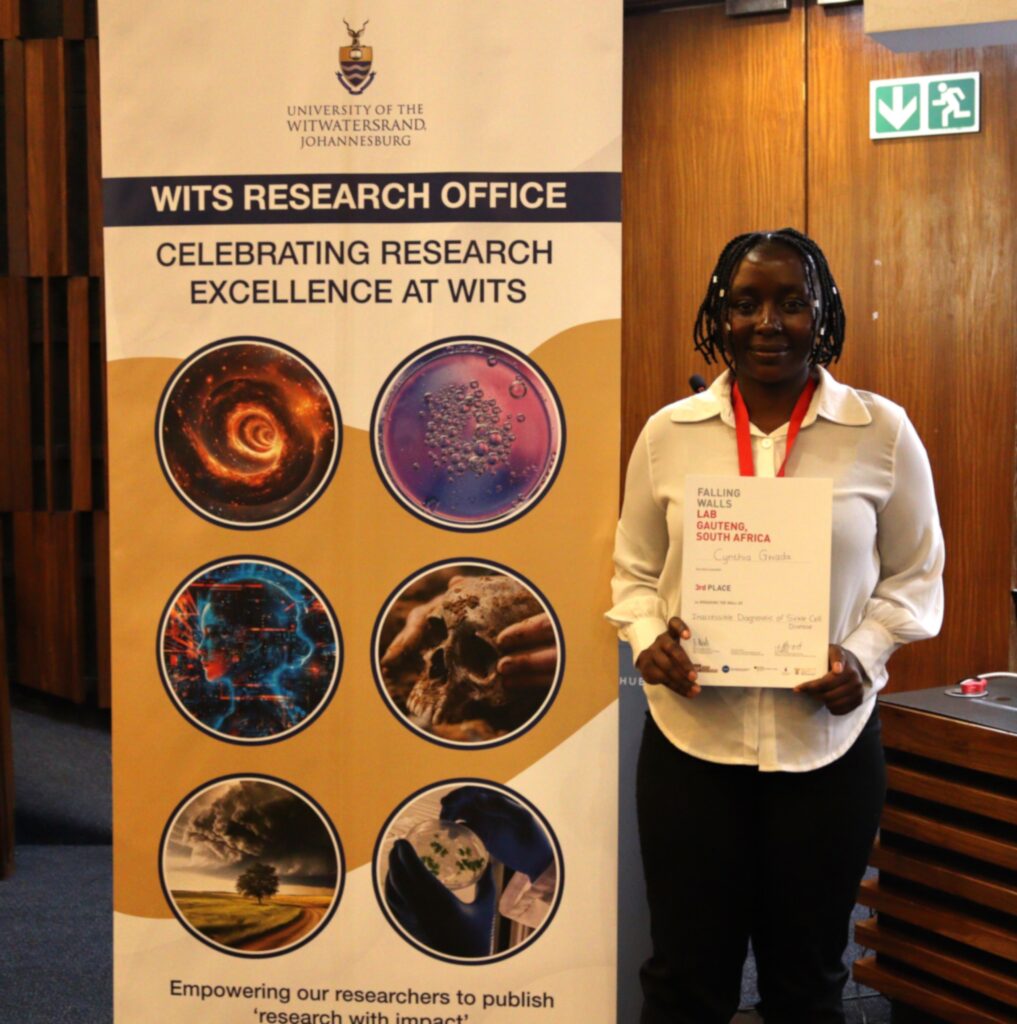
Among the interesting innovations was the third-place winning project by Cynthia Gwada which focused on an affordable diagnosis for sickle cell disease. The solution aims to expand access to rural areas in South Africa so “they don’t have to go to the cities with money that they don’t have,.” Gwada said.
Picture of Cynthia Gwada, third place winner of the Falling Walls Lab Gauteng 2026, and her certificate. Photo: Kerese Govender
Gwada also hopes to expand the diagnostics to other diseases such as malaria and tuberculosis, making diagnosis more affordable and accessible.
As Mlambo prepares to compete in Berlin, she hopes her success will inspire more young black women to pursue careers in male-dominated fields such as hers.
“Don’t wait for a seat at the table. Go and build a table,” she said.
FEATURED IMAGE: Picture of Falling Walls Lab Gauteng 2026 pamphlet and souvenir. Photo: Kerese Govender
A performance project featuring spoken words, chants, movements and musical art. It is a reimagination of Arther Rimbaud’s poem titled ‘A season in Hell’.
A season in Hillbrow, directed by Sibahle Mangena and Gerard Bester… what were my expectations? In all honestly, the performance far exceeded anything I had anticipated. I had expected an hour of a performance that somehow resembled ‘The greatest showman‘, where performers just burst into song mid-sentence. I had even thought to myself how will such an in-depth, poetic masterpiece be turned into musical play?
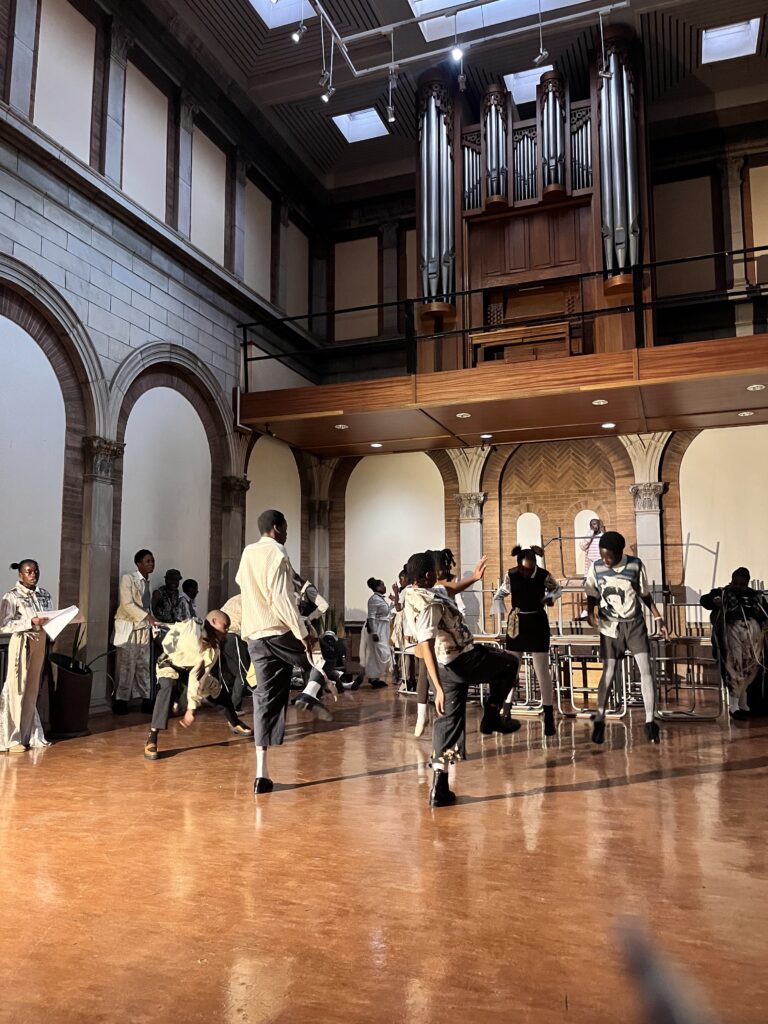
Safe to say, calling this performance a musical would be highly undermining its artistry. A group of high school students from the Windybrow Arts Centre took to the floor of the Southwest Engineering building an immaculate form of storytelling. A form that might make one assume is wiser than their years. Simply using school desks, their bodies, their voices, and most importantly their words.
Still of cast dancing during performance. Photo: Kamogelo Lesabe
The performance started with what seemed like a recitation of the beginning of Arther Rimbaud’s poem. As someone who knows this poem well, I quickly realised, that was far from the truth. Each student in the set up classroom delivered these short, punchy one-liners that incorporated words from the poem and mixed them with the real lived experience of Hillbrow. They mingled a clever play on words that spoke to issues of education, poverty, crime, gangsters, safety, hope and love while maintaining the main themes of suffering, alienation, self-destruction, and rebellion taken from the poem.
They carefully tackled these issues from the wide spectrum of the repercussions of apartheid and xenophobia boiling all the way down to the potholes in the street and how a Mageza drives on the road. They mixed all Nguni languages with the Shakespear kind of English which made the performance identifiable to a South African context. They sang amagwijo with all their emotion, they danced on tables, they even used comedy, which only South Africans would understand, to relate to the audience. They represented the theme of rebellion by not conforming to traditional ways of storytelling but rather speaking out against rigidity, limitation, unbelief, and societal standards. Rebellion against real issues faced by South Africans and contextually South Africans who daily experience life in Hillbrow.
Their costumes were an art of rebellion themselves. Wearing torn skirts, untucked school shirts, ties pinned to their shoulders instead of their necks. Similarly to the stage they performed on which was set as a classroom, how they sat, stood and danced on the desks, how they piled desks on top of one another to create what they called “a castle”. That for me screamed a unique and unconventional take to the interpretation of Rimbaud’s work.
Still of “castle” built with tables. Photo: Kamogelo Lesabe
. It was “powerful work of emergence by emerging voices” said Stacy Hardy, one of the creators of this performance. Work of emergence to address current and detrimental issues in the heart of Hillbrow.
The high schoolers truly outdid themselves in relaying the message of reimagining such an enigmatic poem.
Vuvu Rating: 8/10
FEATURE IMAGE: Cast of A season in Hillbrow performance. Photo: Kamogelo Lesabe
RELATED STORIES:
Wits Vuvuzela: REVIEW: Michael: Discovering the making of the King of Pop, May 2026
Wits Vuvuzela: REVIEW: The revival of Sophiatown, April 2026
Wits Vuvuzela: REVIEW: The Heart is a muscle, April 2026
Film graduates find new and creative ways to navigate the rocky terrain of show business.
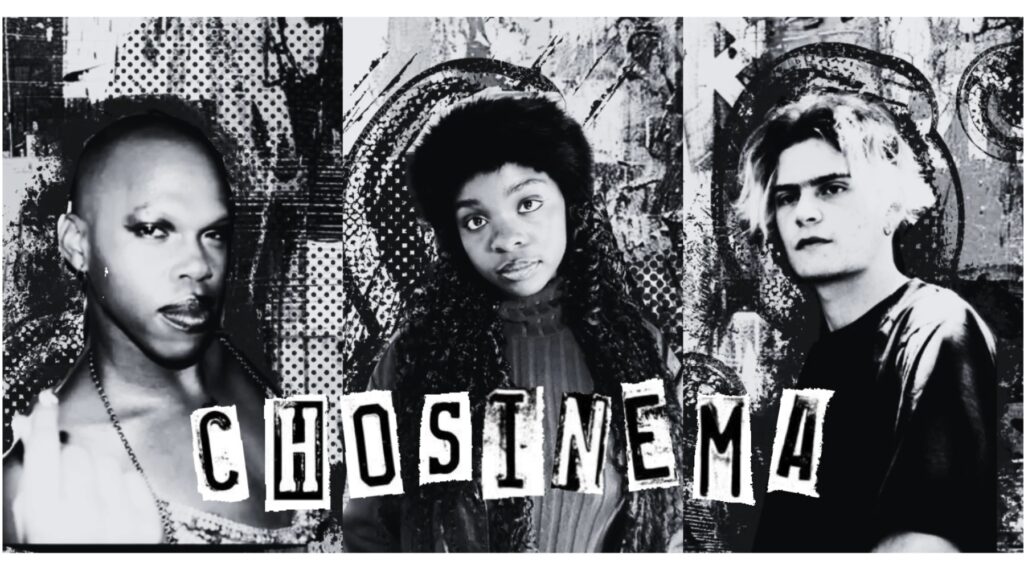
A trio of former Wits film students debuted their independent screening event, Chosenima.
The event challenges the rigidity and exclusivity of film festivals by providing an open platform for creative expression.
With the success of the first screening, the group hopes to empower more emerging voices in the industry.
For a group of three film graduates, Natasha Chirambo, Simamkele Mrwetyana and Scott Paton-Levin, cinema has never been about the flashy film festivals or prestigious Oscar nominations. It is simply about a deep, unwavering passion for the craft.
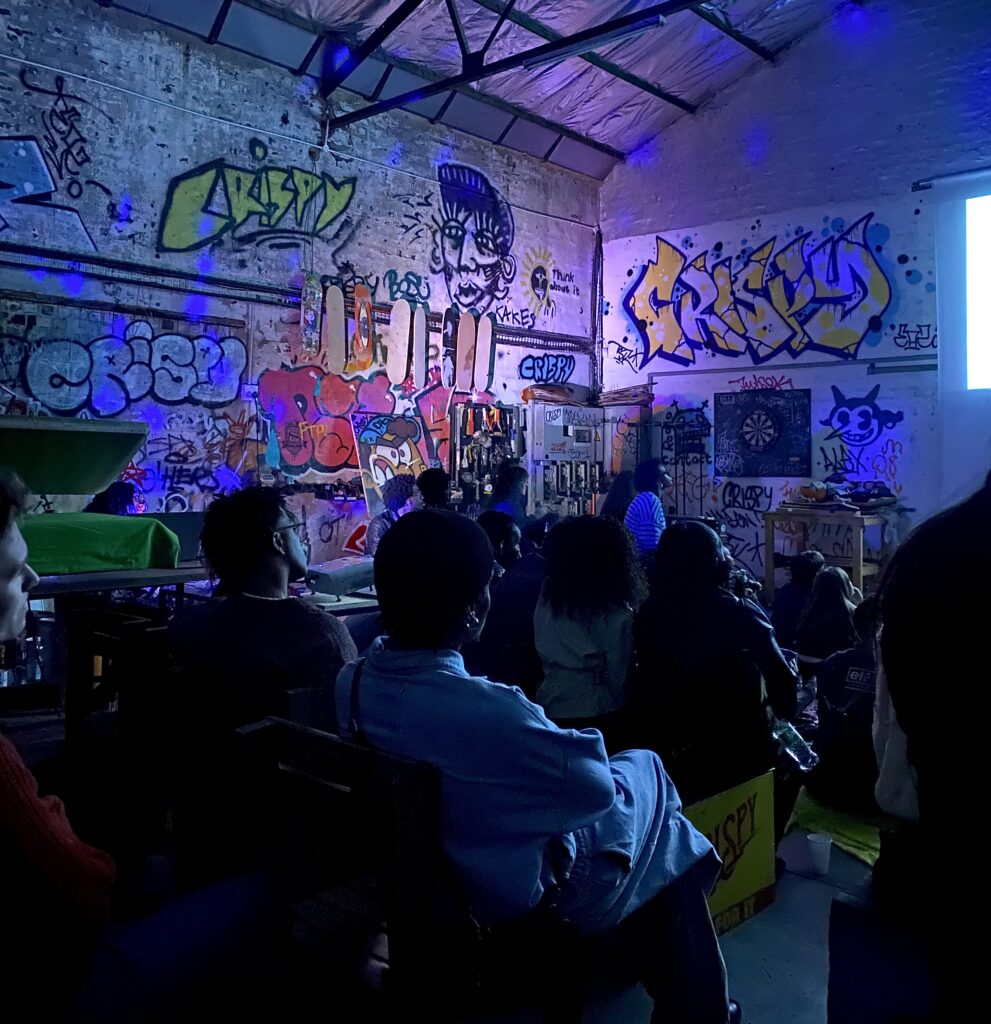
On the evening of August 1, the group debuted their independent screening event, Chosenima, at Crispy Skateboards on 1 Fox Street, Ferreiras Dorp. Tucked away in the four corners of a graffiti-covered warehouse, filmmakers and film lovers settled in a cozy sprawl of pillows and blankets to share an intimate night of cinema.
From intricate hand drawn animations to crafty collages stitched from personal photographs, each film beats with the pulse of its creator. Soft, yet powerful, the films explored delicate moments of queer love, personal struggle and emotional vulnerability.
Picture of the screening at the Crispy Skateboard warehouse. Photo: Jamie Ho.
The initiative was founded by three Wits film and TV alumni who became increasingly disillusioned with the elitism of film festivals. “When we were doing our varsity degree in film and tv, we were taught to make films for festivals,” explains Mrewetyana. “And festivals most of the time have their own territorial needs.”
This sentiment is echoed by Chirambo, who sees the rigid requirements of traditional filmmaking as a trap for young creators. “People try to put in a formula so they can get an Oscar,” she says, “I don’t think that’s what art should be about: trying to please some invisible power in the industry.”
Paton-Levin recalls a personal memory, grappling with the film industry’s exclusivity. “When I was 15, I made a film called ‘Girl’. It was three minutes long. I submitted it to maybe 10 film festivals and I didn’t get into a single one, so I never got a chance to play that movie.” This rejection in turn has fuelled Chosenima’s welcoming ethos. “I want to talk to that kid,” he says, “and be like: ‘Come play your movie, my boy.’”
Graphic collage showcasing all three founding filmmakers: Simamkele Mrwetyana, Natasha Chirambo and Scott Paton-Levin. Edited by: Jamie Ho
By giving filmmakers space to experiment and hone their craft, Chosenima breaks away from the rigid expectations of commercial film. Mrwetyana’s own filmmaking reflects this through the genre of Afrobubblegum: a cultural movement that rejects mainstream cinema’s portrayal of the black, queer experience that solely depicts it from the lens of hardship and struggle and moves to celebrating the simple joys of ordinary life.
As the final film drew to a close and people lingered long after, it was plain to see that the future of cinema wasn’t far-off in some distant Hollywood theatre. It was already happening right there on that screen.
FEATURED IMAGE: Hand-drawn graphic of a cassette tape with the words ‘Chosenima’. Drawn by: Jamie Ho.
Climate change is threatening South Africa’s books, archives, and history.
Books come from plants and they are damaged by water, insects, and humidity.
Archives preserve the stories and experiences that shape South Africa’s identity for future generations.
Climate threats to historical records grow.
When the University of Cape Town’s Jagger Library burned in 2021, South Africa lost priceless books, manuscripts and archives that could never be replaced. Literary scholar Isabel Hofmeyr says the disaster exposed an often-overlooked consequence of climate change: it is not only threatening ecosystems but also the books and records that preserve the nation’s history.
Speaking at a seminar at the Wits Club on 29 July, Hofmeyer said books are more than just paper-based objects. They exist within a broader ecosystem: paper is made from plants, insects can damage books, water can destroy archives, and environmental conditions influence how knowledge is produced and protected.
The loss of books and archives is about more than damaged paper. These records preserve South Africa’s history, culture and identity by documenting important events, people and communities. Researchers, students and future generations rely on these collections to understand the country’s past. When historical records are destroyed, valuable information is lost forever, making it harder to preserve stories that have shaped the nation.
Climate change is increasing the risk of extreme weather events such as wildfires, floods and rising temperatures, all of which can damage libraries and archives. Paper is vulnerable to heat, moisture and humidity, while insects and mould can further destroy fragile collections. As these environmental threats become more frequent, institutions responsible for protecting historical records face growing challenges in preserving them. Without proper conservation and protection, South Africa could lose more irreplaceable documents that hold historical, educational, and cultural value.
Hofmeyr said that “to reduce the risk of permanent loss, we need protection efforts” like improving storage conditions, monitoring humidity and temperature, and creating digital copies of important documents. She further added that it will also require funding and long-term planning to ensure valuable historical records remain available for future generations.
Speaking to WV after the seminar, Bachelor of Science student, Omphile Mankgaba, said the issue revealed an impact of climate change that many people do not usually consider. “I find it fascinating that in all the things we are looking at for climate change impacts, books are impacted,“ she said.
Master of Arts student Gareth Cruywagen said the discussion changed the way he thinks about environmental issues. “Climate change is destroying our history,” he said.
As climate change continues to threaten communities and the environment, protecting libraries, archives and historical records is becoming increasingly important. Preserving these collections will help ensure that South Africa’s history, knowledge, and cultural heritage remain available for future generations.
A rare volume is displayed with care ,showing how archives keep stories of the past alive for future generations. Photo by: Khutso Ngwatoana
FEATURE:A rare volume is displayed with care ,showing how archives keep stories of the past alive for future generations. Photo by: Khutso Ngwatoana
After years of working toward a Varsity Football final on unfamiliar soil, Wits Women will finally enjoy home-ground advantage.
Wits Women host Varsity Football at home for the first time.
The team is determined to reach the final.
Matches will take place at Wits Football Stadium on August 8 and 9 before the final on August 19.
Wits University will host Varsity Football women’s fixtures for the first time on August 8 and 9, giving the team a home-ground advantage as they look to reach their first Varsity Football final.
The team opens the tournament with two matches in Pretoria on August 1 and 2 before returning to Johannesburg to host the second bumper weekend. The final is scheduled for August 19.
This opportunity comes as Varsity Football introduces a new bumper weekend format, allowing teams to play two matches before a longer recovery period ahead of the final. Hosting rights are also a first for the Wits women’s football team.
“There had been a rotation, and Varsity Sports opened it to numerous institutions that qualified. We raised our hand, and fortunately Wits will host the second bumper weekend,” said Phuthego Mokgethi, Sports Officer for Football.
Aside from reducing travel, Mokgethi believes hosting will give Wits a competitive edge.
Coach Siphesihle Ngalmane agreed: “We’ve always been knocked out in the semi-finals. This year we want to play in the final, and we’re hoping the final will be here at home.”
The fixtures for the 2026 Varsity Football Women’s tournament on display. Photo: Asisipho Mpahleni
Captain Nthabiseng Ramaisa believes playing in front of Wits supporters could make all the difference.
“It’s not easy playing away,” she said. “Having supporters here is exciting because when we’re away, it’s hard for Wits to organise buses for people to come and watch us.”
She added that away matches often come with added pressure from opposition fans.
“When you get there, people start booing you.”
Ramaisa believes the growing support for the women’s team could inspire more young women to get involved in football.
“More girls can get into soccer, and more girls can participate in sport,” she said.
For first-year player Nokubonga Msimango, the chance to play Varsity Football at home still feels surreal.
“There’s like a superpower playing at home,” she said. “You want to make people proud.”
FEATURED IMAGE: Cheerleaders welcoming the Wits women’s football team at the official launch of the 2026 Varsity Football tournament. Photo: Asisipho Mpahleni
I have been to my fair share of career fairs. Usually, I would leave with my bag full of brochures, a notebook, several pens, and the comforting feeling that I had “networked”.
This year, I ditched the usual routine.
Instead of asking recruiters about graduate programmes or internships, I asked them
“What’s the biggest mistake students make when approaching recruiters?”
I spoke to 15 recruiters. Surprisingly, many of them repeated the same answers. Here are the seven mistakes they wish students would stop making:
1. Waiting until final year
Career fairs are not only for final-year students.
Some students wait until they are in their final year to start thinking about their next step. One recruiter, Bohlale Paile, put it perfectly: “University isn’t just about getting a qualification; it’s also about preparing yourself for the job market from day one.”
The students who benefit the most are not necessarily the ones with the highest marks. They are the ones who start early enough to ask, “What skills are you looking for?” Then they spend the next few years in university building exactly that.
Attend the fair in first year. Go again in second year, and by the time you are graduating, you won’t be scrambling to become employable – you’ll already be there.
2. Walking up to a stand unprepared
Walking up to a recruiter without researching the company is a bit like showing up for an exam without studying. You might survive, but you’re making life unnecessarily difficult for yourself.
Before approaching a stand, spend time researching the company. Research is part of the preparation. Don’t spend five minutes at a stand asking questions you could have answered on Google the night before.
Know what they do, what interests you about them and, more importantly, how your studies, experiences or interests could fit into their company. A conversation changes completely when you can say:
“I’ve read about your graduate programme, and I’m interested in the sustainability team. What would make someone a strong candidate?”
That leaves a far better impression than asking, “So…what does your company do?”
3. Students take, take, and take
One of the biggest mistakes recruiters mentioned was students who only take.
Brochures and QR codes? Thank you.
Freebies? Thank you.
Then they leave.
The best conversations work both ways.
Introduce yourself. Share what you’re studying. Explain why you stopped at their stand. Mention a skill, a project, or an experience you’re proud of. Recruiters should not have to interview you just to figure out who you are.
Think of it this way: you’re not only gathering information, but you’re also giving them a reason to remember you.
4. Playing it too safe
You’re in a competitive market. Whether we like it or not, we have to constantly prove ourselves. A career fair is one of the few spaces where you’re allowed to talk about yourself without it sounding arrogant.
Some students speak softly, give one-word answers, or seem afraid of saying the wrong thing, which makes it harder for recruiters to get to know them.
You don’t have to be the loudest person in the room, but don’t let fear stop you from showing who you are.
5. Chasing the salary before the opportunity
Yes, money matters.
But leading with, “How much does it pay?” can send the wrong message.
As Thando Nxumalo from Thyssenkrupp explained, it may make recruiters feel as though you’re only interested in what you can get, rather than how you can contribute and grow within the company.
There will be time to discuss salaries. At a career fair, focus on learning about the role and the opportunities available.
6. Forgetting that the little things count
Sometimes, the smallest details separate two equally strong candidates.
One recruiter shared a story about two interviewees who were almost impossible to choose between. After the interview, one candidate stood up and walked away. The other took a second to push their chair back under the table before leaving.
Guess who left the lasting impression?
That tiny gesture suggested something bigger: respect, thoughtfulness, and leaving a space better than you found it. The same goes for a smile, eye contact, good manners, and dressing intentionally.
Another recruiter recalled a student who arrived in a suit. When asked why, he simply smiled and said:
“I’m dressing for the position I want one day.”
It’s safe to say he was remembered.
7. Never asking how to improve
Career fairs aren’t just about proving yourself. They are also about growing.
If you’re struggling to land interviews, ask recruiters what you could improve.
If your CV isn’t working, ask why.
If your communication needs work, ask how to strengthen it.
Seeking feedback shows self-awareness and a genuine desire to learn qualities that every employer values.
After all, the strongest personal brands aren’t perfect. They’re constantly improving. Maybe you’re reading this before your first career fair. Maybe you’ve already graduated and think you’ve missed your chance.
Either way, these lessons don’t end when the exhibition stands go down. They follow you into networking events, job interviews, and every professional conversation you’ll have.
So, the next time you walk up to a recruiter, don’t just think about what you want to get from them.
Think about what they’ll remember about you.
FEATURED IMAGE: Image of Students engaging with recruiters at the Wits General Career Fair. By: Asisipho Mpahleni
Activists protest to challenge mounting xenophobic violence.
Students and academics at Wits University protest against the escalating violence faced by migrants.
Demonstrators urge law enforcement to treat targeted vigilante attacks as hate crimes.
The picket highlights the need to counter xenophobic hate through conversation and empathy.
A group of activists gathered on Friday outside Wits University’s Jan Smuts entrance, staging a picket against the escalating wave of anti-migrant violence and xenophobic intimidation sweeping through local communities.
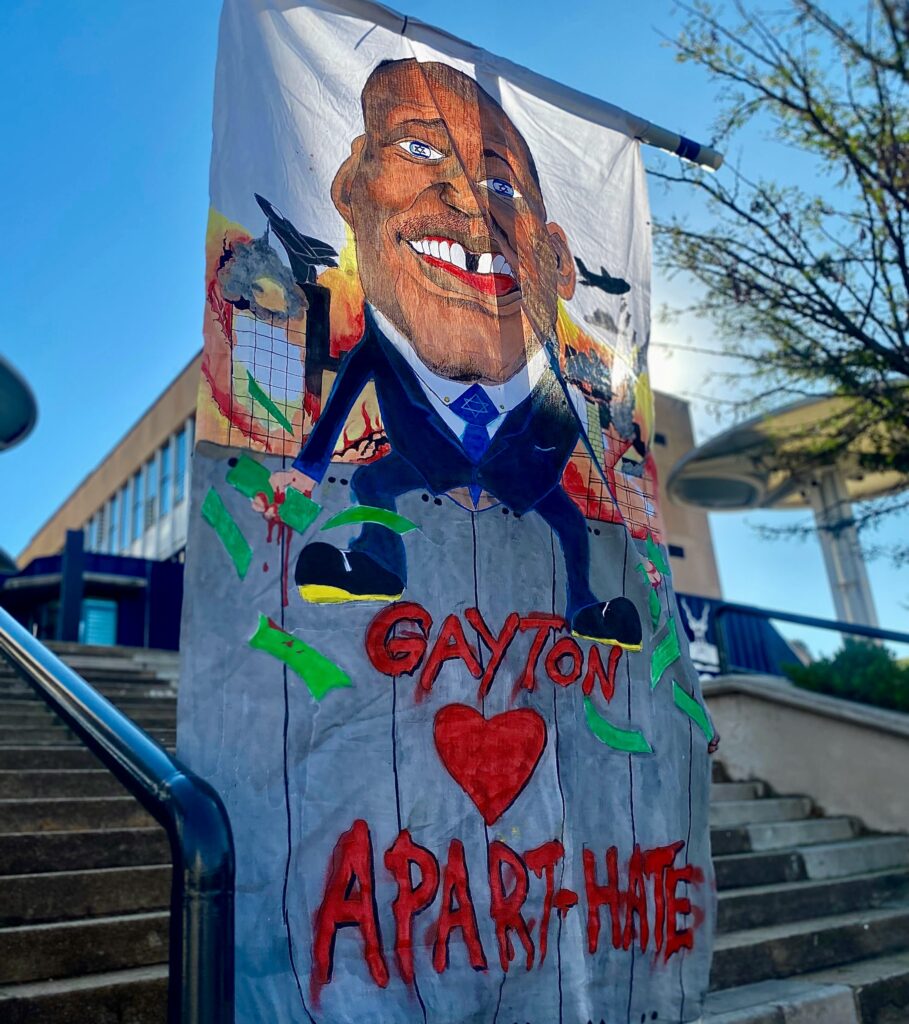
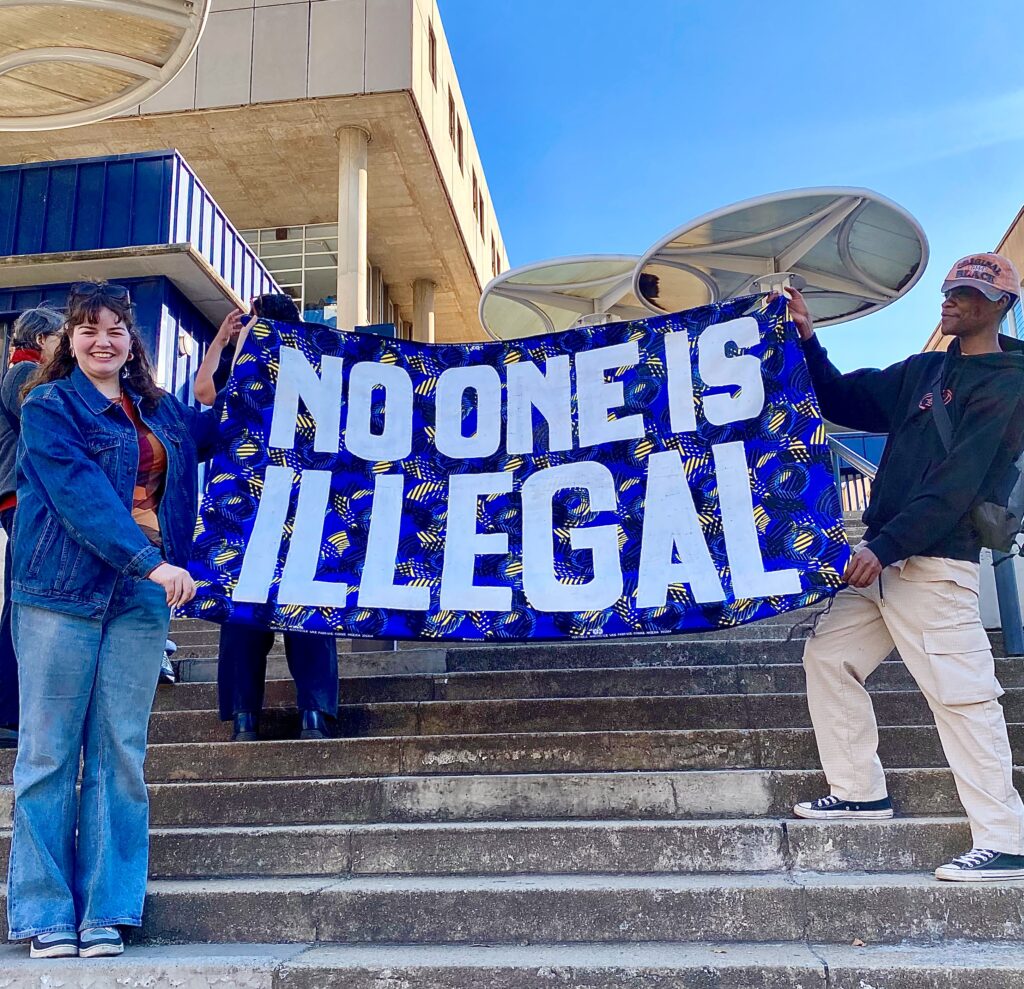
Protesters transformed the university entrance into a focal point for advocacy, displaying prominent banners and hand-painted signs condemning anti-migrant violence. One sign targeted the xenophobic rhetoric of Gayton McKenzie, accusing him of fueling an ‘Apart-hate,’ while others declared, ‘Targeting undocumented migrants is a hate crime’ and ‘No one is illegal.’
This demonstration was organised as a joint effort between Community Arts Mobilisation Project (CAMP), BDS Coalition, Kopanang Africa Against Xenophobia, Wits University Palestine Committee (WAPC) and Siyafana Sonke.
As attacks on migrants grow increasingly hostile, demonstrators call on law enforcement agencies to actively prosecute those inciting violence.
One protestor, Professor Marie Huchzermeyer, said the attacks constitute hate crimes. “This includes not only targeting people on the basis of their culture or country of origin, but also their migration status,” she states.
Dean Hutton, artistic director of CAMP, underscored the role of creative movements in driving social change, noting that artistic expression can “appeal to the soft parts of humans that rhetoric does not touch or move to action.”
Huchzermeyer echoes this view, stating “There is a view in Siyafana Sonke that I am drawn to which tries to win over the adversaries, making it a campaign of love rather than confrontation.”
Picture of two activists holding a banner that reads “No one is illegal”. Photo: Jamie Ho.
The picket is one of several planned demonstrations aimed at countering xenophobic narratives across South Africa. However, with tensions continuing to simmer across multiple provinces, activists acknowledge they face sustained pressure as they push back against organised anti-migrant sentiment.
FEATURED IMAGE: Picture of demonstrator holding a sign reading “Targeting undocumented migrants is a hate crime”. Photo: Jamie Ho.
Every year the days leading up to Africa Day, street vendors start displaying their best cultural outfits because they know the public want to look good for the occasion. However, in the mix of cultural outfits and good cuisine the real meaning behind the celebration of Africa Day gets lost.
Ubuntu, I am because we are, is a traditional African philosophical concept and the foundation on which the Organisation of African Unity (OAU) was built on. The birth of the OAU, now known as the African Union (AU), on May 25, 1963, is the core reason why we celebrate Africa Day. 32 independent African states came together to fight colonialism and promote unity. This day is meant to strengthen the Pan African spirit, celebrate cultural diversity, reflect on progress and rewrite the narrative of Africa’s story.
Sadly, the meaning behind the celebration of this day has been watered down, and it has become just another day of dressing up, eating delicious food or a surge in sales for street vendors. Ntando Makhubu, a journalist at The Post Newspaper, wrote in his article that he spoke to a street vendor in Pretoria who said “For me, for us, it means a boom in business” which highlights how unaware some members the public are about the true intent of Africa Day.
Africa Day is only recognized as a public holiday in a handful of African Union member states, only six to nine of the 54. Mako Muzenda, a former freelance writer for Daily Maverick, wrote an article saying that the “25th of May is about statements and fanfare, not about making serious moves.” Africa Day has become more performative than educational or impactful, and this is another reason why the public’s awareness regarding Africa Day is low.
There are multiple articles promoting Africa Day celebrations that involve food, cultural dances, and dressing up. However, there are few speaking to the core reason of Africa Day and how Africa has grown or managed to rewrite its own story after colonization.
The lack of awareness shows how easily African history and unity can fade from public consciousness when not diligently taught. As the African Proverb says, “Until the lions have their own historians, the history of the hunt will always glorify the hunter.” This means if Africans do not actively preserve, teach and celebrate their own history and the foundation that it was built on, it will continue to be forgotten or overlooked.
Featured Image:Headshot of Chrislyn Majiedt, this week’s editor.
In episode six of We Should Be Writing season 7, the team unpacked the evolution of music as a form of expression and protest, through four decades in the South African context. The episode explores the journey of South African music and its consumers from the 80s, 90s, early 2000s and contemporary listeners. From the […]