The inaugural Wits International Vocal & Chamber Music Festival begins on a powerful note, blending music, memory and meaning in a moving tribute to the youth of the Soweto Uprising.
The first-ever Wits International Vocal & Chamber Music Festival launched with a powerful opening concert at Seabrooke Music Hall.
The programme centred on Gabriel Fauré’s Requiem, honouring the children of the 1976 Soweto Uprising.
Performers delivered a technically refined and emotionally gripping experience that set a high standard for the festival.
A quiet anticipation filled the Seabrooke Music Hall on Wits East Campus on April 22, as audiences gathered for the opening of the inaugural Wits International Vocal & Chamber Music Festival. What unfolded was not just a performance, but a deeply moving musical tribute rooted in history, memory and collective reflection.
Hosted by the Wits Music Department, the festival spans eight concerts running from April 22 to May 2 across various venues on campus. This festival is the first of its own at Wits hosted by the department. The opening set the tone with a powerful presentation by the Wits Music Department Choir, accompanied by pianist David Butlin and conducted by Head of Department Musa Nkuna.
The programme drew from Gabriel Fauré’s Requiem, Op. 48, reimagined as a memorial for the children of the 1976 Soweto Uprising. Through seven movements, the performance carried a spiritual weight, each hymn a plea for rest, peace and refuge from suffering. The reinterpretation grounded the classical work in a distinctly South African context, bridging European composition with local history.
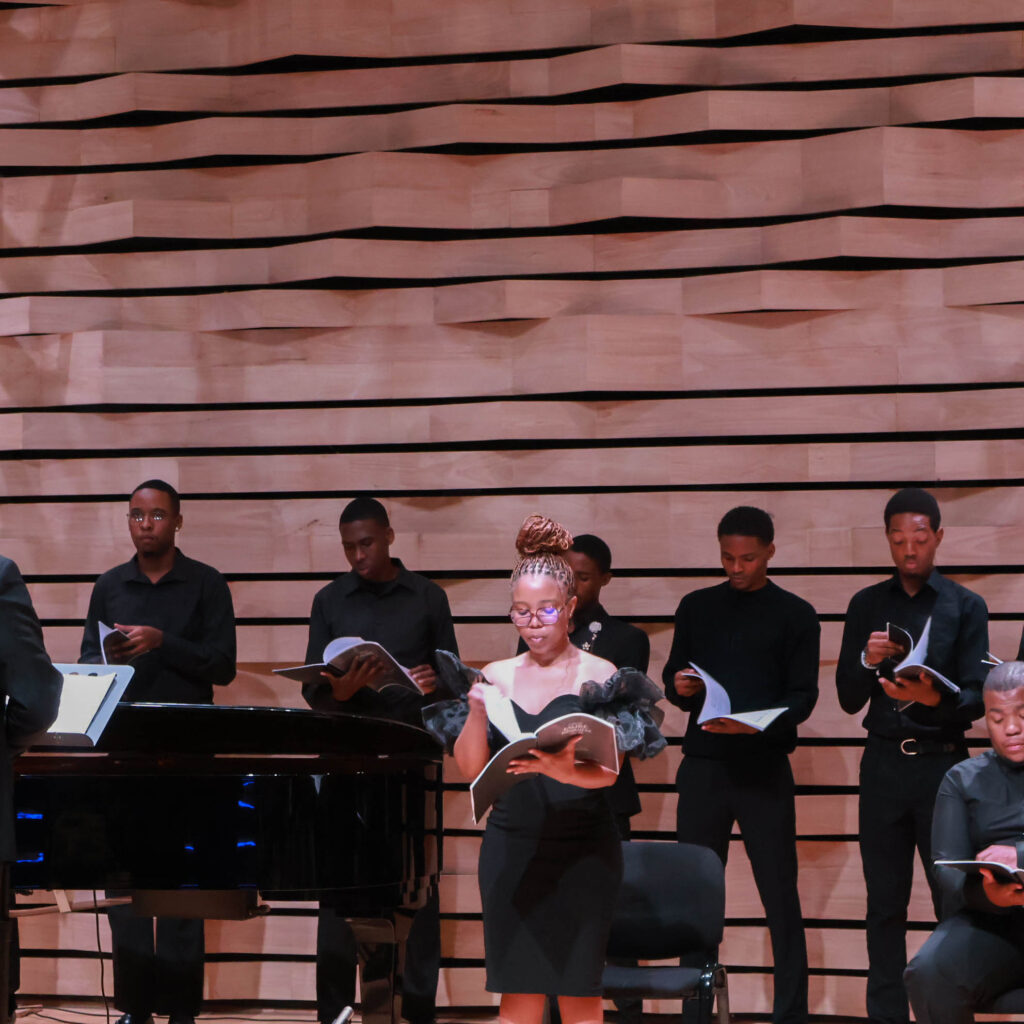
A picture of Charmaine Nkuna. Photo by: Sanele Sithole
Soprano Charmaine Nkuna, and bass Thato Morutle delivered standout solo performances, their voices cutting through the hall with clarity and emotional depth. Their presence added a personal dimension to the piece, elevating the performance from technically strong to profoundly affecting.
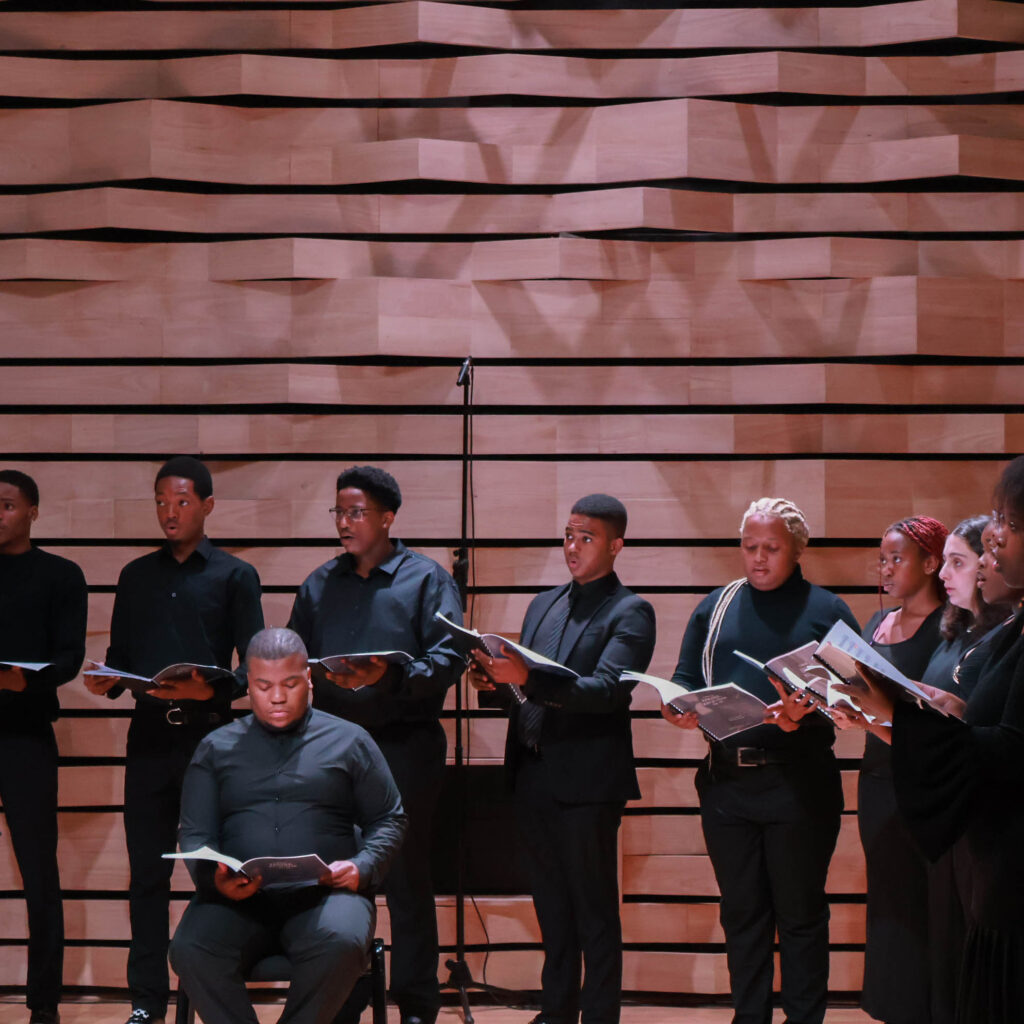
As the choir entered the stage dressed in black, the symbolism was immediate. The uniformed ensemble visually reinforced the tone of mourning and remembrance, aligning with the concert’s dedication to lives lost. What followed was a seamless performance marked by strong ensemble unity and precision — not a single note out of place.
The emotional impact resonated with the audience. First-year Film and Television student Luthando Skenjana described the experience simply: “It was an amazing performance; I quite enjoyed the show.”
For organisers, the festival represents more than a series of concerts. Choir chairperson Lesedi Masela, final-year Bachelor of Music student, described it as “a high-impact platform that brings together choral, chamber and orchestral performances within one integrated programme.”
Masela emphasised the significance of the festival’s timing, marking 50 years since the Soweto Uprising. “The opening concerts being requiems reflect that commemoration,” he said, adding that hosting performances across multiple venues transforms the festival into “a full-scale artistic ecosystem.”
That ambition is evident. Beyond musical excellence, the festival aims to create an immersive cultural experience — one that is intellectually engaging while remaining emotionally accessible. The opening concert achieved this balance, offering both technical sophistication and a deeply human narrative.
At its core, the performance was about young people remembering young people — a generational echo carried through music. It is this layering of meaning that makes the festival stand out, positioning it as both an artistic and commemorative space.
If opening day is anything to go by, the Wits International Vocal & Chamber Music Festival is not just an event to attend, but one to experience.
Vuvu Rating: 10/10
A picture of the choir. Photo by: Sanele Sithole
FEATURED IMAGE: A picture of the choir on stage. Photo by: Sanele Sithole
Street skate culture is alive and thriving in the heart of Jozi.
F City hosts a skate competition in Selby.
Young skaters flock to the event to show off their tricks.
Skate culture facilitates youth development and community building.
Picture of skater mid-trick. Photo: Jamie Ho.
Picture of skater mid-trick. Photo: Jamie Ho.
Picture of skater mid-trick. Photo: Jamie Ho.
Picture of skater mid-trick. Photo: Jamie Ho.
Picture of skater mid-trick. Photo: Jamie Ho.
Picture of skater mid-trick. Photo: Jamie Ho.
Picture of skater mid-trick. Photo: Jamie Ho.
On Saturday April 25, wheels were rolling and sneakers were skidding in Johannesburg’s inner-city as F City Market brought skateboarding to the streets of Selby.
The afternoon was filled with cheers as a group of young skaters from central Johannesburg crowded around a small wooden ramp, eager to showcase their skills. The prize: a brand new skateboard courtesy of Crispy Skateboards.
This was young Isheanesu Hove’s first day doing a double kickflip: a move which crowned him the winner of the competition. “Skating to me, it means life,” Hove says, proudly clutching his newly won board. “It inspires me.”
This event is one of many hosted by F City Market in collaboration with Crispy Skateboards to bring skating back to its roots. Joe Dludla and Rhandzi Rhay, two students who founded the movement, were spurred by the lack of skating events in Johannesburg.
With most events being larger-scale or enclosed in skate parks, Dludla and Rhay saw a need to create an alternative space on the streets of Braamfontein for the youth by the youth.
Street skating is central to what Dludla calls the “core culture of skateboarding,” an activity that isn’t limited to skate parks, but open on the streets and accessible to all. “It’s a very small niche scene, so we need to keep it alive,” he adds.
At its core, the space is dedicated to uplifting the youth and providing them with a platform to hone their skills. Each month, F City hosts a youth development mentorship programme in collaboration with Growing Alexandra Skate Club, which aims to cultivate growth and creativity among the youth of Jozi.
As this initiative is still relatively new, it is in desperate need of volunteers. Dludla and Rhay encourage anyone with a skillset to share their craft– from skateboarding to graffiti to music. “We’re trying to influence the next generation of kids,” Rhay says.
The event extends beyond just skating; it’s a culture rooted in creativity and artistic freedom. As co-founder of Crispy Skateboards, Kaelik Dullaart says, “It’s the music. It’s the aesthetic. It’s the attitude. It’s the community.”
Drawn together by a love for skating, the space has become more than just an event; it has become a family.
As the sun set, the kids departed as a group back to their homes in town; skateboards ablaze beneath their feet.
Picture of the young skateboarders on Webber Street. Photo: Jamie Ho.
FEATURED IMAGE: Picture of a skater suspended in the air mid-trick. Photo: Jamie Ho.
Wits Journalism students step inside Kgosi Mampuru II Correctional Centre, confronting the haunting legacy of South Africa’s penal history.
Wits Journalism students visited Kgosi Mampuru II prison and learned about inmate survival, punishment, and daily life behind bars.
They climbed the 52 steps to the gallows, reflecting on the country’s execution history and its human cost.
The gates at Kgosi Mampuru II don’t simply close, they announce an ending. It is a metallic finality that vibrates in your marrow, leaving an unshakable awareness of what it means to be confined, and the fragile privilege of walking free. Exactly at 10:42 am on April 15, 2026, 17 of us from the Wits Journalism programme stepped through that threshold. We traded lecture halls for a space defined by the physics of control. As a student journalist, I am trained to observe, but here, the walls watch you back. An involuntarily warning began to ring in my ears, an indirect message from the architecture itself, “Do not come here.”
Our tour guide, Dimakatso, unveiled a world of “jail language” and survival. She described “two full chickens”, prison slang for the two boiled eggs served with pap at 14: 00 pm which would be your last meal until the next day. She showed us how inmates creatively hollowed Sunlight soap to hide cell phones. In the era of AI, these inmates use primitive ingenuity to stay connected. Sitting on benches crafted by prisoners, I felt a sting of irony, for someone like me, only taught to build cardboard bridges at school, these prisoners learn to build from scratch to survive, and gain skills that might one day free them from that space.
The atmosphere turned clinical and cruel when Dimakatso introduced the “Triangle Step”. She described hot water-soaked wood being bent during a beating, making my body involuntary cringe. My mind flashed to the moment of impact, feeling the sting of a system that once relied on pain as its primary language. Hanging on the triangle step was a bloodstained cloth, an enduring reminder of punishment inflicted on the condemned. I cannot omit this, as it questions what I was never taught in high school. This history was deliberately left out, it sparked questions about justice, pain, and how history is curated.
Next, we moved to the gallows. Mr. Kgomo told us to “fasten our emotional seatbelts”, a fitting warning. We transitioned from the museum of survival to the tomb of execution. I stood before the names on the wall, thinking of Section 11 of the South African Constitution: the right to life. I felt a wave of relief; the 1996 abolition of the death penalty had ended this brutal form of justice. Yet, as we approach April 27, Freedom Day, the irony burns: this day marks our liberation, but these gallows mark how many never lived to see it. Yet, the past is not distant. Between 1902 and 1989, roughly 3,500 people were executed, a grim reminder of state-sanctioned brutality. As I ascended the 52 steps, I imagined faces, some praying, some screaming, others singing hymns, climbing those heavy stairs. By step 52, my chest felt like it was crushed, a tear slipped unnoticed, masking my professionalism.
At the top, the brutality became clinical, detached from emotion. I learned how a prisoner’s BMI (body mass index) was used to select the correct noose, and how a pulse after the fall meant the execution was not complete. We stood where Solomon Mahlangu, whose blood nourished the “tree of freedom”, once stood. As the gates hissed shut behind us, and warnings lingered, I became haunted. The 52 steps symbolise not only punishment but a society still grappling with its past, a past where thousands paid the ultimate price between 1902 and 1989. Is this reflection of the gallows? It is a mirror that confronts the dark architecture of consequence, forcing us to question the true weight of justice and the whispers of history that echo through these steps.
19 : 00 pm, execution time starts. Photo by: Emadul Islam Akash. (Pexels)
We celebrate Freedom Day on April 27, 2026, however, the 52 steps remind us that freedom was counted out in bodies long before it was counted in ballots.
FEATURED IMAGE: Journalism and Media Studies Honours students from Wits University enter Kgosi Mampuru II Management Area. Photo by: Alice Dhlamini.
Power outages at Wits’ International House disrupt postgraduate students’ study routines and raise safety concerns amid aging infrastructure and poor communication.
Recurring power outages at International House since March 2026.
Residents face interrupted study routines and safety risks, particularly at night when corridors are left in darkness.
Limited communication from management and delays in forming a House Commitee or upgrading infrastructure have left residents uncertain and frustrated.
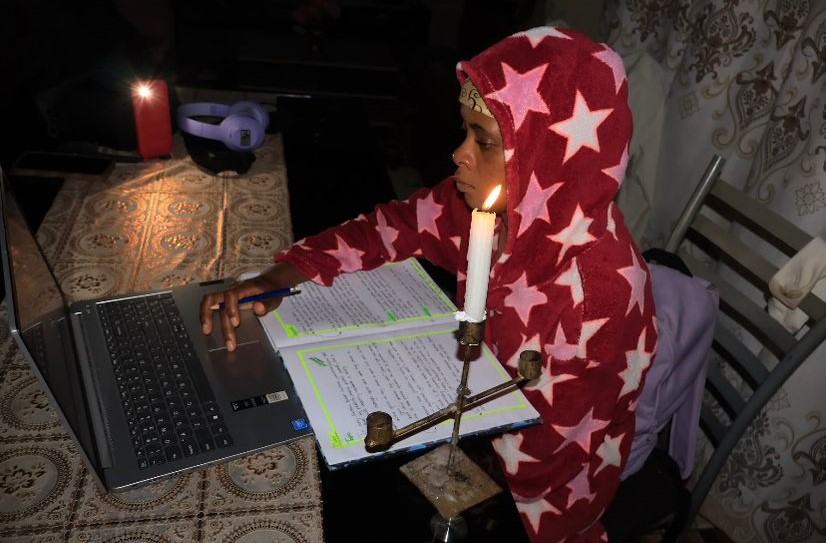
Persistent power disruptions at Wits’ International House residence are straining the building’s infrastructure and backup systems, compelling postgraduate students to relocate late at night to continue studying.
The outages began in early March 2026, with some residents reporting disruptions occurring two to three times a week. During these periods, the residence relies on a generator shared with Sunnyside Hall, limiting available backup power and leaving sections of the building without electricity.
Students say the impact extends beyond inconvenience. Darkened corridors and shared spaces have forced some residents to either remain in unsafe conditions or move across campus late at night to access functional study areas.
Postgraduate resident Ireen Masemula, who is pursuing a BEd honours in language education, described the disruptions as exhausting and unsettling. “The lights go out at around 8 p.m. sometimes, and I only return from the library around 1 a.m.,” she said. “It’s not safe, especially as a young woman. I have to go to the library to work, and I struggle to study in such an environment.”
Studying by candlelight during outages at Wits’ International House. Photo by: Alice Dhlamini.
According to Tyson Mnisi, a security officer at International House, the outages are not solely linked to external power-supply issues. He explained that a combination of external disruptions and internal electrical faults contributes to recurring failures.
“Sometimes it’s just a minor cut, but often it’s an internal load,” Mnisi said, adding that high-wattage appliances such as microwaves and heaters place significant strain on the system. “You’ll have students making popcorn in their rooms, and suddenly the whole circuit trips. The infrastructure is just not built to accommodate such levels of demand.”
Tshiamo Modise, an undergraduate student and a student employee in the residence’s maintenance team, said communication gaps have intensified the situation. During a recent incident involving multiple generator failures, she used her own airtime to contact management after the building’s Wi-Fi and telephones went down.
“I reached out to management for answers, yet I was met with silence and no formal explanation”, Modise said, noting that outages have also resulted in spoilt food and unsafe conditions in shared kitchen spaces.
Residents say the recurring disruptions point to deeper structural concerns within the residence, as temporary fixes have not addressed the underlying causes.
Shanon Smit, a handyman at the residence, suggested that establishing a formal House Committee could strengthen communication between residents and maintenance teams, particularly in reporting faulty appliances before they place additional strain on the system.
Despite these suggestions, students say little has changed, leaving them to adjust their routines individually while managing ongoing disruptions.
Attempts to obtain comment from residence manager Bhekizizwe Nkosi were unsuccessful at the time of publication.
For now, International House residents remain caught between different explanations and ongoing infrastructure pressures, with no clear timeline for lasting improvements.
Residents say that without urgent infrastructure upgrades, the ongoing outages will continue to compromise both the safety and basic living conditions within the residence.
FEATURED IMAGE: International House Residence. Photo by: Alice Dhlamini.
A signage change at Wits University highlights the student centre’s official name, but “The Matrix” remains the name that defines campus culture.
The student centre at Wits University now displays its official name in full, Student Union Building Matrix.
Many students were unaware of the formal name and have always called it “The Matrix.”
Despite the signage, “The Matrix” remains a key part of Wits student culture.
Something felt off at the university’s student centre, something felt strange. The bold, familiar “Matrix” signage that has long marked the heart of student life was gone. In its place was a more formal name: “Student Union Building Matrix.” For many students passing through, the change raised a quiet but lingering question—had “The Matrix” been renamed?
At first glance, it appeared to be a rebrand. But conversations across campus revealed that the story is less about a new name and more about how students experience and define their space.
Many students had not noticed the updated signage at all. Others only became aware of it after it was pointed out.
An image of the map of the Matrix and the Student Union Building. Photo Provided by: Jenna Stelli
“I’ve been at Wits for quite a while, and it’s always just been ‘The Matrix’ to me,” said Obakeng Leping, a fourth-year BSc civil engineering student.
Head of marketing Reshma Lakha-Singh said the official name of the building has always been Student Union Building, with “The Matrix” becoming widely used from 2001. The name gained popularity due to its catchy nature, influenced by both the building’s structure and the release of the movie by the same name at the same time.
“The decision to revert to the original name aligns with the university’s signage and wayfinding policy, which aims to ensure consistency, clarity, and uniformity across campus buildings as budgets allow,” said Lakha-Singh. “The current naming better reflects the building’s long-standing formal identity and institutional purpose.”
Jenna Stelli of campus planning added that the facility consists of two separate buildings. “The original Student Union building is to the south and the more recent Matrix building to the north. Because the building is experienced as one cohesive hub, we decided to include both names on the new signage to avoid confusion,” she said. “There haven’t been any official name changes — we are ensuring the signage matches how the building is used.”
The gap between official naming and everyday language reveals something deeper about student identity at Wits. Names are not only assigned; they are shaped over time through shared experience.
For students like Tiyane Matsheke, a third-year BA general student, the informal name carries a sense of belonging. “I’ll still call it ‘The Matrix’ because that’s what everyone knows. It’s part of Wits culture,” she said.
Attempts to trace the origins of the name remain unclear, with key sources unavailable to comment. Yet its meaning is evident in how firmly it is held by students.
Even as official branding becomes more visible, it is unlikely to redefine what the space represents. The signage may read differently, but in conversation, memory and daily student life, “The Matrix” continues to hold its place.
FEATURED IMAGE: Picture of the Student Union Building Matix. Photo by: Sanele Sithole
From pre-colonial wars to the mechanics of state execution, students are demanding a more nuanced history. It is time to stop sanitising the past and walk the 52 steps.
The Department of Basic Education is currently reconsidering how we teach our past, a move that comes not a moment too soon. In a recent series of conversations at the University of the Witswatersrand (Wits), students expressed a clear hunger for a history that goes beyond the “standard” narrative.
Joy Cain, a first-year Biomedical Sciences student, noted a lack of perspective on the white experience during Apartheid, while Shane Yurar, a first-year Film and Television student, suggested the curriculum should expand to include pre-colonial history, specifically the tribal wars of leaders such as King Shaka. Others, like Aluta Manale, an international relations honours student, pointed toward the migration stories from Congo. Or as Tinashe Morena, a second-year psychology student, said, the need to study the Black authors and struggle writers who defined an era.
The underlying message from these students is clear: they feel their history has been “filtered.”
As I stood in the Kgosi Mampuru II Gallows last week, Wednesday, 15 April, I realised just how thick that filter is. While students are asking for more diverse stories, there is a physical site of memory in Tshwane that remains almost absent from our national consciousness. The Gallows is a “human abattoir”, a place where 3,500 lives were ended with clinical, industrial efficiency.
My mentors cautioned that the Gallows might be too ‘deep’ or too ‘sore’ a topic to bring up in a casual vox pop, and they are right. It is a heavy, sombre reality. But that is exactly why it needs to be taught. By shielding students from the ‘scary parts’ of our history, we are not protecting them; we are leaving them with an incomplete understanding of how we got here.
We learn about the “In Detention” poem in English class, but we do not walk the 52 steps in History. We talk about the triumph of 1994, but we do not look at the white telephone that never rang for those awaiting a pardon.
If the Department of Basic Education wants to truly localise our curriculum, they must include the sites that prove Apartheid was not just a set of laws, but a factory of dehumanisation. To truly appreciate the “Freedom” we celebrate on April 27th, we must stop sugarcoating the past. We must look at the darkness of the Gallows to understand the value of the light we live in today.
Drawing of a noose that represents the Gallows, in South Africa. Graphics: Daniella Ripamonti
FEATURED IMAGE: Drawing of a noose that represents the Gallows, in South Africa. Graphics: Daniella Ripamonti
Rising fuel costs are forcing Wits students to choose between paying for their daily commute and basic essentials like meals and data
The recent fuel hikes have increased taxi fares by R6 per trip, costing students an extra R240 monthly.
Daily commuters are walking long distances to save fare money, resulting in late arrivals and lost study time.
Two weeks after South Africa’s fuel increase, some Wits University students who commute daily say rising transport costs are already affecting their ability to attend lectures, manage time, and meet basic living expenses.
According to Bloomberg, petrol is currently around R 23 per litre, following recent increases in global oil prices and local fuel adjustments.
While the increase in fuel prices continues to place pressure on household budgets, its impact has now extended directly into the public transport costs.
The National Taxi Alliance (NTA) confirmed that taxi fares have already increased by R6 per trip. For daily commuters, this translates into an estimated additional R12 per day for a return trip, about R60 per week, and roughly R240 per month.
A Wits student passing their taxi fare to the front of the vehicle. Photo: Alice Dhlamini
For students who rely on taxis from the surrounding areas, the increase has turned daily travel into a financial strain.
“I live off campus in Benoni, and I have to travel every day to get to class,” says Afrika Mbangiso, an honours in Psychology student.
“From Wanderers Taxi Rank in Johannesburg, I have to walk the rest of the way to Wits just to save money for lunch or sometimes, for my trip back home,” Mbangiso adds.
It has also affected her punctuality and workload. “I am sometimes late for class, meaning it’s more work that I must catch up on later”, she adds. For students like her, longer commutes and additional walking reduce time for rest, studying, and academic preparation.
Nontobeko Zulu, a Postgraduate Certificate in Education (PGCE) student, argues that the increase has forced what she calls a “displacement of funds”. “For many of us, these aren’t just transport fares, they represent a radical displacement of funds,” Zulu says.
FEATURE IMAGE: A picture of a passenger passing forward taxi fare, which has increased by R6 per trip due to petrol hitting R23 per litre. Photo: Alice Dhlamini
We used to protect our most intimate moments: grief, prayer and quiet joy within the four walls of our homes. Now, we trade them for likes. As the line between experiencing and performing life vanishes, we must ask: If everything is for sale online, does anything remain sacred?
A camera is always ready, lingering in the background to record even the smallest moments. In the age of the non-stop vlog, the boundaries of human experience are dissolving. Social media has not just given us a platform, it has turned our very existence into a product. We are no longer living our lives: we are curating them for an invisible audience that does not actually care.
William Shakespeare once wrote that “all the world’s a stage”, suggesting that we are all merely players acting out our roles. Centuries later. Sociologist Ervin Goffman expanded on this, arguing that in our social interactions, we are constantly “performing” to manage how others see us. Goffman believed we had a “front stage” for the public and a “backstage” where we could finally be ourselves. However, the digital age has effectively abolished the backstage.
Look at your feed. You will see funerals livestreamed, hospital beds used as backdrops and personal breakdowns filmed through a beauty filter. We see random acts of kindness where the camera is clearly set up before the help is even offered. In these moments, the experience itself becomes secondary. The grief is not about loss: it is about engagement. Kindness is not about the person in need: it is about the creator’s brand.
Even the sanctuary is no longer safe. Instead of lifting both hands to praise the Lord, many are now holding up a phone to take content. We see congregants capturing the choir or the sermon for their stories instead of being present in the moment. This raises a chilling question: Are we still experiencing life, or are just performing it? How is one supposed to be fully immersed in worship when they are preoccupied with the right camera angle?
A packed auditorium during a contemporary church service, featuring integrated live-streaming and digital displays. Photo: Rearabilwe Tsebela
This shift is fueled by a hungry algorithm.
Research from the University of Malta in 2025 found that the “TraumaTok” trend encourages young people to turn their private grief into public confessional narratives. This specific trend is exactly what is destroying the sacred and private nature of our lives. When we see life through a lens, we stop being participants and start being directors. We wait for the right lighting before we cry: we pause the conversation to ensure the aesthetic is correct.
This is the death of the sacred. Something is sacred precisely because is it not for public consumption. Its value lies in its privacy, the fact that it belongs only to the people in the room.
Critics will argue that social media connects us and in some ways it does. But there is a massive difference between connection and performance.
True connection happens in the unrecorded silence between two people. When we broadcast those silences, we strip them of their power. When everything becomes content, nothing feels special anymore. We are feeding a hungry algorithm with the bits of our souls that should have been kept for ourselves.
It is time to draw a hard line in the digital sand. Not every moment needs a caption. Not every heartbreak needs a story update. Not every sunset needs a filter. Some things should remain unseen, not because they lack value, but because they hold too much of it to ever be liked. In reclaiming our privacy, we might just rediscover the quiet, unrecorded beauty of being alive.
FEATURED IMAGE: A professional camera rig stands ready on a sidewalk in Braamfontein. Photo: Rearabilwe Tsebela
Wits students react to the Zara x John Galliano collab. In a cost-of-living crisis, is the designer label still a status symbol or just overpriced plastic?
Global high-fashion icon John Galliano signs a historic two-year creative partnership with Zara.
Wits students are divided; some chase the ‘status’ of the label, while others slam the ‘tacky’ dilution of luxury.
The rise of high-quality ‘dupes’ and fast fashion collabs is blurring the line between prestige and plastic.
Luxury used to be defined by exclusivity, the rustle of silk, the weight of hand-stitched leather, and a price tag that felt like a gatekeeper. But as Vogue reports about the unexpected two-year partnership between the legendary John Galliano and fast-fashion giant Zara, the golden gates of high fashion have swung wide open. Wits students may be far away from the fashion high streets of Milan or Paris, but they had something to say about the reported collaboration.
The collaboration, set to debut in September 2026, marks the return of Galliano (the former Dior creative director known for theatrical couture) to the mass market.
For Lindani Dweba, a final-year BA student majoring in Politics and HR, the allure is simple: the name. “I would buy for the name,” Dweba admits. When faced with the choice between a R1,800 designer-labelled polyester jacket and a R200 thrifted wool coat, he leans toward the label. “Preferably the label. But luxury is becoming cheapened because of alternatives making the same thing.”
However, not everyone is buying the hype. For Caleb Boroto, a first-year Film and TV student, the collaboration feels “tacky.” Boroto argues that someone of Galliano’s regard partnering with a fast-fashion brand strips away the luxury feel entirely. “Gun to my head, I’d pick the R200 wool jacket,” says Boroto. “I’d prefer to be sustainable and choose something that lasts, like wool or cotton.”
The Reality of Aspiration: Lindani Dweba, a final year student, wears Nike P-6000s (R2,399), which serve as an attainable alternative to luxury items like the Gucci Rhyton sneaker (R21,700). Photo: Daniella Ripamonti
Katlego Hlahla, a third-year Actuarial Science student, echoes this scepticism, noting that luxury prices often feel “unnecessarily inflated” for the quality provided. As Zara’s prices creep up, the lines between ‘high street’ and ‘high end’ are blurred.
The psychology of the label remains a powerful force, even when the quality is questionable. Sephaku Tshoshi and Kirsten Pudi, both fourth-year Accounting Science students, admit they would choose a designer name over a thrifted bargain any day. “I wouldn’t get the same bag without the name, even if the quality was the same,” said one of the students, gesturing to her Ted Baker tote. They noted that the rise of high-quality “dupes” has made luxury more accessible, but also less significant. “People are buying fakes now, even people with money. You can’t tell the difference anymore.”
Psychology Honours students Daiyaan Kahan and Jake Fourie said that “accessibility cheapens the value, but people still buy it for the status symbol.” Fourie, however, sees the positive side, “If it’s more accessible, it’s overall good. More people representing a brand is good for the brand’s expansion” he stated
As the Zara x Galliano collection prepares to hit shelves, the Wits campus remains a tug-of-war between the desire for status and the demand for authenticity. In an era where ‘luxury’ can be bought at the mall in a plastic bag, real luxury might just be the ability to tell the difference.
FEATURED IMAGE: Reframing the Aesthetic: By pairing a sporty PUMA track jacket with tailored pinstripe trousers and formal loafers, Demitri Michaud, a postgraduate student, demonstrates a ‘high-low’ styling approach that mirrors global trends of deconstructed luxury. Photo: Daniella Ripamonti
“A society that discourages critical thinking is unwittingly admitting that its foundations can’t survive honest examination.” – Kalen Dion
During my Undergraduate degree, I was assigned a group presentation on France’s foreign policy. It was a layered topic: one that required days of research and rigorous group meetings. One of my group mates, however, insisted on using ChatGPT to write her entire speech.
Unluckily for her, our professor happened to be an expert in French policy. Like a bloodhound, he sniffed out numerous inaccuracies in her speech. In front of the entire class, she had spewed flimsy words, inaccurate facts and false statistics from ChatGPT mindlessly. She presented the information as confidently as if she herself wrote it.
Ask anyone and they’ve probably used AI at least once. It’s so deeply entrenched in our everyday lives; it’s inescapable. When you write an email, an AI suggestion pops up recommending what to say. When you open Instagram, you’re bombarded with a surge of AI-generated reels. Even something as simple as a Google search has an automatic AI summary built in.
AI has burrowed itself so deeply into every channel of our lives that it has become difficult to imagine life without it. But is AI training us to be passive consumers of information?
A study by MIT Media Lab revealed that participants who had used AI to write their essays showed extremely low brain activity compared to those that didn’t. This was largely because they were not actively engaging with any of the material; they were simply parroting it. Ultimately, the tool that was built to supplement our thinking is, in many cases, actually replacing it.
This has dangerous repercussions for human development. If we blindly consume content generated by AI, what else will we be blind to?
In George Orwell’s infamous 1984, he depicts a totalitarian society in which independent thought is abolished under the dictatorship of Big Brother. At the time, it seemed like a fictional dystopia, a far-off tale too outrageous to be taken seriously. Now, it has bled into our reality.
It was Steve Biko who once said, “The greatest weapon in the hand of the oppressor is the mind of the oppressed.”
We must hold onto our vigilance. We must sharpen our minds. The world is undergoing a rapid digital shift. Our ability to think, to question what we know so that we are not mindless followers becomes our greatest and most potent weapon.
FEATURED IMAGE: Headshot of Jamie Ho, this week’s editor.
Thrifting may be trendy, but for many students, it is simply the cheapest way to afford fashion.
Economic necessity and “instant gratification” drive some Wits students to second-hand shopping.
The Matrix’s Zaza Clothing reports its busiest year yet as students ditch retail for quality and affordability.
Hidden online fees and poor garment quality are making global fast-fashion giants less appealing to local youth.
In the heart of Braamfontein, the ‘thrift flip’ is more than just a curated style; it is a survival strategy. As South Africa faces a cost-of-living crisis, students are increasingly searching for the perfect R50 vintage shirt. This shift has turned a trendy pastime into a financial necessity.
While discussions about second-hand shopping often highlight ‘slow fashion’ and sustainability, the reality in hubs like Melville and Braam tells a different story. For many of The University of the Witwatersrand (Wits) students, thrifting isn’t about saving the planet; it is about saving their bank balance.
On the top floor of the Matrix, the energy at Zaza Clothing is a testament to this shift. Since opening in March 2023, owner Ali Monama says business has grown every year, but 2026 is by far the busiest he has seen.
“I chose the Matrix because fashion starts with the youth,” Monama says. He notes that while sustainability is a plus, the economy is the real driver. “Thrifting is critical for the economy right now. People prefer it because modern retail clothes don’t last, whereas vintage leather and denim are pure quality,” he adds.
The price tags at Zaza Clothing offer a stark alternative to the mall, ranging from R20 earrings to R600 Doc Marten boots. The prices are what appeal to students like Thulani Bikili, a second-year civil engineering student. Bikili thrifts twice a month specifically because of the cost-of-living crisis. “Retail stores are just overpriced,” he says.
For some, the appeal is a mix of budget and “instant gratification.” First-year electrical engineering students, Siyamthanda Mazwan and Naomi Makangume, argue that while sustainability is a “secondary perk,” the real win is finding unique items that allow them to avoid “following the crowd.”
Picture of students browsing through a clothes rack at Zaza Clothing. Photo: Daniella Ripamonti
The duo also highlighted the growing frustration with online giants like Shein. Between unpredictable shipping times and hidden customs fees, they’ve started questioning the true cost of “cheap” online hauls. “Is it really cheaper if I’m paying for all these other hidden fees?” They ask. “With thrifting, you get what you buy then and there. You can actually try it on to see if it fits.”
As financial pressures continue to reshape student life, the shift toward second-hand clothing reveals a generation that is becoming increasingly resourceful. Whether it’s to find a one-of-a-kind vintage piece or simply to survive the month, the students at Wits are proving that in the struggle between ethical spending and economic reality, the price tag, and the quality, is winning every time.
FEATURED IMAGE: Picture of sunglasses and ties taken at Zaza Clothing store in The Matrix. Photo: Daniella Ripamonti
What began as a study group is now a campus staple with 200+ orders. Built on brotherhood and faith, Panache is redefining luxury for the Wits community.
On any given day at Wits University, students cross the Library Lawns wearing hoodies and streetwear that stand out in the crowd. Among the sea of fast fashion, certain pieces carry a specific look that has become a staple of the Braamfontein and Wits community aesthetic. This presence belongs to Panache.
But long before it became a growing local brand, it started with something far simpler: friendship. For students Tshepang Rafutho, third-year accounting science, Kevin Radebe, BComHons in insurance and risk management, Thokozani Matyolo, honours in economic science and Tshiamo Ntlemo, third-year accounting science, Panache was never the original plan.
Their story began in lecture halls and shared study groups, where mutual friends brought them together. What started as an academic collaboration evolved into a friendship rooted in shared interests, ambitions and goals.
The brotherhood remains the brand’s anchor. While many student startups buckle under the pressure of balancing business and academics, the four credit their stability to a shared faith.
Rafutho explains, “At the core of it all, Christ has become the foundation of our friendship. That’s our anchor, the rock on which we stand.” It shapes how we move, how we treat each other and how we handle both challenges and success”. This stability allows them to hold each other accountable and push for growth without the work ever feeling personal.
The idea for Panache grew out of a gap they observed in student life. Matyolo said, “There was not much that reflected accessible luxury for students. We felt like students were not given the opportunity to experience quality and an elevated style that still felt accessible”.
Their first release, the “Princess Diana” hoodie defined the brand’s aesthetic. The design features a high contrast black and white portrait of the late Princess in a tiara, set against heavy black fabric with a minimalist ‘P’ embroidered on the sleeve. The turning point arrived when the founders realised the brand was resonating beyond their own social circles, the order list began to feature names they did not recognise. “I would say it was when people not close to us, people who did not have any obligation to support us were buying the hoodies despite not being familiar with the brand” said Matyolo.
Picture of a black Panache hoodie featuring a graphic print of Princess Diana, laid out on a white garden table. Photo: Rearabilwe Tsebela
We officially decided to go for it when we saw the genuine excitement around our very first drop. Before we had even officially positioned Panache as a brand, people were already treating it like one,” said Rafutho. Since its inception in May 2024, Panache has fulfilled over 200 orders, expanding its reach well beyond its initial circle of supporters. For the founders, seeing students wearing their pieces is the ultimate validation. As Ntlemo puts it, “Like ba believe’a mo rena!” (They believe in us).
“The support is a constant reminder to stay consistent and intentional, because every garment worn carries the Panache name and reflects what the brand stands for” said Ntlemo”
However, the vision for Panache stretches far beyond campus. The team is already building Friends of Panache, a creative ecosystem where ideas, can be brought to life through projects and collaboration. “Our goal is to become the bridge for young creatives who have the talent but lack access to opportunities that allow them to build strong portfolios,” said Radebe.
For instance, a student photographer can transition from taking casual photos to leading a professional clothing photoshoot using Panache apparel, while a model can use Panache’s garments to build solid work needed to reach “bigger stages” like mainstream magazines.
For Rafutho, Radebe, Matyolo and Ntlemo, the message to their peers is clear, you don’t have to wait until you have made it with intention. Whether through a garment or a creative collaboration, Panache is about owning your journey in real time.
FEATURED IMAGE:Picture of the four founders of Panache leaning in against a bright sky, capturing the spirit of collaboration and brotherhood behind the brand. Photo: Rearabilwe Tsebela
In episode six of We Should Be Writing season 7, the team unpacked the evolution of music as a form of expression and protest, through four decades in the South African context. The episode explores the journey of South African music and its consumers from the 80s, 90s, early 2000s and contemporary listeners. From the […]