A performance project featuring spoken words, chants, movements and musical art. It is a reimagination of Arther Rimbaud’s poem titled ‘A season in Hell’.
A season in Hillbrow, directed by Sibahle Mangena and Gerard Bester… what were my expectations? In all honestly, the performance far exceeded anything I had anticipated. I had expected an hour of a performance that somehow resembled ‘The greatest showman‘, where performers just burst into song mid-sentence. I had even thought to myself how will such an in-depth, poetic masterpiece be turned into musical play?
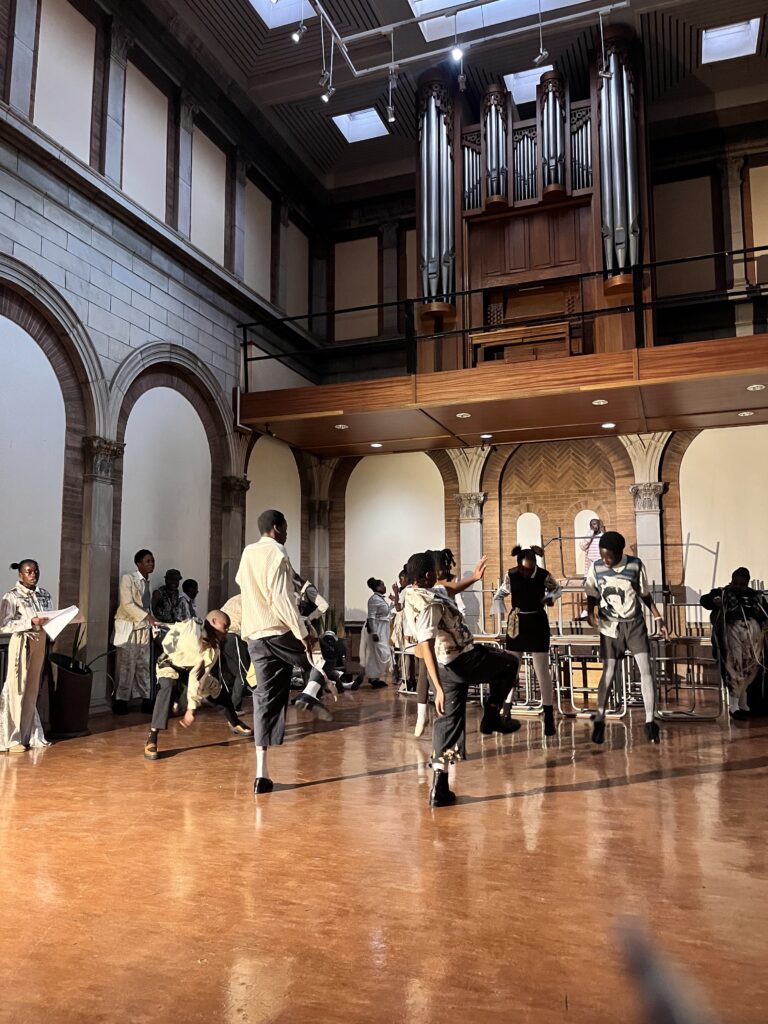
Safe to say, calling this performance a musical would be highly undermining its artistry. A group of high school students from the Windybrow Arts Centre took to the floor of the Southwest Engineering building an immaculate form of storytelling. A form that might make one assume is wiser than their years. Simply using school desks, their bodies, their voices, and most importantly their words.
Still of cast dancing during performance. Photo: Kamogelo Lesabe
The performance started with what seemed like a recitation of the beginning of Arther Rimbaud’s poem. As someone who knows this poem well, I quickly realised, that was far from the truth. Each student in the set up classroom delivered these short, punchy one-liners that incorporated words from the poem and mixed them with the real lived experience of Hillbrow. They mingled a clever play on words that spoke to issues of education, poverty, crime, gangsters, safety, hope and love while maintaining the main themes of suffering, alienation, self-destruction, and rebellion taken from the poem.
They carefully tackled these issues from the wide spectrum of the repercussions of apartheid and xenophobia boiling all the way down to the potholes in the street and how a Mageza drives on the road. They mixed all Nguni languages with the Shakespear kind of English which made the performance identifiable to a South African context. They sang amagwijo with all their emotion, they danced on tables, they even used comedy, which only South Africans would understand, to relate to the audience. They represented the theme of rebellion by not conforming to traditional ways of storytelling but rather speaking out against rigidity, limitation, unbelief, and societal standards. Rebellion against real issues faced by South Africans and contextually South Africans who daily experience life in Hillbrow.
Their costumes were an art of rebellion themselves. Wearing torn skirts, untucked school shirts, ties pinned to their shoulders instead of their necks. Similarly to the stage they performed on which was set as a classroom, how they sat, stood and danced on the desks, how they piled desks on top of one another to create what they called “a castle”. That for me screamed a unique and unconventional take to the interpretation of Rimbaud’s work.
Still of “castle” built with tables. Photo: Kamogelo Lesabe
. It was “powerful work of emergence by emerging voices” said Stacy Hardy, one of the creators of this performance. Work of emergence to address current and detrimental issues in the heart of Hillbrow.
The high schoolers truly outdid themselves in relaying the message of reimagining such an enigmatic poem.
Vuvu Rating: 8/10
FEATURE IMAGE: Cast of A season in Hillbrow performance. Photo: Kamogelo Lesabe
RELATED STORIES:
Wits Vuvuzela: REVIEW: Michael: Discovering the making of the King of Pop, May 2026
Wits Vuvuzela: REVIEW: The revival of Sophiatown, April 2026
Wits Vuvuzela: REVIEW: The Heart is a muscle, April 2026
Film graduates find new and creative ways to navigate the rocky terrain of show business.
A trio of former Wits film students debuted their independent screening event, Chosenima.
The event challenges the rigidity and exclusivity of film festivals by providing an open platform for creative expression.
With the success of the first screening, the group hopes to empower more emerging voices in the industry.
For a group of three film graduates, Natasha Chirambo, Simamkele Mrwetyana and Scott Paton-Levin, cinema has never been about the flashy film festivals or prestigious Oscar nominations. It is simply about a deep, unwavering passion for the craft.
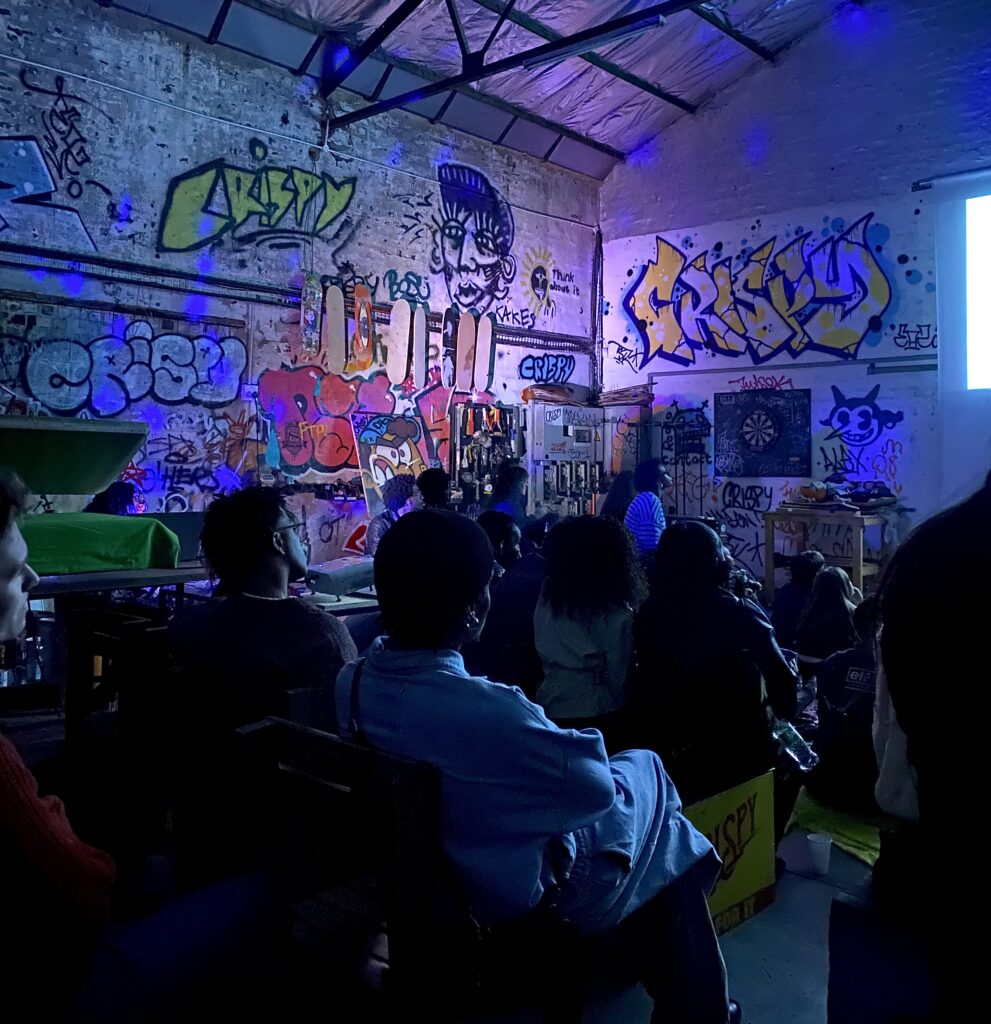
On the evening of August 1, the group debuted their independent screening event, Chosenima, at Crispy Skateboards on 1 Fox Street, Ferreiras Dorp. Tucked away in the four corners of a graffiti-covered warehouse, filmmakers and film lovers settled in a cozy sprawl of pillows and blankets to share an intimate night of cinema.
From intricate hand drawn animations to crafty collages stitched from personal photographs, each film beats with the pulse of its creator. Soft, yet powerful, the films explored delicate moments of queer love, personal struggle and emotional vulnerability.
Picture of the screening at the Crispy Skateboard warehouse. Photo: Jamie Ho.
The initiative was founded by three Wits film and TV alumni who became increasingly disillusioned with the elitism of film festivals. “When we were doing our varsity degree in film and tv, we were taught to make films for festivals,” explains Mrewetyana. “And festivals most of the time have their own territorial needs.”
This sentiment is echoed by Chirambo, who sees the rigid requirements of traditional filmmaking as a trap for young creators. “People try to put in a formula so they can get an Oscar,” she says, “I don’t think that’s what art should be about: trying to please some invisible power in the industry.”
Paton-Levin recalls a personal memory, grappling with the film industry’s exclusivity. “When I was 15, I made a film called ‘Girl’. It was three minutes long. I submitted it to maybe 10 film festivals and I didn’t get into a single one, so I never got a chance to play that movie.” This rejection in turn has fuelled Chosenima’s welcoming ethos. “I want to talk to that kid,” he says, “and be like: ‘Come play your movie, my boy.’”
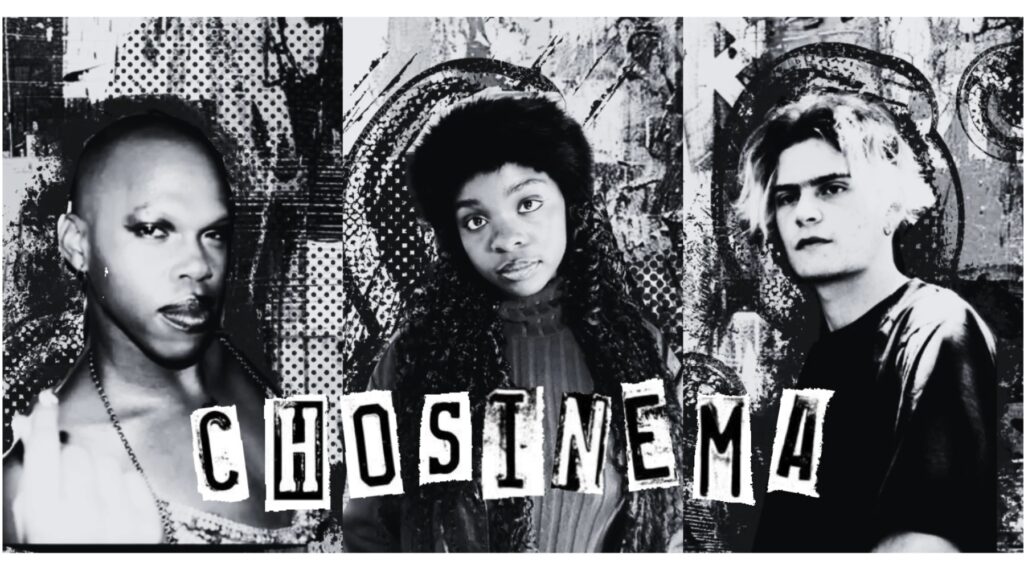
Graphic collage showcasing all three founding filmmakers: Simamkele Mrwetyana, Natasha Chirambo and Scott Paton-Levin. Edited by: Jamie Ho
By giving filmmakers space to experiment and hone their craft, Chosenima breaks away from the rigid expectations of commercial film. Mrwetyana’s own filmmaking reflects this through the genre of Afrobubblegum: a cultural movement that rejects mainstream cinema’s portrayal of the black, queer experience that solely depicts it from the lens of hardship and struggle and moves to celebrating the simple joys of ordinary life.
As the final film drew to a close and people lingered long after, it was plain to see that the future of cinema wasn’t far-off in some distant Hollywood theatre. It was already happening right there on that screen.
FEATURED IMAGE: Hand-drawn graphic of a cassette tape with the words ‘Chosenima’. Drawn by: Jamie Ho.
The programme has changed the lives of thousands, one transplant at a time.
More awareness for liver disease and organ donation is needed to help provide more liver transplantation services.
Accessibility is needed through support from the government and other private medical institutions.
Over 1 million South Africans have been diagnosed with hepatitis – a viral infection affecting the liver – on an annual basis, which can potentially lead to advanced liver disease requiring transplantation.
According to the Liver Centre South Africa, the causes of liver diseases and illnesses can vary from acute liver failure, viral hepatitis or infections, with liver cirrhosis being the lead cause in sub-Saharan Africa.
The programme, established in 2004, is one of the few transplant units in the country and the broader sub-Saharan African region that provides living donor liver transplants in both adults and children.
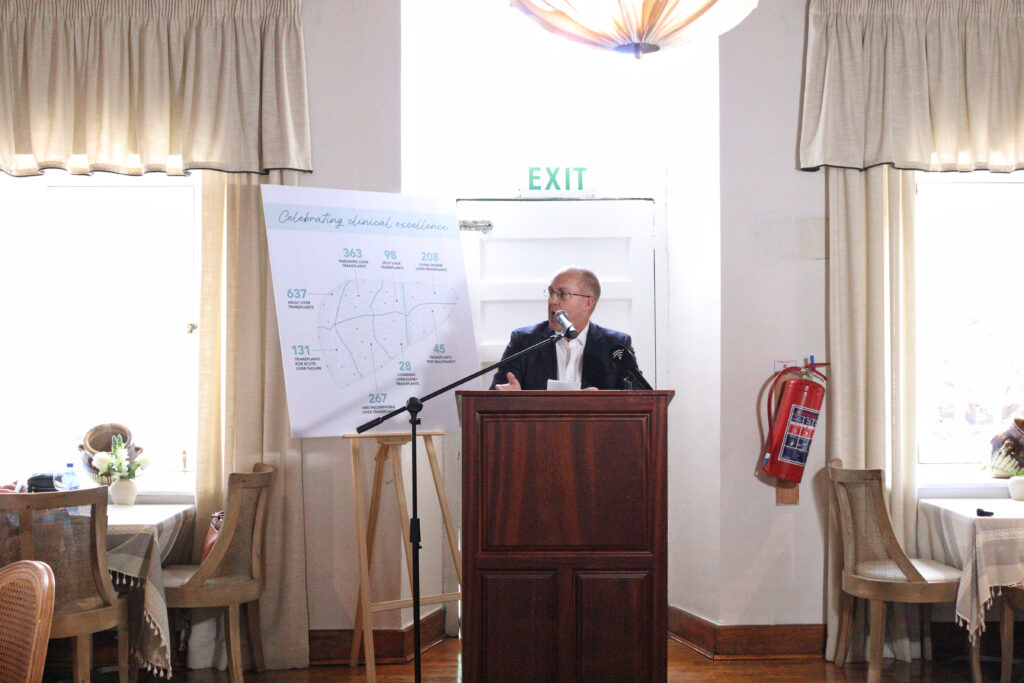
Professor Jerome Loveland addressing attendees of 1000th liver transplant milestone celebration. Photo: Amahle Ngqwemla
Liver transplants are therefore important for removing the affected area and transplanting the healthy organ, to provide patients with a better chance at a longer and healthier life.
Of the 1000 who have gotten a second chance, 637 are adults and 363 children.
Professor Jerome Loveland, the academic head of transplantation at Wits, said none of it would be possible without willing patients and families.
“Where would our tale of hope be without our patients…recipients who entrusted their care with us and those donors whether deceased or living, who gave the gift of life by donating,” he said.
However, there are still concerns around accessibility as many patients do not live in Johannesburg where units like the liver transplant programme are available.
Professor Adam Mahomed – specialist gastroenterologist and hepatologist said, “We have to expand it [training in both public and private sector] and not be limited to just where we are.”
Liver and kidney transplant co-ordinator, Sinesha Moodley, told Wits Vuvuzela that working with public academic hospitals like Charlotte Maxeke helps patients who are unable to travel long distances for treatment.
Professor Charles Sanyika, interventional radiologist, said, “If you are in a big city like Johannesburg, you might know of a transplant unit that might be within reach for you. Yet, someone [doctors and patients] in areas like Matatiele or Qunu [Eastern Cape] might not be aware.”
Attendees at the Wits 1000th liver transplant milestone celebration. Photo: Amahle Ngqwemla
The programme has created relationships with other medical societies on campus like the Wits student surgical society where postgraduate medical students can engage with the clinical training programme.
Although the combination of academic medicine, scientific research, education and healthcare partners has been significant in reaching this milestone, Loveland urges young people to “familiarise themselves with organ donation and be open to considering being a donor should it happen to one’s family.”
FEATURED IMAGE: Professor Adam Mahomed delivering his speech at the Wits Transplant Unit milestone celebration. Photo: Amahle Ngqwemla
Activists protest to challenge mounting xenophobic violence.
Students and academics at Wits University protest against the escalating violence faced by migrants.
Demonstrators urge law enforcement to treat targeted vigilante attacks as hate crimes.
The picket highlights the need to counter xenophobic hate through conversation and empathy.
A group of activists gathered on Friday outside Wits University’s Jan Smuts entrance, staging a picket against the escalating wave of anti-migrant violence and xenophobic intimidation sweeping through local communities.
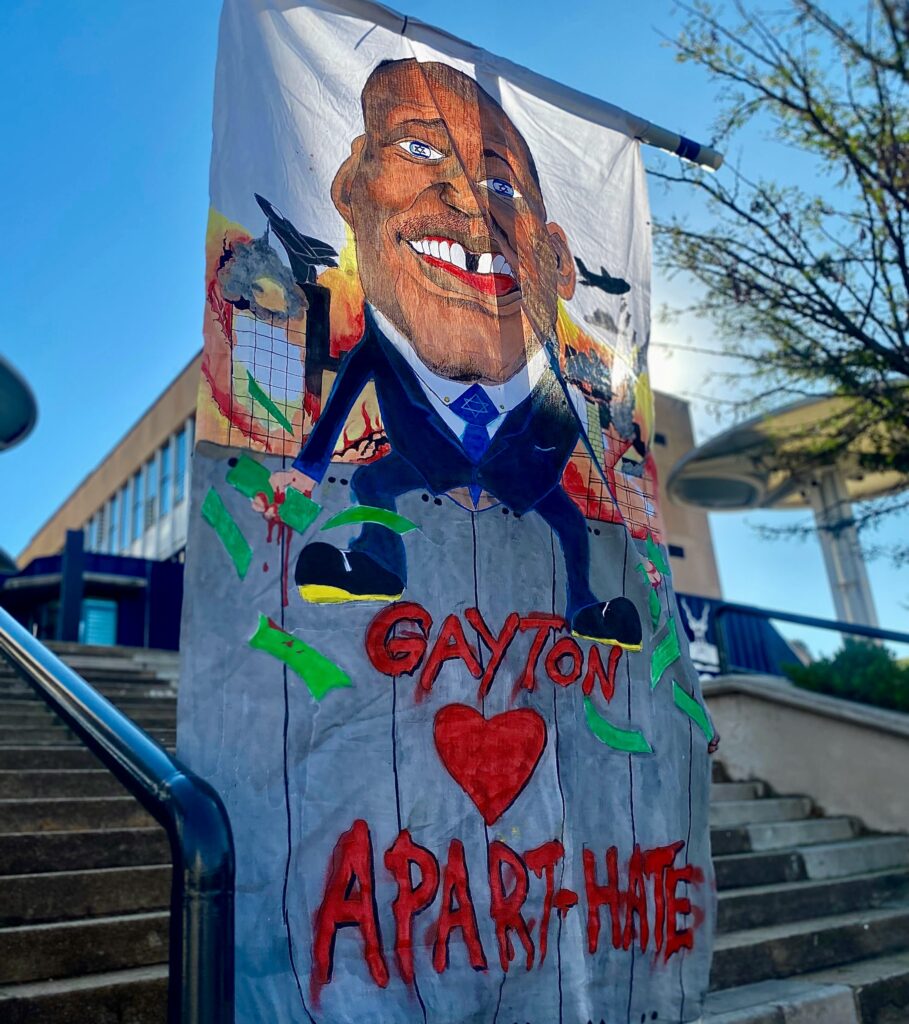
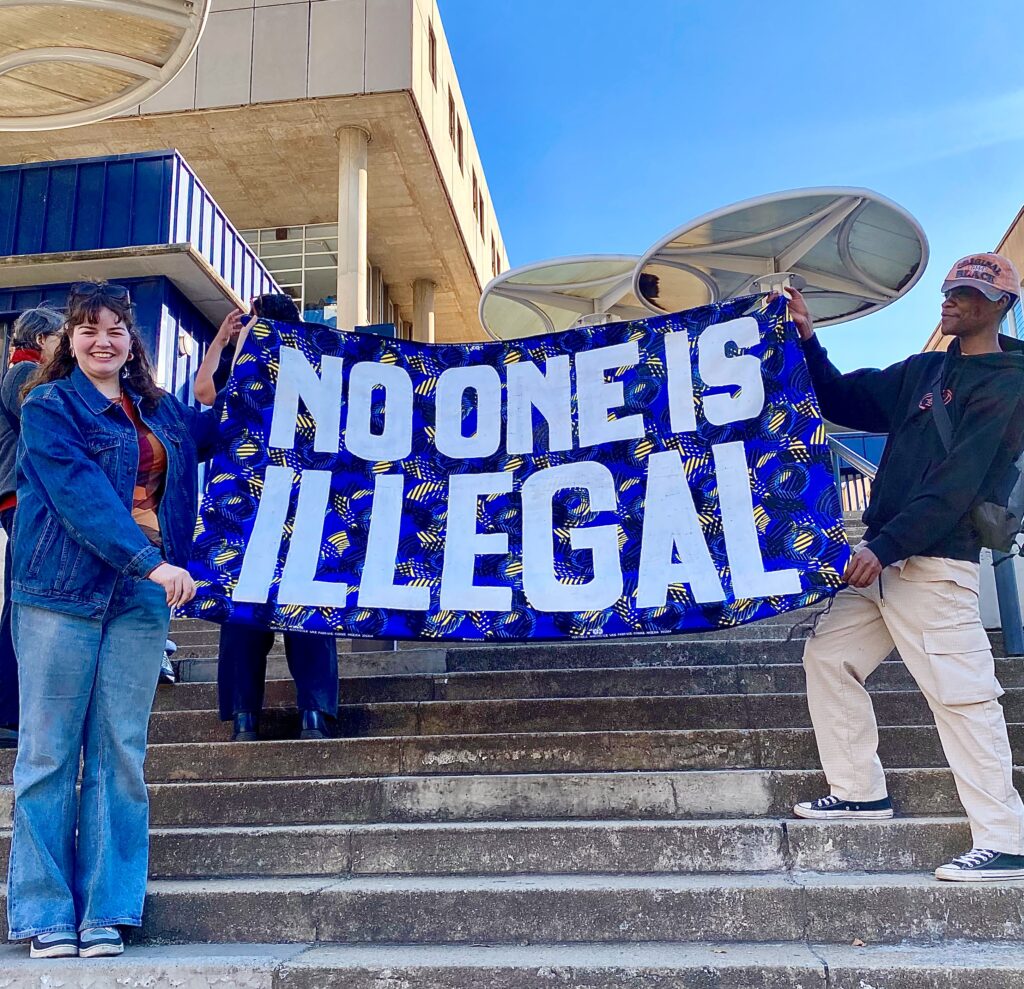
Protesters transformed the university entrance into a focal point for advocacy, displaying prominent banners and hand-painted signs condemning anti-migrant violence. One sign targeted the xenophobic rhetoric of Gayton McKenzie, accusing him of fueling an ‘Apart-hate,’ while others declared, ‘Targeting undocumented migrants is a hate crime’ and ‘No one is illegal.’
This demonstration was organised as a joint effort between Community Arts Mobilisation Project (CAMP), BDS Coalition, Kopanang Africa Against Xenophobia, Wits University Palestine Committee (WAPC) and Siyafana Sonke.
As attacks on migrants grow increasingly hostile, demonstrators call on law enforcement agencies to actively prosecute those inciting violence.
One protestor, Professor Marie Huchzermeyer, said the attacks constitute hate crimes. “This includes not only targeting people on the basis of their culture or country of origin, but also their migration status,” she states.
Dean Hutton, artistic director of CAMP, underscored the role of creative movements in driving social change, noting that artistic expression can “appeal to the soft parts of humans that rhetoric does not touch or move to action.”
Huchzermeyer echoes this view, stating “There is a view in Siyafana Sonke that I am drawn to which tries to win over the adversaries, making it a campaign of love rather than confrontation.”
Picture of two activists holding a banner that reads “No one is illegal”. Photo: Jamie Ho.
The picket is one of several planned demonstrations aimed at countering xenophobic narratives across South Africa. However, with tensions continuing to simmer across multiple provinces, activists acknowledge they face sustained pressure as they push back against organised anti-migrant sentiment.
FEATURED IMAGE: Picture of demonstrator holding a sign reading “Targeting undocumented migrants is a hate crime”. Photo: Jamie Ho.
Every year the days leading up to Africa Day, street vendors start displaying their best cultural outfits because they know the public want to look good for the occasion. However, in the mix of cultural outfits and good cuisine the real meaning behind the celebration of Africa Day gets lost.
Ubuntu, I am because we are, is a traditional African philosophical concept and the foundation on which the Organisation of African Unity (OAU) was built on. The birth of the OAU, now known as the African Union (AU), on May 25, 1963, is the core reason why we celebrate Africa Day. 32 independent African states came together to fight colonialism and promote unity. This day is meant to strengthen the Pan African spirit, celebrate cultural diversity, reflect on progress and rewrite the narrative of Africa’s story.
Sadly, the meaning behind the celebration of this day has been watered down, and it has become just another day of dressing up, eating delicious food or a surge in sales for street vendors. Ntando Makhubu, a journalist at The Post Newspaper, wrote in his article that he spoke to a street vendor in Pretoria who said “For me, for us, it means a boom in business” which highlights how unaware some members the public are about the true intent of Africa Day.
Africa Day is only recognized as a public holiday in a handful of African Union member states, only six to nine of the 54. Mako Muzenda, a former freelance writer for Daily Maverick, wrote an article saying that the “25th of May is about statements and fanfare, not about making serious moves.” Africa Day has become more performative than educational or impactful, and this is another reason why the public’s awareness regarding Africa Day is low.
There are multiple articles promoting Africa Day celebrations that involve food, cultural dances, and dressing up. However, there are few speaking to the core reason of Africa Day and how Africa has grown or managed to rewrite its own story after colonization.
The lack of awareness shows how easily African history and unity can fade from public consciousness when not diligently taught. As the African Proverb says, “Until the lions have their own historians, the history of the hunt will always glorify the hunter.” This means if Africans do not actively preserve, teach and celebrate their own history and the foundation that it was built on, it will continue to be forgotten or overlooked.
Featured Image:Headshot of Chrislyn Majiedt, this week’s editor.
Wits is reopening Campus Lodge to ease postgraduate housing pressure, offering more affordable and dedicated accommodation for seniors.
The postgraduate accommodation has undergone much needed renovations.
The relaunch aims to address growing demand for affordable postgraduate accommodation at Wits.
Student leaders say the move is a step forward, but more support for postgraduates is still needed.
A once quiet Wit’s residence is preparing to welcome students again. The brown and blue building on the corner of De Korte and Station streets, may look the same from the outside but new rooms and common areas await inside.
Campus Housing and Residence Life (CHRL) confirmed that the postgraduate residence had been out of use and was in dire need of upgrades.
According to a post shared on CHRL’s TikTok page, the residence was initially expected to reopen on May 4, 2026, but couldn’t due to delays with equipment deliveries.
Claudine Prim the manager of the Central Accommodation Office, said the reopening is now expected on 18 May to address demand.
Prim said there is an “influx of postgraduate students looking for internal residences.”
The self-catering residence will offer a range of housing options, including studio apartments, two-bedroom apartments, and single rooms with shared kitchens and bathrooms.
Campus Lodge joins existing postgraduate residences including West Campus Village, International House and Wits Junction.
A picture of the entrance of Campus Lodge. Photo by: Sanele Sithole
For many students, the reopening could not come at a better time.
Mahloromela Silas Seabi, an MSc Computer Science student and chairperson of the Postgraduate Association (PGA), said postgraduate students often face limited and expensive housing options.
“University residences tend to be expensive, especially for postgraduate students, who are usually limited to Wits Junction, West Campus Village and International House,” Seabi said. “This gives an opportunity for more affordable postgraduate accommodation.”
He added that postgraduate students are often disadvantaged during residence allocation, as priority is usually given to undergraduate students, particularly first-years.
Seabi said demand for affordable postgraduate accommodation continues to grow alongside rising unemployment and economic uncertainty.
“Many students pursue postgraduate studies partly because of economic pressures, but often there isn’t enough affordable space to accommodate them,” he said.
Beyond affordability, Seabi argued postgraduate students require different support structures from undergraduates.
“A postgraduate space needs to cater for adults,” he said. “Some students are married; some have children. There needs to be communal spaces, lounges, good computing systems and support services that make students feel supported in their research journey.”
He added: “Accommodation is part of building a stronger postgraduate community — a space where students can interact, share ideas, support each other and manage the pressures of research.”
Students interested in applying for accommodation at Campus Lodge can visit the Central Accommodation Office on the ground floor of Solomon Mahlangu House for more information.
FEATURE: A picture of Campus Lodge. Photo by: Sanele Sithole
Former Auditor-General Terence Nombembe takes the chair at Wits Council, bringing a legacy of accountability to the university’s top governing structure.
Terence Nombembe, a key figure in South Africa’s fight against state capture, was appointed Chairperson of the Wits Council on 6 May 2026.
Nombembe has been a member of the Council since 2021, providing him with years of insight into the university’s complex financial and policy landscape.
SRC Deputy President Sibusiso Ngele expressed hope that Nombembe’s history with student leadership will lead to a positive future for the university.
The University of the Witwatersrand (Wits) has officially appointed former Auditor-General and Zondo Commission investigator Terence Nombembe as the Chairperson of the Wits Council. The move, announced on 6 May 2026, brings a world-renowned expert in accountability to the university’s highest governing body.
A legacy of oversight
Nombembe is no stranger to high-stakes governance. Before his election to the Chair this month, he served as a member of the Wits Council for five years, starting in 2021. His professional pedigree is rooted in transparency; he served as South Africa’s Auditor-General from 2006 to 2013 and later as the Head of Investigations for the Zondo Commission into State Capture.
Beyond his public office, Nombembe has held influential roles as the CEO of the South African Institute of Chartered Accountants (SAICA) and served on the board of the WWF South Africa. His career has been defined by a zero-tolerance approach to financial mismanagement, a background that Sibusiso Ngele, Deputy President of the Wits SRC, considers a vital asset.
“He is very familiar with Wits’ proceedings and the Council in general,” Ngele said. “That background is very important for the institution’s future.”
While the appointment of an “integrity expert” carries significant weight, Ngele was careful to define the boundaries of the Council’s power. He noted that while the Council approves major policy, financial rules, and documentation, the day-to-day management of the university remains the responsibility of the Vice-Chancellor.
Ngele noted that Nombembe’s role is primarily one of oversight rather than executive action, emphasising that the entire Council structure, not just the Chair, is responsible for implementing the university’s approvals. “As much as he is [the] Chair, it’s not very executive decisions that he has [to make]; it’s the whole structure that’s responsible for that implementation,” Ngele explained.
Addressing sensitive issues
When asked if Nombembe’s history of holding institutions accountable would change how management interacts with student leadership on sensitive topics, such as campus infrastructure, Ngele admitted the answer is not simple.
“It would be very difficult to answer that question,” Ngele stated. However, he remained hopeful that Nombembe’s track record would lead to a more collaborative environment. “Given his history with the SRC, I think we can really hope for a great future ahead for Wits,” Ngele concluded.
Waiting for the full picture
At the time of publication, other top members of the SRC executive, including President Gilbert Nchabeleng and Treasurer General Sonwabo Mhlahlo, had not yet commented regarding their specific expectations for Nombembe’s term.
As Nombembe settles into the chair, the student body will be watching to see how his high-level expertise in accountability translates into the tangible student experience on the ground.
FEATURED IMAGE: Picture of the Great Hall at the University of Witwatersrand. Photo: Daniella Ripamonti
Wits University reclaims African narratives through the South African premiere of Kancícà at the Digital Dome, proving 8K innovation is a powerful tool for cultural memory and heritage.
The Wits Anglo American Digital Dome is pivoting from its traditional scientific roots to become a hub for African mythology and storytelling.
Kancícà utilises high-end gaming engines and 360-degree 8K animation, positioning Wits at the global forefront of immersive digital production.
The project serves as a “portal” for students to explore the future of work, AI, and African leadership within the global digital ecosystem.
The interior of the Anglo American Digital Dome. Photo: Supplied
While the Johannesburg Planetarium officially completed its R90-million transformation into the Wits Anglo American Digital Dome in November 2024, a recent premiere suggests the facility is entering a new era of cultural significance.
On 8 May, the Dome hosted the South African premiere of Kancícà, an immersive experience that moves beyond traditional astronomy to signal a turning point for how the continent tells its own stories. The launch positions Wits as a leading hub for cutting-edge digital experiences rather than a mere consumer of Western technology.
Dr Moumita Aich, instrumental in the Dome’s research integration, notes that 8K full-dome technology allows for a “shared emotional experience,” emphasising that this technology creates new forms of public engagement while preserving heritage.
“The scale and detail make African histories and traditions feel alive and immediate,” says Aich. “In this way, the Dome becomes more than a scientific space: it becomes a place for cultural memory and reimagining African narratives through immersive storytelling.”
Festival director Alby Michaels explains that Kancícà focuses on creating work “by Africans, for Africans, and especially through an African lens”. The production uniquely utilised Unreal Engine, a high-end gaming engine, to render 2D and 3D animation for the full-dome experience. “It opens up the doors for more experimentation… so that we can become the leaders in our own narratives,” Michaels says.
For Wits students, Michaels sees the Dome as a laboratory for the “future of work”. “I’m hoping an engagement like this will open a little door, even a portal, for imagining the future in a better way for all of us,” he told Wits Vuvuzela.
Audience members from outside of Wits, Constant Volschenk and Bongiwe Ndulula, highlight the immersive nature of the dome, which relies on a 35-degree viewing angle in reclining seats. “The main scenes are in front of you, and the surrounding is the background of the scene,” says Volschenk. Ndulula was particularly moved by a spiritual scene involving a boat in a storm, noting that the 360-degree view offers a vital shift in perspective.
Following its premiere, the programme is now open to the public at the Wits Anglo American Digital Dome from 25 April to August 2026. As Aich suggests, if you have not yet watched this wonderful show, it is a necessary gateway into the future of African digital heritage.
FEATURED IMAGE: Exterior picture of the Anglo American Digital Dome. Photo: Daniella Ripamonti
University of the Witwatersrand (Wits) Women’s Rugby showed early-season resilience and unity despite a 27-0 opening defeat to Zondi Women’s Rugby club on Saturday.
Wits Women’s Rugby opened their 2026 league season with a 27-0 defeat to Zondi Women’s Rugby Club at Wits Rugby Stadium.
Despite the loss, Wits showed resilience, strong defensive organisation, and growing team unity throughout the match.
The match reflected the continued growth of the Wits Women’s Rugby programme since its establishment in 2019.
The Wits Women’s Rugby team opened their league season at Wits Rugby Stadium on Saturday May 9, 2026, producing a spirited performance against a physically dominant Zondi side in a match that tested both their structure and resolve.
From kick-off at 13:20, Wits showed intensity at the breakdown, organised defensive sets, and confidence in possession despite sustained early pressure from the visitors. Zondi controlled the territory for much of the first half, scoring their first try midway through after winning a turnover inside Wits’ 22. Wits responded with improved defensive organisation and stronger carries, matching Zondi’s physicality in several exchanges. Zondi added another try just before half-time to take a 10-0 lead into the break, but the Wits team continued to contest every phase with discipline and commitment.
Their strongest moments came in defense, where disciplined communication and collective organisation reflected the side’s growing cohesion. Even during difficult phases of play, players responded to the coach’s instructions, quickly regrouping after errors and maintaining their defensive structure under pressure.
Pinned deep in their own half on several occasions, Wits absorbed repeated phases of pressure through committed tackling and strong on-field communication. The forward pack showed determination in the scrums, while ball carriers consistently worked hard to gain metres in contact despite Zondi’s physical dominance.
Wits Women’s Rugby forwards contest possession during a scrum against Zondi in their opening league fixture at Wits Rugby Stadium on Saturday. Photo: Alice Dhlamini
The second half brought renewed energy from the home side. Substitutions lifted the tempo, defensive organisation improved, and Wits showed greater confidence in building play. A yellow card during a crucial stage shifted momentum further in Zondi’s favour, but Wits still maintained their intensity and rate throughout.
Even as the scoreline widened, the home side continued fighting until the final whistle, earning respect from supporters and coaches alike for their commitment.
Captain Nikitha Dlabane, a final-year biomedical sciences student, said the performance reflected the growing unity developing within a relatively inexperienced Wits side, explaining that despite the pressure of the occasion, the players “stayed together as a team” and continuously encouraged one another throughout the match. She added that the side drew confidence from strong scrummaging, effective carries, and organised defensive folding, although she acknowledged that there is still room for improvement as the squad continues to develop.
“This game was tough because a lot of our girls are very new,” she said, “but we stayed together as a team. We encouraged each other all the way, and I feel like that is what makes the team.”
Dlabane also highlighted the technical aspects that gave Wits confidence during the match.
Head coach Winsdon Grootboom praised his side’s “never-say-dying attitude” despite the defeat, highlighting the determination shown by a squad that included “six or seven women” making their first rugby appearance. Although he admitted that “pressure creates mistakes” at crucial stages of the match, Grootboom said he was encouraged by the way the players “fought until the end” and continued trying to execute the structures and patterns they had worked on in training.
The Wits Women’s Rugby team warm up ahead of their season opener against Zondi Women’s Rugby Club at Wits Rugby Stadium on May 9, 2026. Photo: Alice Dhlamini
Wits player Mamokgopane Tsotetsi, a second-year industrial engineering student, said preparation played an important role in helping the team remain composed ahead of the fixture, with the squad focusing on “scrums, structures, lineouts, and all the basics” during training. She added that constant communication and encouragement on the field helped the side maintain its intensity during difficult passages of play.
Beyond the result, the fixture reflected the growing visibility of women’s rugby at Wits, with supporters highlighting the significance of women’s presence in a traditionally male-dominated sport. Second-year Bachelor of Arts student in South African Sign Language and political studies, Tshimangadzo Sigoba, described it as “refreshing seeing women taking up space in rugby,” while supporter One Segano noted that women’s rugby is gaining greater exposure and media attention on campus.
The crowd responded loudly throughout the afternoon, particularly after Zondi’s opening try, as tension built with Wits searching for opportunities to break through defensively. A Wits injury late in the match added further intensity to an already physical encounter, while the home side’s number one forward stood out with powerful ball carries and strong work around contact areas.
While the scoreboard may not have favoured Wits, the match stood as a testament to the team’s rapid progress and the rising profile of women’s rugby at the university since its establishment in 2019. As the season unfolds, the Wits Women’s Rugby team looks set to continue inspiring players and supporters alike with their unwavering determination.
A graphic highlighting Wits Women’s Rugby’s season opener against Zondi Women’s Rugby Club reflects the team’s resilience, unity, and determination despite a challenging start to the season. Graphic: Emmanuel Molebatsi
FEATURED IMAGE: Wits Women’s Rugby players chase down a Zondi ball carrier during their league opener at Wits Rugby Stadium on May 9, 2026. Despite a 27-0 defeat, Wits showed defensive resilience and growing cohesion throughout the match. Photo: Alice Dhlamini
Wits E-Hub Market Day turned the Library Lawns into a lively marketplace where students put their entrepreneurial feet first.
Wits E-Hub Market Day gives student entrepreneurs an opportunity to sell products, test ideas, and build visibility on campus,
With South Africa’s youth unemployment rate at 46.1%, more students are turning side hustles into viable income streams while still studying.
Student-led businesses like Ilanga Coils show how personal experiences are being turned into scalable ventures, supported by campus entrepreneurship spaces.
Image of crochet handbags by Eddies Craft
Decorated stalls lined at the Wits University Library Lawns as students moved between vendors selling jewellery, bags, new tech innovations, candles, henna art and sweet treats. Behind one table, third-year year Accounting Sciences student Tassy Mabuza was already close to selling out of his, Barebites, sweets from his business, Sweetplug co.
The Wits Entrepreneurship-Hub (E-hub) supports students interested in starting and growing businesses. Based at the Matrix Building on campus, the hub provides networking opportunities, pitching sessions, market days and co-working spaces for collaboration and ideation. Faith Njoko, project co-ordinater at E-Hub,says through weekly business events and entrepreneurship programmes, they help students gain practical business experience outside of the classroom. A vital bridge between academic study and the realities of running a business for many students.
Through initiatives such as the recent Market Day, students can test products, interact directly with customers and build brand visibility within the campus community.
Beyond the lively atmosphere, the event reflects a growing culture of entrepreneurship among young South Africans and students navigating a difficult economy and rising youth unemployment. According to Statistics South Africa, the country’s official unemployment rate rose to 32.9% in the first quarter of 2025, while youth unemployment among people aged 15 to 34 reached 46.1%. Against this backdrop, side hustles are becoming more than temporary trends for students. From haircare brands and food businesses to fashion and creative services, many young people are using entrepreneurship to create opportunities for themselves.
This growing entrepreneurial culture is largely solution driven, with students identifying everyday problems and developing businesses that respond to real needs within their communities.
Image of iLanga Coils Hair Products
One of the student entrepreneurs at the market, Nomusa Khambule, turned a personal struggle with natural hair into a growing business while completing her master’s degree in management specialising in entrepreneurship and new venture creation. Khambule’s Ilanga Coils was born in 2022 after she struggled to find products that worked for her own hair. Drawing from her science background, she started experimenting with ingredients and formulas before officially launching the business in 2023. “What started as solving my own problem became something much bigger once people started responding positively to the products,” she said.
Since then, the brand has expanded beyond campus markets and recently collaborated on a campaign with Absa, a milestone Khambule said validated the potential of student owned businesses. However, balancing postgraduate studies and entrepreneurship has not been easy. Khambule rejected the idea of “perfect balance”, saying that running a business while studying requires constant prioritisation. “Some days school needs more attention, and other days the business comes first,” she explained.
Despite the challenges, Khambule said physical market events remain important because customers can directly experience the products before purchasing them. “For haircare especially, people want to touch, smell and try products before buying them,” she said.
Additionally, she said that “markets help build trust and visibility.” Although Ilanga Coils is now profitable, Khambule said scaling production remains one of her biggest hurdles as she still operates from her kitchen. She hopes to eventually expand the brand into a recognised African cosmetics company.
Image of Snowflicker Studios Candles
As the market slowly began to quiet down, students packed away the last of their products after a day of sales and networking. For many of them, the businesses displayed on the library lawns are more than temporary side hustles, they mark the beginning of long-term ambitions.
FEATURED IMAGE: Image of Tassy Mabuza, founder of Sweetplug co at the E-Hub market showcase. Photo: Nqobile Mtshali
Winnie Madikizela-Mandela, Albertina Sisulu, and Adelaide Tambo are often remembered as women who stood behind great men while their husbands were imprisoned, exiled, or silenced by Apartheid. However, that memory is incomplete.
These women are not simply supporting figures in South Africa’s liberation story; they are central characters in it. They were organisers, political actors, caregivers, and leaders who carried families, communities, and, in many ways, the struggle itself on their backs.
The new Netflix documentary The Trials of Winnie Mandela offers a deeply moving portrait of Mama Winnie — from her youth to her marriage, to becoming one of Apartheid’s fiercest opponents, and later enduring public scrutiny during the Truth and Reconciliation Commission. What the documentary captures so powerfully is not just Winnie Mandela’s politics, but her resilience.
When Nelson Mandela was imprisoned for 27 years, Winnie kept his name alive. While the apartheid state tried to crush resistance, she remained visible, vocal, and defiant. At home, she was left to raise two daughters under immense pressure. In public, she became the face of resistance. In private, she still had to be a mother, provider, protector, and head of the household. She was expected to be everything.
That reality is not unique to Winnie Mandela. It is the lived reality of millions of South African women today.
According to Statistics South Africa, approximately 6.1 million households or 37.9% of all households in South Africa were headed by women in 2018, with female-headed households being most common in rural provinces such as the Eastern Cape (46.9%), Limpopo (45.8%), and KwaZulu-Natal (45.0%). More recent figures show that by 2024, that number had risen to 42.4% of households nationwide, meaning more than two in every five South African homes are led by women.
This is not a small social trend; it is the backbone of South African society. And yet, despite carrying homes, raising children, and often being the sole breadwinners, women continue to receive little recognition for their labour. Their sacrifices are normalised. Their struggles are overlooked. Their strength is expected.
Instead of appreciation, many are met with criticism, scrutiny, and impossible standards much like Winnie Mandela herself, whose legacy is too often reduced to controversy rather than the weight of what she carried.
A graphic of resilient women. Graphic and photos: Sanele Sithole
I think of women like my own mother, and countless others whose names will never appear in documentaries or history books, but whose work has held families together against impossible odds. These women build homes from very little. They sacrifice quietly. They endure endlessly, yet we rarely tell their stories in full.
South African history has long celebrated men as heroes, while women are remembered as wives, widows, or footnotes to male greatness. Women were never standing beside history; they were making it.
The question is no longer whether women deserve recognition.
The real question is: when will we finally honour the women who have been carrying this country, often alone, all along?
FEATURED IMAGE: A graphic of resilient women. Photo by: Sanele Sithole
At Wits, decolonisation remains incomplete as English dominance continues to limit true multilingual inclusion in learning and assessment.
In 2015, during the #FeesMustFall movement, South African universities were forced into a reckoning that extends beyond protest and policy reform. At the University of the Witwatersrand, this moment led to a language policy that introduced English, isiZulu, Sesotho, and South African Sign Language (SASL) into its academic framework. Yet, as Wits advances through its 2023 Strategic Framework, a plan guiding the university’s goals around transformation, inclusion, research, and global competitiveness, though a contradiction remains: the institution speaks of decolonising knowledge while leaving the language of learning largely unchanged.
Decolonisation without linguistic transformation is incomplete. A curriculum may diversify its content but if access to knowledge remains dependent on English, exclusion is not removed but relocated into the medium of instruction. This dynamic can be understood through what Miranda Fricker terms epistemic injustice, which is a condition in which certain forms of knowledge are undervalued because of the language in which they are expressed. In this context, students are not excluded from knowing, but from having their knowledge fully recognised unless it is articulated in English.
As Steve Biko warned, “the most potent weapon in the hands of the oppressor is the mind of the oppressed”, a condition sustained not only through content, but through the very language in which knowledge is delivered and recognised. His insistence that education must cultivate critical consciousness rather than reproduce subordination sharpens this argument: when students are compelled to translate their intellectual lives into English to be legible, the system does not liberate thought; it disciplines it.
This is not abstract. In lecture halls across Wits, language shapes how students learn and are assessed. In science and health sciences courses, students encounter, process, and are tested on complex ideas in English, even when understanding often begins in other languages during peer discussion. Learning in familiar languages can improve comprehension, participation, and confidence, reduce cognitive load and also allow students to engage more fully with complex material.
In engineering tutorials, students switch to isiZulu or Sesotho in order to unpack difficult concepts, only for that cognitive work to disappear in formal assessment, where only English counts. In Sociolinguistics, this is understood as code-switching, a skilled practice rather than a deficiency. What appears as hesitation is, in reality, intellectual labour: students are learning disciplinary content while translating it across linguistic systems; a demand not equally placed on all. They are not struggling with content; they are performing unpaid intellectual labour to make that content legible within a single dominant language.
Wits visibly acknowledges four languages on campus signage, raising questions about the absence of South Africa’s other official languages in learning and assessment. Photo: Alice Dhlamini.
This extends beyond technical disciplines and reflects a broader experience across faculties where language shapes who can fully access knowledge.
As third-year industrial engineering student Tshedza Tsiololi explains, “some engineering terms, such as dynamic system or torque, do not translate easily into everyday language… This makes learning time-consuming, especially in the absence of accessible translation tools”. This translation process carries material consequences. When comprehension is delayed, so too is performance, affecting assessment outcomes, time to completion, and the cost of education. Language barriers are therefore not only pedagogical concerns but structural inefficiencies.
The result is not a lack of understanding but a delay in it. Students carry an invisible cognitive burden, constantly translating their thinking. Language cannot be treated as a secondary issue in curriculum reform.
Language shapes how knowledge is accessed, processed, and recognised. When a medical student must translate reasoning to communicate with a patient, or an engineering student is assessed in a language that can flatten thinking processes, language becomes a gatekeeping mechanism. Yet the persistence of English is often justified through its role in global academia. While not unfounded, this argument is incomplete. Countries such as Germany, Japan, and South Korea demonstrate that strong language production can occur in national languages alongside English. Multilingualism is not a barrier to global relevance but a source of intellectual flexibility.
Wits’ current approach reflects both progress and limitations. As noted by the Head of African Languages, Dr Soyiso Khetoa, “the university’s focus on English, South African Sign Language, isiZulu, and Sesotho is informed by demographic research”. Institutional efforts, such as language-learning applications, support isiZulu acquisition. However, this raises a deeper question: what happens to students whose linguistic identities fall outside these dominant categories?
A comparative perspective complicates this further. In Tanzania, the adoption of Swahili under Julius Nyerere aimed to democratise education and strengthen national identity. This model significantly expanded access and participation at foundational levels, enabling students to learn in a familiar linguistic context. While access improved at foundational levels, challenges emerged in higher education, including limited technical terminology. This illustrates that linguistic transformation is both possible and complex, requiring sustained commitment rather than selective implementation.
Accommodation based on geographic prevalence may be efficient, but it is not neutral. It creates new margins. Students who speak other African Languages remain excluded, not because their languages lack value, but because they fall outside institutional feasibility. In this way, multilingualism risks becoming selective rather than transformative. South Africa’s own history offers parallels. Institutions such as Stellenbosch University and the University of Pretoria have shown that full academic systems can be developed in Afrikaans, raising the question of why similar levels of investment have not been extended to African languages in a democratic context, while also revealing how language can function as both inclusion and exclusion.
Bert van Pinxteren argues that expanding the language of learning is expensive and complex. “Developing academic terminology in African languages, training staff, and redesigning assessments require time and resources”, he notes. These challenges are real, but difficulty is not a justification for permanence. Technology tools, from translation software to AI-assisted terminology development, are reshaping what is feasible. The limitation is increasingly institutional: whether universities are willing to invest in systems that reflect their students’ realities.
When African languages are used informally for explanation but excluded from formal assessment, universities reinforce a hierarchy where legitimacy remains tied to English. Inclusion becomes conditional.
Restricted-access signage at Wits mirrors ongoing debates around who is fully recognised within the university’s linguistic and academic spaces. Photo: Alice Dhlamini.
The 2015 policy was a meaningful step, but without implementation, it risks becoming symbolic. If students must translate their intellectual lives into one dominant language to be recognised, decolonisation remains incomplete. The issue is the distinction between symbolic and material transformation: policy signals intent, but assessment determines whose knowledge is legitimised.
A serious commitment to transformation does not require abandoning English. It requires building multilingual academic systems where English is one of several legitimate languages of learning. This could include bilingual modules, expanded language support, and discipline-specific terminology across a broader range of African languages.
And perhaps the most uncomfortable question is this: must students once again protest to be heard? The 2015 moment demonstrated that institutional change often follows student pressure. If language remains a barrier, it raises concerns about whether dialogue alone is sufficient.
Decolonisation, if it is to mean anything, must be a dialogue, not only between institution and student, but between languages themselves. The question is not whether English will remain at Wits; it will. The question is whether students will continue to think in multiple languages but be recognised in only one language. Until students can be recognised in the languages in which they think, decolonisation remains a translation exercise, not a transformation. More fundamentally, it is whether Wits is willing to move from being a university that is merely in Africa to one that is truly of Africa.
FEATURED IMAGE: A student points toward an emergency assembly point at Wits, symbolising urgent questions around language, access, and transformation in higher education. Photo: Alice Dhlamini.
In episode six of We Should Be Writing season 7, the team unpacked the evolution of music as a form of expression and protest, through four decades in the South African context. The episode explores the journey of South African music and its consumers from the 80s, 90s, early 2000s and contemporary listeners. From the […]