The Pretoria Correctional Service Museum displays a blood-stained cloth from a flogging and a wooden “whipping triangle” used for corporal punishment.
At the Gallows, 3,500 names are engraved on memorial slabs, including Solomon Mahlangu and the Vulindlela family, executed by the apartheid state.
I thought I was going on a class tour. At Kgoši Mampuru II, I realised I was walking into South Africa’s past.
We visited two museums that tell two sides of the same story. The first was the Pretoria Correctional Service Museum, which shows how the prison system was run. The second was the Gallows Memorial Museum, where 3,500 people were executed. I walked in as a student but I left carrying weight I didn’t expect.
The two museums work together. The Pretoria Correctional Service Museum shows the mechanics of control, how people were fed, clothed, worked, and punished. The Gallows shows the final price of that control, 3,500 lives ended by the state.
We began at the Pretoria Correctional Service Museum. Correctional officer Dimakatso welcomed us and explained that phones and cameras were not allowed inside, and then she guided us through the exhibits. We saw wood carvings and sculptures made by inmates.
The punishment displays were the most difficult part for me. A wooden “whipping triangle” showed where inmates were tied for corporal punishment, and stun belts were used to immobilise them. When I saw a white cloth stained with blood from a flogging, I gasped.
A contraband section held makeshift knives shaped from spoons and dagga pipes, which is why Dimakatso said metal dishes have been replaced with plastic. She added that inmates can study and work, although the pay is little. We ended the tour with a look at a replica of Nelson Mandela’s cell.
At the Gallows, we handed our devices before Mr Kgomo took over. His tone was firm and commanding, stating that we were privileged to be there. He showed us engraved memorial slabs with 3,500 names of the hanged, including political prisoners like Solomon Mahlangu and the Vulindlela family, and I kept asking myself how an entire family could be executed.
The first room we entered was a church beneath the hanging chamber. On execution days, bodies were lowered by 9am for families to view in closed coffins, and relatives were told “he’s no more.” I hate coffins, and my heart raced as I understood how easily dignity was stripped away.
We then climbed the 52 steps to the gallows where prisoners took their last walk. As we ascended past dark images and words on the walls, my heart pounded and I sighed with every step because the weight of what happened there felt physical.
At the top, photographs of the hanged made my eyes fill with tears that didn’t drop, and when I saw the seven ropes in the chamber my heart sank while Mr Kgomo described each stage of the process. I realised that living now is a privilege we take for granted.
We left in silence. Everyone was speechless.
As a journalism student, I cannot separate theory from place anymore. I walked the 52 steps. Visits like this should be compulsory for us, because we cannot report on justice or the law fairly if we do not face the past physically. I arrived curious but I left sad, shaken, and more responsible.
FEATURED IMAGE: A portrait of Khutso Ngwatoana. Photo: Alaistar Russell
Wits Journalism students step inside Kgosi Mampuru II Correctional Centre, confronting the haunting legacy of South Africa’s penal history.
Wits Journalism students visited Kgosi Mampuru II prison and learned about inmate survival, punishment, and daily life behind bars.
They climbed the 52 steps to the gallows, reflecting on the country’s execution history and its human cost.
The gates at Kgosi Mampuru II don’t simply close, they announce an ending. It is a metallic finality that vibrates in your marrow, leaving an unshakable awareness of what it means to be confined, and the fragile privilege of walking free. Exactly at 10:42 am on April 15, 2026, 17 of us from the Wits Journalism programme stepped through that threshold. We traded lecture halls for a space defined by the physics of control. As a student journalist, I am trained to observe, but here, the walls watch you back. An involuntarily warning began to ring in my ears, an indirect message from the architecture itself, “Do not come here.”
Our tour guide, Dimakatso, unveiled a world of “jail language” and survival. She described “two full chickens”, prison slang for the two boiled eggs served with pap at 14: 00 pm which would be your last meal until the next day. She showed us how inmates creatively hollowed Sunlight soap to hide cell phones. In the era of AI, these inmates use primitive ingenuity to stay connected. Sitting on benches crafted by prisoners, I felt a sting of irony, for someone like me, only taught to build cardboard bridges at school, these prisoners learn to build from scratch to survive, and gain skills that might one day free them from that space.
The atmosphere turned clinical and cruel when Dimakatso introduced the “Triangle Step”. She described hot water-soaked wood being bent during a beating, making my body involuntary cringe. My mind flashed to the moment of impact, feeling the sting of a system that once relied on pain as its primary language. Hanging on the triangle step was a bloodstained cloth, an enduring reminder of punishment inflicted on the condemned. I cannot omit this, as it questions what I was never taught in high school. This history was deliberately left out, it sparked questions about justice, pain, and how history is curated.
Next, we moved to the gallows. Mr. Kgomo told us to “fasten our emotional seatbelts”, a fitting warning. We transitioned from the museum of survival to the tomb of execution. I stood before the names on the wall, thinking of Section 11 of the South African Constitution: the right to life. I felt a wave of relief; the 1996 abolition of the death penalty had ended this brutal form of justice. Yet, as we approach April 27, Freedom Day, the irony burns: this day marks our liberation, but these gallows mark how many never lived to see it. Yet, the past is not distant. Between 1902 and 1989, roughly 3,500 people were executed, a grim reminder of state-sanctioned brutality. As I ascended the 52 steps, I imagined faces, some praying, some screaming, others singing hymns, climbing those heavy stairs. By step 52, my chest felt like it was crushed, a tear slipped unnoticed, masking my professionalism.
At the top, the brutality became clinical, detached from emotion. I learned how a prisoner’s BMI (body mass index) was used to select the correct noose, and how a pulse after the fall meant the execution was not complete. We stood where Solomon Mahlangu, whose blood nourished the “tree of freedom”, once stood. As the gates hissed shut behind us, and warnings lingered, I became haunted. The 52 steps symbolise not only punishment but a society still grappling with its past, a past where thousands paid the ultimate price between 1902 and 1989. Is this reflection of the gallows? It is a mirror that confronts the dark architecture of consequence, forcing us to question the true weight of justice and the whispers of history that echo through these steps.
19 : 00 pm, execution time starts. Photo by: Emadul Islam Akash. (Pexels)
We celebrate Freedom Day on April 27, 2026, however, the 52 steps remind us that freedom was counted out in bodies long before it was counted in ballots.
FEATURED IMAGE: Journalism and Media Studies Honours students from Wits University enter Kgosi Mampuru II Management Area. Photo by: Alice Dhlamini.
Walking into The Gallows Museum at Kgosi Mampuru II Correctional Centre, the first thing that hits you is not a sound, but the absence of it. We fell into a heavy, suffocating silence. It did not feel right to speak. The atmosphere was tense, sombre, and thick with a history that was never meant to be heard outside these walls. We were not just touring a building; we were retracing the final, mechanical minutes of 3500 lives.
The dehumanisation was in the details. The “procedure” began at 06:50 AM, and by 07:30 AM, it was over, fast and efficient. Life was extinguished with the punctuality of a business transaction. A wave of nausea hit me hearing how seven people were hanged at a time, their bodies later hosed down with a power washer, like equipment in a slaughterhouse, because the state could not be bothered to afford them individual dignity. They were shoved into coffins, and that coffin was shown to families for mere seconds to hide the trauma of the noose and then buried in unmarked graves. They did not just want these men dead; they wanted them erased.
It was a place designed for the mass production of death, a literal “human abattoir.” The ropes had metal rings to ensure the break was instantaneous, a cold, metallic “mercy” in a room that lacked a soul. If a pulse survived the drop, they were simply hoisted back up and hanged again. It was a loop of terror. Our guide explained that some in charge, like warden Christiaan Barnard, openly enjoyed the work because of how well it paid, even believing he would be forgiven because he was “just doing his job.” To keep the killings quiet, they even soundproofed the room to muffle the thunder of the trapdoors hitting the frame.
We climbed the 52 steps in the shadow of painted silhouettes, counting them one by one. I thought of the prisoners who would sing holy songs on their way up, their voices a haunting contrast to the “last request” they were offered at the top. It felt like a final, cruel joke to bark those requests in Afrikaans, a language many did not even understand, moments before they were led into the room where the ropes awaited. It was in this final room, the gallows, that I saw the plaque for a 22-year-old Solomon Mahlangu, barely younger than I am, who once stood on this same trapdoor.
This experience hit me with a force I did not expect. I realise now that we talk about “liberation” as a concept, but we rarely look at the apparatus that tried to crush it. Our democracy is not just built on grand speeches and signed documents; it is built on the silence of these men and the sacrifice of leaders like Solomon Mahlangu, whose words remain painted on these walls: “My blood will nourish the tree that will bear the fruits of freedom.” Standing where the hearse once sat, permanently waiting, I realised that as Freedom Day approaches, I carry the weight of those 52 steps with me.
We can never truly understand our present if we forget the system that tried so hard to wash this history away. I pray that the souls who passed within those walls have finally found the eternal rest and peace that was denied to them in life.
Power outages at Wits’ International House disrupt postgraduate students’ study routines and raise safety concerns amid aging infrastructure and poor communication.
Recurring power outages at International House since March 2026.
Residents face interrupted study routines and safety risks, particularly at night when corridors are left in darkness.
Limited communication from management and delays in forming a House Commitee or upgrading infrastructure have left residents uncertain and frustrated.
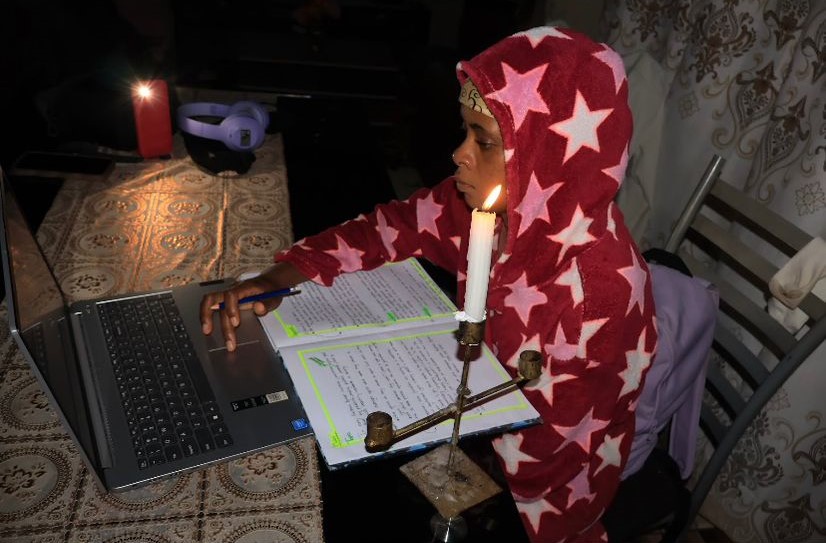
Persistent power disruptions at Wits’ International House residence are straining the building’s infrastructure and backup systems, compelling postgraduate students to relocate late at night to continue studying.
The outages began in early March 2026, with some residents reporting disruptions occurring two to three times a week. During these periods, the residence relies on a generator shared with Sunnyside Hall, limiting available backup power and leaving sections of the building without electricity.
Students say the impact extends beyond inconvenience. Darkened corridors and shared spaces have forced some residents to either remain in unsafe conditions or move across campus late at night to access functional study areas.
Postgraduate resident Ireen Masemula, who is pursuing a BEd honours in language education, described the disruptions as exhausting and unsettling. “The lights go out at around 8 p.m. sometimes, and I only return from the library around 1 a.m.,” she said. “It’s not safe, especially as a young woman. I have to go to the library to work, and I struggle to study in such an environment.”
Studying by candlelight during outages at Wits’ International House. Photo by: Alice Dhlamini.
According to Tyson Mnisi, a security officer at International House, the outages are not solely linked to external power-supply issues. He explained that a combination of external disruptions and internal electrical faults contributes to recurring failures.
“Sometimes it’s just a minor cut, but often it’s an internal load,” Mnisi said, adding that high-wattage appliances such as microwaves and heaters place significant strain on the system. “You’ll have students making popcorn in their rooms, and suddenly the whole circuit trips. The infrastructure is just not built to accommodate such levels of demand.”
Tshiamo Modise, an undergraduate student and a student employee in the residence’s maintenance team, said communication gaps have intensified the situation. During a recent incident involving multiple generator failures, she used her own airtime to contact management after the building’s Wi-Fi and telephones went down.
“I reached out to management for answers, yet I was met with silence and no formal explanation”, Modise said, noting that outages have also resulted in spoilt food and unsafe conditions in shared kitchen spaces.
Residents say the recurring disruptions point to deeper structural concerns within the residence, as temporary fixes have not addressed the underlying causes.
Shanon Smit, a handyman at the residence, suggested that establishing a formal House Committee could strengthen communication between residents and maintenance teams, particularly in reporting faulty appliances before they place additional strain on the system.
Despite these suggestions, students say little has changed, leaving them to adjust their routines individually while managing ongoing disruptions.
Attempts to obtain comment from residence manager Bhekizizwe Nkosi were unsuccessful at the time of publication.
For now, International House residents remain caught between different explanations and ongoing infrastructure pressures, with no clear timeline for lasting improvements.
Residents say that without urgent infrastructure upgrades, the ongoing outages will continue to compromise both the safety and basic living conditions within the residence.
FEATURED IMAGE: International House Residence. Photo by: Alice Dhlamini.
The Atlas of Uncertainty offers a profound perspective on African migration, redefining our understanding of belonging.
Atlas of Uncertainty opens at Wits Origins Centre.
Various artists, writers and researchers celebrated their work during the opening ceremony.
The exhibition holds significance in today’s divided society.
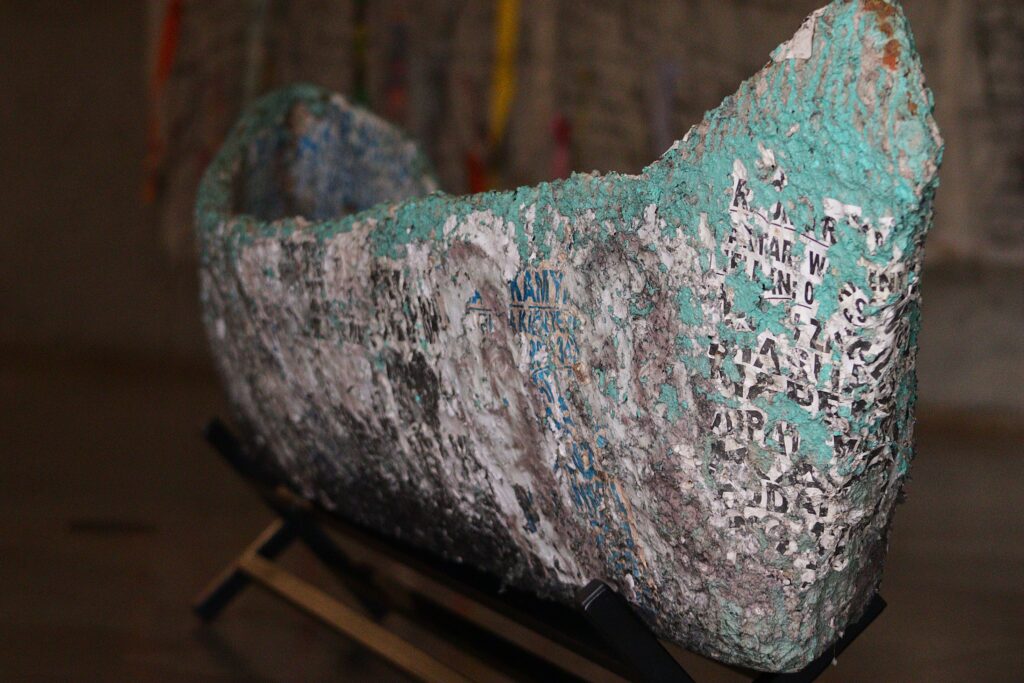
Picture of papier-mâché boat sculpture entitled ‘Mashuna and Hakuna nija’ by artist Onys Martin. Photo: Jamie Ho.
The Atlas of Uncertainty exhibition opened at the Wits Origins Centre on Saturday, April 18, inviting visitors to question the current agenda around migration, urbanisation and belonging in Africa.
From a paper-mâché boat constructed from receipts to a woven tapestry stitched with burlap, the exhibition offers a more humanising lens for viewing the global phenomenon of mobility: not as burdensome, but as inherent to humanity.
Rooted in three African cities, Johannesburg, Accra, and Nairobi, the Atlas looks beyond the borders that divide us. Migration researcher Loren B. Landau highlights that the current scholarship neglects to capture the complexities of Africa, thereby revealing a need to move “from the counting to the feeling; from the census to the senses.”
To understand the vast complexities that define the continent, the Atlas is not only working across borders, but across different media, disciplines, platforms and ways of thinking. Urban sociologist Caroline Wanjiku Kihato explains that this “lets different ways of knowing sit alongside one another, without forcing them into a single voice.”
The Atlas of Uncertainty is a powerful revision of how we understand African cities. It uproots mainstream narratives surrounding migration, opening the space up for uncomfortable yet necessary conversations.
Spatial practitioner, Carina Kanbi provides some insight into the actual making of the project and how its themes of migratory politics were mirrored over the course of its conception.
Going all the way back to 2023, when the project first began, she notes challenges faced by the artists working across borders, not only in physically transporting the works, but also in handling bureaucratic restrictions between countries. “The exhibition did not begin this morning,” she explains. “It very much began in transit.”
And staying true to this theme of mobility, the Atlas will remain a piece of art that will remain in perpetual movement. While it is on exhibition until July 3 at the Origins Centre, it is also planned to showcase in Accra and Nairobi in 2027.
Each piece of the Atlas reverberates with the passion of its creators. Each tassel holds weight.
Each shard aches with feeling. As the cracks of division deepen in our world, the value of this exhibit lies not only in its ability to challenge the status quo, but in its ability to reach where data and statistics cannot, to reconnect with our ability to be human.
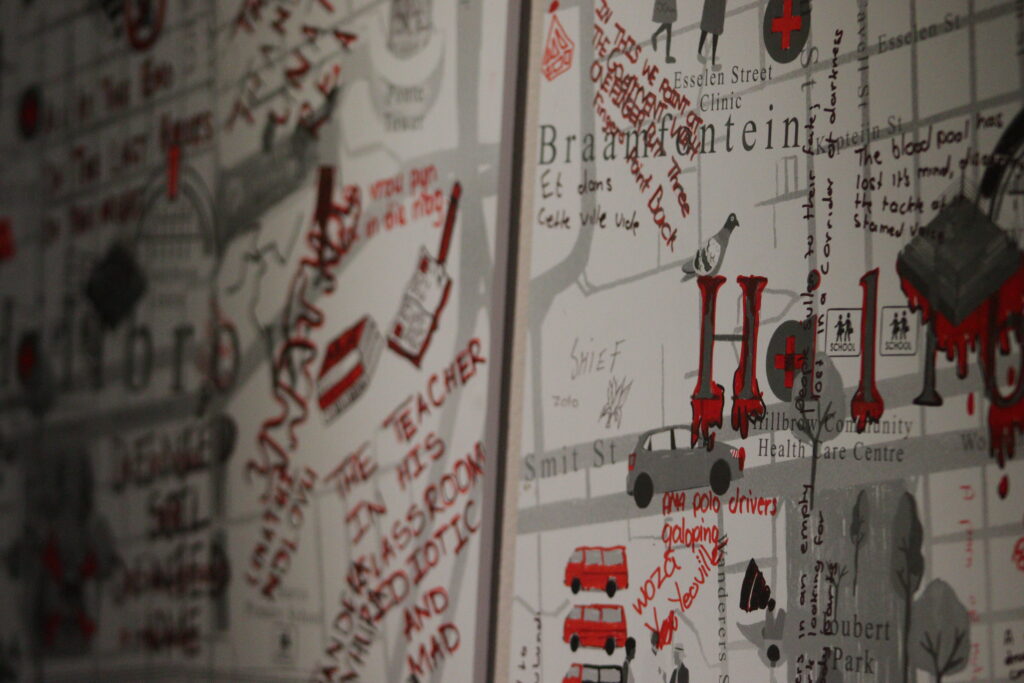
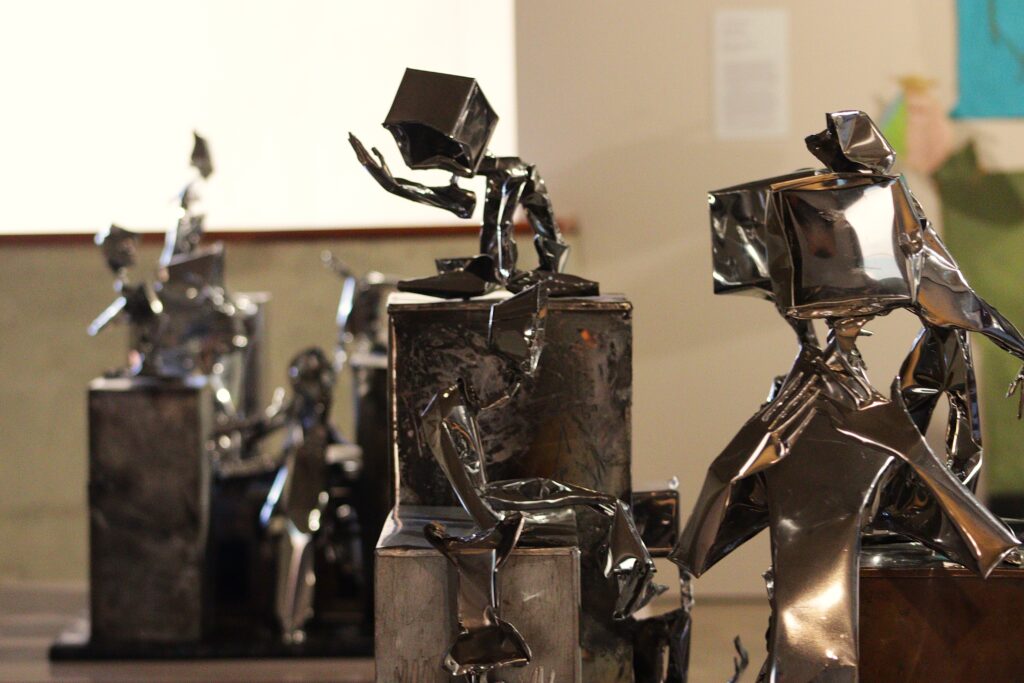
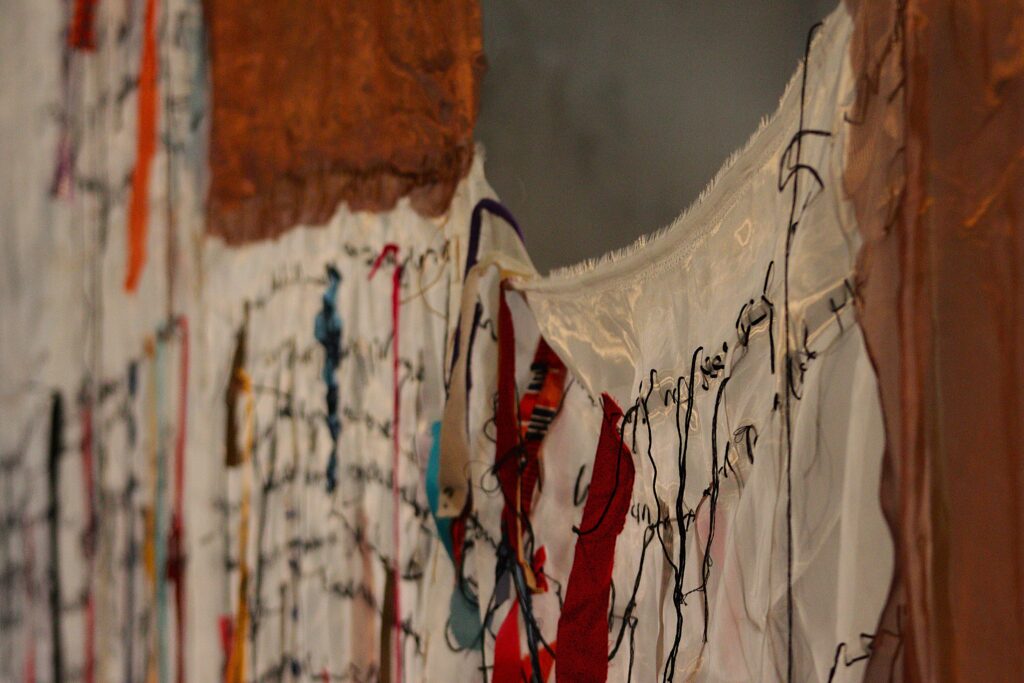
Close-up of artwork titled ‘I am the Graffiti on the Cracked Wall‘ by Windybrow Arts Centre. Photo: Jamie Ho.Picture of ‘Strangers and Spaces’ by Austine Adika. Photo: Jamie Ho.Close-up of ‘A Map of Dreams and Realities’ by Billie McTernan. Photo: Jamie Ho.
FEATURED IMAGE: Picture of artwork titled ‘When We Travel, Where Do We Settle?” by Wezile Harmans. Photo: Jamie Ho.
Main Street in Johannesburg transformed into a car-free zone, inviting people to take back the city centre through art, community, cycling and music.
Johannesburg reimagined its city centre, as Main Street closed to cars and reclaimed by the people.
Music, art, cycling and children’s activities filled the streets, creating a sense of community, safety and connection.
Inspired by cities globally, Main Street Sundays is part of an experiment to revitalise the city .
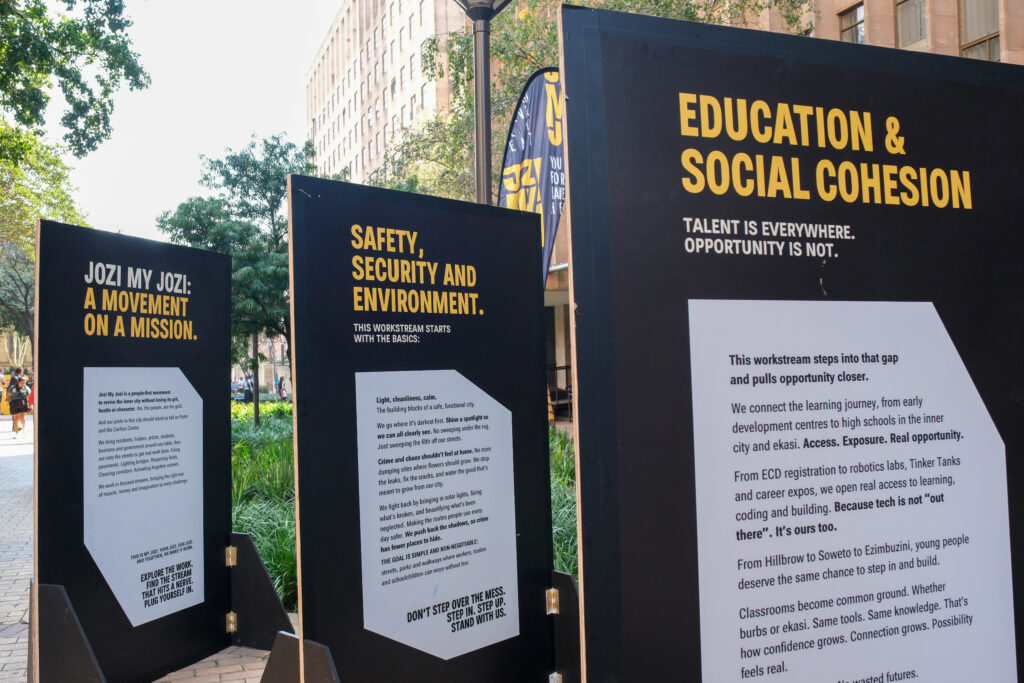
On Sunday, April 12, Johannesburg reimagined how we can experience the city. What is usually jammed with traffic, became a space for walking, cycling, art and connection. The initiative was led by Jozi My Jozi in partnership with Young Urbanists. For one full day Main Street in Marshalltown was closed to motor vehicles and belonged to the people.
There was something happening on every corner. Music played, book clubs met in the open, art filled the streets, people skated, played games and searched the stalls. It was more than just a street closure, it was a reclaiming of public space from cars.
“Our mission is to bring people back to the city,” said Jozi My Jozi Education Workstream Coordinator, Senty Maphosa. “Let’s relove, let’s reimagine what the city could look like.”
Globally, cars dominate 80% of public space. But as Thandile Manyifolo, BA Architecture Student and Deputy Chairperson of the Jozi My Jozi Chapter at Wits University reminds us, “urban spaces were designed for people to live in. If people come secondary to that, are they really fulfilling their purpose?”
Organisers emphasised that reclaiming the streets is not just about daytime activities but also creating more opportunities and innovation for young people into the evenings.
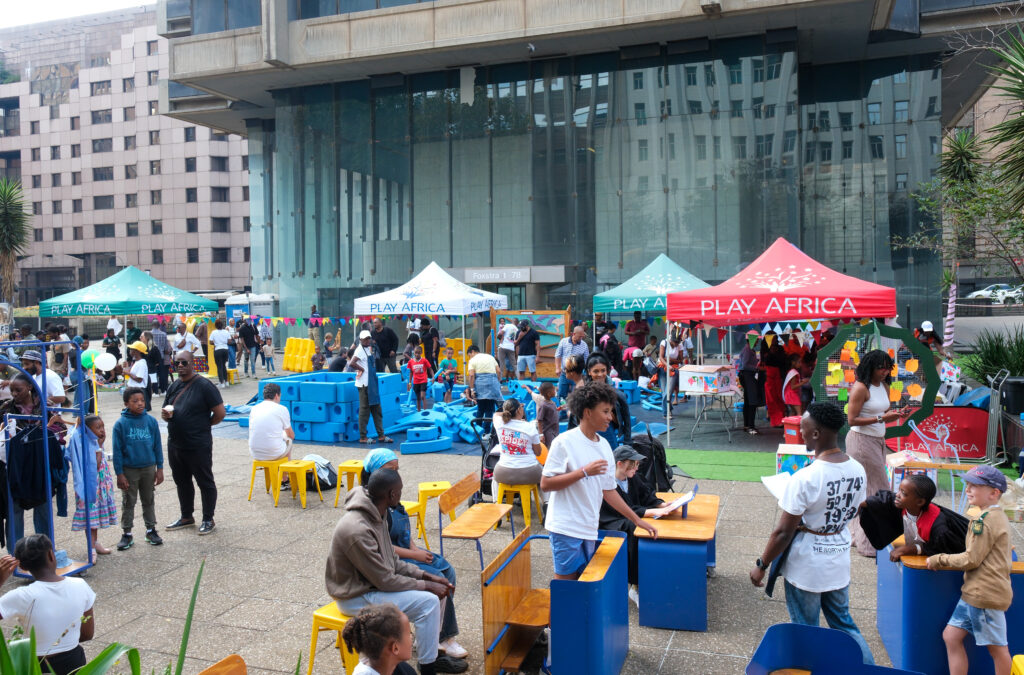
The event offered a glimpse into how urban space can return to being people centric. Children played freely, with a programme created in partnership with Play Africa, the day included interactive learning activities, face painting, chalk art, sports and a gallery.
People felt at ease, walking around taking photos on their phones, dancing and laughing. There was a sense of belonging. “Today is all about community, it’s all about collaboration and it’s all about bringing back a sense of pride and inspiring people,” said Maphosa.
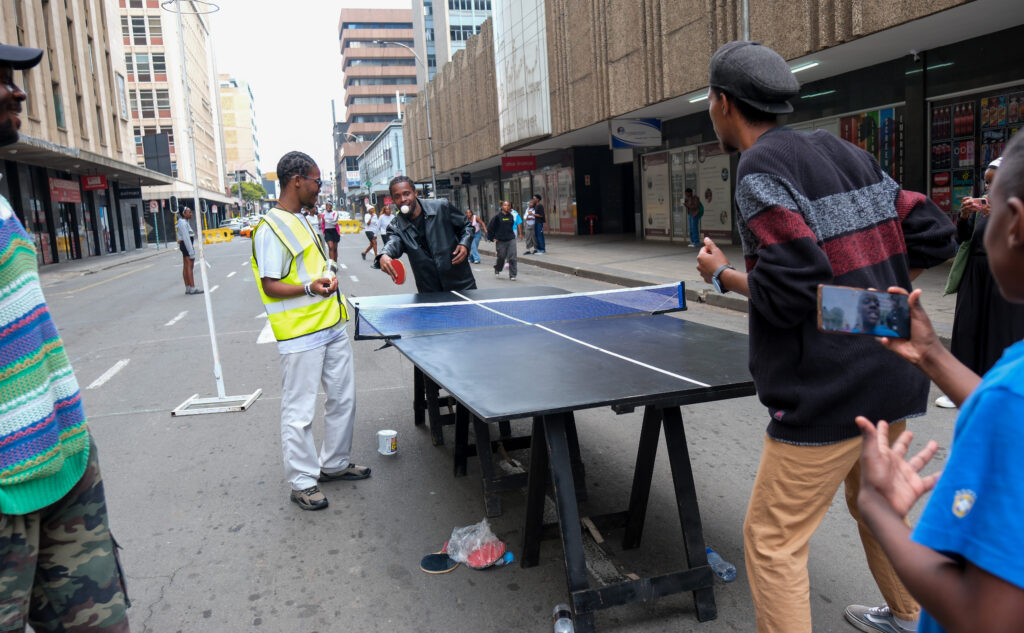
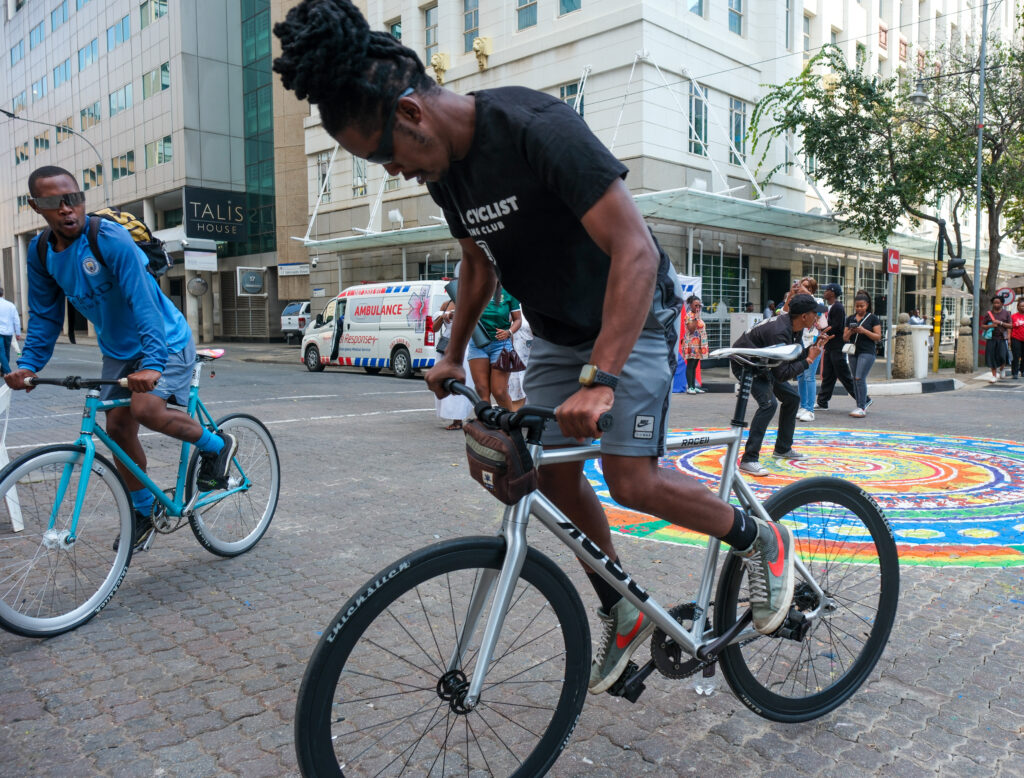
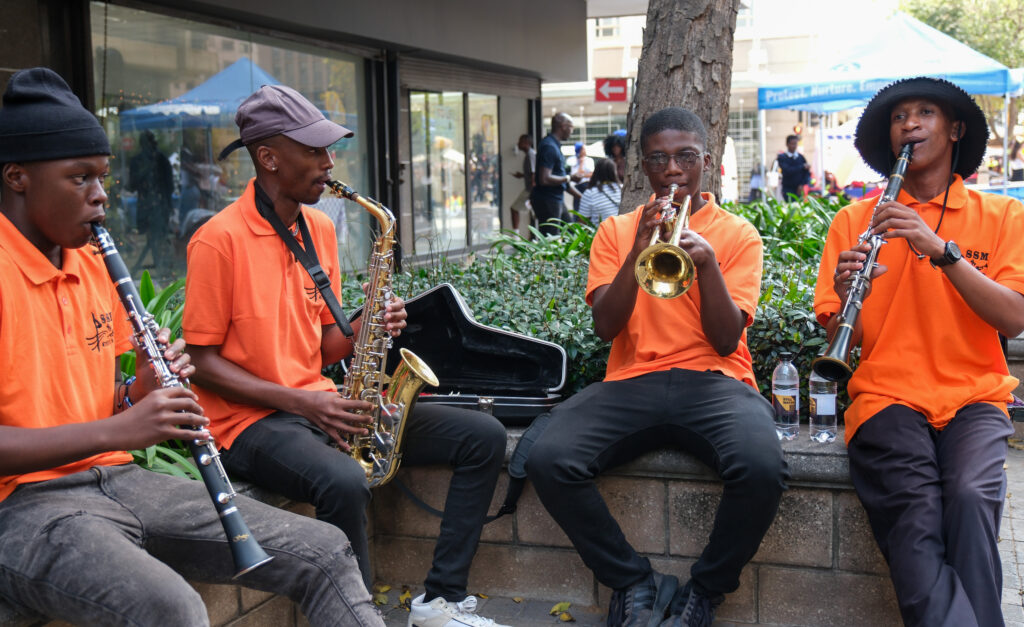
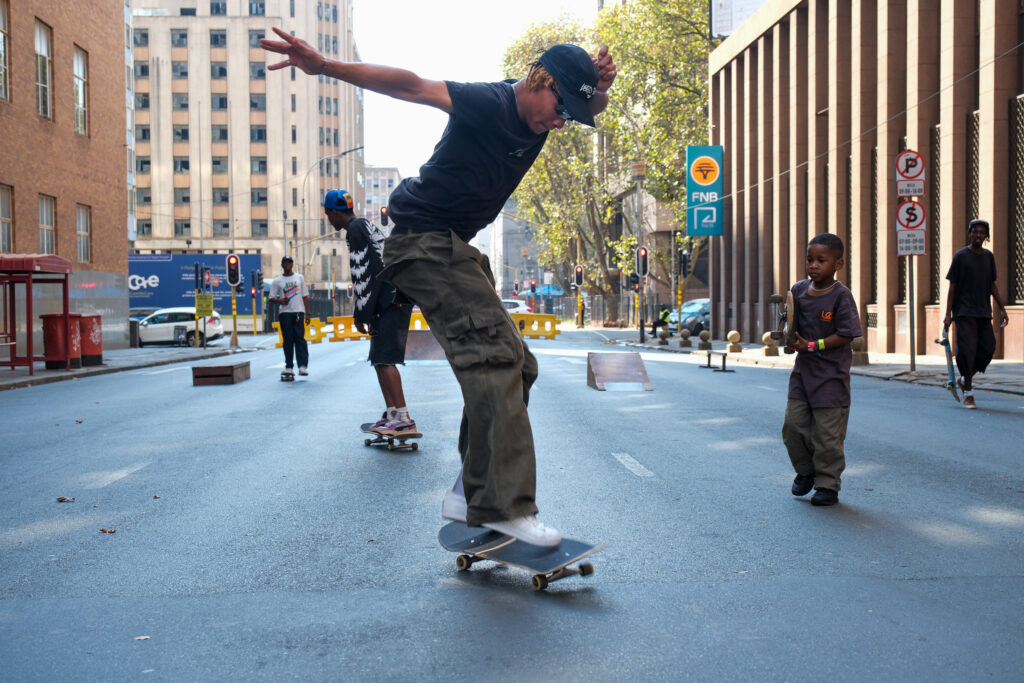
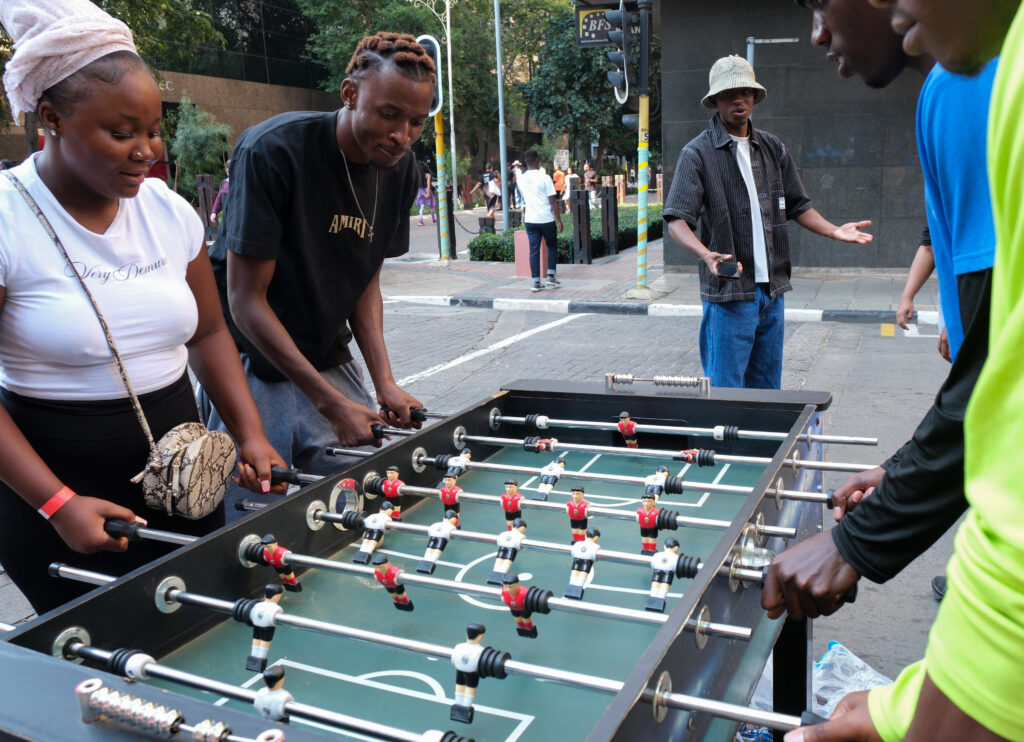
Jozi My Jozi is reimagining Joburg’s CBD. Photo: Hannah BrownA game of table tennis is held on the street. Photo: Hannah BrownKids area in partnership with Play Africa. Photo: Hannah BrownAs Main Street closed to cars, cyclists rode through the CBD. Photo: Hannah BrownA music group performs at the event. Photo: Hannah BrownSkateboarders took to the city streets, performing tricks. Photo: Hannah BrownVisitors play a game of foosball. Photo: Hannah BrownJozi My Jozi signs during Main Street Sundays. Photo: Hannah Brown
Inspired by cities including Bogotá, Paris and Cape Town’s Bree Street. The event is part of a larger experiment to revitalise the city, reimagine the use of urban space and see what happens when streets are closed to cars and given to pedestrians.
For Johannesburg, Main Street Sundays was the first of what many hope will become a regular event. “We are starting something that will have a domino effect in the long term to open up the streets of Jozi, not just Main Street, but the entirety of the city,” said Manyifolo.
It showed us what Joburg can feel like, where the city is not just a place to quickly pass through, but one where we can come together, connect and move safely.
FEATURED IMAGE: Cyclist from the Sentech Croozers rides a stance bike at Main Street Sundays. Photo: Hannah Brown
Wits students react to the Zara x John Galliano collab. In a cost-of-living crisis, is the designer label still a status symbol or just overpriced plastic?
Global high-fashion icon John Galliano signs a historic two-year creative partnership with Zara.
Wits students are divided; some chase the ‘status’ of the label, while others slam the ‘tacky’ dilution of luxury.
The rise of high-quality ‘dupes’ and fast fashion collabs is blurring the line between prestige and plastic.
Luxury used to be defined by exclusivity, the rustle of silk, the weight of hand-stitched leather, and a price tag that felt like a gatekeeper. But as Vogue reports about the unexpected two-year partnership between the legendary John Galliano and fast-fashion giant Zara, the golden gates of high fashion have swung wide open. Wits students may be far away from the fashion high streets of Milan or Paris, but they had something to say about the reported collaboration.
The collaboration, set to debut in September 2026, marks the return of Galliano (the former Dior creative director known for theatrical couture) to the mass market.
For Lindani Dweba, a final-year BA student majoring in Politics and HR, the allure is simple: the name. “I would buy for the name,” Dweba admits. When faced with the choice between a R1,800 designer-labelled polyester jacket and a R200 thrifted wool coat, he leans toward the label. “Preferably the label. But luxury is becoming cheapened because of alternatives making the same thing.”
However, not everyone is buying the hype. For Caleb Boroto, a first-year Film and TV student, the collaboration feels “tacky.” Boroto argues that someone of Galliano’s regard partnering with a fast-fashion brand strips away the luxury feel entirely. “Gun to my head, I’d pick the R200 wool jacket,” says Boroto. “I’d prefer to be sustainable and choose something that lasts, like wool or cotton.”
The Reality of Aspiration: Lindani Dweba, a final year student, wears Nike P-6000s (R2,399), which serve as an attainable alternative to luxury items like the Gucci Rhyton sneaker (R21,700). Photo: Daniella Ripamonti
Katlego Hlahla, a third-year Actuarial Science student, echoes this scepticism, noting that luxury prices often feel “unnecessarily inflated” for the quality provided. As Zara’s prices creep up, the lines between ‘high street’ and ‘high end’ are blurred.
The psychology of the label remains a powerful force, even when the quality is questionable. Sephaku Tshoshi and Kirsten Pudi, both fourth-year Accounting Science students, admit they would choose a designer name over a thrifted bargain any day. “I wouldn’t get the same bag without the name, even if the quality was the same,” said one of the students, gesturing to her Ted Baker tote. They noted that the rise of high-quality “dupes” has made luxury more accessible, but also less significant. “People are buying fakes now, even people with money. You can’t tell the difference anymore.”
Psychology Honours students Daiyaan Kahan and Jake Fourie said that “accessibility cheapens the value, but people still buy it for the status symbol.” Fourie, however, sees the positive side, “If it’s more accessible, it’s overall good. More people representing a brand is good for the brand’s expansion” he stated
As the Zara x Galliano collection prepares to hit shelves, the Wits campus remains a tug-of-war between the desire for status and the demand for authenticity. In an era where ‘luxury’ can be bought at the mall in a plastic bag, real luxury might just be the ability to tell the difference.
FEATURED IMAGE: Reframing the Aesthetic: By pairing a sporty PUMA track jacket with tailored pinstripe trousers and formal loafers, Demitri Michaud, a postgraduate student, demonstrates a ‘high-low’ styling approach that mirrors global trends of deconstructed luxury. Photo: Daniella Ripamonti
Thrifting may be trendy, but for many students, it is simply the cheapest way to afford fashion.
Economic necessity and “instant gratification” drive some Wits students to second-hand shopping.
The Matrix’s Zaza Clothing reports its busiest year yet as students ditch retail for quality and affordability.
Hidden online fees and poor garment quality are making global fast-fashion giants less appealing to local youth.
In the heart of Braamfontein, the ‘thrift flip’ is more than just a curated style; it is a survival strategy. As South Africa faces a cost-of-living crisis, students are increasingly searching for the perfect R50 vintage shirt. This shift has turned a trendy pastime into a financial necessity.
While discussions about second-hand shopping often highlight ‘slow fashion’ and sustainability, the reality in hubs like Melville and Braam tells a different story. For many of The University of the Witwatersrand (Wits) students, thrifting isn’t about saving the planet; it is about saving their bank balance.
On the top floor of the Matrix, the energy at Zaza Clothing is a testament to this shift. Since opening in March 2023, owner Ali Monama says business has grown every year, but 2026 is by far the busiest he has seen.
“I chose the Matrix because fashion starts with the youth,” Monama says. He notes that while sustainability is a plus, the economy is the real driver. “Thrifting is critical for the economy right now. People prefer it because modern retail clothes don’t last, whereas vintage leather and denim are pure quality,” he adds.
The price tags at Zaza Clothing offer a stark alternative to the mall, ranging from R20 earrings to R600 Doc Marten boots. The prices are what appeal to students like Thulani Bikili, a second-year civil engineering student. Bikili thrifts twice a month specifically because of the cost-of-living crisis. “Retail stores are just overpriced,” he says.
For some, the appeal is a mix of budget and “instant gratification.” First-year electrical engineering students, Siyamthanda Mazwan and Naomi Makangume, argue that while sustainability is a “secondary perk,” the real win is finding unique items that allow them to avoid “following the crowd.”
Picture of students browsing through a clothes rack at Zaza Clothing. Photo: Daniella Ripamonti
The duo also highlighted the growing frustration with online giants like Shein. Between unpredictable shipping times and hidden customs fees, they’ve started questioning the true cost of “cheap” online hauls. “Is it really cheaper if I’m paying for all these other hidden fees?” They ask. “With thrifting, you get what you buy then and there. You can actually try it on to see if it fits.”
As financial pressures continue to reshape student life, the shift toward second-hand clothing reveals a generation that is becoming increasingly resourceful. Whether it’s to find a one-of-a-kind vintage piece or simply to survive the month, the students at Wits are proving that in the struggle between ethical spending and economic reality, the price tag, and the quality, is winning every time.
FEATURED IMAGE: Picture of sunglasses and ties taken at Zaza Clothing store in The Matrix. Photo: Daniella Ripamonti
Student photographers at Wits University raise concerns over being denied the opportunity to work during graduation season after missing an accreditation deadline they claim was not clearly communicated.
Student photographers were denied access to graduation due to a permit system.
Many missed the deadline because communication was unclear.
Students are calling for better communication and inclusion in future.
Over the past two weeks, Wits University Campus has been filled with celebrations as graduates marked a significant milestone. For many, taking photos at iconic locations such as the Great Hall has become a tradition. However, this year, some students were forced to make alternative arrangements after unaccredited photographers were denied access.
The university introduced a system requiring photographers to obtain permits to operate during the graduation period. A limited number of registered photographers were allowed to work in designated outdoor public areas, while Campus Protection Services (CPS) removed those without permits.
According to the Examination and Graduation Office (EGO), the application process was posted on the university website ahead of the graduation period. Officials say that the system aims to manage the high volume of people on campus and ensure safety during the ceremonies.
However, several student photographers say they were unaware of the process until it was too late.
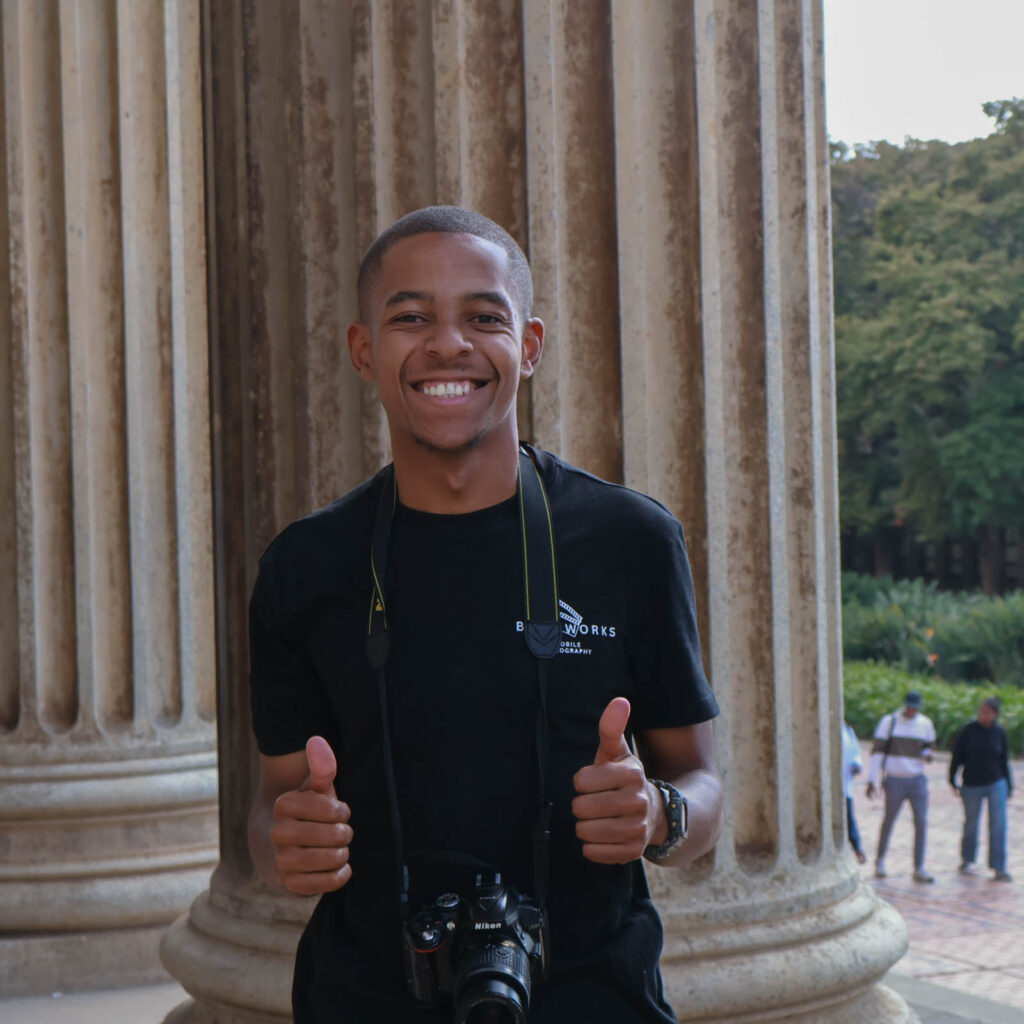
A student photographer with they camera around they neck by the Great Hall. Photo: Sanele Sithole
Bakithi Mntungwa, a Bachelor of Education Honours student, said he only learned about the permit requirement shortly before graduations began.
“I only found out about the permit a few days before the first day of graduation, when I was already booked to take photos. By then, the application had already closed around February,” he said.
Other students echoed similar frustrations.
Thabo Mthembu, a Mining Engineering student, said while he understands the reasoning behind the rule, he believes student photographers should have been prioritised.
“I understand the need for regulation, but I had hoped student photographers would be given priority,” Mthembu said.
Mthembu also described difficulties accessing campus with his equipment, despite being a registered student, saying he was denied entry by security.
Students argue that communication could have been improved through official university channels such as email or social media platforms. They pointed to previous opportunities, such as photography competitions, which were widely advertised to students.
“When the applications closed, I was still dealing with registration and financial issues. Checking the website was the last thing on my mind,” Mntungwa added.
While acknowledging the importance of safety and organisation during graduation, both photographers believe that clearer communication and greater inclusion of student creatives could have prevented missed opportunities.
As graduation season has ended, students are calling for more transparent processes and better access in the future so that student photographers are not only present on campus, but part of capturing its most important moments.
Questions were sent to the EGO for comment, specifically regarding concerns raised by student photographers, but no response was received by the time of publication.
FEATURED IMAGE: A student photographer by the Great Hall taking a picture of the landscape. Photo: Sanele Sithole
Urban settlements such as townships are being created in rural areas which has raised concerns over ownership and the role of municipal authority.
Urban settlements formed on the outskirts of cities are far cheaper for the average South African.
Public infrastructure and basic services are provided through privatized services and investments.
Community chiefs are granted more authority and jurisdiction over these urban settlements compared to the municipalities that govern them.
South Africa’s cities were never designed equally. Under Apartheid, millions of black South Africans were pushed to the outskirts of cities through policies such as the Group Areas Act, which enforced racial segregation and forced removals.
Decades later, the spacial legacy lives on as those policies continue to shape where people live.
The New South Institute (NIS) hosted a dialogue on March 11, 2026, with the emergence of urban settlements beyond conventional planning systems, specifically on land governed by traditional authorities, on the agenda.
In a research paper, Professor Andries du Toit, NIS affiliate researcher and his team argue that these “settlements should be recognized as a distinct South African urban form, an auto-constructed suburbia, under informal institutions.”
The houses built in these areas, like KwaMhlanga (Mpumalanga), Dassenhoek (eThekwini), Hammanskraal (Tshwane) and Kabokweni (Mbombela region), receive public infrastructure and services. These include roads, water and electricity, which are provided by private companies and/or private arrangements instead of their designated municipality.
“There is a limited investment in social and community infrastructure particularly in the form of churches – people who live in these areas are going to have to travel and spend a lot of time traveling to access education and various other social opportunities and services,” said Dr. Andrew Charman, NIS affiliate researcher.
The New South Institute (NIS) dialogue on working paper, Urban Settlements on Traditional Authority Land: Four case studies. From left to right: Dr. Andrew Charman, Prof. Andries du Toit, Dr. Gaynor Paradza and Prof. Mfaniseni Sihlongonyane. Photo: Bonolo Mokonoto
The residents of these settlements are not given property with prospects of receiving a title deed, they are given a permission to occupy from the chief of the land. “It is not a deed of sale, you haven’t bought the land, you essentially paid the traditional authority for the service of allocation,” said du Toit.
Dr. Gaynor Paradza from the Public Affairs Research Institute (PARI) said, “At most a municipality owns like 12 percent of the land in its jurisdiction and sometimes as little as two percent – as a municipality [they] don’t even have a say on what is going on.” The chief of the land is able to make authoritative decisions granted that they have the support and consent of the community.
The New South Institute (NIS) dialogue on working paper, Urban Settlements on Traditional Authority Land: Four case studies. From left to right: Prof. Andries du Toit, Dr. Gaynor Paradza and Prof. Mfaniseni Sihlongonyane. Photo: Bonolo Mokonoto
“The bottom line is that chiefs make decisions about land allocation, meaning that they are involved in town planning,” said Professor Mfaniseni Sihlongonyane head of the school of Architecture and Planning at wits university. “Maybe there are multiple visions of what cities should be especially in the African context,” he said.
As housing costs rise in central urban areas, many find themselves settling on land that is governed by traditional leaders on the outskirts of cities, as it is more affordable. But the flipside is that they aren’t catered for by the municipality they fall under.
FEATURED ARTICLES: The New South Institute (NIS) dialogue on working paper, Urban Settlements on Traditional Authority Land: Four case studies. From left to right: Dr. Gaynor Paradza, Prof. Mfaniseni Sihlongonyane and Dr. Ngaka Mosiane. Photo: Bonolo Mokonoto.
The war in the Middle East deeply impacts the lives of people across the globe and South Africa is no exception.
Millions of people woke up to the breaking news on their screens, that the United States of America and the State of Israel, launched airstrikes targeted at Iran’s military bases and nuclear-related-infrastructure, on February 28, 2026. The prospects of a war started brewing after negotiations between the U.S and Iran in early February hit a dead end.
Iran’s Supreme Leader Ayatollah Ali Khamenei was killed by attacks from Israel and the U.S, and the current death toll in Iran currently surpasses 1, 000. Iran has responded by launching missiles and drones towards Israel and targeting U.S military bases across the Middle East. The countries affected by the attacks from Iran include Saudi Arabia, United Arab Emirates and Kuwait.
But it was the confirmed closure of the Strait of Hormuz on March 2, that had an immediate global impact . According to Reuters, Iranian officials announced that the shipping corridor will be closed and any ship that attempts to pass through will be attacked.
Approximately 20% of the world’s oil supply passes through the Strait of Hormuz, which means global oil prices, inflation, food and petrol prices are likely to increase significantly in the short term.
South Africa imports oil in large quantities, most of its crude oil supply coming from Nigeria and Saudi Arabia. This means that citizens will experience higher petrol prices and businesses will experience delayed goods from abroad. The impact was felt instantly as the minister of Mineral and Petroleum Gwede Mantashe announced an increase in fuel prices effective from March 4, as a result of the current international factors. The price of petrol increased by 20c and diesel by 65c, residents still await further changes as the war continues.
Behind the geopolitical strategies and missile attacks we watch from a distance are thousands of people whose lives have now been forever altered. Families are watching their homes and communities destroyed and those far removed from the shockwaves deal with rising costs and uncertainty.
As the situation unfolds, we are confronted with the fact that war is never limited to the countries fighting it, its impact is felt by everyone. We all mourn and feel the pain of those directly impacted.
Until the day global leaders choose dialogue and peace over destruction and violence, it will be us, ordinary citizens who continue to pay the price for their negligent and violent behaviour.
FEATURED IMAGE: Graphic depicting the joint allies the United States of America and the State of Israel, above Iran. Graphic by: Bonolo Mokonoto
After months of volunteer clean-ups and security upgrades, the heritage site welcomed visitors to the revived space.
The Braamfontein Cemetery wants locals to use the premises for educational and research purposes.
The cemetery has increased its safety measures around the area, as many visitors felt unsafe due to unsecured perimeters.
Visitors can ask for a security escort when venturing deeper onto the property.
The Braamfontein cemetery is regarded as one of the most historically significant places in Johannesburg, but some residents do not feel comfortable visiting due to safety concerns and negative experiences.
The cemetery reopened its gates on February 22, 2026 with increased security for grieving families and rebranded as a public heritage site open for walking tours and educational visits.
Volunteers cleaning up at the Braamfontein Cemetery. Photo: Bonolo Mokonoto
“Just walk, enjoy the space, enjoy the beauty of the architecture of the cemetery”, said Antoinette Morgan, from Friends of Johannesburg Cemeteries (FOJC), a group under the Johannesburg Heritage Foundation (JHF).
“This cemetery has a lot of the old Rand pioneers – the early people who came to establish their life in Johannesburg”, said Morgan. The cemetery is home to many historical figures, such as “David Draper, who was the geologist who first had mass water production pumped up to the highfeld” and “of course Enoch Sontonga” she added.
The architecture at the cemetery beautifully captures its era. Nicola Noble from FOJC working with JHF, said: “The design of the crematorium almost hides its purpose, it is in the shape of – a neo- Romanesque chapel – it resembles a church.”
The crematorium at the Braamfontein Cemetery, with four furnaces. Photo: Bonolo Mokonoto
Morgan said, “A lot of the perimeter fencing was missing on both sides, so people would just walk across the cemetery at will.”
“With a lot of work with Johannesburg City Parks and Zoo, we managed to get them to secure the perimeter fencing on both sides – it is still palisade but it is more secure”, she states that there are guards at each gate and roaming guards throughout the cemetery.
When people want to go deeper into the cemetery for research and feel uncomfortable, they can now ask a guard to guide them through.
Johannesburg City Parks and Zoo did not respond to requests for comment at the time of publication.
FEATURED IMAGE: Graves taken at the Braamfontein Cemetery. Photo: Bonolo Mokonoto
In episode six of We Should Be Writing season 7, the team unpacked the evolution of music as a form of expression and protest, through four decades in the South African context. The episode explores the journey of South African music and its consumers from the 80s, 90s, early 2000s and contemporary listeners. From the […]