South African filmmakers encouraged to leverage verticals and microseries to tell specific local stories.
Phung delivers a masterclass on short-form filmmaking and the rise of the microseries.
‘Verticals’ are identified as the third audiovisual language, reshaping viewing habits with phone-first, bite-sized narratives.
Phung urges filmmakers to focus on local stories to unearth universal themes.
Quan Phung, a global media strategist, creative executive and producer with more than 20 years’ experience in international film and television, brought industry insights to Johannesburg this week. With credits including How I Met Your Mother, House and Arrested Development, Phung presented ideas on short-form filmmaking, mobile video films and microdramas.
Hosted in partnership with the US Consulate at Constitution Hill on August 6, the masterclass brought together filmmakers, writers and emerging storytellers to discuss how South African stories can be positioned for global audiences.
Audience members included filmmakers, writers and creatives. Photo: Hannah Brown
Phung highlighted three different audiovisual languages: film, television and the new third form ‘verticals’: the phone-first, short-form format that is quickly reshaping our viewing patterns.
This has resulted in the rise of microdramas, a fast-paced, character-driven, scripted narrative series. While the first microdramas probably make you think of soap-style, romantic shows, Phung says this is evolving to horror, crime, comedy and sci-fi.
Brooklyn Coffee Shop, for example, is a viral short-form series that delivers bite-sized stories through deadpan, quick-dry humour set in a busy cafe. Over the past two years, young audiences have tripled their share of viewership.
Social media platforms were once used to tease trailers, but short-form content is no longer used solely for marketing purposes; it is now becoming the ‘show’ itself. The ways we engage online have evolved, but it has also come with a cost.
A 2023 analysis linked short-form video use to reduced attention spans, and a 2026 Daily Maverick article warned, “Short-form videos are engineered to capture the brain’s craving for novelty”, and Psychologist Dr. Ken Fung compared micro-dramas to “snacking on junk food”, quick and addictive.
While AI is playing a role in production – with some microdramas made entirely by the machines – emotion, anticipation and soul remain the core of storytelling and are difficult to replace completely. This leaves space for South African filmmakers to create more people-led, authentic and durable stories.
Quan Phung presenting a masterclass on short-form filmmaking. Photo: Hannah Brown
“Make local stories so specific that they unearth universal themes and ideas that will travel,” Phung advised local filmmakers. Creatives need to ask themselves, “Why you? Why now?” What connection do you have, and what part of your story adds a sense of urgency to watch today?
Phung emphasised that, “It is a great time for South African filmmakers to push their stories forward.” Young audiences want to hear from new voices, and global platforms are looking for diverse perspectives.
FEATURED IMAGE: Quan Phung presenting industry insights in Johannesburg. Photo: Hannah Brown
Bafana Bafana and Banyana Banyana represent the same nation, but not the same level of support. The difference says more about us than it does about football.
Rather than pretending South Africans do not support Banyana Banyana, the stronger argument is whether the support is visible. When Bafana Bafana competed at the 2025 Africa Cup of Nations, social media timelines filled with countdowns, match previews, public viewing invitations and nationwide calls to rally behind the national team. The yellow jerseys became symbols of national unity, and every fixture felt like a national event.
Fast forward to Banyana Banyana competing at the 2026 Women’s Africa Cup of Nations, and the atmosphere is noticeably different. The defending African champions took to the continental stage without the same intensity of public mobilisation. The contrast is not simply about football. It reflected a deeper pattern in South African sport: we celebrate women’s achievements, but we do not consistently promote them with the same energy.
If the media, sporting bodies and sponsors devote more promotional resources to men’s football, then the public will inevitably become more familiar with Bafana’s journey than Banyana’s. The disparity becomes a self-fulfilling cycle: greater visibility leads to greater support, which justifies even greater visibility.
The irony is that Banyana Banyana have produced extraordinary results. They won the Women’s Africa Cup of Nations in 2022 and have become one of the continent’s strongest national teams. Yet the same CGE report concludes that despite these achievements, they “have not received the same recognition and rewards as their male counterparts, Bafana Bafana.” Success alone has not earned them equal treatment.
Perhaps the most important conclusion from that study is not the numbers themselves but what they mean. The researcher argues that under-reporting women’s sport limits the public’s knowledge of female athletes’ achievements, while the continued trivialisation or neglect of women’s sport creates the impression that it is less important or less worthy of attention.
Recognition also extends beyond media coverage. The CGE points out that SAFA awarded Banyana R1.2 million after winning WAFCON, while previously spending R9 million on vehicles for provincial administrators. It also notes that Bafana players received larger bonuses for reaching the AFCON quarterfinals than Banyana received for winning their continental title. These examples reinforce the message that women’s achievements are too often valued less, even when the results surpass those of the men’s team.
South Africans like to describe themselves as passionate supporters of whoever wears the national jersey. That ideal should not depend on whether the badge is worn by Bafana or Banyana. If we want genuine equality in football, we must stop expecting women to earn support only after they win trophies, while assuming the men’s team deserves nationwide campaigns simply because they are men.
Equal support begins long before kick-off with equal storytelling, equal promotion and equal belief that every national team is worthy of the country’s full attention.
FEATURED IMAGE: A graphic of Banyana Banyana standing under the spotlight. Graphic: Sanele Sithole
The programme has changed the lives of thousands, one transplant at a time.
More awareness for liver disease and organ donation is needed to help provide more liver transplantation services.
Accessibility is needed through support from the government and other private medical institutions.
Over 1 million South Africans have been diagnosed with hepatitis – a viral infection affecting the liver – on an annual basis, which can potentially lead to advanced liver disease requiring transplantation.
According to the Liver Centre South Africa, the causes of liver diseases and illnesses can vary from acute liver failure, viral hepatitis or infections, with liver cirrhosis being the lead cause in sub-Saharan Africa.
The programme, established in 2004, is one of the few transplant units in the country and the broader sub-Saharan African region that provides living donor liver transplants in both adults and children.
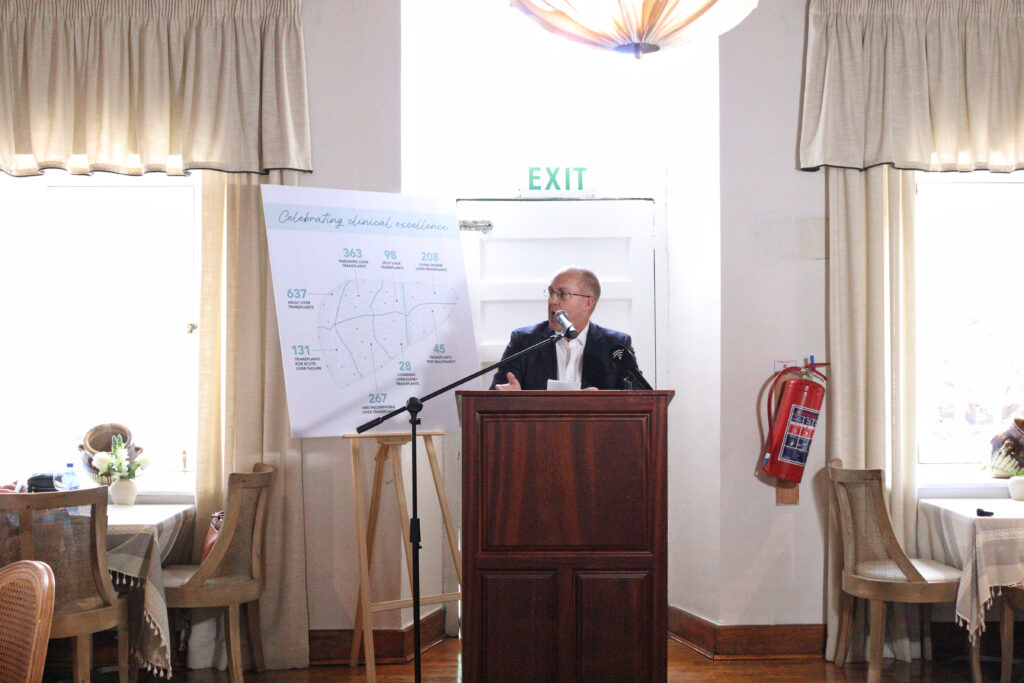
Professor Jerome Loveland addressing attendees of 1000th liver transplant milestone celebration. Photo: Amahle Ngqwemla
Liver transplants are therefore important for removing the affected area and transplanting the healthy organ, to provide patients with a better chance at a longer and healthier life.
Of the 1000 who have gotten a second chance, 637 are adults and 363 children.
Professor Jerome Loveland, the academic head of transplantation at Wits, said none of it would be possible without willing patients and families.
“Where would our tale of hope be without our patients…recipients who entrusted their care with us and those donors whether deceased or living, who gave the gift of life by donating,” he said.
However, there are still concerns around accessibility as many patients do not live in Johannesburg where units like the liver transplant programme are available.
Professor Adam Mahomed – specialist gastroenterologist and hepatologist said, “We have to expand it [training in both public and private sector] and not be limited to just where we are.”
Liver and kidney transplant co-ordinator, Sinesha Moodley, told Wits Vuvuzela that working with public academic hospitals like Charlotte Maxeke helps patients who are unable to travel long distances for treatment.
Professor Charles Sanyika, interventional radiologist, said, “If you are in a big city like Johannesburg, you might know of a transplant unit that might be within reach for you. Yet, someone [doctors and patients] in areas like Matatiele or Qunu [Eastern Cape] might not be aware.”
Attendees at the Wits 1000th liver transplant milestone celebration. Photo: Amahle Ngqwemla
The programme has created relationships with other medical societies on campus like the Wits student surgical society where postgraduate medical students can engage with the clinical training programme.
Although the combination of academic medicine, scientific research, education and healthcare partners has been significant in reaching this milestone, Loveland urges young people to “familiarise themselves with organ donation and be open to considering being a donor should it happen to one’s family.”
FEATURED IMAGE: Professor Adam Mahomed delivering his speech at the Wits Transplant Unit milestone celebration. Photo: Amahle Ngqwemla
How a stagnant job market turned South Africa’s postgraduate programmes into an emergency waiting room for unemployed graduates.
Towards the end of every academic period, a quiet panic settles amongst final year students. You hear it in the conversations on campus and the endless scrolling on LinkedIn: the realisation that a degree is no longer a ticket into the workforce. Faced with a stagnant economy, thousands of us make the same calculation: do we risk entering a brutal job market, or do we register for an honours degree?
Let us be real. For a lot of us, staying in university for another 12 months is not driven by academic ambition or a sudden passion for a postgraduate thesis. It is a survival strategy.
Higher education is becoming a social safety net. Packing your bags and going home to a township or rural area without a job carries a crushing social stigma. After our families made heavy financial sacrifices to support us through our undergraduate qualifications, returning empty handed can sometimes feel like failure.
Enrolling in an honours programme provides a respectable cover story. It buys us another 12 months of the ‘student identity’, preserves our dignity with the family back home and allows time to keep frantically sending out CVs while quietly stalling the reality of a job market that has no room for us.
The numbers behind this decision show just how much the economic landscape has changed compared to when our older siblings were graduating. Looking back at the period between 2008 and 2010, South Africa was navigating the aftermath of a global financial crisis. According to Statistics South Africa, the average national unemployment rate in 2008 stood at 22.9% while youth unemployment for those aged 15 to 34 sat around 32.7%. During that period, figures from the higher education department showed that public universities produced roughly 127 000 graduates in 2007. Back then, an honours degree was predominantly viewed as a traditional specialisation route or an entry point into academia.
A graphic illustration comparing South Africa’s national and youth unemployment rates between 2008 and 2026. By: Rearabilwe Tsebela
Today, the numbers are terrifying. Statistics South Africa’s first quarter labour figures place our national unemployment rate at 32.7% while youth unemployment for those aged 15 to 34 has reached 45.8%. For the youngest job seekers aged 15 to 24, the unemployment rate sits above 60,9%. At the same time, university output has grown by roughly three-quarters, with public universities now pumping over 220 000 graduates annually into a stagnant economy.
Having a tertiary qualification still gives us a slight edge compared to the national average, but when thousands of new graduates flood the market every year and entry-level jobs now require extensive experience while paying peanuts, that advantage disappears fast. As a result, postgraduate programmes below master’s level have absorbed thousands of us who are simply using academia as an emergency shelter.
So, we stall further. We take on additional debt, live on two-minute noodles and risk academic burnout for another year just to keep a respectable title while hiding from national unemployment statistics.
It is time for universities and policymakers to look at the booming postgraduate enrolments and ask the tough questions.
Are institutions really cultivating a new generation of brilliant scholars, or are they just temporarily hiding unemployed graduates for another academic year? Until the South African economy can create jobs, the honours degree will remain less of an academic launchpad and more of an emergency holding pen.
FEATURED IMAGE: A graphic illustration showcasing the post-graduation anxiety of choosing between an uncertain job market and studying further. Photo: Rearabilwe Tsebela
Amidst the chaos of Johannesburg’s traffic intersections, Robots follows Gift, a street performer who turns red-light pauses into moments of joy.
As the lights turn to red, Gift – also known as Marshmallows – steps onto his stage. On Johannesburg’s streets, traffic light intersections become his theatre. There he juggles, unicycles and performs his signature ‘headless man’ act, turning the pause in traffic into a few moments of entertainment, before the lights flicker back to green.
Directed by Yaseen J.Khan, Robots is an insightful, funny and moving portrait of livelihood and perseverance. At its centre is Gift, a charismatic personality who performs at intersections for strangers. Yet beneath the laughter lies a layered story of fatherhood, struggle and resilience. His perspective on life makes you laugh one moment and cry the next.
Gift is a hustler, an entertainer and a man who balances this alongside his role as a husband, father, and friend. His complexity challenges stereotypes about street artists. At first, Gift is presented as joyful and always smiling, but the film asks its audience to look deeper and challenge their own assumptions. Robots is more than a portrait of one man; it is a wake-up call, recognising the overlooked creativity of those trying to make a living and build better lives for themselves and their families.
The documentary itself was self-funded and took three years to complete. At a July 26 screening held at the Bioscope Independent Cinema in Johannesburg, filmmaker Khan was joined by DOP Kirsten Rose and producer Kopedi Aphane to discuss the project’s origins, explaining that it all began with curiosity: “These are people we see every day, but beyond that we don’t know what is happening behind the scenes.”
Cameras were introduced only after conversations and mutual trust-building. As Khan reflected, “We could only tell as much as he wanted to reveal.” Over time the story evolved; Gift developed from subject to collaborator and friend, guiding the filmmakers into spaces others might have avoided, sharing his health diagnosis, financial struggles and hopes for permanent work. The process reshaped the filmmakers themselves, who later wrote, “as filmmakers, this documentary changed our own perspectives about poverty and resilience.”
The editing moves seamlessly between vibrant energetic scenes, to quiet moments of reflection, accompanied by music that mirrors Gift’s changing moods. An upbeat score, including the crashing of cymbals, adds a ‘showbiz’ flair to the street performance. The rhythm makes you laugh, then suddenly brings tears as the pace slows.
Intimacy is the film’s strength because you can feel the connection to Gift not only as a performer, but as a person. Camera points of view through car windows, amidst the chaos of traffic, and then inside his family home with his wife and two children, all offer unique insight into his life.
He moves between that home and the space under the bridge. His smile feels like a quiet act of defiance. Even when motorists do not reward him, he finds joy in their reactions, saying that he loves to see people smiling, “even if you give nothing, just your smile”.
Khan hopes to leave the audience with conversations that will carry beyond the screen.Robotschallenges assumptions about people at traffic intersections. The film is insightful and funny, emotional yet hopeful. It made me appreciate life and see street performers in an entirely new light. Gift’s story shows the power of performance to connect strangers, even if only for the length of a red light.
FEATURED IMAGE: Robots poster. Photo: Supplied/The Bioscope
Activists protest to challenge mounting xenophobic violence.
Students and academics at Wits University protest against the escalating violence faced by migrants.
Demonstrators urge law enforcement to treat targeted vigilante attacks as hate crimes.
The picket highlights the need to counter xenophobic hate through conversation and empathy.
A group of activists gathered on Friday outside Wits University’s Jan Smuts entrance, staging a picket against the escalating wave of anti-migrant violence and xenophobic intimidation sweeping through local communities.
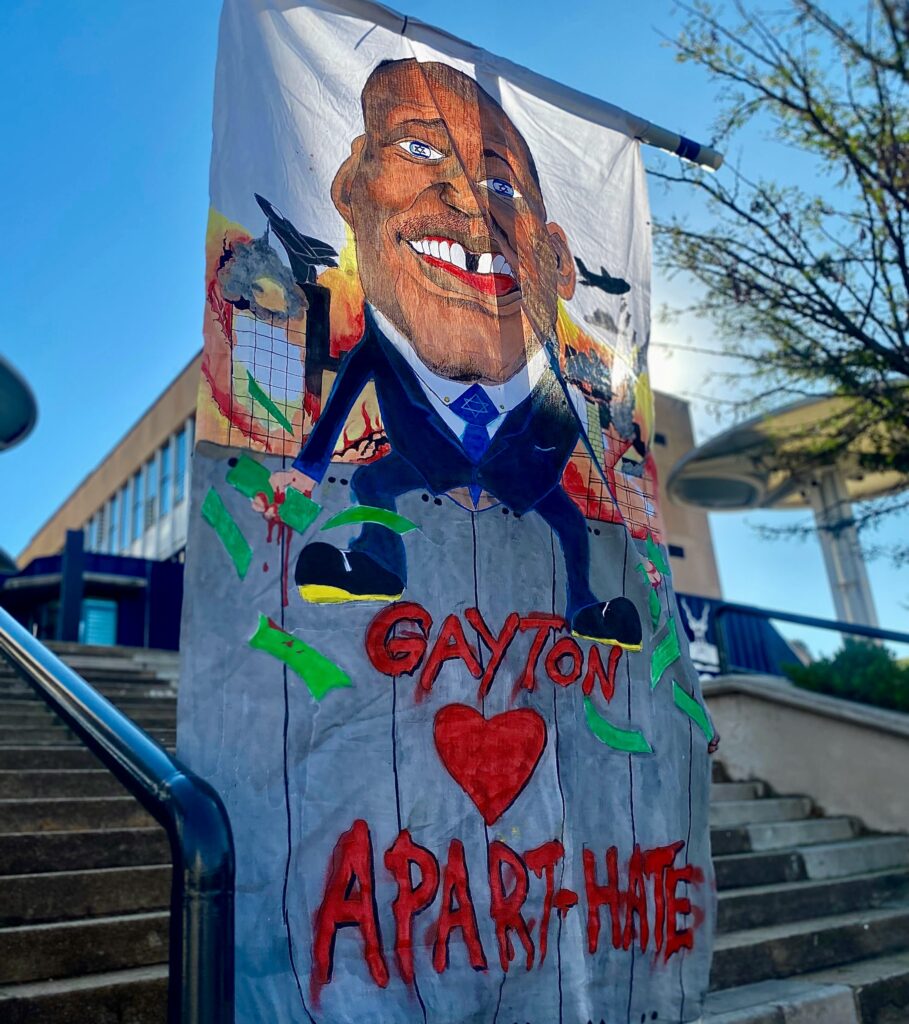
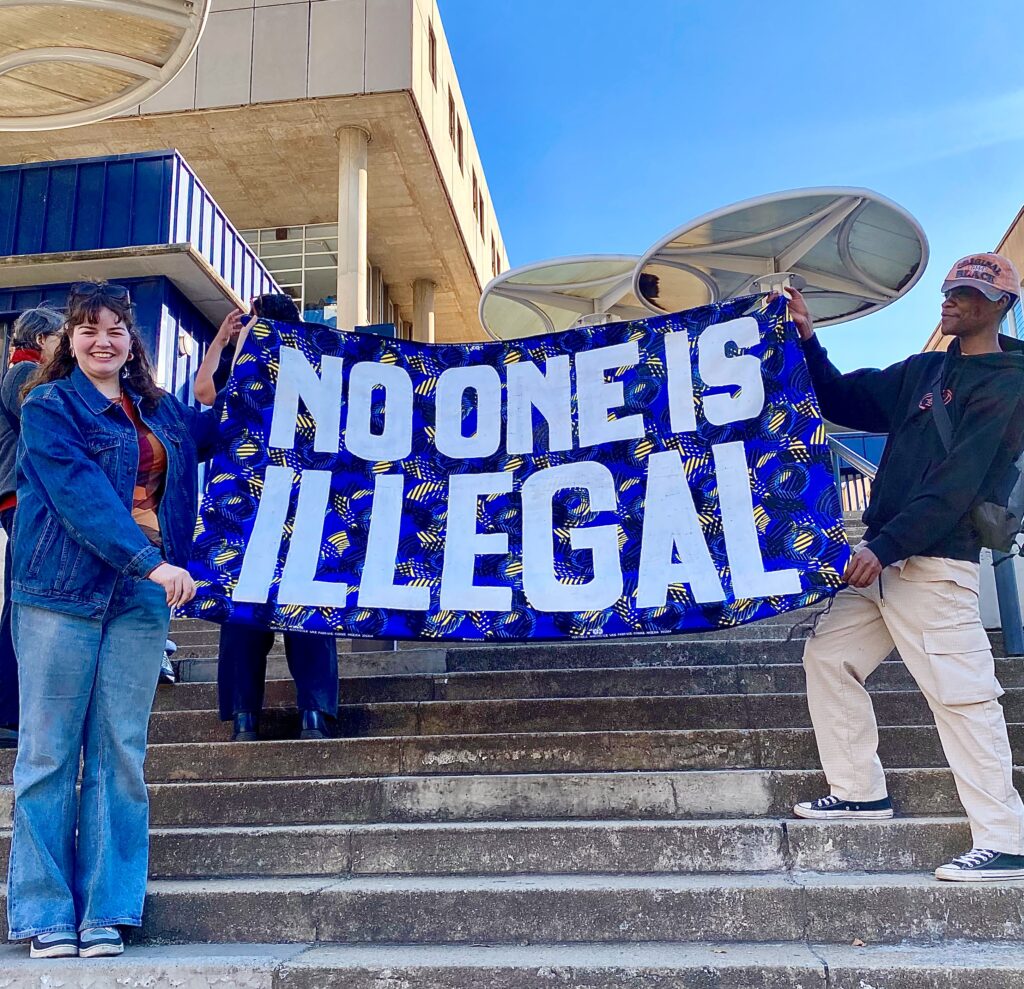
Protesters transformed the university entrance into a focal point for advocacy, displaying prominent banners and hand-painted signs condemning anti-migrant violence. One sign targeted the xenophobic rhetoric of Gayton McKenzie, accusing him of fueling an ‘Apart-hate,’ while others declared, ‘Targeting undocumented migrants is a hate crime’ and ‘No one is illegal.’
This demonstration was organised as a joint effort between Community Arts Mobilisation Project (CAMP), BDS Coalition, Kopanang Africa Against Xenophobia, Wits University Palestine Committee (WAPC) and Siyafana Sonke.
As attacks on migrants grow increasingly hostile, demonstrators call on law enforcement agencies to actively prosecute those inciting violence.
One protestor, Professor Marie Huchzermeyer, said the attacks constitute hate crimes. “This includes not only targeting people on the basis of their culture or country of origin, but also their migration status,” she states.
Dean Hutton, artistic director of CAMP, underscored the role of creative movements in driving social change, noting that artistic expression can “appeal to the soft parts of humans that rhetoric does not touch or move to action.”
Huchzermeyer echoes this view, stating “There is a view in Siyafana Sonke that I am drawn to which tries to win over the adversaries, making it a campaign of love rather than confrontation.”
Picture of two activists holding a banner that reads “No one is illegal”. Photo: Jamie Ho.
The picket is one of several planned demonstrations aimed at countering xenophobic narratives across South Africa. However, with tensions continuing to simmer across multiple provinces, activists acknowledge they face sustained pressure as they push back against organised anti-migrant sentiment.
FEATURED IMAGE: Picture of demonstrator holding a sign reading “Targeting undocumented migrants is a hate crime”. Photo: Jamie Ho.
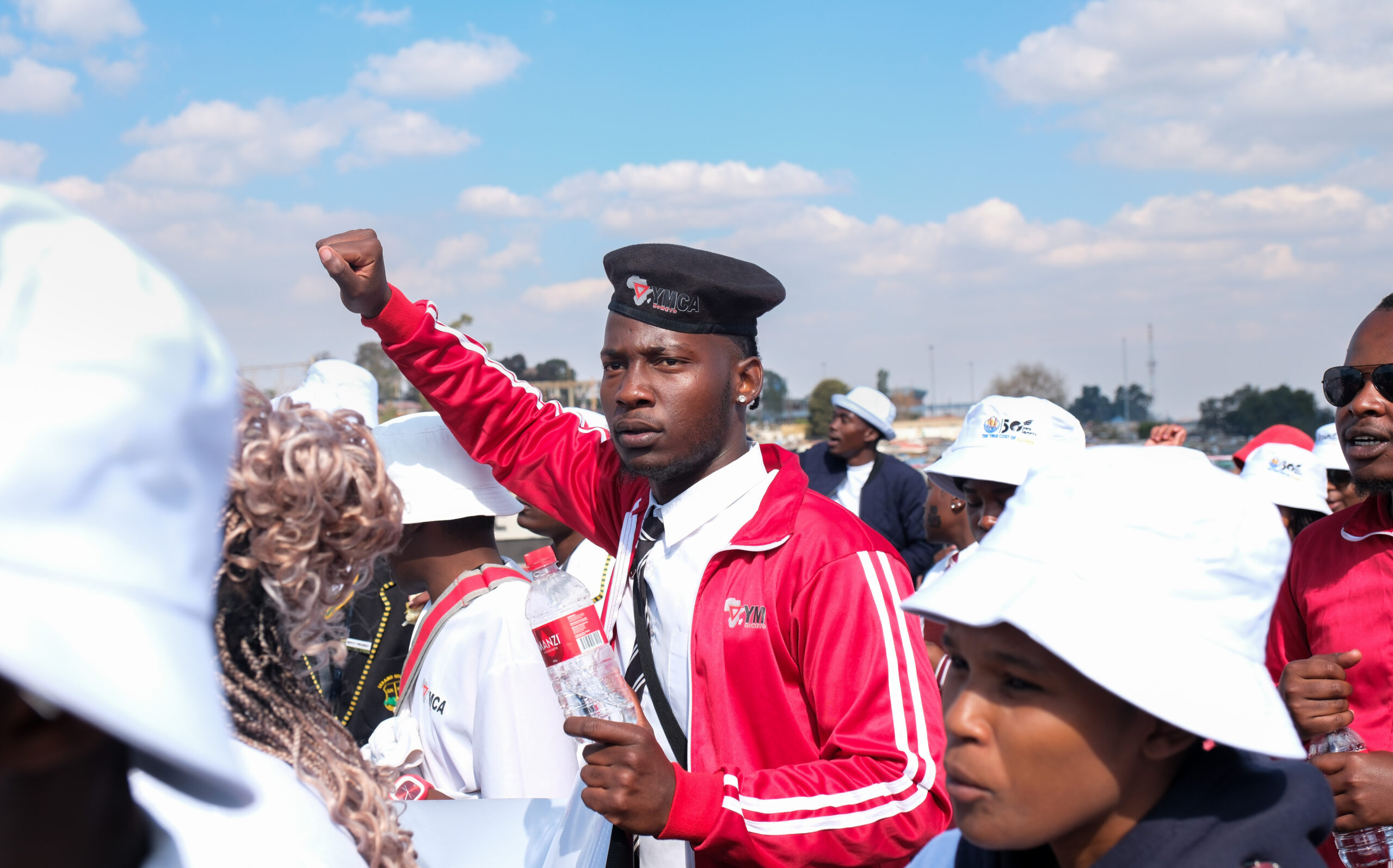
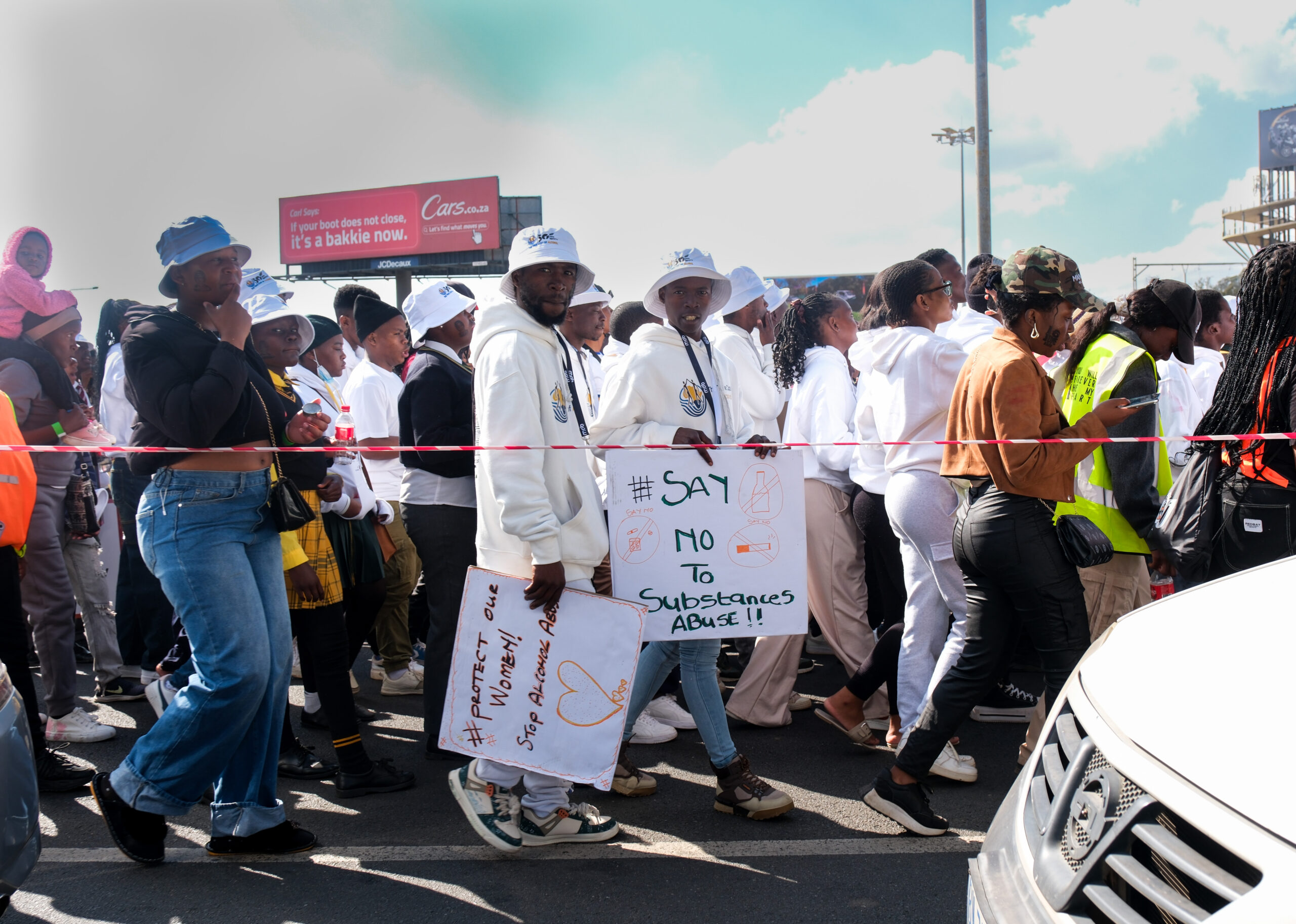
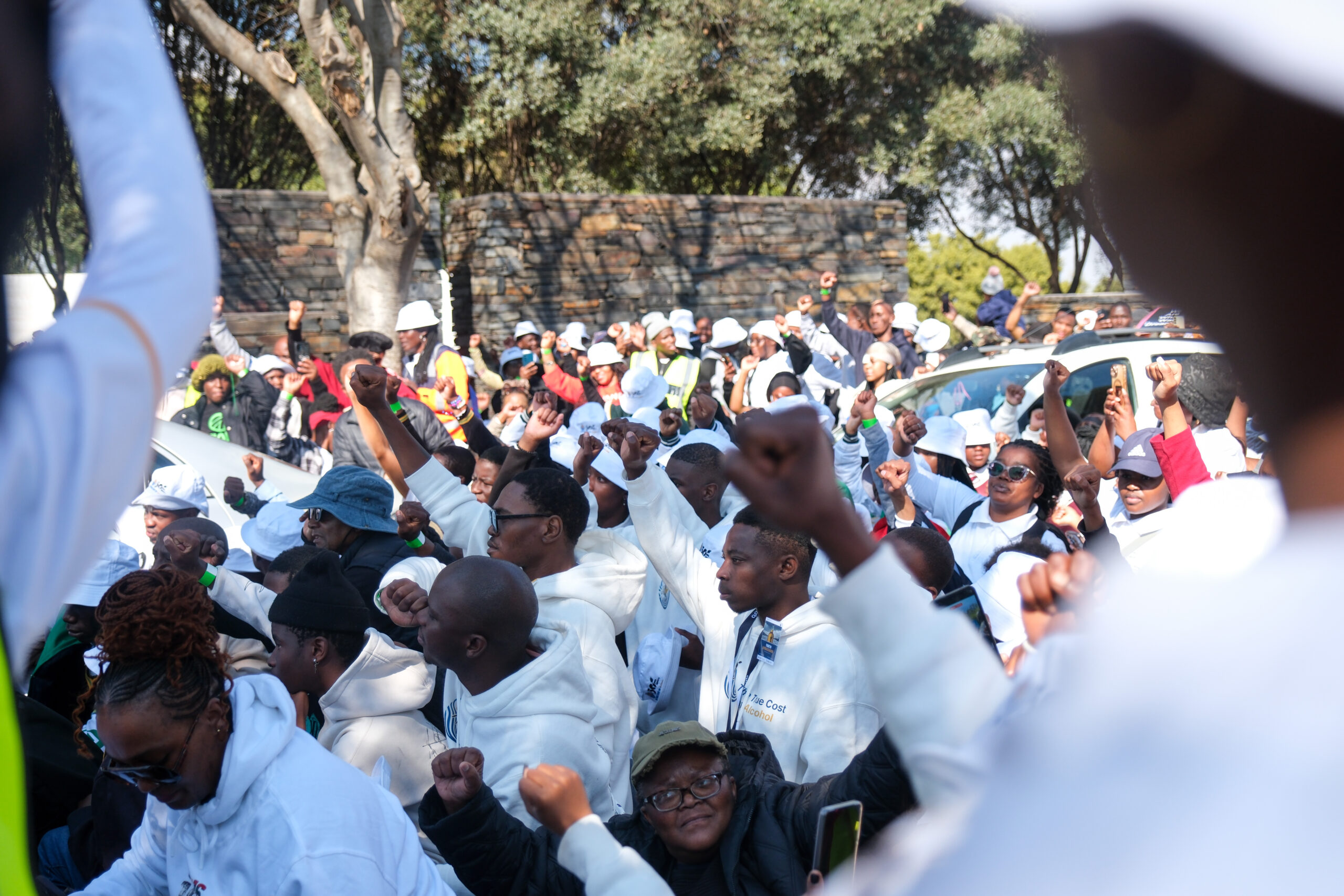
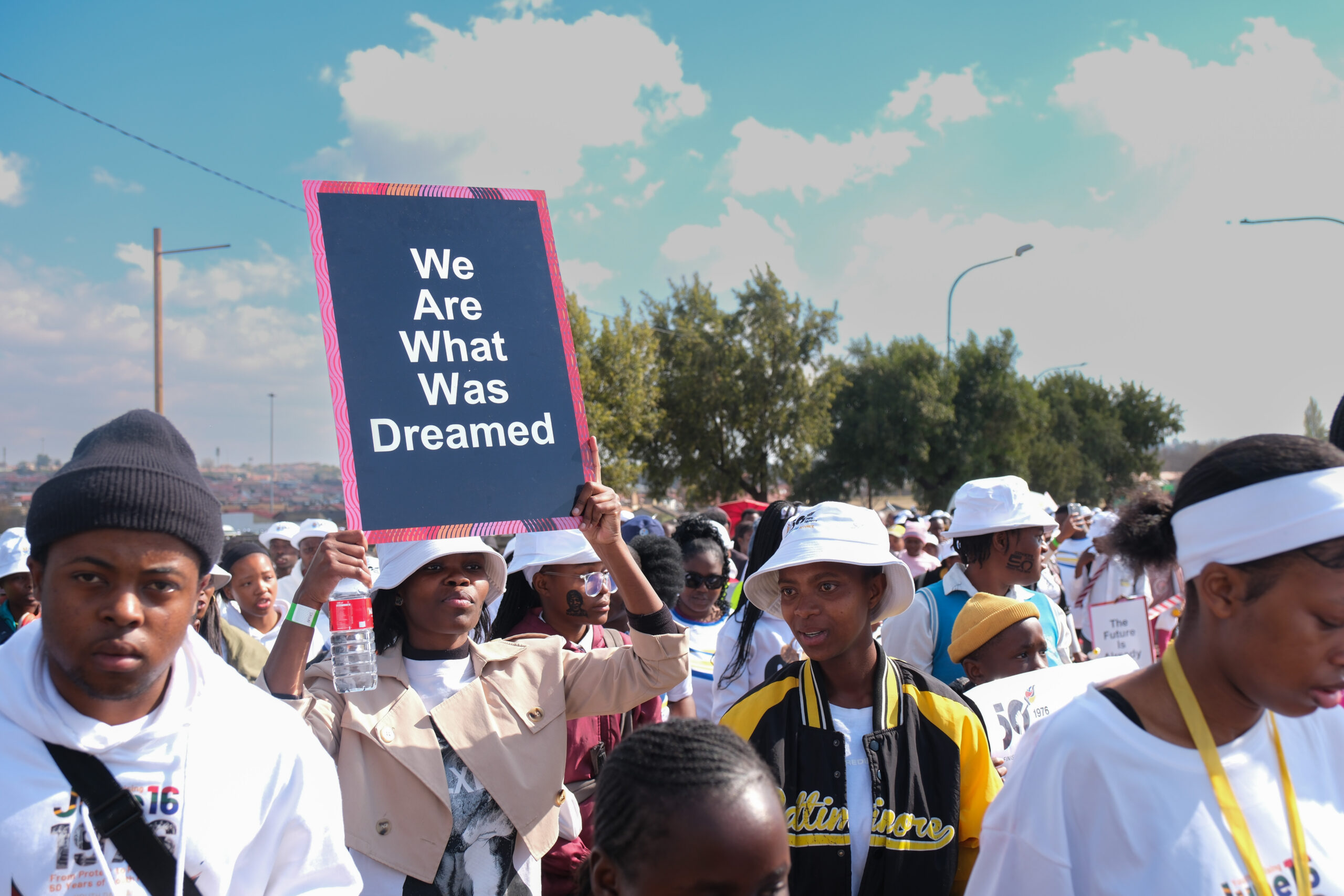
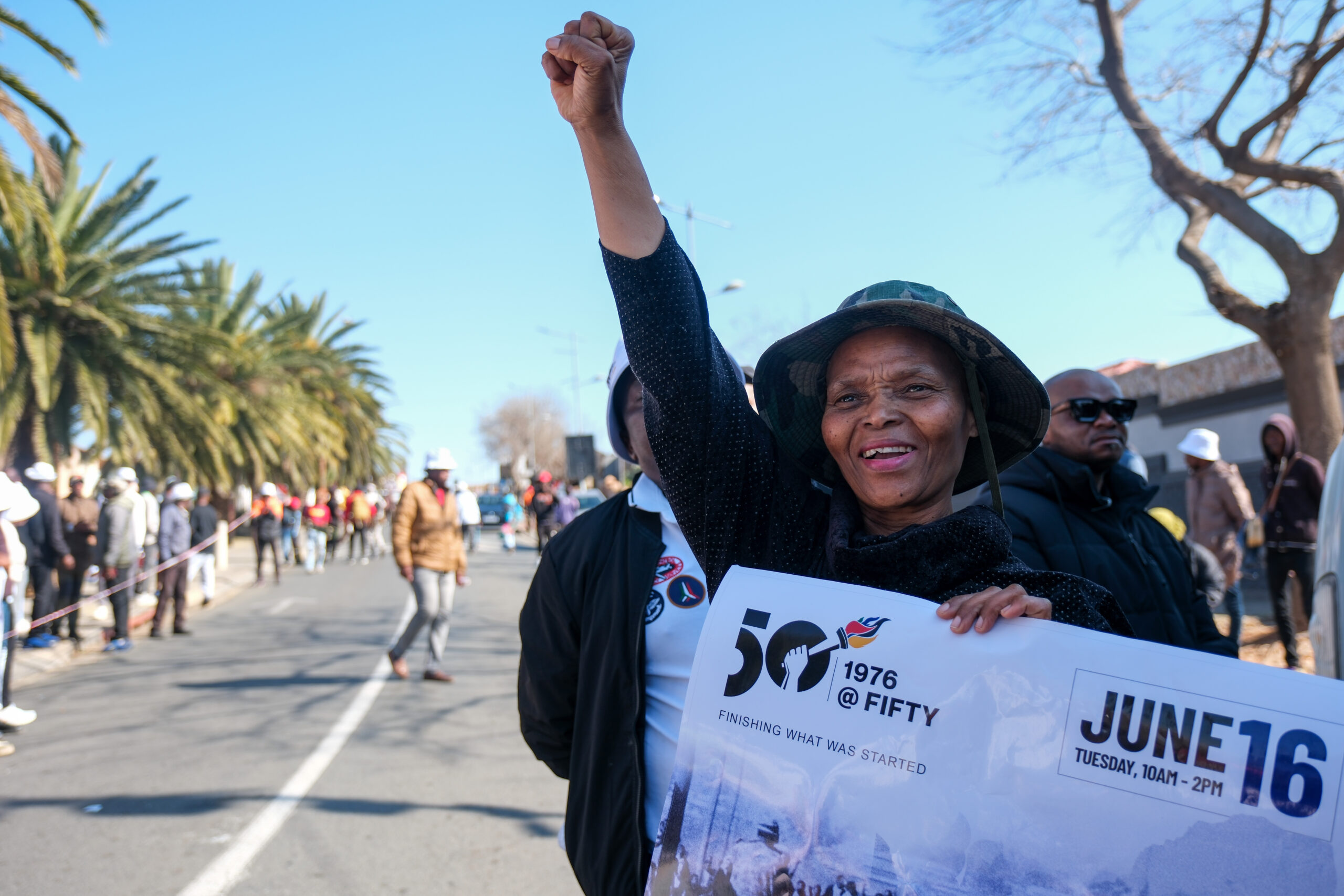
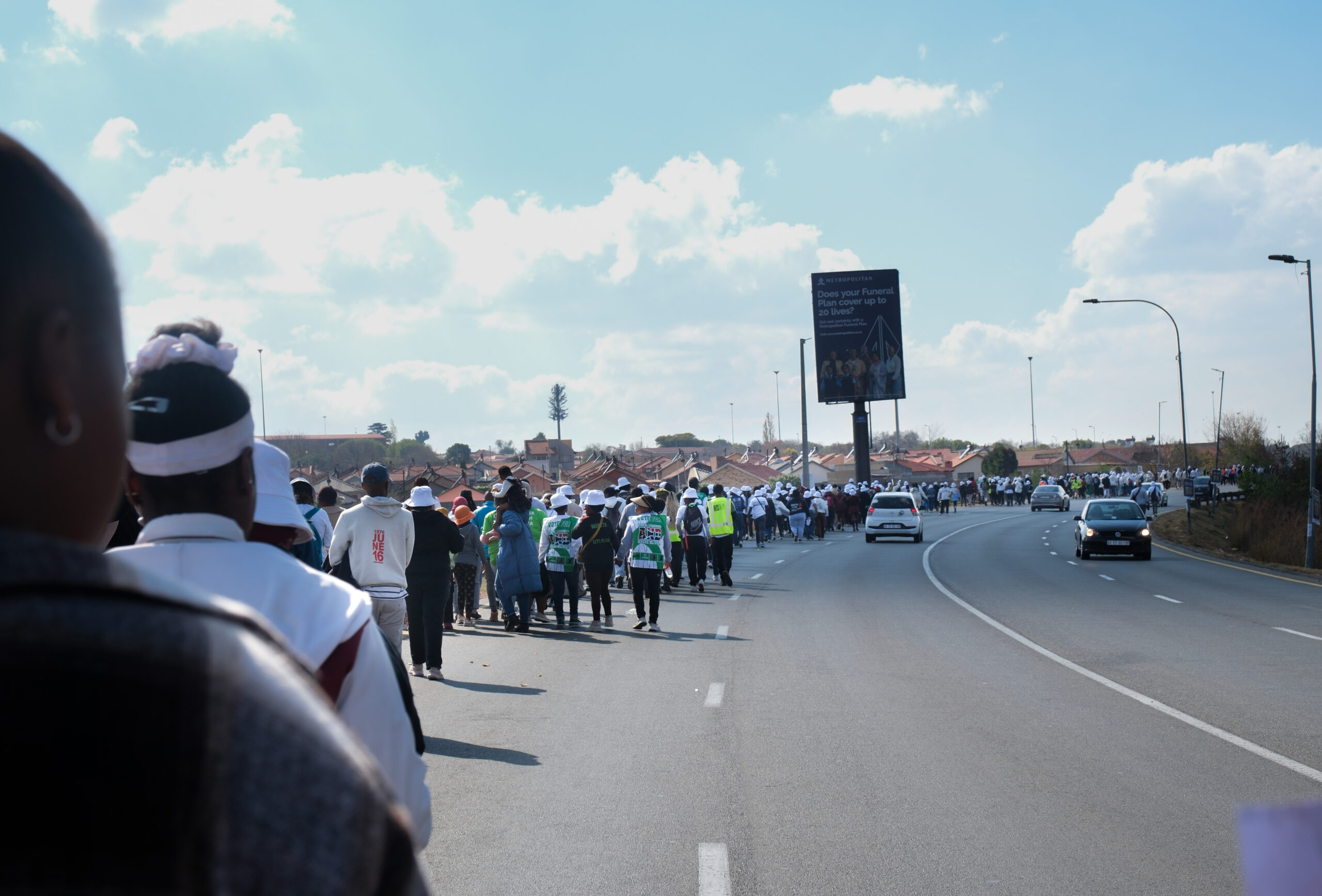
June 16 marks Youth Day in South Africa, commemorating the 1976 Soweto Uprising. Fifty years ago, thousands of primary and high school pupils marched against the apartheid government’s imposition of Afrikaans as the medium of instruction. What began as a peaceful protest, which was meant to end at Orlando Stadium with a rally, was cut short on the way when police opened fire, killing hundreds of students.
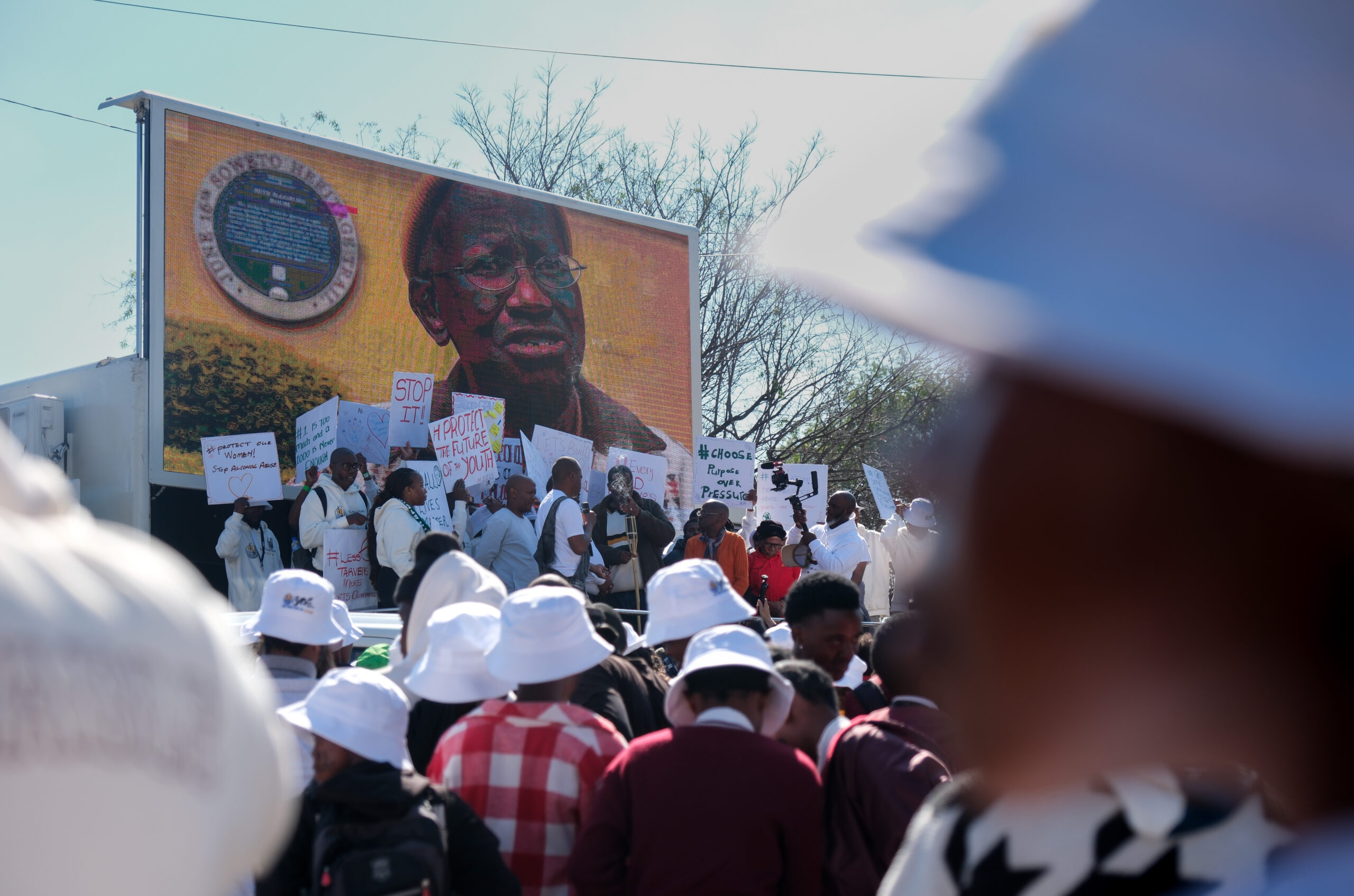
On June 16, 2026, hundreds of people, including university students and members of civil society, gathered in Soweto to retrace the original route and “finish what was started”. The march honoured the courage of the 1976 generation and stands as a reminder that their fight for freedom and justice continues to inspire South Africa’s youth today.
Opening speeches before the march. Photo: Hannah Brown
Youth walking through Soweto. Photo: Hannah Brown
March to “finish what was started”. Photo: Hannah Brown
Youth Day March. Photo: Hannah Brown
Youth Day – commemorating the 1976 Soweto Uprising. Photo: Hannah Brown
‘We are what was dreamed’ poster. Photo: Hannah Brown
In 1976, black students bravely marched against the apartheid government. Photo: Hannah Brown
Marching toward Orlando Stadium. Photo: Hannah Brown
FEATURED IMAGE: Opening speeches before the march on June 16, 2026. Photo: Hannah Brown
Every year the days leading up to Africa Day, street vendors start displaying their best cultural outfits because they know the public want to look good for the occasion. However, in the mix of cultural outfits and good cuisine the real meaning behind the celebration of Africa Day gets lost.
Ubuntu, I am because we are, is a traditional African philosophical concept and the foundation on which the Organisation of African Unity (OAU) was built on. The birth of the OAU, now known as the African Union (AU), on May 25, 1963, is the core reason why we celebrate Africa Day. 32 independent African states came together to fight colonialism and promote unity. This day is meant to strengthen the Pan African spirit, celebrate cultural diversity, reflect on progress and rewrite the narrative of Africa’s story.
Sadly, the meaning behind the celebration of this day has been watered down, and it has become just another day of dressing up, eating delicious food or a surge in sales for street vendors. Ntando Makhubu, a journalist at The Post Newspaper, wrote in his article that he spoke to a street vendor in Pretoria who said “For me, for us, it means a boom in business” which highlights how unaware some members the public are about the true intent of Africa Day.
Africa Day is only recognized as a public holiday in a handful of African Union member states, only six to nine of the 54. Mako Muzenda, a former freelance writer for Daily Maverick, wrote an article saying that the “25th of May is about statements and fanfare, not about making serious moves.” Africa Day has become more performative than educational or impactful, and this is another reason why the public’s awareness regarding Africa Day is low.
There are multiple articles promoting Africa Day celebrations that involve food, cultural dances, and dressing up. However, there are few speaking to the core reason of Africa Day and how Africa has grown or managed to rewrite its own story after colonization.
The lack of awareness shows how easily African history and unity can fade from public consciousness when not diligently taught. As the African Proverb says, “Until the lions have their own historians, the history of the hunt will always glorify the hunter.” This means if Africans do not actively preserve, teach and celebrate their own history and the foundation that it was built on, it will continue to be forgotten or overlooked.
Featured Image:Headshot of Chrislyn Majiedt, this week’s editor.
A true story of murder and the miscarriage of justice.
“Likewise, every good tree bears good fruit, but a bad tree bears bad fruit. A good tree cannot bear bad fruit, and a bad tree cannot bear good fruit. Thus, by their fruit you will recognise them.”
Fruit of a Poisoned Tree by Antony Altbeker is about one of the most sensational legal cases in South African history, the Inge Lotz murder trial. The book explores the murder of a young Stellenbosch master’s student; the prosecution of her boyfriend and the exposure of police fabrication and investigation.
On March 16, 2005, Inge Lotz was found brutally murdered in her apartment around 22:30 by Christo Pretorius after receiving a call from Lotz’s friend. The discovery he made was gruesome and extremely violent: Lotz had multiple stab wounds in her neck, chest, and ribs. She had been beaten with a hammer on her head. Her forehead was crushed inwards, leaving behind the flesh hanging on her face. According to the investigators, there was no sign of forced entry, and all her valuable items, such as her laptop and cell phone, were left untouched. This means her attacker was known to her.
Her boyfriend, Fred van der Vyver, quickly became the prime suspect. Although he had an alibi, the evidence found on the scene proved otherwise. His fingerprints were found on the DVD she had been watching the afternoon of the attack, a bloody shoeprint matched Fred’s Hi-tech shoes, and lastly, the hammer used to crush her skull was found in his car.
The trial became an exposé in which the defence and the prosecution were trying to discredit each other. Fred was charged with her murder but was later acquitted because it had been discovered that there was dishonesty from the prosecution. So, the case went cold, and Inge did not get justice.
A friend of mine, Mmathapelo Agatha Motlhale, recently passed away. She, too, fell victim to GBV at the hands of her step-uncle. I remember how much she would complain about him constantly terrorising her and her mother. To the point of getting a protection order, which did not last long. He violated the protection order rules one day and tried to attack her mother. While protecting her mother, she slipped and fell. While on the floor, he trampled on her leg with enough force that broke her ankle. When she reported the incident, he was arrested but was not held in custody for long. Upon his return, he kept terrorising them until he got her mother arrested.
The description of the brutality of the murder really shocked my nervous system. I just kept wondering what type of rage and hatred a person would have to have in their heart to commit such an atrocity. To make matters worse, these crimes are usually committed by people we love and trust. Strangers are less likely to kill another stranger in the manner these crimes are committed. It is so unsettling how the danger is almost always in the same house or family as these victims.
Since her murder, femicide and gender-based violence (GBV) rates have increased drastically. Unfortunately, these murders are committed by intimate or family members of the victim. Still, the justice system continues to fail women.
Unfortunately, during the court cases and living in hotels in fear of her step-uncle, she got an infection on the broken ankle, which resulted in her death. The step-uncle may not have killed her directly, but he influenced her cause of death. Had justice prevailed and the step-uncle arrested, her leg would not have been broken in a scuffle, she would have never had an infection and died.
This book reveals a profound miscarriage of justice and serves as a chilling indictment of the professional bankruptcy and systemic rot within the South African criminal justice system. Just like Inge and Mmathapelo, many other women were failed by the justice system. Many of them would have been alive if the system were just and fair.
FEATURE IMAGE: Fruit of a Poisoned Tree by Antony Altbeker Photo: Naledi Maraisane
Age might be nothing but a number, but in South Africa, it can be the thin line between having a job or not.
A struggling economy is forcing educated South Africans into prolonged unemployment.
Petition to end unfair age restrictions in career entry job opportunities.
Young graduate ideal vs older unemployed graduate reality.
A growing online petition calling for an end to age restrictions in jobs, internships and learnerships has revealed the unsettling reality of South Africa’s chronic unemployment. Young adults who are skilled but unemployed say they are being locked out of opportunities because they are considered “too old”.
Many internships and learnerships in both the public and private sectors commonly restrict applicants to those under the age of 35. Such age caps attached to entry-level opportunities unfairly disadvantage the older, unemployed candidates.
The petition has garnered over 10 000 signatures in just five days.
Signatory, Pat Mokoena (34) said being unemployed is “like being trapped in a cycle where employers demand experience while programmes designed to provide that said experience unfortunately exclude the majority of us because of how old we are, that’s why I signed the petition”.
Amid continued economic pressure in South Africa, unemployment remains among the highest globally. Youth unemployment has remained especially severe, and slow economic growth and limited job creation have intensified competition.
According to the conclusions of Hannah MacGinty’s master’s thesis, ‘Graduate unemployment in South Africa’, graduates are no longer entering the workforce immediately after completing their studies, resulting in delayed careers that stretch well into their 30s.
MacGinty warns that even those who secure employment are increasingly finding themselves in short-term or contract-based positions with limited long-term security.
This instability makes age restrictions even more problematic. Workers who lose jobs later in life often struggle to re-enter the labour market once they exceed programme age limits.
The petition and supporters thereof argue that “recruitment should focus on skills, qualifications, experience and willingness to work instead of age discrimination.”
While some employers may defend age caps as part of youth empowerment strategies, South Africa’s unique crisis needs to be considered.
This petition is a symptom of broader economic failures. It reflects the desperation and humiliation rituals that employment seekers have to endure in a constrained environment.
FEATURED IMAGE: Screengrab of the online petition. Photo by: Kamogelo Lesabe
RELATED STORIES:
Wits Vuvuzela, FINANCE FEATURE: Why financial freedom feels out of reach for South Africa’s graduates, August 2025
Wits Vuvuzela, INFOGRAPHIC: Uptick in unemployment rate, August 2024
Wits Vuvuzela, INFOGRAPHIC: South Africa’s unemployment takes top spot, September 2021
Wits is reopening Campus Lodge to ease postgraduate housing pressure, offering more affordable and dedicated accommodation for seniors.
The postgraduate accommodation has undergone much needed renovations.
The relaunch aims to address growing demand for affordable postgraduate accommodation at Wits.
Student leaders say the move is a step forward, but more support for postgraduates is still needed.
A once quiet Wit’s residence is preparing to welcome students again. The brown and blue building on the corner of De Korte and Station streets, may look the same from the outside but new rooms and common areas await inside.
Campus Housing and Residence Life (CHRL) confirmed that the postgraduate residence had been out of use and was in dire need of upgrades.
According to a post shared on CHRL’s TikTok page, the residence was initially expected to reopen on May 4, 2026, but couldn’t due to delays with equipment deliveries.
Claudine Prim the manager of the Central Accommodation Office, said the reopening is now expected on 18 May to address demand.
Prim said there is an “influx of postgraduate students looking for internal residences.”
The self-catering residence will offer a range of housing options, including studio apartments, two-bedroom apartments, and single rooms with shared kitchens and bathrooms.
Campus Lodge joins existing postgraduate residences including West Campus Village, International House and Wits Junction.
A picture of the entrance of Campus Lodge. Photo by: Sanele Sithole
For many students, the reopening could not come at a better time.
Mahloromela Silas Seabi, an MSc Computer Science student and chairperson of the Postgraduate Association (PGA), said postgraduate students often face limited and expensive housing options.
“University residences tend to be expensive, especially for postgraduate students, who are usually limited to Wits Junction, West Campus Village and International House,” Seabi said. “This gives an opportunity for more affordable postgraduate accommodation.”
He added that postgraduate students are often disadvantaged during residence allocation, as priority is usually given to undergraduate students, particularly first-years.
Seabi said demand for affordable postgraduate accommodation continues to grow alongside rising unemployment and economic uncertainty.
“Many students pursue postgraduate studies partly because of economic pressures, but often there isn’t enough affordable space to accommodate them,” he said.
Beyond affordability, Seabi argued postgraduate students require different support structures from undergraduates.
“A postgraduate space needs to cater for adults,” he said. “Some students are married; some have children. There needs to be communal spaces, lounges, good computing systems and support services that make students feel supported in their research journey.”
He added: “Accommodation is part of building a stronger postgraduate community — a space where students can interact, share ideas, support each other and manage the pressures of research.”
Students interested in applying for accommodation at Campus Lodge can visit the Central Accommodation Office on the ground floor of Solomon Mahlangu House for more information.
FEATURE: A picture of Campus Lodge. Photo by: Sanele Sithole
Former Auditor-General Terence Nombembe takes the chair at Wits Council, bringing a legacy of accountability to the university’s top governing structure.
Terence Nombembe, a key figure in South Africa’s fight against state capture, was appointed Chairperson of the Wits Council on 6 May 2026.
Nombembe has been a member of the Council since 2021, providing him with years of insight into the university’s complex financial and policy landscape.
SRC Deputy President Sibusiso Ngele expressed hope that Nombembe’s history with student leadership will lead to a positive future for the university.
The University of the Witwatersrand (Wits) has officially appointed former Auditor-General and Zondo Commission investigator Terence Nombembe as the Chairperson of the Wits Council. The move, announced on 6 May 2026, brings a world-renowned expert in accountability to the university’s highest governing body.
A legacy of oversight
Nombembe is no stranger to high-stakes governance. Before his election to the Chair this month, he served as a member of the Wits Council for five years, starting in 2021. His professional pedigree is rooted in transparency; he served as South Africa’s Auditor-General from 2006 to 2013 and later as the Head of Investigations for the Zondo Commission into State Capture.
Beyond his public office, Nombembe has held influential roles as the CEO of the South African Institute of Chartered Accountants (SAICA) and served on the board of the WWF South Africa. His career has been defined by a zero-tolerance approach to financial mismanagement, a background that Sibusiso Ngele, Deputy President of the Wits SRC, considers a vital asset.
“He is very familiar with Wits’ proceedings and the Council in general,” Ngele said. “That background is very important for the institution’s future.”
While the appointment of an “integrity expert” carries significant weight, Ngele was careful to define the boundaries of the Council’s power. He noted that while the Council approves major policy, financial rules, and documentation, the day-to-day management of the university remains the responsibility of the Vice-Chancellor.
Ngele noted that Nombembe’s role is primarily one of oversight rather than executive action, emphasising that the entire Council structure, not just the Chair, is responsible for implementing the university’s approvals. “As much as he is [the] Chair, it’s not very executive decisions that he has [to make]; it’s the whole structure that’s responsible for that implementation,” Ngele explained.
Addressing sensitive issues
When asked if Nombembe’s history of holding institutions accountable would change how management interacts with student leadership on sensitive topics, such as campus infrastructure, Ngele admitted the answer is not simple.
“It would be very difficult to answer that question,” Ngele stated. However, he remained hopeful that Nombembe’s track record would lead to a more collaborative environment. “Given his history with the SRC, I think we can really hope for a great future ahead for Wits,” Ngele concluded.
Waiting for the full picture
At the time of publication, other top members of the SRC executive, including President Gilbert Nchabeleng and Treasurer General Sonwabo Mhlahlo, had not yet commented regarding their specific expectations for Nombembe’s term.
As Nombembe settles into the chair, the student body will be watching to see how his high-level expertise in accountability translates into the tangible student experience on the ground.
FEATURED IMAGE: Picture of the Great Hall at the University of Witwatersrand. Photo: Daniella Ripamonti
In episode six of We Should Be Writing season 7, the team unpacked the evolution of music as a form of expression and protest, through four decades in the South African context. The episode explores the journey of South African music and its consumers from the 80s, 90s, early 2000s and contemporary listeners. From the […]