Today, apartheid-era spatial planning and car-centric design continues to shape commuting in Johannesburg, as cycling reemerges as an affordable and sustainable way to move around.
Johannesburg, South Africa’s most populous city, has a long and complex history with bicycles. Today, commuting is a daily struggle shaped by Apartheid, inequality, and inadequate infrastructure – factors which make cycling a difficult option for many.
A 2025 News24 report, citing the World Bank, revealed that “low-income commuters spend more than 50% of their earnings to get to work.” The bicycle is a tool for affordability, sustainability and freedom. However, in a city designed for cars, we need to reimagine urban space, to make it safer for pedestrians and cyclists while integrating public transport.
In the early 1900s, Johannesburg was celebrated as a cycling city. In an article published in the Guardian, Njogu Morgan, a postdoctoral research fellow at Wits University, quoted a 1903 newspaper stating that “nearly every third inhabitant rides a bicycle.” For white residents, cycling was fashionable and modern. However, for black residents, bicycles were often a necessity, but their freedom to ride was restricted and policed.
By the 1930s, rising incomes from the gold economy led to many white residents buying cars, and motoring became a symbol of wealth. Under apartheid, spatial segregation forcedblack workers into distant townships, far from job opportunities. Cycling became associated with black-working class commuters and was stigmatised as a ‘poor man’s mode of transport’.
Since, unsafe roads, long distances and investments in highways pushed bicycles aside completely. By the mid-1990s cycling had almost disappeared from the streets.
Modern Johannesburg was designed around cars instead of people. Urban Planner Phano Liphoto documented his morning journey on TikTok, his story sparked hundreds of responses from people who faced similar situations of waking at 4am and returning home after dark.
Commuter cycling is re-emerging as a cheaper and more environmentally friendly alternative, and it’s becoming increasingly popular among students, including myself. I’m fortunate to live relatively close to Wits University, making cycling a practical option. Many people told me it would be impossible to commute by bike in Johannesburg, warning that, especially as a white woman, it would be far too dangerous. Yet, I have found the city is absolutely cyclable, though it is far from being well supported.
With very few dedicated cycles lanes, and those that do exist are often blocked by taxis and cars. Bike lanes that had been introduced in the 2010s were criticised as “luxuries for the rich”, even though evidence showed lower-income workers were the main cyclists. Many cycle lanes are just painted on the ground, and according to a 13-year-old study “painted bike lanes without physical barriers are often more dangerous than nothing at all.”
On my route to campus, a cycle lane suddenly appears along a busy road, only to disappear in the middle of traffic. But, with some planning and the use of back streets, cycling is manageable and a great option. There are also groups, such as Banditz Bicycle Club and Girls on Bikes, that are advocating for more people to take up commuter cycling, offering affordable bikes and helping to map safer routes. Groups like Young Urbanists have proposed low-cost upgrades and protection, including in their “Stage 01 of Reclaiming Our Cycling Lanes ”briefing for Cape Town.
Transport experts argue that a cycling infrastructure cannot succeed on its own. Stigma also remains a concern. As Morgan explores in the book Anxious Joburg there is a complex relationship between identify and transport and “identities are constructed through transport behaviour.”
As Director of Wits University’s Centre for Diversity Studies, Professor Nicky Falkof, stated in an interview on YouTube, “There also needs to be a significant shift where people stop thinking bicycles are a lower-class form of transport.” This highlights the link between transport and identity and explains why bike lanes often go unused. They were built without broader cultural and systemic support.
Reclaiming the bicycle is not just about transport, it is about ending spatial violence and redesigning cities to prioritise people. While South Africa faces challenges from its past, there is an opportunity to build a more inclusive and connected urban space.
Growing violence, censorship and political attacks against journalists have driven press freedom to its lowest point. Speakers at the Investigative Journalism Summit highlight the urgent need to defend truth in an era where “reality itself feels fake”.
The 2026 RSF World Press Freedom Index reports lowest global score in its 25-year history.
The 2026 Investigative Journalism Summit warns that intimidation, online harassment and imprisonment is silencing journalists worldwide.
129 journalists were killed in 2025, highlighting the important need to protect press freedom.
As the world observed World Press Freedom Day on May 3, 2026, journalist safety came under the spotlight more than ever before. Around the world, intimidation, harassment and imprisonment are increasingly used to silence reporting. 2025 was the deadliest year on record with 129 journalists killed worldwide. According to the 2025 Human Rights Watch Report, approximately 72% of the world lives under authoritarian regimes, where they are locked within state-controlled information. The latest Reporters Without Borders (RSF) World Press Freedom Index shows that press freedom is now categorised as “difficult” or “very serious” in more than half of the world’s countries – the lowest global score in the Index’s 25-year history.
Journalism helps the public make informed, fact-based decisions and hold power to account. In a time of misinformation and disinformation, no one knows what to believe anymore. At the 2026 Truth Tellers, Sir Harry Evans Investigative Journalism Summit, held on May 6, Katherine Viner, Editor-in-Chief at The Guardian, reflected on our changing information landscape. “We used to talk about fake news, but now reality itself feels fake,” she said.
The theme of World Press Freedom Day 2026 was ‘Shaping a Future at Peace’, highlighting the important role of independent media in conflict zones. Accurate and timely reporting can save lives, counter disinformation and expose state violence. Yet, despite protections under international humanitarian law, journalists are increasingly treated as targets.
Governments are weaponising laws to silence reporters. RSF warns that journalism is being “asphyxiated” by political attacks, reduced media funding and a system that is criminalising reporting. As the RSF Index revealed – the United States dropped seven places, signalling a loss in media independence, following cuts to international broadcasters and repeated attacks on the press by President Donald Trump. In Latin America, Ecuador fell 31 places after the murders of journalists Darwin Baque and Patricio Aguilar. While Peru dropped 14 places following the killing of four reporters.
South Africa ranks in 27th place, the highest on the African continent and includes a range of media outlets. Although, many independent journalists still face challenges, and public broadcasters sometimes deal with political pressure. In a 2023 statement, SANEF highlighted “trends of trolling and doxing, (the act of disclosing a journalists full name, address, contact number, and other identifying details without their consent).”
Israel continues to commit violations of international law, and the military were responsible for killing two-thirds of journalists last year. According to RSF, since October 2023, more than 220 journalists have been killed in Gaza, including at least 70 while reporting.
Across the Sahel, countries such as Niger have experienced a collapse of press freedom under armed groups and military juntas. Sudan has become one of the most dangerous places to work; the ongoing civil war has created a climate of fear as Government targeting and military violence continues.
Online harassment, particularly against women reporters continues to rise. During the Summit, Maria Ressa, a Filipino journalist and co-founder of Rappler, said she received “an average of 90 hate messages per hour” online, adding that, “you’re targeted because you’re a journalist, because you determine fact from fiction.”
World Press Freedom Day poster. Photos: Hannah Brown
In Iran, thousands were killed during protests, and journalists were jailed under cybercrime laws. Similar methods have also been seen in Bahrain, Kuwait, and the wider Gulf region, where reporters have faced imprisonment for documenting conflicts. Despite the dangers, Ressa insists there is no better time to be a journalist, and we must rebuild how we are doing things. “The battle is now. So, if you’re a journalist today, man, this is the time to jump in.”
Press freedom advocates argue that attacks on journalists are a warning of wider threats to freedom. Speakers at the conference also explained deliberate strategies to weaken journalism – slandering and discrediting reporters, weaponising visas and targeting support systems. Caoilfhionn Gallagher KC, International Human Rights Lawyer stated, “the idea of undermining the journalist so you undermine the messenger, and therefore you undermine the message.
Organisations around the world are pushing governments to end crimes against journalists and protect those reporting from conflict zones. As photojournalist Lynsey Addario stated, “we all suffer when we can’t see the truth.” Without safeguards, the world risks losing not only its reporters but also the public’s access to information.
FEATURED IMAGE: World Press Freedom Day poster. Graphic and photos: Hannah Brown
Winnie Madikizela-Mandela, Albertina Sisulu, and Adelaide Tambo are often remembered as women who stood behind great men while their husbands were imprisoned, exiled, or silenced by Apartheid. However, that memory is incomplete.
These women are not simply supporting figures in South Africa’s liberation story; they are central characters in it. They were organisers, political actors, caregivers, and leaders who carried families, communities, and, in many ways, the struggle itself on their backs.
The new Netflix documentary The Trials of Winnie Mandela offers a deeply moving portrait of Mama Winnie — from her youth to her marriage, to becoming one of Apartheid’s fiercest opponents, and later enduring public scrutiny during the Truth and Reconciliation Commission. What the documentary captures so powerfully is not just Winnie Mandela’s politics, but her resilience.
When Nelson Mandela was imprisoned for 27 years, Winnie kept his name alive. While the apartheid state tried to crush resistance, she remained visible, vocal, and defiant. At home, she was left to raise two daughters under immense pressure. In public, she became the face of resistance. In private, she still had to be a mother, provider, protector, and head of the household. She was expected to be everything.
That reality is not unique to Winnie Mandela. It is the lived reality of millions of South African women today.
According to Statistics South Africa, approximately 6.1 million households or 37.9% of all households in South Africa were headed by women in 2018, with female-headed households being most common in rural provinces such as the Eastern Cape (46.9%), Limpopo (45.8%), and KwaZulu-Natal (45.0%). More recent figures show that by 2024, that number had risen to 42.4% of households nationwide, meaning more than two in every five South African homes are led by women.
This is not a small social trend; it is the backbone of South African society. And yet, despite carrying homes, raising children, and often being the sole breadwinners, women continue to receive little recognition for their labour. Their sacrifices are normalised. Their struggles are overlooked. Their strength is expected.
Instead of appreciation, many are met with criticism, scrutiny, and impossible standards much like Winnie Mandela herself, whose legacy is too often reduced to controversy rather than the weight of what she carried.
A graphic of resilient women. Graphic and photos: Sanele Sithole
I think of women like my own mother, and countless others whose names will never appear in documentaries or history books, but whose work has held families together against impossible odds. These women build homes from very little. They sacrifice quietly. They endure endlessly, yet we rarely tell their stories in full.
South African history has long celebrated men as heroes, while women are remembered as wives, widows, or footnotes to male greatness. Women were never standing beside history; they were making it.
The question is no longer whether women deserve recognition.
The real question is: when will we finally honour the women who have been carrying this country, often alone, all along?
FEATURED IMAGE: A graphic of resilient women. Photo by: Sanele Sithole
As a fashion design graduate, I view the Met Gala with a more demanding eye than the average spectator. I look for textile innovation and historical literacy. When the 2026 theme was announced as “Costume Art,” I was ecstatic. It was a call to treat the human form as a canvas.
This theme offered a limitless playground, yet the evening proved to be a game of hits and misses. While some evolved the silhouette, others simply slapped a painting onto fabric. True “Costume Art” requires transformation, and only a handful truly understood the assignment.
However, one cannot discuss the artistry on the steps without acknowledging the tension on the streets. The evening’s opulence faced heavy scrutiny as Jeff Bezos served as honorary chair. The record-breaking $42 million (R701.87 million) proceeds drew criticism, with protesters outside highlighting the disparity between the gala’s excess and Amazon’s labour controversies. This corporate undertone, marked by the notable absences of stars like Bella Hadid, Zendaya and New York’s mayor, Zohran Mamdani, left the event feeling more like a private billionaire function than a cultural zeitgeist.
So I followed with that unease at the back of my mind, but with my eye and pen poised.
The ‘almost’gallery: honourable mentions
These looks were undeniably stunning and technically brilliant, but they missed my top spots because they felt a bit too ‘safe’, or in one case, incomplete, compared to the architectural risks taken by my favourites.
Laura Harrier (Di Petsa): A masterclass in ‘wet look’ draping that turned her into a Greek marble statue, though the silhouette felt familiar.
Kendall Jenner (Gap Studio): A sophisticated take on the Winged Victory of Samothrace. Had she worn her monumental wings on the carpet rather than just in the museum photos, she would have secured the win.
As stunning as those classic references were, a few attendees truly understood the assignment, transforming the body into a living canvas in ways that felt entirely new.
The masterpieces: when fashion becomes art
Emma Chamberlain set the bar in custom Casey Cadwallader for Mugler. Drawing from Van Gogh’s impasto techniques, the gown utilised hand-painted resin and moulded silk to capture the tactile texture of a canvas come to life. She didn’t just wear art; she embodied the medium of painting itself.
Yu-Chi Lyra Kuo provided a moment of monochromatic brilliance, channelling the Winged Victory through Jean Paul Gaultier’s architectural pleating. The atelier transformed soft fabric into chiselled marble, celebrating the artisan’s ability to turn textile into stone.
Sabine Getty offered a haunting metaphor for the decay of art. The Ashi Studio bodice featured surrealist hands that seemed to sculpt her form, while the shredded silk skirt appeared to unravel like an ancient, deteriorating canvas. It was a masterclass in using deconstructivism to tell a story of loss.
Anok Yai, in Balenciaga, delivered the night’s most profound transformation, coating her skin in bronze pigment to embody the ‘Blac Madonna’. While others wore art-inspired gowns, Yai used her skin as the medium. It was a powerful reminder that fashion can re-contextualise the human body as a sacred object.
However, the brilliance of these living masterpieces only made the night’s failures more glaring.
The unfinished canvases
Simone Ashley’s Stella McCartney gown felt pedestrian. The body-chain aesthetic lacked innovation and failed to engage with the theme’s sculptural possibilities. Similarly, Kim Kardashian prioritised her signature cinched branding over thematic exploration. Her Allen Jones collaboration felt more like high-budget cosplay than the “Living Sculpture” it aimed to be.
The evening’s most egregious oversight came from Deborah Roberts, who arrived in a Christopher John Rogers gown she had already debuted at the 2022 New York City Ballet. For an event centred on innovation, re-wearing a years-old socialite gown felt dismissive of the Met’s prestige.
Finally, Zoë Kravitz in Saint Laurent was a masterclass in the mundane. A basic black lace gown offers zero artistic provocation in this context. For a designer, the lack of innovation is jarring; it wasn’t “bad” fashion, it was absence of a vision.
Ultimately, the 2026 Met Gala proved that when you give designers the world as their canvas, the results are polarising. We saw the heights of technical brilliance, where fabric was manipulated to look like marble or wet oil paint, and we saw the lows of creative stagnation, where ‘basic’ was the order of the day.
As a journalist and a designer, I believe the Met Gala should be the one night where ‘wearability’ is the last thing on anyone’s mind. We want to be challenged; we want to see the boundaries of the human form pushed until they break. This year showed us that while anyone can wear a dress, very few can truly embody a masterpiece.
For those who dared to treat their bodies as a canvas, the result was nothing short of legendary. For the rest? There’s always next year’s exhibition.
Vuvu rating: 6.9/10
FEATURED IMAGE: Rough fashion illustration, edited by AI. Graphic by: Daniella Ripamonti
At Wits, decolonisation remains incomplete as English dominance continues to limit true multilingual inclusion in learning and assessment.
In 2015, during the #FeesMustFall movement, South African universities were forced into a reckoning that extends beyond protest and policy reform. At the University of the Witwatersrand, this moment led to a language policy that introduced English, isiZulu, Sesotho, and South African Sign Language (SASL) into its academic framework. Yet, as Wits advances through its 2023 Strategic Framework, a plan guiding the university’s goals around transformation, inclusion, research, and global competitiveness, though a contradiction remains: the institution speaks of decolonising knowledge while leaving the language of learning largely unchanged.
Decolonisation without linguistic transformation is incomplete. A curriculum may diversify its content but if access to knowledge remains dependent on English, exclusion is not removed but relocated into the medium of instruction. This dynamic can be understood through what Miranda Fricker terms epistemic injustice, which is a condition in which certain forms of knowledge are undervalued because of the language in which they are expressed. In this context, students are not excluded from knowing, but from having their knowledge fully recognised unless it is articulated in English.
As Steve Biko warned, “the most potent weapon in the hands of the oppressor is the mind of the oppressed”, a condition sustained not only through content, but through the very language in which knowledge is delivered and recognised. His insistence that education must cultivate critical consciousness rather than reproduce subordination sharpens this argument: when students are compelled to translate their intellectual lives into English to be legible, the system does not liberate thought; it disciplines it.
This is not abstract. In lecture halls across Wits, language shapes how students learn and are assessed. In science and health sciences courses, students encounter, process, and are tested on complex ideas in English, even when understanding often begins in other languages during peer discussion. Learning in familiar languages can improve comprehension, participation, and confidence, reduce cognitive load and also allow students to engage more fully with complex material.
In engineering tutorials, students switch to isiZulu or Sesotho in order to unpack difficult concepts, only for that cognitive work to disappear in formal assessment, where only English counts. In Sociolinguistics, this is understood as code-switching, a skilled practice rather than a deficiency. What appears as hesitation is, in reality, intellectual labour: students are learning disciplinary content while translating it across linguistic systems; a demand not equally placed on all. They are not struggling with content; they are performing unpaid intellectual labour to make that content legible within a single dominant language.
Wits visibly acknowledges four languages on campus signage, raising questions about the absence of South Africa’s other official languages in learning and assessment. Photo: Alice Dhlamini.
This extends beyond technical disciplines and reflects a broader experience across faculties where language shapes who can fully access knowledge.
As third-year industrial engineering student Tshedza Tsiololi explains, “some engineering terms, such as dynamic system or torque, do not translate easily into everyday language… This makes learning time-consuming, especially in the absence of accessible translation tools”. This translation process carries material consequences. When comprehension is delayed, so too is performance, affecting assessment outcomes, time to completion, and the cost of education. Language barriers are therefore not only pedagogical concerns but structural inefficiencies.
The result is not a lack of understanding but a delay in it. Students carry an invisible cognitive burden, constantly translating their thinking. Language cannot be treated as a secondary issue in curriculum reform.
Language shapes how knowledge is accessed, processed, and recognised. When a medical student must translate reasoning to communicate with a patient, or an engineering student is assessed in a language that can flatten thinking processes, language becomes a gatekeeping mechanism. Yet the persistence of English is often justified through its role in global academia. While not unfounded, this argument is incomplete. Countries such as Germany, Japan, and South Korea demonstrate that strong language production can occur in national languages alongside English. Multilingualism is not a barrier to global relevance but a source of intellectual flexibility.
Wits’ current approach reflects both progress and limitations. As noted by the Head of African Languages, Dr Soyiso Khetoa, “the university’s focus on English, South African Sign Language, isiZulu, and Sesotho is informed by demographic research”. Institutional efforts, such as language-learning applications, support isiZulu acquisition. However, this raises a deeper question: what happens to students whose linguistic identities fall outside these dominant categories?
A comparative perspective complicates this further. In Tanzania, the adoption of Swahili under Julius Nyerere aimed to democratise education and strengthen national identity. This model significantly expanded access and participation at foundational levels, enabling students to learn in a familiar linguistic context. While access improved at foundational levels, challenges emerged in higher education, including limited technical terminology. This illustrates that linguistic transformation is both possible and complex, requiring sustained commitment rather than selective implementation.
Accommodation based on geographic prevalence may be efficient, but it is not neutral. It creates new margins. Students who speak other African Languages remain excluded, not because their languages lack value, but because they fall outside institutional feasibility. In this way, multilingualism risks becoming selective rather than transformative. South Africa’s own history offers parallels. Institutions such as Stellenbosch University and the University of Pretoria have shown that full academic systems can be developed in Afrikaans, raising the question of why similar levels of investment have not been extended to African languages in a democratic context, while also revealing how language can function as both inclusion and exclusion.
Bert van Pinxteren argues that expanding the language of learning is expensive and complex. “Developing academic terminology in African languages, training staff, and redesigning assessments require time and resources”, he notes. These challenges are real, but difficulty is not a justification for permanence. Technology tools, from translation software to AI-assisted terminology development, are reshaping what is feasible. The limitation is increasingly institutional: whether universities are willing to invest in systems that reflect their students’ realities.
When African languages are used informally for explanation but excluded from formal assessment, universities reinforce a hierarchy where legitimacy remains tied to English. Inclusion becomes conditional.
Restricted-access signage at Wits mirrors ongoing debates around who is fully recognised within the university’s linguistic and academic spaces. Photo: Alice Dhlamini.
The 2015 policy was a meaningful step, but without implementation, it risks becoming symbolic. If students must translate their intellectual lives into one dominant language to be recognised, decolonisation remains incomplete. The issue is the distinction between symbolic and material transformation: policy signals intent, but assessment determines whose knowledge is legitimised.
A serious commitment to transformation does not require abandoning English. It requires building multilingual academic systems where English is one of several legitimate languages of learning. This could include bilingual modules, expanded language support, and discipline-specific terminology across a broader range of African languages.
And perhaps the most uncomfortable question is this: must students once again protest to be heard? The 2015 moment demonstrated that institutional change often follows student pressure. If language remains a barrier, it raises concerns about whether dialogue alone is sufficient.
Decolonisation, if it is to mean anything, must be a dialogue, not only between institution and student, but between languages themselves. The question is not whether English will remain at Wits; it will. The question is whether students will continue to think in multiple languages but be recognised in only one language. Until students can be recognised in the languages in which they think, decolonisation remains a translation exercise, not a transformation. More fundamentally, it is whether Wits is willing to move from being a university that is merely in Africa to one that is truly of Africa.
FEATURED IMAGE: A student points toward an emergency assembly point at Wits, symbolising urgent questions around language, access, and transformation in higher education. Photo: Alice Dhlamini.
We talk about autism more than ever, but who actually gets help? In South Africa, the gap between awareness and access is leaving many behind.
Autism is more visible than ever, but many families still can’t access the support they need.
Overcrowded public schools and costly private options leave many learners with nowhere to go.
Real inclusion needs better funding, trained educators, and a system that supports autistic learners.
April marks Autism Awareness Month, a time dedicated to promoting understanding and inclusion for individuals with autism spectrum disorder (ASD). In South Africa, however, awareness has not translated into access. Despite growing public conversations around autism, many families still struggle to find affordable education and support. The gap between awareness and access is stark, particularly for working class households. A recent TimesLIVE report highlighted the harsh reality for families of children with disabilities. While some are forced to pay out of pocket for transport to distant schools, others are left with no schooling options at all. This reflects a broader systemic issue: there are simply not enough specialised institutions to meet the demand.
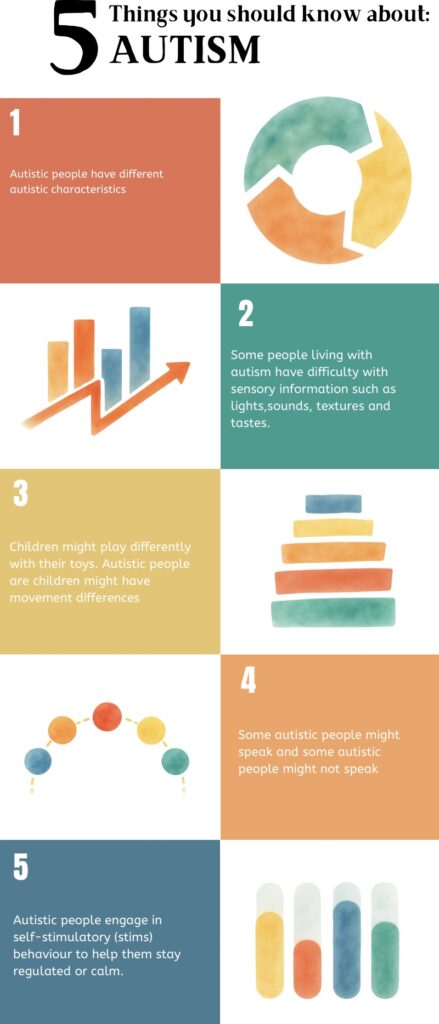
5 Things you should know about autism. Poster: Nqobile Mtshali
In Johannesburg and surrounding areas, there are fewer than 10 public schools with structured autism support, compared to a growing number of private specialised centres. This highlights a clear gap between public provision and demand. Many of these schools are oversubscribed, with waiting lists stretching for years. In contrast, despite offering more specialised autism-focused centres, the private sector remains largely inaccessible due to cost.
While the Department of Basic Education has promoted inclusive education as a solution, implementation has been slow and uneven. Mainstream schools are often under-resourced and lack the training to support neurodivergent learners. Autism advocate and National Regional Development Officer (RDO) at Autism South Africa Mary Moeketsi says the system continues to fall short. “There’s a push towards inclusive education,” she explains, “but without proper support, it doesn’t work for many autistic learners.”
The lack of access to government autism support institutions pushes families toward private institutions as a desperate solution, with fees reaching up to R15,000 per month, well beyond the reach of most South Africans. “Parents are left with very few options,” Moeketsi adds. “And even then, not all private schools provide the level of support needed.”
Beyond infrastructure, awareness itself remains uneven. Most notably in Black communities, stigma and misinformation continue to delay diagnosis and intervention. “There’s still a lot of misunderstanding around autism,” says Moeketsi. “That lack of awareness directly affects access to support.”
This is not to say solutions don’t exist as organisations like the National Autistic Society provide free resources, guidance, and advocacy tools to support individuals with autism and their families. Locally, NGOs and advocacy groups are also working to bridge the gap through community outreach and education. However, autism activists argue that meaningful change requires more than just awareness campaigns. Increased government investment, better teacher training, and expanded support services are critical to making inclusive education a reality.
Autism Awareness Month raises an important question: what does awareness mean if most South African families still cannot access basic support?
Until access improves, awareness alone risks becoming symbolic rather than transformative.
FEATURED IMAGE: Autism Awareness Month Poster: Nqobile Mtshali
The inaugural Wits International Vocal & Chamber Music Festival begins on a powerful note, blending music, memory and meaning in a moving tribute to the youth of the Soweto Uprising.
The first-ever Wits International Vocal & Chamber Music Festival launched with a powerful opening concert at Seabrooke Music Hall.
The programme centred on Gabriel Fauré’s Requiem, honouring the children of the 1976 Soweto Uprising.
Performers delivered a technically refined and emotionally gripping experience that set a high standard for the festival.
A quiet anticipation filled the Seabrooke Music Hall on Wits East Campus on April 22, as audiences gathered for the opening of the inaugural Wits International Vocal & Chamber Music Festival. What unfolded was not just a performance, but a deeply moving musical tribute rooted in history, memory and collective reflection.
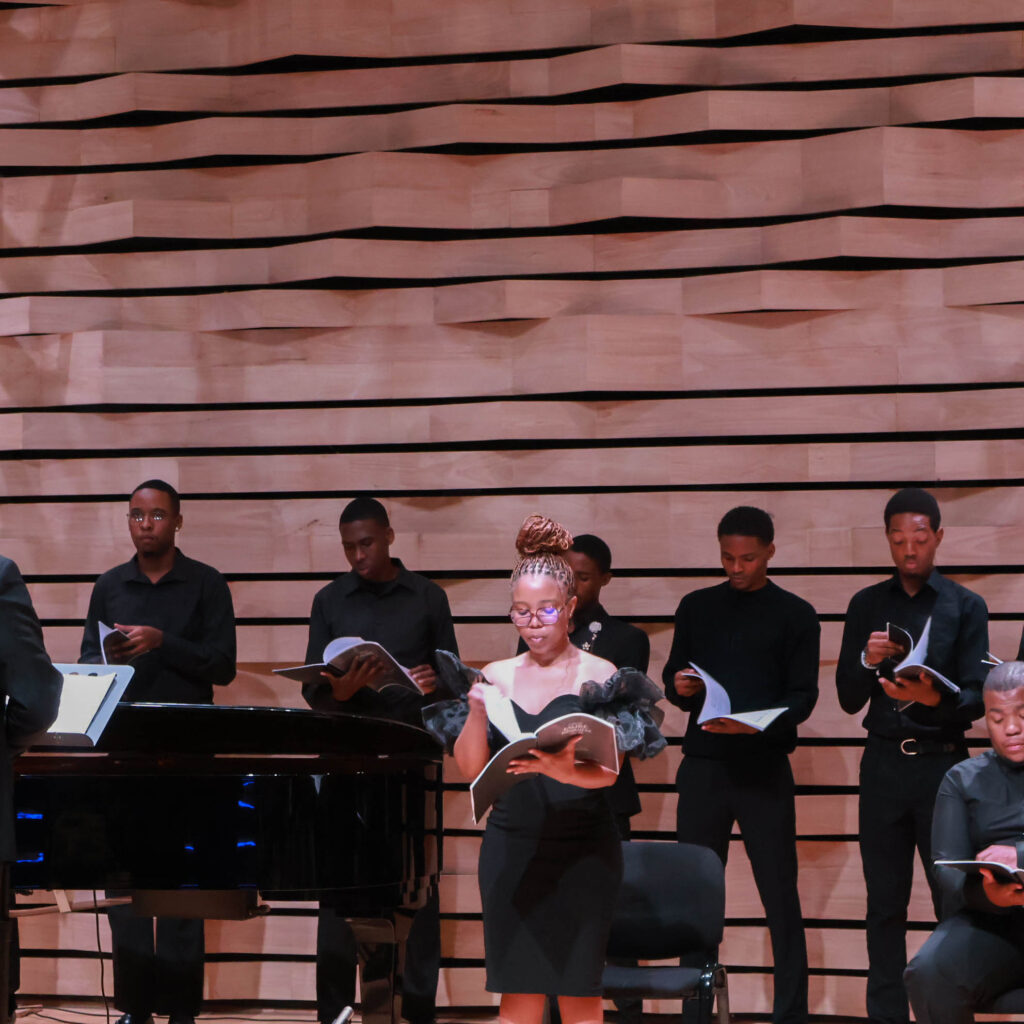
Hosted by the Wits Music Department, the festival spans eight concerts running from April 22 to May 2 across various venues on campus. This festival is the first of its own at Wits hosted by the department. The opening set the tone with a powerful presentation by the Wits Music Department Choir, accompanied by pianist David Butlin and conducted by Head of Department Musa Nkuna.
The programme drew from Gabriel Fauré’s Requiem, Op. 48, reimagined as a memorial for the children of the 1976 Soweto Uprising. Through seven movements, the performance carried a spiritual weight, each hymn a plea for rest, peace and refuge from suffering. The reinterpretation grounded the classical work in a distinctly South African context, bridging European composition with local history.
A picture of Charmaine Nkuna. Photo by: Sanele Sithole
Soprano Charmaine Nkuna, and bass Thato Morutle delivered standout solo performances, their voices cutting through the hall with clarity and emotional depth. Their presence added a personal dimension to the piece, elevating the performance from technically strong to profoundly affecting.
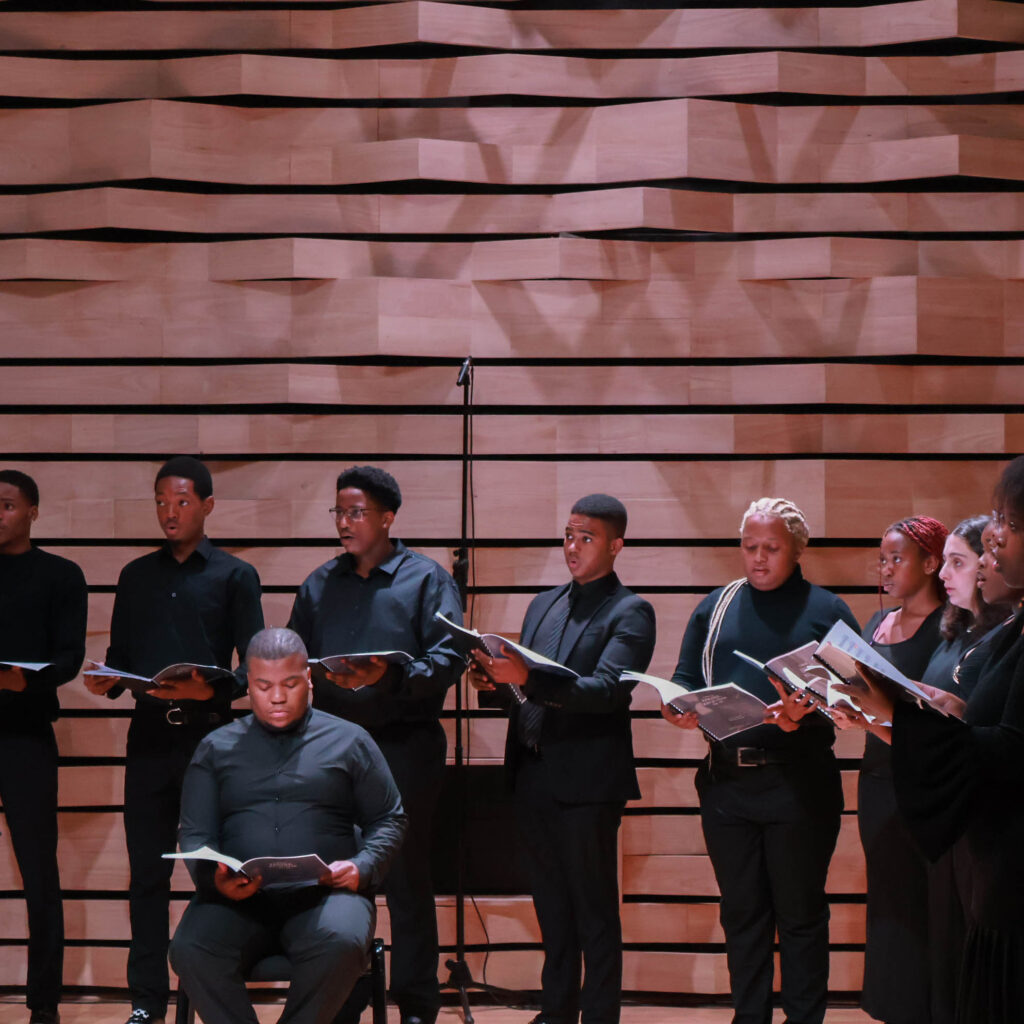
As the choir entered the stage dressed in black, the symbolism was immediate. The uniformed ensemble visually reinforced the tone of mourning and remembrance, aligning with the concert’s dedication to lives lost. What followed was a seamless performance marked by strong ensemble unity and precision — not a single note out of place.
The emotional impact resonated with the audience. First-year Film and Television student Luthando Skenjana described the experience simply: “It was an amazing performance; I quite enjoyed the show.”
For organisers, the festival represents more than a series of concerts. Choir chairperson Lesedi Masela, final-year Bachelor of Music student, described it as “a high-impact platform that brings together choral, chamber and orchestral performances within one integrated programme.”
Masela emphasised the significance of the festival’s timing, marking 50 years since the Soweto Uprising. “The opening concerts being requiems reflect that commemoration,” he said, adding that hosting performances across multiple venues transforms the festival into “a full-scale artistic ecosystem.”
That ambition is evident. Beyond musical excellence, the festival aims to create an immersive cultural experience — one that is intellectually engaging while remaining emotionally accessible. The opening concert achieved this balance, offering both technical sophistication and a deeply human narrative.
At its core, the performance was about young people remembering young people — a generational echo carried through music. It is this layering of meaning that makes the festival stand out, positioning it as both an artistic and commemorative space.
If opening day is anything to go by, the Wits International Vocal & Chamber Music Festival is not just an event to attend, but one to experience.
Vuvu Rating: 10/10
A picture of the choir. Photo by: Sanele Sithole
FEATURED IMAGE: A picture of the choir on stage. Photo by: Sanele Sithole
Street skate culture is alive and thriving in the heart of Jozi.
F City hosts a skate competition in Selby.
Young skaters flock to the event to show off their tricks.
Skate culture facilitates youth development and community building.
Picture of skater mid-trick. Photo: Jamie Ho.
Picture of skater mid-trick. Photo: Jamie Ho.
Picture of skater mid-trick. Photo: Jamie Ho.
Picture of skater mid-trick. Photo: Jamie Ho.
Picture of skater mid-trick. Photo: Jamie Ho.
Picture of skater mid-trick. Photo: Jamie Ho.
Picture of skater mid-trick. Photo: Jamie Ho.
On Saturday April 25, wheels were rolling and sneakers were skidding in Johannesburg’s inner-city as F City Market brought skateboarding to the streets of Selby.
The afternoon was filled with cheers as a group of young skaters from central Johannesburg crowded around a small wooden ramp, eager to showcase their skills. The prize: a brand new skateboard courtesy of Crispy Skateboards.
This was young Isheanesu Hove’s first day doing a double kickflip: a move which crowned him the winner of the competition. “Skating to me, it means life,” Hove says, proudly clutching his newly won board. “It inspires me.”
This event is one of many hosted by F City Market in collaboration with Crispy Skateboards to bring skating back to its roots. Joe Dludla and Rhandzi Rhay, two students who founded the movement, were spurred by the lack of skating events in Johannesburg.
With most events being larger-scale or enclosed in skate parks, Dludla and Rhay saw a need to create an alternative space on the streets of Braamfontein for the youth by the youth.
Street skating is central to what Dludla calls the “core culture of skateboarding,” an activity that isn’t limited to skate parks, but open on the streets and accessible to all. “It’s a very small niche scene, so we need to keep it alive,” he adds.
At its core, the space is dedicated to uplifting the youth and providing them with a platform to hone their skills. Each month, F City hosts a youth development mentorship programme in collaboration with Growing Alexandra Skate Club, which aims to cultivate growth and creativity among the youth of Jozi.
As this initiative is still relatively new, it is in desperate need of volunteers. Dludla and Rhay encourage anyone with a skillset to share their craft– from skateboarding to graffiti to music. “We’re trying to influence the next generation of kids,” Rhay says.
The event extends beyond just skating; it’s a culture rooted in creativity and artistic freedom. As co-founder of Crispy Skateboards, Kaelik Dullaart says, “It’s the music. It’s the aesthetic. It’s the attitude. It’s the community.”
Drawn together by a love for skating, the space has become more than just an event; it has become a family.
As the sun set, the kids departed as a group back to their homes in town; skateboards ablaze beneath their feet.
Picture of the young skateboarders on Webber Street. Photo: Jamie Ho.
FEATURED IMAGE: Picture of a skater suspended in the air mid-trick. Photo: Jamie Ho.
In the high-octane world of South African Fashion Week, a runway is usually a transition, a place where models move from point A to point B to showcase a garment. But for House of Olé, the Spring/Summer 2026 showcase transformed the runway into a breathing, multidisciplinary studio. It was a bold statement of ‘The Comeback,’ signalling that after a strategic hiatus from the runway, the brand’s return was about more than just clothes; it was about a new philosophy of survival.
The show was a sensory assault in the best way possible. Before a single look walked, the stage was set with the ‘invisible’ architects of beauty. A makeup artist stood at the start of the ramp, applying live finishing touches to models as they sat, before embarking on their walk. In the centre, a visual artist stood with a brush in hand, painting onto the suits as they passed.
The result was a ‘Human Art Gallery.’ Models did not just walk; they performed. Some lounged on velvet sofas positioned along the runway, remaining still as statues, inviting guests to observe the textile and the tailoring as they would a masterpiece in a gallery. This was not just a fashion show; it was an immersive performance piece, underscored by the raw vocals of a live singer that echoed through the Hyde Park studio.
Photo of the Runway from the House of Olé at SAFW SS2026. Photo by: Daniella Ripamonti
“They really have lived up to the anticipation”, noted guest and choreographer Nomza Monake. “I’ve seen Olé’s work before, but today just took it to another level. I loved how they fused the arts together. It was not just a fashion show, but a fashion show with a difference… I’m just so sold.”
Behind this theatricality lies the sharp business mind of Ole Ledimo, the designer and founder of House of Olé. Ledimo is acutely aware that the industry he returned to is different from the one he left. “When times are tough, it forces us creatives to dig even deeper,” Ledimo explained backstage. His response to the economic squeeze during his time away from the runway was to embrace a radical variety, mixing high-end, hand-painted couture with accessible ready-to-wear to maintain and win new clients.
When asked about the defining piece of the night, Ledimo pointed to a garment aptly titled “Collaboration.” It served as the anchor for his vision of the season. “It’s something I feel like as artists and human beings we need to do often,” he said. “Coming together, I think that’s what made the collection amazing, bringing the guys that have been my friends, working together for many years, from backstage into the actual show.”
The collection itself challenged the rigid boundaries of the “modern gentleman.” Ledimo’s suits, architectural, bold, and defiant, were worn by models of all shapes and heights, pushing back against the stereotypes of how men “should” dress. “The colour pink doesn’t define your masculinity. It’s a colour,” Ledimo asserted, defending the need for self-expression. “Sometimes it’s people’s opinions that hold us back.”
House of Olé Spring/Summer 2026 collection lineup for SAFW 2026. Photo by: Daniella Ripamonti
As the final model took their seat on the runway sofa and the live singer’s last note faded, the message was clear: Ole Ledimo has moved House of Olé beyond the stitch. By bringing the “behind-the-scenes” directly onto the ramp, he proved that the future of South African luxury is not just about the clothes; it is about the collective power of the artists who bring them to life.
Vuvu Rating: 9/10
FEATURED IMAGE: Photo of a model surrounded by art pieces on the runway for the House of Olé, SAFW SS2026. Photo by: Daniella Ripamonti
The Pretoria Correctional Service Museum displays a blood-stained cloth from a flogging and a wooden “whipping triangle” used for corporal punishment.
At the Gallows, 3,500 names are engraved on memorial slabs, including Solomon Mahlangu and the Vulindlela family, executed by the apartheid state.
I thought I was going on a class tour. At Kgoši Mampuru II, I realised I was walking into South Africa’s past.
We visited two museums that tell two sides of the same story. The first was the Pretoria Correctional Service Museum, which shows how the prison system was run. The second was the Gallows Memorial Museum, where 3,500 people were executed. I walked in as a student but I left carrying weight I didn’t expect.
The two museums work together. The Pretoria Correctional Service Museum shows the mechanics of control, how people were fed, clothed, worked, and punished. The Gallows shows the final price of that control, 3,500 lives ended by the state.
We began at the Pretoria Correctional Service Museum. Correctional officer Dimakatso welcomed us and explained that phones and cameras were not allowed inside, and then she guided us through the exhibits. We saw wood carvings and sculptures made by inmates.
The punishment displays were the most difficult part for me. A wooden “whipping triangle” showed where inmates were tied for corporal punishment, and stun belts were used to immobilise them. When I saw a white cloth stained with blood from a flogging, I gasped.
A contraband section held makeshift knives shaped from spoons and dagga pipes, which is why Dimakatso said metal dishes have been replaced with plastic. She added that inmates can study and work, although the pay is little. We ended the tour with a look at a replica of Nelson Mandela’s cell.
At the Gallows, we handed our devices before Mr Kgomo took over. His tone was firm and commanding, stating that we were privileged to be there. He showed us engraved memorial slabs with 3,500 names of the hanged, including political prisoners like Solomon Mahlangu and the Vulindlela family, and I kept asking myself how an entire family could be executed.
The first room we entered was a church beneath the hanging chamber. On execution days, bodies were lowered by 9am for families to view in closed coffins, and relatives were told “he’s no more.” I hate coffins, and my heart raced as I understood how easily dignity was stripped away.
We then climbed the 52 steps to the gallows where prisoners took their last walk. As we ascended past dark images and words on the walls, my heart pounded and I sighed with every step because the weight of what happened there felt physical.
At the top, photographs of the hanged made my eyes fill with tears that didn’t drop, and when I saw the seven ropes in the chamber my heart sank while Mr Kgomo described each stage of the process. I realised that living now is a privilege we take for granted.
We left in silence. Everyone was speechless.
As a journalism student, I cannot separate theory from place anymore. I walked the 52 steps. Visits like this should be compulsory for us, because we cannot report on justice or the law fairly if we do not face the past physically. I arrived curious but I left sad, shaken, and more responsible.
FEATURED IMAGE: A portrait of Khutso Ngwatoana. Photo: Alaistar Russell
Wits Journalism students step inside Kgosi Mampuru II Correctional Centre, confronting the haunting legacy of South Africa’s penal history.
Wits Journalism students visited Kgosi Mampuru II prison and learned about inmate survival, punishment, and daily life behind bars.
They climbed the 52 steps to the gallows, reflecting on the country’s execution history and its human cost.
The gates at Kgosi Mampuru II don’t simply close, they announce an ending. It is a metallic finality that vibrates in your marrow, leaving an unshakable awareness of what it means to be confined, and the fragile privilege of walking free. Exactly at 10:42 am on April 15, 2026, 17 of us from the Wits Journalism programme stepped through that threshold. We traded lecture halls for a space defined by the physics of control. As a student journalist, I am trained to observe, but here, the walls watch you back. An involuntarily warning began to ring in my ears, an indirect message from the architecture itself, “Do not come here.”
Our tour guide, Dimakatso, unveiled a world of “jail language” and survival. She described “two full chickens”, prison slang for the two boiled eggs served with pap at 14: 00 pm which would be your last meal until the next day. She showed us how inmates creatively hollowed Sunlight soap to hide cell phones. In the era of AI, these inmates use primitive ingenuity to stay connected. Sitting on benches crafted by prisoners, I felt a sting of irony, for someone like me, only taught to build cardboard bridges at school, these prisoners learn to build from scratch to survive, and gain skills that might one day free them from that space.
The atmosphere turned clinical and cruel when Dimakatso introduced the “Triangle Step”. She described hot water-soaked wood being bent during a beating, making my body involuntary cringe. My mind flashed to the moment of impact, feeling the sting of a system that once relied on pain as its primary language. Hanging on the triangle step was a bloodstained cloth, an enduring reminder of punishment inflicted on the condemned. I cannot omit this, as it questions what I was never taught in high school. This history was deliberately left out, it sparked questions about justice, pain, and how history is curated.
Next, we moved to the gallows. Mr. Kgomo told us to “fasten our emotional seatbelts”, a fitting warning. We transitioned from the museum of survival to the tomb of execution. I stood before the names on the wall, thinking of Section 11 of the South African Constitution: the right to life. I felt a wave of relief; the 1996 abolition of the death penalty had ended this brutal form of justice. Yet, as we approach April 27, Freedom Day, the irony burns: this day marks our liberation, but these gallows mark how many never lived to see it. Yet, the past is not distant. Between 1902 and 1989, roughly 3,500 people were executed, a grim reminder of state-sanctioned brutality. As I ascended the 52 steps, I imagined faces, some praying, some screaming, others singing hymns, climbing those heavy stairs. By step 52, my chest felt like it was crushed, a tear slipped unnoticed, masking my professionalism.
At the top, the brutality became clinical, detached from emotion. I learned how a prisoner’s BMI (body mass index) was used to select the correct noose, and how a pulse after the fall meant the execution was not complete. We stood where Solomon Mahlangu, whose blood nourished the “tree of freedom”, once stood. As the gates hissed shut behind us, and warnings lingered, I became haunted. The 52 steps symbolise not only punishment but a society still grappling with its past, a past where thousands paid the ultimate price between 1902 and 1989. Is this reflection of the gallows? It is a mirror that confronts the dark architecture of consequence, forcing us to question the true weight of justice and the whispers of history that echo through these steps.
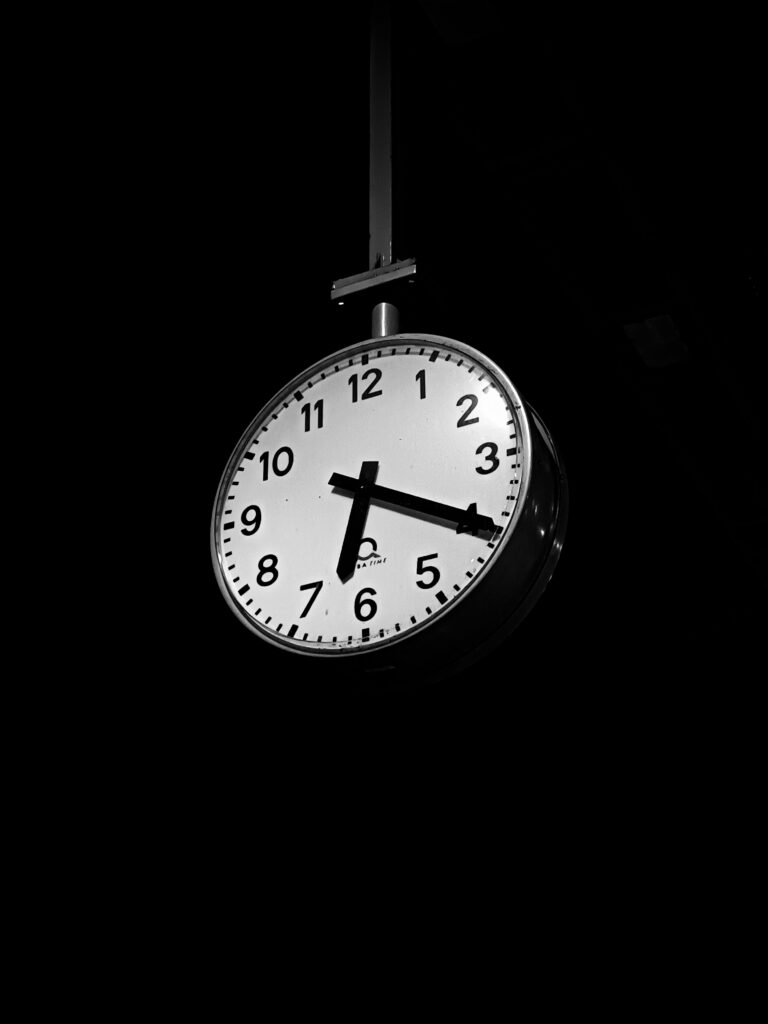
19 : 00 pm, execution time starts. Photo by: Emadul Islam Akash. (Pexels)
We celebrate Freedom Day on April 27, 2026, however, the 52 steps remind us that freedom was counted out in bodies long before it was counted in ballots.
FEATURED IMAGE: Journalism and Media Studies Honours students from Wits University enter Kgosi Mampuru II Management Area. Photo by: Alice Dhlamini.
Walking into The Gallows Museum at Kgosi Mampuru II Correctional Centre, the first thing that hits you is not a sound, but the absence of it. We fell into a heavy, suffocating silence. It did not feel right to speak. The atmosphere was tense, sombre, and thick with a history that was never meant to be heard outside these walls. We were not just touring a building; we were retracing the final, mechanical minutes of 3500 lives.
The dehumanisation was in the details. The “procedure” began at 06:50 AM, and by 07:30 AM, it was over, fast and efficient. Life was extinguished with the punctuality of a business transaction. A wave of nausea hit me hearing how seven people were hanged at a time, their bodies later hosed down with a power washer, like equipment in a slaughterhouse, because the state could not be bothered to afford them individual dignity. They were shoved into coffins, and that coffin was shown to families for mere seconds to hide the trauma of the noose and then buried in unmarked graves. They did not just want these men dead; they wanted them erased.
It was a place designed for the mass production of death, a literal “human abattoir.” The ropes had metal rings to ensure the break was instantaneous, a cold, metallic “mercy” in a room that lacked a soul. If a pulse survived the drop, they were simply hoisted back up and hanged again. It was a loop of terror. Our guide explained that some in charge, like warden Christiaan Barnard, openly enjoyed the work because of how well it paid, even believing he would be forgiven because he was “just doing his job.” To keep the killings quiet, they even soundproofed the room to muffle the thunder of the trapdoors hitting the frame.
We climbed the 52 steps in the shadow of painted silhouettes, counting them one by one. I thought of the prisoners who would sing holy songs on their way up, their voices a haunting contrast to the “last request” they were offered at the top. It felt like a final, cruel joke to bark those requests in Afrikaans, a language many did not even understand, moments before they were led into the room where the ropes awaited. It was in this final room, the gallows, that I saw the plaque for a 22-year-old Solomon Mahlangu, barely younger than I am, who once stood on this same trapdoor.
This experience hit me with a force I did not expect. I realise now that we talk about “liberation” as a concept, but we rarely look at the apparatus that tried to crush it. Our democracy is not just built on grand speeches and signed documents; it is built on the silence of these men and the sacrifice of leaders like Solomon Mahlangu, whose words remain painted on these walls: “My blood will nourish the tree that will bear the fruits of freedom.” Standing where the hearse once sat, permanently waiting, I realised that as Freedom Day approaches, I carry the weight of those 52 steps with me.
We can never truly understand our present if we forget the system that tried so hard to wash this history away. I pray that the souls who passed within those walls have finally found the eternal rest and peace that was denied to them in life.
Since her announcement as the Democratic Alliance’s mayoral candidate for Johannesburg, Helen Zille has dominated national headlines. In this bonus episode of We Should Be Writing podcast, hosts Lulah Mapiye and Bonolo Mokonoto dissect a media meet-and-greet with the mayoral hopeful. From her extensive political résumé to her controversial public utterance, we examine why the Democratic Alliance has chosen Hellen Zille as their candidate for the 2027 local mayoral elections. Additionally, […]